Search Result
Results for "
Antimicrobial agent
" in MedChemExpress (MCE) Product Catalog:
15
Biochemical Assay Reagents
30
Isotope-Labeled Compounds
| Cat. No. |
Product Name |
Target |
Research Areas |
Chemical Structure |
-
- HY-131925
-
|
DEA NONOate diethylamine
|
Bacterial
|
Infection
|
|
Diethylamine NONOate (DEA NONOate, diethylammonium salt) is a nitric oxide donor. Diethylamine NONOate is a potent antimicrobial agent, which can inhibit Escherichia coli growth. Diethylamine NONOate also can enhance preservation of the donor rat heart .
|
-
-
- HY-Y1326
-
-
-
- HY-W017766
-
|
PHMB
|
Environmental Pollutants
Bacterial
|
Infection
|
|
Poly(hexamethylenebiguanide) hydrochloride (PHMB) is an antimicrobial and antiviral agent. Poly(hexamethylenebiguanide) hydrochloride is active against both Gram-positive and Gram-negative bacteria. Poly(hexamethylenebiguanide) hydrochloride works by adsorbing to the surface of cellulose, which can damage microbial cell membranes and interfere with metabolism. Poly(hexamethylenebiguanide) hydrochloride is widely used in medical, clothing and household textiles, and cosmetic fields .
|
-
-
- HY-B2232
-
|
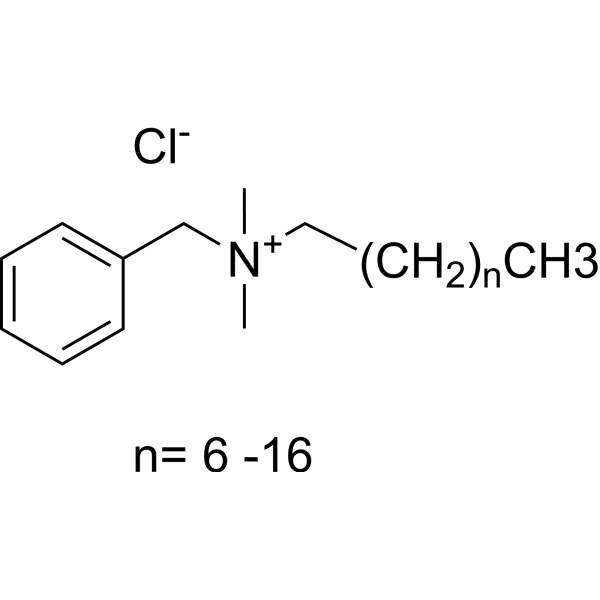
Alkyldimethylbenzylammonium chloride
|
Bacterial
Biochemical Assay Reagents
|
Infection
|
|
Benzalkonium (Alkyldimethylbenzylammonium) chloride (51% in water) is a quaternary ammonium preservative, cationic surfactant, and antimicrobial (Antimicrobial) agent. Benzalkonium chloride (51% in water) is toxic .
|
-
-
- HY-B1729
-
-
-
- HY-W145518
-
|
|
Environmental Pollutants
Antibiotic
Endogenous Metabolite
Bacterial
|
Infection
Cancer
|
|
Pectin is a heteropolysaccharide, derived from the cell wall of higher plants. Pectin involves in the formation of nanoparticles as a delivery vehicle of agents. Pectin is also an adsorbent, a broad-spectrum antimicrobial agent that binds to bacteria toxins and other irritants in the intestinal mucosa, relieves irritated mucosa .
|
-
-
- HY-W062216
-
|
|
Bacterial
Arginase
|
Infection
|
|
2-Aminoimidazole is a potent antibiofilm agent that can be used as an adjuvant to antimicrobial. 2-aminoimidazoles disrupts the ability of bacteria to protect themselves by inhibiting biofilm formation and genetically-encoded antibiotic resistance traits. 2-Aminoimidazole is also a weak noncompetitive inhibitor of human arginase I with a Ki of 3.6 mM .
|
-
-
- HY-137371
-
|
|
Bacterial
Apoptosis
Antibiotic
|
Infection
Cancer
|
|
Lactonic sophorolipid is an apoptosis inducer and antimicrobial surfactant with antitumor activity. Lactonic sophorolipid regulates Bax/Bcl-gene expression through caspase-3/9 and induces apoptosis in tumor cells. Lactonic sophorolipid can disrupt cell membrane permeability and exert antibacterial effects (MIC for oral pathogens is 100-400 μg/mL). Lactonic sophorolipid promotes mitochondrial membrane potential depolarization, activates the intrinsic apoptotic pathway, and can synergize with antibiotics to enhance the antibacterial effect. Lactonic sophorolipid can be used in liver cancer research and the development of oral hygiene antibacterial agents[1][2][3].
|
-
-
- HY-N10473
-
|
|
Bacterial
Fungal
|
Infection
|
|
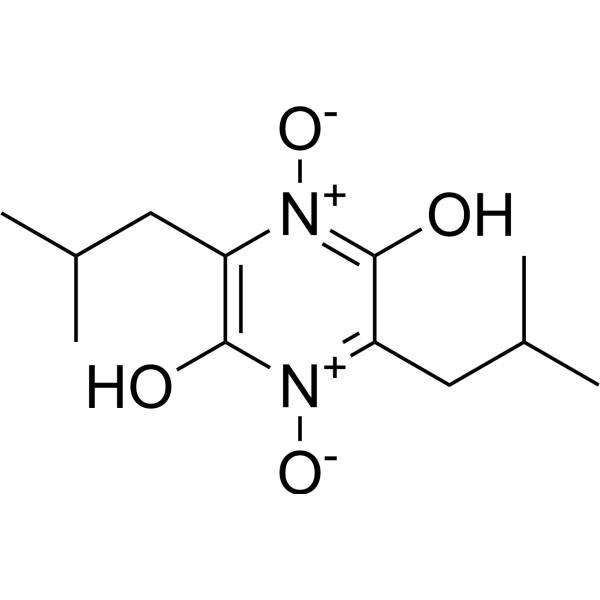
Pulcherriminic acid is a cyclic dipeptide antimicrobial agent with high affinity for Fe 3+, found mainly in Bacillus and yeast. Pulcherriminic acid chelates iron ions through a non-enzymatic reaction to form the extracellular red pigment pulcherrimin, which competes for iron nutrition and thus achieves an antibacterial effect. Pulcherriminic acid has great applications in food, agriculture and medical industries .
|
-
-
- HY-12638
-
|
DDM
|
Environmental Pollutants
Fungal
Parasite
Bacterial
|
Infection
|
|
Dichlorophen is a chlorophenol antimicrobial agent that can destroy the integrity of microbial cell membranes and interfere with the activity of metabolic enzymes. Dichlorophen can covalently bind to the thiol groups of microbial proteins and has broad-spectrum antibacterial, antifungal and anthelmintic activity. Dichlorophen can be used as an antimicrobial agent in the study of drug-resistant bacterial infections .
|
-
-
- HY-122975
-
|
Benzoyl metronidazole
|
Bacterial
Parasite
|
Infection
|
|
Metronidazole Benzoate, derives from a metronidazole and a benzoic acid, has a role as an antibacterial, antimicrobial, antiparasitic, and antitrichomonal agent .
|
-
-
- HY-139324
-
|
|
GSK-3
Amyloid-β
|
Neurological Disease
Cancer
|
|
Cu(II)GTSM, a cell-permeable Cu-complex, significantly inhibits GSK3β. Cu(II)GTSM inhibits Amyloid-β oligomers (AβOs) and decreases tau phosphorylation. Cu(II)GTSM also decreases the abundance of Amyloid-β trimers. Cu(II)GTSM is a potential anticancer and antimicrobial agent .
|
-
-
- HY-103643
-
|
(-)-Fumagillol
|
Bacterial
|
Infection
|
|
Fumagillol is a direct precursor of fumagillin. Fumagillin, as an antimicrobial agent, is a potent and selective inhibitor of angiogenesis .
|
-
-
- HY-P3494
-
|
|
Hepcidin
Bacterial
|
Infection
Inflammation/Immunology
|
|
Hepcidin-25 (human) is an iron metabolism regulator and Antimicrobial agent. Hepcidin-25 (human) exerts anti-inflammatory and antimicrobial activities by regulating iron-mediated oxidative damage .
|
-
-
- HY-40040
-
|
|
Drug Intermediate
|
Infection
|
|
(S)-1-Boc-3-methylpiperazine is a synthetic intermediate for indole-piperazine hybrid antimicrobial agent preparation. (S)-1-Boc-3-methylpiperazine can be used for research on bacterial infection and fungal infection .
|
-
-
- HY-136081A
-
|
|
Insecticide
|
Infection
|
|
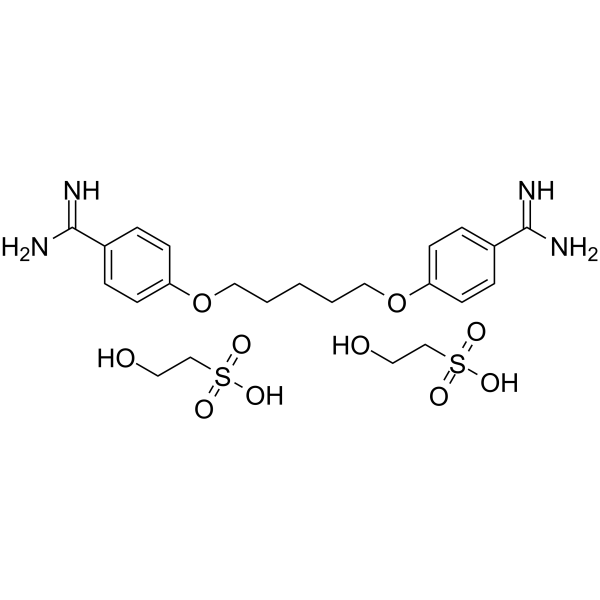
Hexamidine diisethionate is an antimicrobial agent targeting Acanthamoeba protozoa. Hexamidine diisethionate is promising for research of ocular infectious diseases such as Acanthamoeba keratitis .
|
-
-
- HY-N9987
-
-
-
- HY-151402
-
|
|
Bacterial
|
Infection
|
|
Antimicrobial agent-8 (Compound 15) is a potent antimicrobial agent, and shows potent antimicrobial activity with an MIC range of 2-8 μg/mL against Gram-negative and Gram-positive bacteria. Antimicrobial agent-8 shows anti-inflammatory activity against lipopolysaccharide-induced inflammation.
|
-
-
- HY-148431
-
|
|
Bacterial
|
Infection
|
|
Antimicrobial agent-14, a benzyl thiophene sulfonamide derivative is an antimicrobial agent, with a MIC of 200 μM against Campylobacter coli ATCC33559. Antimicrobial agent-14 can be used for the research of bacterial foodborne gastroenteritis .
|
-
-
- HY-W150903
-
|
p-Oxybenzoesaureheptylester
|
Fungal
Bacterial
|
Infection
|
|
N-Heptyl 4-hydroxybenzoate (p-Oxybenzoesaureheptylester) is an antimicrobial agent that inhibits S. aureus with MIC of 12.5 μg/mL. N-Heptyl 4-hydroxybenzoate also against plant pathogenic fungi, such as Alternaria brassicicola, F. solani, C. dematium and C. acutatum .
|
-
-
- HY-130079
-
|
Penicillin G procaine
|
Bacterial
|
Infection
|
|
Procaine benzylpenicillin (Penicillin G procaine) is an antimicrobial agent. Procaine benzylpenicillin shows inhibitory activity against gram-positive bacteria and synergistic activity with Neomycin (HY-B0470). Procaine benzylpenicillin can be used in the study of bovine mastitis in animal husbandry .
|
-
-
- HY-176970
-
|
|
Fungal
Bacterial
|
Infection
|
|
Antimicrobial agent-45 (Compound 16) is a broad-spectrum antibacterial agent. Antimicrobial agent-45 exhibits MICs against Cr. neoformans, S. aureus, MRSA and My. intracellulare of 9.25, 74.04, 74.04 and 74.04 μM respectively. Antimicrobial agent-45 can be used for the study of cryptococcal infections .
|
-
-
- HY-121272
-
-
-
- HY-151918
-
|
|
Bacterial
|
Infection
Inflammation/Immunology
|
|
Antibacterial agent 125 is an antibacterial agent. Antibacterial agent 125 has a potent antimicrobial activity against clinically relevant Gram-positive pathogens with MIC50 values range from 0.25 - 8 μM. Antibacterial agent 125 can be used for the research of antimicrobial resistance .
|
-
-
- HY-W016491
-
|
Isopropylparaben
|
Bacterial
|
Infection
|
|
Isopropyl 4-hydroxybenzoate (Isopropylparaben) is an antimicrobial and antioxidant agent .
|
-
-
- HY-B0050
-
|
|
Bacterial
|
Infection
|
|
Delmopinol is an antimicrobial agent that can be used in the oral cavity to inhibit the formation of dental biofilm.
|
-
-
- HY-B1782
-
|
|
Bacterial
Antibiotic
|
Infection
|
|
Sulfamoxole is a broad- spectrum chemotherapeutic antimicrobial agent. Sulfamoxole can be used for the study of pediatric infections .
|
-
-
- HY-176969
-
-
-
- HY-N9495
-
|
|
Bacterial
|
Infection
|
|
(-)-trans-Myrtanol is an antimicrobial and acaricide agent. (-)-trans-Myrtanol exhibits potent antimicrobial activities against harmful intestinal bacteria. (-)-trans-Myrtanol shows acaricidal activities for D. farinae, D. pteronyssinus, T. putrescentiae with LD50 values of 2.30 µg/cm 2, 2.22 µg/cm 2, 12.95 µg/cm 2, respectively .
|
-
-
- HY-P11239
-
-
-
- HY-101651
-
-
-
- HY-147944
-
|
|
Bacterial
Fungal
|
Infection
|
|
Antimicrobial agent-4 (compound 6a) is a potent antimicrobial agent. Antimicrobial agent-4 exhibits considerable activity against the microbial pathogens. Antimicrobial agent-4 delivers reliable toxicity to kill the bacteria and fungi. Antimicrobial agent-4 shows high binding energy value of −10.0 kcal/mole against the target enzyme .
|
-
-
- HY-131051
-
|
|
Reactive Oxygen Species (ROS)
Bacterial
Fungal
|
Infection
|
|
Antimicrobial agent-41 (Compound 19) is a thiazolidinedione derivative. Antimicrobial agent-41 exhibits excellent antioxidant activity (IC50 = 27.66 μg/mL). Antimicrobial agent-41 also exhibits antidiabetic activity (IC50 = 40.01 μg/mL). Antimicrobial agent-41 has antimicrobial activity again both bacterial and fungi .
|
-
-
- HY-131048
-
|
|
Bacterial
|
Infection
|
|
Antimicrobial agent-33 (Compound 2b) is an antimicrobial agent, with MIC values of 2-64 μg/mL. Antimicrobial agent-33 is an active compound against Staph. Aureus .
|
-
-
- HY-123652
-
|
|
Parasite
|
Infection
|
|
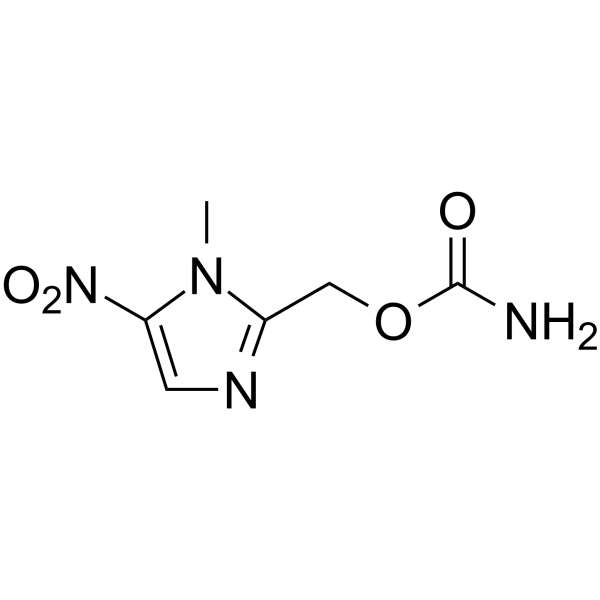
Etofamide is an antimicrobial agent with IC50 value of 5.96 mg/L against amoeba .
|
-
-
- HY-152249
-
|
|
Antibiotic
Bacterial
Fungal
|
Infection
|
|
Antibacterial agent 131 is a quinoline derivative. Antibacterial agent 131 has antimicrobial effect. Antibacterial agent 131 destroys the integrity of the fungal cells via blocking ergosterol production .
|
-
-
- HY-B0050A
-
|
|
Bacterial
|
Infection
|
|
Delmopinol hydrochloride is an antimicrobial agent that can be used in the oral cavity to inhibit the formation of dental biofilm .
|
-
-
- HY-151401
-
|
|
Bacterial
|
Infection
|
|
Antimicrobial agent-7 (Compound 12) is a potent antimicrobial agent, and shows potent antimicrobial activity with an MIC range of 2-8 μg/mL against Gram-negative and Gram-positive bacteria. Antimicrobial agent-7 shows anti-inflammatory activity against lipopolysaccharide-induced inflammation .
|
-
-
- HY-155364
-
-
-
- HY-158425
-
|
|
Bacterial
|
Infection
|
|
Antimicrobial agent-31 (compound 4a) is a potent antimicrobial agent. Antimicrobial agent-31 inhibits Salmonella enterica serovar Typhimurium and E.coli with MIC values of 19.24, 11.31 µg/mL, respectively .
|
-
-
- HY-151403
-
|
|
Bacterial
|
Infection
|
|
Antimicrobial agent-9 (Compound 16) is an antimicrobial agent with an MIC range of 4-8 μg/mL against gram-positive and gram-negative bacteria. Antimicrobial agent-9 also shows anti-inflammatory activity .
|
-
-
- HY-151400
-
|
|
Bacterial
|
Infection
|
|
Antimicrobial agent-6 (Compound 11) is an antimicrobial agent with a MIC range of 4-8 μg/mL against gram-positive and gram-negative bacteria. Antimicrobial agent-6 also shows anti-inflammatory activity .
|
-
-
- HY-146460
-
|
|
Reactive Oxygen Species (ROS)
|
Infection
|
|
Antimicrobial agent-2 (compound V-a) is a broad-spectrum antimicrobial agent, possessing inhibitory activity against various Gram-positive and -negative bacteria. Antimicrobial agent-2 has excellent inhibitory effect on Methicillin-resistant Staphylococcus aureus (MRSA) with a MIC of 1 μg/mL. Antimicrobial agent-2 can effectively damage the membrane and lead to the leakage of protein, also can induce the generation of ROS. Antimicrobial agent-2 exhibits low toxicity, no obvious resistance and good bioavailability .
|
-
-
- HY-W452285
-
-
-
- HY-147876
-
|
|
Bacterial
Fungal
|
Infection
|
|
Antimicrobial agent-3 (Compound U10) is an antimicrobial agent against bacterial, fungal and tubercular infections .
|
-
-
- HY-170609
-
|
|
Bacterial
|
Infection
|
|
Antimicrobial agent-36 (Compound 8b) is an antimicrobial agent that significantly inhibits the level of DNA gyrase, with an IC50 value of 4.56 µM. Antimicrobial agent-36 can also be used for the preparation of nanopharmaceutical formulations, for the research and development of novel antibiotics .
|
-
-
- HY-Q50147
-
|
|
Bacterial
|
Infection
|
|
Antimicrobial agent-21 (Compound IIm) is a bacterial inhibitor. Antimicrobial agent-21 is active against gram-positive and gram-negative bacterial .
|
-
-
- HY-168852
-
|
|
Bacterial
|
Infection
|
|
Antimicrobial agent-37 (compound 6a) is a potent broad-spectrum antimicrobial agent that has a biofilm-destroying effect, acting on bacterial membranes and cracking them .
|
-
-
- HY-151399
-
|
|
Bacterial
|
Infection
|
|
Antimicrobial agent-5 is an potent antimicrobial agent, and displays excellent cell selectivity against Gram-negative bacteria and Gram-positive bacteria. Antimicrobial agent-5 blocks the interaction between LPS and CD14/TLR4 receptor, and shows anti-inflammatory activity against LPS-induced inflammation .
|
-
-
- HY-161432
-
|
|
Bacterial
|
Infection
|
|
Antimicrobial agent-29 (Compound C35) affects the interaction between human hemoglobin and Staphylococcus aureus IsdB hemophore. Antimicrobial agent-29 helps the discovery of IsdB:Hb PPI inhibitors .
|
-
- HY-155546
-
|
|
Bacterial
|
Infection
|
|
Antimicrobial agent-22 (THI 6c) is a multi-target broad-spectrum antibacterial agent. Antimicrobial agent-22 has low cytotoxicity, hemolytic property, rapid bactericidal ability and good anti-biofilm activity .
|
-
- HY-146078
-
|
|
Bacterial
|
Infection
|
|
Antimicrobial agent-1 (compound 6C) possesses potent activity against TolC mutant E. coli with an MIC value of 2 μg/mL. Antimicrobial agent-1 and Colistin exhibit synergistic activity against Gram-negative bacteria. Antimicrobial agent-1 has no cytotoxicity on mammalian cell lines, with MICs > 128 μg/mL in Caco-2 and Vero cell lines .
|
-
- HY-131049
-
|
|
Bacterial
|
Infection
|
|
Antimicrobial agent-30 (Compound T10) is an antimicrobial agent, with MIC values of 18.7-21.0 µg/mL for S. aureus, S. epidermidis, E. coli, P. aeruginosa, A. niger, and A. fumigatus .
|
-
- HY-155769
-
|
|
Fungal
|
Infection
|
|
Antimicrobial agent-24 (compound E8) is a hydrazide compound with excellent and broad-spectrum fungicidal activities. Antimicrobial agent-24 affects the normal function of the plasma membrane, further generating changes in the morphology and subcellular structure of mycelia .
|
-
- HY-161988
-
|
|
Bacterial
|
Infection
Inflammation/Immunology
|
|
Antimicrobial agent-34 (compound 4h) is an antibacterial agent (MIC = 1–4 μg/mL), with a clogP value of 9.14. Antimicrobial agent-34 has good plasma stability (HC50 of 131.1 μg/mL) and good membrane selectivity (HC50/MIC is 65.6), with rapid sterilization capability. Antimicrobial agent-34 destroys the integrity of bacterial cell membranes, induces an increase in intracellular reactive oxygen species, and leaks protein and DNA, ultimately leading to bacterial death. Antimicrobial agent-34 demonstrates significant in vivo antibacterial potency in a mouse sepsis model infected with Staphylococcus aureus ATCC43300 .
|
-
- HY-170367
-
|
|
Bacterial
|
Infection
|
|
Antimicrobial agent-35 (Compound c9) exhibits antibacterial agent, that inhibits S. aureus, E. coli, E. faecalis, and S. maltophilia with MIC of 0.5-2 μg/mL. Antimicrobial agent-35 exhibits cytotoxicity against HT-22 with IC50 of 130.4 μg/mL .
|
-
- HY-151502
-
-
- HY-163615
-
|
|
Bacterial
|
Infection
|
|
Antimicrobial agent-32 (Compound 4g) is an antimicrobial agent that exhibits significant activity against various bacteria, including Staphylococcus aureus, Bacillus subtilis, Bacillus cereus (MIC=1000 µg/mL), Klebsiella pneumonia, and Staphylococcus aureus (MRSA) (MIC=500 µg/mL), as well as Escherichia coli (MIC=250 µg/mL). Additionally, Antimicrobial agent-32 inhibits the proliferation of MCF-7, HCT-116, and HepG-2 cells, demonstrating anticancer activity .
|
-
- HY-151501
-
-
- HY-151497
-
-
- HY-169571
-
|
|
Bacterial
|
Infection
|
|
Antimicrobial agent-38 (compound 10) is a potent inhibitor of methicillin-resistant S. aureus strain ATCC 700699 and nonresistant strain ATCC 29213, with MICs of 32 and 64 mg/L .
|
-
- HY-107996
-
|
Emcol E 607
|
Bacterial
|
Infection
|
|
Lapyrium chloride (Emcol E 607) is a broad-spectrum antimicrobial agent that can be used as an antiseptic and disinfectant .
|
-
- HY-P3025
-
-
- HY-175338
-
|
|
Bacterial
|
Infection
|
|
Anti-MRSA agent 34 (Compound 6) is an antimicrobial agent targeting methicillin-resistant Staphylococcus aureus (MRSA) (MIC=14 μg/mL). Anti-MRSA agent 34 is promising for research of microbial infection .
|
-
- HY-N12460
-
-
- HY-175699
-
|
|
Fungal
|
Infection
|
|
Antimicrobial agent-42 (Compound 6j) is an antimicrobial agent. Antimicrobial agent-42 interacts with key amino acids such as Lys59 and Ser170 within the ALS3 protein, crucial for the binding of host peptides. Antimicrobial agent-42 significantly inhibits Candida albicans biofilm formation and reduces planktonic cells aggregation and hyphal formation. Antimicrobial agent-42 has an antifungal activity, promising for fungal infections reseach .
|
-
- HY-W062216R
-
|
|
Reference Standards
Bacterial
Arginase
|
Infection
|
|
2-Aminoimidazole is a potent antibiofilm agent that can be used as an adjuvant to antimicrobial. 2-aminoimidazoles disrupts the ability of bacteria to protect themselves by inhibiting biofilm formation and genetically-encoded antibiotic resistance traits. 2-Aminoimidazole is also a weak noncompetitive inhibitor of human arginase I with a Ki of 3.6 mM .
|
-
- HY-161312
-
|
|
Bacterial
Fungal
|
Infection
|
|
Antifungal agent 93 (compound 10) is a potent antifungal agent. Antifungal agent 93 shows antimicrobial activity .
|
-
- HY-76611
-
|
|
Bacterial
|
Infection
|
|
Antimicrobial agent-48 (P119 103) is an antimicrobial agent. Antimicrobial agent-48 binds to paНО. Antimicrobial agent-48 exhibits a MIC50 of >250 μg/mL. Antimicrobial agent-48 can be used in research on Escherichia coli infections .
|
-
- HY-N1886
-
|
|
Bacterial
Fungal
|
Infection
|
|
Catalpanp-1 is a potent anti-microbial agent. Catalpanp-1 has strong antimicrobial effect on yeast, bacteria, fungi and the like .
|
-
- HY-131718
-
|
|
Bacterial
|
Infection
|
|
(1-Isothiocyanatoethyl)benzene (compound 27) is an antimicrobial agent .
|
-
- HY-164003
-
|
|
Bacterial
|
Infection
|
|
Dapabutan is an antimicrobial agent with activity against Gram-positive bacteria .
|
-
- HY-144252
-
|
|
ROS Kinase
|
Infection
|
|
Antimicrobial agent 69 is a novel structural antimicrobial regulator and has been used to fight deadly multidrug-resistant bacterial infections, and its MICs value is 2.978 μM.
|
-
- HY-173417
-
|
|
Bacterial
|
Infection
Inflammation/Immunology
|
|
Antibacterial agent 275 (Ⅲ1) is a antibacterial agent, with a λmax of 730 nm. Antibacterial agent 275 (Ⅲ1) can be used in the research for antimicrobial photodynamic therapy (aPDT) .
|
-
- HY-13451A
-
|
|
Bacterial
|
Infection
|
|
Finafloxacin is a fluoroquinolone antimicrobial agent that exhibits optimum efficacy in slightly acidic environments.
|
-
- HY-156975
-
|
|
Bacterial
|
Infection
|
|
Sulfatrozole is a sulfanilamide derivative. Sulfatrozole is an antimicrobial agent with broad-spectrum activity .
|
-
- HY-146062
-
|
|
Bacterial
Fungal
|
Infection
|
|
Antibacterial agent 101 (Compd 7f) is an antimicrobial (antibacterial and antifungal) agent, with MIC values between 4 and 32 µg/mL .
|
-
- HY-163716
-
|
|
Bacterial
|
Infection
|
|
Antibacterial agent 222 ((R)-O30 (5)) is a antimicrobial agent that inhibits methicillin-resistant Staphylococcus aureus (MRSA) .
|
-
- HY-N7747
-
|
|
Others
|
Infection
|
|
Sceptrin dihydrochloride is a compound isolated from the sea sponge Agelas sceptrum that is an antimicrobial agent .
|
-
- HY-170847
-
|
|
Bacterial
|
Infection
|
|
Anti-MRSA agent 24 (compound 6K) is an antimicrobial agent that targets Staphylococcus aureus (MRSA), especially penicillin-resistant Staphylococcus aureus .
|
-
- HY-W013429
-
|
|
Bacterial
|
Infection
|
|
4-Glycidyloxycarbazole (compound 8) is an antimicrobial agent that disrupts bacterial biofilm formation .
|
-
- HY-169745
-
-
- HY-121272AS
-
-
- HY-162273
-
|
|
Bacterial
Smo
Gli
|
Infection
Cancer
|
|
Antibacterial agent 189 (compound 3a) is a potent antimicrobial agent. Antibacterial agent 189 offers high binding energy against the target OMPA/exo-1,3-beta-glucanase proteins. Antibacterial agent 189 exhibits the potent antimicrobial activities against E. coli, P. aeruginosa, S. aureus, B. subtilis, C. Albicans and A. flavus. Antibacterial agent 189 shows high binding energy against target SMO and SUFU/GLI-1 proteins .
|
-
- HY-181512
-
|
|
Bacterial
|
Infection
|
|
Antimicrobial agent-47 is an anti-mycobacterial agent. Antimicrobial agent-47 exhibits inhibitory activity against Mycobacterium tuberculosis H37Rv, with a MIC50 of 0.78 μg/mL. Antimicrobial agent-47 can be used in the research of tuberculosis .
|
-
- HY-180330
-
|
|
Bacterial
|
Infection
|
|
Antimicrobial agent-46 is a inhibitor of Salmonella typhimurium serine acetyltransferase (StSAT) with an IC50 of 48.6 μM. Antimicrobial agent-46 inhibits bacterial growth in minimal medium lacking cysteine (LB 20%). Antimicrobial agent-46 exerts its effect by targeting the cysteine biosynthesis pathway, which is crucial for bacterial persistence and adaptability. Antimicrobial agent-46 exhibits antibacterial activity against the Gram-negative bacterium Escherichia coli. Antimicrobial agent-46 can be used in infection-related research .
|
-
- HY-100306
-
|
|
Bacterial
|
Infection
|
|
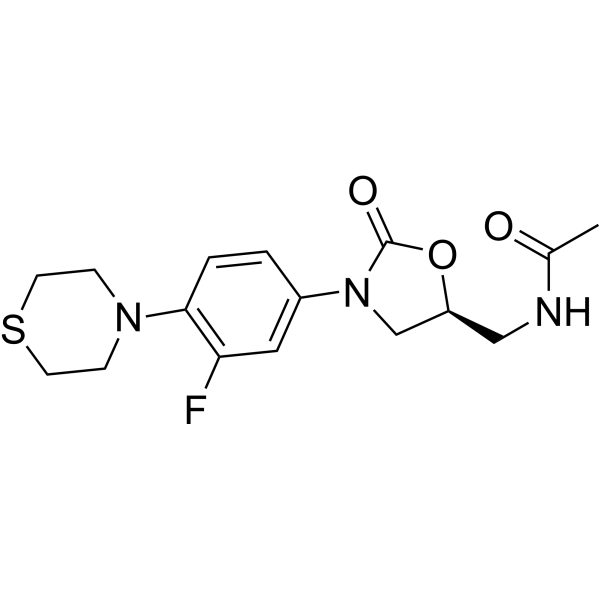
PNU-176798 is an antimicrobial agent, targeting protein synthesis in a wide spectrum of gram-positive and anaerobic bacteria.
|
-
- HY-125676
-
|
|
Drug Derivative
Bacterial
|
Others
|
|
Thermopterin is a derivative of the antimicrobial agent Pterin (HY-W037825) isolated from Methanoculleus thermophilus .
|
-
- HY-121272R
-
-
- HY-P3417
-
|
|
Bacterial
|
Infection
|
|
Amp1EP9 is an antimicrobial peptide. Amp1EP9 is a powerful tool for developing potent and nontoxic antimicrobial agents. Amp1EP9 has the potential for the research of multidrug-resistant bacterial infections .
|
-
- HY-183705
-
|
|
Fungal
Mitochondrial Metabolism
ATP Synthase
|
Infection
|
|
Antimicrobial agent-50 (Compound C2) is an anti-oomycete and Fungicidal agent. Antimicrobial agent-50 inhibits the activity of Mitochondrial respiratory chain complex III with an IC50 of 6.05 mg/L. Antimicrobial agent-50 inhibits ATP synthesis. Antimicrobial agent-50 exhibits protective activity against Phytophthora capsici in vivo. Antimicrobial agent-50 potently inhibits mycelial growth of Gaeumannomyces graminis, Rhizoctonia solani and Phytophthora capsici, with EC50 values of 2.97 mg/L, 1.86 mg/L and 0.74 mg/L, respectively .
|
-
- HY-123219
-
|
|
Bacterial
|
Infection
Inflammation/Immunology
|
|
Salifluor is a broad spectrum antimicrobial agent that has been investigated for its abilities to inhibit dental plaque formation. Salifluor can act as an effective anti-inflammatory agent .
|
-
- HY-174389
-
|
|
Bacterial
|
Infection
|
|
Antibacterial agent 283 (Compound 13) is an antimicrobial agent. Antibacterial agent 283 is active against both Gram-positive and Gram-negative bacteria, with potency comparable to the antibiotic Ampicillin (HY-B0522) .
|
-
- HY-173528
-
|
|
Bacterial
Fungal
|
Infection
Cancer
|
|
Antimicrobial agent-40 (Compound 5a) has antimicrobial activity against fungi, Gram-negative and Gram-positive bacteria. Antimicrobial agent-40 has good cytotoxicity against MCF-7 cells (IC50: 33.52 μM) and exhibits anticancer activity .
|
-
- HY-170993
-
|
|
Antibiotic
Bacterial
|
Infection
Inflammation/Immunology
|
|
Antimicrobial agent-39 (Compound 8i) is an antibiotic that targets 50S ribosomal subunit and inhibits bacterial protein synthesis. Antimicrobial agent-39 disrupts bacterial cell membranes, leads to leakage of cell contents, thereby exhibiting board-spectrum actibacterial activity. Antimicrobial agent-39 targets organic cation transporters (OCTs), accumulates in infected kidneys, thereby ameliorating pyelonephritis in mouse models .
|
-
- HY-W028039
-
-
- HY-133936
-
|
|
Bacterial
|
Others
|
|
Sulfaethidole, a heterocyclic sulfonamide, is an antimicrobial agent. Sulfaethidole binds to bovine Serum Albumin (BSA) with a pKA of 6.0 .
|
-
- HY-119555
-
|
|
Bacterial
|
Infection
|
|
Nifurpipone is an orally active broad-spectrum antimicrobial agent. Nifurpipone acts against Gram-positive and Gram-negative bacteria, and reduces bacterial loads in systemic, intramuscular and urinary tract infections in mouse models. Nifurpipone can be used in studies related to bacterial infections .
|
-
- HY-B2232A
-
|
Alkyldimethylbenzylammonium chloride (solid)
|
Biochemical Assay Reagents
Bacterial
|
Infection
|
|
Benzalkonium chloride (solid) (Alkyldimethylbenzylammonium chloride (solid)) is a quaternary ammonium preservative, cationic surfactant, and antimicrobial (Antimicrobial) agent. Benzalkonium chloride (solid) is toxic .
|
-
- HY-180414
-
|
|
Bacterial
Topoisomerase
|
Infection
|
|
Premafloxacin is a potent antimicrobial agent that exhibits activity against Staphylococcus aureus, Corynebacterium bovis, and Corynebacterium amylocolatum. Premafloxacin demonstrated potent antimicrobial activity against S. aureus by targeting topoisomerase IV, and is a poor substrate for NorA efflux pump. Premafloxacin can be used for antimicrobial research .
|
-
- HY-159883
-
|
|
TrxR
|
Infection
|
|
DDHF20 is an antimicrobial agent against Staphylococcus aureus, targeting and inhibiting its thioredoxin reductase (TrxR). It acts as a competitive inhibitor for the NADPH binding site. DDHF20 is expected to be used in research related to antimicrobial infections caused by Staphylococcus aureus .
|
-
- HY-P10539
-
|
|
Bacterial
|
Infection
|
|
Hp1404 is a novel cationic antimicrobial peptide. Hp1404 has specific inhibitory activity against Gram-positive bacteria, including Staphylococcus aureus (MRSA) resistant to Laburnetin (HY-N7382). Hp1404 has antimicrobial activity, low toxicity, and is not prone to drug resistance, and can be used in the research of antimicrobial agents .
|
-
- HY-164369
-
|
|
Bacterial
|
Infection
|
|
Antibiofilm agent-10 is an antibiofilm agent, which reduces bacterial levels and improves wound healing in recalcitrant pressure ulcers (PUs) in combination with negative pressure wound therapy (NPWT). Antibiofilm agent-10 enhances pathogen killing efficacy of antimicrobials .
|
-
- HY-175313
-
|
|
Bacterial
|
Infection
|
|
Antibacterial agent 286 (compound 5) is an effective broad-spectrum antimicrobial agent with strong inhibitory activity against methicillin-resistant S. aureus (MRSA) with an MIC of 25 μg/mL .
|
-
- HY-137168
-
|
|
Bacterial
|
Infection
|
|
LAB 149202F is an acylanilide antimicrobial agent that also has inhibitory effects on strains that produce formyl and phosphate resistance .
|
-
- HY-131102
-
|
|
Bacterial
DNA/RNA Synthesis
|
Infection
|
|
Mequindox is an antimicrobial agent . Mequindox acts as an inhibitor of DNA synthesis. Mequindox induces genotoxicity and carcinogenicity in mice .
|
-
- HY-B1290
-
|
Phenylethyl alcohol; Phenethyl alcohol; Benzyl carbinol
|
Environmental Pollutants
Bacterial
Virus Protease
|
Infection
|
|
2-Phenylethanol (Phenethyl alcohol) is an aromatic alcohol with a rose-like odour. 2-Phenylethanol is a flavour and fragrance compound, and can be used as a preservative and anti-microbial agent. 2-Phenylethanol has antityrosinase and antimicrobial activities .
|
-
- HY-119929
-
|
|
Bacterial
|
Infection
|
|
B 669, a c10fazimine analogue, is an antimicrobial agent. B 669 has the activity against Mycobacterium ieprae .
|
-
- HY-N14066
-
|
|
Fungal
|
Infection
|
|
Ascochitine, a polyketide-derived secondary metabolite, is a selective antifungal agent. Ascochitine exhibits broad-spectrum phytotoxicity and antimicrobial activities .
|
-
- HY-126462
-
|
|
Bacterial
|
Infection
|
|
Lantic acid is a triterpenoid compound possessing antimicrobial activity. Lantic acid exhibits inhibitory effects on a broad range of both Gram-positive and Gram-negative bacteria, with particular potency against Escherichia coli and Bacillus subtilis. Lantic acid is utilized in the research and development of antimicrobial agents .
|
-
- HY-W895978
-
|
|
Fungal
|
Infection
|
|
Isoconazole is an antifungal agent against Candida albicans. Isoconazole is a broad-spectrum antimicrobial azole that can be studied in research on dermatomycoses .
|
-
- HY-14762
-
|
|
Antibiotic
Bacterial
|
Infection
|
|
Besifloxacin is a fluoroquinolone antimicrobial agent. Besifloxacin can inhibit cytokine production by monocytes. Besifloxacin has broad-spectrum antibacterial activity .
|
-
- HY-N3947
-
|
|
Bacterial
|
Infection
|
|
Glepidotin B is a dihydroflavonol compound isolated from the extracts of American licorice, Glycyrrhiza lepidota (Leguminosae). Glepidotin B is an antimicrobial agent .
|
-
- HY-43806
-
|
|
Fungal
Bacterial
|
Infection
|
|
Antifungal agent 143 is potent antifungal agent which also exihibits antibacterial activity. Antifungal agent 143 inhibits growth of Candida albicans and Aspergillus niger, Escherichia coli, Pseudomonas aeruginosa, Staphylococcus aureus, and Streptococcus pyogenes. Antifungal agent 143 can be used for antimicrobial research .
|
-
- HY-161685
-
-
- HY-Y1826
-
|
|
Bacterial
Antibiotic
|
Infection
|
|
IITR01324 is an antimicrobial agent. IITR01324 has antimicrobial activity against Escherichia coli (MIC = 3.58 mg/L) and other Gram-negative bacteria (Shigella flexneri: MIC = 3.58 mg/L; Cronobacter sakazakii: MIC = 28.63 mg/L). IITR01324 exerts its antimicrobial activity by destroying bacterial DNA after activation of intracellular reductases. IITR01324 can be used to study the development of new antimicrobial drugs, especially against multidrug-resistant (MDR) pathogens .
|
-
- HY-161148
-
|
|
Bacterial
|
Infection
|
|
FtsZ-IN-9 (compound 11) is an antimicrobial agent. FtsZ-IN-9 inhibits the assembly of Mycobacterium smegmatis FtsZ (MsFtsZ)[1].
|
-
- HY-N8281
-
|
|
Bacterial
|
Infection
|
|
Daldinone A (Compound 4) is an antibacterial agent that can be isolated from Nigrospora oryzae. Daldinone A has antimicrobial potential against P. aeruginosa .
|
-
- HY-B0343R
-
|
A-56620 (Standard)
|
Reference Standards
Antibiotic
Bacterial
|
Infection
|
|
Sarafloxacin (Standard) is the analytical standard of Sarafloxacin. This product is intended for research and analytical applications. Sarafloxacin (A-56620) is a fluoroquinolone antimicrobial agent .
|
-
- HY-122073
-
|
|
Bacterial
|
Infection
|
|
Furalazine is an antimicrobial agent. Furalazine shows activity against drug-resistant strains of cholera bacteria. Furalazine has the potential for the research of cholera .
|
-
- HY-B1267
-
|
|
Bacterial
Antibiotic
|
Infection
|
|
Sulfaguanidine is an orally active antimicrobial agent/antibiotic of sulfonamide class. Sulfaguanidine can be used for the research of enteric infections such as bacillary dysentery .
|
-
- HY-B0565
-
|
|
Parasite
Bacterial
|
Infection
|
|
Ronidazole is a potent and orally active antiprotozoal and anti-microbial agent. Ronidazole acts as a veterinary agent against Tritrichomonas foetus in cats models. Ronidazole can be used the research of forhistomoniasis and swine dysentery .
|
-
- HY-14603R
-
|
Iodochlorohydroxyquinoline (Standard)
|
Reference Standards
Fungal
Autophagy
Mitophagy
Antibiotic
Parasite
|
Infection
Cancer
|
|
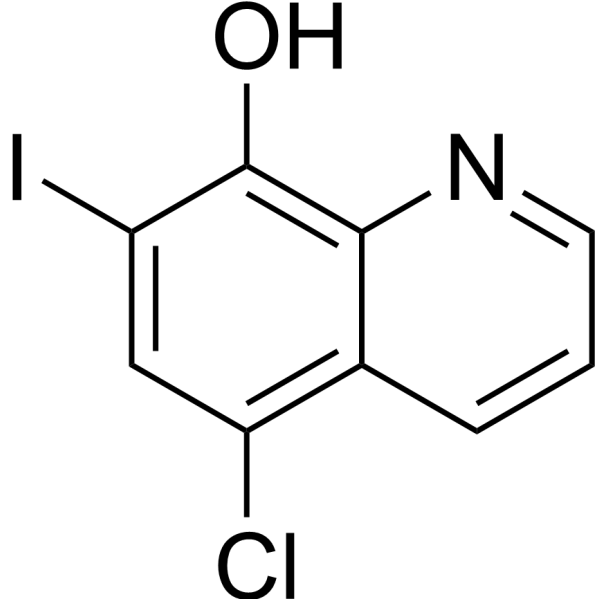
Clioquinol (Standard) is the analytical standard of Clioquinol. This product is intended for research and analytical applications. Clioquinol (Iodochlorhydroxyquin) is a topical antifungal agent with anticancer activity. Clioquinol acts as an oral antimicrobial agent for the research of diarrhea and skin infections. Antibiotic .
|
-
- HY-142075
-
|
|
Bacterial
|
Infection
|
|
Antibacterial agent 134 (compound 1) is an diketopiperazine alkaloid with antimicrobial activity. Antibacterial agent 134 is the major metabolite in the culture of Hymeniacidon perleve associated bioactive bacterium Pseudomonas sp. NJ6-3-1 .
|
-
- HY-B0343S
-
|
A-56620-d8
|
Isotope-Labeled Compounds
|
Infection
|
|
Sarafloxacin-d8 is the deuterium labeled Sarafloxacin(HY-B0343).Sarafloxacin (A-56620) is a fluoroquinolone antimicrobial agent .
|
-
- HY-W083373
-
|
Antibacterial agent 65
|
Bacterial
|
Infection
|
|
(E)-3,4-Dimethoxychalcone is an isoform of 3,4-Dimethoxychalcone (HY-W083373A), a potential antimicrobial and antioxidant agent.
|
-
- HY-W587449
-
|
|
Drug Intermediate
|
Others
|
|
Chlorhexidine impurity 1 is a impurity of Chlorhexidine (HY-B1248). Chlorhexidine is a orally active cationic antimicrobial agent that targets microbial cell membranes.
|
-
- HY-W012346
-
|
|
Drug Derivative
Bacterial
|
Infection
|
|
Geranyl isobutyrate is a synthetic α,β‑unsaturated branched‑chain aliphatic ester and a geraniol derivative. Geranyl isobutyrate acts as a food and feed flavouring agent and a biologically active antimicrobial compound. Geranyl isobutyrate shows antimicrobial activity against Gram‑positive and most Gram‑negative bacteria .
|
-
- HY-156421
-
|
|
Bacterial
|
Infection
|
|
QST4 has antitubercular activity, with the MIC value of 6.25 μM in Mycobacterium tuberculosis H37Rv .
|
-
- HY-W099729
-
|
|
Bacterial
|
Inflammation/Immunology
|
|
Ethylhexylglycerin has antimicrobial activity, inhibiting the growth of Acinetobacter spp., Pseudomonas aeruginosa complex, and Stenotrophomonas maltophilia. Ethylhexylglycerin can cause pigmentary contact dermatitis .
|
-
- HY-180521
-
|
|
Fungal
|
Infection
Cancer
|
|
Piroctone is a potent hydroxypyridone antimicrobial agent that shows remarkable activity against fungi including Candida species. Piroctone inhibits hyphal induction of Candida albicans. Piroctone can efficiently chelate intracellular iron to induce relevant cytotoxicity in neuroblastoma cells. Piroctone can be used for antimicrobial and neuroblastoma research .
|
-
- HY-12638R
-
|
DDM (Standard)
|
Reference Standards
Bacterial
Fungal
Parasite
|
Infection
|
|
Dichlorophen (Standard) is the analytical standard of Dichlorophen (HY-12638). This product is intended for research and analytical applications. Dichlorophen is a chlorophenol antimicrobial agent that can destroy the integrity of microbial cell membranes and interfere with the activity of metabolic enzymes. Dichlorophen can covalently bind to the thiol groups of microbial proteins and has broad-spectrum antibacterial, antifungal and anthelmintic activity. Dichlorophen can be used as an antimicrobial agent in the study of drug-resistant bacterial infections .
|
-
- HY-108365
-
|
ML-1709460
|
Bacterial
Antibiotic
|
Infection
|
|
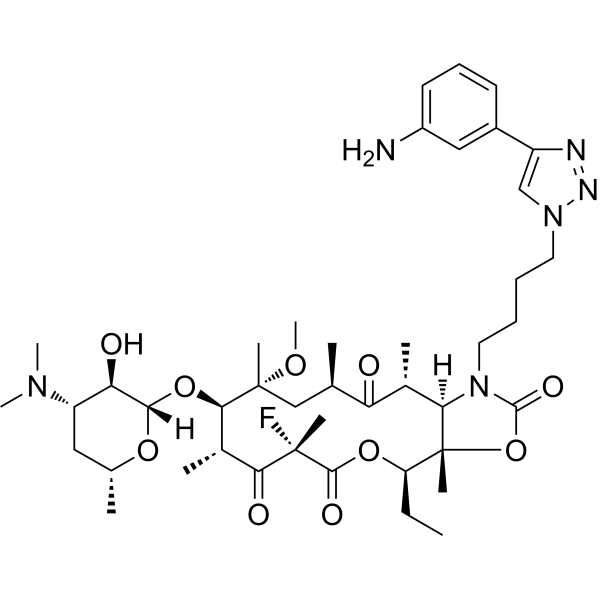
Gamithromycin is an antimicrobial agent which can inhibit the growth of MmmSC strains B237 and Tan8 with MICs of 0.00012 and 0.00006 μg/mL, respectively.
|
-
- HY-P4327
-
|
|
Bacterial
|
Infection
|
|
Hispidalin is a novel antimicrobial peptide with broad and efficient antibacterial activity against various bacterial and fungal pathogens, and can be used as an antibacterial agent and food preservative .
|
-
- HY-N0575
-
-
- HY-112225
-
-
- HY-135196
-
|
MDL 62873
|
Bacterial
Drug Derivative
|
Infection
|
|
Mideplanin (MDL 62873) is an antimicrobial agent, semisynthetic amide derivative of Teicoplanin (HY-A0097). Mideplanin is highly active in vitro against staphylococci .
|
-
- HY-B1137
-
|
Isopropylaminoantipyrine
|
Bacterial
|
Inflammation/Immunology
|
|
Ramifenazone (Isopropylaminoantipyrine) is a pyrazole derivative and acts as a non-steroidal anti-inflammatory agent (NSAID). Ramifenazone has analgesic, antipyretic, anti-inflammatory and antimicrobial activities .
|
-
- HY-N8520
-
|
|
Bacterial
|
Infection
Cancer
|
|
Variculanol is an antimicrobial, anticancer and anti-HCV NS3/4A Protease agent which can be extracted from marine fungus Aspergillus versicolor .
|
-
- HY-183176
-
|
|
Bacterial
Fungal
|
Infection
|
|
Laurolinium acetate is a cationic antimicrobial agent. Laurolinium acetate exerts activity against Gram-positive and Gram-negative bacteria, and fungi. Laurolinium acetate can be used for the research of microbial infection .
|
-
- HY-162087
-
|
|
Bacterial
|
Infection
|
|
FabH-IN-2 (25), an antimicrobial agent, exhibits remarkable potential as an agent with an MIC range of 1.25-3.13 μg/mL against the tested bacterial strains and an IC50 of 2.0 μM against E. coli-derived FabH .
|
-
- HY-145854
-
|
|
Bacterial
|
Infection
Inflammation/Immunology
|
|
GA-O-06, a 18β-Glycyrrhetinic acid derivative, is a potent antimicrobial and anti-inflammatory agent. GA-O-06 exerts anti-inflammation through the inhibition of NO, pro-inflammatory cytokines and chemokines. GA-O-06 displays a high antimicrobial activity against Gram-positive bacteria .
|
-
- HY-145853
-
|
|
Bacterial
|
Infection
Inflammation/Immunology
|
|
GA-O-02, a 18β-Glycyrrhetinic acid derivative, is a potent antimicrobial and anti-inflammatory agent. GA-O-02 exerts anti-inflammation through the inhibition of NO, pro-inflammatory cytokines and chemokines. GA-O-02 displays a high antimicrobial activity against Gram-positive bacteria .
|
-
- HY-175254
-
|
|
Bacterial
|
Infection
|
|
Antibiofilm agent-17 is a dual-action biofilm inhibitor against Pseudomonas aeruginosa (IC50 = 0.33 μM). Antibiofilm agent-17 inhibits biofilm growth by reducing quorum sensing-mediated virulence production and iron ion acquisition. Antibiofilm agent-17 exhibits synergistic antimicrobial effects in a mouse wound infection model. Antibiofilm agent-17 can be used in research on combating Pseudomonas aeruginosa infections .
|
-
- HY-70083
-
-
- HY-N9947
-
|
|
Bacterial
Antibiotic
|
Infection
|
|
Methyl-6-gingerol is an antimicrobial agent derived from Aframomum melegueta that exhibits anti-mycobacterial activity by inhibiting the efflux of toxins within Mycobacterium species .
|
-
- HY-B0972
-
|
|
Bacterial
|
Inflammation/Immunology
|
|
Cinchophen is a potent and orally active non-steroidal anti-inflammatory agent, has analgesic and antimicrobial effects. Cinchophen can be used for the research of arthritis and some liver diseases .
|
-
- HY-W792760
-
|
|
Bacterial
|
Infection
|
|
(E)-2-(4-Cinnamoylphenoxy)acetic acid is an antimicrobial agent with a minimum inhibitory concentration of 125 μg/mL against Mycobacterium smegmatis, Staphylococcus aureus, and Candida albicans .
|
-
- HY-B1444
-
|
|
Bacterial
Fungal
Antibiotic
|
Infection
|
|
Isoconazole nitrate is a broad-spectrum antimicrobial agent with a highly effective antimycotic and gram-positive antibacterial activity, exhibiting a rapid rate of absorption and low systemic exposure potential .
|
-
- HY-W011522
-
|
|
Bacterial
Apoptosis
Antibiotic
Autophagy
|
Infection
Cancer
|
|
Taurolidine is a potent antimicrobial and anticancer agent. Taurolidine inhibits cell proliferation. Taurolidine induces apoptosis and autophagy. Taurolidine rescues mice from sepsis-associated lethality .
|
-
- HY-N19815
-
|
Aspergilol E
|
Bacterial
Fungal
|
Infection
|
|
Gibellulin A is a natural antimicrobial agent. Gibellulin A inhibits the growth of aquatic bacteria, human pathogenic bacteria and phytopathogenic fungi.Gibellulin A can be used for the research of bacterial and fungal infections .
|
-
- HY-P10364
-
|
UBI(29-41)
|
Bacterial
Antibiotic
|
Infection
Inflammation/Immunology
|
|
Ubiquicidin (29-41) (UBI (29-41)) is an Antimicrobial peptide and infection-localizing agent. Ubiquicidin (29-41) acts as an infection-specific imaging agent and infection-targeting agent. Ubiquicidin (29-41) serves as an antibiotic efficacy monitoring agent, and its aggregation level in infections induced by Staphylococcus aureus is higher than that in infections induced by Escherichia coli .
|
-
- HY-N7538
-
|
|
Bacterial
|
Infection
|
|
Dealanylalahopcin is an antimicrobial agent that can be isolated from the culture filtrate of Streptomyces leucoderma subsp. ochraceus. Dealanylalahopcin can also be synthesized by enzymatic hydrolysis of alahopcin by microbial α-amino acid ester hydrolases. Dealanylalahopcin has weak antimicrobial activity against Gram-positive and Gram-negative bacteria and exhibits moderate inhibition of collagen prolyl hydroxylase .
|
-
- HY-N8461
-
|
3-Hydroxypropionaldehyde; 3-Hydroxypropanal
|
Bacterial
|
Infection
|
|
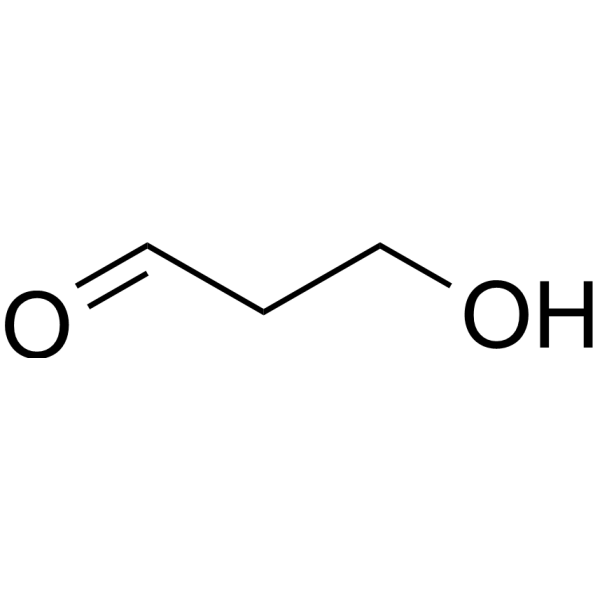
Reuterin is a broad-spectrum antimicrobial agent active against Gram positive and Gram negative bacteria, as well as yeasts, moulds and protozoa. Reuterin is produced by specific strains of Lactobacillus reuteri during anaerobic metabolism of glycerol. Reuterin also demonstrates potent antimicrobial activity against a broad panel of human and poultry meat campylobacter spp. Isolates .
|
-
- HY-152252
-
|
|
Bacterial
Fungal
|
Infection
|
|
Antibacterial agent 133 (4l) is an antimicrobial agent that has shown anti-Candida activity, particularly through LMD enzyme inhibition. Antibacterial agent 133 shows MIC90 values of 1.95 μg/mL against Candida albicans ATCC 24433, Candida smoothis ATCC 90030 and Candida subtilis ATCC 22019 .
|
-
- HY-162418
-
|
|
Bacterial
Fungal
|
Infection
|
|
Antibacterial agent 203 (Compound 5h) has antibacterial and antifungal activity. Antibacterial agent 203 has potent antifungal activity against C. albicans, with a MIC of 3.90 μg/mL. Antibacterial agent 203 has antimicrobial activity on healthy mouse fibroblast cells (L929), with an IC50 of 75.96 μM .
|
-
- HY-B1782R
-
|
|
Reference Standards
Bacterial
Antibiotic
|
Infection
|
|
Sulfamoxole (Standard) is the analytical standard of Sulfamoxole. This product is intended for research and analytical applications. Sulfamoxole is a broad- spectrum chemotherapeutic antimicrobial agent. Sulfamoxole can be used for the study of pediatric infections .
|
-
- HY-108880
-
|
Carbenicillin indanyl sodium; CP-15464-2
|
Bacterial
|
Infection
|
|
Carindacillin (Carbenicillin indanyl) sodium is an orally active and broad-spectrum antimicrobial agent. Carindacillin sodium can be hydrolyzed to Carbenicillin in vivo. Carindacillin sodium can be used for the research of urinary-tract infection .
|
-
- HY-163528
-
|
|
Bacterial
|
Infection
|
|
Antibacterial agent 213 (compound Thy3d) shows potent antimicrobial activity by disrupting the integrity of
the membrane of bacterial, with the MIC of 0.5 μg/ml for Staphylococcus aureus (MRSA) .
|
-
- HY-Y1326R
-
|
|
Biochemical Assay Reagents
Reference Standards
Bacterial
|
Infection
|
|
Sodium metabisulfite (Standard) is the analytical standard of Sodium metabisulfite. This product is intended for research and analytical applications.Sodium metabisulfite, a sulfite salt, is used as an antioxidant and antimicrobial agent in a variety of drugs and functions as a preservative in many food preparations.
|
-
- HY-N3602
-
|
(-)-Rengyolone
|
Bacterial
|
Inflammation/Immunology
|
|
Cleroindicin F ((-)-Rengyolone), a cleroindicin, is an antimicrobial agent. Cleroindicin F shows relatively high anticandidal activity against Candida strains with a MIC value down to 12.5 µg/mL .
|
-
- HY-N16692
-
|
|
Bacterial
|
Infection
|
|
Shizukolidol is an antimicrobial agent that can be isolated from polyfollicles of Magnolia vovidessi. Shizukolidol shows antibacterial activity against Chryseobacterium sp. Shizukolidol can be used for the research of bacterial infection .
|
-
- HY-B1729S1
-
|
|
Isotope-Labeled Compounds
Oxidative Phosphorylation
Bacterial
Fungal
|
Infection
|
|
Phenoxyethanol-d4 is the deuterium labeled Phenoxyethanol. Phenoxyethanol has a broad spectrum of antimicrobial agent. Phenoxyethanol is an uncouple agent in oxidative phosphorylation from respiration and competitively inhibits malate dehydrogenase. Phenoxyethanol is used as a preservative in cosmetic, vaccine, and textile, et al .
|
-
- HY-B1729S
-
|
|
Isotope-Labeled Compounds
Oxidative Phosphorylation
Bacterial
Fungal
|
Infection
|
|
Phenoxyethanol-d2 is the deuterium labeled Phenoxyethanol . Phenoxyethanol has a broad spectrum of antimicrobial agent. Phenoxyethanol is an uncouple agent in oxidative phosphorylation from respiration and competitively inhibits malate dehydrogenase. Phenoxyethanol is used as a preservative in cosmetic, vaccine, and textile, et al .
|
-
- HY-B1290R
-
|
Phenylethyl alcohol (Standard); Phenethyl alcohol (Standard); Benzyl carbinol (Standard)
|
Virus Protease
Bacterial
Reference Standards
|
Infection
|
|
2-Phenylethanol (Standard) is the analytical standard of 2-Phenylethanol. This product is intended for research and analytical applications. 2-Phenylethanol (Phenethyl alcohol) is an aromatic alcohol with a rose-like odour. 2-Phenylethanol is a flavour and fragrance compound, and can be used as a preservative and anti-microbial agent. 2-Phenylethanol has antityrosinase and antimicrobial activities .
|
-
- HY-Y1826R
-
|
|
Reference Standards
Bacterial
Antibiotic
|
Infection
|
|
IITR01324 (Standard) is the analytical standard of IITR01324. This product is intended for research and analytical applications. IITR01324 is an antimicrobial agent. IITR01324 has antimicrobial activity against Escherichia coli (MIC=3.58 mg/L) and other Gram-negative bacteria (Shigella flexneri: MIC=3.58 mg/L; Cronobacter sakazakii: MIC=28.63 mg/L). IITR01324 exerts its antimicrobial activity by destroying bacterial DNA after activation of intracellular reductases. IITR01324 can be used to study the development of new antimicrobial drugs, especially against multidrug-resistant (MDR) pathogens .
|
-
- HY-W075256
-
|
|
Environmental Pollutants
Bacterial
|
Others
|
|
Isotianil is a plant defense inducer that has no direct antimicrobial effect but instead activates typical plant defense responses. Isotianil can be used as a plant protection agent for controlling rice blast .
|
-
- HY-136613
-
|
|
Bacterial
|
Infection
|
|
Demethyl linezolid is a impurity of linezolid. Demethyl linezolid is a useful antimicrobial agent extracted from patent WO1995007271A1, example 9, effective against a number of human and veterinary pathogens .
|
-
- HY-W015820
-
-
- HY-W015820R
-
-
- HY-143232
-
|
|
Fungal
Bacterial
|
Infection
Cancer
|
|
Antibacterial agent 73 (compound 7a) is a potent antimicrobial agent. Antibacterial agent 73 exhibits very good antitubercular activity (MIC=0.65 µg/mL) against Mtb H37Rv. Antibacterial agent 73 shows good activity against fungal and bacterial. Antibacterial agent 73 also shows cytotoxicity in MCF-7 breast cancer cell lines, with IC50 of 8.20 μM .
|
-
- HY-B1729R
-
|
|
Oxidative Phosphorylation
Reference Standards
Bacterial
Fungal
|
Infection
|
|
Phenoxyethanol (Standard) is the analytical standard of Phenoxyethanol. This product is intended for research and analytical applications. Phenoxyethanol has a broad spectrum of antimicrobial agent. Phenoxyethanol is an uncouple agent in oxidative phosphorylation from respiration and competitively inhibits malate dehydrogenase. Phenoxyethanol is used as a preservative in cosmetic, vaccine, and textile, et al .
|
-
- HY-178722
-
|
|
Fungal
Bacterial
|
Infection
|
|
Deferasirox methyl ester (compound 6a), a derivative of Deferasirox (HY-17359), is an antimicrobial agent. Deferasirox methyl ester exhibits activities against Staphylococcus aureus, Staphylococcus epidermidis, Escherichia coli, Candida albicans and Aspergillus niger with MICs of 0.5, 4.0, 1.0, 4.0, and 2.0 μg/mL, respectively. Deferasirox methyl ester can be used for antimicrobial research .
|
-
- HY-B1290S3
-
|
Phenylethyl alcohol-13C2; Phenethyl alcohol-13C2; Benzyl carbinol-13C2
|
Bacterial
Virus Protease
Isotope-Labeled Compounds
|
Infection
|
|
2-Phenylethanol- 13C2 is 13C labeled 2-Phenylethanol (HY-B1290). 2-Phenylethanol (Phenethyl alcohol) is an aromatic alcohol with a rose-like odour. 2-Phenylethanol is a flavour and fragrance compound, and can be used as a preservative and anti-microbial agent. 2-Phenylethanol has antityrosinase and antimicrobial activities .
|
-
- HY-P10556
-
|
|
Bacterial
|
Infection
|
|
(KFF)3K is a cell penetrating peptide that can promote the absorption of other antibiotics by disrupting the outer membrane of bacteria. (KFF)3K can be introduced into a hydrocarbon scaffold to induce its antibacterial properties, making it an effective antimicrobial peptide. (KFF)3K can be used in the development of new antimicrobial agents .
|
-
- HY-N19688
-
|
|
Bacterial
|
Infection
|
|
Glucomoringin, a structurally unusual glucosinolate found in seeds of Moringa oleifera Lam., is an antimicrobial agent. Glucomoringin permits to maximize it's power when bioactivated with myrosinase. Glucomoringin can be used for the research of bacterial infections .
|
-
- HY-W016491R
-
|
Isopropylparaben (Standard)
|
Reference Standards
Bacterial
|
Infection
|
|
Isopropyl 4-hydroxybenzoate (Standard) is the analytical standard of Isopropyl 4-hydroxybenzoate. This product is intended for research and analytical applications. Isopropyl 4-hydroxybenzoate (Isopropylparaben) is an antimicrobial and antioxidant agent .
|
-
- HY-B1267S1
-
|
|
Isotope-Labeled Compounds
Bacterial
Antibiotic
|
Infection
|
|
Sulfaguanidine- 13C6 is the 13C6 labeled Sulfaguanidine. Sulfaguanidine is an orally active antimicrobial agent/antibiotic of sulfonamide class. Sulfaguanidine can be used for the research of enteric infections such as bacillary dysentery.
|
-
- HY-131102R
-
|
|
Reference Standards
Bacterial
DNA/RNA Synthesis
|
Infection
|
|
Mequindox (Standard) is the analytical standard of Mequindox. This product is intended for research and analytical applications. Mequindox is an antimicrobial agent . Mequindox acts as an inhibitor of DNA synthesis. Mequindox induces genotoxicity and carcinogenicity in mice .
|
-
- HY-I0678R
-
|
|
Reference Standards
Drug Metabolite
PDGFR
|
Cancer
|
Quinocetone (Standard) is the analytical standard of Quinocetone. This product is intended for research and analytical applications. Quinocetone is a potent synthetic antimicrobial agent that is used for improving the feed efficiency and controlling dysentery in food-producing animals .
|
-
- HY-W838632
-
|
|
Bacterial
Antibiotic
|
Infection
|
|
Antibacterial agent 266 (Compound C5) is a plant pathogen inhibitor that disrupts bacterial integrity, with EC50 values of 24.1 μg/mL and 39.0 μg/mL against Xanthomonas oryzae pv oryzae (Xoo) and X. axonopodis pv citri (Xac), respectively. Antibacterial agent 266 can be used in the development of plant pathology and agricultural antimicrobial agents research .
|
-
- HY-115959
-
|
|
Bacterial
|
Inflammation/Immunology
Cancer
|
|
Anticancer agent 34 (compound 9), a sulfonylurea derivative, is a potent antimicrobial and anticancer agent. Anticancer agent 34 inhibits the microbial growth of B. mycoides, E. coli, and C. albicans with a MIC between 0.156 and 0.039 mg/ml. Anticancer agent 34 inhibits A549, PC3 cell growth with IC50s of 8.4 µg/ml, 7.8 µg/ml, respectively .
|
-
- HY-115961
-
|
|
Bacterial
|
Inflammation/Immunology
Cancer
|
|
Anticancer agent 36 (compound 11), a sulfonylurea derivative, is a potent antimicrobial and anticancer agent. Anticancer agent 36 inhibits the microbial growth of B. mycoides, E. coli, and C. albicans with a MIC between 0.156 and 0.039 mg/L. Anticancer agent 36 inhibits A549, PC3 cell growth with IC50s of 19.7 µg/mL, 11.9 µg/mL, respectively .
|
-
- HY-B0565S
-
|
|
Isotope-Labeled Compounds
Bacterial
Parasite
|
Others
|
|
Ronidazole-d3 is the deuterium labeled Ronidazole (HY-B0565) . Ronidazole is a potent and orally active antiprotozoal and anti-microbial agent. Ronidazole acts as a veterinary agent against Tritrichomonas foetus?in cats models. Ronidazole can be used the research of forhistomoniasis?and?swine?dysentery .
|
-
- HY-B0565R
-
|
|
Reference Standards
Parasite
Bacterial
|
Infection
|
|
Ronidazole (Standard) is the analytical standard of Ronidazole. This product is intended for research and analytical applications. Ronidazole is a potent and orally active antiprotozoal and anti-microbial agent. Ronidazole acts as a veterinary agent against Tritrichomonas foetus?in cats models. Ronidazole can be used the research of forhistomoniasis?and?swine?dysentery .
|
-
- HY-149762
-
|
|
Bacterial
|
Infection
|
|
IMBI (compound 32) is an antibacterial agent that inhibits quorum sensing (QS) against drug-resistant pathogens. IMBI inhibits biofilm formation of Salmonella marcescens and restores or increases its susceptibility to antimicrobial drugs .
|
-
- HY-A0090
-
|
|
Bacterial
Antibiotic
|
Infection
|
|
Nitrofurantoin is a potent and orally active broad-spectrum beta-lactamase antimicrobial agent. Nitrofurantoin acts as an antibiotic and can be used for the study of urinary tract infections (UTIs), including cystitis and kidney infections .
|
-
- HY-105033
-
|
Pirfloxacin
|
Bacterial
|
Infection
|
|
Irloxacin (Pirfloxacin) is a quinolone antibacterial agent. Irloxacin shows greater activity with an acid pH. Irloxacin has a good in vitro antimicrobial spectrum against both gram-positive and gram-negative bacteria. Orally active .
|
-
- HY-W740764
-
|
Isopropyl-d7 Paraben
|
Isotope-Labeled Compounds
Bacterial
|
Infection
|
|
Isopropyl 4-hydroxybenzoate-d7 is the deuterium labeled Isopropyl 4-hydroxybenzoate (HY-W016491). Isopropyl 4-hydroxybenzoate (Isopropylparaben) is an antimicrobial and antioxidant agent .
|
-
- HY-N12752
-
|
Casbene
|
Bacterial
Fungal
|
Infection
|
|
(-)-Casbene (Casbene) is an antimicrobial agent that can be found in Euphorbiaceae plants. (-)-Casbene retards Aspergillus niger development, and inhibits Escherichia coli growth. (-)-Casbene can be used for the research of bacterial and fungal infection .
|
-
- HY-N0172S
-
|
3,4-Dihydroxycinnamic acid-13C3
|
Bacterial
Fungal
|
Infection
|
|
Caffeic acid- 13C3 is an 13C labeled caffeic acid. Caffeic acid is a phytonutrient belonging to the flavonoids. Caffeic acid and its derivatives, are potential antimicrobial agents, chronic infection induced by microbes such as bacteria, fungi, and viruses .
|
-
- HY-U00291
-
|
|
Antibiotic
|
Infection
|
|
Tauroxicum can be used as a nontoxic, non-antimicrobial agent that can replace or supplement the use of antibiotics in the animal husbandry of livestock animals to increase health and general well-being, productivity, feed efficiency and weight gain.
|
-
- HY-122975R
-
|
Benzoyl metronidazole (Standard)
|
Reference Standards
Bacterial
Parasite
|
Infection
|
|
Metronidazole Benzoate (Standard) is the analytical standard of Metronidazole Benzoate. This product is intended for research and analytical applications. Metronidazole Benzoate, derives from a metronidazole and a benzoic acid, has a role as an antibacterial, antimicrobial, antiparasitic, and antitrichomonal agent .
|
-
- HY-168258
-
|
|
Bacterial
|
Infection
|
|
Antibiofilm agent-13 (compound 14b) is a potent antibacterial agent that displays a broad-spectrum antimicrobial activity. Antibiofilm agent-13 could disintegrate the integrity of bacterial cell membranes by destroying transmembrane potential and enhancing membrane permeability, and causing the generation of intracellular ROS and the leakage of DNA and proteins, ultimately leading to bacterial death. Antibiofilm agent-13 inhibits both Gram-positive bacteria (MIC of 0.5-1 μg/mL) and Gram-negative bacteria (MIC of 1-32 μg/mL) .
|
-
- HY-135842
-
|
|
Bacterial
Antibiotic
|
Infection
|
|
Aspoxicillin is a broad-spectrum antimicrobial agent against 68 isolates of Actinobacillus pleuropneumoniae with an MIC90 value of <= 0.05 μg/ml. Aspoxicillin has a long half-life in mouse serum of 55 minutes .
|
-
- HY-P2920
-
-
- HY-W744147
-
|
|
Isotope-Labeled Compounds
Bacterial
|
Infection
|
|
4-Glycidyloxycarbazole-d5 is the deuterium labeled 4-Glycidyloxycarbazole (HY-W013429). 4-Glycidyloxycarbazole (compound 8) is an antimicrobial agent that disrupts bacterial biofilm formation .
|
-
- HY-10392
-
|
PNU-100480; U-100480; PF-02341272
|
Bacterial
Antibiotic
|
Infection
|
|
Sutezolid (PNU-100480), an orally active oxazolidinone antimicrobial agent, acts by inhibiting bacterial protein synthesis. Sutezolid has potent activity against mycobacteria, and is used for the research of drug-resistant tuberculosis .
|
-
- HY-168705
-
|
|
Bacterial
|
Infection
|
|
Anti-MRSA agent 20 (Compound a4) is an anti-microbial agent (MIC: < 0.03125 μg/mL) against MRSA). Anti-MRSA agent 20 binds to the ribosomal peptidyl transferase center and inhibits bacterial survival by inhibiting MRSA toxin synthesis and bacterial division. Anti-MRSA agent 20 significantly reduces the MRSA load in the lungs and attenuates lung injury in the MRSA-infected mice (ED50 = 6.48 mg/kg) .
|
-
- HY-182315
-
|
|
Bacterial
|
Infection
|
|
Antibacterial agent 334 is an antimicrobial peptide with in vitro activity against both Gram-negative and Gram-positive bacteria. Antibacterial agent 334 disrupts bacterial membrane integrity, induces membrane depolarization, impairs bacterial physiological processes without causing immediate bacterial lysis, and reduces the formation of Staphylococcus aureus biofilms. Antibacterial agent 334 can be used in studies related to Staphylococcus aureus infections .
|
-
- HY-P4836
-
|
|
Parasite
|
Infection
|
|
LL-37 FK-13 is an antimicrobial agent, that inhibits Trichomonas vaginalis. LL-37 FK-13 exhibits slight hemolytic effects on human erythrocytes and low cytotoxicity to human fibroblasts .
|
-
- HY-B0614
-
|
|
Bacterial
Antibiotic
|
Infection
|
|
Mafenide is an effective sulfonamide-type antimicrobial agent used for burn wounds. Mafenide shows activity against both Gram-positive and Gram-negative organisms, including Pseudomonas aeruginosa, via inhibition of nucleotide synthesis .
|
-
- HY-P3494B
-
|
|
Hepcidin
Bacterial
|
Infection
Inflammation/Immunology
|
|
Hepcidin-25 (human) TFA is an iron metabolism modulator and Antimicrobial agent. Hepcidin-25 (human) TFA shows anti-inflammatory and anti-bacterial activity via modulation of iron-mediated oxidant injury .
|
-
- HY-B1267R
-
|
|
Reference Standards
Bacterial
Antibiotic
|
Infection
|
|
Sulfaguanidine (Standard) is the analytical standard of Sulfaguanidine. This product is intended for research and analytical applications. Sulfaguanidine is an orally active antimicrobial agent/antibiotic of sulfonamide class. Sulfaguanidine can be used for the research of enteric infections such as bacillary dysentery .
|
-
- HY-B1137S
-
|
|
Isotope-Labeled Compounds
Bacterial
|
Inflammation/Immunology
|
|
Ramifenazone-d7 is the deuterium labeled Ramifenazone. Ramifenazone (Isopropylaminoantipyrine) is a pyrazole derivative and acts as a non-steroidal anti-inflammatory agent (NSAID). Ramifenazone has analgesic, antipyretic, anti-inflammatory and antimicrobial activities .
|
-
- HY-135901
-
|
|
ADC Payload
Bacterial
|
Cancer
|
|
Py-MPB-amino-C3-PBD is a cytotoxic agent comprised non-alkylating group. Py-MPB-amino-C3-PBD acts as the payload for ADCs. Antimicrobial activity .
|
-
- HY-B0614B
-
|
|
Bacterial
Antibiotic
|
Infection
|
|
Mafenide hydrochloride is an effective sulfonamide-type antimicrobial agent used for burn wounds. Mafenide hydrochloride shows activity against both Gram-positive and Gram-negative organisms, including Pseudomonas aeruginosa, via inhibition of nucleotide synthesis .
|
-
- HY-B1064
-
|
Clindamycin 2-phosphate; U-28508
|
Bacterial
Antibiotic
Parasite
|
Infection
Cancer
|
|
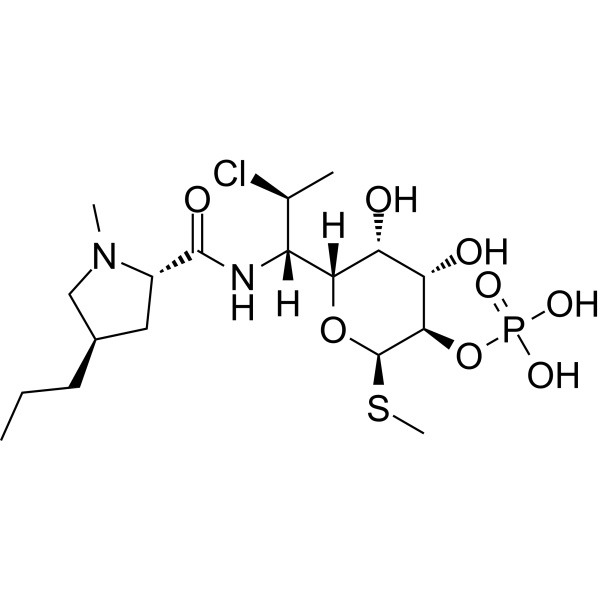
Clindamycin phosphate (Clindamycin 2-phosphate) is a broad-spectrum bacteriostatic lincosamide antibiotic. Clindamycin phosphate is the proagent of Clindamycin (HY-B1455) with no antimicrobial activity in vitro but can be rapidly converted in vivo to the active parent agent, Clindamycin, by phosphatase ester hydrolysis. Clindamycin phosphate can be used for researching acne and bacterial vaginosis . Clindamycin phosphate has no cytotoxicity. Combined with platelet rich fibrin (PRF), PRF-Clindamycin phosphate enhances antimicrobial properties .
|
-
- HY-162672
-
|
|
Bacterial
|
Infection
|
|
Antibacterial agent 231 (derivative 8) is an antimicrobial agent against multidrug-resistant Helicobacter pylori (H. pylori) with a minimum inhibitory concentration of 0.25–0.5 μg/mL. Antibacterial agent 231 directly targets the protein transposase subunit SecA and the outer membrane protein assembly factor BamD to inhibit the trafficking and assembly of bacterial outer membrane proteins (OMPs). Antibacterial agent 231 can be used to study the effects of antibiotic treatment on intestinal microbial balance .
|
-
- HY-W023253
-
|
|
Bacterial
Fungal
|
Infection
Inflammation/Immunology
|
|
Biclotymol is an antimicrobial agent against gram-positive cocci. Biclotymol inhibits Streptococcus pneumoniae and Haemophilus influenzae, with MIC of 150 and 150 μM. Biclotymol exhibits anti-inflammatory and analgesic activity and ameliorates the otolaryngology infection and throat sore .
|
-
- HY-173238
-
|
|
Bacterial
Reactive Oxygen Species (ROS)
|
Infection
|
|
Antibacterial Agent 273 (Compound 15e) is a membrane-targeting antimicrobial agent that disrupts bacterial cell membranes, exhibiting a MIC of 4 μg/mL against Staphylococcus aureus. By compromising membrane integrity, it induces leakage of intracellular nucleic acids and proteins, suppresses bacterial metabolic activity, and triggers the accumulation of reactive oxygen species (ROS). Antibacterial Agent 273 is suitable for research on infections caused by Staphylococcus aureus .
|
-
- HY-135900
-
|
|
ADC Payload
Bacterial
|
Cancer
|
|
Aniline-MPB-amino-C3-PBD is a cytotoxic agent comprised non-alkylating group. Aniline-MPB-amino-C3-PBD is a sequence-selective DNA minor-groove binding agent. Aniline-MPB-amino-C3-PBD acts as the payload for ADCs. Antimicrobial activity .
|
-
- HY-144259
-
|
|
Beta-lactamase
Bacterial
|
Infection
|
|
Metallo-β-lactamase-IN-4 (compound 40) is a potent metallo-β-lactamases (MBL) inhibitor, with IC50 values of 0.1 μM (VIM-1), 1.3 μM (NDM-1), and 5.0 μM (IMP-7), respectively .
|
-
- HY-144261
-
|
|
Beta-lactamase
Bacterial
|
Infection
|
|
Metallo-β-lactamase-IN-3 (compound 35) is a potent metallo-β-lactamases (MBL) inhibitor. Metallo-β-lactamase-IN-3 shows high activity against VIM-1 and NDM-1, with IC50 of 0.6 and 1.0 μM, respectively. Metallo-β-lactamase-IN-3 does not show inhibition of IMP-7 .
|
-
- HY-P11085
-
|
|
Bacterial
|
Infection
|
|
WLBU2 is a engineered cationic antimicrobial peptide (eCAP) that overcomes the environmental sensitivity of natural antimicrobial peptides (AMPs). WLBU2 exhibits rapid bactericidal effect, with the MIC values of ≤ 10 μM against both Gram-negative and Gram-positive bacteria including MRSA, vancomycin-resistant enterococci, K. pneumoniae, E.aerogenes, E. cloacae, Escherichia coli, et, al. WLBU2 prevents P. aeruginosa biofilm growth and retains its activity in an environment rich in mucus, low pH and high salt concentrations without negative effects on human airway epithelial cells. WLBU2 can be used for the studies of cystic fibrosis (CF) and Pseudomonas aeruginosa infections .
|
-
- HY-144262
-
|
|
Beta-lactamase
Bacterial
|
Infection
|
|
Metallo-β-lactamase-IN-4 (compound 40) is a potent metallo-β-lactamases (MBL) inhibitor, with IC50 values of 0.5 μM (VIM-1), 2.1 μM (NDM-1), and 3.3 μM (IMP-7), respectively .
|
-
- HY-117660R
-
|
U-10149 (Standard)
|
Reference Standards
DNA/RNA Synthesis
Antibiotic
Bacterial
|
Infection
Metabolic Disease
|
|
Lincomycin (U-10149) (Standard) is the analytical reference standard of Lincomycin (HY-117660). This product is used for research and analytical applications. Lincomycin is an orally active lincosamide antibiotic. Lincomycin binds to the ribosomes of Gram-positive bacteria to inhibit protein synthesis. Lincomycin can inhibit chloroplast translation, disrupt chloroplast integrity, and activate chloroplast-to-nucleus retrograde signaling in Arabidopsis thaliana seedlings. Lincomycin induces alterations in lipid profiles and liver injury, disrupts blood glucose and insulin levels, and increases growth rate in mice.
|
-
- HY-B1137R
-
|
Isopropylaminoantipyrine (Standard)
|
Reference Standards
Bacterial
|
Inflammation/Immunology
|
|
Ramifenazone (Standard) is the analytical standard of Ramifenazone. This product is intended for research and analytical applications. Ramifenazone (Isopropylaminoantipyrine) is a pyrazole derivative and acts as a non-steroidal anti-inflammatory agent (NSAID). Ramifenazone has analgesic, antipyretic, anti-inflammatory and antimicrobial activities .
|
-
- HY-13685
-
|
HePC; Hexadecyl phosphocholine
|
Akt
HIV
Parasite
|
Infection
Cancer
|
|
Miltefosine is a broad spectrum antimicrobial, anti-leishmanial, phospholipid agent acting by inhibiting the PI3K/Akt activity . Miltefosine is an inhibitor of CTP-phosphocholine cytidyltransferase (CCT) .
|
-
- HY-B0126
-
|
|
Bacterial
Antibiotic
|
Infection
|
|
Marbofloxacin is a third generation fluoroquinolone and orally active antimicrobial agent, which has a broad spectrum bactericidal activity and good efficacy. Marbofloxacin can be used for the research of infections by Gram-positive and Gram-negative bacteria and Mycoplasma .
|
-
- HY-108365R
-
|
ML-1709460 (Standard)
|
Bacterial
Antibiotic
Reference Standards
|
Infection
|
|
Gamithromycin (Standard) is the analytical standard of Gamithromycin. This product is intended for research and analytical applications. Gamithromycin is an antimicrobial agent which can inhibit the growth of MmmSC strains B237 and Tan8 with MICs of 0.00012 and 0.00006 μg/mL, respectively.
|
-
- HY-168281
-
|
|
Bacterial
|
Infection
|
|
P6P-10,10 is an antimicrobial agent. P6P-10,10 has an IC50 value of 3 μM against colistin-resistant Acinetobacter baumannii .
|
-
- HY-B0126A
-
|
|
Bacterial
Antibiotic
|
Infection
|
|
Marbofloxacin hydrochloride is a third generation fluoroquinolone and orally active antimicrobial agent, which has a broad spectrum bactericidal activity and good efficacy. Marbofloxacin hydrochloride can be used for the research of infections by Gram-positive and Gram-negative bacteria and Mycoplasma .
|
-
- HY-N0575R
-
|
(+)-Pinocoembrin (Standard); Dihydrochrysin (Standard); Galangin flavanone (Standard)
|
Reference Standards
Bacterial
Reactive Oxygen Species (ROS)
Autophagy
|
Infection
Inflammation/Immunology
Cancer
|
|
Pinocembrin (Standard) is the analytical standard of Pinocembrin. This product is intended for research and analytical applications. Pinocembrin ((+)-Pinocoembrin) is a flavonoid found in propolis, acts as a competitive inhibitor of histidine decarboxylase, and is an effective anti-allergic agent, with antioxidant, antimicrobial and anti-inflammatory properties .
|
-
- HY-14603
-
-
- HY-145417
-
|
|
Bacterial
|
Infection
|
|
G092 is a potent inhibitor of MsbA. MsbA is an ABC transporter. Transmembrane ATP-binding cassette (ABC) transporters are crucial cellular machines that move molecules small and large across membranes. G092 has the potential for the research of antimicrobial agents .
|
-
- HY-B0972R
-
|
|
Reference Standards
Bacterial
|
Inflammation/Immunology
|
|
Cinchophen (Standard) is the analytical standard of Cinchophen. This product is intended for research and analytical applications. Cinchophen is a potent and orally active non-steroidal anti-inflammatory agent, has analgesic and antimicrobial effects. Cinchophen can be used for the research of arthritis and some liver diseases .
|
-
- HY-15781
-
|
|
Bacterial
|
Infection
|
|
Morinidazole is an orally active and 5-nitroimidazole antimicrobial agent that undergoes extensive metabolism in humans via N +-glucuronidation and sulfation. Morinidazole can be used for bacterial infections research including appendicitis and pelvic inflammatory disease (PID) caused by anaerobic bacteria .
|
-
- HY-W015818
-
|
2-Benzoxazolone; 1,3-Benzoxazol-2(3H)-one; 2-Hydroxybenzoxazole
|
Parasite
|
Infection
|
|
2-Benzoxazolinone is an anti-leishmanial agent with an LC50 of 40 μg/mL against L. donovani . A building block in chemical synthesis. 1,3-Benzoxazol-2(3H)-one derivatives have antimicrobial activity against a selection of Gram-positive, Gram-negative bacteria and yeasts . Derivatives as anti-quorum sensing agent .
|
-
- HY-126732
-
|
|
Antibiotic
Bacterial
|
Infection
|
|
L-640876 is a broad-spectrum and orally active lactam antimicrobial agent. L-640876 showa MIC90 of 0.125 pg/mL for the E. coli strains, 2 /mg/mL for the S.choleraerai strains and 4 pg/mL for the S. typhinwrium strains .
|
-
- HY-W011522R
-
|
|
Reference Standards
Bacterial
Apoptosis
Antibiotic
Autophagy
|
Infection
Cancer
|
|
Taurolidine (Standard) is the analytical standard of Taurolidine. This product is intended for research and analytical applications. Taurolidine is a potent antimicrobial and anticancer agent. Taurolidine inhibits cell proliferation. Taurolidine induces apoptosis and autophagy. Taurolidine rescues mice from sepsis-associated lethality[1][2].
|
-
- HY-W099582
-
-
- HY-W744578
-
|
|
Isotope-Labeled Compounds
Apoptosis
Bacterial
Autophagy
Antibiotic
|
Cancer
|
|
Taurolidine-d6 is the deuterium labeled Taurolidine (HY-W011522). Taurolidine is a potent antimicrobial and anticancer agent. Taurolidine inhibits cell proliferation. Taurolidine induces apoptosis and autophagy. Taurolidine rescues mice from sepsis-associated lethality .
|
-
- HY-W089856
-
|
|
Bacterial
Fungal
Antibiotic
|
Infection
Neurological Disease
|
|
Chlorobutanol hemihydrate is an antimicrobial agent with oral activity, also possessing preservative effects. Chlorobutanol hemihydrate exhibits resistance to a variety of Gram-positive and Gram-negative bacteria, as well as several fungal spores and fungi, and is widely used in the food and cosmetics industries .
|
-
- HY-W012634
-
-
- HY-172109
-
|
|
DNA/RNA Synthesis
|
Infection
|
|
DNA Gyrase-IN-15 (Compound 11) is an antimicrobial agent and inhibitor of DHPS and DNA gyrase, with IC50s of 1.73 and 0.07 µM, respectively. DNA Gyrase-IN-15 shows antimicrobial activity against Enterococcus faecalis (MIC of 15.62 µg/mL), Acinetobacter baumannii, Enterobacter species (MIC of 7.81 µg/mL), Pseudomonas aeruginosa, Klebsiella pneumoniae and Staphylococcus aureus. DNA Gyrase-IN-15 also shows antibiofilm activity against Enterococcus faecalis .
|
-
- HY-131050
-
|
|
Bacterial
Fungal
|
Infection
|
|
Aspergillus niger-IN-1 (Compound 17), a derivative of thiazolidine-2,4-dione, acts as an antimicrobial agent. Aspergillus niger-IN-1 exhibited antimicrobial activity against various bacterial and fungal strains, including Bacillus subtilis, Staphylococcus aureus, Klebsiella pneumonia, Escherichia coli, Salmonella typhi, Candida albicans and Aspergillus niger, with MIC values of 11.3, 5.65, 11.3, 5.65, 5.65, 5.65, and 5.65 μM/mL, respectively .
|
-
- HY-P3179
-
|
|
Bacterial
|
Infection
|
|
1,3-β-Glucanase is one of the primary components in C. albicans biofilm extrapolymeric substance (EPS). 1,3-β-Glucanase can degrade β-1,3-glucan so as to disrupt the Candida biofilm matrix and increase the effect of the antimicrobial agent. 1,3-β-Glucanase can be used as an antibiofilm agent .
|
-
- HY-128384
-
|
|
Bacterial
|
Infection
|
|
Benzyldodecyldimethylammonium chloride dihydrate is a quaternary ammonium compound (QAC) and can be used as a biocide to target antibiotic-resistant bacteria, such as methicillin-resistant Staphylococcus aureus (MRSA), multidrug-resistant (MDR) P. aeruginosa et. al. Benzyldodecyldimethylammonium chloride dihydrate, an antimicrobial agent, bacteriostatic or bactericidal properties depending on the concentration.
|
-
- HY-159809
-
|
|
Bacterial
|
Infection
Inflammation/Immunology
|
|
Antibacterial agent 249 demonstrates broad-spectrum antimicrobial properties, effectively inhibiting the growth of Aspergillus niger, Bacillus subtilis, Pseudomonas albicans, Escherichia coli, and Staphylococcus aureus, while also exhibiting anti-inflammatory activity in vitro, making it a potential candidate for treating bacterial infections.
|
-
- HY-107329
-
|
|
Bacterial
Antibiotic
|
Infection
|
|
Cefathiamidine is a first-generation cephalosporin antibacterial agent and is used to treat infections caused by susceptible bacteria. Cefathiamidine exhibits a wide spectrum of antimicrobial activity against bacteria. Cefathiamidine is used for the treatment of respiratory, liver, five senses, urinary tract infections, endocarditis and sepsis .
|
-
- HY-15781A
-
|
|
Bacterial
|
Infection
|
|
(R)-Morinidazole is an orally active and 5-nitroimidazole antimicrobial agent that undergoes extensive metabolism in humans via N +-glucuronidation and sulfation. (R)-Morinidazole can be used for bacterial infections research including appendicitis and pelvic inflammatory disease (PID) caused by anaerobic bacteria .
|
-
- HY-B1444R
-
|
|
Reference Standards
Bacterial
Fungal
Antibiotic
|
Infection
|
|
Isoconazole (nitrate) (Standard) is the analytical standard of Isoconazole (nitrate). This product is intended for research and analytical applications. Isoconazole nitrate is a broad-spectrum antimicrobial agent with a highly effective antimycotic and gram-positive antibacterial activity, exhibiting a rapid rate of absorption and low systemic exposure potential .
|
-
- HY-122008
-
|
|
Bacterial
|
Infection
|
|
Levonadifloxacin ((S)-(-)-Nadifloxacin; WCK 771) arginine is a broad-spectrum antistaphylococcal agent. Levonadifloxacin arginine has antimicrobial activity against methicillin-susceptible Staphylococcus aureus (MSSA) and methicillin-resistant Staphylococcus aureus and reduces phagocytosis of MRSA and MSSA strains by monocytic THP-1.
|
-
- HY-B0960S
-
|
N-Sulfanilylbenzamide-d4
|
Bacterial
Autophagy
Isotope-Labeled Compounds
MDM-2/p53
Caspase
PARP
DNA-PK
Akt
|
Infection
Cancer
|
|
Sulfabenzamide (N-Sulfanilylbenzamide)-d4 is the deuterium labeled Sulfabenzamide (HY-B0960). Sulfabenzamide is a sulfonamide antibacterial agent. Sulfabenzamide exhibit antibacterial activity against Staphylococcus aureus (ATCC 25923) and Escherichia coli (ATCC 8739). Sulfabenzamide can promote autophagic cell autophagy in breast cancer cells through p53/ DRAM pathway. Sulfabenzamide increases caspase-3 activity, deactivates PARP1 and DNA-PK, downregulates AKT1 and AKT2. Sulfabenzamide can be used for the researches of breast cancer and bacterial infections .
|
-
- HY-N3640
-
|
|
Bacterial
|
Infection
|
|
Crenatine is an antibacterial agent. Crenatine is more effective against Gram-positive than Gram-negative bacteria .
|
-
- HY-B0035
-
|
Sulfadimidine; Sulfadimerazine
|
Bacterial
Antibiotic
|
Infection
|
|
Sulfamethazine (Sulfadimidine) is an antimicrobial agent with blood-brain barrier permeability. Sulfamethazine is widely used to treat and prevent various animal diseases (such as gastrointestinal and respiratory tract infections). In China and the European Commission, the maximum residue level for Sulfamethazine in animal product is set at 100 μg/kg .
|
-
- HY-W015818R
-
|
2-Benzoxazolone (Standard); 1,3-Benzoxazol-2(3H)-one (Standard); 2-Hydroxybenzoxazole (Standard)
|
Reference Standards
Parasite
|
Infection
|
|
2-Benzoxazolinone (Standard) is the analytical standard of 2-Benzoxazolinone. This product is intended for research and analytical applications. 2-Benzoxazolinone is an anti-leishmanial agent with an LC50 of 40 μg/mL against L. donovani . A building block in chemical synthesis. 1,3-Benzoxazol-2(3H)-one derivatives have antimicrobial activity against a selection of Gram-positive, Gram-negative bacteria and yeasts . Derivatives as anti-quorum sensing agent[4].
|
-
- HY-B0567
-
|
|
Potassium Channel
nAChR
Apoptosis
Bacterial
Parasite
|
Infection
Cancer
|
|
Dequalinium chloride is an Apamin (HY-P0256)-sensitive potassium channel selective blocker. Dequalinium chloride is a cationic, lipophilic mitochondrial poison. Dequalinium chloride is also an antagonist pf α7 nAChR, and an anti-microbial antiseptic agent with a broad bactericidal and fungicidal activity .
|
-
- HY-W728085
-
|
|
Bacterial
Antibiotic
Insecticide
Reactive Oxygen Species (ROS)
|
Infection
|
|
CPPD-Q is an antimicrobial agent and insecticide. CPPD-Q has an EC50 of 6.98 mg/L against Vibrio fischeri. At doses of 1 or 10 µg/mL, CPPD-Q exerts its insecticidal effect by inducing the production of reactive oxygen species (ROS) in the intestines of Caenorhabditis elegans .
|
-
- HY-14926B
-
|
(S)-(-)-Nadifloxacin arginine; WCK 771 arginine
|
Bacterial
|
Infection
|
|
Levonadifloxacin ((S)-(-)-Nadifloxacin; WCK 771) arginine is a broad-spectrum antistaphylococcal agent. Levonadifloxacin arginine has antimicrobial activity against methicillin-sensitive Staphylococcus aureus (MSSA) and methicillin-resistant Staphylococcus aureus and reduces phagocytosis of MRSA and MSSA strains by monocytic THP-1 cells .
|
-
- HY-A0090R
-
|
|
Reference Standards
Bacterial
Antibiotic
|
Infection
|
|
Nitrofurantoin (Standard) is the analytical standard of Nitrofurantoin. This product is intended for research and analytical applications. Nitrofurantoin is a potent and orally active broad-spectrum beta-lactamase antimicrobial agent. Nitrofurantoin acts as an antibiotic and can be used for the study of urinary tract infections (UTIs), including cystitis and kidney infections .
|
-
- HY-181282
-
|
|
Bacterial
|
Infection
|
|
MSU-44147 is an inhibitor and antimicrobial agent targeting MmpL3 in Mycobacterium abscessus, with low eukaryotic cytotoxicity, a narrow antimicrobial spectrum that is specific only to mycobacteria, and low drug resistance frequency. MSU-44147 reduces trehalose dimycolate levels by inhibiting MmpL3 function, disrupts biofilm formation and reduces the viability of related bacteria, while exerting bactericidal effects on intracellular Mycobacterium abscessus. MSU-44147 exhibits additive or synergistic effects with antibiotics and can be used in research on multidrug-resistant isolates and infections of Mycobacterium abscessus .
|
-
- HY-B0724A
-
|
T-3762; Pazufloxacin methanesulfonate; Pazufloxacin mesilate
|
Bacterial
DNA/RNA Synthesis
|
Infection
|
|
Pazufloxacin mesylate is an orally active fluoroquinolone antimicrobial agent. Pazufloxacin mesylate inhibits DNA gyrase with IC50 values of 0.88 μg/mL (E. coli) and 1.9 μg/mL (P. aeruginosa). Pazufloxacin mesylate exhibits broad-spectrum antimicrobial activity, with MIC90 values ranging from 0.025 to 100 μg/mL against Gram-positive and Gram-negative bacteria, non-fermenting bacteria, Legionella spp., and anaerobic bacteria. Pazufloxacin mesylate is indicated for research on systemic infections, lung infections, urinary tract infections, and Legionella pneumonia .
|
-
- HY-B0724B
-
|
T3761
|
Bacterial
DNA/RNA Synthesis
|
Infection
|
|
Pazufloxacin is an orally active fluoroquinolone antimicrobial agent. Pazufloxacin inhibits DNA gyrase with IC50 values of 0.88 μg/mL (E. coli) and 1.9 μg/mL (P. aeruginosa). Pazufloxacin exhibits broad-spectrum antimicrobial activity, with MIC90 values ranging from 0.025 to 100 μg/mL against Gram-positive and Gram-negative bacteria, non-fermenting bacteria, Legionella spp., and anaerobic bacteria. Pazufloxacin is indicated for research on systemic infections, lung infections, urinary tract infections, and Legionella pneumonia .
|
-
- HY-P11657
-
|
|
Bacterial
|
Infection
|
|
GN-2 peptoid is a 9-mer cationic amphipathic peptoid and bactericidal agent with an overall net charge of +4, broad-spectrum antimicrobial activity, and low hemolytic and cytotoxic activity against mammalian cells. GN-2 peptoid exerts bactericidal action against Escherichia coli in a concentration-dependent manner. GN-2 peptoid exhibits antimicrobial activity against Gram-positive Staphylococcus aureus and Gram-negative Escherichia coli, Pseudomonas aeruginosa strains. GN-2 peptoid shows low toxicity against human red blood cells and HeLa cells. GN-2 peptoid maintains antimicrobial activity in the presence of 50% human blood plasma. GN-2 peptoid can be used for the research of bacterial infections .
|
-
- HY-135842R
-
|
|
Reference Standards
Bacterial
Antibiotic
|
Infection
|
|
Aspoxicillin (Standard) is the analytical standard of Aspoxicillin. This product is intended for research and analytical applications. Aspoxicillin is a broad-spectrum antimicrobial agent against 68 isolates of Actinobacillus pleuropneumoniae with an MIC90 value of <= 0.05 μg/ml. Aspoxicillin has a long half-life in mouse serum of 55 minutes .
|
-
- HY-B0126S
-
|
|
Isotope-Labeled Compounds
Bacterial
Antibiotic
|
Infection
|
|
Marbofloxacin-d8 is the deuterium labeled Marbofloxacin. Marbofloxacin is a third generation fluoroquinolone and orally active antimicrobial agent, which has a broad spectrum bactericidal activity and good efficacy. Marbofloxacin can be used for the research of infections by Gram-positive and Gram-negative bacteria and Mycoplasma .
|
-
- HY-W778225
-
|
|
Isotope-Labeled Compounds
|
Infection
|
|
Vanillic acid- 13C6 is the 13C labeled isotope of Vanillic acid- 13C6(HY-N0708 ).Vanillic acid is a flavoring agent found in edible plants and fruits, and in the root of angelica. Vanillic acid inhibits NF-κB activation. It has anti-inflammatory and antimicrobial activities.
|
-
- HY-W392548
-
|
|
Bacterial
Fungal
|
Infection
|
|
1-O-4-Hydroxybenzoyl-glycerol is an antimicrobial agent against Staphylococcus aureus, Escherichia coli, Saccharomyces cerevisiae, and Fusarium culmorum (20 mM, maximum inhibition rate: 70%). 1-O-(4-Hydroxybenzoyl)-glycerol stimulates low skin irritation .
|
-
- HY-B1085
-
|
Compound 64716
|
Bacterial
Antibiotic
DNA/RNA Synthesis
|
Infection
|
|
Cinoxacin (Compound 64716), a synthetic antimicrobial related to the quinolone class of orally active antibacterial agent. Cinoxacin has antibacterial activity against many gram-negative aerobic bacteria and inhibits bacterial DNA synthesis. Cinoxacin can be used for the research of urinary tract infections and bacterial prostatitis .
|
-
- HY-32865
-
|
|
Bacterial
Drug Intermediate
|
Infection
|
|
tert-Butyl 2,2,2-trichloroacetimidate is a tert-butylation reagent. tert-Butyl 2,2,2-trichloroacetimidate achieves mild, nonreversible tert-butylation of alcohols and phenols. tert-Butyl 2,2,2-trichloroacetimidate is used in the synthesis of antimicrobial agents .
|
-
- HY-N8432
-
|
|
Environmental Pollutants
Bacterial
Apoptosis
Fungal
|
Infection
Inflammation/Immunology
Cancer
|
|
Dipyrithione is a potent antimicrobial agent. Dipyrithione shows antifungal activity and antiproliferative activity. Dipyrithione induces apoptosis and cycle arrest at G1 phase. Dipyrithione shows anti-inflammatory activity in vivo. Dipyrithione shows anti-tumor activity. Dipyrithione has the potential for the research of dermatophytosis .
|
-
- HY-B0126AS
-
|
|
Isotope-Labeled Compounds
Antibiotic
Bacterial
|
Infection
|
|
Marbofloxacin-d8 (hydrochloride) is deuterium labeled Marbofloxacin (hydrochloride). Marbofloxacin hydrochloride is a third generation fluoroquinolone and orally active antimicrobial agent, which has a broad spectrum bactericidal activity and good efficacy. Marbofloxacin hydrochloride can be used for the research of infections by Gram-positive and Gram-negative bacteria and Mycoplasma .
|
-
- HY-10392R
-
|
PNU-100480 (Standard); U-100480 (Standard); PF-02341272 (Standard)
|
Reference Standards
Bacterial
Antibiotic
|
Infection
|
|
Sutezolid (Standard) is the analytical standard of Sutezolid. This product is intended for research and analytical applications. Sutezolid (PNU-100480), an orally active oxazolidinone antimicrobial agent, acts by inhibiting bacterial protein synthesis. Sutezolid has potent activity against mycobacteria, and is used for the research of drug-resistant tuberculosis[1][2].
|
-
- HY-N10495
-
|
|
Antibiotic
Bacterial
Topoisomerase
|
Infection
|
|
Seconeolitsine, an antibiotic, and is an inhibitor of targeting topoisomerase I (TopA). Seconeolitsine also is a new antimicrobial agent that can inhibit S. pneumoniae growth. Seconeolitsine can inhibit TopA relaxation activity with an IC50 value of 17 μM. Seconeolitsine can be used for the research of S. pneumoniae infections resistant to other antibiotics .
|
-
- HY-N15595
-
|
|
Bacterial
Fungal
|
Infection
|
|
Curvulol is an antimicrobial agent with a polyketide structure. Curvulol can be isolated from Taxus baccata ( Chaetosphaeronema achilleae). Curvulol has a significant cytotoxicity against L929 and KB-3-1 cells, and strongly inhibits Staphylococcus aureus biofilm formation with a MIC of 64 μg/mL .
|
-
- HY-106228
-
|
|
Fungal
Bacterial
Glutathione Peroxidase
|
Infection
|
|
HLF1-11, a human lactoferrin-derived peptide, is a broad spectrum antimicrobial agent. HLF1-11 inhibits human MPO activity. HLF1-11 also directs GM-CSF-driven monocyte differentiation toward macrophages, and enhances immune responses .
|
-
- HY-105033R
-
|
Pirfloxacin (Standard)
|
Reference Standards
Bacterial
|
Infection
|
|
Irloxacin (Standard) is the analytical standard of Irloxacin (HY-105033). This product is intended for research and analytical applications. Irloxacin (Pirfloxacin) is a quinolone antibacterial agent. Irloxacin shows greater activity with an acid pH. Irloxacin has a good in vitro antimicrobial spectrum against both gram-positive and gram-negative bacteria. Orally active .
|
-
- HY-41091
-
|
|
Bacterial
|
Infection
|
|
(+)-trans-Limonene oxide is an antimicrobial essential oil component with activity against Staphylococcus aureus. (+)-trans-Limonene oxide acts as a selective agent for drug-resistant bacterial mutants without increasing the mutation frequency of Staphylococcus aureus USA300. (+)-trans-Limonene oxide can be used in studies of Staphylococcus aureus infection .
|
-
- HY-123095
-
|
JBIR 100
|
Antibiotic
Bacterial
Proton Pump
|
Infection
Inflammation/Immunology
Endocrinology
|
|
TS 155-2 (JBIR 100), an antimicrobial agent, is a Bafilomycin analogue and an antibiotic. TS 155-2 can be isolated from a culture of Streptomyces sp. TS 155-2 inhibits V-ATPase activity. V-ATPase is correlated with an increasing number of diseases such as osteopetrosis, male infertility and renal acidosis .
|
-
- HY-B1064A
-
|
Clindamycin 2-phosphate hydrochloride; U-28508 hydrochloride
|
Bacterial
Antibiotic
Parasite
|
Infection
Cancer
|
|
Clindamycin phosphate (Clindamycin 2-phosphate) hydrochloride is a broad-spectrum bacteriostatic lincosamide antibiotic. Clindamycin phosphate hydrochloride is the proagent of Clindamycin (HY-B1455) with no antimicrobial activity in vitro but can be rapidly converted in vivo to the active parent agent, Clindamycin, by phosphatase ester hydrolysis. Clindamycin phosphate hydrochloride can be used for researching acne and bacterial vaginosis .
|
-
- HY-A0090S
-
|
|
Isotope-Labeled Compounds
Antibiotic
Bacterial
|
Others
|
|
Nitrofurantoin- 13C3 is the 13C labeled Nitrofurantoin (HY-A0090) . Nitrofurantoin is a potent and orally active broad-spectrum beta-lactamase antimicrobial agent. Nitrofurantoin acts as an antibiotic and can be used for the study of urinary tract infections (UTIs), including cystitis and kidney infections .
|
-
- HY-B0614BR
-
|
|
Reference Standards
Bacterial
Antibiotic
|
Infection
|
|
Mafenide (hydrochloride) (Standard) is the analytical standard of Mafenide (hydrochloride). This product is intended for research and analytical applications. Mafenide hydrochloride is an effective sulfonamide-type antimicrobial agent used for burn wounds. Mafenide hydrochloride shows activity against both Gram-positive and Gram-negative organisms, including Pseudomonas aeruginosa, via inhibition of nucleotide synthesis[1][2].
|
-
- HY-173190
-
|
|
Bacterial
DNA/RNA Synthesis
Reactive Oxygen Species (ROS)
|
Infection
|
|
Antibacterial agent 271 is an antibacterial agent with significant inhibition against Escherichia coli (MIC: 2.2 μM). Antibacterial agent 271 reduces metabolic activity by disrupting the integrity of bacterial membranes. Antibacterial agent 271 binds to DNA grooves to inhibit replication and induces accumulation of reactive oxygen species (ROS) , ultimately leading to bacterial death. Antibacterial agent 271 shows significant potential in combating bacterial infections .
|
-
- HY-W013376
-
|
1-(Diphenylmethyl)piperazine; 1-Benzhydrylpiperazine
|
Antibiotic
Bacterial
Penicillin-binding protein (PBP)
|
Infection
Cancer
|
|
Norcyclizine is a piperazine compound that can be used for the synthesis of antimicrobial agents. 1-Benzhydrylpiperazine derivatives have been found to enhance the antibacterial activity of β-lactam antibiotics (Oxacillin, HY-B0925A) against Methicillin (HY-121544)-resistant Staphylococcus aureus (MRSA). This enhancement is likely achieved by inhibiting the allosteric site of PBP2a. Additionally, 1-Benzhydrylpiperazine can also serve as a pharmacological scaffold for the synthesis of anticancer agents .
|
-
- HY-N15344
-
|
|
Antibiotic
Bacterial
SARS-CoV
|
Infection
Inflammation/Immunology
|
|
Euryachin E is an antimicrobial and antiviral agent found in Eurya chinensis. It exhibits a MIC of 6.25 μg/mL against B. cereus and 0.78 μg/mL against S. aureus. Its IC50 against COVID-19 is 6.41 μM. Euryachin E can be utilized for research in the fields of infection and inflammation .
|
-
- HY-E70030
-
|
|
Bacterial
|
Infection
|
|
GlcNAc 1-P uridyltransferase (CjGlmU) is a sugar nucleotidyltransferase (SNT). GlcNAc 1-P uridyltransferase (CjGlmU) utilizes UTP and GlcNAc-1-P as its natural substrates, synthesizes UDP-GlcNAc. GlcNAc 1-P uridyltransferase (CjGlmU) has the potential for the research of antimicrobial agents .
|
-
- HY-128423A
-
|
Acetylisovaleryltylosin
|
Antibiotic
Bacterial
NF-κB
Apoptosis
|
Infection
Inflammation/Immunology
Cancer
|
|
Tylvalosin (Acetylisovaleryltylo?sin) is an orally active, broad-spectrum macrolide antibiotic with antimicrobial activity. Tylvalosin is an antiviral agent used to study PRRSV infection. Tylvalosin induces apoptosis. Tylvalosin also has anti-inflammatory activity, alleviates oxidative stress, and alleviates acute lung injury by inhibiting NF-κB activation .
|
-
- HY-B0126R
-
|
|
Reference Standards
Bacterial
Antibiotic
|
Infection
|
|
Marbofloxacin (Standard) is the analytical standard of Marbofloxacin. This product is intended for research and analytical applications. Marbofloxacin is a third generation fluoroquinolone and orally active antimicrobial agent, which has a broad spectrum bactericidal activity and good efficacy. Marbofloxacin can be used for the research of infections by Gram-positive and Gram-negative bacteria and Mycoplasma .
|
-
- HY-13685R
-
|
HePC (Standard); Hexadecyl phosphocholine (Standard)
|
Akt
HIV
Parasite
Reference Standards
|
Infection
Cancer
|
|
Miltefosine (Standard) is the analytical standard of Miltefosine. This product is intended for research and analytical applications. Miltefosine is a broad spectrum antimicrobial, anti-leishmanial, phospholipid agent acting by inhibiting the PI3K/Akt activity . Miltefosine is an inhibitor of CTP-phosphocholine cytidyltransferase (CCT) .
|
-
- HY-W587701
-
|
|
Bacterial
Antibiotic
|
|
|
Methacycline is a tetracycline antibiotic that inhibits bacterial protein synthesis. Methacycline is a potent inhibitor of epithelial-to-mesenchymal transition (EMT). Methacycline blocks EMT in vitro and inhibits fibrogenesis in vivo without directly affecting TGF-β1 Smad signaling. Methacycline is an antimicrobial agent with potential for use in pulmonary fibrosis research .
|
-
- HY-P5680
-
|
|
Bacterial
|
Inflammation/Immunology
|
|
SpHistin is an antimicrobial peptide (AMP). SpHistin can bind to LPS (HY-D1056) and permeabilize the bacterial membrane. SpHistin combined with Rifampicin (HY-B0272) and Azithromycin (HY-17506) promotes the intracellular uptake of the antibiotics and subsequently enhances the bactericidal activity of both agents against P. aeruginosa .
|
-
- HY-10392S
-
|
PNU-100480-13C4; U-100480-13C4; PF-02341272-13C4
|
Isotope-Labeled Compounds
Antibiotic
Bacterial
|
Infection
|
|
Sutezolid- 13C4 (PNU-100480- 13C4) is 13C labeled Sutezolid. Sutezolid (PNU-100480), an orally active oxazolidinone antimicrobial agent, acts by inhibiting bacterial protein synthesis. Sutezolid has potent activity against mycobacteria, and is used for the research of drug-resistant tuberculosis .
|
-
- HY-158402
-
|
|
Bacterial
Fungal
|
Infection
Inflammation/Immunology
|
|
Anti-inflammatory agent 84 (Compound 4D) is a derivative of Coumarin (HY-N0709) with antimicrobial and anti-inflammatory activities. Anti-inflammatory agent 84 inhibits E. coli, Candida albicans, Staphylococcus aureus and methicillin-resistant S. aureus (MRSA), with MIC of 312, 156, 19 and 316 μg/mL, respectively. Anti-inflammatory agent 84 inhibits biofilm formation of S. aureus, E. coli and MRSA, with IC50 of 185, 321 and 99 μM, respectively. Anti-inflammatory agent 84 inhibits nitric oxide production in Lipopolysaccharide (HY-D1056)-stimulated RAW264.7 macrophage cell .
|
-
- HY-W012634R
-
|
|
Reference Standards
Bacterial
|
Infection
Metabolic Disease
Inflammation/Immunology
Cancer
|
|
Benzothiazole (Standard) is the analytical standard of Benzothiazole. This product is intended for research and analytical applications. Benzothiazole is a natural occurring heterocyclic nuclei. Benzothiazole nucleus possesses a number of biological activities such as anticancer, antimicrobial, antidiabetic, anti-inflammatory, antileishmanial, and antiviral. Furthermore, Benzothiazole nucleus can function as an efficacious β-amyloid imaging agent .
|
-
- HY-122955
-
|
|
Fungal
|
Infection
|
|
Xanthobaccin A is a potent antimicrobial agent that can be isolated from the culture fluid of Stenotrophomonas sp. strain SB-K88. Xanthobaccin A exhibits activity against fungi, induces zoospore immobilization and lysis, inhibits mycelial growth. Xanthobaccin A can be used for the research of beet damping-off disease, bacterial and fungal infection .
|
-
- HY-13685S1
-
|
HePC-d4; Hexadecyl phosphocholine-d4
|
Isotope-Labeled Compounds
Akt
Parasite
HIV
|
Infection
Cancer
|
|
Miltefosine-d4 (HePC-d4) is deuterium labeled Miltefosine. Miltefosine is a broad spectrum antimicrobial, anti-leishmanial, phospholipid agent acting by inhibiting the PI3K/Akt activity . Miltefosine is an inhibitor of CTP-phosphocholine cytidyltransferase (CCT) .
|
-
- HY-W040795
-
|
|
DNA/RNA Synthesis
Endogenous Metabolite
|
Infection
|
|
N2-Acetylguanine is a C2-modified guanine. N2-Acetylguanine binds GR (guanine-guanine riboswitch) with an Kd value of 300 nM. N2-Acetylguanine modulate transcriptional termination. N2-Acetylguanine has the potential for the research of antimicrobial agent .
|
-
- HY-15781R
-
|
|
Bacterial
Reference Standards
|
Infection
|
|
Morinidazole (Standard) is the analytical standard of Morinidazole. This product is intended for research and analytical applications. Morinidazole is an orally active and 5-nitroimidazole antimicrobial agent that undergoes extensive metabolism in humans via N+-glucuronidation and sulfation. Morinidazole can be used for bacterial infections research including appendicitis and pelvic inflammatory disease (PID) caused by anaerobic bacteria .
|
-
- HY-149155
-
|
|
Bacterial
|
Infection
|
|
o-Cymen-5-ol is a broad-spectrum antimicrobial agent with direct antimicrobial activity. o-Cymen-5-ol showed effective minimum inhibitory concentrations (MICs) against a variety of bacteria and fungi, such as Streptococcus mutans and Candida albicans. The combination of o-Cymen-5-ol and zinc showed synergistic effects, enhancing the inhibitory effect against oral pathogens. o-Cymen-5-ol was able to inhibit the glycolysis process and co-enhanced this effect with zinc. o-Cymen-5-ol showed a stronger antibacterial effect in toothpaste than placebo .
|
-
- HY-107329R
-
|
|
Reference Standards
Bacterial
Antibiotic
|
Infection
|
|
Cefathiamidine (Standard) is the analytical standard of Cefathiamidine. This product is intended for research and analytical applications. Cefathiamidine is a first-generation cephalosporin antibacterial agent and is used to treat infections caused by susceptible bacteria. Cefathiamidine exhibits a wide spectrum of antimicrobial activity against bacteria. Cefathiamidine is used for the treatment of respiratory, liver, five senses, urinary tract infections, endocarditis and sepsis[1][2].
|
-
- HY-17593
-
|
CEM-101; OP-1068
|
Bacterial
Antibiotic
|
Infection
|
|
Solithromycin (CEM-101) is an orally bioavailable, effective antimicrobial agent, with IC50s for inhibition of cell viability, protein synthesis, and growth rate are 7.5 ng/mL, 40 ng/mL, and 125 ng/mL for Streptococcus pneumonia, Staphylococcus aureus, and Haemophilus influenzae, respectively. Solithromycin binds to the large 50S subunit of the ribosome and inhibits protein biosynthesis .
|
-
- HY-112959
-
|
TD-6424
|
Antibiotic
Bacterial
|
Infection
|
|
Telavancin (TD-6424) is a semisynthetic lipoglycopeptide vancomycin-derivative, is a novel antimicrobial agent developed by Theravance for overcoming resistant Gram-positive bacterial infections, specifically methicillin-resistant Staphylococcus aureus (MRSA). Telavancin disrupts cell membrane integrity, can be used for research of complicated skin and skin structure infections (cSSSIs) caused by Gram-positive bacteria .
|
-
- HY-128423
-
|
Acetylisovaleryltylosin tartrate
|
Antibiotic
Bacterial
NF-κB
Apoptosis
|
Infection
Inflammation/Immunology
|
|
Tylvalosin (Acetylisovaleryltylosin) tartrate is an orally active, broad-spectrum macrolide antibiotic with antimicrobial activity. Tylvalosin tartrate is an antiviral agent useful in studying PRRSV infection. Tylvalosin tartrate induces apoptosis. Tylvalosin tartrate also has anti-inflammatory activity, relieves oxidative stress, and alleviates acute lung injury by inhibiting NF-κB activation .
|
-
- HY-170810
-
|
|
Bacterial
|
Infection
|
|
E.coli Gyrase B-IN-1 (Compound 10g) is a E.coli Gyrase B inhibitor with antibacterial activities. E.coli Gyrase B-IN-1 has potent inhibitory activity against E. coli, with a MIC value of 0.12 mM. E.coli Gyrase B-IN-1 is promising for research of antimicrobial agents .
|
-
- HY-B0614A
-
|
|
Bacterial
Fungal
|
Infection
|
|
Mafenide Acetate is a potent sulfonamide antimicrobial agent. Mafenide Acetate exhibits antibacterial activity against Staphylococcus aureus and Pseudomonas aeruginosa. Mafenide Acetate also exhibits antifungal activity against filamentous fungi (e.g., Lichtheimia and Aspergillus flavus). Mafenide Acetate can be used in the research of skin grafts on burn wounds, post-traumatic invasive fungal infections, and bacterially contaminated wounds .
|
-
- HY-106940
-
|
|
Bacterial
DNA/RNA Synthesis
|
Infection
|
|
DV-7751A is a new Fluoroquinolone and antibacterial agent. DV-7751A inhibits the supercoiling activity of DNA gyrases. DV-7751A exhibits antimicrobial activity against Streptococcus pneumonae, Streptococcus pyogenes, and Peptostreptococcus spp. DV-7751A has a rapid bactericidal effect against S. aureus, Escherichia coli, and P. aeruginosa .
|
-
- HY-N0349S
-
|
Methyl 4-hydroxybenzoate-d4
|
Bacterial
Endogenous Metabolite
|
Infection
|
|
Methyl paraben-d4 is the deuterium labeled Methyl Paraben . Methyl Paraben, isolated from the barks of Tsuga dumosa the methyl ester of p-hydroxybenzoic acid, is a standardized chemical allergen. Methyl Paraben is a stable, non-volatile compound used as an antimicrobial preservative in foods, agents and cosmetics. The physiologic effect of Methyl Paraben is by means of increased histamine release, and cell-mediated immunity .
|
-
- HY-W013076
-
|
tetra(decyl)ammonium bromide
|
Biochemical Assay Reagents
|
Others
|
|
Tetrakis(decyl)ammonium bromide is a compound belonging to the class of quaternary ammonium compounds. It is a salt with cationic properties and is used in various industrial and biomedical applications. Tetrakis(decyl)ammonium bromide is commonly used as an emulsifier, solubilizer and antimicrobial agent in personal care products, cleansers and pharmaceutical formulations. It is also used as a phase transfer catalyst in organic synthesis reactions, facilitating the movement of reactants between immiscible phases.
|
-
- HY-105751
-
|
Kalamycin; U-19718
|
Antibiotic
Bacterial
Beta-lactamase
Fungal
|
Infection
|
|
Kalafungin is an antibiotic, antimicrobial agent and a β-lactamase inhibitor from marine Streptomyces, with IC50 of 225.37 μM. Kalafungin destroys cell membranes. Kalafungin shows inhibitory activities against a variety of pathogenic fungi, yeasts, protozoa, gram-positive bacteria (such as S. aureus ATCC 33591 and S. aureus ATCC 23591), and, to a lesser extent, gram-negative bacteria .
|
-
- HY-N0987
-
|
|
Bacterial
|
Infection
|
|
1,4, 6-trihydroxy-5-methoxy-7-prenylxanthone is an antimicrobial agent that can be isolated from the genus garcinia. 1,4, 6-trihydroxy-5-methoxy-7-prenylxanthone inhibits S. aureus and B. cereus with MIC values of 128 μg/mL and 200 μg/mL, respectively .
|
-
- HY-117657
-
|
|
Topoisomerase
Bacterial
|
Inflammation/Immunology
Cancer
|
|
(-)-BO 2367, an antimicrobial quinolone, is a strong mammalian and bacterial topoisomerase II inhibitor. (-)-BO 2367 shows IC50 values with 3.8 μM, 0.5 μM, and 1 μM against the DNA relaxation activity of L1210 topoisomerase II and the supercoiling activities of Escherichia coli gyrase and Micrococcus luteus gyrase, respectively. (-)-BO 2367 is a potent antitumor agent .
|
-
- HY-B0567R
-
|
|
Reference Standards
Potassium Channel
nAChR
Apoptosis
Bacterial
Parasite
|
Infection
Cancer
|
|
Dequalinium (Chloride) (Standard) is the analytical standard of Dequalinium (Chloride). This product is intended for research and analytical applications. Dequalinium chloride is an Apamin (HY-P0256)-sensitive potassium channel selective blocker. Dequalinium chloride is a cationic, lipophilic mitochondrial poison. Dequalinium chloride is also an antagonist pf α7 nAChR, and an anti-microbial antiseptic agent with a broad bactericidal and fungicidal activity .
|
-
- HY-149346
-
|
|
Bacterial
|
Infection
|
|
Mtb-IN-2 (compound 10c) is an antimicrobial agent against Mycobacterium tuberculosis (Mtb), without cytotoxicity. Mtb-IN-2 significantly decreases colony-forming units (CFU) in spleen of murine tuberculosis models, and distinguishes both drug-sensitive and drug-resistant Mtb H37Rv strains. Mtb-IN-2 affects methionine metabolism but not folate pathway directly.
|
-
- HY-B1085R
-
|
Compound 64716 (Standard)
|
Reference Standards
Bacterial
Antibiotic
DNA/RNA Synthesis
|
Infection
|
|
Cinoxacin (Standard) is the analytical standard of Cinoxacin. This product is intended for research and analytical applications. Cinoxacin (Compound 64716), a synthetic antimicrobial related to the quinolone class of orally active antibacterial agent. Cinoxacin has antibacterial activity against many gram-negative aerobic bacteria and inhibits bacterial DNA synthesis. Cinoxacin can be used for the research of urinary tract infections and bacterial prostatitis .
|
-
- HY-B0724AR
-
|
T-3762 (Standard); Pazufloxacin methanesulfonate (Standard); Pazufloxacin mesilate (Standard)
|
Reference Standards
Bacterial
DNA/RNA Synthesis
|
Infection
|
|
Pazufloxacin (mesylate) (Standard) is the analytical standard of Pazufloxacin mesylate (HY-B0724A). This product is intended for research and analytical applications. Pazufloxacin mesylate is an orally active fluoroquinolone antimicrobial agent. Pazufloxacin mesylate inhibits DNA gyrase with IC50 values of 0.88 μg/mL (E. coli) and 1.9 μg/mL (P. aeruginosa). Pazufloxacin mesylate exhibits broad-spectrum antimicrobial activity, with MIC90 values ranging from 0.025 to 100 μg/mL against Gram-positive and Gram-negative bacteria, non-fermenting bacteria, Legionella spp., and anaerobic bacteria. Pazufloxacin mesylate is indicated for research on systemic infections, lung infections, urinary tract infections, and Legionella pneumonia .
|
-
- HY-B0724BS
-
|
T3761-d4
|
Isotope-Labeled Compounds
Bacterial
DNA/RNA Synthesis
|
Infection
|
|
Pazufloxacin-d4 is deuterium labeled Pazufloxacin (HY-B0724B). Pazufloxacin is an orally active fluoroquinolone antimicrobial agent. Pazufloxacin inhibits DNA gyrase with IC50 values of 0.88 μg/mL (E. coli) and 1.9 μg/mL (P. aeruginosa). Pazufloxacin exhibits broad-spectrum antimicrobial activity, with MIC90 values ranging from 0.025 to 100 μg/mL against Gram-positive and Gram-negative bacteria, non-fermenting bacteria, Legionella spp., and anaerobic bacteria. Pazufloxacin is indicated for research on systemic infections, lung infections, urinary tract infections, and Legionella pneumonia .
|
-
- HY-W006886
-
|
|
Amino Acid Derivatives
|
Others
|
Fmoc-(R)-2-(7-octenyl) Ala-OH is an unnatural Fmoc-protected amino acid and modification module. Fmoc-(R)-2-(7-octenyl) Ala-OH serves as a key building block for all-hydrocarbon cross-linking modification of antimicrobial peptides, and facilitates the generation of stapled peptide derivatives. When introduced into specific sites of the parent peptide, Fmoc-(R)-2-(7-octenyl) Ala-OH effectively increases the α-helix content of the peptide chain, thereby significantly enhancing its antimicrobial activity and proteolytic stability. Fmoc-(R)-2-(7-octenyl) Ala-OH is widely used in research on bacterial infections and the development of related antimicrobial agents . Stapled peptide is a specially chemically modified polypeptide. It locks the peptide chain into a stable α-helical structure by introducing a "staple"-like chemical bridge (usually an all-carbon backbone) at specific positions of the peptide chain.
|
-
- HY-B1064R
-
|
Clindamycin 2-phosphate (Standard); U-28508 (Standard)
|
Reference Standards
Bacterial
Antibiotic
Parasite
|
Infection
|
|
Clindamycin phosphate (Standard) is the analytical standard of Clindamycin phosphate. This product is intended for research and analytical applications. Clindamycin phosphate (Clindamycin 2-phosphate) is a broad-spectrum bacteriostatic lincosamide antibiotic. Clindamycin phosphate is the proagent of Clindamycin (HY-B1455) with no antimicrobial activity in vitro but can be rapidly converted in vivo to the active parent agent, Clindamycin, by phosphatase ester hydrolysis. Clindamycin phosphate can be used for researching acne and bacterial vaginosis .
|
-
- HY-B0537A
-
|
MP-601205 dihydrochloride
|
Parasite
Fungal
Phosphatase
Bacterial
Antibiotic
|
Infection
Cancer
|
|
Pentamidine dihydrochloride (MP-601205 dihydrochloride) is an antimicrobial agent and interferes with DNA biosynthetics. Pentamidine dihydrochloride inhibits parasite Leishmania infantum with an IC50 of 2.5 μM. Pentamidine dihydrochloride is a potent and selective protein tyrosine phosphatases (PTPases) and phosphatase of regenerating liver (PRL) inhibitor. Pentamidine dihydrochloride has the potential for Gambian trypanosomiasis, antimony-resistant leishmaniasis, and Pneumocystis carinii pneumonia treatment. Antitumor and antibacterial activities .
|
-
- HY-D1005A8
-
|
PEG-PPG-PEG, 2000 (Average)
|
Environmental Pollutants
Biochemical Assay Reagents
Bacterial
P-glycoprotein
|
Infection
Cancer
|
|
Poloxamer 181 L61 is a block polymer of polyethylene oxide and polypropylene oxide with an average molecular weight of 2000. Poloxamer has the ability to inhibit P-gp. Poloxamer 181 has antimicrobial activity and can inhibit Mycobacterium avium. Poloxamer 181 can form a thermally reversible hydrogel and is used as a food additive, and as an agent delivery carrier in cosmetics, pharmaceuticals and tissue engineering .
|
-
- HY-B0537
-
|
MP-601205
|
Parasite
Fungal
Phosphatase
Bacterial
Antibiotic
|
Infection
Cancer
|
|
Pentamidine (MP-601205) is an antimicrobial agent and interferes with DNA biosynthetics. Pentamidine inhibits parasite Leishmania infantum with an IC50 of 2.5 μM. Pentamidine is a potent and selective protein tyrosine phosphatases (PTPases) and phosphatase of regenerating liver (PRL) inhibitor. Pentamidine has the potential for Gambian trypanosomiasis, antimony-resistant leishmaniasis, and Pneumocystis carinii pneumonia treatment. Antitumor and antibacterial activities .
|
-
- HY-P4836A
-
|
|
Parasite
|
Infection
|
|
LL-37 FK-13 TFA is the TFA salt form of LL-37 FK-13 (HY-P4836). LL-37 FK-13 TFA is an antimicrobial agent, that inhibits Trichomonas vaginalis. LL-37 FK-13 TFA exhibits minimal hemolytic effects on human erythrocytes and low cytotoxicity to human fibroblasts .
|
-
- HY-173192
-
|
|
Bacterial
|
Infection
|
|
Antibacterial agent 272 (Compound Z22) is a potential antimicrobial agent targeting DNA and the DNA-topoisomerase II (DNA-Topo II) complex, exhibiting MIC values of 1 μg/mL against Staphylococcus aureus 25923 and 29213, 2 μg/mL against Staphylococcus epidermidis 12228, 2-4 μg/mL against Enterococcus faecalis, and 4 μg/mL against Pseudomonas aeruginosa 9027 and 27853, demonstrating potent antibacterial activity. This compound functions by intercalating with DNA base pairs to disrupt normal bacterial DNA function, making it suitable for research on bacterial infectious diseases .
|
-
- HY-147546
-
|
|
Bacterial
|
Infection
|
|
Antibacterial agent 107 (compound 14) is a potent antibacterial agent. Antibacterial agent 107 shows potent antibacterial activity against Gram-positive bacteria, with a MIC of 1.56 μg/mL (MRSA). Antibacterial agent 107 exhibits low hemolytic activity, high membrane selectivity, and rapid bactericidal activity. Antibacterial agent 107 shows effective in vivo efficacy in the murine model of bacterial keratitis caused by Staphylococcus aureus ATCC29213 .
|
-
- HY-179611
-
|
|
Bacterial
|
Infection
|
|
LP-03 is an antibacterial agent with selective activity against Methicillin-resistant Staphylococcus aureus (MRSA). Its minimum inhibitory concentration (MIC) is 6.2 μM. LP-03 has an inhibitory effect on biofilm formation, but it is unable to effectively remove the formed biofilms. LP-03 can enhance membrane permeability, disrupt the membrane structure of MRSA cells, and does not cause significant membrane depolarization. LP-03 has no hemolytic toxicity and shows low mammalian cell toxicity. It can be used for research on MRSA infections .
|
-
- HY-121410
-
Narasin
2 Publications Verification
|
Bacterial
Apoptosis
Parasite
NF-κB
Antibiotic
|
Infection
Cancer
|
|
Narasin is a cationic ionophore antibiotic and coccidiostat agent. Narasin inhibits NF-κB signaling and induces tumor cells apoptosis. Narasin has antimicrobial, antiviral anticancer activity. Narasin inhibits tumor metastasis and growth of ERα‑positive breast cancer cells by inactivation of the TGF-β/SMAD3 and IL‑6/STAT3 signaling pathways .
|
-
- HY-N2552
-
|
|
Pyruvate Kinase
Bacterial
Fungal
Apoptosis
|
Infection
Cancer
|
|
Vitamin K5 hydrochloride is a photosensitizer and a antimicrobial agent. Vitamin K5 hydrochloride is a specific PKM2 inhibitor with IC50 values of 28, 191 and 120 μM for PKM2, PKM1 and PKL. Vitamin K5 hydrochloride induces apoptosis of colon 26 cells. Vitamin K5 hydrochloride can be used for the research of infection and cancer, and it also can be used as a preservative for pharmaceuticals, foods, and beverages .
|
-
- HY-B1085S
-
|
|
Isotope-Labeled Compounds
|
Infection
|
|
Cinoxacin-d5 is the deuterium-labeled Cinoxacin (HY-B1085) . Cinoxacin (Compound 64716),a synthetic antimicrobial related to the quinolone class of orally active antibacterial agent. Cinoxacin has antibacterial activity against many gram-negative aerobic bacteria and inhibits bacterial DNA synthesis. Cinoxacin can be used for the research of urinary tract infections and bacterial prostatitis .
|
-
- HY-N8432R
-
|
|
Apoptosis
Reference Standards
Bacterial
Fungal
|
Infection
Inflammation/Immunology
Cancer
|
|
Dipyrithione (Standard) is the analytical standard of Dipyrithione (HY-N8432). This product is intended for research and analytical applications. Dipyrithione is a potent antimicrobial agent. Dipyrithione shows antifungal activity and antiproliferative activity. Dipyrithione induces apoptosis and cycle arrest at G1 phase. Dipyrithione shows anti-inflammatory activity in vivo. Dipyrithione shows anti-tumor activity. Dipyrithione has the potential for the research of dermatophytosis .
|
-
- HY-B1814
-
|
Synkamin; Synkamin base
|
Pyruvate Kinase
Bacterial
Fungal
Apoptosis
|
Infection
Cancer
|
|
Vitamin K5 (Synkamin) is a photosensitizer and a antimicrobial agent. Vitamin K5 is a specific PKM2 inhibitor with IC50 values of 28, 191 and 120 μM for PKM2, PKM1 and PKL. Vitamin K5 induces apoptosis of colon 26 cells. Vitamin K5 can be used for the research of infection and cancer, and it also can be used as a preservative for pharmaceuticals, foods, and beverages .
|
-
- HY-W094710
-
|
Sodium hydrogen diacetate
|
Environmental Pollutants
Bacterial
|
Infection
|
|
Sodium diacetate (Sodium hydrogen diacetate) is a multifunctional biochemical reagent with antibacterial (bacteria) and antifungal (fungi) activities. Sodium diacetate exerts its antimicrobial effect mainly by effectively penetrating the cell walls of microorganisms and interfering with enzyme interactions. Sodium diacetate inhibits the growth and survival of fungi such as Botrytis cinerea, as well as bacteria such as Listeria and Escherichia coli. Sodium diacetate inhibits the growth of endothelial cells. Sodium diacetate can be used in the synthesis of food preservatives, flavoring agents and pH control additives .
|
-
- HY-123508
-
|
|
Drug Metabolite
Bacterial
|
Infection
|
|
PD 131628 is an antimicrobial agent and active PD 131112 metabolite. PD 131628 is two- to four-fold more active than Ciprofloxacin (HY-B0356), inhibiting all strains of Staphylococcus aureus and Streptococcus pneumoniae. PD 131628 is very active against Neisseria spp., Haemophilus influenzae and Moraxella catarrhalis, with MIC90s ranging from 0.004 to 0.008 mg/L .
|
-
- HY-B0537C
-
|
MP-601205 dimesylate
|
Antibiotic
Parasite
Fungal
Phosphatase
Bacterial
|
Infection
Cancer
|
|
Pentamidine (MP-601205) dimesylate is an antimicrobial agent and interferes with DNA biosynthetics. Pentamidine dimesylate inhibits parasite Leishmania infantum with an IC50 of 2.5 μM. Pentamidine dimesylate is a potent and selective protein tyrosine phosphatases (PTPases) and phosphatase of regenerating liver (PRL) inhibitor. Pentamidine dimesylate has the potential for Gambian trypanosomiasis, antimony-resistant leishmaniasis, and Pneumocystis carinii pneumonia treatment. Antitumor and antibacterial activities .
|
-
- HY-113365
-
|
4-Cholesten-3-one
|
Endogenous Metabolite
|
Infection
Metabolic Disease
|
|
Cholestenone (4-cholesten-3-one) is an orally available antimicrobial agent that is metabolized primarily in the liver as an intermediate oxidation product of cholesterol. Cholestenone inhibits human dermal fibroblast migration and fights Helicobacter pylori infection in vitro and in mouse models by inhibiting cholesterol-α-D-glucopyranoside (CGL). Cholestenone also alleviates metabolic disorders caused by obesity in db/db mice .
|
-
- HY-146811
-
|
|
Bacterial
|
Inflammation/Immunology
|
|
HSGN-94 is a potent antimicrobial agent with lipoteichoic acid (LTA) biosynthesis inhibition. HSGN-94 inhibits drug-resistant Gram-positive bacteria with MIC values of 0.25-2 μg/mL. HSGN-94 inhibits biofilm formation of MRSA and Vancomycin-resistant Enterococci. HSGN-94 also inhibits pro-inflammatory cytokines, exhibits in vivo efficacy in an MRSA murine wound infection model .
|
-
- HY-W106486
-
|
N,N-Dimethyl-N-2-propenyl-2-propen-1-aminium chloride
|
Biochemical Assay Reagents
|
Others
|
|
Diallyldimethylammonium chloride (60% in water) is a quaternary ammonium compound belonging to the class of alkylammonium salts. The compound is widely used as a cationic monomer in the production of water-soluble polymers, especially in the manufacture of flocculants and coagulants for water treatment processes. In addition, it can be used as an antimicrobial agent, surfactant or adhesive in various industrial applications. Its unique chemical properties make it an important ingredient in a variety of industrial processes, including papermaking, textiles and personal care products.
|
-
- HY-Y1885
-
|
|
Biochemical Assay Reagents
Bacterial
SARS-CoV
|
Infection
|
|
Tetrasodium pyrophosphate is a chelating that can bind calcium and help improve olfaction. Tetrasodium pyrophosphate is an antimicrobial agent that can reduce microbial colonization. Tetrasodium pyrophosphate blocks IPP translocation, enhances astaxanthin, phenol, flavonoid, and H2O2 levels, activates PAL and DPPH scavenging activity. Tetrasodium pyrophosphate can be used for the research of alleviating symptoms post COVID-19 .
|
-
- HY-W039699
-
|
2-(4-Methylphenyl)propionic acid
|
COX
Bacterial
Drug Intermediate
|
Infection
|
|
2-(p-Tolyl) propanoic acid (2-(4-methylphenyl) propionic acid) acts as an Antimicrobial agent intermediate. 2-(p-Tolyl) propanoic acid inhibits COX-1 and COX-2 enzymes, with IC50 values of 38.23 μM and 64.30 μM, respectively. 2-(p-Tolyl) propanoic acid is applicable to research on E. coli, Enterococcus faecalis, Listeria monocytogenes, and Staphylococcus aureus .
|
-
- HY-N1780
-
|
|
Tyrosinase
Bacterial
|
Infection
|
|
3,4-Dimethoxyphenol is a plant-derived phenylpropanoid compound and can use as a whitening agent in cosmetics. 3,4-Dimethoxyphenol exhibits broad-spectrum antimicrobial activity. 3,4-Dimethoxyphenol has tyrosinase-inhibiting activity. 3,4-Dimethoxyphenol has potent antioxidant effect isolated from the bacterial fermentation broth. 3,4-Dimethoxyphenol can be used for the study of infection .
|
-
- HY-W018574
-
|
|
Biochemical Assay Reagents
|
Others
|
|
Tetraoctylammonium bromide (TOAB) is a quaternary ammonium salt consisting of a positively charged tetraoctylammonium cation and a negatively charged bromide anion. This compound is commonly used as a phase transfer catalyst in organic chemical reactions, facilitating the transfer of reactants between immiscible phases. It is also used as a surfactant and dispersant in various industrial applications, for example in the production of coatings, adhesives and polymers. Additionally, Tetraoctylammonium bromide has been investigated for potential applications in energy storage devices and as an antimicrobial agent.
|
-
- HY-17593R
-
|
CEM-101 (Standard); OP-1068 (Standard)
|
Reference Standards
Bacterial
Antibiotic
|
Infection
|
|
Solithromycin (Standard) is the analytical standard of Solithromycin. This product is intended for research and analytical applications. Solithromycin (CEM-101) is an orally bioavailable, effective antimicrobial agent, with IC50s for inhibition of cell viability, protein synthesis, and growth rate are 7.5 ng/mL, 40 ng/mL, and 125 ng/mL for Streptococcus pneumonia, Staphylococcus aureus, and Haemophilus influenzae, respectively. Solithromycin binds to the large 50S subunit of the ribosome and inhibits protein biosynthesis .
|
-
- HY-B0537B
-
|
MP-601205 isethionate
|
Parasite
Fungal
Phosphatase
Bacterial
Antibiotic
|
Infection
Cancer
|
|
Pentamidine isethionate (MP-601205 isethionate) is an antimicrobial agent and interferes with DNA biosynthetics. Pentamidine isethionate inhibits parasite Leishmania infantum with an IC50 of 2.5 μM. Pentamidine isethionate is a potent and selective protein tyrosine phosphatases (PTPases) and phosphatase of regenerating liver (PRL) inhibitor. Pentamidine isethionate has the potential for Gambian trypanosomiasis, antimony-resistant leishmaniasis, and Pneumocystis carinii pneumonia treatment. Antitumor and antibacterial activities .
|
-
- HY-W010790
-
|
|
Bacterial
Fungal
|
Infection
|
|
Dimethyloctadecyl[3-(trimethoxysilyl) propyl]ammonium chloride is a quaternary ammonium silane monomer-based disinfectant/antimicrobial agent. Dimethyloctadecylammonium chloride exhibits bactericidal activity against Gram-positive and Gram-negative bacteria, as well as fungicidal activity against Candida albicans in solution; it can form a hydrophobic glass coating that displays bactericidal activity against Gram-positive and Gram-negative bacteria but has limited fungicidal activity against Candida albicans .
|
-
- HY-137371R
-
|
|
Reference Standards
Bacterial
Apoptosis
Antibiotic
|
Infection
Cancer
|
|
Lovastatin hydroxy acid (sodium) (Standard) is the analytical standard of Lovastatin hydroxy acid (sodium). This product is intended for research and analytical applications. Lovastatin hydroxy acid sodium (Mevinolinic acid sodium) is a highly potent inhibitor of HMG-CoA reductase with a Ki of 0.6 nM .
|
-
- HY-B0537R
-
|
MP-601205 (Standard)
|
Reference Standards
Parasite
Fungal
Phosphatase
Bacterial
Antibiotic
|
Infection
Cancer
|
|
Pentamidine (Standard) is the analytical standard of Pentamidine. This product is intended for research and analytical applications. Pentamidine (MP-601205) is an antimicrobial agent and interferes with DNA biosynthetics. Pentamidine inhibits parasite Leishmania infantum with an IC50 of 2.5 μM. Pentamidine is a potent and selective protein tyrosine phosphatases (PTPases) and phosphatase of regenerating liver (PRL) inhibitor. Pentamidine has the potential for Gambian trypanosomiasis, antimony-resistant leishmaniasis, and Pneumocystis carinii pneumonia treatment. Antitumor and antibacterial activities .
|
-
- HY-B0537AS
-
|
MP-601205-d4 dihydrochloride
|
Isotope-Labeled Compounds
Parasite
Fungal
Phosphatase
Bacterial
Antibiotic
|
Infection
Cancer
|
|
Pentamidine-d4 (dihydrochloride) is the deuterium labeled Pentamidine dihydrochloride. Pentamidine dihydrochloride (MP-601205 dihydrochloride) is an antimicrobial agent and interferes with DNA biosynthetics. Pentamidine dihydrochloride inhibits parasite Leishmania infantum with an IC50 of 2.5 μM. Pentamidine dihydrochloride is a potent and selective protein tyrosine phosphatases (PTPases) and phosphatase of regenerating liver (PRL) inhibitor. Pentamidine dihydrochloride has the potential for Gambian trypanosomiasis, antimony-resistant leishmaniasis, and Pneumocystis carinii pneumonia treatment. Antitumor and antibacterial activities .
|
-
- HY-W008974
-
|
|
Biochemical Assay Reagents
|
Others
|
|
3-(Dimethyl(octadecyl)ammonio)propane-1-sulfonate is a class of quaternary ammonium compounds. It is a surfactant and cationic detergent with amphiphilic properties and therefore useful in various industrial and biomedical applications. 3-(Dimethyl(octadecyl)ammonium)propane-1-sulfonate is commonly used as an emulsifier, solubilizer and antimicrobial agent in personal care products, detergents, textiles and pharmaceutical formulations. It is also used as a reagent in analytical chemistry, especially in the analysis of proteins and DNA.
|
-
- HY-W716702
-
|
Lexamine M-13-d6; MAPD-d6
|
Isotope-Labeled Compounds
Fungal
Bacterial
Antibiotic
Biochemical Assay Reagents
Insecticide
|
Inflammation/Immunology
|
|
Aldox-d6 (Lexamine M-13-d6; MAPD-d6) is the deuterium labeled Myristamidopropyl dimethylamine (HY-W099582). Myristamidopropyl dimethylamine (MAPD) is an antimicrobial agent (including against bacteria and fungi) and an insecticide, exhibiting inhibitory activity against Pseudomonas aeruginosa, Staphylococcus aureus, Candida albicans, Fusarium solani, and Acanthamoeba polyphaga. Myristamidopropyl dimethylamine can be used in research on microbial-induced keratitis .
|
-
- HY-W150903S
-
|
p-Oxybenzoesaureheptylester [German]-d4
|
Isotope-Labeled Compounds
Fungal
Bacterial
|
Infection
|
|
N-Heptyl 4-hydroxybenzoate-d4 is the deuterium labeled N-Heptyl 4-hydroxybenzoate (HY-W150903) . N-Heptyl 4-hydroxybenzoate (p-Oxybenzoesaureheptylester) is an antimicrobial agent that inhibits S. aureus with MIC of 12.5 μg/mL. N-Heptyl 4-hydroxybenzoate also against plant pathogenic fungi, such as Alternaria brassicicola, F. solani, C. dematium and C. acutatum .
|
-
- HY-N0349S1
-
|
Methyl 4-hydroxybenzoate-13C6
|
Isotope-Labeled Compounds
Bacterial
Endogenous Metabolite
|
Infection
|
|
Methyl Paraben- 13C6 (Methyl 4-hydroxybenzoate- 13C6) is a 13C labeled Methyl Paraben (HY-N0349) . Methyl Paraben, isolated from the barks of Tsuga dumosa the methyl ester of p-hydroxybenzoic acid, is a standardized chemical allergen. Methyl Paraben is a stable, non-volatile compound used as an antimicrobial preservative in foods, agents and cosmetics. The physiologic effect of Methyl Paraben is by means of increased histamine release, and cell-mediated immunity .
|
-
- HY-147755
-
|
|
Bacterial
|
Infection
|
|
C16-K-cBB1 is a potent and selective antimicrobial agent for MRSA (Methicillin resistant Staphylococcus aureus), with a MIC of 1 µg/mL. C16-K-cBB1 has very good selectivity, as it has weak hemolytic activity. C16-K-cBB1 is able to kill MRSA cells in a matter of 120 min at a concentration of 12.5 μg/mL .
|
-
- HY-P11091
-
|
|
Bacterial
|
Infection
|
|
PA2-GNU7 is an antimicrobial peptide (AMP). PA2-GNU7 exhibits potent antimicrobial activity with minimal inhibitory concentration (MIC) against P. aeruginosa, E. coli, S. typhimurium, S. aureus, and C. albicans are 2 μM, 1 μM, 2 μM, 2 μM, and 8 μM, respectively. PA2-GNU7 rapidly and selectively kills Pseudomonas aeruginosa without affecting other commensal bacteria. PA2-GNU7 significantly improves survival of mice infected with P. aeruginosa. PA2-GNU7 can be used for the research and development of therapeutic agents against MDR Pseudomonas aeruginosa infections .
|
-
- HY-P11471
-
|
|
Bacterial
Reactive Oxygen Species (ROS)
|
Infection
|
|
(K(C10)GGGRrRPC)2 (Compound (C-C10)C-C) is a dimeric lipopeptide and antibacterial agent. (K(C10)GGGRrRPC)2 enhances the accumulation of ROS, inhibits the bacterial respiratory chain dehydrogenase activity. (K(C10)GGGRrRPC)2 exhibits significant inhibition of bacterial biofilm formation. (K(C10)GGGRrRPC)2 exhibits antimicrobial activity against Acinetobacter baumannii AB1901, A. baumannii AB1902, Pseudomonas aeruginosa 25349, Staphylococcus aureus 11011, with MICs of 4 μM, 8 μM, 4 μM, and 8 μM, respectively. (K(C10)GGGRrRPC)2 shows antimicrobial efficacy against E. coli ATCC 25922 .
|
-
- HY-W013699
-
|
|
Environmental Pollutants
Antibiotic
Necroptosis
Bacterial
Apoptosis
|
Infection
|
|
Chlorhexidine diacetate is a orally active cationic antimicrobial agent that targets microbial cell membranes. Chlorhexidine diacetate binds to cell membrane phospholipids non-specifically, destroys membrane structure and induces leakage of cell contents. Chlorhexidine diacetate has broad-spectrum bactericidal activity against both Gram-positive and Gram-negative bacteria. Chlorhexidine diacetate can interfere with membrane permeability, cause protein precipitation and energy metabolism disorders, such as rapid inhibition of microbial growth and induction of cell death (necrosis or apoptosis) .
|
-
- HY-P10913
-
|
|
Bacterial
|
Infection
|
|
HYNIC-UBI29-41 is composed of a bifunctional chelator HYNIC and an antimicrobial peptide UBI 29-41 (HY-P10364) (HY-P10364). HYNIC-UBI29-41 retains the antibacterial properties of UBI 29-41, and exhibits good affinity to Gram-positive and Gram-negative bacteria. HYNIC-UBI29-41 can be used as an imaging agent for bacterial infection detection in mouse models, when labeled with the radioactive element technetium (99mTc) .
|
-
- HY-Y1316R
-
|
|
Biochemical Assay Reagents
Reference Standards
|
Others
|
|
Sodium benzoate (Standard) is the analytical standard of Sodium benzoate. This product is intended for research and analytical applications. Sodium benzoate can be used as an excipient, such as antimicrobial agent, preservative, lubricant. Pharmaceutical excipients, or pharmaceutical auxiliaries, refer to other chemical substances used in the pharmaceutical process other than pharmaceutical ingredients. Pharmaceutical excipients generally refer to inactive ingredients in pharmaceutical preparations, which can improve the stability, solubility and processability of pharmaceutical preparations. Pharmaceutical excipients also affect the absorption, distribution, metabolism, and elimination (ADME) processes of co-administered drugs .
|
-
- HY-P10913A
-
|
|
Bacterial
|
Infection
|
|
HYNIC-UBI29-41 TFA is composed of a bifunctional chelator HYNIC and an antimicrobial peptide UBI 29-41 (HY-P10364). HYNIC-UBI29-41 TFA retains the antibacterial properties of UBI 29-41, and exhibits good affinity to Gram-positive and Gram-negative bacteria. HYNIC-UBI29-41 TFA can be used as an imaging agent for bacterial infection detection in mouse models, when labeled with the radioactive element technetium (99mTc) .
|
-
- HY-W104752
-
-
- HY-119475
-
|
|
Bacterial
Insecticide
DNA/RNA Synthesis
|
Infection
|
|
Satranidazole is an orally active insecticide and antimicrobial agent with high electron affinity. Satranidazole forms reduced nitro intermediates, which interact with DNA, causing helix instability, strand breakage and release of thymidine derivatives. Satranidazole exhibits antitrichomonal activity against Trichomonas vaginalis and Trichomonas foetus, and antiamoebic activity in rodent models of hepatic amoebiasis and caecal amoebiasis. Satranidazole inhibits the replication of bacteriophage φX174 DNA. Satranidazole can be used in research related to caecal amoebiasis, trichomoniasis and anaerobic bacterial infections .
|
-
- HY-B1248A
-
|
|
Antibiotic
Bacterial
Necroptosis
Apoptosis
|
Infection
|
|
Chlorhexidine acetate hydrate is a orally active cationic antimicrobial agent that targets microbial cell membranes. Chlorhexidine acetate hydrate binds to cell membrane phospholipids non-specifically, destroys membrane structure and induces leakage of cell contents. Chlorhexidine acetate hydrate has broad-spectrum bactericidal activity against both Gram-positive and Gram-negative bacteria. Chlorhexidine acetate hydrate can interfere with membrane permeability, cause protein precipitation and energy metabolism disorders, such as rapid inhibition of microbial growth and induction of cell death (necrosis or apoptosis) .
|
-
- HY-B1248
-
Chlorhexidine
Maximum Cited Publications
13 Publications Verification
|
Environmental Pollutants
Antibiotic
Necroptosis
Bacterial
Apoptosis
|
Infection
|
|
Chlorhexidine is a orally active cationic antimicrobial agent that targets microbial cell membranes. Chlorhexidine binds to cell membrane phospholipids non-specifically, destroys membrane structure and induces leakage of cell contents. Chlorhexidine has broad-spectrum bactericidal activity against both Gram-positive and Gram-negative bacteria. Chlorhexidine can interfere with membrane permeability, cause protein precipitation and energy metabolism disorders, such as rapid inhibition of microbial growth and induction of cell death (necrosis or apoptosis) .
|
-
- HY-B1145
-
|
|
Environmental Pollutants
Antibiotic
Apoptosis
Bacterial
Necroptosis
|
Infection
|
|
Chlorhexidine dihydrochloride is a orally active cationic antimicrobial agent that targets microbial cell membranes. Chlorhexidine dihydrochloride binds to cell membrane phospholipids non-specifically, destroys membrane structure and induces leakage of cell contents. Chlorhexidine dihydrochloride has broad-spectrum bactericidal activity against both Gram-positive and Gram-negative bacteria. Chlorhexidine dihydrochloride can interfere with membrane permeability, cause protein precipitation and energy metabolism disorders, such as rapid inhibition of microbial growth and induction of cell death (necrosis or apoptosis) .
|
-
- HY-B0614AR
-
|
|
Reference Standards
Bacterial
Fungal
|
Infection
|
|
Mafenide (Acetate) (Standard) is the analytical standard of Mafenide Acetate (HY-B0614A). This product is intended for research and analytical applications. Mafenide Acetate is a potent sulfonamide antimicrobial agent. Mafenide Acetate exhibits antibacterial activity against Staphylococcus aureus and Pseudomonas aeruginosa. Mafenide Acetate also exhibits antifungal activity against filamentous fungi (e.g., Lichtheimia and Aspergillus flavus). Mafenide Acetate can be used in the research of skin grafts on burn wounds, post-traumatic invasive fungal infections, and bacterially contaminated wounds .
|
-
- HY-N2552R
-
|
|
Reference Standards
Pyruvate Kinase
Bacterial
Fungal
Apoptosis
|
Infection
Cancer
|
|
Vitamin K5 (hydrochloride) (Standard) is the analytical standard of Vitamin K5 (hydrochloride). This product is intended for research and analytical applications. Vitamin K5 hydrochloride is a photosensitizer and a antimicrobial agent. Vitamin K5 hydrochloride is a specific PKM2 inhibitor with IC50 values of 28, 191 and 120 μM for PKM2, PKM1 and PKL. Vitamin K5 hydrochloride induces apoptosis of colon 26 cells. Vitamin K5 hydrochloride can be used for the research of infection and cancer, and it also can be used as a preservative for pharmaceuticals, foods, and beverages[1][2][3].
|
-
- HY-162142
-
|
|
Bacterial
Succinate Dehydrogenase
Reactive Oxygen Species (ROS)
|
Infection
|
|
BB2-50F is an antimicrobial agent and succinate dehydrogenase and F1Fo-ATP synthase inhibitor. BB2-50F induces ROS. BB2-50F inhibits succinate oxidation and reduces tricarboxylic acid (TCA) cycle activity. BB2-50F inhibits the growth of Mycobacterium tuberculosis H37Rv and its auxotrophic, attenuated derivative mc2 6230 (ΔRD1, ΔpanCD) with an MIC of 8 μM .
|
-
- HY-N1780R
-
|
|
Reference Standards
Tyrosinase
Bacterial
|
Infection
|
|
3,4-Dimethoxyphenol (Standard) is the analytical standard of Lithocholic acid. This product is intended for research and analytical applications. 3,4-Dimethoxyphenol is a plant-derived phenylpropanoid compound and can use as a whitening agent in cosmetics. 3,4-Dimethoxyphenol exhibits broad-spectrum antimicrobial activity. 3,4-Dimethoxyphenol has tyrosinase-inhibiting activity. 3,4-Dimethoxyphenol has potent antioxidant effect isolated from the bacterial fermentation broth. 3,4-Dimethoxyphenol can be used for the study of infection .
|
-
- HY-W010639
-
|
Pent-4-en-1-ol
|
Biochemical Assay Reagents
|
Others
|
|
4-Penten-1-ol is commonly used as a flavor ingredient in various products, including food, beverages, and perfumes, and can also be used as a starting material for the synthesis of various organic compounds, including pharmaceuticals and agrochemicals. In addition, 4-Penten -1-ol has been investigated for its potential use as a biobased solvent due to its low toxicity and biodegradability, and its antimicrobial properties against certain bacteria and fungi, which may make it useful for developing new Antibacterial agents.
|
-
- HY-119475S
-
|
|
Isotope-Labeled Compounds
Insecticide
DNA/RNA Synthesis
Bacterial
|
Others
|
|
Satranidazole-d3 is the deuterium labeled Satranidazole. Satranidazole is an orally active insecticide and antimicrobial agent with high electron affinity. Satranidazole forms reduced nitro intermediates, which interact with DNA, causing helix instability, strand breakage and release of thymidine derivatives. Satranidazole exhibits antitrichomonal activity against Trichomonas vaginalis and Trichomonas foetus, and antiamoebic activity in rodent models of hepatic amoebiasis and caecal amoebiasis. Satranidazole inhibits the replication of bacteriophage φX174 DNA. Satranidazole can be used in research related to caecal amoebiasis, trichomoniasis and anaerobic bacterial infections.
|
-
- HY-B0537BR
-
|
MP-601205 isethionate (Standard)
|
Reference Standards
Parasite
Fungal
Phosphatase
Bacterial
Antibiotic
|
Infection
Cancer
|
|
Pentamidine (isethionate) (Standard) is the analytical standard of Pentamidine (isethionate). This product is intended for research and analytical applications. Pentamidine isethionate (MP-601205 isethionate) is an antimicrobial agent and interferes with DNA biosynthetics. Pentamidine isethionate inhibits parasite Leishmania infantum with an IC50 of 2.5 μM. Pentamidine isethionate is a potent and selective protein tyrosine phosphatases (PTPases) and phosphatase of regenerating liver (PRL) inhibitor. Pentamidine isethionate has the potential for Gambian trypanosomiasis, antimony-resistant leishmaniasis, and Pneumocystis carinii pneumonia treatment. Antitumor and antibacterial activities .
|
-
- HY-W070554
-
|
|
Drug Metabolite
|
Others
|
|
1-(Hydroxymethyl)-5,5-dimethylhydantoin is a degradation product of 1,3-dimethylol-5,5-dimethylhydantoin, which is a formaldehyde-releasing antimicrobial preservative.
|
-
- HY-B1145S
-
|
|
Isotope-Labeled Compounds
Antibiotic
Bacterial
Necroptosis
Apoptosis
|
Infection
|
|
Chlorhexidine-d8 (dihydrochloride) is the deuterium labeled Chlorhexidine dihydrochloride (HY-B1145). Chlorhexidine dihydrochloride is a orally active cationic antimicrobial agent that targets microbial cell membranes. Chlorhexidine dihydrochloride binds to cell membrane phospholipids non-specifically, destroys membrane structure and induces leakage of cell contents. Chlorhexidine dihydrochloride has broad-spectrum bactericidal activity against both Gram-positive and Gram-negative bacteria. Chlorhexidine dihydrochloride can interfere with membrane permeability, cause protein precipitation and energy metabolism disorders, such as rapid inhibition of microbial growth and induction of cell death (necrosis or apoptosis) .
|
-
- HY-P1938
-
|
|
Bacterial
|
Infection
Inflammation/Immunology
|
|
Cyclo(L-Pro-L-Val) is an antimicrobial and anti-inflammatory agent. Cyclo(L-Pro-L-Val) has toxic activity against plant pathogens such as R. fascians LMG 3605, and its potency may be comparable to that of Chloramphenicol (HY-B0239). Cyclo(L-Pro-L-Val) can inhibit the phosphorylation of IKKα, IKKβ, NF-κB, etc., and the activation of iNOS and COX-2, thereby exerting anti-inflammatory activity. Cyclo(L-Pro-L-Val) can be used in the research of biopesticides in the agricultural field, as well as in the research of inflammation-related diseases .
|
-
- HY-W145053
-
|
Sodium chloro(4-methylbenzenesulfonyl)azanide hydrate
|
Factor Xa
Bacterial
|
Infection
|
|
ChloraMine-T hydrate (Sodium chloro(4-methylbenzenesulfonyl)azanide (hydrate)) is a common reagent in various synthetic processes. It has been used as a reagent in aminohydroxylation and allylic amination reactions, a nitrogen source in aziridination reactions of alkenes and alkenes, and deprotection of sulfur groups in sulfur-containing compounds. It has been used as a reagent in the synthesis of factor Xa inhibitors. ChloraMine-T hydrate (Sodium chloro(4-methylbenzenesulfonyl)azanide (hydrate)) (0.2% w/v) is also an antimicrobial agent that kills Staphylococcus epidermidis, Staphylococcus aureus, Enterococcus faecalis, Escherichia coli, Proteus mirabilis, and Enterococcus cloacae.
|
-
- HY-115693
-
|
|
Bacterial
|
Infection
|
|
CAP 3 is a cholic acid-peptide conjugate (CAP) antimicrobial agent. CAP 3 effectively inhibits Gram-negative bacteria, with MIC99 (minimum inhibitory concentration for 99% bacterial killing) values of 8 μM, 16 μM, and 16 μM against E. coli, Klebsiella pneumoniae and Acinetobacter baumannii, respectively. CAP 3 exerts its antibacterial effects by disrupting the structural integrity of the bacterial lipopolysaccharide (LPS) outer membrane. CAP 3 rapidly kills bacteria, inhibits biofilm formation, and effectively combats drug-resistant strains and persistent bacterial infections .
|
-
- HY-114495
-
|
Cerulomycin; Caerulomycin
|
Fungal
Antibiotic
|
Infection
Inflammation/Immunology
|
|
Caerulomycin A is an orally active immunomodulator and antimicrobial agent. Caerulomycin A targets Smad3, STAT1 and GATA-3. Caerulomycin A downregulates GATA-3 expression, inhibits Th2 cell differentiation and Th2 cytokine production, reduces IgE levels, and alleviates pulmonary inflammatory responses and eosinophil infiltration. Caerulomycin A ameliorates collagen-induced arthritis symptoms, reduces joint inflammation and synovitis, and decreases the levels of proinflammatory cytokines in joints. Caerulomycin A inhibits the growth of some filamentous fungi, yeasts and specific bacteria. Caerulomycin A can be used in research related to arthritis and asthma .
|
-
- HY-B0608
-
|
|
Environmental Pollutants
Antibiotic
Bacterial
Necroptosis
Apoptosis
|
Infection
|
|
Chlorhexidine digluconate (20% in water) is a orally active cationic antimicrobial agent that targets microbial cell membranes. Chlorhexidine digluconate (20% in water) binds to cell membrane phospholipids non-specifically, destroys membrane structure and induces leakage of cell contents. Chlorhexidine digluconate (20% in water) has broad-spectrum bactericidal activity against both Gram-positive and Gram-negative bacteria. Chlorhexidine digluconate (20% in water) can interfere with membrane permeability, cause protein precipitation and energy metabolism disorders, such as rapid inhibition of microbial growth and induction of cell death (necrosis or apoptosis) .
|
-
- HY-B1248R
-
|
|
Reference Standards
Antibiotic
Bacterial
Necroptosis
Apoptosis
|
Infection
|
|
Chlorhexidine (Standard) is the analytical standard of Chlorhexidine (HY-B1248). This product is intended for research and analytical applications. Chlorhexidine is a orally active cationic antimicrobial agent that targets microbial cell membranes. Chlorhexidine binds to cell membrane phospholipids non-specifically, destroys membrane structure and induces leakage of cell contents. Chlorhexidine has broad-spectrum bactericidal activity against both Gram-positive and Gram-negative bacteria. Chlorhexidine can interfere with membrane permeability, cause protein precipitation and energy metabolism disorders, such as rapid inhibition of microbial growth and induction of cell death (necrosis or apoptosis) .
|
-
- HY-170991
-
|
|
Bacterial
Reactive Oxygen Species (ROS)
|
Infection
|
|
C12-rrw-NH2 (Compound Lip7) is an antibacterial agent against gram-positive bacteria, especially against Methicillin (HY-121544)-resistant Staphylococcus aureus (MRSA). C12-rrw-NH2 induces bacterial death via depolarizing the bacterial cytoplasmic membrane, disrupting the integrity of the bacterial membrane, leading to leakage of nucleic acid and protein and promoting the generation of Reactive Oxygen Species. C12-rrw-NH2 is potential to be used for research of developing high-stability antimicrobial peptides .
|
-
- HY-B1145R
-
|
|
Reference Standards
Antibiotic
Bacterial
Necroptosis
Apoptosis
|
Infection
|
|
Chlorhexidine dihydrochloride (Standard) is the analytical standard of Chlorhexidine dihydrochloride (HY-B1145). This product is intended for research and analytical applications. Chlorhexidine dihydrochloride is a orally active cationic antimicrobial agent that targets microbial cell membranes. Chlorhexidine dihydrochloride binds to cell membrane phospholipids non-specifically, destroys membrane structure and induces leakage of cell contents. Chlorhexidine dihydrochloride has broad-spectrum bactericidal activity against both Gram-positive and Gram-negative bacteria. Chlorhexidine dihydrochloride can interfere with membrane permeability, cause protein precipitation and energy metabolism disorders, such as rapid inhibition of microbial growth and induction of cell death (necrosis or apoptosis) .
|
-
- HY-W013699R
-
|
|
Reference Standards
Antibiotic
Bacterial
Necroptosis
Apoptosis
|
Infection
|
|
Chlorhexidine diacetate (Standard) is the analytical standard of Chlorhexidine diacetate (HY-W013699). This product is intended for research and analytical applications. Chlorhexidine diacetate is a orally active cationic antimicrobial agent that targets microbial cell membranes. Chlorhexidine diacetate binds to cell membrane phospholipids non-specifically, destroys membrane structure and induces leakage of cell contents. Chlorhexidine diacetate has broad-spectrum bactericidal activity against both Gram-positive and Gram-negative bacteria. Chlorhexidine diacetate can interfere with membrane permeability, cause protein precipitation and energy metabolism disorders, such as rapid inhibition of microbial growth and induction of cell death (necrosis or apoptosis) .
|
-
- HY-P11064
-
|
|
Bacterial
|
Infection
|
|
G(IIKK)3I-NH2 is an antimicrobial peptide. G(IIKK)3I-NH2 exhibits potent antibacterial activity against both Gram-negative and Gram-positive bacteria. G(IIKK)3I-NH2 has low toxicity to primary cells and mice, and G(IIKK)3I-NH2 is not easy to induce bacterial resistance. G(IIKK)3I-NH2 can be used in the research of anti-infection agents .
|
-
- HY-W738281
-
|
|
Isotope-Labeled Compounds
Antibiotic
Bacterial
Necroptosis
Apoptosis
|
Infection
|
|
Chlorhexidine-d8 is deuterium-labeled Chlorhexidine (HY-B1248) . Chlorhexidine is a orally active cationic antimicrobial agent that targets microbial cell membranes. Chlorhexidine binds to cell membrane phospholipids non-specifically, destroys membrane structure and induces leakage of cell contents. Chlorhexidine has broad-spectrum bactericidal activity against both Gram-positive and Gram-negative bacteria. Chlorhexidine can interfere with membrane permeability, cause protein precipitation and energy metabolism disorders, such as rapid inhibition of microbial growth and induction of cell death (necrosis or apoptosis) .
|
-
- HY-N18251
-
|
|
Fungal
|
Infection
Inflammation/Immunology
|
|
trans-β-Bergamotene is a sesquiterpene hydrocarbon and antifungal agent found in the essential oil of Bixa orellana L. leaves. trans-β-Bergamotene possesses antiungal and anti-inflammatory properties. trans-β-Bergamotene can be used for the research of Candida albicans infection .
|
-
- HY-N8389
-
|
|
Bacterial
Fungal
PAK
Akt
STAT
PD-1/PD-L1
Apoptosis
CCR
|
Infection
Cancer
|
|
Globulol is a terpenoid metabolite and Antimicrobial agent. Globulol can be isolated from Alpinia oxyphylla Miq. Globulol binds to PAK4, reduces the expression level of PAK4 in cancer cells, decreases the phosphorylation of AKT, and downregulates the expressions of STAT3, phosphorylated STAT3, and PD-L1. Globulol promotes the secretion of CCL4 by cancer cells. Globulol reduces the viability and proliferation ability of cancer cells, induces G0/G1 cell cycle arrest and Apoptosis in cancer cells, and inhibits cancer cell migration and the integrity of 3D tumor spheres. Globulol enhances the relevant effects of anti-PD-1 agents in the cancer cell microenvironment. Globulol exhibits anticancer activity against liver cancer. Globulol inhibits the mycelial growth of phytopathogenic fungi and the growth of phytopathogenic bacteria. Globulol can be used in studies related to hepatocellular carcinoma .
|
-
- HY-W014316
-
|
|
Bacterial
Fungal
|
Infection
|
|
5-Bromo-5-nitro-1,3-dioxane is a broad-spectrum antimicrobial agent active against Gram-positive bacteria, Gram-negative bacteria and fungi. 5-Bromo-5-nitro-1,3-dioxane oxidizes free thiol groups to their corresponding disulfides. 5-Bromo-5-nitro-1,3-dioxane induces intracellular substance leakage in Escherichia coli and Staphylococcus aureus. 5-Bromo-5-nitro-1,3-dioxane modulates the oxygen consumption of Escherichia coli and Staphylococcus aureus .
|
-
- HY-W018359
-
|
|
Environmental Pollutants
Bacterial
|
Infection
|
|
Tolyl diiodomethyl sulfone is an organic antibacterial agent that does not cause significant changes in the number of resorbed fetuses, the number of dead fetuses, or the body weight of live fetuses in rats .
|
-
- HY-P2853
-
|
|
p38 MAPK
Reactive Oxygen Species (ROS)
Bacterial
Fungal
|
Infection
Inflammation/Immunology
Cancer
|
|
Hemocyanin is an extracellular giant copper-containing glycoprotein. Hemocyanin can be found in the hemolymph of both mollusk and arthropod. Hemocyanin is responsible for oxygen transport. Hemocyanin is also involved in several physiological processes, such as energy storage, osmoregulation, molt cycle and exoskeleton formation. Hemocyanin in shrimp can enhance its immune response by modulating the p38 MAPK pathway. Hemocyanin from Penaeus monodon could act as an antiviral agent against a variety of viruses including DNA and RNA viruses. Hemocyanin from horseshoe crab Carcinoscorpius rotundicauda could possess a strong antimicrobial defense by the production of ROS activated with microbial proteases. Hemocyanin from L. vannamei would be effective against cervical cancer cell growth .
|
-
- HY-131130
-
|
|
Bacterial
Drug Isomer
|
Infection
|
|
Neomycin C is an impurity of Neomycin (HY-150520) and a stereoisomer of Neomycin B (HY-17624). Neomycin C exerts in vitro antimicrobial activity against Staphylococcus epidermidis and Staphylococcus aureus. Neomycin C can be used for the research of bacterial infection .
|
-
- HY-P5642A
-
|
RC-101 TFA
|
HIV
SARS-CoV
Influenza Virus
Flavivirus
HSV
Bacterial
Fungal
Toll-like Receptor (TLR)
Ser/Thr Protease
|
Infection
Inflammation/Immunology
|
|
Retrocyclin-101 (RC-101) TFA is an artificially synthesized, cyclic-structured θ-defensin, a broad-spectrum agent with antimicrobial (covering viruses, bacteria, and fungi) activity and anti-inflammatory activity. Retrocyclin-101 TFA can inhibit the serine protease activity of ZIKV NS2B-NS3, with an IC50 of 7.20 μM. Retrocyclin-101 TFA has significant inhibitory activity against HIV, SARS-CoV-2, flaviviruses, influenza viruses, HSV-1/2, Staphylococcus aureus, etc. Retrocyclin-101 TFA inhibits the signal transduction mediated by TLR4 and TLR2, reducing the expression of pro-inflammatory cytokines .
|
-
- HY-117845
-
|
LL-E19085α
|
Antibiotic
Bacterial
|
Infection
|
|
Citreamicin alpha (LL-E 19085-alpha) is an antibiotic whose in vitro antimicrobial activity against 429 clinical isolates of Gram-positive cocci has been tested by the agar dilution method. These microorganisms included 313 strains of Staphylococci and 116 strains of Streptococci. The in vitro activity of Citreamicin alpha was compared with that of ampicillin, amoxicillin, ceftriaxone, erythromycin, and vancomycin. For Staphylococci, the MIC values of Citreamicin alpha ranged from 0.12-4.0 μg/ml, and for Streptococcus pyogenes of the genus Streptococcus, it was 0.03-0.12 μg/ml. However, enterococci were relatively resistant, requiring 2.0 μg/ml of the agent to inhibit 64% of the 62 tested strains. The in vitro activity of this antibiotic was much better than that of ampicillin, amoxicillin, ceftriaxone, and erythromycin, but comparable or slightly inferior to that of vancomycin.
|
-
- HY-118773
-
|
A22 hydrochloride
|
Bacterial
|
Infection
|
|
MreB Perturbing Compound A22 hydrochloride (A22 hydrochloride) is a reversible MreB inhibitor and antimicrobial agent that exhibits bacteriostatic activity against Escherichia coli, with low activity against Gram-positive bacteria. MreB Perturbing Compound A22 hydrochloride rapidly and reversally delocalizes MreB from the helical/circular structures in cells, impairs MreB function, and reduces the binding of MreB to the chromosomal region proximal to the replication origin. MreB Perturbing Compound A22 hydrochloride alters the cell morphology of caulobacters to round/lemon-shaped, slows caulobacter growth, blocks their cell division, and induces the formation of spherical morphology, asymmetric division, and anucleate cells in Escherichia coli. MreB Perturbing Compound A22 hydrochloride is used for studies related to bacterial rod-shaped morphology determination, chromosome segregation, and cell division mechanisms .
|
-
- HY-168204
-
|
|
Bacterial
Fungal
|
Infection
|
|
3-Acetyl-28-N–(3–guanidinobutoxy)-oleanolic acid (compound J1) is a potent antimicrobial agent. 3-Acetyl-28-N–(3–guanidinobutoxy)-oleanolic acid shows anti-gram-positive bacteria and fungi activity. 3-Acetyl-28-N–(3–guanidinobutoxy)-oleanolic acid can be used as antibiotic adjuvants. 3-Acetyl-28-N–(3–guanidinobutoxy)-oleanolic disrupts the bacterial cell membrane, inserts into the DNA, and binds to DNA gyrase. 3-Acetyl-28-N–(3–guanidinobutoxy)-oleanolic reduces microbial count in a mouse MRSA skin infection model and accelerates wound healing .
|
-
- HY-W010639S
-
|
Pent-4-en-1-ol-d9
|
Isotope-Labeled Compounds
Biochemical Assay Reagents
|
Others
|
|
4-Penten-ol-d9 (Pent-4-en-1-ol-d9) is the deuterium labeled 4-Penten-1-ol (HY-W010639). 4-Penten-1-ol is commonly used as a flavor ingredient in various products, including food, beverages, and perfumes, and can also be used as a starting material for the synthesis of various organic compounds, including pharmaceuticals and agrochemicals. In addition, 4-Penten -1-ol has been investigated for its potential use as a biobased solvent due to its low toxicity and biodegradability, and its antimicrobial properties against certain bacteria and fungi, which may make it useful for developing new Antibacterial agents.
|
-
- HY-N8574
-
|
Heptacosan-1-ol
|
Biochemical Assay Reagents
|
Infection
|
|
1-Heptacosanol (Heptacosan-1-ol) is a long-chain fatty alcohol with antifungal, antibacterial (against Escherichia coli and Staphylococcus aureus), nematicidal, anticancer and antioxidant activities. 1-Heptacosanol can be isolated from leaf extracts of Ficus septica and Lecaniodiscus cupanioides. 1-Heptacosanol not only effectively resists pathogenic fungal infections, but also shows potential against pepper anthracnose in phytopathology. 1-Heptacosanol can be used in the research of fungal infections, cancer and oxidative stress-related diseases .
|
-
- HY-W099594
-
|
Benzyldimethyldodecylammonium bromide
|
Environmental Pollutants
Biochemical Assay Reagents
|
Others
|
|
N-Benzyl-N, N-dimethyldodecan-1-aminium bromide, also known as Benzalkonium Chloride (BAC), is a quaternary ammonium compound widely used as an antimicrobial and surfactant in various industries. BAC is commonly used as a disinfectant and antiseptic in a variety of products including hand sanitizers, disinfectant wipes and eye drops. Its ability to kill bacteria, viruses and fungi makes it an effective tool in preventing the spread of infection. BAC is also used as a preservative and disinfectant in the food industry. It is added to food packaging and processing equipment to prevent the growth of microorganisms and increase the shelf life of foods. Additionally, BACs are found in many household products such as cleaning solutions, fabric softeners and personal care products. Its surfactant properties allow it to be used to reduce surface tension and increase the effectiveness of cleaning agents. Although BAC has many uses, ingestion or exposure to high concentrations of BAC can cause skin irritation and other adverse effects.
|
-
- HY-W134072
-
-
- HY-W014316R
-
|
|
Reference Standards
Bacterial
Fungal
|
Infection
|
|
5-Bromo-5-nitro-1,3-dioxane (Standard) is the analytical standard of 5-Bromo-5-nitro-1,3-dioxane (HY-W014316). This product is intended for research and analytical applications. 5-Bromo-5-nitro-1,3-dioxane is a broad-spectrum antimicrobial agent active against Gram-positive bacteria, Gram-negative bacteria and fungi. 5-Bromo-5-nitro-1,3-dioxane oxidizes free thiol groups to their corresponding disulfides. 5-Bromo-5-nitro-1,3-dioxane induces intracellular substance leakage in Escherichia coli and Staphylococcus aureus. 5-Bromo-5-nitro-1,3-dioxane modulates the oxygen consumption of Escherichia coli and Staphylococcus aureus .
|
-
- HY-118773R
-
|
A22 hydrochloride (Standard)
|
Reference Standards
Bacterial
|
Infection
|
|
MreB Perturbing Compound A22 hydrochloride (Standard) is the analytical standard for MreB Perturbing Compound A22 hydrochloride (HY-118773). This product is intended for research and analytical applications. MreB Perturbing Compound A22 hydrochloride (A22 hydrochloride) is a reversible MreB inhibitor and antimicrobial agent that exhibits bacteriostatic activity against Escherichia coli, with low activity against Gram-positive bacteria. MreB Perturbing Compound A22 hydrochloride rapidly and reversally delocalizes MreB from the helical/circular structures in cells, impairs MreB function, and reduces the binding of MreB to the chromosomal region proximal to the replication origin. MreB Perturbing Compound A22 hydrochloride alters the cell morphology of caulobacters to round/lemon-shaped, slows caulobacter growth, blocks their cell division, and induces the formation of spherical morphology, asymmetric division, and anucleate cells in Escherichia coli. MreB Perturbing Compound A22 hydrochloride is used for studies related to bacterial rod-shaped morphology determination, chromosome segregation, and cell division mechanisms .
|
-
- HY-N15140
-
|
|
Drug Isomer
Bacterial
Fungal
Carboxypeptidase
|
Infection
Cancer
|
|
α-Thujaplicin, the isomer of Hinokitiol (HY-B2230), is an antimicrobial agent. α-Thujaplicin can be isolated from Aomori Hiba (Thujopsis dolabrata SIEB. et ZUCC. var. hondai MAKINO). α-Thujaplicin shows inhibition of Carboxypeptidase A (IC50: 32.4 μM). α-Thujaplicin shows rather strong antifungal activity against seven kinds of plant-pathogenic fungi, their MICs being in the range of 12.0-50.0 μg/mL. α-Thujaplicin shows clear antibacterial activity against Legionella pneumophila SG 1 and L. pneumophila SG 3, and their MICs are in the range of 12.5-50 μg/mL. α-Thujaplicin shows antibacterial activity against Enterococcus faecalis IFO-12965 with a MIC of 1.56 μg/mL. α-Thujaplicin shows germination inhibition toward the seed of Echinochloa utilis Ohwi et Yabuno. α-thujaplicin inhibits lymphocytic leukemia, stomach cancer, Ehrlich’s ascites carcinoma .
|
-
- HY-W561907
-
|
|
Antibiotic
Bacterial
|
Infection
|
|
IMipenem and cilastatin sodium is a broad-spectrum Carbapenem Antibiotic combination. Imipenem (HY-B1369A) is a Carbapenem antibiotic. IMipenem demonstrates excellent activity against gram-positive and gram-negative aerobic and anaerobic organisms. Cilastatin (HY-A0166) is a renal Dehydropeptidase inhibitor that inhibits the metabolism of Imipenem by renal brush-border enzymes, thus increasing imipenem concentrations in urine .
|
-
- HY-162775
-
|
|
Bacterial
Antibiotic
|
Infection
|
|
TST1N-224 is a potent response regulator VraRC inhibitor. TST1N-224 can disrupt VraRC-DNA complex formation (IC50=60.2 μM). TST1N-224 exhibits interference with VraRC binding to its cognate DNA through a fast-on-fast-off binding mechanism (KD=23.4 μM). TST1N-224 predominantly interacts with the α9- and α10-helixes of the DNA-binding domain of VraR. TST1N-224 inhibits the growths of S. aureus (SA; MIC>126 μM), Methicillin-resistant S. aureus (MRSA; MIC>126 μM), and Vancomycin-intermediate S. aureus (VISA; MIC=63 μM). TST1N-224, an antimicrobial agent, evidently enhances the susceptibility of VISA to both Vancomycin (HY-B0671) and Methicillin (HY-B0974) .
|
-
-
-
HY-L084
-
|
|
914 compounds
|
|
Nature has been a source of medicinal products for millennia, with many useful active substances developed from plant sources. In the 20th century, the discovery of the penicillin was the starting point for drug discovery from microbial sources. Microorganisms, which have been considered to be a rich source of unique bioactive compounds, play an important role in the development of the chemistry of natural products and medical therapy. Microbial metabolites have proved to be affective antimicrobial agents, anti-tumor agents, enzyme inhibitors, anti-inflammatory agents, etc. Today, many microbial-originated antibiotics are available in the mark, and a large number of bioactive metabolites are used in medicine.
MCE provides a unique collection of 914 microbial metabolites, which is an important source of lead compounds and can be used for drug discovery.
|
-
-
HY-L049
-
|
|
1,904 compounds
|
|
Antibacterial agents are a group of materials that fight against pathogenic bacteria. Thus, by killing or reducing the metabolic activity of bacteria, their pathogenic effect in the biological environments will be minimized. The most widely used antibacterial agents exert their effects on bacterial cell wall synthesis, protein synthesis, DNA replication and metabolic pathways. However, resistance to antimicrobial agents has become a major source of morbidity and mortality worldwide. The main mechanisms of resistance are limiting uptake of a drug, modification of a drug target, inactivation of a drug, and active efflux of a drug. Therefore, it is an urgent need to develop new drugs targeted at resistant organisms.
MCE offers a unique collection of 1,904 compounds with validated antibacterial activities. MCE antibacterial compound library is an effective tool for drug repurposing screening, combination screening and biological investigation.
|
-
-
HY-L002
-
|
|
4,310 compounds
|
|
An infection occurs when another organism enters a person’s body and causes disease. The organisms that cause infections are very diverse and can include things like viruses, bacteria, fungi, and parasites. The immune system is an effective barrier against infectious agents.
MCE provides a unique collection of 4,310 anti-infective compounds with anti-bacterial, anti-viral, anti-fungal and anti-parasite activities that can be used for drug screening and other research in anti-microbial area.
|
-
-
HY-L067
-
|
|
752 compounds
|
|
Antibiotics are types of antimicrobial products used for the treatment and prevention of bacterial infections. Antibiotics can kill or inhibit bacterial growth. Although the target of an antibiotic is bacteria, some antibiotics also attack fungi and protozoans. However, antibiotics rarely have an effect on viruses. The major mechanism underlying antibiotics is the inhibition or regulation of enzymes involved in cell wall biosynthesis, nucleic acid metabolism and repair, protein synthesis, or disruption of membrane structure. Many of these cellular functions targeted by antibiotics are most active in multiplying cells. Since there is often overlap in these functions between prokaryotic bacterial cells and eukaryotic mammalian cells, it is not surprising that some antibiotics have also been found to be useful as anticancer agents.
MCE supplies a unique collection of 752 antibiotics, including penicillins, cephalosporins, tetracyclines, macrolides, etc. MCE Antibiotics Library is a useful tool for anti-bacterial or anti-cancer drugs discovery.
|
| Cat. No. |
Product Name |
Type |
-
- HY-P2853
-
|
|
Biochemical Assay Reagents
|
|
Hemocyanin is an extracellular giant copper-containing glycoprotein. Hemocyanin can be found in the hemolymph of both mollusk and arthropod. Hemocyanin is responsible for oxygen transport. Hemocyanin is also involved in several physiological processes, such as energy storage, osmoregulation, molt cycle and exoskeleton formation. Hemocyanin in shrimp can enhance its immune response by modulating the p38 MAPK pathway. Hemocyanin from Penaeus monodon could act as an antiviral agent against a variety of viruses including DNA and RNA viruses. Hemocyanin from horseshoe crab Carcinoscorpius rotundicauda could possess a strong antimicrobial defense by the production of ROS activated with microbial proteases. Hemocyanin from L. vannamei would be effective against cervical cancer cell growth .
|
-
- HY-D1005A8
-
|
PEG-PPG-PEG, 2000 (Average)
|
Biochemical Assay Reagents
|
|
Poloxamer 181 L61 is a block polymer of polyethylene oxide and polypropylene oxide with an average molecular weight of 2000. Poloxamer has the ability to inhibit P-gp. Poloxamer 181 has antimicrobial activity and can inhibit Mycobacterium avium. Poloxamer 181 can form a thermally reversible hydrogel and is used as a food additive, and as an agent delivery carrier in cosmetics, pharmaceuticals and tissue engineering .
|
-
- HY-W010639
-
|
Pent-4-en-1-ol
|
Biochemical Assay Reagents
|
|
4-Penten-1-ol is commonly used as a flavor ingredient in various products, including food, beverages, and perfumes, and can also be used as a starting material for the synthesis of various organic compounds, including pharmaceuticals and agrochemicals. In addition, 4-Penten -1-ol has been investigated for its potential use as a biobased solvent due to its low toxicity and biodegradability, and its antimicrobial properties against certain bacteria and fungi, which may make it useful for developing new Antibacterial agents.
|
-
- HY-W099594
-
|
Benzyldimethyldodecylammonium bromide
|
Biochemical Assay Reagents
|
|
N-Benzyl-N, N-dimethyldodecan-1-aminium bromide, also known as Benzalkonium Chloride (BAC), is a quaternary ammonium compound widely used as an antimicrobial and surfactant in various industries. BAC is commonly used as a disinfectant and antiseptic in a variety of products including hand sanitizers, disinfectant wipes and eye drops. Its ability to kill bacteria, viruses and fungi makes it an effective tool in preventing the spread of infection. BAC is also used as a preservative and disinfectant in the food industry. It is added to food packaging and processing equipment to prevent the growth of microorganisms and increase the shelf life of foods. Additionally, BACs are found in many household products such as cleaning solutions, fabric softeners and personal care products. Its surfactant properties allow it to be used to reduce surface tension and increase the effectiveness of cleaning agents. Although BAC has many uses, ingestion or exposure to high concentrations of BAC can cause skin irritation and other adverse effects.
|
-
- HY-Y1885
-
|
|
Biochemical Assay Reagents
|
|
Tetrasodium pyrophosphate is a chelating that can bind calcium and help improve olfaction. Tetrasodium pyrophosphate is an antimicrobial agent that can reduce microbial colonization. Tetrasodium pyrophosphate blocks IPP translocation, enhances astaxanthin, phenol, flavonoid, and H2O2 levels, activates PAL and DPPH scavenging activity. Tetrasodium pyrophosphate can be used for the research of alleviating symptoms post COVID-19 .
|
-
- HY-N8574
-
|
Heptacosan-1-ol
|
Biochemical Assay Reagents
|
|
1-Heptacosanol (Heptacosan-1-ol) is a long-chain fatty alcohol with antifungal, antibacterial (against Escherichia coli and Staphylococcus aureus), nematicidal, anticancer and antioxidant activities. 1-Heptacosanol can be isolated from leaf extracts of Ficus septica and Lecaniodiscus cupanioides. 1-Heptacosanol not only effectively resists pathogenic fungal infections, but also shows potential against pepper anthracnose in phytopathology. 1-Heptacosanol can be used in the research of fungal infections, cancer and oxidative stress-related diseases .
|
-
- HY-W018574
-
|
|
Biochemical Assay Reagents
|
|
Tetraoctylammonium bromide (TOAB) is a quaternary ammonium salt consisting of a positively charged tetraoctylammonium cation and a negatively charged bromide anion. This compound is commonly used as a phase transfer catalyst in organic chemical reactions, facilitating the transfer of reactants between immiscible phases. It is also used as a surfactant and dispersant in various industrial applications, for example in the production of coatings, adhesives and polymers. Additionally, Tetraoctylammonium bromide has been investigated for potential applications in energy storage devices and as an antimicrobial agent.
|
-
- HY-P2920
-
|
|
Biochemical Assay Reagents
|
|
Protamine from salmon is a biochemical agent with antioxidant, antiheparin and antimicrobial activities. Protamine from salmon neutralizes the anticoagulant effect of heparin, thereby preventing the formation of antithrombin complexes in canine samples pretreated with heparin in vitro .
|
-
- HY-40040
-
|
|
Biochemical Assay Reagents
|
|
(S)-1-Boc-3-methylpiperazine is a synthetic intermediate for indole-piperazine hybrid antimicrobial agent preparation. (S)-1-Boc-3-methylpiperazine can be used for research on bacterial infection and fungal infection .
|
-
- HY-W013076
-
|
tetra(decyl)ammonium bromide
|
Biochemical Assay Reagents
|
|
Tetrakis(decyl)ammonium bromide is a compound belonging to the class of quaternary ammonium compounds. It is a salt with cationic properties and is used in various industrial and biomedical applications. Tetrakis(decyl)ammonium bromide is commonly used as an emulsifier, solubilizer and antimicrobial agent in personal care products, cleansers and pharmaceutical formulations. It is also used as a phase transfer catalyst in organic synthesis reactions, facilitating the movement of reactants between immiscible phases.
|
-
- HY-W016491
-
|
Isopropylparaben
|
Biochemical Assay Reagents
|
|
Isopropyl 4-hydroxybenzoate (Isopropylparaben) is an antimicrobial and antioxidant agent .
|
-
- HY-W106486
-
|
N,N-Dimethyl-N-2-propenyl-2-propen-1-aminium chloride
|
Biochemical Assay Reagents
|
|
Diallyldimethylammonium chloride (60% in water) is a quaternary ammonium compound belonging to the class of alkylammonium salts. The compound is widely used as a cationic monomer in the production of water-soluble polymers, especially in the manufacture of flocculants and coagulants for water treatment processes. In addition, it can be used as an antimicrobial agent, surfactant or adhesive in various industrial applications. Its unique chemical properties make it an important ingredient in a variety of industrial processes, including papermaking, textiles and personal care products.
|
-
- HY-P3025
-
|
|
Biochemical Assay Reagents
|
|
Salmine sulfate is an antimicrobial protein. Salmine sulfate is a polycationic coacervate embolic agent that can be used in tumor research .
|
-
- HY-W008974
-
|
|
Biochemical Assay Reagents
|
|
3-(Dimethyl(octadecyl)ammonio)propane-1-sulfonate is a class of quaternary ammonium compounds. It is a surfactant and cationic detergent with amphiphilic properties and therefore useful in various industrial and biomedical applications. 3-(Dimethyl(octadecyl)ammonium)propane-1-sulfonate is commonly used as an emulsifier, solubilizer and antimicrobial agent in personal care products, detergents, textiles and pharmaceutical formulations. It is also used as a reagent in analytical chemistry, especially in the analysis of proteins and DNA.
|
-
- HY-W016491R
-
|
Isopropylparaben (Standard)
|
Biochemical Assay Reagents
|
|
Isopropyl 4-hydroxybenzoate (Standard) is the analytical standard of Isopropyl 4-hydroxybenzoate. This product is intended for research and analytical applications. Isopropyl 4-hydroxybenzoate (Isopropylparaben) is an antimicrobial and antioxidant agent .
|
| Cat. No. |
Product Name |
Target |
Research Area |
-
- HY-P1938
-
|
|
Bacterial
|
Infection
Inflammation/Immunology
|
|
Cyclo(L-Pro-L-Val) is an antimicrobial and anti-inflammatory agent. Cyclo(L-Pro-L-Val) has toxic activity against plant pathogens such as R. fascians LMG 3605, and its potency may be comparable to that of Chloramphenicol (HY-B0239). Cyclo(L-Pro-L-Val) can inhibit the phosphorylation of IKKα, IKKβ, NF-κB, etc., and the activation of iNOS and COX-2, thereby exerting anti-inflammatory activity. Cyclo(L-Pro-L-Val) can be used in the research of biopesticides in the agricultural field, as well as in the research of inflammation-related diseases .
|
-
- HY-106228
-
|
|
Fungal
Bacterial
Glutathione Peroxidase
|
Infection
|
|
HLF1-11, a human lactoferrin-derived peptide, is a broad spectrum antimicrobial agent. HLF1-11 inhibits human MPO activity. HLF1-11 also directs GM-CSF-driven monocyte differentiation toward macrophages, and enhances immune responses .
|
-
- HY-P3494
-
|
|
Hepcidin
Bacterial
|
Infection
Inflammation/Immunology
|
|
Hepcidin-25 (human) is an iron metabolism regulator and Antimicrobial agent. Hepcidin-25 (human) exerts anti-inflammatory and antimicrobial activities by regulating iron-mediated oxidative damage .
|
-
- HY-P11085
-
|
|
Bacterial
|
Infection
|
|
WLBU2 is a engineered cationic antimicrobial peptide (eCAP) that overcomes the environmental sensitivity of natural antimicrobial peptides (AMPs). WLBU2 exhibits rapid bactericidal effect, with the MIC values of ≤ 10 μM against both Gram-negative and Gram-positive bacteria including MRSA, vancomycin-resistant enterococci, K. pneumoniae, E.aerogenes, E. cloacae, Escherichia coli, et, al. WLBU2 prevents P. aeruginosa biofilm growth and retains its activity in an environment rich in mucus, low pH and high salt concentrations without negative effects on human airway epithelial cells. WLBU2 can be used for the studies of cystic fibrosis (CF) and Pseudomonas aeruginosa infections .
|
-
- HY-W006886
-
|
|
Amino Acid Derivatives
|
Others
|
Fmoc-(R)-2-(7-octenyl) Ala-OH is an unnatural Fmoc-protected amino acid and modification module. Fmoc-(R)-2-(7-octenyl) Ala-OH serves as a key building block for all-hydrocarbon cross-linking modification of antimicrobial peptides, and facilitates the generation of stapled peptide derivatives. When introduced into specific sites of the parent peptide, Fmoc-(R)-2-(7-octenyl) Ala-OH effectively increases the α-helix content of the peptide chain, thereby significantly enhancing its antimicrobial activity and proteolytic stability. Fmoc-(R)-2-(7-octenyl) Ala-OH is widely used in research on bacterial infections and the development of related antimicrobial agents . Stapled peptide is a specially chemically modified polypeptide. It locks the peptide chain into a stable α-helical structure by introducing a "staple"-like chemical bridge (usually an all-carbon backbone) at specific positions of the peptide chain.
|
-
- HY-P10913
-
|
|
Bacterial
|
Infection
|
|
HYNIC-UBI29-41 is composed of a bifunctional chelator HYNIC and an antimicrobial peptide UBI 29-41 (HY-P10364) (HY-P10364). HYNIC-UBI29-41 retains the antibacterial properties of UBI 29-41, and exhibits good affinity to Gram-positive and Gram-negative bacteria. HYNIC-UBI29-41 can be used as an imaging agent for bacterial infection detection in mouse models, when labeled with the radioactive element technetium (99mTc) .
|
-
- HY-P10364
-
|
UBI(29-41)
|
Bacterial
Antibiotic
|
Infection
Inflammation/Immunology
|
|
Ubiquicidin (29-41) (UBI (29-41)) is an Antimicrobial peptide and infection-localizing agent. Ubiquicidin (29-41) acts as an infection-specific imaging agent and infection-targeting agent. Ubiquicidin (29-41) serves as an antibiotic efficacy monitoring agent, and its aggregation level in infections induced by Staphylococcus aureus is higher than that in infections induced by Escherichia coli .
|
-
- HY-P4836A
-
|
|
Parasite
|
Infection
|
|
LL-37 FK-13 TFA is the TFA salt form of LL-37 FK-13 (HY-P4836). LL-37 FK-13 TFA is an antimicrobial agent, that inhibits Trichomonas vaginalis. LL-37 FK-13 TFA exhibits minimal hemolytic effects on human erythrocytes and low cytotoxicity to human fibroblasts .
|
-
- HY-P11239
-
-
- HY-P10556
-
|
|
Bacterial
|
Infection
|
|
(KFF)3K is a cell penetrating peptide that can promote the absorption of other antibiotics by disrupting the outer membrane of bacteria. (KFF)3K can be introduced into a hydrocarbon scaffold to induce its antibacterial properties, making it an effective antimicrobial peptide. (KFF)3K can be used in the development of new antimicrobial agents .
|
-
- HY-P3494B
-
|
|
Hepcidin
Bacterial
|
Infection
Inflammation/Immunology
|
|
Hepcidin-25 (human) TFA is an iron metabolism modulator and Antimicrobial agent. Hepcidin-25 (human) TFA shows anti-inflammatory and anti-bacterial activity via modulation of iron-mediated oxidant injury .
|
-
- HY-P4836
-
|
|
Parasite
|
Infection
|
|
LL-37 FK-13 is an antimicrobial agent, that inhibits Trichomonas vaginalis. LL-37 FK-13 exhibits slight hemolytic effects on human erythrocytes and low cytotoxicity to human fibroblasts .
|
-
- HY-P11091
-
|
|
Bacterial
|
Infection
|
|
PA2-GNU7 is an antimicrobial peptide (AMP). PA2-GNU7 exhibits potent antimicrobial activity with minimal inhibitory concentration (MIC) against P. aeruginosa, E. coli, S. typhimurium, S. aureus, and C. albicans are 2 μM, 1 μM, 2 μM, 2 μM, and 8 μM, respectively. PA2-GNU7 rapidly and selectively kills Pseudomonas aeruginosa without affecting other commensal bacteria. PA2-GNU7 significantly improves survival of mice infected with P. aeruginosa. PA2-GNU7 can be used for the research and development of therapeutic agents against MDR Pseudomonas aeruginosa infections .
|
-
- HY-P10913A
-
|
|
Bacterial
|
Infection
|
|
HYNIC-UBI29-41 TFA is composed of a bifunctional chelator HYNIC and an antimicrobial peptide UBI 29-41 (HY-P10364). HYNIC-UBI29-41 TFA retains the antibacterial properties of UBI 29-41, and exhibits good affinity to Gram-positive and Gram-negative bacteria. HYNIC-UBI29-41 TFA can be used as an imaging agent for bacterial infection detection in mouse models, when labeled with the radioactive element technetium (99mTc) .
|
-
- HY-P11064
-
|
|
Bacterial
|
Infection
|
|
G(IIKK)3I-NH2 is an antimicrobial peptide. G(IIKK)3I-NH2 exhibits potent antibacterial activity against both Gram-negative and Gram-positive bacteria. G(IIKK)3I-NH2 has low toxicity to primary cells and mice, and G(IIKK)3I-NH2 is not easy to induce bacterial resistance. G(IIKK)3I-NH2 can be used in the research of anti-infection agents .
|
-
- HY-P3417
-
|
|
Bacterial
|
Infection
|
|
Amp1EP9 is an antimicrobial peptide. Amp1EP9 is a powerful tool for developing potent and nontoxic antimicrobial agents. Amp1EP9 has the potential for the research of multidrug-resistant bacterial infections .
|
-
- HY-P10539
-
|
|
Bacterial
|
Infection
|
|
Hp1404 is a novel cationic antimicrobial peptide. Hp1404 has specific inhibitory activity against Gram-positive bacteria, including Staphylococcus aureus (MRSA) resistant to Laburnetin (HY-N7382). Hp1404 has antimicrobial activity, low toxicity, and is not prone to drug resistance, and can be used in the research of antimicrobial agents .
|
-
- HY-P4327
-
|
|
Bacterial
|
Infection
|
|
Hispidalin is a novel antimicrobial peptide with broad and efficient antibacterial activity against various bacterial and fungal pathogens, and can be used as an antibacterial agent and food preservative .
|
-
- HY-P5680
-
|
|
Bacterial
|
Inflammation/Immunology
|
|
SpHistin is an antimicrobial peptide (AMP). SpHistin can bind to LPS (HY-D1056) and permeabilize the bacterial membrane. SpHistin combined with Rifampicin (HY-B0272) and Azithromycin (HY-17506) promotes the intracellular uptake of the antibiotics and subsequently enhances the bactericidal activity of both agents against P. aeruginosa .
|
-
- HY-P11657
-
|
|
Bacterial
|
Infection
|
|
GN-2 peptoid is a 9-mer cationic amphipathic peptoid and bactericidal agent with an overall net charge of +4, broad-spectrum antimicrobial activity, and low hemolytic and cytotoxic activity against mammalian cells. GN-2 peptoid exerts bactericidal action against Escherichia coli in a concentration-dependent manner. GN-2 peptoid exhibits antimicrobial activity against Gram-positive Staphylococcus aureus and Gram-negative Escherichia coli, Pseudomonas aeruginosa strains. GN-2 peptoid shows low toxicity against human red blood cells and HeLa cells. GN-2 peptoid maintains antimicrobial activity in the presence of 50% human blood plasma. GN-2 peptoid can be used for the research of bacterial infections .
|
-
- HY-P11471
-
|
|
Bacterial
Reactive Oxygen Species (ROS)
|
Infection
|
|
(K(C10)GGGRrRPC)2 (Compound (C-C10)C-C) is a dimeric lipopeptide and antibacterial agent. (K(C10)GGGRrRPC)2 enhances the accumulation of ROS, inhibits the bacterial respiratory chain dehydrogenase activity. (K(C10)GGGRrRPC)2 exhibits significant inhibition of bacterial biofilm formation. (K(C10)GGGRrRPC)2 exhibits antimicrobial activity against Acinetobacter baumannii AB1901, A. baumannii AB1902, Pseudomonas aeruginosa 25349, Staphylococcus aureus 11011, with MICs of 4 μM, 8 μM, 4 μM, and 8 μM, respectively. (K(C10)GGGRrRPC)2 shows antimicrobial efficacy against E. coli ATCC 25922 .
|
-
- HY-P5642A
-
|
RC-101 TFA
|
HIV
SARS-CoV
Influenza Virus
Flavivirus
HSV
Bacterial
Fungal
Toll-like Receptor (TLR)
Ser/Thr Protease
|
Infection
Inflammation/Immunology
|
|
Retrocyclin-101 (RC-101) TFA is an artificially synthesized, cyclic-structured θ-defensin, a broad-spectrum agent with antimicrobial (covering viruses, bacteria, and fungi) activity and anti-inflammatory activity. Retrocyclin-101 TFA can inhibit the serine protease activity of ZIKV NS2B-NS3, with an IC50 of 7.20 μM. Retrocyclin-101 TFA has significant inhibitory activity against HIV, SARS-CoV-2, flaviviruses, influenza viruses, HSV-1/2, Staphylococcus aureus, etc. Retrocyclin-101 TFA inhibits the signal transduction mediated by TLR4 and TLR2, reducing the expression of pro-inflammatory cytokines .
|
| Cat. No. |
Product Name |
Category |
Target |
Chemical Structure |
-
- HY-N8461
-
-
-
- HY-N0575
-
-
-
- HY-P2853
-
|
|
Structural Classification
Natural Products
Animals
Source Classification
|
p38 MAPK
Reactive Oxygen Species (ROS)
Bacterial
Fungal
|
|
Hemocyanin is an extracellular giant copper-containing glycoprotein. Hemocyanin can be found in the hemolymph of both mollusk and arthropod. Hemocyanin is responsible for oxygen transport. Hemocyanin is also involved in several physiological processes, such as energy storage, osmoregulation, molt cycle and exoskeleton formation. Hemocyanin in shrimp can enhance its immune response by modulating the p38 MAPK pathway. Hemocyanin from Penaeus monodon could act as an antiviral agent against a variety of viruses including DNA and RNA viruses. Hemocyanin from horseshoe crab Carcinoscorpius rotundicauda could possess a strong antimicrobial defense by the production of ROS activated with microbial proteases. Hemocyanin from L. vannamei would be effective against cervical cancer cell growth .
|
-
-
- HY-113365
-
-
-
- HY-B1729
-
-
-
- HY-W145518
-
-
-
- HY-W062216
-
-
-
- HY-W012634
-
|
|
Source Classification
|
Environmental Pollutants
Bacterial
|
|
Benzothiazole is a natural occurring heterocyclic nuclei. Benzothiazole nucleus possesses a number of biological activities such as anticancer, antimicrobial, antidiabetic, anti-inflammatory, antileishmanial, and antiviral. Furthermore, Benzothiazole nucleus can function as an efficacious β-amyloid imaging agent [1][2][3][4].
|
-
-
- HY-N10473
-
|
|
Microorganisms
Cyclopeptides
|
Bacterial
Fungal
|
|
Pulcherriminic acid is a cyclic dipeptide antimicrobial agent with high affinity for Fe 3+, found mainly in Bacillus and yeast. Pulcherriminic acid chelates iron ions through a non-enzymatic reaction to form the extracellular red pigment pulcherrimin, which competes for iron nutrition and thus achieves an antibacterial effect. Pulcherriminic acid has great applications in food, agriculture and medical industries .
|
-
-
- HY-B1290
-
-
-
- HY-P1938
-
|
|
Natural Products
Microorganisms
Source Classification
|
Bacterial
|
|
Cyclo(L-Pro-L-Val) is an antimicrobial and anti-inflammatory agent. Cyclo(L-Pro-L-Val) has toxic activity against plant pathogens such as R. fascians LMG 3605, and its potency may be comparable to that of Chloramphenicol (HY-B0239). Cyclo(L-Pro-L-Val) can inhibit the phosphorylation of IKKα, IKKβ, NF-κB, etc., and the activation of iNOS and COX-2, thereby exerting anti-inflammatory activity. Cyclo(L-Pro-L-Val) can be used in the research of biopesticides in the agricultural field, as well as in the research of inflammation-related diseases .
|
-
-
- HY-114495
-
-
-
- HY-N1780
-
-
-
- HY-103643
-
-
-
- HY-N8432
-
-
-
- HY-W015820
-
-
-
- HY-B1729R
-
|
|
Microorganisms
Source Classification
|
Oxidative Phosphorylation
Reference Standards
Bacterial
Fungal
|
|
Phenoxyethanol (Standard) is the analytical standard of Phenoxyethanol. This product is intended for research and analytical applications. Phenoxyethanol has a broad spectrum of antimicrobial agent. Phenoxyethanol is an uncouple agent in oxidative phosphorylation from respiration and competitively inhibits malate dehydrogenase. Phenoxyethanol is used as a preservative in cosmetic, vaccine, and textile, et al .
|
-
-
- HY-N10495
-
-
-
- HY-W040795
-
-
-
- HY-W015818
-
-
-
- HY-N8389
-
|
|
Structural Classification
Terpenoids
Sesquiterpenes
Myrtaceae
Plants
Eucalyptus globulus Labill.
Source Classification
|
Bacterial
Fungal
PAK
Akt
STAT
PD-1/PD-L1
Apoptosis
CCR
|
|
Globulol is a terpenoid metabolite and Antimicrobial agent. Globulol can be isolated from Alpinia oxyphylla Miq. Globulol binds to PAK4, reduces the expression level of PAK4 in cancer cells, decreases the phosphorylation of AKT, and downregulates the expressions of STAT3, phosphorylated STAT3, and PD-L1. Globulol promotes the secretion of CCL4 by cancer cells. Globulol reduces the viability and proliferation ability of cancer cells, induces G0/G1 cell cycle arrest and Apoptosis in cancer cells, and inhibits cancer cell migration and the integrity of 3D tumor spheres. Globulol enhances the relevant effects of anti-PD-1 agents in the cancer cell microenvironment. Globulol exhibits anticancer activity against liver cancer. Globulol inhibits the mycelial growth of phytopathogenic fungi and the growth of phytopathogenic bacteria. Globulol can be used in studies related to hepatocellular carcinoma .
|
-
-
- HY-N9987
-
-
-
- HY-B1290R
-
-
-
- HY-142075
-
|
|
Alkaloids
Microorganisms
Source Classification
|
Bacterial
|
|
Antibacterial agent 134 (compound 1) is an diketopiperazine alkaloid with antimicrobial activity. Antibacterial agent 134 is the major metabolite in the culture of Hymeniacidon perleve associated bioactive bacterium Pseudomonas sp. NJ6-3-1 .
|
-
-
- HY-112225
-
-
-
- HY-122955
-
-
-
- HY-N9495
-
-
-
- HY-W452285
-
-
-
- HY-N9947
-
-
-
- HY-N0575R
-
-
-
- HY-105751
-
|
Kalamycin; U-19718
|
Microorganisms
Antibiotics
Other Antibiotics
Source Classification
|
Antibiotic
Bacterial
Beta-lactamase
Fungal
|
|
Kalafungin is an antibiotic, antimicrobial agent and a β-lactamase inhibitor from marine Streptomyces, with IC50 of 225.37 μM. Kalafungin destroys cell membranes. Kalafungin shows inhibitory activities against a variety of pathogenic fungi, yeasts, protozoa, gram-positive bacteria (such as S. aureus ATCC 33591 and S. aureus ATCC 23591), and, to a lesser extent, gram-negative bacteria .
|
-
-
- HY-117845
-
|
LL-E19085α
|
Structural Classification
Microorganisms
Antibiotics
Source Classification
|
Antibiotic
Bacterial
|
|
Citreamicin alpha (LL-E 19085-alpha) is an antibiotic whose in vitro antimicrobial activity against 429 clinical isolates of Gram-positive cocci has been tested by the agar dilution method. These microorganisms included 313 strains of Staphylococci and 116 strains of Streptococci. The in vitro activity of Citreamicin alpha was compared with that of ampicillin, amoxicillin, ceftriaxone, erythromycin, and vancomycin. For Staphylococci, the MIC values of Citreamicin alpha ranged from 0.12-4.0 μg/ml, and for Streptococcus pyogenes of the genus Streptococcus, it was 0.03-0.12 μg/ml. However, enterococci were relatively resistant, requiring 2.0 μg/ml of the agent to inhibit 64% of the 62 tested strains. The in vitro activity of this antibiotic was much better than that of ampicillin, amoxicillin, ceftriaxone, and erythromycin, but comparable or slightly inferior to that of vancomycin.
|
-
-
- HY-N12460
-
-
-
- HY-W062216R
-
-
-
- HY-N1886
-
-
-
- HY-N7747
-
-
-
- HY-125676
-
-
-
- HY-126462
-
-
-
- HY-N8281
-
-
-
- HY-N8520
-
-
-
- HY-N7538
-
|
|
Microorganisms
Ketones, Aldehydes, Acids
Source Classification
|
Bacterial
|
|
Dealanylalahopcin is an antimicrobial agent that can be isolated from the culture filtrate of Streptomyces leucoderma subsp. ochraceus. Dealanylalahopcin can also be synthesized by enzymatic hydrolysis of alahopcin by microbial α-amino acid ester hydrolases. Dealanylalahopcin has weak antimicrobial activity against Gram-positive and Gram-negative bacteria and exhibits moderate inhibition of collagen prolyl hydroxylase .
|
-
-
- HY-N3602
-
-
-
- HY-W015820R
-
-
-
- HY-117660R
-
|
U-10149 (Standard)
|
Alkaloids
Structural Classification
Microorganisms
Pyrrole Alkaloids
Source Classification
|
Reference Standards
DNA/RNA Synthesis
Antibiotic
Bacterial
|
|
Lincomycin (U-10149) (Standard) is the analytical reference standard of Lincomycin (HY-117660). This product is used for research and analytical applications. Lincomycin is an orally active lincosamide antibiotic. Lincomycin binds to the ribosomes of Gram-positive bacteria to inhibit protein synthesis. Lincomycin can inhibit chloroplast translation, disrupt chloroplast integrity, and activate chloroplast-to-nucleus retrograde signaling in Arabidopsis thaliana seedlings. Lincomycin induces alterations in lipid profiles and liver injury, disrupts blood glucose and insulin levels, and increases growth rate in mice.
|
-
-
- HY-N3640
-
-
-
- HY-W015818R
-
|
2-Benzoxazolone (Standard); 1,3-Benzoxazol-2(3H)-one (Standard); 2-Hydroxybenzoxazole (Standard)
|
Alkaloids
Structural Classification
Other Alkaloids
Gramineae
Secale cereale
Plants
Source Classification
|
Reference Standards
Parasite
|
|
2-Benzoxazolinone (Standard) is the analytical standard of 2-Benzoxazolinone. This product is intended for research and analytical applications. 2-Benzoxazolinone is an anti-leishmanial agent with an LC50 of 40 μg/mL against L. donovani . A building block in chemical synthesis. 1,3-Benzoxazol-2(3H)-one derivatives have antimicrobial activity against a selection of Gram-positive, Gram-negative bacteria and yeasts . Derivatives as anti-quorum sensing agent[4].
|
-
-
- HY-W392548
-
-
-
- HY-N15595
-
|
|
Natural Products
Microorganisms
Source Classification
|
Bacterial
Fungal
|
|
Curvulol is an antimicrobial agent with a polyketide structure. Curvulol can be isolated from Taxus baccata ( Chaetosphaeronema achilleae). Curvulol has a significant cytotoxicity against L929 and KB-3-1 cells, and strongly inhibits Staphylococcus aureus biofilm formation with a MIC of 64 μg/mL .
|
-
-
- HY-123095
-
-
-
- HY-N15344
-
-
- HY-W012634R
-
|
|
Microorganisms
Source Classification
|
Reference Standards
Bacterial
|
|
Benzothiazole (Standard) is the analytical standard of Benzothiazole. This product is intended for research and analytical applications. Benzothiazole is a natural occurring heterocyclic nuclei. Benzothiazole nucleus possesses a number of biological activities such as anticancer, antimicrobial, antidiabetic, anti-inflammatory, antileishmanial, and antiviral. Furthermore, Benzothiazole nucleus can function as an efficacious β-amyloid imaging agent .
|
-
- HY-N0987
-
-
- HY-N1780R
-
|
|
Structural Classification
Monophenols
Microorganisms
Phenols
Source Classification
|
Reference Standards
Tyrosinase
Bacterial
|
|
3,4-Dimethoxyphenol (Standard) is the analytical standard of Lithocholic acid. This product is intended for research and analytical applications. 3,4-Dimethoxyphenol is a plant-derived phenylpropanoid compound and can use as a whitening agent in cosmetics. 3,4-Dimethoxyphenol exhibits broad-spectrum antimicrobial activity. 3,4-Dimethoxyphenol has tyrosinase-inhibiting activity. 3,4-Dimethoxyphenol has potent antioxidant effect isolated from the bacterial fermentation broth. 3,4-Dimethoxyphenol can be used for the study of infection .
|
-
- HY-N14066
-
-
- HY-W012346
-
-
- HY-N19815
-
-
- HY-N16692
-
-
- HY-N19688
-
-
- HY-N12752
-
-
- HY-N8432R
-
-
- HY-N18251
-
-
- HY-N15140
-
|
|
Structural Classification
Natural Products
Cupressaceae
Ketones, Aldehydes, Acids
Plants
Thujopsis dolabrata (Thunberg ex L. f.) Sieb. et Zucc.
Source Classification
|
Drug Isomer
Bacterial
Fungal
Carboxypeptidase
|
|
α-Thujaplicin, the isomer of Hinokitiol (HY-B2230), is an antimicrobial agent. α-Thujaplicin can be isolated from Aomori Hiba (Thujopsis dolabrata SIEB. et ZUCC. var. hondai MAKINO). α-Thujaplicin shows inhibition of Carboxypeptidase A (IC50: 32.4 μM). α-Thujaplicin shows rather strong antifungal activity against seven kinds of plant-pathogenic fungi, their MICs being in the range of 12.0-50.0 μg/mL. α-Thujaplicin shows clear antibacterial activity against Legionella pneumophila SG 1 and L. pneumophila SG 3, and their MICs are in the range of 12.5-50 μg/mL. α-Thujaplicin shows antibacterial activity against Enterococcus faecalis IFO-12965 with a MIC of 1.56 μg/mL. α-Thujaplicin shows germination inhibition toward the seed of Echinochloa utilis Ohwi et Yabuno. α-thujaplicin inhibits lymphocytic leukemia, stomach cancer, Ehrlich’s ascites carcinoma .
|
-
| Cat. No. |
Product Name |
Chemical Structure |
-
- HY-N0172S
-
|
|
|
Caffeic acid- 13C3 is an 13C labeled caffeic acid. Caffeic acid is a phytonutrient belonging to the flavonoids. Caffeic acid and its derivatives, are potential antimicrobial agents, chronic infection induced by microbes such as bacteria, fungi, and viruses .
|
-
-
- HY-W778225
-
|
|
|
Vanillic acid- 13C6 is the 13C labeled isotope of Vanillic acid- 13C6(HY-N0708 ).Vanillic acid is a flavoring agent found in edible plants and fruits, and in the root of angelica. Vanillic acid inhibits NF-κB activation. It has anti-inflammatory and antimicrobial activities.
|
-
-
- HY-B0537AS
-
|
|
|
Pentamidine-d4 (dihydrochloride) is the deuterium labeled Pentamidine dihydrochloride. Pentamidine dihydrochloride (MP-601205 dihydrochloride) is an antimicrobial agent and interferes with DNA biosynthetics. Pentamidine dihydrochloride inhibits parasite Leishmania infantum with an IC50 of 2.5 μM. Pentamidine dihydrochloride is a potent and selective protein tyrosine phosphatases (PTPases) and phosphatase of regenerating liver (PRL) inhibitor. Pentamidine dihydrochloride has the potential for Gambian trypanosomiasis, antimony-resistant leishmaniasis, and Pneumocystis carinii pneumonia treatment. Antitumor and antibacterial activities .
|
-
-
- HY-N0349S1
-
|
|
|
Methyl Paraben- 13C6 (Methyl 4-hydroxybenzoate- 13C6) is a 13C labeled Methyl Paraben (HY-N0349) . Methyl Paraben, isolated from the barks of Tsuga dumosa the methyl ester of p-hydroxybenzoic acid, is a standardized chemical allergen. Methyl Paraben is a stable, non-volatile compound used as an antimicrobial preservative in foods, agents and cosmetics. The physiologic effect of Methyl Paraben is by means of increased histamine release, and cell-mediated immunity .
|
-
-
- HY-B1145S
-
|
|
|
Chlorhexidine-d8 (dihydrochloride) is the deuterium labeled Chlorhexidine dihydrochloride (HY-B1145). Chlorhexidine dihydrochloride is a orally active cationic antimicrobial agent that targets microbial cell membranes. Chlorhexidine dihydrochloride binds to cell membrane phospholipids non-specifically, destroys membrane structure and induces leakage of cell contents. Chlorhexidine dihydrochloride has broad-spectrum bactericidal activity against both Gram-positive and Gram-negative bacteria. Chlorhexidine dihydrochloride can interfere with membrane permeability, cause protein precipitation and energy metabolism disorders, such as rapid inhibition of microbial growth and induction of cell death (necrosis or apoptosis) .
|
-
-
- HY-B1267S1
-
|
|
|
Sulfaguanidine- 13C6 is the 13C6 labeled Sulfaguanidine. Sulfaguanidine is an orally active antimicrobial agent/antibiotic of sulfonamide class. Sulfaguanidine can be used for the research of enteric infections such as bacillary dysentery.
|
-
-
- HY-B0960S
-
|
|
|
Sulfabenzamide (N-Sulfanilylbenzamide)-d4 is the deuterium labeled Sulfabenzamide (HY-B0960). Sulfabenzamide is a sulfonamide antibacterial agent. Sulfabenzamide exhibit antibacterial activity against Staphylococcus aureus (ATCC 25923) and Escherichia coli (ATCC 8739). Sulfabenzamide can promote autophagic cell autophagy in breast cancer cells through p53/ DRAM pathway. Sulfabenzamide increases caspase-3 activity, deactivates PARP1 and DNA-PK, downregulates AKT1 and AKT2. Sulfabenzamide can be used for the researches of breast cancer and bacterial infections .
|
-
-
- HY-A0090S
-
|
|
|
Nitrofurantoin- 13C3 is the 13C labeled Nitrofurantoin (HY-A0090) . Nitrofurantoin is a potent and orally active broad-spectrum beta-lactamase antimicrobial agent. Nitrofurantoin acts as an antibiotic and can be used for the study of urinary tract infections (UTIs), including cystitis and kidney infections .
|
-
-
- HY-N0349S
-
|
|
|
Methyl paraben-d4 is the deuterium labeled Methyl Paraben . Methyl Paraben, isolated from the barks of Tsuga dumosa the methyl ester of p-hydroxybenzoic acid, is a standardized chemical allergen. Methyl Paraben is a stable, non-volatile compound used as an antimicrobial preservative in foods, agents and cosmetics. The physiologic effect of Methyl Paraben is by means of increased histamine release, and cell-mediated immunity .
|
-
-
- HY-B0724BS
-
|
|
|
Pazufloxacin-d4 is deuterium labeled Pazufloxacin (HY-B0724B). Pazufloxacin is an orally active fluoroquinolone antimicrobial agent. Pazufloxacin inhibits DNA gyrase with IC50 values of 0.88 μg/mL (E. coli) and 1.9 μg/mL (P. aeruginosa). Pazufloxacin exhibits broad-spectrum antimicrobial activity, with MIC90 values ranging from 0.025 to 100 μg/mL against Gram-positive and Gram-negative bacteria, non-fermenting bacteria, Legionella spp., and anaerobic bacteria. Pazufloxacin is indicated for research on systemic infections, lung infections, urinary tract infections, and Legionella pneumonia .
|
-
-
- HY-W150903S
-
|
|
|
N-Heptyl 4-hydroxybenzoate-d4 is the deuterium labeled N-Heptyl 4-hydroxybenzoate (HY-W150903) . N-Heptyl 4-hydroxybenzoate (p-Oxybenzoesaureheptylester) is an antimicrobial agent that inhibits S. aureus with MIC of 12.5 μg/mL. N-Heptyl 4-hydroxybenzoate also against plant pathogenic fungi, such as Alternaria brassicicola, F. solani, C. dematium and C. acutatum .
|
-
-
- HY-121272AS
-
|
|
|
Difloxacin-d3 (hydrochloride trihydrate) is a deuterium labeled Difloxacin. Difloxacin is an antimicrobial agent .
|
-
-
- HY-B0343S
-
|
|
|
Sarafloxacin-d8 is the deuterium labeled Sarafloxacin(HY-B0343).Sarafloxacin (A-56620) is a fluoroquinolone antimicrobial agent .
|
-
-
- HY-B1729S1
-
|
|
|
Phenoxyethanol-d4 is the deuterium labeled Phenoxyethanol. Phenoxyethanol has a broad spectrum of antimicrobial agent. Phenoxyethanol is an uncouple agent in oxidative phosphorylation from respiration and competitively inhibits malate dehydrogenase. Phenoxyethanol is used as a preservative in cosmetic, vaccine, and textile, et al .
|
-
-
- HY-B1729S
-
|
|
|
Phenoxyethanol-d2 is the deuterium labeled Phenoxyethanol . Phenoxyethanol has a broad spectrum of antimicrobial agent. Phenoxyethanol is an uncouple agent in oxidative phosphorylation from respiration and competitively inhibits malate dehydrogenase. Phenoxyethanol is used as a preservative in cosmetic, vaccine, and textile, et al .
|
-
-
- HY-B1290S3
-
|
|
|
2-Phenylethanol- 13C2 is 13C labeled 2-Phenylethanol (HY-B1290). 2-Phenylethanol (Phenethyl alcohol) is an aromatic alcohol with a rose-like odour. 2-Phenylethanol is a flavour and fragrance compound, and can be used as a preservative and anti-microbial agent. 2-Phenylethanol has antityrosinase and antimicrobial activities .
|
-
-
- HY-B0565S
-
|
|
|
Ronidazole-d3 is the deuterium labeled Ronidazole (HY-B0565) . Ronidazole is a potent and orally active antiprotozoal and anti-microbial agent. Ronidazole acts as a veterinary agent against Tritrichomonas foetus?in cats models. Ronidazole can be used the research of forhistomoniasis?and?swine?dysentery .
|
-
-
- HY-W744147
-
|
|
|
4-Glycidyloxycarbazole-d5 is the deuterium labeled 4-Glycidyloxycarbazole (HY-W013429). 4-Glycidyloxycarbazole (compound 8) is an antimicrobial agent that disrupts bacterial biofilm formation .
|
-
-
- HY-B1137S
-
|
|
|
Ramifenazone-d7 is the deuterium labeled Ramifenazone. Ramifenazone (Isopropylaminoantipyrine) is a pyrazole derivative and acts as a non-steroidal anti-inflammatory agent (NSAID). Ramifenazone has analgesic, antipyretic, anti-inflammatory and antimicrobial activities .
|
-
-
- HY-W744578
-
|
|
|
Taurolidine-d6 is the deuterium labeled Taurolidine (HY-W011522). Taurolidine is a potent antimicrobial and anticancer agent. Taurolidine inhibits cell proliferation. Taurolidine induces apoptosis and autophagy. Taurolidine rescues mice from sepsis-associated lethality .
|
-
-
- HY-B0126S
-
|
|
|
Marbofloxacin-d8 is the deuterium labeled Marbofloxacin. Marbofloxacin is a third generation fluoroquinolone and orally active antimicrobial agent, which has a broad spectrum bactericidal activity and good efficacy. Marbofloxacin can be used for the research of infections by Gram-positive and Gram-negative bacteria and Mycoplasma .
|
-
-
- HY-B0126AS
-
|
|
|
Marbofloxacin-d8 (hydrochloride) is deuterium labeled Marbofloxacin (hydrochloride). Marbofloxacin hydrochloride is a third generation fluoroquinolone and orally active antimicrobial agent, which has a broad spectrum bactericidal activity and good efficacy. Marbofloxacin hydrochloride can be used for the research of infections by Gram-positive and Gram-negative bacteria and Mycoplasma .
|
-
-
- HY-10392S
-
|
|
|
Sutezolid- 13C4 (PNU-100480- 13C4) is 13C labeled Sutezolid. Sutezolid (PNU-100480), an orally active oxazolidinone antimicrobial agent, acts by inhibiting bacterial protein synthesis. Sutezolid has potent activity against mycobacteria, and is used for the research of drug-resistant tuberculosis .
|
-
-
- HY-13685S1
-
|
|
|
Miltefosine-d4 (HePC-d4) is deuterium labeled Miltefosine. Miltefosine is a broad spectrum antimicrobial, anti-leishmanial, phospholipid agent acting by inhibiting the PI3K/Akt activity . Miltefosine is an inhibitor of CTP-phosphocholine cytidyltransferase (CCT) .
|
-
-
- HY-B1085S
-
|
|
|
Cinoxacin-d5 is the deuterium-labeled Cinoxacin (HY-B1085) . Cinoxacin (Compound 64716),a synthetic antimicrobial related to the quinolone class of orally active antibacterial agent. Cinoxacin has antibacterial activity against many gram-negative aerobic bacteria and inhibits bacterial DNA synthesis. Cinoxacin can be used for the research of urinary tract infections and bacterial prostatitis .
|
-
-
- HY-W716702
-
|
|
|
Aldox-d6 (Lexamine M-13-d6; MAPD-d6) is the deuterium labeled Myristamidopropyl dimethylamine (HY-W099582). Myristamidopropyl dimethylamine (MAPD) is an antimicrobial agent (including against bacteria and fungi) and an insecticide, exhibiting inhibitory activity against Pseudomonas aeruginosa, Staphylococcus aureus, Candida albicans, Fusarium solani, and Acanthamoeba polyphaga. Myristamidopropyl dimethylamine can be used in research on microbial-induced keratitis .
|
-
-
- HY-W738281
-
|
|
|
Chlorhexidine-d8 is deuterium-labeled Chlorhexidine (HY-B1248) . Chlorhexidine is a orally active cationic antimicrobial agent that targets microbial cell membranes. Chlorhexidine binds to cell membrane phospholipids non-specifically, destroys membrane structure and induces leakage of cell contents. Chlorhexidine has broad-spectrum bactericidal activity against both Gram-positive and Gram-negative bacteria. Chlorhexidine can interfere with membrane permeability, cause protein precipitation and energy metabolism disorders, such as rapid inhibition of microbial growth and induction of cell death (necrosis or apoptosis) .
|
-
-
- HY-W740764
-
|
|
|
Isopropyl 4-hydroxybenzoate-d7 is the deuterium labeled Isopropyl 4-hydroxybenzoate (HY-W016491). Isopropyl 4-hydroxybenzoate (Isopropylparaben) is an antimicrobial and antioxidant agent .
|
-
-
- HY-119475S
-
|
|
|
Satranidazole-d3 is the deuterium labeled Satranidazole. Satranidazole is an orally active insecticide and antimicrobial agent with high electron affinity. Satranidazole forms reduced nitro intermediates, which interact with DNA, causing helix instability, strand breakage and release of thymidine derivatives. Satranidazole exhibits antitrichomonal activity against Trichomonas vaginalis and Trichomonas foetus, and antiamoebic activity in rodent models of hepatic amoebiasis and caecal amoebiasis. Satranidazole inhibits the replication of bacteriophage φX174 DNA. Satranidazole can be used in research related to caecal amoebiasis, trichomoniasis and anaerobic bacterial infections.
|
-
-
- HY-W010639S
-
|
|
|
4-Penten-ol-d9 (Pent-4-en-1-ol-d9) is the deuterium labeled 4-Penten-1-ol (HY-W010639). 4-Penten-1-ol is commonly used as a flavor ingredient in various products, including food, beverages, and perfumes, and can also be used as a starting material for the synthesis of various organic compounds, including pharmaceuticals and agrochemicals. In addition, 4-Penten -1-ol has been investigated for its potential use as a biobased solvent due to its low toxicity and biodegradability, and its antimicrobial properties against certain bacteria and fungi, which may make it useful for developing new Antibacterial agents.
|
-
| Cat. No. |
Product Name |
|
Classification |
-
- HY-13685
-
|
HePC; Hexadecyl phosphocholine
|
|
Phospholipids
|
|
Miltefosine is a broad spectrum antimicrobial, anti-leishmanial, phospholipid agent acting by inhibiting the PI3K/Akt activity . Miltefosine is an inhibitor of CTP-phosphocholine cytidyltransferase (CCT) .
|
-
- HY-Y1326
-
|
|
|
Antioxidants
Preservatives
|
|
Sodium metabisulfite, a sulfite salt, is used as an antioxidant and antimicrobial agent in a variety of drugs and functions as a preservative in many food preparations .
|
-
- HY-B2232
-
|
Alkyldimethylbenzylammonium chloride
|
|
Solubilizing Agents
|
|
Benzalkonium (Alkyldimethylbenzylammonium) chloride (51% in water) is a quaternary ammonium preservative, cationic surfactant, and antimicrobial (Antimicrobial) agent. Benzalkonium chloride (51% in water) is toxic .
|
-
- HY-W145518
-
|
|
|
Emulsifiers
Thickeners
|
|
Pectin is a heteropolysaccharide, derived from the cell wall of higher plants. Pectin involves in the formation of nanoparticles as a delivery vehicle of agents. Pectin is also an adsorbent, a broad-spectrum antimicrobial agent that binds to bacteria toxins and other irritants in the intestinal mucosa, relieves irritated mucosa .
|
-
- HY-W089856
-
|
|
|
Preservatives
|
|
Chlorobutanol hemihydrate is an antimicrobial agent with oral activity, also possessing preservative effects. Chlorobutanol hemihydrate exhibits resistance to a variety of Gram-positive and Gram-negative bacteria, as well as several fungal spores and fungi, and is widely used in the food and cosmetics industries .
|
Your information is safe with us. * Required Fields.
Inquiry Information
- Product Name:
- Cat. No.:
- Quantity:
- MCE Japan Authorized Agent:

