

1. Search Result
Search Result
Results for "

Bacillus cereus

" in MedChemExpress (MCE) Product Catalog:

39

Inhibitors & Agonists

1

Fluorescent Dyes

2

Biochemical Assay Reagents

3

Peptides

16

Natural
Products

2

Recombinant Proteins

Cat. No. Product Name Target Research Areas Chemical Structure
  • HY-D2908

    Fluorescent Dye Others
    SYTO9 is a green fluorescent nucleic acid dye (Ex = 485 nm, Em = 498 nm (DNA)/501 nm (RNA)). SYTO9 can penetrate the intact cell membrane of viable bacteria. When the cell membrane is damaged (cell death), its rate of entry into cells increases, and it competes with propidium iodide (PI) (HY-D0815), another membrane-impermeable dye, for nucleic acid binding sites. SYTO9 is widely used in fluorescence microscopy, flow cytometry, and fluorometric assays in microbiology for bacterial counting, viability assessment, and cell imaging .
    SYTO9
  • HY-W094710

    Sodium hydrogen diacetate

    Environmental Pollutants Bacterial Infection
    Sodium diacetate (Sodium hydrogen diacetate) is a multifunctional biochemical reagent with antibacterial (bacteria) and antifungal (fungi) activities. Sodium diacetate exerts its antimicrobial effect mainly by effectively penetrating the cell walls of microorganisms and interfering with enzyme interactions. Sodium diacetate inhibits the growth and survival of fungi such as Botrytis cinerea, as well as bacteria such as Listeria and Escherichia coli. Sodium diacetate inhibits the growth of endothelial cells. Sodium diacetate can be used in the synthesis of food preservatives, flavoring agents and pH control additives .
    Sodium diacetate
  • HY-P2936A

    Insecticide Phosphodiesterase (PDE) Infection Neurological Disease Inflammation/Immunology
    Sphingomyelin phosphodiesterase, Bacillus cereus is a sphingomyelin hydrolase and Insecticide. Sphingomyelin phosphodiesterase, Bacillus cereus catalyzes the decomposition of sphingomyelin into ceramide and phosphorylcholine. Sphingomyelin phosphodiesterase, Bacillus cereus causes rapid paralysis and death in injected insects, including German cockroaches and black cutworms. Sphingomyelin phosphodiesterase, Bacillus cereus reduces H2O2 production. Sphingomyelin phosphodiesterase, Bacillus cereus can be used in studies related to sepsis and endophthalmitis .
    Sphingomyelin phosphodiesterase, Bacillus cereus
  • HY-N13668

    Antibiotic Bacterial Infection
    Rhodomyrtone is an antibiotic that can be found in the leaves of Rhodomyrtus tomentosa. Rhodomyrtone kills Gram-positive bacterial cells without causing bacteriolysis. Rhodomyrtone exhibits activity against a variety of Gram-positive bacteria, including Bacillus cereus, Bacillus subtilis, Enterococcus faecalis, Staphylococcus epidermidis, Streptococcus gordonii, Streptococcus pneumoniae, Streptococcus pyogenes and Streptococcus salivarius. Rhodomyrtone is applicable to studies related to bacterial infections .
    Rhodomyrtone
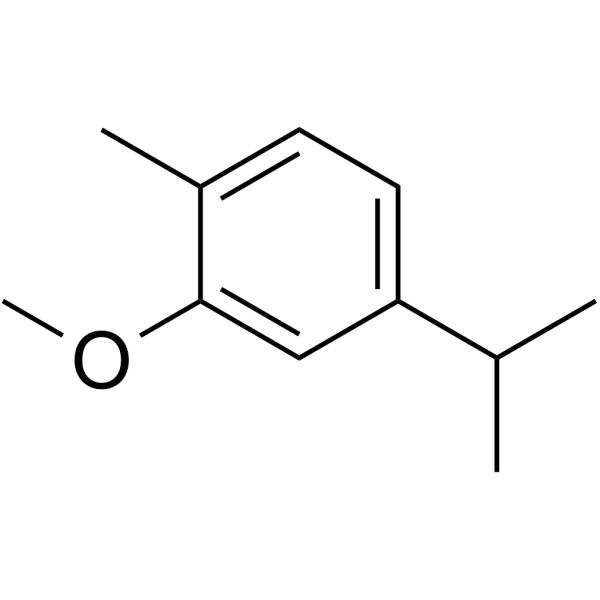
  • HY-W049970

    Environmental Pollutants Bacterial Infection
    Carvacrol methyl ether is a carvacrol derivative isolated from plant essential oils. Carvacrol methyl ether essentially lost its antibacterial activity, exhibiting only a weak inhibitory effect on Saccharomyces cerevisiae at the highest tested concentration of 3 g/L .
    Carvacrol methyl ether
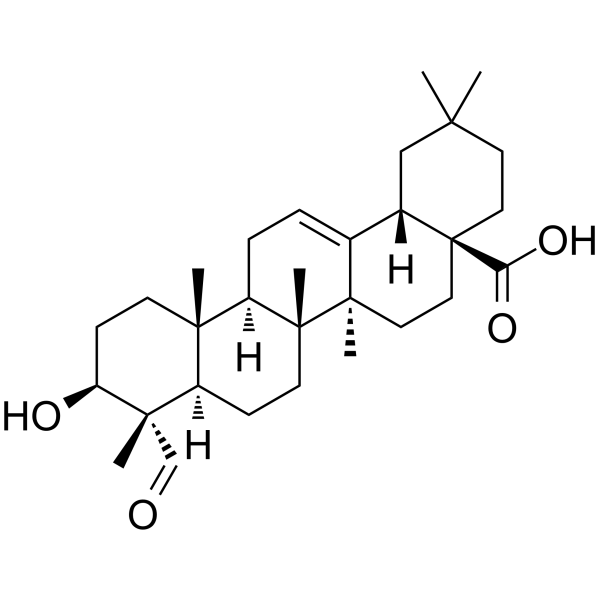
  • HY-121382

    Cholinesterase (ChE) Apoptosis Necroptosis Neurological Disease Cancer
    Gypsogenin is a selective mixed-type BChE inhibitor (Ki=19.99 μM) that also exhibits significant cytotoxicity against various human cancer cell lines. Gypsogenin inhibits tumor growth by inducing cell cycle arrest and triggering apoptosis. Gypsogenin displays antibacterial activity against bacteria such as Bacillus subtilis and Bacillus thuringiensis, and often serves as a key parent nucleus for the synthesis of anticancer compounds. Gypsogenin is widely used in research on Alzheimer's disease and various cancers including colon cancer, melanoma, and leukemia .
    Gypsogenin
  • HY-P10447

    Fengycin IX; SNA-60-367-3

    Phospholipase Fungal Infection
    Plipastatin A1 (Fengycin IX; SNA-60-367-3) is a lipopeptide with phospholipase A2 inhibitory activity. Plipastatin A1 inhibits conidial germination of Botrytis cinerea in vitro and reduces the incidence of gray mold on tomato leaves. Plipastatin A1 is applicable to research related to gray mold [1][2].
    Plipastatin A1
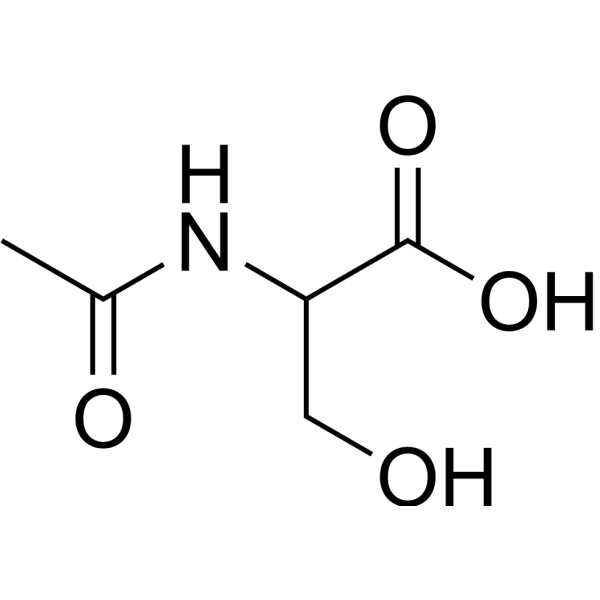
  • HY-W142092

    Bacterial Endogenous Metabolite Others
    N-Acetyl-DL-serine is a hydrophobic amino acid that is synthesized in the body and can be found as a free form or as a salt with malonate, phosphate, or acetate. N-Acetyl-DL-serine has antimicrobial activity against Bacillus cereus and Staphylococcus aureus. N-Acetyl-DL-serine has also been used for the immobilization of DNA fragments on solid surfaces and can be used for protein synthesis and optical detection of DNA strands .
    N-Acetyl-DL-serine
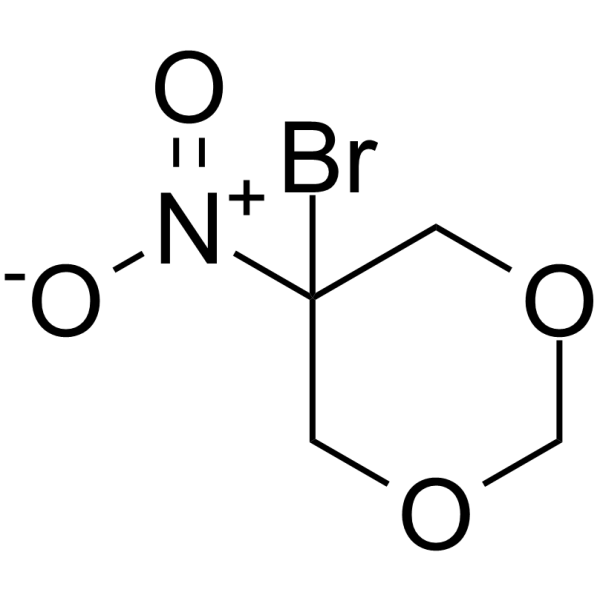
  • HY-W014316

    Bacterial Fungal Infection
    5-Bromo-5-nitro-1,3-dioxane is a broad-spectrum antimicrobial agent active against Gram-positive bacteria, Gram-negative bacteria and fungi. 5-Bromo-5-nitro-1,3-dioxane oxidizes free thiol groups to their corresponding disulfides. 5-Bromo-5-nitro-1,3-dioxane induces intracellular substance leakage in Escherichia coli and Staphylococcus aureus. 5-Bromo-5-nitro-1,3-dioxane modulates the oxygen consumption of Escherichia coli and Staphylococcus aureus .
    5-Bromo-5-nitro-1,3-dioxane
  • HY-W002616

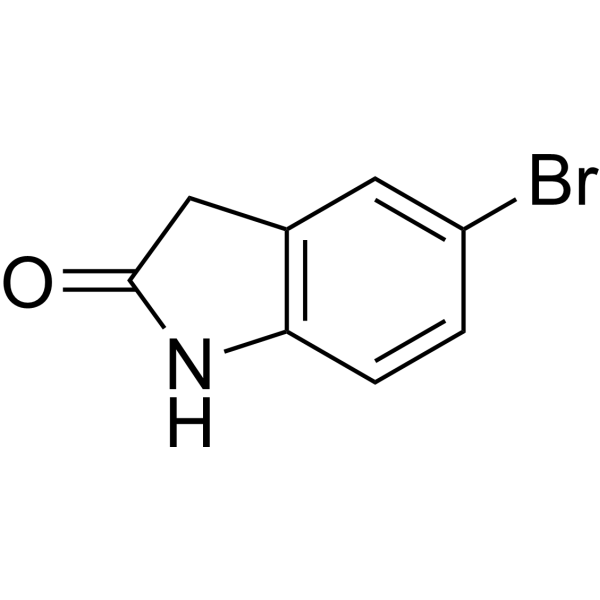
    5-Bromooxindole

    Drug Intermediate Infection
    5-Bromoindolin-2-one (5-Bromooxindole) is a synthetic intermediate. 5-Bromoindolin-2-one can be used for the synthesis of CDK2 inhibitors and antibacterial agents .
    5-Bromoindolin-2-one
  • HY-N11189

    Endogenous Metabolite Metabolic Disease
    α-D-Ribose-5-phosphate is an important intermediate metabolite in the pentose phosphate pathway and in the purine metabolism pathway .
    α-D-Ribose-5-phosphate
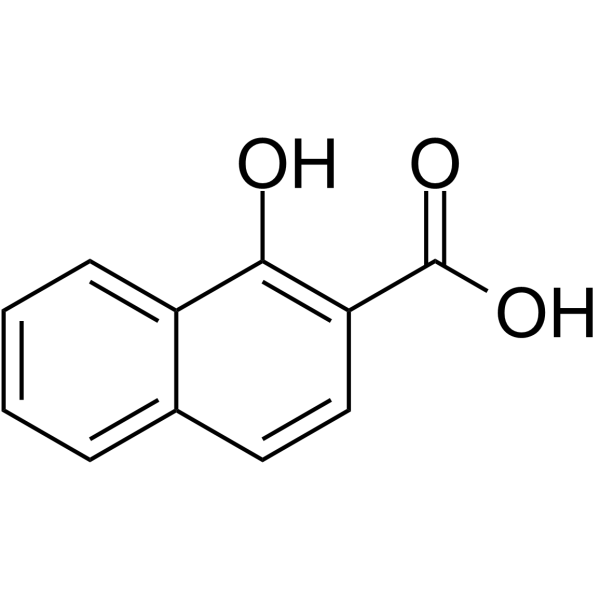
  • HY-W016103

    Bacterial Drug Intermediate Infection
    1-Hydroxy-2-naphthoic acid is a ubiquitous bicyclic intermediate metabolite in the microbial degradation process of polycyclic aromatic hydrocarbons (PAHs). 1-Hydroxy-2-naphthoic acid can be converted into 1,2-naphthalenediol, which enters the naphthalene degradation pathway and participates in the tricarboxylic acid (TCA) cycle to achieve complete mineralization .
    1-Hydroxy-2-naphthoic acid
  • HY-P2888A

    BOD, Bacillus cereus

    Endogenous Metabolite Metabolic Disease
    Bilirubin oxidase, bacillus cereus is a multi-copper oxidase that catalyzes the oxidation of bilirubin into biliverdin, as well as other tetrapyrroles, phenols, and aryl diamines. Bilirubin oxidase, bacillus cereus can serve as a single-enzyme deoxygenator, catalyzing the direct reduction of oxygen to water in the presence of electron donor substrates, without releasing hydrogen peroxide. Bilirubin oxidase, bacillus cereus can be used to develop enzyme-based biosensors .
    Bilirubin oxidase, bacillus cereus
  • HY-N12954

    Bacterial Infection
    (R)-Mucronulatol is a flavonoid that can be isolated from Astragalus adsurgens. (R)-Mucronulatol shows antibacterial activity against Escherichia coli, Bacillus cereus, Staphylococcus aureus, Erwinia carotovora and Bacillus subtili, with MICs of 15.5, 15.5, 7.8, 7.8, 15.5 μg/mL respectively .
    (R)-Mucronulatol
  • HY-E70118

    Glycosidase Others
    oligo-α-1,6-Glucosidase, Bacillus cereus ATCC7064 is a hydrolase that mainly hydrolyzes oligosaccharides with α-1,6-glycosidic bonds. oligo-α-1,6-Glucosidase, Bacillus cereus ATCC7064 can catalyzes the exo hydrolysis of α-1,6-glucoside bonds from the nonreducing ends of panose, palatinose, α-limit dextrins, and isomaltooligosaccharides. oligo-α-1,6-Glucosidase, Bacillus cereus ATCC7064 participates in the degradation pathway of starch and glycogen, assisting enzymes such as α-amylase to completely hydrolyzes amylopectin .
    oligo-α-1,6-Glucosidase, Bacillus cereus ATCC7064
  • HY-157376

    Biochemical Assay Reagents Others
    Casein Agar can be used for casein decomposition test of Bacillus cereus. The composition of 1 liter of Casein Agar contains contains: 10.0 g casein, 3.0 g beef infusion powder, 5.0 g sodium chloride, 2.0 g dipotassium hydrogen phosphate and 15.0 g agar .
    Casein Agar
  • HY-169065

    Bacterial Infection
    Antibacterial agent 241 is a histidine kinase (HK) inhibitor, with IC50 values of 14 μM and 238 μM for CckA and PhoQ, respectively. Antibacterial agent 241 shows moderate antibacterial activity against E. coli DC2, Bacillus cereus, and Bacillus subtilis, with a MIC range of 12-74 μg/mL .
    Antibacterial agent 241
  • HY-W104752

    Bacterial Fungal Infection Neurological Disease Metabolic Disease Inflammation/Immunology Cancer
    5-(Pyridin-4-yl)-1,3,4-oxadiazole-2-thiol (Compound 3n) is an antimicrobial and antioxidant agent, that inhibits Escherichia coli and Staphylococcus epidermidis, with MIC of 8 and 4 μg/mL. 5-(Pyridin-4-yl)-1,3,4-oxadiazole-2-thiol exhibits antioxidant activity with IC50 of 17.47 μM using DPPH free radical-scavenging method .
    5-(Pyridin-4-yl)-1,3,4-oxadiazole-2-thiol
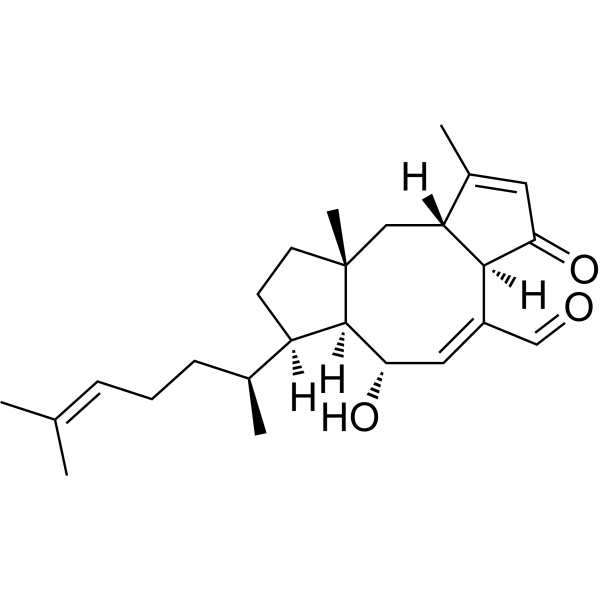
  • HY-N12617

    Bacterial Apoptosis Infection Cancer
    Bipolaricin R (Compound 6) is a compound that can be isolated from Bipolaris maydis. Bipolaricin R exhibits noticeable antimicrobial ability against Bacillus cereus, Staphylococcus aureus, and Staphylococcus epidermidis. Bipolaricin R has excellent antiproliferation and apoptosis induction effects against A549 cell line .
    Bipolaricin R
  • HY-E70940B

    Biochemical Assay Reagents Metabolic Disease
    Sphingomyelinase, Bacillus cereus (EC 3.1.4.12) is a hydrolase enzyme that is involved in sphingolipid metabolism reactions. Sphingomyelinase, Bacillus cereus (EC 3.1.4.12) is a member of the DNase I superfamily of enzymes and is responsible for breaking sphingomyelin (SM) down into phosphocholine and ceramide.
    Sphingomyelinase, Bacillus cereus
  • HY-E70903

    Biochemical Assay Reagents Metabolic Disease
    Thermitase, Bacillus cereus is a protease that inactivates Rnases, Dnases and enzymes in reactions.
    Thermitase, Bacillus cereus
  • HY-N12230

    Bacterial Parasite Fungal Infection Cancer
    Penicolinate B is a picolinic acid derivative that can be isolated from Penicillium sp. Penicolinate B exhibits antimalarial activity (IC50: 1.40 μg/mL), antitubercular activity (MIC: 25.0 μg/mL), activity against Bacillus cereus (IC50: 25.0 μg/mL), and activity against Candida albicans (IC50: 1.45 μg/mL). Penicolinate B also has certain cytotoxicity against cancer cells such as MCF-7, KB, and NCI-H187. Penicolinate B can be used in research on malaria, tuberculosis, bacterial/fungal infections and tumors .
    Penicolinate B
  • HY-P2817B

    Biochemical Assay Reagents Metabolic Disease
    Phospholipase C, Bacillus cereus (EC 3.1.4.3) is induced by thrombin and platelet-activating factor, forming 1,2-diacylglycerol and phosphatidic acid. Phospholipase C, Bacillus cereus (EC 3.1.4.3) hydrolyzes the phosphate bond on phosphatidylcholine and other glycerophospholipids yielding diacylglycerol. Phospholipase C, Bacillus cereus (EC 3.1.4.3) hydrolyzes the phosphate bonds of sphingomyelin, cardiolipin, choline plasmalogen and ceramide phospholipids.
    Phospholipase C, Bacillus cereus
  • HY-E71001

    Biochemical Assay Reagents Metabolic Disease
    L-Leucine Dehydrogenase, Bacillus cereus (EC 1.4.1.9) is a redox enzyme that acts on the donor CH-NH2 group and uses NAD+ or NADP+ as the acceptor. L-Leucine Dehydrogenase, Bacillus cereus (EC 1.4.1.9) participates in the degradation of valine, leucine, and isoleucine, as well as their biosynthesis.
    L-Leucine Dehydrogenase, Bacillus cereus
  • HY-N14535

    Bacterial Infection
    Dihydrogranaticin has anti-Bacillus cereus activity .
    Dihydrogranaticin
  • HY-N13828

    Bacterial Interleukin Related Infection Inflammation/Immunology
    1-Prenyl-2-methoxy-6-formyl-8-hydroxy-9H-carbazole (Compound 19) is a carbazole alkaloid that can be isolated from Murraya koenigii. 1-Prenyl-2-methoxy-6-formyl-8-hydroxy-9H-carbazole exhibits anti-inflammatory and antimicrobial activities. 1-Prenyl-2-methoxy-6-formyl-8-hydroxy-9H-carbazole can inhibit the production of pro-inflammatory cytokines TNF-α and IL-6 . 1-Prenyl-2-methoxy-6-formyl-8-hydroxy-9H-carbazole has IC50 values of 10.9 μM and 95 μM for Bacillus cereus and Staphylococcus aureus, respectively. 1-Prenyl-2-methoxy-6-formyl-8-hydroxy-9H-carbazole can be used in the research of inflammatory and infectious diseases .
    1-Prenyl-2-methoxy-6-formyl-8-hydroxy-9H-carbazole
  • HY-P10134

    Bacterial Infection
    Salivaricin B is a broad-spectrum bacteriocin produced by Lactobacillus salivarius M7, capable of inhibiting the growth of Listeria monocytogenes, Bacillus cereus, Brochothrix thermosphacta, Enterococcus faecalis, and various lactobacilli .
    Salivaricin B
  • HY-N10280

    Bacterial Endogenous Metabolite Infection
    Asperglaucin A represents an unusual phthalide-like derivative. Asperglaucin A exhibits potent antibacterial activities against two plant pathogens Pseudomonas syringae pv actinidae (Psa) and Bacillus cereus, with an MIC value of 6.25 μM .
    Asperglaucin A
  • HY-N10281

    Bacterial Infection
    Asperglaucin B is an alkylated salicylaldehyde derivative from the fungus Aspergillus chevalieri SQ-8, with antibacterial activities. Asperglaucin B displays potent antibacterial activities against two plant pathogens Pseudomonas syringae pv actinidae (Psa) and Bacillus cereus, with an MIC value of 6.25 μM .
    Asperglaucin B
  • HY-W286362

    Palmitic acid anilide

    Bacterial Infection
    Palmitanilide (Palmitic acid anilide) is an antibacterial agent against Gram-positive bacteria. Palmitanilide can electrostatically bind to relevant components in the cell walls of Gram-positive bacteria (such as Bacillus cereus), alter the cell membrane structure, and affect the normal functions of the cells. Palmitanilide is promising for research of infectious diseases caused by Gram-positive bacteria .
    Palmitanilide
  • HY-163615

    Bacterial Infection
    Antimicrobial agent-32 (Compound 4g) is an antimicrobial agent that exhibits significant activity against various bacteria, including Staphylococcus aureus, Bacillus subtilis, Bacillus cereus (MIC=1000 µg/mL), Klebsiella pneumonia, and Staphylococcus aureus (MRSA) (MIC=500 µg/mL), as well as Escherichia coli (MIC=250 µg/mL). Additionally, Antimicrobial agent-32 inhibits the proliferation of MCF-7, HCT-116, and HepG-2 cells, demonstrating anticancer activity .
    Antimicrobial agent-32
  • HY-137323

    Antibiotic Bacterial Infection
    Leucinostatin H is a polypeptide antibiotic discovered in Paecilomyces marquandii, characterized by a tertiary amine-oxide terminal group. Leucinostatin H exhibits inhibitory activity against Gram-positive bacteria, such as Bacillus subtilis, B. cereus, and Staphylococcus aureus (MIC 10-100 μg/mL). Leucinostatin H holds potential for research in anti-infective and plant disease control applications .
    Leucinostatin H
  • HY-115442

    HDAC Bacterial Infection Cancer
    NHNB is a selective HDAC8 inhibitor (IC50 = 66.0 μM) and Peptidoglycan N-acetylglucosamine (GlcNAc) deacetylases (PGNGdacs) inhibitor. NHNB shows antibacterial and bactericidal activity against B. anthracis and B. cereus. NHNB can be used for the research of acute myeloid leukemia, Bacillus anthracis infection, and Bacillus cereus infection .
    NHNB
  • HY-169067

    Mtx-C

    DNA/RNA Synthesis p38 MAPK Bacterial Infection Cancer
    10-Methoxy-canthin-6-one (Mtx-C) is analkaloid derivative. 10-Methoxy-canthin-6-one can induce DNA damage by intercalating into DNA. 10-Methoxy-canthin-6-one can inhibit cancer cells proliferation, cause G2/M phase arrest and induce myeloid differentiation. T10-Methoxy-canthin-6-one can upregulate the expression of myeloperoxidase, CD15, CD11b, and CD14, as well as activation of p38 MAPK. 10-Methoxy-canthin-6-one also exhibits anti-bacterial activity. 10-Methoxy-canthin-6-one can be used for the researches of cancer and infection, such as acute myeloid leukemias (AML) .
    10-Methoxy-canthin-6-one
  • HY-162818

    Bacterial Reactive Oxygen Species (ROS) Infection
    Antibacterial agent 237 (compound Ru-8) is a bacteriostatic agent for Staphylococcus aureus, with MIC of 0.78-1.56 μg/mL. Antibacterial agent 237 destroys bacterial cell membranes, changes their permeability, and induces bacteria to produce Reactive Oxygen Species, leading to bacterial death without causing drug resistance. Antibacterial agent 237 has low hemolytic toxicity to rabbit red blood cells and Raw 264.7 cells, and has significant antibacterial effects against Staphylococcus aureus in mouse skin wound infection models and Bacillus major larvae infection models .
    Antibacterial agent 237
  • HY-N19789

    Bacterial Infection
    Gleinadiene is a coumarin that can be isolated from the extracts of leaves of Murraya paniculata. Gleinadiene exhibits weak antimicrobial activity against the gram-positive bacterium Bacillus cereus. Gleinadiene can be used for the research of bacterial infection .
    Gleinadiene
  • HY-N13838

    Bacterial Infection
    8,9-Dehydro-7,9-diisobutyryloxythymol is a Thymol (HY-N6810) derivative, as well as an antibacterial agent. 8,9-Dehydro-7,9-diisobutyryloxythymol can be found in the aerial parts of Ageratina adenophora, with selective activity against Gram-positive bacterial strains including Bacillus cereus. 8,9-Dehydro-7,9-diisobutyryloxythymol does not exhibit detectable in vitro cytotoxic activity against human cancer cell lines. 8,9-Dehydro-7,9-diisobutyryloxythymol can be used for the research of bacterial infection .
    8,9-Dehydro-7,9-diisobutyryloxythymol
  • HY-N10179

    Others Others
    Talaroenamine F is active against Bacillus cereus with an MIC value of 0.85 μg/mL.
    Talaroenamine F
  • HY-W012880

    Hexane-1,2-diol

    Environmental Pollutants Bacterial Fungal Infection
    1,2-Hexanediol (Hexane-1,2-diol) is a broad-spectrum antibacterial agent. 1,2-Hexanediol exhibits bactericidal activity against Gram-positive and Gram-negative bacteria, as well as antifungal activity against fungal organisms. 1,2-Hexanediol disrupts the cytoplasmic membrane potential of bacteria. 1,2-Hexanediol can be used in research on bacterial and fungal infections, as well as cosmetic preservation .
    1,2-Hexanediol

Inquiry Online

Your information is safe with us. * Required Fields.

Salutation


Country or Region *

Applicant Name *


Organization Name *

Department *


Email Address *


Product Name *

Cat. No.


Requested quantity *

Phone Number *


Remarks

Inquiry Online

Inquiry Information

Product Name:
Cat. No.:
Quantity:
MCE Japan Authorized Agent:

