Search Result
Results for "
Biological phospholipid membrane
" in MedChemExpress (MCE) Product Catalog:
6
Biochemical Assay Reagents
7
Isotope-Labeled Compounds
| Cat. No. |
Product Name |
Target |
Research Areas |
Chemical Structure |
-
- HY-130462
-
|
POPC
|
Liposome
|
Others
|
|
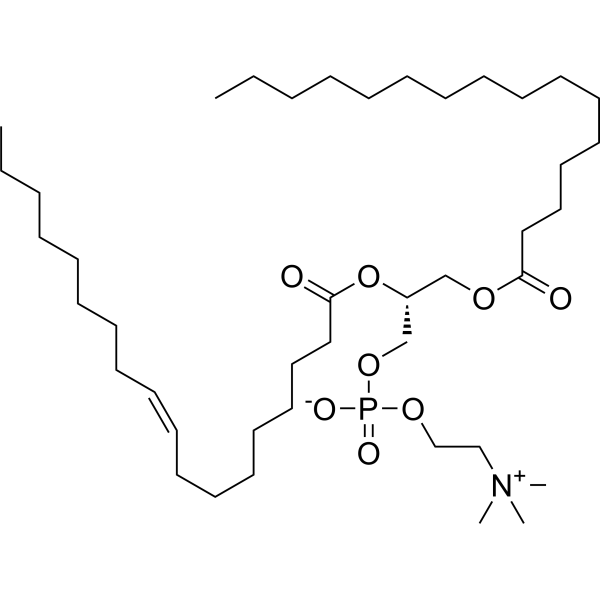
1-Palmitoyl-2-oleoyl-sn-glycero-3-PC (POPC), a phospholipid, is a major component of biological membranes. 1-Palmitoyl-2-oleoyl-sn-glycero-3-PC is used for the preparation of liposomes and studying the properties of lipid bilayers .
|
-
-
- HY-115435
-
|
DMPS-Na; Dimyristoyl phosphatidylserine sodium
|
Liposome
|
Cancer
|
|
1,2-Dimyristoyl-sn-glycero-3-phospho-L-serine sodium is an anionic phospholipid with myristic acid tails (14:0) and contains a carboxylic acid (COOH) and amine (NH2) in their head group. It has been used in the preparation of liposome.
|
-
-
- HY-W440719
-
|
|
Liposome
|
Cancer
|
|
Cholesterol-PEG2000-MAL is a PEG derivative and can be used to prepare liposome or nanoparticle due to its ability to self-assemble in water. The maleimide moiety is reactive with thiol molecule to form a covalent thioether bond.
|
-
-
- HY-126359
-
|
SLPC; 18:0-18:2 PC
|
Endogenous Metabolite
|
Cardiovascular Disease
Metabolic Disease
|
|
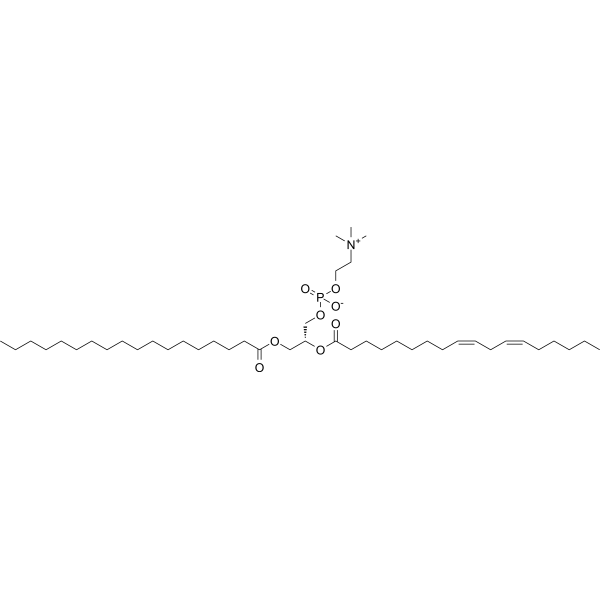
1-Stearoyl-2-linoleoyl-sn-glycero-3-phosphocholine (SLPC; 18:0-18:2 PC) is an endogenous phospholipid marker molecule in the glycerophospholipid metabolic pathway. 1-Stearoyl-2-linoleoyl-sn-glycero-3-phosphocholine is a core component of the phospholipid bilayer of biological membranes and a key responsive lipid for radiation injury and cardiometabolic diseases. 1-Stearoyl-2-linoleoyl-sn-glycero-3-phosphocholine constitutes the phospholipid bilayers of cell membranes and high-density lipoprotein (HDL), and regulates the core activity of lipoprotein functional homeostasis. The content of 1-Stearoyl-2-linoleoyl-sn-glycero-3-phosphocholine in mouse serum shows a significant dose-dependent decrease with increasing ionizing radiation dose, and its level in human HDL also decreases significantly in metabolic syndrome. 1-Stearoyl-2-linoleoyl-sn-glycero-3-phosphocholine can serve as a biological dosimeter marker for ionizing radiation injury, and is used for rapid and accurate assessment of radiation absorbed dose in exposed individuals. 1-Stearoyl-2-linoleoyl-sn-glycero-3-phosphocholine can also act as a lipidomics research target for cardiometabolic diseases such as lipid metabolic syndrome and early-onset coronary heart disease .
|
-
-
- HY-141636
-
|
1-Palmitoyl-2-arachidonoyl-sn-glycero-3-phosphocholine; PAPC; PC(16:0/20:4)
|
Endogenous Metabolite
Biochemical Assay Reagents
|
Cardiovascular Disease
|
|
1-Palmitoyl-2-arachidonoyl-sn-glycero-3-PC (PAPC) is a phospholipid containing palmitic acid (16:0) and arachidonic acid (20:4) at the sn-1 and sn-2 positions, respectively, that is found in biological membranes. PAPC is oxidized in vivo, and its oxidation products are involved in chronic inflammation and vascular disease. PAPC has been used to study signaling of oxidized phospholipids. Levels of PAPC are decreased in isolated human multiple myeloma cells.
|
-
-
- HY-134174A
-
|
16:0-18:1 PA
|
Biochemical Assay Reagents
|
|
|
1-Palmitoyl-2-oleoyl-sn-glycero-3-phosphate sodium (16:0-18:1 PA) is a phospholipid with activities in regulating biological membrane fluidity and participating in cell signal transduction. 1-Palmitoyl-2-oleoyl-sn-glycero-3-phosphate sodium can be used to study the effects on the activity of chloroplast envelope monogalactosyldiacylglycerol (MGDG) synthase. 1-Palmitoyl-2-oleoyl-sn-glycero-3-phosphate sodium plays an important role in cell membrane integrity and function.
|
-
-
- HY-W440690
-
|
|
Liposome
|
Cancer
|
|
Cholesterol-PEG2000-amine is a pegylated lipids which can be used for preparation of liposome or nanoparticle. The lipophilic moiety can encapsulate hydrophobic drugs whereas the hydrophilic PEG chain helps the overal water solubility of the micelles.
|
-
-
- HY-W322575
-
|
DHPC
|
Liposome
|
Others
|
|
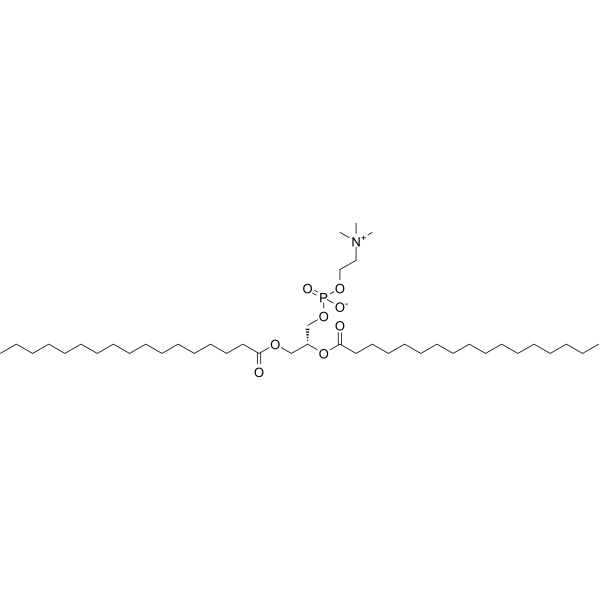
1,2-Diheptadecanoyl-sn-glycero-3-phosphorylcholine (DHPC) is a biologically active phospholipid compound and a derivative of phosphatidylcholine (PC) . It can be used in the generation of micelles, liposomes, and other types of artificial membranes.
|
-
-
- HY-142988
-
|
1S-2M-PC
|
Liposome
|
Others
|
|
1-Stearoyl-2-myristoyl-sn-glycero-3-PC (1S-2M-PC) belongs to the class of asymmetric phospholipids. 1-Stearoyl-2-myristoyl-sn-glycero-3-PC is abundant in biological membranes .
|
-
-
- HY-142991
-
|
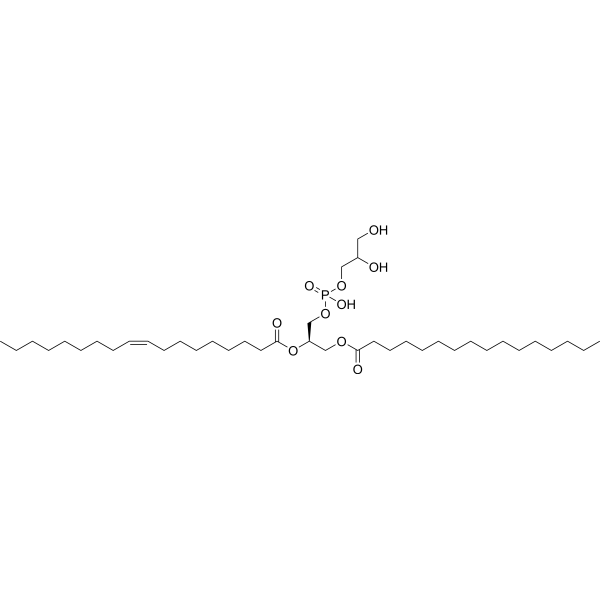
POPG
|
Liposome
|
Others
|
|
1-Palmitoyl-2-oleoyl-sn-glycero-3-phosphatidylglycerol (POPG) is an anionic phosphatidylglycerol that often serves as a key component to co-construct model phospholipid bilayers with phosphatidylcholine (e.g., at a 3:1 POPC:POPG ratio) for investigating the structure and dynamics of transmembrane proteins. 1-Palmitoyl-2-oleoyl-sn-glycero-3-phosphatidylglycerol acts as a fundamental material for mimicking the physicochemical properties of biological membranes and enables the elucidation of membrane protein interaction mechanisms .
|
-
-
- HY-W591461
-
|
|
Liposome
|
Cancer
|
|
DSPE-PEG-COOH, MW 2000 is a phospholipid polyPEG which can be used to prepare liposomes or nanoparticles. The terminal carboxylic acid can react with primary amine groups to form a stable amide bond.
|
-
-
- HY-W440711
-
|
|
Liposome
|
Cancer
|
|
Cholesterol-PEG-Biotin (MW 2000) is a pegylated lipids which has strong binding to avidin or streptavidin.
|
-
-
- HY-141615
-
|
PDME; 16:0 Dimethyl PE
|
Liposome
|
Cancer
|
|
1,2-Dipalmitoyl-sn-glycero-3-phospho-N,N-dimethylethanolamine has been used in the generation of liposomes and monolayers for use in the study of membrane permeability and monolayer viscosity, respectively.
|
-
-
- HY-W440706
-
|
|
Liposome
|
Cancer
|
|
Cholesterol-PEG2000-alcohol is a pegylated lipids which can be used for preparation of liposome or nanoparticle. The lipophilic moiety can encapsulate hydrophobic drugs whereas the hydrophilic PEG chain helps the overal water solubility of the micelles. The amine can react with an activated NHS ester to form a stable amide bond.
|
-
-
- HY-W800793
-
|
1,2-dipalmitoyl-sn-glycero-3-phosphoethanolamine-N-(succinyl)
|
Liposome
|
Cancer
|
|
16:0 Succinyl PE is a carboxylic acid-functionalized lipid with a two carbon linker to a phosphoethanolamine bound to two palmitic acid tails.
|
-
-
- HY-W800805
-
|
|
Liposome
|
Cancer
|
|
DOPE-Mal is a synthetic analog of naturally-occurring PE containing 18:1 fatty acids at the sn-1 and sn-2 positions with a terminal maliemide group. The maleimide group will react with a thiol group to form a covalent bond. The hydrophilic PEG spacer increases solubility in aqueous media.
|
-
-
- HY-W800797
-
|
1,2-dipalmitoyl-sn-glycero-3-phosphoethanolamine-N-(biotinyl)
|
Liposome
|
Cancer
|
|
16:0 Biotinyl PE is a biotin-functionalized lipid attached to a phosphoethanolamine linked to two palmitic acid groups.
|
-
-
- HY-W440981
-
|
1-Stearoyl-2-palmitoyl-sn-glycero-3-phosphocholine
|
Liposome
|
Cancer
|
|
SPPC is a phospholipid with different length of fatty acid. The sn-1 position contains a stearic acid (18:0) while the sn-2 position is occupied by a palmitic acid (16:0).
|
-
-
- HY-W339838
-
|
14:0 Lyso PG
|
Liposome
|
Cancer
|
|
1-Myristoyl-2-hydroxy-sn-glycero-3-PG sodium is a lysophospholipid containing myristic acid (14:0) at the sn-1 position. It has been used in the generation of micelles, liposomes, and other types of artificial membranes, including lipid-based drug carrier systems.
|
-
-
- HY-130462S
-
|
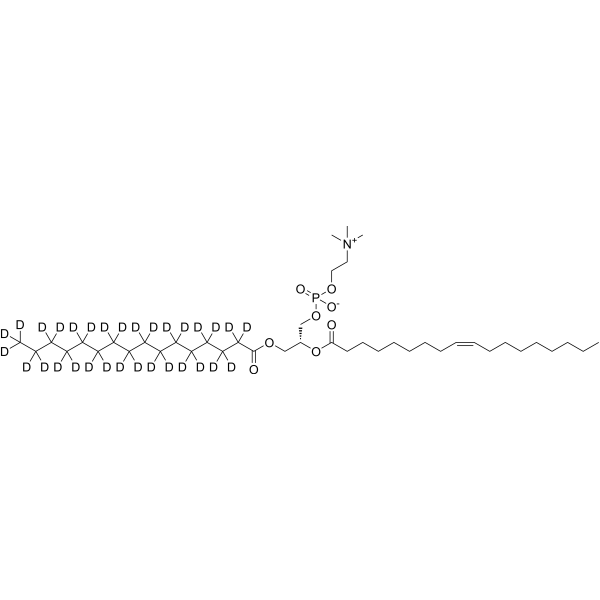
POPC-d31
|
Isotope-Labeled Compounds
|
Others
|
|
1-Palmitoyl-2-oleoyl-sn-glycero-3-PC-d31 is deuterium labeled 1-Palmitoyl-2-oleoyl-sn-glycero-3-PC. 1-Palmitoyl-2-oleoyl-sn-glycero-3-PC (POPC), a phospholipid, is a major component of biological membranes. 1-Palmitoyl-2-oleoyl-sn-glycero-3-PC is used for
|
-
-
- HY-130462R
-
|
POPC (Standard)
|
Liposome
Reference Standards
|
Others
|
|
1-Palmitoyl-2-oleoyl-sn-glycero-3-PC (Standard) is the analytical standard of 1-Palmitoyl-2-oleoyl-sn-glycero-3-PC. This product is intended for research and analytical applications. 1-Palmitoyl-2-oleoyl-sn-glycero-3-PC (POPC), a phospholipid, is a major component of biological membranes. 1-Palmitoyl-2-oleoyl-sn-glycero-3-PC is used for the preparation of liposomes and studying the properties of lipid bilayers .
|
-
-
- HY-W440995
-
|
|
Liposome
|
Cancer
|
|
DOPE-PEG2000-Mal is a phospholipid polyPEG which can be used to prepare liposomes or nanoparticles. It is also reactive with thiol at pH 6.5 tp 7.5 to form a stable thioether bond.
|
-
-
- HY-W440958
-
|
PSPC; PC(16:0-18:0)
|
Liposome
|
Cancer
|
|
1-Palmitoyl-2-stearoyl-sn-glycero-3-phosphocholine is an assymetrical phospholipid containing saturated palmitic and stearic acid at the sn-1 and sn-2 position respectively. The phosphate group is attached to choline.
|
-
-
- HY-W343736
-
|
1,3-DPPE; 1,3-Dipalmitoyl-sn-glycero-2-PE
|
Liposome
|
Cancer
|
|
1,3-Dipalmitoyl-glycero-2-phosphoethanolamine is a phospholipid containing the saturated long-chain (16:0) stearic acid inserted at the sn-1 and sn-3 positions and PE at the sn-2 site. It can be used in the generation of micelles, liposomes, and other types of artificial membranes.
|
-
-
- HY-W591449
-
|
|
Liposome
|
Cancer
|
|
DOPE-PEG2000-Azide is a liposome to simulate biological phospholipid membrane. Liposomes are the main component of vesicles with concentric phospholipid bilayer membranes, which can be used to construct drug delivery systems for anti-cancer and anti-infection fields. Highly polar water-soluble payloads can be trapped in the internal aqueous space of liposomes, while lipophilic payloads can partition into and become part of the lipid bilayer. Especially for delivering antisense oligonucleotides, it can overcome problems such as inefficient cellular uptake and rapid loss in the body .
|
-
-
- HY-W440957
-
|
PC(16:0/14:0); 1-palmitoyl-2-myristoyl-sn-glycero-3-phosphocholine
|
Liposome
|
Cancer
|
|
PMPC is a phosphatidylcholine with asymmetrical fatty acid. Palmitic acid occupies sn-1 position while myristic acid is placed at the sn-2 position.
|
-
-
- HY-W590555
-
|
|
Liposome
|
Cancer
|
|
Thiol-PEG2000-DMG is a phospholipid polyPEG which can be used to prepare liposomes or nanoparticles. The terminal thiol group reacts with maleimide, OPSS, vinylsulfone and transition metal surfaces including gold, silver, etc.
|
-
-
- HY-W800796
-
|
1,2-dioleoyl-sn-glycero-3-phosphoethanolamine-N-(biotinyl)
|
Liposome
|
Cancer
|
|
18:1 Biotinyl PE is a biotin-functionalized lipid attached to a phosphoethanolamine linked to two oleic acid groups.
|
-
-
- HY-W800787
-
|
|
Liposome
|
Cancer
|
|
18:1 PE MCC is a maleimide-functionalized thiol-reactive lipid with a phosphoethanolamine linked to two oleic acid tails and a maleimide group.
|
-
-
- HY-W590536
-
|
1-Palmitoyl-2-Lauroyl-sn-glycero-3-Phosphatidylcholine; 1-Palmitoyl-2-Lauroyl-sn-glycero-3-Phosphocholine
|
Liposome
|
Cancer
|
|
1,2-PLPC is a phospholipid containing palmitoyl (16:0) and lauryl (12:0) acyl substituents at the sn-1 and sn-2 positions, respectively. It can be used in the generation of micelles, liposomes, and other types of artificial membranes.
|
-
-
- HY-W591332
-
|
|
Liposome
|
Cancer
|
|
mPEG2000-DMPE is a PEGylated 1,2-Dimyristoyl-sn-glycero-3-phosphoethanolamine (14:0 PE) compound with a methyl group at the other end of the PEG chain. The PEG polymer exhibits amphiphatic behavior and helps to form stable micelles in an aqueous solution. It can be used to prepare nanoparticles or liposomes for targeted drug delivery applications.
|
-
-
- HY-W800794
-
|
DPPE-NG; 1,2-dipalmitoyl-sn-glycero-3-phosphoethanolamine-N-(glutaryl)
|
Liposome
|
Cancer
|
|
16:0 Glutaryl PE is is a carboxylic acid-functionalized lipid with a three carbon linker to a phosphoethanolamine bound to two palmitic acid tails.
|
-
-
- HY-W440985
-
|
1,2-dilauroyl-sn-glycero-3-phospho-L-serine
|
Liposome
|
Cancer
|
|
DLPS is an anionic phospholipid with lauric acid tails (12:0) and contains a carboxylic acid (COOH) and amine (NH2) in their head group. It has been used in the preparation of lipid-mixing vesicles, liposome, or artificial membrane. Due to the medium size of fatty acid chain, DLPS is used to form thinner membranes/walls.
|
-
-
- HY-W800733
-
|
1,2-Dilauroyl-sn-glycero-3-phosphorylglycerol; PG(12:0/12:0)
|
Liposome
|
Cancer
|
|
DLPG is a phospholipid containing lauric acid (12 chain fatty acid) inserted at the sn-1 and sn-2 positions. Its phosphate group is attached to glycerol. It is used in the generation of micelles, liposomes, and other artificial membranes.
|
-
-
- HY-153725
-
|
|
Liposome
|
Cancer
|
|
17:1 Lyso PC is a liposome to simulate biological phospholipid membrane. Liposomes are the main component of vesicles with concentric phospholipid bilayer membranes, which can be used to construct drug delivery systems for anti-cancer and anti-infection fields. Highly polar water-soluble payloads can be trapped in the internal aqueous space of liposomes, while lipophilic payloads can partition into and become part of the lipid bilayer. Especially for delivering antisense oligonucleotides, it can overcome problems such as inefficient cellular uptake and rapid loss in the body .
|
-
-
- HY-130671A
-
|
(R)-1,2-Dipalmitoyl-sn-glycero-3-phosphoglycerol sodium
|
Liposome
|
Others
|
|
L-DPPG ((R)-1,2-Dipalmitoyl-sn-glycero-3-phosphoglycerol sodium) is a phospholipid targeting biological membranes. L-DPPG interacts with lipid bilayers through hydrophobic and electrostatic interactions. L-DPPG is used in research on drug delivery systems .
|
-
-
- HY-130671B
-
|
(S,S)-1,2-Dipalmitoyl-sn-glycero-3-phosphoglycerol sodium
|
Liposome
|
Others
|
|
(S,S)-DPPG is an enantiomeric isomer of L-DPPG. L-DPPG ((R)-1,2-Dipalmitoyl-sn-glycero-3-phosphoglycerol (sodium)) is a phospholipid targeting biological membranes. L-DPPG interacts with lipid bilayers through hydrophobic and electrostatic interactions. L-DPPG is used in research on drug delivery systems .
|
-
-
- HY-157689
-
|
20:1(Cis)PC
|
Biochemical Assay Reagents
|
|
|
1,2-Dieicosenoyl-sn-glycero-3-phosphocholine (20:1(Cis)PC) is a phospholipid that has the activity of promoting the binding of proteins to liposomes. 1,2-Dieicosenoyl-sn-glycero-3-phosphocholine can serve as a component of biological membranes and enhance the fluidity of cell membranes. 1,2-Dieicosenoyl-sn-glycero-3-phosphocholine also plays an important role in compound delivery systems, improving the biocompatibility and targeting of compounds.
|
-
-
- HY-W440991
-
|
DOPE-PEG2000-NH2
|
Liposome
|
Cancer
|
|
DOPE-PEG-Amine (MW 2000) is a polydisperse PEG covalently attached to a phospholipid. The polymer is an amphiphilic molecule with hydrophobic fatty acid chains and hydrophilic PEG head which enables lipid bilayer or micelle formation in water. The phospholipid PEG can be used to prepare liposome or nanoparticles for targeted drug delivery and is reactive with alkyne to form a triazole ring.
|
-
-
- HY-138913
-
|
|
Liposome
|
Cancer
|
|
2H-Cho-Arg (TFA) is a steroid-based cationic lipid that contains a 2H-cholesterol skeleton coupled to an L-arginine head group and can be used to facilitate gene transfection.
|
-
-
- HY-134174
-
|
|
Liposome
|
Cancer
|
|
1-Palmitoyl-2-oleoyl-sn-glycero-3-phosphate is a phospholipid containing saturated palmitic acid (16:0) and monounsaturated oleic acid (18:1) inserted at the sn-1 and sn-2 positions, respectively. It can be used in the generation of micelles, liposomes, and other types of artificial membranes.
|
-
-
- HY-W340832
-
|
|
Liposome
|
Cancer
|
|
18:1 Biotinyl Cap PE is a fluorescent lipid, which features a head group that has been altered to include biotinyl cap PE.
|
-
-
- HY-W590535
-
|
1,2-DNPC;
1,2-Dinonadecanoyl-sn-glycero-3-phosphocholine
|
Liposome
|
Cancer
|
|
19:0 PC is a saturated phospholipid that has been used as a standard for the quantification of phosphatidylcholines in human synovial fluid. It has also been used to study dynamics of lipid bilayer phase transition.
|
-
-
- HY-W800777
-
|
|
Liposome
|
Cancer
|
|
6-(3-Hydroxypropylamino)hexyl 2-hexyldecanoate is an ionizable lipid which can be used to make ALC-0315. The lipid has an ester bond adjacent to C6 relative to the amine nitrogen. The introduction of ester linkages can improve the clearance of the lipid in the liver.
|
-
-
- HY-W800825
-
|
|
Liposome
|
Cancer
|
|
Octadecanedioic Acid Mono-L-carnitine ester is a cationic lipid which may be used in combination with other lipids in the formation of lipid nanoparticles (LNPs). Its terminal carboxylic acid can react with primary amine groups in the presence of activators (e.g. HATU) to form a stable amide bond.
|
-
-
- HY-W800789
-
|
|
Liposome
|
Cancer
|
|
16:0 MPB PE is a maleimide-functionalized thiol-reactive lipid with a phosphoethanolamine linked to two palmitic acid tails and a phenyl maleimide group.
|
-
-
- HY-W441005
-
|
|
Liposome
|
Cancer
|
|
Amino-Gly-Gly-DSPE (hydrochloride) is a specially modified phospholipid that has been used to synthesize liposomes. The terminal amine is reactive with an NHS ester compound or carboxylic acid molecule in the presence of activator, such as HATU or EDC.
|
-
-
- HY-W590538A
-
|
|
Liposome
|
Others
|
|
HAPC-Chol is a cationic cholesterol that can be used as a component of lipoplexes complexes .
|
-
-
- HY-W591913
-
|
|
Liposome
|
Cancer
|
|
Cholesterol-PEG2000-methoxy is a PEG derivative which self-assembles in water to form micelle-like structure. The cholesterol tail can be used to encapsulate hydrophobic drugs while the PEG chain ehances the water solubility of the micelles.
|
-
-
- HY-W800734
-
|
MPPC; PC(14:0/16:0)
|
Liposome
|
Cancer
|
|
1-Myristoyl-2-palmitoyl-sn-glycero-3-phosphocholine (MPPC) is an asymmetrical phosphatidylcholine containing a myristic acid (14:0) at the sn-1 position and a palmitic acid (16:0) at the sn-2 position. It is commonly used in the generation of micelles, liposomes, and other types of artificial membranes.
|
-
- HY-W440698
-
|
|
Liposome
|
Cancer
|
|
Cholesterol-PEG2000-Acid is a polydisperse PEG derivative which can be used to create liposome as drug carrier for delivering therapeutic agents into tissues.
|
-
- HY-W800790
-
|
|
Liposome
|
Cancer
|
|
18:1 Caproylamine PE is a amine-functionalized lipid with a phosphoethanolamine linked to two oleic acid tails.
|
-
- HY-W800784
-
|
|
Liposome
|
Cancer
|
|
23:2 Diyne PE [DC(8,9)PE] is a phospholipase-mediated hydrolyzed phosphocoline with palmitic acid (16:0) and Pentacosa-10,12-diynoic acid for tails.
|
-
- HY-W140488
-
|
10:0 PE
|
Liposome
|
Cancer
|
|
1,2-Didecanoyl-sn-glycero-3-phosphoethanolamine, a phospholipid, showes very promising P-gp inhibitory results at a concentration of 0.3 mM.
|
-
- HY-W800798
-
|
1,2-dipalmitoyl-sn-glycero-3-phosphoethanolamine-N-(cyanur)
|
Liposome
|
Cancer
|
|
16:0 Cyanur PE is a cyanur-functionalized lipid attached to a phosphoethanolamine linked to two palmitic acid groups.
|
-
- HY-W440724
-
|
|
Liposome
|
Cancer
|
|
Cholesterol-PEG3400-Thiol is an amphiphatic PEG derivative which forms micelles in water and can be used to prepare liposomes or nanoparticles for drug delivery system. The thiol moiety is reactive with maleimide to form a stable thioether bond.
|
-
- HY-W440820
-
|
|
Liposome
|
Cancer
|
|
Bis(bis(2-carboxyethyl)aminopropyl)methylamine is a symmetrical branched linker featuring three tertiary amines and four carboxylic acids. Each carboxylic acid is open to forming esters or amides. It can be used in developing lipid nanoparticles.
|
-
- HY-W800786
-
|
N-MCC-PE
|
Liposome
|
Cancer
|
|
16:0 PE MCC is a maleimide-functionalized thiol-reactive lipid with a phosphoethanolamine linked to two palmitic acid tails and a maleimide group.
|
-
- HY-W800792
-
|
1,2-dioleoyl-sn-glycero-3-phosphoethanolamine-N-(succinyl)
|
Liposome
|
Cancer
|
|
18:1 Succinyl PE is a carboxylic acid-functionalized lipid with a two carbon linker to a phosphoethanolamine bound to two oleic acid tails.
|
-
- HY-W800785
-
|
1-palMitoyl-2-(10,12-tricosadiynoyl)-sn-glycero-3-phosphocholine
|
Liposome
|
Cancer
|
|
16:0-23:2 Diyne PC is a phospholipase-mediated hydrolyzed phosphocoline with palmitic acid (16:0) and Pentacosa-10,12-diynoic acid for tails.
|
-
- HY-W590593
-
|
|
Liposome
|
Cancer
|
|
mPEG-Cholesterol,MW 2000 is a PEG derivative which self-assembles in water to form micelle-like structure. The cholesterol tail can be used to encapsulate hydrophobic drugs while the PEG chain ehances the water solubility of the micelles.
|
-
- HY-W800843
-
|
|
Liposome
|
Cancer
|
|
tert-Butyl 3-(7-((undecan-3-yloxy)carbonyl)heptylamino)propylcarbamate is an aminolipid featuring a Boc-protected primary amine, a propylamine spacer attached to an octanoate chain and a C11 chain.
|
-
- HY-W590538
-
|
|
Liposome
|
Cancer
|
|
HAPC-Chol is a cationic cholesterol that can be used as a component of lipoplexes complexes.
|
-
- HY-W800778
-
|
|
Liposome
|
Cancer
|
|
Bis(2-butyloctyl) 10-oxononadecanedioate is an ionizable lipid-like compound containing four hydrophobic tails bound by esters. It can be used to build lipids for mRNA encapsulation and delivery.
|
-
- HY-W800791
-
|
|
Liposome
|
Cancer
|
|
16:0 Caproylamine PE is an amide-functionalized lipid with a phosphoethanolamine linked to two palmitic acid tails.
|
-
- HY-W800795
-
|
DOPE-NG; 1,2-dioleoyl-sn-glycero-3-phosphoethanolamine-N-(dodecanoyl)
|
Liposome
|
Cancer
|
|
18:1 Dodecanyl PE is a carboxylic acid-functionalized lipid with a ten carbon linker to a phosphoethanolamine bound to two oleic acid tails.
|
-
- HY-W800788
-
|
|
Liposome
|
Cancer
|
|
18:1 MPB PE is a maleimide-functionalized thiol-reactive lipid with a phosphoethanolamine linked to two oleic acid tails and a phenyl maleimide group.
|
-
- HY-130462S1
-
|
POPC-d82
|
Isotope-Labeled Compounds
|
Others
|
|
1-Palmitoyl-2-oleoyl-sn-glycero-3-PC-d82 is deuterium labeled 1-Palmitoyl-2-oleoyl-sn-glycero-3-PC. 1-Palmitoyl-2-oleoyl-sn-glycero-3-PC (POPC), a phospholipid, is a major component of biological membranes. 1-Palmitoyl-2-oleoyl-sn-glycero-3-PC is used for
|
-
- HY-141636S
-
|
1-Palmitoyl-2-arachidonoyl-sn-glycero-3-phosphocholine-d9-1; PAPC-d9-1; PC(16:0/20:4)-d9-1
|
Isotope-Labeled Compounds
Endogenous Metabolite
|
Cardiovascular Disease
|
|
1-PalMitoyl-2-arachidoyllecithin-d9-1 (1-Palmitoyl-2-arachidonoyl-sn-glycero-3-phosphocholine-d9-1) is deuterium labeled 1-PalMitoyl-2-arachidoyllecithin. 1-Palmitoyl-2-arachidonoyl-sn-glycero-3-PC (PAPC) is a phospholipid containing palmitic acid (16:0) and arachidonic acid (20:4) at the sn-1 and sn-2 positions, respectively, that is found in biological membranes. PAPC is oxidized in vivo, and its oxidation products are involved in chronic inflammation and vascular disease. PAPC has been used to study signaling of oxidized phospholipids. Levels of PAPC are decreased in isolated human multiple myeloma cells .
|
-
- HY-A0245R
-
|
|
Reference Standards
VD/VDR
|
Metabolic Disease
|
|
1-Palmitoyl-2-oleoyl-sn-glycero-3-PC (Standard) is the analytical standard of 1-Palmitoyl-2-oleoyl-sn-glycero-3-PC. This product is intended for research and analytical applications. 1-Palmitoyl-2-oleoyl-sn-glycero-3-PC (POPC), a phospholipid, is a major component of biological membranes. 1-Palmitoyl-2-oleoyl-sn-glycero-3-PC is used for the preparation of liposomes and studying the properties of lipid bilayers .
|
-
- HY-130462S3
-
|
POPC-d64
|
Isotope-Labeled Compounds
|
Others
|
|
1-Palmitoyl-2-oleoyl-sn-glycero-3-PC-d62 (POPC-d64) is deuterium labeled 1-Palmitoyl-2-oleoyl-sn-glycero-3-PC. 1-Palmitoyl-2-oleoyl-sn-glycero-3-PC (POPC), a phospholipid, is a major component of biological membranes. 1-Palmitoyl-2-oleoyl-sn-glycero-3-PC is used for the preparation of liposomes and studying the properties of lipid bilayers .
|
-
- HY-130462S2
-
|
POPC-13C16
|
Isotope-Labeled Compounds
Liposome
|
Others
|
|
1-Palmitoyl-2-oleoyl-sn-glycero-3-PC- 13C16 (POPC- 13C16) is 13C labeled 1-Palmitoyl-2-oleoyl-sn-glycero-3-PC. 1-Palmitoyl-2-oleoyl-sn-glycero-3-PC (POPC), a phospholipid, is a major component of biological membranes. 1-Palmitoyl-2-oleoyl-sn-glycero-3-PC is used for the preparation of liposomes and studying the properties of lipid bilayers .
|
-
- HY-W440727
-
|
|
Liposome
|
Cancer
|
|
Cholesterol-PEG2000-Vinylsulfone is a thiol reactive polyPEG via thiol-ene reaction to form a thioether bond. It can self-assemble in water and is used to prepare liposome as drug vehicle for targeted delivery into tissues.
|
-
- HY-W587499
-
|
|
Liposome
|
Cancer
|
|
2-Arachidonoyl-sn-glycero-3-phosphocholine is a phospholipid molecule that is a major component of the plasma membrane. It is a phospholipid molecule that is involved in the regulation of membrane fluidity, signal transduction, cell-cell communication, and mediator of inflammation.
|
-
- HY-130462S4
-
|
POPC-d9
|
Isotope-Labeled Compounds
|
Others
|
|
1-Palmitoyl-2-oleoyl-sn-glycero-3-PC-d9 (POPC-d9) is the deuterium labeled 1-Palmitoyl-2-oleoyl-sn-glycero-3-PC (HY-130462). 1-Palmitoyl-2-oleoyl-sn-glycero-3-PC (POPC), a phospholipid, is a major component of biological membranes. 1-Palmitoyl-2-oleoyl-sn-glycero-3-PC is used for the preparation of liposomes and studying the properties of lipid bilayers .
|
-
- HY-130462S5
-
|
POPC-d62
|
Isotope-Labeled Compounds
|
Others
|
|
1-Palmitoyl-2-oleoyl-sn-glycero-3-PC-d62 (POPC-d62) is the deuterium labeled 1-Palmitoyl-2-oleoyl-sn-glycero-3-PC (HY-130462). 1-Palmitoyl-2-oleoyl-sn-glycero-3-PC (POPC), a phospholipid, is a major component of biological membranes. 1-Palmitoyl-2-oleoyl-sn-glycero-3-PC is used for the preparation of liposomes and studying the properties of lipid bilayers .
|
-
-
-
HY-L043
-
|
|
1,266 compounds
|
|
Lipids are a diverse and ubiquitous group of compounds which have many key biological functions, such as acting as structural components of cell membranes, serving as energy storage sources and participating in signaling pathways. Several studies suggest that bioactive lipids have effects on the treatment of some mental illnesses and metabolic syndrome. For example, DHA and EPA are important for monoaminergic neurotransmission, brain development and synaptic functioning, and are also correlated with a reduced risk of cancer and cardiovascular disease in clinical and animal studies.
MCE supplies a unique collection of 1,266 lipid and lipid derivative related compounds including triglycerides, phospholipids, sphingolipids, steroids and their structural analogues or derivatives. MCE lipid compound library can be used for research in bioactive lipids, and high throughput screening (HTS) and high content screening (HCS).
|
| Cat. No. |
Product Name |
Type |
-
- HY-130462
-
|
POPC
|
Biochemical Assay Reagents
|
|
1-Palmitoyl-2-oleoyl-sn-glycero-3-PC (POPC), a phospholipid, is a major component of biological membranes. 1-Palmitoyl-2-oleoyl-sn-glycero-3-PC is used for the preparation of liposomes and studying the properties of lipid bilayers .
|
-
- HY-134174A
-
|
16:0-18:1 PA
|
Biochemical Assay Reagents
|
|
1-Palmitoyl-2-oleoyl-sn-glycero-3-phosphate sodium (16:0-18:1 PA) is a phospholipid with activities in regulating biological membrane fluidity and participating in cell signal transduction. 1-Palmitoyl-2-oleoyl-sn-glycero-3-phosphate sodium can be used to study the effects on the activity of chloroplast envelope monogalactosyldiacylglycerol (MGDG) synthase. 1-Palmitoyl-2-oleoyl-sn-glycero-3-phosphate sodium plays an important role in cell membrane integrity and function.
|
-
- HY-142988
-
|
1S-2M-PC
|
Biochemical Assay Reagents
|
|
1-Stearoyl-2-myristoyl-sn-glycero-3-PC (1S-2M-PC) belongs to the class of asymmetric phospholipids. 1-Stearoyl-2-myristoyl-sn-glycero-3-PC is abundant in biological membranes .
|
-
- HY-142991
-
|
POPG
|
Biochemical Assay Reagents
|
|
1-Palmitoyl-2-oleoyl-sn-glycero-3-phosphatidylglycerol (POPG) is an anionic phosphatidylglycerol that often serves as a key component to co-construct model phospholipid bilayers with phosphatidylcholine (e.g., at a 3:1 POPC:POPG ratio) for investigating the structure and dynamics of transmembrane proteins. 1-Palmitoyl-2-oleoyl-sn-glycero-3-phosphatidylglycerol acts as a fundamental material for mimicking the physicochemical properties of biological membranes and enables the elucidation of membrane protein interaction mechanisms .
|
-
- HY-130462R
-
|
POPC (Standard)
|
Biochemical Assay Reagents
|
|
1-Palmitoyl-2-oleoyl-sn-glycero-3-PC (Standard) is the analytical standard of 1-Palmitoyl-2-oleoyl-sn-glycero-3-PC. This product is intended for research and analytical applications. 1-Palmitoyl-2-oleoyl-sn-glycero-3-PC (POPC), a phospholipid, is a major component of biological membranes. 1-Palmitoyl-2-oleoyl-sn-glycero-3-PC is used for the preparation of liposomes and studying the properties of lipid bilayers .
|
-
- HY-157689
-
|
20:1(Cis)PC
|
Biochemical Assay Reagents
|
|
1,2-Dieicosenoyl-sn-glycero-3-phosphocholine (20:1(Cis)PC) is a phospholipid that has the activity of promoting the binding of proteins to liposomes. 1,2-Dieicosenoyl-sn-glycero-3-phosphocholine can serve as a component of biological membranes and enhance the fluidity of cell membranes. 1,2-Dieicosenoyl-sn-glycero-3-phosphocholine also plays an important role in compound delivery systems, improving the biocompatibility and targeting of compounds.
|
| Cat. No. |
Product Name |
Category |
Target |
Chemical Structure |
-
- HY-130462
-
-
-
- HY-126359
-
|
SLPC; 18:0-18:2 PC
|
Structural Classification
Classification of Application Fields
Metabolic Disease
Endogenous metabolite
Disease Research Fields
Lipid
Source Classification
|
Endogenous Metabolite
|
|
1-Stearoyl-2-linoleoyl-sn-glycero-3-phosphocholine (SLPC; 18:0-18:2 PC) is an endogenous phospholipid marker molecule in the glycerophospholipid metabolic pathway. 1-Stearoyl-2-linoleoyl-sn-glycero-3-phosphocholine is a core component of the phospholipid bilayer of biological membranes and a key responsive lipid for radiation injury and cardiometabolic diseases. 1-Stearoyl-2-linoleoyl-sn-glycero-3-phosphocholine constitutes the phospholipid bilayers of cell membranes and high-density lipoprotein (HDL), and regulates the core activity of lipoprotein functional homeostasis. The content of 1-Stearoyl-2-linoleoyl-sn-glycero-3-phosphocholine in mouse serum shows a significant dose-dependent decrease with increasing ionizing radiation dose, and its level in human HDL also decreases significantly in metabolic syndrome. 1-Stearoyl-2-linoleoyl-sn-glycero-3-phosphocholine can serve as a biological dosimeter marker for ionizing radiation injury, and is used for rapid and accurate assessment of radiation absorbed dose in exposed individuals. 1-Stearoyl-2-linoleoyl-sn-glycero-3-phosphocholine can also act as a lipidomics research target for cardiometabolic diseases such as lipid metabolic syndrome and early-onset coronary heart disease .
|
-
-
- HY-130462R
-
|
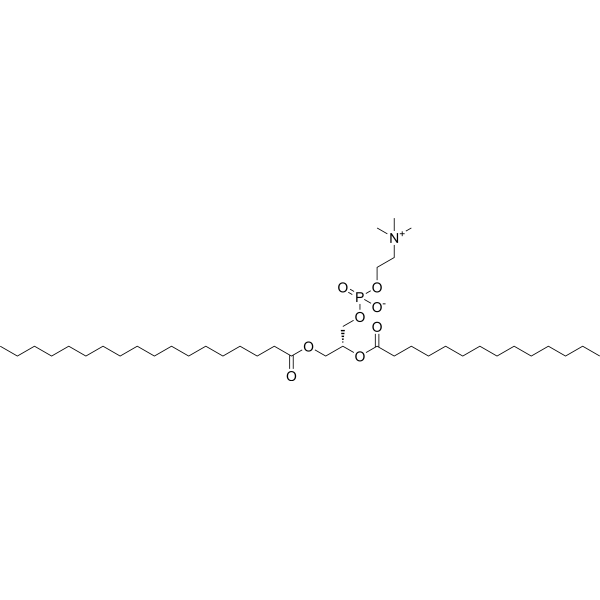
POPC (Standard)
|
Structural Classification
Natural Products
Microorganisms
Plants
Source Classification
|
Liposome
Reference Standards
|
|
1-Palmitoyl-2-oleoyl-sn-glycero-3-PC (Standard) is the analytical standard of 1-Palmitoyl-2-oleoyl-sn-glycero-3-PC. This product is intended for research and analytical applications. 1-Palmitoyl-2-oleoyl-sn-glycero-3-PC (POPC), a phospholipid, is a major component of biological membranes. 1-Palmitoyl-2-oleoyl-sn-glycero-3-PC is used for the preparation of liposomes and studying the properties of lipid bilayers .
|
-
| Cat. No. |
Product Name |
Chemical Structure |
-
- HY-130462S
-
|
|
|
1-Palmitoyl-2-oleoyl-sn-glycero-3-PC-d31 is deuterium labeled 1-Palmitoyl-2-oleoyl-sn-glycero-3-PC. 1-Palmitoyl-2-oleoyl-sn-glycero-3-PC (POPC), a phospholipid, is a major component of biological membranes. 1-Palmitoyl-2-oleoyl-sn-glycero-3-PC is used for
|
-
-
- HY-130462S1
-
|
|
|
1-Palmitoyl-2-oleoyl-sn-glycero-3-PC-d82 is deuterium labeled 1-Palmitoyl-2-oleoyl-sn-glycero-3-PC. 1-Palmitoyl-2-oleoyl-sn-glycero-3-PC (POPC), a phospholipid, is a major component of biological membranes. 1-Palmitoyl-2-oleoyl-sn-glycero-3-PC is used for
|
-
-
- HY-141636S
-
|
|
|
1-PalMitoyl-2-arachidoyllecithin-d9-1 (1-Palmitoyl-2-arachidonoyl-sn-glycero-3-phosphocholine-d9-1) is deuterium labeled 1-PalMitoyl-2-arachidoyllecithin. 1-Palmitoyl-2-arachidonoyl-sn-glycero-3-PC (PAPC) is a phospholipid containing palmitic acid (16:0) and arachidonic acid (20:4) at the sn-1 and sn-2 positions, respectively, that is found in biological membranes. PAPC is oxidized in vivo, and its oxidation products are involved in chronic inflammation and vascular disease. PAPC has been used to study signaling of oxidized phospholipids. Levels of PAPC are decreased in isolated human multiple myeloma cells .
|
-
-
- HY-130462S3
-
|
|
|
1-Palmitoyl-2-oleoyl-sn-glycero-3-PC-d62 (POPC-d64) is deuterium labeled 1-Palmitoyl-2-oleoyl-sn-glycero-3-PC. 1-Palmitoyl-2-oleoyl-sn-glycero-3-PC (POPC), a phospholipid, is a major component of biological membranes. 1-Palmitoyl-2-oleoyl-sn-glycero-3-PC is used for the preparation of liposomes and studying the properties of lipid bilayers .
|
-
-
- HY-130462S2
-
|
|
|
1-Palmitoyl-2-oleoyl-sn-glycero-3-PC- 13C16 (POPC- 13C16) is 13C labeled 1-Palmitoyl-2-oleoyl-sn-glycero-3-PC. 1-Palmitoyl-2-oleoyl-sn-glycero-3-PC (POPC), a phospholipid, is a major component of biological membranes. 1-Palmitoyl-2-oleoyl-sn-glycero-3-PC is used for the preparation of liposomes and studying the properties of lipid bilayers .
|
-
-
- HY-130462S4
-
|
|
|
1-Palmitoyl-2-oleoyl-sn-glycero-3-PC-d9 (POPC-d9) is the deuterium labeled 1-Palmitoyl-2-oleoyl-sn-glycero-3-PC (HY-130462). 1-Palmitoyl-2-oleoyl-sn-glycero-3-PC (POPC), a phospholipid, is a major component of biological membranes. 1-Palmitoyl-2-oleoyl-sn-glycero-3-PC is used for the preparation of liposomes and studying the properties of lipid bilayers .
|
-
-
- HY-130462S5
-
|
|
|
1-Palmitoyl-2-oleoyl-sn-glycero-3-PC-d62 (POPC-d62) is the deuterium labeled 1-Palmitoyl-2-oleoyl-sn-glycero-3-PC (HY-130462). 1-Palmitoyl-2-oleoyl-sn-glycero-3-PC (POPC), a phospholipid, is a major component of biological membranes. 1-Palmitoyl-2-oleoyl-sn-glycero-3-PC is used for the preparation of liposomes and studying the properties of lipid bilayers .
|
-
| Cat. No. |
Product Name |
|
Classification |
-
- HY-130462
-
|
POPC
|
|
Phospholipids
|
|
1-Palmitoyl-2-oleoyl-sn-glycero-3-PC (POPC), a phospholipid, is a major component of biological membranes. 1-Palmitoyl-2-oleoyl-sn-glycero-3-PC is used for the preparation of liposomes and studying the properties of lipid bilayers .
|
-
- HY-115435
-
|
DMPS-Na; Dimyristoyl phosphatidylserine sodium
|
|
Phospholipids
|
|
1,2-Dimyristoyl-sn-glycero-3-phospho-L-serine sodium is an anionic phospholipid with myristic acid tails (14:0) and contains a carboxylic acid (COOH) and amine (NH2) in their head group. It has been used in the preparation of liposome.
|
-
- HY-W440719
-
|
|
|
Pegylated Lipids
|
|
Cholesterol-PEG2000-MAL is a PEG derivative and can be used to prepare liposome or nanoparticle due to its ability to self-assemble in water. The maleimide moiety is reactive with thiol molecule to form a covalent thioether bond.
|
-
- HY-141636
-
|
1-Palmitoyl-2-arachidonoyl-sn-glycero-3-phosphocholine; PAPC; PC(16:0/20:4)
|
|
Phospholipids
|
|
1-Palmitoyl-2-arachidonoyl-sn-glycero-3-PC (PAPC) is a phospholipid containing palmitic acid (16:0) and arachidonic acid (20:4) at the sn-1 and sn-2 positions, respectively, that is found in biological membranes. PAPC is oxidized in vivo, and its oxidation products are involved in chronic inflammation and vascular disease. PAPC has been used to study signaling of oxidized phospholipids. Levels of PAPC are decreased in isolated human multiple myeloma cells.
|
-
- HY-134174A
-
|
16:0-18:1 PA
|
|
Phospholipids
|
|
1-Palmitoyl-2-oleoyl-sn-glycero-3-phosphate sodium (16:0-18:1 PA) is a phospholipid with activities in regulating biological membrane fluidity and participating in cell signal transduction. 1-Palmitoyl-2-oleoyl-sn-glycero-3-phosphate sodium can be used to study the effects on the activity of chloroplast envelope monogalactosyldiacylglycerol (MGDG) synthase. 1-Palmitoyl-2-oleoyl-sn-glycero-3-phosphate sodium plays an important role in cell membrane integrity and function.
|
-
- HY-W440690
-
|
|
|
Pegylated Lipids
|
|
Cholesterol-PEG2000-amine is a pegylated lipids which can be used for preparation of liposome or nanoparticle. The lipophilic moiety can encapsulate hydrophobic drugs whereas the hydrophilic PEG chain helps the overal water solubility of the micelles.
|
-
- HY-W322575
-
|
DHPC
|
|
Phospholipids
|
|
1,2-Diheptadecanoyl-sn-glycero-3-phosphorylcholine (DHPC) is a biologically active phospholipid compound and a derivative of phosphatidylcholine (PC) . It can be used in the generation of micelles, liposomes, and other types of artificial membranes.
|
-
- HY-142988
-
|
1S-2M-PC
|
|
Phospholipids
|
|
1-Stearoyl-2-myristoyl-sn-glycero-3-PC (1S-2M-PC) belongs to the class of asymmetric phospholipids. 1-Stearoyl-2-myristoyl-sn-glycero-3-PC is abundant in biological membranes .
|
-
- HY-142991
-
|
POPG
|
|
Phospholipids
|
|
1-Palmitoyl-2-oleoyl-sn-glycero-3-phosphatidylglycerol (POPG) is an anionic phosphatidylglycerol that often serves as a key component to co-construct model phospholipid bilayers with phosphatidylcholine (e.g., at a 3:1 POPC:POPG ratio) for investigating the structure and dynamics of transmembrane proteins. 1-Palmitoyl-2-oleoyl-sn-glycero-3-phosphatidylglycerol acts as a fundamental material for mimicking the physicochemical properties of biological membranes and enables the elucidation of membrane protein interaction mechanisms .
|
-
- HY-W591461
-
|
|
|
Pegylated Lipids
|
|
DSPE-PEG-COOH, MW 2000 is a phospholipid polyPEG which can be used to prepare liposomes or nanoparticles. The terminal carboxylic acid can react with primary amine groups to form a stable amide bond.
|
-
- HY-W440711
-
|
|
|
Pegylated Lipids
|
|
Cholesterol-PEG-Biotin (MW 2000) is a pegylated lipids which has strong binding to avidin or streptavidin.
|
-
- HY-141615
-
|
PDME; 16:0 Dimethyl PE
|
|
Phospholipids
|
|
1,2-Dipalmitoyl-sn-glycero-3-phospho-N,N-dimethylethanolamine has been used in the generation of liposomes and monolayers for use in the study of membrane permeability and monolayer viscosity, respectively.
|
-
- HY-W440706
-
|
|
|
Pegylated Lipids
|
|
Cholesterol-PEG2000-alcohol is a pegylated lipids which can be used for preparation of liposome or nanoparticle. The lipophilic moiety can encapsulate hydrophobic drugs whereas the hydrophilic PEG chain helps the overal water solubility of the micelles. The amine can react with an activated NHS ester to form a stable amide bond.
|
-
- HY-W800793
-
|
1,2-dipalmitoyl-sn-glycero-3-phosphoethanolamine-N-(succinyl)
|
|
Phospholipids
|
|
16:0 Succinyl PE is a carboxylic acid-functionalized lipid with a two carbon linker to a phosphoethanolamine bound to two palmitic acid tails.
|
-
- HY-W800797
-
|
1,2-dipalmitoyl-sn-glycero-3-phosphoethanolamine-N-(biotinyl)
|
|
Phospholipids
|
|
16:0 Biotinyl PE is a biotin-functionalized lipid attached to a phosphoethanolamine linked to two palmitic acid groups.
|
-
- HY-W440981
-
|
1-Stearoyl-2-palmitoyl-sn-glycero-3-phosphocholine
|
|
Phospholipids
|
|
SPPC is a phospholipid with different length of fatty acid. The sn-1 position contains a stearic acid (18:0) while the sn-2 position is occupied by a palmitic acid (16:0).
|
-
- HY-W339838
-
|
14:0 Lyso PG
|
|
Phospholipids
|
|
1-Myristoyl-2-hydroxy-sn-glycero-3-PG sodium is a lysophospholipid containing myristic acid (14:0) at the sn-1 position. It has been used in the generation of micelles, liposomes, and other types of artificial membranes, including lipid-based drug carrier systems.
|
-
- HY-W440995
-
|
|
|
Pegylated Lipids
|
|
DOPE-PEG2000-Mal is a phospholipid polyPEG which can be used to prepare liposomes or nanoparticles. It is also reactive with thiol at pH 6.5 tp 7.5 to form a stable thioether bond.
|
-
- HY-W440958
-
|
PSPC; PC(16:0-18:0)
|
|
Phospholipids
|
|
1-Palmitoyl-2-stearoyl-sn-glycero-3-phosphocholine is an assymetrical phospholipid containing saturated palmitic and stearic acid at the sn-1 and sn-2 position respectively. The phosphate group is attached to choline.
|
-
- HY-W343736
-
|
1,3-DPPE; 1,3-Dipalmitoyl-sn-glycero-2-PE
|
|
Phospholipids
|
|
1,3-Dipalmitoyl-glycero-2-phosphoethanolamine is a phospholipid containing the saturated long-chain (16:0) stearic acid inserted at the sn-1 and sn-3 positions and PE at the sn-2 site. It can be used in the generation of micelles, liposomes, and other types of artificial membranes.
|
-
- HY-W591449
-
|
|
|
Pegylated Lipids
|
|
DOPE-PEG2000-Azide is a liposome to simulate biological phospholipid membrane. Liposomes are the main component of vesicles with concentric phospholipid bilayer membranes, which can be used to construct drug delivery systems for anti-cancer and anti-infection fields. Highly polar water-soluble payloads can be trapped in the internal aqueous space of liposomes, while lipophilic payloads can partition into and become part of the lipid bilayer. Especially for delivering antisense oligonucleotides, it can overcome problems such as inefficient cellular uptake and rapid loss in the body .
|
-
- HY-W440957
-
|
PC(16:0/14:0); 1-palmitoyl-2-myristoyl-sn-glycero-3-phosphocholine
|
|
Phospholipids
|
|
PMPC is a phosphatidylcholine with asymmetrical fatty acid. Palmitic acid occupies sn-1 position while myristic acid is placed at the sn-2 position.
|
-
- HY-W590555
-
|
|
|
Pegylated Lipids
|
|
Thiol-PEG2000-DMG is a phospholipid polyPEG which can be used to prepare liposomes or nanoparticles. The terminal thiol group reacts with maleimide, OPSS, vinylsulfone and transition metal surfaces including gold, silver, etc.
|
-
- HY-W800787
-
|
|
|
Phospholipids
|
|
18:1 PE MCC is a maleimide-functionalized thiol-reactive lipid with a phosphoethanolamine linked to two oleic acid tails and a maleimide group.
|
-
- HY-W590536
-
|
1-Palmitoyl-2-Lauroyl-sn-glycero-3-Phosphatidylcholine; 1-Palmitoyl-2-Lauroyl-sn-glycero-3-Phosphocholine
|
|
Phospholipids
|
|
1,2-PLPC is a phospholipid containing palmitoyl (16:0) and lauryl (12:0) acyl substituents at the sn-1 and sn-2 positions, respectively. It can be used in the generation of micelles, liposomes, and other types of artificial membranes.
|
-
- HY-W591332
-
|
|
|
Pegylated Lipids
|
|
mPEG2000-DMPE is a PEGylated 1,2-Dimyristoyl-sn-glycero-3-phosphoethanolamine (14:0 PE) compound with a methyl group at the other end of the PEG chain. The PEG polymer exhibits amphiphatic behavior and helps to form stable micelles in an aqueous solution. It can be used to prepare nanoparticles or liposomes for targeted drug delivery applications.
|
-
- HY-W800794
-
|
DPPE-NG; 1,2-dipalmitoyl-sn-glycero-3-phosphoethanolamine-N-(glutaryl)
|
|
Phospholipids
|
|
16:0 Glutaryl PE is is a carboxylic acid-functionalized lipid with a three carbon linker to a phosphoethanolamine bound to two palmitic acid tails.
|
-
- HY-W440985
-
|
1,2-dilauroyl-sn-glycero-3-phospho-L-serine
|
|
Phospholipids
|
|
DLPS is an anionic phospholipid with lauric acid tails (12:0) and contains a carboxylic acid (COOH) and amine (NH2) in their head group. It has been used in the preparation of lipid-mixing vesicles, liposome, or artificial membrane. Due to the medium size of fatty acid chain, DLPS is used to form thinner membranes/walls.
|
-
- HY-W800733
-
|
1,2-Dilauroyl-sn-glycero-3-phosphorylglycerol; PG(12:0/12:0)
|
|
Phospholipids
|
|
DLPG is a phospholipid containing lauric acid (12 chain fatty acid) inserted at the sn-1 and sn-2 positions. Its phosphate group is attached to glycerol. It is used in the generation of micelles, liposomes, and other artificial membranes.
|
-
- HY-130671A
-
|
(R)-1,2-Dipalmitoyl-sn-glycero-3-phosphoglycerol sodium
|
|
Phospholipids
|
|
L-DPPG ((R)-1,2-Dipalmitoyl-sn-glycero-3-phosphoglycerol sodium) is a phospholipid targeting biological membranes. L-DPPG interacts with lipid bilayers through hydrophobic and electrostatic interactions. L-DPPG is used in research on drug delivery systems .
|
-
- HY-130671B
-
|
(S,S)-1,2-Dipalmitoyl-sn-glycero-3-phosphoglycerol sodium
|
|
Phospholipids
|
|
(S,S)-DPPG is an enantiomeric isomer of L-DPPG. L-DPPG ((R)-1,2-Dipalmitoyl-sn-glycero-3-phosphoglycerol (sodium)) is a phospholipid targeting biological membranes. L-DPPG interacts with lipid bilayers through hydrophobic and electrostatic interactions. L-DPPG is used in research on drug delivery systems .
|
-
- HY-157689
-
|
20:1(Cis)PC
|
|
Phospholipids
|
|
1,2-Dieicosenoyl-sn-glycero-3-phosphocholine (20:1(Cis)PC) is a phospholipid that has the activity of promoting the binding of proteins to liposomes. 1,2-Dieicosenoyl-sn-glycero-3-phosphocholine can serve as a component of biological membranes and enhance the fluidity of cell membranes. 1,2-Dieicosenoyl-sn-glycero-3-phosphocholine also plays an important role in compound delivery systems, improving the biocompatibility and targeting of compounds.
|
-
- HY-W440991
-
|
DOPE-PEG2000-NH2
|
|
Pegylated Lipids
|
|
DOPE-PEG-Amine (MW 2000) is a polydisperse PEG covalently attached to a phospholipid. The polymer is an amphiphilic molecule with hydrophobic fatty acid chains and hydrophilic PEG head which enables lipid bilayer or micelle formation in water. The phospholipid PEG can be used to prepare liposome or nanoparticles for targeted drug delivery and is reactive with alkyne to form a triazole ring.
|
-
- HY-138913
-
|
|
|
Cholesterol
|
|
2H-Cho-Arg (TFA) is a steroid-based cationic lipid that contains a 2H-cholesterol skeleton coupled to an L-arginine head group and can be used to facilitate gene transfection.
|
-
- HY-134174
-
|
|
|
Phospholipids
|
|
1-Palmitoyl-2-oleoyl-sn-glycero-3-phosphate is a phospholipid containing saturated palmitic acid (16:0) and monounsaturated oleic acid (18:1) inserted at the sn-1 and sn-2 positions, respectively. It can be used in the generation of micelles, liposomes, and other types of artificial membranes.
|
-
- HY-W340832
-
|
|
|
Phospholipids
|
|
18:1 Biotinyl Cap PE is a fluorescent lipid, which features a head group that has been altered to include biotinyl cap PE.
|
-
- HY-W590535
-
|
1,2-DNPC;
1,2-Dinonadecanoyl-sn-glycero-3-phosphocholine
|
|
Phospholipids
|
|
19:0 PC is a saturated phospholipid that has been used as a standard for the quantification of phosphatidylcholines in human synovial fluid. It has also been used to study dynamics of lipid bilayer phase transition.
|
-
- HY-W800777
-
|
|
|
Cationic Lipids
|
|
6-(3-Hydroxypropylamino)hexyl 2-hexyldecanoate is an ionizable lipid which can be used to make ALC-0315. The lipid has an ester bond adjacent to C6 relative to the amine nitrogen. The introduction of ester linkages can improve the clearance of the lipid in the liver.
|
-
- HY-W800825
-
|
|
|
Cationic Lipids
|
|
Octadecanedioic Acid Mono-L-carnitine ester is a cationic lipid which may be used in combination with other lipids in the formation of lipid nanoparticles (LNPs). Its terminal carboxylic acid can react with primary amine groups in the presence of activators (e.g. HATU) to form a stable amide bond.
|
-
- HY-W800789
-
|
|
|
Phospholipids
|
|
16:0 MPB PE is a maleimide-functionalized thiol-reactive lipid with a phosphoethanolamine linked to two palmitic acid tails and a phenyl maleimide group.
|
-
- HY-W441005
-
|
|
|
Phospholipids
|
|
Amino-Gly-Gly-DSPE (hydrochloride) is a specially modified phospholipid that has been used to synthesize liposomes. The terminal amine is reactive with an NHS ester compound or carboxylic acid molecule in the presence of activator, such as HATU or EDC.
|
-
- HY-W590538A
-
|
|
|
Cationic Lipids
|
|
HAPC-Chol is a cationic cholesterol that can be used as a component of lipoplexes complexes .
|
-
- HY-W591913
-
|
|
|
Pegylated Lipids
|
|
Cholesterol-PEG2000-methoxy is a PEG derivative which self-assembles in water to form micelle-like structure. The cholesterol tail can be used to encapsulate hydrophobic drugs while the PEG chain ehances the water solubility of the micelles.
|
-
- HY-W800734
-
|
MPPC; PC(14:0/16:0)
|
|
Phospholipids
|
|
1-Myristoyl-2-palmitoyl-sn-glycero-3-phosphocholine (MPPC) is an asymmetrical phosphatidylcholine containing a myristic acid (14:0) at the sn-1 position and a palmitic acid (16:0) at the sn-2 position. It is commonly used in the generation of micelles, liposomes, and other types of artificial membranes.
|
-
- HY-W440698
-
|
|
|
Pegylated Lipids
|
|
Cholesterol-PEG2000-Acid is a polydisperse PEG derivative which can be used to create liposome as drug carrier for delivering therapeutic agents into tissues.
|
-
- HY-W800784
-
|
|
|
Phospholipids
|
|
23:2 Diyne PE [DC(8,9)PE] is a phospholipase-mediated hydrolyzed phosphocoline with palmitic acid (16:0) and Pentacosa-10,12-diynoic acid for tails.
|
-
- HY-W140488
-
|
10:0 PE
|
|
Phospholipids
|
|
1,2-Didecanoyl-sn-glycero-3-phosphoethanolamine, a phospholipid, showes very promising P-gp inhibitory results at a concentration of 0.3 mM.
|
-
- HY-W800798
-
|
1,2-dipalmitoyl-sn-glycero-3-phosphoethanolamine-N-(cyanur)
|
|
Phospholipids
|
|
16:0 Cyanur PE is a cyanur-functionalized lipid attached to a phosphoethanolamine linked to two palmitic acid groups.
|
-
- HY-W440724
-
|
|
|
Pegylated Lipids
|
|
Cholesterol-PEG3400-Thiol is an amphiphatic PEG derivative which forms micelles in water and can be used to prepare liposomes or nanoparticles for drug delivery system. The thiol moiety is reactive with maleimide to form a stable thioether bond.
|
-
- HY-W440820
-
|
|
|
Cationic Lipids
|
|
Bis(bis(2-carboxyethyl)aminopropyl)methylamine is a symmetrical branched linker featuring three tertiary amines and four carboxylic acids. Each carboxylic acid is open to forming esters or amides. It can be used in developing lipid nanoparticles.
|
- HY-W800786
-
|
N-MCC-PE
|
|
Phospholipids
|
|
16:0 PE MCC is a maleimide-functionalized thiol-reactive lipid with a phosphoethanolamine linked to two palmitic acid tails and a maleimide group.
|
- HY-W800785
-
|
1-palMitoyl-2-(10,12-tricosadiynoyl)-sn-glycero-3-phosphocholine
|
|
Phospholipids
|
|
16:0-23:2 Diyne PC is a phospholipase-mediated hydrolyzed phosphocoline with palmitic acid (16:0) and Pentacosa-10,12-diynoic acid for tails.
|
- HY-W590593
-
|
|
|
Pegylated Lipids
|
|
mPEG-Cholesterol,MW 2000 is a PEG derivative which self-assembles in water to form micelle-like structure. The cholesterol tail can be used to encapsulate hydrophobic drugs while the PEG chain ehances the water solubility of the micelles.
|
- HY-W800843
-
|
|
|
Cationic Lipids
|
|
tert-Butyl 3-(7-((undecan-3-yloxy)carbonyl)heptylamino)propylcarbamate is an aminolipid featuring a Boc-protected primary amine, a propylamine spacer attached to an octanoate chain and a C11 chain.
|
- HY-W590538
-
|
|
|
Cholesterol
|
|
HAPC-Chol is a cationic cholesterol that can be used as a component of lipoplexes complexes.
|
- HY-W800778
-
|
|
|
Cationic Lipids
|
|
Bis(2-butyloctyl) 10-oxononadecanedioate is an ionizable lipid-like compound containing four hydrophobic tails bound by esters. It can be used to build lipids for mRNA encapsulation and delivery.
|
- HY-W800791
-
|
|
|
Phospholipids
|
|
16:0 Caproylamine PE is an amide-functionalized lipid with a phosphoethanolamine linked to two palmitic acid tails.
|
- HY-W800795
-
|
DOPE-NG; 1,2-dioleoyl-sn-glycero-3-phosphoethanolamine-N-(dodecanoyl)
|
|
Phospholipids
|
|
18:1 Dodecanyl PE is a carboxylic acid-functionalized lipid with a ten carbon linker to a phosphoethanolamine bound to two oleic acid tails.
|
- HY-W800788
-
|
|
|
Phospholipids
|
|
18:1 MPB PE is a maleimide-functionalized thiol-reactive lipid with a phosphoethanolamine linked to two oleic acid tails and a phenyl maleimide group.
|
- HY-W440727
-
|
|
|
Pegylated Lipids
|
|
Cholesterol-PEG2000-Vinylsulfone is a thiol reactive polyPEG via thiol-ene reaction to form a thioether bond. It can self-assemble in water and is used to prepare liposome as drug vehicle for targeted delivery into tissues.
|
- HY-W587499
-
|
|
|
Phospholipids
|
|
2-Arachidonoyl-sn-glycero-3-phosphocholine is a phospholipid molecule that is a major component of the plasma membrane. It is a phospholipid molecule that is involved in the regulation of membrane fluidity, signal transduction, cell-cell communication, and mediator of inflammation.
|
Your information is safe with us. * Required Fields.
Inquiry Information
- Product Name:
- Cat. No.:
- Quantity:
- MCE Japan Authorized Agent:

