1. Search Result
Search Result
Results for "

CHO cell membranes

" in MedChemExpress (MCE) Product Catalog:

30

Inhibitors & Agonists

1

Biochemical Assay Reagents

2

Peptides

1

Inhibitory Antibodies

1

Natural
Products

1

Click Chemistry

1

Oligonucleotides

Cat. No. Product Name Target Research Areas Chemical Structure
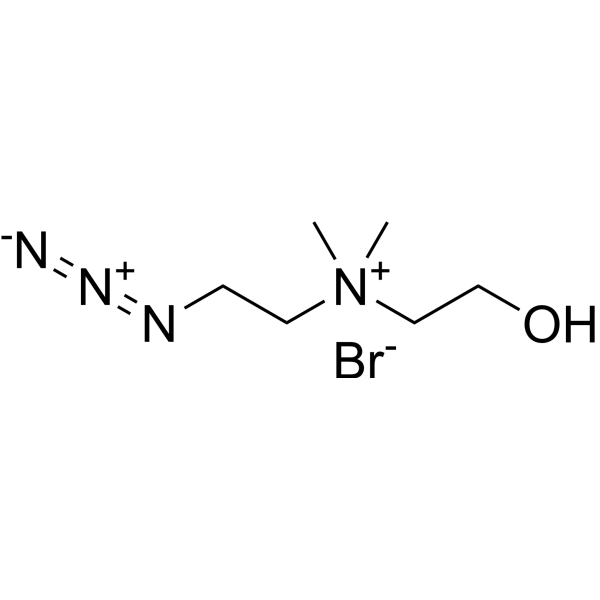
  • HY-W588725A
    N3-Cho bromide
    1 Publications Verification

    Azido-CHOline bromide

    Biochemical Assay Reagents Others
    N3-Cho (Azido-choline) bromide is a click chemistry reagent containing an azide group that can be used in the synthesis of cell membrane structures .
    N3-Cho bromide
  • HY-15039

    Bradykinin Receptor Metabolic Disease Inflammation/Immunology Endocrinology
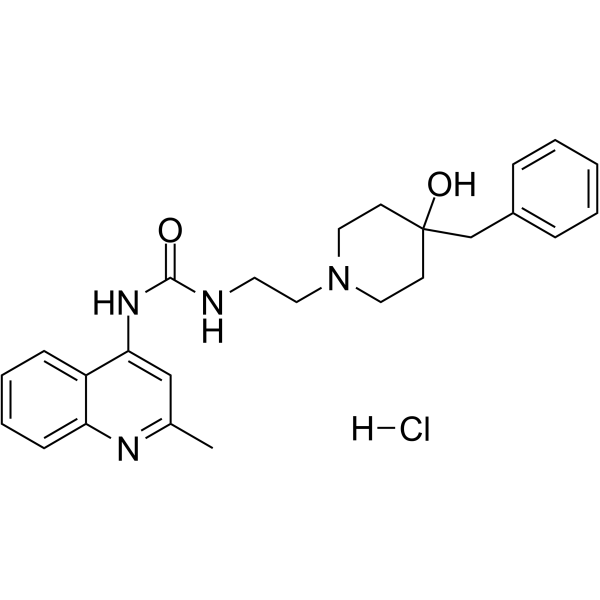
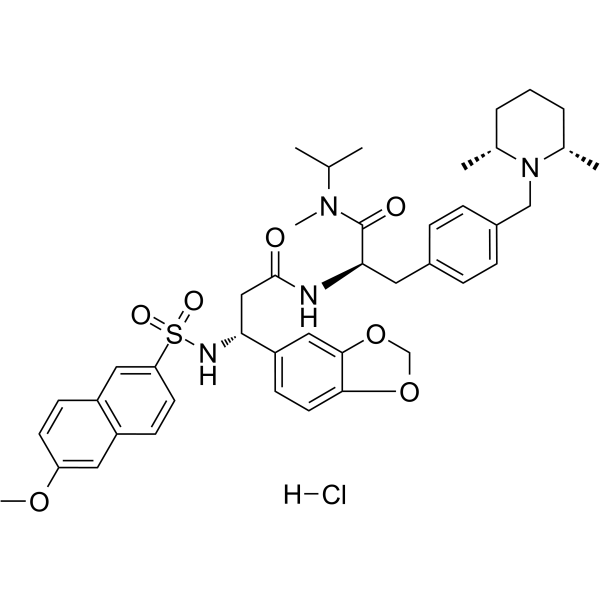
    SSR240612 is a potent, and orally active specific non-peptide bradykinin B1 receptor antagonist, with Kis of 0.48 nM and 0.73 nM for B1 kinin receptors of human fibroblast MRC5 and HEK cells expressing human B1 receptors, 481 nM and 358 nM for B2 receptors of guinea pig ileum membranes and CHO cells expressing human B1 receptor, respectively.
    SSR240612
  • HY-167856

    GPR88 Neurological Disease
    RTI-122 is a selective, blood-brain barrier-permeable GPR88 agonist (cAMP EC50=11 nM), with EC50 values of 11.5 nM and 155 nM for human and mouse GPR88, respectively ([ 35S]GTPγS assay). By activating the GPR88 receptor to regulate the cAMP signaling pathway and G protein activity, RTI-122 significantly attenuates Binge-like drinking, reduces alcohol intake, and decreases alcohol-seeking motivation. RTI-122 blocks the reinstatement of alcohol-seeking behavior without affecting water or sucrose intake. RTI-122 exhibits metabolic stability in mice (T1/2=5.8 h) and can be used to investigate alcohol use disorder .
    RTI-122
  • HY-112624K

    Dextran 5; Dextran D5; Dextran T5(MW 4500-5500)

    Apoptosis Autophagy Others
    Dextran T5 (MW 5,000) is a sulfated polysaccharide anti-apoptotic and autophagic agent. Dextran T5 (MW 5,000) has sulfated groups and interacts with cell membranes by mimicking endogenous glycosaminoglycans, inhibiting the mitochondrial apoptotic pathway and delaying DNA fragmentation to exert anti-apoptotic activity. Dextran T5 (MW 5,000) also promotes the conversion of LC3-I to LC3-II and the formation of autophagosomes to activate the autophagic pathway. Dextran T5 (MW 5,000) can prolong the survival cycle of CHO cells and increase the production of recombinant erythropoietin (EPO). The Dextran series of compounds are also natural polysaccharide drug carriers that can be connected to drugs through covalent bonding methods such as ester bonds, amide bonds or click chemistry, or self-assembled to form carriers such as nanoparticles and hydrogels. Dextran is biodegradable and biocompatible, and can achieve targeted delivery and controlled release of drugs. Dextran derivatives can prolong drug half-life, increase local concentration and reduce immune clearance activity. The Dextran series of compounds are also natural polysaccharide drug carriers that can be connected to drugs through covalent bonding methods such as ester bonds, amide bonds or click chemistry, or self-assembled to form carriers such as nanoparticles and hydrogels. Dextran is biodegradable and biocompatible, and can achieve targeted delivery and controlled release of drugs. Dextran derivatives can prolong the half-life of drugs, increase local concentrations, and reduce the activity of immune clearance .
    Dextran T5 (MW 5,000)
  • HY-10655
    Palosuran
    4 Publications Verification

    ACT-058362

    Urotensin Receptor Cardiovascular Disease
    Palosuran (ACT-058362) is a potent, selective, and orally active antagonist of urotensin II receptor, with an IC50 of 3.6 nM for CHO cell membranes expressing human recombinant receptors. Palosuran can improves pancreatic and renal function in diabetic rats .
    Palosuran
  • HY-107691

    Neurokinin Receptor Neurological Disease Endocrinology Cancer
    GR 159897 is a highly potent, selective, competitive, brain-penetrated non-peptide neurokinin 2 (NK2) receptor antagonist. GR 159897 has little or no affinity for NK1 and NK3 receptors. GR 159897 inhibits binding of [ 3H]GR100679 to human NK2 (hNK2)-CHO cells and rat colon membranes with pKis of 9.51 and 10, respectively. Antagonizes bronchoconstriction. Anxiolytic-like and anti-tumor effects .
    GR 159897
  • HY-103428
    LE 300
    2 Publications Verification

    Dopamine Receptor 5-HT Receptor Neurological Disease
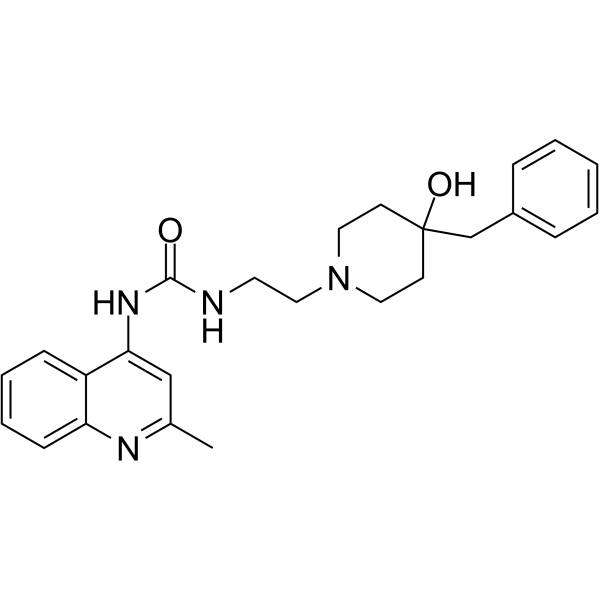
    LE 300 is a potent and selective dopamine D1-like receptor antagonist with Kis of 1.9 nM and 7.5 nM in CHO cell membranes expressing human dopamine D1 and D5 receptors, respectively. LE 300 is an antagonist of the 5-HT2A receptor with a pA2 of 8.32 in a rat tail artery assay .
    LE 300
  • HY-107401

    SCH-351125

    HIV CCR Calcium Channel Infection
    Ancriviroc (SCH-351125) is an orally active CCR5 antagonist with an IC50 value of 13 nM against hCCR5. Ancriviroc specifically binds to hCCR5, blocks ligand-induced signal transduction, calcium influx, GTPγS binding, chemotaxis, ligand binding, and HIV-1 entry, induces conformational changes in CCR5, and inhibits infection and replication of R5-tropic HIV-1 .
    Ancriviroc
  • HY-152656

    Drug Intermediate Adenosine Receptor Neurological Disease
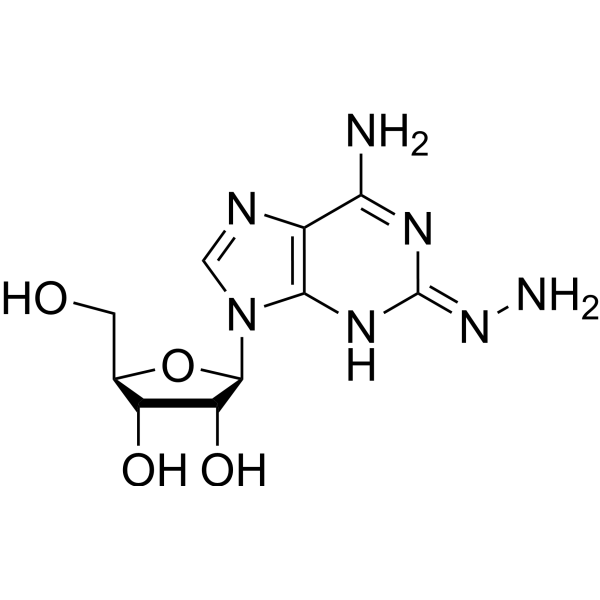
    2-Hydrazinyl-adenosine is a synthetic intermediate. Derivatives of 2-Hydrazinyl-adenosine act as A2A adenosine receptor agonists. 2-Hydrazinyl-adenosine is used in the research of neurodegenerative diseases .
    2-Hydrazinyl-adenosine
  • HY-12709A
    ARC 239 dihydrochloride
    1 Publications Verification

    Adrenergic Receptor Cardiovascular Disease Inflammation/Immunology
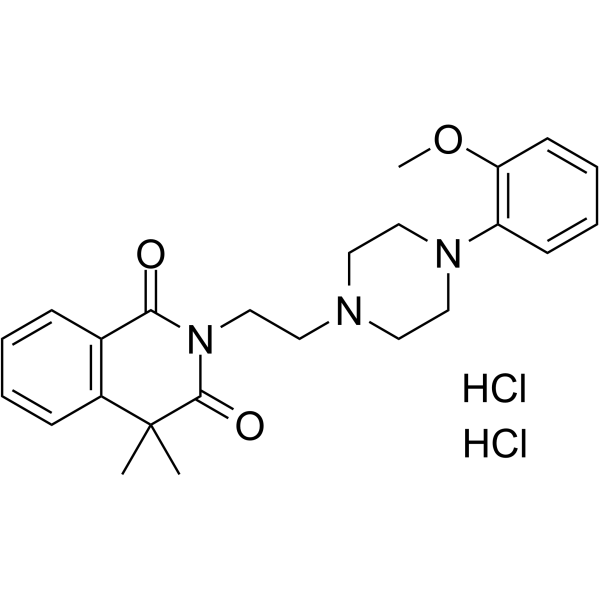
    ARC 239 dihydrochloride is a selective α2B/2C adrenoceptor antagonist (pKd values are 5.95, 7.41 and 7.56 at α2A, α2B, and α2C receptors respectively). ARC 239 dihydrochloride binds to CHO cell membranes expressing human recombinant a2A-, a2B- or a2C-adrenoceptor subtypes with pKis of 5.6, 8.4, and 7.08, respectively .
    ARC 239 dihydrochloride
  • HY-10655A
    Palosuran hydrochloride
    4 Publications Verification

    ACT-058362 hydrochloride

    Urotensin Receptor Cardiovascular Disease
    Palosuran hydrochloride (ACT-058362 hydrochloride) is a potent, selective, and orally active antagonist of urotensin II receptor, with an IC50 of 3.6 nM for CHO cell membranes expressing human recombinant receptors. Palosuran hydrochloride can improves pancreatic and renal function in diabetic rats .
    Palosuran hydrochloride
  • HY-10655AR

    ACT-058362 hydrochloride (Standard)

    Reference Standards Urotensin Receptor Cardiovascular Disease
    Palosuran (hydrochloride) (Standard) is the analytical standard of Palosuran (hydrochloride). This product is intended for research and analytical applications. Palosuran hydrochloride (ACT-058362 hydrochloride) is a potent, selective, and orally active antagonist of urotensin II receptor, with an IC50 of 3.6 nM for CHO cell membranes expressing human recombinant receptors. Palosuran hydrochloride can improves pancreatic and renal function in diabetic rats .
    Palosuran hydrochloride (Standard)
  • HY-10655R

    ACT-058362 (Standard)

    Reference Standards Urotensin Receptor Cardiovascular Disease
    Palosuran (Standard) is the analytical standard of Palosuran. This product is intended for research and analytical applications. Palosuran (ACT-058362) is a potent, selective, and orally active antagonist of urotensin II receptor, with an IC50 of 3.6 nM for CHO cell membranes expressing human recombinant receptors. Palosuran can improves pancreatic and renal function in diabetic rats .
    Palosuran (Standard)
  • HY-P1318

    Opioid Receptor Neurological Disease
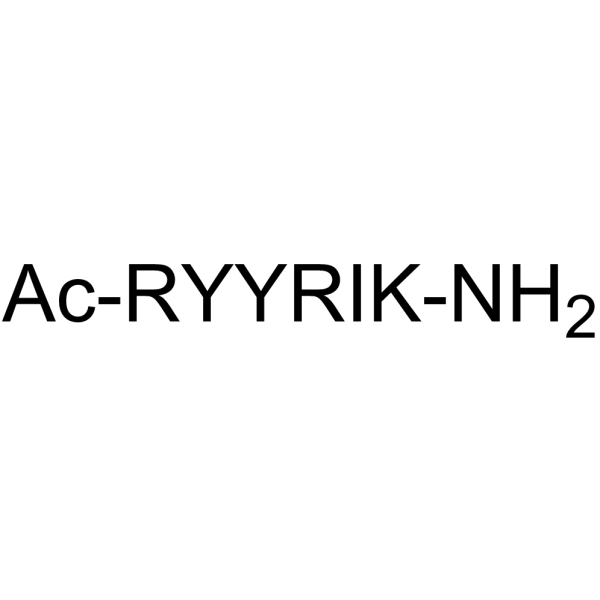
    Ac-RYYRIK-NH2 is a potent and partial agonist on ORL1 transfected in CHO cells (Kd=1.5 nM) and behaves as a endogenous ligand of ORL1. Ac-RYYRIK-NH2 is a specific antagonist for the activation of G protein and competitively antagonizes the stimulation of [ 35S]-GTPgS binding to G proteins by nociceptin/orphanin FQ (noc/OFQ) in membranes and sections of rat brain .
    Ac-RYYRIK-NH2
  • HY-P1318A

    Opioid Receptor Neurological Disease
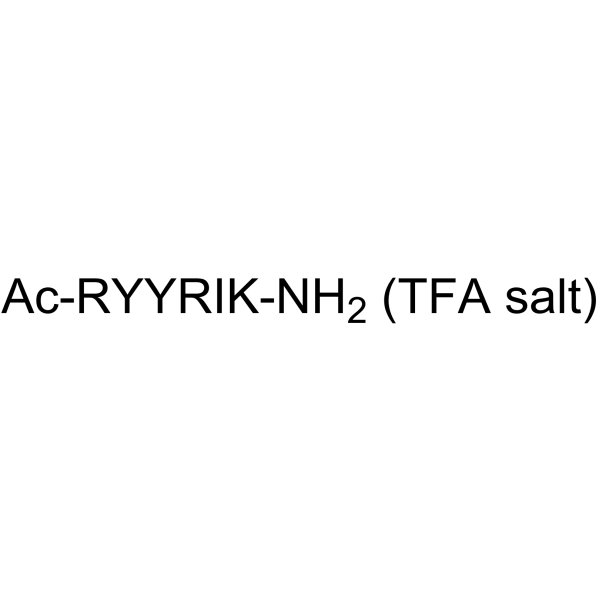
    Ac-RYYRIK-NH2 TFA is a potent and partial agonist on ORL1 transfected in CHO cells (Kd=1.5 nM) and behaves as a endogenous ligand of ORL1. Ac-RYYRIK-NH2 is a specific antagonist for the activation of G protein and competitively antagonizes the stimulation of [ 35S]-GTPgS binding to G proteins by nociceptin/orphanin FQ (noc/OFQ) in membranes and sections of rat brain .
    Ac-RYYRIK-NH2 TFA
  • HY-130358

    Calcium Channel Neurological Disease
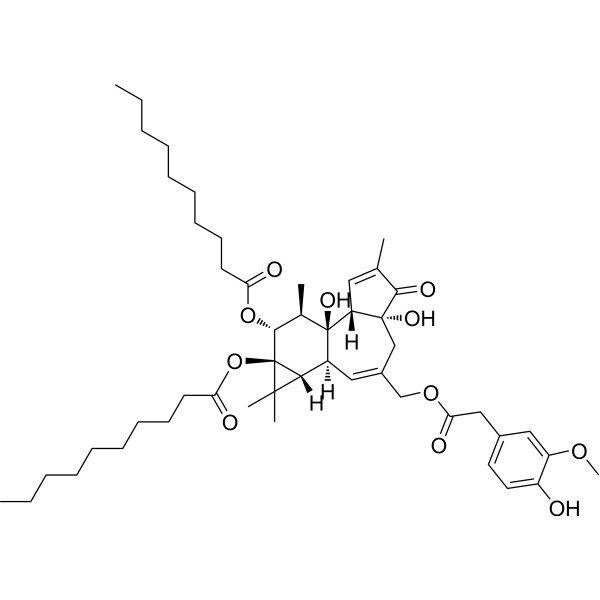
    PDDHV is a calcium absorption inducer and may achieve 45Ca 2+ influx by stimulating vanillic acid receptor VR1. PDDHV induces 45Ca 2+ uptake (EC50: 70 nM) in rat dorsal root ganglion neurons (expressing native vanilloid receptors) and calcium mobilization (EC50: 125 nM) in VR1-transfected CHO cells. PDDHV also inhibits [3H]-resiniferatoxin (RTX) binding to the dorsal root ganglion membrane in rats .
    PDDHV
  • HY-171328

    Dopamine Receptor Neurological Disease
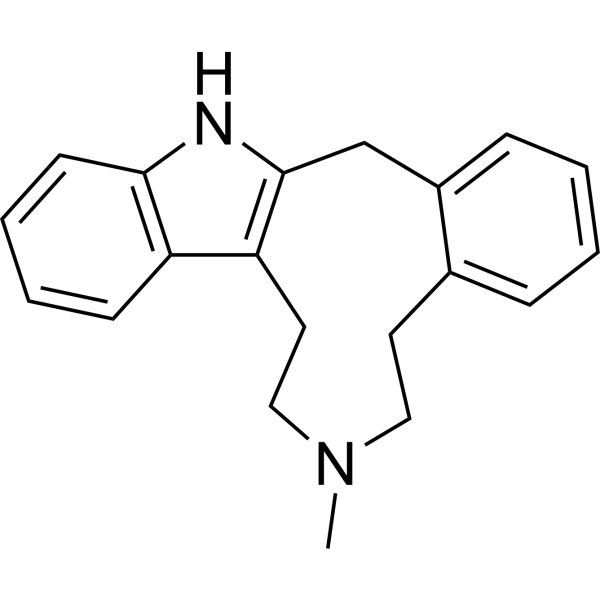
    RG-15 is the orally active antagonist for dopamine receptor that exhibits goof affinity to human D2 receptor and human D3 receptor with pKi of 8.23 and 10.49. RG-15 inhibits dopamine-stimulated [ 35S]GTPγS binding with IC50 of 21.2 nM (rat striatal membranes), 36.7 nM (mouse A9 cells expressing human D2L receptors) and 7.2 nM (CHO cells expressing human D3 receptors). RG-15 increases the turnover and biosynthesis of dopamine in mouse striatum and olfactory bulb, exhibiting antipsychotic activity .
    RG-15
  • HY-118945

    Prostaglandin Receptor Bradykinin Receptor Cardiovascular Disease Metabolic Disease Inflammation/Immunology
    FR191413 is a selective bradykinin B2 receptor agonist that stimulates prostaglandin E2 production in WI-38 cells and activates BK B2 receptor-mediated pathways such as vasodilation and organ protection. FR191413 competitively binds to [ 3H]-BK in guinea pig ileum (GPI) membranes and CHO cells transfected with the human BK B2 receptor, with IC50 values ​​of 20.0 nM and 2.60 nM, respectively. FR191413 can be used in research related to cardiovascular diseases and diabetes, including hypertension, myocardial hypertrophy, myocardial infarction, arrhythmias, and diabetic nephropathy .
    FR191413
  • HY-182645

    CRFR Neurological Disease
    CRF1 receptor antagonist-2 is an orally active, blood-brain barrier permeable CRF1 receptor antagonist, with an IC50 of 4 nM in CHO-K1 cell membranes and an IC50 of 7 nM in rat brain cell membranes. CRF1 receptor antagonist-2 exerts anxiolytic effects in swim stress-loaded rats. CRF1 receptor antagonist-2 can be used in studies related to stress-induced anxiety .
    CRF1 receptor antagonist-2
  • HY-183599

    Adenosine Receptor Cancer
    MK-1088 is an orally active A2A/A2B adenosine receptor antagonist with human A2A Ki of 0.31 nM, human A2B Ki 5.3 nM. MK-1088 blocks receptor downstream signaling, inhibits CREB phosphorylation and reverses adenosine-mediated immunosuppression. MK-1088 restores TNF−α release and enhances tumor immune surveillance. MK-1088 can be used for the research of cancer[1].
    MK-1088
  • HY-P992372

    Drug Derivative Transmembrane Glycoprotein Cancer
    huAA98 is a humanized monoclonal antibody and also a CD146 inhibitor. huAA98 binds to human CD146, regulates its activity and inhibits cancer-related angiogenesis, as well as tube formation, motility, proliferation and migration of endothelial cells. huAA98 inhibits angiogenesis in the chick chorioallantoic membrane assay and reduces microvessel density in human tumor xenograft models. huAA98 shows immunoreactivity only to neovascular vessels within tumors and inhibits the growth of tumor xenograft models. huAA98 can be used in studies related to cancer-related angiogenesis, liver cancer, leiomyosarcoma and pancreatic cancer .
    huAA98
  • HY-182714

    N6-Cyclopentyl-9-methyladenine

    Adenosine Receptor Cardiovascular Disease Neurological Disease
    N 0840 is a neutral antagonist of adenosine A1 receptor (A1AR), with a Ki value of 279 nM in rats and 1185 nM in humans. N 0840 modulates adenosine A1 receptor to increase forskolin-induced cyclic 3′,5′-adenosine monophosphate production, with a GTP shift value close to 1. N 0840 can be used in studies of neuroprotection, cardiovascular/renal function[1].
    N 0840
  • HY-182440

    5-HT Receptor Neurological Disease
    AZD3783 is an orally active, blood-brain barrier-penetrant 5-HT1B receptor antagonist. AZD3783 reverses agonist-induced hypothermia, inhibits separation-induced vocalizations in guinea pig pups, and acts as a moderately permeable glycoprotein substrate with moderate clearance. AZD3783 inhibits hERG channel activity. AZD3783 is applicable for research on depression, anxiety disorders, and other psychiatric diseases associated with serotonergic neurotransmission .
    AZD3783
  • HY-181649

    Sigma Receptor Neurological Disease
    S1R agonist 3 is a potent, selective and brain-penetrant sigma-1 receptor (S1R) agonist with a Ki of 1.5 nM. S1R agonist 3 reduces hyperlocomotion in wfs1abKO zebrafish larvae without affecting locomotion in wildtype wfs1abWT zebrafish larvae. S1R agonist 3 reverses Aβ25-35 (HY-P0128)-induced learning and memory impairments. S1R ligand 1 can be used for the research of Alzheimer’s disease .
    S1R agonist 3
  • HY-181515

    Opioid Receptor Neurological Disease
    KOR agonist 8 (Compound 8a) is a κ-opioid receptor (KOR) agonist and an analgesic agent, with a Ki value of 5.3 nM for human KOR, and EC50 values of 43.1 nM and 9236 nM for human KOR. It exhibits subtype selectivity for MOR/KOR and DOR/KOR. KOR agonist 8 is applicable for pain-related research .
    KOR agonist 8
  • HY-182421

    Kisspeptin Receptor Endocrinology Cancer
    GPR54 antagonist‑1 is a GPR54 antagonist with IC50 values of 3.6 nM and 15 nM against human and rat GPR54, respectively. GPR54 antagonist‑1 shows blood‑brain barrier penetration. GPR54 antagonist‑1 blocks the function of human and rat GPR54 receptors. GPR54 antagonist‑1 suppresses plasma luteinizing hormone levels in castrated male rats. GPR54 antagonist‑1 can be used for the study of prostate cancer and endometriosis .
    GPR54 antagonist-1
  • HY-125790

    Opioid Receptor Neurological Disease
    Cyclazocine is a μ, δ, and κ opioid receptor modulator with Ki values of 0.32, 1.1, and 0.18 nM, respectively. Cyclazocine exhibits "mixed" pharmacological activities, acting as a μ-partial antagonist, κ-agonist, and low-affinity δ ligand. Cyclazocine shows antinociceptive activity in mice. Cyclazocine can be used in studies on psychoactive substance addiction .
    Cyclazocine
  • HY-N16471A

    Cytochrome P450 5-HT Receptor Neurological Disease
    Escholtzine perchlorate is an Alkaloid. Escholtzine perchlorate can be isolated from Eschscholzia californica. Escholtzine perchlorate is a CYP3A4 inhibitor, 5-HT1A receptor inhibitor with a CYP3A4 IC50 of 13.4 μM, 5-HT1A EC50 of 11 μM. Escholtzine perchlorate can be used for the research of anxiety, depression .
    Escholtzine perchlorate
  • HY-183773

    Opioid Receptor Neurological Disease
    KOR agonist-9 is a selective kappa opioid receptor (KOR) agonist with an EC50 of 1.41 nM. KOR agonist-9 exhibits >125-fold selectivity over μ/δ-opioid receptors. KOR agonist-9 antinociceptive and antipruritic effects in mice. KOR agonist-9 can be used for the research of pain, pruritus .
    KOR agonist-9
  • HY-N15339A

    Sigma Receptor Neurological Disease
    Convolamine hydrochloride is a tropane alkaloid and a potent Sigma-1 receptor positive allosteric modulator with an IC50 value of 289 nM. Convolamine hydrochloride can be extracted from Convolvulus plauricalis. Convolamine hydrochloride exhibits cognitive-improving and neuroprotective properties. Convolamine hydrochloride can be used in research related to Wolfram syndrome and Alzheimer's disease .
    Convolamine hydrochloride

Inquiry Online

Your information is safe with us. * Required Fields.

Salutation


Country or Region *

Applicant Name *


Organization Name *

Department *


Email Address *


Product Name *

Cat. No.


Requested quantity *

Phone Number *


Remarks

Inquiry Online

Inquiry Information

Product Name:
Cat. No.:
Quantity:
MCE Japan Authorized Agent:

