15 Results for "

CNS-diseases

" in MedChemExpress (MCE) Product Catalog:
Products (15)

15 Results for "CNS-diseases" in MCE Product Catalog:

2
2 Cited Publications
Cat. No.: HY-12150
CAS No.: 917837-54-8
Purity:  99.97%
Synonyms: AVL-3288; UCI-4083
Target:  

nAChR

Research Areas:  

Neurological Disease

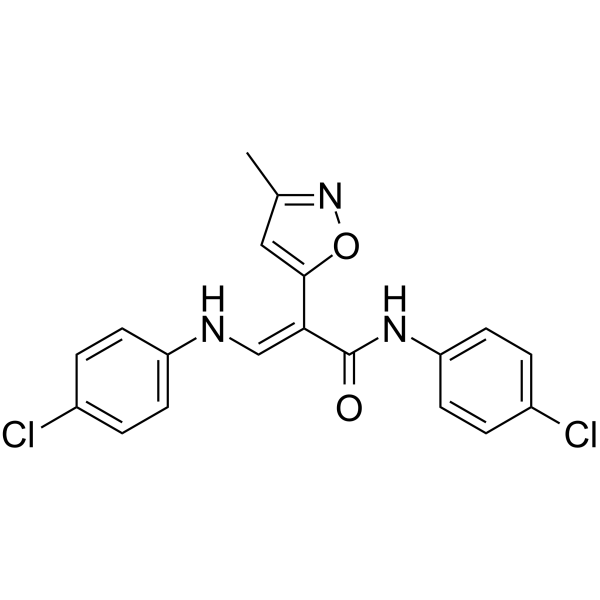
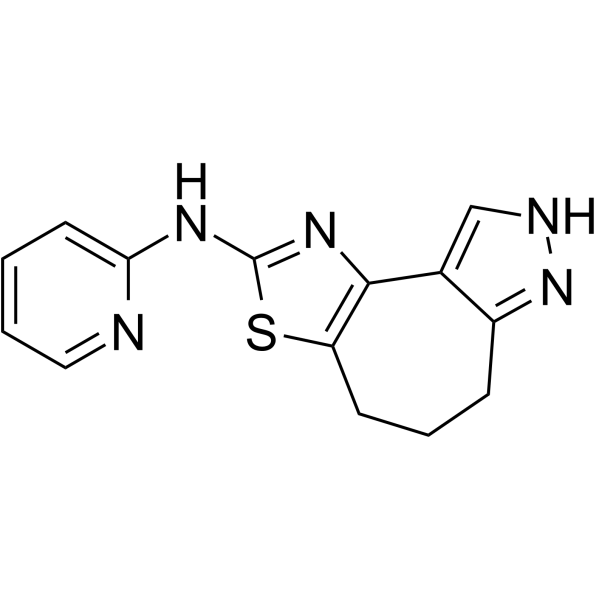
CCMI (AVL-3288) is a potent and selective α7 nAChR-positive allosteric modulator, does not bind to or activate α7 nAChRs via the orthosteric site, and causes significant positive modulation of agonist-induced currents at α7 nAChRs. CCMI has potential in CNS diseases with cognitive dysfunction .
loading...
    loading...
Cat. No.: HY-132981
CAS No.: 2097117-06-9
Purity:  99.71%
Target:  

P2X Receptor

Research Areas:  

Neurological Disease

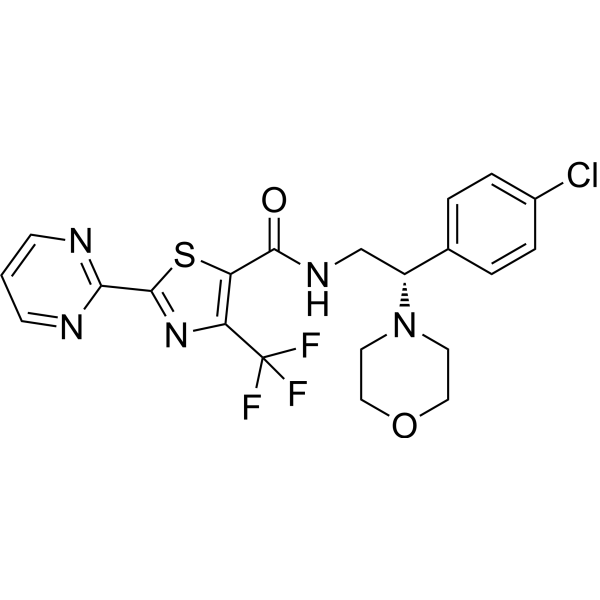
Lu AF27139 is a potent, selective, and orally active antagonist of P2X7 receptor (IC50s of 12 and 2.4 nM for human and rat, Kis of 22, 54, and 13 nM for mouse, human, and rat, respectively). Lu AF27139 has rodent-active and CNS-penetrant character. Lu AF27139 has the potential for the research of CNS diseases .
loading...
    loading...
Cat. No.: HY-172118
CAS No.: 844442-32-6
Target:  

GSK-3

Research Areas:  

Neurological Disease

CDKL5/GSK3-IN-1 (Compound 2) is a potent and selectivity chemical probe for CDKL5/GSK3.CDKL5/GSK3-IN-1 has potent inhibition of CDKL5 and GSK3α/β, with IC50 values of 4.6, 24 and 9.5 nM for CDKL5, GSK3β and GSK3α, respectively, in the NanoBRET assay. CDKL5/GSK3-IN-1 can be used for the research of CNS diseases .
loading...
    loading...
Cat. No.: HY-161084
CAS No.: 3034869-67-2
Target:  

c-Fms

Research Areas:  

Neurological Disease Cancer

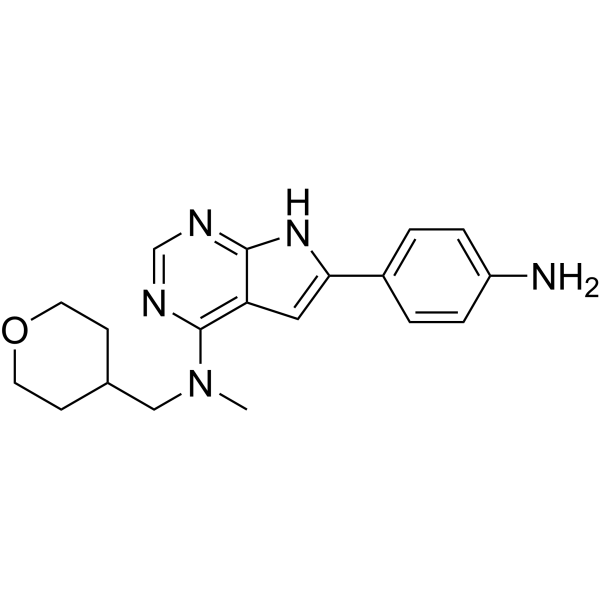
CSF1R-IN-18 (Compdound 16t), para-aniline derivative, is a colony-stimulating factor 1 receptor (CSF1R) inhibitor. CSF1R-IN-18 can be used for the research of cancers, CNS-diseases and bone diseases .
loading...
    loading...
Cat. No.: HY-144764
CAS No.: 3037516-52-9
Target:  

5-HT Receptor

Research Areas:  

Neurological Disease

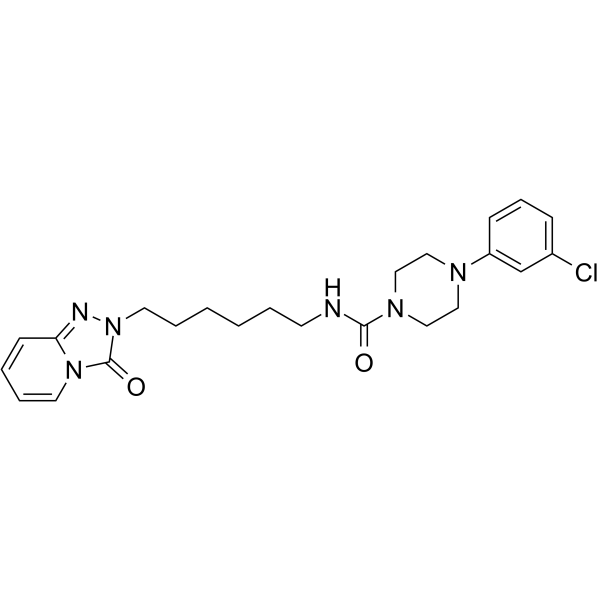
5-HT1A antagonist 1 (compound 6f) is a potent and selective antagonist of 5-HT1A receptor, with a Ki of 35 nM. 5-HT1A antagonist 1 can be used for the research of CNS diseases .
loading...
    loading...
Cat. No.: HY-177573
CAS No.: 89210-68-4
Target:  

GABA Receptor

Research Areas:  

Neurological Disease

Cholesteryl γ-aminobutyrate is a γ-aminobutyric acid (GABA)-mimetic prodrug. Cholesteryl γ-aminobutyrate inhibits the orthodromically-evoked discharge of pyramidal cells in the CA1 region of the hippocampus. Cholesteryl γ-aminobutyrate suppresses the open-field activity of mice and rats in a dose-dependent manner and inhibits Bicuculline (HY-N0219)-induced seizures in mice. Cholesteryl γ-aminobutyrate can be used for the study of CNS diseases related to impaired GABAergic neuronal function .
loading...
    loading...
Cat. No.: HY-154958
CAS No.: 3033409-34-3
Target:  

mTOR

Research Areas:  

Neurological Disease

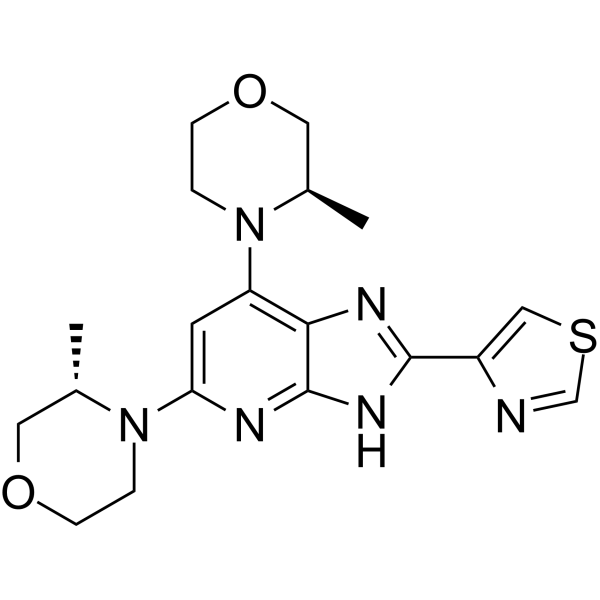
mTOR inhibitor-12 (Compound 11) is a selective brain penetrant mTOR inhibitor without genotoxicity risk. mTOR inhibitor-12 can be used for the research of CNS diseases .
loading...
    loading...
Cat. No.: HY-160446
CAS No.: 2407658-21-1
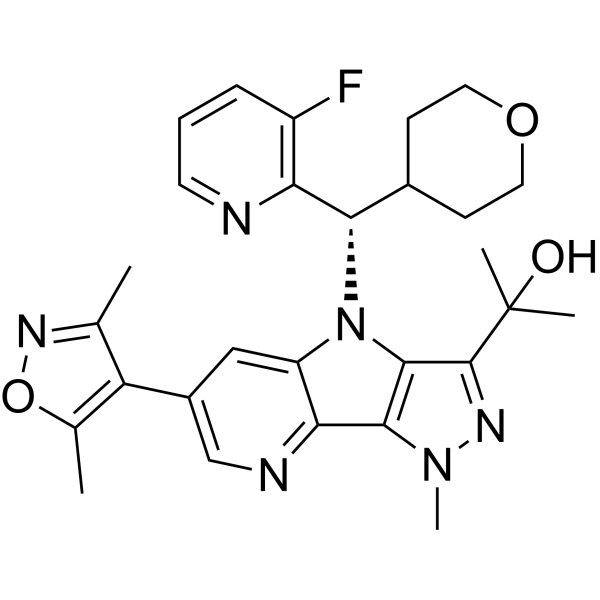
Bet-in-24 (example 2) is a bromodomain and extra-terminal (BET) inhibitor. BET-IN-24 can be used in the study of virology, heart failure, inflammation, central nervous system (CNS) diseases and many cancers
loading...
    loading...
Cat. No.: HY-162232
CAS No.: 3042819-62-2
Target:  

mGluR

Research Areas:  

Neurological Disease

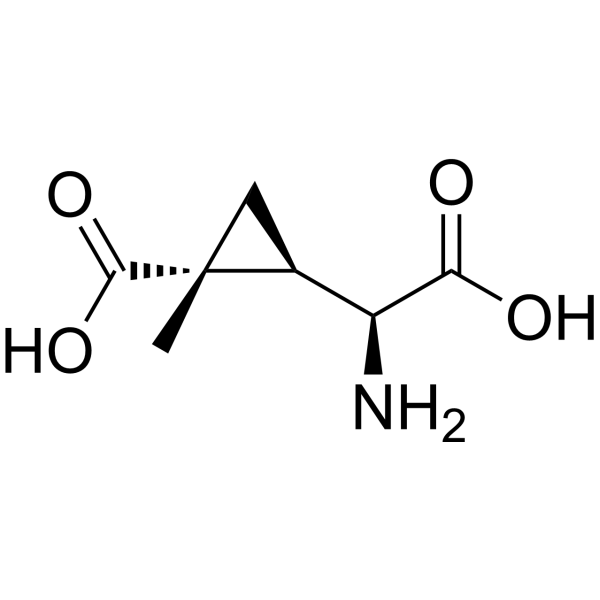
mGluR2 agonist 1 (Compound 5b) is a potent and selective metabotropic glutamate 2 receptor (mGluR) agonist with an EC50 of 82 nM. mGluR2 agonist 1 can be used for the research of central nervous system (CNS) diseases .
loading...
    loading...
Cat. No.: HY-175372
Target:  

Histamine Receptor

Research Areas:  

Neurological Disease

H3R antagonist 7 (compounds 4) is a histamine subtype 3 receptor (H3R) antagonist with a Ki of 3.15 nM. H3R antagonist 7 is a potential PET radioligand for the study of central nervous system (CNS) diseases .
loading...
    loading...
Cat. No.: HY-154957
CAS No.: 3033409-32-1
Target:  

mTOR

Research Areas:  

Neurological Disease

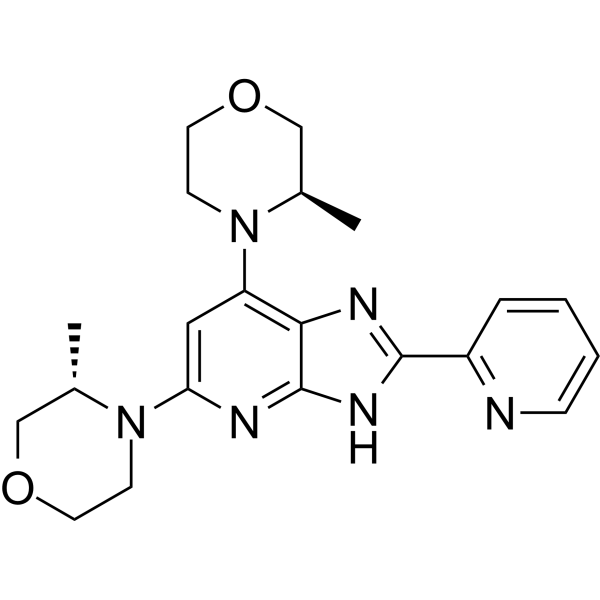
mTOR inhibitor-11 (Compound 9) is a brain-penetrant mTOR inhibitor (IC50: 21 nM for pS6). mTOR inhibitor-11 also inhibits pCHK1 and PDE4D with IC50s of 17.2 and 17.0 μM. mTOR inhibitor-11 can be used for research of CNS disease .
loading...
    loading...
Cat. No.: HY-18679
CAS No.: 1314140-00-5
Target:  

mGluR

Research Areas:  

Neurological Disease

TC-N 22A is a potent, selective, orally active and brain-permeable mGlu4 PAM with an EC50 of 9 nM in human mGlu4-expressing BHK cells. TC-N 22A is less active (EC50>10 μM) in agonist and PAM model at mGlu 1, 2, 3, 5, and 7 receptors. TC-N 22A has the potential for research of CNS disease in vivo .
loading...
    loading...
Cat. No.: HY-171052
CAS No.: 1220645-15-7
Target:  

5-HT Receptor

5-HT6R antagonist 5 (compound 1.2.12(4)) is a potent competitive 5-HT6R antagonist with an IC50 of 4.19 nM. 5-HT6R antagonist 5 can be used for research in various central nervous system (CNS) diseases, cognitive and neurodegenerative diseases .
loading...
    loading...
Cat. No.: HY-125444
CAS No.: 1622059-04-4
Target:  

LIM Kinase (LIMK)

Research Areas:  

Neurological Disease Cancer

TH251 is a LIMK1 and LIMK2 inhibitor with IC50s of 52 nM and 47 nM against LIMK1 and LIMK2, respectively. TH251 binds to inactive αC-out and DFG-out LIMK1 conformations, inhibits unphosphorylated LIMK1 and LIMK2 enzymatic activity, and exhibits unchanged potency despite PAK-mediated phosphorylation of either kinase. TH251 can be used for the research of cancers, glaucoma, and CNS diseases .
loading...
    loading...
Cat. No.: HY-L949
1279 compounds

Spirocyclic compounds, with rigid 3D structures, high Fsp³ and strong conformational restriction, are highly privileged scaffolds in small-molecule drug screening. They overcome drawbacks of planar aromatic compounds such as poor solubility, high off-target risks and weak druggability. Their orthogonal bicyclic geometry fits well into protein pockets, improving target affinity, subtype selectivity, metabolic stability and membrane permeability, making them ideal for hit identification against kinases, GPCRs, PPIs and other targets.

Spirocyclic scaffolds have been widely applied in oncology, antivirals, hypertension and CNS diseases, leading to many approved drugs and clinical candidates. SAR studies show that spiro-atom chirality, ring size and heteroatom substitution dominate bioactivity and selectivity, with the scaffold mainly serving as a conformational anchor. Azaspirocycles, spirooxindoles and spirosteranes target GPCRs, kinases, MDM2-p53 and PPIs. Approved drugs including irbesartan, spironolactone and rolapitant confirm their druggability, while revumenib and SAR405838 show promise against undruggable targets.

The MCE Spirocyclic Druglike Library contains over 1,000 diverse, stereospecific molecules selected by Lipinski’s rules. It covers privileged cores such as azaspirocycles, oxaspirocycles and spirooxindoles. These molecules bear rich chiral centers and distinct 3D orientations, reducing non-specific binding and enhancing screening efficiency. Featuring novel scaffolds, the library offers a highly innovative starting point for drug discovery.

  • 1

