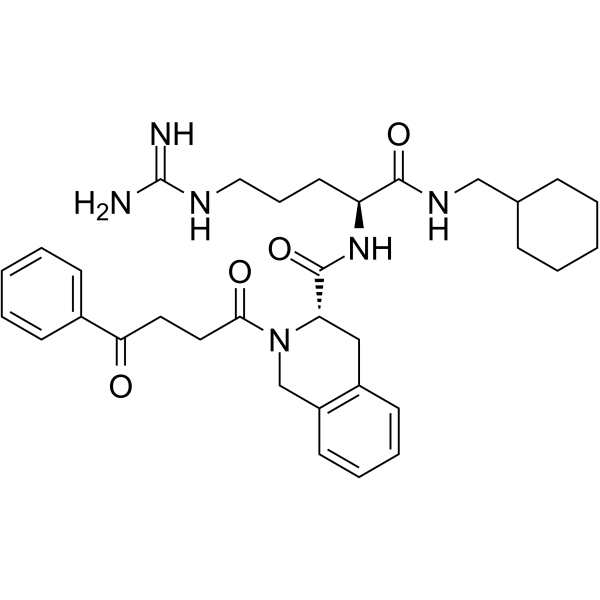
From 11:00 pm to 12:00 pm EST ( 8:00 pm to 9:00 pm PST ) on January 6th, the website will be under maintenance. We are sorry for the inconvenience. Please arrange your schedule properly.
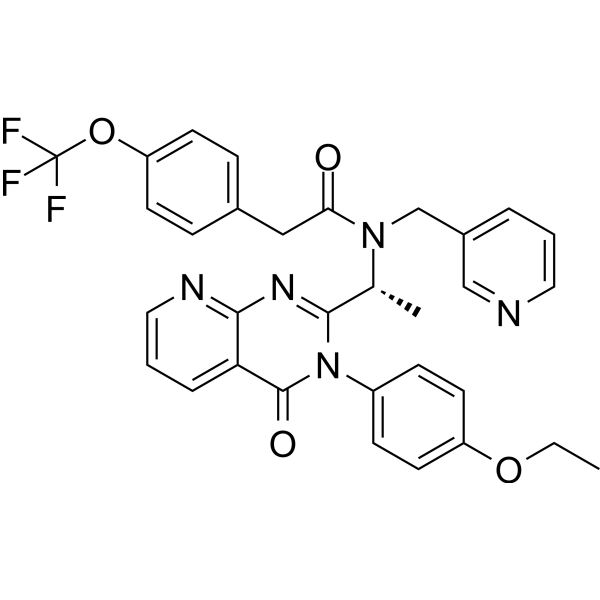
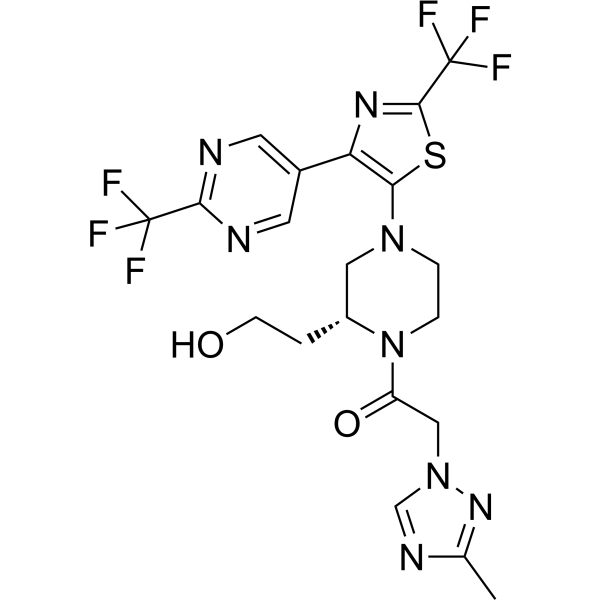
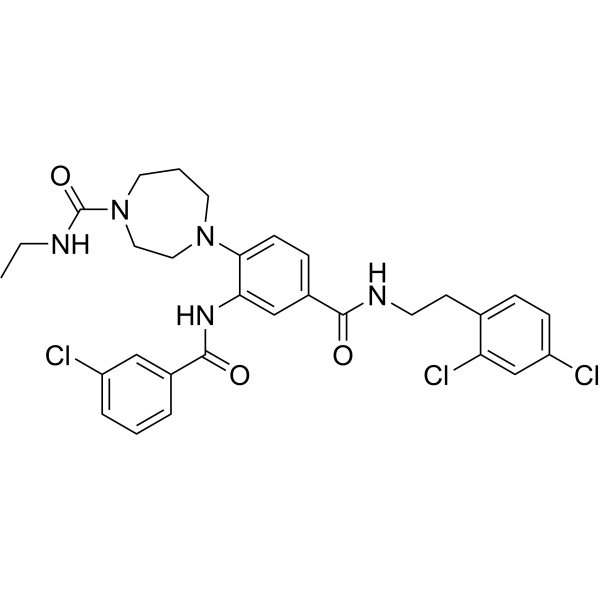
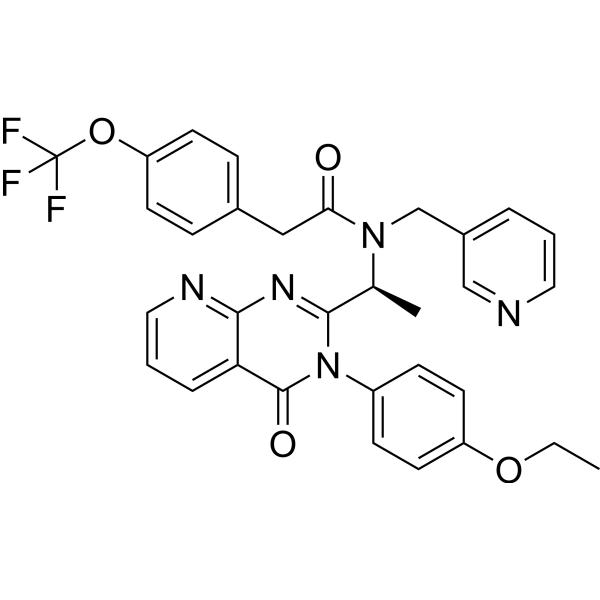
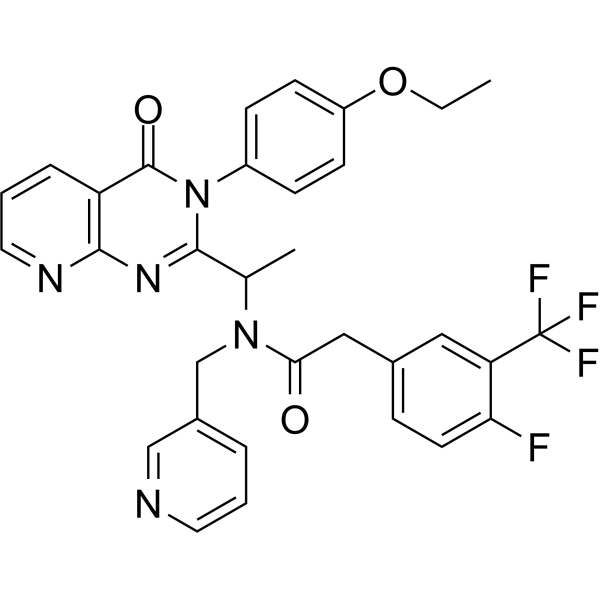
AMG 487 is an orally active and selective antagonist of CXC chemokine receptor 3(CXCR3) which inhibits the binding of CXCL10 and CXCL11 to CXCR3 with IC50s of 8.0 and 8.2 nM, respectively .
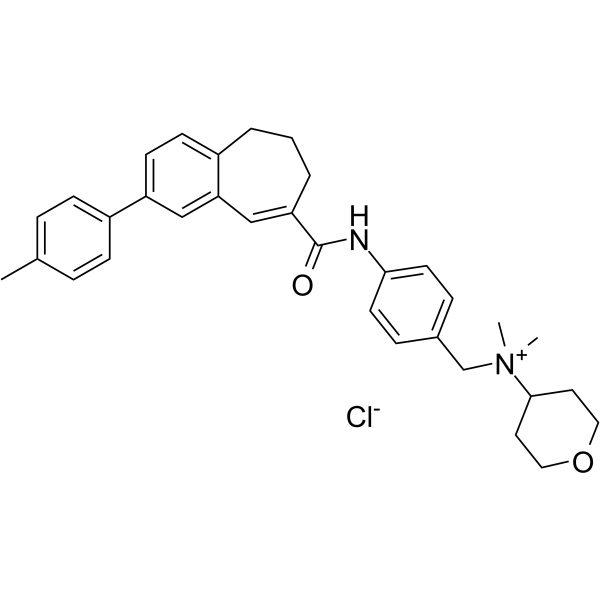
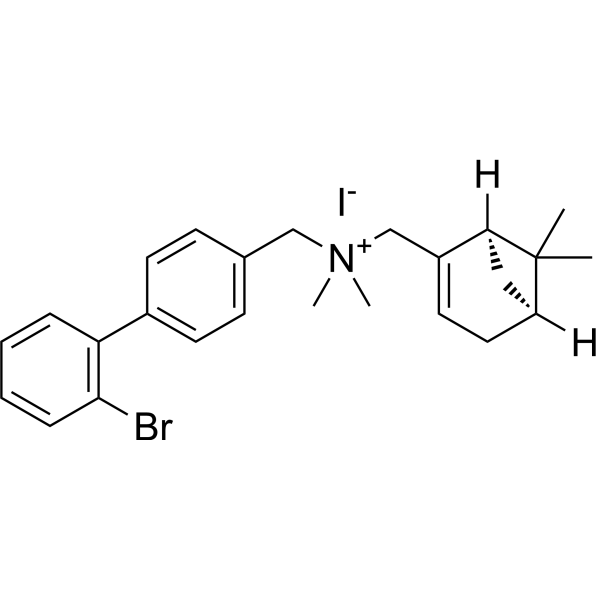
TAK-779 is a potent and selective nonpeptide antagonist of CCR5 and CXCR3, with a Ki of 1.1 nM for CCR5, and effectively and selectively inhibits R5 HIV-1, with EC50 and EC90 of 1.2 nM and 5.7 nM, respectively, in MAGI-CCR5 cells.
SCH 546738 is a potent, orally active and non-competitive CXCR3 antagonist, the affinity constant (Ki) of SCH 546738 binding to human CXCR3 receptor is determined to be 0.4 nM in multiple experiments.
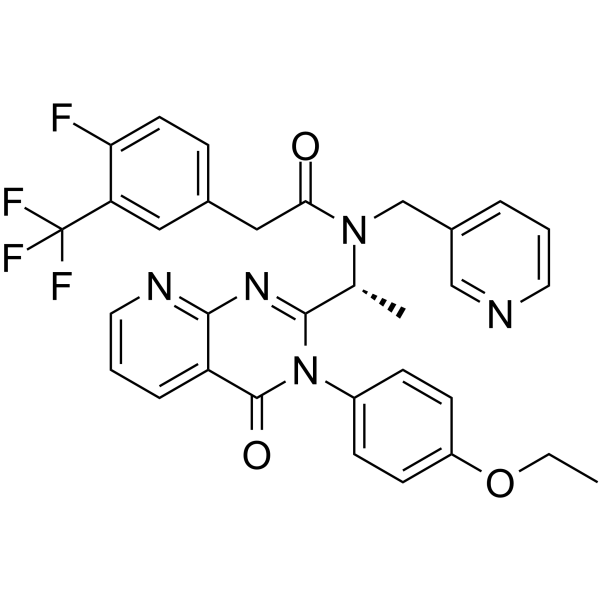
ACT-777991 is an orally active and selective CXCR3 antagonist. ACT-777991 has microsomes and hepatocytes stability across animal models. ACT-777991 inhibits the migration of activated T cells toward CXCL11 .
Anti-Mouse CXCR3/CD183 Antibody (CXCR3-173) is an anti-mouse CXCR3/CD183 IgG monoclonal antibody. Anti-Mouse CXCR3/CD183 Antibody (CXCR3-173) weakens the immune response by reducing the infiltration of CD4 + and CD8 + T cells. Anti-Mouse CXCR3/CD183 Antibody (CXCR3-173) significantly prolongs the survival time of heart or islet transplants in mice. Anti-Mouse CXCR3/CD183 Antibody (CXCR3-173) can be used for researches on immunology and cancer such as pancreatic cancer [3].
NBI-74330 is a potent antagonist for CXCR3, and exhibits potent inhibition of ( 125I)CXCL10 and ( 125I)CXCL11 specific binding with Ki of 1.5 and 3.2 nM, respectively.
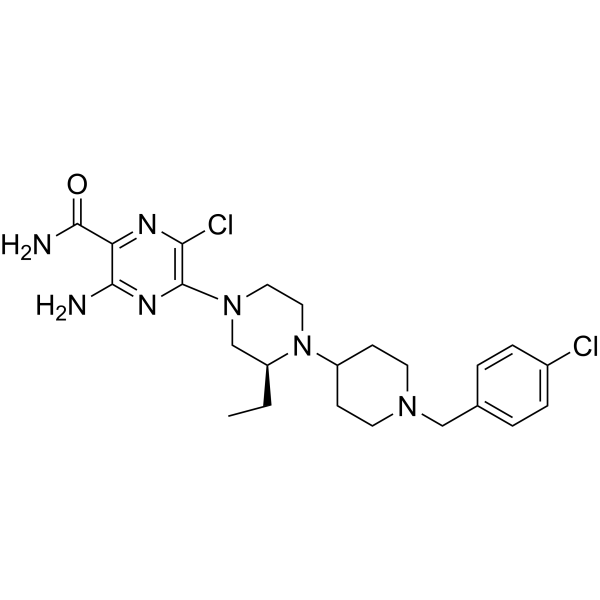
SCH-900875 is an orally active, brain-penetrant and selective CXCR3 receptor inhibitor, which also shows high selectivity over CXCR1 and CXCR2 receptors. SCH-900875 binds to CXCR3, blocking the binding of ligands CXCL9, CXCL10, and CXCL11, inhibiting downstream G protein and β-arrestin signaling pathways to suppress inflammatory cell migration. SCH-900875 is promising for research of autoimmune diseases (rheumatoid arthritis, multiple sclerosis) and inflammatory disorders (psoriasis, inflammatory bowel disease) .
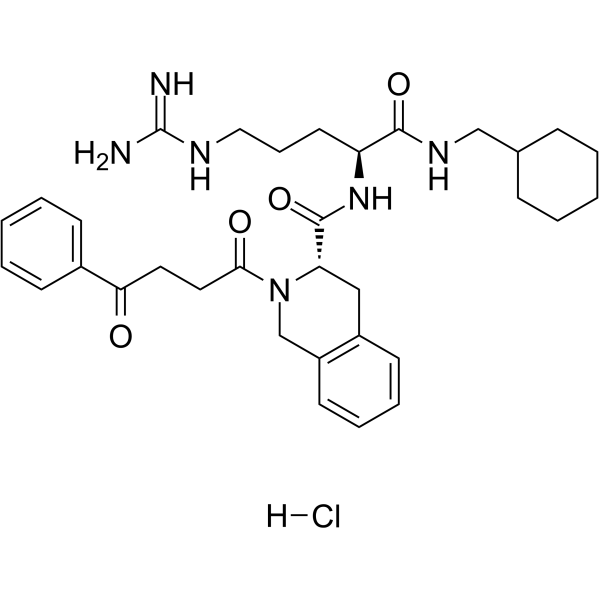
PS372424 hydrochloride, a three amino-acid fragment of CXCL10, is a specific human CXCR3 agonist with anti-inflammatory activity. PS372424 hydrochloride prevents human T-cell migration in a humanized model of arthritic inflammation .
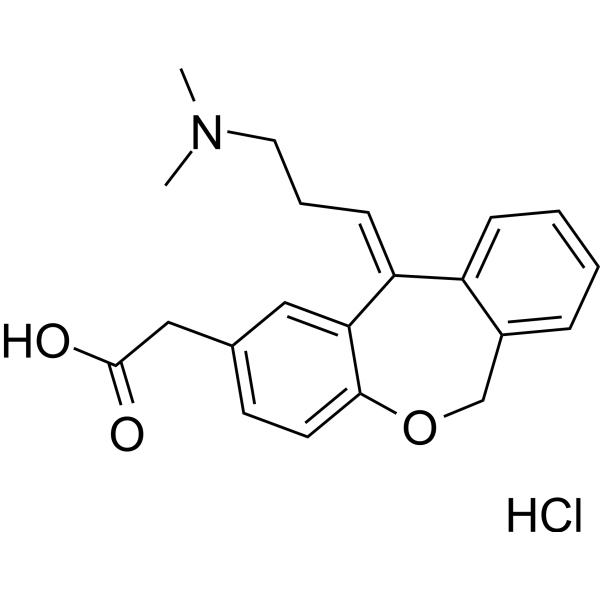
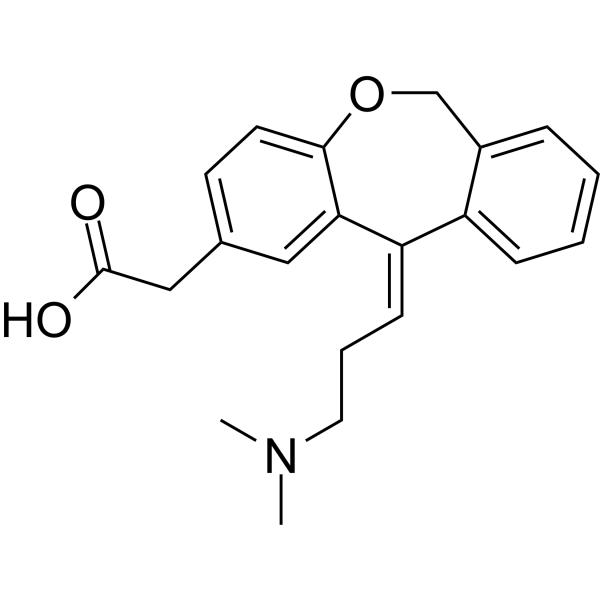
Olopatadine hydrochloride (ALO4943A; KW4679) is an orally active histamine H1 receptor antagonist and mast cell stabilizer. Olopatadine hydrochloride exerts antiallergic effects by blocking histamine H1 receptor-mediated activities. Olopatadine hydrochloride inhibits exocytosis, chemokine release, F-actin polymerization, CXCL10-induced calcium influx, and T cell chemotactic activity. Olopatadine hydrochloride also reduces the expression levels ofCXCR3 on the surface of CD4 + and CD8 + T cells. Olopatadine hydrochloride inhibits scratching behavior, improves dermatitis scores, and suppresses intraepidermal neurite outgrowth. Olopatadine hydrochloride simultaneously decreases the levels of inflammatory markers, growth factors, histamine, and specific IgE, while increasing the expression of ErbB3A/HER3A. Olopatadine hydrochloride can be used in research related to seasonal pollinosis, chronic rhinitis, urticaria, allergic conjunctivitis, alopecia areata, and atopic dermatitis [3].
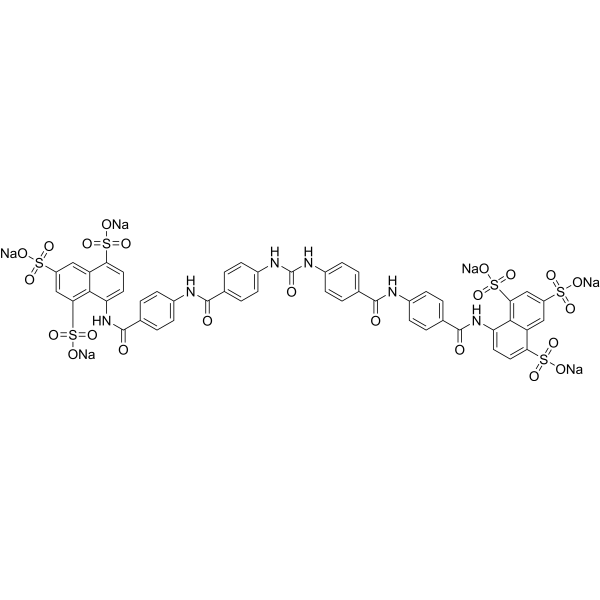
NF279 is a selective P2X1 receptor antagonist and NTPDase inhibitor, with a P2X1 IC50 value of 19 nM. NF279 suppresses GABA-evoked currents, reduces ATP-excited respiratory activity, alters hypoglossal nerve burst parameters, and blocks CXCR4, CCR5, CXCR3, and CXCR7-mediated calcium responses. NF279 arrests HIV-1 fusion downstream of CD4 binding, inhibits R5- and X4-tropic HIV-1 strains. NF279 can be used for the research of HIV-1 infection [3] .
CXCR3 Human Pre-designed siRNA Set A contains three designed siRNAs for CXCR3 gene (Human), as well as a negative control, a positive control, and a FAM-labeled negative control.
Olopatadine (ALO4943A; KW4679) is an orally active histamine H1 receptor antagonist and mast cell stabilizer. Olopatadine exerts antiallergic effects by blocking histamine H1 receptor-mediated activities. Olopatadine inhibits exocytosis, chemokine release, F-actin polymerization, CXCL10-induced calcium influx, and T cell chemotactic activity. Olopatadine also reduces the expression levels ofCXCR3 on the surface of CD4 + and CD8 + T cells. Olopatadine inhibits scratching behavior, improves dermatitis scores, and suppresses intraepidermal neurite outgrowth. Olopatadine simultaneously decreases the levels of inflammatory markers, growth factors, histamine, and specific IgE, while increasing the expression of ErbB3A/HER3A. Olopatadine can be used in research related to seasonal pollinosis, chronic rhinitis, urticaria, allergic conjunctivitis, alopecia areata, and atopic dermatitis [3].
Anti-CXCR3/GPR9/CD183 Antibody is a human-derived antibody expressed in CHO, targeting CXCR3/GPR9/CD183. The Anti-CXCR3/GPR9/CD183 Antibody has a huIgG1 heavy chain and a huκ light chain, with a predicted molecular weight (MW) of 150 kDa. For the isotype control of Anti-CXCR3/GPR9/CD183 Antibody, please refer to Human IgG1 kappa, Isotype Control (HY-P99001).
(±)-NBI-74330 is a potent and selective CXCR3 antagonist. (±)-NBI-74330 not only reduces tactile and thermal hypersensitivity but also enhances the analgesic properties of morphine. (±)-NBI-74330 can reduce microglial cell activation, increase astroglial cell activation, and downregulate the expression of some CXCR3 ligands in a rat neuropathic pain model .
PS372424, a three amino-acid fragment of CXCL10, is a specific human CXCR3 agonist with anti-inflammatory activity. PS372424 prevents human T-cell migration in a humanized model of arthritic inflammation .
Human CXCR3 mRNA encodes the human C-X-C motif chemokine receptor 3 (CXCR3) protein, G protein-coupled receptor. Chemokines bind to CXCR3 protein can induce cellular responses that are involved in leukocyte traffic, integrin activation, cytoskeletal changes and chemotactic migration.
Cxcr3 Mouse Pre-designed siRNA Set A contains three designed siRNAs for Cxcr3 gene (Mouse), as well as a negative control, a positive control, and a FAM-labeled negative control.
Cxcr3 Rat Pre-designed siRNA Set A contains three designed siRNAs for Cxcr3 gene (Rat), as well as a negative control, a positive control, and a FAM-labeled negative control.
ACT-660602 is an orally active antagonist of chemokine receptor(CXCR3) with an IC50 value of 204 nM. ACT-660602 inhibits T-cell migration and shows efficacy in acute lung ingury model. ACT-660602 can be used for autoimmune diseases research .
(±)-AMG 487 is a racemate of AMG 487. AMG 487 is an orally active and selective antagonist of CXC chemokine receptor 3(CXCR3) which inhibits the binding of CXCL10 and CXCL11 to CXCR3 with IC50s of 8.0 and 8.2 nM, respectively .
Anti-Human/Mouse/Monkey CXCR3 Antibody (9C5) is an antibody targeting CXCR3, which specifically binds to an epitope within amino acid residues 23 to 44 of human CXCR3 .
Olopatadine-d6 is the deuterium labeled Olopatadine. Olopatadine hydrochloride (ALO4943A; KW4679) is an orally active histamine H1 receptor antagonist and mast cell stabilizer. Olopatadine hydrochloride exerts antiallergic effects by blocking histamine H1 receptor-mediated activities. Olopatadine hydrochloride inhibits exocytosis, chemokine release, F-actin polymerization, CXCL10-induced calcium influx, and T cell chemotactic activity. Olopatadine hydrochloride also reduces the expression levels ofCXCR3 on the surface of CD4 + and CD8 + T cells. Olopatadine hydrochloride inhibits scratching behavior, improves dermatitis scores, and suppresses intraepidermal neurite outgrowth. Olopatadine hydrochloride simultaneously decreases the levels of inflammatory markers, growth factors, histamine, and specific IgE, while increasing the expression of ErbB3A/HER3A. Olopatadine hydrochloride can be used in research related to seasonal pollinosis, chronic rhinitis, urticaria, allergic conjunctivitis, alopecia areata, and atopic dermatitis [3].
VUF5834 is a non-peptide chemokine receptor CXCR3 antagonist with non-competitive antagonistic and inverse agonistic activities. VUF5834 blocks the effects of CXCL10 and CXCL11 on human CXCR3, exhibits non-competitive antagonistic and inverse agonistic properties to CXCR3, and, except for TAK-779, has a slightly lower affinity for rodent CXCR3 than for primate CXCR3.
ACT-672125 is a potent CXCR3 antagonist with IC50 value of 239 nM in human blood. ACT-672125 has activity for hERG with IC50 value of 18μM. ACT-672125 can be used for the research of autoimmune diseases .
VUF10132 is a non-peptide CXCR3 receptor antagonist with anti-inflammatory activity, inhibiting diseases such as rheumatoid arthritis, multiple sclerosis, and psoriasis. VUF10132 has high affinity for the human CXCR3 receptor but slightly lower affinity for the murine CXCR3 receptor. Additionally, VUF10132 exhibits inverse agonist properties at the CXCR3 receptor .
(R)-SCH 546738 is the R-isomer of SCH 546738 (HY-10017). SCH 546738 is an orally active and non-competitive antagonist for CXCR3 with Ki of 0.4 nM for human CXCR3 receptor .
Olopatadine-d3 hydrochloride (ALO4943A-d3) is the deuterium labeled Olopatadine hydrochloride. Olopatadine hydrochloride (ALO4943A; KW4679) is an orally active histamine H1 receptor antagonist and mast cell stabilizer. Olopatadine hydrochloride exerts antiallergic effects by blocking histamine H1 receptor-mediated activities. Olopatadine hydrochloride inhibits exocytosis, chemokine release, F-actin polymerization, CXCL10-induced calcium influx, and T cell chemotactic activity. Olopatadine hydrochloride also reduces the expression levels ofCXCR3 on the surface of CD4 + and CD8 + T cells. Olopatadine hydrochloride inhibits scratching behavior, improves dermatitis scores, and suppresses intraepidermal neurite outgrowth. Olopatadine hydrochloride simultaneously decreases the levels of inflammatory markers, growth factors, histamine, and specific IgE, while increasing the expression of ErbB3A/HER3A. Olopatadine hydrochloride can be used in research related to seasonal pollinosis, chronic rhinitis, urticaria, allergic conjunctivitis, alopecia areata, and atopic dermatitis [3].
Olopatadine (hydrochloride) (Standard) is the analytical standard of Olopatadine (hydrochloride). This product is intended for research and analytical applications. Olopatadine hydrochloride (ALO4943A; KW4679) is an orally active histamine H1 receptor antagonist and mast cell stabilizer. Olopatadine hydrochloride exerts antiallergic effects by blocking histamine H1 receptor-mediated activities. Olopatadine hydrochloride inhibits exocytosis, chemokine release, F-actin polymerization, CXCL10-induced calcium influx, and T cell chemotactic activity. Olopatadine hydrochloride also reduces the expression levels ofCXCR3 on the surface of CD4 + and CD8 + T cells. Olopatadine hydrochloride inhibits scratching behavior, improves dermatitis scores, and suppresses intraepidermal neurite outgrowth. Olopatadine hydrochloride simultaneously decreases the levels of inflammatory markers, growth factors, histamine, and specific IgE, while increasing the expression of ErbB3A/HER3A. Olopatadine hydrochloride can be used in research related to seasonal pollinosis, chronic rhinitis, urticaria, allergic conjunctivitis, alopecia areata, and atopic dermatitis [3] .
CCR5/CXCR3-IN-1 (compound 1) is a CXCR3 and CCR5 inhibitor. CCR5/CXCR3-IN-1 inhibits chemotaxis of CXCR3 and CCR5-expressing transformed cells, and does not inhibits the chemotaxis of transfected cells expressing CXCR4. CCR5/CXCR3-IN-1 can be used for the study of chronic arthritic rheumatism .
Anti-CXCR3 Antibody (5H7) is a mouse monoclonal antibody produced using CXCR3 as the antigen. The recommended isotype control is human IgG1 kappa (HY-P99001).
Olopatadine-d6 (ALO4943A-d6; KW4679-d6) hydrochloride is deuterium-labeled Olopatadine (hydrochloride) (HY-B0426A). Olopatadine hydrochloride (ALO4943A; KW4679) is an orally active histamine H1 receptor antagonist and mast cell stabilizer. Olopatadine hydrochloride exerts antiallergic effects by blocking histamine H1 receptor-mediated activities. Olopatadine hydrochloride inhibits exocytosis, chemokine release, F-actin polymerization, CXCL10-induced calcium influx, and T cell chemotactic activity. Olopatadine hydrochloride also reduces the expression levels ofCXCR3 on the surface of CD4 + and CD8 + T cells. Olopatadine hydrochloride inhibits scratching behavior, improves dermatitis scores, and suppresses intraepidermal neurite outgrowth. Olopatadine hydrochloride simultaneously decreases the levels of inflammatory markers, growth factors, histamine, and specific IgE, while increasing the expression of ErbB3A/HER3A. Olopatadine hydrochloride can be used in research related to seasonal pollinosis, chronic rhinitis, urticaria, allergic conjunctivitis, alopecia areata, and atopic dermatitis [3].
Anti-Mouse CXCR3/CD183 Antibody (CXCR3-173) is an anti-mouse CXCR3/CD183 IgG monoclonal antibody. Anti-Mouse CXCR3/CD183 Antibody (CXCR3-173) weakens the immune response by reducing the infiltration of CD4 + and CD8 + T cells. Anti-Mouse CXCR3/CD183 Antibody (CXCR3-173) significantly prolongs the survival time of heart or islet transplants in mice. Anti-Mouse CXCR3/CD183 Antibody (CXCR3-173) can be used for researches on immunology and cancer such as pancreatic cancer [3].
Anti-CXCR3/GPR9/CD183 Antibody is a human-derived antibody expressed in CHO, targeting CXCR3/GPR9/CD183. The Anti-CXCR3/GPR9/CD183 Antibody has a huIgG1 heavy chain and a huκ light chain, with a predicted molecular weight (MW) of 150 kDa. For the isotype control of Anti-CXCR3/GPR9/CD183 Antibody, please refer to Human IgG1 kappa, Isotype Control (HY-P99001).
Anti-Human/Mouse/Monkey CXCR3 Antibody (9C5) is an antibody targeting CXCR3, which specifically binds to an epitope within amino acid residues 23 to 44 of human CXCR3 .
Anti-CXCR3 Antibody (5H7) is a mouse monoclonal antibody produced using CXCR3 as the antigen. The recommended isotype control is human IgG1 kappa (HY-P99001).
Olopatadine hydrochloride (ALO4943A; KW4679) is an orally active histamine H1 receptor antagonist and mast cell stabilizer. Olopatadine hydrochloride exerts antiallergic effects by blocking histamine H1 receptor-mediated activities. Olopatadine hydrochloride inhibits exocytosis, chemokine release, F-actin polymerization, CXCL10-induced calcium influx, and T cell chemotactic activity. Olopatadine hydrochloride also reduces the expression levels ofCXCR3 on the surface of CD4 + and CD8 + T cells. Olopatadine hydrochloride inhibits scratching behavior, improves dermatitis scores, and suppresses intraepidermal neurite outgrowth. Olopatadine hydrochloride simultaneously decreases the levels of inflammatory markers, growth factors, histamine, and specific IgE, while increasing the expression of ErbB3A/HER3A. Olopatadine hydrochloride can be used in research related to seasonal pollinosis, chronic rhinitis, urticaria, allergic conjunctivitis, alopecia areata, and atopic dermatitis [3].
Olopatadine (ALO4943A; KW4679) is an orally active histamine H1 receptor antagonist and mast cell stabilizer. Olopatadine exerts antiallergic effects by blocking histamine H1 receptor-mediated activities. Olopatadine inhibits exocytosis, chemokine release, F-actin polymerization, CXCL10-induced calcium influx, and T cell chemotactic activity. Olopatadine also reduces the expression levels ofCXCR3 on the surface of CD4 + and CD8 + T cells. Olopatadine inhibits scratching behavior, improves dermatitis scores, and suppresses intraepidermal neurite outgrowth. Olopatadine simultaneously decreases the levels of inflammatory markers, growth factors, histamine, and specific IgE, while increasing the expression of ErbB3A/HER3A. Olopatadine can be used in research related to seasonal pollinosis, chronic rhinitis, urticaria, allergic conjunctivitis, alopecia areata, and atopic dermatitis [3].
Olopatadine (hydrochloride) (Standard) is the analytical standard of Olopatadine (hydrochloride). This product is intended for research and analytical applications. Olopatadine hydrochloride (ALO4943A; KW4679) is an orally active histamine H1 receptor antagonist and mast cell stabilizer. Olopatadine hydrochloride exerts antiallergic effects by blocking histamine H1 receptor-mediated activities. Olopatadine hydrochloride inhibits exocytosis, chemokine release, F-actin polymerization, CXCL10-induced calcium influx, and T cell chemotactic activity. Olopatadine hydrochloride also reduces the expression levels ofCXCR3 on the surface of CD4 + and CD8 + T cells. Olopatadine hydrochloride inhibits scratching behavior, improves dermatitis scores, and suppresses intraepidermal neurite outgrowth. Olopatadine hydrochloride simultaneously decreases the levels of inflammatory markers, growth factors, histamine, and specific IgE, while increasing the expression of ErbB3A/HER3A. Olopatadine hydrochloride can be used in research related to seasonal pollinosis, chronic rhinitis, urticaria, allergic conjunctivitis, alopecia areata, and atopic dermatitis [3] .
The CXCR3 protein acts as a receptor for CXC chemokines (CXCL9, CXCL10, and CXCL11), affecting human mesangial cells (HMC) through G protein signaling. It binds CCL21 and may promote cell chemotaxis. CXCR3 Protein, Human (Cell-Free, His) is the recombinant human-derived CXCR3 protein, expressed by E. coli Cell-free , with C-10*His labeled tag.
CXCR3 Protein-VLP, Human (HEK293) is recommended for animal immunization, ELISA. It is not recommended for receptor-ligand interaction detection and SPR/BLI assay since there are other irrelevant membrane proteins of the host on the VLP envelope, and the receptor-ligand interaction will have strong background interference. High requirements for chips and experimental protocols are needed for SPR/BLI assays. If VLP control is required, it is recommended HY-P705433.
Olopatadine-d6 is the deuterium labeled Olopatadine. Olopatadine hydrochloride (ALO4943A; KW4679) is an orally active histamine H1 receptor antagonist and mast cell stabilizer. Olopatadine hydrochloride exerts antiallergic effects by blocking histamine H1 receptor-mediated activities. Olopatadine hydrochloride inhibits exocytosis, chemokine release, F-actin polymerization, CXCL10-induced calcium influx, and T cell chemotactic activity. Olopatadine hydrochloride also reduces the expression levels ofCXCR3 on the surface of CD4 + and CD8 + T cells. Olopatadine hydrochloride inhibits scratching behavior, improves dermatitis scores, and suppresses intraepidermal neurite outgrowth. Olopatadine hydrochloride simultaneously decreases the levels of inflammatory markers, growth factors, histamine, and specific IgE, while increasing the expression of ErbB3A/HER3A. Olopatadine hydrochloride can be used in research related to seasonal pollinosis, chronic rhinitis, urticaria, allergic conjunctivitis, alopecia areata, and atopic dermatitis [3].
Olopatadine-d3 hydrochloride (ALO4943A-d3) is the deuterium labeled Olopatadine hydrochloride. Olopatadine hydrochloride (ALO4943A; KW4679) is an orally active histamine H1 receptor antagonist and mast cell stabilizer. Olopatadine hydrochloride exerts antiallergic effects by blocking histamine H1 receptor-mediated activities. Olopatadine hydrochloride inhibits exocytosis, chemokine release, F-actin polymerization, CXCL10-induced calcium influx, and T cell chemotactic activity. Olopatadine hydrochloride also reduces the expression levels ofCXCR3 on the surface of CD4 + and CD8 + T cells. Olopatadine hydrochloride inhibits scratching behavior, improves dermatitis scores, and suppresses intraepidermal neurite outgrowth. Olopatadine hydrochloride simultaneously decreases the levels of inflammatory markers, growth factors, histamine, and specific IgE, while increasing the expression of ErbB3A/HER3A. Olopatadine hydrochloride can be used in research related to seasonal pollinosis, chronic rhinitis, urticaria, allergic conjunctivitis, alopecia areata, and atopic dermatitis [3].
Olopatadine-d6 (ALO4943A-d6; KW4679-d6) hydrochloride is deuterium-labeled Olopatadine (hydrochloride) (HY-B0426A). Olopatadine hydrochloride (ALO4943A; KW4679) is an orally active histamine H1 receptor antagonist and mast cell stabilizer. Olopatadine hydrochloride exerts antiallergic effects by blocking histamine H1 receptor-mediated activities. Olopatadine hydrochloride inhibits exocytosis, chemokine release, F-actin polymerization, CXCL10-induced calcium influx, and T cell chemotactic activity. Olopatadine hydrochloride also reduces the expression levels ofCXCR3 on the surface of CD4 + and CD8 + T cells. Olopatadine hydrochloride inhibits scratching behavior, improves dermatitis scores, and suppresses intraepidermal neurite outgrowth. Olopatadine hydrochloride simultaneously decreases the levels of inflammatory markers, growth factors, histamine, and specific IgE, while increasing the expression of ErbB3A/HER3A. Olopatadine hydrochloride can be used in research related to seasonal pollinosis, chronic rhinitis, urticaria, allergic conjunctivitis, alopecia areata, and atopic dermatitis [3].
CXCR3 Human Pre-designed siRNA Set A contains three designed siRNAs for CXCR3 gene (Human), as well as a negative control, a positive control, and a FAM-labeled negative control.
Human CXCR3 mRNA encodes the human C-X-C motif chemokine receptor 3 (CXCR3) protein, G protein-coupled receptor. Chemokines bind to CXCR3 protein can induce cellular responses that are involved in leukocyte traffic, integrin activation, cytoskeletal changes and chemotactic migration.
Cxcr3 Mouse Pre-designed siRNA Set A contains three designed siRNAs for Cxcr3 gene (Mouse), as well as a negative control, a positive control, and a FAM-labeled negative control.
Cxcr3 Rat Pre-designed siRNA Set A contains three designed siRNAs for Cxcr3 gene (Rat), as well as a negative control, a positive control, and a FAM-labeled negative control.
Inquiry Online
Your information is safe with us. * Required Fields.
Western blot analysis of extracts from THP-1(lane 2(20μg), Jurkat (lane 3(20μg) and NIH3T3(lane 4(20μg) using FOXO1A (HY-P80132) Rabbit mAb. Proteins were transferred
to a PVDF membrane and blocked with 5% non-fat milk in TBST for 2 hour at room temperature. The primary antibody (1/1000) and Loading control antibody (Beta Actin, HY-P80438, 1/10000) was
used in 5% non-fat milk in TBST at 4°C overnight. Goat Anti-Mouse/Rabbit IgG-HRP Secondary Antibody (1/10000) was used for 1 hour at room temperature.
Western blot analysis of extracts from THP-1(lane 2(20μg), Jurkat (lane 3(20μg) and NIH3T3(lane 4(20μg) using FOXO1A (HY-P80132) Rabbit mAb. Proteins were transferred
to a PVDF membrane and blocked with 5% non-fat milk in TBST for 2 hour at room temperature. The primary antibody (1/1000) and Loading control antibody (Beta Actin, HY-P80438, 1/10000) was
used in 5% non-fat milk in TBST at 4°C overnight. Goat Anti-Mouse/Rabbit IgG-HRP Secondary Antibody (1/10000) was used for 1 hour at room temperature.
Western blot analysis of extracts from THP-1(lane 2(20μg), Jurkat (lane 3(20μg) and NIH3T3(lane 4(20μg) using FOXO1A (HY-P80132) Rabbit mAb. Proteins were transferred
to a PVDF membrane and blocked with 5% non-fat milk in TBST for 2 hour at room temperature. The primary antibody (1/1000) and Loading control antibody (Beta Actin, HY-P80438, 1/10000) was
used in 5% non-fat milk in TBST at 4°C overnight. Goat Anti-Mouse/Rabbit IgG-HRP Secondary Antibody (1/10000) was used for 1 hour at room temperature.
Western blot analysis of extracts from THP-1(lane 2(20μg), Jurkat (lane 3(20μg) and NIH3T3(lane 4(20μg) using FOXO1A (HY-P80132) Rabbit mAb. Proteins were transferred
to a PVDF membrane and blocked with 5% non-fat milk in TBST for 2 hour at room temperature. The primary antibody (1/1000) and Loading control antibody (Beta Actin, HY-P80438, 1/10000) was
MedchemExpress Validation 03
Western blot analysis of extracts from THP-1(lane 2(20μg), Jurkat (lane 3(20μg) and NIH3T3(lane 4(20μg) using FOXO1A (HY-P80132) Rabbit mAb. Proteins were transferred
MedchemExpress Validation 04
Western blot analysis of extracts from THP-1(lane 2(20μg), Jurkat (lane 3(20μg) and NIH3T3(lane 4(20μg) using FOXO1A (HY-P80132) Rabbit mAb. Proteins were transferred
to a PVDF membrane and blocked with 5% non-fat milk in TBST for 2 hour at room temperature. The primary antibody (1/1000) and Loading control antibody (Beta Actin, HY-P80438, 1/10000) was
used in 5% non-fat milk in TBST at 4°C overnight. Goat Anti-Mouse/Rabbit IgG-HRP Secondary Antibody (1/10000) was used for 1 hour at room temperature.
MedchemExpress Validation
Western blot analysis of extracts from THP-1(lane 2(20μg), Jurkat (lane 3(20μg) and NIH3T3(lane 4(20μg) using FOXO1A (HY-P80132) Rabbit mAb. Proteins were transferred
to a PVDF membrane and blocked with 5% non-fat milk in TBST for 2 hour at room temperature. The primary antibody (1/1000) and Loading control antibody (Beta Actin, HY-P80438, 1/10000) was
used in 5% non-fat milk in TBST at 4°C overnight. Goat Anti-Mouse/Rabbit IgG-HRP Secondary Antibody (1/10000) was used for 1 hour at room temperature.
Western blot analysis of extracts from THP-1(lane 2(20μg), Jurkat (lane 3(20μg) and NIH3T3(lane 4(20μg) using FOXO1A (HY-P80132) Rabbit mAb. Proteins were transferred
to a PVDF membrane and blocked with 5% non-fat milk in TBST for 2 hour at room temperature. The primary antibody (1/1000) and Loading control antibody (Beta Actin, HY-P80438, 1/10000) was
used in 5% non-fat milk in TBST at 4°C overnight. Goat Anti-Mouse/Rabbit IgG-HRP Secondary Antibody (1/10000) was used for 1 hour at room temperature.
MedchemExpress Validation
Western blot analysis of extracts from THP-1(lane 2(20μg), Jurkat (lane 3(20μg) and NIH3T3(lane 4(20μg) using FOXO1A (HY-P80132) Rabbit mAb. Proteins were transferred
to a PVDF membrane and blocked with 5% non-fat milk in TBST for 2 hour at room temperature. The primary antibody (1/1000) and Loading control antibody (Beta Actin, HY-P80438, 1/10000) was
used in 5% non-fat milk in TBST at 4°C overnight. Goat Anti-Mouse/Rabbit IgG-HRP Secondary Antibody (1/10000) was used for 1 hour at room temperature.
MedchemExpress Validation
Western blot analysis of extracts from THP-1(lane 2(20μg), Jurkat (lane 3(20μg) and NIH3T3(lane 4(20μg) using FOXO1A (HY-P80132) Rabbit mAb. Proteins were transferred
to a PVDF membrane and blocked with 5% non-fat milk in TBST for 2 hour at room temperature. The primary antibody (1/1000) and Loading control antibody (Beta Actin, HY-P80438, 1/10000) was
used in 5% non-fat milk in TBST at 4°C overnight. Goat Anti-Mouse/Rabbit IgG-HRP Secondary Antibody (1/10000) was used for 1 hour at room temperature.
MedchemExpress Validation
Western blot analysis of extracts from THP-1(lane 2(20μg), Jurkat (lane 3(20μg) and NIH3T3(lane 4(20μg) using FOXO1A (HY-P80132) Rabbit mAb. Proteins were transferred
to a PVDF membrane and blocked with 5% non-fat milk in TBST for 2 hour at room temperature. The primary antibody (1/1000) and Loading control antibody (Beta Actin, HY-P80438, 1/10000) was
used in 5% non-fat milk in TBST at 4°C overnight. Goat Anti-Mouse/Rabbit IgG-HRP Secondary Antibody (1/10000) was used for 1 hour at room temperature.
MedchemExpress Validation
Western blot analysis of extracts from THP-1(lane 2(20μg), Jurkat (lane 3(20μg) and NIH3T3(lane 4(20μg) using FOXO1A (HY-P80132) Rabbit mAb. Proteins were transferred
to a PVDF membrane and blocked with 5% non-fat milk in TBST for 2 hour at room temperature. The primary antibody (1/1000) and Loading control antibody (Beta Actin, HY-P80438, 1/10000) was
used in 5% non-fat milk in TBST at 4°C overnight. Goat Anti-Mouse/Rabbit IgG-HRP Secondary Antibody (1/10000) was used for 1 hour at room temperature.
MedchemExpress Validation
Western blot analysis of extracts from THP-1(lane 2(20μg), Jurkat (lane 3(20μg) and NIH3T3(lane 4(20μg) using FOXO1A (HY-P80132) Rabbit mAb. Proteins were transferred
to a PVDF membrane and blocked with 5% non-fat milk in TBST for 2 hour at room temperature. The primary antibody (1/1000) and Loading control antibody (Beta Actin, HY-P80438, 1/10000) was
used in 5% non-fat milk in TBST at 4°C overnight. Goat Anti-Mouse/Rabbit IgG-HRP Secondary Antibody (1/10000) was used for 1 hour at room temperature.
MedchemExpress Validation
Western blot analysis of extracts from THP-1(lane 2(20μg), Jurkat (lane 3(20μg) and NIH3T3(lane 4(20μg) using FOXO1A (HY-P80132) Rabbit mAb. Proteins were transferred
to a PVDF membrane and blocked with 5% non-fat milk in TBST for 2 hour at room temperature. The primary antibody (1/1000) and Loading control antibody (Beta Actin, HY-P80438, 1/10000) was
used in 5% non-fat milk in TBST at 4°C overnight. Goat Anti-Mouse/Rabbit IgG-HRP Secondary Antibody (1/10000) was used for 1 hour at room temperature.
MedChemExpress values your privacy and your trust is important to us. We use cookies to enhance your website experience. Some cookies are necessary to run the website.
Privacy and Cookie Policy

