
From 11:00 pm to 12:00 pm EST ( 8:00 pm to 9:00 pm PST ) on January 6th, the website will be under maintenance. We are sorry for the inconvenience. Please arrange your schedule properly.
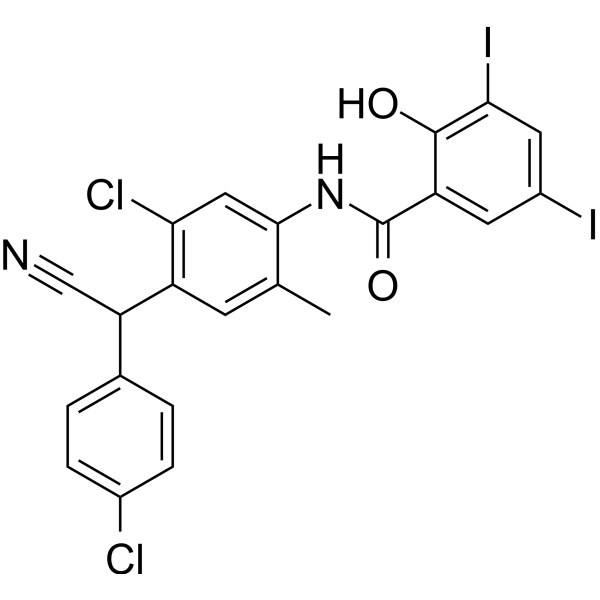
Closantel is a halogenated salicylanilide with a potent anti-parasitic activity. Closantel is a potent and highly specific Onchocerca volvuluschitinase (OvCHT1) inhibitor with an IC50 of 1.6 μM and a Ki of 468 nM. Closantel inhibits the O. volvulus L3 to L4 molt of developing .
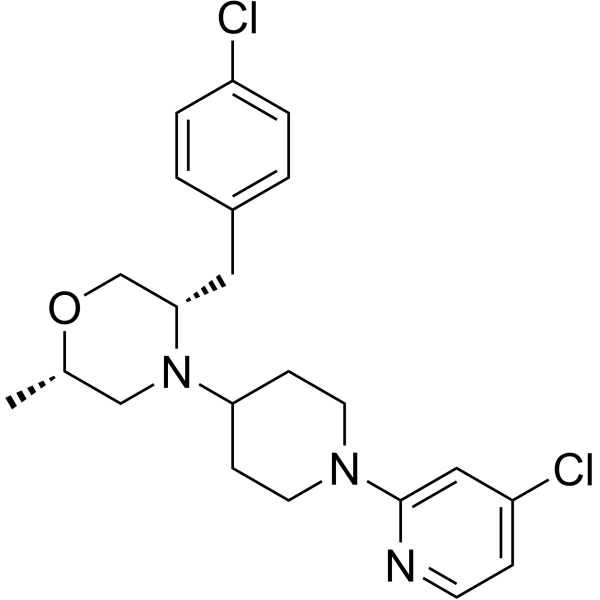
OATD-01 is a highly potent, first-in-class, orally active and selective chitinase inhibitor with low nanomolar activity toward CHIT1 (hCHIT1,IC50=23 nM). OATD-01 shows excellect PK profile in multiple species and is selectivity against a panel of other off-targets. OATD-01 exhibits significant antifibrotic efficacy in vivo and can be used for pulmonary fibrosis (IPF) research .
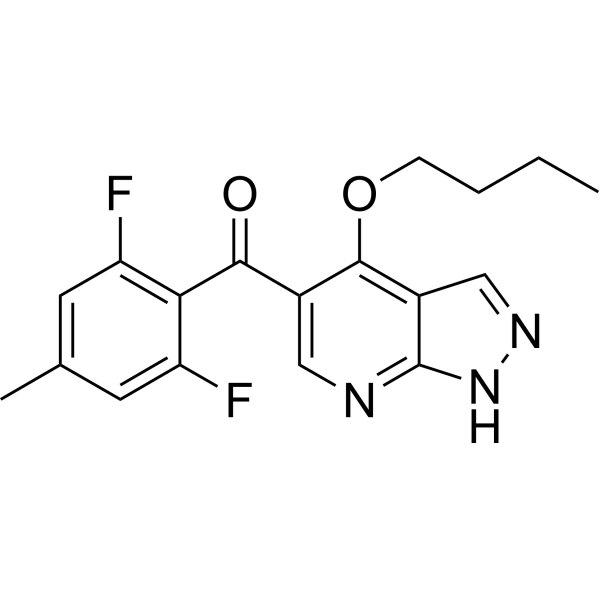
BMS-265246 is a potent and selective cyclin-dependent kinaseCDK1 and CDK2 inhibitor, with IC50 values of 6 and 9 nM, respectively. BMS-265246 inhibits CHI3L1 (chitinase 3-like-1) stimulation of ACE2 (angiotensin converting enzyme 2) and SPP (viral spike protein priming proteases). BMS-265246 can be used for ovarian cancer and COVID-19 research .
Chitin, from shrimp shells (chitinase substrate) serves as a substrate for chitinase. Chitin, from shrimp shells (chitinase substrate) is a long-chain polymer of N-acetylglucosamine with β-(1-4) linkages. Chitin, from shrimp shells (chitinase substrate) is found in the exoskeleton of crabs. Chitin, from shrimp shells (chitinase substrate) inhibits the activation of NF-κB p65, alters the translocation of NF-κB p65 to the nucleus, and interacts with the cell wall of Candida species. Chitin, from shrimp shells (chitinase substrate) exerts antifungal and anti-inflammatory effects. Chitin, from shrimp shells (chitinase substrate) can be used in the research of gastric ulcer and candidiasis .
CHI3L1-IN-1 (Compound 30) is an inhibitor for Chitinase-3-like protein 1 (CHI3L1) (YKL-40) with IC50 of 50 nM. CHI3L1-IN-1 inhibits hERG channel with an IC50 of 2.3 μM .
Chitinase, Streptomyces griseus is a chitinase from Streptomyces griseus. Chitinase is a chitin-targeting enzyme with chitin hydrolysis activity. Chitinase inhibits chitin-induced innate type 2 inflammation in the lung. Chitinase augments chitin-free, allergen-induced Th2 inflammation. Chitinase mediates effector functions of IL-13 .
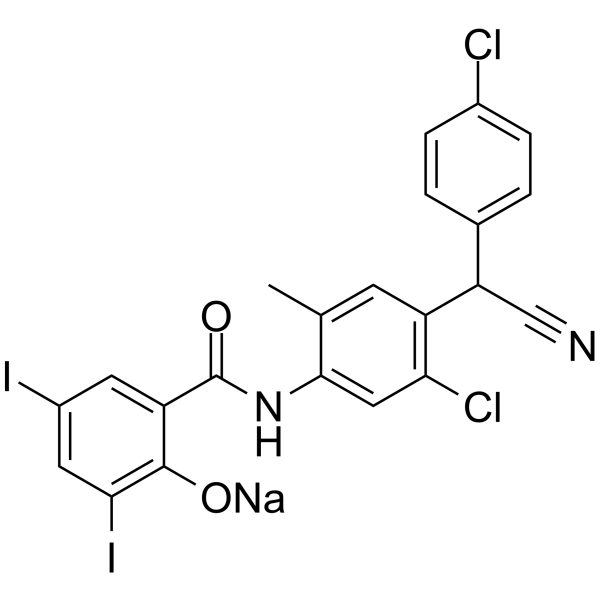
Closantel sodium is a halogenated salicylanilide with a potent anti-parasitic activity. Closantel sodium is a potent and highly specific Onchocerca volvuluschitinase (OvCHT1) inhibitor with an IC50 of 1.6 μM and a Ki of 468 nM. Closantel sodium inhibits the O. volvulus L3 to L4 molt of developing .
Cyclo(Arg-Pro) (Cyclo(Pro-Arg)) is an inhibitor for chitinase. Cyclo(Arg-Pro) inhibits cell separation of Saccharomyces cerevisiae, without affecting its growth. Cyclo(Arg-Pro) inhibits the morphological change of Candida albicans from yeast form to filamentous form .
Chitinase, Serratia marcescens is a chitinase from Serratia marcescens. Chitinase is a chitin-targeting enzyme with chitin hydrolysis activity. Chitinase inhibits chitin-induced innate type 2 inflammation in the lung. Chitinase augments chitin-free, allergen-induced Th2 inflammation. Chitinase mediates effector functions of IL-13 .
Chitinase is a chitin-targeting enzyme with chitin hydrolysis activity. Chitinase inhibits chitin-induced innate type 2 inflammation in the lung. Chitinase augments chitin-free, allergen-induced Th2 inflammation. Chitinase mediates effector functions of IL-13 .
Argifin is a sub-nanomolar chitinase inhibitor produced by soil microorganisms, with IC50s of 0.025 μM, 6.4 μM , 1.1 μM and 4.5 μM for SmChiA (Serratia marcescens chitinaese A), SmChiB, Aspergillus fumigatuschitinase B1 and human chitotriosidase, respectively .
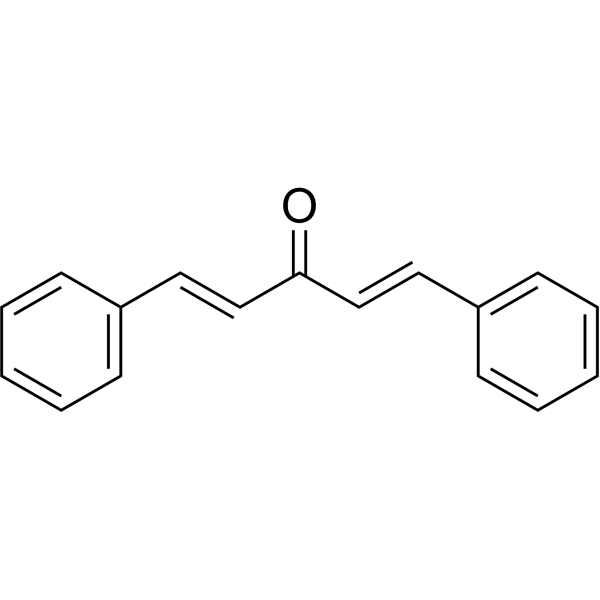
Dibenzylideneacetone (Dibenzalacetone) is a potent inhibitor of chitinase with an IC50 value of 13.10 μM. The MIC value of Dibenzylideneacetone against Botrytis cinerea is 32 μg/mL, and the EC50 values for inhibiting mycelium growth and spore germination are 16.29 and 14.64 μg/mL, respectively. Dibenzylideneacetone can be used in research on fruit and vegetable preservatives .
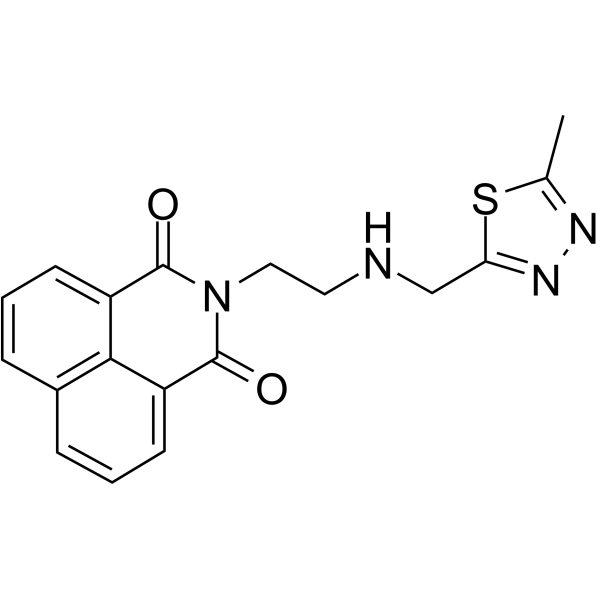
Chitinase-IN-1 is an insecticide that can inhibit the activity of chitinase and N-acetylglucosaminidase. The inhibition percentages for glycosidase and N-acetylglucosaminidase at concentrations of 50 uM and 20 uM are 75% and 67%, respectively.
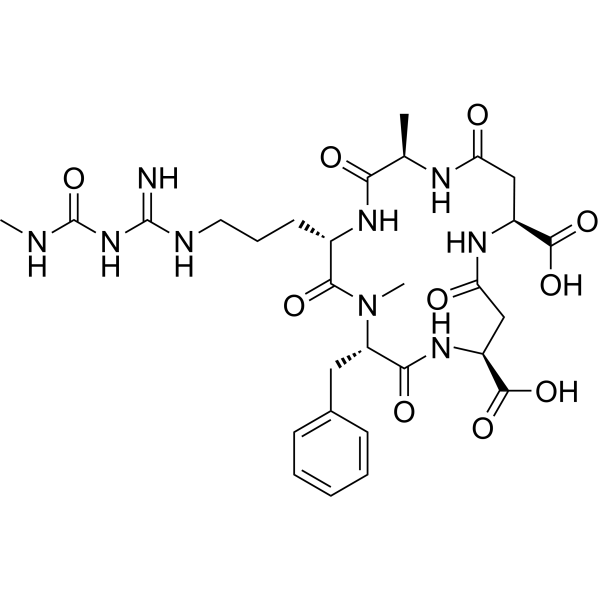
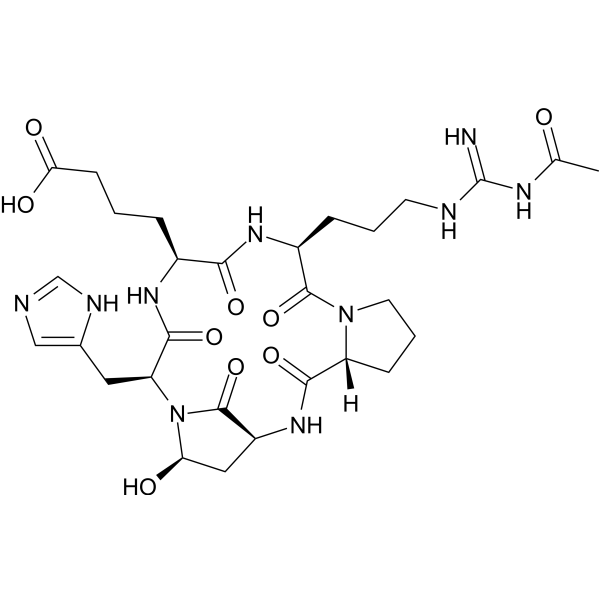
Argadin is a cyclopentapeptide chitinase inhibitor. Argadin inhibits chitinase B (ChiB) with a Ki value of 20 nM. Argadin can be used for the research of fungicid and insecticid .
Chitopentaose pentahydrochloride is a chitosan oligosaccharide with anti-inflammatory effect. Chitopentaose pentahydrochloride is a substrate of gene encoding chitinase B (FjchiB) .
Cyclo (Arg-Pro) TFA is a chitinase inhibitor. Cyclo (Arg-Pro) TFA disrupts cell separation and morphological transition of yeast by inhibiting chitinase activity. Cyclo (Arg-Pro) TFA prevents cell separation of Saccharomyces cerevisiae, leading to the formation of grape-like cell clusters, without inhibiting cell growth. Cyclo (Arg-Pro) TFA blocks the morphological transition of Candida albicans from yeast form to hyphal form, without inhibiting cell growth .
CHI3L1-IN-2 (Compound 36) is a CHI3L1 (Chitinase-3-Like Protein 1) inhibitor. CHI3L1-IN-2 inhibits the? interaction between CHI3L1 and heparan sulfate (CHI3L1:HSIII), with an IC50 of 26 nM. CHI3L1, also known as YKL-40, is a glycoprotein associated with inflammation, fibrosis, and cancer .
Cyclo(Pro-dArg) is an inhibitor of chitinase. Cyclo(Pro-dArg) inhibits the cell separation of Saccharomyces cerevisiae but does not affect its growth. Cyclo(Pro-dArg) inhibits the transition of Candida albicans from yeast to filamentous morphology.
CHI3L1-IN-4 (Compound 8) is a Chitinase-3-Like Protein 1 (CHI3L1) inhibitor with a Kd of 6.8 μM. CHI3L1-IN-4 significantly reduces glioblastoma (GBM) spheroids viability and attenuates phospho-STAT3 levels by disrupting CHI3L1 pathway. CHI3L1-IN-4 can be used for GBM research .
Closantel- 13C6 is the 13C6 labeled Closantel. Closantel is a halogenated salicylanilide with a potent anti-parasitic activity. Closantel is a potent and highly specific Onchocerca volvulus chitinase (OvCHT1) inhibitor with an IC50 of 1.6 μM and a Ki of 468 nM. Closantel inhibits the O. volvulus L3 to L4 molt of developing.
EP4 receptor antagonist 7 (Compound 14) is an antagonist of the prostaglandin E2 (PGE2) receptor subtype EP4 with an IC50 value of 1.1 nM. EP4 receptor antagonist 7 inhibits PGE2-induced β-arrestin recruitment in HEK293 cells with an IC50 value of 0.9 nM. EP4 receptor antagonist 7 decreases PGE2-induced expression of mRNA encoding IL-4, macrophage mannose receptor 1 (Mrc1), chitinase-like protein 3 (Chil3), chemokine (C-X-C) motif ligand 1 (Cxcl1), triggering receptor expressed on myeloid cells 2 (Trem2), and arginase-1 (Arg1), in RAW 264.7 macrophages. EP4 receptor antagonist 7 combined with an anti-PD-1 antibody inhibits tumor growth and increases infiltration of CD 8+ T cells into tumors in a CT26 murine colon cancer model .
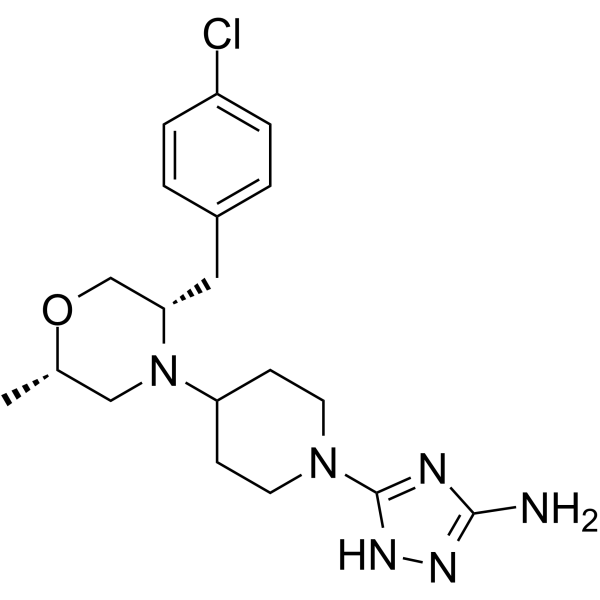
OAT-177 is a potent dual inhibitor targeting acidic mammalian chitinase (AMCase) and chitotriosidase (CHIT1) with an IC50=14.2 nM for human AMCase and IC50=232 nM for human CHIT1. OAT-177 is promising for research of chronic inflammatory and fibrotic-related lung diseases such as asthma and idiopathic pulmonary fibrosis .
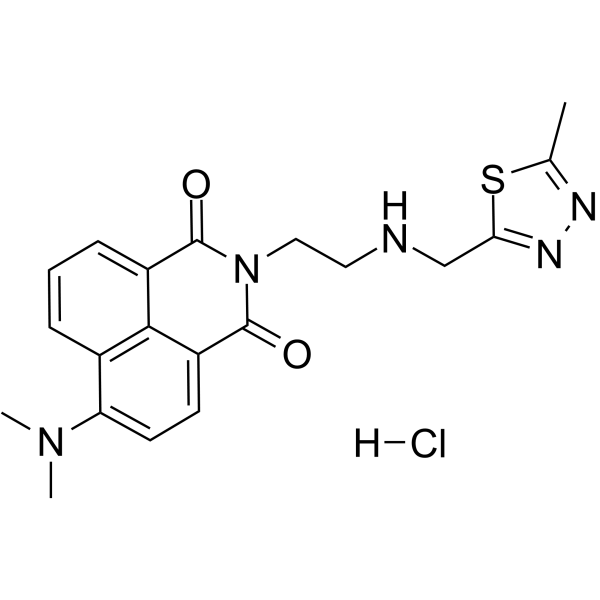
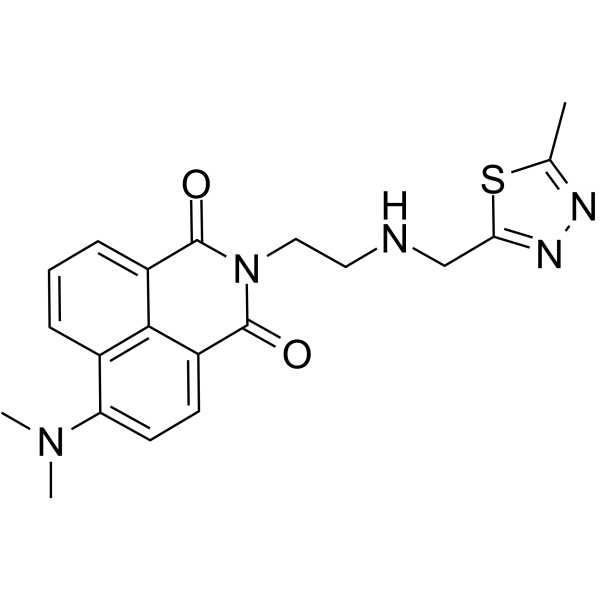
Chitinase-IN-6 (Compound 4h) is a potent dual-Chitinase inhibitor, with Ki values of 1.82 and 2.00 μM against OfChtI and OfChi-h, respectively. Chitinase-IN-6 exhibits certain growth inhibition effects against Ostrinia furnacalis. Chitinase-IN-6 is a potential novel insecticide candidate friendly to nontarget organisms .
Chitinase-IN-5 (8i) is a potent chitinaseOfChi-h inhibitor with an IC50 value of 0.051 μM. Chitinase-IN-5 shows good insecticidal activity, it can be used for the research of green pest control and management .
Chitinase-IN-4 (compound 8f), an azo-aminopyrimidine derivative, is a potent, selective OfChi-h inhibitor with an IC50 value of 0.1 μM. Chitinase-IN-4 has good insecticidal activity. Chitinase-IN-4 can be used in research of green pest control and management .
Chitinase-IN-2 is an insecticide that can inhibit the activity of chitinase and N-acetylhexosaminidase, with inhibition percentages of 98% and 92% at concentrations of 50 μM and 20 μM, respectively.
Argifin (Standard) is the analytical standard of Argifin. This product is intended for research and analytical applications. Argifin is a sub-nanomolar chitinase inhibitor produced by soil microorganisms, with IC50s of 0.025 μM, 6.4 μM , 1.1 μM and 4.5 μM for SmChiA (Serratia marcescens chitinaese A), SmChiB, Aspergillus fumigatus chitinase B1 and human chitotriosidase, respectively[1].
Closantel (sodium) (Standard) is the analytical standard of Closantel (sodium). This product is intended for research and analytical applications. Closantel sodium is a halogenated salicylanilide with a potent anti-parasitic activity. Closantel sodium is a potent and highly specific Onchocerca volvulus chitinase (OvCHT1) inhibitor with an IC50 of 1.6 μM and a Ki of 468 nM. Closantel sodium inhibits the O. volvulus L3 to L4 molt of developing .
Closantel (Standard) is the analytical standard of Closantel. This product is intended for research and analytical applications. Closantel is a halogenated salicylanilide with a potent anti-parasitic activity. Closantel is a potent and highly specific Onchocerca volvulus chitinase (OvCHT1) inhibitor with an IC50 of 1.6 μM and a Ki of 468 nM. Closantel inhibits the O. volvulus L3 to L4 molt of developing .
Glucoallosamidin A is a glycoside antibiotic that can inhibit Chitinase activity. Glucoallosamidin A can inhibit Candida albicans ATCC 10231 chitinase with an IC50 of 3.4 μg/mL .
Bisdionin C is a potent GH18 chitinases inhibitor, with an IC50 of 0.2 μM for A. fumigatus ChiB1 (AfChiB1). Bisdionin C inhibits HCHT (human macrophage chitotriosidase) and acidic mammalian chitinase (AMCase) with IC50s of 8.3 and 3.4 μM, respectively .
Insecticidal agent 9 (Compound I-17) is an insecticide with good insecticidal activity. Insecticidal agent 9 has LC50 values of 93.32 mg/L and 114.79 mg/L against Plutella xylostella and Ostrinia furnacalis respectively, and exhibits a mortality rate of up to 86.1% against Spodoptera frugiperda at a concentration of 500 mg/L. Insecticidal agent 9 can act simultaneously on the ecdysone receptor (EcR) and three chitinases (OfChtI, OfChtII, and OfChi-h), demonstrating good binding activity (to EcR) and inhibitory rates (to the three chitinases). Insecticidal agent 9 can be used in research for pest management .
Insecticidal agent 10 (Compound 8c) is an inhibitor for chitinase, which inhibits OfChi-h and OfChtI with IC50 of 1.51 and 9.21 nM, respectively. Insecticidal agent 10 inhibits growth of Ostrinia furnacalis with LC50 of 22.14 mg/L .
OfChi-h-IN-1 is a potent OfChi-h inhibitor with a Ki value of 0.33 μM. OfChi-h-IN-1 dramatically inhibit the growth and development of Ostrinia nubilalis larvae, and it shows higher insecticidal activity than Hexaflumuron (HY-B1848). OfChi-h-IN-1 serves as novel candidates for insect growth regulator .
OAT-2068 is a selective, high activity and orally active inhibitor of mouse chitotriosidase (mCHIT1) (IC50=29 nM) and displays 143-fold selectivity over m AMCase (IC50=4170 nM). OAT-2068 displays a good pharmacokinetic profile and is an ideal tool to study the role of CHIT1 in biological systems, including animal models of human diseases .
Chitinase, Trichoderma viride is a chitinase from Trichoderma viride. Chitinase is a chitin-targeting enzyme with chitin hydrolysis activity. Chitinase inhibits chitin-induced innate type 2 inflammation in the lung. Chitinase augments chitin-free, allergen-induced Th2 inflammation. Chitinase mediates effector functions of IL-13 .
Cyclo(Pro-dArg) acetate is a chitinase inhibitor. Cyclo(Pro-dArg) acetate inhibits the cell separation of Saccharomyces cerevisiae but does not affect its growth. Cyclo(Pro-dArg) acetate inhibits the transition of Candida albicans from yeast to filamentous morphology .
Chitin, from shrimp shells (chitinase substrate) serves as a substrate for chitinase. Chitin, from shrimp shells (chitinase substrate) is a long-chain polymer of N-acetylglucosamine with β-(1-4) linkages. Chitin, from shrimp shells (chitinase substrate) is found in the exoskeleton of crabs. Chitin, from shrimp shells (chitinase substrate) inhibits the activation of NF-κB p65, alters the translocation of NF-κB p65 to the nucleus, and interacts with the cell wall of Candida species. Chitin, from shrimp shells (chitinase substrate) exerts antifungal and anti-inflammatory effects. Chitin, from shrimp shells (chitinase substrate) can be used in the research of gastric ulcer and candidiasis .
Cyclo(Arg-Pro) (Cyclo(Pro-Arg)) is an inhibitor for chitinase. Cyclo(Arg-Pro) inhibits cell separation of Saccharomyces cerevisiae, without affecting its growth. Cyclo(Arg-Pro) inhibits the morphological change of Candida albicans from yeast form to filamentous form .
Argifin is a sub-nanomolar chitinase inhibitor produced by soil microorganisms, with IC50s of 0.025 μM, 6.4 μM , 1.1 μM and 4.5 μM for SmChiA (Serratia marcescens chitinaese A), SmChiB, Aspergillus fumigatuschitinase B1 and human chitotriosidase, respectively .
Argadin is a cyclopentapeptide chitinase inhibitor. Argadin inhibits chitinase B (ChiB) with a Ki value of 20 nM. Argadin can be used for the research of fungicid and insecticid .
Cyclo (Arg-Pro) TFA is a chitinase inhibitor. Cyclo (Arg-Pro) TFA disrupts cell separation and morphological transition of yeast by inhibiting chitinase activity. Cyclo (Arg-Pro) TFA prevents cell separation of Saccharomyces cerevisiae, leading to the formation of grape-like cell clusters, without inhibiting cell growth. Cyclo (Arg-Pro) TFA blocks the morphological transition of Candida albicans from yeast form to hyphal form, without inhibiting cell growth .
Cyclo(Pro-dArg) is an inhibitor of chitinase. Cyclo(Pro-dArg) inhibits the cell separation of Saccharomyces cerevisiae but does not affect its growth. Cyclo(Pro-dArg) inhibits the transition of Candida albicans from yeast to filamentous morphology.
Argifin (Standard) is the analytical standard of Argifin. This product is intended for research and analytical applications. Argifin is a sub-nanomolar chitinase inhibitor produced by soil microorganisms, with IC50s of 0.025 μM, 6.4 μM , 1.1 μM and 4.5 μM for SmChiA (Serratia marcescens chitinaese A), SmChiB, Aspergillus fumigatus chitinase B1 and human chitotriosidase, respectively[1].
Cyclo(Pro-dArg) acetate is a chitinase inhibitor. Cyclo(Pro-dArg) acetate inhibits the cell separation of Saccharomyces cerevisiae but does not affect its growth. Cyclo(Pro-dArg) acetate inhibits the transition of Candida albicans from yeast to filamentous morphology .
Argifin is a sub-nanomolar chitinase inhibitor produced by soil microorganisms, with IC50s of 0.025 μM, 6.4 μM , 1.1 μM and 4.5 μM for SmChiA (Serratia marcescens chitinaese A), SmChiB, Aspergillus fumigatuschitinase B1 and human chitotriosidase, respectively .
Chitopentaose pentahydrochloride is a chitosan oligosaccharide with anti-inflammatory effect. Chitopentaose pentahydrochloride is a substrate of gene encoding chitinase B (FjchiB) .
Argifin (Standard) is the analytical standard of Argifin. This product is intended for research and analytical applications. Argifin is a sub-nanomolar chitinase inhibitor produced by soil microorganisms, with IC50s of 0.025 μM, 6.4 μM , 1.1 μM and 4.5 μM for SmChiA (Serratia marcescens chitinaese A), SmChiB, Aspergillus fumigatus chitinase B1 and human chitotriosidase, respectively[1].
Glucoallosamidin A is a glycoside antibiotic that can inhibit Chitinase activity. Glucoallosamidin A can inhibit Candida albicans ATCC 10231 chitinase with an IC50 of 3.4 μg/mL .
CHID1 Protein, a saccharide- and LPS-binder, implies roles in pathogen sensing and endotoxin neutralization. Its ligand specificity, linked to oligosaccharide length, shows a preference for chitotetraose. CHID1's interaction with STAB1 suggests potential involvement in cellular processes related to STAB1 interactions. CHID1 Protein, Human (His) is the recombinant human-derived CHID1 protein, expressed by E. coli , with N-His labeled tag.
Chitinase-like protein 3/YM1, functioning as a lectin, demonstrates a strong affinity for saccharides containing free amino groups, particularly oligomeric saccharides. It binds to chitin and heparin, displaying weak hexosaminidase activity without chitinase activity. Notably, the protein exhibits chemotactic activity for T-lymphocytes, bone marrow cells, and eosinophils, indicating potential roles in inflammation and allergies. Chitinase-like protein 3/YM1 Protein, Mouse (HEK293, His) is the recombinant mouse-derived Chitinase-like protein 3/YM1 protein, expressed by HEK293 , with C-6*His labeled tag.
CHIT1/Chitotriosidase-1 protein, an enzyme degrading chitin, chitotriose, and chitobiose, potentially defends against nematodes and pathogens. Isoform 3 lacks enzymatic activity, highlighting the complexity of CHIT1 variants. The ability of CHIT1 to break down chitin suggests involvement in immune defense mechanisms. The existence of enzymatically inactive isoform 3 hints at diverse functions or regulatory roles within biological processes. CHIT1/Chitotriosidase-1 Protein, Human (HEK293, His) is the recombinant human-derived CHIT1/Chitotriosidase-1 protein, expressed by HEK293 , with C-His labeled tag.
AMCase/CHIA protein is an enzyme that degrades chitin and chitotriose and is involved in defense against nematodes, fungi, and pathogens.It plays a role in Th2 immune responses, in response to IL-13, and in the induction of inflammation.AMCase/CHIA Protein, Human (HEK293, His) is the recombinant human-derived AMCase/CHIA protein, expressed by HEK293 , with C-His labeled tag.
AMCase/CHIA Protein, an enzyme, is a member of the chitinase family that hydrolyzes chitin, a component of the fungal cell wall. It plays a crucial role in the immune response against fungal infections. AMCase/CHIA Protein's potential as a therapeutic target lies in its ability to modulate the immune system and its involvement in allergic diseases and asthma. AMCase/CHIA Protein, Mouse (HEK293, His) is the recombinant mouse-derived AMCase/CHIA protein, expressed by HEK293 , with C-His labeled tag.
The CHI3L1 protein is a carbohydrate-binding lectin with a preference for chitin that is involved in tissue remodeling and cellular adaptation to environmental changes. It is involved in Th2 inflammation, IL-13-induced inflammation, allergen sensitization, inflammatory cell apoptosis, dendritic cell accumulation, M2 macrophage differentiation and pathogenic intestinal bacterial invasion. CHI3L1 Protein, Mouse (HEK293, His) is the recombinant mouse-derived CHI3L1 protein, expressed by HEK293 , with C-10*His labeled tag.
The CHI3L1 protein is a binding lectin that lacks chitinase activity. CHI3L1 contributes to tissue remodeling, cellular adaptation to environmental changes, and T helper type 2 inflammatory responses. CHI3L1 also controls hyperoxia-induced injury, inflammation, and epithelial cell apoptosis. Animal-Free CHI3L1 Protein, Human (His) is the recombinant human-derived animal-FreeCHI3L1 protein, expressed by E. coli , with C-His labeled tag. This product is for cell culture use only.
CHI3L2, a lectin, exhibits high affinity for chitooligosaccharides and diverse glycans, except heparin. Importantly, CHI3L2 lacks chitinase activity, setting it apart from enzymes involved in chitin hydrolysis. CHI3L2 Protein, Human (HEK293, His) is the recombinant human-derived CHI3L2 protein, expressed by HEK293 , with C-6*His labeled tag.
The CHI3L1 protein is a binding lectin that lacks chitinase activity. CHI3L1 contributes to tissue remodeling, cellular adaptation to environmental changes, and T helper type 2 inflammatory responses. CHI3L1 also controls hyperoxia-induced injury, inflammation, and epithelial cell apoptosis. CHI3L1 Protein, Human (HEK293, His) is the recombinant human-derived CHI3L1 protein, expressed by HEK293 , with C-6*His labeled tag.
Closantel- 13C6 is the 13C6 labeled Closantel. Closantel is a halogenated salicylanilide with a potent anti-parasitic activity. Closantel is a potent and highly specific Onchocerca volvulus chitinase (OvCHT1) inhibitor with an IC50 of 1.6 μM and a Ki of 468 nM. Closantel inhibits the O. volvulus L3 to L4 molt of developing.
Western blot analysis of extracts from THP-1(lane 2(20μg), Jurkat (lane 3(20μg) and NIH3T3(lane 4(20μg) using FOXO1A (HY-P80132) Rabbit mAb. Proteins were transferred
to a PVDF membrane and blocked with 5% non-fat milk in TBST for 2 hour at room temperature. The primary antibody (1/1000) and Loading control antibody (Beta Actin, HY-P80438, 1/10000) was
used in 5% non-fat milk in TBST at 4°C overnight. Goat Anti-Mouse/Rabbit IgG-HRP Secondary Antibody (1/10000) was used for 1 hour at room temperature.
Western blot analysis of extracts from THP-1(lane 2(20μg), Jurkat (lane 3(20μg) and NIH3T3(lane 4(20μg) using FOXO1A (HY-P80132) Rabbit mAb. Proteins were transferred
to a PVDF membrane and blocked with 5% non-fat milk in TBST for 2 hour at room temperature. The primary antibody (1/1000) and Loading control antibody (Beta Actin, HY-P80438, 1/10000) was
used in 5% non-fat milk in TBST at 4°C overnight. Goat Anti-Mouse/Rabbit IgG-HRP Secondary Antibody (1/10000) was used for 1 hour at room temperature.
Western blot analysis of extracts from THP-1(lane 2(20μg), Jurkat (lane 3(20μg) and NIH3T3(lane 4(20μg) using FOXO1A (HY-P80132) Rabbit mAb. Proteins were transferred
to a PVDF membrane and blocked with 5% non-fat milk in TBST for 2 hour at room temperature. The primary antibody (1/1000) and Loading control antibody (Beta Actin, HY-P80438, 1/10000) was
used in 5% non-fat milk in TBST at 4°C overnight. Goat Anti-Mouse/Rabbit IgG-HRP Secondary Antibody (1/10000) was used for 1 hour at room temperature.
Western blot analysis of extracts from THP-1(lane 2(20μg), Jurkat (lane 3(20μg) and NIH3T3(lane 4(20μg) using FOXO1A (HY-P80132) Rabbit mAb. Proteins were transferred
to a PVDF membrane and blocked with 5% non-fat milk in TBST for 2 hour at room temperature. The primary antibody (1/1000) and Loading control antibody (Beta Actin, HY-P80438, 1/10000) was
MedchemExpress Validation 03
Western blot analysis of extracts from THP-1(lane 2(20μg), Jurkat (lane 3(20μg) and NIH3T3(lane 4(20μg) using FOXO1A (HY-P80132) Rabbit mAb. Proteins were transferred
MedchemExpress Validation 04
Western blot analysis of extracts from THP-1(lane 2(20μg), Jurkat (lane 3(20μg) and NIH3T3(lane 4(20μg) using FOXO1A (HY-P80132) Rabbit mAb. Proteins were transferred
to a PVDF membrane and blocked with 5% non-fat milk in TBST for 2 hour at room temperature. The primary antibody (1/1000) and Loading control antibody (Beta Actin, HY-P80438, 1/10000) was
used in 5% non-fat milk in TBST at 4°C overnight. Goat Anti-Mouse/Rabbit IgG-HRP Secondary Antibody (1/10000) was used for 1 hour at room temperature.
MedchemExpress Validation
Western blot analysis of extracts from THP-1(lane 2(20μg), Jurkat (lane 3(20μg) and NIH3T3(lane 4(20μg) using FOXO1A (HY-P80132) Rabbit mAb. Proteins were transferred
to a PVDF membrane and blocked with 5% non-fat milk in TBST for 2 hour at room temperature. The primary antibody (1/1000) and Loading control antibody (Beta Actin, HY-P80438, 1/10000) was
used in 5% non-fat milk in TBST at 4°C overnight. Goat Anti-Mouse/Rabbit IgG-HRP Secondary Antibody (1/10000) was used for 1 hour at room temperature.
Western blot analysis of extracts from THP-1(lane 2(20μg), Jurkat (lane 3(20μg) and NIH3T3(lane 4(20μg) using FOXO1A (HY-P80132) Rabbit mAb. Proteins were transferred
to a PVDF membrane and blocked with 5% non-fat milk in TBST for 2 hour at room temperature. The primary antibody (1/1000) and Loading control antibody (Beta Actin, HY-P80438, 1/10000) was
used in 5% non-fat milk in TBST at 4°C overnight. Goat Anti-Mouse/Rabbit IgG-HRP Secondary Antibody (1/10000) was used for 1 hour at room temperature.
MedchemExpress Validation
Western blot analysis of extracts from THP-1(lane 2(20μg), Jurkat (lane 3(20μg) and NIH3T3(lane 4(20μg) using FOXO1A (HY-P80132) Rabbit mAb. Proteins were transferred
to a PVDF membrane and blocked with 5% non-fat milk in TBST for 2 hour at room temperature. The primary antibody (1/1000) and Loading control antibody (Beta Actin, HY-P80438, 1/10000) was
used in 5% non-fat milk in TBST at 4°C overnight. Goat Anti-Mouse/Rabbit IgG-HRP Secondary Antibody (1/10000) was used for 1 hour at room temperature.
MedchemExpress Validation
Western blot analysis of extracts from THP-1(lane 2(20μg), Jurkat (lane 3(20μg) and NIH3T3(lane 4(20μg) using FOXO1A (HY-P80132) Rabbit mAb. Proteins were transferred
to a PVDF membrane and blocked with 5% non-fat milk in TBST for 2 hour at room temperature. The primary antibody (1/1000) and Loading control antibody (Beta Actin, HY-P80438, 1/10000) was
used in 5% non-fat milk in TBST at 4°C overnight. Goat Anti-Mouse/Rabbit IgG-HRP Secondary Antibody (1/10000) was used for 1 hour at room temperature.
MedchemExpress Validation
Western blot analysis of extracts from THP-1(lane 2(20μg), Jurkat (lane 3(20μg) and NIH3T3(lane 4(20μg) using FOXO1A (HY-P80132) Rabbit mAb. Proteins were transferred
to a PVDF membrane and blocked with 5% non-fat milk in TBST for 2 hour at room temperature. The primary antibody (1/1000) and Loading control antibody (Beta Actin, HY-P80438, 1/10000) was
used in 5% non-fat milk in TBST at 4°C overnight. Goat Anti-Mouse/Rabbit IgG-HRP Secondary Antibody (1/10000) was used for 1 hour at room temperature.
MedchemExpress Validation
Western blot analysis of extracts from THP-1(lane 2(20μg), Jurkat (lane 3(20μg) and NIH3T3(lane 4(20μg) using FOXO1A (HY-P80132) Rabbit mAb. Proteins were transferred
to a PVDF membrane and blocked with 5% non-fat milk in TBST for 2 hour at room temperature. The primary antibody (1/1000) and Loading control antibody (Beta Actin, HY-P80438, 1/10000) was
used in 5% non-fat milk in TBST at 4°C overnight. Goat Anti-Mouse/Rabbit IgG-HRP Secondary Antibody (1/10000) was used for 1 hour at room temperature.
MedchemExpress Validation
Western blot analysis of extracts from THP-1(lane 2(20μg), Jurkat (lane 3(20μg) and NIH3T3(lane 4(20μg) using FOXO1A (HY-P80132) Rabbit mAb. Proteins were transferred
to a PVDF membrane and blocked with 5% non-fat milk in TBST for 2 hour at room temperature. The primary antibody (1/1000) and Loading control antibody (Beta Actin, HY-P80438, 1/10000) was
used in 5% non-fat milk in TBST at 4°C overnight. Goat Anti-Mouse/Rabbit IgG-HRP Secondary Antibody (1/10000) was used for 1 hour at room temperature.
MedchemExpress Validation
Western blot analysis of extracts from THP-1(lane 2(20μg), Jurkat (lane 3(20μg) and NIH3T3(lane 4(20μg) using FOXO1A (HY-P80132) Rabbit mAb. Proteins were transferred
to a PVDF membrane and blocked with 5% non-fat milk in TBST for 2 hour at room temperature. The primary antibody (1/1000) and Loading control antibody (Beta Actin, HY-P80438, 1/10000) was
used in 5% non-fat milk in TBST at 4°C overnight. Goat Anti-Mouse/Rabbit IgG-HRP Secondary Antibody (1/10000) was used for 1 hour at room temperature.
MedChemExpress values your privacy and your trust is important to us. We use cookies to enhance your website experience. Some cookies are necessary to run the website.
Privacy and Cookie Policy

