
1. Search Result
Search Result
Results for "

Couplings

" in MedChemExpress (MCE) Product Catalog:

367

Inhibitors & Agonists

1

Screening Libraries

51

Fluorescent Dye

148

Biochemical Assay Reagents

23

Peptides

16

MCE Kits

3

Inhibitory Antibodies

10

Natural
Products

5

Isotope-Labeled Compounds

21

Click Chemistry

29

Oligonucleotides

Cat. No. Product Name Target Research Areas Chemical Structure
  • HY-Y1703

    Biochemical Assay Reagents Others
    HATU is a third-generation uronium salt peptide coupling reagent. HATU increases the rate of peptide coupling reactions, activates amino acids, promotes peptide bond formation in both solution-phase and solid-phase synthesis, and also facilitates peptide assembly, fragment coupling, and linear peptide cyclization. HATU can promote the N-acylation of chitosan to generate amide-linked cationic derivatives with a controllable degree of substitution. HATU is commonly used in amine acylation reactions .
    HATU
  • HY-W018864

    Biochemical Assay Reagents Others
    Tris(dibenzylideneacetonyl)bis-palladium is a catalyst that catalyzes the coupling reaction of N-methyl-2-pyrrolidinone (NMP) .
    Tris(dibenzylideneacetonyl)bis-palladium
  • HY-Z0275

    Biochemical Assay Reagents Bacterial Infection
    HOAT is a peptide bond-forming reagent. HOAT is utilized to affect formation of peptide bonds by coupling carboxylic acids with amines. HOAt is not mutagenic in the bacterial reverse mutation test .
    HOAT
  • HY-79880

    1,1'-Carbonyldiimidazole

    MOFs Others
    N,N'-Carbonyldiimidazole (1,1'-Carbonyldiimidazole) is a highly reactive carboxylating reagent that can activate hydroxyl groups to form reactive carbonyl groups. N,N'-Carbonyldiimidazole can be used as a coupling agent and a peptide synthesis reagent .
    N,N'-Carbonyldiimidazole
  • HY-21623

    Biochemical Assay Reagents Others
    Dichloro[1,1'-bis(diphenylphosphino)ferrocene]palladium(II) dichloromethane adduct is a common dichloromethane solvate of the palladium catalyst Pd(dppf)Cl2, a phosphine ligand palladium(II) complex, which can be used as a versatile precatalyst for various cross-coupling reactions. Dichloro[1,1'-bis(diphenylphosphino)ferrocene]palladium(II) dichloromethane adduct can stabilize reaction intermediates and lower the reaction activation energy in coupling reactions, and can be used in Suzuki-Miyaura coupling reaction studies .
    Dichloro[1,1'-bis(diphenylphosphino)ferrocene]palladium(II) dichloromethane adduct
  • HY-114362

    TPGS-750-M

    Biochemical Assay Reagents Others
    DL-alpha-Tocopherol methoxypolyethylene glycol succinate (TPGS-750-M) is an amphiphile, acts as a surfactant. DL-alpha-Tocopherol methoxypolyethylene glycol succinate has a positive effect on Suzuki-Miyaura cross coupling. DL-alpha-Tocopherol methoxypolyethylene glycol succinate increases the styrene titer. DL-alpha-Tocopherol methoxypolyethylene glycol succinate is used in the stability test of NPYM-modified drugs in biological fluids .
    DL-alpha-Tocopherol methoxypolyethylene glycol succinate
  • HY-41456

    Biochemical Assay Reagents Others
    Ethyl 2-cyano-2-(hydroxyimino) acetate (Oxyma) is a peptide coupling additive. Ethyl 2-cyano-2-(hydroxyimino) acetate suppresses racemization during peptide coupling and improves the coupling efficiency of both solution-phase and solid-phase peptide synthesis .
    Ethyl 2-cyano-2-(hydroxyimino)acetate
  • HY-Y0912

    N-HBTU

    Biochemical Assay Reagents Inflammation/Immunology
    HBTU (N-HBTU) is a guanidinium-based peptide coupling reagent and immunological sensitizer. HBTU can be used in combination with bases such as DIPEA (HY-130142) to complete coupling reactions, with HOBt and TMU as by-products. HBTU is a standard reagent in automated solid-phase peptide synthesis, particularly for the Fmoc/tBu strategy, which effectively promotes coupling steps, but it is not suitable for sterically hindered amino acids or dipeptide derivatives. HBTU can induce rhinitis, dermatitis, bronchial asthma and severe allergic reactions. HBTU can be used to study the pathogenesis of allergic reactions, occupational rhinitis, allergic contact dermatitis and bronchial asthma .
    HBTU
  • HY-W011556

    TCFH

    Drug Isomer Cancer
    N,N,N',N'-Tetramethylchloroformamidinium hexafluorophosphate (TCFH) is a powerful coupling and derivatizing reagent for ester prodrug synthesis. N,N,N',N'-Tetramethylchloroformamidinium hexafluorophosphate can be used for antitumor drugs before medicine research .
    N,N,N',N'-Tetramethylchloroformamidinium hexafluorophosphate
  • HY-D0177

    Benzotriazole-1-yl-oxytripyrrolidinophosphonium hexafluorophosphate

    Biochemical Assay Reagents Others
    (Benzotriazol-1-yloxy)tripyrrolidinophosphonium hexafluorophosphate (Benzotriazole-1-yl-oxytripyrrolidinophosphonium hexafluorophosphate) is a peptide coupling reagent and BOP analog. (Benzotriazol-1-yloxy)tripyrrolidinophosphonium hexafluorophosphate promotes the reaction of amino and carboxyl groups to form peptide bonds. (Benzotriazol-1-yloxy)tripyrrolidinophosphonium hexafluorophosphate can be used in the synthesis of peptide compounds .
    (Benzotriazol-1-yloxy)tripyrrolidinophosphonium hexafluorophosphate
  • HY-D2171A
    AF488 DBCO ditriethylamine
    1 Publications Verification

    Fluorescent Dye Others
    AF488 DBCO ditriethylamineis a fluorescent dye and also a click chemistry reagent that can label azide-containing biomolecules. AF488 DBCO ditriethylaminemediates the coupling reaction with azide-modified 2'-OMe RNA oligonucleotides. DBCO is a bioorthogonal partner of azides and enables covalent coupling without copper (Ex/Em = 470/520 nm) .
    AF488 DBCO ditriethylamine
  • HY-151817

    Biochemical Assay Reagents Others
    5-Azidomethyl-uridine is a click chemistry reagent containing an azide group. The azide function is widely used for coupling to alkyne-containing fragments via the renowned Click reaction.
    5-Azidomethyl-uridine
  • HY-W090940

    ADC Linker Cancer
    H-Gly-Gly-Phe-OH is a tripeptide linker that may be used in the creation of antibody drug conjugates (ADCs). The N-terminal of the glycine tripeptide is free to perform a variety of reactions such as couplings with carboxylic acids or NHS esters.
    H-Gly-Gly-Phe-OH
  • HY-168940B

    Drug Intermediate Cancer
    NH2-PEG2000-COOH is a heterofunctional polyethylene glycol with one amino terminal group and one carboxyl terminal group. NH2-PEG2000-COOH reacts with N-succinimidyl-6-maleimidohexanoate to introduce a maleimide terminal group, followed by conjugation with thiolated RGD peptide via a thiol-maleimide coupling reaction to synthesize RGD-PEG-COOH. NH2-PEG2000-COOH can be used in cancer research .
    NH2-PEG2000-COOH
  • HY-15933
    TOPS
    1 Publications Verification

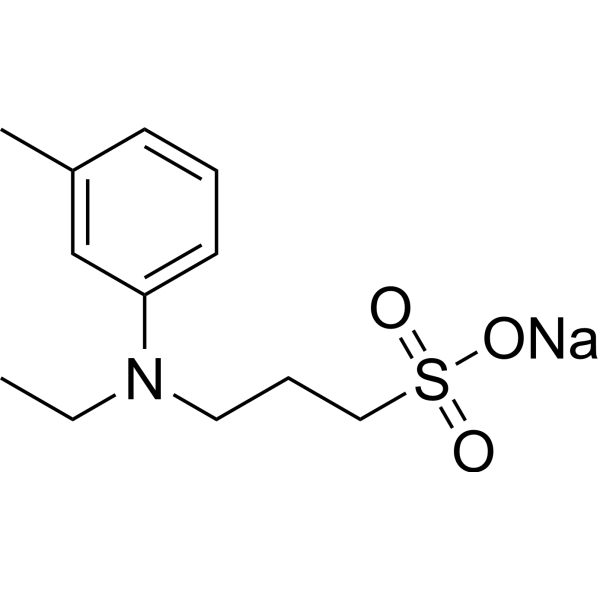
    Biochemical Assay Reagents Others Metabolic Disease
    TOPS is a chromogenic substrate. TOPS undergoes an oxidative coupling reaction with 4-aminoantipyrine in the presence of H2O2 and nanocrystalline cobalt selenide. TOPS is used in studies related to uric acid detection .
    TOPS
  • HY-D1916

    Fluorescent Dye Mucin Others
    ATTO 594 is a Fluorescent dye (excitation/emission = 603/626 nm). ATTO 594 is covalently conjugated to Mucin via carbodiimide coupling .
    ATTO 594
  • HY-Y0747

    1-Iodobenzene

    Biochemical Assay Reagents Others
    Iodobenzene can undergo Ullmann coupling reaction on copper catalyst to generate biphenyl. Iodobenzene can undergo Suzuki reaction with phenylboronic acid to generate biphenyl .
    Iodobenzene
  • HY-32951

    Drug Intermediate Others
    2-Fluoropyridine-4-boronic acid is a coupling reagent and chemical intermediate. 2-Fluoropyridine-4-boronic acid facilitates the synthesis of Rho kinase (ROCK) inhibitor Compound 37 .
    2-Fluoropyridine-4-boronic acid
  • HY-107783

    Biochemical Assay Reagents Others
    Sulfo-GMBS is a crosslinker widely used in chemical modification and coupling reactions of proteins and peptides. Among amine-thiol crosslinkers, Sulfo-GMBS generates the largest number of crosslinks and covers most of the crosslinks identified by AMAS and GMBS .
    Sulfo-GMBS
  • HY-W011412

    Biochemical Assay Reagents Others
    TSTU is used as a coupling reagent in peptide chemistry. TSTU can convert carboxylic acids into the corresponding N-hydroxysuccinimidyl (NHS) esters. TSTU can be applied to the attachment of labels to peptides, proteins, etc .
    TSTU
  • HY-D2171

    Fluorescent Dye Others
    AF488 DBCO is a fluorescent dye and also a click chemistry reagent that can label azide-containing biomolecules. AF488 DBCO mediates the coupling reaction with azide-modified 2'-OMe RNA oligonucleotides. DBCO is a bioorthogonal partner of azides and enables covalent coupling without copper (Ex/Em = 470/520 nm) .
    AF488 DBCO
  • HY-W010986

    Drug Intermediate Others
    Fmoc-N-Me-Phe-OH is an N-methylated amino acid that can be used for the synthesis of some active compounds .
    Fmoc-N-Me-Phe-OH
  • HY-W036410
    Aminopropyltrimethoxysilane
    1 Publications Verification

    3-Aminopropyltrimethoxysilane

    Environmental Pollutants Biochemical Assay Reagents Others
    Aminopropyltrimethoxysilane (APTMS) is a silane coupling agent. Aminopropyltrimethoxysilane couples with Tosylcellulose. Aminopropyltrimethoxysilane improves the thermal stability of the material. Aminopropyltrimethoxysilane can be used in the preparation of GNBP substrates .
    Aminopropyltrimethoxysilane
  • HY-160291

    Biochemical Assay Reagents Others
    Trivalent GalNAc-DBCO can be used for oligonucleotide coupling .
    Trivalent GalNAc-DBCO
  • HY-W003601

    Biochemical Assay Reagents Others
    2-Bromo-4-fluoropyridine is a synthetic halogenated heterocyclic organic compound and a key intermediate in the pharmaceutical and agrochemical industries. 2-Bromo-4-fluoropyridine can be used to synthesize bioactive molecules through cross-coupling reactions, such as Suzuki coupling or Buchwald-Hartwig amination.
    2-Bromo-4-fluoropyridine
  • HY-159734

    Apoptosis Cancer
    TPP-resveratrol is a conjugate of Resveratrol (HY-16561) and triphenylphosphine (TPP) with anticancer activity. TPP-resveratrol increases the potency of Resveratrol through mitochondrial-targeted delivery and induces mitochondria-mediated apoptosis .
    TPP-resveratrol
  • HY-D0798

    Fluorescent Dye Others
    Catechol violet is an efficient and versatile ligand for Cu(I)-catalyzed C-S coupling reactions. Catechol violet is also a complexometric indicator dye .
    Catechol violet
  • HY-123067

    Fluorescent Dye Metabolic Disease
    NBD-Fructose is a fluorescent derivative of Fructose (HY-N0395) that is formed by coupling NBD-chloride with the amine group of amino fructose (EX/Em=472/538 nm) .
    NBD-Fructose
  • HY-46225

    Drug Intermediate Inflammation/Immunology
    DEX-maleimide is a coupling agent that can be used to synthesize conjugates containing single-domain antibodies (VHH) conjugated with antigens and anti-inflammatory agents. DEX-maleimide can be used for research on autoimmune diseases .
    DEX-maleimide
  • HY-13443B

    GCGR Cardiovascular Disease Metabolic Disease Cancer
    Exendin-4-Lys-azide TFA (Compound Ex40) is an azide derivative of Exendin-4-Lys-azide, Exendin-4, which can be used for coupling/click chemistry .
    Exendin-4-Lys-azide TFA
  • HY-D2448

    Fluorescent Dye Cancer
    Cy3-PEG-Thiol (Cy3-PEG-SH) is a near infrared fluorescent labeling reagent that combines Cy3 fluorescent dye, polyethylene glycol (PEG) and sulfhydryl (SH) polyethylene glycol derivatives, and is suitable for molecular coupling. Cy3-PEG-Thiol is absorbed at 550nm and has high solubility and end-group substitution rate .
    Cy3-PEG-Thiol
  • HY-75637

    Drug Intermediate Others
    5-Methyl-1H-pyrazol-3-amine is a pyrazole heterocyclic compound and can be used as a key intermediate for the synthesis of pyrazolylamide derivatives.
    3-Amino-5-methylpyrazole
  • HY-172164B

    Fluorescent Dye Others
    FITC-lysine-dextran, 70kDa is a dextran with lysine coupling with a fluorescent group FITC (HY-66019). Lysine-dextran exhibits higher Glu-plasminogen binding ability than dextran alone .
    FITC-lysine-dextran (MW 70kDa)
  • HY-P11501

    Amyloid-β Biochemical Assay Reagents Neurological Disease
    AAKLVFF is an oligopeptide capable of self-assembling into nanotubes. AAKLVFF can be derived from the core section of β-amyloid. AAKLVFF becomes the first methanol compatible LC alignment medium for residual dipolar coupling measurement .
    AAKLVFF
  • HY-151637

    Amino Acid Derivatives Others
    Fmoc-N-propargyl-MPBA is a propargyl-substituted MPBA linker derived from 4-hydroxy-3-methoxybenzaldehyde. Fmoc-N-propargyl-MPBA can be elongated using standard Fmoc-based solid phase chemistry and linked to supports by standard coupling procedures . Fmoc-N-propargyl-MPBA is a click chemistry reagent, it contains an Alkyne group and can undergo copper-catalyzed azide-alkyne cycloaddition (CuAAc) with molecules containing Azide groups.
    Fmoc-N-propargyl-MPBA
  • HY-101218

    N-(+)-Biotinyl-6-aminohexanoic acid

    Sialyltransferase Others
    N-Biotinyl-6-aminohexanoic acid (N-(+)-Biotinyl-6-aminohexanoic acid) can be used to perform biotinylation .
    N-Biotinyl-6-aminohexanoic acid
  • HY-161541
    Estradiol/BSA
    1 Publications Verification

    Biochemical Assay Reagents Inflammation/Immunology
    Estradiol/BSA is the antigen-adjuvant conjugate formed by the coupling of Estradiol (HY-B0141) with Bovine Serum Albumin (BSA). By coupling the antigen with a protein adjuvant, the production of antigen-specific antibodies in vaccine models can be enhanced. The conjugate does not affect protein folding or disrupt major epitopes, and it can enhance cross-presentation and the generation of antigen-specific T cells.
    Estradiol/BSA
  • HY-W004650A

    Biochemical Assay Reagents Others
    TETA (tetraTFA) is an effective selective chelating agent for copper (II). TETA (tetraTFA) can be used for drug coupling .
    TETA tetraTFA
  • HY-161526

    Biochemical Assay Reagents Inflammation/Immunology
    T3/KLH is an antigen-adjuvant conjugate formed by the coupling of T3 (thyroid hormone) with keyhole limpet hemocyanin (KLH). By coupling the antigen with the protein adjuvant, the production of antigen-specific antibodies in vaccine models can be enhanced. The conjugate does not affect protein folding or disrupt major epitopes, and it can enhance cross-presentation and the generation of antigen-specific T cells.
    T3/KLH
  • HY-W013598

    Biochemical Assay Reagents Others
    Sodium benzenesulfinate is a reagent used in organic synthesis to create other compounds, such as sulfones. Sodium benzenesulfinate undergoes rhodium-catalyzed desulfinative coupling with aldehydes to yield ketones .
    Sodium benzenesulfinate
  • HY-W441014B

    Biochemical Assay Reagents Others
    DSPE-PEG20000-NHS ammonium is one of the most commonly used reactive phospholipids for coupling antibodies, proteins, peptides or other substrates to the surface of liposomes and other lipid PEG nanoparticles .
    DSPE-PEG20000-NHS ammonium
  • HY-P3430

    Biochemical Assay Reagents Cancer
    JM3A is a highly specific peptoid reagent that targets newly appears cell surface vimentin (CSV) on tumor-transformed early lung cancer cells. JM3A can detect and stain CSV by coupling with fluorophores .
    JM3A
  • HY-Y0747S

    1-Iodobenzene-d5

    Isotope-Labeled Compounds Others
    Iodobenzene-d5 is the deuterium labeled 1-Iodobenzene. Iodobenzene can undergo Ullmann coupling reaction on copper catalyst to generate biphenyl. Iodobenzene can undergo Suzuki reaction with phenylboronic acid to generate biphenyl .
    Iodobenzene-d5
  • HY-W004698

    Drug Intermediate Others
    (2-Methoxypyrimidin-5-yl)boronic acid is a drug intermediate that can serve as a key reactant in the Suzuki-Miyaura coupling reaction, and is used for the synthesis of isoquinoline ketone derivatives with anti-tumor activity .
    (2-Methoxypyrimidin-5-yl)boronic acid
  • HY-D2510

    Fluorescent Dye Cancer
    Cy3-PEG2000-SH (Cy3-PEG-Thiol) is a near infrared fluorescent labeling reagent that combines Cy3 fluorescent dye, polyethylene glycol (PEG) and sulfhydryl (SH) polyethylene glycol derivatives, and is suitable for molecular coupling. Cy3-PEG2000-SH is absorbed at 550nm and has high solubility and end-group substitution rate .
    Cy3-PEG2000-SH
  • HY-130908

    Biochemical Assay Reagents Cancer
    11-Maleimidoundecanoic acid is a maleimide-containing hydrophobic core former. 11-Maleimidoundecanoic acid forms a hydrophobic core via maleimide-thiol coupling with cysteine residues on polypeptides, enabling stable loading and controllable release of Doxorubicin (HY-15142A). 11-Maleimidoundecanoic acid can be used for the research of breast cancer .
    11-Maleimidoundecanoic acid
  • HY-151686

    Biochemical Assay Reagents Others
    Bz-(Me)Tz-NHS is a methyltetrazine carboxylic acid NHS ester that enables conjugation of the tetrazine moiety to the 5' end of oligonucleotides via amide coupling reaction, and it is used in oligonucleotide template-mediated fluorescent bioorthogonal cycloaddition reactions. Bz-(Me) Tz-NHS is applicable to click chemistry-related studies .
    Bz-(Me)Tz-NHS
  • HY-W688571

    Biochemical Assay Reagents Others
    T-02 is an isocyanate silane coupling agent .
    T-02
  • HY-133883

    Fluorescent Dye Others
    Cyanine7.5 amine is a near-infrared Cy7.5-based dye and also a substrate for amide bond coupling (Ex/Em = 788 nm/808 nm). Cyanine7.5 amine contains a free amino group and can be used for coupling with activated carboxylic acid derivatives .
    Cyanine7.5 amine
  • HY-32928

    Biochemical Assay Reagents Others
    4-Cyanobenzeneboronic acid is a Boronic acid derivative. 4-Cyanobenzeneboronic acid can be used in Suzuki-Miyaura cross-coupling reactions .
    4-Cyanobenzeneboronic acid

Inquiry Online

Your information is safe with us. * Required Fields.

Salutation


Country or Region *

Applicant Name *


Organization Name *

Department *


Email Address *


Product Name *

Cat. No.


Requested quantity *

Phone Number *


Remarks

Inquiry Online

Inquiry Information

Product Name:
Cat. No.:
Quantity:
MCE Japan Authorized Agent:

