30 Results for "

D-lysine

" in MedChemExpress (MCE) Product Catalog:
Products (30)

30 Results for "D-lysine" in MCE Product Catalog:

Cat. No.: HY-Y1091
CAS No.: 923-27-3
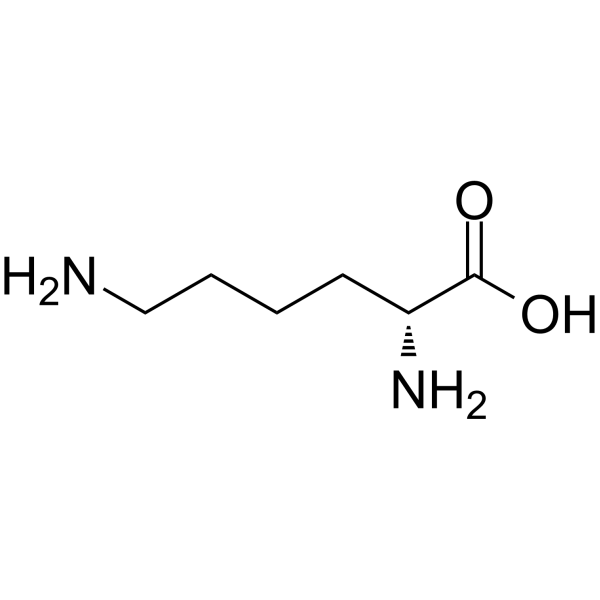
D-Lysine is the D-enantiomer of L-Lysine (HY-N0469). D-Lysine is metabolically inert and not utilized for protein synthesis by mammalian ribosomes. D-Lysine blocks renal uptake of 111In/ 90Y-Octreotide (HY-P0036)-based probes without inhibiting uptake by tumor/receptor tissues, and thus acts as a renoprotective agent in diagnostic imaging and peptide receptor radionuclide therapy (PRRT). D-Lysine specifically inhibits the early steps of non-enzymatic glycation by competing with glucose via its free amino group, theoretically, it can serve as a glycation competitor that "does not interfere with protein synthesis" under chronic hyperglycemia in diabetes. D-Lysine can be used in research related to cancer and diabetes .
loading...
    loading...
1
1 Cited Publications
Cat. No.: HY-139201A
CAS No.: 27964-99-4
Synonyms: PDLHB (MW 70000-150000)
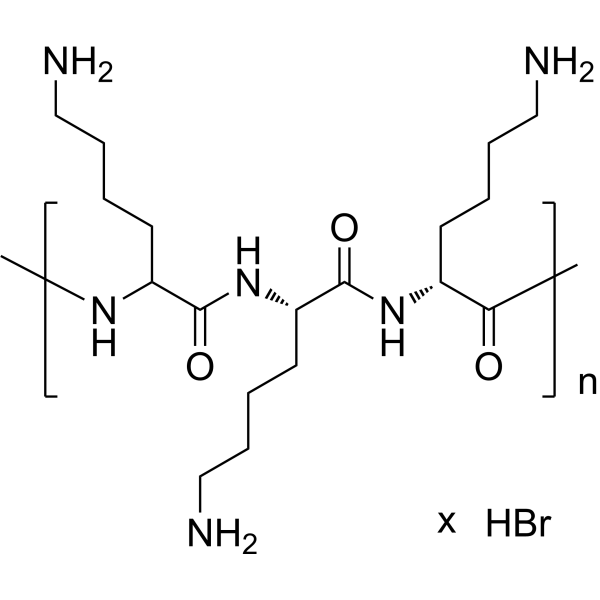
Poly-D-lysine hydrobromide (MW 70000-150000) is a synthetic polymeric substrate and is one of the most widely used substrate in neural cell culture. Poly-D-lysine hydrobromide is a CaSR agonist peptide .
loading...
    loading...
Cat. No.: HY-139201
CAS No.: 27964-99-4
Synonyms: PDLHB (MW 30000-70000)
Target:  

CaSR

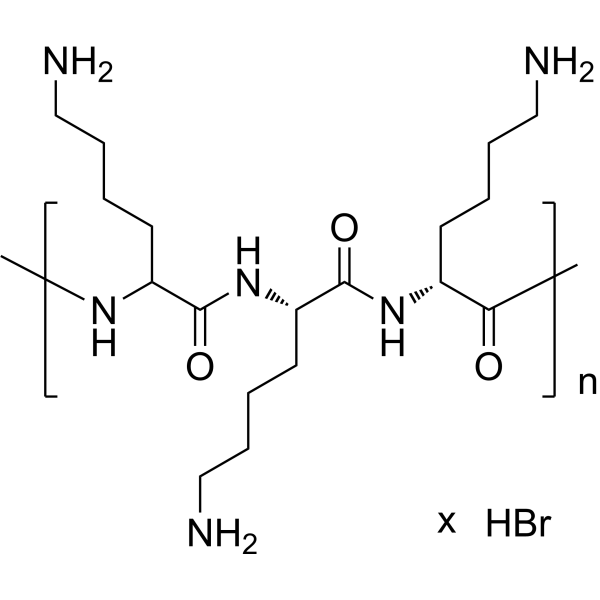
Poly-D-lysine hydrobromide (MW 30000-70000) is a synthetic polymeric substrate and is one of the most widely used substrate in neural cell culture. Poly-D-lysine hydrobromide is a CaSR agonist peptide .
loading...
    loading...
Cat. No.: HY-B2236
CAS No.: 70-54-2
Synonyms: (±)-2,6-Diaminocaproic acid
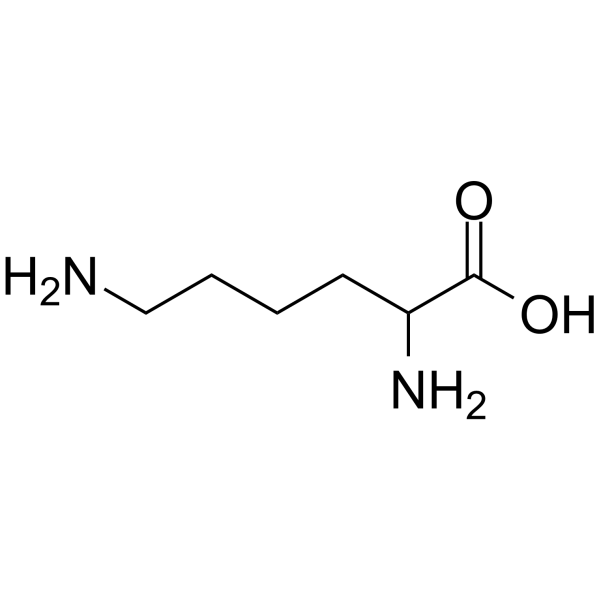
DL-Lysine is a racemic mixture of the D-Lysine and L-Lysine. Lysine is an α-amino acid that is used in the biosynthesis of proteins .
loading...
    loading...
Cat. No.: HY-W007655
CAS No.: 92122-45-7
Fmoc-D-Lys (Boc)-OH is an Fmoc- and Boc-protected D-lysine derivative. Fmoc-D-Lys (Boc)-OH ensures the precise incorporation of D-lysine into peptide chains, maintaining the specific conformation and biological activity of peptides. Fmoc-D-Lys (Boc)-OH can be used in research on the synthesis of peptides containing unnatural amino acids .
loading...
    loading...
Cat. No.: HY-Y1804
CAS No.: 7274-88-6
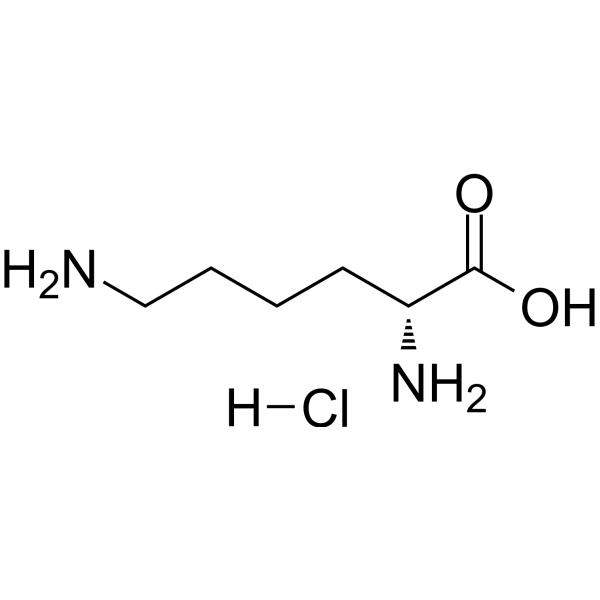
D-Lysine monohydrochloride is the D-enantiomer of L-Lysine (HY-N0469). D-Lysine monohydrochloride is metabolically inert and not utilized for protein synthesis by mammalian ribosomes. D-Lysine monohydrochloride blocks renal uptake of 111In/ 90Y-Octreotide (HY-P0036)-based probes without inhibiting uptake by tumor/receptor tissues, and thus acts as a renoprotective agent in diagnostic imaging and peptide receptor radionuclide therapy (PRRT). D-Lysine monohydrochloride specifically inhibits the early steps of non-enzymatic glycation by competing with glucose via its free amino group, theoretically, it can serve as a glycation competitor that "does not interfere with protein synthesis" under chronic hyperglycemia in diabetes. D-Lysine monohydrochloride can be used in research related to cancer and diabetes .
loading...
    loading...
Cat. No.: HY-139201B
CAS No.: 27964-99-4
Synonyms: PDLHB (MW 84000)
Target:  

CaSR

Research Areas:  

Neurological Disease Cancer

Poly-D-lysine hydrobromide (MW 84000) is a synthetic polymeric substrate and is one of the most widely used substrate in neural cell culture. Poly-D-lysine hydrobromide is a CaSR agonist peptide .
loading...
    loading...
Cat. No.: HY-139201D
CAS No.: 27964-99-4
Synonyms: PDLHB (MW 4000-15000)
Poly-D-lysine hydrobromide (MW 4000-15000) (PDLHB (MW 4000-15000)) is an artificially synthesized polymer matrix widely used in neuronal cell culture. Poly-D-lysine hydrobromide is also known as a calcium-sensing receptor (CaSR) agonist peptide .
loading...
    loading...
Cat. No.: HY-139201H
CAS No.: 27964-99-4
Synonyms: PDLHB (MW ≥300000)
Poly-D-lysine hydrobromide (MW ≥300000) (PDLHB (MW ≥300000)) is a cationic polymer and cell adhesion promoter. Poly-D-lysine hydrobromide (MW ≥300000) serves as a substrate coating to support the adhesion and proliferation of rat dorsal root ganglion satellite glial cells in vitro. Poly-D-lysine hydrobromide (MW ≥300000) promotes the adhesion and immobilization of cells on plastic culture dishes. Poly-D-lysine hydrobromide is also known as a calcium-sensing receptor (CaSR) agonist peptide .
loading...
    loading...
Cat. No.: HY-W090626
CAS No.: 110990-08-4
Research Areas:  

Others

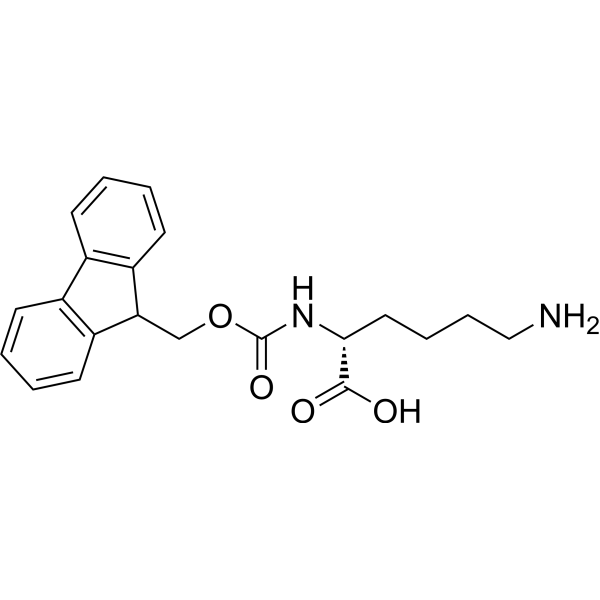
(((9H-Fluoren-9-yl)methoxy)carbonyl)-D-lysine is a lysine derivative .
loading...
    loading...
Cat. No.: HY-101884A
Purity:  99.32%
Research Areas:  

Neurological Disease

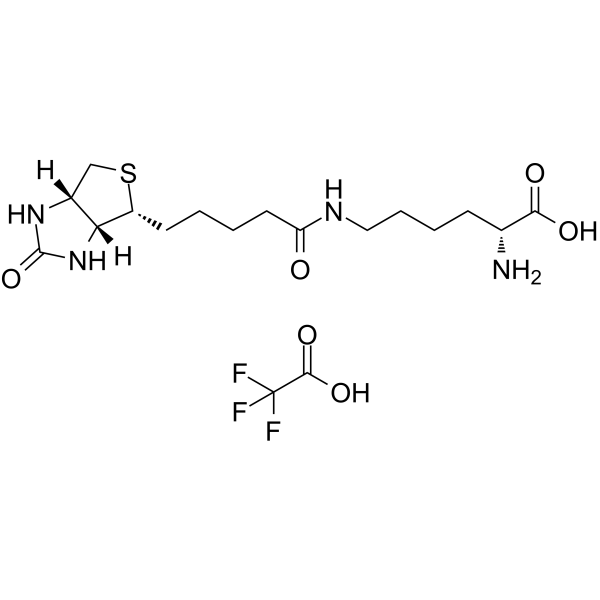
Biotinylated-D-lysine TFA is a conjugate of L-biotin and D-lysine, where the carboxylate of L-biotin is coupled with the ϵ-amine of D-lysine via a secondary amide bond. Biotinylated-D-lysine TFA is an isomer of the neuroanatomical tracer Biocyte.
loading...
    loading...
Cat. No.: HY-139201E
CAS No.: 27964-99-4
Synonyms: PDLHB (MW 150000-300000)
Poly-D-lysine hydrobromide (MW 150000-300000) is a synthetic polymer composed of D-lysine residues and is one of the most widely used matrices in neural cell culture applications. Poly-D-lysine hydrobromide (MW 150000-300000) can be used as a non-specific cell adhesion enhancer. Poly-D-lysine hydrobromide (MW 30000-70000) is an orally active CaSR agonist peptide that indirectly activates the 5-HT₃ receptor signaling pathway, delaying gastric emptying and thereby slowing the rate at which glucose enters the small intestine and is absorbed .
loading...
    loading...
Cat. No.: HY-151666
CAS No.: 1418009-93-4
Research Areas:  

Others

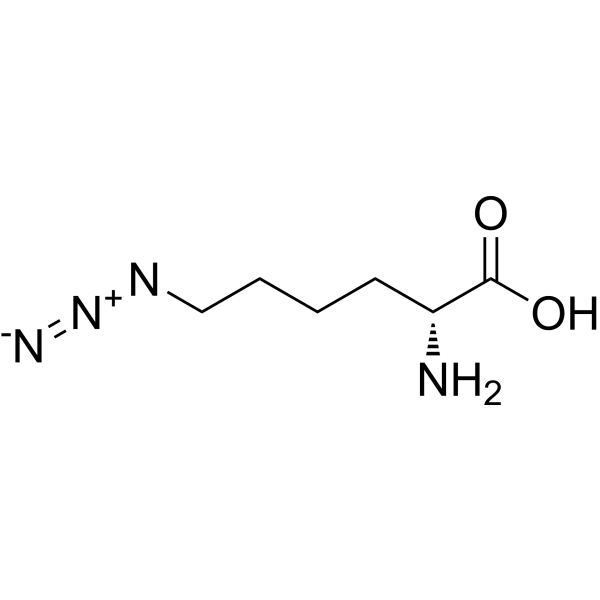
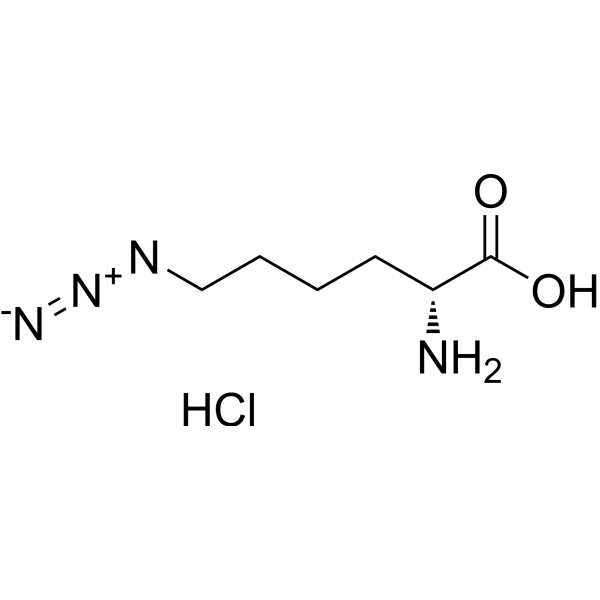
6-Azido-D-lysine is a click chemistry reagent containing an azide . 6-Azido-D-lysine is a click chemistry reagent, it contains an Azide group and can undergo copper-catalyzed azide-alkyne cycloaddition reaction (CuAAc) with molecules containing Alkyne groups. It can also undergo strain-promoted alkyne-azide cycloaddition (SPAAC) reactions with molecules containing DBCO or BCN groups.
loading...
    loading...
Cat. No.: HY-139201C
CAS No.: 27964-99-4
Synonyms: PDLHB (MW 1000-5000)
Poly-D-lysine hydrobromide (MW 1000-5000) (PDLHB (MW 1000-5000)) is a synthetic cationic polypeptide polymer commonly used as a cell adhesion promoter and surface coating molecule. Poly-D-lysine hydrobromide is also known as a calcium-sensing receptor (CaSR) agonist peptide .
loading...
    loading...
Cat. No.: HY-151666A
CAS No.: 2098497-01-7
Purity:  ≥98.0%
Research Areas:  

Others

6-Azido-D-lysine hydrochloride is a click chemistry reagent containing an azide . 6-Azido-D-lysine hydrochloride is a click chemistry reagent, it contains an Azide group and can undergo copper-catalyzed azide-alkyne cycloaddition reaction (CuAAc) with molecules containing Alkyne groups. It can also undergo strain-promoted alkyne-azide cycloaddition (SPAAC) reactions with molecules containing DBCO or BCN groups.
loading...
    loading...
Cat. No.: HY-W035399S
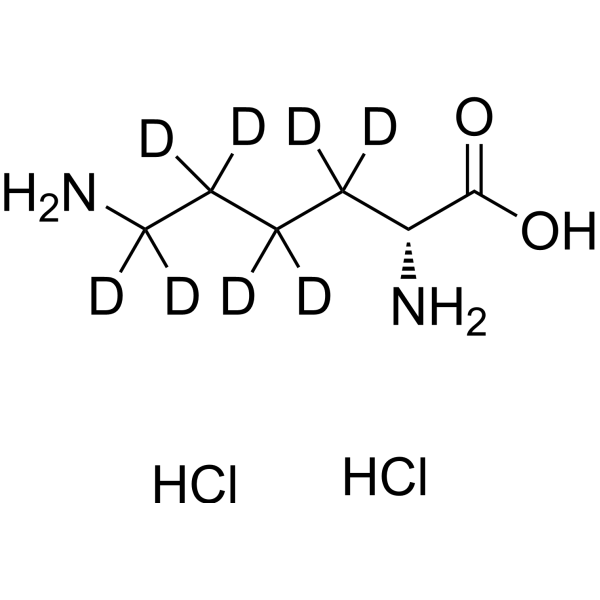
D-Lysine-d8 dihydrochloride is the d8-labeled D-Lysine (HY-Y1091). D-Lysine is the D-enantiomer of L-Lysine (HY-N0469). D-Lysine is metabolically inert and not utilized for protein synthesis by mammalian ribosomes. D-Lysine blocks renal uptake of 111In/ 90Y-Octreotide (HY-P0036)-based probes without inhibiting uptake by tumor/receptor tissues, and thus acts as a renoprotective agent in diagnostic imaging and peptide receptor radionuclide therapy (PRRT). D-Lysine specifically inhibits the early steps of non-enzymatic glycation by competing with glucose via its free amino group, theoretically, it can serve as a glycation competitor that "does not interfere with protein synthesis" under chronic hyperglycemia in diabetes. D-Lysine can be used in research related to cancer and diabetes .
loading...
    loading...
Cat. No.: HY-171995
CAS No.: 2369899-34-1
Synonyms: Rotor NO.4 TFA
Research Areas:  

Infection

Rf470 (Rotor NO.4) TFA is a FMR-probe-D-lysine conjugate (Max Ex: 470 nM; Max Em: 640 nM) that can be covalently incorporated into peptidoglycan by bacteria. Rf470 TFA has extremely weak fluorescence in the free state, but its fluorescence is significantly enhanced when it is catalytically incorporated into peptidoglycan by transpeptidases. Through fluorescence changes, Rf470 TFA can be used for real-time monitoring of peptidoglycan biosynthesis, detection of transpeptidase activity, and screening of antibiotics, etc .
loading...
    loading...
Cat. No.: HY-W048691
CAS No.: 75932-02-4
Research Areas:  

Others

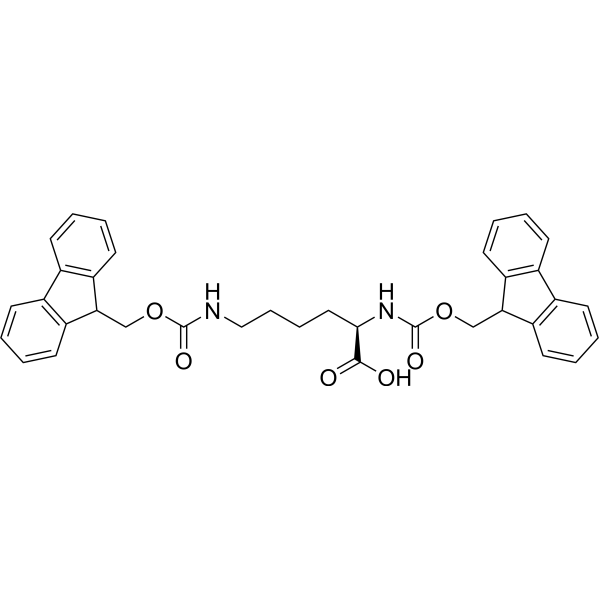
N2,N6-Bis(((9H-fluoren-9-yl)methoxy)carbonyl)-D-lysine is a lysine derivative .
loading...
    loading...
Cat. No.: HY-Y1804R
CAS No.: 7274-88-6
D-Lysine monohydrochloride (Standard) is the analytical standard of D-Lysine monohydrochloride (HY-Y1804). This product is intended for research and analytical applications. D-Lysine monohydrochloride is the D-enantiomer of L-Lysine (HY-N0469). D-Lysine monohydrochloride is metabolically inert and not utilized for protein synthesis by mammalian ribosomes. D-Lysine monohydrochloride blocks renal uptake of 111In/ 90Y-Octreotide (HY-P0036)-based probes without inhibiting uptake by tumor/receptor tissues, and thus acts as a renoprotective agent in diagnostic imaging and peptide receptor radionuclide therapy (PRRT). D-Lysine monohydrochloride specifically inhibits the early steps of non-enzymatic glycation by competing with glucose via its free amino group, theoretically, it can serve as a glycation competitor that "does not interfere with protein synthesis" under chronic hyperglycemia in diabetes. D-Lysine monohydrochloride can be used in research related to cancer and diabetes .
loading...
    loading...
Cat. No.: HY-148708
CAS No.: 2240164-55-8
Target:  

iGluR

Research Areas:  

Neurological Disease

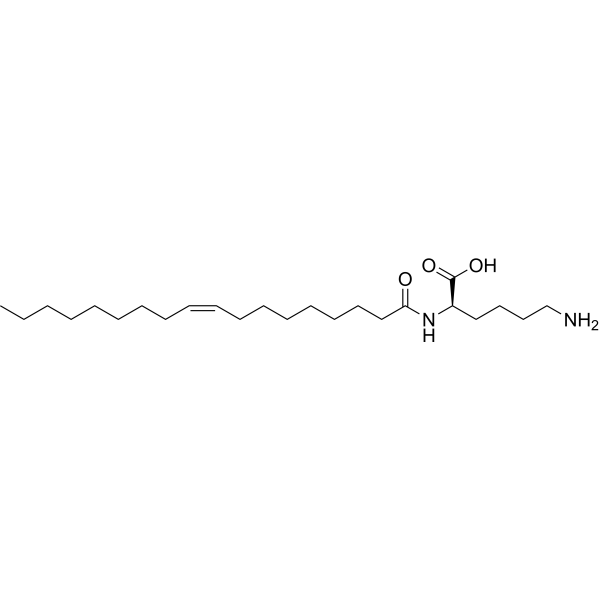
Oleoyl-D-lysine is a selective Glycine Transporter-2 (GlyT2) inhibitor based on lipid. Oleoyl-D-lysine reverses neuropathic pain in mice,shows antidrowsiness effect on chronic neuropathic pain. Oleoyl-D-lysine is safe and effective without respiratory depression .
loading...
    loading...

