





59 Results for "

Disease Pathogenesis

" in MedChemExpress (MCE) Product Catalog:
Products (59)

59 Results for "Disease Pathogenesis" in MCE Product Catalog:

2
2 Cited Publications
Cat. No.: HY-125859
CAS No.: 9003-99-0
Peroxidase, Horseradish actively involves in oxidizing reactive oxygen species, innate immunity, hormone biosynthesis and pathogenesis of several diseases .
loading...
    loading...
2
2 Cited Publications
Cat. No.: HY-113066A
CAS No.: 7415-69-2
Purity:  ≥95.0%
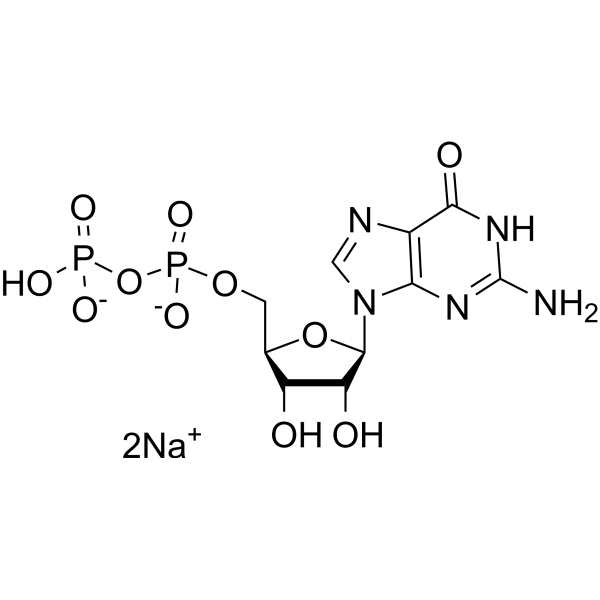
Synonyms: GDP disodium salt
Guanosine 5'-diphosphate (GDP) disodium salt, a purine nucleoside diphosphate, is interconverted to guanosine by the action of exonucleotidase and phosphorylation of nucleoside to guanine. Guanosine 5'-diphosphate disodium salt activates adenosine 5'-triphosphate-sensitive K + channel and is used to study the kinetics and characteristics of GTPases such as those associated with G-protein coupled receptors (GPCR). Guanosine 5'-diphosphate disodium salt is a potential iron mobilizer, which prevents the Hepcidin (HY-P70400)-ferroportin interaction and modulates the interleukin-6 (IL-6)/stat-3 pathway. Elevated levels of guanosine 5’-diphosphate are associated with the pathogenesis of neurological diseases. Guanosine 5'-diphosphate disodium salt is promising for the research of inflammation, such as anemia of inflammation (AI) .
loading...
    loading...
2
2 Cited Publications
Cat. No.: HY-118315
CAS No.: 143323-55-1
Target:  

Fluorescent Dye

Research Areas:  

Inflammation/Immunology

L-012 is a luminal-based chemiluminescent probe. L-012 sodium salt can detect NADPH oxidase (Nox)-derived superoxide and nitrogen species (reactive oxygen species (ROS) and reactive nitrogen species (RNS)) .
loading...
    loading...
1
1 Cited Publications
Cat. No.: HY-P1362
CAS No.: 317366-82-8
Synonyms: Amyloid β Peptide (42-1)(human)
Target:  

Amyloid-β

Research Areas:  

Neurological Disease

β-Amyloid (42-1), human is the inactive form of Amyloid β Peptide (1-42). Its active form, β-Amyloid (1-42), may play a key role in the pathogenesis of Alzheimer's disease .
loading...
    loading...
1
1 Cited Publications
Cat. No.: HY-129098
CAS No.: 79066-03-8
Purity:  99.91%
Target:  

LXR

Research Areas:  

Metabolic Disease

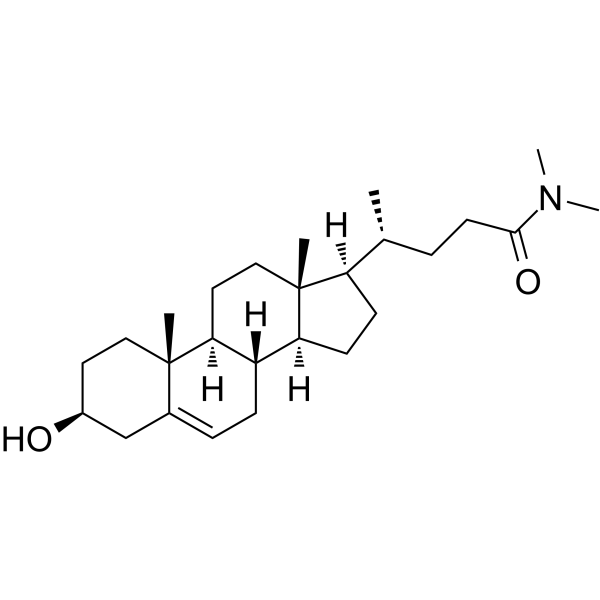
DMHCA, a potent and selective LXR agonist, specifically activates the cholesterol efflux arm of the LXR pathway without stimulating triglyceride synthesis. DMHCA has anti-inflammatory effects?and can be used for the research of cholesterol homeostasis diabetes .
loading...
    loading...
1
1 Cited Publications
Cat. No.: HY-B1118
CAS No.: 3366-95-8
Synonyms: RP-14539; PM-185184
Target:  

Bacterial Parasite

Research Areas:  

Infection

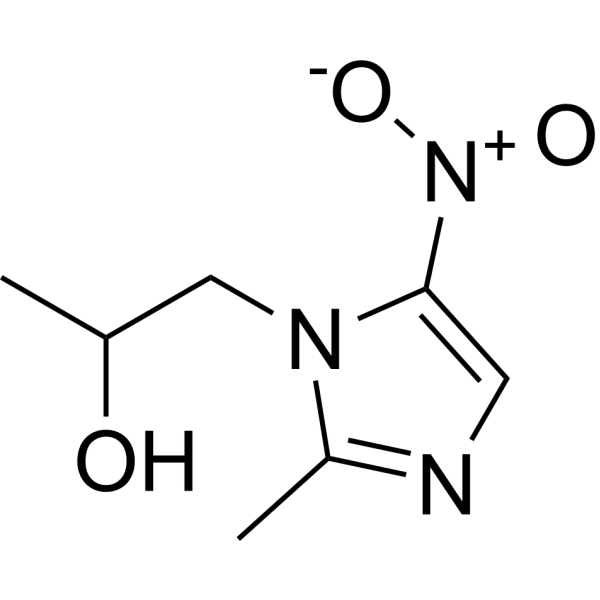
Secnidazole (RP-14539) is an orally active azole antibiotic and a imidazole mitigator of Serratia marcescens virulence. Secnidazole, as an analog of acylhomoserine lactones, effectively inhibits QS resulting in the attenuation of Pseudomonas aeruginosa pathogenesis. Secnidazole has antimicrobial activity against many anaerobic Gram-negative and Gram-positive bacterial species in vitro. Secnidazole can be used for the research of various diseases, such as amoebiasis and giardiasis, and bacterial vaginitis .
loading...
    loading...
1
1 Cited Publications
Cat. No.: HY-P3908
Target:  

Amyloid-β

Research Areas:  

Neurological Disease

FITC-β-Ala-Amyloid β-Protein (1-42) ammonium is a FITC tagged Aβ1-42 peptide. Aβ1-42 plays a key role in the pathogenesis of Alzheimer’s disease .
loading...
    loading...
1
1 Cited Publications
Cat. No.: HY-141866
CAS No.: 2415225-30-6
Purity:  99.21%
Target:  

Ceramidase

Research Areas:  

Neurological Disease

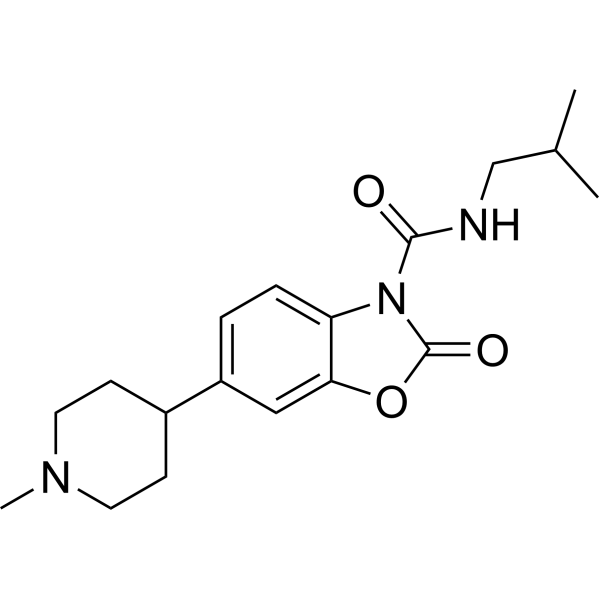
Acid Ceramidase-IN-1 is orally active and blood-brain barrier penetrant acid ceramidase (AC, ASAH-1) inhibitor (hAC IC50=0.166 μM). Acid Ceramidase-IN-1 reduces AC activity, accumulates ceramide species (Cer (d18:0/16:0), Cer (d18:1/16:0)), and decreases sphingosine levels. Acid Ceramidase-IN-1 can be used for the study of severe neurological lysosomal storage diseases (LSDs) such as Gaucher’s disease (GD) and Krabbe’s disease (KD) .
loading...
    loading...
Cat. No.: HY-121252
CAS No.: 5707-55-1
Purity:  ≥77.0%
Dopal is a metabolite and aldehyde neurotoxin of Dopamine (HY-B0451). Dopal exhibits cytotoxicity, induces α-synuclein oligomerization and aggregation, and is closely associated with the pathogenesis of Parkinson's disease. Dopal can be used in research related to Parkinson's disease .
loading...
    loading...
Cat. No.: HY-P5096
CAS No.: 1802087-77-9
Target:  

Amyloid-β

Research Areas:  

Neurological Disease

FITC-β-Ala-Amyloid β-Protein (1-42) is a FITC tagged Aβ1-42 peptide. Aβ1-42 plays a key role in the pathogenesis of Alzheimer’s disease .
loading...
    loading...
Cat. No.: HY-N6723
CAS No.: 116355-84-1
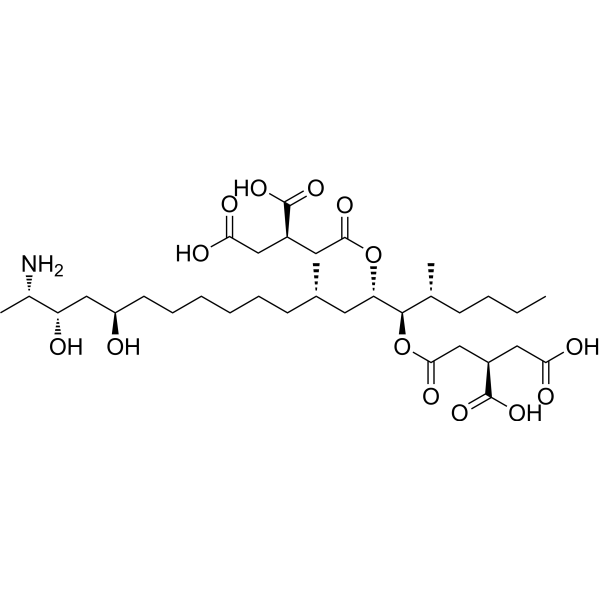
Fumonisin B2 is a selective ceramide synthase inhibitor and carcinogenic mycotoxin with toxicity comparable to that of Fumonisin B1 (HY-N6719). Fumonisin B2 inhibits de novo sphingolipid biosynthesis by blocking the amide bond formation between fatty acids and dihydrosphingosine, which leads to a massive intracellular accumulation of free dihydrosphingosine, altered sphingosine levels, subsequent inhibition of cell proliferation, and induction of cell death. Fumonisin B2 is used to investigate the pathogenesis of diseases associated with Fusarium verticillioides contamination, including equine leukoencephalomalacia, porcine pulmonary edema syndrome, human esophageal cancer, and rat hepatocellular carcinoma .
loading...
    loading...
Cat. No.: HY-P1363F1
Synonyms: Biotin-amyloid β-peptide (1-42) (human) TFA
Target:  

Amyloid-β

Research Areas:  

Neurological Disease

Biotin-β-Amyloid (1-42), human TFA (Biotin-Amyloid β-Peptide (1-42) (human) TFA) is the botin labeled β-Amyloid (1-42), human TFA (HY-P1363). β-Amyloid (1-42), human TFA is a 42-amino acid peptide which plays a key role in the pathogenesis of Alzheimer disease .
loading...
    loading...
Cat. No.: HY-176892
CAS No.: 574-77-6
Research Areas:  

Neurological Disease

Papaveroline is a Fyn tyrosine kinase inhibitor, Na +,K +-ATPase inhibitor with an IC50 of 0.20 mM, Mg 2+-ATPase inhibitor, K +-activated pNPPase inhibitor with an IC50 of 1.51 mM, and apoptosis inducer . Papaveroline binds to the active site of Fyn tyrosine kinase and forms stable interactions with pocket amino acid residues . Papaveroline induces cell apoptosis, produces pycnotic and fragmented cell nuclei, and does not reduce intracellular ATP levels . Papaveroline is a dopamine-derived neurotoxin candidate associated with the pathogenesis of Parkinson's disease . Papaveroline can be used in the research of Alzheimer's disease and Parkinson's disease .
loading...
    loading...
Cat. No.: HY-P1362F
Synonyms: Cy5-Amyloid β Peptide (42-1)(human) Tris
Target:  

Amyloid-β

Research Areas:  

Neurological Disease

Cy5-β-Amyloid (42-1), human is a Cy5 fluorescently-labelled β-Amyloid (42-1, human) peptide (λex= 633 nm and λem= 670 nm) . β-Amyloid (42-1), human is the inactive form of Amyloid β Peptide (1-42). Its active form, β-Amyloid (1-42), may play a key role in the pathogenesis of Alzheimer's disease.
loading...
    loading...
Cat. No.: HY-B1118R
CAS No.: 3366-95-8
Synonyms: RP-14539 (Standard); PM-185184 (Standard)
Research Areas:  

Infection

Secnidazole (Standard) is the analytical standard of Secnidazole. This product is intended for research and analytical applications. Secnidazole (RP-14539) is an orally active azole antibiotic and a imidazole mitigator of Serratia marcescens virulence. Secnidazole, as an analog of acylhomoserine lactones, effectively inhibits QS resulting in the attenuation of Pseudomonas aeruginosa pathogenesis. Secnidazole has antimicrobial activity against many anaerobic Gram-negative and Gram-positive bacterial species in vitro. Secnidazole can be used for the research of various diseases, such as amoebiasis and giardiasis, and bacterial vaginitis .
loading...
    loading...
Cat. No.: HY-113066AR
CAS No.: 7415-69-2
Synonyms: GDP disodium salt (Standard)
Guanosine 5'-diphosphate (disodium salt) (Standard) is the analytical standard of Guanosine 5'-diphosphate (disodium salt). This product is intended for research and analytical applications. Guanosine 5'-diphosphate (GDP) disodium salt, a purine nucleoside diphosphate, is interconverted to guanosine by the action of exonucleotidase and phosphorylation of nucleoside to guanine. Guanosine 5'-diphosphate disodium salt activates adenosine 5'-triphosphate-sensitive K+ channel and is used to study the kinetics and characteristics of GTPases such as those associated with G-protein coupled receptors (GPCR). Guanosine 5'-diphosphate disodium salt is a potential iron mobilizer, which prevents the Hepcidin (HY-P70400)-ferroportin interaction and modulates the interleukin-6 (IL-6)/stat-3 pathway. Elevated levels of guanosine 5’-diphosphate are associated with the pathogenesis of neurological diseases. Guanosine 5'-diphosphate disodium salt is promising for the research of inflammation, such as anemia of inflammation (AI) .
loading...
    loading...
Cat. No.: HY-121252A
CAS No.: 5707-55-1
Dopal (purity>80%) is a metabolite and aldehyde neurotoxin of Dopamine (HY-B0451). Dopal (purity>80%) exhibits cytotoxicity, induces α-synuclein oligomerization and aggregation, and is closely associated with the pathogenesis of Parkinson's disease. Dopal (purity>80%) can be used in research related to Parkinson's disease .
loading...
    loading...
Cat. No.: HY-P1363S
Synonyms: Amyloid β-peptide-15N (1-42) (human) TFA
Target:  

Amyloid-β

Research Areas:  

Neurological Disease

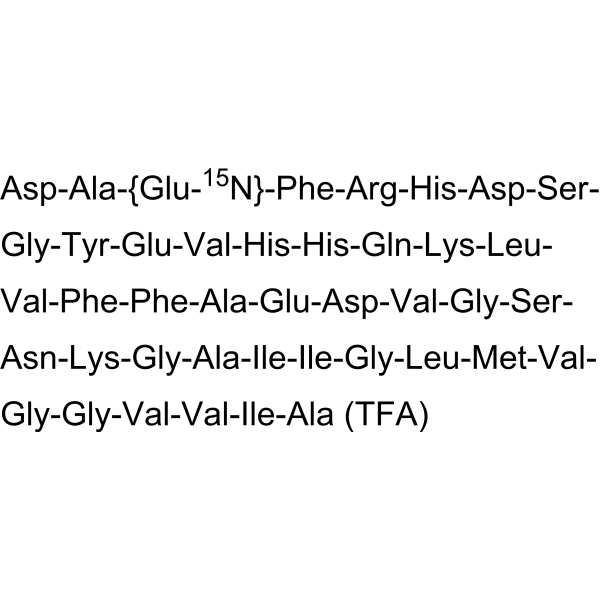
β-Amyloid- 15N (1-42), human (TFA) is the 15N-labledβ-Amyloid (1-42) (TFA). β-Amyloid (1-42), human TFA (Amyloid β-Peptide (1-42) (human) TFA) is a 42-amino acid peptide which plays a key role in the pathogenesis of Alzheimer disease .
loading...
    loading...
Cat. No.: HY-P4882
CAS No.: 183449-57-2
Target:  

Amyloid-β Tau Protein

Research Areas:  

Neurological Disease

(Pyr3)-Amyloid β-Protein (3-42) is an N-terminally truncated pyroglutamylated β-amyloid peptide. (Pyr3)-Amyloid β-Protein (3-42) forms stable β-sheet structures across different pH values, co-oligomerizes with Aβ1-42 to form cytotoxic oligomers, induces tau-dependent cytotoxicity and neuronal loss, inhibits hippocampal LTP, and exhibits stronger protease resistance. (Pyr3)-Amyloid β-Protein (3-42) exists in the brain tissues of human Alzheimer's disease patients, correlates with the pathogenesis of Alzheimer's disease, and follows a unique, faster oligomerization pathway. (Pyr3)-Amyloid β-Protein (3-42) can be used in Alzheimer's disease-related research .
loading...
    loading...
Cat. No.: HY-W127393
CAS No.: 177158-21-3
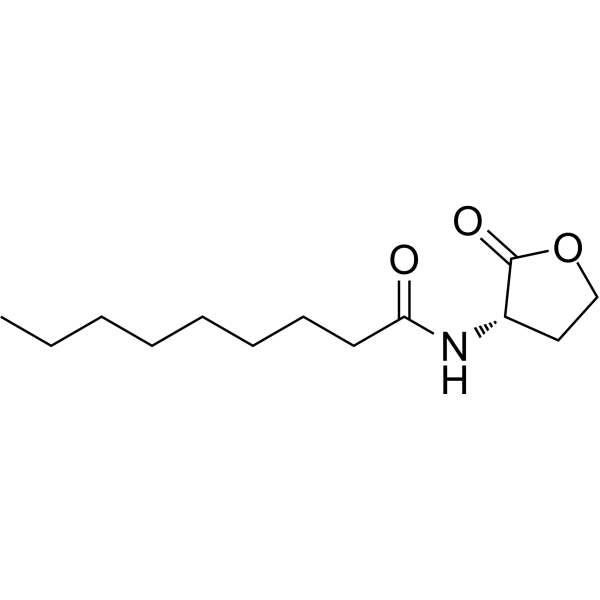
Quorum sensing is a regulatory system used by bacteria to control gene expression in response to increased cell density. This regulatory process manifests itself in a variety of phenotypes, including biofilm formation and virulence factor production. Coordinated gene expression is achieved through the production, release and detection of small diffusible signaling molecules called autoinducers. N-acylated homoserine lactones (AHLs) comprise a class of such autoinducers, each of which generally consists of a fatty acid coupled to a homoserine lactone (HSL). Modulation of bacterial quorum-sensing signaling systems to suppress pathogenesis represents a new approach to antimicrobial research for infectious diseases. AHLs differ in acyl length (C4-C18), C3 substitution (hydrogen, hydroxyl, or oxo group), and the presence or absence of one or more carbon-carbon double bonds in the fatty acid chain. These differences confer signaling specificity through the affinity of the LuxR family of transcriptional regulators. C9-HSL is a rare odd-numbered acyl carbon chain produced by wild-type Erwinia carotovora strain SCC 3193 grown in nutrient-rich Luria-Bertani broth (LB) medium.
loading...
    loading...

