



(Pyr3)-Amyloid β-Protein (3-42)
(Pyr3)-Amyloid β-Protein (3-42) is an N-terminally truncated pyroglutamylated β-amyloid peptide. (Pyr3)-Amyloid β-Protein (3-42) forms stable β-sheet structures across different pH values, co-oligomerizes with Aβ1-42 to form cytotoxic oligomers, induces tau-dependent cytotoxicity and neuronal loss, inhibits hippocampal LTP, and exhibits stronger protease resistance. (Pyr3)-Amyloid β-Protein (3-42) exists in the brain tissues of human Alzheimer's disease patients, correlates with the pathogenesis of Alzheimer's disease, and follows a unique, faster oligomerization pathway. (Pyr3)-Amyloid β-Protein (3-42) can be used in Alzheimer's disease-related research.
For research use only. We do not sell to patients.
- CAS No.: 183449-57-2
- Formula: C196H299N53O55S
- Molecular Weight:4309.86
-
Storage:
Please store the product under the recommended conditions in the Certificate of Analysis.

To place orders, for customer services and technical support, please contact: MedChemExpress USA
Tel: 609-228-6898 E-mail: [email protected] [email protected]


-
 Biological Activity
-
Chemical Information
- Purity & Documentation
- References
-
 Help & FAQs


-

HY-P1363A
β-Amyloid (1-42), human -

HY-P1363B
β-Amyloid (1-42), human, HFIP-treated -
HY-P0128
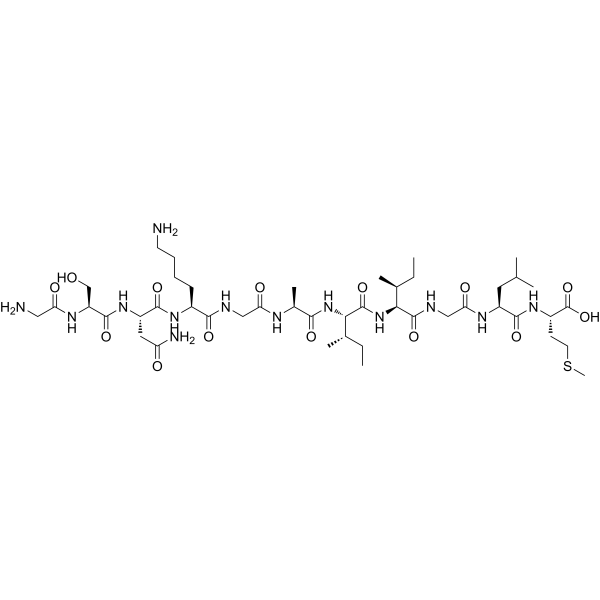
β-Amyloid (25-35) -

HY-P0128A
β-Amyloid (25-35), HFIP-treated -
HY-P1053
β-Amyloid (10-20) -
HY-P5361
β-Amyloid (40-1) -
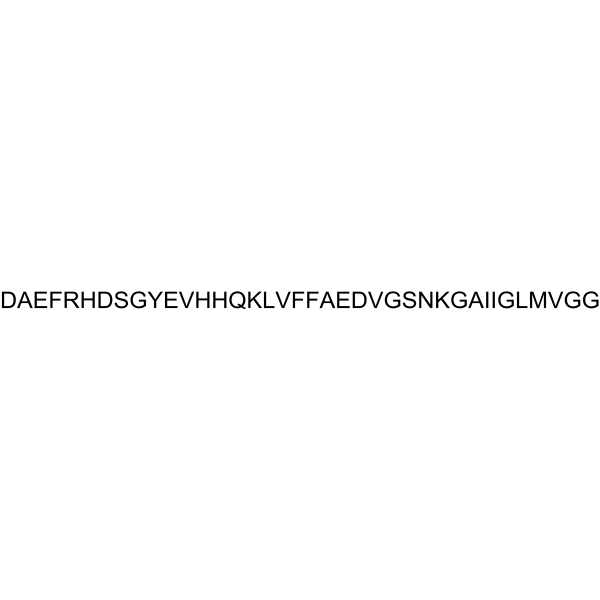
HY-P3688
β-Amyloid (1-38) -
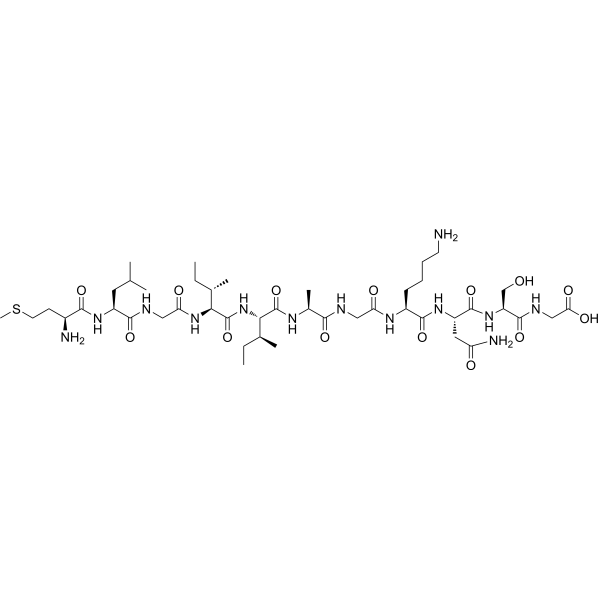
HY-P4740
β-Amyloid (35-25) -
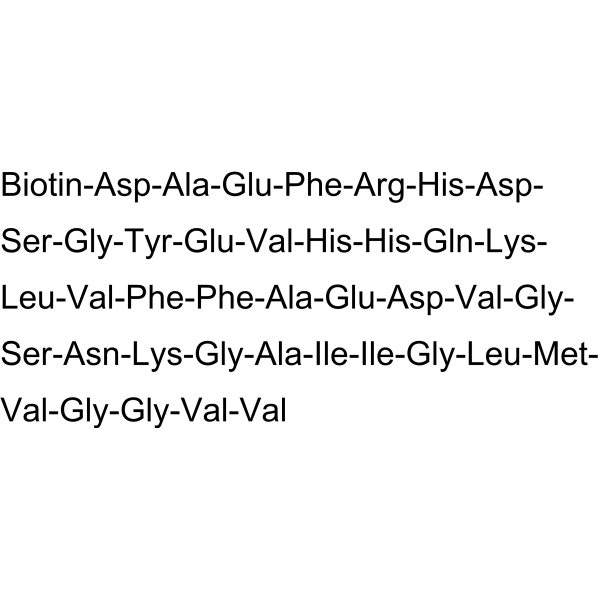
HY-P2549
Biotin-β-Amyloid (1-40) -

HY-P4888
(Pyr11)-Amyloid β-Protein (11-40) -
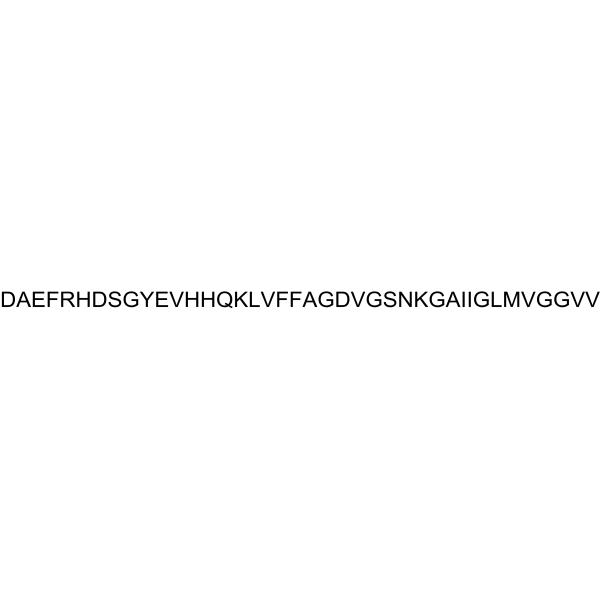
HY-P4889
(Gly22)-amyloid beta-protein(1-40)


Biological Activity
Description
In Vitro
(Pyr3)-Amyloid β-Protein (3-42) (5 μM; 24 h oligomerization, 12 h cell exposure) oligomers induce robust cytotoxicity in primary mouse wild-type forebrain neurons after 12 h of exposure, but not in tau-knockout forebrain neurons or wild-type glial cells[2].
(Pyr3)-Amyloid β-Protein (3-42) (0.1-1.0 μM; 24 h cell exposure) oligomers induce dose-dependent cytotoxicity in primary mouse wild-type forebrain neurons, with maximal cytotoxicity observed at 1.0 μM after 24 h of cell exposure, and oligomerization for 24 h is required for peak toxicity[2].
(Pyr3)-Amyloid β-Protein (3-42) (425 nM; 24 h) oligomers' primary cytotoxic species is a low-n oligomer (presumed dimer/trimer) eluting at 12.5 mL, which kills over 60% of primary mouse wild-type forebrain neurons at 425 nM after 24 h of exposure[2].
(Pyr3)-Amyloid β-Protein (3-42) (1 μM; 24 h) is not recognized by the aggregation-dependent M64 antibody, as M64 fails to immunoprecipitate its oligomers or monomers[2].
MedChemExpress (MCE) has not independently confirmed the accuracy of these methods. They are for reference only.
-
Cell Line:Primary mouse wild-type forebrain neurons, tau-knockout forebrain neurons, wild-type glial cells
-
Concentration:5 μM (oligomerized before cell treatment)
-
Incubation Time:24 h (oligomerization); 12 h (cell treatment)
-
Result:Caused most wild-type neurons to die and detach from the substrate.
Showed no toxicity to tau-knockout neurons and wild-type glial cells.
-
Cell Line:Primary mouse wild-type forebrain neurons
-
Concentration:0.1-1.0 μM; 1.0 μM (oligomerized for 0 h, 24 h, or 96 h)
-
Incubation Time:24 h (cell incubation); 0 h, 24 h, or 96 h (oligomerization before 24 h cell incubation)
-
Result:Caused substantial cytotoxicity at 0.5 μM and even greater cytotoxicity at 1.0 μM, with no cytotoxicity observed at 0.1 μM.
Killed ~50% of cells when oligomerized for 24 h, while oligomers formed by 0 h or 96 h of incubation were virtually non-toxic.
-
Cell Line:Primary mouse wild-type forebrain neurons
-
Concentration:425 nM (Vₑ=12.5 mL fraction); 554 nM (Vₑ=8.5 mL fraction)
-
Incubation Time:24 h (cell incubation)
-
Result:Killed more than 60% of cells at 425 nM in the fraction with elution volume Vₑ=12.5 mL.
Showed low but statistically significant cytotoxicity at 554 nM in the fraction with Vₑ=8.5 mL.
In Vivo
MedChemExpress (MCE) has not independently confirmed the accuracy of these methods. They are for reference only.
-
Animal Model:APP_SwDI/NOS2-/- (peri-hippocampal injection of oligomers); wild-type (WT, peri-hippocampal injection of oligomers); APP_SwDI/NOS2-/- (sham-injected control)[2]
-
Dosage:5 μM 5% (Pyr3)-Amyloid β-Protein (3-42) plus 95% amyloid β-Protein (1-42)
-
Administration:peri-hippocampal injection
-
Result:Developed plaques containing both (Pyr3)-Amyloid β-Protein (3-42) and conventional amyloid-β in APP_SwDI/NOS2-/- mice 3-5 months post-injection.
Showed comparable plaques rarely in sham-injected APP_SwDI/NOS2-/- mice or wild-type mice injected with the same oligomer mixture.


Chemical Information
-
CAS No. 183449-57-2
-
Molecular Weight 4309.86
-
Formula C196H299N53O55S
-
Sequence
{Pyr}-Phe-Arg-His-Asp-Ser-Gly-Tyr-Glu-Val-His-His-Gln-Lys-Leu-Val-Phe-Phe-Ala-Glu-Asp-Val-Gly-Ser-Asn-Lys-Gly-Ala-Ile-Ile-Gly-Leu-Met-Val-Gly-Gly-Val-Val-Ile-Ala
-
Sequence Shortening
{Pyr}-FRHDSGYEVHHQKLVFFAEDVGSNKGAIIGLMVGGVVIA
-
Shipping
Room temperature in continental US; may vary elsewhere.
-
Storage
Please store the product under the recommended conditions in the Certificate of Analysis.


Purity & Documentation
References
[1]. He W, et al. The Aβ 3-pyroglutamyl and 11-pyroglutamyl peptides found in senile plaque have greater β-sheet forming and aggregation propensities in vitro than full-length Aβ. Biochemistry. 1999;38(33):10871-10877. [Content Brief]
[2]. Nussbaum JM, et al. Prion-like behaviour and tau-dependent cytotoxicity of pyroglutamylated amyloid-β. Nature. 2012 May 02;485(7400):651-5. [Content Brief]

Calculators
Concentration (start) × Volume (start) = Concentration (final) × Volume (final)


(Pyr3)-Amyloid β-Protein (3-42) Related Classifications
HY-P4882 Related Classifications
 Powered by Bioz
Keywords
- (Pyr3)-Amyloid β-Protein (3-42)
- 183449-57-2
- Amyloid-β
- Tau Protein
- Aβ3(pE)-42
- AβpE3-42
- pE3-Aβ42
- pyroglutamate amyloid-β
- amyloid-β
- Aβ1-42
- low-n oligomer
- amyloid oligomerization
- prion-like seeding
- template-induced misfolding
- tau-dependent neurotoxicity
- neuronal death
- gliosis
- long-term potentiation
- synaptophysin
- amyloid plaque
- Alzheimer’s disease
- Inhibitor
- inhibitor
- inhibit