

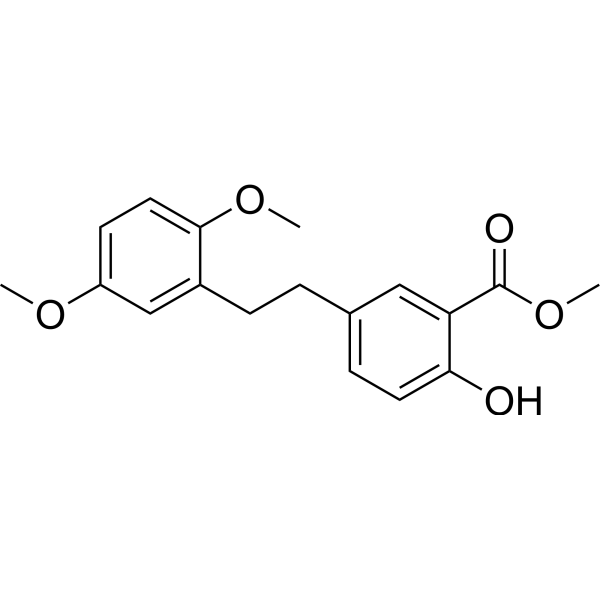
1. Search Result
Search Result
Results for "

EGF receptor

" in MedChemExpress (MCE) Product Catalog:

31

Inhibitors & Agonists

1

Fluorescent Dyes

8

Peptides

2

Inhibitory Antibodies

1

Natural
Products

8

Recombinant Proteins

9

Antibodies

1

Click Chemistry

1

Oligonucleotides

Cat. No. Product Name Target Research Areas Chemical Structure
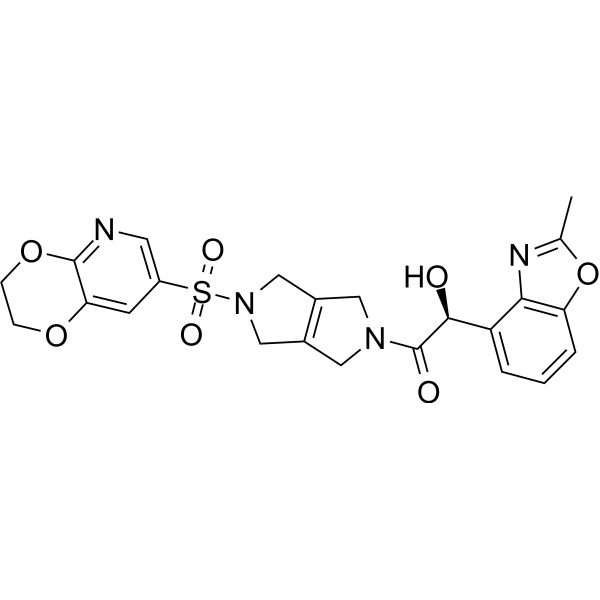
  • HY-145967
    FT709
    1 Publications Verification

    Deubiquitinase Mitosis Cancer
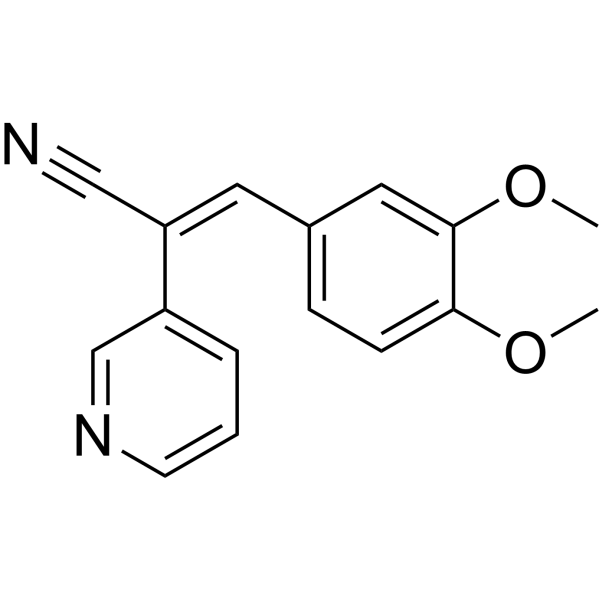
    FT709 is a potent and selective USP9X inhibitor, an IC50 of 82 nM. USP9X has been linked with centrosome function, chromosome alignment during mitosis, EGF receptor degradation, chemo-sensitization, and circadian rhythms .
    FT709
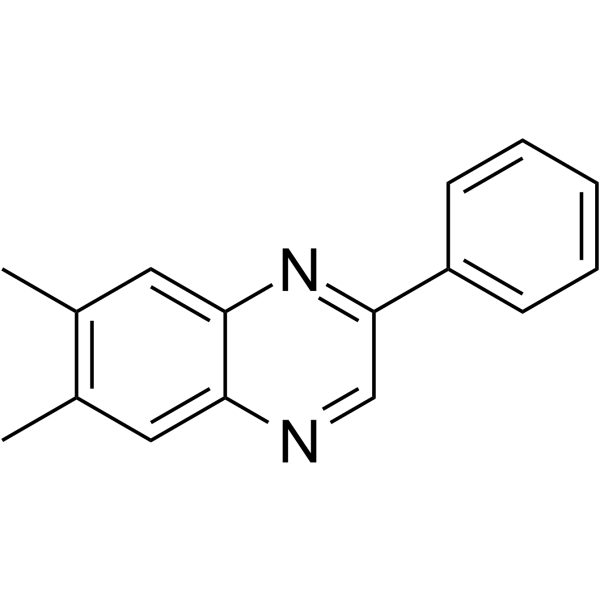
  • HY-101957
    AG 1295
    4 Publications Verification

    PDGFR Cardiovascular Disease
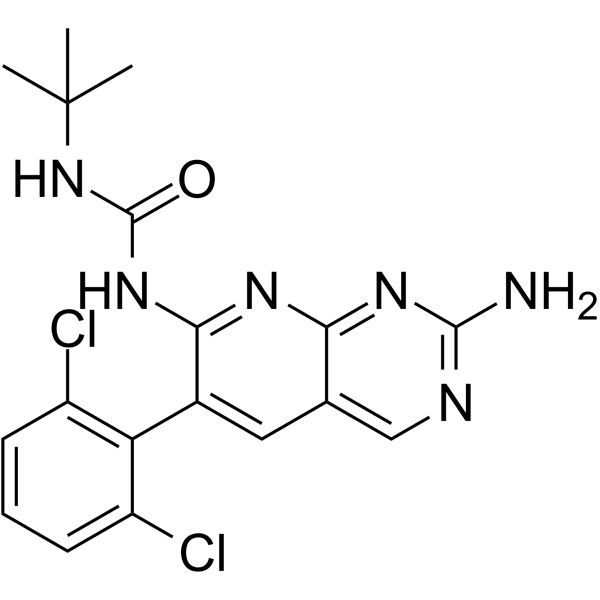
    AG 1295 is a selective platelet-derived growth factor receptor (PDGFR) tyrosine-kinase inhibitor. AG1295 abolishes autophosphorylation of the PDGFR whereas not affects the autophosphorylation of the EGF receptor .
    AG 1295
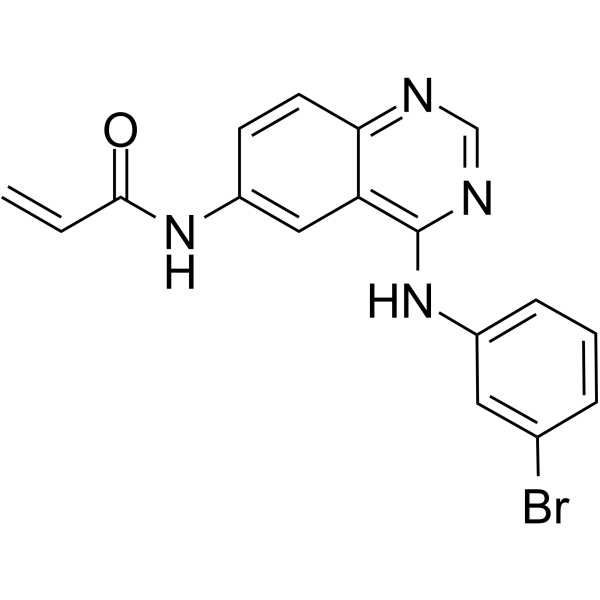
  • HY-10325
    CL-387785
    2 Publications Verification

    EKI-785; WAY-EKI 785

    EGFR Apoptosis Endocrinology Cancer
    CL-387785 (EKI-785; WAY-EKI 785) is an orally active EGFR inhibitor with an IC50 of 370 pM. CL-387785 inhibits EGF-stimulated EGFR autophosphorylation with an IC50 of approximately 5 nM. CL-387,785 exerts selective inhibition on cell lines overexpressing EGFR or c-erbB-2, whereas it shows weak inhibitory effects on cell lines with low expression of these two receptors. CL-387785 effectively induces cell cycle arrest and apoptosis. CL-387785 can be used for the research of non-small cell lung cancer and autosomal recessive polycystic kidney disease .
    CL-387785
  • HY-P99155

    2F8; HUMAX-EGFR

    EGFR Cancer
    Zalutumumab is a high affinity, completely human IgG1 monoclonal antibody targeting EGFR. Zalutumumab binds to domain III of the EGF receptor and acts by blocking the binding of EGF and by sterically interfering with the active conformation of the receptor. Zalutumumab binds with IgG and its Fab fragment with EC50s of 7 and 19 nM, respectively. Zalutumumab can be used for the research of cancer .
    Zalutumumab
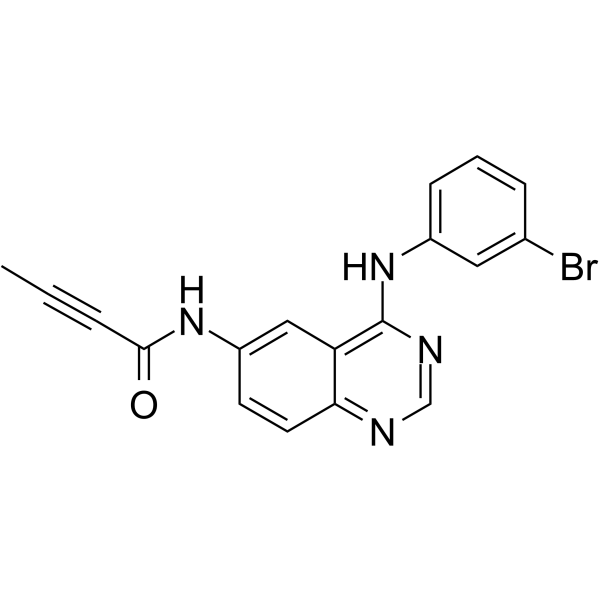
  • HY-13896
    PD168393
    3 Publications Verification

    EGFR Autophagy Apoptosis Cancer
    PD168393 is a potent, selective and cell-permeable inhibitor of EGFR tyrosine kinase and ErbB2. PD168393 irreversiblely inactivates EGF receptor ( IC50=0.7 nM) and is inactive against insulin receptor, PDGFR, FGFR and PKC .
    PD168393
  • HY-P10697A

    LDLR Metabolic Disease
    VH4127 TFA is a cyclic peptide targeting the low density lipoprotein receptor (LDLR) with a KD of 18 nM for hLDLR. VH4127 TFA specifically binds to rodent and human epidermal growth factor (EGF) homology domain of LDLR .
    VH4127 TFA
  • HY-101429
    RG13022
    1 Publications Verification

    Tyrphostin RG13022

    EGFR Cancer
    RG13022 is a tyrosine kinase inhibitor; inhibits the autophosphorylation reaction of the EGF receptor with an IC50 of 4 μM.
    RG13022
  • HY-D2004

    Fluorescent Dye Inflammation/Immunology
    ATTO 488 streptavidin is a fluorescent reagent that specifically targets and binds to biotin (biotin), formed by the conjugation of ATTO 488 with streptavidin (HY-P3152). ATTO 488 streptavidin enables visualization of the activity of streptavidin immobilized on the surface of polymeric nanoparticles, or acts as a fluorescent probe to detect the selective binding and internalization process of anti-HB-EGF/NA with cells expressing HB-EGF (with no such effect on cells that do not express this receptor). ATTO 488 streptavidin effectively verifies the function of streptavidin conjugated to the surface of nanoparticles and is suitable for research related to atherosclerotic cardiovascular diseases .
    ATTO 488 streptavidin
  • HY-112345

    FGFR PDGFR EGFR Src Cancer
    PD-089828 is an ATP competitive inhibitor of FGFR-1, PDGFR-β and EGFR (IC50s=0.15, 1.76, and 5.47 µM, respectively) and a noncompetitive inhibitor of c-Src tyrosine kinase (IC50=0.18 µM). PD-089828 also inhibits MAPK with an IC50 of 7.1 µM. PD-089828 inhibits PDGF-, EGF- and bFGF-mediated tyrosine kinase receptor autophosphorylation in vitro. PD-089828 has a long-lasting cellular activity .
    PD-089828
  • HY-P0320

    Phosphatase Others
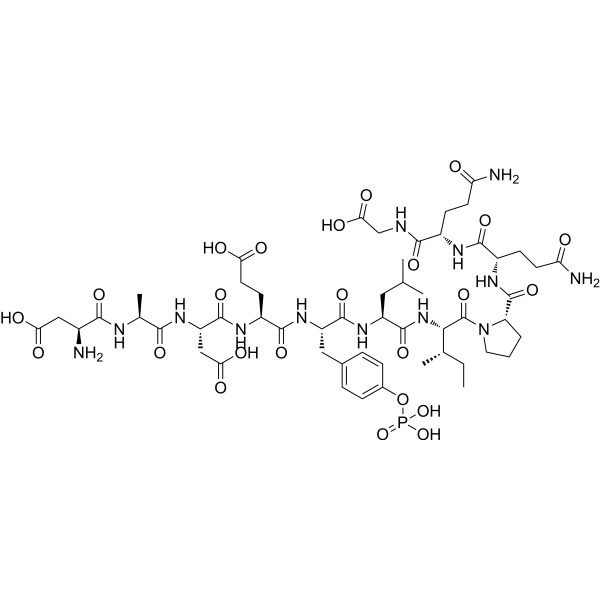
    EGF Receptor Substrate 2 (Phospho-Tyr5) acetate, a biologically active peptide, is a tyrosine phosphate substrate. EGF Receptor Substrate 2 (Phospho-Tyr5) acetate can be used to detect protein tyrosine phosphatases activity .
    EGF Receptor Substrate 2 (Phospho-Tyr5)
  • HY-P11071

    PCSK9 Cardiovascular Disease
    PCSK9 Inhibitor, EGF-A is a PCSK9 inhibitor. PCSK9 Inhibitor, EGF-A is residues 293-334 of the EGF-A domain of the low-density lipoprotein (LDL) receptor. PCSK9 Inhibitor, EGF-A can prevent PCSK9-induced intracellular LDLR degradation. PCSK9 Inhibitor, EGF-A can be used in the study of hypercholesterolemia and premature atherosclerosis .
    PCSK9 Inhibitor, EGF-A
  • HY-P2673

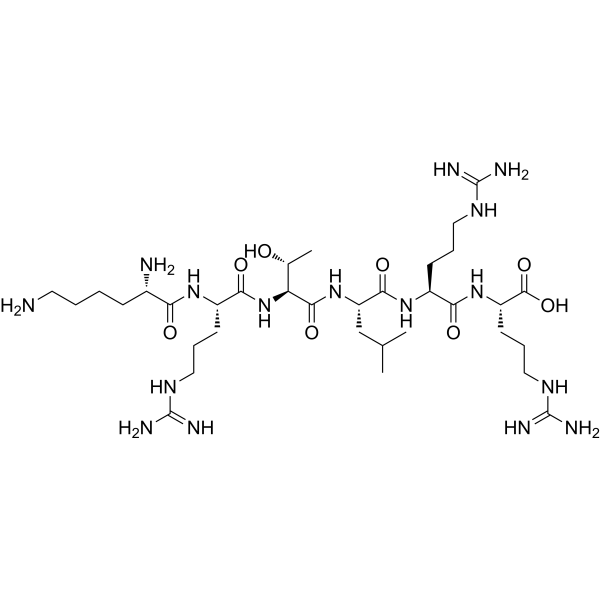
    KRTLRR

    EGFR Others
    Lys-Arg-Thr-Leu-Arg-Arg (KRTLRR) is a hexapeptide. Lys-Arg-Thr-Leu-Arg-Arg is a substrate of protein kinase C from EGF receptor. Lys-Arg-Thr-Leu-Arg-Arg can be used to determine the activity of protein kinase C .
    Lys-Arg-Thr-Leu-Arg-Arg
  • HY-P99155A

    EGFR Cancer
    Zalutumumab (powder) is a high affinity, completely human IgG1 monoclonal antibody targeting EGFR. Zalutumumab (powder) binds to domain III of the EGF receptor and acts by blocking the binding of EGF and by sterically interfering with the active conformation of the receptor. Zalutumumab (powder) binds with IgG and its Fab fragment with EC50s of 7 and 19 nM, respectively. Zalutumumab (powder) can be used for the research of cancer .
    Zalutumumab (powder)
  • HY-129510

    EGFR Mitosis Cancer
    4-Methyl erlotinib, is a potent and selective epidermal growth factor receptor (EGFR) tyrosine kinase inhibitor. 4-Methyl erlotinib potently inhibits EGF-mediated tumor cell mitosis by reducing EGFr-specific tyrosine phosphorylation. Using a mouse model of human tumor transplantation, 4-Methyl erlotinib demonstrated significant and sustained suppression of EGFr phosphotyrosine levels, resulting in significant growth inhibition of EGFr-dependent human cancers .
    4-Methyl erlotinib
  • HY-101756

    SDZ-LAP 977

    EGFR Cancer
    SDZ 281-977 is a derivative of the EGF receptor tyrosine kinase inhibitor Lavendustin A.
    SDZ281-977
  • HY-116111

    PDGFR Cardiovascular Disease
    AG 370, an indole tyrphostin, is a potent PDGF-induced mitogenesis inhibotor (IC50 of 20 μM). AG 370 displays weak inhibition of the EGF receptor .
    AG 370
  • HY-101957R

    Reference Standards PDGFR Cardiovascular Disease
    AG 1295 (Standard) is the analytical standard of AG 1295. This product is intended for research and analytical applications. AG 1295 is a selective platelet-derived growth factor receptor (PDGFR) tyrosine-kinase inhibitor. AG1295 abolishes autophosphorylation of the PDGFR whereas not affects the autophosphorylation of the EGF receptor .
    AG 1295 (Standard)
  • HY-P10697

    LDLR Metabolic Disease
    VH4127 is a cyclic peptide targeting the low density lipoprotein receptor (LDLR) with a KD of 18 nM for hLDLR. VH4127, bearing non-natural amino acid residues, specifically binds to rodent and human epidermal growth factor (EGF) homology domain of LDLR .
    VH4127
  • HY-155983

    Nucleoside Antimetabolite/Analog Cancer
    E07 aptamer is an aptamer that targets human EGFR. E07 aptamer can compete with EGF for binding, binds to a novel epitope on EGFR. E07 aptamer binds to cells expressing EGFR, blocks receptor autophosphorylation, and prevents proliferation of tumor cells in three-dimensional matrices. E07 aptamer can be used for tomor disease research .
    E07 aptamer
  • HY-P0320B

    Phosphatase Biochemical Assay Reagents Others
    EGF Receptor Substrate 2 (Phospho-Tyr5) acetate, a biologically active peptide, is a tyrosine phosphate substrate. EGF Receptor Substrate 2 (Phospho-Tyr5) acetate can be used to detect protein tyrosine phosphatases activity .
    EGF Receptor Substrate 2 (Phospho-Tyr5) acetate
  • HY-P0320A

    Phosphatase Biochemical Assay Reagents Others
    EGF Receptor Substrate 2 (Phospho-Tyr5) acetate, a biologically active peptide, is a tyrosine phosphate substrate. EGF Receptor Substrate 2 (Phospho-Tyr5) acetate can be used to detect protein tyrosine phosphatases activity .
    EGF Receptor Substrate 2 (Phospho-Tyr5) TFA
  • HY-117523

    (Z)-Tyrphostin RG13022

    EGFR Cancer
    (Z)-RG-13022 is a tyrosine kinase (TK) inhibitor, which inhibits preferentially the TK activity of the EGF receptor and inhibits EGF-stimulated growth of cultured cells. (Z)-RG-13022 exerts an IC50 of 11 μM for DNA synthesis in the HN5 cells, which is 3 times more potent than (E)-RG-13022 (IC50=38 μM). (Z)-RG-13022 can be used for research of breast cancer cells .
    (Z)-RG-13022
  • HY-114667

    EGFR Others
    Lavendustin C6 is a specific inhibitor of tyrosine kinase. Lavendustin C6 inhibits epidermal growth factor (EGF) receptor tyrosine kinase with an EC50 value of 0.05 μg/mL. Lavendustin C6 inhibits platelet-derived growth factor (PDGF)-induced inositol phosphate formation .
    Lavendustin C6
  • HY-N14173

    Antibiotic Fungal Infection
    Epiderstatin is a glutarimide antibiotic. Epiderstatin has the activity of inhibiting the filamentous division induced by epidermal growth factor (EGF), but does not inhibit EGF-receptor kinase. Epiderstatin has only weak antifungal activity and no antibacterial effect .
    Epiderstatin
  • HY-147279

    LDLR Others
    Milpocitide is a low-density lipoprotein receptor (human LDL receptor, LDLR), (293-333)-peptide fragment (EGF-like domain 1) .
    Milpocitide
  • HY-P2673A

    KRTLRR acetate

    Fluorescent Dye EGFR Cancer
    Lys-Arg-Thr-Leu-Arg-Arg (KRTLRR) acetate is a hexapeptide. Lys-Arg-Thr-Leu-Arg-Arg acetate is a substrate of EGF receptor protein kinase C and can be used to measure protein kinase C activity .
    Lys-Arg-Thr-Leu-Arg-Arg acetate
  • HY-118175

    EGFR Others
    RG 14921 is a compound structurally related to Erbstatin (HY-113549) and has inhibitory activity against EGFR tyrosine kinase and CAMP-dependent kinase activity. RG 14921 inhibits EGF receptor kinase activity as a noncompetitive inhibitor.
    RG 14921
  • HY-174779

    mRNA Cancer
    Human AREG mRNA encodes the human amphiregulin (AREG) protein, a member of the epidermal growth factor family. AREG interacts with the EGF/TGF-alpha receptor to promote the growth of normal epithelial cells, and inhibits the growth of certain aggressive carcinoma cell lines. It also functions in mammary gland, oocyte and bone tissue development.
    Human AREG mRNA
  • HY-120857

    PD 158294

    EGFR Others
    BPIQ-II is a linear imidazoloquinazoline that potently inhibits the tyrosine kinase activity of the epidermal growth factor receptor (EGFR; IC50=8 pM). It is selective for EGFR over an assortment of other tyrosine and serine/threonine kinases. Cellular studies indicate that BPIQ-II can enter cells and very selectively shut down EGF-stimulated signal transmission by binding competitively at the ATP site of EGFR.
    BPIQ-II hydrochloride
  • HY-129510R

    EGFR Mitosis Reference Standards Cancer
    4-Methyl erlotinib (Standard) is the analytical standard of 4-Methyl erlotinib. This product is intended for research and analytical applications. 4-Methyl erlotinib, is a potent and selective epidermal growth factor receptor (EGFR) tyrosine kinase inhibitor. 4-Methyl erlotinib potently inhibits EGF-mediated tumor cell mitosis by reducing EGFr-specific tyrosine phosphorylation. Using a mouse model of human tumor transplantation, 4-Methyl erlotinib demonstrated significant and sustained suppression of EGFr phosphotyrosine levels, resulting in significant growth inhibition of EGFr-dependent human cancers .
    4-Methyl erlotinib (Standard)
  • HY-10325R

    EKI-785 (Standard); WAY-EKI 785 (Standard)

    Reference Standards EGFR Apoptosis Endocrinology Cancer
    CL-387785 (EKI-785; WAY-EKI 785) (Standard) is the analytical standard of CL-387785 (HY-10325). This product is intended for research and analytical applications. CL-387785 is an orally active EGFR inhibitor with an IC50 of 370 pM. CL-387785 inhibits EGF-stimulated EGFR autophosphorylation with an IC50 of approximately 5 nM. CL-387,785 exerts selective inhibition on cell lines overexpressing EGFR or c-erbB-2, whereas it shows weak inhibitory effects on cell lines with low expression of these two receptors. CL-387785 effectively induces cell cycle arrest and apoptosis. CL-387785 can be used for the research of non-small cell lung cancer and autosomal recessive polycystic kidney disease.
    CL-387785 (Standard)

Inquiry Online

Your information is safe with us. * Required Fields.

Salutation


Country or Region *

Applicant Name *


Organization Name *

Department *


Email Address *


Product Name *

Cat. No.


Requested quantity *

Phone Number *


Remarks

Inquiry Online

Inquiry Information

Product Name:
Cat. No.:
Quantity:
MCE Japan Authorized Agent:

