18 Results for "

ERK-IN-3

" in MedChemExpress (MCE) Product Catalog:
Products (18)

18 Results for "ERK-IN-3" in MCE Product Catalog:

7
7 Publications Verification
Cat. No.: HY-136579
CAS No.: 2055597-12-9
Purity:  99.70%
Synonyms: ERK-IN-3
Target:  

ERK

Research Areas:  

Cancer

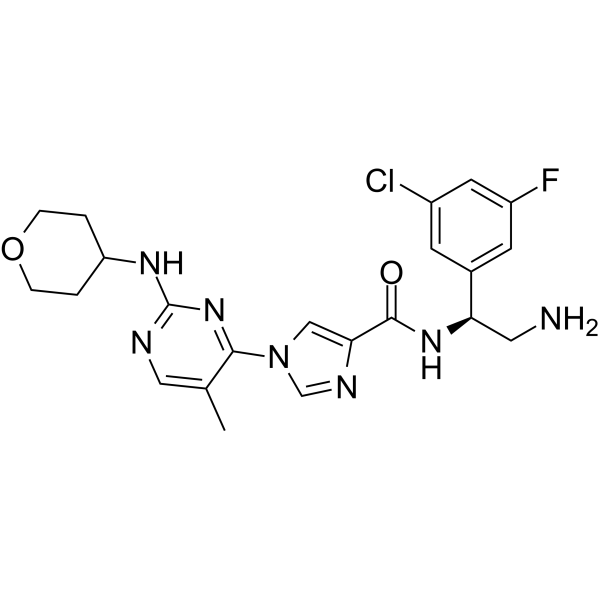
ASN007 (ERK-IN-3) is a potent and orally active inhibitor of ERK. ASN007 inhibits ERK1/2 with low single-digit nM IC50 values. ASN007 exhibits significant anti proliferative activity against various tumor cells. ASN007 can be used for the research of cancers driven by RAS mutations .
loading...
    loading...
7
7 Publications Verification
Cat. No.: HY-136579A
CAS No.: 2055597-39-0
Purity:  99.72%
Synonyms: ERK-IN-3 benzenesulfonate
Target:  

ERK

Research Areas:  

Cancer

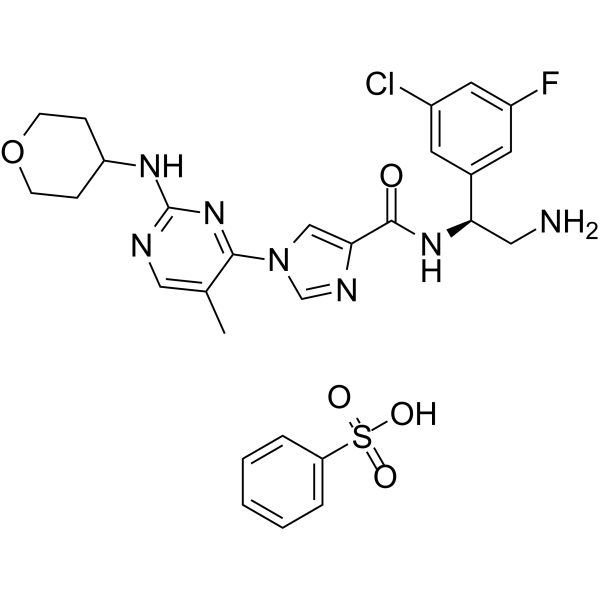
ASN007 (ERK-IN-3) benzenesulfonate is a potent and orally active inhibitor of ERK. ASN007 benzenesulfonate inhibits ERK1/2 with low single-digit nM IC50 values. ASN007 benzenesulfonate exhibits significant anti proliferative activity against various tumor cells. ASN007 benzenesulfonate can be used for the research of cancers driven by RAS mutations .
loading...
    loading...
2
2 Cited Publications
Cat. No.: HY-B1114
CAS No.: 33342-05-1
Synonyms: AR-DF 26
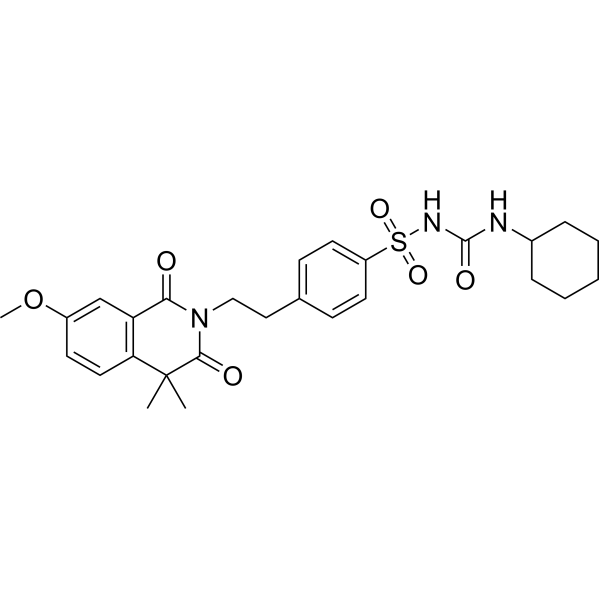
Gliquidone can bind to the pancreatic β-cells and increases insulin release to regulate blood glucose levels. Gliquidone significantly decreases LPS (HY-D1056)-induced proinflammatory responses and inhibits ERK/STAT3/NF-κB phosphorylation in BV2 microglial cells. Gliquidone can suppress microgliosis, microglial hypertrophy mediated by LPS, and proinflammatory cytokine COX-2 and IL-6 levels in murine model. Gliquidone also exhibits good anticancer activity in lung carcinoma cells. Gliquidone has antioxidant property. Gliquidone can be studied in research for type 2 diabetes and cancers .
loading...
    loading...
Cat. No.: HY-W013242
CAS No.: 5561-99-9
Synonyms: cis-11-Eicosenoic acid
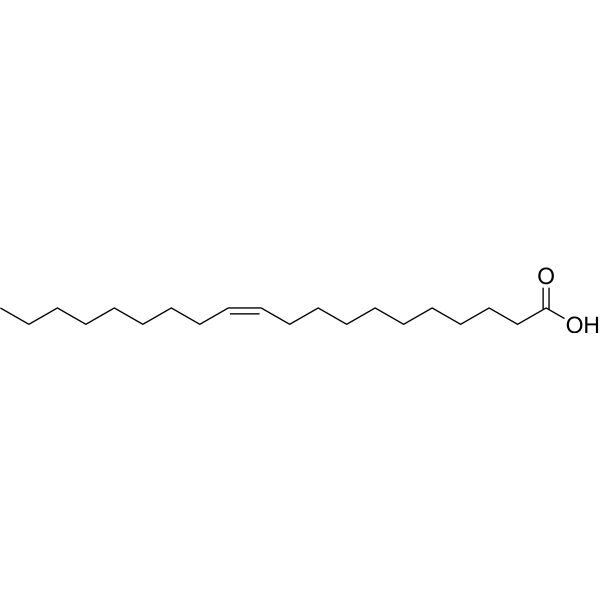
Gondoic acid (cis-11-Eicosenoic acid), a monounsaturated long-chain fatty acid, is contained in a variety of plant oils and nuts. Gondoic acid can exert anti-inflammatory activity by inhibiting the production of ROS and the PKCθ/ERK/STAT3 signaling pathway. Gondoic acid can be used as a raw material for medical supplies and a moisturizing ingredient in cosmetic creams .
loading...
    loading...
Cat. No.: HY-N6801
CAS No.: 23282-20-4
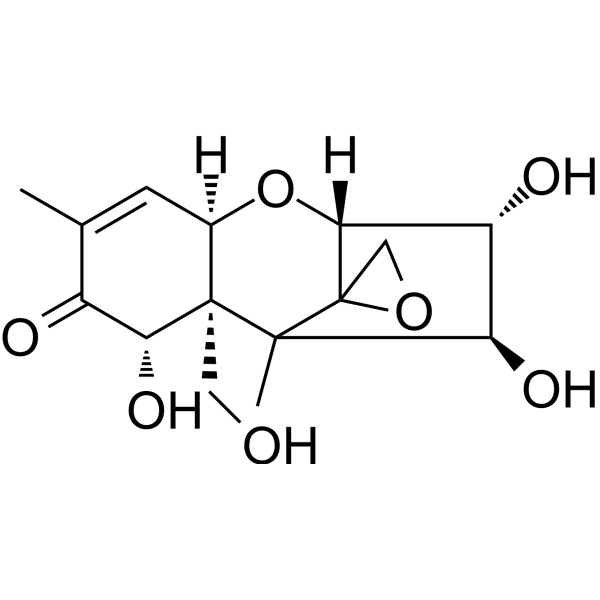
Nivalenol, a trichothecene mycotoxin that can be produced by Fusarium graminearum, is a fungal metabolite present in agricultural product. Nivalenol modulates apoptotic pathway, cell cycle regulation, Bax, ERK, caspase-3, and poly-ADP-ribose synthase activity in macrophages. Nivalenol inhibits ribosomal peptidyltransferase site, protein synthesis, DNA synthesis, and cell proliferation. Nivalenol induces late-stage apoptotic morphological changes, reduces cellular metabolism, and decreases cell proliferation in erythroleukemia cells. Nivalenol induces lymphocyte apoptosis in murine thymus, spleen, and Peyer's patches. Nivalenol can be used for the research of erythroleukemia [3].
loading...
    loading...
Cat. No.: HY-N0688
CAS No.: 13476-25-0
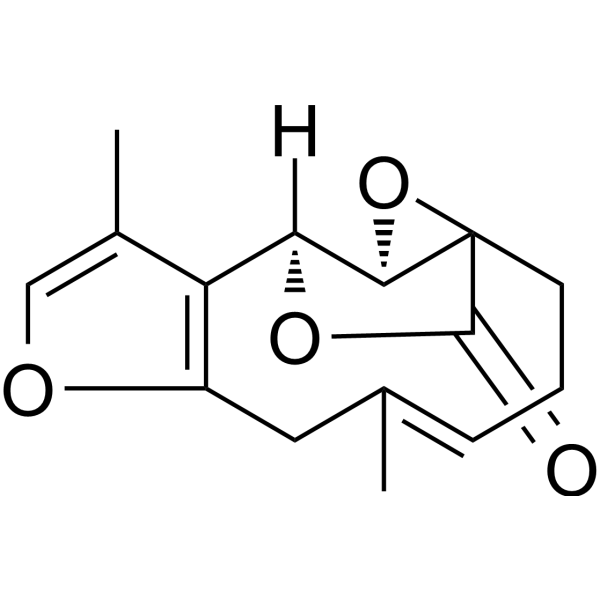
Linderane is an orally active natural sesquiterpene lactone with blood-brain barrier permeability. Linderane indirectly activates PDE3 by activating ERK/STAT3, thereby inhibiting the cAMP/PKA/CREB signaling pathway and hepatic gluconeogenesis. Linderane protects pancreatic β cells against oxidative damage by inhibiting the activation of the p38 MAPK pathway and activating the Nrf2 pathway. Linderane inhibits cell apoptosis and ameliorates intestinal mucosal inflammation by suppressing the IL-6/JAK/STAT3 signaling pathway. Linderane reduces pain sensitivity and alleviates anxiety-like behaviors by activating cannabinoid receptor 2 (CB2R). Linderane can be used in studies related to type 2 diabetes, ulcerative colitis, and chronic inflammatory pain with anxiety [3] .
loading...
    loading...
Cat. No.: HY-N6801S
CAS No.: 911392-40-0
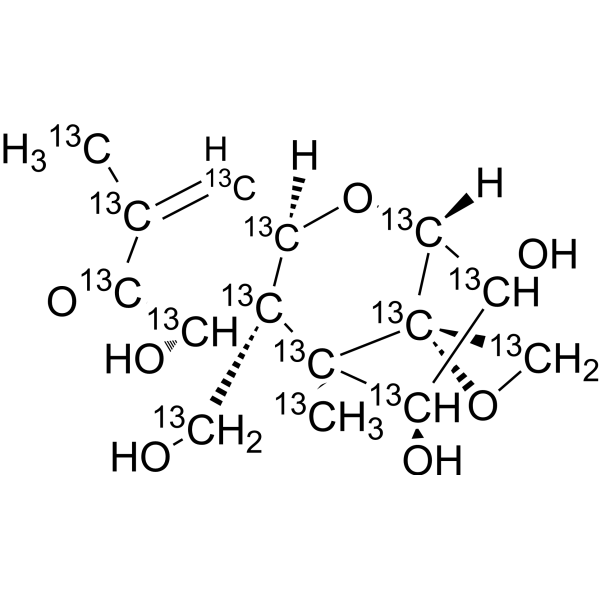
Nivalenol- 13C15 is the 13C labeled Nivalenol (HY-N6801) . Nivalenol, a trichothecene mycotoxin that can be produced by Fusarium graminearum, is a fungal metabolite present in agricultural product. Nivalenol modulates apoptotic pathway, cell cycle regulation, Bax, ERK, caspase-3, and poly-ADP-ribose synthase activity in macrophages. Nivalenol inhibits ribosomal peptidyltransferase site, protein synthesis, DNA synthesis, and cell proliferation. Nivalenol induces late-stage apoptotic morphological changes, reduces cellular metabolism, and decreases cell proliferation in erythroleukemia cells. Nivalenol induces lymphocyte apoptosis in murine thymus, spleen, and Peyer's patches. Nivalenol can be used for the research of erythroleukemia.
loading...
    loading...
Cat. No.: HY-E70844
Target:  

MEK

Research Areas:  

Cancer

MAP2K2 (MEK2) is a dual specificity protein kinase that belongs to the MAP kinase kinase family. This kinase is known to play a critical role in mitogen growth factor signal transduction. MAP2K2 phosphorylates and thus activates MAPK1/ERK2 and MAPK3/ERK1. MAP2K2 Recombinant Human Active Protein Kinase is a recombinant MAP2K2 protein that can be used to study MAP2K2-related functions .
loading...
    loading...
Cat. No.: HY-N6801R
CAS No.: 23282-20-4
Nivalenol (Standard) is the analytical standard of Nivalenol (HY-N6801). This product is intended for research and analytical applications. Nivalenol, a trichothecene mycotoxin that can be produced by Fusarium graminearum, is a fungal metabolite present in agricultural product. Nivalenol modulates apoptotic pathway, cell cycle regulation, Bax, ERK, caspase-3, and poly-ADP-ribose synthase activity in macrophages. Nivalenol inhibits ribosomal peptidyltransferase site, protein synthesis, DNA synthesis, and cell proliferation. Nivalenol induces late-stage apoptotic morphological changes, reduces cellular metabolism, and decreases cell proliferation in erythroleukemia cells. Nivalenol induces lymphocyte apoptosis in murine thymus, spleen, and Peyer's patches. Nivalenol can be used for the research of erythroleukemia.
loading...
    loading...
Cat. No.: HY-168954
Target:  

c-Fms Apoptosis Akt ERK STAT

Research Areas:  

Inflammation/Immunology Cancer

CSF1R-IN-26 (Compound III-1) is the inhibitor for CSF-1R with an IC50 of 20.07 nM. CSF1R-IN-26 promotes the polarization of M2 macrophages to M1 macrophages, thereby inducing apoptosis in MC-38 cancer cell. CSF1R-IN-26 inhibits the activation of AKT/ERK/STAT3 signaling pathway. CSF1R-IN-26 reconstructs the tumor immune microenvironment and exhibits antitumor activity in mouse models. CSF1R-IN-26 exhibits pharmacokinetics characteristics in SD rats with a half-life 1.86 hours, and an oral bioavailability of 79.22% .
loading...
    loading...
Cat. No.: HY-W013242R
CAS No.: 5561-99-9
Synonyms: cis-11-Eicosenoic acid (Standard)
Gondoic acid (Standard) is an analytical standard for Gondoic acid. This product is used for research and analytical applications. Gondoic acid (cis-11-Eicosenoic acid), a monounsaturated long-chain fatty acid, is contained in a variety of plant oils and nuts. Gondoic acid can exert anti-inflammatory activity by inhibiting the production of ROS and the PKCθ/ERK/STAT3 signaling pathway. Gondoic acid can be used as a raw material for medical supplies and a moisturizing ingredient in cosmetic creams .
loading...
    loading...
Cat. No.: HY-173038
Target:  

EGFR ERK STAT Apoptosis

Research Areas:  

Cancer

EGFR-IN-151 (Compound 10) inhibits EGFR and its downstream signaling pathways ERK/STAT3. EGFR-IN-151 inhibits the proliferation of a variety lung cancer cells (IC50s for NCI-H1781, HCC827, NCI-H3255 and NCI-H1975 is 11.7, 5.19, 7.32 and 1.53 μM, respectively), inhibits the colony formation and migration of H1975, arrests the cell cycle at G1 phase, and induces apoptosis in H1975 .
loading...
    loading...
Cat. No.: HY-174137
CAS No.: 2290545-53-6
Target:  

Apoptosis FLT3

Research Areas:  

Cancer

FLT3-IN-31 (compound 10q) is a potent FLT3 inhibitor with IC50 values of 0.16, 2.4 nM for FLT3, FLT3-D835Y, resprctively. FLT3-IN-31 shows antiproliferation activity. FLT3-IN-31 decreases the protein expression of p-FLT3, P-STAT5, P-ERK. FLT3-IN-31 induces apoptosis and cell cycle arrest at G1 phase. FLT3-IN-31 shows antitumor activity .
loading...
    loading...
Cat. No.: HY-B1114R
CAS No.: 33342-05-1
Synonyms: AR-DF 26 (Standard)
Gliquidone (Standard) is the analytical standard of Gliquidone. This product is intended for research and analytical applications. Gliquidone can bind to the pancreatic β-cells and increases insulin release to regulate blood glucose levels. Gliquidone significantly decreases LPS (HY-D1056)-induced proinflammatory responses and inhibits ERK/STAT3/NF-κB phosphorylation in BV2 microglial cells. Gliquidone can suppress microgliosis, microglial hypertrophy mediated by LPS, and proinflammatory cytokine COX-2 and IL-6 levels in murine model. Gliquidone also exhibits good anticancer activity in lung carcinoma cells. Gliquidone has antioxidant property. Gliquidone can be studied in research for type 2 diabetes and cancers .
loading...
    loading...
Cat. No.: HY-N0688R
CAS No.: 13476-25-0
Linderane (Standard) is the analytical standard of Linderane (HY-N0688). This product is intended for research and analytical applications. Linderane is an orally active natural sesquiterpene lactone with blood-brain barrier permeability. Linderane indirectly activates PDE3 by activating ERK/STAT3, thereby inhibiting the cAMP/PKA/CREB signaling pathway and hepatic gluconeogenesis. Linderane protects pancreatic β cells against oxidative damage by inhibiting the activation of the p38 MAPK pathway and activating the Nrf2 pathway. Linderane inhibits cell apoptosis and ameliorates intestinal mucosal inflammation by suppressing the IL-6/JAK/STAT3 signaling pathway. Linderane reduces pain sensitivity and alleviates anxiety-like behaviors by activating cannabinoid receptor 2 (CB2R). Linderane can be used in studies related to type 2 diabetes, ulcerative colitis, and chronic inflammatory pain with anxiety [3] .
loading...
    loading...
Cat. No.: HY-182004
CAS No.: 3075541-07-7
Target:  

FLT3 ERK

Research Areas:  

Cancer

FLT3-IN-40 is a type I ATP-competitive FLT3 inhibitor with an IC50 of 16.26 nM. FLT3-IN-40 reduces the autophosphorylation level of FLT3 and the phosphorylation level of downstream ERK. FLT3-IN-40 exhibits antiproliferative, cell cycle regulatory and apoptosis-inducing activities. FLT3-IN-40 can be used in research related to acute myeloid leukemia .
loading...
    loading...
Cat. No.: HY-N19654
CAS No.: 15358-38-0
Oxonantenine is an isoquinoline alkaloid isolated from the seeds of Nandina domestica that exhibits cytotoxicity against cancer cells. Oxonantenine binds to proteins associated with the MAPK and NF-κB signaling pathways, including JUN, MAPK1, p38, MAPK3, ERK, JNK3, and p65. Oxonantenine is one of the main components of Fangji Huangqi Tang. Oxonantenine can be used in studies related to non-small cell lung cancer and rheumatoid arthritis .
loading...
    loading...
Cat. No.: HY-179497
Target:  

FLT3 VEGFR Akt STAT ERK Apoptosis

Research Areas:  

Cancer

FLT3-IN-37 (Compound 6z) is a potent inhibitor of FLT3-ITD, with IC50 values of 1.5 and 3.4 nM for FLT3-ITD and TEL-VEGFR2, respectively. FLT3-IN-37 exhibits high selectivity for wild-type FLT3 (WT) and c-Kit. FLT3-IN-37 inhibits FLT3 phosphorylation and downregulates the expression of p-Akt, p-STAT5, and p-ERK. FLT3-IN-37 exerts anti-leukemia effects by blocking the cell cycle and inducing apoptosis (apoptosis). FLT3-IN-37 can be used for research on acute myeloid leukemia (AML) .
loading...
    loading...
  • 1

