5 Results for "

Enpp-1-IN-1

" in MedChemExpress (MCE) Product Catalog:
Products (5)

5 Results for "Enpp-1-IN-1" in MCE Product Catalog:

3
3 Cited Publications
Cat. No.: HY-129490
CAS No.: 2289728-58-9
Purity:  99.19%
Research Areas:  

Cancer

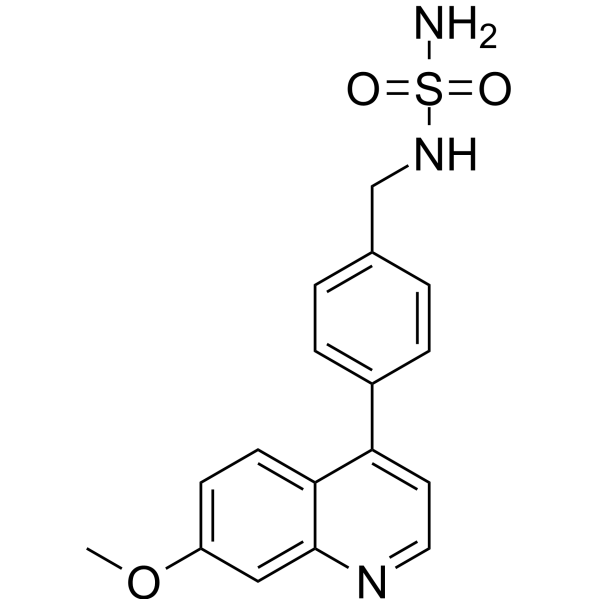
Enpp-1-IN-1 is an effective selective enpp-1 (nucleotide pyrophosphatase-phosphodiesterase 1) inhibitor .
loading...
    loading...
1
1 Cited Publications
Cat. No.: HY-147389
CAS No.: 2687222-59-7
Purity:  99.67%
Research Areas:  

Cancer

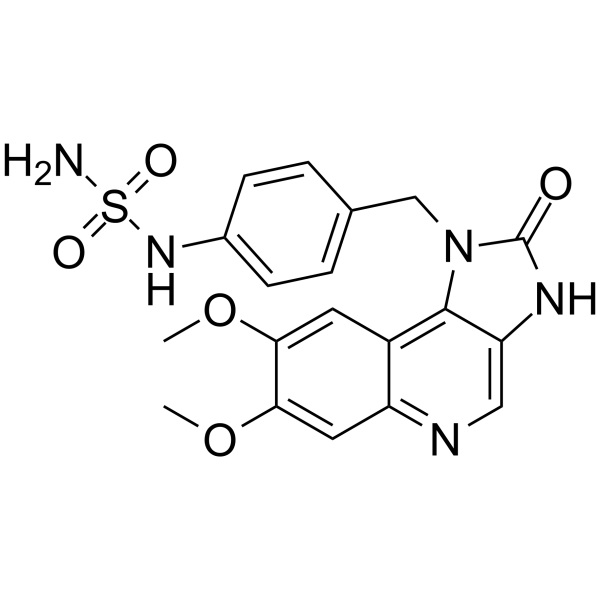
Enpp-1-IN-14 (Compound 015) is a potent Ectonucleotide Pyrophosphatase/Phosphodiesterase-1 (ENPP1) inhibitor with an IC50 value of 32.38 nM for recombinant human ENPP-1. Enpp-1-IN-14 has anti-tumor activity .
loading...
    loading...
Cat. No.: HY-176874
CAS No.: 2944114-41-2
Research Areas:  

Inflammation/Immunology Cancer

Enpp-1-IN-29 (Compound 1) is a highly selective ectonucleotide pyrophosphatase/phosphodiesterase 1 (ENPP1) inhibitor (IC50=0.05 nM). Enpp-1-IN-29 is promising for research of ENPP1-overexpressing cancers (e.g., breast cancer, head/neck cancer, metastatic chromosome-unstable tumors) and immune-related diseases (e.g., autoimmune disorders, tumor immune evasion) .
loading...
    loading...
Cat. No.: HY-145062
CAS No.: 2376600-89-2
Research Areas:  

Cancer

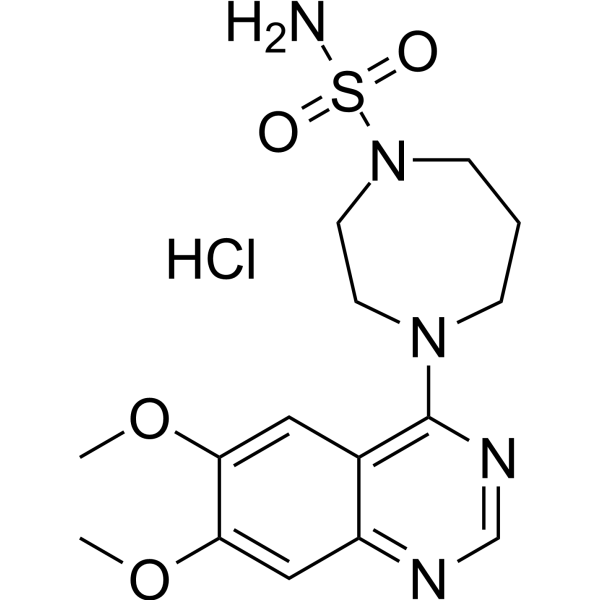
Enpp-1-IN-4 is a potent inhibitor of ectonucleotide pyrophosphatase-phosphodiesterase 1 (enpp-1). Enpp-1-IN-4 has the potential for the research of cancer diseases (extracted from patent WO2019177971A1, compound 1) .
loading...
    loading...
Cat. No.: HY-149465
CAS No.: 2298391-60-1
Research Areas:  

Neurological Disease Cancer

STF-1623 is a highly potent, selective, cell-impermeable non-covalent ENPP1 inhibitor, with IC50 values of 0.6 nM and 800 nM against human ENPP1 and ENPP3, respectively. STF-1623 inhibits the hydrolysis of extracellular cGAMP by ENPP1, elevates intratumoral cGAMP levels, and indirectly enhances local cGAS-STING signaling and anti-tumor immunity in tumors. STF-1623 exhibits target-dependent retention in ENPP1-highly expressing tumors, while it undergoes rapid clearance in systemic circulation, and can penetrate into the CSF and brain parenchyma. STF-1623 can be used in studies related to breast cancer, pancreatic cancer, colorectal cancer, glioblastoma, and tumor immunology .
loading...
    loading...

