1. Search Result
Search Result
Results for "

GSIS

" in MedChemExpress (MCE) Product Catalog:

26

Inhibitors & Agonists

1

Fluorescent Dye

2

Biochemical Assay Reagents

3

Natural
Products

1

Oligonucleotides

1

GMP Molecules

Cat. No. Product Name Target Research Areas Chemical Structure
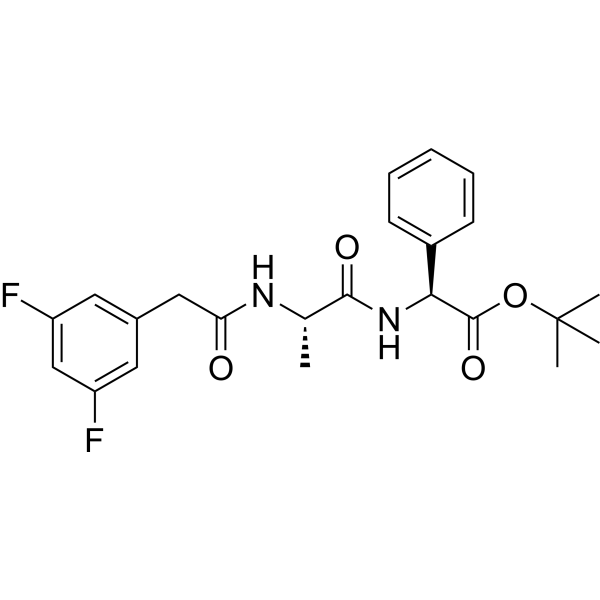
  • HY-13027
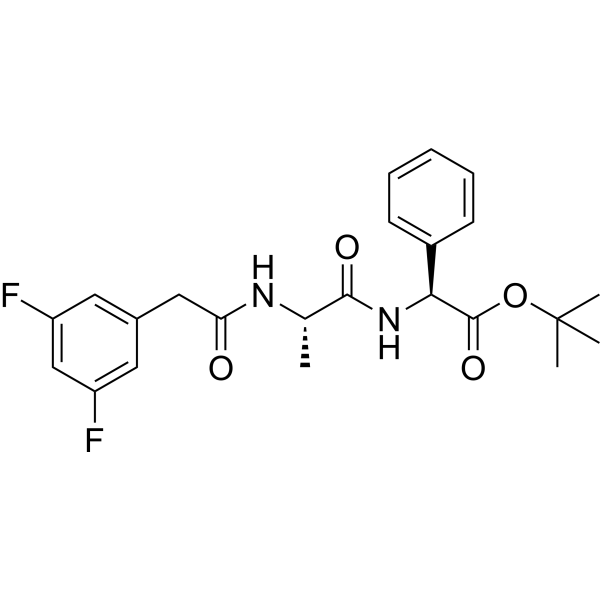
    DAPT
    Maximum Cited Publications
    158 Publications Verification

    GSI-IX

    Organoid γ-secretase Amyloid-β Autophagy Notch Apoptosis Neurological Disease Inflammation/Immunology Cancer
    DAPT (GSI-IX) is a potent and orally active γ-secretase inhibitor with IC50s of 115 nM and 200 nM for total amyloid-β (Aβ) and 42, respectively. DAPT inhibits the activation of Notch 1 signaling and induces cell differentiation. DAPT also induces autophagy and apoptosis. DAPT has neuroprotection activity and has the potential for autoimmune and lymphoproliferative diseases, degenerative disease and cancers treatment .
    DAPT
  • HY-41417
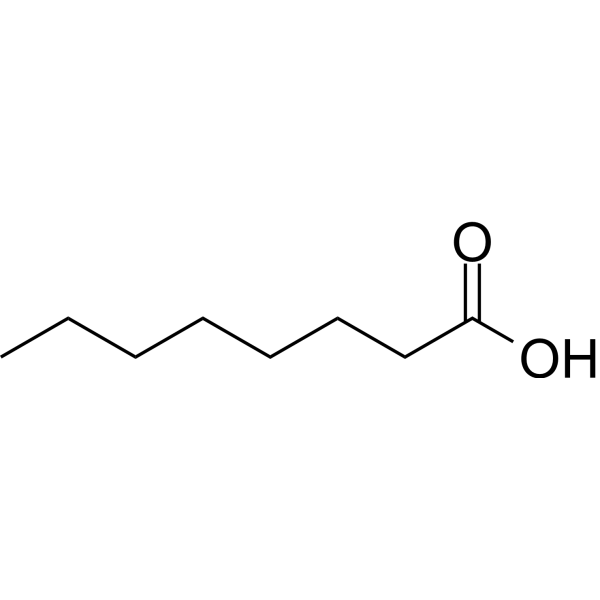
    Octanoic acid
    3 Publications Verification

    Caprylic acid

    Environmental Pollutants Endogenous Metabolite Metabolic Disease
    Octanoic acid (Caprylic acid) is an oily liquid with a slightly unpleasant rancid taste and used commercially in the production of esters used in perfumery and also in the manufacture of dyes. Octanoic acid is also a tremor-suppressing agent .
    Octanoic acid
  • HY-175701

    RO7795081; RG6652

    Arrestin GLP Receptor Metabolic Disease
    CT-996 is an orally active GLP-1RA agonist with an EC50 of 0.49 nM. CT-996 reduces the recruitment of β-arrestin and the internalization of GLP-1R. CT-996 suppresses postprandial blood glucose in mice expressing human GLP-1 receptors and enhances glucose-stimulated insulin secretion (GSIS) in obese monkeys during intravenous glucose challenge. CT-996 can be used for the research of type 2 diabetes (T2D) and obesity .
    CT-996
  • HY-19369
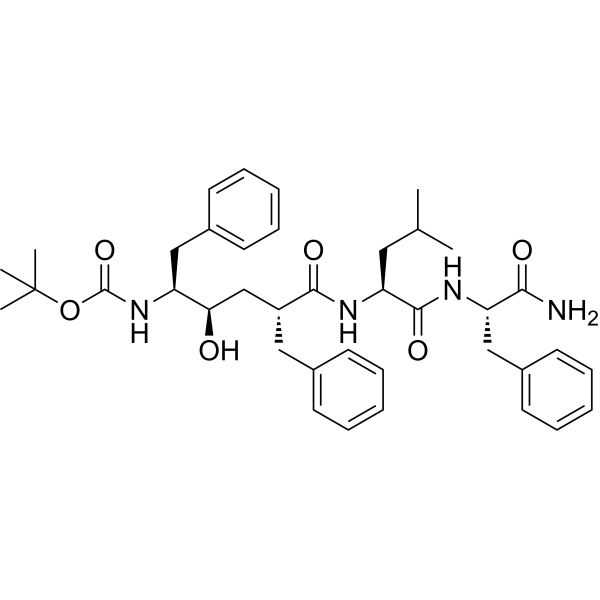
    L-685458
    5+ Cited Publications

    L-685,458

    γ-secretase Apoptosis Neurological Disease Cancer
    L-685458 is a potent transition state analog (TSA) γ-secretase inhibitor (GSI). L-685458 inhibits amyloid β-protein precursor γ-secretase activity with IC50 of 17 nM, shows greater than 50-100-fold selectivity over other aspartyl proteases tested. L685458 inhibits γ-secretase-mediated cleavage of APP-C99 and Notch-100 with IC50s of 301.3 nM and 351.3 nM, respectively. L-685458 can be used for the research of alzheimer’s disease (AD) and cancers .
    L-685458
  • HY-13027G

    GSI-IX

    γ-secretase Neurological Disease Inflammation/Immunology Cancer
    DAPT (GSI-IX) (GMP) is DAPT (HY-13027) produced by using GMP guidelines. GMP small molecules works appropriately as an auxiliary reagent for cell therapy manufacture. DAPT is a potent and orally active γ-secretase inhibitor .
    DAPT
  • HY-B1021
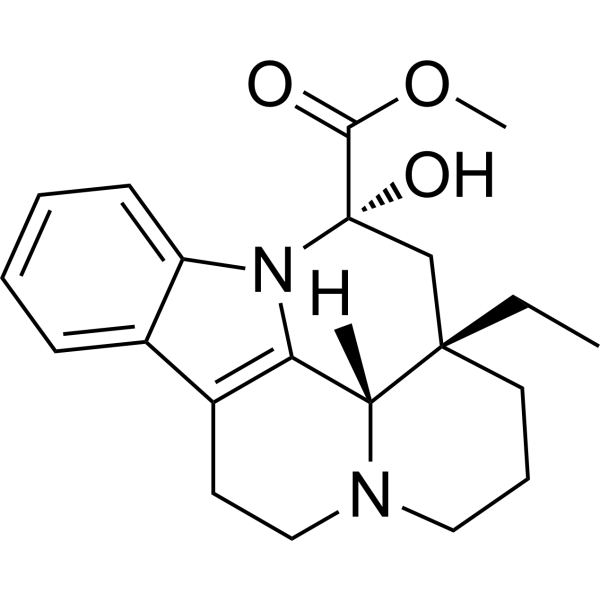
    Vincamine
    1 Publications Verification

    Free Fatty Acid Receptor Cardiovascular Disease Metabolic Disease
    Vincamine is a monoterpenoid indole alkaloid extracted from the Madagascar periwinkle. Vincamine is a peripheral vasodilator and exerts a selective vasoregulator action on the brain microcapilar circulation . Vincamine is a GPR40 agonist and acts as a β-cell protector by ameliorating β-cell dysfunction and promoting glucose-stimulated insulin secretion (GSIS). Vincamine improves glucose homeostasis in vivo, and has the potential for the type 2 diabetes mellitus (T2DM) research .
    Vincamine
  • HY-14175

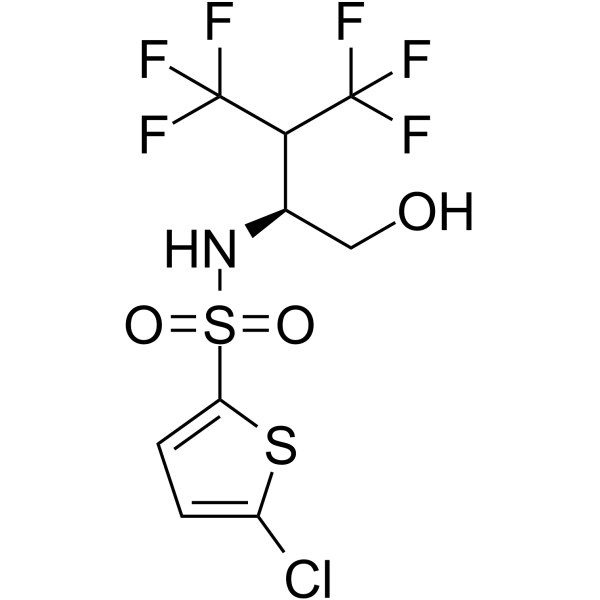
    GSI-953

    γ-secretase Neurological Disease
    Begacestat (GSI-953) is a selective thiophene sulfonamide inhibitor of amyloid precursor protein gamma-secretase (IC5040=15 nM) for the treatment of Alzheimer's disease .
    Begacestat
  • HY-N2319
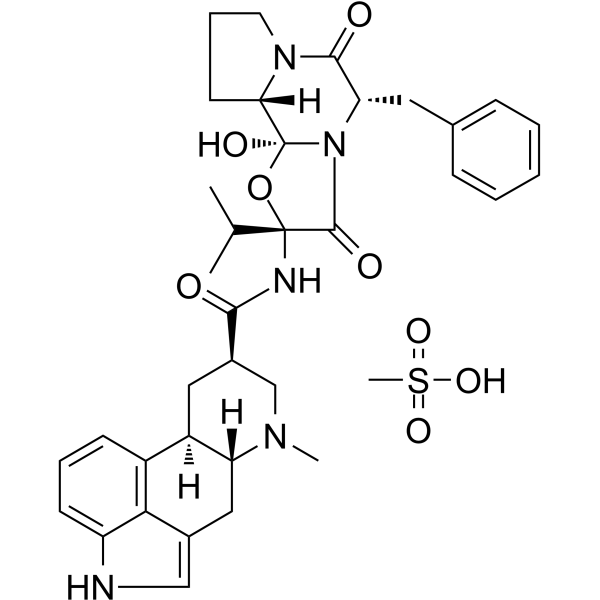
    Dihydroergocristine mesylate
    1 Publications Verification

    DHEC mesylate

    Amyloid-β Neurological Disease
    Dihydroergocristine mesylate (DHEC mesylate) is a inhibitor of γ-secretase (GSI), reduces the production of the Alzheimer's disease amyloid-β peptides, binds directly to γ-secretase and Nicastrin with equilibrium dissociation constants (Kd) of 25.7 nM and 9.8 μM, respectively .
    Dihydroergocristine mesylate
  • HY-18614

    Notch γ-secretase Cancer
    LY900009 is a potent and orally active, First-in-class inhibitor of Notch signaling via selective inhibition of the γ-secretase protein (GSI). LY900009 inhibits Notch signalling in tumor cell lines and endothelial cells (IC50=0.005-20 nM). LY900009 can be used for advanced cancer research .
    LY900009
  • HY-14363

    Free Fatty Acid Receptor Metabolic Disease
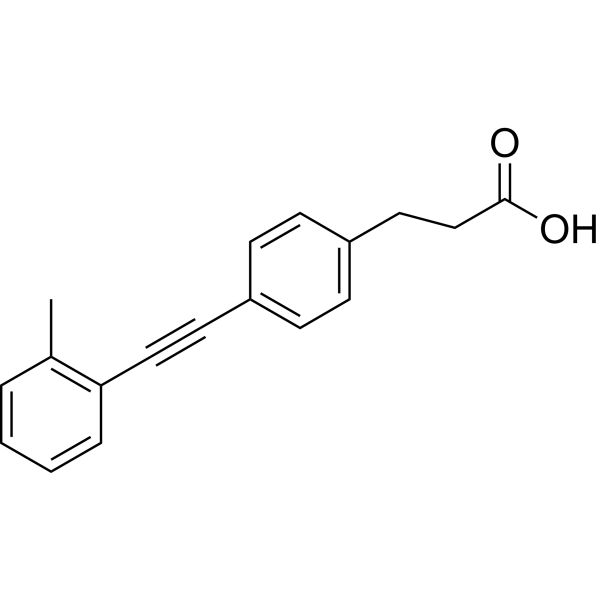
    TUG-424 is a potent and selective free fatty acid receptor 1 (FFA1/GPR40) agonist with an EC50 of 32 nM. TUG-424 significantly increases glucose-stimulated insulin secretion at 100 nM. TUG-424 may serve to explore the role of FFA1 in metabolic diseases such as diabetes or obesity . TUG-424 is a click chemistry reagent, it contains an Alkyne group and can undergo copper-catalyzed azide-alkyne cycloaddition (CuAAc) with molecules containing Azide groups.
    TUG-424
  • HY-158012

    γ-secretase Others
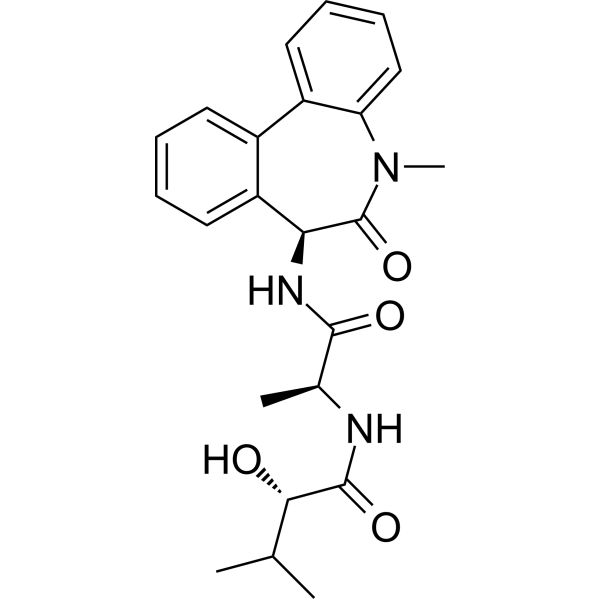
    LY3056480 is a gamma-secretase inhibitor (GSI) that inhibits Notch signaling. LY3056480 improves mild to moderate sensorineural hearing loss and is safe and tolerable. Intratympanic administration of LY3056480 induces hair cell regeneration and partial hearing recovery in mammals .
    LY3056480
  • HY-158584

    9Z-Octadecenoic acid, 12-carboxy-1-pentyldodecyl ester

    Endogenous Metabolite Metabolic Disease
    13-OAHSA is one of fatty acid esters of hydroxy fatty acids (FAHFAs). 13-OAHSA increases glucose-stimulated insulin secretion (GSIS) at a high glucose concentration .
    13-OAHSA
  • HY-158583

    Endogenous Metabolite Metabolic Disease
    13-POHSA is one of fatty acid esters of hydroxy fatty acids (FAHFAs). 13-POHSA increases glucose-stimulated insulin secretion (GSIS) at a high glucose concentration .
    13-POHSA
  • HY-158650

    Endogenous Metabolite TNF Receptor Inflammation/Immunology Endocrinology
    10-OAHSA is one of fatty acid esters of hydroxy fatty acids (FAHFAs). 10-POHSA increases glucose-stimulated insulin secretion (GSIS) at a high glucose concentration. 10-OAHSA reduces LPS (HY-D1056)-induced Tnf-α secretion in bone marrow-derived dendritic cells (BMDCs) .
    10-OAHSA
  • HY-Q40876

    Calcium Channel Metabolic Disease
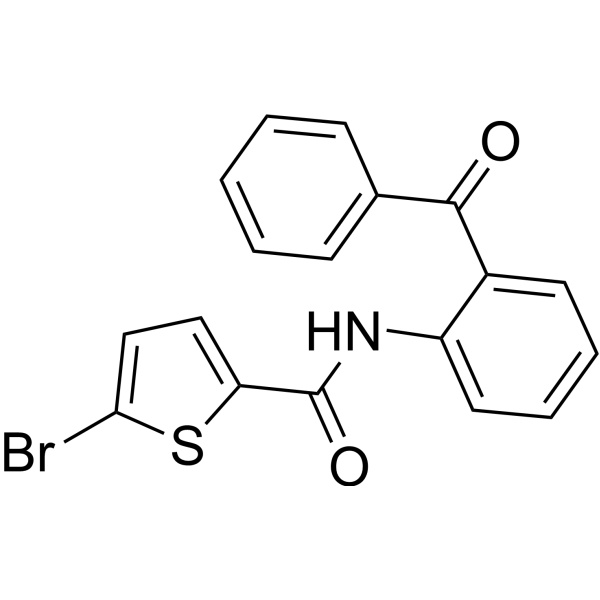
    BBT is an enhancer of impaired glucose-stimulated insulin secretion (GSIS). BBT exhibits anti-hyperglycemia activity, and protects β-cells from cytokine- or streptozotocin (STZ (HY-13753))-induced cell death in type 2 diabetes models. BBT acts function via cAMP/PKA and long-lasting (L-type) voltage-dependent Ca2+ channel/CaMK2 pathway .
    BBT
  • HY-164451

    γ-secretase Notch Cancer
    GSI-18 is a γ-secretase inhibitor with anticancer activity. GSI-18 inhibits the attachment-free growth of pancreatic cancer cells by inhibiting Notch signaling .
    GSI-18
  • HY-117236

    γ-secretase Neurological Disease
    GSI-136 is an inhibitor of γ-secretase with an IC50 of 3 nM. GSI-136 can lead to a dose-dependent reduction of Aβ40 levels in diethylamine-extracted brain homogenates of C57BL/6 mice. GSI-136 can be studied in medicinal chemistry and Alzheimer's disease research .
    GSI-136
  • HY-115606

    NKCC Endogenous Metabolite Neurological Disease
    ML007 is a selective antagonist targeting the neuron-specific potassium-chloride co-transporter 2 (KCC2) with an IC50 for KCC2 is 537 nM, while its inhibitory activity on KCC1 is extremely weak (IC50 > 50 μM). ML077 inhibits the chloride ion excretion function of KCC2, increasing the intracellular chloride ion concentration, thereby enhancing the depolarization mediated by chloride ion channels. ML007 can promote glucose-stimulated insulin secretion (GSIS) without relying on KATP channels. ML007 can be used to study the functions related to pain, epilepsy, and insulin secretion .
    ML077
  • HY-178967

    DAPK Apoptosis Interleukin Related Endogenous Metabolite Metabolic Disease
    DRAK1/2-IN-2 (Compound Y17) is a DRAK1/2 inhibitor with IC50 values for DRAK2 and DRAK1 of 353.2 nM and 507.4 nM respectively. DRAK1/2-IN-2 can enhance mitochondrial membrane potential and glucose-stimulated insulin secretion (GSIS). DRAK1/2-IN-2 resists lipotoxicity-induced cell apoptosis. DRAK1/2-IN-2 significantly inhibits the secretion of pro-inflammatory cytokine IL-1β, thereby exerting an anti-inflammatory effect. DRAK1/2-IN-2 can significantly lower the blood glucose levels of mice. DRAK1/2-IN-2 can be used in diabetes research.
    DRAK1/2-IN-2
  • HY-145428

    Notch γ-secretase Cancer
    BT-GSI is a γ-secretase inhibitor (GSI) and a bone-targeted Notch inhibitor. BT-GSI has dual anti-myeloma and anti-resorptive properties, which can be used for the research of multiple myeloma and associated bone disease. BT-GSI inhibits tumor growth and osteolytic disease progression .
    BT-GSI
  • HY-158639

    Endogenous Metabolite Metabolic Disease
    12-POHSA is one of fatty acid esters of hydroxy fatty acids (FAHFAs). 12-POHSA increases glucose-stimulated insulin secretion (GSIS) at a high glucose concentration .
    12-POHSA
  • HY-B1021R

    Reference Standards Free Fatty Acid Receptor Cardiovascular Disease Metabolic Disease
    Vincamine (Standard) is the analytical standard of Vincamine. This product is intended for research and analytical applications. Vincamine is a monoterpenoid indole alkaloid extracted from the Madagascar periwinkle. Vincamine is a peripheral vasodilator and exerts a selective vasoregulator action on the brain microcapilar circulation . Vincamine is a GPR40 agonist and acts as a β-cell protector by ameliorating β-cell dysfunction and promoting glucose-stimulated insulin secretion (GSIS). Vincamine improves glucose homeostasis in vivo, and has the potential for the type 2 diabetes mellitus (T2DM) research .
    Vincamine (Standard)
  • HY-14175R

    GSI-953 (Standard)

    γ-secretase Reference Standards Neurological Disease
    Begacestat (Standard) is the analytical standard of Begacestat. This product is intended for research and analytical applications. Begacestat (GSI-953) is a selective thiophene sulfonamide inhibitor of amyloid precursor protein gamma-secretase (IC50Aβ40=15 nM) for the treatment of Alzheimer's disease .
    Begacestat (Standard)
  • HY-N2319R

    DHEC mesylate (Standard)

    Reference Standards Amyloid-β Neurological Disease
    Dihydroergocristine (mesylate) (Standard) is the analytical standard of Dihydroergocristine (mesylate). This product is intended for research and analytical applications. Dihydroergocristine mesylate (DHEC mesylate) is a inhibitor of γ-secretase (GSI), reduces the production of the Alzheimer's disease amyloid-β peptides, binds directly to γ-secretase and Nicastrin with equilibrium dissociation constants (Kd) of 25.7 nM and 9.8 μM, respectively .
    Dihydroergocristine mesylate (Standard)
  • HY-183799

    PROTACs IRAK NF-κB p38 MAPK Inflammation/Immunology
    GSI526 is a IRAK4 PROTAC degrader (DC50=40.17 nM, Dmax=97%; THP-1) based on the VHL ubiquitin-proteasome system. GSI526 inhibits IRAK4-mediated NF-κB and MAPK inflammatory signaling pathways, and induces IRAK4 degradation in myeloid cells. GSI526 is applicable to inflammation-related research .
    GSI526
  • HY-123761

    γ-secretase Neurological Disease
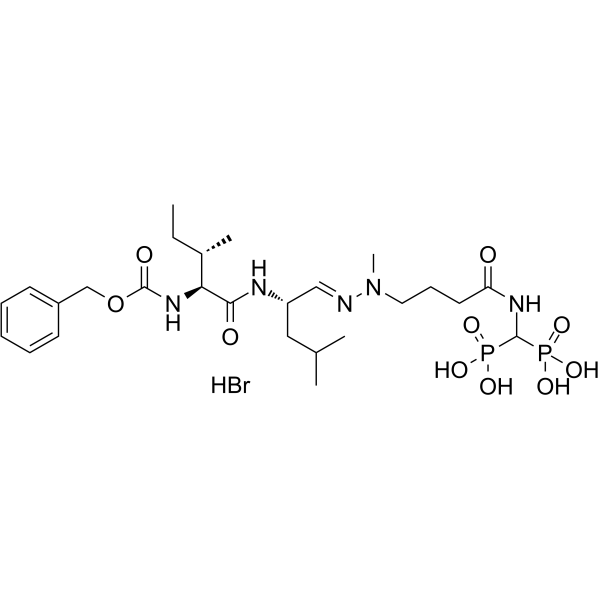
    L505-yne is an active site-directed γ-secretase inhibitor. L505-yne blocks photoaffinity labeling of PS1-NTF, PS1-CTF, and SPP by clickable GSI photoprobes, binds the γ-secretase complex and inhibits Aβ42 production. L458-BPyne can be used for the research of Alzheimer’s disease .
    L505-yne

Inquiry Online

Your information is safe with us. * Required Fields.

Salutation


Country or Region *

Applicant Name *


Organization Name *

Department *


Email Address *


Product Name *

Cat. No.


Requested quantity *

Phone Number *


Remarks

Inquiry Online

Inquiry Information

Product Name:
Cat. No.:
Quantity:
MCE Japan Authorized Agent:

