
1. Search Result
Search Result
Results for "

Green

" in MedChemExpress (MCE) Product Catalog:

459

Inhibitors & Agonists

1

Screening Libraries

225

Fluorescent Dye

43

Biochemical Assay Reagents

13

Peptides

17

MCE Kits

1

Inhibitory Antibodies

68

Natural
Products

7

Recombinant Proteins

20

Isotope-Labeled Compounds

1

Antibodies

13

Click Chemistry

19

Oligonucleotides

Cat. No. Product Name Target Research Areas Chemical Structure
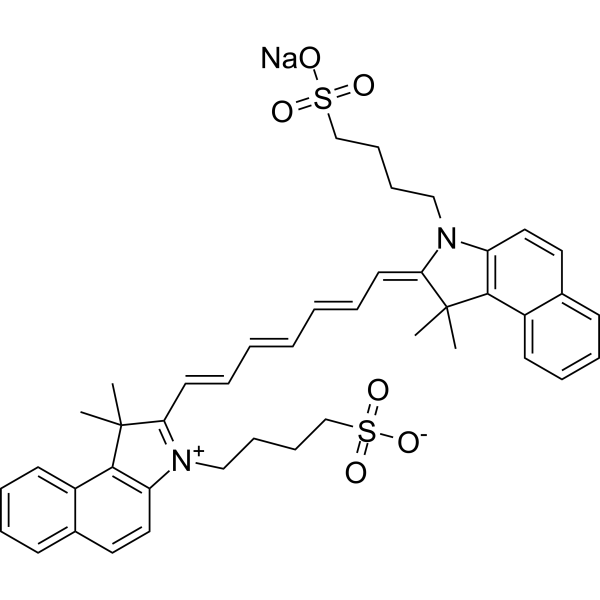
  • HY-D0711
    Indocyanine green
    40+ Cited Publications

    FoxGreen; IC Green; CardioGreen

    Fluorescent Dye Cancer
    Indocyanine green (Foxgreen) is a low toxicic fluorescent agent that has been widely used in medical diagnostics, such as determining cardiac output, hepatic function, and liver blood flow, and for ophthalmic angiography (Ex/Em = 785/813 nm) .
    Indocyanine green
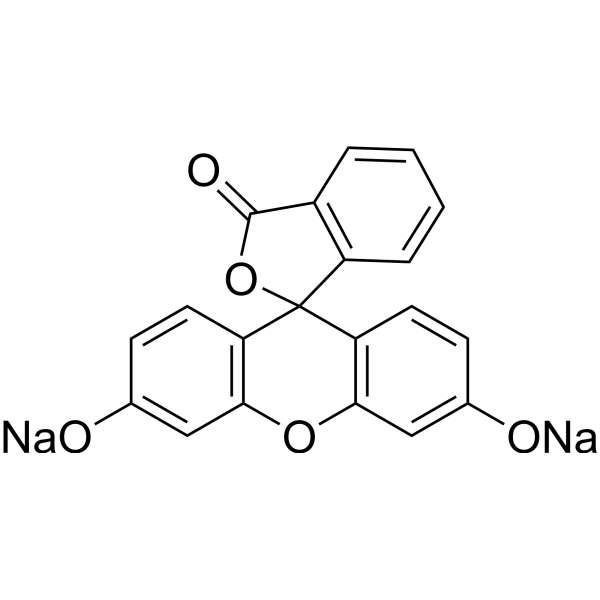
  • HY-D0208
    Fluorescein sodium
    10+ Cited Publications

    Uranine sodium

    Environmental Pollutants Fluorescent Dye Cancer
    Fluorescein (Uranine) sodium is widely used as a fluorescent tracer in medicinal and biological applications and tumor infected tissues tracer. Fluorescein (Uranine) sodium is a representative green fluorophore that has been widely used as a scaffold of practically useful green fluorescent probes .
    Fluorescein sodium
  • HY-135056
    MitoTracker Green FM
    20+ Cited Publications

    Fluorescent Dye Others
    Mito-Tracker Green is a green fluorescent dye that selectively accumulates in the mitochondrial matrix. MitoTracker Green FM covalently binds mitochondrial proteins by reacting with free mercaptan of cysteine residues, allowing staining of mitochondrial membrane potential independent of membrane potential. Excitation/emission wavelength 490/523 nm.
    MitoTracker Green FM
  • HY-126561
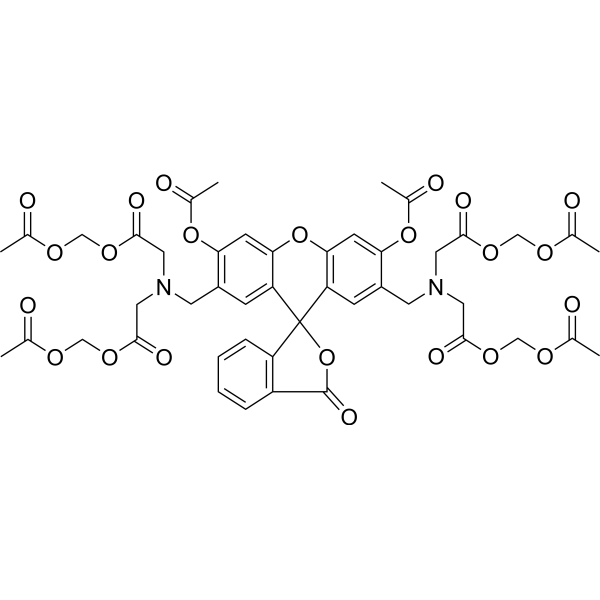
    Green CMFDA
    10+ Cited Publications

    CMFDA

    Fluorescent Dye Others
    Green CMFDA is a cell-permeable fluorescent probe with Em of 514 nm and Ex of 485 nm and can be used as a cell tracer. Green CMFDA can be cleaved by non-specific esterases common in living cells, producing a fluorescent compound, fluorescein, visible using a fluorescent microscope .
    Green CMFDA
  • HY-136886
    IR-820
    2 Publications Verification

    New Indocyanine Green

    Fluorescent Dye Cancer
    IR-820 (New Indocyanine Green) is an infrared blood pool contrast agent. IR-820 also is normally used as a laser and near-infrared dye to detect and quantify diseased tissue in live animals .
    IR-820
  • HY-D0914

    FD&C Green No. 3; Food Green 3; C.I. 42053

    Environmental Pollutants α-synuclein Neurological Disease
    Fast Green FCF is a sea green triarylmethane food dye, with absorption maximum ranging from 622 to 626 nm. Fast Green FCF inhibits α-synuclein aggregation, as well as and P2X4 receptor, and TLR4/Myd88/NF-κB. Fast Green FCF is widely used as a staining agent like quantitative stain for histones at alkaline pH after acid extraction of DNA, and as a protein stain in electrophoresis. Fast Green FCF improves cognitive impairment, depression, relieves pain allergies, and promotes reproductive function .
    Fast Green FCF
  • HY-133527

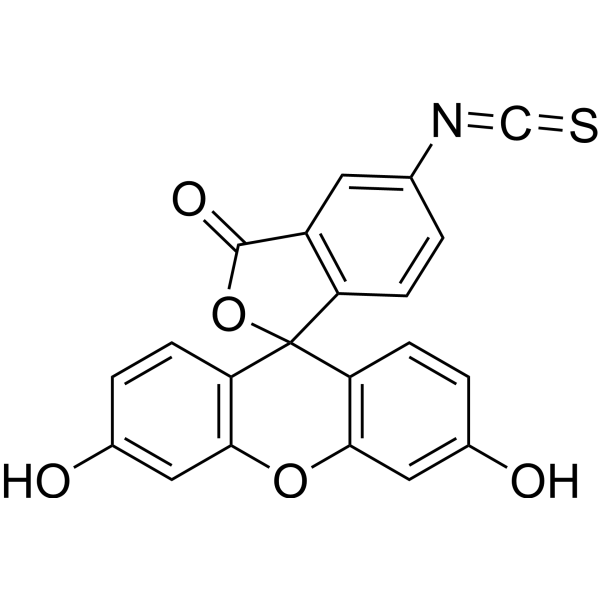
    Oregon Green 488 succinimidyl ester

    Fluorescent Dye Neurological Disease
    OG 488, SE (Oregon green 488 succinimidyl ester), a fluorescent pH indicator, has many applications in biochemistry and neurosciences .
    OG 488, SE
  • HY-D0203

    Malachite Green

    Environmental Pollutants Fluorescent Dye Others
    Basic green 4 (Malachite green) is a cationic dye that is widely used as a bactericide in aquaculture and is also commonly used in laboratories for the determination of phosphates. Basic green 4 exhibits high cytotoxicity and carcinogenicity to mammalian cells, specifically shown by its IC50 values of 2.03 µM for HEp-2 human laryngeal cells and 13.8 µM for Caco-2 human colorectal adenocarcinoma cells, and it can promote the development of liver tumors. The maximum absorbance wavelength is 621 nm .
    Basic green 4
  • HY-D0023
    Pyranine
    2 Publications Verification

    HPTS; Solvent Green 7

    Environmental Pollutants Fluorescent Dye Others
    Pyranine (HPTS; Solvent Green 7) is a cell-impermeant pH-sensitive fluorescent indicator. Pyranine acts as a class of fluorescent chemosensor for the Cu + ion. Pyranine is used as a coloring agent, biological stain, optical detecting reagent, and pH indicator (Ex/Em = 450/510 nm) .
    Pyranine
  • HY-D1296
    Green DND-26
    2 Publications Verification

    Fluorescent Dye Others
    Green DND-26 is a green fluorescently labeled lysosomal probe with a maximum excitation/emission wavelength of 504/511 nm. The structure is composed of a fluorescein group and linked weak bases, which can freely cross the cell membrane and generally gather on spherical organelles. Green DND-26 is suitable for observing the internal biosynthesis and related pathogenesis of lysosomes .
    Green DND-26
  • HY-DY1046

    Fluorescent Dye Others
    Green CMFDA (solution) is a cell-permeable fluorescent probe with Em of 514 nm and Ex of 485 nm and can be used as a cell tracer. Green CMFDA can be cleaved by non-specific esterases common in living cells, producing a fluorescent compound, fluorescein, visible using a fluorescent microscope .
    Solvent and concentration: DMSO: 10 mM
    Green CMFDA (solution)
  • HY-W040144

    Fluorescent Dye Others
    Bromocresol green is a pH-sensitive triphenylmethane dye commonly used for the determination of protein and albumin in serum. Bromocresol green is a bio-based dye with a yellow-green to blue-green color. Bromocresol green turns yellow (λmax=435 nm, protonated form) when placed in acidic solution (e.g. pH=4.15), and turns blue in basic solution (λmax=615 nm, deprotonated form). Bromocresol green is widely used as a pH indicator in the field of biochemical analysis. In addition, Bromocresol green is also used to detect the concentration of molecules such as creatinine, and to judge the viability of cells .
    Bromocresol green
  • HY-D0162
    Malachite green hemioxalate
    1 Publications Verification

    MCCK1

    Fungal IKK NF-κB Apoptosis Infection Cancer
    Malachite green hemioxalate (MCCK1) is a triphenylmethane dye which can be used to detect the release of phosphate in enzymatic reactions. Malachite green hemioxalate has antibacterial activity, which is attributed to inhibition of intracellular enzymes, insertion into DNA and/or interaction with cell membranes. Malachite green hemioxalate is also a potent and selective inhibitor of IKBKE, and inhibits its downstream targets such as IκBα, p65 and IRF3. Malachite green hemioxalate exhibits antitumor activity in vitro and in vivo .
    Malachite green hemioxalate
  • HY-P2528

    Fluorescent Dye Others
    Enhanced Green Fluorescent Protein (EGFP) (200-208) is a marker gene product derived from the jellyfish Aequorea Victoria. Enhanced Green Fluorescent Protein (EGFP) (200-208) is a common reporter protein and is easy to detect .
    Enhanced Green Fluorescent Protein (EGFP) (200-208)
  • HY-126823

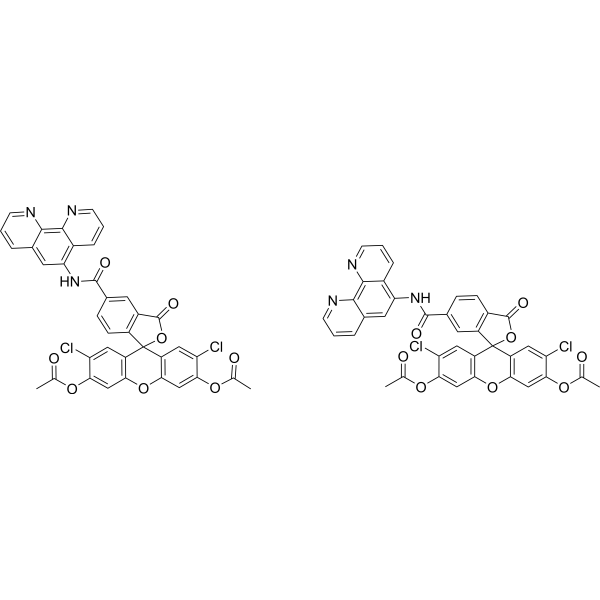
    PGSK diacetate (5/6-mixture)

    Fluorescent Dye Others
    Phen green SK (PGSK) diacetate (PGSK diacetate (5/6-mixture)) is a metal ion-sensitive fluorescent probe that can penetrate cell membranes. Phen green SK (PGSK) diacetate can react with a variety of metal ions, including Fe 2+, Cd 2+, Co 2+, Ni 2+, Zn 2+, etc. Phen green SK (PGSK) diacetate chelates Fe 2+, resulting in fluorescence quenching, which can be restored when a membrane-permeable chelator is added, thereby reflecting the changes in the intracellular chelatable iron pool. The excitation/emission maxima of Phen green SK diacetate are 507/532 nm, respectively .
    Phen Green SK diacetate (5/6-mixture)
  • HY-122924

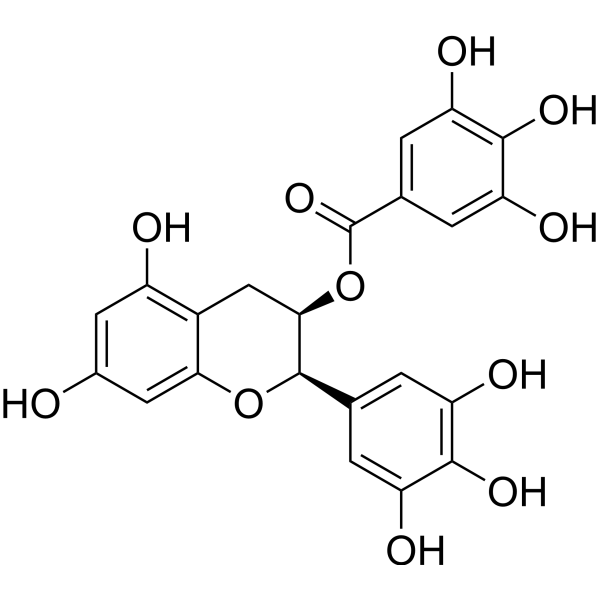
    3-Galloylquinic acid

    Others Neurological Disease
    Theogallin (3-Galloylquinic acid) is an active ingredient in decaffeinated green tea extract. Theogallin has antidepressive and cognition enhancing effect .
    Theogallin
  • HY-115640
    TRFS-green
    10+ Cited Publications

    TrxR Others
    TRFS-green is a highly selective off−on fluorescent probe for imaging selenoprotein thioredoxin reductase (TrxR) in living cells. TRFS-green has the maximum absorbance at around 373 nm. After it is activated by TrxR, the maximum absorbance shifts to around 440 nm .
    TRFS-green
  • HY-126367
    Light green SF yellowish
    1 Publications Verification

    Acid Green 5

    Fluorescent Dye Cancer
    Light green SF yellowish (Acid Green 5) is a water-soluble triarylmethane dye. Light green SF yellowish serves as a histological stain that selectively labels mitochondria, collagen, and cartilage, while being an essential component of Papanicolaou staining. Light green SF yellowish is commonly used as a cytoplasmic counterstain for nuclear stains, and is applied in Masson's trichrome staining for collagen fibers, Pap staining, and cytological polychromatic staining in histopathology. Light green SF yellowish also induces growth inhibition and local fibrosarcomas in rats and exerts mild pulmonary tumorigenicity in mice .
    Light green SF yellowish
  • HY-D1122

    Fluorescent Dye Others
    Janus green B is a supravital stain. Janus green B staining reaction is oxygen dependent, and is reversibly inhibited by cyanide. Janus green B has been used for staining peripheral nerves in live insects, lymphatic vessels of rabbits and mitochondria .
    Janus green B
  • HY-D0163
    Methyl Green
    1 Publications Verification

    DNA Stain Others
    Methyl Green is a non-intercalating fluorescent labeling agent that selectively binds to the major groove of DNA. Methyl Green electrostatically interacts with the major groove of DNA through positively charged groups, exhibiting key activities such as high affinity, resistance to photobleaching, and stable fluorescence emission. Methyl Green can be directly measured by microscopy and flow cytometry, with peaks at 633 and 677 nm. Methyl Green can be used for fluorescent labeling of the nuclei of embryonic tissues or cells, or DNA staining and cell activity detection in gel electrophoresis[1][2][3].
    Methyl Green
  • HY-D2769

    Difluorocarboxyfluorescein azide, 6-isomer

    Fluorescent Dye Others
    Oregon green 488 azide (Difluorocarboxyfluorescein azide, 6-isomer) is a bright green fluorescent azide-activated probe that reacts with terminal alkynes via copper-catalyzed azide-alkyne cycloaddition (CuAAC). Oregon green 488 azide can label goat anti-mouse IgG and exhibits excellent luminescence efficiency. Oregon green 488 azide, as a streptavidin conjugate, is used for flow cytometry staining of macrophages .
    Oregon green 488 azide
  • HY-D1098
    SYBR Green II
    3 Publications Verification

    Fluorescent Dye Others
    SYBR Green II is a fluorescent nucleic acid dye that mainly binds single-stranded nucleotides. SYBR Green II is sensitive to oligonucleotides or larger nucleic acid polymers in a variety of cells and gels. SYBR Green II can be used to study cell structure, membrane integrity or function, and cell cycle distribution. Wavelength 484/515 nm .
    SYBR Green II
  • HY-D1631

    Fluorescent Dye Calcium Channel Neurological Disease
    Calcium Green-5N AM is a Ca 2+-sensitive fluorescent probe (Kd = 14 μM). Calcium Green-5N AM shows enhanced fluorescence intensity upon binding to Ca 2+, and it can monitor free Ca 2+ in neurons .
    Calcium Green-5N AM
  • HY-DY1032

    Fluorescent Dye Others
    Mito-Tracker Green (solution) is a green fluorescent dye that selectively accumulates in the mitochondrial matrix. MitoTracker Green FM covalently binds mitochondrial proteins by reacting with free mercaptan of cysteine residues, allowing staining of mitochondrial membrane potential independent of membrane potential. Excitation/emission wavelength 490/523 nm.
    Solvent and concentration: DMSO: 1 mM
    MitoTracker Green FM (solution)
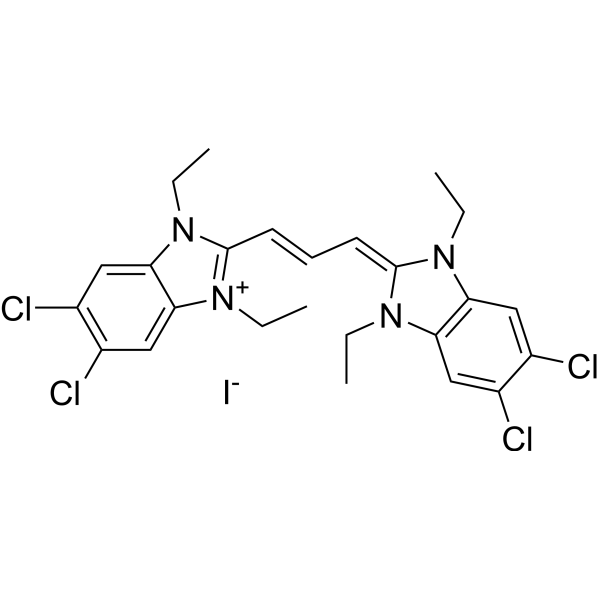
  • HY-D0300
    Leucomalachite green
    1 Publications Verification

    Biochemical Assay Reagents Others
    Leucomalachite green is the major reduced metabolite of malachite green (MG) and has lower cytotoxicity (such as HEp-2 and Caco-2) than malachite green. Leucomalachite green may be involved in interfering with cell metabolism or redox balance and can be used to evaluate its potential harm to human cells as a food contaminant .
    Leucomalachite green
  • HY-D1117

    NADA hydrochloride

    Fluorescent Dye Infection
    NADA-green is a fluorescent D-amino acid probe. NADA-green is efficiently incorporated into the peptidoglycan of diverse bacterial species peptidoglycan biosynthesis. NADA-green allows probing of bacterial growth with minimal perturbation .
    NADA-green
  • HY-D0950A

    DNA Stain Others
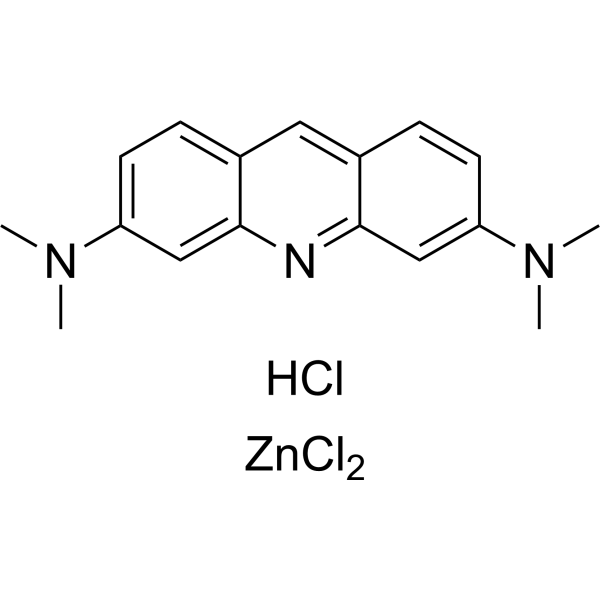
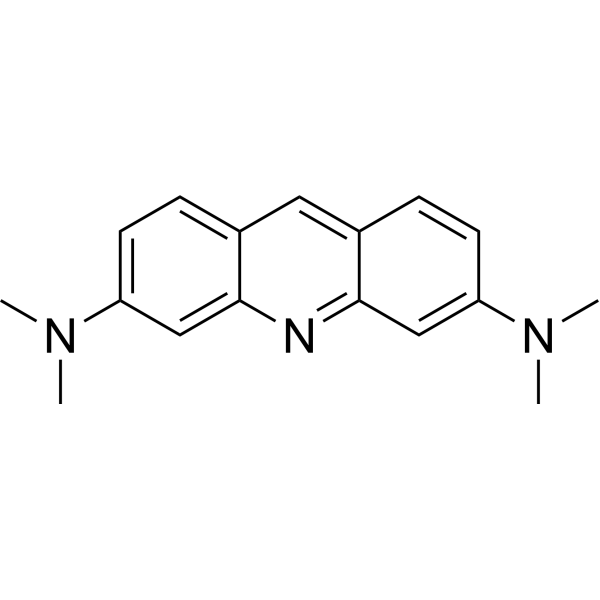
    Methyl Green zinc chloride is a potent fluorescent dye. Methyl Green zinc chloride is a DNA stains of cells and electrophoretic gels. Methyl Green zinc chloride can be used as direct measuring of viability by both microscopy and flow cytometry, with peaks at 633 and 677 nm .
    Methyl Green zinc chloride
  • HY-D0711R

    FoxGreen (Standard); IC Green (Standard); CardioGreen (Standard)

    Fluorescent Dye Reference Standards Others
    Indocyanine green (Standard) is the analytical standard of Indocyanine green. This product is intended for research and analytical applications. Indocyanine green (Foxgreen) is a low toxicic fluorescent agent that has been widely used in medical diagnostics, such as determining cardiac output, hepatic function, and liver blood flow, and for ophthalmic angiography .
    Indocyanine green (Standard)
  • HY-D1176

    Fluorescent Dye Others
    Calcium Green 1AM is a cell-permeant fluorescent calcium indicator (Excitation 506 nm; Emission 531 nm). Calcium Green 1AM is converted to the fluorescent calcium indicator by intracellular esterases .
    Calcium Green 1AM
  • HY-D1191
    SYBR green I chloride
    3 Publications Verification

    Fluorescent Dye DNA/RNA Synthesis Others
    SYBR Green I chloride is a highly sensitive fluorescent nucleic acid dye that binds specifically to the minor groove of double-stranded DNA or intercalates between base pairs. SYBR Green I chloride exhibits weak fluorescence in the unbound state but emits bright fluorescence upon binding, and it preferentially binds to large-fragment DNA and DNA with high G+C content. SYBR Green I chloride is suitable for real-time PCR technology; its fluorescence intensity correlates with the amount and size of amplification products, enabling accurate quantification of gene expression and discrimination of amplicons via melting curve analysis without additional post-processing. SYBR Green I chloride is widely used in preclinical in vitro nucleic acid detection .
    SYBR green I chloride
  • HY-D1590

    Fluorescent Dye Others
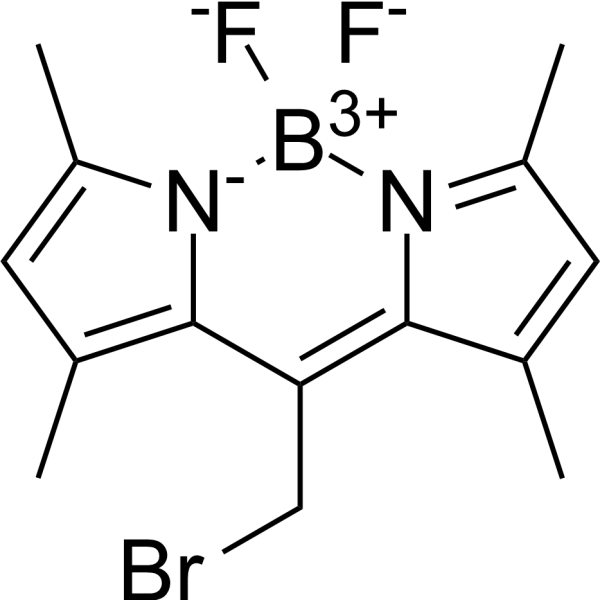
    ODIPY Green 8-P2M is a novel thiol-reactive fluorescence probe based on the BODIPY fluorophore, the fluorescence is strongly quenched by d-PeT and then can be restored after reaction with thiol, resulting in an extremely high signal-to-noise ratio. ODIPY Green 8-P2M can be useful for detecting extremely low concentrations of protein in the gel after SDS-PAGE .
    BODIPY Green 8-P2M
  • HY-D1261
    Naph-EA-mal
    1 Publications Verification

    Thiol-Green 1

    Fluorescent Dye Others
    Naph-EA-mal (Thiol-green 1) is a rapid detect and ultrafast turn-on thiol fluorescence probe for protein labeling and bioimaging. Naph-EA-mal (Thiol-green 1) can be used to detect thiols in living cells, label the protein thiols, quantify the concentration of total thiols in cell lysate, and determine the reversible protein thiols oxidation in fixed cells . Ex: 488 nM; Em: 540 nM.
    Naph-EA-mal
  • HY-D1262

    Thiol-Green 2

    Fluorescent Dye Others
    BODIPY-TS (Thiol-green 2) is a fast response and thiol-specific turn-on probe. BODIPY-TS utilizes the thiosulfonate scaffold as a thiol recognition unit. BODIPY-TS has low toxicity, and features high selectivity, low detection limit, and quantitative reaction to thiols . Ex: 490 nM; Em: 515 nM.
    BODIPY-TS
  • HY-104058

    Green 488 BAPTA 1AM

    Fluorescent Dye Others
    BAPTA Green 1AM (Oregon Green 488 BAPTA 1AM) is a fluorescent Ca 2+ indicator that consists of a green fluorescent probe OG 488 and a cell-permeable Ca 2+ chelator BAPTA AM.
    BAPTA Green 1AM
  • HY-D2208
    SYTM Green
    1 Publications Verification

    Fluorescent Dye Others
    SYTM Green is a cell impermeant DNA dye that fluoresces green by binding to dsDNA (Ex/Em=503/530 nm). SYTM Green can also be used to stain bacteria, including Gram-positive and Gram-negative bacteria. Note: SYTM Green cannot penetrate living cells, and this product is equivalent to (Ex/Em=488/530 nm) .
    SYTM Green
  • HY-D1255

    Fluorescent Dye Cancer
    Sel-green, a selective selenol fluorescent probe, is applied to quantify the Sec content in the selenoenzyme thioredoxin reductase and image endogenous Sec in live HepG2 cells .
    Sel-green
  • HY-D2482

    APG-1 AM

    Fluorescent Dye Neurological Disease
    Asante potassium green-1 AM (APG-1 AM) is a cell-permeable K +-sensitive fluorescent indicator and potassium ion indicator that exhibits minimal interference from Na + and pH at physiologically relevant intracellular levels. Asante potassium green-1 AM enables non-invasive monitoring and quantitative analysis of intracellular potassium ion concentration (ᵢ) . Its excitation/emission maxima are 525/545 nm, respectively.
    Asante potassium green-1 AM
  • HY-D2481

    APG-2 (TMA)

    Fluorescent Dye Neurological Disease
    Asante potassium green-2 (APG-2) TMA is a cell-impermeable K + (potassium ion) fluorescent indicator that produces a fluorescent response to changes in extracellular potassium ion concentration. Its excitation/emission maxima are 525/545 nm , respectively.
    Asante potassium green-2 (TMA)
  • HY-D1265
    EtS-DMAB
    2 Publications Verification

    HClO-Green

    Fluorescent Dye Others
    EtS-DMAB (HClO-green) is a fluorescent probe, which can selectively detect hypochlorous acid (HOCl) (λex=440 nm, λem=610 nm). EtS-DMAB is applied to image exogenous and endogenous HOCl in live cells .
    EtS-DMAB
  • HY-P3188

    Biochemical Assay Reagents Others
    Nitrilase is able to hydrolyze nitriles into their corresponding carboxylic acids and ammonia. Nitrilase is a green biocatalyst for the production of high value-added products .
    Nitrilase
  • HY-N13229

    Apoptosis Others
    Green Tea Extract is the extract of Green Tea, with content of 30% -98% Tea Polyphenol.
    Green Tea Extract
  • HY-D1631A

    Fluorescent Dye Neurological Disease
    Calcium green-5N hexapotassium is a cell-impermeant Ca 2+-sensitive fluorescent probe. Calcium green-5N hexapotassium shows enhancement in fluorescence intensity on binding Ca 2+, and can monitor free Ca 2+ in neurons .
    Calcium green-5N hexapotassium
  • HY-158217A

    Gelatin Methacryloyl, 60% methacrylation, Green Fluorescent

    Biochemical Assay Reagents Others
    Green Fluorescent Gelatin Methacryloyl (Green Fluorescent GelMA) is methacryloyl gelatin (GelMA) with green fluorescence, which is obtained by "grafting" fluorescent molecules on GelMA. Green Fluorescent Gelatin Methacryloyl acts as a scaffold and can be used to engineer tissue analogs from the vasculature to cartilage and bone, allowing cells to proliferate and spread . GelMA, 60% methacrylation, Green Fluorescent needs to self-assemble into fibrous hydrogel under the action of photoinitiator LAP (HY-44076), and target bioactive adhesion sites, play an inherent supporting role for tissue cells and biodegradable activity.
    Application: cell culture, biological 3D printing, tissue engineering, etc.
    GelMA, 60% methacrylation, Green Fluorescent
  • HY-158217

    Gelatin Methacryloyl, 30% methacrylation, Green Fluorescent

    Biochemical Assay Reagents Others
    Green Fluorescent Gelatin Methacryloyl (Green Fluorescent GelMA) is methacryloyl gelatin (GelMA) with green fluorescence, which is obtained by "grafting" fluorescent molecules on GelMA. Green Fluorescent Gelatin Methacryloyl acts as a scaffold and can be used to engineer tissue analogs from the vasculature to cartilage and bone, allowing cells to proliferate and spread . GelMA, 30% methacrylation, Green Fluorescent needs to self-assemble into fibrous hydrogel under the action of photoinitiator LAP (HY-44076), and target bioactive adhesion sites, play an inherent supporting role for tissue cells and biodegradable activity.
    Application: cell culture, biological 3D printing, tissue engineering, etc.
    GelMA, 30% methacrylation, Green Fluorescent
  • HY-D3010

    Fluorescent Dye Others
    VF dsDNA Green Dye is a fluorescent dye for detecting and quantifying double-stranded DNA (dsDNA). VF dsDNA Green Dye fluoresces only when bound to dsDNA, and the fluorescence intensity is proportional to the DNA concentration. VF dsDNA Green Dye does not fluoresce when bound to ssDNA, RNA, or free nucleotides. VF dsDNA Green Dye can detect dsDNA within the range of 25 pg/mL to 1000 ng/mL (Ex/Em = 480/520 nm).
    VF dsDNA Green Dye
  • HY-D1098A

    Fluorescent Dye Others
    SYBR Green II (Ionic form) is a fluorescent nucleic acid dye that mainly binds single-stranded nucleotides. SYBR Green II is sensitive to oligonucleotides or larger nucleic acid polymers in a variety of cells and gels. SYBR Green II can be used to study cell structure, membrane integrity or function, and cell cycle distribution. Wavelength 484/515 nm .
    SYBR Green II (Ionic form)
  • HY-D0348

    Disperse Blue 7; 1,4-DiOH-5,8-bis(2-OHethyl)aminoanthraquinone

    Biochemical Assay Reagents Others
    Celliton Fast Blue Green B (Disperse Blue 7), a blue-green dye used in textiles. The aqueous extract of Celliton Fast Blue Green B causes no signs of skin irritation and sensitization in laboratory animals. Celliton Fast Blue Green B colored textiles with no irritation in human .
    Celliton Fast Blue Green B
  • HY-D0008

    Bacterial Fungal Parasite Infection
    Brilliant green is a cationic dye used to color silk and wool. Brilliant green inhibits propagation of mold, intestinal parasites and fungus. Brilliant green is effective against Gram-positive bacteria .
    Brilliant green
  • HY-W110905

    Environmental Pollutants Fluorescent Dye Others
    Naphthol green B is an iron-complex dye. Naphthol green B can be used in wool dyeing, silk dyeing and polyamide dyeing. Naphthol green B can be used to fabricate electrochemical sensor for the detection of H2O2 .
    Naphthol green B
  • HY-D1175

    Environmental Pollutants Fluorescent Dye Others
    Alizarin cyanin green F is an alizarin dye that reacts with calcium possibly via sulfonic acid and/or OH groups.
    Alizarin cyanin green F

Inquiry Online

Your information is safe with us. * Required Fields.

Salutation


Country or Region *

Applicant Name *


Organization Name *

Department *


Email Address *


Product Name *

Cat. No.


Requested quantity *

Phone Number *


Remarks

Inquiry Online

Inquiry Information

Product Name:
Cat. No.:
Quantity:
MCE Japan Authorized Agent:

