1. Search Result
Search Result
Pathways Recommended: Stem Cell/Wnt Cell Cycle/DNA Damage
Results for "

HCC827 NSCLC cells

" in MedChemExpress (MCE) Product Catalog:

11

Inhibitors & Agonists

1

Natural
Products

1

Click Chemistry

Cat. No. Product Name Target Research Areas Chemical Structure
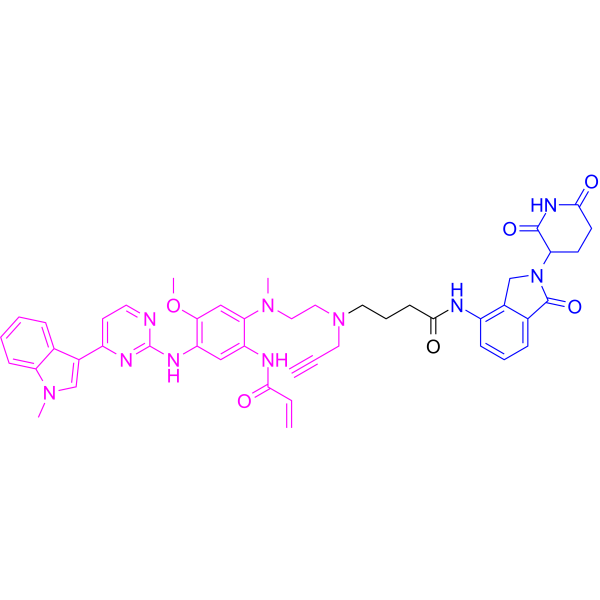
  • HY-147858

    PROTACs EGFR Apoptosis Cancer
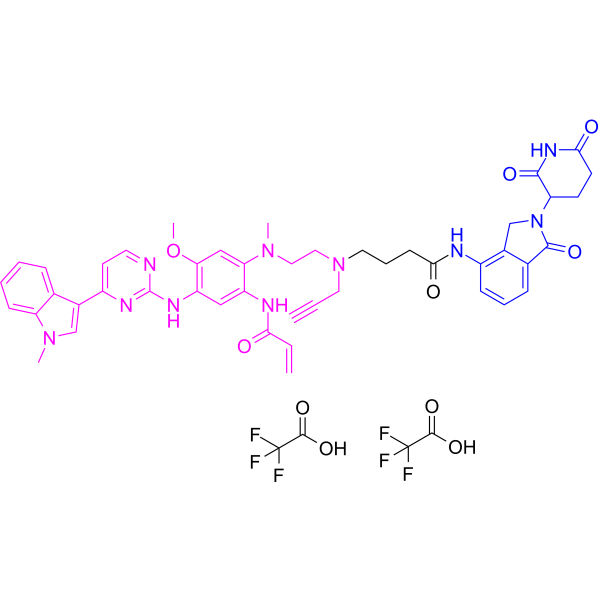
    PROTAC EGFR degrader 7 (compound 13b) is a potent and selective CRBN-recruiting PROTAC EGFR L858R/T790M degrader, with a DC50 of 13.2 nM. PROTAC EGFR degrader 7 inhibits NCI–H1975 cells proliferation, with an IC50 of 46.82 nM. PROTAC EGFR degrader 7 significantly induces apoptosis and G2/M phase arrest in NCI–H1975 cell. PROTAC EGFR degrader 7 shows antitumor activity, and can be used for non-small cell lung cancer (NSCLC) research . PROTAC EGFR degrader 7 is a click chemistry reagent, it contains an Alkyne group and can undergo copper-catalyzed azide-alkyne cycloaddition (CuAAc) with molecules containing Azide groups.
    PROTAC EGFR degrader 7
  • HY-175839

    PROTACs EGFR ATP Synthase Cancer
    PROTAC EGFR degrader 15 is a Pomalidomide (HY-10984)-based Gefitinib (HY-50895) EGFR PROTAC degrader. PROTAC EGFR degrader 15 triggers EGFR degradation via ubiquitin-proteasome-dependent proteolysis and autophagy-lysosome activation pathways. PROTAC EGFR degrader 15 targets ETFA to enhance ATP production. PROTAC EGFR degrader 15 significantly suppresses tumor growth in a Gefitinib-acquired resistant HCC-827 xenograft model. PROTAC EGFR degrader 15 can be used for the study of non-small cell lung cancer (NSCLC) (Pink: EGFR ligand (HY-W109039); Blue: CRBN ligand (HY-10984); Black: Linker (HY-W679737)) .
    PROTAC EGFR degrader 15
  • HY-153901

    EGFR PROTACs Cancer
    PROTAC EGFR degrader 8 (T-184) is a PROTAC EGFR degrader. PROTAC EGFR degrader 8 degrades EGFR in HCC827 cell with a DC50 of 15.56 nM. PROTAC EGFR degrader 8 inhibits H1975, PC-9, HCC827 cell growth with IC50s of 7.72 nM, 121.9 nM, 14.21 nM. PROTAC EGFR degrader 8 can be used for research of cancer, especially NSCLC .
    PROTAC EGFR degrader 8
  • HY-17654

    EGFR mTOR Cancer
    BIEGi-1 is an EGFR inhibitor. BIEGi-1 effectively disrupts the EGFR-Rheb interaction in cells. BIEGi-1 robustly inhibits EGFR kinase activity (reduces p-Y1068-EGFR) as well as mTORC1 activation (reduces p-T389-S6K1) in EGFR-mutant cells. BIEGi-1 shows strong antiproliferative effects on EGFR-mutant PC9 and HCC827 cells with IC50 values of 17 nM and 20 nM, respectively. BIEGi-1 can be used for the study of cancers harboring EGFR mutations, such as non-small cell lung cancer (NSCLC) .
    BIEGi-1
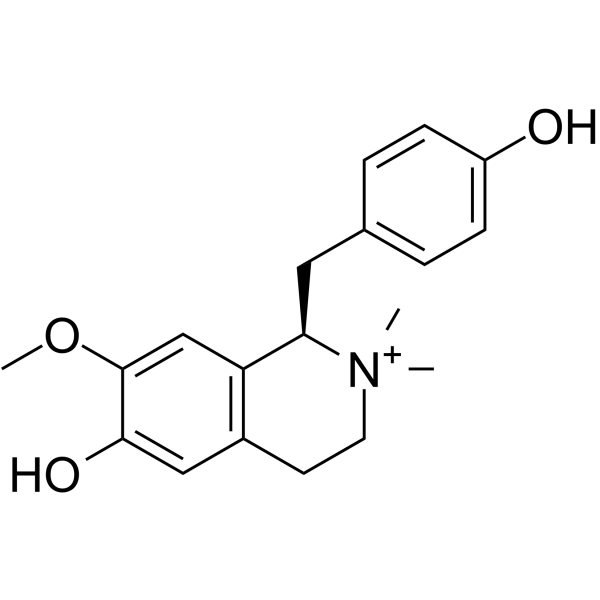
  • HY-N4309

    Amylases Glycosidase Neurological Disease Metabolic Disease Cancer
    Lotusine is an orally active signaling pathway modulator and enzyme inhibitor, with an IC50 of 30.60 μg/mL against α-amylase and an IC50 of 36.15 μg/mL against α-glucosidase. Lotusine inhibits the EGFR-Akt-ERK signaling pathway by reducing the levels of phosphorylated EGFR, Akt and ERK. Lotusine induces apoptosis, triggers G0/G1 cell cycle arrest and inhibits cancer cell proliferation. Lotusine reduces lipid peroxidation and increases the activities of SOD, CAT and GPx. Lotusine is applicable to researches related to non-small cell lung cancer, type 2 diabetes and autism spectrum disorder .
    Lotusine
  • HY-130133

    PI3K mTOR Akt Apoptosis Paraptosis p38 MAPK Mitochondrial Metabolism P-glycoprotein CDK MMP HIF/HIF Prolyl-Hydroxylase VEGFR Cancer
    DHW-221 is a potent orally active dual PI3K/mTOR inhibitor, exhibiting low nanomolar potency against all four Class I PI3K isoforms and mTOR (PI3Kα, IC50 = 0.50 nM; PI3Kβ, IC50 = 1.9 nM; PI3Kγ, IC50 = 1.8 nM; PI3Kδ, IC50 = 0.74 nM; mTOR, IC50 = 3.9 nM). DHW-221 exerts antitumor effects by blocking the PI3K/Akt/mTOR pathway and inducing mitochondrial apoptosis and paraptosis (via Endoplasmic Reticulum (ER) stress and MAPK signaling) and arrests cell cycle, thereby inhibiting cell migration, invasion and angiogenesis. DHW-221 inhibits tumor growth in both the A549/Taxol (HY-B0015) and the HCC827 xenograft mouse models. DHW-221 can be used for non-small cell lung cancer (NSCLC), colon and breast cancer research .
    DHW-221
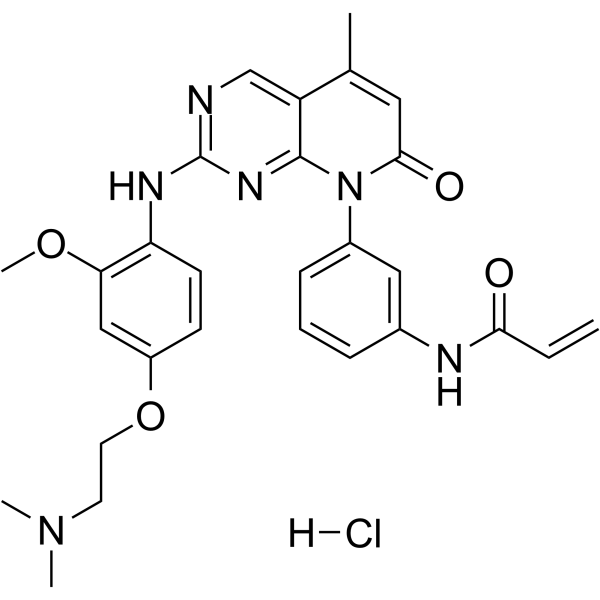
  • HY-19617A

    EGFR Cancer
    EGFR-IN-1 hydrochloride is an orally active and irreversible L858R/T790M mutant selective EGFR inhibitor. EGFR-IN-1 hydrochloride potently inhibits Gefitinib-resistant EGFR L858R, T790M with 100-fold selectivity over wild-type EGFR. EGFR-IN-1 hydrochloride displays strong antiproliferative activity against the H1975 cells and the first line mutant HCC827 cells. Antitumor activity .
    EGFR-IN-1 hydrochloride
  • HY-179385

    Microtubule/Tubulin Phosphatase Apoptosis Cancer
    Tubulin-IN-62 is a tubulin inhibitor targeting the colchicine-binding site. Tubulin-IN-62 exhibits IC50 values of 17.2 nM and 19.3 nM against SKOV3 and HCC827 cells, respectively. Tubulin-IN-62 inhibits microtubule polymerization, arrests the cell cycle at the G2/M phase, and induces apoptosis. Tubulin-IN-62 demonstrates significant antitumor efficacy in vivo with good tolerability. Tubulin-IN-62 can be used in ovarian cancer and non-small cell lung cancer (NSCLC) research .
    Tubulin-IN-62
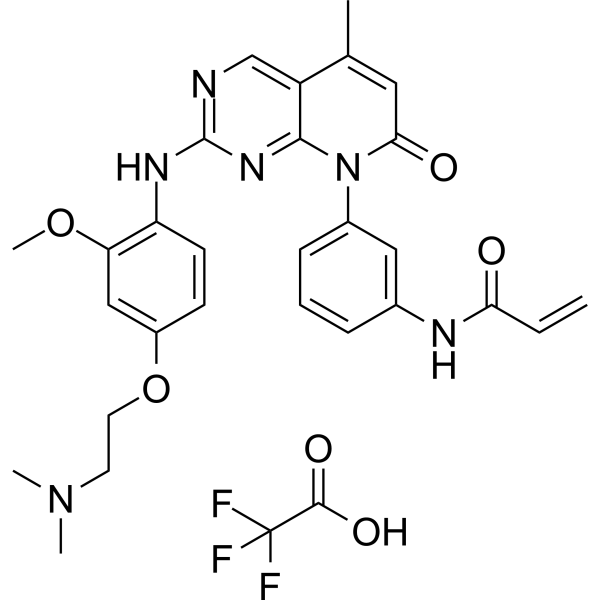
  • HY-19617B

    EGFR Cancer
    EGFR-IN-1 TFA is an orally active and irreversible L858R/T790M mutant selective EGFR inhibitor. EGFR-IN-1 TFA potently inhibits Gefitinib-resistant EGFR L858R, T790M with 100-fold selectivity over wild-type EGFR. EGFR-IN-1 TFA displays strong antiproliferative activity against the H1975 cells and the first line mutant HCC827 cells. Antitumor activity .
    EGFR-IN-1 TFA
  • HY-19617

    EGFR Cancer
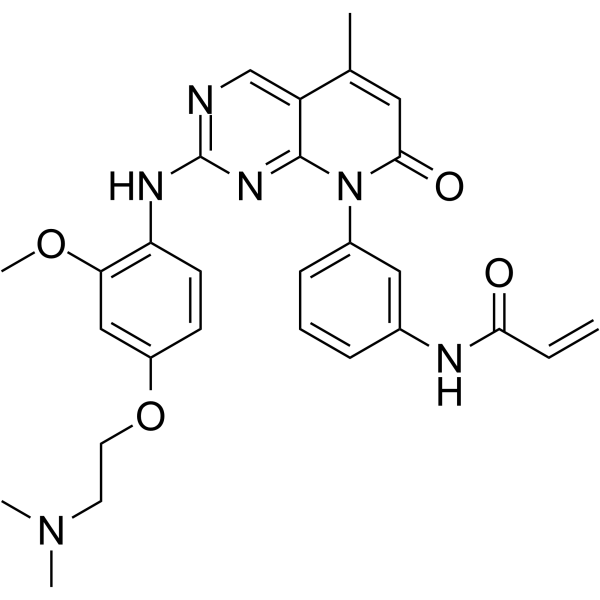
    EGFR-IN-1 (compound 24) is an orally active and irreversible L858R/T790M mutant selective EGFR inhibitor. EGFR-IN-1 potently inhibits Gefitinib-resistant EGFR L858R, T790M with 100-fold selectivity over wild-type EGFR. EGFR-IN-1 displays strong antiproliferative activity against the H1975 cells and the first line mutant HCC827 cells. Antitumor activity .
    EGFR-IN-1
  • HY-173118

    EGFR Apoptosis Cancer
    EGFR-IN-152 (compound D4) is a potent EGFR tyrosine kinase inhibitor, exhibiting potent EGFR L858R/T790M/C797S inhibition activity (IC50 = 40 nM). EGFR-IN-152 induces G0/G1 phase cell cycle arrest and apoptosis, thereby inhibiting colony formation and cell proliferation of non-small cell lung cancer (NSCLC) cells. EGFR-IN-152 can be used for NSCLC research .
    EGFR-IN-152

Inquiry Online

Your information is safe with us. * Required Fields.

Salutation


Country or Region *

Applicant Name *


Organization Name *

Department *


Email Address *


Product Name *

Cat. No.


Requested quantity *

Phone Number *


Remarks

Inquiry Online

Inquiry Information

Product Name:
Cat. No.:
Quantity:
MCE Japan Authorized Agent:

