
1. Search Result
Search Result
Results for "

Humanly relevant dose

" in MedChemExpress (MCE) Product Catalog:

1241

Inhibitors & Agonists

4

Bibliotecas de Screening

17

Fluorescent Dyes

29

Biochemical Assay Reagents

75

Peptides

30

Inhibitory Antibodies

172

Natural
Products

46

Isotope-Labeled Compounds

7

Click Chemistry

29

Oligonucleotides

2

GMP Molecules

Cat. No. Nombre del producto Target Áreas de investigación Chemical Structure
  • HY-B1776
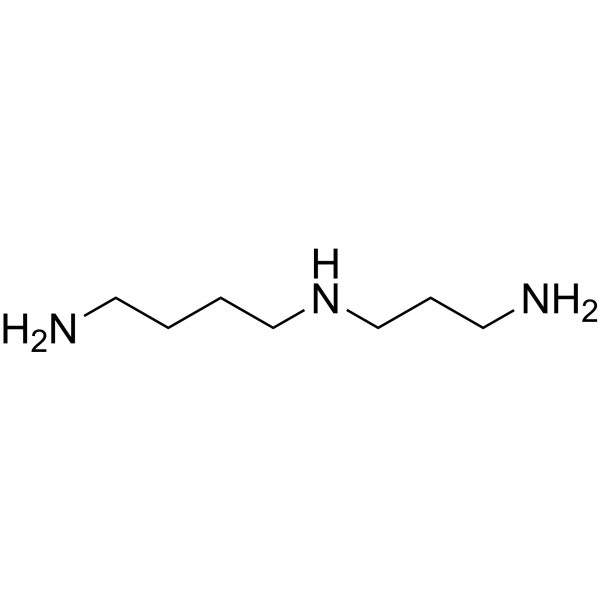
    Spermidine
    15+ Cited Publications

    Endogenous Metabolite Metabolic Disease
    Spermidine maintains cell membrane stability, increases antioxidant enzymes activities, improving photosystem II (PSII), and relevant gene expression. Spermidine significantly decreases the H2O2 and O2 .- contents .
    Spermidine
  • HY-W018392
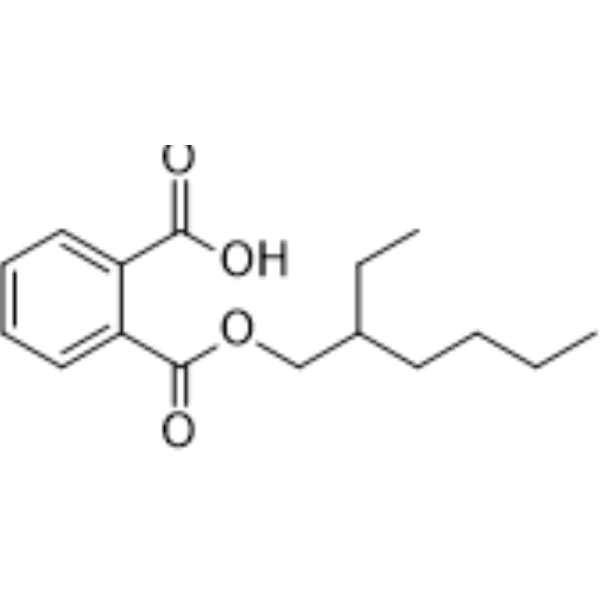
    Mono-(2-ethylhexyl) phthalate
    20+ Cited Publications

    MEHP; Phthalic acid mono-2-ethylhexyl ester

    Endogenous Metabolite Metabolic Disease
    Mono-(2-ethylhexyl) phthalate (MEHP) is a major bioactive metabolite of diethylhexyl phthalate (DEHP). Mono-(2-ethylhexyl) phthalate can promote fatty acid synthesis in hepatocytes by regulating the expression of relevant genes and proteins, contributing to non-alcoholic fatty liver disease (NAFLD) .
    Mono-(2-ethylhexyl) phthalate
  • HY-B1776A
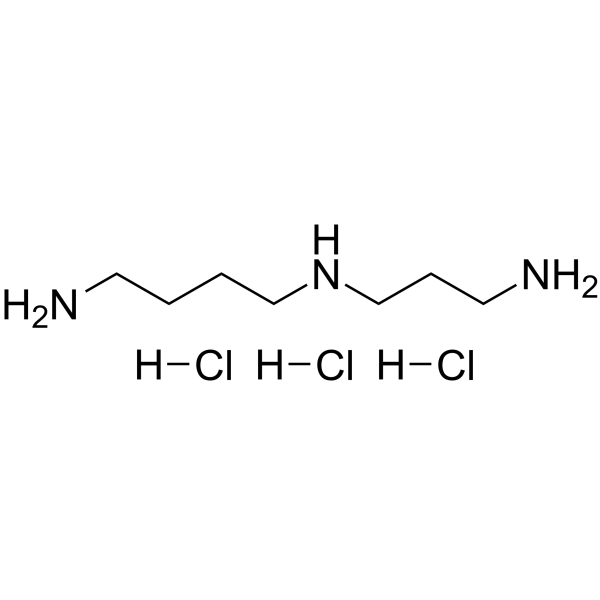
    Spermidine hydrochloride
    15+ Cited Publications

    Endogenous Metabolite Metabolic Disease
    Spermidine hydrochloride maintains cell membrane stability, increases antioxidant enzymes activities, improving photosystem II (PSII), and relevant gene expression. Spermidine hydrochloride significantly decreases the H2O2 and O2 .- contents .
    Spermidine hydrochloride
  • HY-N2026
    Propylparaben
    1 Publications Verification

    Propyl parahydroxybenzoate; Propyl 4-hydroxybenzoate

    Environmental Pollutants Endogenous Metabolite Apoptosis Bacterial Infection
    Propylparaben (Propyl parahydroxybenzoate) is an antibacterial preservative that can be produced by plants and bacteria. Propylparaben is commonly used in cosmetics, pharmaceuticals and foods. Propylparaben disrupts follicular growth and steroidogenic function by altering cell cycle, apoptosis and steroidogenic pathways. Propylparaben also reduced sperm count and motility in rats .
    Propylparaben
  • HY-P990774

    ASP-7266; TRAB-1; UPB-101

    Interleukin Related Inflammation/Immunology
    Verekitug (ASP-7266; TRAB-1; UPB-101) is a human monoclonal antibody targeting the thymic stromal lymphopoietin receptor (TSLPR), with a mean half-life of approximately 20 days. At doses of Verekitug ≥100 mg, complete and sustained TSLPR-specific occupancy is achieved, and the antibody does not bind to IL-7Rα. By inhibiting TSLP-driven inflammatory responses, Verekitug blocks TSLP-induced cell proliferation and TARC expression, while reducing fractional exhaled NO levels, blood eosinophil counts, and levels of IL-5 and IgE. Verekitug significantly improves scores for nasal polyps, nasal congestion and olfactory dysfunction, with favorable safety and good tolerability; potential adverse reactions include headache, upper respiratory tract infection, sinusitis and nasopharyngitis. Verekitug is used in relevant studies on asthma, chronic rhinosinusitis with nasal polyps and chronic obstructive pulmonary disease .
    Verekitug
  • HY-N2534
    Karanjin
    2 Publications Verification

    AMPK Apoptosis Cytochrome P450 Phosphatase NF-κB Neurological Disease Metabolic Disease Inflammation/Immunology Endocrinology Cancer
    Karanjin is an orally active furanoflavonoid which can be isolated from several Leguminosae. Karanjin exhibits evident anti-diabetic, anti-cancer, anti-inflammatory, antioxidant, anticolitis, anti-ulcer, anti-Alzheimer properties and multiple insect repellent/insecticidal, acaricide properties, suggesting the potential of Karanjin to be applied to relevant research .
    Karanjin
  • HY-B1776R

    Reference Standards Endogenous Metabolite Metabolic Disease
    Spermidine (Standard) is the analytical standard of Spermidine. This product is intended for research and analytical applications. Spermidine maintains cell membrane stability, increases antioxidant enzymes activities, improving photosystem II (PSII), and relevant gene expression. Spermidine significantly decreases the H2O2 and O2.- contents .
    Spermidine (Standard)
  • HY-14267

    UK-453061

    HIV Reverse Transcriptase Infection
    Lersivirine (UK-453061) is potent and selective non-nucleoside reverse transcription inhibitor (NNRTI; IC50=119 nM) with excellent efficacy against NNRTI-resistant viruses. Lersivirine exhibits potent antiretroviral activity against wild-type HIV virus and clinically relevant NNRTI-resistant strains .
    Lersivirine
  • HY-E70541B

    Biochemical Assay Reagents Cardiovascular Disease
    Canine Factor IX is a functional coagulation factor. Canine Factor IX shortens whole blood clotting time and activated partial thromboplastin time, and restores coagulation function. After intramuscular administration via rAAV vector in hemophilia B dogs, Canine Factor IX maintains a sustained circulating level for at least 1 year, partially corrects the hemophilia B phenotype in a dose-dependent manner, and its plasma expression persists for more than 17 months. Canine Factor IX is applicable to relevant research on hemophilia B .
    Canine Factor IX
  • HY-B2072A

    Antibiotic Bacterial Infection
    Cephaloridine hydrate is a broad-spectrum antibacterial antibiotic. Cephaloridine has certain dose-related nephrotoxicity .
    Cephaloridine hydrate
  • HY-B1776AS1
    Spermidine-13C4 hydrochloride
    1 Publications Verification

    Isotope-Labeled Compounds Endogenous Metabolite Metabolic Disease
    Spermidine- 13C4 (hydrochloride) is the 13C-labeled Spermidine trihydrochloride. Spermidine hydrochloride maintains cell membrane stability, increases antioxidant enzymes activities, improving photosystem II (PSII), and relevant gene expression. Spermidine hydrochloride significantly decreases the H2O2 and O2.- contents .
    Spermidine-13C4 hydrochloride
  • HY-126437I

    Biochemical Assay Reagents DNA Alkylator/Crosslinker Amino Acid Derivatives Cancer
    Poly-L-lysine hydrobromide (MW 1000-5000) is a homopolymer of L-lysine and a polycationic non-viral gene delivery vector. Poly-L-lysine hydrobromide (MW 1000-5000) forms complexes with plasmid DNA. Poly-L-lysine hydrobromide (MW 1000-5000) is applicable to relevant research on lung cancer .
    Poly-L-lysine hydrobromide (MW 1000-5000)
  • HY-121262
    Bisabolene (mixture of isomers)
    1 Publications Verification

    Bisabolene; γ-Bisabolene

    Drug Intermediate Infection
    Bisabolene (mixture of isomers) (Bisabolene) is a sesquiterpenoid plant natural product and also a hydrocarbon precursor for various industry-relevant chemicals. Bisabolene (mixture of isomers) serves as an important precursor for the production of industry-relevant chemicals such as biofuels, bioplastics, pharmaceuticals and cosmetics .
    Bisabolene (mixture of isomers)
  • HY-P10227

    ONL-1204

    Fatty Acid Synthase (FASN) Apoptosis Interleukin Related Toll-like Receptor (TLR) NOD-like Receptor (NLR) Caspase Neurological Disease
    Xelafaslatide (ONL-1204) is a Fas receptor antagonist. Xelafaslatide blocks the Fas receptor signaling pathway and inhibits downstream apoptosis and inflammatory pathways. Xelafaslatide suppresses neuroinflammation and microglial activation in glaucoma models, protects retinal ganglion cells and prevents axonal degeneration. Xelafaslatide is applicable to relevant research on glaucoma .
    Xelafaslatide
  • HY-P2026

    Natriuretic Peptide Receptor (NPR) Cardiovascular Disease
    A 71915 is a highly potent and competitive natriuretic peptide receptor A (ANP, NPRA) antagonist (pKi= 9.18). A 71915 displaces [ 125I]ANP dose dependently, with a Ki of 0.65 nM. A71915( pA2= 9.48) against rat ANP-induced cGMP production in NB-OK-1 cells .
    A 71915
  • HY-P991143

    TORL-1-23 Antibody

    Claudin Cancer
    Ixotatug is a monoclonal antibody targeting human CLDN6 (claudin-6). Ixotatug specifically binds to CLDN6, interfering with relevant signaling pathways in tumor cells and exerting antitumor activity. Ixotatug is promising for research of cancers .
    Ixotatug
  • HY-142052
    Anhydrotetracycline
    2 Publications Verification

    5a(6)-Anhydrotetracycline

    Antibiotic Infection
    Anhydrotetracycline shows dose-dependent and potent inhibition of tetracycline destructases in vitro .
    Anhydrotetracycline
  • HY-B1776S
    Spermidine-d6
    1 Publications Verification

    Endogenous Metabolite Metabolic Disease
    Spermidine-d6 is the deuterium labeled Spermidine . Spermidine maintains cell membrane stability, increases antioxidant enzymes activities, improving photosystem II (PSII), and relevant gene expression. Spermidine significantly decreases the H2O2 and O2.- contents .
    Spermidine-d6
  • HY-400708

    ADC Payload Cancer
    (R)-Benzyl 2-cyclopropyl-2-hydroxyacetate can be used in the synthesis of pyrrolidines, a relevant molecule for ADC applications .
    (R)-Benzyl 2-cyclopropyl-2-hydroxyacetate
  • HY-P4127A

    PACAP Receptor Neurological Disease Metabolic Disease Inflammation/Immunology Cancer
    M65 TFA is a deleted peptide of maxadilan (61 a.a.) with deletion of the residues between positions 24 and 42 and is a specific antagonist of PACAP type 1 receptor that inhibits ANP secretion and can be used for relevant researches .
    M65 TFA
  • HY-W011180

    Drug Derivative Others
    Vitamin A Propionate is an ester compound of vitamin A. In nutritional studies of foals, different doses have different effects on growth, serum biochemistry and hematological indicators. Too high or too low doses will produce adverse effects and are related to the vitamin A concentration in plasma, liver and kidneys.
    Vitamin A Propionate
  • HY-W037976

    5-Chloro-2-mercaptobenzimidazole

    Reactive Oxygen Species (ROS) Tyrosinase Cancer
    Tyrosinase-IN-22 (compound 4) is an inhibitor of tyrosinase substrates (L-tyrosine and L-dopa) with IC50s of 60 nM and 30 nM, respectively. Tyrosinase-IN-22 also shows potent antioxidant and anti-melanogenic properties, thus can be used for relevant researches .
    Tyrosinase-IN-22
  • HY-B1776AS

    Isotope-Labeled Compounds Endogenous Metabolite Metabolic Disease
    Spermidine-d8 (hydrochloride)e is the deuterium labeled Spermidine trihydrochloride. Spermidine hydrochloride maintains cell membrane stability, increases antioxidant enzymes activities, improving photosystem II (PSII), and relevant gene expression. Spermidine hydrochloride significantly decreases the H2O2 and O2.- contents .
    Spermidine-d8 hydrochloride
  • HY-N2026R

    Propyl parahydroxybenzoate (Standard); Propyl 4-hydroxybenzoate (Standard)

    Reference Standards Endogenous Metabolite Bacterial Apoptosis Infection
    Propylparaben (Standard) is the analytical standard of Propylparaben. This product is intended for research and analytical applications. Propylparaben (Propyl parahydroxybenzoate) is an antibacterial preservative that can be produced by plants and bacteria. Propylparaben is commonly used in cosmetics, pharmaceuticals and foods. Propylparaben disrupts follicular growth and steroidogenic function by altering cell cycle, apoptosis and steroidogenic pathways. Propylparaben also reduced sperm count and motility in rats .
    Propylparaben (Standard)
  • HY-13714

    AG 337 free base

    Antifolate Others
    Nolatrexed (AG 337 free base) is a compound with antifolate activity, high oral bioavailability, and major toxicity at inhibitory doses is gastrointestinal reactions. It can be safely taken orally at specific doses for inhibition, with effects on platelets and neutrophils.
    Nolatrexed
  • HY-145728

    ISIS-2302

    Integrin Inflammation/Immunology
    Alicaforsen is an oligonucleotide and immunostimulant targeting human ICAM-1 mRNA. Alicaforsen hybridizes to specific sites to reduce the expression level of ICAM-1. Alicaforsen is applicable to relevant research on psoriasis, rheumatoid arthritis and inflammatory bowel disease .
    Alicaforsen
  • HY-145349

    Factor Xa Cardiovascular Disease
    FXIa-IN-6 is a potent FXIa inhibitor with selectivity against most of the relevant serine proteases (Ki = 0.3 nM).
    FXIa-IN-6
  • HY-110065

    Cannabinoid Receptor Neurological Disease
    SER-601 is a potent and selective peripheral cannabinoid (CB2) receptor agonist with a Ki of 6.3 nM. SER-601 has analgesic and antidiabetic properties and can be used for relevant research .
    SER-601
  • HY-151918

    Bacterial Infection Inflammation/Immunology
    Antibacterial agent 125 is an antibacterial agent. Antibacterial agent 125 has a potent antimicrobial activity against clinically relevant Gram-positive pathogens with MIC50 values range from 0.25 - 8 μM. Antibacterial agent 125 can be used for the research of antimicrobial resistance .
    Antibacterial agent 125
  • HY-160245

    Btk Others
    QL47R is an approximately isosteric analogue of QL47 (HY-80003). QL47R dose not inhibit the biochemical kinase activity of BTK at concentrations below 10 μM. QL47R dose not display antiproliferative activity on B-Cell Lymphoma Cell Lines at concentrations of less than 10 μM .
    QL47R
  • HY-179035

    Molecular Glues CXCR Cancer
    TBS6b is a potent and selective ACKR3 molecular glue degrader. TBS6b degrades ACKR3 via the ubiquitin-proteasome pathway. TBS6b inhibits hepatocellular carcinoma cell proliferation, migration, and invasion. TBS6b is relevant to hepatocellular carcinoma (HCC) research .
    TBS6b
  • HY-W087892

    Biochemical Assay Reagents Others
    Barium diphenylamine-4-sulfonate can be employed as an intermediate in pharmaceutical manufacturing and in chemical research, and serves as a dosing agent in analytical testing .
    Barium diphenylamine-4-sulfonate
  • HY-177594

    Others Others
    3-Methyl-CTP is a chemical entity relevant to the field of nucleic acid research, particularly associated with alternative nucleic acid molecules and their applications .
    3-Methyl-CTP
  • HY-N12739

    Others Others
    Sibiriquinone A is a diterpene which can be extracted from Veronicastrum sibiricum. Sibiriquinone A exerts immunosuppressive activity and can be used for relevant researches .
    Sibiriquinone A
  • HY-113154

    VLA

    Endogenous Metabolite Others
    Vanillactic acid (VLA) is a relevant biomarker associated with Aromatic L-amino acid decarboxylase (AADC) deficiency. AADC deficiency is a primary neurotransmitter defect of the biosynthesis of catecholamines and serotonin .
    Vanillactic acid
  • HY-N7402

    Others Others
    Hexyl hexanoate is a fruit aroma component with potential food and beverage additive activity. Hexyl hexanoate is found in alcoholic beverages and is used to blend fruit flavors. Hexyl hexanoate is present in many fruits, Parmesan cheese, alcoholic beverages, and black tea. Hexyl hexanoate is a volatile component produced as a result of fruit ripening. Toxicity assessments of hexyl hexanoate showed that it is not mutagenic and that exposure is below safety thresholds for repeated dose, reproduction, and local respiratory toxicity. Hexyl hexanoate is also below thresholds in skin sensitization assessments, and for phototoxicity and photosensitization, the results showed that it does not present a relevant risk. Hexyl hexanoate is considered non-persistent, non-bioaccumulative, and non-toxic according to the environmental criteria of the International Fragrance Association .
    Hexyl hexanoate
  • HY-167698

    Histamine Receptor Adrenergic Receptor Inflammation/Immunology
    Dibenamine is an alpha-adrenergic antagonist that exhibits the ability to block both basal and histamine-stimulated gastric acid secretion, making it therapeutically relevant in conditions involving excessive gastric acid production.
    Dibenamine
  • HY-B2078

    Neurokinin Receptor Inflammation/Immunology
    Eprazinone can enhance lung function and arterial oxygen levels and can be used in the study of chronic bronchitis. Higher doses of eprazinone increased phospholipid levels and decreased neutral lipid content in bronchoalveolar lavage (BAL) fluid, but had no effect on protein and cell levels in BAL. Eprazinone dose-dependently reduced short-circuit current (Isc), primarily by reducing chloride secretion at lower concentrations and affecting sodium and chloride transport at higher doses. Eprazinone may exert its anti-inflammatory effects by regulating BAL lipid composition and airway ion transport .
    Eprazinone
  • HY-B2072

    Antibiotic Bacterial Infection
    Cephaloridine is a broad-spectrum antibacterial antibiotic. Cephaloridine has certain dose-related nephrotoxicity .
    Cephaloridine
  • HY-N11922

    Others Neurological Disease
    Ipalbidine is an alkaloid extracted from ipomoea Hardwickki Hemsl. Ipalbidine has dose-dependent analgesic effects .
    Ipalbidine
  • HY-P991113

    PD-1/PD-L1 Inflammation/Immunology Cancer
    Abazistobart is an immunostimulant and antineoplastic agent targeting the programmed cell death protein 1 (PDCD1). Abazistobart is a chimeric and humanized monoclonal antibody that specifically binds to PDCD1 to block the relevant signaling pathway, thereby activating the immune system and exerting antineoplastic activity. Abazistobart is promising for research of cancers .
    Abazistobart
  • HY-19070

    Opioid Receptor Cardiovascular Disease
    BRL-52656 is a blood-brain barrier (BBB)-penetrable KOR receptor agonist that exhibits a biphasic effect. At low doses, BRL-52656 decreases blood pressure, whereas high doses have the opposite effect in spontaneously hypertensive rats. Additionally, BRL-52656 induces water diuresis by inhibiting the secretion of vasopressin (AVP) .
    BRL-52656
  • HY-180521

    Fungal Infection Cancer
    Piroctone is a potent hydroxypyridone antimicrobial agent that shows remarkable activity against fungi including Candida species. Piroctone inhibits hyphal induction of Candida albicans. Piroctone can efficiently chelate intracellular iron to induce relevant cytotoxicity in neuroblastoma cells. Piroctone can be used for antimicrobial and neuroblastoma research .
    Piroctone
  • HY-107787A

    Prothanon hydrochloride; 9,9-Dioxopromethazine hydrochloride; 9,9-Dioxypromethazin hydrochloride

    Histamine Receptor Inflammation/Immunology
    Dioxopromethazine is an orally active antihistamine. Dioxopromethazine inhibits asthmatic symptoms and can be used for relevant research .
    Dioxopromethazine hydrochloride
  • HY-W725190A

    Opioid Receptor Neurological Disease
    Piperidylthiambutene is a potent µ-opioid receptor (MOR) agonist with a Ki of 2.75 nM. Piperidylthiambutene exhibits analgesic and antitussive properties and can be utilized in relevant research .
    Piperidylthiambutene
  • HY-N15271

    Thrombin Platelet-activating Factor Receptor (PAFR) Cardiovascular Disease
    Oxopurpureine is an oxoaporphine with antiplatelet aggregation activity. Oxopurpureine inhibits collagen, thrombin and arachidonic acid-induced platelet aggregation and can be utilized in relevant research .
    Oxopurpureine
  • HY-N14922

    Antibiotic Bacterial Infection
    Nikkomycin Lx is an antibiotic that can be extracted from Streptomyces tendae TU901. Nikkomycin Lx exhibits anti-Candida Albicans activity and can be utilized in relevant research .
    Nikkomycin Lx
  • HY-107787AR

    Prothanon hydrochloride (Standard); 9,9-Dioxopromethazine hydrochloride (Standard); 9,9-Dioxypromethazin hydrochloride (Standard)

    Reference Standards Histamine Receptor Inflammation/Immunology
    Dioxopromethazine hydrochloride (Standard) is the analytical standard of Dioxopromethazine hydrochloride. This product is intended for research and analytical applications. Dioxopromethazine is an orally active antihistamine. Dioxopromethazine inhibits asthmatic symptoms and can be used for relevant research .
    Dioxopromethazine hydrochloride (Standard)
  • HY-117867A

    AC-7739

    Endogenous Metabolite Inflammation/Immunology
    AVE-8063 (AC-7739) hydrochloride is a therapeutic agent associated with the modulation of inflammatory responses in inflammatory bowel disease (IBD), displaying mechanisms that may be relevant for precision targeting in current therapies.
    AVE-8063 hydrochloride
  • HY-105955

    ARL 14294

    Cholecystokinin Receptor Metabolic Disease
    FPL 14294 is a intranasally active anorectic agent and a cholecystokinin octapeptide (CCK) analog with enhanced metabolic stability. FPL 14294 induces satiety in many species and can be utilized in relevant research .
    FPL 14294

Consulta en línea

Your information is safe with us. * Required Fields.

Saludo


Country or Region *

Nombre del solicitante *


Nombre de la Organizaciòn *

Department *


Direcciòn del E-mail *


Nombre del producto *

Cat. No.


Requested quantity *

Número de teléfono *


Observaciones

Consulta en línea

Inquiry Information

Nombre del producto:
Cat. No.:
Cantidad:
MCE Japan Authorized Agent:

