Search Result
Results for "
Hypotensive
" in MedChemExpress (MCE) Product Catalog:
8
Isotope-Labeled Compounds
| Cat. No. |
Product Name |
Target |
Research Areas |
Chemical Structure |
-
- HY-N0652
-
|
2,3,4',5-Tetrahydroxystilbene 2-O-D-glucoside
|
ERK
NF-κB
|
Cardiovascular Disease
Neurological Disease
|
|
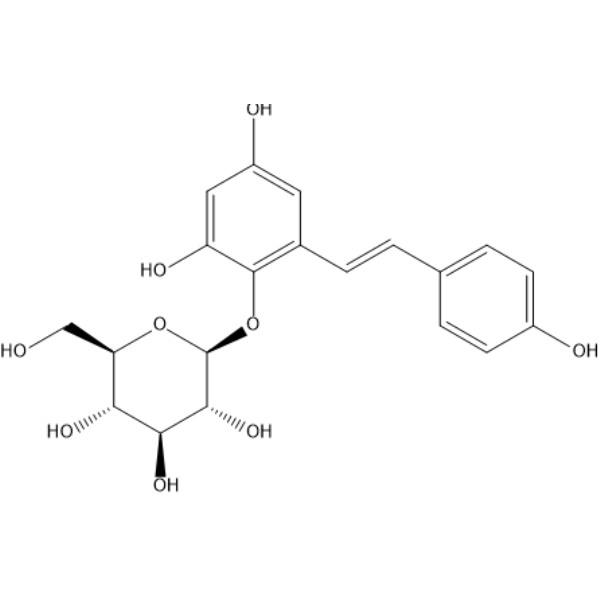
2,3,5,4'-Tetrahydroxystilbene 2-O-β-D-glucoside isolats from the roots of Polygonaceae species, inhibits the formation of 5-HETE, HHT and thromboxane B2. 2,3,5,4'-Tetrahydroxystilbene 2-O-β-D-glucoside has hypotensive, anti-ageing, anti-inflammatory, hypolipidemic, cardioprotective, and neuroprotective actions .
|
-
-
- HY-21065
-
|
Ticrynafen; ANP 3624
|
Cytochrome P450
|
Cardiovascular Disease
Metabolic Disease
|
|
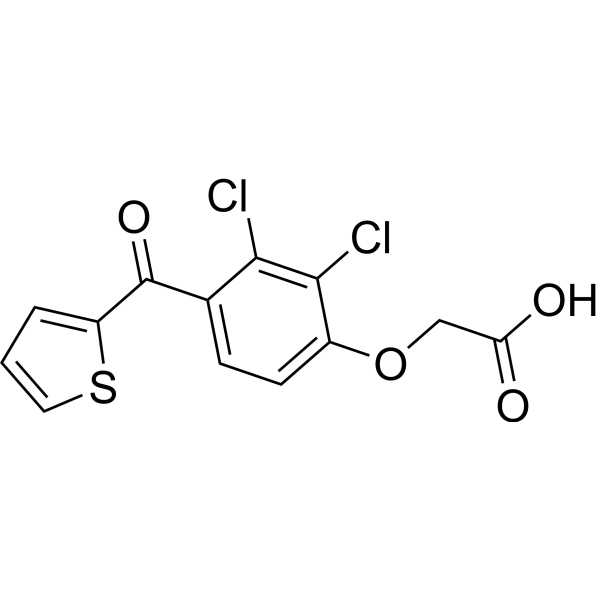
Tienilic acid (Ticrynafen; ANP 3624) acts as a diuretic hypotensive agent. However, Tienilic acid induces hepatotoxicity. Tienilic acid is converted into electrophilic metabolites by cytochrome P450 (CYP) in vitro .
|
-
-
- HY-N0068
-
-
-
- HY-W011552
-
|
|
Endogenous Metabolite
|
Cardiovascular Disease
|
|
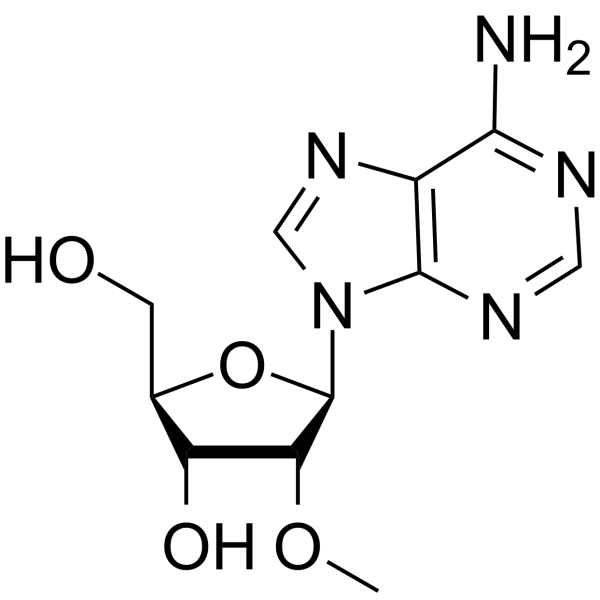
2'-O-Methyladenosine, a methylated adenine residue is found in urine of normals as well as in urine of adenosine deaminase (ADA) deficient patients. 2'-O-Methyladenosine exhibits unique hypotensive activities .
|
-
-
- HY-B0419
-
|
|
Calcium Channel
Interleukin Related
|
Cardiovascular Disease
Neurological Disease
Endocrinology
|
|
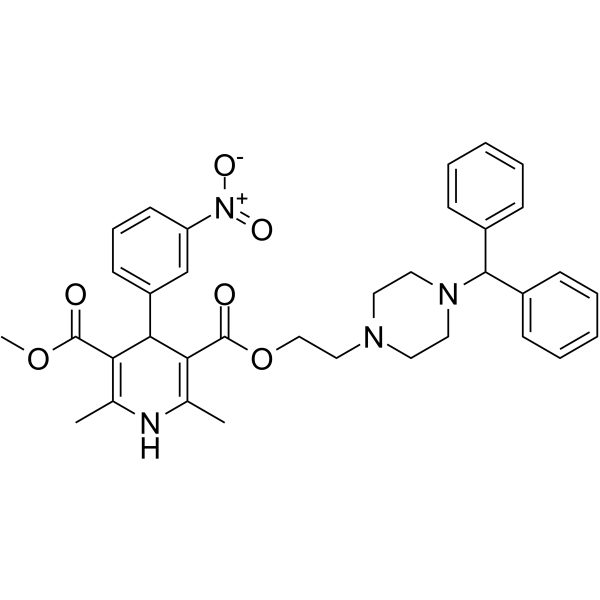
Manidipine is an orally active calcium channel antagonist. Manidipine regulates the expression of cytokines (IL-1β, IL-6). Manidipine has a hypotensive effect. Manidipine can be used in the study of cardiovascular diseases (such as hypertension, myocardial ischemia-reperfusion injury, ventricular hypertrophy), kidney diseases (such as glomerular diseases), and epilepsy .
|
-
-
- HY-17642
-
|
UR-7276
|
Prostaglandin Receptor
|
Endocrinology
|
|
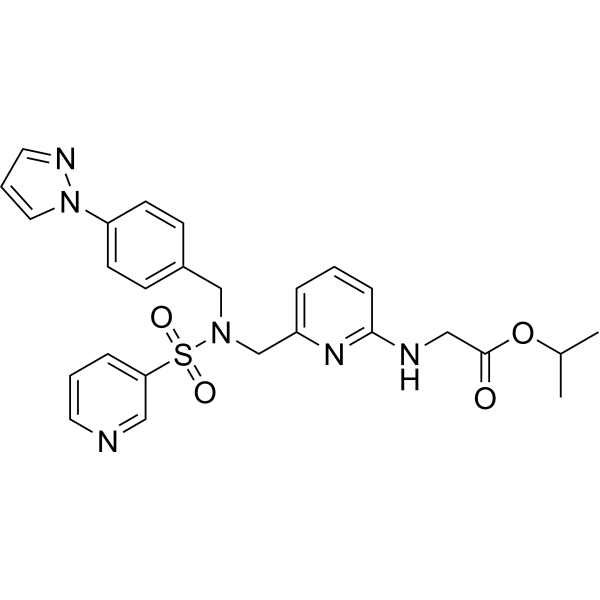
Omidenepag (UR-7276), a pharmacologically active form of Omidenepag Isopropyl, is a selective, non-prostanoid EP2 receptor agonist, with an EC50 of 1.1 nM. Omidenepag shows binding affinities (IC50) 10 nM for h-EP2. Omidenepag is used in research on diseases related to intraocular pressure .
|
-
-
- HY-N0165
-
|
|
HIV
Reverse Transcriptase
|
Cardiovascular Disease
Infection
Inflammation/Immunology
|
|
Methyl-Hesperidin is a glycoside compound. Methyl-Hesperidin has hypotensive, coronary dilating, smooth muscle relaxing, capillary stabilizing, choleretic, and anti-ulcer activities. Methyl-Hesperidin act as a competitive substrate to inhibit HIV-1 reverse transcriptase activity. Methyl-Hesperidin potentiates coronary dilating actions of adenine nucleotides and 3'-AMP, enhances depressant action on isolated atria, and prolongs adenosine- and ATP-induced heart block in guinea pigs .
|
-
-
- HY-P2198
-
-
-
- HY-B0584
-
|
Fluprostenol isopropyl ester; AL6221; Flu-Ipr
|
Prostaglandin Receptor
|
Cardiovascular Disease
Endocrinology
|
|
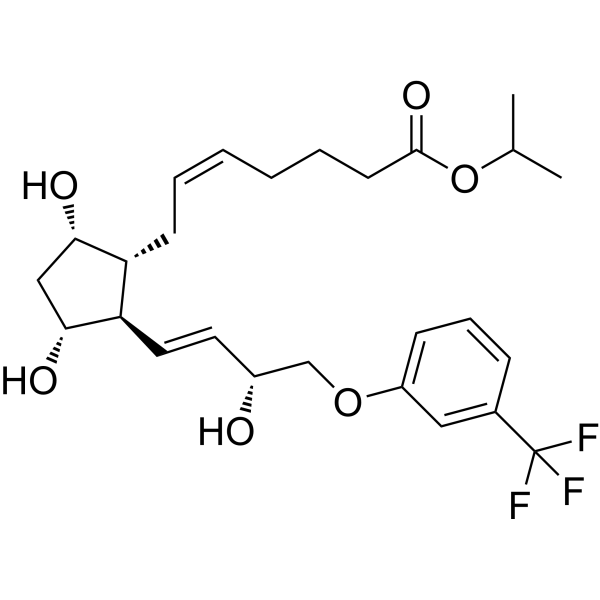
Travoprost (Fluprostenol isopropyl ester), an isopropyl ester proagent, is a high affinity, selective FP prostaglandin full receptor agonist. Travoprost has the ocular hypotensive efficacy and has the potential for glaucoma and ocular hypertension .
|
-
-
- HY-P990951
-
|
REGN-5381
|
Natriuretic Peptide Receptor (NPR)
|
Cardiovascular Disease
|
|
Vixticibart (REGN-5381) is a fully human IgG4 monoclonal antibody and NPR1 agonist that targets NPR1. Vixticibart stabilizes the receptor in an activated conformation by binding to the N-terminal domain of NPR1, and enhances the activity of endogenous ligands ANP and BNP without blocking ligand binding when these ligands are present. Vixticibart exerts vasodilatory and hypotensive effects by inducing cGMP production, preferentially dilating venous vessels to reduce systolic and venous pressure, but does not induce diuresis and may trigger a compensatory increase in heart rate. Vixticibart produces a synergistic hypotensive effect when combined with angiotensin-converting enzyme inhibitors or angiotensin receptor blockers, and is currently mainly used in research related to heart failure and hypertension .
|
-
-
- HY-14561A
-
|
RX 781094 hydrochloride
|
Adrenergic Receptor
Imidazoline Receptor
|
Neurological Disease
Endocrinology
|
|
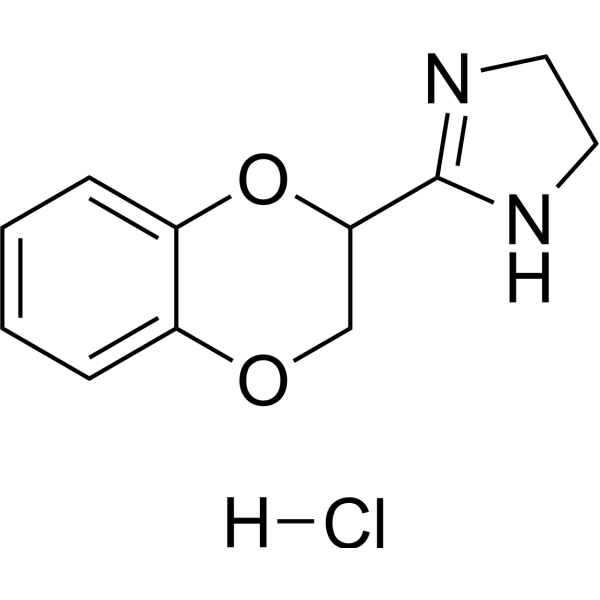
Idazoxan hydrochloride (RX 781094 hydrochloride) is an α2-adrenoceptor antagonist and is also a imidazoline receptors (IRs) antagonist competitively antagonized the centrally induced hypotensive effect of imidazoline-like agents (IMs). Idazoxan hydrochloride also improves motor symptoms in Parkinson’s disease, L-DOPA-induced dyskinesias, and experimental Parkinsonism .
|
-
-
- HY-111406
-
|
DE-117
|
Prostaglandin Receptor
|
Cardiovascular Disease
Inflammation/Immunology
|
|
Omidenepag isopropyl is a selective EP2 receptor agonist. Omidenepag isopropyl is converted to the active product Omidenepag during corneal penetration, and Omidenepag is a highly selective EP2 receptor agonist. Omidenepag isopropyl shows only weak affinity for EP1, EP2, and FP receptors. Omidenepag isopropyl is under development for the treatment of glaucoma as an intraocular pressure (IOP)-lowering agent.
|
-
-
- HY-N5083
-
-
-
- HY-P2469
-
|
BNP-45, mouse
|
Natriuretic Peptide Receptor (NPR)
|
Cardiovascular Disease
|
Brain Natriuretic Peptide-45, mouse (BNP-45, mouse) is a 45-amino-acid peptide derived from the mouse BNP prohormone, which exhibits natriuretic, diuretic, and vasoactive effects. Brain Natriuretic Peptide-45, mouse contains all amino acid residues deemed critical for the biological activity of natriuretic peptides. Brain Natriuretic Peptide-45, mouse possesses hypotensive and diuretic activities .
|
-
-
- HY-W010144
-
|
|
COX
Lipoxygenase
|
Cardiovascular Disease
Inflammation/Immunology
|
|
Phenidone, an orally active dual inhibitor of cyclooxygenase (COX) and lipoxygenase (LOX), ameliorates rat paralysis in experimental autoimmune encephalomyelitis. Phenidone is a potent hypotensive agent in the spontaneously hypertensive rat . Phenidone is used as a photographic developer .
|
-
-
- HY-107915
-
|
(-)-Cobefrin; (-)-α-Methylnoradrenaline; (-)-Nordefrin
|
Adrenergic Receptor
|
Cardiovascular Disease
|
Levonordefrin ((-)-Cobefrin; (-)-α-Methylnoradrenaline; (-)-Nordefrin) is an α-adrenergic receptor agonist with blood pressure regulatory properties. Levonordefrin is a key metabolite responsible for the hypotensive effect of α-methyldopa. By stimulating central α-adrenergic receptors in the nucleus tractus solitarius region of the medulla oblongata, Levonordefrin induces centrally mediated hypotension and bradycardia. When administered intravenously, Levonordefrin increases mean arterial blood pressure in a dose-dependent manner. Levonordefrin is applicable for research on the pathophysiology of hypertension and drug metabolism .
|
-
-
- HY-152847
-
|
QLS-101
|
Potassium Channel
|
Neurological Disease
|
|
Foslevcromakalim (QLS-101) is a ATP-sensitive potassium channel opener. Foslevcromakalim is the proagent used for ocular hypotensive effect .
|
-
-
- HY-W016414
-
|
|
Environmental Pollutants
Endogenous Metabolite
|
Cardiovascular Disease
|
|
Triethyl phosphate is a versatile phosphate ester compound. Triethyl phosphate induces rapid and short-acting anesthesia, and exhibits hypotensive, smooth muscle relaxant, and cardiac inhibitory effects. Triethyl phosphate also modulates cholinergic toxicity; its anesthetic effect shows sex- and age-dependency in rodents, and it interacts with SKF 525-A (HY-B1311) to alter the duration of anesthesia .
|
-
-
- HY-B1562B
-
|
(±)-Bopindolol malonate
|
Adrenergic Receptor
Renin
5-HT Receptor
|
Cardiovascular Disease
Neurological Disease
|
|
Bopindolol ((±)-Bopindolol) malonate is an orally active antagonist of β-adrenoceptors (ARs) with partial agonist activity. Bopindolol malonate is non-selective for β1- and β2-ARs and has low affinity for β3-AR subtype. Bopindolol malonate has intrinsic sympathomimetic as well as membrane stabilizing actions, inhibits renin secretion, and interacts with 5-HT receptors. Bopindolol malonate is a proagent of Pindolol (HY-B0982). Bopindolol malonate can be used for essential and renovascular hypertension research.
|
-
-
- HY-W001940
-
|
|
Amino Acid Derivatives
Bacterial
|
Infection
Cardiovascular Disease
|
|
DL-m-Tyrosine is a non-protein amino acid. DL-m-Tyrosine inhibits microbial growth and spore formation. DL-m-Tyrosine also inhibits root growth in various plants, such as lettuce and Arabidopsis. DL-m-Tyrosine, when used in combination with Carbidopa (HY-B0311), has a potent antihypertensive effect. DL-m-Tyrosine can be used in research on biopesticide design .
|
-
-
- HY-P1831
-
|
ProAM N20, Human; PAMP-20, human
|
nAChR
Sodium Channel
Calcium Channel
|
Cardiovascular Disease
Neurological Disease
|
|
Proadrenomedullin (1-20), human is a potent hypotensive and catecholamine release–inhibitory peptide released from chromaffin cells. Proadrenomedullin (1-20) inhibits catecholamine secretion in PC12 pheochromocytoma cells (IC50 ≈ 350 nM) by suppressing Na +/Ca 2+ influx and blocking desensitization. Proadrenomedullin (1-20), human specifically acts on nicotinic cholinergic receptors in a non competitive manner. Proadrenomedullin (1-20), human can be used for research on conditions such as hypertension .
|
-
-
- HY-B1800
-
-
-
- HY-N0652R
-
|
2,3,4',5-Tetrahydroxystilbene 2-O-D-glucoside (Standard)
|
Reference Standards
ERK
NF-κB
|
Cardiovascular Disease
Neurological Disease
|
|
2,3,5,4'-Tetrahydroxystilbene 2-O-β-D-glucoside (Standard) is the analytical standard of 2,3,5,4'-Tetrahydroxystilbene 2-O-β-D-glucoside. This product is intended for research and analytical applications. 2,3,5,4'-Tetrahydroxystilbene 2-O-β-D-glucoside isolats from the roots of Polygonaceae species, inhibits the formation of 5-HETE, HHT and thromboxane B2. 2,3,5,4'-Tetrahydroxystilbene 2-O-β-D-glucoside has hypotensive, anti-ageing, anti-inflammatory, hypolipidemic, cardioprotective, and neuroprotective actions .
|
-
-
- HY-U00344A
-
-
-
- HY-164704
-
-
-
- HY-123179
-
|
|
Carbonic Anhydrase
|
Cardiovascular Disease
|
|
Mefruside is an orally active diuretic and has a mild hypotensive effect. Mefruside inhibits the synthesis of urea in an isolated rat liver perfusion model. Mefruside can be used in studies of oedema and hypertension .
|
-
-
- HY-121653
-
|
|
5-HT Receptor
|
Neurological Disease
|
|
Flesinoxan is a hypotensive agent and a potent, high affinity and selective 5-hydroxytryptamine1A (5-HT1A) receptor agonist with an EC50 value of 24 nM. Flesinoxan also has effective anxiolytic/antidepressant effects .
|
-
-
- HY-P1106
-
|
|
CRFR
|
Cardiovascular Disease
|
|
K41498 is a highly selective CRF 2 receptor antagonist, with a Ki of 0.66 nM for human CRF2α receptor and a Ki of 0.62 nM for human CRF2β receptor. K41498 inhibits cAMP accumulation in cells expressing CRF2. K41498 antagonizes the hypotensive response induced by systemic administration of urocortin in conscious rats. K41498 undergoes radioiodination without loss of activity and serves for autoradiographic studies of native CRF2 receptors in rat brain and peripheral tissues .
|
-
-
- HY-W011552R
-
|
|
Reference Standards
Endogenous Metabolite
|
Cardiovascular Disease
|
|
2'-O-Methyladenosine (Standard) is the analytical standard of 2'-O-Methyladenosine. This product is intended for research and analytical applications. 2'-O-Methyladenosine, a methylated adenine residue is found in urine of normals as well as in urine of adenosine deaminase (ADA) deficient patients. 2'-O-Methyladenosine exhibits unique hypotensive activities .
|
-
-
- HY-N0068R
-
-
-
- HY-U00344
-
-
-
- HY-B1251
-
-
-
- HY-106447
-
-
-
- HY-103295A
-
|
|
Bradykinin Receptor
|
Metabolic Disease
Inflammation/Immunology
|
|
Lys-[Des-Arg9]Bradykinin TFA, a naturally occurring kinin, is a potent and highly selective bradykinin B1 receptor agonist with a Ki of 0.12 nM, 1.7 nM and 0.23 nM for human, mouse and rabbit B1 receptors, respectively. Lys-[Des-Arg9]Bradykinin TFA has low inhibitory activity on B2 receptors .
|
-
-
- HY-P1573
-
-
-
- HY-122215
-
|
N-696
|
Adrenergic Receptor
|
Endocrinology
|
|
Tilisolol hydrochloride (N-696) is a non-selective β-adrenergic antagonist with vasodilatory and hypotensive activities. Tilisolol hydrochloride exerts its effects in canine coronary arteries by opening ATP-sensitive K+ channels. Tilisolol hydrochloride exhibits concentration-dependent relaxation in KCl-precontracted rat thoracic aorta. Tilisolol hydrochloride reduces diastolic blood pressure in a dose-dependent manner and slightly increases heart rate in spinal cord stimulated rats .
|
-
-
- HY-P3889
-
|
|
Neurokinin Receptor
|
Neurological Disease
|
|
Substance P (6-11) is the C-terminal hexapeptideamide of Substance P (HY-P0201). Substance P (6-11) binds to NK-1 tachykinin receptor. Substance P (6-11) shows depolarization of motoneurons and a hypotensive effect .
|
-
-
- HY-125641
-
|
|
5-HT Receptor
Adrenergic Receptor
|
Cardiovascular Disease
|
|
AL-34662 is a selective 5-HT2A receptoragonist (IC50: 0.77 nM and 1.5 nM for rat and human 5-HT2 receptor). AL-34662 is also a weak α-1D adrenergic agonist activity (EC50:0.4 μM). AL-34662 is an ocular hypotensive agent .
|
-
-
- HY-130395
-
-
-
- HY-132277
-
-
-
- HY-103295
-
|
|
Bradykinin Receptor
|
Metabolic Disease
Inflammation/Immunology
|
|
Lys-[Des-Arg9]Bradykinin, a naturally occurring kinin, is a potent and highly selective bradykinin B1 receptor agonist with a Ki of 0.12 nM, 1.7 nM and 0.23 nM for human, mouse and rabbit B1 receptors, respectively. Lys-[Des-Arg9]Bradykinin has low inhibitory activity on B2 receptors .
|
-
-
- HY-127152
-
|
Pratorine
|
Endogenous Metabolite
|
Cardiovascular Disease
|
|
Hippadine (Pratorine) is an alkaloid, which can be isolated from the plant Crinum macowanii. Hippadine exhibits heart-rate lowering and blood-pressure lowering effects in rats models with spontaneously hypertensive .
|
-
-
- HY-B0584R
-
|
Fluprostenol isopropyl ester(Standard); AL6221(Standard); Flu-Ipr (Standard)
|
Reference Standards
Prostaglandin Receptor
|
Endocrinology
|
|
Travoprost (Standard) is the analytical standard of Travoprost. This product is intended for research and analytical applications. Travoprost (Fluprostenol isopropyl ester), an isopropyl ester proagent, is a high affinity, selective FP prostaglandin full receptor agonist. Travoprost has the ocular hypotensive efficacy and has the potential for glaucoma and ocular hypertension .
|
-
-
- HY-13711
-
|
|
Endothelin Receptor
|
Cardiovascular Disease
|
|
S-1255 is an orally active and highly selective endothelin ETA receptor antagonist (Kd=0.39 nM). S-1255 blocks vasoconstriction and sustains hypotensive effects in hypertensive rats. S-1255 is promising for research of hypertension and cardiovascular disorders .
|
-
-
- HY-169221
-
|
|
Angiotensin Receptor
|
Cardiovascular Disease
|
|
Perindopril arginine is an angiotensin-converting enzyme inhibitor with hypotensive activity. Perindopril arginine is used to inhibit hypertension to lower blood pressure. Perindopril arginine, when used in combination with indapamide and amlodipine, can effectively lower blood pressure and provide better target organ protection .
|
-
-
- HY-107326
-
-
-
- HY-107326A
-
-
-
- HY-119063
-
|
|
Carbonic Anhydrase
|
Others
|
|
L-645151 is a carbonic anhydrase inhibitor with ocular penetration and hypotensive activity. L-645151 lowers the elevated intraocular pressure (IOP) of o-chymotripsinized (o-CT) rabbit eyes. L-645151 is promising for research of an ocular hypotensive agent .
|
-
-
- HY-119750
-
|
|
Adrenergic Receptor
|
Cardiovascular Disease
|
|
Budralazine is a vasodilator, which dilates the vascular smooth muscle and exhibits hypotensive efficacy. Budralazine inhibits the central sympathetic nerve and exhibits an anti-tachycardic effect .
|
-
-
- HY-106554
-
|
|
Adrenergic Receptor
|
Cardiovascular Disease
|
|
Trimazosin is an orally active, quinazoline derivative which is structurally related to prazosin. Trimazosin shows hypotensive effect by selectively block α1-adrenoceptors .
|
-
- HY-106554A
-
|
|
Adrenergic Receptor
|
Cardiovascular Disease
|
|
Trimazosin hydrochloride hydrate is an orally active, quinazoline derivative which is structurally related to prazosin. Trimazosin shows hypotensive effect by selectively block α1-adrenergic receptor .
|
-
- HY-B1800R
-
|
|
Angiotensin Receptor
Reference Standards
|
Cardiovascular Disease
|
|
Tolonidine (Standard) is the analytical standard of Tolonidine. This product is intended for research and analytical applications. Tolonidine is a derivative of imidazoline. Tolonidine is orally active and has been shown to possess hypotensive and antihypertensive properties .
|
-
- HY-146650
-
|
|
Bacterial
|
Infection
Cardiovascular Disease
|
|
LpxC-IN-9 (compound 19) is a potent LpxC inhibitor. LpxC-IN-9 has antibacterial and hypotensive effects . LpxC-IN-9 is a click chemistry reagent, it contains an Alkyne group and can undergo copper-catalyzed azide-alkyne cycloaddition (CuAAc) with molecules containing Azide groups.
|
-
- HY-21065R
-
|
Ticrynafen (Standard); ANP 3624 (Standard)
|
Cytochrome P450
Reference Standards
|
Metabolic Disease
|
|
Tienilic acid (Standard) is the analytical standard of Tienilic acid. This product is intended for research and analytical applications. Tienilic acid (Ticrynafen; ANP 3624) acts as a diuretic hypotensive agent. However, Tienilic acid induces hepatotoxicity. Tienilic acid is converted into electrophilic metabolites by cytochrome P450 (CYP) in vitro .
|
-
- HY-P2198A
-
-
- HY-B0191S
-
|
AGN 192024 d5
|
Prostaglandin Receptor
|
Endocrinology
|
|
Bimatoprost-d5 is a deuterium labeled Bimatoprost. Bimatoprost is a prostaglandin analog and is a topical hypotensive agent frequently used for treating ocular hypertension and glaucoma. Bimatoprost also has an antiadipogenic effect .
|
-
- HY-W753672
-
|
|
Isotope-Labeled Compounds
|
Cardiovascular Disease
|
|
2'-O-Methyl Adenosine-d3 is deuterium labeled 2'-O-Methyl Adenosine. 2'-O-Methyl Adenosine, a methylated adenine residue is found in urine of normals as well as in urine of adenosine deaminase (ADA) deficient patients. 2'-O-Methyl Adenosine exhibits unique hypotensive activities .
|
-
- HY-125700
-
|
(-)-Bao Gong Teng A
|
mAChR
|
Cardiovascular Disease
Neurological Disease
|
|
Baogongteng A ((-)-Bao Gong Teng A) is an optically active tropane alkaloid with hypotensive and miotic activity, and can be isolated from the Chinese herb Erycibe obtusifolia Benth. Baogongteng A is also a muscarinic agonist. Baogongteng A can be used for cardiovascular and glaucoma research .
|
-
- HY-163994
-
|
KWD 2058 hydrochloride
|
Adrenergic Receptor
|
Others
|
|
Ibuterol (KWD 2058) hydrochloride, a diester of Terbutaline (HY-B0802A), is an orally active, selective and effective β-stimulating agent with lipophilic activities. Ibuterol hydrochloride is also an orally active ocular hypotensive agent. Ibuterol hydrochloride relieves bronchial obstruction in asthma without causing circulatory effects. Ibuterol hydrochloride is proming for rasearch of intraocular hypertension, asthma and bronchitis .
|
-
- HY-B0419R
-
|
|
Calcium Channel
Interleukin Related
Reference Standards
|
Cardiovascular Disease
Neurological Disease
Endocrinology
|
|
Manidipine (Standard) is the analytical standard of Manidipine. This product is intended for research and analytical applications. Manidipine is an orally active calcium channel antagonist. Manidipine regulates the expression of cytokines (IL-1β, IL-6). Manidipine has a hypotensive effect. Manidipine can be used in the study of cardiovascular diseases (such as hypertension, myocardial ischemia-reperfusion injury, ventricular hypertrophy), kidney diseases (such as glomerular diseases), and epilepsy .
|
-
- HY-W751400
-
-
- HY-W009027
-
-
- HY-129607
-
|
|
Renin
|
Cardiovascular Disease
|
|
A-65317 is a primate-selective renin dipeptide inhibitor (IC50 of 0.37 nM) with long hypotensive response .
|
-
- HY-B1562
-
|
(±)-Bopindolol
|
Adrenergic Receptor
Renin
5-HT Receptor
|
Cardiovascular Disease
Neurological Disease
|
|
Bopindolol ((±)-Bopindolol) is an orally active antagonist of β-adrenoceptors (ARs) with partial agonist activity. Bopindolol is non-selective for β1- and β2-ARs and has low affinity for β3-AR subtype. Bopindolol has intrinsic sympathomimetic as well as membrane stabilizing actions, inhibits renin secretion, and interacts with 5-HT receptors. Bopindolol is a proagent of Pindolol (HY-B0982). Bopindolol can be used for essential and renovascular hypertension research.
|
-
- HY-116158
-
-
- HY-121550
-
|
|
Angiotensin-converting Enzyme (ACE)
|
Cardiovascular Disease
|
|
ME3221 is an angiotensin AT1 receptor antagonist that effectively antagonizes the pressor response to angiotensin II in rats and marmosets without affecting the hypotensive response to bradykinin. It demonstrates potent antihypertensive effects in renal hypertensive rats and spontaneously hypertensive rats (SHR). ME3221's repeated administration in SHR results in sustained and stable hypotensive effects without affecting heart rate, indicating its potential for studying both renal and essential hypertension .
|
-
- HY-B1562C
-
|
(±)-Bopindolol fumarate
|
Adrenergic Receptor
Renin
5-HT Receptor
|
Cardiovascular Disease
Neurological Disease
|
|
Bopindolol ((±)-Bopindolol) fumarate is an orally active antagonist of β-adrenoceptors (ARs) with partial agonist activity. Bopindolol fumarate is non-selective for β1- and β2-ARs and has low affinity for β3-AR subtype. Bopindolol fumarate has intrinsic sympathomimetic as well as membrane stabilizing actions, inhibits renin secretion, and interacts with 5-HT receptors. Bopindolol fumarate is a proagent of Pindolol (HY-B0982). Bopindolol fumarate can be used for essential and renovascular hypertension research.
|
-
- HY-P1300
-
|
|
Opioid Receptor
|
Neurological Disease
|
|
[(pF)Phe4]Nociceptin(1-13)NH2 is a highly potent and selective NOP receptor (OP4) agonist, with a pKi of 10.68 and a pEC50 of 9.31. [(pF)Phe4]Nociceptin(1-13)NH2 displays high selectivity over δ, κ, and μ opioid receptors (>3000 fold) .
|
-
- HY-P1300A
-
|
|
Opioid Receptor
|
Neurological Disease
|
|
[(pF)Phe4]Nociceptin(1-13)NH2 TFA is a highly potent and selective NOP receptor (OP4) agonist, with a pKi of 10.68 and a pEC50 of 9.31. [(pF)Phe4]Nociceptin(1-13)NH2 TFA displays high selectivity over δ, κ, and μ opioid receptors (>3000 fold) .
|
-
- HY-W746888
-
|
17-p-PGF2α-NEt2; 17-Phenyl trinor PGF2α diethyl amide
|
Prostaglandin Receptor
|
Cardiovascular Disease
|
|
17-Phenyl trinor prostaglandin F2α diethyl amide (17-phenyl trinor PGF2α diethyl amide) is a PGF2α analog with hypotensive efficacy .
|
-
- HY-P1573A
-
-
- HY-W010144R
-
-
- HY-118648
-
|
PGF2α methyl ester; Dinoprost methyl
|
Prostaglandin Receptor
|
Others
|
|
Prostaglandin F2α methyl ester (PGF2α methyl ester; Dinoprost methyl) is a PGF2α analog with more lipid solubility. Prostaglandin F2α methyl ester exhibits efficacy in maintaining the ocular hypotensive .
|
-
- HY-114666
-
|
NDR-5523A
|
Endogenous Metabolite
|
Cardiovascular Disease
|
|
Trimoxamine hydrochloride (NDR-5523A) is an antihypertensive drug with hypotensive activity. Trimoxamine hydrochloride can be used to inhibit hypertension-related diseases. Trimoxamine hydrochloride lowers blood pressure by inhibiting vasoconstriction. Trimoxamine hydrochloride plays an important role in the management of cardiovascular diseases .
|
-
- HY-125375
-
-
- HY-132277S
-
|
|
Isotope-Labeled Compounds
|
Others
|
|
15-Keto Bimatoprost-d5 is the deuterium labeled 15-Keto Bimatoprost. 15-Keto Bimatoprost is a prostaglandin F2α (PGF2α) analog that can be used for the research of ocular hypotensive .
|
-
- HY-N4209
-
|
|
Others
|
Cardiovascular Disease
|
|
3α-Dihydrocadambine is a natural product isolated from the heartwoods of Anthocephalus cadamba.3α-Dihydrocadambine exhibits dose-dependent hypotensive and anti-hypertensive effects in anesthetized normotensive rats and in conscious spontaneously hypertensive rats .
|
-
- HY-112074A
-
|
HOE 440 hydrochloride
|
Adrenergic Receptor
|
Cardiovascular Disease
|
|
Tiamenidine hydrochloride (HOE 440 hydrochloride) is a centrally acting α1-adrenergic receptor antagonist with hypotensive activity. Tiamenidine hydrochloride regulates blood pressure levels by binding to α1 receptors. Tiamenidine hydrochloride can be used in the study of hypertension .
|
-
- HY-121653B
-
|
DU-29373
|
5-HT Receptor
|
Neurological Disease
|
|
Flesinoxan hydrochloride is a hypotensive agent and a potent, high affinity and selective 5-hydroxytryptamine1A (5-HT1A) receptor agonist with an EC50 value of 24 nM. Flesinoxan hydrochloride also has effective anxiolytic/antidepressant effects .
|
-
- HY-114385
-
|
13,14-epoxy Fluprostenol isopropyl ester
|
Prostaglandin Receptor
|
Others
|
|
13,14-epoxy Travoprost (13,14-epoxy Fluprostenol isopropyl ester) is a mixture of diastereomeric epoxides generated during production of Travoprost (HY-B0584). Travoprost is a selective agonist for prostaglandin F receptor, which exhibits an ocular hypotensive efficacy .
|
-
- HY-120405
-
|
|
Dopamine Receptor
|
Others
|
|
RS-12254 is a compound with hypotensive, diuretic and sympathostatic effects, and has the activity of regulating blood pressure, water and salt metabolism and sympathetic nerve activity. RS-12254 can lower blood pressure, reduce plasma norepinephrine levels, has diuretic and natriuretic effects, and has sympathostatic properties.
|
-
- HY-B0584S2
-
|
Fluprostenol isopropyl ester-7; AL6221-7; Flu-Ipr-7
|
Isotope-Labeled Compounds
Prostaglandin Receptor
|
Cardiovascular Disease
Endocrinology
|
|
Travoprost-d7 (Fluprostenol isopropyl ester-d7) is deuterium labeled Travoprost. Travoprost (Fluprostenol isopropyl ester), an isopropyl ester proagent, is a high affinity, selective FP prostaglandin full receptor agonist. Travoprost has the ocular hypotensive efficacy and has the potential for glaucoma and ocular hypertension .
|
-
- HY-B0584A
-
|
5,6-trans-Fluprostenol isopropyl ester; 5,6-trans-AL6221; 5,6-trans-Flu-Ipr
|
Prostaglandin Receptor
|
Endocrinology
|
|
5,6-trans-Travoprost is the isomer of Travoprost (HY-B0584), and can be used as an experimental control. Travoprost (Fluprostenol isopropyl ester), an isopropyl ester proagent, is a high affinity, selective FP prostaglandin full receptor agonist. Travoprost has the ocular hypotensive efficacy and has the potential for glaucoma and ocular hypertension .
|
-
- HY-129934
-
|
Lat-NEt
|
Prostaglandin Receptor
|
Endocrinology
|
|
Latanoprost ethyl amide (Lat-NEt) is a latanoprost analog in which the C-1 carboxyl group has been modified to an N-ethyl amide. Prostaglandin esters have been shown to have ocular hypotensive activity.1 Prostaglandin N-ethyl amides were recently introduced as alternative prostaglandin ocular hypotensive prodrugs. Although it has been claimed that prostaglandin ethyl amides are not converted to the free acids in vivo, studies in our laboratories have shown that bovine and human corneal tissue converts the N-ethyl amides of various prostaglandins to the free acids with a conversion rate of about 2.5 μg/g corneal tissue/hr. Lat-NEt would be expected to show the typical intraocular effects of Latanoprost free acid, but with the much slower hydrolysis pharmacokinetics of the prostaglandin N-amides.
|
-
- HY-121653R
-
|
|
5-HT Receptor
|
Neurological Disease
|
|
Flesinoxan (Standard) is the analytical standard of Flesinoxan. This product is intended for research and analytical applications. Flesinoxan is a hypotensive agent and a potent, high affinity and selective 5-hydroxytryptamine1A (5-HT1A) receptor agonist with an EC50 value of 24 nM. Flesinoxan also has effective anxiolytic/antidepressant effects .
|
-
- HY-117763
-
|
|
Calcium Channel
|
Others
|
|
A-39355 is a compound that can overcome multidrug resistance and has the activity of reversing multidrug resistance. A-39355 can enhance the cytotoxicity of antitumor compounds in multidrug-resistant cells, increase the accumulation of compounds in cells, inhibit the efflux of compounds, and compared with calcium antagonists, it has no serious hypotensive effect. Its activity may be unrelated to the ability to block calcium transport.
|
-
- HY-100571
-
|
|
Prostaglandin Receptor
|
Endocrinology
|
|
Cloprostenol isopropyl ester, a prostaglandin F2α analogs, is the intermediate of (+)-Cloprostenol (HY-107381). Cloprostenol isopropyl ester is a FP receptor agonist with a Ki value of 28 nM .
|
-
- HY-129934S
-
|
Lat-NEt-d4
|
Isotope-Labeled Compounds
Prostaglandin Receptor
|
Endocrinology
|
|
Latanoprost ethyl amide-d4 (Lat-NEt-d4) is deuterium labeled Latanoprost ethyl amide. Latanoprost ethyl amide (Lat-NEt) is a latanoprost analog in which the C-1 carboxyl group has been modified to an N-ethyl amide. Prostaglandin esters have been shown to have ocular hypotensive activity.1 Prostaglandin N-ethyl amides were recently introduced as alternative prostaglandin ocular hypotensive prodrugs. Although it has been claimed that prostaglandin ethyl amides are not converted to the free acids in vivo, studies in our laboratories have shown that bovine and human corneal tissue converts the N-ethyl amides of various prostaglandins to the free acids with a conversion rate of about 2.5 μg/g corneal tissue/hr. Lat-NEt would be expected to show the typical intraocular effects of Latanoprost free acid, but with the much slower hydrolysis pharmacokinetics of the prostaglandin N-amides .
|
-
- HY-B0098B
-
|
(R)-UK 33274
|
Adrenergic Receptor
|
Metabolic Disease
|
|
(R)-Doxazosin ((R)-UK 33274) is an isomer of Doxazosin, a selective and orally active a1-adrenoceptor agonist. Doxazosin can be used for systemic antihypertensive and ocular hypotensive. Doxazosin exerts its antihypertensive effect by reducing total peripheral resistance by selective postsynaptic a1-blockade, without reducing cardiac output. Doxazosin can significantly lower both standing and supine blood pressure .
|
-
- HY-14561AR
-
|
RX 781094 hydrochloride (Standard)
|
Adrenergic Receptor
Imidazoline Receptor
Reference Standards
|
Neurological Disease
Endocrinology
|
|
Idazoxan (hydrochloride) (Standard) is the analytical standard of Idazoxan (hydrochloride). This product is intended for research and analytical applications. Idazoxan hydrochloride (RX 781094 hydrochloride) is an α2-adrenoceptor antagonist and is also a imidazoline receptors (IRs) antagonist competitively antagonized the centrally induced hypotensive effect of imidazoline-like agents (IMs). Idazoxan hydrochloride also improves motor symptoms in Parkinson’s disease, L-DOPA-induced dyskinesias, and experimental Parkinsonism .
|
-
- HY-176011
-
|
17-Phenyl trinor PGF2α glycinamide methyl ester
|
Prostaglandin Receptor
|
Endocrinology
|
|
17-Phenyl trinor prostaglandin F2α glycinamide methyl ester is a derivative of Bimatoprost (HY-B0191) and a prostaglandin analog. 17-Phenyl trinor prostaglandin F2α glycinamide methyl ester is a human prostaglandin FP receptor agonist. 17-Phenyl trinor prostaglandin F2α glycinamide methyl ester has an ocular hypotensive effect and can be used in the study of ocular hypertension and glaucoma .
|
-
- HY-B0419S
-
|
|
Isotope-Labeled Compounds
Calcium Channel
Interleukin Related
|
Cardiovascular Disease
Neurological Disease
|
|
Manidipine-d4 is the deuterium labeled Manidipine (HY-B0419). Manidipine is an orally active calcium channel antagonist. Manidipine regulates the expression of cytokines (IL-1β, IL-6). Manidipine has a hypotensive effect. Manidipine can be used in the study of cardiovascular diseases (such as hypertension, myocardial ischemia-reperfusion injury, ventricular hypertrophy), kidney diseases (such as glomerular diseases), and epilepsy .
|
-
- HY-136625
-
|
|
N-myristoyltransferase
|
Cardiovascular Disease
|
|
LY134046 is an inhibitor of norepinephrine N-methyltransferase (NMT) with cardiovascular activity. LY134046 causes sustained reductions in mean arterial blood pressure and heart rate, but no significant reductions in norepinephrine concentrations in the rat brain. LY134046 does not interact with adrenergic or cholinergic receptors, and its hypotensive and bradycardic effects do not require neurogenic tension. LY134046 (40 mg/kg/day) causes sustained and significant inhibition of hypothalamic and brainstem NMT activity, resulting in central norepinephrine depletion.
|
-
- HY-N13715
-
-
- HY-119560
-
|
LD 3598
|
Others
|
Others
|
|
Spirgetine (LD 3598) is a compound with hypotensive activity that can be used to affect arterial pressure by intramuscular injection.
|
-
- HY-131566
-
|
|
Endogenous Metabolite
|
Cardiovascular Disease
|
|
Amiquinsin hydrochloride monohydrate is a compound with hypotensive activity. Amiquinsin hydrochloride monohydrate is metabolized in vivo, and the major metabolite is 4-amino-6,7-dimethoxy-3-quinolinol hydrochloride hydrate .
|
-
- HY-W001940R
-
|
|
Amino Acid Derivatives
Reference Standards
Bacterial
|
Infection
Cardiovascular Disease
|
|
DL-m-Tyrosine (Standard) is the analytical standard of DL-m-Tyrosine (HY-W001940). This product is intended for research and analytical applications. DL-m-Tyrosine is a non-protein amino acid. DL-m-Tyrosine inhibits microbial growth and spore formation. DL-m-Tyrosine also inhibits root growth in various plants, such as lettuce and Arabidopsis. DL-m-Tyrosine, when used in combination with Carbidopa (HY-B0311), has a potent antihypertensive effect. DL-m-Tyrosine can be used in research on biopesticide design .
|
-
- HY-W096561
-
|
|
Endogenous Metabolite
|
Cardiovascular Disease
|
|
Amiquinsin is a compound with hypotensive activity. Amiquinsin is metabolized in vivo, and the major metabolite is 4-amino-6,7-dimethoxy-3-quinolinol hydrochloride hydrate. The pharmacological and toxicological properties of amiquinsin have been widely discussed .
|
-
- HY-100543R
-
|
ICI-118551 (Standard)
|
Adrenergic Receptor
Reference Standards
Apoptosis
Caspase
Bcl-2 Family
HIF/HIF Prolyl-Hydroxylase
|
Cardiovascular Disease
Neurological Disease
Cancer
|
|
Zenidolol (ICI-118551) (Standard) is the analytical standard of Zenidolol (HY-100543). This product is intended for research and analytical applications. Zenidolol is a selective β2-adrenergic receptor antagonist with Ki values of Zenidolol for β2, β1 and β3 adrenergic receptors of 0.7, 49.5 and 611 nM, respectively. Zenidolol exerts antitumor effects via inducing apoptosis, inhibiting tumor sphere formation, and downregulating the HIF pathway by blocking β2-AR on tumor cells. Zenidolol exhibits a unique pulmonary vessel-specific vasodilatory effect in mouse models. Zenidolol can be used as an intraocular pressure-lowering agent in ophthalmic disease research.
|
-
- HY-120768
-
|
|
Drug Derivative
|
Others
|
|
A-30312 is a compound that can overcome multidrug resistance and has the activity of reversing multidrug resistance. A-30312 can enhance the cytotoxicity of antitumor compounds in multidrug-resistant cells, increase the accumulation of compounds in cells, inhibit the efflux of compounds, and compared with calcium antagonists, it has no serious hypotensive effect. Its activity may be unrelated to the ability to block calcium transport.
|
-
- HY-19145
-
|
CI-992
|
Renin
|
Cancer
|
|
PD-134672 (CI-992) is a renin inhibitor containing a 2-amino-4-thiazolyl substituent. PD-134672 potently inhibits monkey renin in vitro and only weakly inhibits the related aspartic protease bovine feline hepsin D. The compound exhibits oral hypotensive activity in hyperreninemic normotensive monkeys. Based on its superior efficacy and long-lasting effects in vitro and in the normotensive macaque model, PD-134672 was selected for further evaluation in renal hypertensive monkeys.
|
-
- HY-P5876
-
|
ProADM N20(bovine, porcine); PAMP-20(bovine, porcine)
|
nAChR
|
Neurological Disease
|
|
Proadrenomedullin (N-20) (ProADM N20) (bovine, porcine) is a potent and noncompetitive hypotensive and catecholamine release-inhibitory peptide released from chromaffin cells. Proadrenomedullin (N-20) (bovine, porcine) inhibits catecholamine secretion with an IC50 of 350 nM in PC12 pheochromocytoma cells. Proadrenomedullin (N-20) (bovine, porcine) also blocks (EC50≈270 nM) nicotinic cholinergic agonist desensitization of catecholamine release, as well as desensitization of nicotinic signal transduction ( 22Na + uptake) .
|
-
- HY-P1106A
-
|
|
CFTR
|
Cardiovascular Disease
|
|
K41498 TFA is a highly selective CRF 2 receptor antagonist, with a Ki of 0.66 nM for human CRF2α receptor and a Ki of 0.62 nM for human CRF2β receptor. K41498 TFA inhibits cAMP accumulation in cells expressing CRF2. K41498 TFA antagonizes the hypotensive response induced by systemic administration of urocortin in conscious rats. K41498 TFA undergoes radioiodination without loss of activity and serves for autoradiographic studies of native CRF2 receptors in rat brain and peripheral tissues .
|
-
- HY-139121
-
|
15-epi Bimatoprost free acid; 15(R)-Bimatoprost free acid; 15(R)-17-phenyl trinor PGF2α
|
Prostaglandin Receptor
|
Endocrinology
|
|
15(R)-17-Phenyl trinor Prostaglandin F2α (15-epi Bimatoprost free acid) is a prostaglandin F (FP) analog that acts as an ocular hypotensive agent. The free acid 17-Phenyl trinor Prostaglandin F2α is a potent FP receptor agonist. 15(R)-17-Phenyl trinor Prostaglandin F2α is the 15-epi or "unnatural" isomer of this active free acid metabolite and has reduced FP receptor agonist activity.
|
-
- HY-N5083R
-
-
- HY-107915R
-
|
(-)-Cobefrin (Standard); (-)-α-Methylnoradrenaline (Standard); (-)-Nordefrin (Standard)
|
Reference Standards
Adrenergic Receptor
|
Others
|
|
Levonordefrin (Standard) is the analytical standard of Levonordefrin. This product is intended for research and analytical applications. Levonordefrin ((-)-Cobefrin; (-)-α-Methylnoradrenaline; (-)-Nordefrin) is an α-adrenergic receptor agonist with blood pressure regulatory properties. Levonordefrin is a key metabolite responsible for the hypotensive effect of α-methyldopa. By stimulating central α-adrenergic receptors in the nucleus tractus solitarius region of the medulla oblongata, Levonordefrin induces centrally mediated hypotension and bradycardia. When administered intravenously, Levonordefrin increases mean arterial blood pressure in a dose-dependent manner. Levonordefrin is applicable for research on the pathophysiology of hypertension and drug metabolism .
|
-
- HY-N0165R
-
|
|
Reference Standards
HIV
Reverse Transcriptase
|
Cardiovascular Disease
Infection
Inflammation/Immunology
|
|
Methyl-Hesperidin (Standard) is the analytical standard of Methyl-Hesperidin (HY-N0165). This product is intended for research and analytical applications. Methyl-Hesperidin is a glycoside compound. Methyl-Hesperidin has hypotensive, coronary dilating, smooth muscle relaxing, capillary stabilizing, choleretic, and anti-ulcer activities. Methyl-Hesperidin act as a competitive substrate to inhibit HIV-1 reverse transcriptase activity. Methyl-Hesperidin potentiates coronary dilating actions of adenine nucleotides and 3'-AMP, enhances depressant action on isolated atria, and prolongs adenosine- and ATP-induced heart block in guinea pigs .
|
-
- HY-121538A
-
|
|
Epoxide Hydrolase
PPAR
|
Cardiovascular Disease
|
|
CUDA disodium is a potent inhibitor of soluble epoxide hydrolase (sEH), with IC50s of 11.1 nM and 112 nM for mouse sEH and human sEH, respectively . CUDA disodium selectively increases peroxisome proliferator-activated receptor (PPAR) alpha activity. CUDA disodium may be valuable for the research of cardiovascular disease .
|
-
- HY-121538
-
CUDA
1 Publications Verification
|
Epoxide Hydrolase
PPAR
|
Cardiovascular Disease
|
|
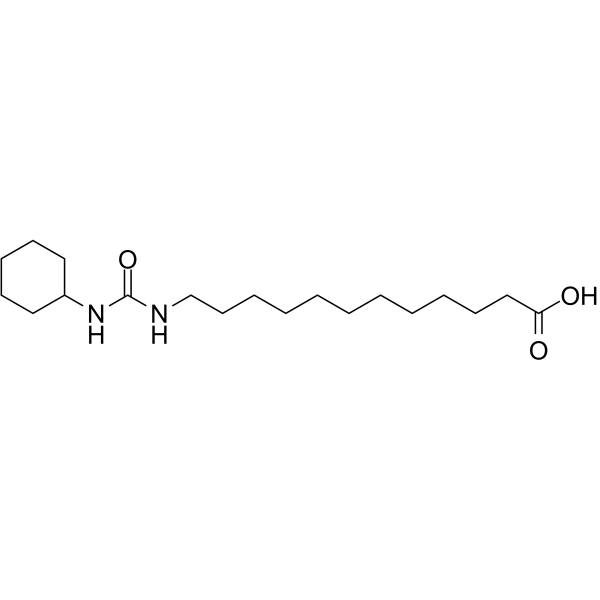
CUDA is a potent inhibitor of soluble epoxide hydrolase (sEH), with IC50s of 11.1 nM and 112 nM for mouse sEH and human sEH, respectively . CUDA selectively increases peroxisome proliferator-activated receptor (PPAR) alpha activity. CUDA may be valuable for the research of cardiovascular disease .
|
-
- HY-P0216A
-
|
|
Angiotensin Receptor
|
Cardiovascular Disease
|
|
A-779 TFA is a selective angiotensin-(1-7) (Ang-(1-7)) antagonist. A-779 TFA blocks Arachidonic acid release, bradykinin potentiation effects and hypotensive action. A-779 TFA exerts diuretic effects in non-pregnant rats, antidiuretic effects in late-pregnant rats, and also inhibits feed intake and water consumption in late-pregnant rats. A-779 TFA attenuates the regulatory effects of prostacyclin, nitric oxide and thromboxane A2 associated with angiotensin-(1-7). A-779 TFA can be used in studies related to hypertension .
|
-
- HY-180916
-
|
|
Carbonic Anhydrase
Reactive Oxygen Species (ROS)
NOD-like Receptor (NLR)
Apoptosis
|
Neurological Disease
|
|
CAII-IN-11 (Compound A1) is a dual-target compound that contains a hCA II inhibitor (IC₅₀ = 2 nM) portion and a NO donor portion. CAII-IN-11 also has inhibitory activity against hCA IX, hCA XII, and hCA I, with IC50 values of 6, 3, and 152 nM respectively. CAII-IN-11 significantly increases the intracellular cGMP level in human trabecular meshwork cells. CAII-IN-11 reduces the apoptosis of retinal ganglion cells by reducing oxidative stress (ROS levels), inhibiting astrocytes and the NLRP3 inflammasome activation. CAII-IN-11 has hypotensive activity in rabbit models and can be used for the study of glaucoma .
|
-
- HY-116679
-
|
17-Trifluoromethylphenyl trinor PGF2α
|
Prostaglandin Receptor
|
Endocrinology
|
|
A number of 17-phenyl trinor prostaglandin F2α (17-phenyl trinor PGF2α) derivatives have been approved for glaucoma. Of these, the unsubstituted or meta-substituted aromatic derivatives are the most potent FP receptor agonists.4 17-trifluoromethylphenyl trinor PGF2α bears an aromatic ring which is reminiscent of the trifluoromethyl-phenoxy ring of travoprost ((+)-fluprostenol isopropyl ester). As an ocular hypotensive agent, it would be expected that 17-trifluoromethylphenyl trinor PGF2α would act very much like the free acid of travoprost. 17-phenyl trinor PGF2α is a potent luteolytic, with a potency equal to or greater than fluprostenol and cloprostenol.
|
-
- HY-119854
-
|
AY-28228
|
Adrenergic Receptor
5-HT Receptor
Histamine Receptor
|
Cardiovascular Disease
Neurological Disease
|
|
Atiprosine (AY-28228) is an orally effective selective α1-adrenergic receptor antagonist with a pA2 value of 8.11. Atiprosine exhibits antagonistic activity against α2-adrenergic receptors (α1-adrenergic receptor), 5-HT₂ receptors (5-HT₂ receptor), and H₁ receptors (H₁ receptor). The pA2 values for these receptors are 6.04, 6.87, and 7.32 respectively. Atiprosine has antihypertensive and hypotensive effects in rats, dogs, and monkeys. It can be used for research on cardiovascular and mental disorders.
|
-
- HY-N0663
-
|
|
Mitochondrial Metabolism
Cyclophilin
Potassium Channel
|
Cardiovascular Disease
Neurological Disease
Inflammation/Immunology
|
Talatisamine is an orally active cyclophilin D activator isolated from the roots of Aconitum carmichaeli Debx. Talatisamine exerts biological functions by activating cyclophilin D, inhibiting Ca 2+-dependent opening of the mitochondrial permeability transition pore (mPTP) (IC50=78 μM), and blocking delayed rectifier K + channels (IC50=146 μM). Talatisamine possesses both antioxidant and membrane-stabilizing properties, effectively inhibits lipid peroxidation and protects mitochondrial membrane function. Talatisamine exhibits multiple activities including antiarrhythmic, hypotensive, anti-inflammatory, anticancer and neuroprotective effects. Talatisamine finds applications in the research of ischemic diseases, rheumatoid arthritis, inflammation-related diseases and Alzheimer's disease .
|
-
- HY-155297
-
|
FLA-136
|
Histamine Receptor
|
Cardiovascular Disease
|
|
Nebidrazine is a centrally-acting hypotensive agent compared to clonidine, demonstrating weaker cardiovascular effects in rats. It induces dose-dependent hypotension and bradycardia when administered intracerebroventricularly (i.c.v.), with significantly lower sedative potential than clonidine in conscious rats. Yohimbine attenuates the cardiovascular effects of both Nebidrazine and clonidine, suggesting involvement of central alpha-autoreceptors sensitive to yohimbine. Unlike clonidine, Nebidrazine does not affect peripheral alpha-adrenoceptors in pithed rats, indicating a selective central mechanism. Chemical sympathectomy reduces Nebidrazine's cardiovascular effects more than clonidine's, and metiamide diminishes responses to both drugs, implicating central histamine receptors. These findings highlight Nebidrazine's distinct pharmacological profile and potential therapeutic application in managing hypertension through central alpha-autoreceptor stimulation .
|
-
- HY-B0464
-
|
|
PGE synthase
NO Synthase
Reactive Oxygen Species (ROS)
DNA Methyltransferase
COX
|
Cardiovascular Disease
Inflammation/Immunology
Cancer
|
|
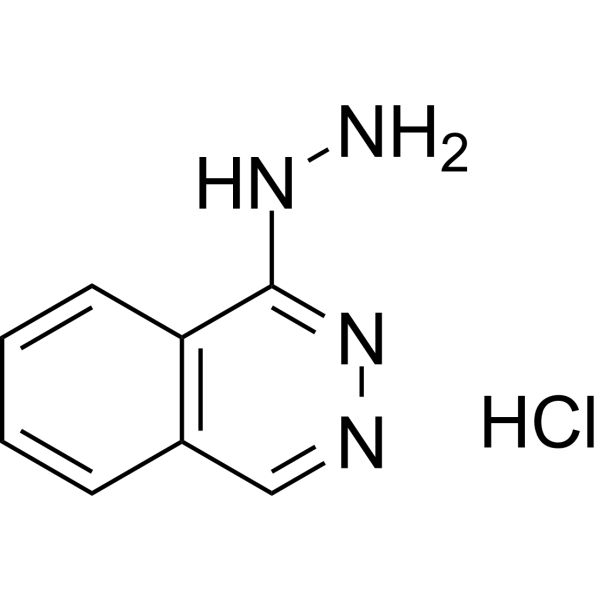
Hydralazine hydrochloride is an orally active, blood-brain barrier-permeable DNA methyltransferase inhibitor with vasodilatory, arterial smooth muscle relaxant and hypotensive activities. Hydralazine hydrochloride reactivates silenced tumor suppressor genes via mediating DNA demethylation, while exerting neuroprotective and anti-inflammatory properties. Hydralazine hydrochloride inhibits NOS-2 (iNOS) and COX-2, and reduces the production of NO and PGEE2; meanwhile, Hydralazine hydrochloride scavenges reactive oxygen species and inhibits macrophage activation. Hydralazine hydrochloride alleviates motor dysfunction, neuropathic inflammatory pain, and formalin-induced somatic and emotional pain responses. In addition, Hydralazine hydrochloride directly induces DNA strand breaks and sister chromatid exchange, exhibiting certain mutagenic characteristics. Hydralazine hydrochloride has been widely used in studies on hypertension, various cancers (such as cervical cancer, leukemia), spinal cord injury and the mechanisms of inflammatory pain .
|
-
- HY-B0464A
-
|
|
DNA Methyltransferase
Reactive Oxygen Species (ROS)
COX
NO Synthase
PGE synthase
|
Cardiovascular Disease
Neurological Disease
Inflammation/Immunology
Cancer
|
|
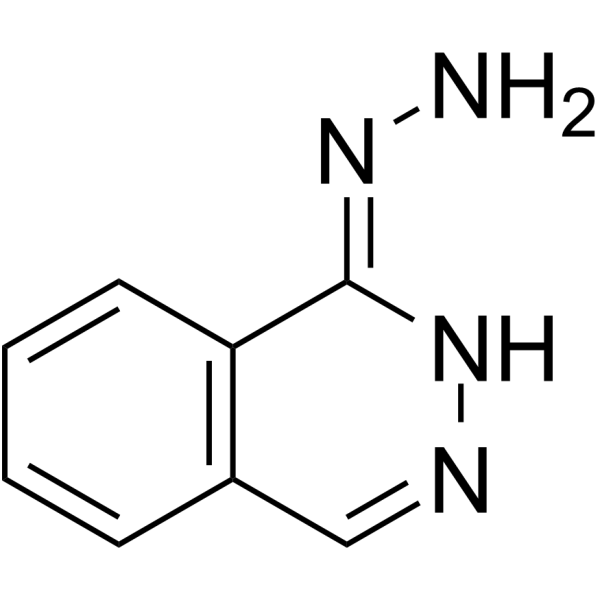
Hydralazine is an orally active, blood-brain barrier-permeable DNA methyltransferase inhibitor with vasodilatory, arterial smooth muscle relaxant and hypotensive activities. Hydralazine reactivates silenced tumor suppressor genes via mediating DNA demethylation, while exerting neuroprotective and anti-inflammatory properties. Hydralazine inhibits NOS-2 (iNOS) and COX-2, and reduces the production of NO and PGEE2; meanwhile, Hydralazine scavenges reactive oxygen species and inhibits macrophage activation. Hydralazine alleviates motor dysfunction, neuropathic inflammatory pain, and formalin-induced somatic and emotional pain responses. In addition, Hydralazine directly induces DNA strand breaks and sister chromatid exchange, exhibiting certain mutagenic characteristics. Hydralazine has been widely used in studies on hypertension, various cancers (such as cervical cancer, leukemia), spinal cord injury and the mechanisms of inflammatory pain .
|
-
- HY-B0464R
-
|
|
Reference Standards
PGE synthase
NO Synthase
Reactive Oxygen Species (ROS)
DNA Methyltransferase
COX
|
Cardiovascular Disease
Inflammation/Immunology
Cancer
|
|
Hydralazine (hydrochloride) (Standard) is the analytical standard of Hydralazine (hydrochloride). This product is intended for research and analytical applications. Hydralazine hydrochloride is an orally active, blood-brain barrier-permeable DNA methyltransferase inhibitor with vasodilatory, arterial smooth muscle relaxant and hypotensive activities. Hydralazine hydrochloride reactivates silenced tumor suppressor genes via mediating DNA demethylation, while exerting neuroprotective and anti-inflammatory properties. Hydralazine hydrochloride inhibits NOS-2 (iNOS) and COX-2, and reduces the production of NO and PGEE2; meanwhile, Hydralazine hydrochloride scavenges reactive oxygen species and inhibits macrophage activation. Hydralazine hydrochloride alleviates motor dysfunction, neuropathic inflammatory pain, and formalin-induced somatic and emotional pain responses. In addition, Hydralazine hydrochloride directly induces DNA strand breaks and sister chromatid exchange, exhibiting certain mutagenic characteristics. Hydralazine hydrochloride has been widely used in studies on hypertension, various cancers (such as cervical cancer, leukemia), spinal cord injury and the mechanisms of inflammatory pain .
|
-
- HY-B0464S1
-
|
|
Isotope-Labeled Compounds
PGE synthase
NO Synthase
Reactive Oxygen Species (ROS)
DNA Methyltransferase
COX
|
Cancer
|
|
Hydralazine-d5 (hydrochloride) is deuterium-labeled Hydralazine (hydrochloride) (HY-B0464). Hydralazine hydrochloride is an orally active, blood-brain barrier-permeable DNA methyltransferase inhibitor with vasodilatory, arterial smooth muscle relaxant and hypotensive activities. Hydralazine hydrochloride reactivates silenced tumor suppressor genes via mediating DNA demethylation, while exerting neuroprotective and anti-inflammatory properties. Hydralazine hydrochloride inhibits NOS-2 (iNOS) and COX-2, and reduces the production of NO and PGEE2; meanwhile, Hydralazine hydrochloride scavenges reactive oxygen species and inhibits macrophage activation. Hydralazine hydrochloride alleviates motor dysfunction, neuropathic inflammatory pain, and formalin-induced somatic and emotional pain responses. In addition, Hydralazine hydrochloride directly induces DNA strand breaks and sister chromatid exchange, exhibiting certain mutagenic characteristics. Hydralazine hydrochloride has been widely used in studies on hypertension, various cancers (such as cervical cancer, leukemia), spinal cord injury and the mechanisms of inflammatory pain .
|
-
- HY-B0464S
-
|
|
Isotope-Labeled Compounds
PGE synthase
NO Synthase
Reactive Oxygen Species (ROS)
DNA Methyltransferase
COX
|
Cardiovascular Disease
|
|
Hydralazine-d4 hydrochloride is the deuterium labeled Hydralazine hydrochloride. Hydralazine hydrochloride is an orally active, blood-brain barrier-permeable DNA methyltransferase inhibitor with vasodilatory, arterial smooth muscle relaxant and hypotensive activities. Hydralazine hydrochloride reactivates silenced tumor suppressor genes via mediating DNA demethylation, while exerting neuroprotective and anti-inflammatory properties. Hydralazine hydrochloride inhibits NOS-2 (iNOS) and COX-2, and reduces the production of NO and PGEE2; meanwhile, Hydralazine hydrochloride scavenges reactive oxygen species and inhibits macrophage activation. Hydralazine hydrochloride alleviates motor dysfunction, neuropathic inflammatory pain, and formalin-induced somatic and emotional pain responses. In addition, Hydralazine hydrochloride directly induces DNA strand breaks and sister chromatid exchange, exhibiting certain mutagenic characteristics. Hydralazine hydrochloride has been widely used in studies on hypertension, various cancers (such as cervical cancer, leukemia), spinal cord injury and the mechanisms of inflammatory pain .
|
-
- HY-N4267
-
|
|
Calcium Channel
Platelet-activating Factor Receptor (PAFR)
UGT
Leukotriene Receptor
TNF Receptor
PGE synthase
Interleukin Related
|
Cardiovascular Disease
Infection
Inflammation/Immunology
|
|
Yangambin is a PAF receptor antagonist and UGT1A1/UGT1A3 inhibitor, with an IC50 of 29.7 μM and a Ki of 17.1 μM against human UGT1A1, and an IC50 of 56.5 μM and a Ki of 66.8 μM against human UGT1A3. Yangambin blocks PAF-mediated responses, inhibits LTB4-mediated neutrophil infiltration, and suppresses inflammatory events and anaphylactic contraction. Yangambin acts as a central nervous system inhibitor to reduce spontaneous activity, and also exhibits analgesic, anticonvulsant, antileishmanial, vasodilatory and hypotensive effects. Yangambin blocks voltage-gated Ca 2+ channels, reduces the production of NO, TNF-α, IL-6 and PGE2 in cells, increases the production of IL-10, and exerts a protective effect against cardiovascular injury. Yangambin can be used in research related to allergies, cutaneous leishmaniasis, central nervous system diseases and cardiovascular diseases .
|
-
- HY-119468
-
|
|
Dopamine Transporter
|
Neurological Disease
|
|
Medifoxamine is an orally active monoamine reuptake inhibitor and antidepressant. Medifoxamine preferentially inhibits presynaptic dopamine reuptake. Medifoxamine acts as an intraocular pressure-lowering agent to reduce intraocular pressure, and also functions as a miotic agent to decrease pupil diameter. Medifoxamine exhibits characteristic properties of antidepressant compounds, including preventing hypothermia induced by Reserpine (HY-N0480) or Apomorphine (HY-12723), potentiating the toxic effects of Yohimbine (HY-N0127) in mice, and reducing immobility behavior in mice and rats in the "behavioral despair" model. Medifoxamine has no anticholinergic activity. Medifoxamine can be used in research related to depression .
|
-
- HY-N2037
-
Higenamine
Maximum Cited Publications
8 Publications Verification
Norcoclaurine; Demethyl-Coclaurine
|
MAP3K
MDM-2/p53
Adrenergic Receptor
ROS Kinase
Apoptosis
|
Cardiovascular Disease
Endocrinology
|
|
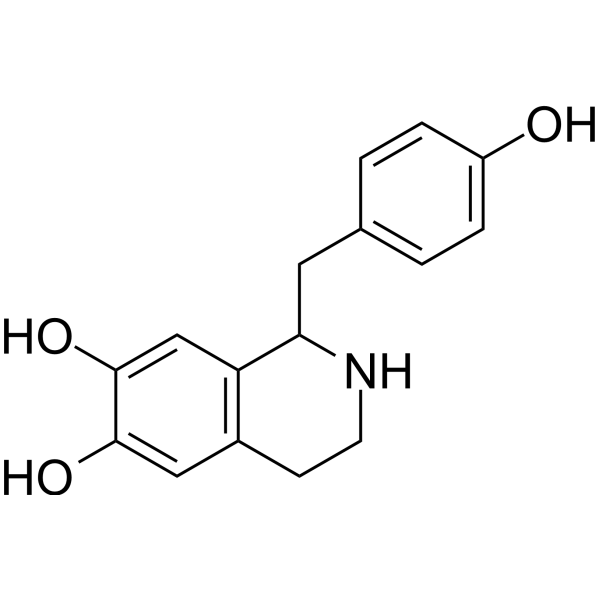
Higenamine (Norcoclaurine), a β2-AR agonist with antioxidant capability, is a key component of the Chinese herb aconite root that prescribes for treating symptoms of heart failure in the oriental Asian countries. Higenamine is also a α1-adrenergic receptor antagonist with hypotensive effect. is a selective LSD1 inhibitor (IC50=1.47 μM) that can be isolated from aconite. Higenamine hydrochloride has anti-inflammatory and antibacterial activity. Higenamine protects myocyte Apoptosis and ischemia/reperfusion (I/R) injury through selective activation of beta2-adrenergic receptor (β2-AR). Higenamine also reduces I/R-induced myocardial infarction in mice. Higenamine can attenuate IL-1β-induced Apoptosis through ROS-mediated PI3K/Akt signaling pathway. Higenamine protects brain cells from oxygen deprivation. Higenamine can promote bone formation in osteoporosis through the SMAD2/3 pathway. Higenamine can be used to study cancer, inflammation, cardiorenal syndrome and other diseases .
|
-
- HY-N2037R
-
|
Norcoclaurine (Standard); Demethyl-Coclaurine (Standard)
|
Reference Standards
MAP3K
MDM-2/p53
Adrenergic Receptor
ROS Kinase
Apoptosis
|
Cardiovascular Disease
Endocrinology
|
|
Higenamine (Norcoclaurine), a β2-AR agonist with antioxidant capability, is a key component of the Chinese herb aconite root that prescribes for treating symptoms of heart failure in the oriental Asian countries. Higenamine is also a α1-adrenergic receptor antagonist with hypotensive effect. is a selective LSD1 inhibitor (IC50=1.47 μM) that can be isolated from aconite. Higenamine hydrochloride has anti-inflammatory and antibacterial activity. Higenamine protects myocyte Apoptosis and ischemia/reperfusion (I/R) injury through selective activation of beta2-adrenergic receptor (β2-AR). Higenamine also reduces I/R-induced myocardial infarction in mice. Higenamine can attenuate IL-1β-induced Apoptosis through ROS-mediated PI3K/Akt signaling pathway. Higenamine protects brain cells from oxygen deprivation. Higenamine can promote bone formation in osteoporosis through the SMAD2/3 pathway. Higenamine can be used to study cancer, inflammation, cardiorenal syndrome and other diseases .
|
-
| Cat. No. |
Product Name |
Target |
Research Area |
-
- HY-P2198
-
-
- HY-P2469
-
|
BNP-45, mouse
|
Natriuretic Peptide Receptor (NPR)
|
Cardiovascular Disease
|
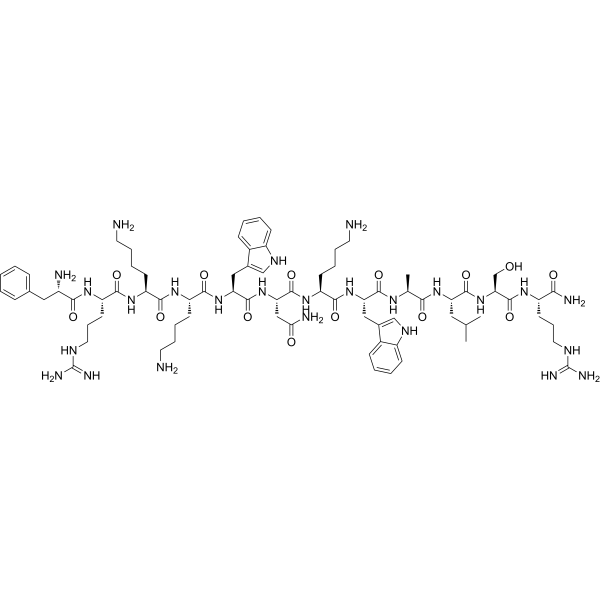
Brain Natriuretic Peptide-45, mouse (BNP-45, mouse) is a 45-amino-acid peptide derived from the mouse BNP prohormone, which exhibits natriuretic, diuretic, and vasoactive effects. Brain Natriuretic Peptide-45, mouse contains all amino acid residues deemed critical for the biological activity of natriuretic peptides. Brain Natriuretic Peptide-45, mouse possesses hypotensive and diuretic activities .
|
-
- HY-P1831
-
|
ProAM N20, Human; PAMP-20, human
|
nAChR
Sodium Channel
Calcium Channel
|
Cardiovascular Disease
Neurological Disease
|
|
Proadrenomedullin (1-20), human is a potent hypotensive and catecholamine release–inhibitory peptide released from chromaffin cells. Proadrenomedullin (1-20) inhibits catecholamine secretion in PC12 pheochromocytoma cells (IC50 ≈ 350 nM) by suppressing Na +/Ca 2+ influx and blocking desensitization. Proadrenomedullin (1-20), human specifically acts on nicotinic cholinergic receptors in a non competitive manner. Proadrenomedullin (1-20), human can be used for research on conditions such as hypertension .
|
-
- HY-P1106A
-
|
|
CFTR
|
Cardiovascular Disease
|
|
K41498 TFA is a highly selective CRF 2 receptor antagonist, with a Ki of 0.66 nM for human CRF2α receptor and a Ki of 0.62 nM for human CRF2β receptor. K41498 TFA inhibits cAMP accumulation in cells expressing CRF2. K41498 TFA antagonizes the hypotensive response induced by systemic administration of urocortin in conscious rats. K41498 TFA undergoes radioiodination without loss of activity and serves for autoradiographic studies of native CRF2 receptors in rat brain and peripheral tissues .
|
-
- HY-P1106
-
|
|
CRFR
|
Cardiovascular Disease
|
|
K41498 is a highly selective CRF 2 receptor antagonist, with a Ki of 0.66 nM for human CRF2α receptor and a Ki of 0.62 nM for human CRF2β receptor. K41498 inhibits cAMP accumulation in cells expressing CRF2. K41498 antagonizes the hypotensive response induced by systemic administration of urocortin in conscious rats. K41498 undergoes radioiodination without loss of activity and serves for autoradiographic studies of native CRF2 receptors in rat brain and peripheral tissues .
|
-
- HY-103295A
-
|
|
Bradykinin Receptor
|
Metabolic Disease
Inflammation/Immunology
|
|
Lys-[Des-Arg9]Bradykinin TFA, a naturally occurring kinin, is a potent and highly selective bradykinin B1 receptor agonist with a Ki of 0.12 nM, 1.7 nM and 0.23 nM for human, mouse and rabbit B1 receptors, respectively. Lys-[Des-Arg9]Bradykinin TFA has low inhibitory activity on B2 receptors .
|
-
- HY-P1573
-
-
- HY-P3889
-
|
|
Neurokinin Receptor
|
Neurological Disease
|
|
Substance P (6-11) is the C-terminal hexapeptideamide of Substance P (HY-P0201). Substance P (6-11) binds to NK-1 tachykinin receptor. Substance P (6-11) shows depolarization of motoneurons and a hypotensive effect .
|
-
- HY-103295
-
|
|
Bradykinin Receptor
|
Metabolic Disease
Inflammation/Immunology
|
|
Lys-[Des-Arg9]Bradykinin, a naturally occurring kinin, is a potent and highly selective bradykinin B1 receptor agonist with a Ki of 0.12 nM, 1.7 nM and 0.23 nM for human, mouse and rabbit B1 receptors, respectively. Lys-[Des-Arg9]Bradykinin has low inhibitory activity on B2 receptors .
|
-
- HY-P2198A
-
-
- HY-P1300
-
|
|
Opioid Receptor
|
Neurological Disease
|
|
[(pF)Phe4]Nociceptin(1-13)NH2 is a highly potent and selective NOP receptor (OP4) agonist, with a pKi of 10.68 and a pEC50 of 9.31. [(pF)Phe4]Nociceptin(1-13)NH2 displays high selectivity over δ, κ, and μ opioid receptors (>3000 fold) .
|
-
- HY-P1300A
-
|
|
Opioid Receptor
|
Neurological Disease
|
|
[(pF)Phe4]Nociceptin(1-13)NH2 TFA is a highly potent and selective NOP receptor (OP4) agonist, with a pKi of 10.68 and a pEC50 of 9.31. [(pF)Phe4]Nociceptin(1-13)NH2 TFA displays high selectivity over δ, κ, and μ opioid receptors (>3000 fold) .
|
-
- HY-P1573A
-
-
- HY-P5876
-
|
ProADM N20(bovine, porcine); PAMP-20(bovine, porcine)
|
nAChR
|
Neurological Disease
|
|
Proadrenomedullin (N-20) (ProADM N20) (bovine, porcine) is a potent and noncompetitive hypotensive and catecholamine release-inhibitory peptide released from chromaffin cells. Proadrenomedullin (N-20) (bovine, porcine) inhibits catecholamine secretion with an IC50 of 350 nM in PC12 pheochromocytoma cells. Proadrenomedullin (N-20) (bovine, porcine) also blocks (EC50≈270 nM) nicotinic cholinergic agonist desensitization of catecholamine release, as well as desensitization of nicotinic signal transduction ( 22Na + uptake) .
|
-
- HY-P0216A
-
|
|
Angiotensin Receptor
|
Cardiovascular Disease
|
|
A-779 TFA is a selective angiotensin-(1-7) (Ang-(1-7)) antagonist. A-779 TFA blocks Arachidonic acid release, bradykinin potentiation effects and hypotensive action. A-779 TFA exerts diuretic effects in non-pregnant rats, antidiuretic effects in late-pregnant rats, and also inhibits feed intake and water consumption in late-pregnant rats. A-779 TFA attenuates the regulatory effects of prostacyclin, nitric oxide and thromboxane A2 associated with angiotensin-(1-7). A-779 TFA can be used in studies related to hypertension .
|
| Cat. No. |
Product Name |
Target |
Research Area |
Image |
-
- HY-P990951
-
|
REGN-5381
|
Natriuretic Peptide Receptor (NPR)
|
Cardiovascular Disease
|
|
Vixticibart (REGN-5381) is a fully human IgG4 monoclonal antibody and NPR1 agonist that targets NPR1. Vixticibart stabilizes the receptor in an activated conformation by binding to the N-terminal domain of NPR1, and enhances the activity of endogenous ligands ANP and BNP without blocking ligand binding when these ligands are present. Vixticibart exerts vasodilatory and hypotensive effects by inducing cGMP production, preferentially dilating venous vessels to reduce systolic and venous pressure, but does not induce diuresis and may trigger a compensatory increase in heart rate. Vixticibart produces a synergistic hypotensive effect when combined with angiotensin-converting enzyme inhibitors or angiotensin receptor blockers, and is currently mainly used in research related to heart failure and hypertension .
|
-
(5)
| Cat. No. |
Product Name |
Category |
Target |
Chemical Structure |
-
- HY-N0652
-
|
2,3,4',5-Tetrahydroxystilbene 2-O-D-glucoside
|
Stilbenes
Classification of Application Fields
Polygonaceae
Other Diseases
Phenols
Polyphenols
Fallopia multiflora (Thunb.) Harald.
Plants
Disease Research Fields
Source Classification
|
ERK
NF-κB
|
|
2,3,5,4'-Tetrahydroxystilbene 2-O-β-D-glucoside isolats from the roots of Polygonaceae species, inhibits the formation of 5-HETE, HHT and thromboxane B2. 2,3,5,4'-Tetrahydroxystilbene 2-O-β-D-glucoside has hypotensive, anti-ageing, anti-inflammatory, hypolipidemic, cardioprotective, and neuroprotective actions .
|
-
-
- HY-N0068
-
-
-
- HY-N2037
-
Higenamine
Maximum Cited Publications
8 Publications Verification
Norcoclaurine; Demethyl-Coclaurine
|
Alkaloids
Structural Classification
Classification of Application Fields
Ranunculaceae
Phenols
Polyphenols
Aconitum carmichaeli Debx.
Plants
Isoquinoline Alkaloids
Disease Research Fields
Endocrinology
Source Classification
|
MAP3K
MDM-2/p53
Adrenergic Receptor
ROS Kinase
Apoptosis
|
|
Higenamine (Norcoclaurine), a β2-AR agonist with antioxidant capability, is a key component of the Chinese herb aconite root that prescribes for treating symptoms of heart failure in the oriental Asian countries. Higenamine is also a α1-adrenergic receptor antagonist with hypotensive effect. is a selective LSD1 inhibitor (IC50=1.47 μM) that can be isolated from aconite. Higenamine hydrochloride has anti-inflammatory and antibacterial activity. Higenamine protects myocyte Apoptosis and ischemia/reperfusion (I/R) injury through selective activation of beta2-adrenergic receptor (β2-AR). Higenamine also reduces I/R-induced myocardial infarction in mice. Higenamine can attenuate IL-1β-induced Apoptosis through ROS-mediated PI3K/Akt signaling pathway. Higenamine protects brain cells from oxygen deprivation. Higenamine can promote bone formation in osteoporosis through the SMAD2/3 pathway. Higenamine can be used to study cancer, inflammation, cardiorenal syndrome and other diseases .
|
-
-
- HY-N0663
-
|
|
Alkaloids
Structural Classification
Pyrrole Alkaloids
Ranunculaceae
Aconitum carmichaeli Debx.
Plants
Source Classification
|
Mitochondrial Metabolism
Cyclophilin
Potassium Channel
|
Talatisamine is an orally active cyclophilin D activator isolated from the roots of Aconitum carmichaeli Debx. Talatisamine exerts biological functions by activating cyclophilin D, inhibiting Ca 2+-dependent opening of the mitochondrial permeability transition pore (mPTP) (IC50=78 μM), and blocking delayed rectifier K + channels (IC50=146 μM). Talatisamine possesses both antioxidant and membrane-stabilizing properties, effectively inhibits lipid peroxidation and protects mitochondrial membrane function. Talatisamine exhibits multiple activities including antiarrhythmic, hypotensive, anti-inflammatory, anticancer and neuroprotective effects. Talatisamine finds applications in the research of ischemic diseases, rheumatoid arthritis, inflammation-related diseases and Alzheimer's disease .
|
-
-
- HY-N0165
-
-
-
- HY-N5083
-
-
-
- HY-W001940
-
-
-
- HY-N0652R
-
|
2,3,4',5-Tetrahydroxystilbene 2-O-D-glucoside (Standard)
|
Structural Classification
Stilbenes
Polygonaceae
Phenols
Polyphenols
Fallopia multiflora (Thunb.) Harald.
Plants
Source Classification
|
Reference Standards
ERK
NF-κB
|
|
2,3,5,4'-Tetrahydroxystilbene 2-O-β-D-glucoside (Standard) is the analytical standard of 2,3,5,4'-Tetrahydroxystilbene 2-O-β-D-glucoside. This product is intended for research and analytical applications. 2,3,5,4'-Tetrahydroxystilbene 2-O-β-D-glucoside isolats from the roots of Polygonaceae species, inhibits the formation of 5-HETE, HHT and thromboxane B2. 2,3,5,4'-Tetrahydroxystilbene 2-O-β-D-glucoside has hypotensive, anti-ageing, anti-inflammatory, hypolipidemic, cardioprotective, and neuroprotective actions .
|
-
-
- HY-N4267
-
|
|
Cardiovascular Disease
Structural Classification
other families
Classification of Application Fields
Lignans
Phenylpropanoids
Plants
Disease Research Fields
Source Classification
|
Calcium Channel
Platelet-activating Factor Receptor (PAFR)
UGT
Leukotriene Receptor
TNF Receptor
PGE synthase
Interleukin Related
|
|
Yangambin is a PAF receptor antagonist and UGT1A1/UGT1A3 inhibitor, with an IC50 of 29.7 μM and a Ki of 17.1 μM against human UGT1A1, and an IC50 of 56.5 μM and a Ki of 66.8 μM against human UGT1A3. Yangambin blocks PAF-mediated responses, inhibits LTB4-mediated neutrophil infiltration, and suppresses inflammatory events and anaphylactic contraction. Yangambin acts as a central nervous system inhibitor to reduce spontaneous activity, and also exhibits analgesic, anticonvulsant, antileishmanial, vasodilatory and hypotensive effects. Yangambin blocks voltage-gated Ca 2+ channels, reduces the production of NO, TNF-α, IL-6 and PGE2 in cells, increases the production of IL-10, and exerts a protective effect against cardiovascular injury. Yangambin can be used in research related to allergies, cutaneous leishmaniasis, central nervous system diseases and cardiovascular diseases .
|
-
-
- HY-W011552R
-
-
-
- HY-N0068R
-
-
-
- HY-127152
-
-
-
- HY-N2037R
-
|
Norcoclaurine (Standard); Demethyl-Coclaurine (Standard)
|
Alkaloids
Structural Classification
Ranunculaceae
Phenols
Polyphenols
Aconitum carmichaeli Debx.
Plants
Isoquinoline Alkaloids
Source Classification
|
Reference Standards
MAP3K
MDM-2/p53
Adrenergic Receptor
ROS Kinase
Apoptosis
|
|
Higenamine (Norcoclaurine), a β2-AR agonist with antioxidant capability, is a key component of the Chinese herb aconite root that prescribes for treating symptoms of heart failure in the oriental Asian countries. Higenamine is also a α1-adrenergic receptor antagonist with hypotensive effect. is a selective LSD1 inhibitor (IC50=1.47 μM) that can be isolated from aconite. Higenamine hydrochloride has anti-inflammatory and antibacterial activity. Higenamine protects myocyte Apoptosis and ischemia/reperfusion (I/R) injury through selective activation of beta2-adrenergic receptor (β2-AR). Higenamine also reduces I/R-induced myocardial infarction in mice. Higenamine can attenuate IL-1β-induced Apoptosis through ROS-mediated PI3K/Akt signaling pathway. Higenamine protects brain cells from oxygen deprivation. Higenamine can promote bone formation in osteoporosis through the SMAD2/3 pathway. Higenamine can be used to study cancer, inflammation, cardiorenal syndrome and other diseases .
|
-
-
- HY-125700
-
-
-
- HY-116158
-
-
-
- HY-N4209
-
-
-
- HY-N5083R
-
-
-
- HY-N13715
-
-
-
- HY-W001940R
-
-
-
- HY-N0165R
-
|
|
Structural Classification
Flavonoids
other families
Flavonones
Phenols
Polyphenols
Plants
Source Classification
|
Reference Standards
HIV
Reverse Transcriptase
|
|
Methyl-Hesperidin (Standard) is the analytical standard of Methyl-Hesperidin (HY-N0165). This product is intended for research and analytical applications. Methyl-Hesperidin is a glycoside compound. Methyl-Hesperidin has hypotensive, coronary dilating, smooth muscle relaxing, capillary stabilizing, choleretic, and anti-ulcer activities. Methyl-Hesperidin act as a competitive substrate to inhibit HIV-1 reverse transcriptase activity. Methyl-Hesperidin potentiates coronary dilating actions of adenine nucleotides and 3'-AMP, enhances depressant action on isolated atria, and prolongs adenosine- and ATP-induced heart block in guinea pigs .
|
-
| Cat. No. |
Product Name |
Chemical Structure |
-
- HY-B0464S1
-
|
|
|
Hydralazine-d5 (hydrochloride) is deuterium-labeled Hydralazine (hydrochloride) (HY-B0464). Hydralazine hydrochloride is an orally active, blood-brain barrier-permeable DNA methyltransferase inhibitor with vasodilatory, arterial smooth muscle relaxant and hypotensive activities. Hydralazine hydrochloride reactivates silenced tumor suppressor genes via mediating DNA demethylation, while exerting neuroprotective and anti-inflammatory properties. Hydralazine hydrochloride inhibits NOS-2 (iNOS) and COX-2, and reduces the production of NO and PGEE2; meanwhile, Hydralazine hydrochloride scavenges reactive oxygen species and inhibits macrophage activation. Hydralazine hydrochloride alleviates motor dysfunction, neuropathic inflammatory pain, and formalin-induced somatic and emotional pain responses. In addition, Hydralazine hydrochloride directly induces DNA strand breaks and sister chromatid exchange, exhibiting certain mutagenic characteristics. Hydralazine hydrochloride has been widely used in studies on hypertension, various cancers (such as cervical cancer, leukemia), spinal cord injury and the mechanisms of inflammatory pain .
|
-
-
- HY-B0464S
-
|
|
|
Hydralazine-d4 hydrochloride is the deuterium labeled Hydralazine hydrochloride. Hydralazine hydrochloride is an orally active, blood-brain barrier-permeable DNA methyltransferase inhibitor with vasodilatory, arterial smooth muscle relaxant and hypotensive activities. Hydralazine hydrochloride reactivates silenced tumor suppressor genes via mediating DNA demethylation, while exerting neuroprotective and anti-inflammatory properties. Hydralazine hydrochloride inhibits NOS-2 (iNOS) and COX-2, and reduces the production of NO and PGEE2; meanwhile, Hydralazine hydrochloride scavenges reactive oxygen species and inhibits macrophage activation. Hydralazine hydrochloride alleviates motor dysfunction, neuropathic inflammatory pain, and formalin-induced somatic and emotional pain responses. In addition, Hydralazine hydrochloride directly induces DNA strand breaks and sister chromatid exchange, exhibiting certain mutagenic characteristics. Hydralazine hydrochloride has been widely used in studies on hypertension, various cancers (such as cervical cancer, leukemia), spinal cord injury and the mechanisms of inflammatory pain .
|
-
-
- HY-B0191S
-
|
|
|
Bimatoprost-d5 is a deuterium labeled Bimatoprost. Bimatoprost is a prostaglandin analog and is a topical hypotensive agent frequently used for treating ocular hypertension and glaucoma. Bimatoprost also has an antiadipogenic effect .
|
-
-
- HY-W753672
-
|
|
|
2'-O-Methyl Adenosine-d3 is deuterium labeled 2'-O-Methyl Adenosine. 2'-O-Methyl Adenosine, a methylated adenine residue is found in urine of normals as well as in urine of adenosine deaminase (ADA) deficient patients. 2'-O-Methyl Adenosine exhibits unique hypotensive activities .
|
-
-
- HY-132277S
-
|
|
|
15-Keto Bimatoprost-d5 is the deuterium labeled 15-Keto Bimatoprost. 15-Keto Bimatoprost is a prostaglandin F2α (PGF2α) analog that can be used for the research of ocular hypotensive .
|
-
-
- HY-B0584S2
-
|
|
|
Travoprost-d7 (Fluprostenol isopropyl ester-d7) is deuterium labeled Travoprost. Travoprost (Fluprostenol isopropyl ester), an isopropyl ester proagent, is a high affinity, selective FP prostaglandin full receptor agonist. Travoprost has the ocular hypotensive efficacy and has the potential for glaucoma and ocular hypertension .
|
-
-
- HY-129934S
-
|
|
|
Latanoprost ethyl amide-d4 (Lat-NEt-d4) is deuterium labeled Latanoprost ethyl amide. Latanoprost ethyl amide (Lat-NEt) is a latanoprost analog in which the C-1 carboxyl group has been modified to an N-ethyl amide. Prostaglandin esters have been shown to have ocular hypotensive activity.1 Prostaglandin N-ethyl amides were recently introduced as alternative prostaglandin ocular hypotensive prodrugs. Although it has been claimed that prostaglandin ethyl amides are not converted to the free acids in vivo, studies in our laboratories have shown that bovine and human corneal tissue converts the N-ethyl amides of various prostaglandins to the free acids with a conversion rate of about 2.5 μg/g corneal tissue/hr. Lat-NEt would be expected to show the typical intraocular effects of Latanoprost free acid, but with the much slower hydrolysis pharmacokinetics of the prostaglandin N-amides .
|
-
-
- HY-B0419S
-
|
|
|
Manidipine-d4 is the deuterium labeled Manidipine (HY-B0419). Manidipine is an orally active calcium channel antagonist. Manidipine regulates the expression of cytokines (IL-1β, IL-6). Manidipine has a hypotensive effect. Manidipine can be used in the study of cardiovascular diseases (such as hypertension, myocardial ischemia-reperfusion injury, ventricular hypertrophy), kidney diseases (such as glomerular diseases), and epilepsy .
|
-
| Cat. No. |
Product Name |
|
Classification |
-
- HY-W011552
-
|
|
|
Nucleoside Analogs
Adenosine
|
|
2'-O-Methyladenosine, a methylated adenine residue is found in urine of normals as well as in urine of adenosine deaminase (ADA) deficient patients. 2'-O-Methyladenosine exhibits unique hypotensive activities .
|
Your information is safe with us. * Required Fields.
Inquiry Information
- Product Name:
- Cat. No.:
- Quantity:
- MCE Japan Authorized Agent:

