



Saponarin
Based on 3 publication(s) in Google Scholar
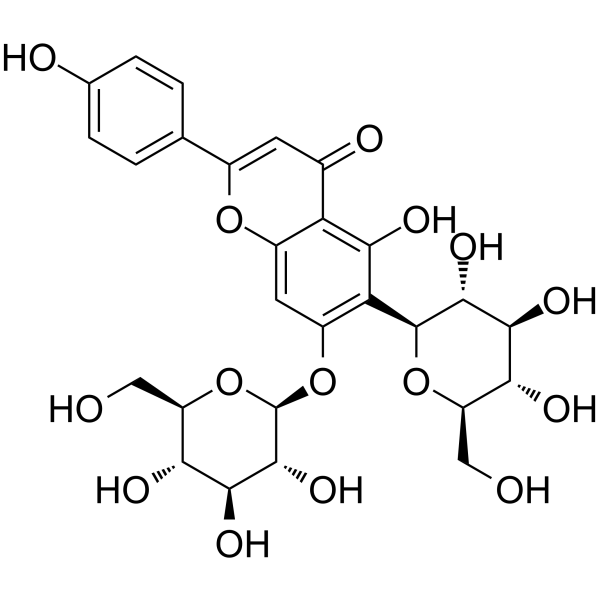
Saponarin is an orally active flavonoid compound. Saponarin can be isolated from Gypsophila trichotoma. Saponarin inhibits ERK/p38, NF-κB and MAPK phosphorylation and activates AMPK. Saponarin reduces IL-1β and COX-2. Saponarin has antioxidant, anti-inflammatory, hepatoprotective, hypoglycemic and hypotensive effects. Saponarin improves sleep disorders.
Nos produits utilisent uniquement pour la recherche. Nous ne vendons pas aux patients.
- Pureté : 99.95%
- CAS No.: 20310-89-8
- Formule: C27H30O15
- Masse moléculaire:594.52
-
Stockage:
4°C, sealed storage, away from moisture and light
* In solvent : -80°C, 6 months; -20°C, 1 month (sealed storage, away from moisture and light)

To place orders, for customer services and technical support, please contact: MedChemExpress USA
Tel: 609-228-6898 E-mail: [email protected] [email protected]


-
 Activité biologique
-
Chemical Information
-
Solvant et solubilité
- Protocole
- Pureté et documentation
- Références
-
 Help & FAQs


-
HY-N2165
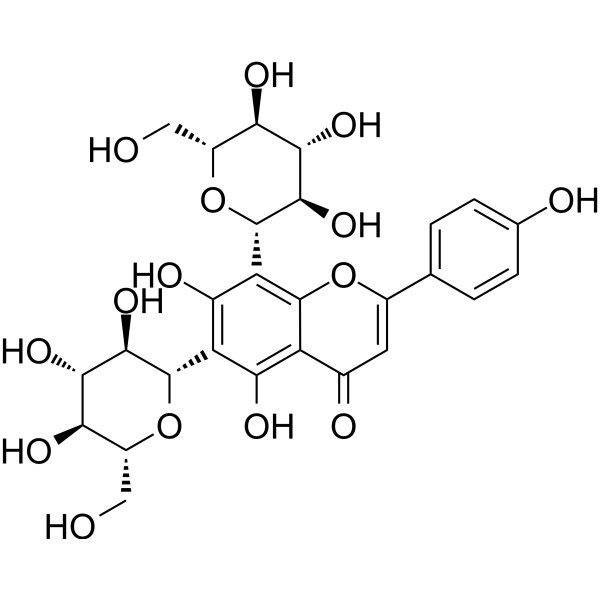
Vicenin 2ACE Inhibitor -
HY-N4085
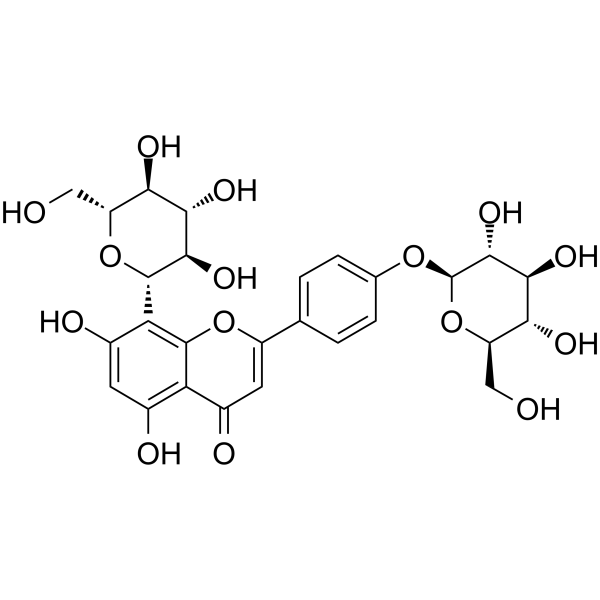
Vitexin 4'-glucosidecaspase-3 Inhibitor -
HY-76225
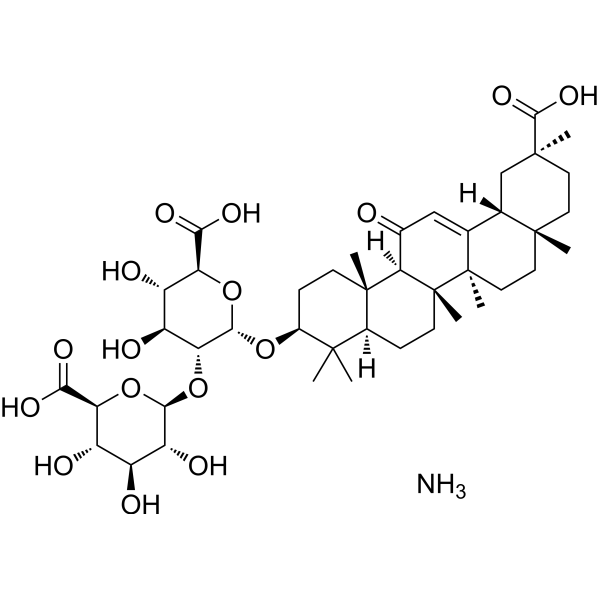
Ammonium glycyrrhizinateAnti-tumor Agent -
HY-N0803
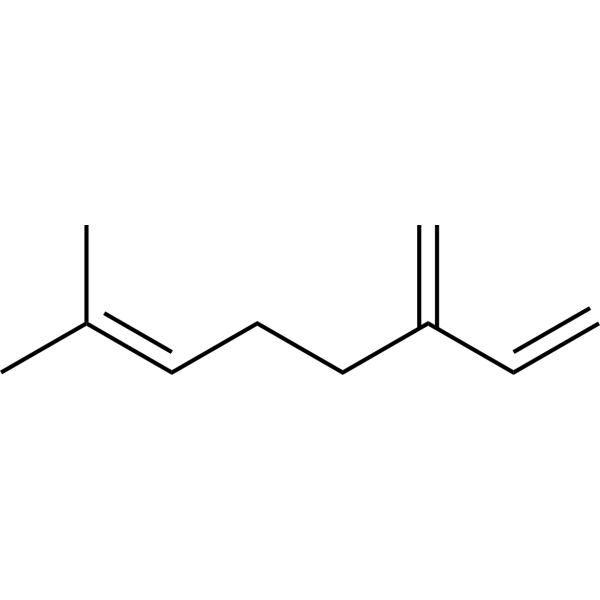
Myrcene,75% (stabilized with BHT)NF-κB Inhibitor -

HY-N5083R
Saponarin (Standard)Standard Of Saponarin -
HY-N0022
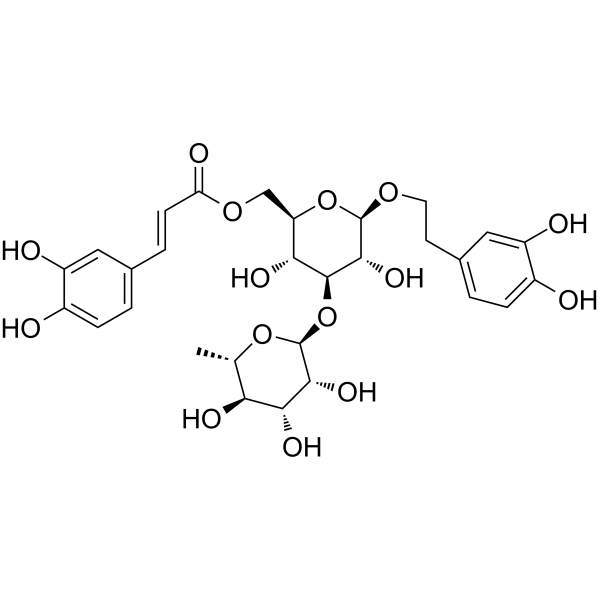
IsoacteosideNatural Product -
HY-N1441
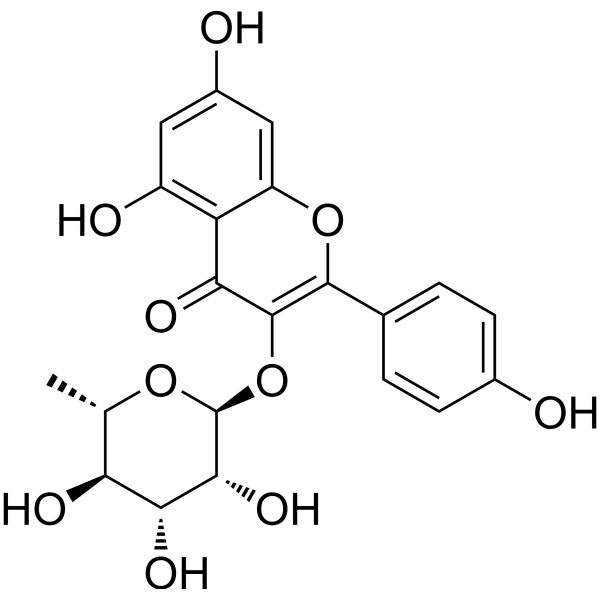
AfzelinFlavonol Glycoside -
HY-N0924
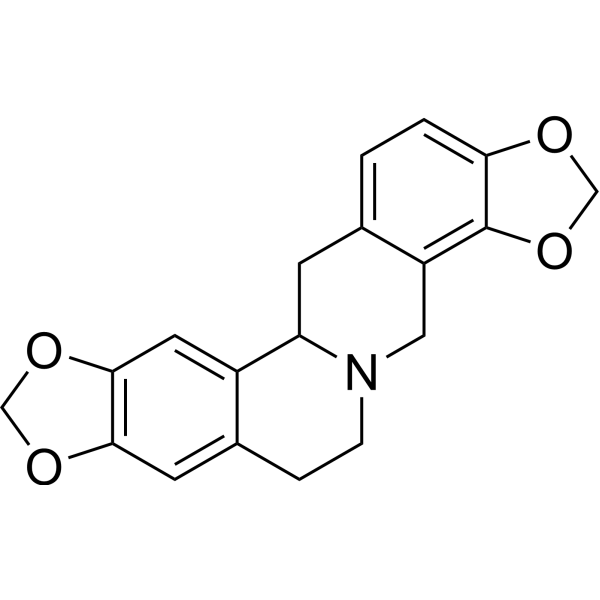
(±)-StylopineAlkaloid -
HY-N0647
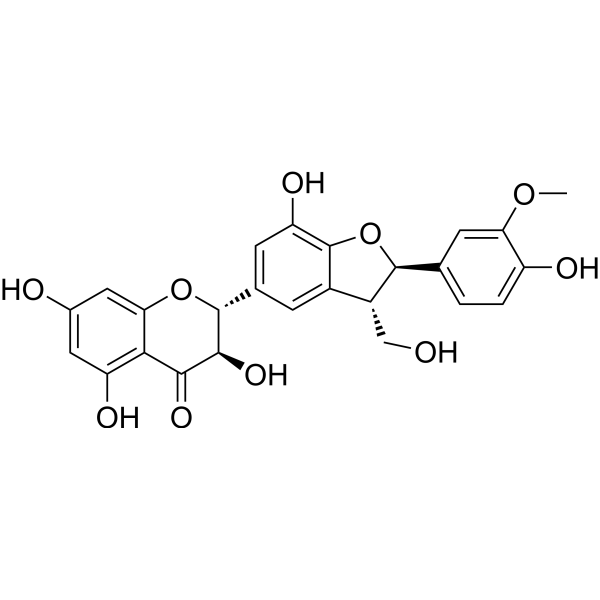
SilychristinMCT8 Inhibitor -
HY-N3220
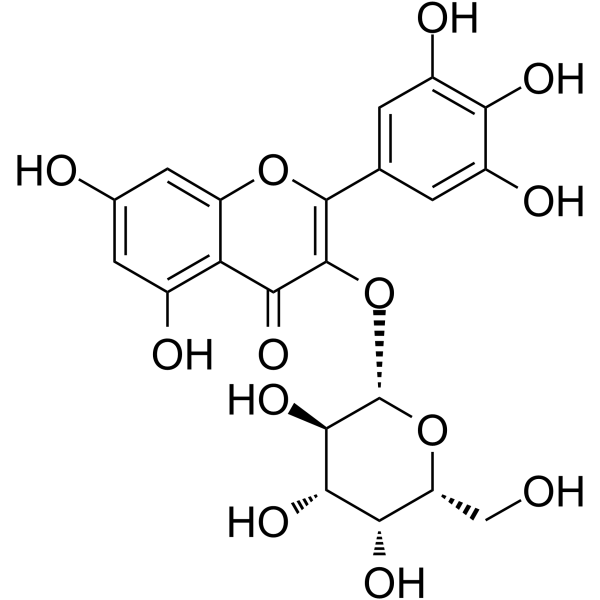
Myricetin 3-O-galactosideXO Inhibitor -

HY-131516
Tiopronin-cysteine disulfideMetabolite/Derivative of Tiopronin -

HY-N1441R
Afzelin (Standard)Flavonol Glycoside
Publications Citing Use of MedChemExpress (MCE) Saponarin
MoreVoir tous les produits spécifiques à Isoform AMPK
More

Activité biologique
Description
|
IL-1β |
COX-2 |
In Vitro
Saponarin (20-60 µM; 4 h) significantly inhibits IL-6 mRNA expression in LPS-induced RAW 264.7 cells via suppression of NF-κB and MAPK (ERK, p38) phosphorylation[2].
Saponarin (50-100 µM; 24 h) suppresses gluconeogenesis in HepG2 cells by activating AMPK in a calcium-dependent manner, reducing PEPCK and G6Pase gene expression[3].
Saponarin (2 µmol/mL) inhibits malonaldehyde (MA) formation from Squalene (HY-N1214) by nearly 100% under UV irradiation[4].
Saponarin (80 µM; 24 h) reduces TNF-α, IL-1β, COX-2 expression and inhibits ERK/p38 phosphorylation in LPS-induced RAW 264.7 cells[5].
MedChemExpress (MCE) has not independently confirmed the accuracy of these methods. They are for reference only.
In Vivo
Saponarin (80 mg/kg; p.o.; 3 weeks) shows slight antihypertensive activity in non-diabetic spontaneously hypertensive rats (SHR)[1].
Saponarin (80 mg/kg; p.o.; for 3 days) protects against Cocaine-induced hepatotoxicity in male Wistar rats by increasing GSH levels and antioxidant enzymes (CAT, SOD, GPx) while reducing MDA formation[6].
Saponarin (20 mg/kg; p.o.; 5 days) reduces wake time and increases c-Fos expression in the ventrolateral preoptic nucleus (VLPO) in electric footshock-induced sleep-disturbed SD rats[7].
MedChemExpress (MCE) has not independently confirmed the accuracy of these methods. They are for reference only.
-
Animal Model:Male Wistar Kyoto rats (NTR) and spontaneously hypertensive rats (SHR), male, body weight 180-250 g[1]
-
Dosage:80 mg/kg
-
Administration:Oral gavage; for 3 weeks
-
Result:Significantly reduced blood glucose levels by 31% in diabetic NTR.
Improved liver antioxidant enzymes (GPx, GR, GST) levels in both diabetic strains (diabetic NTR and diabetic SHR).
Decreased systolic blood pressure by 19% in non-diabetic SHR but had no effect in diabetic SHR.


Chemical Information
-
CAS No. 20310-89-8
-
Appearance Solid
-
Masse moléculaire 594.52
-
Formule C27H30O15
-
Color White to off-white
-
SMILES
O=C1C=C(C2=CC=C(O)C=C2)OC3=CC(O[C@H]4[C@@H]([C@H]([C@@H]([C@@H](CO)O4)O)O)O)=C([C@H]5[C@@H]([C@H]([C@@H]([C@@H](CO)O5)O)O)O)C(O)=C13
-
Structure Classification
-
Initial Source
-
Livraison
Room temperature in continental US; may vary elsewhere.
-
Stockage
4°C, sealed storage, away from moisture and light
* In solvent : -80°C, 6 months; -20°C, 1 month (sealed storage, away from moisture and light)


Publications (3)


Solvant et solubilité
In Vitro:
DMSO : 100 mg/mL (168.20 mM; Need ultrasonic; Hygroscopic DMSO has a significant impact on the solubility of product, please use newly opened DMSO)
Please refer to the solubility information to select the appropriate solvent. Once prepared, please aliquot and store the solution to prevent product inactivation from repeated freeze-thaw cycles.
Storage method and period of stock solution: -80°C, 6 months; -20°C, 1 month (sealed storage, away from moisture and light). When stored at -80°C, please use it within 6 months. When stored at -20°C, please use it within 1 month.
Please refer to the solubility information to select the appropriate solvent. Once prepared, please aliquot and store the solution to prevent product inactivation from repeated freeze-thaw cycles.
Storage method and period of stock solution: -80°C, 6 months; -20°C, 1 month (sealed storage, away from moisture and light). When stored at -80°C, please use it within 6 months. When stored at -20°C, please use it within 1 month.
Concentration (start) × Volume (start) = Concentration (final) × Volume (final)


Pureté et documentation
-
Fiche technique (287 KB)
-
SDS (393 KB)
- English - EN (393 KB)
- Français - FR (393 KB)
- Deutsch - DE (393 KB)
- Norwegian - NO (393 KB)
- Español - ES (393 KB)
- Swedish - SV (393 KB)
- Italian - IT (393 KB)
- Korean - KR (393 KB)
- Portuguese - PT (393 KB)
-
Instruction de manipulation (2659 KB)
Références
[1]. Simeonova R, et al. Antidiabetic and antioxidant effects of saponarin from Gypsophila trichotoma on streptozotocin-induced diabetic normotensive and hypertensive rats. Phytomedicine. 2016 May 15;23(5):483-90. [Content Brief]
[2]. Seo KH, et al. Saponarin from barley sprouts inhibits NF-κB and MAPK on LPS-induced RAW 264.7 cells. Food Funct. 2014 Nov;5(11):3005-13. [Content Brief]
[3]. Seo WD, et al. Saponarin activates AMPK in a calcium-dependent manner and suppresses gluconeogenesis and increases glucose uptake via phosphorylation of CRTC2 and HDAC5. Bioorg Med Chem Lett. 2015 Nov 15;25(22):5237-42. [Content Brief]
[4]. Kamiyama M, et al. Flavonoids with potent antioxidant activity found in young green barley leaves. J Agric Food Chem. 2012 Jun 27;60(25):6260-7. [Content Brief]
[5]. Min SY, et al. Anti-Inflammatory and Anti-Allergic Effects of Saponarin and Its Impact on Signaling Pathways of RAW 264.7, RBL-2H3, and HaCaT Cells. Int J Mol Sci. 2021 Aug 5;22(16):8431. [Content Brief]
[6]. Vitcheva V, et al. Hepatoprotective effects of saponarin, isolated from Gypsophila trichotoma Wend. on cocaine-induced oxidative stress in rats. Redox Rep. 2011;16(2):56-61. [Content Brief]
[7]. Kim YR, et al. Effect of Hibiscus syriacus Linnaeus extract and its active constituent, saponarin, in animal models of stress-induced sleep disturbances and pentobarbital-induced sleep. Biomed Pharmacother. 2022 Feb;146:112301. [Content Brief]


Complete Stock Solution Preparation Table
Please refer to the solubility information to select the appropriate solvent. Once prepared, please aliquot and store the solution to prevent product inactivation from repeated freeze-thaw cycles.
Storage method and period of stock solution: -80°C, 6 months; -20°C, 1 month (sealed storage, away from moisture and light). When stored at -80°C, please use it within 6 months. When stored at -20°C, please use it within 1 month.
| Optional Solvent | Concentration Solvent Mass | 1 mg | 5 mg | 10 mg | 25 mg |
|---|---|---|---|---|---|
| DMSO | 1 mM | 1.6820 mL | 8.4101 mL | 16.8203 mL | 42.0507 mL |
| 5 mM | 0.3364 mL | 1.6820 mL | 3.3641 mL | 8.4101 mL | |
| 10 mM | 0.1682 mL | 0.8410 mL | 1.6820 mL | 4.2051 mL | |
| 15 mM | 0.1121 mL | 0.5607 mL | 1.1214 mL | 2.8034 mL | |
| 20 mM | 0.0841 mL | 0.4205 mL | 0.8410 mL | 2.1025 mL | |
| 25 mM | 0.0673 mL | 0.3364 mL | 0.6728 mL | 1.6820 mL | |
| 30 mM | 0.0561 mL | 0.2803 mL | 0.5607 mL | 1.4017 mL | |
| 40 mM | 0.0421 mL | 0.2103 mL | 0.4205 mL | 1.0513 mL | |
| 50 mM | 0.0336 mL | 0.1682 mL | 0.3364 mL | 0.8410 mL | |
| 60 mM | 0.0280 mL | 0.1402 mL | 0.2803 mL | 0.7008 mL | |
| 80 mM | 0.0210 mL | 0.1051 mL | 0.2103 mL | 0.5256 mL | |
| 100 mM | 0.0168 mL | 0.0841 mL | 0.1682 mL | 0.4205 mL |


Saponarin Related Classifications
HY-N5083 Related Classifications
 Powered by Bioz