1. Search Result
Search Result
Results for "

Kv

" in MedChemExpress (MCE) Product Catalog:

203

Inhibitors & Agonists

1

Biochemical Assay Reagents

57

Peptides

10

Natural
Products

4

Recombinant Proteins

4

Isotope-Labeled Compounds

9

Antibodies

Cat. No. Product Name Target Research Areas Chemical Structure
  • HY-14946

    3,4-Diaminopyridine

    Potassium Channel Neurological Disease
    Amifampridine (3,4-Diaminopyridine) is an orally active, potent and cell permeable voltage-gated potassium (Kv) channel blocker (PCB). Amifampridine is efficacy in the reversal of BoNT/A (HY-P79153) intoxication. Amifampridine increases transmitter release from neuromuscular junctions (NMJs). Amifampridine can be used for Lambert-Eaton myasthenic syndrome (LEMS) research .
    Amifampridine
  • HY-139791

    XEN1101

    Potassium Channel Neurological Disease
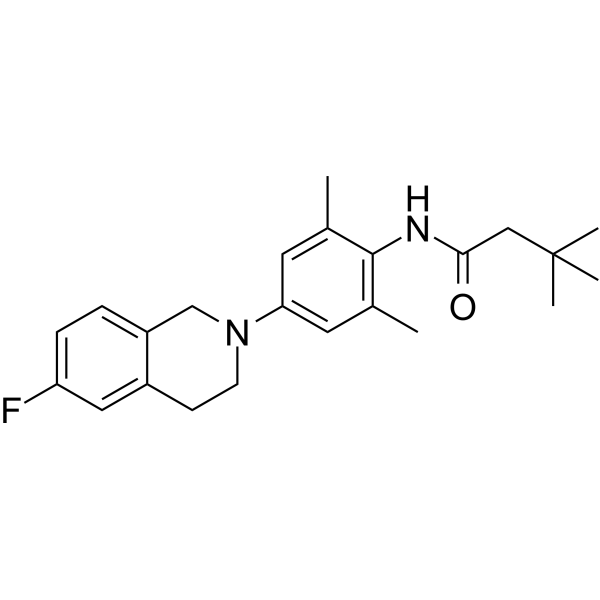
    Azetukalner (XEN1101) is a selective and orally active Kv7.2/Kv7.3 potassium channel opener with an EC50 of 27 nM. Azetukalner is approximately 4-fold more selective for Kv7.2/7.3 over Kv7.3/7.5 (EC50 of 94 nM) and Kv7.4 (EC50 of 113 nM) channels. Azetukalner exhibits a selectivity >100-fold for Kv7 channels over other ion channels and receptors. Azetukalner can be used for the study of focal epilepsy .
    Azetukalner
  • HY-B0267

    mAChR Potassium Channel Neurological Disease Cancer
    Oxybutynin is an anticholinergic agent, which inhibits vascular Kv channels in a concentration-dependent manner, with an IC50 of 11.51 μM . Oxybutynin is a click chemistry reagent, it contains an Alkyne group and can undergo copper-catalyzed azide-alkyne cycloaddition (CuAAc) with molecules containing Azide groups.
    Oxybutynin
  • HY-10015
    PAP-1
    10+ Cited Publications

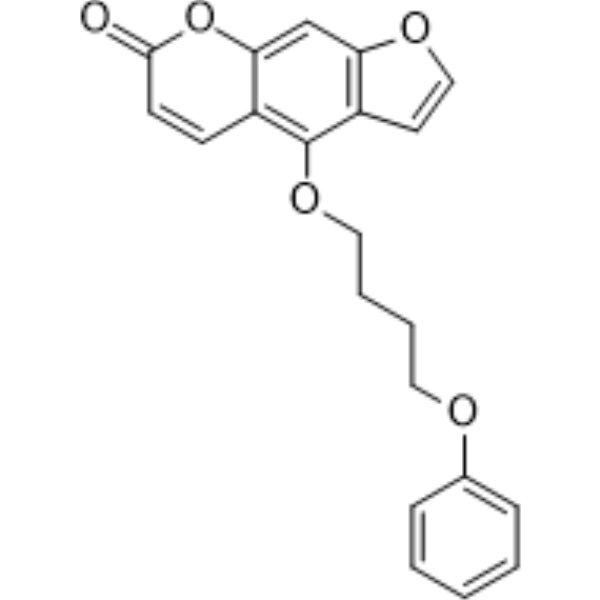
    5-(4-Phenoxybutoxy)psoralen

    Potassium Channel Inflammation/Immunology
    PAP-1 (5-(4-Phenoxybutoxy)psoralen) is a potent, selective, and orally active Kv1.3 blocker (EC50=2 nM). PAP-1 blocks Kv1.3 in a use-dependent manner and acts by preferentially binding to the C-type inactivated state of the channel. PAP-1 exhibits 23-fold selectivity over Kv1.5 (EC50=45 nM), and further displays 33- to 125-fold selectivity over all other Kv1-family channels. PAP-1 does not exhibit cytotoxic or phototoxic effects .
    PAP-1
  • HY-117639

    Potassium Channel Neurological Disease
    AUT1 is a recombinant human Kv3 channel modulator. AUT1 modulates Kv3.1b and Kv3.2a channels in human recombinant with pEC50 values of 5.33 and 5.31 μM, respectively. AUT1 can be used for the research of disorders associated with dysfunction of inhibitory feedback in corticolimbic circuits, such as schizophrenia .
    AUT1
  • HY-101843

    Potassium Channel Neurological Disease
    ML213 is a selective activator of Kv7.2 and Kv7.4 channels, enhances Kv7.2 and Kv7.4 channels with EC50s of 230 and 510 nM, respectively.
    ML213
  • HY-B0267A

    mAChR Potassium Channel Neurological Disease Cancer
    Oxybutynin chloride is an oral active and competitive mAChR antagonist with Kis of 14.3 and 5.55 nM for specific [ 3H]NMS binding in the mouse bladder and cerebral cortex, respectively. Oxybutynin chloride inhibits vascular Kv channels in a manner independent of anticholinergic effect, with an IC50 value of 11.51 μM. Oxybutynin chloride reduces muscle spasm in the bladder and urinary tract, can be used in study of overactive bladder syndrome (OAB) . Oxybutynin (chloride) is a click chemistry reagent, it contains an Alkyne group and can undergo copper-catalyzed azide-alkyne cycloaddition (CuAAc) with molecules containing Azide groups.
    Oxybutynin chloride
  • HY-108577
    XE991 dihydrochloride
    3 Publications Verification

    Potassium Channel Neurological Disease
    XE991 dihydrochloride, a Kv7 (KCNQ) channels blocker, potently inhibits Kv7.1 (KCNQ1), Kv7.2 (KCNQ2), Kv7.2 + Kv7.3 (KCNQ3) channel, and M-current with IC50s of 0.75 μM, 0.71 μM, 0.6 μM, and 0.98 μM, respectively .
    XE991 dihydrochloride
  • HY-108577A
    XE991
    3 Publications Verification

    Potassium Channel Neurological Disease
    XE 991 dihydrochloride, a Kv7 (KCNQ) channels blocker, potently inhibits Kv7.1 (KCNQ1), Kv7.2 (KCNQ2), Kv7.2 + Kv7.3 (KCNQ3) channel, and M-current with IC50s of 0.75 μM, 0.71 μM, 0.6 μM, and 0.98 μM, respectively .
    XE991
  • HY-14183
    Vernakalant Hydrochloride
    3 Publications Verification

    RSD1235 hydrochloride

    Potassium Channel Cardiovascular Disease
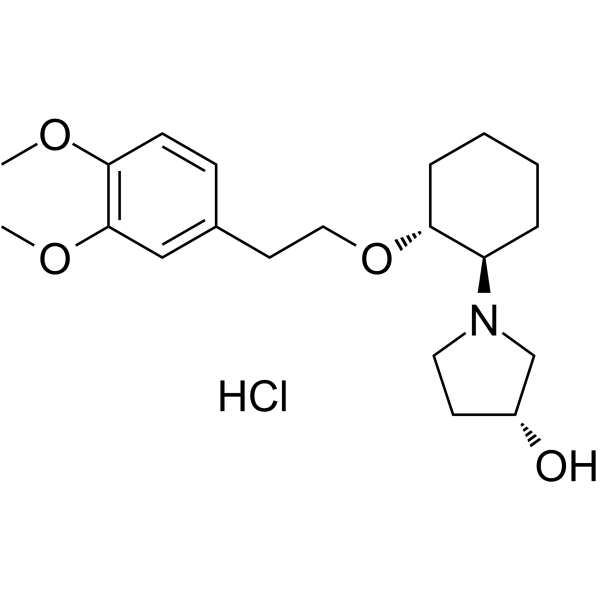
    Vernakalant hydrochloride is a mixed voltage- and frequency-dependent Na + and atria-preferred K + channel blocker. IC50 for block by Vernakalant of wild-type and mutant Kv1.5 channels Fractional block is 13.35±0.93 μM, 0.61±0.03 μM, and 1.63±0.09 μM for Kv1.5 channel wt, Kv1.5 channel I508F, Kv1.5 channel T479A, respectively.
    Vernakalant Hydrochloride
  • HY-100712
    DPO-1
    1 Publications Verification

    Potassium Channel Calcium Channel NOD-like Receptor (NLR) Interleukin Related Cardiovascular Disease Inflammation/Immunology
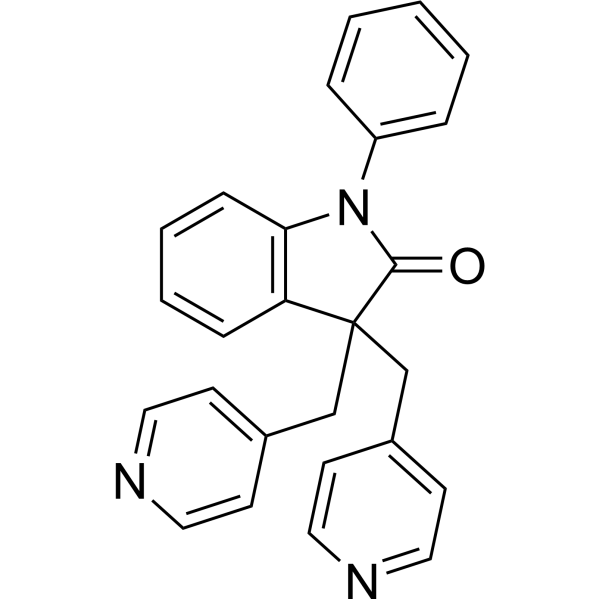
    DPO-1 is a potent Kv1.5 and Kv1.3 (EC50 = 3.1 μM) channels inhibitor with potential immunomodulatory and anti-inflammatory effects. DPO-1 reduces Kv1.3 current density, blunts Ca 2+ influx in Ca 2+-depleted Jurkat cells, and inhibits IL-2 secretion in activated Jurkat cells. DPO-1 inhibits Uric acid sodium (HY-B2130A) (MSU)-induced NLRP3 inflammasome activation by blocking Kv1.5-mediated K + efflux. DPO-1 can be used for the study of immunologic disorders and atrial fibrillation .
    DPO-1
  • HY-101396
    ICA-069673
    3 Publications Verification

    Potassium Channel Neurological Disease
    ICA-069673 is a KCNQ2/Q3 potassium channel activator. ICA-069673 demonstrates greater selectivity for KV7.2/7.3 over KV7.3/KV7.5, with EC50s of 0.69 μM and 14.3 μM, respectively. ICA-069673 inhibits spontaneous phasic and nerve-evoked contractions in guinea pig detrusor smooth muscle (DSM). ICA-069673 also decreases the global intracellular Ca(2+) concentration in DSM cells .
    ICA-069673
  • HY-B1239
    Drofenine hydrochloride
    1 Publications Verification

    Hexahydroadiphenine hydrochloride

    Cholinesterase (ChE) Potassium Channel Amyloid-β TRP Channel Tau Protein NOD-like Receptor (NLR) JNK NF-κB IKK Neurological Disease Metabolic Disease Inflammation/Immunology
    Drofenine (Cycloadiphene; Hexahydroadiphenine) hydrochloride is an brain-penetrant antispasmodic agent. Drofenine hydrochloride is a Kv2.1 channel inhibitor with human IC50 of 9.53 μM. Drofenine hydrochloride is a butyrylcholinesterase (BChE) inhibitor with Ki of 0.003 mM, and is a TRPV3 activator. Drofenine hydrochloride blocks Kv2.1-dependent potassium efflux, inhibits Kv2.1/JNK/NF-κB and IkBa/NF-kB signaling, suppresses Kv2.1 mRNA/protein expression. Drofenine suppresses oligomeric -induced microglial NLRP3 inflammasome activation and neuronal Tau hyperphosphorylation, improves cognitive impairment, promotes neurite outgrowth. Drofenine hydrochloride induces calcium influx in keratinocytes and exert cytotoxicity against keratinocytes. Drofenine hydrochloride ameliorates diabetic peripheral neuropathy -like pathology. Drofenine hydrochloride can be used for the researches of Alzheimer's disease, diabetic peripheral neuropathy and smooth muscle spasm .
    Drofenine hydrochloride
  • HY-125469

    PF-04895162

    Potassium Channel Neurological Disease
    ICA-105665 (PF-04895162) is a potent and orally active neuronal Kv7.2/7.3 and Kv7.3/7.5 potassium channels opener. ICA-105665 inhibits liver mitochondrial function and bile salt export protein (BSEP) transport (IC50 of 311 μM). ICA-105665 can penetrate the blood-brain barrier and has antiseizure effects .
    ICA-105665
  • HY-16953
    JNJ 303
    1 Publications Verification

    Potassium Channel Cardiovascular Disease Neurological Disease
    JNJ-303 is a specific delayed rectifier Kv blocker. JNJ 303 can potent block IKs with an IC50 value of 64 nM. JNJ-303 can be used for the research of diabetes, obesity and central nervous system .
    JNJ 303
  • HY-108588
    NS5806
    1 Publications Verification

    Potassium Channel Cardiovascular Disease
    NS5806, a potent potassium current activator, increases KV4.3/KChIP2 peak current amplitudes with an EC50 of 5.3 μM. NS5806 slows KV4.3 and KV4.2 current dacay in channel complexes containing KChIP2 .
    NS5806
  • HY-114608

    Sodium Channel Neurological Disease
    RY785 is a potent and selective voltage-gated potassium (KV2) channel inhibitor with an IC50 of 0.05 μM for KV2.2. RY785 has analgesic activity .
    RY785
  • HY-108587

    Potassium Channel Neurological Disease
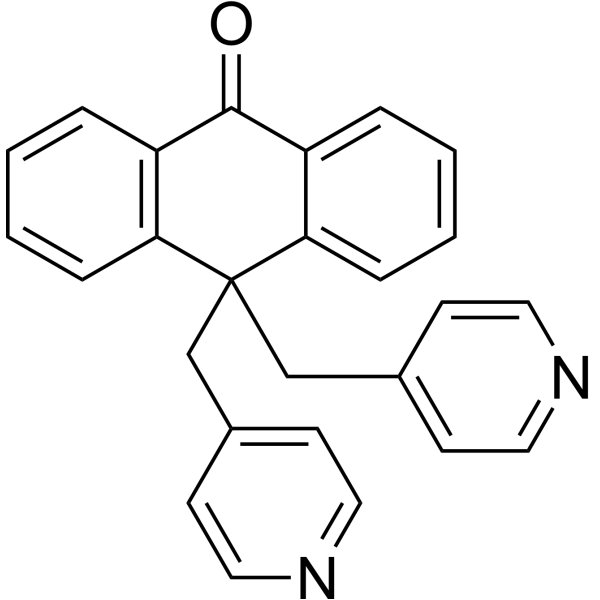
    ICA 110381 is an orally active Kv7.2/Kv7.3 (KCNQ2/3) potassium channel activator with anticonvulsive properties. ICA 110381 is a KCNQ2/Q3 activator (EC50=0.38 μM) as well as KCNQ1 antagonist (IC50=15 μM) .
    ICA 110381
  • HY-108574

    Potassium Channel HCN Channel Neurological Disease
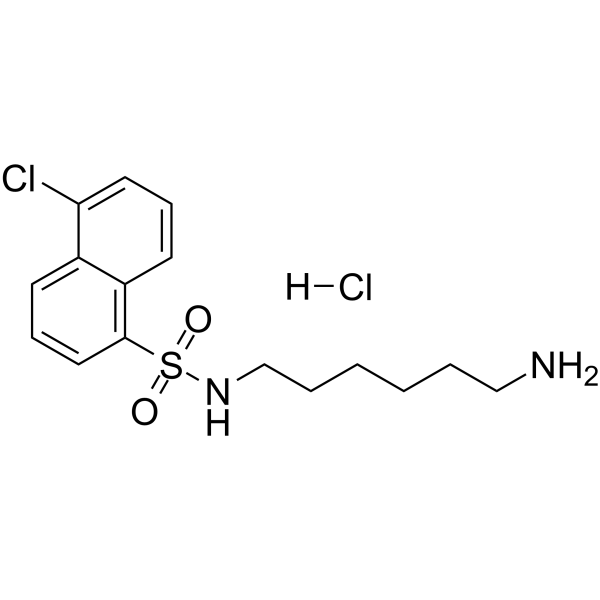
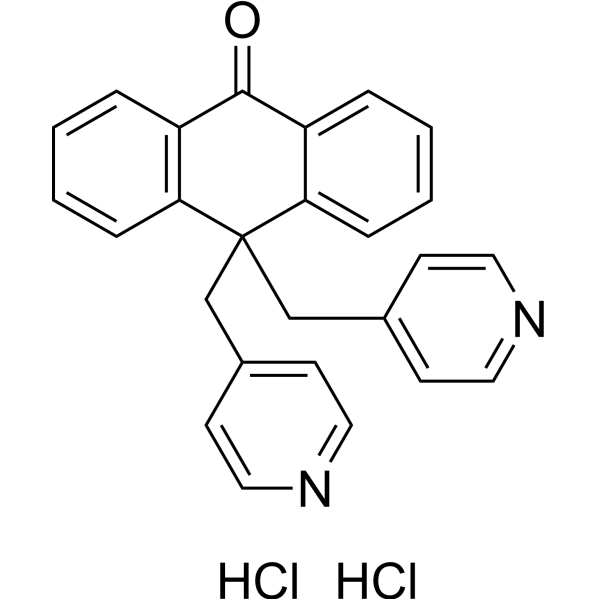
    CP 339818 hydrochloride is a non-peptide Kv1.3 channel (IC50 = 200 nM) and Kv1.4 channel blocker. CP 339818 hydrochloride inhibits HCN channel with IC50s of 18.9 μM and 43.4 μM against HCN1 and HCN4 (high Cl -). CP 339818 hydrochloride has significantly weaker blocking effects on Kv1.1, Kv1.2, Kv1.5, Kv1.6, Kv3.1-4, and Kv4.2 channels. CP 339818 hydrochloride selectively blocked Kv1.3, thereby inhibiting the activation process of human T cells. CP 339818 hydrochloride can be used to study the physiological functions of HCN and Kv channels .
    CP 339818 hydrochloride
  • HY-P1280
    Margatoxin
    1 Publications Verification

    Potassium Channel Neurological Disease
    Margatoxin, an alpha-KTx scorpion toxin, is a high affinity inhibitor of Kv1.3 (Kd=11.7 pM). Margatoxin inhibits the Kv1.2 (Kd=6.4 pM) and Kv1.1 (Kd=4.2 nM). Margatoxin, a 39 amino-acid-long peptide, is isolated from the venom of the scorpion Centruroides margaritatus and widely used in ion channel research .
    Margatoxin
  • HY-178281

    Potassium Channel Sodium Channel Neurological Disease
    E0199 is a novel potent dual-target KV7/NaV modulator that activates the KV7 channel (KV7.2/7.3 (EC50 = 12.78 nM), KV7.2 (EC50 = 0.50 μM), and KV7.5 (EC50 = 27.14 nM) channels) while simultaneously blocks the NaV1.7 (IC50 = 0.52 μM), NaV1.8 (IC50 = 0.24 μM), and NaV1.9 (IC50 = 0.16 μM) channels. E0199 shows a potent analgesic effect without affecting heart and skeletal muscle ion channels critically in a chronic constriction injury (CCI) mouse model. E0199 can be used for Neuropathic pain (NP) research .
    E0199
  • HY-161104
    Kv2.1-IN-1
    1 Publications Verification

    Potassium Channel Apoptosis Cardiovascular Disease Neurological Disease
    Kv2.1-IN-1 is an orally active and blood-brain barrier penetrant Kv2.1 inhibitor with an IC50 of 0.07 μM. Kv2.1-IN-1 exhibits a selectivity >130 fold over other K +, Na +, and Ca 2+ ion channels. Kv2.1-IN-1 decreases the apoptosis of HEK293 cells induced by H2O2. Kv2.1-IN-1 produces significant neuroprotection efficacy in middle cerebral artery occlusion (MCAO) rat. Kv2.1-IN-1 can be used for the study of ischemic stroke .
    Kv2.1-IN-1
  • HY-111996

    Potassium Channel Neurological Disease Inflammation/Immunology
    Kv3 activator-1 is a Kv3 family voltage-gated potassium channel activator. Kv3 activator-1 reverses mechanical hyperalgesia in rat models of neuropathic and inflammatory pain, with rapid onset and long-lasting, dose-related effects. Kv3 activator-1 can be used for the research of pain .
    Kv3 activator-1
  • HY-120033
    RY796
    2 Publications Verification

    Sodium Channel Neurological Disease
    RY796 is a potent and selective voltage-gated potassium (KV2) channel inhibitor with IC50s of 0.25 μM and 0.09 μM for KV2.1 and KV2.2. RY796 has analgesic activity .
    RY796
  • HY-172374A

    Potassium Channel Inflammation/Immunology
    KV1.3-IN-2 hydrochloride is a kv1.3 potassium channel inhibitor without affecting hERG channel activity. KV1.3-IN-2 hydrochloride can be used in research of immune-related diseases such as psoriasis, rheumatoid arthritis, and systemic lupus erythematosus .
    KV1.3-IN-2 hydrochloride
  • HY-172374

    Potassium Channel Inflammation/Immunology
    KV1.3-IN-2 is a kv1.3 potassium channel inhibitor without affecting hERG channel activity. KV1.3-IN-2 can be used in research of immune-related diseases such as psoriasis, rheumatoid arthritis, and systemic lupus erythematosus .
    KV1.3-IN-2
  • HY-110358

    Sodium Channel Inflammation/Immunology
    QAQ dichloride, a photoswitchable voltage-gated Nav and Kv channels blocker, blocks channels in its trans form (of the azobenzene photoswitch), but not in its cis form. QAQ dichloride is membrane-impermeant and only infiltrates pain-sensing neurons that express endogenous import channels. QAQ dichloride acts as a light-sensitive analgesic and can be used for studying of signaling mechanisms in acute and chronic pain .
    QAQ dichloride
  • HY-P3055A

    DTX-I TFA

    Potassium Channel Cancer
    Dendrotoxin-I (DTX-I) TFA is a potent K + channel blocker with IC50s of 0.13-50 nM for voltage-gated potassium channel subunits KV1.1, KV1.2 and KV1.6. Dendrotoxin-I TFA, a neurotoxin, has the potential for cancer research .
    Dendrotoxin-I TFA
  • HY-P2707

    α-DTX

    Sodium Channel Potassium Channel Neurological Disease
    α-Dendrotoxin (α-DTX) is a voltage-gated K + channel blocker and an acid-sensing ion channel (ASIC) inhibitor. α-Dendrotoxin blocks Kv1.1, Kv1.2, Kv1.6 and D-type (ID) voltage-gated K + channels, and reversibly inhibits slowly inactivating potassium currents. α-Dendrotoxin induces epilepsy-related behaviors in mice. α-Dendrotoxin can be used in studies related to tonic-clonic seizures .
    α-Dendrotoxin
  • HY-122033

    Potassium Channel Cardiovascular Disease
    MK-0448 is a specific Kv1.5 inhibitor used in the research of atrial fibrillation .
    MK-0448
  • HY-P1427A

    Potassium Channel Neurological Disease
    Guangxitoxin 1E TFA is the TFA salt form of Guangxitoxin 1E (HY-P1427). Guangxitoxin 1E TFA is a peptide toxin and a selective inhibitor for voltage-gated potassium channel KV2.1 and KV2.2 with IC50 of 1-3 nM. Guangxitoxin 1E TFA enhances glucose-stimulated intracellular calcium ion oscillations and increases insulin secretion in a glucose-dependent manner .
    Guangxitoxin 1E TFA
  • HY-44153

    Potassium Channel Neurological Disease
    KV2 channel inhibitor-1 is a selective KV2 channel inhibitor with IC50s of 0.2 μM and 0.41 μM for KV2.1 and KV2.2, respectively. KV2 channel inhibitor-1 possesses good selectivity over KV1.2 (IC50>10 μM). KV2 channel inhibitor-1 is >10-fold selective over NaV channels and other KV channels and displays weak activity on CaV channels .
    KV2 channel inhibitor-1
  • HY-163018

    Potassium Channel Neurological Disease
    Kv3.1 modulator 2 (compound 4) is a Kv3.1 channels modulator with an EC50 value of 68 nM .
    Kv3.1 modulator 2
  • HY-P2786A

    Potassium Channel Neurological Disease
    Phrixotoxin 2 is a highly selective KV4.2 and KV4.3-channels blocker .
    Phrixotoxin 2
  • HY-P5925A

    SsTx Toxin TFA

    Potassium Channel Neurological Disease Inflammation/Immunology
    Ssm Spooky Toxin TFA is found in Scolopendra mutilans that potently inhibits KCNQ (voltage-gated potassium channel family 7) channels, with IC50s of 2.8 μM, 5.26 μM and 0.1-0.3 M for Kv7.4, Kv1.3, and Shal channel, respectivily. Ssm Spooky Toxin TFA inhibits cytokine generation by specifically acting on the KV1.3 channel in T cells. Ssm Spooky Toxin TFA plays an essential role in the centipede’s circulatory system .
    Ssm spooky toxin TFA
  • HY-10015R

    5-(4-Phenoxybutoxy)psoralen (Standard)

    Reference Standards Potassium Channel Inflammation/Immunology
    PAP-1 (Standard) is the analytical standard of PAP-1. This product is intended for research and analytical applications. PAP-1 (5-(4-Phenoxybutoxy)psoralen) is a potent, selective, and orally active Kv1.3 blocker (EC50=2 nM). PAP-1 blocks Kv1.3 in a use-dependent manner and acts by preferentially binding to the C-type inactivated state of the channel. PAP-1 exhibits 23-fold selectivity over Kv1.5 (EC50=45 nM), and further displays 33- to 125-fold selectivity over all other Kv1-family channels. PAP-1 does not exhibit cytotoxic or phototoxic effects .
    PAP-1 (Standard)
  • HY-120375

    Potassium Channel Cardiovascular Disease
    LUF7346 is a potent Kv11.1 (hERG) channel negative allosteric modulator, with an IC50 of 35.6 ± 3.2 nM .
    LUF7346
  • HY-P5818

    Sodium Channel Neurological Disease
    BDS-II is a peptide toxin, and is composed of 43 amino acids. BDS-II is a selective Kv3.4 channel inhibitor .
    BDS-II
  • HY-P1409A
    ADWX 1 TFA
    1 Publications Verification

    Potassium Channel Inflammation/Immunology
    ADWX 1 TFA is a new peptide inhibitor that is potent and selective for Kv1.3 with an IC50 value of 1.89 pM. ADWX 1 inhibits Kv1.3 channel activity specifically to inhibit both the initial calcium signaling and NF-κB activation. ADWX 1 TFA ameliorates the disease in rats of experimental autoimmune encephalomyelitis (EAE) models. ADWX 1 TFA can be used to study T cell-mediated autoimmune diseases .
    ADWX 1 TFA
  • HY-175340

    Potassium Channel TSPO Neurological Disease
    Kv7.2/Kv7.3 activator-3 (GRT-X) is an orally active Kv7.2/Kv7.3 and TSPO activator. Kv7.2/Kv7.3 activator-3 activates Kv7.2/Kv7.3, Kv7.4, and Kv7.5 with EC50 values of 0.37, 2.06, and 0.75 μM, respectively, and binds to TSPO with Ki values of 0.07 μM (rat membrane) and 4.60 μM (human U-118 MG cells). Kv7.2/Kv7.3 activator-3 prevents motor neuron degeneration in mice and humans conditioned by ALS/FTD astrocytes. Kv7.2/Kv7.3 activator-3 stimulates dorsal root ganglion axonal growth through TSPO and Kv7.2/3 activation. Kv7.2/Kv7.3 activator-3 has anti-epileptic effects in epileptic seizure models. Kv7.2/Kv7.3 activator-3 reduces pain hypersensitivity in patients with diabetic neuropathy, promotes neuronal survival and regeneration after cervical neuropathy in rats, and accelerates the recovery of normal function of sensory and motor neurons .
    Kv7.2/Kv7.3 activator-3
  • HY-155516

    Potassium Channel Inflammation/Immunology
    KV1.3-IN-1 (Compound trans-18) is a KV1.3 channel inhibitor (IC50: 230 nM and 26.12 nM in Ltk cells and PHA-activated T-lymphocytes respectively). KV1.3-IN-1 impairs intracellular Ca 2+ signaling. KV1.3-IN-1 inhibits T-cell activation, proliferation, and colony formation .
    KV1.3-IN-1
  • HY-180468

    Potassium Channel Neurological Disease
    Kv7 activator-2 (A14a) is a Kv7 potassium channel activator. Kv7 activator-2 can be used for the research of neurological disease, such as epilepsy .
    Kv7 activator-2
  • HY-14946A

    3,4-Diaminopyridine phosphate

    Potassium Channel Neurological Disease
    Amifampridine (3,4-Diaminopyridine) phosphate is an orally active, potent and cell permeable voltage-gated potassium (Kv) channel blocker (PCB). Amifampridine phosphate is efficacy in the reversal of BoNT/A (HY-P79153) intoxication. Amifampridine phosphate increases transmitter release from neuromuscular junctions (NMJs). Amifampridine phosphate can be used for Lambert-Eaton myasthenic syndrome (LEMS) research .
    Amifampridine phosphate
  • HY-P1427

    Potassium Channel Neurological Disease
    Guangxitoxin 1E is a potent and selective blocker of KV2.1 and KV2.2 channels. Guangxitoxin 1E inhibits KV2 with an IC50 of 1-3 nM. KV2 channels underlie delayed-rectifier potassium currents in various neurons .
    Guangxitoxin 1E
  • HY-P3055

    DTX-I

    Potassium Channel Neurological Disease Cancer
    Dendrotoxin-I (DTX-I) is a potent K + channels blocker with IC50s of 0.13-50 nM for voltage-gated potassium channel subunits KV1.1, KV1.2 and KV1.6, respectively. Dendrotoxin-I, a neurotoxin, has the potential for cancer research .
    Dendrotoxin-I
  • HY-P5155

    Potassium Channel Neurological Disease
    Stromatoxin 1 is an inhibitor of Potassium Channel, a peptide which can be isolated from tarantulas. Stromatoxin 1 selectively inhibits K(V)2.1, K(V)2.2, K(V)4.2, and K(V)2.1/9.3 channels. K(V)2.1 and K(V)2.2, but not K(V)4.2, channel subunits play a key role in opposing both myogenic and neurogenic urinary bladder smooth muscle (UBSM) contractions in rats .
    Stromatoxin 1
  • HY-159506

    Bimokalnerum

    Potassium Channel Neurological Disease
    Bimokalner (Bimokalnerum) is a voltage-gated potassium channel (Kv7.4) agonist .
    Bimokalner
  • HY-P5925

    SsTx Toxin

    Potassium Channel Neurological Disease Inflammation/Immunology
    Ssm Spooky Toxin is found in Scolopendra mutilans that potently inhibits KCNQ (voltage-gated potassium channel family 7) channels, with IC50s of 2.8 μM, 5.26 μM and 0.1-0.3 M for Kv7.4, Kv1.3, and Shal channel, respectivily. Ssm Spooky Toxin inhibits cytokine generation by specifically acting on the KV1.3 channel in T cells. Ssm Spooky Toxin plays an essential role in the centipede’s circulatory system .
    Ssm spooky toxin
  • HY-164417

    Potassium Channel Neurological Disease
    Kv7.2/Kv7.3 activator-1 (compound 517) is a potent Kv7.2/Kv7.3 channel activator with an EC50 value of <1 µM. Kv7.2/Kv7.3 activator-1 has the potential for the research of neurological diseases .
    Kv7.2/Kv7.3 activator-1
  • HY-172887

    Potassium Channel Neurological Disease
    Kv7.2/Kv7.3 activator-2 is a BBB-penetrable Kv7.2/7.3 activator (EC50: 0.25 μM). Kv7.2/Kv7.3 activator-2 has good photostability. Kv7.2/Kv7.3 activator-2 has potently antiepileptic effects in maximal electroshock (MES) and sc-pentylenetetrazol (sc-PTZ)-induced acute mice seizure models .
    Kv7.2/Kv7.3 activator-2

Inquiry Online

Your information is safe with us. * Required Fields.

Salutation


Country or Region *

Applicant Name *


Organization Name *

Department *


Email Address *


Product Name *

Cat. No.


Requested quantity *

Phone Number *


Remarks

Inquiry Online

Inquiry Information

Product Name:
Cat. No.:
Quantity:
MCE Japan Authorized Agent:

