

68 Results for "

Lys-Pro-Val

" in MedChemExpress (MCE) Product Catalog:
Products (68)

68 Results for "Lys-Pro-Val" in MCE Product Catalog:

24
24 Publications Verification
Cat. No.: HY-P0252
CAS No.: 581-05-5
Synonyms: α-Melanocyte-Stimulating Hormone
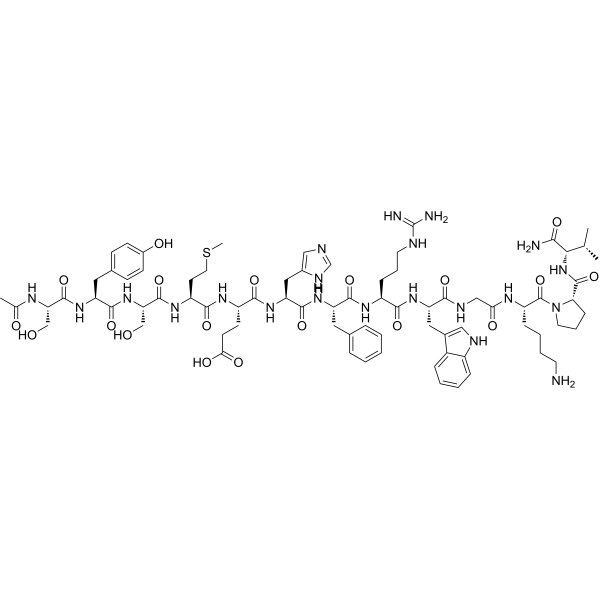
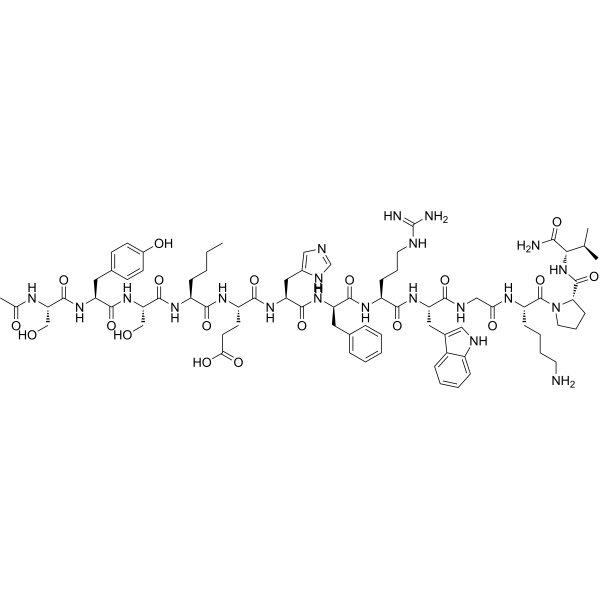
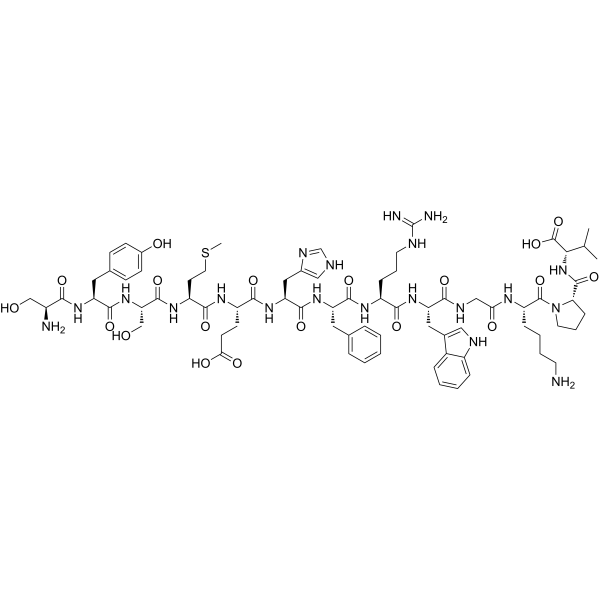
α-MSH (α-Melanocyte-Stimulating Hormone), an endogenous neuropeptide, is an endogenous melanocortin receptor 4 (MC4R) agonist with anti-inflammatory and antipyretic activities. α-MSH is a post-translational derivative of pro-opiomelanocortin (POMC) .
loading...
    loading...
24
24 Publications Verification
Cat. No.: HY-P0252A
CAS No.: 171869-93-5
Synonyms: α-Melanocyte-Stimulating Hormone TFA
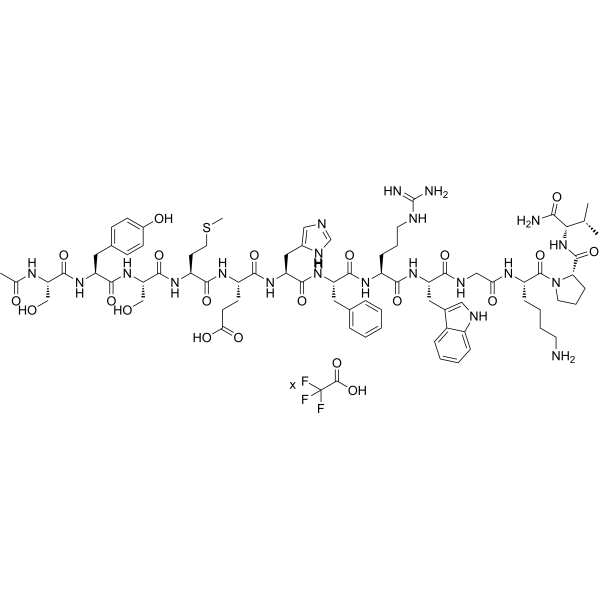
α-MSH (α-Melanocyte-Stimulating Hormone) TFA, an endogenous neuropeptide, is an endogenous melanocortin receptor 4 (MC4R) agonist with anti-inflammatory and antipyretic activities. α-MSH TFA is a post-translational derivative of pro-opiomelanocortin (POMC) .
loading...
    loading...
2
2 Cited Publications
Cat. No.: HY-P0097
CAS No.: 158563-45-2
Synonyms: Melanostatine-5
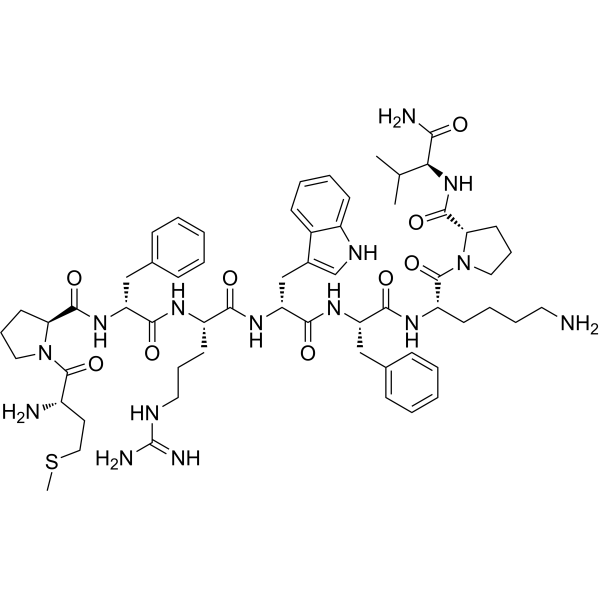
Nonapeptide-1 (Melanostatine-5), a peptide hormone, is a selective antagonist of MC1R (Ki: 40 nM). Nonapeptide-1 is a competitive α-MSH antagonist that potently inhibits intracellular cAMP and melanosome dispersion induced by α-MSH in melanocytes (IC50: 2.5 nM and 11 nM, respectively). Nonapeptide-1 inhibits melanin synthesis, and can be used in the research of skin pigmentation and regulation of steroid production in the adrenal gland, skin cancer .
loading...
    loading...
2
2 Cited Publications
Cat. No.: HY-P0097A
Synonyms: Melanostatine-5 acetate salt
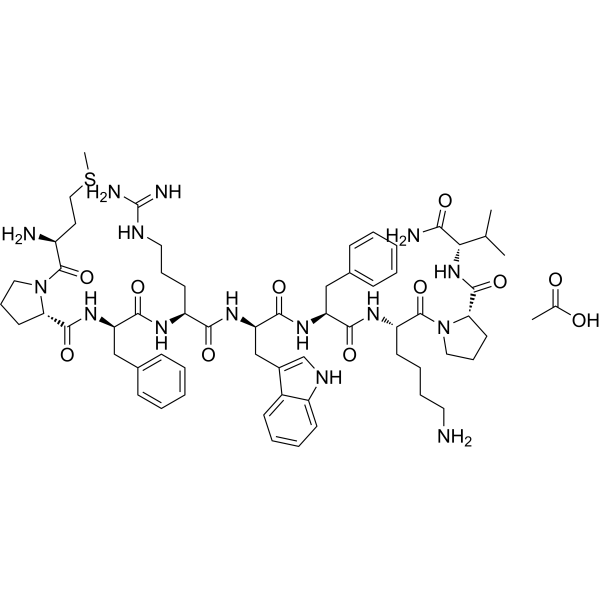
Nonapeptide-1 (Melanostatine-5) acetate salt, a peptide hormone, is a selective antagonist of MC1R (Ki: 40 nM). Nonapeptide-1 acetate salt is a competitive α-MSH antagonist that potently inhibits intracellular cAMP and melanosome dispersion induced by α-MSH in melanocytes (IC50: 2.5 nM and 11 nM, respectively). Nonapeptide-1 acetate salt inhibits melanin synthesis, and can be used in the research of skin pigmentation and regulation of steroid production in the adrenal gland, skin cancer .
loading...
    loading...
2
2 Cited Publications
Cat. No.: HY-P4911A
Target:  

CXCR

Research Areas:  

Cardiovascular Disease

SDF-1α (human) TFA is a mononuclear cells chemoattractant that can bind to CXCR4. SDF-1α plays a central role in stem cell homing, retention, survival, proliferation, cardiomyocyte repair, angiogenesis and ventricular remodelling following myocardial infarction. SDF-1α (human) TFA can be used in cardiovascular disease research .
loading...
    loading...
1
1 Cited Publications
Cat. No.: HY-N2466
CAS No.: 75921-69-6
Synonyms: MT-I; [Nle4,D-Phe7]-α-MSH
Melanotan I (MT-I; [Nle4,D-Phe7]-α-MSH) is an α-MSH (HY-P0252) analog, synthetic melanotropic peptide, and melanocortin receptor (MCR) agonist. Melanotan I induces skin tanning by mimicking the action of α-MSH on the melanocortin 1 receptor (MC1R) in melanocytes. As an appetite suppressant, Melanotan I impairs the ability of insulin to inhibit endogenous glucose production, suppresses leptin secretion from adipose tissue, and thereby reduces voluntary feed intake in ewes. Melanotan I can be used in research related to UV-induced skin damage, polymorphic light eruption, ruminant feeding, and sexual dysfunction .
loading...
    loading...
1
1 Cited Publications
Cat. No.: HY-106373
CAS No.: 9002-60-2
Purity:  99.17%
Synonyms: ACTH; Adrenocorticotrophic hormone
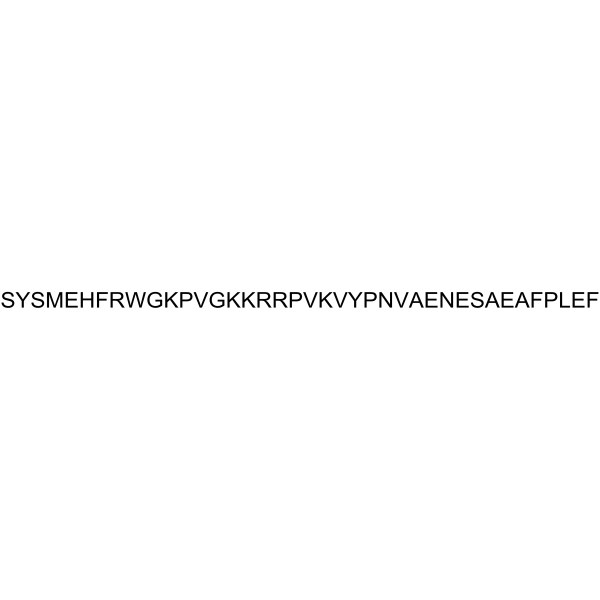
Adrenocorticotropic hormone (ACTH; Adrenocorticotrophic hormone) is a polypeptide tropic hormone produced by the anterior pituitary gland. Adrenocorticotropic hormone stimulates cortisol secretion from the adrenal cortex via the hypothalamic-pituitary-adrenal (HPA) axis. Adrenocorticotropic hormone regulates cortisol and androgen production. Adrenocorticotropic hormone can promote the development of spermatogenesis. Adrenocorticotropic hormone can relieve acute inflammation in gout models by inhibiting the polarization of macrophages to M1 type, inhibiting ROS and proinflammatory factor production and protecting mitochondrial function. Adrenocorticotropic hormone can be used for the researches of inflammation, endocrinology, metabolic disease, such as gout and nephrotic syndrome .
loading...
    loading...
1
1 Cited Publications
Cat. No.: HY-106373A
Purity:  99.85%
Synonyms: ACTH TFA; Adrenocorticotrophic hormone TFA
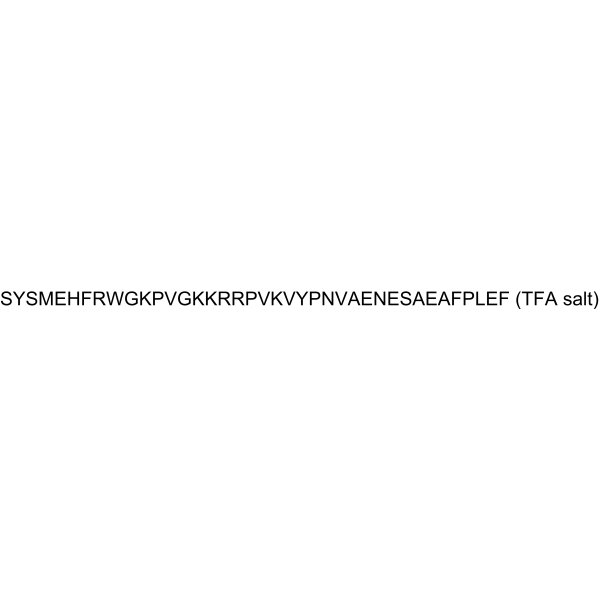
Adrenocorticotropic hormone (ACTH; Adrenocorticotrophic hormone) TFA is a polypeptide tropic hormone produced by the anterior pituitary gland. Adrenocorticotropic hormone TFA stimulates cortisol secretion from the adrenal cortex via the hypothalamic-pituitary-adrenal (HPA) axis. Adrenocorticotropic hormone TFA regulates cortisol and androgen production. Adrenocorticotropic hormone TFA can promote the development of spermatogenesis. Adrenocorticotropic hormone TFA can relieve acute inflammation in gout models by inhibiting the polarization of macrophages to M1 type, inhibiting ROS and proinflammatory factor production and protecting mitochondrial function. Adrenocorticotropic hormone TFA can be used for the researches of inflammation, endocrinology, metabolic disease, such as gout and nephrotic syndrome .
loading...
    loading...
Cat. No.: HY-P1211
CAS No.: 12279-41-3
Synonyms: 1-39-Corticotropin (human)
Target:  

Melanocortin Receptor

Research Areas:  

Metabolic Disease

Adrenocorticotropic Hormone (ACTH) (1-39), human is a melanocortin receptor agonist.
loading...
    loading...
Cat. No.: HY-129724A
CAS No.: 2828433-34-5
Synonyms: ACTH-(11-13) acetate; Lys-Pro-Val acetate; H-Lys-Pro-Val-OH acetate
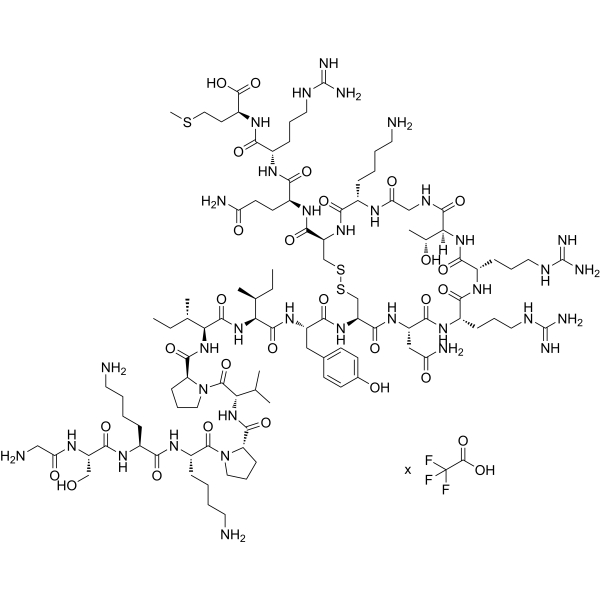
α-MSH (11-13) (ACTH-(11-13)) acetate is a C-terminal tripeptide of α-MSH that can cross the blood-brain barrier. α-MSH (11-13) acetate exhibits antipyretic, anti-inflammatory, and antibacterial activities. α-MSH (11-13) acetate also exerts neuroprotective effects after traumatic brain injury by inhibiting excessive activation of microglia and reducing neuronal apoptosis. α-MSH (11-13) acetate can be used in research related to traumatic brain injury, fever, and bacterial infections .
loading...
    loading...
Cat. No.: HY-P0060
CAS No.: 16960-16-0
Synonyms: Tetracosactrin; ACTH(1–24)
Tetracosactide (Tetracosactrin) is an analogue of adrenocorticotrophic hormone (ACTH). Tetracosactide is the agonist for melanocortin-4 receptor (MC4R) that activates human MC4R with an EC50 of 0.65 nM. Tetracosactide can stimulate the release of corticosteroids such as cortisol from the adrenal gland. Tetracosactide is currently used for the research of ulcerative colitis and Crohn's disease, juvenile/adult rheumatoid arthritis and osteoarthrosis .
loading...
    loading...
Cat. No.: HY-P5601
CAS No.: 214542-43-5
Target:  

Bacterial Fungal

Research Areas:  

Infection

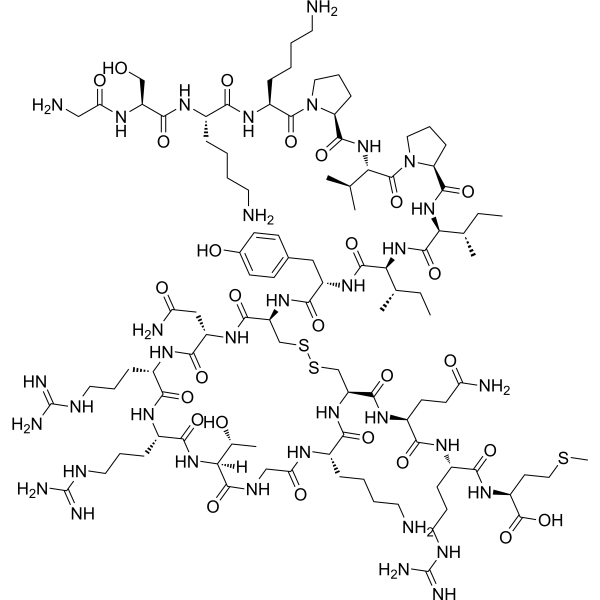
Thanatin is an inducible cationic antimicrobial peptide. Thanatin is a pathogen-inducible single-disulfide-bond-containing β-hairpin AMP. Thanatin displays broad-spectrum activity against both Gram-negative and Gram-positive bacteria as well as against various species of fungi with MICs of 0.3-40 µM, 0.6-40 µM and 0.6-20 µM, respectively. Thanatin has the property of competitive replacement of divalent cations from bacterial outer membrane (OM), leading to OM disruption .
loading...
    loading...
Cat. No.: HY-P5601A
Target:  

Bacterial Fungal

Research Areas:  

Infection

Thanatin TFA is an inducible cationic antimicrobial peptide. Thanatin TFA s a pathogen-inducible single-disulfide-bond-containing β-hairpin AMP. Thanatin TFA displays broad-spectrum activity against both Gram-negative and Gram-positive bacteria as well as against various species of fungi with MICs of 0.3-40 µM, 0.6-40 µM and 0.6-20 µM, respectively. Thanatin TFA has the property of competitive replacement of divalent cations from bacterial outer membrane (OM), leading to OM disruption .
loading...
    loading...
Cat. No.: HY-129724
CAS No.: 67727-97-3
Synonyms: ACTH-(11-13); Lys-Pro-Val; H-Lys-Pro-Val-OH
α-MSH (11-13) (ACTH-(11-13)) is a C-terminal tripeptide of α-MSH that can cross the blood-brain barrier. α-MSH (11-13) exhibits antipyretic, anti-inflammatory, and antibacterial activities. α-MSH (11-13) also exerts neuroprotective effects after traumatic brain injury by inhibiting excessive activation of microglia and reducing neuronal apoptosis. α-MSH (11-13) can be used in research related to traumatic brain injury, fever, and bacterial infections .
loading...
    loading...
Cat. No.: HY-P3564
CAS No.: 18067-65-7
Target:  

Melanocortin Receptor

Research Areas:  

Others

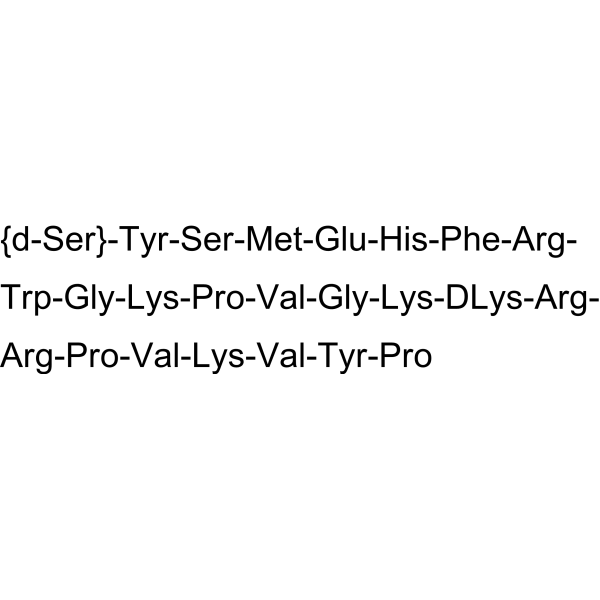
(D-Ser1)-ACTH (1-24) (human, bovine, mouse, ovine, porcine, rabbit, rat) is an adrenocorticotropic hormone (ACTH) analogue .
loading...
    loading...
Cat. No.: HY-P10233A
Target:  

Bacterial

Research Areas:  

Infection

SAAP 148 TFA is a synthetic antimicrobial peptide (bacteria) that interacts with and disrupts the lipid bilayer of bacterial cytoplasmic membranes, thereby inducing changes in membrane permeability and bacterial death. SAAP 148 TFA kills drug-resistant, multidrug-resistant and persister bacterial strains, inhibits biofilm formation, eliminates established biofilms, and blocks bacterial colonization on implant surfaces. SAAP 148 TFA retains its activity after modification or immobilization, exhibits variable cytotoxicity in different human cell models, and shows reduced efficacy in protein-rich environments. SAAP 148 TFA can be used in infection-related research .
loading...
    loading...
Cat. No.: HY-P1477
CAS No.: 77465-10-2
Synonyms: ACTH(1-39), rat
Target:  

Melanocortin Receptor

Research Areas:  

Metabolic Disease Endocrinology

Adrenocorticotropic hormone (1-39), rat is a potent melanocortin 2 (MC2) receptor agonist.
loading...
    loading...
Cat. No.: HY-P1477A
Synonyms: ACTH(1-39), rat TFA
Target:  

Melanocortin Receptor

Research Areas:  

Metabolic Disease Endocrinology

Adrenocorticotropic hormone (1-39), rat (TFA) is a potent melanocortin 2 (MC2) receptor agonist.
loading...
    loading...
Cat. No.: HY-P2185A
Target:  

MMP

Research Areas:  

Others

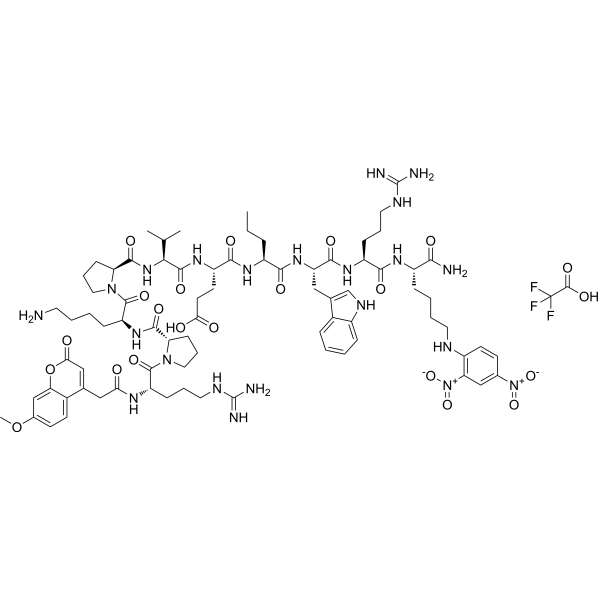
NFF-3 TFA, the peptide, is a selective MMP substrate. NFF-3 TFA selectively binds to MMP-3 and MMP-10 to be hydrolyzed. NFF-3 TFA is also cleaved by trypsin, hepatocyte growth factor activator, and factor Xa. Label NFF-3 TFA with a CyDye pair, Cy3/Cy5Q, can produce fluorescence in cell assays to detect cell activity .
loading...
    loading...
Cat. No.: HY-P1555
CAS No.: 22006-64-0
Synonyms: Adrenocorticotropic Hormone (1-13)
Target:  

Peptides

Research Areas:  

Inflammation/Immunology

ACTH (1-13) is a 13-aa peptide, with cytoprotective effects in the model of ethanol induced gastric lesions in rats.
loading...
    loading...

