

1. Search Result
Search Result
Results for "

M1 phenotypes

" in MedChemExpress (MCE) Product Catalog:

19

Inhibitors & Agonists

1

Screening Libraries

4

Peptides

2

Inhibitory Antibodies

2

Natural
Products

Cat. No. Product Name Target Research Areas Chemical Structure
  • HY-P6292A

    PACAP Receptor Neurological Disease Inflammation/Immunology Cancer
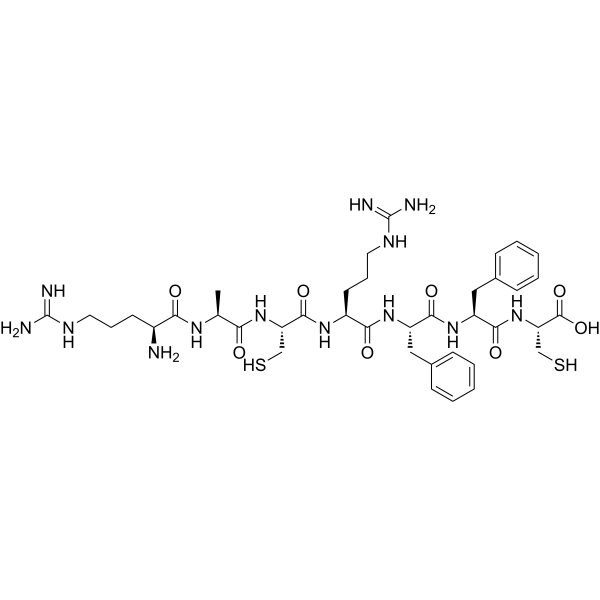
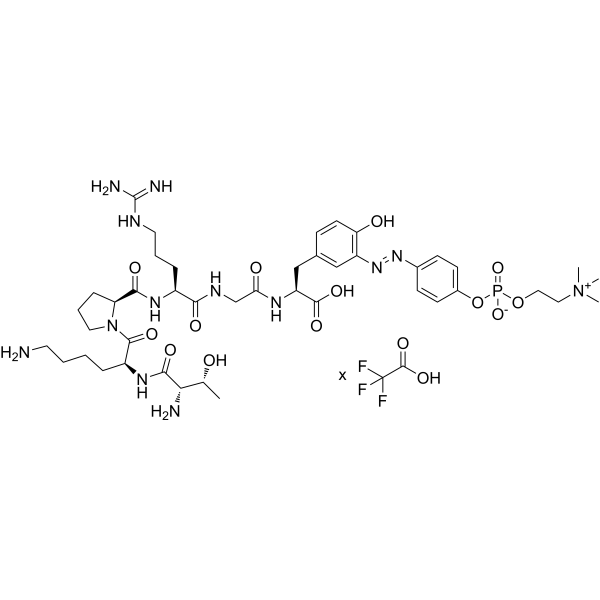
    KS-133 TFA is a highly selective and potent antagonist of the vascular active enteropeptide receptor 2 (VIPR2) with IC50 values for Ca influx measurement and cAMP measurement of 24.8 nM and 500 nM, respectively. KS-133 TFA reverses the tumor-promoting M2 phenotype of tumor-associated macrophages to the anti-tumor M1 phenotype, alters the tumor immune microenvironment, and inhibits tumor growth. KS-133 TFA can be used for research on schizophrenia and cancer immune regulation .
    KS-133 TFA
  • HY-P99364
    Icrucumab
    1 Publications Verification

    Anti-VEGFR1/FLT1 Reference Antibody; IMC-18F1

    VEGFR Apoptosis p38 MAPK Akt Endocrinology Cancer
    Icrucumab (Anti-VEGFR1/FLT1 Reference Antibody; IMC-18F1) is an IgG1 antibody inhibitor targeting VEGFR-1/FLT1 with anti-tumor activity. By blocking ligand-dependent phosphorylation and downstream signal transduction, Icrucumab reduces the activities of MAPK and Akt in breast cancer xenograft models, inhibits the proliferation and invasion of VEGFR-1-positive tumor cells, and reverses the conversion of M1 macrophages to the pro-tumor M2-like phenotype. Icrucumab also inhibits tumor cell proliferation, promotes apoptosis, and effectively suppresses tumor growth through direct targeting of tumors and host support mechanisms. In addition, Icrucumab exhibits a synergistic effect when combined with chemotherapeutic agents, and it is used in research related to various cancers including advanced solid malignancies, thyroid cancer, melanoma, and lung cancer .
    Icrucumab
  • HY-W614507

    NADPH Oxidase Apoptosis Bcl-2 Family Metabolic Disease Cancer
    Dihydronicotinamide riboside is a potent NAD + concentration enhancer. Dihydronicotinamide riboside modulates targets BAX, PUMA, NQO2, and IκB kinase. Dihydronicotinamide riboside mediates apoptosis, induces pro-oxidant activity, mitochondrial dysfunction, metabolic dysregulation, redox modulation, and pro-inflammatory M1 phenotype induction. Dihydronicotinamide riboside increases intracellular and mitochondrial NAD + levels, maintains cell survival against NAD +-depleting genotoxins. Dihydronicotinamide riboside can be used for the research of hepatocellular carcinoma .
    Dihydronicotinamide riboside
  • HY-Y0586

    Asaronic acid

    NF-κB STAT Metabolic Disease Inflammation/Immunology
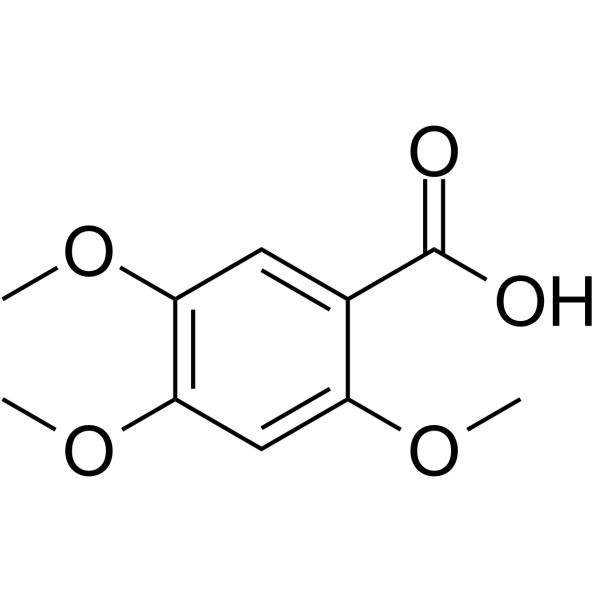
    2,4,5-Trimethoxybenzoic acid (Asaronic acid) is a compound identified in purple perilla extracts. 2,4,5-Trimethoxybenzoic acid inhibits LPS (HY-D1056)-induced inflammatory responses, inhibits the activation of NF-κB and STAT signaling pathways. 2,4,5-Trimethoxybenzoic acid inhibits M1 macrophage phenotype-mediated inflammation in diabetes .
    2,4,5-Trimethoxybenzoic acid
  • HY-128578
    KPLH1130
    2 Publications Verification

    PDHK NO Synthase Interleukin Related HIF/HIF Prolyl-Hydroxylase Metabolic Disease Inflammation/Immunology
    KPLH1130 is a pyruvate dehydrogenase kinase (PDK) inhibitor. KPLH1130 potently inhibits M1 macrophage polarization by reducing the expression of pro-inflammatory cytokines, decreasing the levels of M1 phenotype markers (HIF-1α, iNOS) and nitric oxide (NO) production. KPLH1130 prevents the reduction of mitochondrial oxygen consumption rate (OCR) induced by inflammatory stimuli (LPS ((HY-D1056) + IFN-γ) in various macrophage types. KPLH1130 improves glucose tolerance in HFD-fed mice. KPLH1130 can be used for the study of obesity-associated metabolic disorders and other inflammatory conditions .
    KPLH1130
  • HY-105005

    AAD-2004

    Prostaglandin Receptor PGE synthase Reactive Oxygen Species (ROS) Apoptosis Neurological Disease Inflammation/Immunology
    Crisdesalazine (AAD-2004) is a microsomal prostaglandin E2 synthase-1 (mPGES-1) inhibitor. Crisdesalazine acts as a potent free radical scavenger that directly neutralizes reactive oxygen species (ROS) including hydrogen peroxide, exerting neuroprotective effects against apoptosis and axonal damage. Crisdesalazine inhibits PGE2 production, mediates inflammatory responses, and promotes the conversion of macrophages from the pro-inflammatory M1 phenotype to the anti-inflammatory M2 phenotype. Crisdesalazine is applicable to neuroprotection research in multiple sclerosis and spinal cord injury .
    Crisdesalazine
  • HY-P4111

    CXCR Inflammation/Immunology Cancer
    Peptide R is a cyclic peptide and a specific CXCR4 antagonist. Peptide R exhibits excellent ability to effectively remodel tumor stroma. Peptide R has potential for use in tumor research .
    Peptide R
  • HY-P11107

    Apoptosis TNF Receptor Inflammation/Immunology Cancer
    RP-832c is a synthetic analogue of host defense peptides (HDP), targeting the mannose receptor CD206 on the surface of M2 polarized macrophages (Kd = 3.5 μM). RP-832c binding to CD206 induces a significant conformational change in the receptor, activating signaling pathways that lead to rapid apoptosis and repolarization of CD206-positive M2 macrophages to an M1 phenotype. RP-832c treatment significantly reduces CD206 gene expression in M2 macrophages while transiently increasing expression of TNF-α, a marker for M1 macrophages. RP-832c is used for the studies of T-cell lymphoma (CTCL) and idiopathic pulmonary fibrosis (IPF) .
    RP-832c
  • HY-139990
    CSF1R-IN-3
    1 Publications Verification

    c-Fms Cancer
    CSF1R-IN-3 (compound 21) is a potent and orally active CSF-1R inhibitor (IC50=2.1 nM). CSF1R-IN-3 is a potent antiproliferative activity against colorectal cancer cells. CSF1R-IN-3 inhibits the progression of colorectal cancer by suppressing the migration of macrophages, reprograming M2-like macrophages to the M1 phenotype, and enhancing the antitumor immunity .
    CSF1R-IN-3
  • HY-163642

    Others Cancer
    TNF-α agonistic 1 (compound 22a) can repolarize tumor-associated macrophages (TAMs) in the tumor microenvironment (TME) from the M2 phenotype to the M1 anti-tumor phenotype .
    TNF-α agonistic 1
  • HY-155762

    NOD-like Receptor (NLR) Interleukin Related Neurological Disease Inflammation/Immunology
    Anti-neuroinflammation agent 1 is a potent anti-neuroinflammation agent that regulates polarization BV2 microglia cells from M1 phenotype to M2 phenotype .
    Anti-neuroinflammation agent 1
  • HY-155408

    FLAP Inflammation/Immunology
    ALR-27 is an antagonist of the 5-lipoxygenase (5-LOX) activating protein FLAP and has anti-inflammatory activity. ALR-27 potently inhibits 5-LOX product formation (>80%) in pro-inflammatory M1-MDM, with no significant direct inhibition of 5-LOX. ALR-27 not only reduces prostaglandin and leukotriene (LT) production in neutrophils but also increases the production of specialized prolytic mediators in specific human macrophage phenotypes .
    ALR-27
  • HY-162494

    Protein Arginine Deiminase Cancer
    PAD4-IN-4 (compound 28) is a potent PAD4 inhibitor (IC50=0.79±0.09 μM). PAD4-IN-4 improves the tumor immune microenvironment by reshaping neutrophil phenotype, upregulating the proportions of dendritic cells and M1 macrophages, and reducing the amount of myeloid-derived suppressor cells. PAD4-IN-4 can be used for Triple-negative breast cancer research .
    PAD4-IN-4
  • HY-169103

    NO Synthase COX Cholinesterase (ChE) Amyloid-β Neurological Disease Inflammation/Immunology
    Neuroprotective agent 5 (compound 28) is a brain permeabilizing agent with anti-neuritis, anti-oxidative damage and neuroprotective effects. Neuroprotective agent 5 exhibits a potent NO inhibitory effect (EC50=0.49 μM), inhibits the release of proinflammatory factors PGE2 and TNF-α, downregulates the expression of iNOS and COX-2 proteins, and promotes the polarization of BV-2 cells from the proinflammatory M1 phenotype to the anti-inflammatory M2 phenotype. In addition, Neuroprotective agent 5 can also inhibit acetylcholinesterase (AChE) activity and Aβ42 aggregation in a dose-dependent manner. Neuroprotective agent 5 can be used for the study of Alzheimer's disease .
    Neuroprotective agent 5
  • HY-162415

    c-Fms Apoptosis Cancer
    CSF1R-IN-22 (Compound C19) is an orally effective CSF-1R selective inhibitor (IC50<6 nM). CSF1R-IN-22 enhances the secretion of CXCL9 from M2 macrophages, increases CD8 + T cell infiltration. CSF1R-IN-22 boosts anti-tumor immune responses of anti-PD-1, and induces apoptosis in tumor cells. CSF1R-IN-22 can effectively reprogram M2-like TAMs (tumor-associated macrophages) to the M1 phenotype and reshape the TME by inducing the recruitment of CD8 + T cells into tumors and reducing the infiltration of immunosuppressive Tregs and MDSCs .
    CSF1R-IN-22
  • HY-P992369

    VISTA Cancer
    HMBD-002 is an Fc-independent, non-depleting IgG4 subclass antibody that targets VISTA and VSIG3. It is widely used in research related to various solid tumors, including colon cancer, triple-negative breast cancer, and non-small cell lung cancer. HMBD-002 blocks the interactions of VISTA with VSIG3 and LRIG1, relieves immunosuppression without depleting VISTA-positive cells, activates the cytotoxic program of CD8 + T cells, and drives the type I interferon signaling pathway. HMBD-002 reprograms tumor-associated macrophages to the M1 phenotype, reduces tumor infiltration of inhibitory myeloid cells, thereby significantly inhibiting tumor growth and improving survival. HMBD-002 is well tolerated in rodent and non-human primate animal models .
    HMBD-002
  • HY-Y0586R

    NF-κB Reference Standards STAT Metabolic Disease Inflammation/Immunology
    2,4,5-Trimethoxybenzoic acid (Standard) is the analytical standard of 2,4,5-Trimethoxybenzoic acid (HY-Y0586). This product is intended for research and analytical applications. 2,4,5-Trimethoxybenzoic acid (Asaronic acid) is a compound identified in purple perilla extracts. 2,4,5-Trimethoxybenzoic acid inhibits LPS (HY-D1056)-induced inflammatory responses, inhibits the activation of NF-κB and STAT signaling pathways. 2,4,5-Trimethoxybenzoic acid inhibits M1 macrophage phenotype-mediated inflammation in diabetes .
    2,4,5-Trimethoxybenzoic acid (Standard)
  • HY-P11753

    TGF-beta/Smad Neurological Disease Inflammation/Immunology
    IKVAVC is a derivative peptide of IKVAV with an artificially added cysteine (Cys) at its C-terminus. IKVAVC retains all the biological activities of the original IKVAV, mainly acting as a neural adhesion/differentiation signaling peptide, and is equipped with an engineered linker arm that enables covalent conjugation to molecular materials. IKVAV inhibits the migration and activation of fibroblasts, downregulates the TGF-β1 signaling pathway and endoplasmic reticulum stress, and promotes nerve repair. IKVAV regulates the phenotype of macrophages, shifting them from the pro-inflammatory M1 type to the pro-reparative M2 type .
    IKVAVC
  • HY-181998

    Interleukin Related Neurological Disease Inflammation/Immunology
    CN016 is a neuroprotective agent. CN016 inhibits the elevation of pro-inflammatory cytokines G-CSF, GM-CSF and IL-6 induced by Oxaliplatin (HY-17371). CN016 suppresses Paclitaxel (HY-B0015)-induced inflammatory responses and immune cell infiltration into sensory neurons. CN016 protects neurons from Paclitaxel (HY-B0015)-induced neurotoxic damage. CN016 protects mice against Oxaliplatin-induced peripheral neuropathy .
    CN016

Inquiry Online

Your information is safe with us. * Required Fields.

Salutation


Country or Region *

Applicant Name *


Organization Name *

Department *


Email Address *


Product Name *

Cat. No.


Requested quantity *

Phone Number *


Remarks

Inquiry Online

Inquiry Information

Product Name:
Cat. No.:
Quantity:
MCE Japan Authorized Agent:

