208 Results for "

MCL1

" in MedChemExpress (MCE) Product Catalog:
Products (208)

208 Results for "MCL1" in MCE Product Catalog:

  • Isoforms Recommended:
484
484 Publications Verification
Cat. No.: HY-108232
CAS No.: 1032349-77-1
Purity:  99.72%
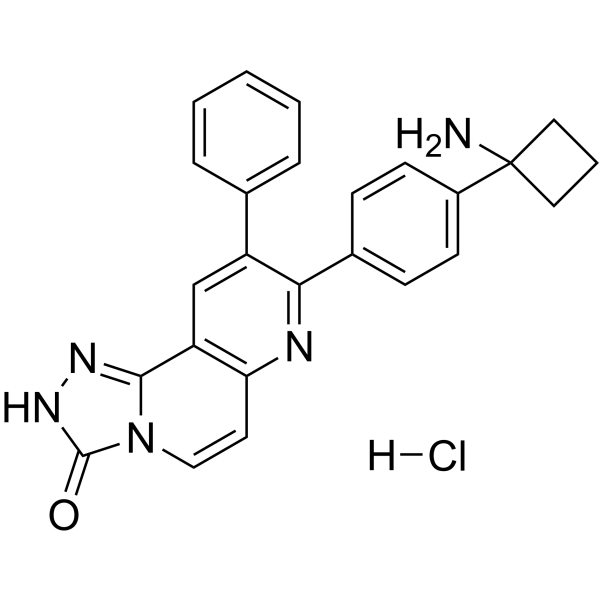
MK-2206 is an orally active pan-AKT inhibitor, with IC50 values of 8 nM, 12 nM and 65 nM against AKT1, AKT2 and AKT3, respectively. MK-2206 inhibits the Akt/mTOR signaling pathway and reduces the levels of downstream GSK3β and Mcl-1 via proteasomal degradation. MK-2206 induces G1-phase cell cycle arrest, apoptosis, epithelial-mesenchymal transition, fibroblast activation and extracellular matrix deposition. MK-2206 causes transient hyperglycemia and hyperinsulinemia in animals. MK-2206 can be used in research related to solid tumors, renal fibrosis and hypercholesterolemia [1] .
loading...
    loading...
484
484 Publications Verification
Cat. No.: HY-10358
CAS No.: 1032350-13-2
Purity:  99.94%
Synonyms: MK-2206 (2HCl)
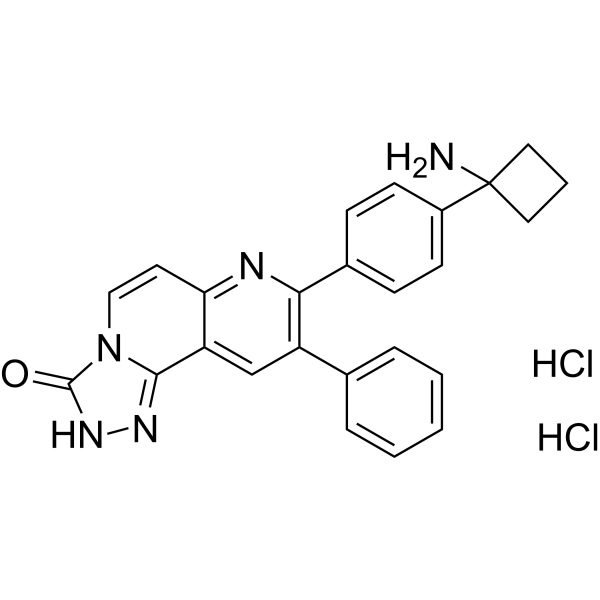
MK-2206 dihydrochloride (MK-2206 2HCl) is an orally active pan-AKT inhibitor, with IC50 values of 8 nM, 12 nM and 65 nM against AKT1, AKT2 and AKT3, respectively. MK-2206 dihydrochloride inhibits the Akt/mTOR signaling pathway and reduces the levels of downstream GSK3β and Mcl-1 via proteasomal degradation. MK-2206 dihydrochloride induces G1-phase cell cycle arrest, apoptosis, epithelial-mesenchymal transition, fibroblast activation and extracellular matrix deposition. MK-2206 dihydrochloride causes transient hyperglycemia and hyperinsulinemia in animals. MK-2206 dihydrochloride can be used in research related to solid tumors, renal fibrosis and hypercholesterolemia [1] .
loading...
    loading...
111
111 Cited Publications
Cat. No.: HY-100741
CAS No.: 1799633-27-4
Purity:  99.81%
Target:  

Bcl-2 Family

Research Areas:  

Cancer

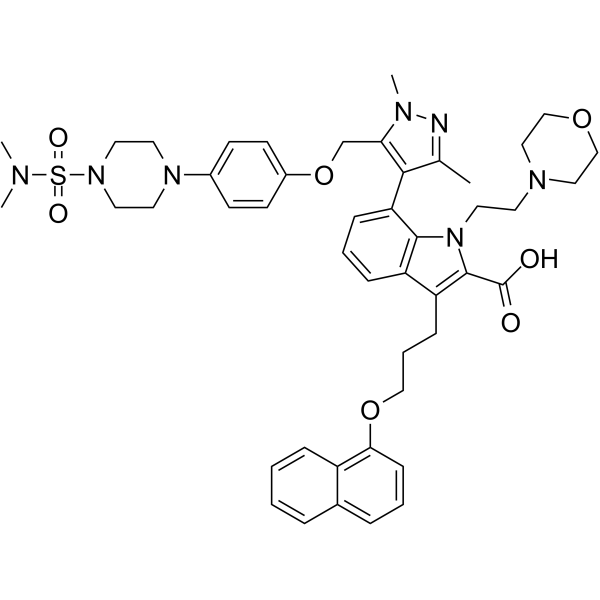
S63845 is a potent and selective myeloid cell leukemia 1 (MCL1) inhibitor with a Kd of 0.19 nM for human MCL1 [1].
loading...
    loading...
22
22 Cited Publications
Cat. No.: HY-101533
CAS No.: 2143061-81-6
Purity:  99.79%
Target:  

Bcl-2 Family

Research Areas:  

Cancer

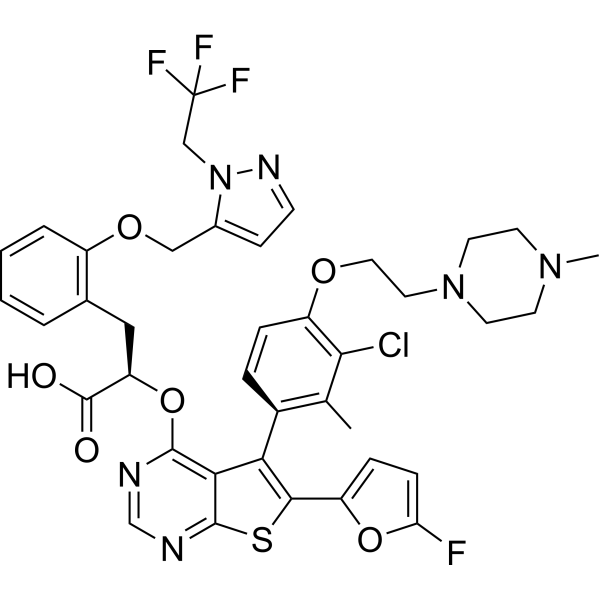
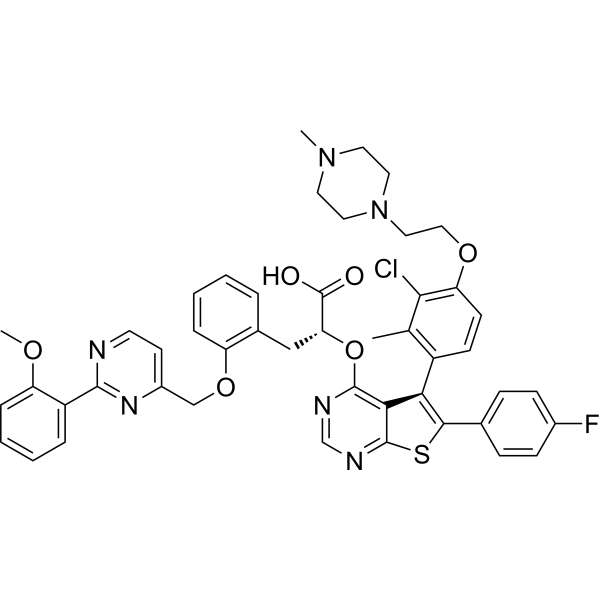
AZD-5991 is a potent and selective Mcl-1 inhibitor with an IC50 of 0.7 nM in FRET assay and a Kd of 0.17 nM in surface plasmon resonance (SPR) assay [1].
loading...
    loading...
20
20 Cited Publications
Cat. No.: HY-12468
CAS No.: 1668553-26-1
Purity:  99.86%
Target:  

Bcl-2 Family Apoptosis

Research Areas:  

Cancer

A-1210477 is a potent and selective inhibitor of MCL-1 with a Ki of 0.45 nM [1]. A-1210477 specifically binds MCL-1 and promotes apoptosis of cancer cells in an MCL-1-dependent manner .
loading...
    loading...
19
19 Cited Publications
Cat. No.: HY-N0662
CAS No.: 1617-53-4
Synonyms: Didemethyl-ginkgetin
Amentoflavone (Didemethyl-ginkgetin) is a potent and orally active GABA(A) negative modulator. Amentoflavone also shows anti-inflammatory, antioxidative, anti-viral, anti-tumor, anti-radiation, anti-fungal, antibacterial activity. Amentoflavone induces apoptosis and cell cycle arrest at sub-G1 phase [1] .
loading...
    loading...
18
18 Cited Publications
Cat. No.: HY-112218
CAS No.: 1799631-75-6
Purity:  99.11%
Synonyms: S-64315
Target:  

Bcl-2 Family

Research Areas:  

Cancer

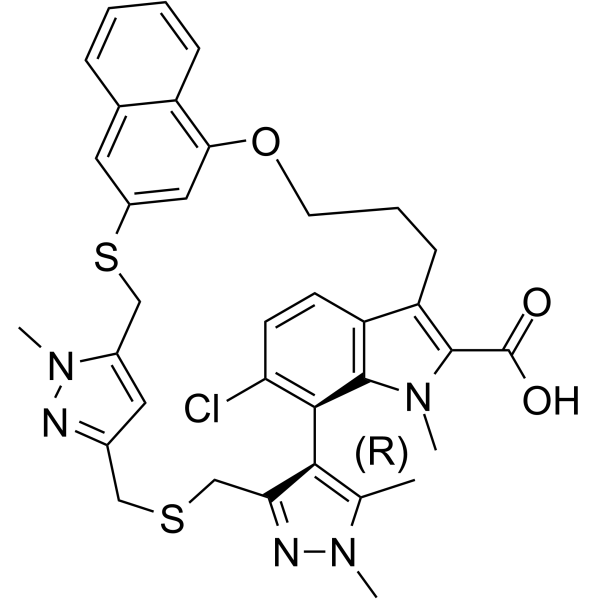
MIK665 (S-64315), derived from S63845, is a myeloid cell leukemia sequence 1 (MCL1) inhibitor [1]. MIK665 has an IC50 of 1.81 nM for MCL1 .
loading...
    loading...
12
12 Cited Publications
Cat. No.: HY-14985
CAS No.: 648903-57-5
Purity:  99.91%
Target:  

Syk Apoptosis

Research Areas:  

Inflammation/Immunology Cancer

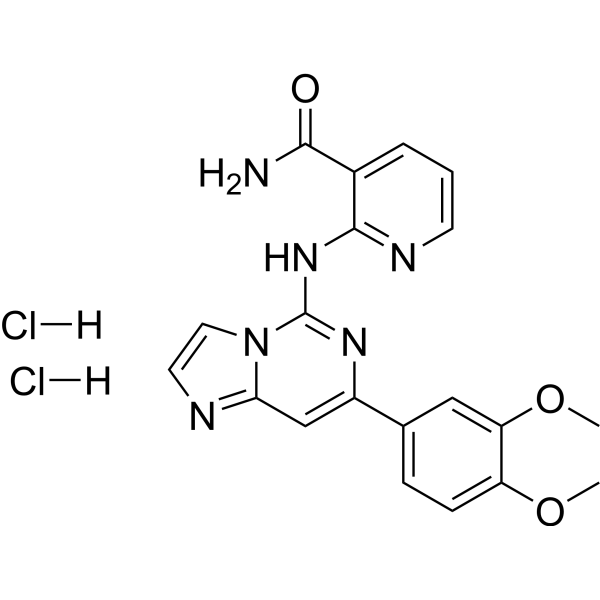
BAY 61-3606 dihydrochloride is an orally available, ATP-competitive, reversible and highly selective Syk inhibitor with a Ki of 7.5 nM an IC50 of 10 nM [1]. BAY 61-3606 dihydrochloride reduces ERK1/2 and Akt phosphorylation in neuroblastoma cell . BAY 61-3606 dihydrochloride induces a large decrease of Syk phosphorylation in K-rn cell lysates . Bay 61-3606 dihydrochloride sensitizes TRAIL-induced apoptosis by downregulating Mcl-1 in breast cancer cells .
loading...
    loading...
11
11 Cited Publications
Cat. No.: HY-N0763
CAS No.: 523-50-2
Synonyms: Isopsoralen
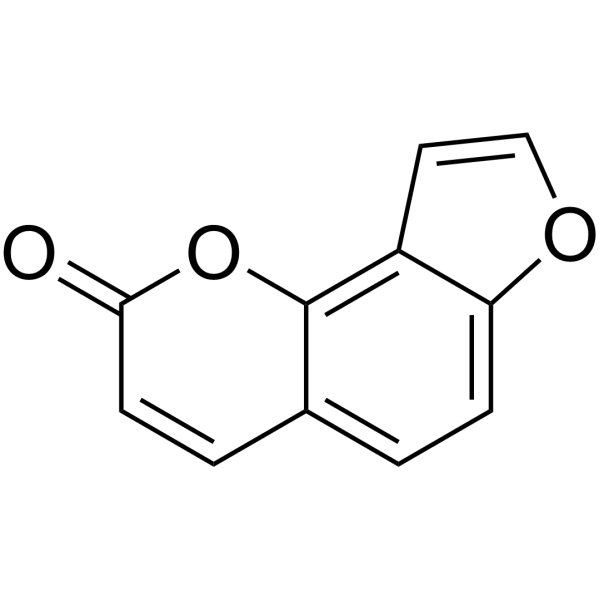
Angelicin is a furanocoumarin compound that functions as an inhibitor of NF-κB and MAPK signaling pathways, exhibiting anti-inflammatory, antiviral, and antitumor activities. It suppresses the lytic replication of γ-herpesviruses, such as MHV-68, early during viral infection, potentially inhibiting RTA gene expression (IC50=28.95 μM). Angelicin also mitigates inflammation by inhibiting the phosphorylation and nuclear translocation of NF-κB, and the phosphorylation of p38 and JNK. Furthermore, it induces apoptosis in neuroblastoma cells by downregulating anti-apoptotic proteins like Bcl-2, Bcl-xL, and Mcl-1, while activating caspase-9 and caspase-3.
loading...
    loading...
10
10 Cited Publications
Cat. No.: HY-123937
CAS No.: 2139287-33-3
Purity:  99.16%
Research Areas:  

Infection Cancer

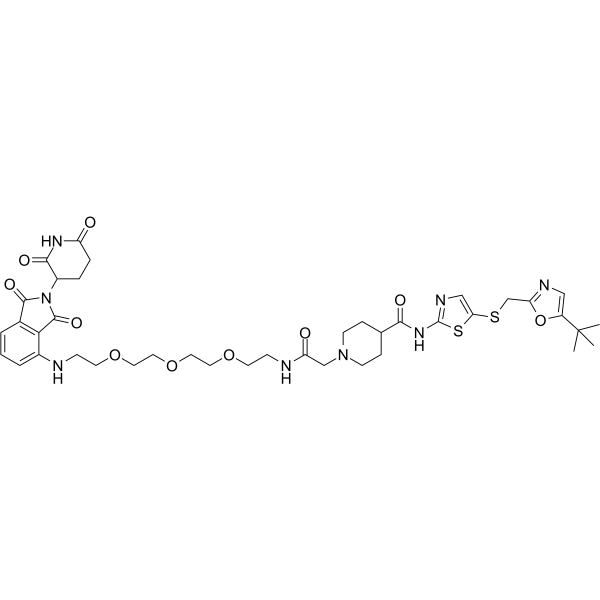
THAL-SNS-032 is a selective CDK9 PROTAC degrader. THAL-SNS-032 recruits CRBN to form a ternary complex with CDK9, thereby triggering ubiquitination and proteasomal degradation of CDK9. THAL-SNS-032 also induces the degradation of CDK1, CDK2 and CDK7. THAL-SNS-032 elevates pH2AX levels, reduces MCL1s expression, and activates caspase-3. THAL-SNS-032 induces cancer cell apoptosis, regulates transcription, and inhibits the replication of human cytomegalovirus (CMV) and SARS-CoV-2. THAL-SNS-032 can be used in research related to breast cancer, leukemia, cytomegalovirus infection and SARS-CoV-2 infection [1] .
loading...
    loading...
9
9 Cited Publications
Cat. No.: HY-N0831
CAS No.: 18085-97-7
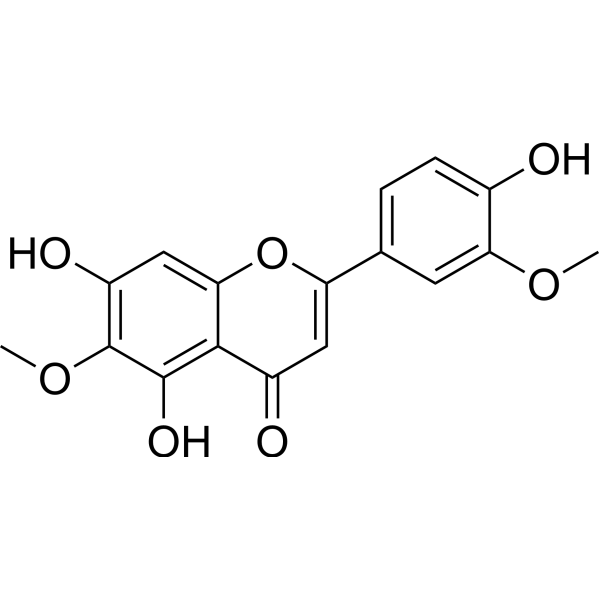
Jaceosidin is a flavonoid isolated from Artemisia vestita, induces apoptosis in cancer cells, activates Bax and down-regulates Mcl-1 and c-FLIP expression [1]. Jaceosidin exhibits anti-cancer , anti-inflammatory activities, decreases leves of inflammatory markers, and suppresses COX-2 expression and NF-κB activation .
loading...
    loading...
9
9 Cited Publications
Cat. No.: HY-114855
CAS No.: 34576-94-8
Purity:  99.81%
Target:  

Bcl-2 Family

Research Areas:  

Metabolic Disease

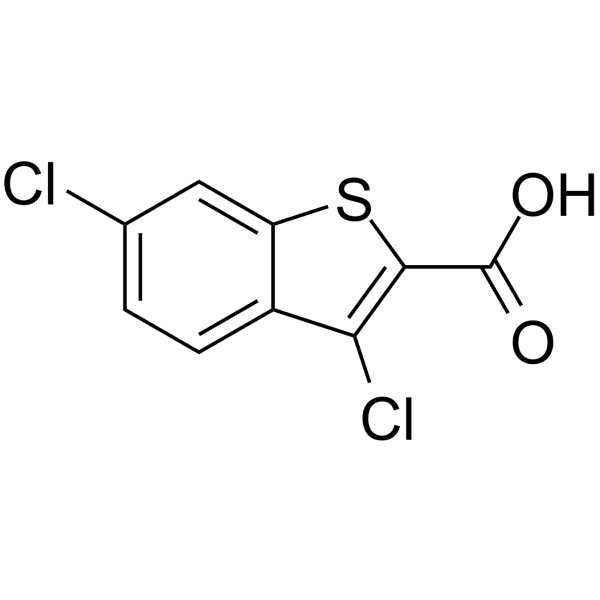
BT2 is a BCKDC kinase (BDK) inhibitor with an IC50 of 3.19 μM. BT2 binding to BDK triggers helix movements in the N-terminal domain, resulting in the dissociation of BDK from the branched-chain α-ketoacid dehydrogenase complex (BCKDC) [1]. BT2 (compound 4) is also a potent and selective Mcl-1 inhibitor with a Ki value of 59 μM .
loading...
    loading...
8
8 Cited Publications
Cat. No.: HY-101565
CAS No.: 1883727-34-1
Purity:  99.16%
Synonyms: AMG-176
Target:  

Bcl-2 Family

Research Areas:  

Cancer

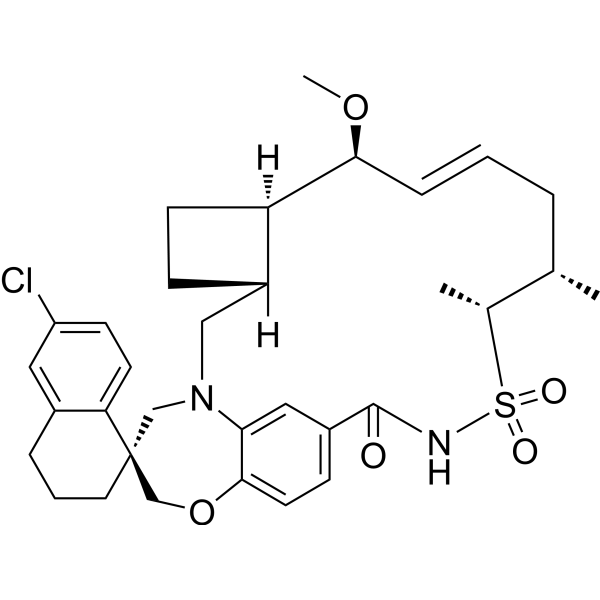
Tapotoclax (AMG-176) is a potent, selective and orally active MCL-1 inhibitor, with a Ki of 0.13 nM [1] .
loading...
    loading...
7
7 Cited Publications
Cat. No.: HY-15464A
CAS No.: 866541-93-7
Purity:  98.93%
Synonyms: AT-101 (acetic acid); (-)-Gossypol acetic acid; (R)-Gossypol acetic acid
Target:  

Bcl-2 Family Autophagy

Research Areas:  

Cancer

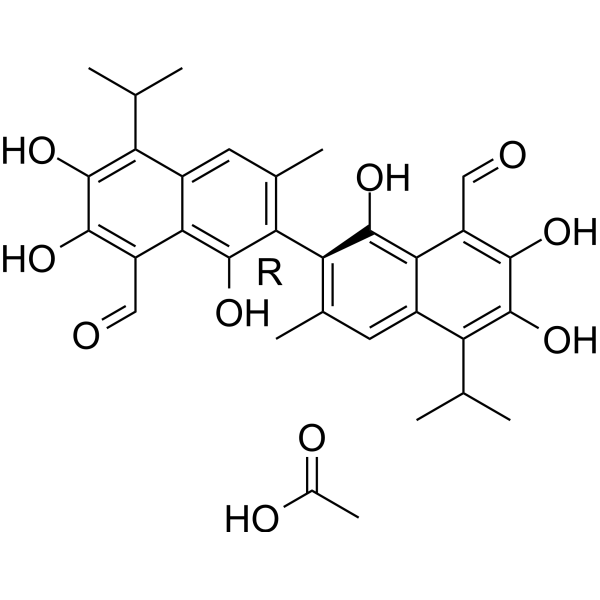
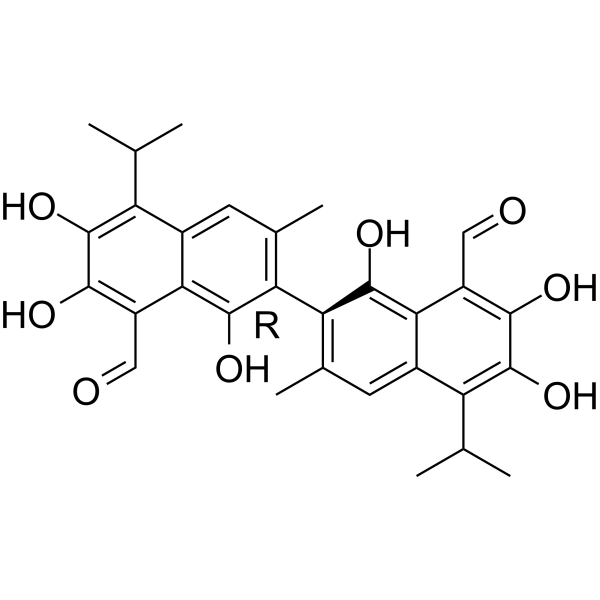
(R)-(-)-Gossypol acetic acid (AT-101 (acetic acid)) is the levorotatory isomer of a natural product Gossypol. AT-101 is determined to bind to Bcl-2, Mcl-1 and Bcl-xL proteins with Kis of 260±30 nM, 170±10 nM, and 480±40 nM, respectively.
loading...
    loading...
6
6 Cited Publications
Cat. No.: HY-15613
CAS No.: 1227962-62-0
Purity:  99.52%
Synonyms: Marinopyrrole A
Target:  

Bcl-2 Family

Research Areas:  

Cancer

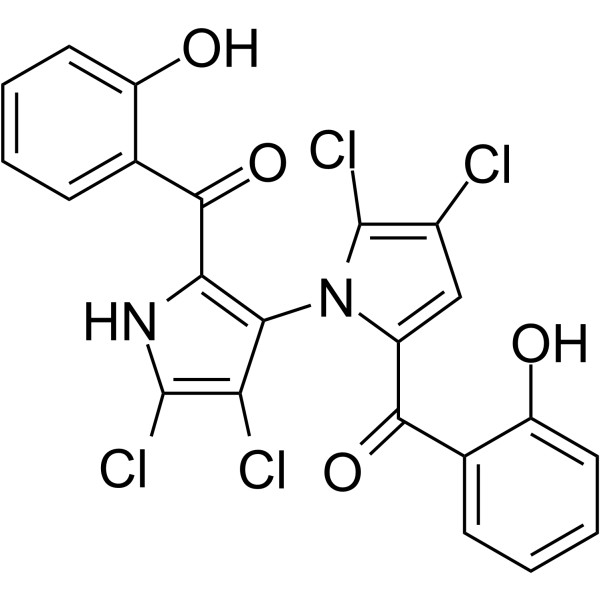
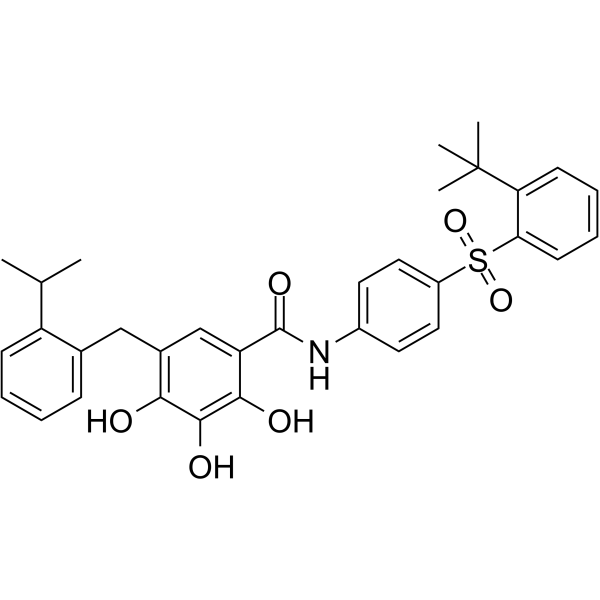
Maritoclax (Marinopyrrole A) is a novel and specific Mcl-1 inhibitor with an IC50 value of 10.1 μM, and shows >8 fold selectivity than BCL-xl (IC50 > 80 μM).
loading...
    loading...
6
6 Cited Publications
Cat. No.: HY-N0087
CAS No.: 2752-65-0
Synonyms: Beta-Guttiferrin
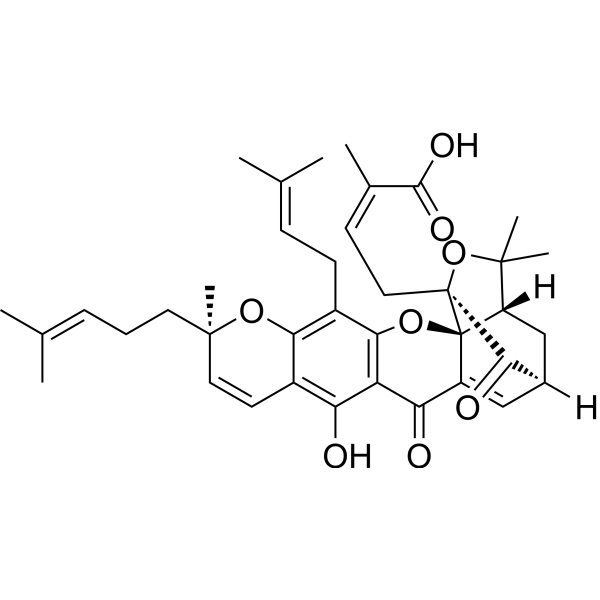
Gambogic Acid (Beta-Guttiferrin) is derived from the gamboges resin of the tree Garcinia hanburyi. Gambogic Acid (Beta-Guttiferrin) inhibits Bcl-XL, Bcl-2, Bcl-W, Bcl-B, Bfl-1 and Mcl-1 with IC50s of 1.47 μM, 1.21 μM, 2.02 μM, 0.66 μM, 1.06 μM and 0.79 μM.
loading...
    loading...
5
5 Cited Publications
Cat. No.: HY-18628
CAS No.: 518303-20-3
Target:  

Bcl-2 Family

Research Areas:  

Cancer

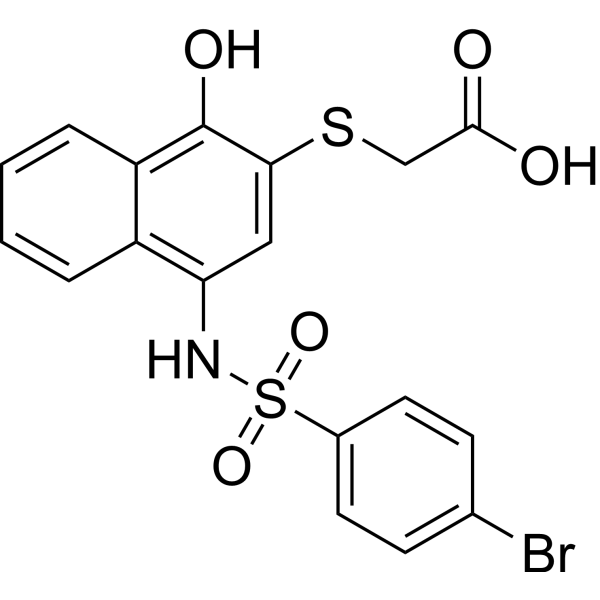
UMI-77 is a selective Mcl-1 inhibitor, which shows high binding affinity to Mcl-1 (IC50=0.31 μM). UMI-77 binds to the BH3 binding groove of Mcl-1 with Ki of 490 nM, showing selectivity over other members of anti-apoptotic Bcl-2 members.
loading...
    loading...
5
5 Cited Publications
Cat. No.: HY-76474A
CAS No.: 1615197-10-8
Target:  

Apoptosis Syk

Research Areas:  

Inflammation/Immunology Cancer

BAY 61-3606 hydrochloride is an orally available, ATP-competitive, reversible and highly selective Syk inhibitor with a Ki of 7.5 nM and an IC50 of 10 nM . BAY 61-3606 hydrochloride reduces ERK1/2 and Akt phosphorylation in neuroblastoma cell. BAY 61-3606 hydrochloride induces a large decrease of Syk phosphorylation in K-rn cell lysates. BAY 61-3606 hydrochloride sensitizes TRAIL-induced apoptosis by downregulating Mcl-1 in breast cancer cells.
loading...
    loading...
4
4 Cited Publications
Cat. No.: HY-12020
CAS No.: 877877-35-5
Purity:  99.27%
Target:  

Bcl-2 Family

Research Areas:  

Cancer

TW-37 is a potent Bcl-2 inhibitor with Ki values of 260, 290 and 1110 nM for Mcl-1, Bcl-2 and Bcl-xL, respectively.
loading...
    loading...
3
3 Cited Publications
Cat. No.: HY-129478
CAS No.: 100823-03-8
Purity:  99.55%
Target:  

Caspase Bcl-2 Family CDK

Research Areas:  

Cancer

TC11 is a MCL1 degrader and Caspase-9 and CDK1 activator. TC11 functions as a phenylacetylamide derivative and is structurally related to immunomodulatory active molecules. TC11 induces degradation of MCL1 leading to apoptotic death [1] during prolonged mitotic arrest.
loading...
    loading...

