1. Search Result
Search Result
Results for "

MDA content

" in MedChemExpress (MCE) Product Catalog:

16

Inhibitors & Agonists

1

Biochemical Assay Reagents

1

Peptides

10

Natural
Products

Targets Recommended:
Cat. No. Nombre del producto Target Áreas de investigación Chemical Structure
  • HY-112540B

    Endogenous Metabolite Metabolic Disease
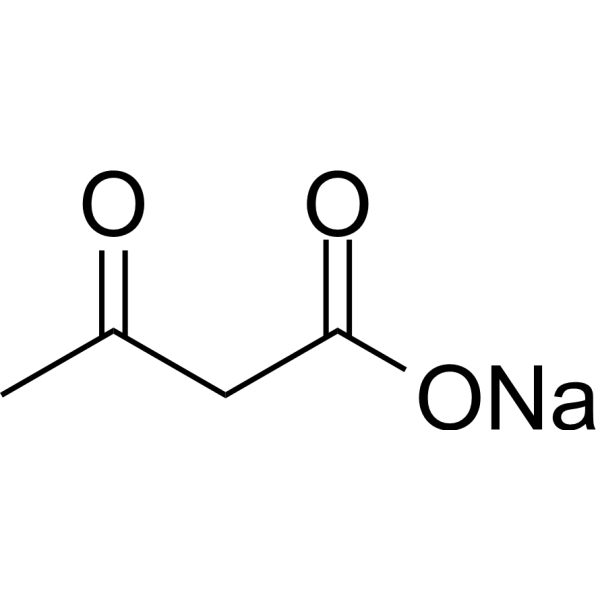
    Acetoacetic acid sodium is an oxidative stress inducer that affects the antioxidant enzyme system and lipoprotein metabolism. Acetoacetic acid sodium induces oxidative stress by decreasing the mRNA expression and activity of superoxide dismutase (SOD), catalase (CAT), and glutathione peroxidase (GSH-Px), increasing MDA content, and inhibiting very low density lipoprotein (VLDL) assembly by downregulating apolipoprotein ApoB100, ApoE, and low density lipoprotein receptor (LDLR), leading to triglyceride (TG) accumulation in hepatocytes. Acetoacetic acid sodium can be used to study metabolic diseases .
    Acetoacetic acid sodium
  • HY-N1437
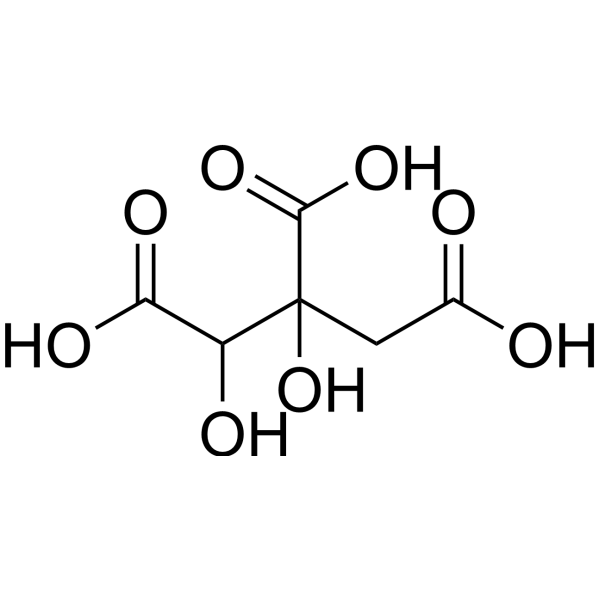
    Hydroxycitric acid
    1 Publications Verification

    Apoptosis Ferroptosis mTOR DNA/RNA Synthesis Keap1-Nrf2 Ribosomal S6 Kinase (RSK) NF-κB ATP Citrate Lyase AMPK Cardiovascular Disease Metabolic Disease Cancer
    Hydroxycitric acid is an orally active, multi-target, multi-bioactive organic acid. activates Nrf2 and its downstream molecule GPX4, increases glutathione levels, and thereby inhibits ferroptosis. Hydroxycitric acid activates the Nrf2/Keap1 and ACLY/NF-κB signaling pathways, upregulates the activities of antioxidant enzymes such as superoxide dismutase, reduces MDA content, thereby alleviating oxidative stress and renal tubular epithelial cell apoptosis, and improves pulmonary vascular and right ventricular remodeling. Hydroxycitric acid activates both the AMPK and mTORC1/S6K pathways, triggers the unfolded protein response, arrests the cancer cell cycle, and induces DNA fragmentation .
    Hydroxycitric acid
  • HY-112540
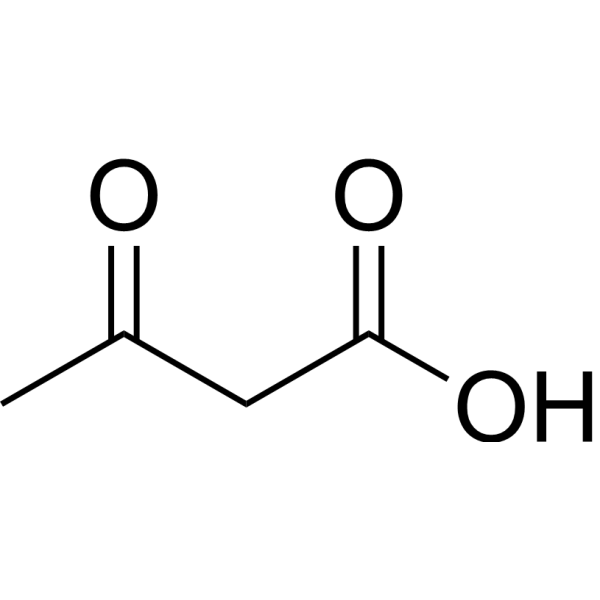
    Acetoacetic acid
    4 Publications Verification

    Endogenous Metabolite Metabolic Disease
    Acetoacetic acid is an oxidative stress inducer that affects the antioxidant enzyme system and lipoprotein metabolism. Acetoacetic acid induces oxidative stress by decreasing the mRNA expression and activity of superoxide dismutase (SOD), catalase (CAT), and glutathione peroxidase (GSH-Px), increasing MDA content, and inhibiting very low density lipoprotein (VLDL) assembly by downregulating apolipoprotein ApoB100, ApoE, and low density lipoprotein receptor (LDLR), leading to triglyceride (TG) accumulation in hepatocytes. Acetoacetic acid can be used to study metabolic diseases .
    Acetoacetic acid
  • HY-163897

    PROTACs Ferroptosis Reactive Oxygen Species (ROS) Inflammation/Immunology
    PROTAC NCOA4 degrader-1 is a VHL-based PROTAC NCOA4 degrader. PROTAC NCOA4 degrader-1 is a ferroptosis inhibitor. PROTAC NCOA4 degrader-1 reduces Fe 2+ elevation, ROS production, MDA content and PTGS2 mRNA expression. PROTAC NCOA4 degrader-1 ameliorates liver damage in a CCl4-induced acute liver injury model. PROTAC NCOA4 degrader-1 can be used for the researches of inflammation and immunology. (Pink: NCOA4 ligand (HY-149457). Black: linker (HY-163903). Blue: VHL ligand (HY-138678B)) .
    PROTAC NCOA4 degrader-1
  • HY-112540A
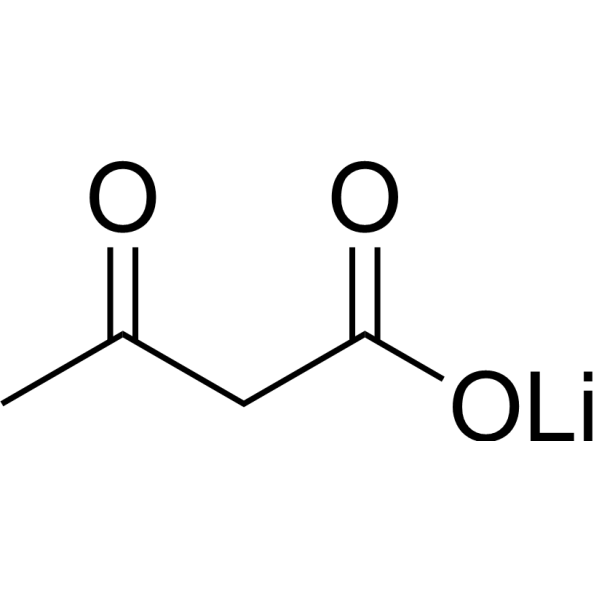
    Acetoacetic acid lithium
    4 Publications Verification

    Endogenous Metabolite Metabolic Disease
    Acetoacetic acid lithium is an oxidative stress inducer that affects the antioxidant enzyme system and lipoprotein metabolism. Acetoacetic acid lithium induces oxidative stress by decreasing the mRNA expression and activity of superoxide dismutase (SOD), catalase (CAT), and glutathione peroxidase (GSH-Px), increasing MDA content, and inhibiting very low density lipoprotein (VLDL) assembly by downregulating apolipoprotein ApoB100, ApoE, and low density lipoprotein receptor (LDLR), leading to triglyceride (TG) accumulation in hepatocytes. Acetoacetic acid lithium can be used to study metabolic diseases .
    Acetoacetic acid lithium
  • HY-N0859

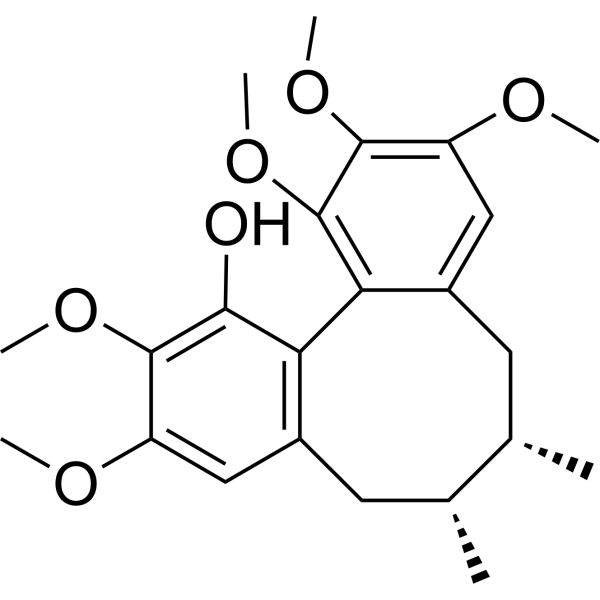
    Schizanhenol; Gomisin-K3

    UGT Cholinesterase (ChE) Tau Protein SOD Sirtuin Neurological Disease Inflammation/Immunology Cancer
    Schisanhenol (Schizanhenol), a lignan, is an orally active antioxidant. Schisanhenol reduces AChE activity, increases SIRT1 and PGC-1α expression, and decreases phosphorylated Tau (Ser 396) levels. Schisanhenol increases SOD and glutathione peroxidase activity, decreases malondialdehyde (MDA) content, and inhibits UGT2B7 activitY. Schisanhenol attenuates ox-LDL-induced apoptosis, intracellular reactive oxygen species generation, and cytotoxicity in endothelial cells. Schisanhenol inhibits LDL oxidation, brain mitochondrial and membrane peroxidative damage, and brain mitochondrial swelling and disintegration. Schisanhenol can be used for the research of Alzheimer’s disease, atherosclerosis, brain ischemia, and age-related brain deterioration .
    Schisanhenol
  • HY-W338584
    Hydroxycitric acid tripotassium
    1 Publications Verification

    Keap1-Nrf2 Ferroptosis Apoptosis mTOR NF-κB ATP Citrate Lyase AMPK Ribosomal S6 Kinase (RSK) DNA/RNA Synthesis Cardiovascular Disease Metabolic Disease Endocrinology Cancer
    Tripotassium hydroxycitrate is an orally active, multi-target, multi-bioactive organic acid. Tripotassium hydroxycitrate activates Nrf2 and its downstream molecule GPX4, increases glutathione levels, and thereby inhibits ferroptosis. Tripotassium hydroxycitrate activates the Nrf2/Keap1 and ACLY/NF-κB signaling pathways, upregulates the activities of antioxidant enzymes such as superoxide dismutase, reduces MDA content, thereby alleviating oxidative stress and renal tubular epithelial cell apoptosis, and improves pulmonary vascular and right ventricular remodeling. Tripotassium hydroxycitrate activates both the AMPK and mTORC1/S6K pathways, triggers the unfolded protein response, arrests the cancer cell cycle, and induces DNA fragmentation .
    Hydroxycitric acid tripotassium
  • HY-17655

    Reactive Oxygen Species (ROS) Inflammation/Immunology
    TBE56, a molecular glue, is a BACH1 degrader, with an EC50 of 44 nM. TBE56 is a weak NRF2 inducer and the biotinylated TBE31. TBE56 interacts and promotes the degradation of BACH1 via a mechanism involving the E3 ligase FBX022. TBE56 reduces intracellular Fe 2+ accumulation, ROS generation, and malondialdehyde (MDA) content, while increasing GSH/GSSG ratio and upregulating GPX4 in Prominin-2-overexpressed BMSCs. TBE56 significantly ameliorates intervertebral disc degeneration (IVDD) in puncture-induced SD rat IVDD model. TBE56 can be used for the study of intervertebral disc degeneration (IVDD) .
    TBE56
  • HY-N5073

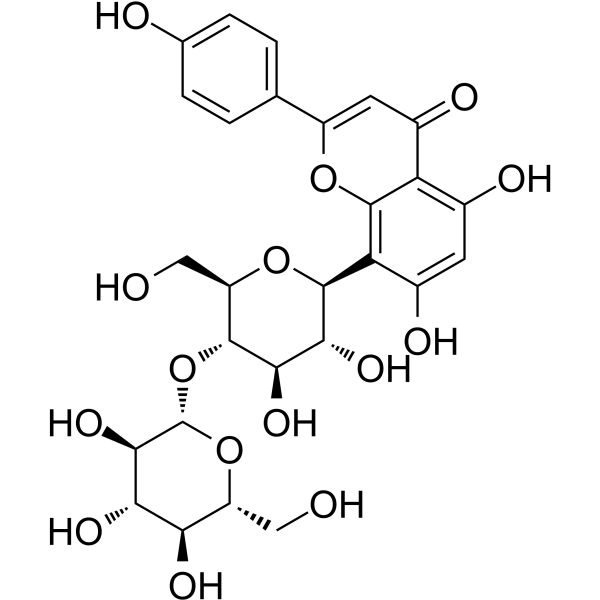
    4''-O-Glucosylvitexin

    JNK p38 MAPK Interleukin Related TNF Receptor Caspase Lactate Dehydrogenase Apoptosis Cardiovascular Disease Metabolic Disease
    Vitexin-4''-O-glucoside (4''-O-Glucosylvitexin) is an orally active natural flavonoid component with multiple pharmacological effects including antioxidation, anti-inflammation, cytoprotection and anti-apoptosis. Vitexin-4''-O-glucoside regulates the MAPK signaling pathway by downregulating the phosphorylation levels of JNK and p38, thereby blocking endoplasmic reticulum stress responses. Vitexin-4''-O-glucoside alleviates oxidative stress by reducing MDA content and upregulating the activities of SOD and CAT, attenuates inflammation by downregulating the expressions of inflammatory factors TNF-α, IL-1β and IL-6, and also reduces LDH release and inhibits caspase-3 activation. Vitexin-4''-O-glucoside effectively improves drug-induced acute liver injury and exerts significant protective effects against myocardial hypoxia/reoxygenation injury. Vitexin-4''-O-glucoside can be used in studies on acute liver injury, cardiovascular diseases and myocardial hypoxia-reoxygenation injury .
    Vitexin-4''-O-glucoside
  • HY-P2005

    Reactive Oxygen Species (ROS) SOD Others
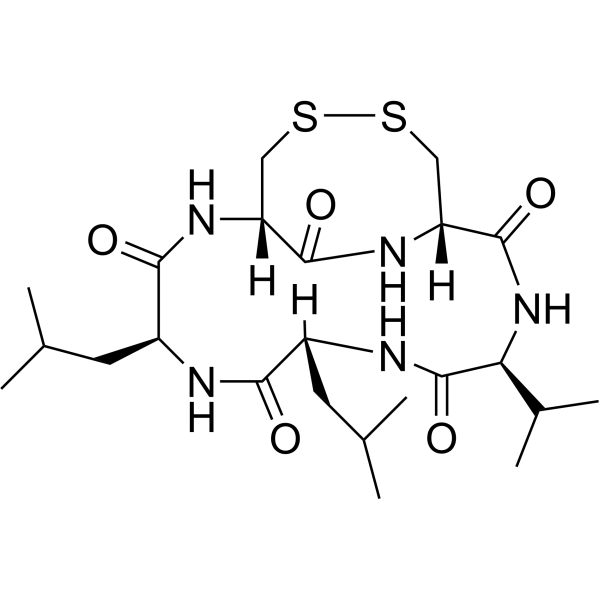
    Malformin C is an algicidal peptide can be isolated from Aspergillus and exhibits dose-dependent algicidal activity. Malformin C induces a significant increase in ROS levels in algal cells, resulting in impaired SOD activity and high production of MDA content .
    Malformin C
  • HY-N9928

    Cholinesterase (ChE) Neurological Disease
    Echinenone is an acetylcholinesterase (AChE) inhibitor (IC50=16.29 μg/mL) with anti-Aβ(25-35) activity. Echinenone can inhibit MDA content and increase superoxide dismutase (SOD), catalase (CAT) and glutathione peroxidase (GSH-Px) activities to cope with oxidative stress damage .
    Echinenone
  • HY-178448

    EGFR JAK Ferroptosis Apoptosis Reactive Oxygen Species (ROS) Cannabinoid Receptor Glutathione Peroxidase Caspase Inflammation/Immunology Cancer
    EGFR-IN-178 is an orally active EGFR mutant inhibitor, exhibits highly selective inhibitory activity against mutants of the EGFR enzyme, including Del19 (IC50 = 3.4 nM), L858R/T790 M (IC50 = 2.9 nM), and Del19/T790 M (IC50 = 2.5 nM). EGFR-IN-178 has good activity against JAK2 (IC50 = 55.6 nM) and JAK3 (IC50 = 46.1 nM) kinases. EGFR-IN-178 can increase cellular lipid oxide MDA, meanwhile decrease GSH content, causing ferroptosis in cancer cells. EGFR-IN-178 promotes apoptosis by increasing cleaved caspase-3 expression. EGFR-IN-178 can inhibit the phosphorylation of EGFR protein and decrease the active form p-JAK2 for JAK2, induce an increase in intracellular ROS. EGFR-IN-178 can be used for the study of non-small cell lung cancer (NSCLC) .
    EGFR-IN-178
  • HY-158108

    Autophagy Ferroptosis Reactive Oxygen Species (ROS) Cancer
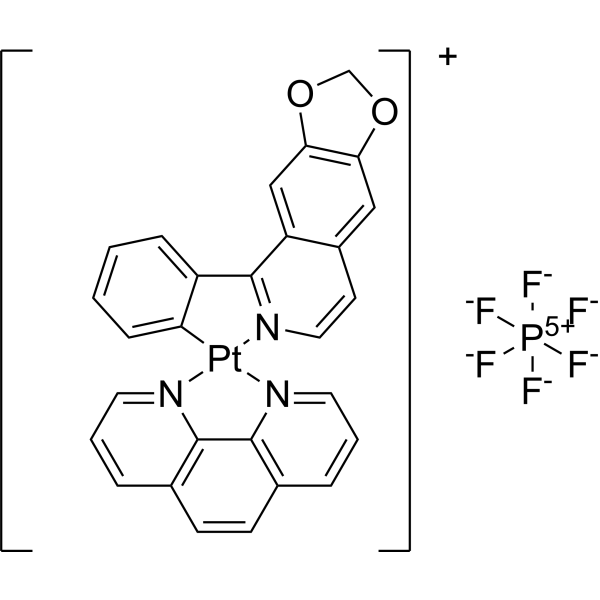
    anti-TNBC agent-6 (compound pt-3) is a potent anti-TNBC agent. anti-TNBC agent-6 shows cytotoxic activity. anti-TNBC agent-6 induces autophagy and ferroptosis. anti-TNBC agent-6 enhances intracellular ROS accumulatio. anti-TNBC agent-6 shows anti tumor activity and has the potential for the research of breast cancer .
    anti-TNBC agent-6
  • HY-161388

    Ferroptosis Mitophagy Cancer
    NSCLC-IN-1 (Compound A10-2) induces mitophagy and ferroptosis through targeting transmembrane BAX inhibitor motif containing 6 (TMBIM6). NSCLC-IN-1 induces mitochondrial Ca 2+ imbalance, leading to mitochondrial damage. NSCLC-IN-1 reduces intracellular glutathione (GSH), increases the accumulation of lipid peroxides (LPO) and malondialdehyde (MDA) content. NSCLC-IN-1 is a potent anti-NSCLC agent .
    NSCLC-IN-1
  • HY-112540AR

    Endogenous Metabolite Reference Standards Metabolic Disease
    Acetoacetic acid (lithium) (Standard) is the analytical standard of Acetoacetic acid (lithium). This product is intended for research and analytical applications. Acetoacetic acid lithium is an oxidative stress inducer that affects the antioxidant enzyme system and lipoprotein metabolism. Acetoacetic acid lithium induces oxidative stress by decreasing the mRNA expression and activity of superoxide dismutase (SOD), catalase (CAT), and glutathione peroxidase (GSH-Px), increasing MDA content, and inhibiting very low density lipoprotein (VLDL) assembly by downregulating apolipoprotein ApoB100, ApoE, and low density lipoprotein receptor (LDLR), leading to triglyceride (TG) accumulation in hepatocytes. Acetoacetic acid lithium can be used to study metabolic diseases .
    Acetoacetic acid lithium (Standard)
  • HY-N0859R

    Schizanhenol (Standard); Gomisin-K3 (Standard)

    UGT Reference Standards Cholinesterase (ChE) Tau Protein SOD Sirtuin Neurological Disease Inflammation/Immunology Cancer
    Schisanhenol (Standard) (Schizanhenol (Standard)) is the analytical standard of Schisanhenol (HY-N0859). This product is intended for research and analytical applications. Schisanhenol, a lignan, is an orally active antioxidant. Schisanhenol reduces AChE activity, increases SIRT1 and PGC-1α expression, and decreases phosphorylated Tau (Ser 396) levels. Schisanhenol increases SOD and glutathione peroxidase activity, decreases malondialdehyde (MDA) content, and inhibits UGT2B7 activitY. Schisanhenol attenuates ox-LDL-induced apoptosis, intracellular reactive oxygen species generation, and cytotoxicity in endothelial cells. Schisanhenol inhibits LDL oxidation, brain mitochondrial and membrane peroxidative damage, and brain mitochondrial swelling and disintegration. Schisanhenol can be used for the research of Alzheimer’s disease, atherosclerosis, brain ischemia, and age-related brain deterioration.
    Schisanhenol (Standard)

Consulta en línea

Your information is safe with us. * Required Fields.

Saludo


Country or Region *

Nombre del solicitante *


Nombre de la Organizaciòn *

Department *


Direcciòn del E-mail *


Nombre del producto *

Cat. No.


Requested quantity *

Número de teléfono *


Observaciones

Consulta en línea

Inquiry Information

Nombre del producto:
Cat. No.:
Cantidad:
MCE Japan Authorized Agent:

