1. Search Result
Search Result
Results for "

NADH oxidation

" in MedChemExpress (MCE) Product Catalog:

18

Inhibitors & Agonists

6

Natural
Products

Targets Recommended:
Cat. No. Product Name Target Research Areas Chemical Structure
  • HY-F0001
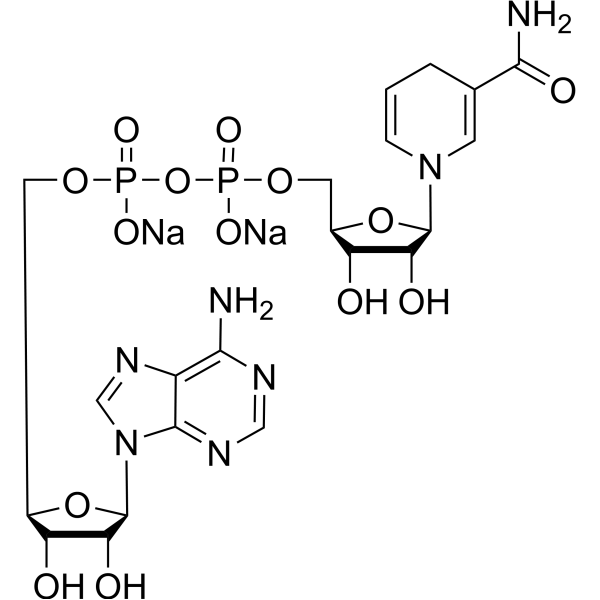
    NADH disodium salt
    5+ Cited Publications

    Disodium NADH

    Endogenous Metabolite Metabolic Disease
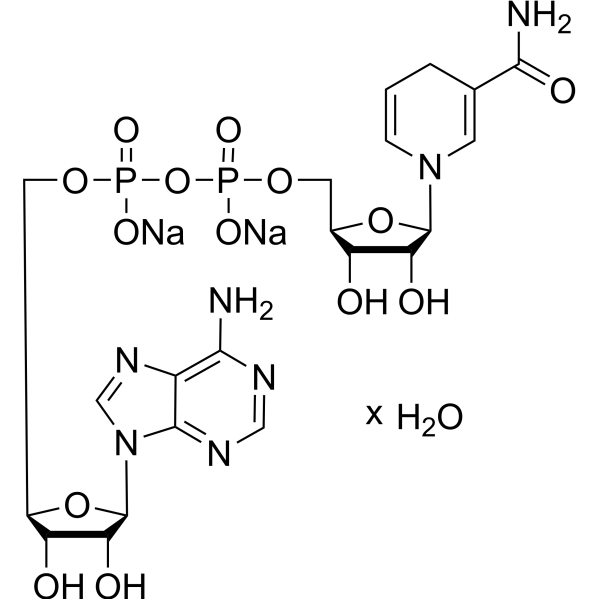
    NADH disodium salt (Disodium NADH) is an orally active reduced coenzyme. NADH disodium salt is a donor of ADP-ribose units in ADP-ribosylaton reactions and a precursor of cyclic ADP-ribose. NADH disodium salt plays a role as a regenerative electron donor in cellular energy metabolism, including glycolysis, β-oxidation and the tricarboxylic acid (TCA) cycle .
    NADH disodium salt
  • HY-128895
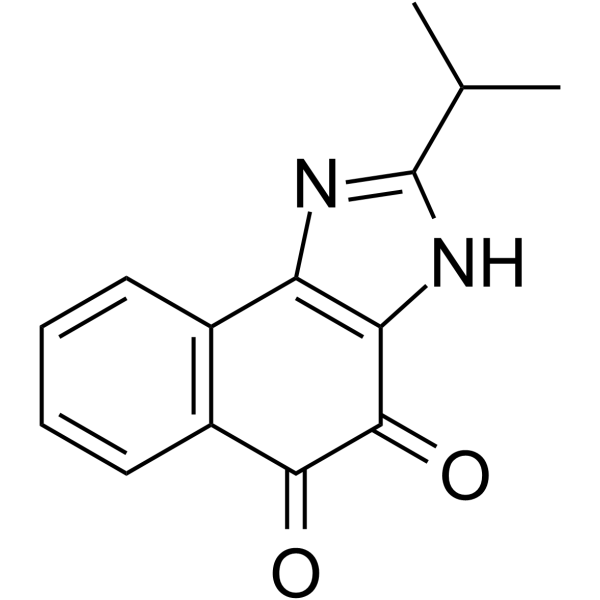
    KL1333
    1 Publications Verification

    Quinone Reductase Mitochondrial Metabolism Metabolic Disease
    KL1333, a derivative of β-lapachone, is an orally available NAD+ modulator. KL1333 reacts with NAD(P)H:quinone oxidoreductase 1 (NQO1) as a substrate, resulting in increases in intracellular NAD+ levels via NADH oxidation. KL1333 improves energy metabolism and mitochondrial dysfunction in MELAS fibroblasts. KL1333 protects against Cisplatin-induced ototoxicity in mouse cochlear cultures .
    KL1333
  • HY-113355

    Endogenous Metabolite Apoptosis Neurological Disease Inflammation/Immunology Endocrinology
    NADH is an orally active dehydrogenase coenzyme that acts as a crucial electron carrier in cellular respiration and participates in ATP production. NADH promotes metabolism, supports brain function, and counteracts oxidative stress by transferring electrons to the electron transport chain. As a signaling molecule, NADH regulates multiple biological processes, including anti-apoptosis, synaptic plasticity, gene expression, and calcium homeostasis. Redox imbalance of NADH/NAD⁺ is one of the key pathological mechanisms of various diseases, such as diabetic nephropathy, neurodegenerative diseases, and ischemia-reperfusion injury.
    NADH
  • HY-P3185

    Biochemical Assay Reagents Metabolic Disease
    Beta-galactose dehydrogenase is a selective catalyst for β-galactose. Under pH 8.6 conditions, beta-galactose dehydrogenase catalyzes the oxidation of β-galactose, produced by the hydrolysis of lactose by β-galactosidase, with nicotinamide adenine dinucleotide (NAD) to produce reduced nicotinamide adenine dinucleotide (NADH). Beta-galactose dehydrogenase specifically mediates this oxidation reaction for the quantitative detection of the substrate, used in the analysis of lactose concentration in samples such as breast milk .
    beta-Galactose dehydrogenase
  • HY-N7151

    Antibiotic Bacterial Fungal Infection
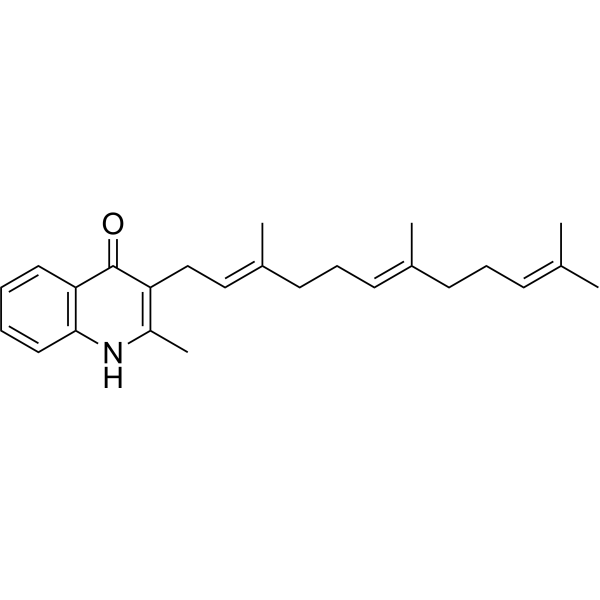
    Aurachin D is an antibiotic. Aurachin D inhibits Gram-positive bacteria and a few funguses. Aurachin D blocks NADH oxidation in beef heart submitochondrial particles .
    Aurachin D
  • HY-30170

    Endogenous Metabolite Adrenergic Receptor Neurological Disease
    N-Methylphenethylamine is an indirectly acting sympathomimetic amine that is formed via PNMT-catalyzed N-methylation of phenethylamine (PEA) in the human body. N-Methylphenethylamine exhibits affinity for β-adrenergic receptors on the surface of cancer cells or bacterial cells. N-Methylphenethylamine can be used for neurotransmitter research or as a pharmaceutical intermediate .
    N-Methylphenethylamine
  • HY-F0001R
    NADH disodium salt (Standard)
    1 Publications Verification

    Disodium NADH (Standard)

    Reference Standards Endogenous Metabolite Metabolic Disease
    NADH (disodium salt) (Standard) is the analytical standard of NADH (disodium salt). This product is intended for research and analytical applications. NADH disodium salt (Disodium NADH) is an orally active reduced coenzyme. NADH disodium salt is a donor of ADP-ribose units in ADP-ribosylaton reactions and a precursor of cyclic ADP-ribose. NADH disodium salt plays a role as a regenerative electron donor in cellular energy metabolism, including glycolysis, β-oxidation and the tricarboxylic acid (TCA) cycle .
    NADH disodium salt (Standard)
  • HY-158421

    Oxidative Phosphorylation Mitochondrial Metabolism Cancer
    MS-L6 is a potent inhibitor of oxidative phosphorylation (OXPHOS) that can acts as electron transport chain complexes I (ETC-I) combining inhibition of NADH oxidation and uncoupling effect .
    MS-L6
  • HY-P3186

    Endogenous Metabolite Metabolic Disease
    Glucose dehydrogenase, recombinant Microorganisms is a FDA-dependent oxidoreductase. Glucose dehydrogenase (GDH) catalyzes the oxidation of β-D-glucose to β-D-glucono-1,5-lactone with simultaneous reduction of the cofactor NADP + to NADPH or, to a lesser extent, NAD + to NADH. Glucose dehydrogenase (GDH) accepts both NAD + and NADP + as cofactors and can be used for the regeneration of NADH and NADPH .
    Glucose dehydrogenase, recombinant Microorganisms
  • HY-W722277A

    Interleukin Related NADH Dehydrogenase TNF Receptor JAK STAT IRAK Inflammation/Immunology
    LCC-12 (formate) is a copper (II) chelator and a derivative of the biguanide metformin (HY-B0627). LCC-12 (formate) reduces its hydrogen peroxide-dependent oxidation of NADH to NAD+. LCC-12 (formate) reduces IL-1β, IL-2, IL-6, IL-8, and TNF-α levels, as well as JAK2, STAT2, and IL-1 receptor-associated kinase 4 (IRAK4) levels in primary human cytokine-activated monocyte-derived macrophages (MDMs). LCC-12 (formate) reduces the number of CD80+ and CD86+ cytokine-activated MDMs. LCC-12 LCC-12 (formate) improves survival in a mouse model of sepsis induced by LPS or cecal ligation and puncture .
    LCC-12 formate
  • HY-P2765

    GPDH; α-Glycerophosphate dehydrogenase; Glycerol phosphate dehydrogenase

    Endogenous Metabolite Metabolic Disease
    Glycerol-3-phosphate dehydrogenase, rabbit muscle (GPDH) is an enzyme that catalyzes the reversible redox conversion of dihydroxyacetone phosphate to sn-glycerol 3-phosphate. Glycerol-3-phosphate dehydrogenase is a glycolytic enzyme and is responsible for the re-oxidation of NADH to NAD + and energy supply .
    Glycerol-3-phosphate dehydrogenase, rabbit muscle
  • HY-B1044

    Kemantane; 5-Hydroxy-2-adamantanone

    Drug Derivative Neurological Disease Inflammation/Immunology
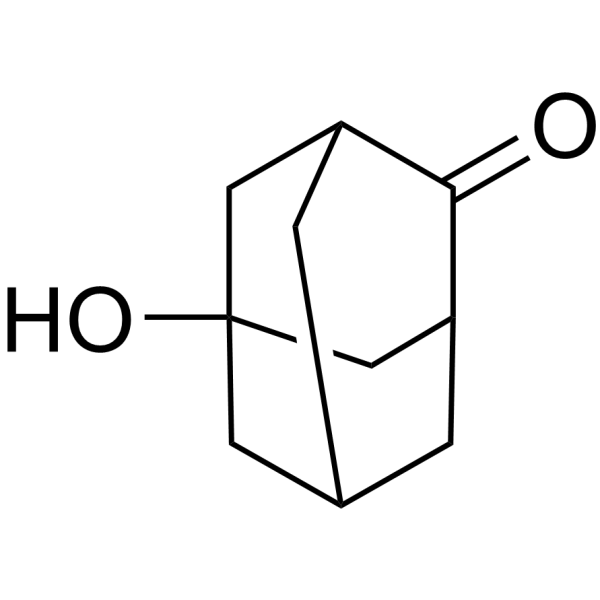
    Idramantone (Kemantane, 5-Hydroxy-2-adamantanone) is an Adamantane derivative. Idramantone is an immunostimulant. Idramantone is a versatile starting material for the synthesis of various adamantine deivatives. Idramantone can be produced using P450cam monooxygenase coupled with NADH regeneration as an oxidation biocatalyst. Idramantone can be studied in research on bronchial pathology .
    Idramantone
  • HY-161685

    Bacterial Reactive Oxygen Species (ROS) Endogenous Metabolite Infection
    Antibiofilm agent-8 (compound Ru2) enhances antimicrobial activity on visible-light exposure (400-700 nm, 10 J cm-2). Antibiofilm agent-8 generates of oxidative stress via NADH oxidation and ROS generation and compromises bacterial wall .
    Antibiofilm agent-8
  • HY-P2765A

    GPDH, microorganism; α-Glycerophosphate dehydrogenase, microorganism; Glycerol phosphate dehydrogenase, microorganism

    Endogenous Metabolite Metabolic Disease
    Glycerol-3-phosphate dehydrogenase, microorganism (GPDH, microorganism) is an enzyme that catalyzes the reversible redox conversion of dihydroxyacetone phosphate to sn-glycerol 3-phosphate.Glycerol-3-phosphate dehydrogenase is a glycolytic enzyme and is responsible for the re-oxidation of NADH to NAD + and energy supply .
    Glycerol-3-phosphate dehydrogenase, microorganism
  • HY-W008646R

    Reference Standards SOD Apoptosis NO Synthase Others
    NADH (disodium salt) (Standard) is the analytical standard of NADH (disodium salt). This product is intended for research and analytical applications. 7,8-Dihydro-L-biopterin is a NOS uncoupling inducer with blood-brain barrier permeability, and it is a reduced non-conjugated pteridine. 7,8-Dihydro-L-biopterin is the main metabolite of 4-amino-tetrahydro-L-biopterin, and it undergoes photooxidation to form biopterin. 7,8-Dihydro-L-biopterin promotes the conversion of nitric oxide synthase to a superoxide-producing form, thereby increasing oxidative stress levels in the renal outer medulla and inducing apoptosis. 7,8-Dihydro-L-biopterin is sensitive to the inhibitory effect of SOD, and it can be applied to research related to salt-sensitive hypertension, moderate to severe traumatic brain injury, and neurodegenerative diseases .
    7,8-Dihydro-L-biopterin (Standard)
  • HY-F0001A

    Disodium NADH hydrate

    Endogenous Metabolite Metabolic Disease
    NADH disodium salt (Disodium NADH) hydrate is an orally active reduced coenzyme. NADH disodium salt hydrate is a donor of ADP-ribose units in ADP-ribosylaton reactions and a precursor of cyclic ADP-ribose. NADH disodium salt hydrate plays a role as a regenerative electron donor in cellular energy metabolism, including glycolysis, β-oxidation and the tricarboxylic acid (TCA) cycle .
    NADH disodium hydrate
  • HY-128895A

    Mitochondrial Metabolism Quinone Reductase Metabolic Disease
    KL1333 hydrochloride is an orally active NAD + modulator that reacts with NAD(P)H:quinone oxidoreductase 1 (NQO1) as a substrate, leading to increased intracellular NAD + levels through NADH oxidation. Elevated NAD + levels trigger activation of SIRT1 and AMPK, and subsequently activate PGC-1α. KL1333 hydrochloride improves energy metabolism and mitochondrial dysfunction in mitochondrial encephalomyopathy, lactic acidosis, and stroke-like episodes (MELAS) fibroblasts. KL1333 hydrochloride protects against cisplatin-induced ototoxicity in mouse cochlear cultures .
    KL1333 hydrochloride
  • HY-W032878

    Fungal SOD Infection
    N,N-Bis(3-aminopropyl)dodecylamine is a potent fungicidal agent with remarkable activity against Aspergillus niger. N,N-Bis(3-aminopropyl)dodecylamine induces oxidative stress and regulates the activities of multiple antioxidant and mitochondrial enzymes in a concentration‑ and duration‑dependent manner. N,N-Bis(3-aminopropyl)dodecylamine disrupts fungal organelles, remodels mitochondrial morphology and impairs mitochondria‑related cellular functions. N,N-Bis(3-aminopropyl)dodecylamine can be used for the research of fungicidal mechanisms and oxidative stress in Aspergillus niger .
    N,N-Bis(3-aminopropyl)dodecylamine

Inquiry Online

Your information is safe with us. * Required Fields.

Salutation


Country or Region *

Applicant Name *


Organization Name *

Department *


Email Address *


Product Name *

Cat. No.


Requested quantity *

Phone Number *


Remarks

Inquiry Online

Inquiry Information

Product Name:
Cat. No.:
Quantity:
MCE Japan Authorized Agent:

