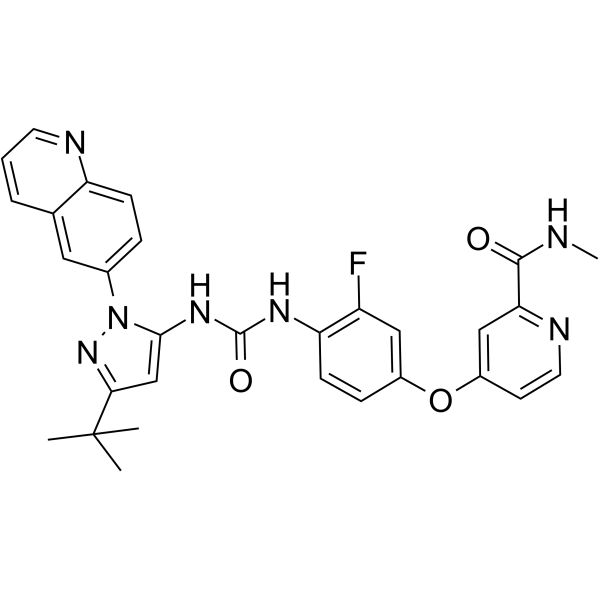
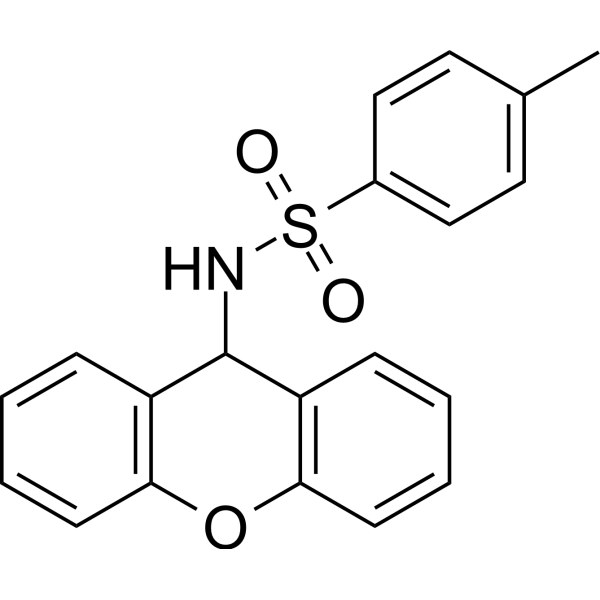
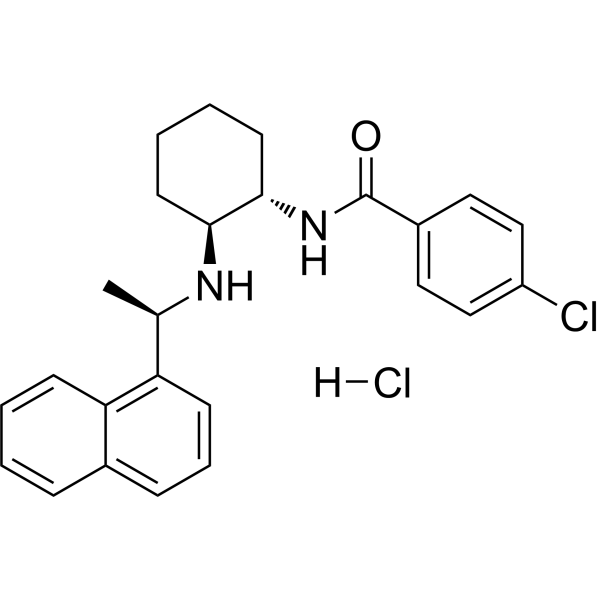
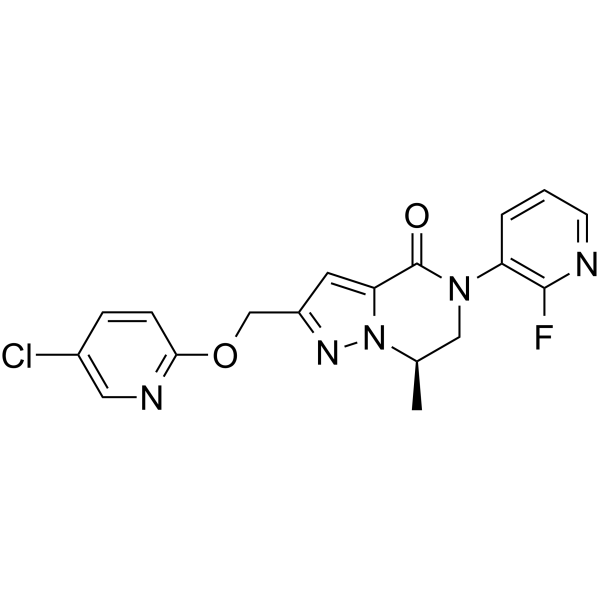

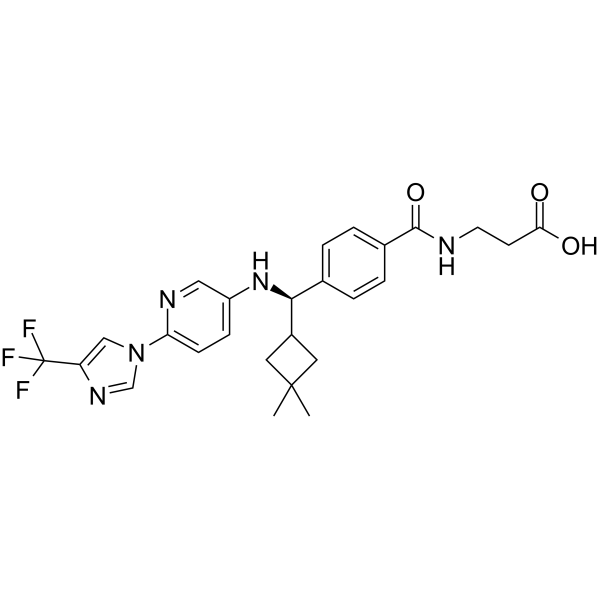
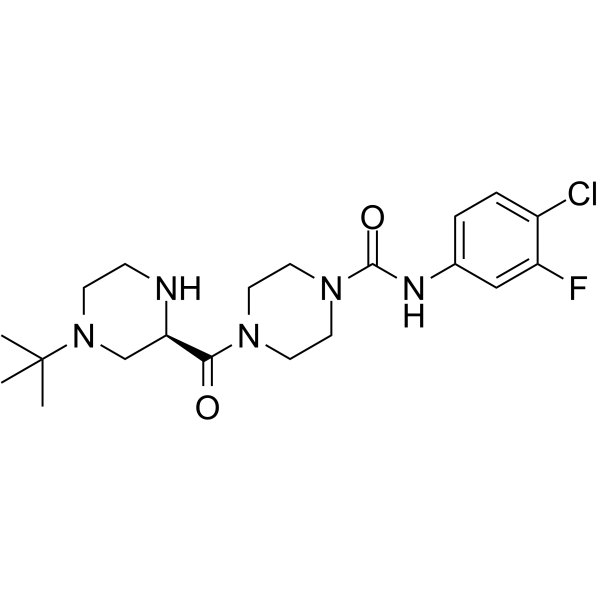
Search Result
Results for "
Negative allosteric
" in MedChemExpress (MCE) Product Catalog:
| Cat. No. |
Product Name |
Target |
Research Areas |
Chemical Structure |
-
- HY-19996
-
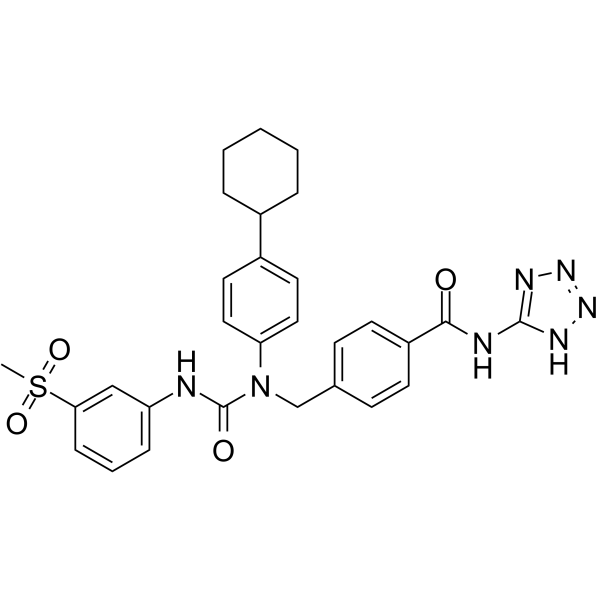
AH-7614
Maximum Cited Publications
6 Publications Verification
|
Free Fatty Acid Receptor
|
Metabolic Disease
|
|
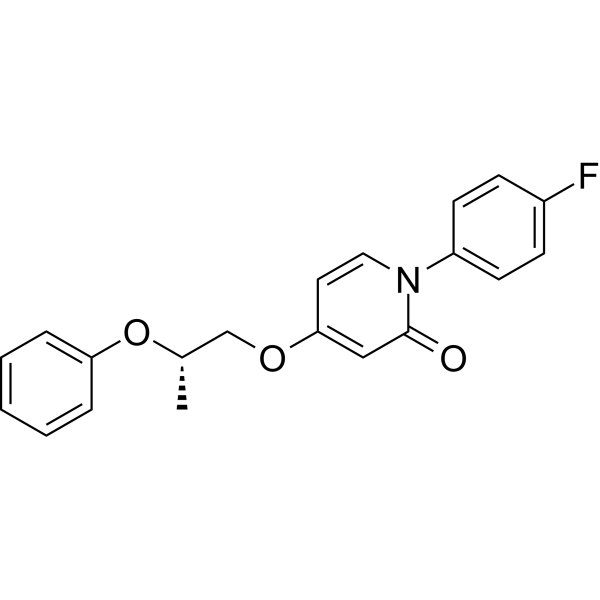
AH-7614 is a potent and selective FFA4 (GPR120) antagonist, with pIC50s of 7.1, 8.1, and 8.1 for human, mouse, and rat FFA4, respectively. AH-7614 has selectivity for FFA4 over FFA1 (pIC50<4.6). AH-7614 is able to block effects of both the polyunsaturated ω-6 fatty acid linoleic acid and the synthetic FFA4 agonist .
|
-
-
- HY-16716
-
|
RG1662; RO5186582
|
GABA Receptor
|
Neurological Disease
|
|
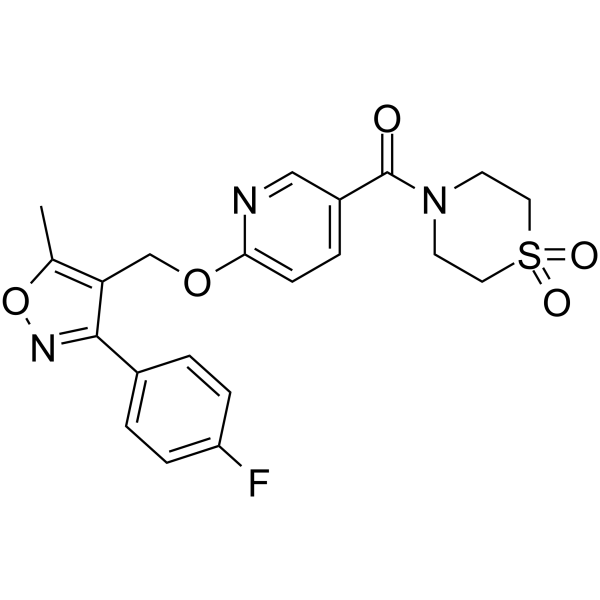
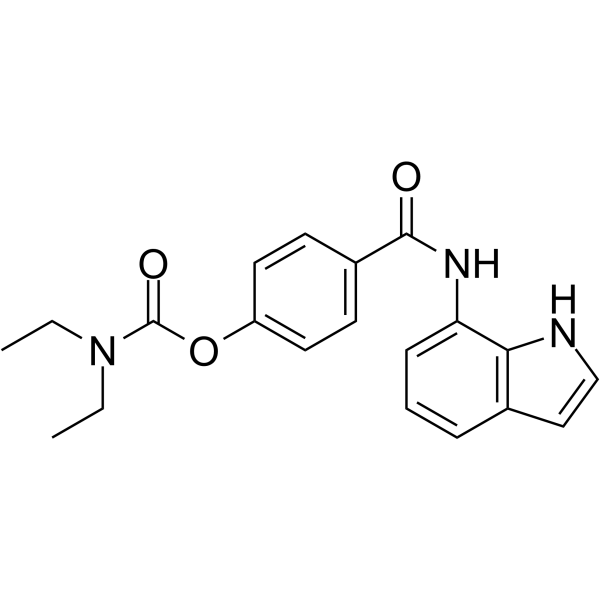
Basmisanil (RG1662) is a highly selective orally active α subunit-containing GABAA receptors (GABAAα5) negative allosteric modulator (NAMs). Basmisanil can inhibit GABAA-α5 with a Ki value of 5 nM and IC50 value of 8 nM, respectively. Basmisanil can be used for the research of multiple cognitive and psychiatric disorders .
|
-
-
- HY-173156
-
|
|
Histone Methyltransferase
|
Cancer
|
|
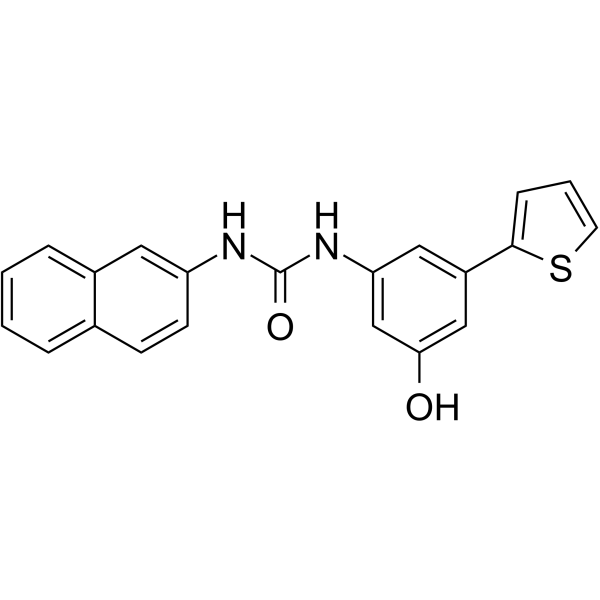
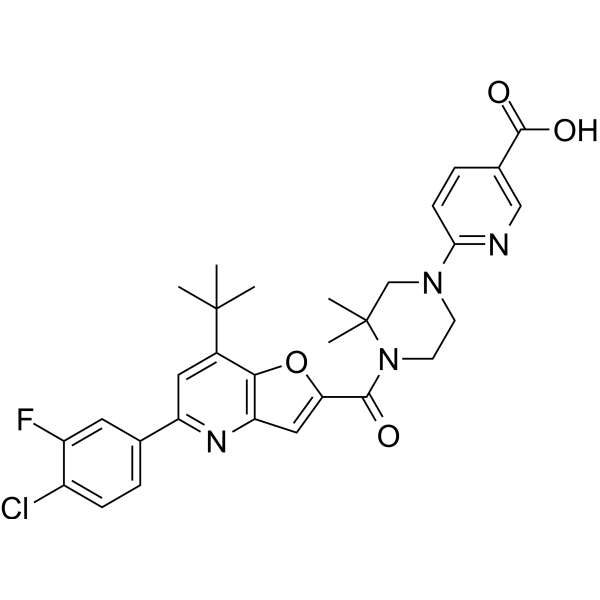
UNC10013 is an inhibitor targeting the triple Tudor domain (3TD) of SETDB1. UNC10013 covalently binds to Cys385 of SETDB1 3TD, acts as a negative allosteric modulator of the methyltransferase domain of SETDB1, reduces the level of Akt methylation mediated by SETDB1, and blocks Tyr308 phosphorylation of Akt. UNC10013 is applicable to cancer-related research .
|
-
-
- HY-122138
-
|
|
mGluR
|
Neurological Disease
|
|
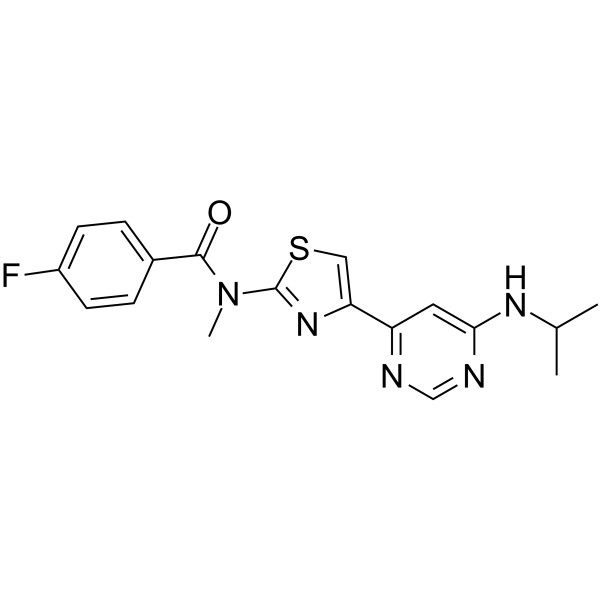
VU6010572 is a potent, selective and brain-penetrant mGlu3 negative allosteric modulator with IC50 of 245 nM. VU6010572 is highly CNS penetrant .
|
-
-
- HY-124622
-
|
|
GCGR
|
Metabolic Disease
|
|
NNC-0640 is an effective negative allosteric modulator (NAM) of the human glucagon receptor (GCGR), with an IC50 value of 69.2 nM. NNC-0640 holds potential for research in the field of diabetes .
|
-
-
- HY-124569
-
|
|
iGluR
|
Neurological Disease
|
|
NAB-14 is a potent, selective, orally active and non-competitive GluN2C/2D antagonists with an IC50 of 580 nM for GluN1/GluN2D. NAB-14 shows >800-fold selective for recombinant GluN2C and GluN2D over GluN2A and GluN2B. NAB-14 can cross the blood-brain-barrier .
|
-
-
- HY-108710
-
|
|
mGluR
|
Neurological Disease
|
|
VU0650786 is a potent and selective CNS penetrant negative allosteric modulator of metabotropic glutamate receptor subtype 3 (mGlu3 NAM), with an IC50 of 392 nM. VU0650786 has antidepressant and anxiolytic activity in rodents .
|
-
-
- HY-148016
-
|
|
Protease Activated Receptor (PAR)
ERK
|
Inflammation/Immunology
|
|
I-287 is a orally active selective PAR2 inhibitor that acting as a negative allosteric regulator on Gαq and Gα12/13 activity and their downstream effectors. I-287 reduces Complete Freund's adjuvant (HY-153808)-induced inflammation in mice and can be used for inflammation/immunology research .
|
-
-
- HY-14859
-
|
ADX48621
|
mGluR
|
Neurological Disease
|
|
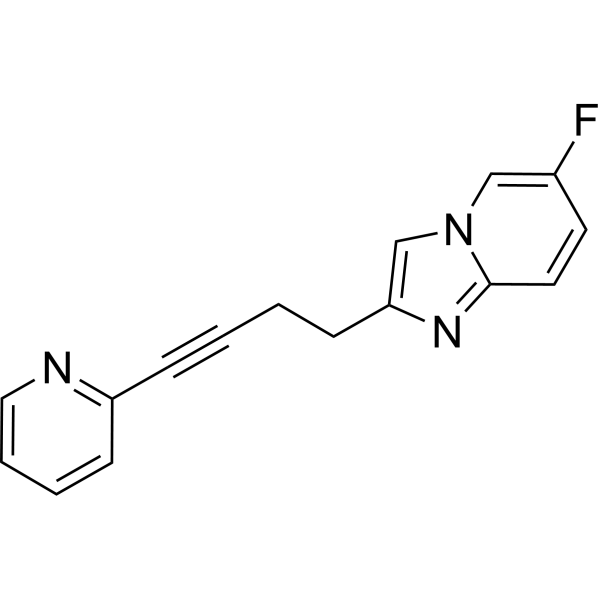
Dipraglurant (ADX48621) is a potent, selective, orally active and brain penetrant mGluR5 negative allosteric modulator (NAM), with an IC50 of 21 nM. Dipraglurant can reduce Levodopa-induced dyskinesia (LID) in vivo . Dipraglurant is a click chemistry reagent, it contains an Alkyne group and can undergo copper-catalyzed azide-alkyne cycloaddition (CuAAc) with molecules containing Azide groups.
|
-
-
- HY-103320A
-
|
|
CaSR
|
Metabolic Disease
|
|
Calhex 231 hydrochloride is a potent negative allosteric modulator that blocks (IC50 = 0.39 μM) increases in [ 3H]inositol phosphates elicited by activating the human wild-type CaSR transiently Ca 2+-sensing receptor. Calhex 231 hydrochloride can be used in the study of traumatic hemorrhagic shock (THS) and diabetic cardiomyopathy (DCM) .
|
-
-
- HY-116553
-
|
|
Wnt
β-catenin
|
Cancer
|
|
FzM1 is a negative allosteric modulator (NAM) of Frizzled receptor FZD4. FzM1 reduces WNT5A-dependent WNT responsive element (WRE) activity (log EC50inh=?6.2). FzM1 binds to an allosteric binding site located in intracellular loop 3 (ICL3) of FZD4 and alters the conformation of the receptor, ultimately inhibiting the WNT/β-catenin cascade .
|
-
-
- HY-101845
-
FITM
1 Publications Verification
|
mGluR
|
Cancer
|
|
FITM is a negative allosteric modulator of mGlu1 receptor with a Ki of 2.5 nM.
|
-
-
- HY-124803
-
|
|
GCGR
|
Metabolic Disease
|
|
GPCR modulator-1 is a negative allosteric modulator of the GLP-1 receptor (GLP-1R). GPCR modulator-1 can be used for the study of type 2 diabetes .
|
-
-
- HY-135891
-
|
|
CCR
|
Neurological Disease
|
|
AZD2423 is a potent, selective, orally bioavailable, and non-competitive CCR2 chemokine receptor negative allosteric modulator. AZD2423 has an IC50 of 1.2 nM for CCR2 Ca 2+ flux .
|
-
-
- HY-12567
-
|
VU0483253
|
mAChR
|
Neurological Disease
|
|
ML375 (VU0483253) is a potent, highly selective, brain-penetrant and orally active M5 mAChR negative allosteric modulator (NAM) with IC50s of 300 nM and 790 nM for human and rat M5, respectively. ML375 is inactive at human and rat M1-M4 .
|
-
-
- HY-117959
-
|
|
LPL Receptor
|
Inflammation/Immunology
|
|
TAK-615 is a negative allosteric modulator (NAM) of the LPA1 receptor for the research of pulmonary fibrosis. TAK-615 binds the LPA1 receptor with high affinity (Kd high affinity of 1.7 nM and Kd low affinity of 14.5 nM) .
|
-
-
- HY-19630
-
|
VU0463597
|
mGluR
|
Neurological Disease
|
|
ML289 (VU0463597) is a potent, selective, and CNS-penetrant mGlu3 (IC50=0.66 μM) negative allosteric modulator. ML289 displays >15-fold selectivity over mGlu2 and is inactive against mGlu5 . ML289 is a click chemistry reagent, it contains an Alkyne group and can undergo copper-catalyzed azide-alkyne cycloaddition (CuAAc) with molecules containing Azide groups.
|
-
-
- HY-16766
-
|
RO4995819
|
mGluR
|
Neurological Disease
|
|
Decoglurant (RO4995819) is a negative allosteric modulator of mGluR2 and mGluR3. Decoglurant is developed as an antidepressant .
|
-
-
- HY-129946
-
-
-
- HY-110278
-
|
|
mGluR
|
Neurological Disease
|
|
ADX71743 is a highly selective, noncompetitive and brain-penetrant metabotropic glutamate receptor 7 negative allosteric modulator (mGlu7 NAM). ADX71743 can cross the blood-brain barrier (BBB) and possesses anxiolytic activity. .
|
-
-
- HY-145585
-
|
MIJ-821
|
iGluR
|
Neurological Disease
|
|
Onfasprodil (MIJ-821) is a selective intravenous NMDA receptor NR2B subunit negative allosteric modulator (NAM). Onfasprodil inhibits the activity of NR2B-NMDA receptors. Onfasprodil has a rapid antidepressant effect. Onfasprodil can be used for the research of treatment-resistant depression (TRD) .
|
-
-
- HY-164764
-
|
|
Estrogen Receptor/ERR
|
Endocrinology
|
|
ADX61623 is a potent follicle stimulating hormone (FSH) receptor (FSHR) negative allosteric modulator (NAM). ADX61623 shows luteinizing hormone receptor (LH-R) activity and is not active on thyroid-stimulating hormone (TSH) receptors. ADX61623 can be used for the study of estrogen dependent disease .
|
-
-
- HY-114403
-
|
|
mGluR
|
Neurological Disease
|
|
VU6012962 is an orally bioavailable and CNS-penetrant metabotropic glutamate receptor 7 negative allosteric modulator (mGlu7 NAM) with an IC50 of 347 nM .
|
-
-
- HY-101281
-
|
|
mAChR
|
Neurological Disease
|
|
VU 6008667 is a selective negative allosteric modulator of M5 NAM with IC50s of 1.2 μM and 1.6 μM for human M5 and rat M5, respectively. High CNS penetration .
|
-
-
- HY-103320B
-
|
|
CaSR
|
Metabolic Disease
|
|
(1R,2R)-Calhex 231 hydrochloride is the isomer of Calhex 231 hydrochloride (HY-103320A), and can be used as an experimental control. Calhex 231 hydrochloride is a CaSR inhibitor via negative allosteric modulation. Calhex 231 hydrochloride blocks Ca 2+-induced accumulation of [ 3H]inositol phosphate with an IC50 of 0.39 μM in HEK293 cells. Calhex 231 hydrochloride has the potential for diabetic cardiomyopathy (DCM) treatment .
|
-
-
- HY-129636
-
|
(E)-GABAB receptor antagonist 1
|
GABA Receptor
ERK
|
Neurological Disease
|
|
CLH304a (compound 14) is a specific and noncompetitive GABAB receptor negative allosteric modulator (NAM). CLH304a decreases GABA-induced IP3 production with an IC50 of 37.9 μM. CLH304a has no effect on other GPCR Class C members such as mGluR1, mGluR2, and mGluR5. CLH304a acts on the heptahelical domain of GB2 subunits and non-competitively inhibits the effect of agonists with inverse agonist properties. CLH304a inhibits Baclofen (HY-B0007)-induced ERK1/2 phosphorylation in HEK293 cells overexpressing GABAB receptor .
|
-
-
- HY-155088
-
|
|
mGluR
|
Metabolic Disease
|
|
MK-8768 is a highly potent, orally bioavailable and selective class of mGluR2 negative allosteric modulator (IC50 of 9 .6nM) with excellent brain permeability.
|
-
-
- HY-177127
-
|
|
iGluR
|
Neurological Disease
|
|
Satoprodil (example 2) is a potent N-methyl-D-aspartate (NMDA) receptor negative allosteric modulator with an IC50 value of 123 nM for NR2B .
|
-
-
- HY-103574
-
|
ADX-10059 hydrochloride
|
mGluR
|
Neurological Disease
|
|
Raseglurant hydrochloride is a negative allosteric modulator of mGluR5. Raseglurant hydrochloride can be used in study migraine .
|
-
-
- HY-120375
-
-
-
- HY-133555
-
|
|
mGluR
|
Neurological Disease
|
|
mGluR2 antagonist 1 is a highly potent, orally bioavailable and selective class of mGluR2 negative allosteric modulator (IC50 of 9 nM) with excellent brain permeability .
|
-
-
- HY-14866
-
|
ADX-10059
|
mGluR
|
Neurological Disease
|
|
Raseglurant (ADX-10059) is a mGlu5 receptor negative allosteric modulator. Raseglurant is effective against migraine. Raseglurant reduces the Haloperidol (HY-14538)-induced catalepsy in mice .
|
-
-
- HY-101281A
-
|
|
mAChR
|
Neurological Disease
|
|
(Rac)-VU 6008667 is a selective negative allosteric modulator of muscarinic acetylcholine receptor subtype 5 (M5 NAM) (IC50=1.8 μM, pIC50= 5.75), has high CNS penetration .
|
-
-
- HY-103572
-
|
|
mGluR
|
Neurological Disease
|
|
MNI137 is a potent and selective negative allosteric modulator for group II mGluRs. MNI137 has IC50s values of 8.3 and 12.6 nM for human and rat mGlu2 inhibition of glutamate-induced calcium mobilization .
|
-
-
- HY-107509
-
|
|
mGluR
|
Neurological Disease
|
|
LY2389575 hydrochloride is a selective and noncompetitive mGlu3 negative allosteric modulator (NAM), with an IC50 value of 190 nM. LY2389575 hydrochloride induces an increase in Mrc1 levels. LY2389575 hydrochloride also independently amplifies Amyloid beta (Aβ) toxicity and can be used in study of Alzheimer's disease .
|
-
-
- HY-124985
-
|
|
mGluR
|
Neurological Disease
|
|
VU6010608 is a blood-brain barrier-crossing mGlu7 negative allosteric modulator (IC50 = 0.76 μM). VU6010608 can block long-term enhancement (LTP) of SC-CA1 synapses in mouse brain slices induced by high-frequency stimulation. VU6010608 can be used for research on neurological diseases .
|
-
-
- HY-15469
-
|
|
P2X Receptor
|
Neurological Disease
|
|
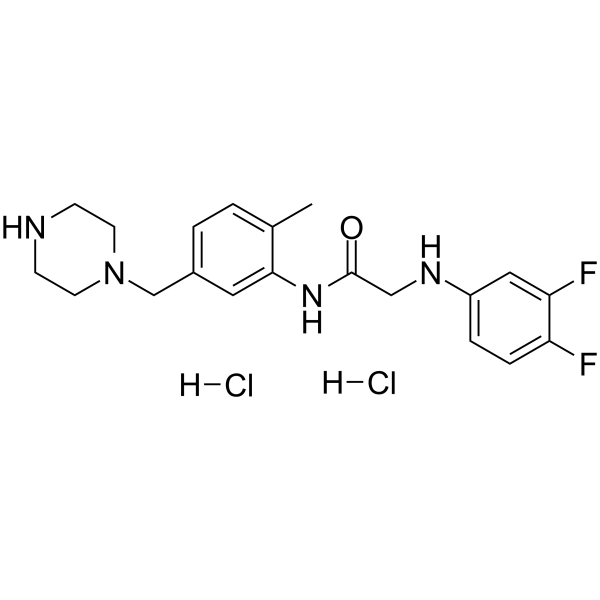
GW791343 dihydrochloride is a potent human P2X7 receptor negative allosteric modulator (exhibits species-specific activity), produces a non-competitive antagonist effect on human P2X7 receptor, with a pIC50 of 6.9-7.2. GW791343 dihydrochloride can enhance ATP rhythm. GW791343 dihydrochloride can be used in study of neurological disease .
|
-
-
- HY-103118
-
|
|
5-HT Receptor
Apoptosis
|
Neurological Disease
Cancer
|
|
PU02, a derivative of 6-MP (HY-13677), is a negative allosteric modulator (NAM) of 5-HT3 receptor, with IC50 values of 0.36 and 0.73 μM in HEK293 cells transfected with human 5-HT3A and 5-HT3AB receptors respectively .
|
-
-
- HY-119282
-
|
|
mGluR
|
Neurological Disease
|
|
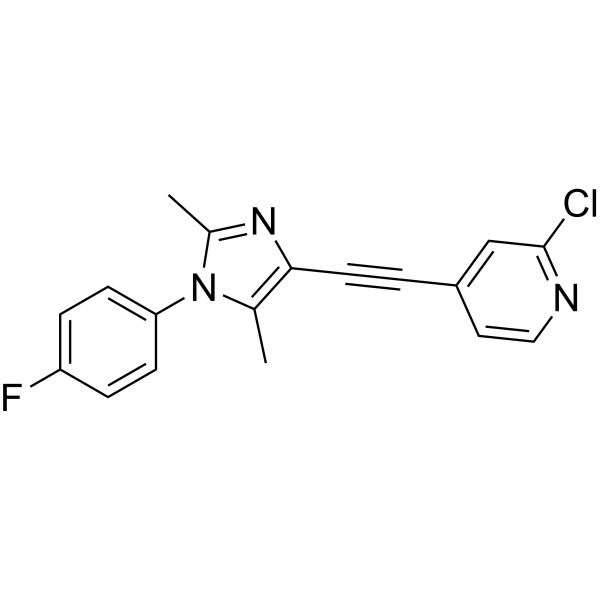
AZD6538 is a potent, selective and brain penetrant mGluR5 negative allosteric modulator. AZD6538 inhibits DHPG (HY-12598A)-stimulated intracellular Ca2+ release in HEK cells expressing rat or human mGluR5, with IC50 values of 3.2 and 13.4 nM for rat mGluR5 and human mGluR5, respectively. AZD6538 can be used for the research of neuropathic pain .
|
-
-
- HY-103561
-
|
|
mGluR
|
Neurological Disease
|
|
DCB (3,3′-dichlorobenzaldazine) is an neutral allosteric modulator of themetabotropic glutamate receptor metabotropic glutamate receptor subtype 5 (mGluR5) . DCB blocks the positive allosteric regulation of mGluRs (mGluR5) with the help of 3,3′-difluorobenzaldazine (DFB). DCB shows the negative modulatory effect of 3,3′-dimethoxybenzaldazine (DMeOB) .
|
-
-
- HY-114863
-
|
THCCC
|
mGluR
|
Neurological Disease
|
|
PHCCC(4Me) (THCCC), a PHCCC analog, is a dual mGluR2 (IC50 of 1.5 μM) negative allosteric modulator and mGluR3 (EC50 of 8.9 μM) positive allosteric modulator .
|
-
-
- HY-W565924
-
|
|
mGluR
ERK
|
Neurological Disease
|
|
STX107 is a metabotropic glutamate 5 (mGlu5) receptor negative allosteric modulator (NAM) with a pKi of 8.32. STX107 inhibits glutamate-induced Ca 2+ mobilization, IP1 accumulation, and ERK1/2 phosphorylation. STX107 also inhibits glutamate-induced mGlu5 internalization .
|
-
-
- HY-103320
-
|
|
CaSR
|
Metabolic Disease
|
|
Calhex 231 is a potent negative allosteric modulator that blocks (IC50 = 0.39 μM) increases in [ 3H]inositol phosphates elicited by activating the human wild-type CaSR transiently Ca 2+-sensing receptor. Calhex 231 can be used in the study of traumatic hemorrhagic shock (THS) and diabetic cardiomyopathy (DCM) .
|
-
-
- HY-112788
-
-
-
- HY-110191
-
|
|
mGluR
|
Neurological Disease
Cancer
|
|
VU0469650 is a potent, selective and brain-penetrant negative allosteric modulator of mGlu1 receptor, with an IC50 of 99 nM .
|
-
-
- HY-100667
-
UBP608
1 Publications Verification
|
iGluR
|
Neurological Disease
|
|
UBP608 is a potent N-Methyl-D-aspartate receptors (NMDARs) negative allosteric modulator. UBP608 has the potential for the research of neurological disorders .
|
-
-
- HY-124393
-
|
|
mGluR
|
Neurological Disease
|
|
GRN-529 is a negative allosteric modulator (NAM) for mGluR5. GRN-259 modulates sleep-wake activity, and exhibits anxiolytic efficacy in rats .
|
-
-
- HY-119377
-
|
|
Glutaminase
|
Cancer
|
|
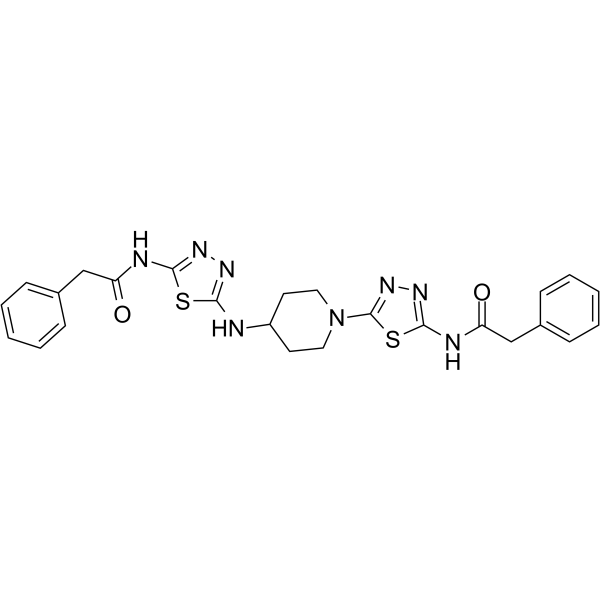
UPGL00004 is a potent allosteric glutaminase C (GAC) inhibitor (IC50=29 nM; Kd=27 nM). UPGL00004 strongly inhibits the proliferation of highly aggressive triple-negative breast cancer cell lines .
|
-
-
- HY-107774
-
|
|
iGluR
|
Neurological Disease
|
|
BMS-986163 is a negative allosteric modulator of GluN2B. The proagent BMS-986163 rapidly converts to its active parent molecule BMS-986169 (Ki=4 nM, IC50=24 nM).
|
-
-
- HY-115483
-
|
|
mGluR
|
Neurological Disease
|
|
VU0477573 is a brain-penetrant partial negative allosteric modulator of metabotropic glutamate receptor subtype 5 (mGluR5). VU0477573 exhibits neuroprotective and anxiolytic effects. VU0477573 can be used for the research of neurological disease, such as Parkinson disease .
|
-
- HY-110180
-
|
|
mGluR
|
Neurological Disease
|
|
VU0409106 is a potent and selective mGlu5 negative allosteric modulator (NAM) with an IC50 of 24 nM. VU0409106 shows anxiolytic effects in rat models in a concentration-dependent manner. VU0409106 also penetrates the blood-brain barrier (BBB) .
|
-
- HY-103575
-
|
|
mGluR
|
Neurological Disease
|
|
MFZ 10-7 is a highly potent and selective mGluR5 NAM (negative allosteric modulator), with a Ki of 0.67 nM for rat mGluR5 . MFZ 10-7 is a click chemistry reagent, it contains an Alkyne group and can undergo copper-catalyzed azide-alkyne cycloaddition (CuAAc) with molecules containing Azide groups.
|
-
- HY-15470
-
|
|
P2X Receptor
|
Neurological Disease
|
|
GW791343 trihydrochloride is a potent human P2X7 receptor negative allosteric modulator (exhibits species-specific activity), produces a non-competitive antagonist effect on human P2X7 receptor, with a pIC50 of 6.9-7.2. GW791343 trihydrochloride can enhance ATP rhythm. GW791343 trihydrochloride can be used in study of neurological disease .
|
-
- HY-119765
-
-
- HY-103573
-
|
|
mGluR
|
Neurological Disease
|
|
VU 0360223 is a potent metabotropic glutamate receptors (mGluR) negative allosteric modulator with an IC50 of 61 nM .
|
-
- HY-175672
-
|
|
Mas-related G-protein-coupled Receptor (MRGPR)
|
Neurological Disease
|
|
MRGPRX4 modulator-3 (Compound 1C) is a negative allosteric MAS-related G-protein-coupled receptor X4 (MRGPRX4) modulator. MRGPRX4 modulator-3 significantly attenuates Nateglinide (HY-B0422) (orthosteric agonist)-induced responses with an IC50 of 337 nM. MRGPRX4 modulator-3 can be used for chronic itch (especially cholestatic itch) and pain research .
|
-
- HY-120527
-
|
|
mGluR
|
Neurological Disease
|
|
VU0463841 is a potent, selective and brain-penetrant mGlu5 negative allosteric modulator (NAM) with an IC50 of 13 nM. VU0463841 is ineffective against mGlu1-4 and mGlu7-8. VU0463841 has the potential for the Cocaine addiction research .
|
-
- HY-120428
-
|
|
mGluR
|
Neurological Disease
|
VU0410425 is an mGlu1 negative allosteric modulator. VU0410425 exhibits potent inhibitory activity for rat mGlu1 with an IC50 value of 140 nM. VU0410425 can be used for the research of central nervous system disorders .
|
-
- HY-16636
-
|
|
mGluR
|
Neurological Disease
|
|
ML337 is a selective and brain-penetrant negative allosteric modulator of mGlu3, with an IC50 of 593 nM. ML337 possesses a favorable dystrophia myotonica protein kinase (DMPK) and ancillary pharmacology profile . ML337 is a click chemistry reagent, it contains an Alkyne group and can undergo copper-catalyzed azide-alkyne cycloaddition (CuAAc) with molecules containing Azide groups.
|
-
- HY-157998
-
|
|
mGluR
Src
|
Others
|
|
mG2N001 is a negative allosteric modulator (NAM) (IC50: 93 nM) of the metabotropic glutamate receptor mGluR2 and binds to mGluR2 as an antagonist (Ki: 63 nM). mG2N001 is microparticle- and plasma-stable, and its radioisotope [11C]mG2N001 can be used in PET imaging. [11C]mG2N001 has good brain heterogeneity and brain penetration, and can selectively accumulate in mGluR2-rich regions, producing high-contrast brain images .
|
-
- HY-129636A
-
|
GABAB receptor antagonist 1
|
GABA Receptor
ERK
|
Neurological Disease
|
|
(E/Z)-CLH304a (GABAB receptor antagonist 1) is a mixture of (E)-CLH304a and (Z)-CLH304a. (E)-CLH304a (CLH304a; HY-129636) is a specific and noncompetitive GABAB receptor negative allosteric modulator (NAM). CLH304a inhibits Baclofen (HY-B0007)-induced ERK1/2 phosphorylation in HEK293 cells overexpressing GABAB receptors .
|
-
- HY-108668
-
|
|
P2X Receptor
|
Others
|
|
TC-P 262 is a potent P2X3 inhibitor. TC-P 262 shows inhibition by bindings to hP2X3. TC-P 262 has the potential for the research of rheumatoid arthritis, cough, and pain .
|
-
- HY-P11259
-
|
|
Urotensin Receptor
|
Cardiovascular Disease
Metabolic Disease
Inflammation/Immunology
Cancer
|
UPG-111 is a peptide compound that acts as a negative allosteric modulator of the Urotensin II receptor (UTR). UPG-111 exhibits a dual inhibitory effect on the vasoconstriction induced by UTR agonists - it reduces both the maximum response intensity and the sensitivity of the agonist. UPG-111 does not induce calcium release or cause contraction of the endothelium-deprived rat aortic rings. UPG-111 can be used for the study of various diseases related to the angiotensinergic system .
|
-
- HY-120411
-
|
|
Calcium Channel
|
Others
|
|
Sadopine is an allosteric modulator for dihydropyridine receptor ((-)Sadopine as positive allosteric modulator and (+)Sadopine as negative allosteric modulator). Sadopine interacts with dihydropyridine (DHP)-sensitive L-type calcium channels .
|
-
- HY-147559
-
|
|
Cannabinoid Receptor
|
Others
|
|
CB1R Allosteric modulator 2 (compound 18) is a potent CB1R allosteric modulator. CB1R Allosteric modulator 2 shows negatively affects the functional activity of orthosteric ligands (NAM) at CB1Rs .
|
-
- HY-147558
-
|
|
Cannabinoid Receptor
|
Others
|
|
CB1R Allosteric modulator 1 (compound 11) is a potent CB1R allosteric modulator. CB1R Allosteric modulator 1 shows negatively affects the functional activity of orthosteric ligands (NAM) at CB1Rs .
|
-
- HY-168494
-
|
|
iGluR
|
Neurological Disease
|
|
GluN2A Allosteric modulator 1 (Compound 11) is an orally active, BBB-penetrable and highly selective GluN2A negative allosteric modulator. GluN2A Allosteric modulator 1 has IC50 values of 0.042 μM and 13 μM for GluN2A and GluN2B, respectively. GluN2A Allosteric modulator 1 can be used for the research of nervous system diseases .
|
-
- HY-119941
-
|
|
mGluR
|
Neurological Disease
|
|
VU0652835 is a metabotropic glutamate receptor subtype 5 (mGlu5) negative allosteric modulator with an IC50 of 81 nM .
|
-
- HY-135441
-
|
|
mGluR
|
Inflammation/Immunology
|
|
PF-06422913 is an orally active, potent and selective metabotropic glutamate receptor 5 (mGluR5) negative allosteric modulator .
|
-
- HY-145370
-
|
|
iGluR
|
Neurological Disease
|
|
GluN2B receptor modulator-1 is a selective GluN2B negative allosteric modulator with an IC50 value of 31 nM.
|
-
- HY-176420
-
|
|
mGluR
|
Neurological Disease
|
|
VU6031545 is a potent mGlu 5 negative allosteric modulator with an IC50 of 15 nM. VU6031545 has excellent brain penetrant and oral bioavailability in rats .
|
-
- HY-103491
-
|
|
iGluR
|
Neurological Disease
|
|
PF-06462894 is an alkyne-lacking metabotropic glutamate receptor 5 (mGluR5) negative allosteric modulator profiled in both rat and nonhuman primates .
|
-
- HY-169345
-
|
|
mGluR
|
Neurological Disease
|
|
VU6043653 is a potent, selective and cross the blood-brain barrier metabotropic glutamate receptor subtype 5 (mGlu5) negative allosteric modulator with an IC50 value of 325 nM for h mGlu5 .
|
-
- HY-103562
-
|
3,3'-Dimethoxybenzaldazine
|
mGluR
|
Neurological Disease
|
|
DMeOB (3,3'-Dimethoxybenzaldazine) is a mGluR5 receptor negative allosteric modulator with an IC50 of 3 μM. DMeOB displays reversible non-competitive inhibition of mGlu5-mediated responses .
|
-
- HY-12629
-
|
PF-06297470
|
mGluR
|
Others
|
|
PF470 (PF-06297470) is a negative allosteric modulator of metabotropic glutamate receptor 5 (mGluR5) with significant efficacy in Parkinson's disease models, but clinical development was halted due to potential issues found in toxicology studies.
|
-
- HY-120699
-
|
|
mGluR
|
Neurological Disease
|
|
RO5488608 is a negative allosteric metabotropic modulator of glutamate receptor 2/3. RO5488608 inhibits LY354740 (HY-18941)-induced intracellular Ca 2+ release and can be used for study of antidepressant .
|
-
- HY-176122
-
|
|
mGluR
|
Neurological Disease
|
|
VU6024945 is an orally active negative allosteric modulator of metabotropic glutamate receptor subtype 5 (mGlu5 NAM) with an IC50 value of 110 nM. VU6024945 can be used in the research of anti-anxiety, anti-depression and Parkinson's disease and other neurological diseases .
|
-
- HY-155810
-
|
|
iGluR
|
Neurological Disease
|
|
DQP-26 is a potent NMDAR negative allosteric modulator with IC50 values of 0.77 μM and 0.44 μM for GluN2C and GluN2D, respectively. DQP-26 has the potential for NMDAR-associated neurological disease research .
|
-
- HY-147657
-
|
|
GABA Receptor
|
Neurological Disease
|
|
GABAA receptor modulator-2 (Compound 20) is selective, orally active α5-GABAAR negative allosteric modulator (NAM) with a Ki of 4.1 nM. GABAA receptor modulator-2 shows high-metabolic stability and good CNS safety .
|
-
- HY-170902
-
|
|
GABA Receptor
|
Neurological Disease
|
|
GABAA receptor modulator-4 (Compound 4) is the negative allosteric modulator for GABAA receptor. GABAA receptor modulator-4 inhibits α1β3γ2 GABAA receptor-mediated peak and steady currents with IC50 of 10 μM and 10 μM .
|
-
- HY-W714513
-
|
|
mGluR
|
Neurological Disease
|
|
VU0469650 hydrochloride is a brain-penetrant negative allosteric modulator of metabotropic glutamate receptor 1 (mGluR1). VU0469650 hydrochloride inhibits glutamate-induced calcium flux in cells expressing human mGluR1 (IC50= 99 nM). VU0469650 hydrochloride is promising for research of central nervous system diseases such as anxiety, addiction, and epilepsy .
|
-
- HY-103575A
-
|
|
mGluR
|
Neurological Disease
|
|
MFZ 10-7 hydrochloride is a highly potent and selective mGluR5 NAM (negative allosteric modulator), with a Ki of 0.67 nM for rat mGluR5 . MFZ 10-7 (hydrochloride) is a click chemistry reagent, it contains an Alkyne group and can undergo copper-catalyzed azide-alkyne cycloaddition (CuAAc) with molecules containing Azide groups.
|
-
- HY-131019
-
|
|
mGluR
|
Neurological Disease
|
|
JF-NP-26, an inactive photocaged derivative of raseglurant, is the first caged mGlu5 receptor negative allosteric modulator. Uncaging of JF-NP-26 is elicited with light pulses in the visible spectrum (405 nm). JF-NP-26 induces light-dependent analgesia in models of inflammatory and neuropathic pain in freely behaving animals .
|
-
- HY-115782
-
|
|
mGluR
|
Neurological Disease
|
|
VU6001192 is a potent and selective mGlu2 (metabotropic glutamate receptor 2) negative allosteric modulator. VU6001192 has potent inhibitory activity against the mGlu2 receptor (IC50 = 207 nM), but no activity against the mGlu3 receptor and the other 6 mGlu subtypes. VU6001192 can be used for the research of neurological disease, such as depression .
|
-
- HY-168028
-
|
|
mGluR
|
Neurological Disease
|
|
mGluR2 modulator 5 (Compound 11) is an orally active, selective mGluR2 negative allosteric modulator with an IC50 of 8.9 nM. Pharmacokinetic studies in rats show that mGluR2 modulator 5 can effectively cross the blood-brain barrier. It can modulate cognitive and neurological functions in mood disorders and is suitable for research in the field of neurodegenerative diseases .
|
-
- HY-175196
-
-
- HY-129274
-
|
|
mGluR
|
Neurological Disease
|
|
RO4988546 is a negative allosteric modulator (NAM) that targets metabotropic glutamate receptors 2 and 3 (mGlu2, mGlu3). RO4988546 can reduce the binding of [ 3h]-LY354740 at the positive binding site, while affecting the receptor's G protein coupling and intracellular signaling. RO4988546 can be used in the development of antidepressants and cognitive enhancers .
|
-
- HY-116124
-
|
|
Lipoxygenase
|
Others
|
|
17(S)-HpDHA is the main 15-Lipoxygenase (LOX) isoenzyme: h15-LOX-1 and h15-LOX-2 and docosahexaenoic acid (DHA). product. 17(S)-HpDHA negatively regulates epoxide synthesis via allosteric regulation. 17(S)-HpDHA also inhibits platelet aggregation with an EC50 of approximately 1 μM .
|
-
- HY-117467
-
|
|
iGluR
|
Neurological Disease
|
|
BMT-108908 is a negative allosteric modulator with selective activity on the NR2B subtype of the NMDA receptor. BMT-108908 has been shown to damage cognition in research, affecting cognitive functions in multiple areas. BMT-108908 failed to show a significant impact on the γ wave power of the EEG in the experiment, but it had a significant inhibitory and enhancement effect on the β wave and δ wave power .
|
-
- HY-170948
-
|
|
Adenosine Receptor
|
Cancer
|
|
A2AR modulator-1 (Compound 45) is a selective negative allosteric adenosine A2a receptor (A2aR) modulator with an IC50 value of 9 nM. A2AR modulator-1 reduces the affinity of endogenous adenosine for the receptor and inhibits cAMP signaling pathway activation. A2AR modulator-1 potently restores pCREB phosphorylation in CD4 + T cells, reversing immunosuppression in the tumor microenvironment, and shows potential to suppress tumor growth and metastasis in triple-negative breast cancer models .
|
-
- HY-103561R
-
|
|
Reference Standards
mGluR
|
Neurological Disease
Cancer
|
|
DCB (Standard) is the analytical standard of DCB (HY-103561). This product is intended for research and analytical applications. DCB (3,3′-dichlorobenzaldazine) is an neutral allosteric modulator of the metabotropic glutamate receptor metabotropic glutamate receptor subtype 5 (mGluR5). DCB blocks the positive allosteric regulation of mGluRs (mGluR5) with the help of 3,3′-difluorobenzaldazine (DFB). DCB shows the negative modulatory effect of 3,3′-dimethoxybenzaldazine (DMeOB) .
|
-
- HY-103574R
-
|
ADX-10059 hydrochloride (Standard)
|
mGluR
Reference Standards
|
Neurological Disease
|
|
Raseglurant hydrochloride (Standard) is the analytical standard of Raseglurant hydrochloride (HY-103574). This product is intended for research and analytical applications. Raseglurant hydrochloride is a negative allosteric modulator of mGluR5. Raseglurant hydrochloride can be used in study migraine .
|
-
- HY-103320AR
-
|
|
Reference Standards
CaSR
|
Metabolic Disease
|
|
Calhex 231 hydrochloride (Standard) is the analytical standard of Calhex 231 hydrochloride (HY-103320A). This product is intended for research and analytical applications. Calhex 231 hydrochloride is a potent negative allosteric modulator that blocks (IC50 = 0.39 μM) increases in [3H]inositol phosphates elicited by activating the human wild-type CaSR transiently Ca2+-sensing receptor. Calhex 231 hydrochloride can be used in the study of traumatic hemorrhagic shock (THS) and diabetic cardiomyopathy (DCM) .
|
-
- HY-120093
-
|
|
Cannabinoid Receptor
PERK
|
Neurological Disease
|
|
GAT100 is a negative allosteric modulator and covalent allosteric probe for cannabinoid receptor type 1 (CB1R). GAT100 acts as a positive allosteric modulator for orthosteric agonist CP55,940 binding to regulate the CB1R signaling pathway. GAT100 reduces the potency and efficacy of orthosteric CB1R agonists in terms of β-arrestin 1 recruitment, phosphorylation of PLCβ3 and ERK1/2, cAMP accumulation, and CB1R internalization. GAT100 is applicable to the research of psychobehavioral and somatic diseases .
|
-
- HY-181936
-
|
|
Atg4
Autophagy
|
Cancer
|
|
Atg4B activator-1 (Compound 16a) is an allosteric, selective, and orally active ATG4B activator with a Kd of 0.2199 μM. Atg4B activator-1 binds to the allosteric pocket of ATG4B and induces conformational changes. Atg4B activator-1 induces Autophagy. Atg4B activator-1 inhibits the proliferation and migration of triple-negative breast cancer cells. Atg4B activator-1 can be used in studies related to triple-negative breast cancer .
|
-
- HY-100667R
-
|
|
iGluR
Reference Standards
|
Neurological Disease
|
|
UBP608 (Standard) is the analytical standard of UBP608 (HY-100667). This product is intended for research and analytical applications. UBP608 is a potent N-Methyl-D-aspartate receptors (NMDARs) negative allosteric modulator. UBP608 has the potential for the research of neurological disorders .
|
-
- HY-108710R
-
|
|
Reference Standards
mGluR
|
Neurological Disease
|
|
VU0650786 (Standard) is the analytical standard of VU0650786 (HY-108710). This product is intended for research and analytical applications. VU0650786 is a potent and selective CNS penetrant negative allosteric modulator of metabotropic glutamate receptor subtype 3 (mGlu3 NAM), with an IC50 of 392 nM. VU0650786 has antidepressant and anxiolytic activity in rodents .
|
-
- HY-101281R
-
|
|
mAChR
Reference Standards
|
Neurological Disease
|
|
VU 6008667 (Standard) is the analytical standard of VU 6008667 (HY-101281). This product is intended for research and analytical applications. VU 6008667 is a selective negative allosteric modulator of M5 NAM with IC50s of 1.2 μM and 1.6 μM for human M5 and rat M5, respectively. High CNS penetration .
|
-
- HY-103572R
-
|
|
Reference Standards
mGluR
|
Neurological Disease
|
|
MNI137 (Standard) is the analytical standard of MNI137 (HY-103572). This product is intended for research and analytical applications. MNI137 is a potent and selective negative allosteric modulator for group II mGluRs. MNI137 has IC50s values of 8.3 and 12.6 nM for human and rat mGlu2 inhibition of glutamate-induced calcium mobilization .
|
-
- HY-107509R
-
|
|
Reference Standards
mGluR
|
Neurological Disease
|
|
LY2389575 hydrochloride (Standard) is the analytical standard of LY2389575 (hydrochloride) (HY-107509). This product is intended for research and analytical applications. LY2389575 hydrochloride is a selective and noncompetitive mGlu3 negative allosteric modulator (NAM), with an IC50 value of 190 nM. LY2389575 hydrochloride induces an increase in Mrc1 levels. LY2389575 hydrochloride also independently amplifies Amyloid beta (Aβ) toxicity and can be used in study of Alzheimer's disease .
|
-
- HY-P99171
-
|
|
Interleukin Related
|
Inflammation/Immunology
Cancer
|
|
Gevokizumab is a potent anti-IL-1β antibody, negatively modulates IL-1β signaling through an allosteric mechanism. Gevokizumab selectively decreases the binding affinity of IL-1β for the IL-1 receptor type I (IL-1RI) signaling receptor instead of IL-1 counter-regulatory decoy receptor (IL-1 receptor type II) .
|
-
- HY-103575R
-
|
|
Reference Standards
mGluR
|
Neurological Disease
|
|
MFZ 10-7 (Standard) is the analytical standard of MFZ 10-7 (HY-103575). This product is intended for research and analytical applications. MFZ 10-7 is a highly potent and selective mGluR5 NAM (negative allosteric modulator), with a Ki of 0.67 nM for rat mGluR5 . MFZ 10-7 is a click chemistry reagent, it contains an Alkyne group and can undergo copper-catalyzed azide-alkyne cycloaddition (CuAAc) with molecules containing Azide groups.
|
-
- HY-120355A
-
|
|
Potassium Channel
|
Cardiovascular Disease
|
|
AP14145 hydrochloride is a potent KCa2 (SK) channel negative allosteric modulator with an IC50 of 1.1 μM for KCa2.2 (SK2) and KCa2.3 (SK3) channels. AP14145 hydrochloride inhibition strongly depends on two amino acids, S508 and A533 in the channel. AP14145 hydrochloride prolonged atrial effective refractory period (AERP) in rats and demonstrates antiarrhythmic effects in a Vernakalant-resistant porcine model of atrial fibrillation (AF) .
|
-
- HY-179226
-
|
|
Molecular Glues
Adrenergic Receptor
|
Inflammation/Immunology
|
|
AP-7-168, molecular glues, is a β-arrestin-biased negative allosteric modulator of the β2-adrenergic receptor (β2AR). AP-7-168 can promote β2AR homodimerization and inhibit GRK5-mediated β2AR phosphorylation. AP-7-168 can sustain bronchorelaxation in cell and tissue. AP-7-168 can be used for the researches of inflammation and immunology, such as asthma .
|
-
- HY-W673613
-
|
|
Estrogen Receptor/ERR
|
Metabolic Disease
|
|
ADX68692 is an orally active negative allosteric modulators of follicle-stimulating hormone receptor with a log IC50 of -5.71. ADX68692 can inhibit hCG-induced cAMP production and s ß-arrestin 2 recruitment in HEK293 cells. ADX68692 exhibits a partial effect in both mLTC-1 and primary rat Leydig cells. ADX68692 inhibits FSHR-promoted cAMP, progesterone and estradiol production. ADX68692 can reduce the number of oocytes recovered from the ampullae .
|
-
- HY-178121
-
|
|
iGluR
|
Neurological Disease
Inflammation/Immunology
|
|
JNJ-78911118 is a potent, brain-penetrant, selective GluN2A antagonist (IC50 = 44 nM). JNJ-78911118 shows >200-fold selectivity against GluN1/2B, 2C and 2D receptors. JNJ-78911118 functions as a negative allosteric modulator (NAM) by insurmountably suppressing glutamate efficacy and reducing glycine potency at GluN1/2A receptors. JNJ-78911118 produces profound pharmacodynamic effects in vivo. JNJ-78911118 can be used for depression research .
|
-
- HY-118285
-
|
|
mGluR
|
Neurological Disease
|
|
Ro4491533 is a selective, negative allosteric mGluR2/3 receptor modulator that is equally effective on both subtypes. Ro4491533 can completely block glutamate-induced calcium mobilization and glutamate-induced [35S]GTPγS binding accumulation. Ro4491533 has good pharmacokinetic properties in mice and rats, high oral bioavailability, and can pass through the blood-brain barrier. Ro4491533 can also reverse the motor inhibition effect of LY379268 in mice and show antidepressant activity in the forced swim test and tail suspension test.
|
-
- HY-182638
-
|
|
Phosphodiesterase (PDE)
mAChR
Potassium Channel
|
Neurological Disease
|
|
CPL500036 is an orally active, blood-brain barrier permeable phosphodiesterase 10A (PDE10A) inhibitor with IC50 values of 1 nM (Reference 1) and 35 nM (Reference 2). CPL500036 acts as a negative allosteric modulator of the M2 muscarinic receptor with an IC50 of 9.2 μM. CPL500036 alters cyclic nucleotide levels in basal ganglia circuits, inhibits the hydrolysis of cAMP and cGMP, and suppresses hERG potassium channel tail currents. CPL500036 induces catalepsy in rats and reverses injury-induced contralateral forelimb use impairment. CPL500036 can be used in research related to schizophrenia, Parkinson's disease, and levodopa-induced dyskinesia .
|
-
- HY-168992
-
|
|
Histone Methyltransferase
|
Neurological Disease
Cancer
|
|
UNC6535 is a covalent ligand targeting the SETDB1 triple Tudor domain (3TD) with negative allosteric modulator properties, with an IC50 of 3.4 μM and a Kd of 4.2 μM. UNC6535 inhibits the methyltransferase activity of recombinant SETDB1 protein lacking the 3TD domain. UNC6535 reversibly binds to the aromatic cages of both TD2 and TD3 subdomains of SETDB1 3TD simultaneously, displacing the endogenous H3K9Me2K14Ac histone tail ligand. UNC6535 can be used in research on cancer and neurodegenerative diseases .
|
-
- HY-114515
-
|
RG7090 sulfate; RO4917523 sulfate
|
mGluR
|
Neurological Disease
|
|
Basimglurant (RG7090; RO4917523) sulfate is a selective, orally active, blood-brain barrier permeable negative allosteric modulator of metabotropic glutamate receptor 5 (mGluR5), with a Ki of 1.4 nM (against [ 3H]-ABP688 (HY-110141)) and 35.6 nM (against [ 3H]-MPEP (HY-14609A)). Basimglurant sulfate inhibits mGlu5-mediated signaling pathways and receptor constitutive activity, regulates dopamine levels in the nucleus accumbens, exerts anxiolytic, antidepressant-like, analgesic and arousal-promoting effects, and alters δ-wave power during non-rapid eye movement sleep. Basimglurant sulfate can be used in research on depression, fragile X syndrome, anxiety disorders, etc .
|
-
- HY-168758
-
|
|
GABA Receptor
|
Neurological Disease
|
|
Delta3,5-cholestadien-7-one is an oxysterol and a negative allosteric modulator of GABAA receptors. Delta3,5-cholestadien-7-one reduces GABA-induced currents in HEK cells expressing α1β1γ2 or α4β3γ2 subunit-containing GABAA receptors with IC50 values of 1.5 and 1 µM, respectively. Delta3,5-cholestadien-7-one reduces GABA-induced depolarization of peptidergic and non-peptidergic nociceptors, C-LTMRs, and cold thermosensors in isolated mouse dorsal root ganglion (DRG) neurons .
|
-
- HY-19888
-
|
|
P2X Receptor
Interleukin Related
|
Neurological Disease
Inflammation/Immunology
|
|
GSK-1482160 is an orally active and blood-brain barrier penetrant P2X7 receptor (P2X7R) negative allosteric modulator with pIC50s of 8.5 (human) and 6.5 (rat). GSK-1482160 reduces the efficacy of ATP at the P2X7 receptor without affecting its affinity, thereby inhibiting the release of IL-1β. GSK-1482160 is an effective radioligand and can be labeled with radioactive isotopes like 11C or 18F to image P2X7R. GSK-1482160 can be used for the studies of chronic joint pain and chronic constriction injury (CCI) .
|
-
- HY-155811
-
|
|
iGluR
|
Neurological Disease
|
|
DQP-997-74 (compound 2i) is a selective negative allosteric modulator of N-methyl-d-aspartate receptor (NMDAR), specifically targeting GluN2C/D (IC50: 0.069 μM and 0.035 μM), with blood-brain barrier penetrability. Where DQP refers to dihydroquinoline-pyrazoline. DQP-997-74 acts synergistically with the agonist glutamate to exhibit time-dependent enhanced potency in inhibiting hypersynchronous activity driven by high-frequency excitatory synaptic transmission. DQP-997-74 reduces the number of epileptogenesis in a murine model of tuberous sclerosis complex (TSC)-induced epilepsy. DQP-997-74 can be used for research on NMDAR-related neurological diseases .
|
-
- HY-15446
-
|
RG7090; RO4917523
|
mGluR
|
Neurological Disease
|
|
Basimglurant (RG7090; RO4917523) is a selective, orally active, blood-brain barrier permeable negative allosteric modulator of metabotropic glutamate receptor 5 (mGluR5), with a Ki of 1.4 nM (against [ 3H]-ABP688 (HY-110141)) and 35.6 nM (against [ 3H]-MPEP (HY-14609A)). Basimglurant inhibits mGlu5-mediated signaling pathways and receptor constitutive activity, regulates dopamine levels in the nucleus accumbens, exerts anxiolytic, antidepressant-like, analgesic and arousal-promoting effects, and alters δ-wave power during non-rapid eye movement sleep. Basimglurant can be used in research on depression, fragile X syndrome, anxiety disorders, etc .
|
-
- HY-123382
-
|
|
Drug Isomer
|
Neurological Disease
Inflammation/Immunology
|
|
GSK-1482160 isomer is the isomer of GSK-1482160 (HY-19888). GSK-1482160 is an orally active and blood-brain barrier penetrant P2X7 receptor (P2X7R) negative allosteric modulator with pIC50s of 8.5 (human) and 6.5 (rat). GSK-1482160 reduces the efficacy of ATP at the P2X7 receptor without affecting its affinity, thereby inhibiting the release of IL-1β. GSK-1482160 is an effective radioligand and can be labeled with radioactive isotopes like 11C or 18F to image P2X7R. GSK-1482160 can be used for the studies of chronic joint pain and chronic constriction injury (CCI).
|
-
- HY-15446R
-
|
RG7090 (Standard); RO4917523 (Standard)
|
Reference Standards
mGluR
|
Neurological Disease
|
|
Basimglurant (RG7090; RO4917523) (Standard) is the analytical standard of Basimglurant. This product is intended for research and analytical applications. Basimglurant is a selective, orally active, blood-brain barrier permeable negative allosteric modulator of metabotropic glutamate receptor 5 (mGluR5), with a Ki of 1.4 nM (against [ 3H]-ABP688 (HY-110141)) and 35.6 nM (against [ 3H]-MPEP (HY-14609A)). Basimglurant inhibits mGlu5-mediated signaling pathways and receptor constitutive activity, regulates dopamine levels in the nucleus accumbens, exerts anxiolytic, antidepressant-like, analgesic and arousal-promoting effects, and alters δ-wave power during non-rapid eye movement sleep. Basimglurant can be used in research on depression, fragile X syndrome, anxiety disorders, etc.
|
-
-
-
HY-L170
-
|
|
250 compounds
|
|
An emerging drug design method is based on the secondary binding site effect, where small molecule drugs are designed to bind to secondary binding sites on target biomolecules rather than primary orthomorphic sites. Successful potential drugs (known as allosteric modulators) will be able to bind to allosteric sites and remotely alter (or modify) the conformation of the main orthosteric binding sites of biological targets. Allosteric modulators (AMs) are ligands of proteins that act through binding sites different from natural (orthosteric) ligand sites. AMs are relatively small, more lipophilic, and more rigid compounds. The binding efficacy of AMs with their targets is often slightly lower. AMs are divided into positive AMs (PAMs) and negative AMs (NAMs). AMs are ideal drug targets because they can fine-tune receptor activity while preserving the spatial and temporal signal transduction characteristics of endogenous ligands, resulting in fewer targeted side effects, improved subtype selectivity, and better promotion of biased signal transduction than normal ligands.
MCE designs a unique collection of 250 small allosteric modulators. It is a good tool to be used for research on metabolize, cancer and other diseases.
|
| Cat. No. |
Product Name |
Target |
Research Area |
-
- HY-P11259
-
|
|
Urotensin Receptor
|
Cardiovascular Disease
Metabolic Disease
Inflammation/Immunology
Cancer
|
UPG-111 is a peptide compound that acts as a negative allosteric modulator of the Urotensin II receptor (UTR). UPG-111 exhibits a dual inhibitory effect on the vasoconstriction induced by UTR agonists - it reduces both the maximum response intensity and the sensitivity of the agonist. UPG-111 does not induce calcium release or cause contraction of the endothelium-deprived rat aortic rings. UPG-111 can be used for the study of various diseases related to the angiotensinergic system .
|
| Cat. No. |
Product Name |
Target |
Research Area |
Image |
-
- HY-P99171
-
|
|
Interleukin Related
|
Inflammation/Immunology
Cancer
|
|
Gevokizumab is a potent anti-IL-1β antibody, negatively modulates IL-1β signaling through an allosteric mechanism. Gevokizumab selectively decreases the binding affinity of IL-1β for the IL-1 receptor type I (IL-1RI) signaling receptor instead of IL-1 counter-regulatory decoy receptor (IL-1 receptor type II) .
|
-
(5)
Your information is safe with us. * Required Fields.
Inquiry Information
- Product Name:
- Cat. No.:
- Quantity:
- MCE Japan Authorized Agent:

