22 Results for "

Ni2+

" in MedChemExpress (MCE) Product Catalog:
Products (22)

22 Results for "Ni2+" in MCE Product Catalog:

17
17 Cited Publications
Cat. No.: HY-126823
CAS No.: 234075-45-7
Purity:  95.33%
Synonyms: PGSK diacetate (5/6-mixture)
Target:  

Fluorescent Dye

Research Areas:  

Others

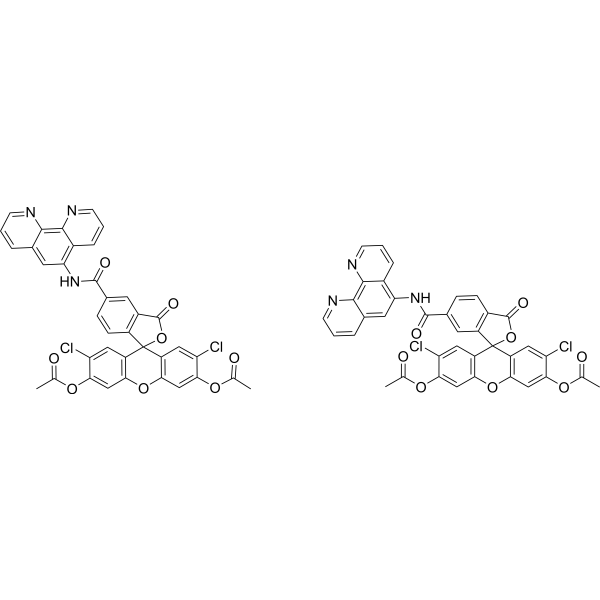
Phen green SK (PGSK) diacetate (PGSK diacetate (5/6-mixture)) is a metal ion-sensitive fluorescent probe that can penetrate cell membranes. Phen green SK (PGSK) diacetate can react with a variety of metal ions, including Fe 2+, Cd 2+, Co 2+, Ni 2+, Zn 2+, etc. Phen green SK (PGSK) diacetate chelates Fe 2+, resulting in fluorescence quenching, which can be restored when a membrane-permeable chelator is added, thereby reflecting the changes in the intracellular chelatable iron pool. The excitation/emission maxima of Phen green SK diacetate are 507/532 nm, respectively [2] .
loading...
    loading...
Cat. No.: HY-P0294
CAS No.: 64134-30-1
Synonyms: 6X His Tag
Research Areas:  

Others

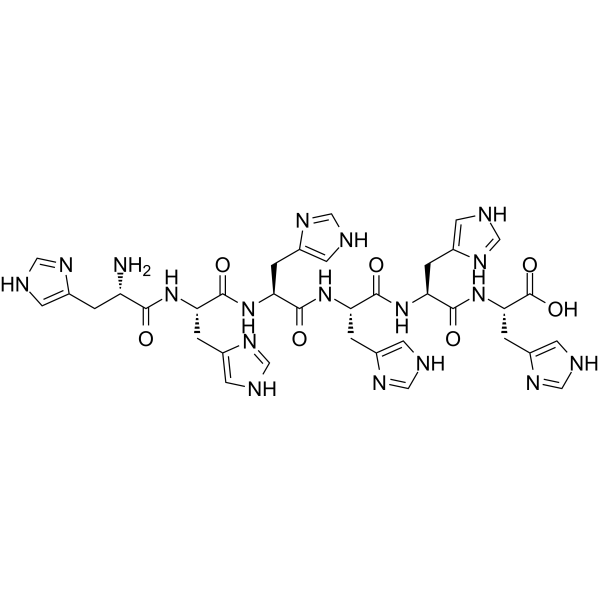
Hexa-His (6X His Tag) is a commonly used affinity tag made up of six histidine residues. HEXA-HIS can bind to affinity chromatography media containing transition metal ions like nickel (Ni 2+) or cobalt (Co 2+), making it useful for protein purification [2].
loading...
    loading...
Cat. No.: HY-Y1422I
CAS No.: 9001-62-1
Lipase, Pseudomonas fluorescens (Immobilized) is an immobilized biocatalyst derived from Pseudomonas fluorescens. Lipase, Pseudomonas fluorescens (Immobilized) efficiently catalyzes the hydrolysis, esterification and transesterification of triacylglycerols in solvent-free systems, and is particularly suitable for biodiesel production from soybean oil and selective modification of oils rich in EPA and DHA. Lipase, Pseudomonas fluorescens (Immobilized) exhibits optimal activity at pH 8.5 and 45°C, and retains residual activity after repeated cycles of use. Lipase, Pseudomonas fluorescens (Immobilized) is activated by Ca 2+, but inhibited by Co 2+, Ni 2+, Fe 3+, Fe 2+ and EDTA [2].
loading...
    loading...
Cat. No.: HY-W011060
CAS No.: 23978-09-8
Synonyms: 4,7,13,16,21,24-Hexaoxa-1,10-diazabicyclo[8.8.8]hexacosane
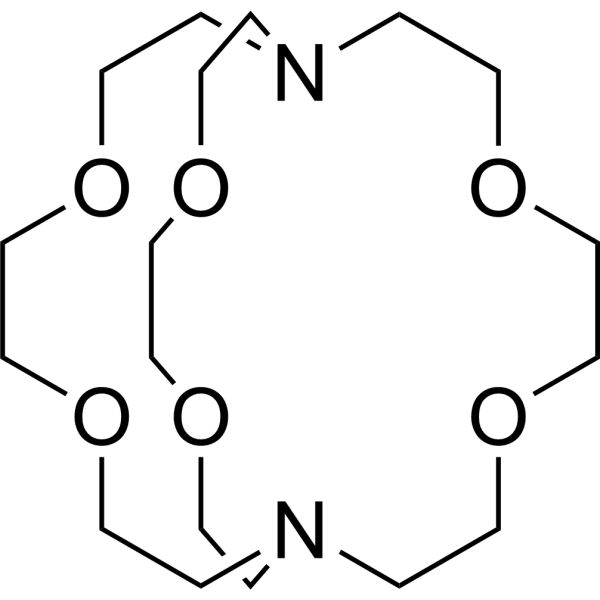
Cryptand 2.2.2 (4,7,13,16,21,24-Hexaoxa-1,10-diazabicyclo[8.8.8]hexacosane) is a metal ion chelator. Cryptand 2.2.2 forms stable mononuclear, protonated and dinuclear complexes with copper (II) ions; forms protonated complexes with hydrogen ions; and also forms stable complexes with Zn 2+, Co 2+, Ni 2+, Cd 2+, Hg 2+ and Pb 2+ ions. Cryptand 2.2.2 can be used for the preparation of nanoparticles, transition metal compounds, etc.
loading...
    loading...
Cat. No.: HY-W012683
CAS No.: 142-73-4
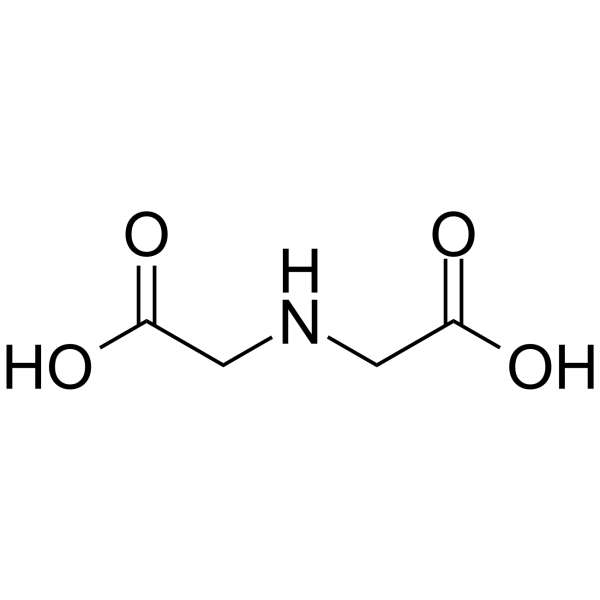
Iminodiacetic acid is a metal ion chelator targeting Cr 6+, Cd 2+, Ni 2+, and Pb 2+. Iminodiacetic acid selectively and irreversibly binds metal ions through the coordination of carboxyl and imino groups, reduces the toxicity of metal ions and promotes their adsorption and separation. Iminodiacetic acid has the functions of heavy metal ion removal and coordination complex stabilization. Iminodiacetic acid is often used in environmental pollution control (such as heavy metal adsorption in water) and coordination chemistry (such as metal ion detection and separation) research [2] .
loading...
    loading...
Cat. No.: HY-W012898
CAS No.: 95-45-4
Synonyms: Biacetyl dioxime
Research Areas:  

Neurological Disease

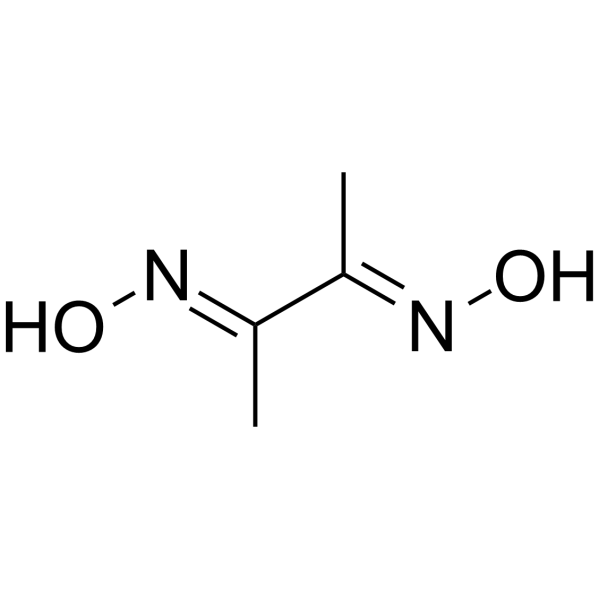
Dimethylglyoxime (Biacetyl dioxime) is an oxime compound. Dimethylglyoxime selectively coordinates with divalent nickel ions Ni 2+ to form stable complexes, and can also coordinate with copper ions Cu 2+, but does not coordinate with iron, selenium or zinc. Dimethylglyoxime inhibits the aggregation of human β-amyloid 40 peptide in vitro. Dimethylglyoxime is used in the research of Alzheimer's disease .
loading...
    loading...
Cat. No.: HY-Y0850U5
CAS No.: 9002-89-5
Synonyms: Polyvinyl alcohol (Mw 27000, 98-99% hydrolyzed, ~600 polymerization); Poly(Ethenol) (Mw 27000, 98-99% hydrolyzed, ~600 polymerization)
PVA (Polyvinyl alcohol) (Mw 27000, 98-99% hydrolyzed, ~600 polymerization) is a nonionic ethanol homopolymer with hydrophilicity, water solubility and biodegradability. PVA (Mw 27000, 98-99% hydrolyzed, ~600 polymerization) exhibits biocompatibility, non-toxicity and non-carcinogenicity, as well as antibacterial activity against Gram-positive bacteria, Gram-negative bacteria and fungal strains. PVA (Mw 27000, 98-99% hydrolyzed, ~600 polymerization) can serve as a solubilizer, stabilizer, mucoadhesive agent and sustained-release agent, and has a synergistic solubilizing effect on voriconazole/sulfobutyl ether β-cyclodextrin complexes. By stabilizing such complexes, PVA (Mw 27000, 98-99% hydrolyzed, ~600 polymerization) forms freeze-thaw hydrogels with high mucoadhesion, sustained drug release and ex vivo corneal permeability. When compounded with hyaluronic acid hydrogels, PVA (Mw 27000, 98-99% hydrolyzed, ~600 polymerization) supports chondrocyte growth in vitro, and also forms complexes with Cu 2+, Co 2+, Ni 2+ and Zn 2+ ions. PVA (Mw 27000, 98-99% hydrolyzed, ~600 polymerization) can be used in studies related to fungal keratitis, bacterial infections and fungal infections [2] .
loading...
    loading...
Cat. No.: HY-W1113135
CAS No.: 2828447-14-7
Research Areas:  

Others

Carboxymethyl-β-cyclodextrin sodium salt is a negatively charged β-cyclodextrin derivative, as well as a metal ion chelator and solubilizing reagent. Carboxymethyl-β-cyclodextrin sodium salt forms stable aqueous complexes with Ba 2+, Ca 2+, Cd 2+, Ni 2+, Pb 2+, Sr 2+, and Zn 2+ ions. Carboxymethyl-β-cyclodextrin sodium salt derived hydrogel carriers support oral insulin delivery via paracellular permeation across Caco-2 monolayers and produce sustained hypoglycemic effects in diabetic mice. Carboxymethyl-β-cyclodextrin sodium salt can be conjugated onto folate-modified BSA nanoparticles to boost folate receptor-mediated endocytosis, elevate intracellular anticancer drug uptake and trigger cell apoptosis. Carboxymethyl-β-cyclodextrin sodium salt can be utilized for chiral separation in capillary electrophoresis, development of nanoscale drug carriers and nucleic acid transfection research [2] .
loading...
    loading...
Cat. No.: HY-W012683R
CAS No.: 142-73-4
Iminodiacetic acid is a metal ion chelator targeting Cr6+, Cd2+, Ni2+, and Pb2+. Iminodiacetic acid selectively and irreversibly binds metal ions through the coordination of carboxyl and imino groups, reduces the toxicity of metal ions and promotes their adsorption and separation. Iminodiacetic acid has the functions of heavy metal ion removal and coordination complex stabilization. Iminodiacetic acid is often used in environmental pollution control (such as heavy metal adsorption in water) and coordination chemistry (such as metal ion detection and separation) research [2] .
loading...
    loading...
Cat. No.: HY-W540926
CAS No.: 75006-64-3
Synonyms: Biacetyl dioxime sodium hydrate
Research Areas:  

Neurological Disease

Dimethylglyoxime sodium hydrate (Biacetyl dioxime sodium hydrate) is an oxime compound. Dimethylglyoxime sodium hydrate selectively coordinates with divalent nickel ions Ni 2+ to form stable complexes, and can also coordinate with copper ions Cu 2+, but does not coordinate with iron, selenium or zinc. Dimethylglyoxime sodium hydrate inhibits the aggregation of human β-amyloid 40 peptide in vitro. Dimethylglyoxime sodium hydrate is used in the research of Alzheimer's disease .
loading...
    loading...
Cat. No.: HY-W011060R
CAS No.: 23978-09-8
Synonyms: 4,7,13,16,21,24-Hexaoxa-1,10-diazabicyclo[8.8.8]hexacosane (Standard)
Cryptand 2.2.2 (Standard) is the analytical standard of Cryptand 2.2.2 (HY-W011060). This product is intended for research and analytical applications. Cryptand 2.2.2 is a metal ion chelating agent that can selectively form complexes with metal ions. At room temperature, Cryptand 2.2.2 can serve as a host molecule, using the chelation effect to selectively bind desired ions (such as Zn 2+, Co 2+, Ni 2+, Cu 2+). Cryptand 2.2.2 can be used in the preparation of nanoparticles, transition metal compounds, and so on .
loading...
    loading...
Cat. No.: HY-K0255

MCE IMAC Agarose (NTA) 6FF is prepared by covalently coupling tetradentate nitrilotriacetic acid (NTA) to an agarose matrix. It features high binding capacity, excellent specificity, and superior ligand stability. The resin allows flexible chelation with metal ions such as Zn2+, Ni2+, or Cu2+, and is suitable for the purification of His-tagged recombinant proteins expressed in bacterial, mammalian, insect, and baculovirus systems.

loading...
    loading...
Cat. No.: HY-K0256

MCE Chelating Agarose (IDA) 6FF is prepared by covalently coupling tridentate iminodiacetic acid (IDA) to an agarose matrix. It features high binding capacity, excellent specificity, and superior ligand stability. The resin allows flexible chelation with metal ions such as Zn2+, Ni2+, or Cu2+, and is suitable for the purification of His-tagged recombinant proteins expressed in bacterial, mammalian, insect, and baculovirus systems.

loading...
    loading...
Cat. No.: HY-W075610
CAS No.: 41699-92-7
Synonyms: TCPP-Ni(2+)
Target:  

MOFs

Research Areas:  

Others

Nickelate(4-), [[4,4',4'',4'''-(21H,23H-porphine-5,10,15,20-tetrayl)tetrakis[benzoato]](6-)-N21,N22,N23,N24]-, tetrahydrogen, (SP-4-1)-(TCPP-Ni(2+)) is a metal-organic framework (MOF).
loading...
    loading...
Cat. No.: HY-RS22356
Research Areas:  

Others

Vmp1 Mouse Pre-designed siRNA Set A contains three designed siRNAs for Vmp1 gene (Mouse), as well as a negative control, a positive control, and a FAM-labeled negative control.

loading...
    loading...
Cat. No.: HY-W008952
CAS No.: 81741-28-8
Tributyltetradecyl phosphonium chloride is a quaternary phosphonium salt cation. Tributyltetradecyl phosphonium chloride can form an acidic aqueous biphasic system with acid and water, exhibits temperature-induced phase separation behavior with a lower critical solution temperature, enables the partitioning of Co 2+, Fe 3+, Pt 4+ and Ni 2+ between the two phases, and also promotes the separation of Co 2+ and Ni 2+ .
loading...
    loading...
Cat. No.: HY-109644
CAS No.: 5397-03-5
Synonyms: S-Methyldithiocarbazate; SMDTC; NSC 4423
Research Areas:  

Others

Methyl dithiocarbazate (S-Methyldithiocarbazate; SMDTC; NSC 4423) is a dithiocarbazate derivative, which is commonly used as a Schiff base ligand precursor to construct NS/SNS-type chelate complexes with transition metals (Zn 2+, Ni 2+, Cu 2+, etc.) .
loading...
    loading...
Cat. No.: HY-185401
CAS No.: 63618-91-7
Target:  

MOFs

Research Areas:  

Cancer

ATSM is a ligand that forms complexes with Cu 2+, Ni 2+, Zn 2+, and Fe 2+, with the highest affinity for Cu 2+. ATSM forms Cu-ATSM with copper, which is used for PET imaging to detect tumor hypoxia. ATSM is commonly used in coordination chemistry and radiopharmaceutical research [2].
loading...
    loading...
Cat. No.: HY-W722245
CAS No.: 79236-62-7
Pyochelin is a salicylate-based nonribosomal peptide siderophore produced by Pseudomonas aeruginosa. Pyochelin chelates Fe 3+ and transports it back into bacterial cells, providing the iron essential for bacterial survival. Pyochelin can also chelate other metals such as Zn 2+, Co 2+, and Ni 2+, which helps bacteria maintain intracellular metal ion homeostasis by chelating and excreting excess metals in response to toxic metal stress. Pyochelin can be used in studies related to Pseudomonas aeruginosa infection [2] .
loading...
    loading...
Cat. No.: HY-128073
CAS No.: 29048-34-8
Synonyms: O-Nitrophenylfuroic acid
Target:  

Bacterial MetAP

Research Areas:  

Infection

5-(2-Nitrophenyl)-2-furoic acid (O-Nitrophenylfuroic acid) is a Mn 2+-form Escherichia coli methionine aminopeptidase (EcMetAP) inhibitor with an IC50 of 1.08 μM against Escherichia coli. 5-(2-Nitrophenyl)-2-furoic acid selectively inhibits the Mn 2+-form over the Co 2+-, Ni 2+-, and Fe 2+-forms of EcMetAP, with its carboxyl group preferentially coordinating with Mn 2+ ions as the major determinant for this metalloform selectivity. 5-(2-Nitrophenyl)-2-furoic acid can be used for the research of bacterial infection .
loading...
    loading...

