1. Search Result
Search Result
Results for "

Nrf2-dependent

" in MedChemExpress (MCE) Product Catalog:

25

Inhibitors & Agonists

8

Natural
Products

5

Isotope-Labeled Compounds

Cat. No. Product Name Target Research Areas Chemical Structure
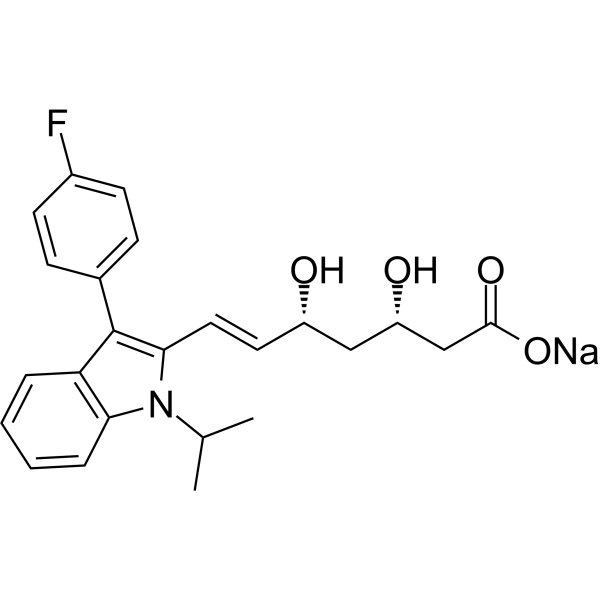
  • HY-14664A
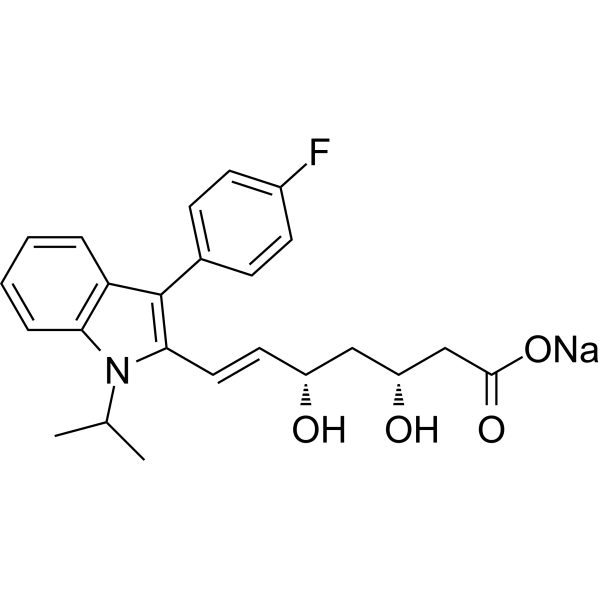
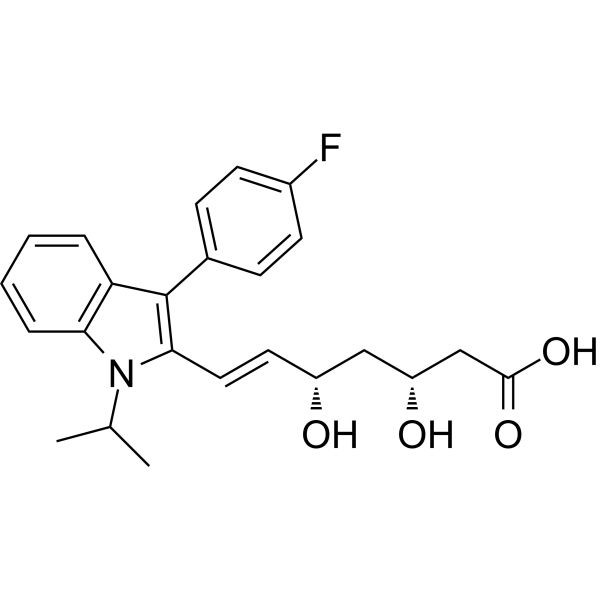
    Fluvastatin sodium
    Maximum Cited Publications
    19 Publications Verification

    XU 62-320

    HMG-CoA Reductase (HMGCR) Autophagy Ferroptosis Cardiovascular Disease Cancer
    Fluvastatin sodium (XU 62320) is a first fully synthetic, competitive HMG-CoA reductase inhibitor with an IC50 of 8 nM. Fluvastatin sodium protects vascular smooth muscle cells against oxidative stress through the Nrf2-dependent antioxidant pathway [2] .
    Fluvastatin sodium
  • HY-14664
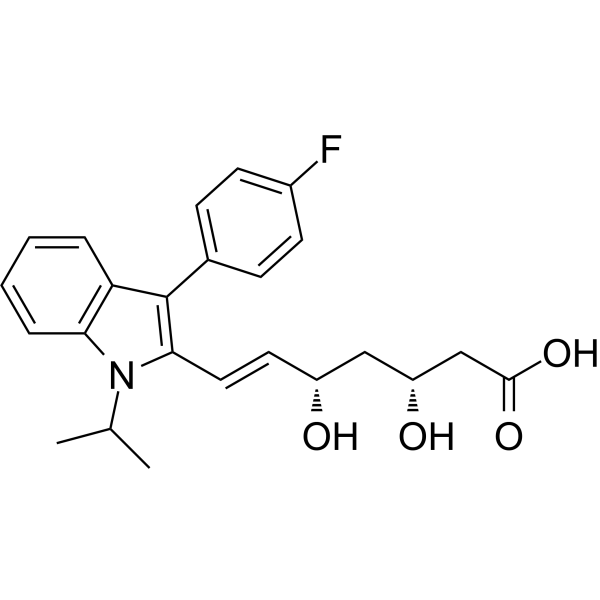
    Fluvastatin
    Maximum Cited Publications
    19 Publications Verification

    XU 62-320 free acid

    HMG-CoA Reductase (HMGCR) Autophagy Cardiovascular Disease Cancer
    Fluvastatin (XU 62-320 free acid) is a first fully synthetic, competitive HMG-CoA reductase inhibitor with an IC50 of 8 nM. Fluvastatin protects vascular smooth muscle cells against oxidative stress through the Nrf2-dependent antioxidant pathway [2] .
    Fluvastatin
  • HY-N0415
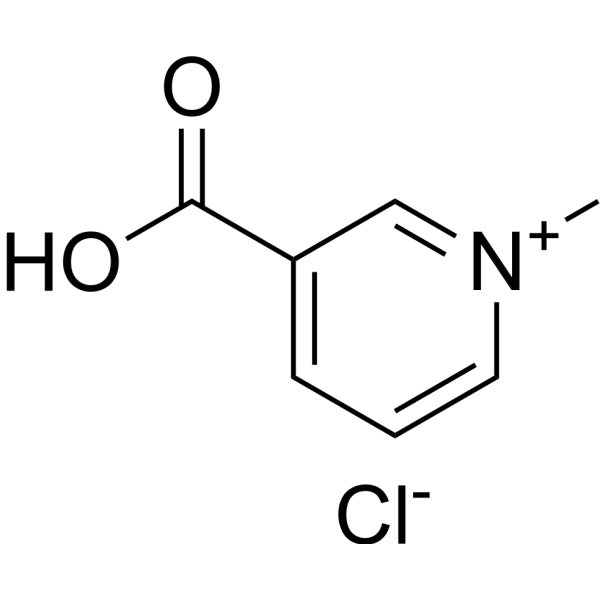
    Trigonelline chloride
    Maximum Cited Publications
    10 Publications Verification

    Trigonelline hydrochloride

    Endogenous Metabolite Ferroptosis Apoptosis HIV Bacterial Fungal Infection Metabolic Disease Cancer
    Trigonelline chloride is an alkaloid with potential antidiabetic activity that can be isolated from Trigonella foenum-graecum L or Leonurus artemisia. Trigonelline chloride is a potent Nrf2 inhibitor that blocks Nrf2-dependent proteasome activity, thereby enhancing apoptosis in pancreatic cancer cells. Trigonelline chloride also has anti-HSV-1, antibacterial, and antifungal activity, and induces ferroptosis.
    Trigonelline chloride
  • HY-N0414
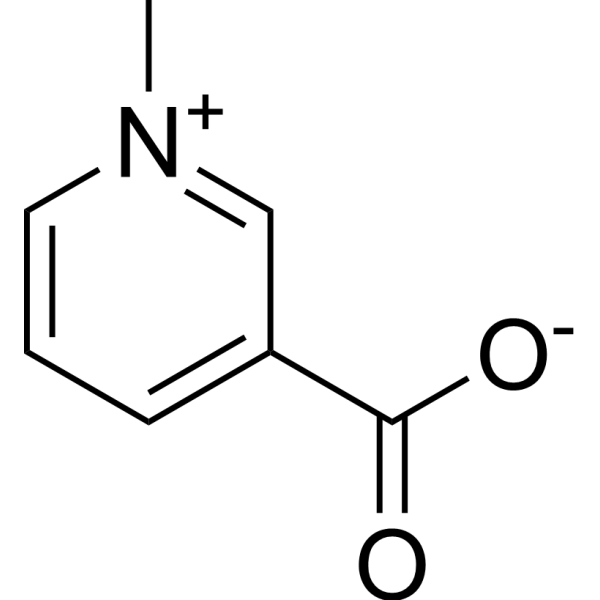
    Trigonelline
    Maximum Cited Publications
    10 Publications Verification

    Trigenolline

    Endogenous Metabolite Ferroptosis Apoptosis HIV Bacterial Fungal Metabolic Disease Cancer
    Trigonelline is an alkaloid with potential antidiabetic activity that can be isolated from Trigonella foenum-graecum L or Leonurus artemisia. Trigonelline is a potent Nrf2 inhibitor that blocks Nrf2-dependent proteasome activity, thereby enhancing apoptosis in pancreatic cancer cells. Trigonelline also has anti-HSV-1, antibacterial, and antifungal activity and induces ferroptosis.
    Trigonelline
  • HY-159641

    BAY-3605349

    Molecular Glues Keap1-Nrf2 Metabolic Disease Inflammation/Immunology Cancer
    VVD-130037 (BAY-3605349) is a covalent molecular glue and allosteric NRF2 degrader. VVD-130037 covalently binds to KEAP1 and allosterically enhances the affinity of KEAP1-CUL3, promotes the formation of the active KEAP1-CUL3 E3 ligase complex, and thereby enhances the ubiquitination and degradation of NRF2. VVD-130037 exhibits KEAP1 target-binding activity both in in vitro systems and mouse models, and it can be used in research related to NRF2-dependent cancers, solid tumors harboring KEAP1 nonsense mutations and frameshift mutations, as well as advanced solid tumors [2] .
    VVD-130037
  • HY-N1970
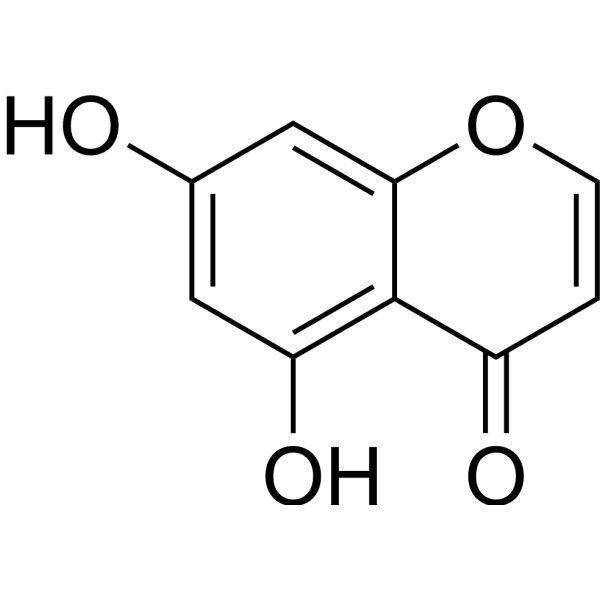
    5,7-Dihydroxychromone
    2 Publications Verification

    Keap1-Nrf2 Caspase PARP Fungal Infection Neurological Disease Metabolic Disease Inflammation/Immunology Cancer
    5,7-Dihydroxychromone is a flavonoid compound with antioxidant properties. 5,7-Dihydroxychromone induces Nrf2 nuclear translocation, increases Nrf2/ARE binding activity, and up-regulates Nrf2-dependent antioxidant genes HO-1, NQO1, GCLc. 5,7-Dihydroxychromone attenuates excessive ROS generation, inhibits activated caspase-3, caspase-9, cleaved PARP expression, and prevents neuronal apoptosis and cell death. 5,7-Dihydroxychromone increases LXRα and PPARγ mRNA expression, induces preadipocyte differentiation, and regulates blood glucose levels. 5,7-Dihydroxychromone inhibits radial growth of soil pathogenic fungi, radicle elongation of select seedlings, and transiently inhibits Bradyrhizobium sp. growth in high mannitol medium. 5,7-Dihydroxychromone can be used for the research of Parkinson’s disease, type 2 diabetes mellitus and pathogenic fungal infection [2] .
    5,7-Dihydroxychromone
  • HY-120371
    CPUY192018
    1 Publications Verification

    Keap1-Nrf2 Apoptosis Reactive Oxygen Species (ROS) NF-κB Inflammation/Immunology
    CPUY192018 is a potent inhibitor of the Keap1-Nrf2 protein-protein interaction, with an IC50 of 0.63 µM. CPUY192018 exhibits anti-inflammatory and antioxidant activities. CPUY192018 can activate the Nrf2-dependent antioxidant pathway and inhibit the NF-κB-related inflammatory response. CPUY192018 can be used in the research of inflammation-related diseases [2].
    CPUY192018
  • HY-N0414R

    Trigenolline (Standard)

    Endogenous Metabolite Ferroptosis Apoptosis HIV Bacterial Fungal Reference Standards Metabolic Disease Cancer
    Trigonelline (Standard) is the analytical standard of Trigonelline. This product is intended for research and analytical applications. Trigonelline is an alkaloid with potential antidiabetic activity that can be isolated from Trigonella foenum-graecum L or Leonurus artemisia. Trigonelline is a potent Nrf2 inhibitor that blocks Nrf2-dependent proteasome activity, thereby enhancing apoptosis in pancreatic cancer cells. Trigonelline also has anti-HSV-1, antibacterial, and antifungal activity and induces ferroptosis.
    Trigonelline (Standard)
  • HY-N7617
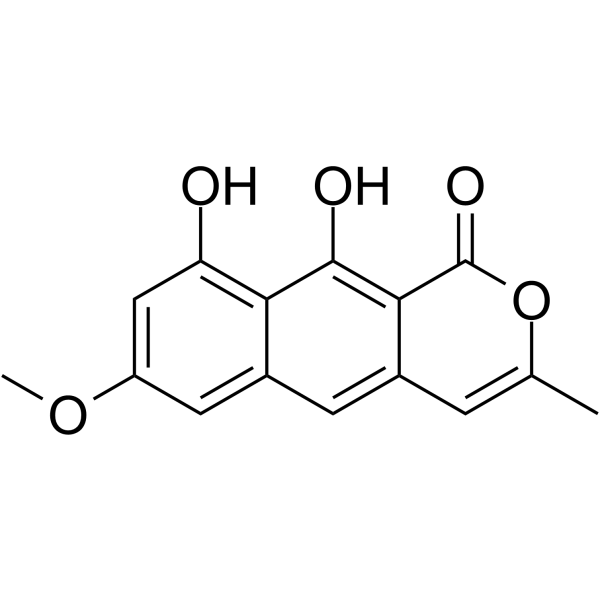
    Toralactone
    1 Publications Verification

    Keap1-Nrf2 Cancer
    Toralactone, isolated from Cassia obtusifolia, mediates hepatoprotection via an Nrf2-dependent anti-oxidative mechanism .
    Toralactone
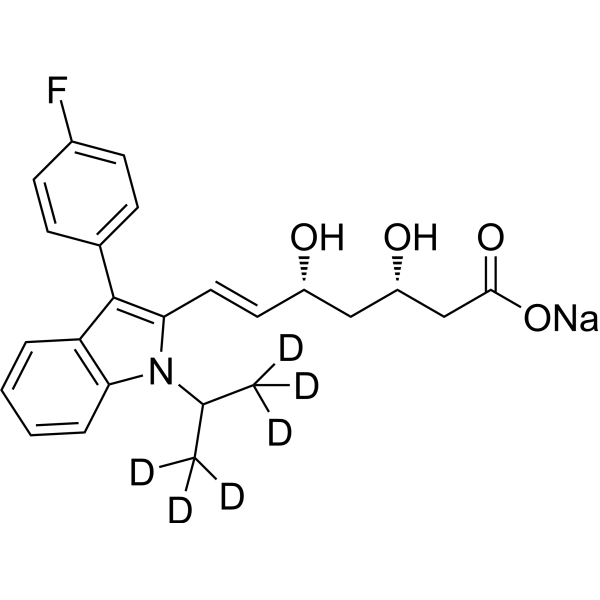
  • HY-14664AS

    XU 62-320-d6

    HMG-CoA Reductase (HMGCR) Autophagy Cardiovascular Disease Cancer
    Fluvastatin-d6 (sodium) is deuterium labeled Fluvastatin sodium. Fluvastatin sodium (XU 62320) is a first fully synthetic, competitive HMG-CoA reductase inhibitor with an IC50 of 8 nM.
    Fluvastatin-d6 sodium
  • HY-14664AR

    XU 62-320 (Standard)

    Reference Standards HMG-CoA Reductase (HMGCR) Autophagy Ferroptosis Cardiovascular Disease Cancer
    Fluvastatin (sodium) (Standard) is the analytical standard of Fluvastatin (sodium). This product is intended for research and analytical applications. Fluvastatin sodium (XU 62320) is a first fully synthetic, competitive HMG-CoA reductase inhibitor with an IC50 of 8 nM. Fluvastatin sodium protects vascular smooth muscle cells against oxidative stress through the Nrf2-dependent antioxidant pathway [2] .
    Fluvastatin sodium (Standard)
  • HY-14664R

    XU 62-320 free acid (Standard)

    HMG-CoA Reductase (HMGCR) Autophagy Reference Standards Cardiovascular Disease Cancer
    Fluvastatin (Standard) is the analytical standard of Fluvastatin. This product is intended for research and analytical applications. Fluvastatin (XU 62-320 free acid) is a first fully synthetic, competitive HMG-CoA reductase inhibitor with an IC50 of 8 nM. Fluvastatin protects vascular smooth muscle cells against oxidative stress through the Nrf2-dependent antioxidant pathway [2] .
    Fluvastatin (Standard)
  • HY-14664B

    (3R,5S)-XU 62-320 free acid

    HMG-CoA Reductase (HMGCR) Autophagy Cardiovascular Disease Cancer
    (3R,5S)-Fluvastatin is the 3R,5S-isomer Fluvastatin. Fluvastatin (XU 62-320 free acid) is a first fully synthetic, competitive HMG-CoA reductase inhibitor with an IC50 of 8 nM. Fluvastatin protects vascular smooth muscle cells against oxidative stress through the Nrf2-dependent antioxidant pathway [2] .
    (3R,5S)-Fluvastatin
  • HY-14664CS

    (3S,5R)-XU 62-320-d6

    HMG-CoA Reductase (HMGCR) Cardiovascular Disease Cancer
    (3S,5R)-Fluvastatin-d6 (sodium)?is the deuterium labeled (3S,5R)-Fluvastatin sodium. Fluvastatin is a first fully synthetic, competitive?HMG-CoA reductase?inhibitor with an IC50?of 8 nM. Fluvastatin protects vascular smooth muscle cells against oxidative stress through the Nrf2-dependent antioxidant pathway .
    (3S,5R)-Fluvastatin-d6 sodium
  • HY-N0415R

    Trigonelline hydrochloride (Standard)

    Endogenous Metabolite Ferroptosis Apoptosis HIV Bacterial Fungal Reference Standards Infection Metabolic Disease Cancer
    Trigonelline (chloride) (Standard) is the analytical standard of Trigonelline (chloride). This product is intended for research and analytical applications. Trigonelline chloride is an alkaloid with potential antidiabetic activity that can be isolated from Trigonella foenum-graecum L or Leonurus artemisia. Trigonelline chloride is a potent Nrf2 inhibitor that blocks Nrf2-dependent proteasome activity, thereby enhancing apoptosis in pancreatic cancer cells. Trigonelline chloride also has anti-HSV-1, antibacterial, and antifungal activity, and induces ferroptosis.
    Trigonelline chloride (Standard)
  • HY-14664C

    (3S,5R)-XU 62-320

    HMG-CoA Reductase (HMGCR) Cardiovascular Disease Cancer
    (3S,5R)-Fluvastatin sodium ((3S,5R)-XU 62-320) is the (3S,5R)-enantiomer of Fluvastatin. Fluvastatin is a first fully synthetic, competitive HMG-CoA reductase inhibitor with an IC50 of 8 nM. Fluvastatin protects vascular smooth muscle cells against oxidative stress through the Nrf2-dependent antioxidant pathway .
    (3S,5R)-Fluvastatin sodium
  • HY-171035

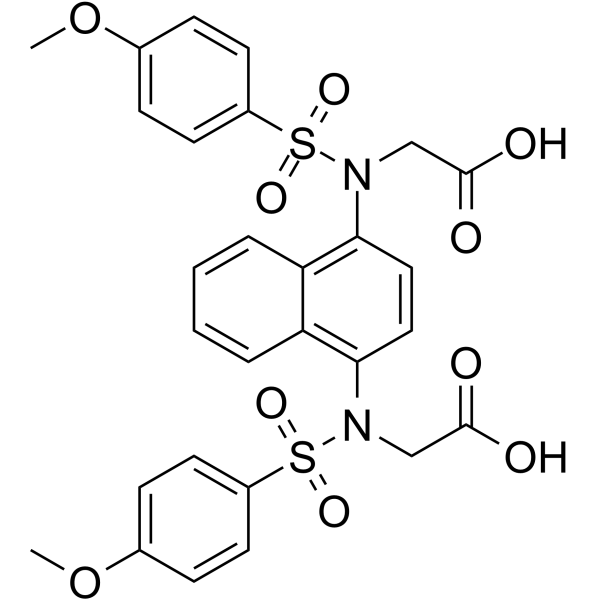
    Quinone Reductase Keap1-Nrf2 Aminotransferases (Transaminases) Metabolic Disease
    PRL-295 is an orally active inhibitor targeting Keap1-Nrf2 interaction. PRL-295 increases the thermal stability of Keap1 and disrupts its interaction with Nrf2, thereby activating the Nrf2-dependent transcriptional target NAD(P)H:quinone oxidoreductase 1 (NQO1). PRL-295 protects against Acetaminophen (HY-66005)-induced liver injury in mice .
    PRL-295
  • HY-N1970R

    Reference Standards Keap1-Nrf2 Caspase PARP Fungal Infection Neurological Disease Metabolic Disease Inflammation/Immunology Cancer
    5,7-Dihydroxychromone (Standard) is the analytical standard of 5,7-Dihydroxychromone (HY-N1970). This product is intended for research and analytical applications. 5,7-Dihydroxychromone is a flavonoid compound with antioxidant properties. 5,7-Dihydroxychromone induces Nrf2 nuclear translocation, increases Nrf2/ARE binding activity, and up-regulates Nrf2-dependent antioxidant genes HO-1, NQO1, GCLc. 5,7-Dihydroxychromone attenuates excessive ROS generation, inhibits activated caspase-3, caspase-9, cleaved PARP expression, and prevents neuronal apoptosis and cell death. 5,7-Dihydroxychromone increases LXRα and PPARγ mRNA expression, induces preadipocyte differentiation, and regulates blood glucose levels. 5,7-Dihydroxychromone inhibits radial growth of soil pathogenic fungi, radicle elongation of select seedlings, and transiently inhibits Bradyrhizobium sp. growth in high mannitol medium. 5,7-Dihydroxychromone can be used for the research of Parkinson’s disease, type 2 diabetes mellitus and pathogenic fungal infection [2] .
    5,7-Dihydroxychromone (Standard)
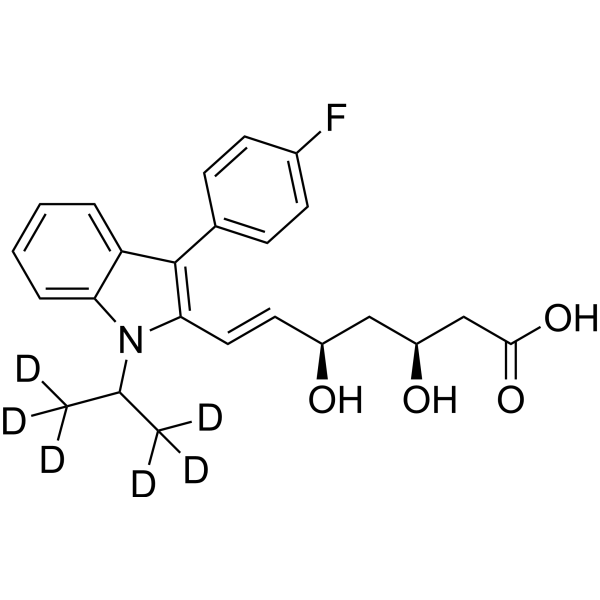
  • HY-14664DS

    (3S,5R)-XU 62-320-d6 free acid

    Autophagy Cardiovascular Disease Cancer
    (3S,5R)-Fluvastatin-d6 is the deuterium labeled (3S,5R)-Fluvastatin sodium. Fluvastatin is a first fully synthetic, competitive?HMG-CoA reductase?inhibitor with an IC50?of 8 nM. Fluvastatin protects vascular smooth muscle cells against oxidative stress through the Nrf2-dependent antioxidant pathway .
    (3S,5R)-Fluvastatin-d6
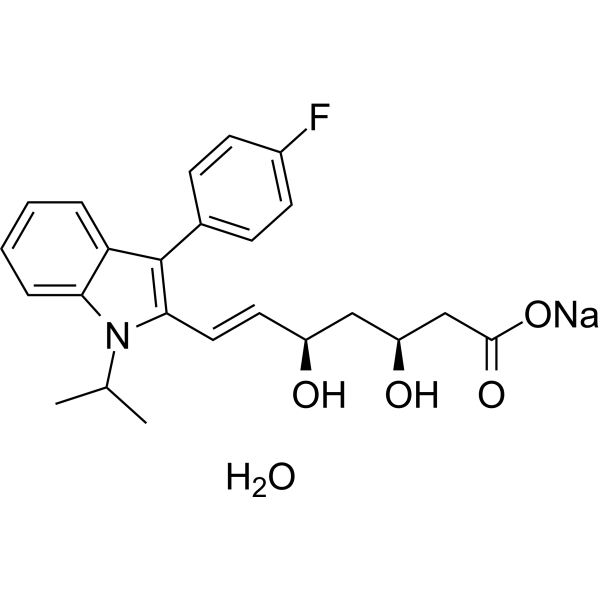
  • HY-14664D

    XU 62-320 monohydrate

    HMG-CoA Reductase (HMGCR) Apoptosis Cardiovascular Disease Cancer
    Fluvastatin (XU 62-320) sodium monohydrate is a first fully synthetic, competitive HMG-CoA reductaseinhibitor with an IC50 of 8 nM. Fluvastatin (sodium monohydrate) protects vascular smooth muscle cells against oxidative stress through the Nrf2-dependent antioxidant pathway [2].
    Fluvastatin sodium monohydrate
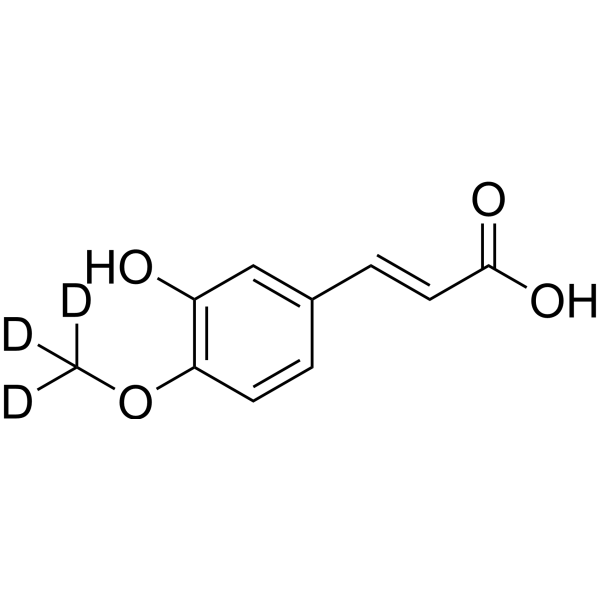
  • HY-N0761AS

    Prostaglandin Receptor NO Synthase Inflammation/Immunology
    trans-Isoferulic acid-d3 is the deuterium labeled trans-Isoferulic acid . trans-Isoferulic acid (trans-3-Hydroxy-4-methoxycinnamic acid) is an aromatic acid isolated from the roots of Clematis florida var. plena. trans-Isoferulic acid exhibits anti-inflammatory activity [2].trans-isoferulic acid suppresses NO and PGE2 production through the induction of Nrf2-dependent heme oxygenase-1 (HO-1) .
    trans-Isoferulic acid-d3
  • HY-14664F

    (3R,5S)-XU 62-320

    HMG-CoA Reductase (HMGCR) Autophagy Cancer
    (3R,5S)-Fluvastatin ((3R,5S)-XU 62-320) sodium is the 3R,5S-isomer Fluvastatin. Fluvastatin (XU 62-320 free acid) is a first fully synthetic, competitive HMG-CoA reductase inhibitor with an IC50 of 8 nM. Fluvastatin protects vascular smooth muscle cells against oxidative stress through the Nrf2-dependent antioxidant pathway [2] .
    (3R,5S)-Fluvastatin sodium
  • HY-N0761AR

    trans-3-Hydroxy-4-methoxycinnamic acid (Standard)

    Reference Standards NO Synthase Prostaglandin Receptor Inflammation/Immunology
    trans-Isoferulic acid (Standard) is the analytical standard of trans-Isoferulic acid. This product is intended for research and analytical applications. trans-Isoferulic acid (trans-3-Hydroxy-4-methoxycinnamic acid) is an aromatic acid isolated from the roots of Clematis florida var. plena. trans-Isoferulic acid exhibits anti-inflammatory activity .trans-isoferulic acid suppresses NO and PGE2 production through the induction of Nrf2-dependent heme oxygenase-1 (HO-1) [2].
    trans-Isoferulic acid (Standard)
  • HY-139408

    17-Oxo-DHA; 17-Oxo-4(Z),7(Z),10(Z),13(Z),15(E),19(Z)-DHA

    PPAR Keap1-Nrf2 Metabolic Disease
    17-Oxo-4(Z),7(Z),10(Z),13(Z),15(E),19(Z)-docosahexaenoic acid (17-Oxo-DHA) is a metabolite of lipoxygenase-mediated oxidation of DHA. 17-Oxo-4(Z),7(Z),10(Z),13(Z),15(E),19(Z)-docosahexaenoic acid is a PPARγ agonist and activates a Nrf2 dependent antioxidant reaction .
    17-Oxo-4(Z),7(Z),10(Z),13(Z),15(E),19(Z)-docosahexaenoic acid
  • HY-N0415S1

    Trigonelline-d3-1 hydrochloride

    Isotope-Labeled Compounds Fungal Apoptosis Bacterial HIV Ferroptosis Endogenous Metabolite Infection Metabolic Disease Cancer
    Trigonelline-d3-1 chloride (Trigonelline-d3-1 hydrochloride) is the deuterium labeled Trigonelline chloride (HY-N0415). Trigonelline chloride is an alkaloid with potential antidiabetic activity that can be isolated from Trigonella foenum-graecum L or Leonurus artemisia. Trigonelline chloride is a potent Nrf2 inhibitor that blocks Nrf2-dependent proteasome activity, thereby enhancing apoptosis in pancreatic cancer cells. Trigonelline chloride also has anti-HSV-1, antibacterial, and antifungal activity, and induces ferroptosis.
    Trigonelline-d3-1 chloride

Inquiry Online

Your information is safe with us. * Required Fields.

Salutation


Country or Region *

Applicant Name *


Organization Name *

Department *


Email Address *


Product Name *

Cat. No.


Requested quantity *

Phone Number *


Remarks

Inquiry Online

Inquiry Information

Product Name:
Cat. No.:
Quantity:
MCE Japan Authorized Agent:

