Search Result
Results for "
Oxime ester
" in MedChemExpress (MCE) Product Catalog:
6
Biochemical Assay Reagents
4
Isotope-Labeled Compounds
| Cat. No. |
Product Name |
Target |
Research Areas |
Chemical Structure |
-
- HY-10580
-
|
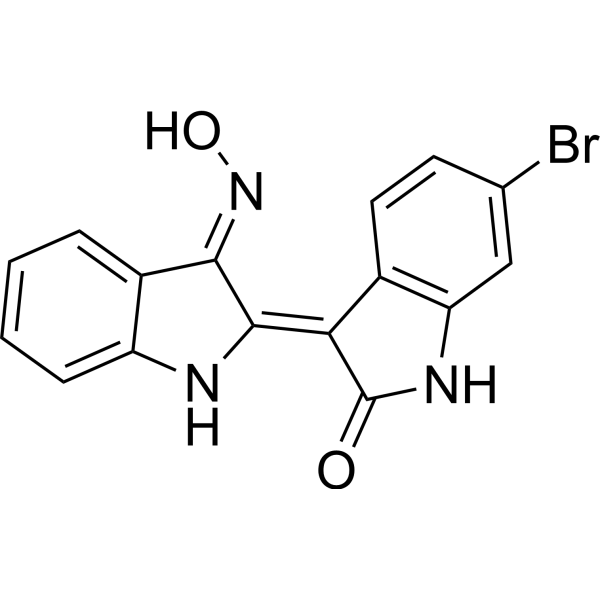
6-Bromoindirubin-3'-Oxime; BIO; MLS 2052
|
GSK-3
CDK
Apoptosis
|
Cancer
|
|
GSK 3 Inhibitor IX (6-Bromoindirubin-3'-oxime; BIO) is a potent, selective, reversible and ATP-competitive inhibitor of GSK-3α/β and CDK1-cyclinB complex with IC50s of 5 nM/320 nM/80 nM for (GSK-3α/β)/CDK1/CDK5, respectively.
|
-
-
- HY-B0778
-
|
|
Antibiotic
Parasite
|
Infection
|
|
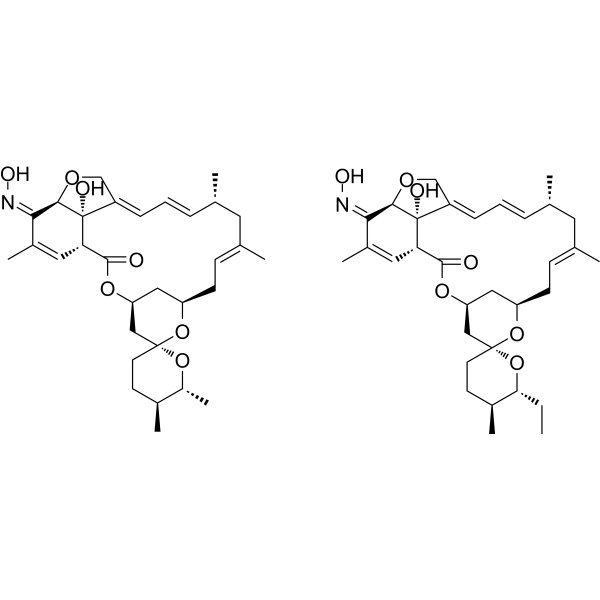
Milbemycin oxime is an orally active macrolide with broad-spectrum antiparasitic activity. Milbemycin oxime is a mixture of oximes consisting of oxime derivatives corresponding to milbemycin A4 and A3. Milbemycin oxime binds to glutamate-gated chloride channels and has inhibitory potency against intestinal nematodes and lung/heart worms .
|
-
-
- HY-19807
-
|
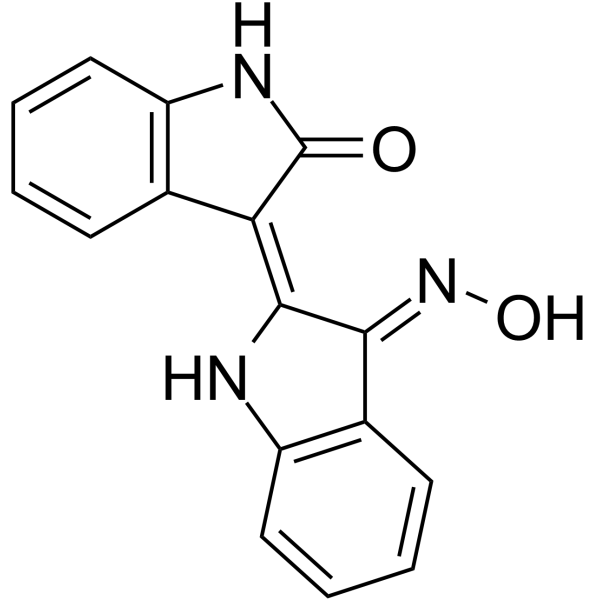
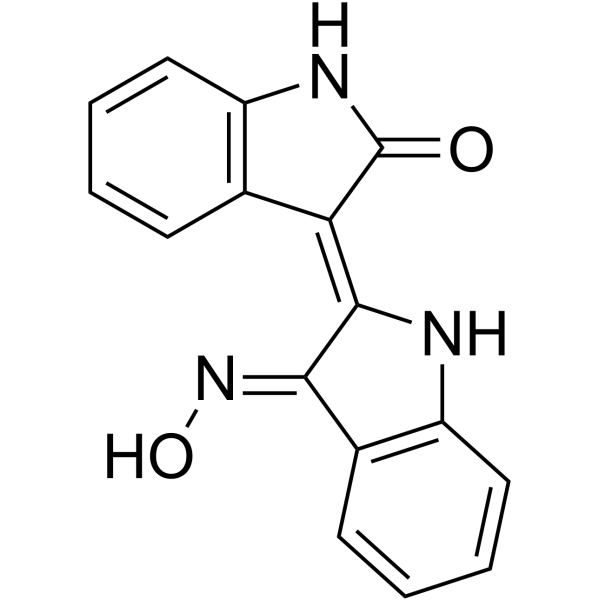
Indirubin-3'-Oxime
|
GSK-3
CDK
Lipoxygenase
|
Cancer
|
|
Indirubin-3'-monoxime is a potent GSK-3β inhibitor, and weakly inhibits 5-Lipoxygenase, with IC50s of 22 nM and 7.8-10 µM, respectively; Indirubin-3'-monoxime also shows inhibitory activities against CDK5/p25 and CDK1/cyclin B, with IC50s of 100 and 180 nM.
|
-
-
- HY-153263
-
|
|
Drug-Linker Conjugates for ADC
|
Cancer
|
|
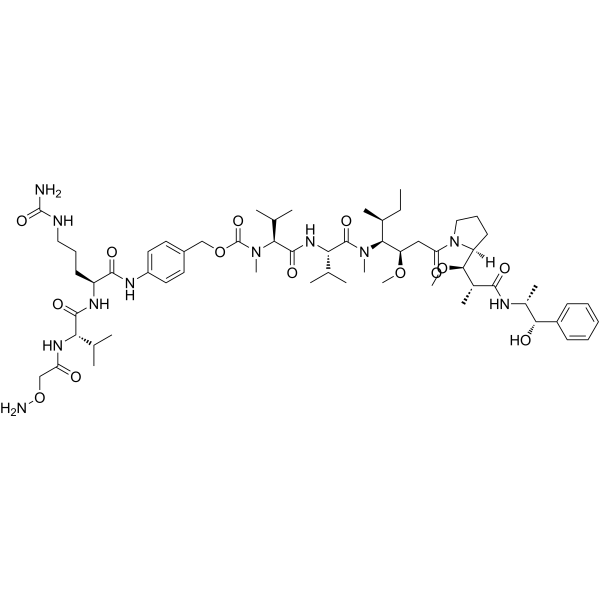
(Aminooxy)acetamide-Val-Cit-PAB-MMAE (MMAE 5) is an intermediate used in the synthetic preparation of drug-linker conjugates for ADC. (Aminooxy)acetamide-Val-Cit-PAB-MMAE is conjugated to polyamide via oxime bond formation to form MMAE polyamide conjugate. Then MMAE polyamide conjugate can be conjugated to Trastuzumab, to make ADC .
|
-
-
- HY-139254
-
|
IDR3O; I3O
|
CDK
GSK-3
JNK
Wnt
|
Neurological Disease
|
|
Indirubin-3′-oxime (IDR3O), a synthetic derivative of indirubin, is a potent inhibitor of cyclin-dependent kinases (CDKs) and glycogen synthase kinase 3β (GSK3β). Indirubin-3′-oxime directly inhibits the activity of all three isoforms of JNK (JNK1, JNK2, and JNK3), with IC50s of 0.8 μM, 1.4 μM, and 1.0 μM, respectively. Indirubin-3′-oxime can enhance height growth via activation of Wnt/β-catenin signaling in chondrocytes .
|
-
-
- HY-B1200
-
|
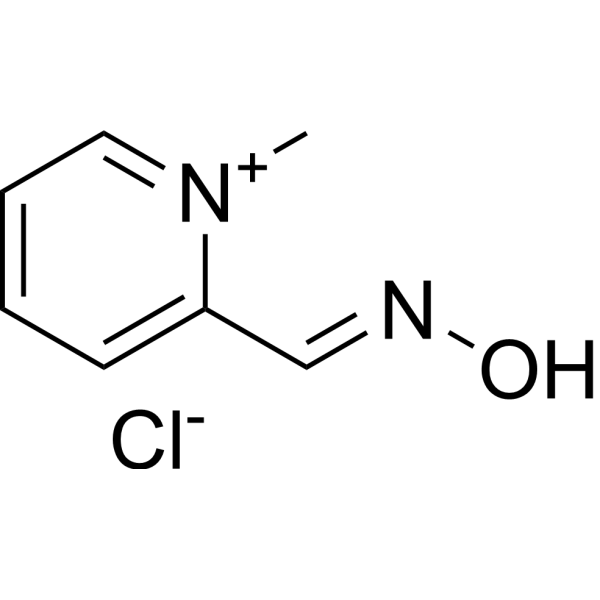
2-PAM chloride
|
Cholinesterase (ChE)
|
Neurological Disease
|
|
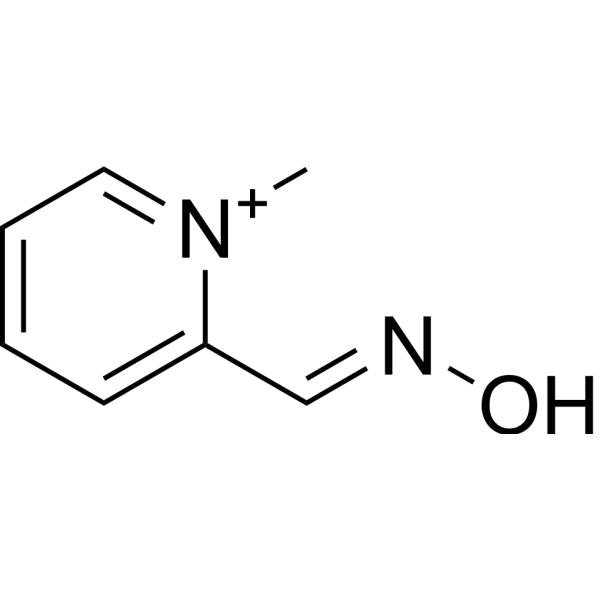
Pralidoxime chloride is a potent reactivator of acetylcholinesterase (AChE). Pralidoxime chloride reactivates nerve agent-inhibited AChE via direct nucleophilic attack by the oxime moiety on the phosphorus center of the bound nerve agent. Pralidoxime chloride is an antidote for organophosphate poisoning .
|
-
-
- HY-B1738A
-
|
|
Cholinesterase (ChE)
|
Neurological Disease
|
|
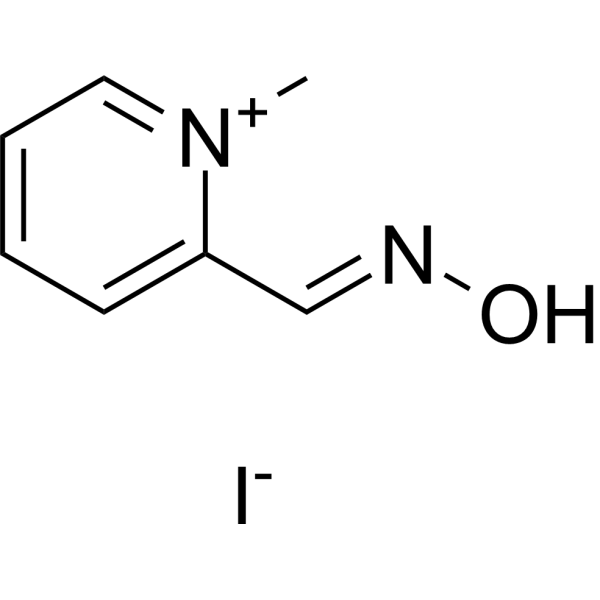
Pralidoxime iodide is a potent reactivator of acetylcholinesterase (AChE). Pralidoxime iodide reactivates nerve agent-inhibited AChE via direct nucleophilic attack by the oxime moiety on the phosphorus center of the bound nerve agent. Pralidoxime iodide is an antidote for organophosphate poisoning .
|
-
-
- HY-121035
-
|
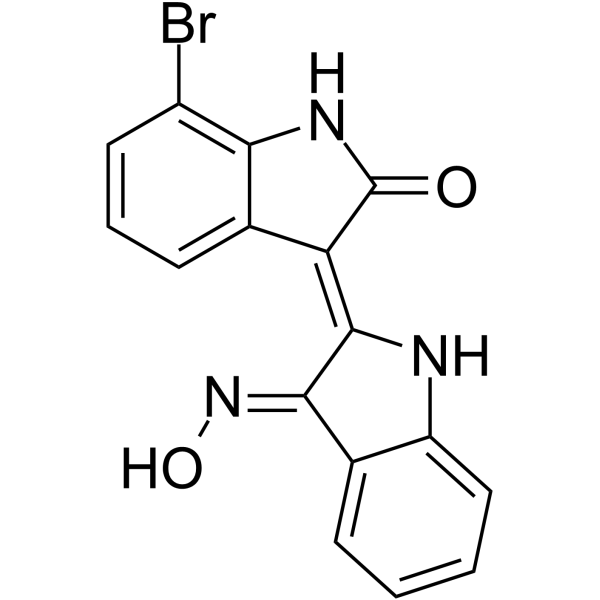
7-Bromoindirubin-3-Oxime
|
CDK
GSK-3
|
Neurological Disease
|
|
7BIO (7-Bromoindirubin-3-Oxime) is the derivate of indirubin. 7BIO (7-Bromoindirubin-3-Oxime) has inhibitory effects against cyclin-dependent kinase-5 (CDK5) and glycogen synthase kinase-3β (GSK3β). 7BIO (7-Bromoindirubin-3-Oxime) inhibits Aβ oligomer-induced neuroinflammation, synaptic impairments, tau hyper-phosphorylation, activation of astrocytes and microglia, and attenuates Aβ oligomer-induced cognitive impairments in mice [1].
|
-
-
- HY-W011108
-
|
|
Cholinesterase (ChE)
|
Neurological Disease
|
|
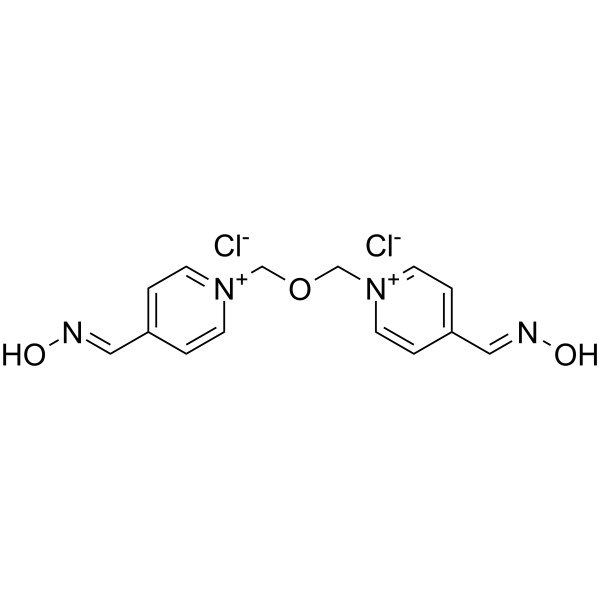
Obidoxime dichloride is a non-full spectrum oxime agent and can be used as an antidote for organophosphate nerve agent poisoning. Obidoxime dichloride reactivates sarin-inhibited acetylcholinesterase (AChE) and reduces acute toxicity of sarin-evaluated .
|
-
-
- HY-W012898
-
|
Biacetyl diOxime
|
Biochemical Assay Reagents
|
Others
|
|
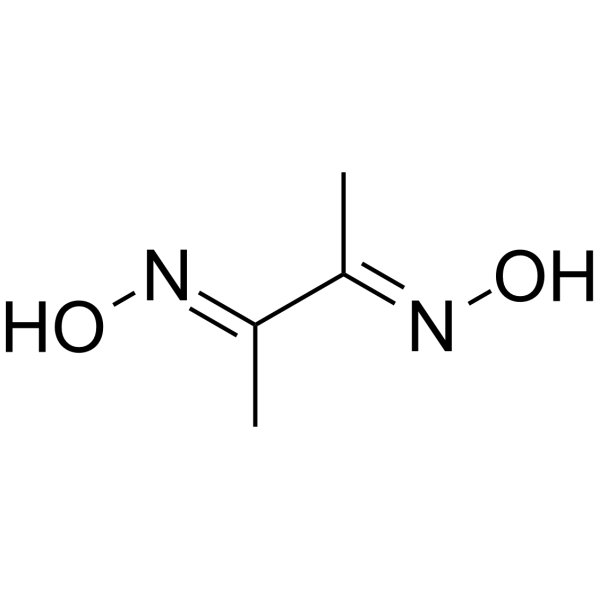
Dimethylglyoxime (Biacetyl dioxime) belongs to the class of oximes and consists of two acetyl groups attached to a nitrogen atom, which in turn is attached to another nitrogen atom through a diimine bond. Dimethylglyoxime is a specific chelator of Ni that inhibits or slows the aggregation of Aβ peptides in vitro .
|
-
-
- HY-162022
-
|
|
Enterovirus
Virus Protease
|
Infection
|
|
BTA-188, a pyridazinyl oxime ether, is an orally active, potent inhibitor of rhinoviruses (HRV) and enterovirus (EV) 71 in vitro. BTA-188 inhibits HRV-2 replication with an IC50 of 0.8 nM and an IC90 of 11 nM. BTA-188 inhibits enterovirus with an IC50 of 82 and an IC90 of 109 nM. BTA-188 is a potential chemotherapeutic agent for infections caused by the viruses in the Picornaviridae .
|
-
-
- HY-17649
-
|
|
Progesterone Receptor
|
Neurological Disease
|
|
EIDD-036, is the blood-brain barrier penetrant C-20 oxime of Progesterone (HY-N0437), that binds progesterone receptor (PR) with an IC50 of 171 nM. EIDD-036 is the active metabolite of EIDD-1723 (HY-125547). EIDD-036 exhibits promising challenges for rapid administration in acute trauma. EIDD-036 can be used for the study of traumatic brain injury (TBI) .
|
-
-
- HY-W055845
-
|
|
Biochemical Assay Reagents
|
Others
|
|
4-Methylbenzamide oxime is a model of benzamide oxime and can be used as a substrate for mitochondrial amidoxime reducing component (mARC) catalytic enzyme reduction .
|
-
-
- HY-W008840
-
-
-
- HY-135325
-
|
|
Drug Metabolite
|
Inflammation/Immunology
|
|
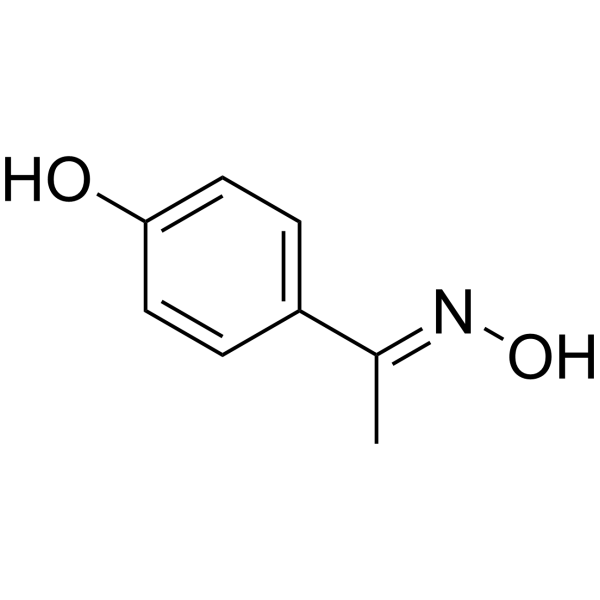
4-Hydroxyacetophenone oxime is an impurity of Acetaminophen (Paracetamol). Acetaminophen is a potent cyclooxygenase-2 (COX-2) and hepatic N-acetyltransferase 2 (NAT2) inhibitor, and used antipyretic and analgesic agent .
|
-
-
- HY-175881
-
|
|
ADC Linker
|
Cancer
|
|
3-Formyl-L-tyrosine-oxime-Val-Cit-PAPB is an ADC linker that can be used for the synthesis of the TUB-010 drug linker (HY-175884) .
|
-
-
- HY-116656
-
-
-
- HY-U00283
-
-
-
- HY-114575
-
-
-
- HY-B1738
-
|
|
Cholinesterase (ChE)
|
Neurological Disease
|
|
Pralidoxime is a potent reactivator of acetylcholinesterase (AChE). Pralidoxime reactivates nerve agent-inhibited AChE via direct nucleophilic attack by the oxime moiety on the phosphorus center of the bound nerve agent. Pralidoxime is an antidote for organophosphate poisoning .
|
-
-
- HY-133848
-
|
OK-135
|
Insecticide
|
Infection
|
|
Alanycarb (OK-135) is a broad-spectrum oxime carbamate insecticide with contact and oral toxicity. Alanycarb is effective against a wide variety of insect pests and is a pro-insecticide. The principal active molecule produced by the biological modification of Alanycarb within target organisms is methomyl .
|
-
-
- HY-W091754
-
|
|
Nucleoside Antimetabolite/Analog
Phosphoramidites
|
Others
|
|
5'-O-Dmt-n2-isobutyryl-2'-o-methyl-d-guanosine is a nucleoside that is made using an oxime opening of the 5' position and a methylation at the 2' position. 5'-O-Dmt-n2-isobutyryl-2'-o-methyl-d-guanosine has been shown to have an affinity for tissues in a chemotactic assay.
|
-
-
- HY-B0778R
-
|
|
Reference Standards
Antibiotic
Parasite
|
Infection
|
|
Milbemycin oxime (Standard) is the analytical standard of Milbemycin oxime. This product is intended for research and analytical applications. Milbemycin oxime is an orally active macrolide with broad-spectrum antiparasitic activity. Milbemycin oxime is a mixture of oximes consisting of oxime derivatives corresponding to milbemycin A4 and A3. Milbemycin oxime binds to glutamate-gated chloride channels and has inhibitory potency against intestinal nematodes and lung/heart worms .
|
-
-
- HY-138074
-
|
5-Ketomilbemycin A4 Oxime; 5-Oxomilbemycin A4 5-Oxime
|
Parasite
|
Infection
|
|
Milbemycin A4 oxime (5-Ketomilbemycin A4 oxime; 5-Oxomilbemycin A4 5-oxime) is a derivative of Milbemycin A4 (HY-126906) and a component of Milbemycin oxime (HY-B0778), both of which have insecticidal and nematicidal activities. Milbemycin A4 oxime (0.05 mg/kg) reduces the number of microfilariae in naturally infected dogs with D. immitis and inhibits the growth of clinical isolates of Candida glabrata (MIC80=16-32 μg/mL). Milbemycin A4 oxime (2.5 μg/mL) blocks the efflux of Fluconazole (HY-B0101) from clinical isolates of Candida glabrata. Milbemycin A4 oxime enhances doxorubicin-induced cell growth inhibition and increases the intracellular accumulation of doxorubicin and P-glycoprotein substrate Rhodamine 123 (HY-D0816) in doxorubicin-resistant but not sensitive MCF-7 breast cancer cells in a concentration-dependent manner.
|
-
-
- HY-134518
-
|
Erythromycin A Oxime; Erythromycin-9-Oxime
|
Drug Intermediate
|
Infection
|
|
Erythromycin oxime is an intermediate of Azithromycin (HY-17506). Azithromycin is a macrolide antibiotic useful for the treatment of a number of bacterial infections.
|
-
-
- HY-W710036
-
|
|
Isotope-Labeled Compounds
Drug Intermediate
|
Infection
|
|
Erythromycin A 9-oxime-d3 is the deuterium labeled Erythromycin oxime (HY-134518). Erythromycin oxime is an intermediate of Azithromycin (HY-17506). Azithromycin is a macrolide antibiotic useful for the treatment of a number of bacterial infections.
|
-
-
- HY-N9477
-
|
Betulin-28-Oxime
|
Drug Derivative
Bacterial
|
Infection
|
|
Betulinic aldehyde oxime (Compound 31) is a betulin (HY-N0083) derivative that has antimicrobial properties against E. aerogenes, E. coli, E. faecalis, P. aeruginosa, S. aureus, and C. albicans. Betulinic aldehyde oxime displays cytotoxicity towards hepatocytes, with an IC50 of 25 μM .
|
-
-
- HY-W015805
-
-
-
- HY-157224
-
-
-
- HY-146981
-
-
-
- HY-118793
-
|
6-Hydroxyadenosine
|
Endogenous Metabolite
|
Others
|
|
Inosine oxime (6-Hydroxyadenosine) is an endogenous metabolite in the course of cell metabolism by cytochrome P450, by oxidative stress or by deviating nucleotide biosynthesis. Inosine oxime has toxic and mutagenic for procaryotic and eucaryotic cells .
|
-
-
- HY-135194R
-
|
|
Drug Metabolite
Reference Standards
|
Others
|
|
Risperidone E-oxime (Standard) is the analytical standard of Risperidone E-oxime. This product is intended for research and analytical applications. Risperidone E-oxime is an impurity of Risperidone . Risperidone is a serotonin 5-HT2 receptor blocker, P-Glycoprotein inhibitor and potent dopamine D2 receptor antagonist, with Kis of 4.8, 5.9 nM for 5-HT2A and dopamine D2 receptor, respectively .
|
-
-
- HY-146984
-
|
|
Glycosidase
|
Inflammation/Immunology
|
|
α-Glucosidase-IN-3 is an oleanolic acid (OA) oxime ester derivative against α-glucosidase (IC50=1.28 µM) and α-amylase (IC50=3.8 µM) .
|
-
-
- HY-W145605
-
|
|
Biochemical Assay Reagents
|
Others
|
|
D-Glucosamine Oxime Hydrochloride is a biochemical reagent that can be used as a biological material or organic compound for life science related research.
|
-
-
- HY-W028160
-
|
|
Drug Intermediate
|
Others
|
|
5-(2-Aminopyridyl)amide oxime is a synthetic intermediate useful for pharmaceutical synthesis.
|
-
-
- HY-118357
-
|
|
Parasite
Insecticide
|
|
|
Milbemycin A3 Oxime is a macrocyclic lactone antiparasitic agent that exhibits potent inhibitory activity against Dirofilaria immitis .
|
-
-
- HY-W717863
-
-
-
- HY-Z8447
-
|
|
Drug Metabolite
|
Infection
|
|
(9E)-Erythromycin A oxime is a metabolite of Roxithromycin (HY-B0435). Roxithromycin is a semi-synthetic macrolide antibiotic.
|
-
-
- HY-168548
-
|
|
ADC Linker
|
Cancer
|
|
pAF-Oxime-PEG4-OH serves as a linker for Opadotina (HY-147248) and can be utilized in the preparation of antibody-drug conjugates (ADCs) .
|
-
-
- HY-135194
-
|
|
Drug Metabolite
|
Others
|
|
Risperidone E-oxime is an impurity of Risperidone . Risperidone is a serotonin 5-HT2 receptor blocker, P-Glycoprotein inhibitor and potent dopamine D2 receptor antagonist, with Kis of 4.8, 5.9 nM for 5-HT2A and dopamine D2 receptor, respectively .
|
-
-
- HY-158321
-
|
|
Fungal
Succinate Dehydrogenase
|
Infection
|
|
SDH-IN-15 (Compound 5e) is an inhibitor of succinate dehydrogenase (SDH) (IC50=2.04 μM). SDH-IN-15 has significant antifungal activity. SDH-IN-15 blocks the mitochondrial respiratory chain of the fungus through inhibition of SDH, resulting in fungal death .
|
-
-
- HY-163297
-
|
|
Fungal
|
Infection
|
|
Antifungal agent 90 (Compound 7n) is an antifungal agent that inhibits ergosterol biosynthesis. Antifungal agent 90 showed excellent antifungal activity against Valsa mali and Botrytis cinerea with EC50 values respectively. 4.26 and 1.41 μg/mL .
|
-
-
- HY-135325R
-
|
|
Drug Metabolite
Reference Standards
|
Inflammation/Immunology
|
|
Pyrrole-2-carboxaldehyde (Standard) is the analytical standard of Pyrrole-2-carboxaldehyde. This product is intended for research and analytical applications. Pyrrole-2-carboxaldehyde has vibrational and electronic characteristics used to establish the existence of dimeric form in solid phase and monomeric form in solution phase .
|
-
-
- HY-156399
-
-
-
- HY-W347540
-
|
O-alkyl-N-acylhydroxylamine
|
Endogenous Metabolite
|
Others
|
|
oxy-Arachidonoyl ethanolamide (O-alkyl-N-acylhydroxylamine) is an O-alkyl-N-acyl oxime derivative .
|
-
-
- HY-169512
-
-
-
- HY-157532
-
-
-
- HY-W073314
-
|
O-(2,2,2-Trifluoroethyl)hydroxylamine hydrochloride
|
Biochemical Assay Reagents
|
Others
|
|
2,2,2-Trifluoroethoxyamine (O-(2,2,2-Trifluoroethyl)hydroxylamine) hydrochloride can be used as an oxime reactant for coupling reactions with reducing sugars .
|
-
-
- HY-163397
-
|
|
Fungal
|
Infection
|
|
Antibacterial agent 196 (compound 6b) is a coumarin derivative containing oxime ether structure, and shows antifungal activity, with the EC50 of 0.46 μg/mL against Rhizoctonia solani .
|
-
-
- HY-157047
-
|
|
Drug Derivative
|
Cancer
|
|
Anticancer agent 171 (Compound 6a) is an oxime analogue. Anticancer agent 171 has anticancer activity against HCT116 cells with an IC50 value of 3.43 μM. Anticancer agent 171 can be used for the research of cancer .
|
-
- HY-W591965
-
|
|
Biochemical Assay Reagents
|
Others
|
|
t-Boc-Aminooxy-pentane-amine is a linker containing an aminooxy group and a primary amine. The aminooxy group can be used in bioconjugation. It reacts with an aldehyde to form an oxime bond. If a reductant is used, it will form a hydroxylamine linkage. The amino group is reactive with carboxylic acids, activated NHS esters, carbonyls (ketone, aldehyde) etc.
|
-
- HY-B1200R
-
|
2-PAM chloride (Standard)
|
Reference Standards
Cholinesterase (ChE)
|
Neurological Disease
|
|
Pralidoxime (chloride) (Standard) is the analytical standard of Pralidoxime (chloride). This product is intended for research and analytical applications. Pralidoxime chloride is a potent reactivator of acetylcholinesterase (AChE). Pralidoxime chloride reactivates nerve agent-inhibited AChE via direct nucleophilic attack by the oxime moiety on the phosphorus center of the bound nerve agent. Pralidoxime chloride is an antidote for organophosphate poisoning .
|
-
- HY-W440884
-
|
|
Biochemical Assay Reagents
|
Others
|
|
DSPE-PEG3400-Ald is a self-assemble polyPEG which spontaneously forms lipid bilayer in water. The polymer can be used to prepare nanoparticles or liposomse as a targeted drug carrier, such as mRNA vaccine. The aldehyde is reactive with aminooxy to form a stable oxime linkage or with amine at pH < 7 to form a reversible imine bond.
|
-
- HY-U00085
-
|
RU 47213
|
Cholinesterase (ChE)
|
Neurological Disease
|
|
Itameline (RU 47213) is a prodrug with oral and long-lasting cholinergic activity. Itameline is a novel tetrahydropyridine-oxime that is cleaved in vivo to form an active metabolite, RU 35963. RU 35963 is a muscarinic receptor agonist that is nonselective with respect to receptor subtypes. Itameline possesses the capacity to reduce memory deficits induced by an impairment of cholinergic transmission in the rat .
|
-
- HY-W800649
-
|
|
Biochemical Assay Reagents
|
Others
|
|
Aminooxy-PEG2-amine hydrochloride (compound L3) is an aqueous soluble crosslinker. The aminooxy group can be used in bioconjugation. It reacts with an aldehyde to form an oxime bond, if a reductant is used, it will form a hydroxylamine linkage. The amino group is reactive with carboxylic acids, activated NHS esters, carbonyls (ketone, aldehyde) etc. Aminooxy compounds are very reactive and sensitive; they cannot be stored for long term .
|
-
- HY-W440883
-
|
|
Liposome
|
Others
|
|
DSPE-PEG2000-Ald is a phospholipid polyPEG which can self-assemble to form lipid bilayer in aqueous solution. The polymer can be used to prepare liposome as a drug delivery vehicle for administration of drugs or nutrients, such as mRNA vaccines. The aldehyde is reactive with aminooxy to form a stable oxime linkage or with amine at pH < 7 to form a reversible imine bond. Reagent grade, for research use only.
|
-
- HY-W440885
-
|
|
Biochemical Assay Reagents
|
Others
|
|
DSPE-PEG5000-Ald is a phospholipid PEG polymer which can self-assemble spontaneously in water with their hydrophilic heads oriented toward the water (micelles). The polymer can be used to prepare liposome as a drug nanocarrier for administration of nutrients and therapeutic drugs, such as lipid nanoparticles in mRNA or DNA vaccines. The aldehyde is reactive with aminooxy to form a stable oxime linkage or with amine at pH < 7 to form a reversible imine bond.
|
-
- HY-180738
-
-
- HY-W717244
-
|
|
Isotope-Labeled Compounds
|
Others
|
|
2-Amino-5-chlorobenzophenone oxime-d5 is the deuterium labeled (2-Amino-5-chlorophenyl)(phenyl)methanone oxime (HY-W414325).
|
-
- HY-402088
-
|
|
Drug Intermediate
|
Cancer
|
|
Azidoethyl-oxime-Glucose-GalNAc is an intermediate for the synthesis of disaccharide Linker, which can be used for the synthesis of glycan site-directed ADC compounds .
|
-
- HY-176010
-
|
|
Drug Derivative
|
Others
|
|
Dehydroepiandrosterone sulfate 17-(O-carboxymethyl)oxime is a derivative of dehydroepiandrosterone sulfate .
|
-
- HY-W708250
-
|
Paliperidone Z-Oxime
|
Drug Intermediate
|
Others
|
|
Paliperidone impurity 2 (Paliperidone Z-oxime) is an impurity of Paliperidone.
|
-
- HY-W708246
-
|
Paliperidone E-Oxime
|
Drug Intermediate
|
Others
|
|
Paliperidone impurity 10 (Paliperidone E-oxime) is an impurity of Paliperidone.
|
-
- HY-Z8342
-
|
N-Desmethyl Clarithromycin (9E)-Oxime
|
Drug Intermediate
|
Others
|
|
Clarithromycin impurity 11 (N-Desmethyl Clarithromycin (9E)-Oxime) is an impurity of Clarithromycin.
|
-
- HY-W998341
-
|
|
PROTAC Linkers
|
Cancer
|
|
3-Hydroxy-2,2,4,4-tetramethylcyclobutan-1-one oxime is a PROTAC linker that can be used in the synthesis of PROTACs.
|
-
- HY-W035605
-
|
4,5-Diazafluorene-9-one O-tosylOxime
|
MOFs
|
Others
|
|
4,5-Diazafluorene-9-one O-(p-toluenesulfonyl)oxime(4,5-Diazafluorene-9-one O-tosyloxime) is a metal-organic framework (MOF).
|
-
- HY-10580R
-
|
6-Bromoindirubin-3'-Oxime (Standard); BIO (Standard); MLS 2052 (Standard)
|
Reference Standards
GSK-3
CDK
Apoptosis
|
Cancer
|
|
GSK 3 Inhibitor IX (Standard) is the analytical standard of GSK 3 Inhibitor IX (HY-10580). This product is intended for research and analytical applications. GSK 3 Inhibitor IX (6-Bromoindirubin-3'-oxime; BIO) is a potent, selective, reversible and ATP-competitive inhibitor of GSK-3α/β and CDK1-cyclinB complex with IC50s of 5 nM/320 nM/80 nM for (GSK-3α/β)/CDK1/CDK5, respectively.
|
-
- HY-W343384
-
|
|
Biochemical Assay Reagents
|
|
|
Methyl 4, 6-O-Benzylidene-2-deoxy-α-d-Erythro-Hexopyranosid-3-ulose oxime is a class of biochemical reagents used in the study of glycobiology. Glycobiology studies the structure, synthesis, biology, and evolution of sugars. It deals with carbohydrate chemistry, glycan formation and degradation enzymology, protein-glycan recognition, and the role of glycans in biological systems. The field is closely related to basic research, biomedicine and biotechnology .
|
-
- HY-Z0531R
-
|
|
Reference Standards
|
|
|
3-Ethoxy-4-methoxybenzaldehyde oxime (Standard) is the analytical standard of 3-Ethoxy-4-methoxybenzaldehyde oxime. This product is intended for research and analytical applications.
|
-
- HY-W585923
-
|
|
Drug Metabolite
|
Others
|
|
Clethodim sulfoxide is the aerobic metabolite of clethodim (HY-119896), a cyclohexanedione oxime herbicide .
|
-
- HY-W747607
-
|
|
Herbicide
|
Others
|
|
Alloxydim sodium is a cyclohexenone oxime herbicide. Alloxydim sodium exhibits cytotoxicity. Alloxydim sodium can be used to control grassy weeds in broadleaf crops .
|
-
- HY-114870
-
|
o-TolylamidOxime; 2-methylbenzamide Oxime
|
Drug Intermediate
|
Others
|
|
2-Methyl benzamideoxime (o-Tolylamidoxime) is a synthetic intermediate useful for pharmaceutical synthesis.
|
-
- HY-121443
-
|
|
Fungal
|
Infection
|
|
Cyflufenamid is an oxime amide fungicide. Cyflufenamid inhibits the formation of haustoria, colonies and spores of Blumeria graminis f. sp. tritici, and prevents germ tube elongation of Monilinia fructicola. Cyflufenamid is applicable to research related to powdery mildew and brown rot .
|
-
- HY-B1738B
-
|
|
Cholinesterase (ChE)
|
Neurological Disease
|
|
Pralidoxime methanesulfonate is a potent reactivator of acetylcholinesterase (AChE). Pralidoxime methanesulfonate reactivates nerve agent-inhibited AChE via direct nucleophilic attack by the oxime moiety on the phosphorus center of the bound nerve agent. Pralidoxime methanesulfonate is an antidote for organophosphate poisoning .
|
-
- HY-166873S
-
|
|
Isotope-Labeled Compounds
|
Others
|
|
Fluvoxamine-d3 is deuterium labeled (Z)-5-Methoxy-1-(4-(trifluoromethyl)phenyl)pentan-1-one O-(2-aminoethyl) oxime (Fluvoxamine Impurity) .
|
-
- HY-B1738AR
-
|
|
Cholinesterase (ChE)
Reference Standards
|
Neurological Disease
|
|
Pralidoxime (iodide) (Standard) is the analytical standard of Pralidoxime (iodide). This product is intended for research and analytical applications. Pralidoxime iodide is a potent reactivator of acetylcholinesterase (AChE). Pralidoxime iodide reactivates nerve agent-inhibited AChE via direct nucleophilic attack by the oxime moiety on the phosphorus center of the bound nerve agent. Pralidoxime iodide is an antidote for organophosphate poisoning .
|
-
- HY-W800650
-
|
|
Biochemical Assay Reagents
|
Others
|
|
Aminooxy-PEG1-amine is a chemical reagent containing an aminooxy group and a primary amine. The aminooxy group is reactive with an aldehyde to form an oxime bond. If a reductant is used, it will form a hydroxylamine linkage. The amino group is reactive withactivated NHS esters, or carboxylic acid in the presence of coupling reagent EDC. Aminooxy compounds are very reactive and sensitive; they cannot be stored for long term.
|
-
| Cat. No. |
Product Name |
Type |
-
- HY-W012898
-
|
Biacetyl diOxime
|
Biochemical Assay Reagents
|
|
Dimethylglyoxime (Biacetyl dioxime) belongs to the class of oximes and consists of two acetyl groups attached to a nitrogen atom, which in turn is attached to another nitrogen atom through a diimine bond. Dimethylglyoxime is a specific chelator of Ni that inhibits or slows the aggregation of Aβ peptides in vitro .
|
-
- HY-W008840
-
|
|
Biochemical Assay Reagents
|
|
Propan-2-one oxime is a kind of biological materials or organic compounds that are widely used in life science research .
|
-
- HY-W145605
-
|
|
Biochemical Assay Reagents
|
|
D-Glucosamine Oxime Hydrochloride is a biochemical reagent that can be used as a biological material or organic compound for life science related research.
|
-
- HY-W440884
-
|
|
Biochemical Assay Reagents
|
|
DSPE-PEG3400-Ald is a self-assemble polyPEG which spontaneously forms lipid bilayer in water. The polymer can be used to prepare nanoparticles or liposomse as a targeted drug carrier, such as mRNA vaccine. The aldehyde is reactive with aminooxy to form a stable oxime linkage or with amine at pH < 7 to form a reversible imine bond.
|
-
- HY-W440885
-
|
|
Biochemical Assay Reagents
|
|
DSPE-PEG5000-Ald is a phospholipid PEG polymer which can self-assemble spontaneously in water with their hydrophilic heads oriented toward the water (micelles). The polymer can be used to prepare liposome as a drug nanocarrier for administration of nutrients and therapeutic drugs, such as lipid nanoparticles in mRNA or DNA vaccines. The aldehyde is reactive with aminooxy to form a stable oxime linkage or with amine at pH < 7 to form a reversible imine bond.
|
-
- HY-W343384
-
|
|
Biochemical Assay Reagents
|
|
Methyl 4, 6-O-Benzylidene-2-deoxy-α-d-Erythro-Hexopyranosid-3-ulose oxime is a class of biochemical reagents used in the study of glycobiology. Glycobiology studies the structure, synthesis, biology, and evolution of sugars. It deals with carbohydrate chemistry, glycan formation and degradation enzymology, protein-glycan recognition, and the role of glycans in biological systems. The field is closely related to basic research, biomedicine and biotechnology .
|
| Cat. No. |
Product Name |
Category |
Target |
Chemical Structure |
| Cat. No. |
Product Name |
Chemical Structure |
-
- HY-W710036
-
|
|
|
Erythromycin A 9-oxime-d3 is the deuterium labeled Erythromycin oxime (HY-134518). Erythromycin oxime is an intermediate of Azithromycin (HY-17506). Azithromycin is a macrolide antibiotic useful for the treatment of a number of bacterial infections.
|
-
-
- HY-W717863
-
|
|
|
Oximino Oxamyl-d6 (Oxamyl oxime-d6) is deuterium labeled Oximino oxamyl. Oximino oxamyl is an active compound.
|
-
-
- HY-W717244
-
|
|
|
2-Amino-5-chlorobenzophenone oxime-d5 is the deuterium labeled (2-Amino-5-chlorophenyl)(phenyl)methanone oxime (HY-W414325).
|
-
-
- HY-166873S
-
|
|
|
Fluvoxamine-d3 is deuterium labeled (Z)-5-Methoxy-1-(4-(trifluoromethyl)phenyl)pentan-1-one O-(2-aminoethyl) oxime (Fluvoxamine Impurity) .
|
-
| Cat. No. |
Product Name |
|
Classification |
-
- HY-W091754
-
|
|
|
Phosphoramidites
Guanine
|
|
5'-O-Dmt-n2-isobutyryl-2'-o-methyl-d-guanosine is a nucleoside that is made using an oxime opening of the 5' position and a methylation at the 2' position. 5'-O-Dmt-n2-isobutyryl-2'-o-methyl-d-guanosine has been shown to have an affinity for tissues in a chemotactic assay.
|
-
- HY-W440883
-
|
|
|
Pegylated Lipids
|
|
DSPE-PEG2000-Ald is a phospholipid polyPEG which can self-assemble to form lipid bilayer in aqueous solution. The polymer can be used to prepare liposome as a drug delivery vehicle for administration of drugs or nutrients, such as mRNA vaccines. The aldehyde is reactive with aminooxy to form a stable oxime linkage or with amine at pH < 7 to form a reversible imine bond. Reagent grade, for research use only.
|
-
- HY-W440885
-
|
|
|
Pegylated Lipids
|
|
DSPE-PEG5000-Ald is a phospholipid PEG polymer which can self-assemble spontaneously in water with their hydrophilic heads oriented toward the water (micelles). The polymer can be used to prepare liposome as a drug nanocarrier for administration of nutrients and therapeutic drugs, such as lipid nanoparticles in mRNA or DNA vaccines. The aldehyde is reactive with aminooxy to form a stable oxime linkage or with amine at pH < 7 to form a reversible imine bond.
|
Your information is safe with us. * Required Fields.
Inquiry Information
- Product Name:
- Cat. No.:
- Quantity:
- MCE Japan Authorized Agent:

