
1. Search Result
Search Result
Results for "

PKA I

" in MedChemExpress (MCE) Product Catalog:

32

Inhibitors & Agonists

1

Peptides

2

Natural
Products

1

Recombinant Proteins

6

Antibodies

3

Oligonucleotides

Targets Recommended:
Cat. No. Product Name Target Research Areas Chemical Structure
  • HY-N6791
    KT5823
    Maximum Cited Publications
    13 Publications Verification

    PKA PKC Bacterial Apoptosis Antibiotic Infection Inflammation/Immunology
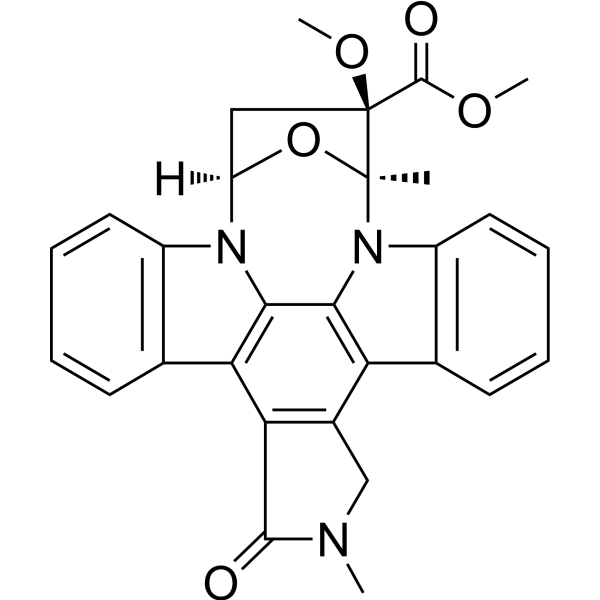
    KT5823, a selective the cGMP-dependent protein kinase (PKG) inhibitor with an Ki value of 0.23 μM, it also inhibits PKA and PKC with Ki values of 10 μM and 4 μM, respectively. KT5823 is a Staurosporine-related protein kinase inhibitor, increases thyroid-stimulating hormone-induced (Na +/I - symporter) NIS expression, and iodide uptake in thyroid cells. KT5823 arrests cells after the G0/G1 boundary and causes increases in the levels of apoptotic DNA fragmentation .
    KT5823
  • HY-100530D
    Rp-cAMPS sodium salt
    5 Publications Verification

    PKA Neurological Disease
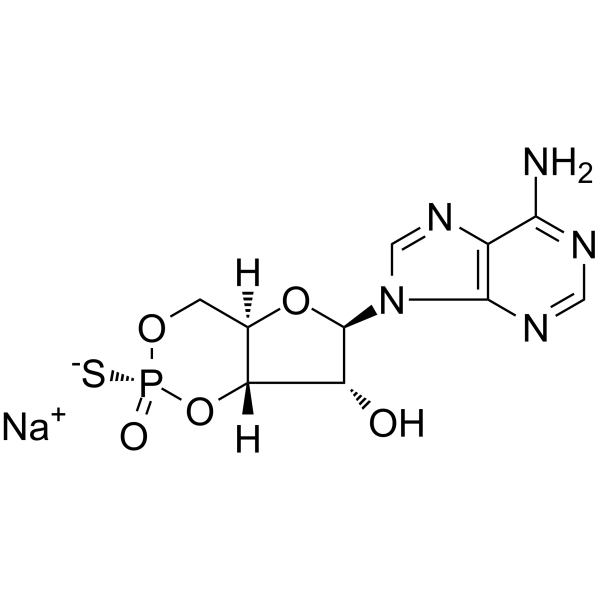
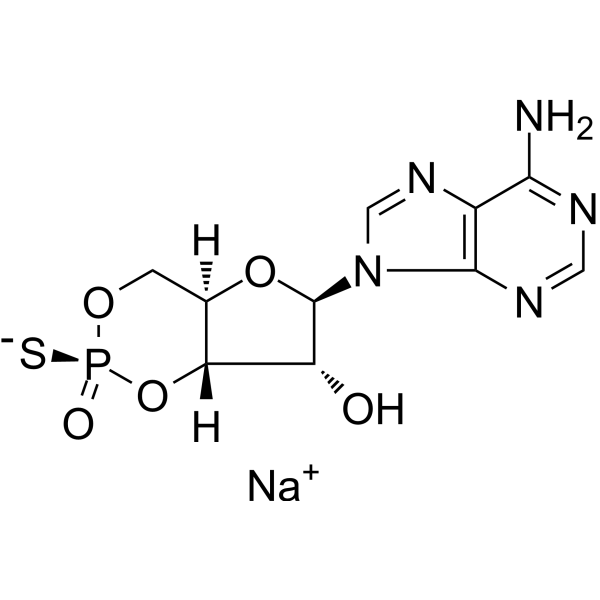
    Rp-cAMPS sodium salt, a cAMP analog, is a potent, competitive cAMP-induced activation of cAMP-dependent PKA I and II (Kis of 12.5 µM and 4.5 µM, respectively) antagonist. Rp-cAMPS sodium salt is resistant to hydrolysis by phosphodiesterases .
    Rp-cAMPS sodium salt
  • HY-N6727
    Gliotoxin
    2 Publications Verification

    Aspergillin

    Apoptosis PKA NF-κB Bacterial Fungal Antibiotic Infection Inflammation/Immunology Cancer
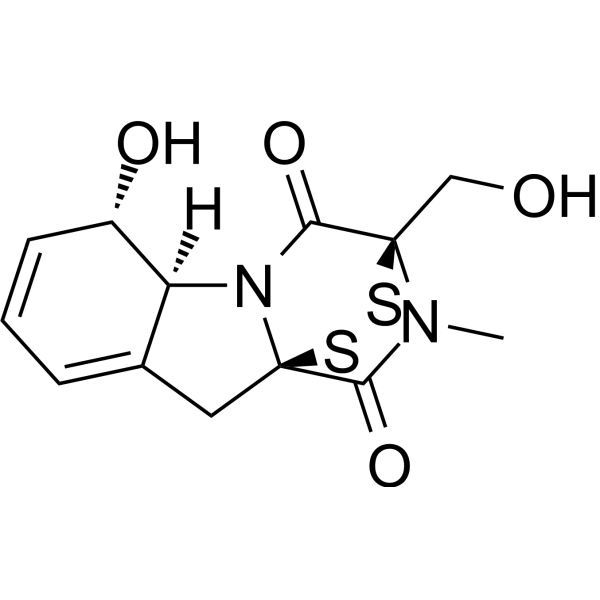
    Gliotoxin is a secondary metabolite, the most abundant mycotoxin secreted by A. fumigatus, inhibits the phagocytosis of macrophages and the immune functions of other immune cells . Gliotoxin inhibits inducible NF-κB activity by preventing IκB degradation, which consequently induces host-cell apoptosis . Gliotoxin activates PKA and increases intracellular cAMP concentration; modulates actin cytoskeleton rearrangement to facilitate A. fumigatus internalization into lung epithelial cells . Gliotoxin is a potent NOTCH2 transactivation inhibitor, can effectively induce apoptosis of chronic lymphocytic leukemia (CLL) cells .
    Gliotoxin
  • HY-100530C

    PKA Phosphodiesterase (PDE) Neurological Disease Metabolic Disease
    Sp-cAMPS sodium salt, a cAMP analog, is potent activator of cAMP-dependent PKA I and PKA II. Sp-cAMPS sodium salt is also a potent, competitive phosphodiesterase (PDE3A) inhibitor with a Ki of 47.6 µM. Sp-cAMPS sodium salt binds the PDE10 GAF domain with an EC50 of 40 μM .
    Sp-cAMPS sodium salt
  • HY-119016
    SK1-I
    1 Publications Verification

    BML-258

    SphK CaMK Cancer
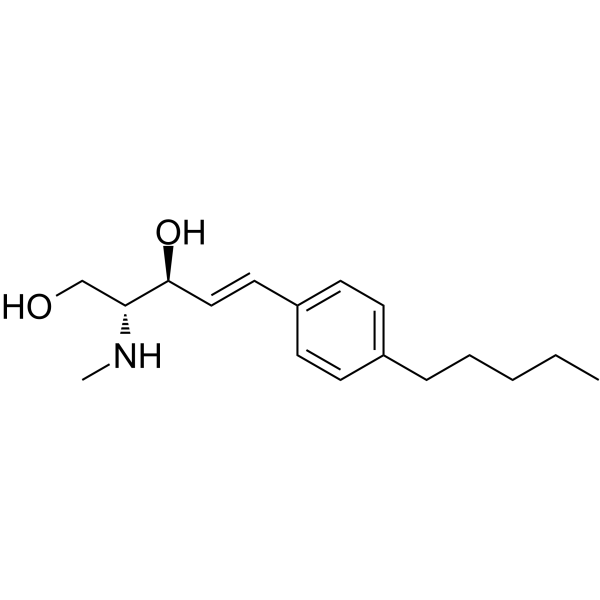
    SK1-I (BML-258), an analog of sphingosine, is an isozyme-specific competitive SPHK1 inhibitor with a Ki value of 10 μM . SK1-I shows no activity at SPHK1 PKCα, PKCδ, PKA, AKT1, ERK1, EGFR, CDK2, IKKβ or CamK2β. SK1-I enhances autophagy and has antitumor activity .
    SK1-I
  • HY-W049881

    Dopamine Receptor PI3K Monoamine Oxidase Neurological Disease
    9-Methyl-β-carboline is a monoamine oxidase inhibitor and dopaminergic modulator, with an IC50 of 1 μM against human MAO-A and an IC50 of 15.5 μM against human MAO-B. 9-Methyl-β-carboline possesses cognitive enhancement potential and can cross the blood-brain barrier. 9-Methyl-β-carboline increases dopamine levels by inhibiting monoamine oxidase activity and microglial proliferation. 9-Methyl-β-carboline activates PKA/PKC and mitochondrial respiratory chain complex I, promotes neurotrophic factor expression and reduces α-synuclein (α-synuclein) levels, thereby reversing neurotoxin-induced dopaminergic neuron damage. 9-Methyl-β-carboline also regulates the PI3K pathway and exerts an anti-proliferative effect on astrocytes. 9-Methyl-β-carboline is widely used in Parkinson's disease-related studies .
    9-Methyl-β-carboline
  • HY-137640C
    Rp-8-Br-cAMPS sodium
    1 Publications Verification

    PKA Inflammation/Immunology Cancer
    Rp-8-Br-cAMPS sodium is an analog of cAMP and an inhibitor of PKA. Rp-8-Br-cAMPS sodium occupies cAMP binding sites on PKA type I regulatory subunits, thereby preventing PKA dissociation and activation. Rp-8-Br-cAMPS sodium can be used in the study of tumors and retrovirus-induced immune deficiency. Rp-8-Br-cAMPS sodium also inhibits insulin secretion .
    Rp-8-Br-cAMPS sodium
  • HY-120994B

    PKA Neurological Disease Inflammation/Immunology
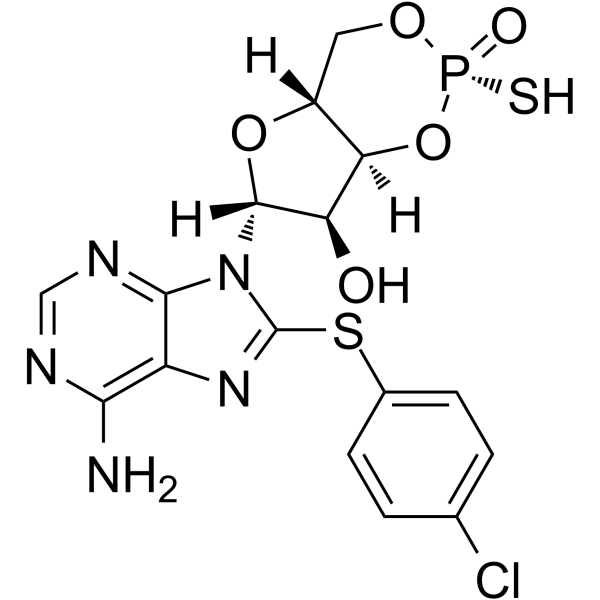
    Sp-8-CPT-cAMPS, a cAMP analog, is a potent and selective activator of the cAMP-dependent protein kinas A (PKA I and PKA II). Sp-8-CPT-cAMPS selects site A of RI compares to site A of RII by 153-fold and site B of RII compares to site B of RI by 59-fold .
    Sp-8-CPT-cAMPS
  • HY-100530A

    PKA Neurological Disease
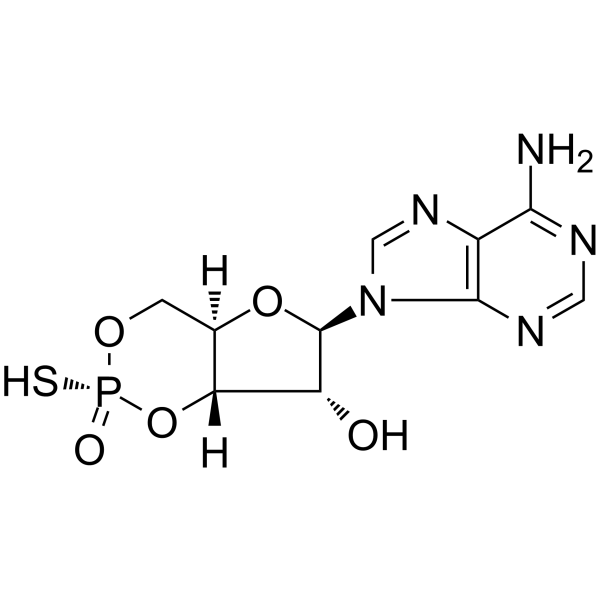
    Rp-cAMPS, a cAMP analog, is a potent, competitive cAMP-induced activation of cAMP-dependent PKA I and II (Kis of 12.5 µM and 4.5 µM, respectively) antagonist. Rp-cAMPS is resistant to hydrolysis by phosphodiesterases .
    Rp-cAMPS
  • HY-100530
    Rp-cAMPS triethylammonium salt
    5 Publications Verification

    PKA Neurological Disease
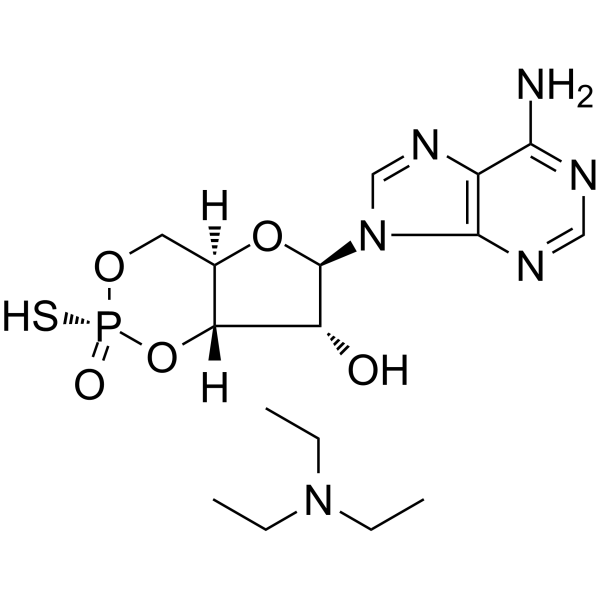
    Rp-cAMPS triethylammonium salt, a cAMP analog, is a potent, competitive cAMP-induced activation of cAMP-dependent PKA I and II (Kis of 12.5 µM and 4.5 µM, respectively) antagonist. Rp-cAMPS triethylammonium salt is resistant to hydrolysis by phosphodiesterases .
    Rp-cAMPS triethylammonium salt
  • HY-121197

    Ophiocordin; Azepinostatin

    MARCKS PKA PKC Others
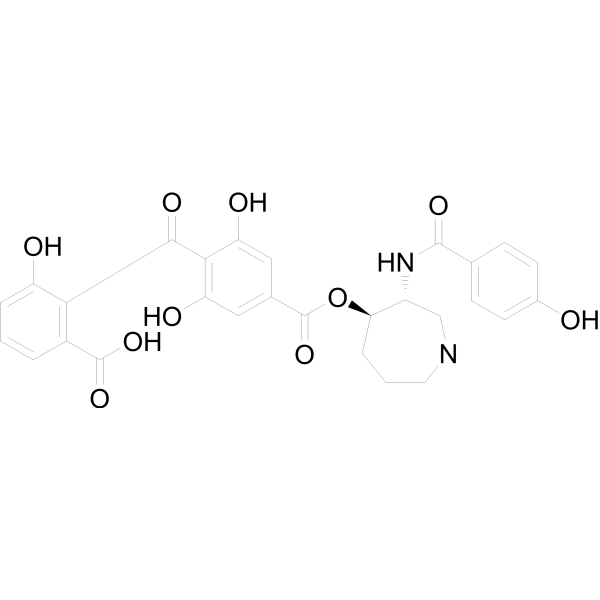
    Balanol (Ophiocordin; Azepinostatin) is a potent and ATP competitive PKC/PKA inhibitor against human PKC isozymes α, β-I, β-II, γ, δ, ε, η (IC50s=4-9 nM) and ζ (IC50=150 nM). Balanol also blocks the phosphorylation of cyclic AMP response element-binding protein (CREB) and myristoylated alanine-rich C kinase substrate (MARCKS). Balanol can be isolated from the fungus Verticillium balanoides .
    Balanol
  • HY-100530B

    PKA Phosphodiesterase (PDE) Neurological Disease Metabolic Disease
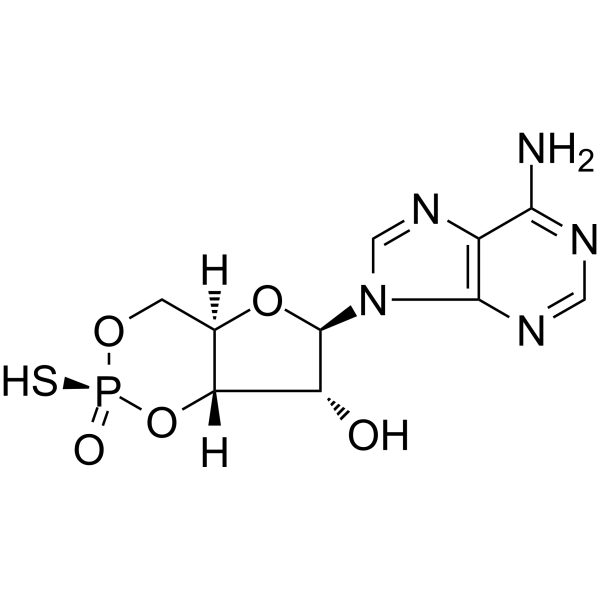
    Sp-cAMPS, a cAMP analog, is potent activator of cAMP-dependent PKA I and PKA II. Sp-cAMPS is also a potent, competitive phosphodiesterase (PDE3A) inhibitor with a Ki of 47.6 µM. Sp-cAMPS binds the PDE10 GAF domain with an EC50 of 40 μM .
    Sp-cAMPS
  • HY-110005

    PKA Phosphodiesterase (PDE) Neurological Disease Metabolic Disease
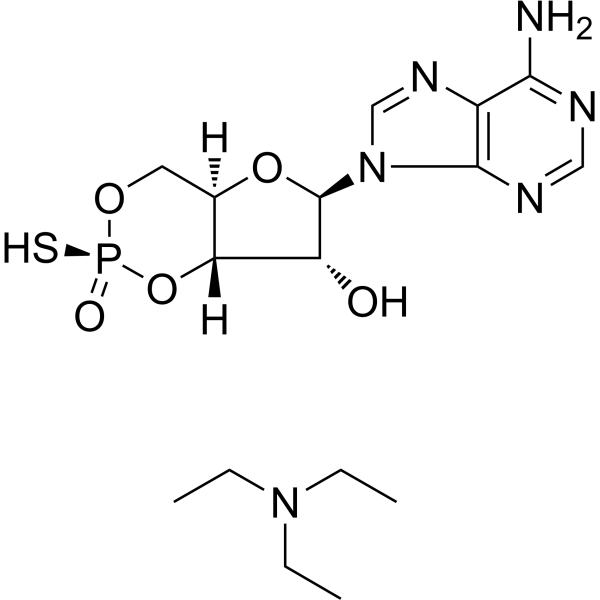
    Sp-cAMPS triethylamine, a cAMP analog, is potent activator of cAMP-dependent PKA I and PKA II. Sp-cAMPS triethylamine is also a potent, competitive phosphodiesterase (PDE3A) inhibitor with a Ki of 47.6 µM. Sp-cAMPS triethylamine binds the PDE10 GAF domain with an EC50 of 40 μM .
    Sp-cAMPS triethylamine
  • HY-143898

    Pim Cancer
    PIM1-IN-4 (Compound 8) is a potent inhibitor of PIM1. PIM1-IN-4 reveals strong inhibition of five other enzymes, i.e., SGK-1, PKA, CaMK-1, GSK3β, and MSK1. PIM1-IN-4 has the potential for the research of cancer diseases .
    PIM1-IN-4
  • HY-125957

    PKA Casein Kinase CaMK PKC Others
    A-3 hydrochloride is a potent, cell-permeable, reversible, ATP-competitive non-selective antagonist of various kinases. It against PKA (Ki=4.3 µM), casein kinase II (Ki=5.1 µM) and myosin light chain kinase (MLCK) (Ki=7.4 µM). A-3 hydrochloride also inhibits PKC and casein kinase I with Ki values of 47 µM and 80 µM, respectively .
    A-3 hydrochloride
  • HY-137640B

    PKA Inflammation/Immunology Cancer
    Rp-8-Br-cAMPS is an analog of cAMP and an inhibitor of PKA. Rp-8-Br-cAMPS occupies cAMP binding sites on PKA type I regulatory subunits, thereby preventing PKA dissociation and activation. Rp-8-Br-cAMPS can be used in the study of tumors and retrovirus-induced immune deficiency. Rp-8-Br-cAMPS also inhibits insulin secretion .
    Rp-8-Br-cAMPS
  • HY-171898

    Liposome Inflammation/Immunology Cancer
    Lipid I97 is an ionizable lipid derived from vitamin B5 (pKa = 6.23). Lipid I97 can be used to generate lipid nanoparticles (LNPs) for mRNA delivery in vivo. Lipid I97 can be studied in research for enhancing mRNA transfection efficiency and long-term stability as well as formulation of mRNA vaccines .
    Lipid I97
  • HY-120994A

    PKA Neurological Disease Inflammation/Immunology
    Rp-8-CPT-cAMPS, a cAMP analog, is a potent and competitive antagonist of cAMP-induced activation of cAMP-dependent PKA I and II. Rp-8-CPT-cAMPS preferentially selects site A of RI compares to site A of RII and site B of RII compares to site B of RI .
    Rp-8-CPT-cAMPS
  • HY-134302

    8-Hexylamino-cAMP

    PKA Others
    8-HA-cAMP is a membrane-permeable cAMP analogue and an activator of cAMP-dependent protein kinase and PKA I. 8-HA-cAMP exerts metabolic stability towards mammalian cyclic nucleotide-responsive phosphodiesterases .
    8-HA-cAMP
  • HY-148827A

    HYBO-165 sodium

    PKA Cancer
    GEM231 sodium is an 18mer antisense oligonucleotide targeting the mRNA of the PKA-I (RIα regulatory subunit of cAMP dependent protein kinase type I ). GEM231 sodium induces cell growth arrest, apoptosis, and differentiation in a variety of cancer cell lines in vitro and in tumors in vivo.
    GEM-231 sodium
  • HY-148827

    HYBO-165

    PKA Cancer
    GEM231 is an 18mer antisense oligonucleotide targeting the mRNA of the PKA-I (RIα regulatory subunit of cAMP dependent protein kinase type I ). GEM231 induces cell growth arrest, apoptosis, and differentiation in a variety of cancer cell lines in vitro and in tumors in vivo.
    GEM-231
  • HY-131777

    PKA Others
    2-Cl-cAMP is an analog of cAMP and a potent stimulator of cAMP-dependent protein kinases such as PKA type I and II. 2-Cl-cAMP can be used as starting material for cyclic nucleotides .
    2-Cl-cAMP
  • HY-137530

    8-Methylamino-cAMP

    PKA Others
    8-MA-cAMP (8-Methylamino-cAMP) is a cyclic AMP analog that acts as a site-selective PKA agonist with similar affinity for the B site of type I and type II protein kinase A. 8-MA-cAMP is used in conjunction with priming analogs that show site A preference, such as 8-piperidinyl cAMP, to achieve selective stimulation of type I .
    8-MA-cAMP
  • HY-P5526

    Casein Kinase Others
    CCK1-specific peptide substrate is a biological active peptide. (This peptide sequence is based on rabbit muscle glycogen synthase with Ser7 phosphorylated. It is a peptide substrate for Casein Kinase I (CK1). CK1 phosphorylates Ser10. Ser7 is phosphorylated by PKA in vivo.)
    CCK1-specific peptide substrate
  • HY-120994

    PKA Neurological Disease Inflammation/Immunology
    Rp-8-CPT-cAMPS sodium, a cAMP analog, is a potent and competitive antagonist of cAMP-induced activation of cAMP-dependent PKA I and II. Rp-8-CPT-cAMPS sodium preferentially selects site A of RI compares to site A of RII and site B of RII compares to site B of RI .
    Rp-8-CPT-cAMPS sodium
  • HY-175971

    Phosphodiesterase (PDE) TGF-beta/Smad p38 MAPK Inflammation/Immunology
    PDE1-IN-10 is a potent and sekective Phosphodiesterase 1 (PDE1) inhibitor with an IC50 of 5 nM. PDE1-IN-10 can suppress TGF-β/Smad-MAPK signaling and exhibit antifibrotic effects. PDE1-IN-10 can be used for the research of idiopathic pulmonary fibrosis .
    PDE1-IN-10
  • HY-126704

    KC-8857

    Potassium Channel Cardiovascular Disease
    Tedisamil (KC-8857) is an antiarrhythmic compound with important biological activities. Tedisamil exhibits a significant slowing effect on heart rate, which is achieved by inhibiting the transient outward potassium current (I(to)) in the atrium. Tedisamil inhibits multiple potassium currents, including IK, K(ATP), and PKA-activated chloride channels, thereby prolonging the cardiac action potential and QT interval, and increasing cardiac reentry. Tedisamil has antiarrhythmic effects on ventricular arrhythmias and atrial flutter in animal models .
    Tedisamil
  • HY-100530CR

    PKA Reference Standards Phosphodiesterase (PDE) Neurological Disease Metabolic Disease
    Sp-cAMPS (sodium salt) (Standard) is the analytical standard of Sp-cAMPS (sodium salt) (HY-100530C). This product is intended for research and analytical applications. Sp-cAMPS sodium salt, a cAMP analog, is potent activator of cAMP-dependent PKA I and PKA II. Sp-cAMPS sodium salt is also a potent, competitive phosphodiesterase (PDE3A) inhibitor with a Ki of 47.6 µM. Sp-cAMPS sodium salt binds the PDE10 GAF domain with an EC50 of 40 μM .
    Sp-cAMPS sodium salt (Standard)
  • HY-172328A

    Liposome Cancer
    (S)-O12-D3-I3 is an ionizable cationic lipid (pKa = 6.39). (S)-O12-D3-I3 can be used to prepare lipid nanoparticles (LNPs) for in vitro and in vivo siRNA delivery. (S)-O12-D3-I3 can also be used in research on cancers such as liver cancer and breast cancer .
    (S)-O12-D3-I3
  • HY-126704A

    KC-8857 dihydrochloride

    Potassium Channel Cardiovascular Disease
    Tedisamil (KC-8857) dihydrochloride is an antiarrhythmic compound with important biological activities. Tedisamil dihydrochloride exhibits a significant slowing effect on heart rate, which is achieved by inhibiting the transient outward potassium current (I(to)) in the atrium. Tedisamil dihydrochloride inhibits multiple potassium currents, including IK, K(ATP), and PKA-activated chloride channels, thereby prolonging the cardiac action potential and QT interval, and increasing cardiac reentry. Tedisamil dihydrochloride has antiarrhythmic effects on ventricular arrhythmias and atrial flutter in animal models .
    Tedisamil dihydrochloride
  • HY-182273

    STAT Acyltransferase Others
    DM243 is an EPAC1 activator and STAT3 modulator with an pIC50 of 4.769 for EPAC1. DM243 increases GTP-bound Rap1 levels in EPAC1-expressing cells. DM243 reduces IL-6/IL-6Rα-evoked STAT3 phosphorylation in endothelial cells. DM243 suppresses TGF-β1-induced fibroblast-to-myofibroblast transition, reducing α-smooth muscle actin and Collagen I levels in lung fibroblasts. DM243 exhibits minimal cytotoxicity in normal human lung fibroblasts .
    DM243
  • HY-182274

    Acyltransferase STAT Others
    DM245 is an EPAC1 activator and STAT3 phosphorylation inhibitor with a target pIC50 of 4.801. DM245 activates EPAC1 to increase Rap1-GTP levels, with no activation of EPAC2 or PKA. DM245 reduces IL-6/IL-6Rα-evoked STAT3 phosphorylation in endothelial cells. DM245 suppresses TGF-β1-induced fibroblast-to-myofibroblast transition, reducing αSMA and Collagen I levels. DM245 exhibits minimal cytotoxicity in normal human lung fibroblasts, with negligible loss of intact nuclei after 72 h exposure .
    DM245

Inquiry Online

Your information is safe with us. * Required Fields.

Salutation


Country or Region *

Applicant Name *


Organization Name *

Department *


Email Address *


Product Name *

Cat. No.


Requested quantity *

Phone Number *


Remarks

Inquiry Online

Inquiry Information

Product Name:
Cat. No.:
Quantity:
MCE Japan Authorized Agent:

