18 Results for "

Rhodococcus

" in MedChemExpress (MCE) Product Catalog:
Products (18)

18 Results for "Rhodococcus" in MCE Product Catalog:

1
1 Cited Publications
Cat. No.: HY-W017434
CAS No.: 619-04-5
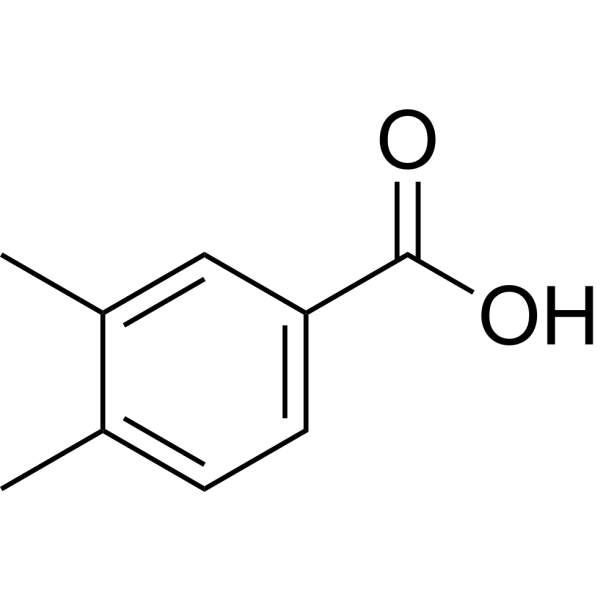
3,4-Dimethylbenzoic acid acts as a product of dimethylbenzoate metabolism by Rhodococcus rhodochrous N75 .
Cat. No.: HY-E70038
CAS No.: 2763216-34-6
Target:  

Endogenous Metabolite

Research Areas:  

Metabolic Disease

Endoglycoceramidase II (EGCase II) is an endo-β-glucosidase that releases intact glycans from ceramides in glycosphingolipids. Endoglycoceramidase II catalyzes the hydrolysis of β-glycosidic linkages between oligosaccharides and ceramides in various glycosphingolipids .
Cat. No.: HY-W017189
CAS No.: 4593-90-2
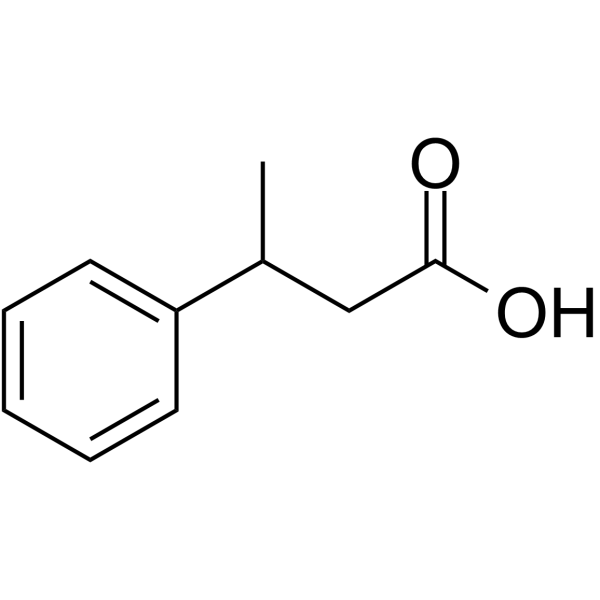
3-Phenylbutyric acid is metabolized by initial oxidation of the benzene ring and by initial oxidation of the side chain. 3-Phenylbutyric acid can be used to isolate Rhodococcus rhodochrous PB1 from compost soil .
Cat. No.: HY-134560
CAS No.: 147795-40-2
Purity:  99.62%
Synonyms: 3-Oxo-C10-HSL
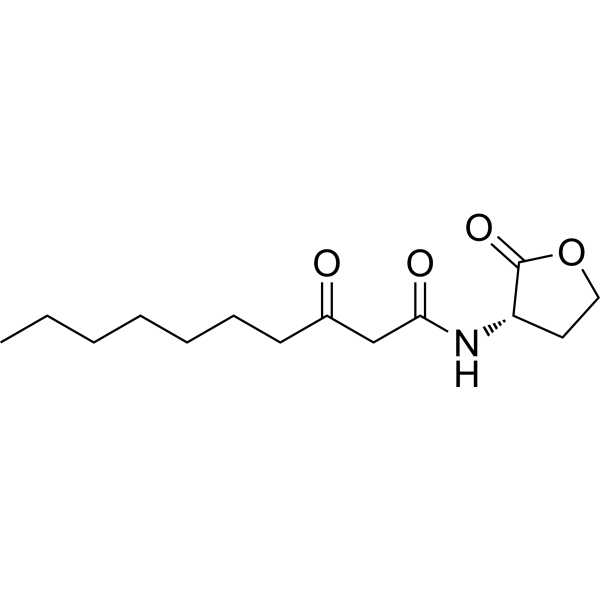
N-(3-Oxodecanoyl)-L-homoserine lactone (3-Oxo-C10-HSL) is a bacterial signaling molecule with quorum-sensing agonistic activity and competitive antagonistic activity against short-chain AHLs. N-(3-Oxodecanoyl)-L-homoserine lactone binds to VanR to form a complex, activates the transcription of the vanI gene, and establishes an autoregulatory loop for its own synthesis. N-(3-Oxodecanoyl)-L-homoserine lactone inhibits the synthesis of violacein induced by short-chain AHLs. N-(3-Oxodecanoyl)-L-homoserine lactone serves as the sole carbon and nitrogen source for Rhodococcus erythropolis W2 and can be completely degraded. N-(3-Oxodecanoyl)-L-homoserine lactone can be used in studies related to bacterial infections .
Cat. No.: HY-W014793
CAS No.: 41394-05-2
Target:  

Herbicide

Research Areas:  

Others

Metamitron is a triazinone pre-emergence and post-emergence Herbicide and fruit thinner. Metamitron controls broadleaf weeds and grassy weeds. Metamitron induces fruit drop in peach trees, and promotes fruit drop, reduces yield per plant, and increases the proportion of large fruits in apple trees. Metamitron is applicable to research related to the management of broadleaf weeds, grassy weeds, and temperate fruit tree crops .
Cat. No.: HY-P2848A
CAS No.: 9028-76-6
Research Areas:  

Infection Metabolic Disease

Cholesterol oxidase, Rhodococcus sp. is a key enzyme in the cholesterol degradation process. It catalyzes the isomerization and oxidation of cholesterol mediated by the coenzyme FAD. Research indicates that cholesterol oxidase plays a crucial role in the pathogenicity of Mycobacterium tuberculosis by modulating the host macrophage immune response through inhibition of the Toll-like receptor 2 (TLR2) signaling pathway, thereby enhancing the survival of Mycobacterium tuberculosis. Cholesterol oxidase, from Rhodococcus sp., shows potential for research in the field of tuberculosis .
Cat. No.: HY-W010293
CAS No.: 539-88-8
Target:  

Drug Intermediate

Research Areas:  

Others

Ethyl 4-oxopentanoate is a carbonyl substrate targeting Rhodococcus erythropolis carbonyl reductase (RECR) .
Cat. No.: HY-P2064
CAS No.: 732286-09-8
Target:  

Bacterial

Research Areas:  

Infection

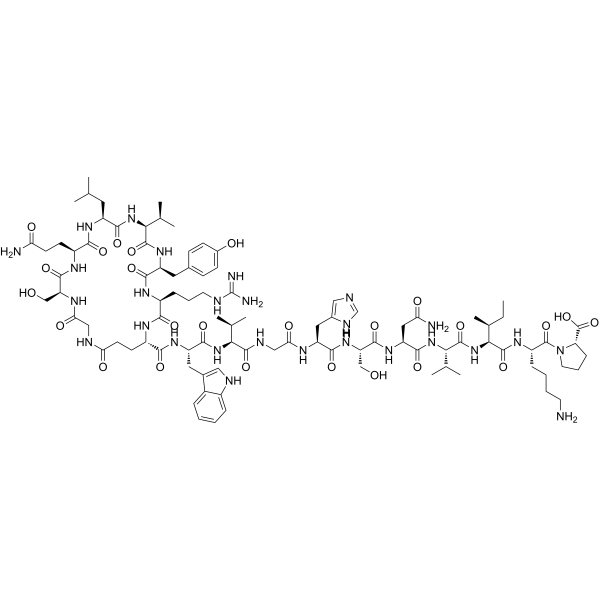
Lariatins is a novel anti-mycobacterial peptides with a lasso structure produced by Rhodococcus jostii K01-B0171 .
Cat. No.: HY-W101666
CAS No.: 2138-48-9
Research Areas:  

Others

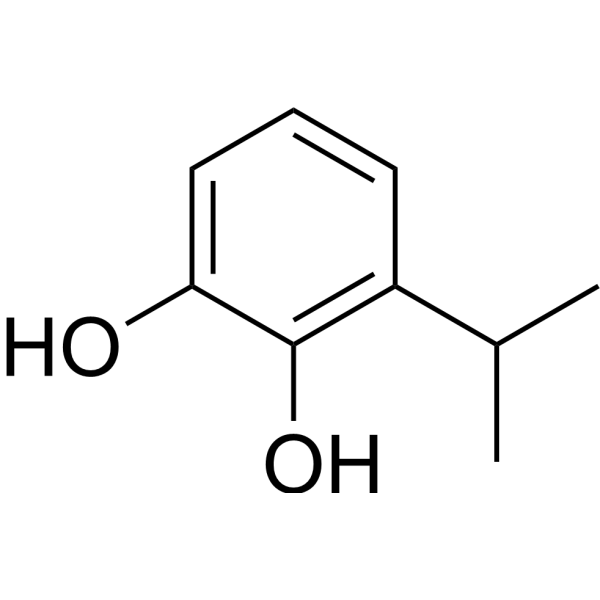
3-Isopropylcatechol is a catechol produced by Rhodococcus erythropolis BD2 .
Cat. No.: HY-W017434R
CAS No.: 619-04-5
3,4-Dimethylbenzoic acid (Standard) is the analytical standard of 3,4-Dimethylbenzoic acid. This product is intended for research and analytical applications. 3,4-Dimethylbenzoic acid acts as a product of dimethylbenzoate metabolism by Rhodococcus rhodochrous N75[1].
Cat. No.: HY-E70919B
Research Areas:  

Metabolic Disease

Nitrile hydratase, Rhodococcus erythropolis (EC 4.2.1.84) is a mononuclear iron or non-corrinoid cobalt enzyme that catalyse the hydration of diverse nitriles to their corresponding amides.
Cat. No.: HY-E70418A
Target:  

Endogenous Metabolite

Research Areas:  

Metabolic Disease

Epoxide Hydrolase, Rhodococcus rhodochrous (EC 3.3.2.3), converts epoxides to trans-dihydrodiols, which can combine with other substances and be excreted from the body. Epoxides are products of the degradation of aromatic compounds.
Cat. No.: HY-P703515
Purity:  ≥ 95%, as determined by reducing SDS-PAGE.
Synonyms: Aliphatic nitrilase; Rhodococcus rhodochrous; Hydrolase; 3.5.5.7
Species:  
Source:  
Cat. No.: HY-P702183
Purity:  ≥ 90%, as determined by reducing SDS-PAGE.
Synonyms: Aliphatic nitrilase
Species:  
Source:  
Cat. No.: HY-E71104
Research Areas:  

Others

(R)-Specific secondary-alkylsulfatase (EC 3.1.6.19) from Rhodococcus ruber is involved in the biodegradation of alkyl sulfate esters used as detergents and released into the environment.
Cat. No.: HY-W017189R
CAS No.: 4593-90-2
3-Phenylbutyric acid is metabolized by initial oxidation of the benzene ring and by initial oxidation of the side chain. 3-Phenylbutyric acid can be used to isolate Rhodococcus rhodochrous PB1 from compost soil .
Cat. No.: HY-P702107
Purity:  ≥ 90%, as determined by reducing SDS-PAGE.
Synonyms: Cyclopentanone 1; 2-monooxygenase, CPMO
Species:  
Source:  
Cat. No.: HY-P702108
Purity:  ≥ 90%, as determined by reducing SDS-PAGE.
Synonyms: Cyclopentanone 1; 2-monooxygenase
Species:  
Source:  
  • 1

