
1. Search Result
Search Result
Results for "

S.aureus

" in MedChemExpress (MCE) Product Catalog:

353

Inhibitors & Agonists

1

Fluorescent Dye

3

Biochemical Assay Reagents

66

Peptides

5

Inhibitory Antibodies

72

Natural
Products

27

Recombinant Proteins

16

Isotope-Labeled Compounds

3

Oligonucleotides

Cat. No. Product Name Target Research Areas Chemical Structure
  • HY-Y0366
    Lauric acid
    Maximum Cited Publications
    7 Publications Verification

    Environmental Pollutants Endogenous Metabolite Bacterial Infection
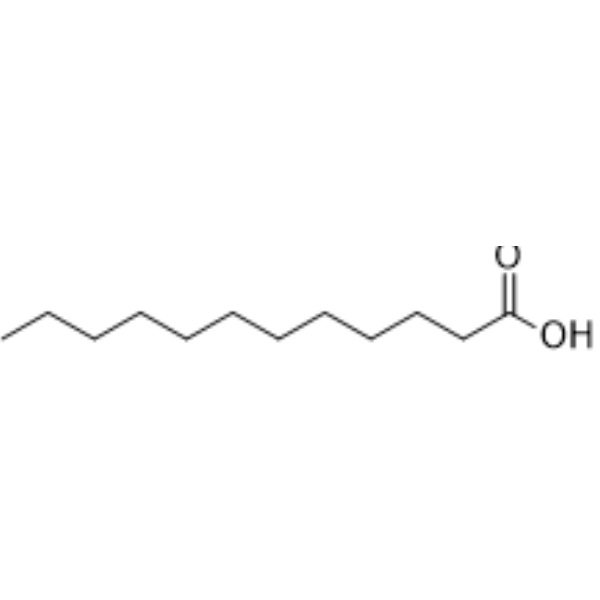
    Lauric acid is a middle chain-free fatty acid with strong bactericidal properties. The EC50s for P. acnes, S.aureus, S. epidermidis, are 2, 6, 4 μg/mL, respectively .
    Lauric acid
  • HY-E70234
    Sortase A, S. aureus
    1 Publications Verification

    SrtA

    Bacterial Others
    Sortase A, S. aureus (SrtA), a transpeptidase enzyme is present in many Gram-positive bacteria and helps in the recruitment of the cell surface proteins. Sortase A, S. aureus plays an important part in ligation of various molecules on the cell surfaces .
    Sortase A, S. aureus
  • HY-N0802
    Tenuigenin
    3 Publications Verification

    Senegenin

    NF-κB Bacterial Infection Inflammation/Immunology
    Tenuigenin is a major active component isolated from the root of the Chinese herb Polygala tenuifolia. Tenuigenin protects against S.aureus-induced pneumonia by inhibiting NF-κB activation. Tenuigenin has anti-inflammatory effect .
    Tenuigenin
  • HY-16911
    AFN-1252
    10+ Cited Publications

    API-1252; Debio 1452

    Bacterial Antibiotic Infection
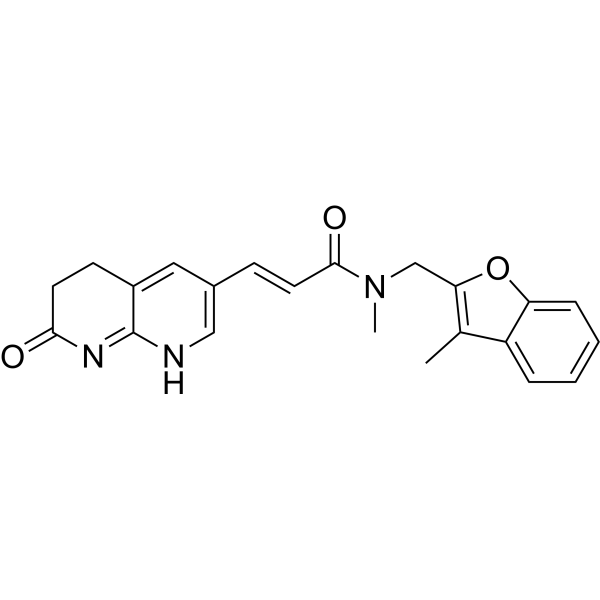
    AFN-1252 is an orally active and selective inhibitor of FabI, an essential enzyme in fatty acid biosynthesis in Staphylococcus spp. AFN-1252 exhibits exquisite and highly selective activity against Staphylococcus spp. AFN-1252 exhibits typical MIC90 values of ⩽0.015 μg/ml against diverse clinical isolates of S. aureus. AFN-1252 is efficacious in a mouse model of septicemia providing 100% protection from an otherwise lethal peritoneal infection of S. aureus Smith .
    AFN-1252
  • HY-133119

    Bacterial Infection
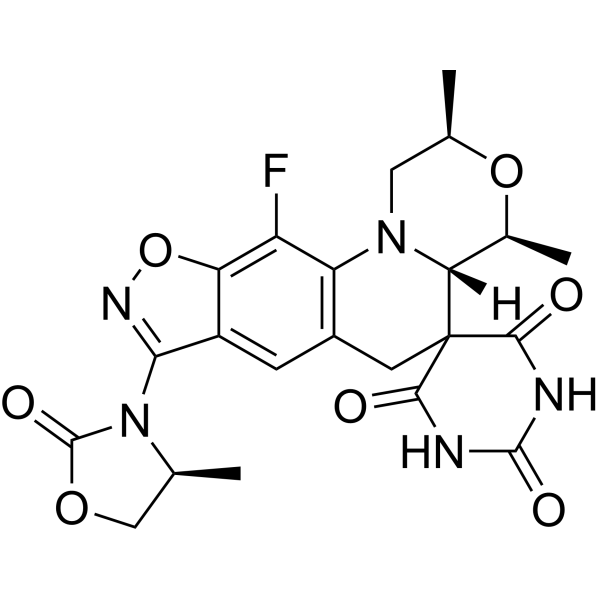
    PK150, an analogue of Sorafenib, shows oral bioavailability and antibacterial activity against several pathogenic strains at submicromolar concentrations. PK150 inhibits Gram-positive Methicillin-sensitive S. aureus (MSSA), Methicillin-resistant S. aureus (MRSA), Vancomycin intermediate S. aureus (VISA) with MICs of 0.3, 0.3-1, 0.3 μM, respectively .
    PK150
  • HY-18702

    Bacterial Infection
    Targocil functions as a bacteriostatic inhibitor of wall teichoic acid (WTA) biosynthesis which can inhibit the growth of methicillin-susceptible S. aureus (MSSA) and methicillin-resistant S. aureus (MRSA) with MIC90s of 2 μg/ mL for both MRSA and MSSA.
    Targocil
  • HY-Y0366S

    Endogenous Metabolite Bacterial Infection
    Lauric acid- 13C is the 13C labeled Lauric acid. Lauric acid is a middle chain-free fatty acid with strong bactericidal properties. The EC50s for P. acnes, S.aureus, S. epidermidis, are 2, 6, 4 μg/mL, respectively.
    Lauric acid-13C
  • HY-127146

    Antibiotic Bacterial Infection
    Platensimycin is an antibiotic produced by S. platensis that inhibits gram-positive bacteria by selectively inhibiting cellular lipid biosynthesis (IC50=0.1 μM). Platensimycin targets the β-ketoacyl-acyl-carrier-protein synthase I/II, FabF/B, an enzyme that participates in the biosynthesis of fatty acids (IC50s=48 nM and 160 nM for S.aureus and E.coli enzymes, respectively). Platensimycin is a promising agent for overcoming antibiotic resistance.
    Platensimycin
  • HY-101479
    Iclaprim
    3 Publications Verification

    AR-100

    Bacterial Antibiotic Infection
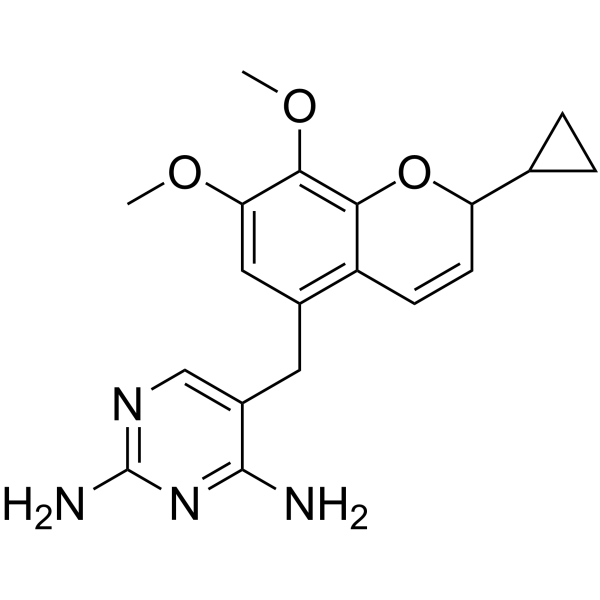
    Iclaprim is a new selective bacterial Dihydrofolate inhibitor, which can inhibit the growth of S. aureus (MRSA) with an MIC90 of 0.06 μg/mL.
    Iclaprim
  • HY-N5127

    Bacterial Infection
    Nonacosane, isolated from Baphia massaiensis, exhibits weak activities against E. coli, B. subtilis, P. aeruginosa and S. aureus .
    Nonacosane
  • HY-Y0366R
    Lauric acid (Standard)
    5+ Cited Publications

    Reference Standards Endogenous Metabolite Bacterial Infection
    Lauric acid (Standard) is the analytical standard of Lauric acid. This product is intended for research and analytical applications. Lauric acid is a middle chain-free fatty acid with strong bactericidal properties. The EC50s for P. acnes, S.aureus, S. epidermidis, are 2, 6, 4 μg/mL, respectively.
    Lauric acid (Standard)
  • HY-103645
    GW779439X
    1 Publications Verification

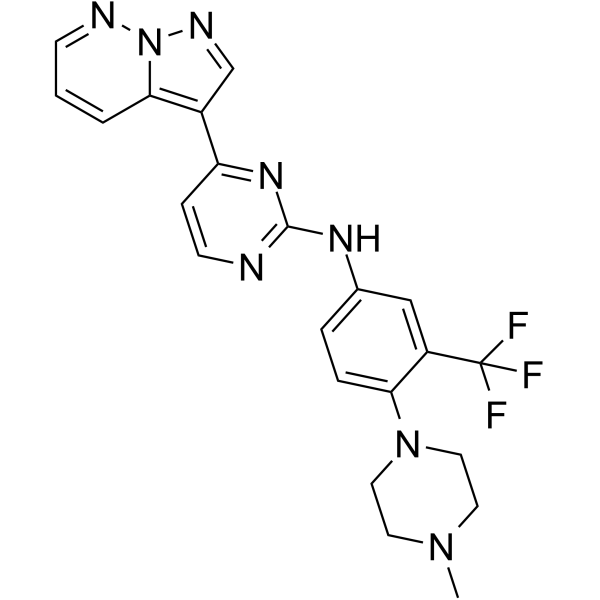
    Bacterial Aurora Kinase Apoptosis Infection Cancer
    GW779439X is a pyrazolopyridazine identified in an inhibitor of the S. aureus PASTA kinase Stk1. GW779439X potentiates the activity of β-lactam antibiotics against various MRSA and MSSA isolates, some even crossing the breakpoint from resistant to sensitive. GW779439X is an AURKA inhibitor and induces apoptosis by the caspases 3/7 pathway . MRSA:methicillin-resistant S. aureus; MSSA: methicillin-sensitive S. aureus
    GW779439X
  • HY-128916

    Antibiotic Bacterial Infection
    dmDNA31 is a rifamycin-class antibiotic that inhibits bacterial DNA-dependent RNA polymerase with potent bactericidal activity against S. aureus .
    dmDNA31
  • HY-N2417

    Bacterial Infection
    Stearyl glycyrrhetinate, a major component in licorice extract, has a MIC against S. aureus strains of more than 256 mg/L. Stearyl glycyrrhetinate has antibacterial effects .
    Stearyl glycyrrhetinate
  • HY-18169

    Fab-001

    Bacterial Infection
    MUT056399 (Fab-001) is a highly potent inhibitor of the FabI enzyme of both S. aureus and E. coli with 50% inhibitory concentration IC50s of 12 nM and 58 nM, respectively.
    MUT056399
  • HY-E70234A

    Bacterial Infection Inflammation/Immunology
    Sortase A, S. aureus (non-Ca 2+-dependent), a transpeptidase enzyme is present in many Gram-positive bacteria and helps in the recruitment of the cell surface proteins. Sortase A, S. aureus (non-Ca 2+-dependent) plays an important part in ligation of various molecules on the cell surfaces .
    Sortase A, S. aureus (non-Ca<sup>2+</sup>-dependent)
  • HY-P99770

    514-G3

    Bacterial Infection
    Omodenbamab is an anti-SpA (Staphylococcal protein A) human monoclonal antibody with a KD value of 0.0467 nM. Omodenbamab circumvents a key S. aureus evasion mechanism by targeting the cell wall moiety Protein A (SpA). Omodenbamab can be used in research of S. aureus bloodstream infection .
    Omodenbamab
  • HY-113533

    RvD4

    Bacterial Inflammation/Immunology
    Resolvin D4 (RvD4), a specialized proresolving mediator, can be produced in bioactive levels during S. aureus infection .
    Resolvin D4
  • HY-14784

    REP8839

    Bacterial Infection
    Bederocin (REP8839) is a Methionyl-tRNA synthetase inhibitor. Bederocin can be used in research of bacterial infection, including S. aureus and MRSA .
    Bederocin
  • HY-P99309

    BSYX-A 110; Anti-S. Epidermidis LTA Recombinant Antibody

    Bacterial Infection
    Pagibaximab is a chimeric IgG1 antibody recognizing the surface component lipoteichoic acid of S. aureus and S. epidermidis. Pagibaximab can be used to prevent staphylococcal sepsis .
    Pagibaximab
  • HY-W412175
    Coproporphyrin III dihydrochloride
    2 Publications Verification

    Zincphyrin dihydrochloride

    Bacterial Infection
    Coproporphyrin III dihydrochloride is a bioactive molecule excreted by nostril- and skin-associated Propionibacterium species that induces aggregation of Staphylococcus aureus (conditions: during early stationary phase growth, low pH: 4-6). Coproporphyrin III dihydrochloride also induces plasma-independent biofilm formation on abiotic surfaces by Staphylococcus aureus. Coproporphyrin III dihydrochloride may be an important mediator of S. aureus accumulation and/or biofilm formation in the nostrils or other sites where Propionibacterium and S. aureus inhabit .
    Coproporphyrin III dihydrochloride
  • HY-N13150A

    N-Demethylvancomycin hydrochloride; NVCM hydrochloride

    Antibiotic Bacterial Infection
    Norvancomycin hydrochloride is a glycopeptide antibiotic which can be found in Nocardia orientalis and active against several strains of S. aureus and S. epidermidis. Norvancomycin hydrochloride can be used for infection research .
    Norvancomycin hydrochloride
  • HY-P99551

    KBSA301; AR-301

    Antibiotic Bacterial Infection
    Tosatoxumab (AR-301; KBSA301) is a human immunoglobulin G1 monoclonal antibody that specifically neutralizes alpha-toxin (alpha-hemolysin; Hla) of S. aureus. Tosatoxumab binds to an N-terminal epitope of alpha-toxin, thereby preventing functional toxin pore oligomerisation. Tosatoxumab has the potential for passive immunotherapy in the S. aureus pneumonia as an adjunctive therapy to standard antibiotic agent. Recommend Isotope Control: Human IgG1 lambda1, Isotype Control (HY-P99992) .
    Tosatoxumab
  • HY-Y0366S3

    Isotope-Labeled Compounds Endogenous Metabolite Bacterial Infection
    Lauric acid-d33 is the deuterium labeled Lauric acid. Lauric acid is a middle chain-free fatty acid with strong bactericidal properties. The EC50s for P. acnes, S.aureus, S. epidermidis, are 2, 6, 4 μg/mL, respectively.
    Lauric acid-d3
  • HY-Y0366S1

    Endogenous Metabolite Bacterial Infection
    Lauric acid-d233 is the deuterium labeled Lauric acid. Lauric acid is a middle chain-free fatty acid with strong bactericidal properties. The EC50s for P. acnes, S.aureus, S. epidermidis, are 2, 6, 4 μg/mL, respectively.
    Lauric acid-d23
  • HY-115658

    Bacterial Infection Metabolic Disease
    VU0420373 is a potent heme sensor system (HssRS) activator with an EC50 of 10.7 μM and a pEC50 of 4.97. VU0420373 induces heme biosynthesis, and is toxic to fermenting S. aureus .
    VU0420373
  • HY-16115
    BPH-652
    1 Publications Verification

    Bacterial Metabolic Disease
    BPH-652 is a S. aureus dehydrosqualene synthase (CrtM) inhibitor, with a Ki of 1.5 nM and an IC50 of 100-300 nM (S. aureus pigment formation) .
    BPH-652
  • HY-N8151

    Bacterial Infection
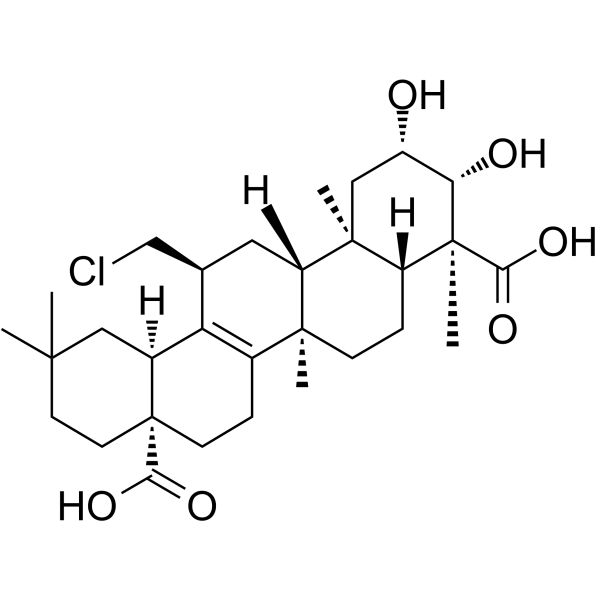
    Sanguisorbigenin is a natural antibacterial agent that inhibits methicillin-resistant S. aureus (MRSA) .
    Sanguisorbigenin
  • HY-W354851

    Bacterial Antibiotic Infection
    Pisiferic acid is an antibacterial agent with inhibitory activity against Gram-negative/positive bacteria such as P. vulgaris, S. aureus and B. subtilis. Pisiferic acid can be used to study bacterial infections .
    Pisiferic acid
  • HY-W029719

    Bacterial Infection
    [5-(2-Thienyl)-3-isoxazolyl]methanol (Compound D) is an AgrA-DNA binding inhibitor. [5-(2-Thienyl)-3-isoxazolyl]methanol can be used for S.aureus infection research .
    [5-(2-Thienyl)-3-isoxazolyl]methanol
  • HY-135184

    CBR-2092; TNP-2092

    Antibiotic Bacterial DNA/RNA Synthesis Infection
    Rifaquizinone (CBR-2092) is a Rifamycin-Quinolone Hybrid Antibiotic. Rifaquizinone inhibits wild-type S. aureus RNA polymerase with an IC50 of 34 nM. Rifaquizinone is effective against S. aureus infections, with MICs ranged from 0.008 to 0.5 μg/mL for 300 clinical isolates of staphylococci and streptococci .
    Rifaquizinone
  • HY-P4204

    Bacterial Infection
    Ranalexin is an antimicrobial peptide. Ranalexin inhibits S. aureus, E. coli, P. aerugiaosa with MICs of 4, 32, 128 μg/mL .
    Ranalexin
  • HY-131989

    Deacetylcephapirin sodium

    Bacterial Infection
    Desacetylcephapirin (Deacetylcephapirin) sodium is an active metabolite of Cephapirin (HY-A0153A). Desacetylcephapirin sodium has antimicrobial against S. aureus and coagulase-negative staphylococci mastitis pathogen .
    Desacetylcephapirin sodium
  • HY-P5737

    Bacterial Infection
    ASP-1 is a strong antistaphylococcal peptide with minimum inhibitory concentrations (MICs) of the purified peptide against S. aureus and methicillin-resistant S. aureus (MRSA) ranged from 2 μg/mL to 64 μg/mL .
    ASP-1
  • HY-P5596

    Bacterial Infection
    Combi-2 is an antimicrobial peptide against S.aureus, S.sanguis and E.coli .
    Combi-2
  • HY-P5621

    Bacterial Infection
    Maximin 63 is an antimicrobial peptide derived from the brain of a toad. Maximin 63 has strong activity against S.aureus (MIC: 18.8 μg/mL) .
    Maximin 63
  • HY-124199

    Antibiotic Bacterial Infection
    Cephalochromin is an antibiotic and an inhibitor for bacterial fatty acid synthase (FabI). Cephalochromin inhibits FabI of Staphylococcus aureus and Escherichia coli with IC50 of 1.9 and 1.8 μM. Cephalochromin inhibits gram-positive methicillin-resistant S. aureus (MRSA) and quinolone-resistant S. aureus (QRSA), with MIC of 2-8 µg/mL .
    Cephalochromin
  • HY-N10986

    Bacterial Infection Inflammation/Immunology
    (±)-Hydnocarpin is a flavonolignan. (±)-Hydnocarpin can inhibit the growth of S. aureus with a MIC50 value of 3.1 μM .
    (±)-Hydnocarpin
  • HY-105751

    Kalamycin; U-19718

    Antibiotic Bacterial Beta-lactamase Fungal Infection
    Kalafungin is an antibiotic, antimicrobial agent and a β-lactamase inhibitor from marine Streptomyces, with IC50 of 225.37 μM. Kalafungin destroys cell membranes. Kalafungin shows inhibitory activities against a variety of pathogenic fungi, yeasts, protozoa, gram-positive bacteria (such as S. aureus ATCC 33591 and S. aureus ATCC 23591), and, to a lesser extent, gram-negative bacteria .
    Kalafungin
  • HY-P5565

    Bacterial Infection Cancer
    RP-1 is an antimicrobial peptide, and is active against S. aureus, S. typhimurium, E. coli, and C. albicans .
    RP-1
  • HY-150331

    DNA/RNA Synthesis Bacterial Infection
    DNA ligase-IN-2 (compound 2) is a potent LigA inhibitor and inhibits the DNA-independent autoadenylation activity of both full-length LigA and a truncated enzyme, LigA:AD (IC50=29 nM). DNA ligase-IN-2 effectively inhibits the growth of Staphylococcus aureus in vitro, with MIC valuse of 1, 1, and >64 μg/mL for S. aureus ATCC 29213, S. aureus ATCC 700699 and E. coli ATCC 25922, respectively .
    DNA ligase-IN-2
  • HY-120659

    Fluorescent Dye Others
    Gly-Gly-AMC is a fluorogenic peptide substrate. Gly-Gly-AMC can be used to assess bacterial protease activity of P. aeruginosa and S. aureus .
    Gly-Gly-AMC
  • HY-P5720

    Bacterial Infection
    Peptide 5e is an antimicrobial peptide. Peptide 5e inhibits E. coli, S. aureus, and C. albicans with MIC values of 30, 5, 25 μg/mL respectively .
    Peptide 5e
  • HY-177881

    Fungal Infection
    Savirin exhibits in vitro antibacterial and antibiofilm activity. Savirin can prevent skin infections induced by S. aureus in vivo. Savirin shows enhanced activity when combined with antibiotics .
    Savirin
  • HY-P5486A

    Bacterial Infection
    Tet-20 acetate is a broad-spectrum antimicrobial peptide. Tet-20 acetate is promising for research of Gram-negative and Gram-positive bacteria (e.g., P. aeruginosa, S. aureus) .
    Tet-20 acetate
  • HY-N13150

    N-Demethylvancomycin; NVCM

    Antibiotic Bacterial Infection
    N-Demethylvancomycin is a glycopeptide antibiotic which can be extracted from Nocardia orientalis and active against several strains of S. aureus and S. epidermidis. N-Demethylvancomycin can be used for infection research .
    Norvancomycin
  • HY-163098

    Fluorescent Dye Others
    JJ-OX-007 is a fluorescent probe which selectively for FphE in live S.aureus cells .
    JJ-OX-007
  • HY-126407

    Bacterial Infection
    Secologanin dimethyl acetal (Compound Ⅱ) is an iridoid glucoside that can be isolated from Pterocephalus perennis. Secologanin dimethyl acetal shows antimicrobial activity against S.aureus and S.epidermidi .
    Secologanin dimethyl acetal
  • HY-Y0366S2

    Isotope-Labeled Compounds Endogenous Metabolite Bacterial Infection
    Lauric acid-d2 is the deuterium labeled Lauric acid. Lauric acid is a middle chain-free fatty acid with strong bactericidal properties. The EC50s for P. acnes, S.aureus, S. epidermidis, are 2, 6, 4 μg/mL, respectively.
    Lauric acid-d2
  • HY-Y0366S5

    Isotope-Labeled Compounds Endogenous Metabolite Bacterial Infection
    Lauric acid-d5 is the deuterium labeled Lauric acid. Lauric acid is a middle chain-free fatty acid with strong bactericidal properties. The EC50s for P. acnes, S.aureus, S. epidermidis, are 2, 6, 4 μg/mL, respectively.
    Lauric acid-d5

Inquiry Online

Your information is safe with us. * Required Fields.

Salutation


Country or Region *

Applicant Name *


Organization Name *

Department *


Email Address *


Product Name *

Cat. No.


Requested quantity *

Phone Number *


Remarks

Inquiry Online

Inquiry Information

Product Name:
Cat. No.:
Quantity:
MCE Japan Authorized Agent:

