11 Results for "

TBA-RS

" in MedChemExpress (MCE) Product Catalog:
Products (11)

11 Results for "TBA-RS" in MCE Product Catalog:

1
1 Cited Publications
Cat. No.: HY-N4280
CAS No.: 2445-80-9
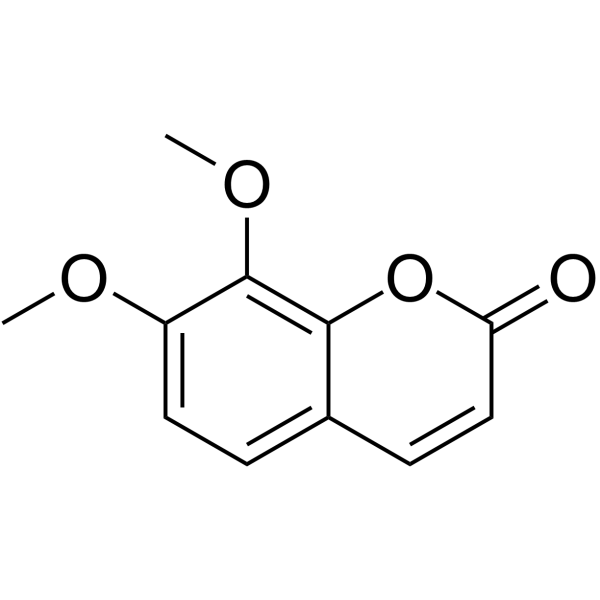
7,8-Dimethoxycoumarin is a coumarin compound derived from Artemisia caruifolia with oral activity. 7,8-Dimethoxycoumarin inhibits mitochondrial permeability transition pore and H +/K +-ATPase, and exhibits antioxidant, anti-inflammatory, renoprotective, neuroprotective and gastroprotective effects. 7,8-Dimethoxycoumarin reduces lipid peroxidation (TBARS), increases GSH levels, inhibits myeloperoxidase (MPO) activity, and regulates the expression of inflammatory factors by inhibiting the NF‑κB and MAPK pathways. 7,8-Dimethoxycoumarin ameliorates gastric mucosal injury, alleviates renal tissue lesions and relieves neuropathic pain. 7,8-Dimethoxycoumarin can be used in studies related to acute renal failure, trigeminal neuralgia and gastritis .
loading...
    loading...
Cat. No.: HY-34740
CAS No.: 601-75-2
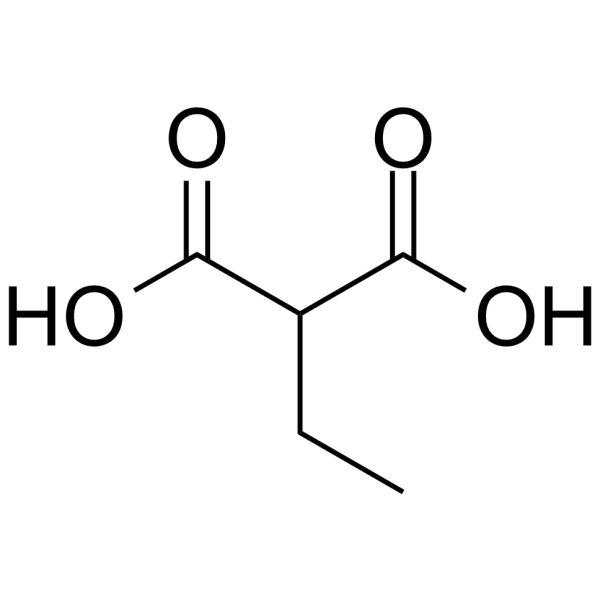
Ethylmalonic acid is a short-chain organic dicarboxylic acid. Ethylmalonic acid synergistically induces mitochondrial permeability transition (MP) with Ca 2+, inhibits Mi-CK, and disrupts mitochondrial energy metabolism. Ethylmalonic acid can be used in the research of SCADD, EE and other genetic metabolic diseases characterized by EMA accumulation .
loading...
    loading...
Cat. No.: HY-121271
CAS No.: 51670-40-7
Purity:  99.38%
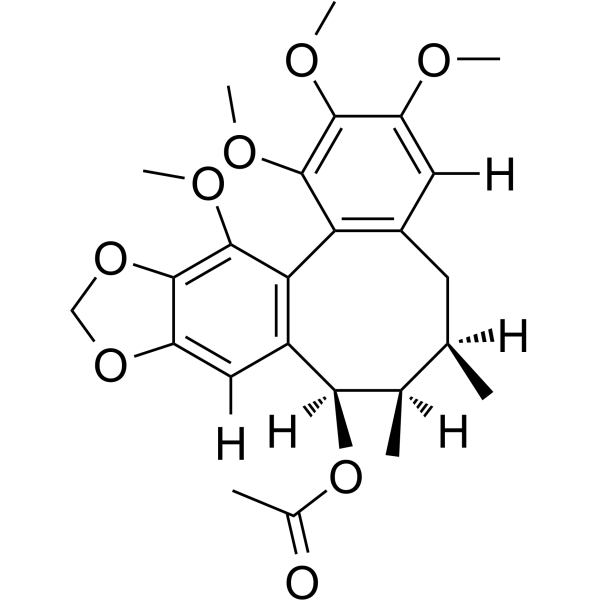
Kadsurin, a natural compound from the stems of Kadsura heteroclita (Schizandraceae), results in significant decreases of CCL4- induced lipid-peroxidation products, such as thiobarbituric acid reactive substances (TBA-RS), conjugated dienes and fluorescent products in the liver of mice .
loading...
    loading...
Cat. No.: HY-174419
CAS No.: 3017240-62-6
TFSeB is an orally active neuroprotective agent. TFSeB can reduce Streptozotocin (STZ) (HY-13753) induced MAO-B and AChE activity. TFSeB exerts neuroprotective effects by increasing the expression of BCL-2, BDNF, NRF2, and decreasing the expression of BAX. TFSeB can reduce lipid peroxidation (TBARS) and reactive oxygen species (ROS) levels. TFSeB can reduce neuroinflammation. TFSeB can be used for research on Alzheimer’s disease .
loading...
    loading...
Cat. No.: HY-N16527
CAS No.: 233690-85-2
7-O-Galloyl-D-sedoheptulose is an orally effective polyphenolic compound. 7-O-Galloyl-D-sedoheptulose lowers the serum levels of glucose, leptin, insulin, C-peptide, resistin, TNF-α, IL-6, and increases the serum level of adiponectin. 7-O-Galloyl-D-sedoheptulose significantly reduces the levels of ROS and lipid peroxidation products (TBARS) by down-regulating the protein expression of NADPH oxidase subunit Nox-4 and p22phox. 7-O-Galloyl-D-sedoheptulose down-regulates NF-κB and related pro-inflammatory factors (COX-2, iNOS), inhibits the phosphorylation of JNK and the activity of its downstream AP-1. 7-O-Galloyl-D-sedoheptulose reduces the expression of TGF-β1 and fibronectin, indicating its potential in anti-tissue fibrosis. 7-O-Galloyl-D-sedoheptulose can be used for the study of type 2 diabetes and its hepatic and pancreatic complications .
loading...
    loading...
Cat. No.: HY-W402074
CAS No.: 16275-44-8
Synonyms: Butenolide
5-Acetamide-Butenolide (Butenolide) is a mycotoxin with pro-oxidant activity, which is found in Fusarium. 5-Acetamide-Butenolide disrupts the mitochondrial membrane potential in primary neonatal rat cardiomyocytes. 5-Acetamide-Butenolide also induces the production of thiobarbituric acid reactive substances (TBARS) in isolated rat myocardial mitochondria. 5-Acetamide-Butenolide increases the production of reactive oxygen species (ROS), decreases the levels of GSH and reduces the viability of HepG2 cells .
loading...
    loading...
Cat. No.: HY-103388
CAS No.: 1262956-64-8
NCX 466 is an orally active COX-1 and COX-2 inhibitor that exhibits anti-inflammatory and analgesic effects. Additionally, NCX 466 acts as a NO donor, exerting anti-inflammatory and antioxidant effects by improving microcirculation. NCX 466 significantly reduces the levels of transforming growth factor-β (TGF-β) and oxidative stress markers (such as thiobarbituric acid reactive substances (TBARS) and 8-hydroxy-2'-deoxyguanosine (8-OHdG)), and it decreases leukocyte recruitment during inflammation by reducing myeloperoxidase (MPO) activity, thereby preventing bleomycin (HY-108345)-induced pulmonary fibrosis in mice .
loading...
    loading...
Cat. No.: HY-130743
CAS No.: 4433-08-3
Synonyms: Bis-eugenol; Dehydrodieugenol
Target:  

Parasite

Research Areas:  

Infection

Dieugenol is a neolignan that has been found in N. leucantha and has antioxidative and antiprotozoal activities. It inhibits the formation of thiobarbituric acid reactive substances (TBARS) and scavenges superoxide anions, but not hydroxyl radicals, in cell-free assays. It has anti-trypanosomal activity against T. cruzi amastigotes and trypomastigotes (IC50s=15.1 and 11.5 μM, respectively) but is cytotoxic to NCTC L-929 fibroblasts with a 50% cytotoxic concentration (CC50) value of 58.2 μM.2 Dieugenol (15 μM) disrupts the integrity of the T. cruzi trypomastigote plasma membrane but does not induce the production of reactive oxygen species (ROS) in trypomastigotes or LPS-stimulated and unstimulated isolated mouse peritoneal macrophages.
loading...
    loading...
Cat. No.: HY-N13285
CAS No.: 17291-05-3
Synonyms: (-)-EGC-4'-O-ME
(-)-Epigallocatechin-4'-O-methylether ((-)-EGC-4'-O-ME) is an orally active natural phenolic catechin with antioxidant, free radical-scavenging and hepatoprotective activities. (-)-Epigallocatechin-4'-O-methylether interferes with radiation-induced free radical formation, scavenges DPPH free radicals, inhibits carbon tetrachloride-induced increases in serum GOT and GPT, suppresses carbon tetrachloride-induced TBA-RS formation, and counteracts carbon tetrachloride-induced hepatocyte toxicity. (-)-Epigallocatechin-4'-O-methylether binds specifically to human serum albumin. (-)-Epigallocatechin-4'-O-methylether can be used in studies related to liver injury .
loading...
    loading...
Cat. No.: HY-W747910A
CAS No.: 19971-73-4
Target:  

Drug Metabolite

Research Areas:  

Inflammation/Immunology

S584 dihydrochloride is a catechol metabolite of the oral-effective Piribedil (HY-12707), with anti-lipid peroxidation activity. S584 dihydrochloride significantly inhibits lipid peroxidation in rat synaptosomes under basal conditions and Fe³⁺ stimulation. S584 dihydrochloride significantly antagonizes the increase in thiobarbituric acid reactive substances (TBARS) in the brains of mice exposed to high oxygen and under normal air conditions .
loading...
    loading...
Cat. No.: HY-177995
CAS No.: 142609-62-9
Synonyms: Monoisoamyl meso-2,3-dimercaptosuccinic acid
MiADMSA (Monoisoamyl meso-2,3-dimercaptosuccinic acid) is an orally active thiol chelator that can effectively remove heavy metals such as arsenic and lead from the body of animals. Arsenic binds with two vicinal sulfhydryl groups available in MiADMSA leading to marked reduction in body arsenic burden and also marked reduction in various oxidative stress parameters and antioxidant enzymes like-ROS, nitrite, TBARS, GSH, SOD and catalase. MiADMSA attenuates urinary bladder carcinogenesis, protects against oxidative stress, ameliorates copper-induced histopathology, reverses neurotoxicity, and is safe in animals. MiADMSA can be used in studies of bladder cancer, arsenic, and lead-induced developmental neurotoxicity .
loading...
    loading...
  • 1

