615 Results for "

Targeted Protein Degradation

" in MedChemExpress (MCE) Product Catalog:
Products (615)

615 Results for "Targeted Protein Degradation" in MCE Product Catalog:

15
15 Publications Verification
Cat. No.: HY-110078
CAS No.: 412960-54-4
Purity:  99.56%
Target:  

p97 Apoptosis

Research Areas:  

Cancer

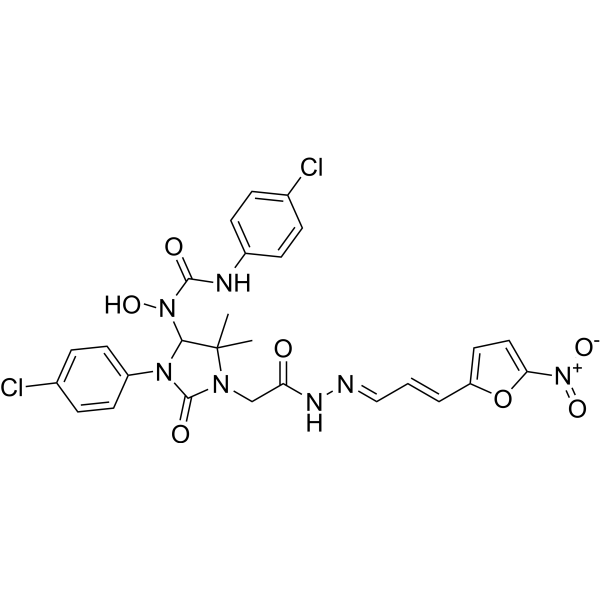
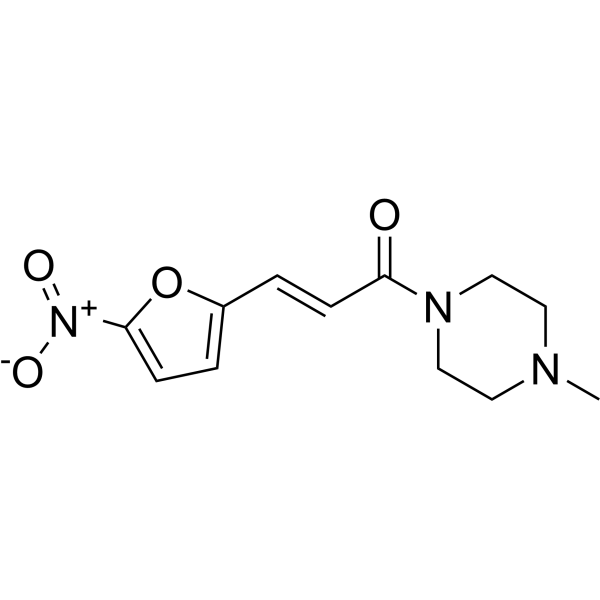
Eeyarestatin I, a potent endoplasmic reticulum-associated protein degradation (ERAD) inhibitor, is a potent protein translocation inhibitor. Eeyarestatin I inhibits Sec61 translocon. Eeyarestatin I targets the p97-associated deubiquitinating process (PAD) and inhibits atx3-dependent deubiquitination. Eeyarestatin I interferes at a step prior to proteasomal degradation. Eeyarestatin I induces cell death via the proapoptotic protein NOXA and has anticancer effects .
loading...
    loading...
12
12 Cited Publications
Cat. No.: HY-10969
CAS No.: 803712-79-0
Purity:  99.85%
Synonyms: GX15-070 Mesylate
Research Areas:  

Infection Cancer

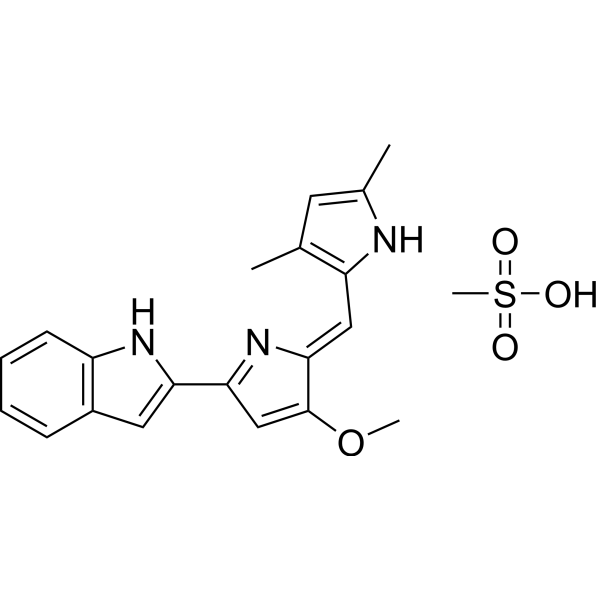
Obatoclax Mesylate (GX15-070 Mesylate), a BH3 mimetic, is a pan-BCL-2 family proteins inhibitor with a Ki of 220 nM for BCL-2 . Obatoclax Mesylate induces autophagy-dependent cell death and targets cyclin D1 for proteasomal degradation. Obatoclax Mesylate has anti-cancer and broad-spectrum antiparasitic activity .
loading...
    loading...
12
12 Cited Publications
Cat. No.: HY-10969A
CAS No.: 803712-67-6
Synonyms: GX15-070
Research Areas:  

Infection Cancer

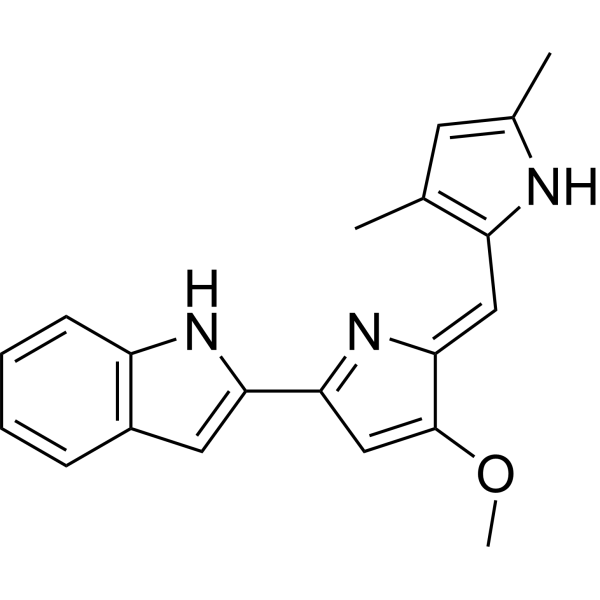
Obatoclax (GX15-070), a BH3 mimetic, is a pan-BCL-2 family proteins inhibitor with a Ki of 220 nM for BCL-2 . Obatoclax induces autophagy-dependent cell death and targets cyclin D1 for proteasomal degradation. Obatoclax has anti-cancer and broad-spectrum antiparasitic activity .
loading...
    loading...
6
6 Cited Publications
Cat. No.: HY-145514
CAS No.: 2624313-15-9
Purity:  99.97%
Target:  

PROTACs FKBP

Research Areas:  

Cancer

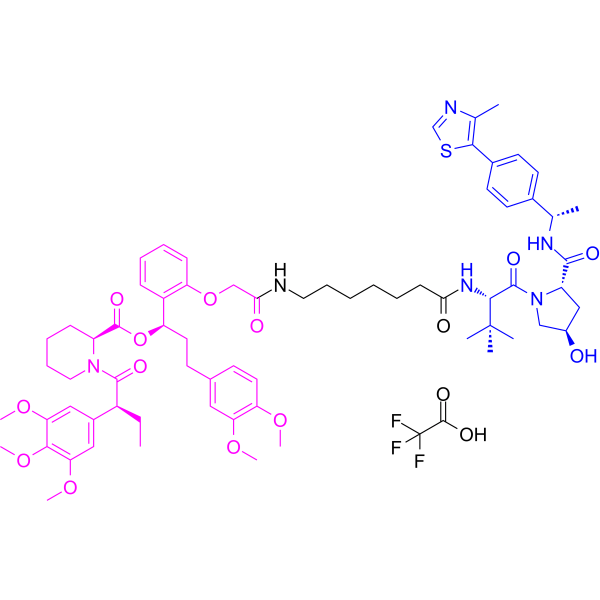
dTAGV-1 TFA is a selective FKBP12 F36V PORTAC degrader. dTAGV-1 TFA induces rapid degradation of FKBP12 F36V-tagged oncogenic fusion proteins, triggering collapse of downstream cellular signaling pathways, reduced proliferative capacity of cancer cells, and decreased levels of target proteins. dTAGV-1 TFA is applicable to functional validation studies of cancer and undegradable oncoproteins .
loading...
    loading...
6
6 Cited Publications
Cat. No.: HY-145514C
CAS No.: 2624313-16-0
Purity:  98.83%
Target:  

PROTACs FKBP

Research Areas:  

Cancer

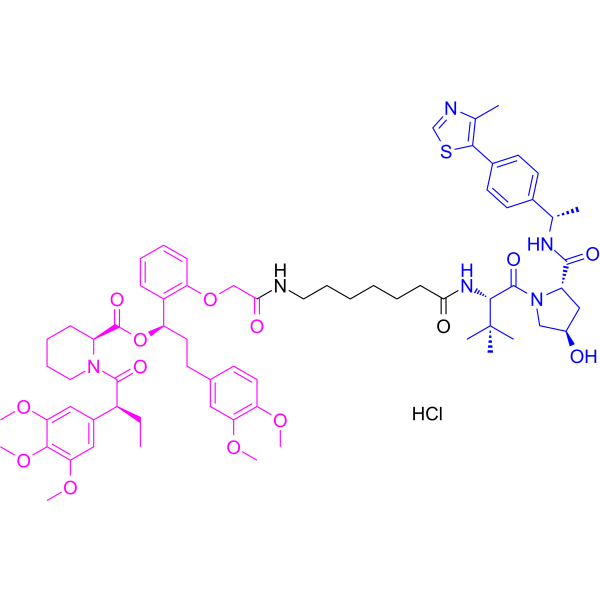
dTAGV-1 hydrochloride is a selective FKBP12 F36V PORTAC degrader. dTAGV-1 hydrochloride induces rapid degradation of FKBP12 F36V-tagged oncogenic fusion proteins, triggering collapse of downstream cellular signaling pathways, reduced proliferative capacity of cancer cells, and decreased levels of target proteins. dTAGV-1 hydrochloride is applicable to functional validation studies of cancer and undegradable oncoproteins .
loading...
    loading...
6
6 Cited Publications
Cat. No.: HY-145514D
CAS No.: 2451573-86-5
Target:  

PROTACs FKBP

Research Areas:  

Cancer

dTAGV-1 is a selective FKBP12 F36V PORTAC degrader. dTAGV-1 induces rapid degradation of FKBP12 F36V-tagged oncogenic fusion proteins, triggering collapse of downstream cellular signaling pathways, reduced proliferative capacity of cancer cells, and decreased levels of target proteins. dTAGV-1 is applicable to functional validation studies of cancer and undegradable oncoproteins .
loading...
    loading...
4
4 Cited Publications
Cat. No.: HY-N0242
CAS No.: 28808-62-0
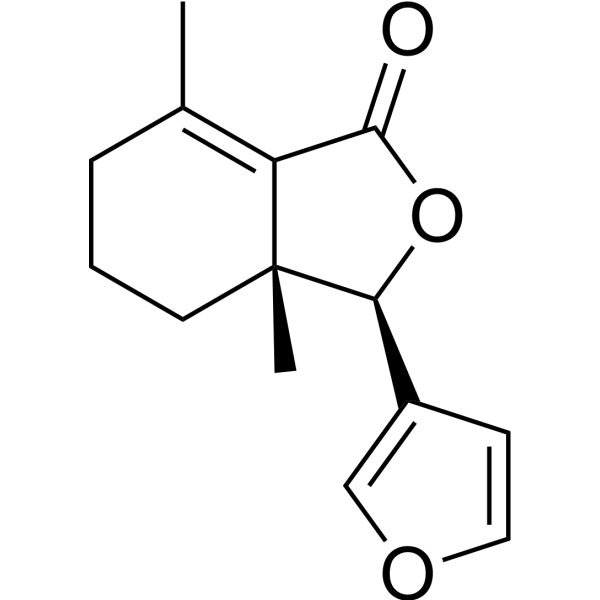
Fraxinellone is isolated from the root bark of the Rutaceae plant, Dictamnus dasycarpus. Fraxinellone is a PD-L1 inhibitor and inhibits HIF-1α protein synthesis without affecting HIF-1α protein degradation. Fraxinellone has the potential to be a valuable candidate for cancer treatment by targeting PD-L1 .
loading...
    loading...
4
4 Cited Publications
Cat. No.: HY-N6769
CAS No.: 12772-57-5
Synonyms: Monorden
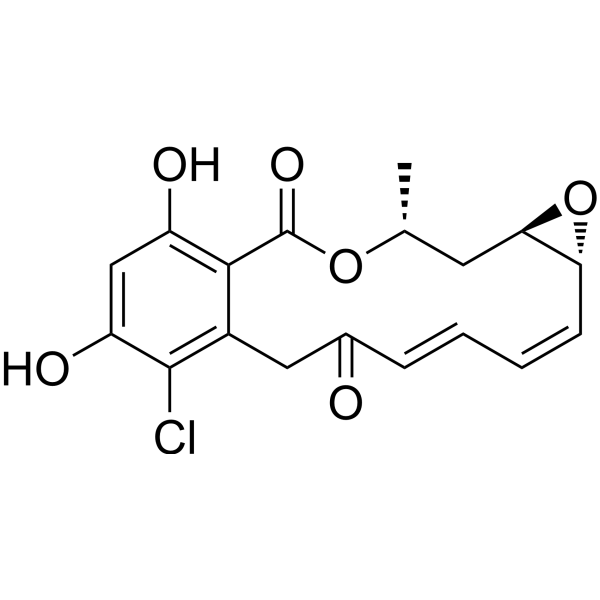
Radicicol is an inhibitor of Hsp90 with an IC50 value < 1 μM, and leads to proteasomal degradation . Radicicol exhibits inhibition on PDK with IC50s of 230 μM (PDK1) and 400 μM (PDK3). Radicicol is an antifungal and antimalarial antibiotic, impairs mitochondrial replication by targeting P. falciparum topoisomerase VIB . Radicicol is also an inhibitor of fat mass and obesity-associated protein (FTO), with an IC50 value of 16.04 μM .
loading...
    loading...
3
3 Cited Publications
Cat. No.: HY-153321
CAS No.: 2649400-34-8
Purity:  98.67%
Synonyms: NX-5948; BTK-IN-24
Target:  

PROTACs Btk

Research Areas:  

Inflammation/Immunology

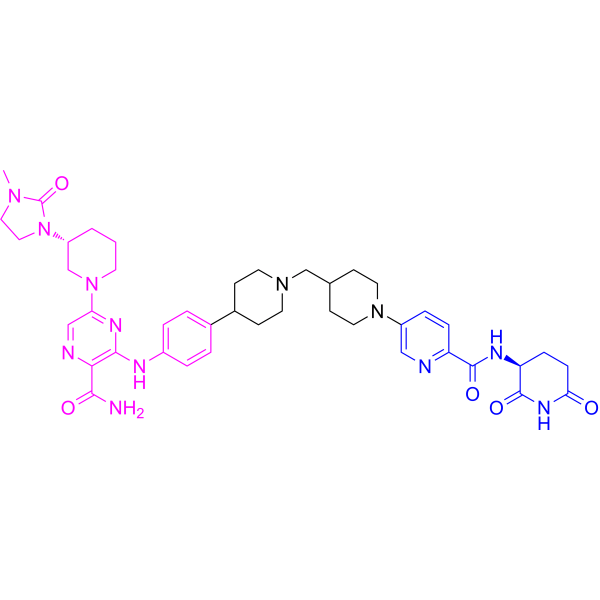
Bexobrutideg (NX-5948) is an orally active chimeric targeting molecule (CTM) that induces specific BTK protein degradation by the cereblon E3 ligase (CRBN) complex without degradation of other cereblon neo-substrates. Bexobrutideg mediates potent anti-inflammatory activity via BTK degradation with resultant inhibition of B cell activation. Bexobrutideg exhibits potent tumor growth inhibition in TMD8 xenograft models that contain either wild-type BTK or BTKi-resistant mutations. Bexobrutideg is efficacious in a mouse collageninduced arthritis (CIA) model. Bexobrutideg can cross the blood brain barrier (BBB). Bexobrutideg is a PROTAC composed of the ligand for target protein, a linker, and a cereblon E3 ligase (CRBN) complex (Red: BTK ligand (HY-170324); Blue: CRBN ligand (HY-171893); Black: linker) .
loading...
    loading...
2
2 Cited Publications
Cat. No.: HY-11103
CAS No.: 210421-74-2
Purity:  98.83%
Synonyms: IPI 1040 sodium; TBC11251 sodium
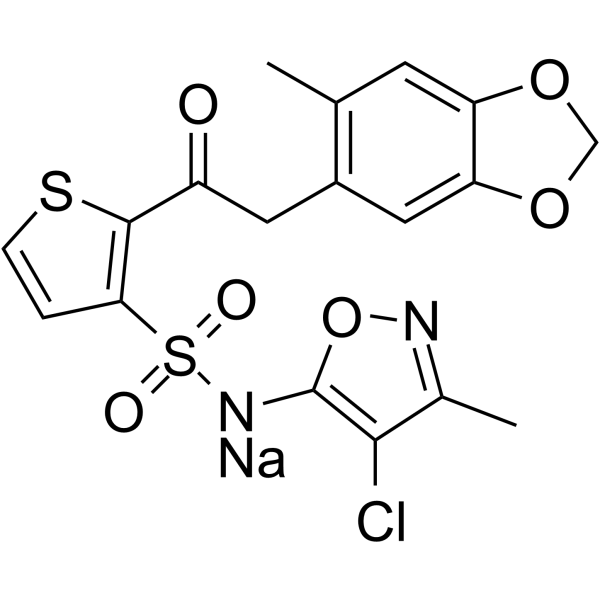
Sitaxsentan sodium (IPI 1040 sodium; TBC11251 sodium) is a potent, selective and orally active endothelin A receptor (ETA) antagonist with an IC50 of 1.4 nM and a Ki of 0.43 nM. Sitaxsentan sodium exhibits an IC50 for the ETB receptor of as high as 9800 nM. Sitaxsentan sodium is metabolized by CYP2C9 and CYP3A4, normalizes shunt-induced endothelial abnormalities, restores BMPR signaling, and suppresses pulmonary vascular remodeling and hemodynamic deterioration. Sitaxsentan sodium can be applied in the research of pulmonary arterial hypertension and portopulmonary hypertension .
loading...
    loading...
2
2 Cited Publications
Cat. No.: HY-155008
CAS No.: 3033812-84-6
Purity:  98.98%
Target:  

PROTACs Hexokinase

Research Areas:  

Cancer

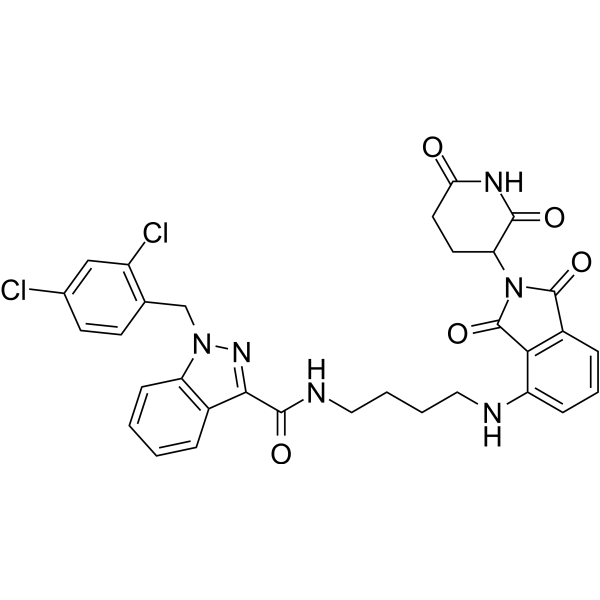
PROTAC HK2 Degrader-1 is a PROTAC consisting of Lonidamine (HY-B0486) as a target protein Hexokinase 2 (HK2) inhibitor and Thalidomide (HY-14658) as a CRBN ligand-linked PROTAC. PROTAC HK2 Degrader-1 selectively inhibits the proliferation of breast cancer cells by forming a ternary complex through the ubiquitin-proteasome system to degrade Hexokinase 2 (HK2) protein leading to mitochondrial damage and cell death. PROTAC HK2 Degrader-1 effectively inhibits breast tumor growth and reduces the colonic side effects of cisplatin for breast cancer research .
loading...
    loading...
2
2 Cited Publications
Cat. No.: HY-19726
CAS No.: 803647-40-7
Target:  

MDM-2/p53

Research Areas:  

Cancer

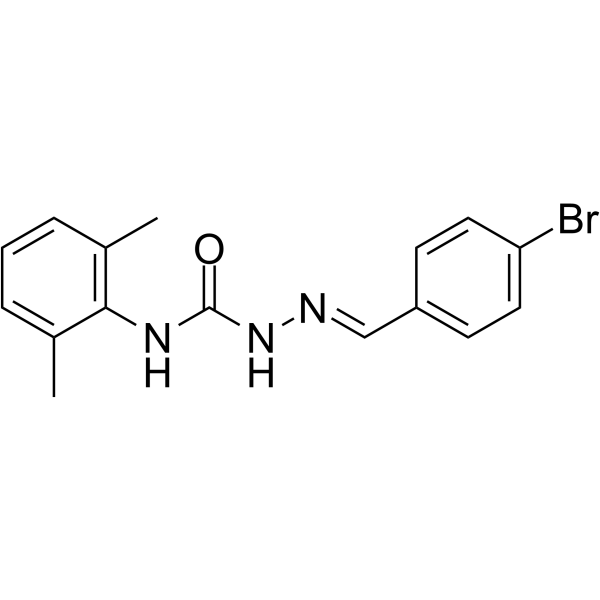
NSC59984 induces mutant p53 protein degradation via MDM2 and the ubiquitin-proteasome pathway . NSC59984 acts by targeting GOF-mutant p53 and stimulates p73 to restore the p53 pathway signaling .
loading...
    loading...
2
2 Cited Publications
Cat. No.: HY-125168
CAS No.: 415687-81-9
Purity:  ≥99.0%
Target:  

EGFR

Research Areas:  

Infection Inflammation/Immunology

EGA is an inhibitor that selectively targets the endosomal trafficking pathways. EGA targets the proteins involved in the endosomal trafficking pathways through which multiple toxins and viruses enter cells. EGA exerts its activity by inhibiting the trafficking from early endosomes to late endosomes, blocking the entry of multiple acid-dependent bacterial toxins and viruses into mammalian cells and delaying the lysosomal targeting and degradation of EGFR .
loading...
    loading...
2
2 Cited Publications
Cat. No.: HY-153342
CAS No.: 2750830-09-0
Purity:  98.99%
Synonyms: ARV-766; JSB462
Research Areas:  

Cancer

Luxdegalutamide (ARV-766) is an orally active protein hydrolysis targeted chimeric (PROTAC) targeting androgen receptor (AR), which can degrade AR resistance related mutants, including T878/H875/L702 mutants. Luxdegalutamide has anti-tumor activity and can be used in the study of castration resistant prostate cancer .
loading...
    loading...
2
2 Cited Publications
Cat. No.: HY-112429
CAS No.: 2093391-24-1
Purity:  98.05%
HJB97 is a high-affinity BET inhibitor with Ki values of 0.9 nM (BRD2 BD1), 0.27 nM (BRD2 BD2), 0.18 nM (BRD3 BD1), 0.21 nM (BRD3 BD2), 0.5 nM (BRD4 BD1), and 1.0 nM (BRD4 BD2) . HJB97 can serve as a ligand for target protein (Ligands for Target Protein for PROTAC) for the development of PROTAC BET degraders with antitumor activity . HJB97 can be used for the synthesis of BETd-260 (HY-101519).
loading...
    loading...
2
2 Cited Publications
Cat. No.: HY-115568
CAS No.: 2140289-17-2
Purity:  98.34%
Research Areas:  

Cancer

BETd-246 is a BRD2/3/4 PROTAC degrader targeting the BET family. BETd-246 induces ubiquitination and proteasomal degradation of BRD2, BRD3 and BRD4 by recruiting the CUL4-RBX1-DDB1-CRBN E3 ubiquitin ligase complex; it also inhibits TRAT1 expression and depletes BET proteins. BETd-246 suppresses cancer cell proliferation and invasion, disrupts the cell cycle and induces apoptosis. BETd-246 is applicable to research related to triple-negative breast cancer and T-cell acute lymphoblastic leukemia .
loading...
    loading...
1
1 Cited Publications
Cat. No.: HY-111866
CAS No.: 1801547-16-9
Purity:  99.89%
Target:  

PROTACs RIP kinase

Research Areas:  

Metabolic Disease

PROTAC RIPK degraders -2 is a non-peptide PROTAC based on von Hippel-Lindau and targets serine-threonine kinase RIPK2, which is highly selective to the degradation of RIPK2. PROTAC RIPK degrader-2 acts as an activator to increase cell death and activate ion channels in cancer cells. PROTAC RIPK degrader-2 also can inhibit protein interactions, such as receptors and ligands, involved in a variety of diseases, such as cancer and diabetes .
loading...
    loading...
1
1 Cited Publications
Cat. No.: HY-175324
CAS No.: 3098773-64-6
Target:  

Molecular Glues HuR

Research Areas:  

Cancer

MG-HuR2 is a molecular glue degrader targeting the oncogenic RNA-binding protein HuR (IC50=0.5 μM). MG-HuR2 is promising for research of HuR-overexpressing malignancies (e.g., breast cancer) .
loading...
    loading...
1
1 Cited Publications
Cat. No.: HY-N6929
CAS No.: 565-63-9
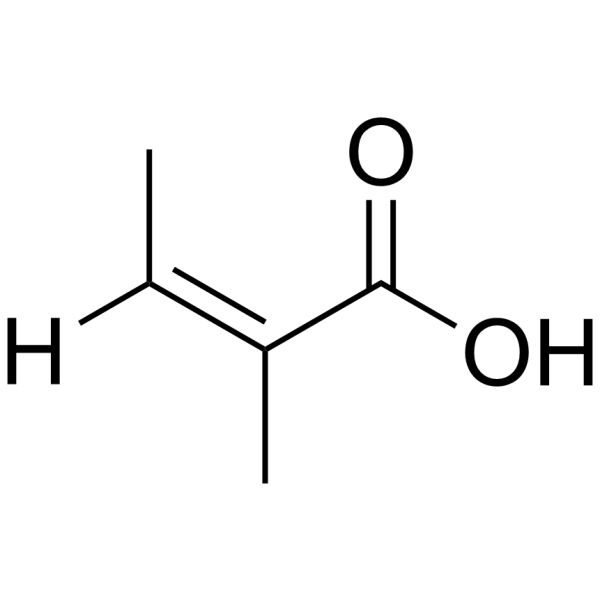
Angelic acid is a ferroptosis inducer, targeting NRF2 degradation. Angelic acid binds to NRF2 protein and promotes NRF2 degradation via ubiquitination-proteasome pathway, relieves the inhibitory effect of NRF2 on oxidative stress and lipid peroxidation. Then, Angelic acid induces ferroptosis in tumor cells. Angelic acid can enhance the accumulation of intracellular reactive oxygen species (ROS), upregulate ferroptosis-related markers CHAC1 and PTGS2, and synergize with ferroptosis inducers to enhance anti-tumor effects. Angelic acid also has the activity of scavenging UVA-induced ROS in vitro, inhibiting skin fibroblast senescence and extracellular matrix degradation. Angelic Acid helps wound healing with sedative activity .
loading...
    loading...
1
1 Cited Publications
Cat. No.: HY-153713
Purity:  98.05%
Target:  

RIBOTAC c-Myc Apoptosis

Research Areas:  

Cancer

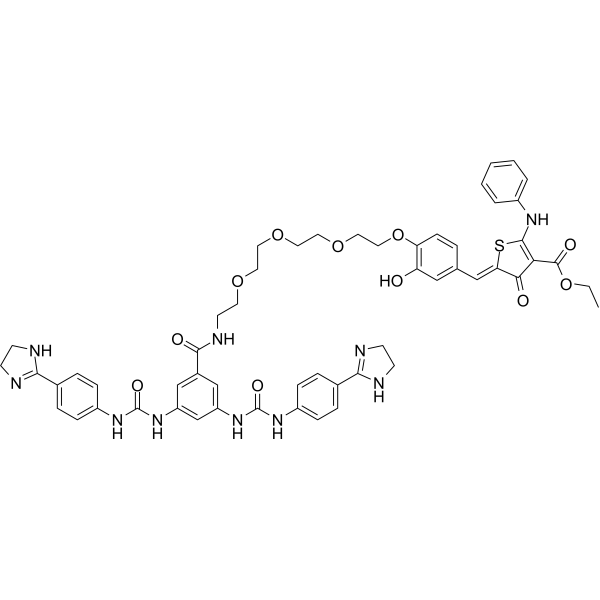
MYC-RIBOTAC is a nucleic acid-targeting degrader (ribonuclease-targeting chimera, RIBOTAC) that targets the MYC internal ribosome entry site (IRES). MYC-RIBOTAC contains a MYC mRNA binding component and a small molecule that recruits and locally activates RNAse L1. MYC-RIBOTAC reduces MYC mRNA and protein expression levels, induces cell apoptosis, and can be used for antitumor research . MYC-RIBOTAC consists of pre-miR-155 binder Anticancer agent 167 (HY-156839), RNA binder NCI-B16 (HY-156215), and Linker Amino-PEG4-alcohol (HY-W008005).
loading...
    loading...

