1. Search Result
Search Result
Results for "

U251MG

" in MedChemExpress (MCE) Product Catalog:

9

Inhibitors & Agonists

4

Natural
Products

1

Click Chemistry

Cat. No. Product Name Target Research Areas Chemical Structure
  • HY-10521
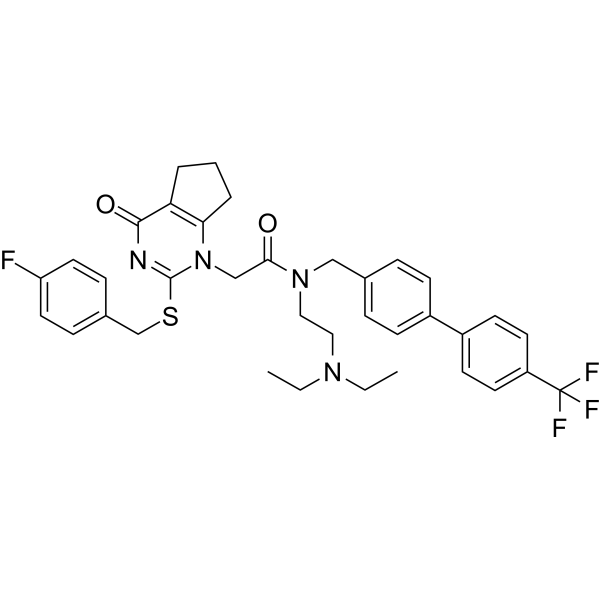
    Darapladib
    5+ Cited Publications

    SB-480848

    Phospholipase Apoptosis Cardiovascular Disease Cancer
    Darapladib (SB-480848) is an orally active, selective and reversible Lp-PLA2 inhibitor (IC50=0.25 nM). Darapladib can trigger irreversible actions on glioma cell apoptosis and induce cycle arrest. Darapladib can be used in the study of atherosclerosis and cancer .
    Darapladib
  • HY-12833
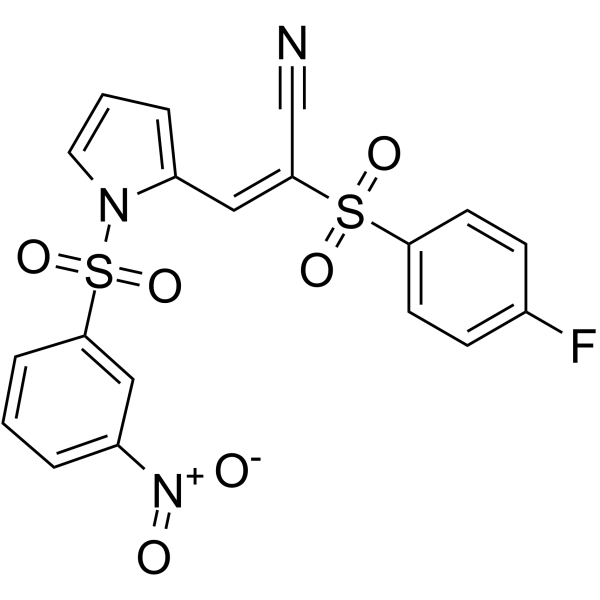
    AMZ30
    1 Publications Verification

    Phosphatase Akt ERK Others
    AMZ30 is selective protein phosphatase methylesterase-1(PME-1) inhibitor with IC50s of 600 nM and 3.5 µM in human cell lysates and in HEK 293T cells, respectively. AMZ30 shows >100-fold selectivity relative to other serine hydrolases. AMZ30 reduces the demethylated form of PP2A in living cells. AMZ30 attenuates muscle cell differentiation. AMZ30 increases the resistance of U87MG and U251MG glioblastoma cells to t-BHP-induced oxidative stress. AMZ30can be used for the study of glioblastoma .
    AMZ30
  • HY-129440

    NF-κB Toll-like Receptor (TLR) p38 MAPK NO Synthase COX ERK Caspase PDGFR MyD88 Reactive Oxygen Species (ROS) Apoptosis Neurological Disease Metabolic Disease Inflammation/Immunology Cancer
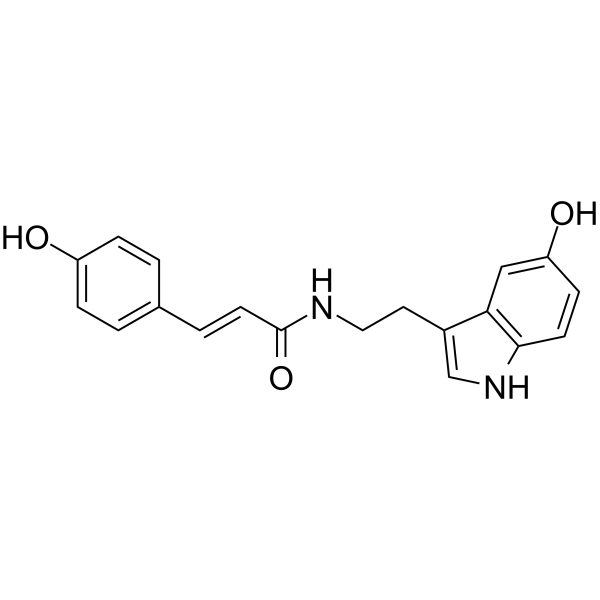
    N-(p-Coumaroyl) Serotonin is an orally active polyphenol found in safflower seeds with potent anti-inflammatory, antioxidant, and antitumor activities. N-(p-Coumaroyl) Serotonin suppresses NF‑κB, TLR4/MyD88 and MAPK signaling, activates NQO1/HO‑1 pathways, and inhibits pro‑inflammatory cytokines, iNOS and COX‑2 and ROS production. N-(p-Coumaroyl) Serotonin induces S‑phase arrest and apoptosis in glioblastoma cells, reduces atherosclerotic lesions, and alleviates renal and vascular injuries. N-(p-Coumaroyl) Serotonin acts as a vasodilator, regulates calcium dynamics. N-(p-Coumaroyl) Serotonin can be used for the research of neurodegenerative diseases, atherosclerosis, glioblastoma, and acute renal failure .
    N-(p-Coumaroyl) Serotonin
  • HY-N11546

    Cytochrome P450 Bacterial Fungal Infection Cancer
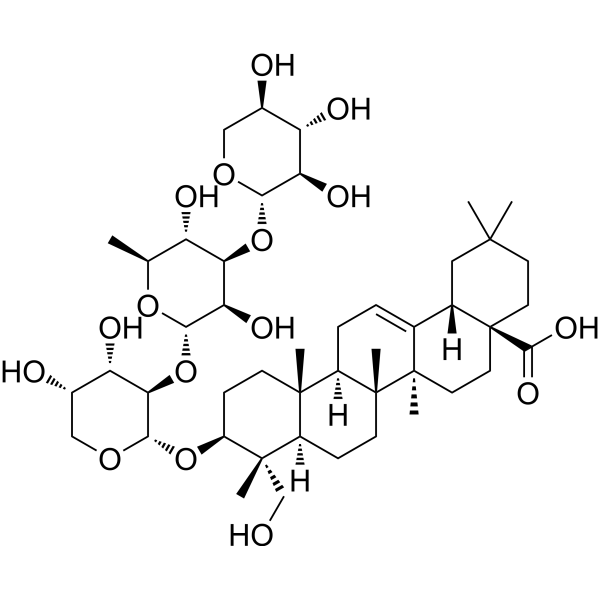
    Sapindoside B is a substance with hepatoprotective activity, and also acts as a cytochrome P-450 (cytochrome P-450) inhibitor, antibacterial agent and membrane-disrupting agent. Sapindoside B reversibly inhibits the content of cytochrome P-450 in liver microsomes, suppresses the phenobarbital-induced increase in enzyme content, reduces the production of active metabolites mediated by cytochrome P-450, and alleviates hepatotoxic injury. Sapindoside B binds to Cutibacterium acnes lipase, reduces lipase activity, inhibits biofilm formation, and decreases bacterial adhesion. Sapindoside B exhibits cytotoxicity against human cancer, liver cancer, leukemia and glioblastoma cells. Sapindoside B inhibits mycelial growth of phytopathogenic fungal strains, possesses antibacterial activity against dermatophytes, and also has hemolytic/membrane-lytic activity. Sapindoside B can be used in research related to liver injury, Cutibacterium acnes biofilm-associated infections, gastric cancer, carcinoma, promyelocytic leukemia, glioblastoma, apple scab and grape gray mold .
    Sapindoside B
  • HY-N1107

    NSC 119993; NSC 277290; Odorigeni

    Others Cancer
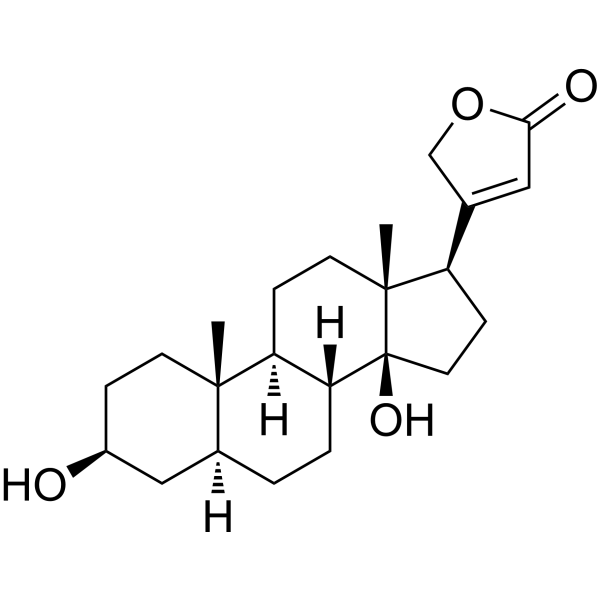
    Uzarigenin (NSC 119993; NSC 277290; Odorigeni) is a carnolide can be isolated from Pergularia tomentosa and exhibits antiproliferative activity. Uzarigenin resists the proliferation of PC3 cells, HeLa cells, Calu-1 cells, MCF-7 cells and U251MG cells, with IC50 values of 0.3 μM, 3.0 μM, 8.0 μM, 6.0 μM and 6.0 μM respectively .
    Uzarigenin
  • HY-160121

    Patrinoside aglycone

    Apoptosis NO Synthase TNF Receptor Interleukin Related PGE synthase COX Inflammation/Immunology Cancer
    Patrinoside aglucone (Compound 8) is an iridoid glucoside that can be isolated from the Valeriana tuberosa. Patrinoside aglucone has potent anticancer activity with G2/M phase tumor cell cycle arrest and apoptosis induction. Patrinoside aglucone also significantly inhibits the proliferation of cancer stem cells (such as MDA-MB-231 and U-251MG cells). Patrinoside aglucone has great anti-inflammatory activity by inhibiting NO release (IC50: 43.44 μM) and significantly reduces the level of TNF-α, IL-1β, IL-6, PGE2 and COX-2 .
    Patrinoside aglucone
  • HY-10521R

    SB-480848 (Standard)

    Reference Standards Phospholipase Apoptosis Cardiovascular Disease Cancer
    Darapladib (Standard) is the analytical standard of Darapladib. This product is intended for research and analytical applications. Darapladib (SB-480848) is an orally active, selective and reversible Lp-PLA2 inhibitor (IC50=0.25 nM). Darapladib can trigger irreversible actions on glioma cell apoptosis and induce cycle arrest. Darapladib can be used in the study of atherosclerosis and cancer .
    Darapladib (Standard)
  • HY-183853

    mAChR Reactive Oxygen Species (ROS) DNA/RNA Synthesis Apoptosis SOD Sirtuin Cardiovascular Disease Neurological Disease Cancer
    Arecaidine-propargyl ester is a selective M2 muscarinic receptor agonist with blood-brain barrier permeability, with a pKi of 5.91 for hm1, 7.06 for hm2, 6.07 for hm3, 6.01 for hm4, and 6.03 for hm5. Arecaidine-propargyl ester stimulates central and peripheral muscarinic receptors. Arecaidine-propargyl ester increases intracellular ROS, induces DNA damage and Apoptosis, and upregulates the expression of MnSOD and SIRT1. Arecaidine-propargyl ester reduces sympathetic nerve outflow, induces dose-dependent hypotension, and triggers negative chronotropic effects at high peripheral doses. Arecaidine-propargyl ester can be used in research related to Alzheimer's disease and glioblastoma .
    Arecaidine-propargyl ester
  • HY-181717

    NF-κB Apoptosis Cadherin Caspase Bcl-2 Family Neurological Disease Cancer
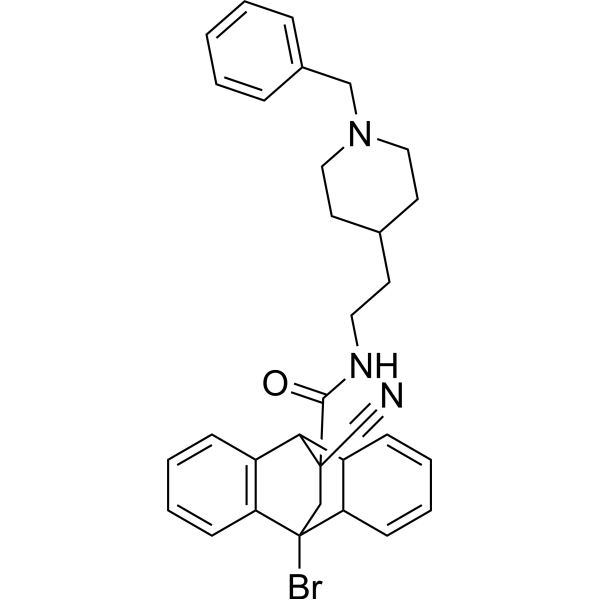
    TKL002 is a blood-brain barrier-permeable inhibitor of the CTH/H2S/NF-κB/EMT signaling axis. TKL002 induces G2/M phase cell cycle arrest and apoptosis in glioblastoma cells. TKL002 inhibits the migration and invasion of glioblastoma cells by upregulating E-cadherin and downregulating N-cadherin and vimentin. TKL002 is applicable to relevant research on glioblastoma .
    TKL002

Inquiry Online

Your information is safe with us. * Required Fields.

Salutation


Country or Region *

Applicant Name *


Organization Name *

Department *


Email Address *


Product Name *

Cat. No.


Requested quantity *

Phone Number *


Remarks

Inquiry Online

Inquiry Information

Product Name:
Cat. No.:
Quantity:
MCE Japan Authorized Agent:

