1. Search Result
Search Result
Results for "

ULK1 Inducer

" in MedChemExpress (MCE) Product Catalog:

18

Inhibitors & Agonists

4

Natural
Products

Targets Recommended:
Cat. No. Product Name Target Research Areas Chemical Structure
  • HY-100006
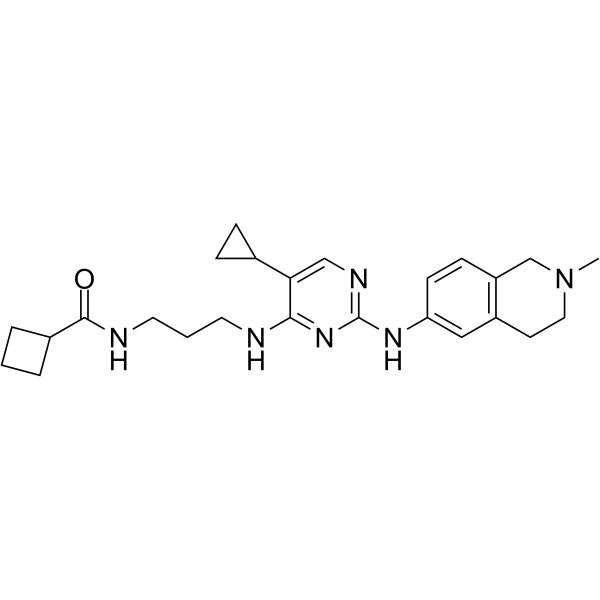
    MRT68921
    Maximum Cited Publications
    27 Publications Verification

    ULK Reactive Oxygen Species (ROS) Apoptosis GSK-3 Bcl-2 Family Cancer
    MRT68921 is a potent NUAK1/ULK1 dual inhibitor. MRT68921 inhibits ULK1 and ULK2 with IC50 values of 2.9 nM and 1.1 nM, respectively. MRT68921 can block cells autophagy and kill tumor cells by breaking the balance of oxidative stress signals. MRT68921 can inhibit cell proliferation and induce ROS production and apoptosis. MRT68921 can be used for the research of cancer, such as breast cancer .
    MRT68921
  • HY-100006A
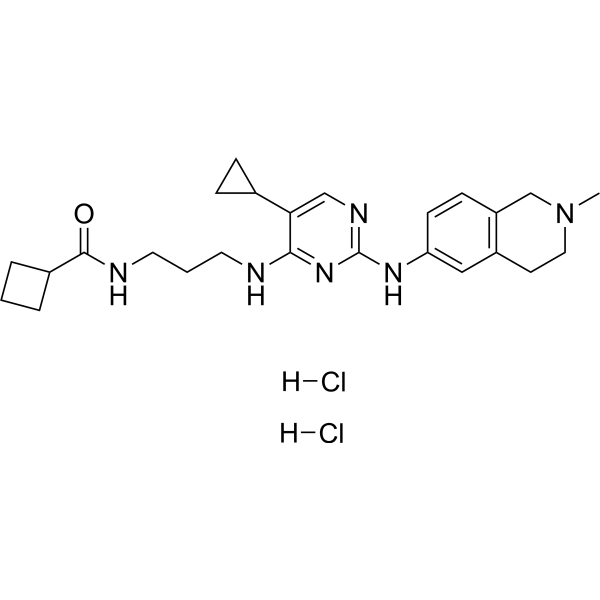
    MRT68921 dihydrochloride
    Maximum Cited Publications
    27 Publications Verification

    ULK Reactive Oxygen Species (ROS) Apoptosis GSK-3 Bcl-2 Family Cancer
    MRT68921 dihydrochloride is a potent NUAK1/ULK1 dual inhibitor. MRT68921 dihydrochloride inhibits ULK1 and ULK2 with IC50 values of 2.9 nM and 1.1 nM, respectively. MRT68921 dihydrochloride can block cells autophagy and kill tumor cells by breaking the balance of oxidative stress signals. MRT68921 dihydrochloride can inhibit cell proliferation and induce ROS production and apoptosis. MRT68921 dihydrochloride can be used for the research of cancer, such as breast cancer .
    MRT68921 dihydrochloride
  • HY-N0559
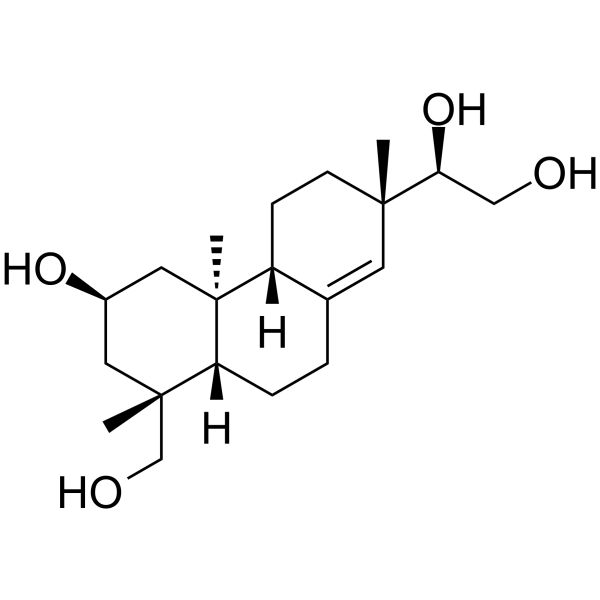
    Kirenol
    1 Publications Verification

    Casein Kinase Apoptosis AMPK Akt NF-κB TGF-beta/Smad Cardiovascular Disease Neurological Disease Metabolic Disease Inflammation/Immunology Cancer
    Kirenol is a diterpenoid compound, an orally active apoptosis inducer and signaling pathway regulator, with a Kd value of 5.47 μM against the target CK2. Kirenol promotes the cleavage of Bid into tBid, regulates the protein levels/phosphorylation of Bax, Bcl-2, p53 and p21, and induces caspase-independent apoptosis, S-phase cell cycle arrest, ROS accumulation and cytotoxicity in cancer cells. Kirenol activates the CK2/AKT and AMPK-mTOR-ULK1 pathways, inhibits the signaling of NF-κB, TGF-β/Smads and NLRP3 inflammasome, and regulates the GSK3β, BMP and Wnt/β-catenin pathways. Kirenol induces autophagy, mitophagy and osteoblast differentiation, promotes mitochondrial fusion, and exerts antioxidant, anti-inflammatory, antifibrotic, renoprotective, cardioprotective, neuroprotective and analgesic effects. Kirenol is applicable to research related to chronic myeloid leukemia, ischemic stroke, diabetic nephropathy, heart failure, acute lung injury and osteoporosis .
    Kirenol
  • HY-137506
    XST-14
    2 Publications Verification

    ULK p38 MAPK TGF-β Receptor Anaplastic lymphoma kinase (ALK) CaMK Apoptosis Cancer
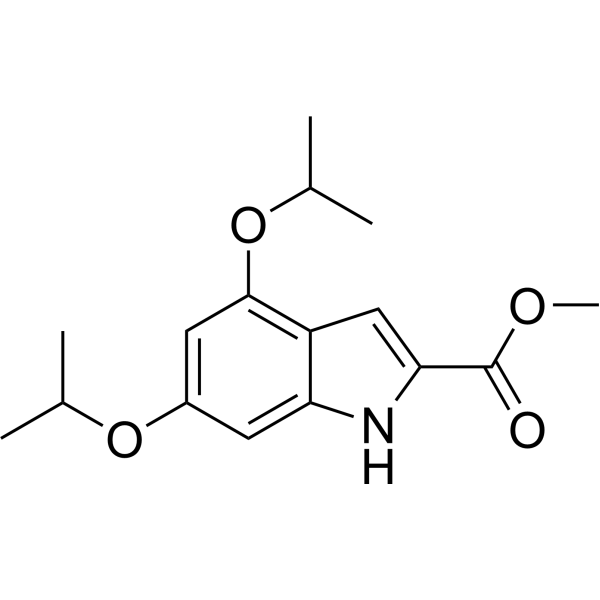
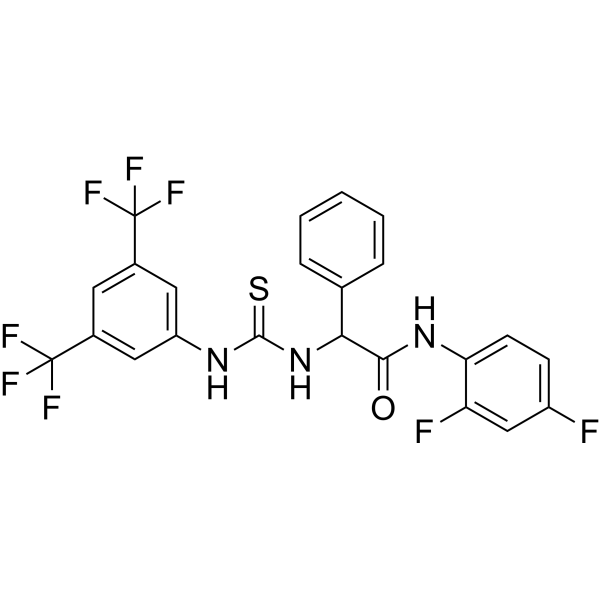
    XST-14 is a potent, competitive and highly selective ULK1 inhibitor with an IC50 of 26.6 nM. XST-14 induces autophagy inhibition by reducing the phosphorylation of the ULK1 downstream substrate. XST-14 induces apoptosis in hepatocellular carcinoma (HCC) cells and has antitumor effects .
    XST-14
  • HY-N4176

    Autophagy Neurological Disease
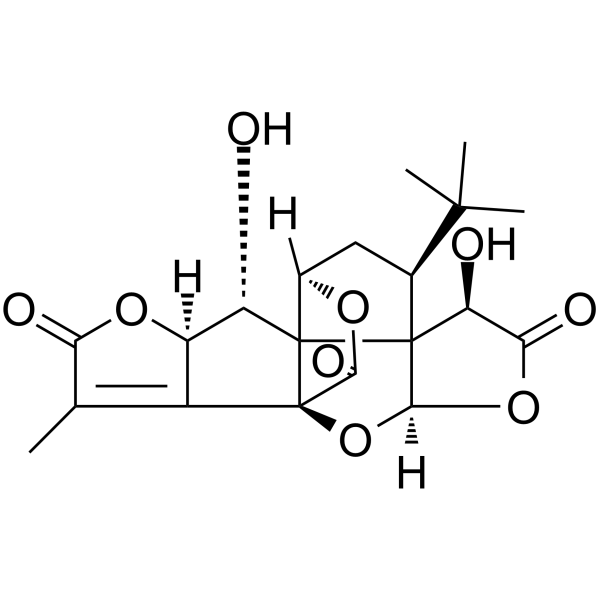
    Ginkgolide K, isolated from Ginkgo biloba, induces protective autophagy through the AMPK/mTOR/ULK1 signaling pathway. Ginkgolide K possesses neuroprotective activity .
    Ginkgolide K
  • HY-179089

    ULK Cancer
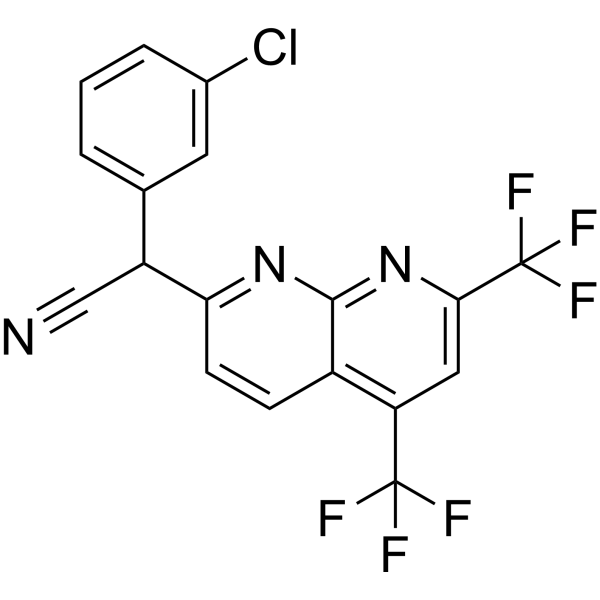
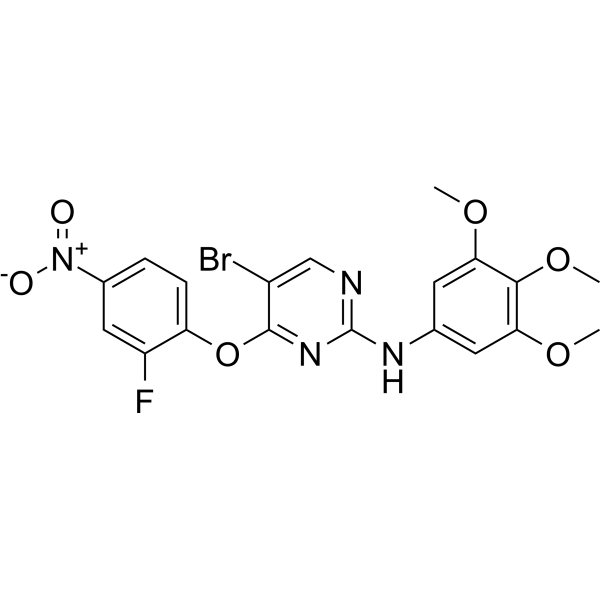
    SBP-1750 is an orally active ULK inhibitor and an ATG13 degrader. SBP-1750 strongly inhibits ULK1/2 activity, with IC50 values of 8 and 50 nM, respectively. SBP-1750 induces ATG13 degradation, with an EC50 value of 114 nM. SBP-1750 can inhibit autophagy in cancer cells and induce cell death. SBP-1750 can be used in cancer research, such as for pancreatic cancer .
    SBP-1750
  • HY-N0867

    HIV ULK Bcl-2 Family Infection Cancer
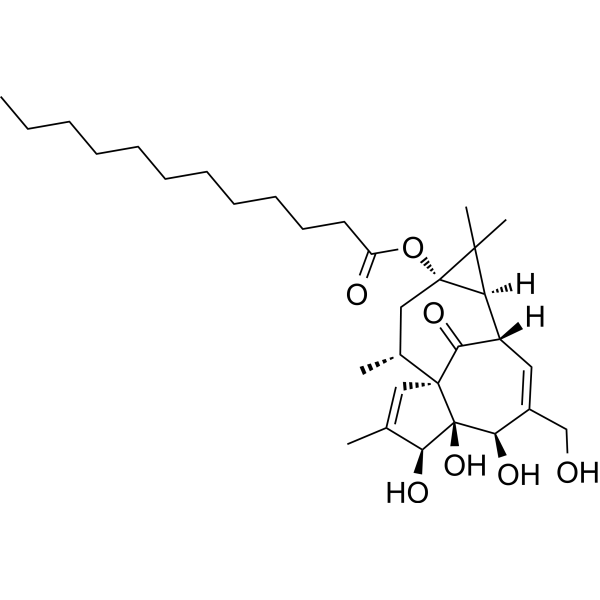
    13-Oxyingenol-dodecanoate (13OD) is a tumor suppressor agent. 13-Oxyingenol-dodecanoate has anti-HIV-1 activity with EC50 value of 33.7 nM .13-Oxyingenol-dodecanoate can induce the expression of ULK1 to effect mitochondrial dysfunction and cellular autophagy. 13-Oxyingenol-dodecanoate also increases the expression of BAX and suppresses the expression of BCL-2 to effect apoptosis .
    13-Oxyingenol-13-dodecanoate
  • HY-119137

    Autophagy AMPK Cancer
    AMDE-1 is a potent autophagy inducer. AMDE-1 induces autophagy by the AMPK-mTORC1-ULK1 pathway and at the same time inhibited autophagy-mediated degradation by causing lysosome dysfunction. AMDE-1 can be used in research of cancer .
    AMDE-1
  • HY-158408

    ULK Mitophagy Neurological Disease
    NZ-66 is a UNC-51-like kinase 1 (ULK1) targeting chimera, which is used to achieve proximity-induced and ULK1-dependent degradation of mitochondria. NZ-66 induces mitophagy. NZ-66 is potential for attenuating neurodegenerative disorders .
    NZ-66
  • HY-124729A

    ULK Autophagy Neurological Disease
    (Rac)-BL-918 is the racemate of BL-918. BL-918 is a potent activator of UNC-51-like kinase 1 (ULK1), inducing cytoprotective autophagy for Parkinson’s disease treatment .
    (Rac)-BL-918
  • HY-143466

    FAK ULK AMPK Apoptosis Autophagy Cancer
    ULK1-IN-2 (compound 3s) is a potent ULK1 inhibitor. ULK1-IN-2 shows highest cytotoxic effect against cancer cell lines, with IC50 of 1.94 μM in A549. ULK1-IN-2 can induce apoptosis and simultaneously block autophagy, and can be used to study NSCLC (Non-small cell lung cancer) .
    ULK1-IN-2
  • HY-161850

    ULK Apoptosis PARP Autophagy NF-κB AMPK Akt Reactive Oxygen Species (ROS) Cancer
    ULK1-IN-3 (Compound 8) is a novel chromone-based as a potential inhibitor of ULK1. ULK1-IN-3 inhibits cell cycle, autophagy and induces apoptosis, oxidative stress in colon cancer cell lines .
    ULK1-IN-3
  • HY-100006B

    ULK Reactive Oxygen Species (ROS) Apoptosis GSK-3 Bcl-2 Family Cancer
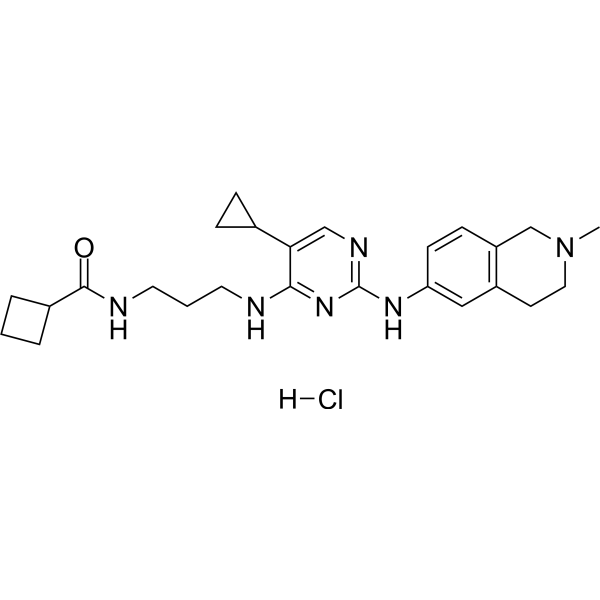
    MRT68921 hydrochloride is a potent NUAK1/ULK1 dual inhibitor. MRT68921 hydrochloride inhibits ULK1 and ULK2 with IC50 values of 2.9 nM and 1.1 nM, respectively. MRT68921 hydrochloride can block cells autophagy and kill tumor cells by breaking the balance of oxidative stress signals. MRT68921 hydrochloride can inhibit cell proliferation and induce ROS production and apoptosis. MRT68921 hydrochloride can be used for the research of cancer, such as breast cancer .
    MRT68921 hydrochloride
  • HY-181742

    ULK PI3K Autophagy Cancer
    ULK1/2-IN-1 is a tissue-targeted ULK1/2 inhibitor conjugated to the RGR (CRGRRST) tumor neovasculature-homing peptide. ULK1/2-IN-1 mediates autophagy inhibition and induces cytotoxicity in endothelial cells. ULK1/2-IN-1 can be used for the research of tumor-targeted autophagy inhibitors .
    ULK1/2-IN-1
  • HY-N0559R

    Reference Standards Casein Kinase Apoptosis AMPK Akt NF-κB TGF-beta/Smad Cardiovascular Disease Neurological Disease Metabolic Disease Inflammation/Immunology Cancer
    Kirenol (Standard) is the analytical standard of Kirenol (HY-N0559). This product is intended for research and analytical applications. Kirenol is a diterpenoid compound, an orally active apoptosis inducer and signaling pathway regulator, with a Kd value of 5.47 μM against the target CK2. Kirenol promotes the cleavage of Bid into tBid, regulates the protein levels/phosphorylation of Bax, Bcl-2, p53 and p21, and induces caspase-independent apoptosis, S-phase cell cycle arrest, ROS accumulation and cytotoxicity in cancer cells. Kirenol activates the CK2/AKT and AMPK-mTOR-ULK1 pathways, inhibits the signaling of NF-κB, TGF-β/Smads and NLRP3 inflammasome, and regulates the GSK3β, BMP and Wnt/β-catenin pathways. Kirenol induces autophagy, mitophagy and osteoblast differentiation, promotes mitochondrial fusion, and exerts antioxidant, anti-inflammatory, antifibrotic, renoprotective, cardioprotective, neuroprotective and analgesic effects. Kirenol is applicable to research related to chronic myeloid leukemia, ischemic stroke, diabetic nephropathy, heart failure, acute lung injury and osteoporosis.
    Kirenol (Standard)
  • HY-181815

    ULK Beclin1 Autophagy MHC Caspase Apoptosis Cancer
    SBP-5147 is an orally active ULK1/ULK2 inhibitor, with an IC50 of 2 nM against ULK1 and an IC50 of 53 nM against ULK2. SBP-5147 inhibits the phosphorylation of Beclin-1 and Vps34, reduces autophagy flux, downregulates the expression of ATG13 and ATG101, upregulates the expression of MHC-I, induces caspase-dependent apoptosis, and decreases the viability of non-small cell lung cancer cells. SBP-5147 is applicable to research related to non-small cell lung cancer [1] .
    SBP-5147
  • HY-100006AR

    ULK Reference Standards Reactive Oxygen Species (ROS) Apoptosis GSK-3 Bcl-2 Family Cancer
    MRT68921 (dihydrochloride) (Standard) is the analytical standard of MRT68921 (dihydrochloride) (HY-100006A). This product is intended for research and analytical applications. MRT68921 dihydrochloride is a potent NUAK1/ULK1 dual inhibitor. MRT68921 dihydrochloride inhibits ULK1 and ULK2 with IC50 values of 2.9 nM and 1.1 nM, respectively. MRT68921 dihydrochloride can block cells autophagy and kill tumor cells by breaking the balance of oxidative stress signals. MRT68921 dihydrochloride can inhibit cell proliferation and induce ROS production and apoptosis. MRT68921 dihydrochloride can be used for the research of cancer, such as breast cancer .
    MRT68921 dihydrochloride (Standard)
  • HY-181062

    HSP Apoptosis Autophagy ULK RIP kinase CDK Cancer
    VWK147 is a second-generation HSP90 C-terminal domain (CTD) inhibitor. VWK147 targets the CTD dimerization interface, prevents HSP90 CTD dimerization, disrupts co-chaperone PPID binding to HSP90 CTD, and inhibits HSP90 chaperone function dependent on dimerization. VWK147 reduces protein levels of HSP90 client proteins ULK1, RIPK1, and CDK4 without inducing a heat shock response. VWK147 induces cell death, including apoptosis, in Cisplatin (HY-17394)-sensitive and -resistant urothelial carcinoma cells. VWK147 induces LC3-II accumulation, inhibits autophagosome-lysosome fusion to block canonical autophagy, and induces non-canonical LC3 lipidation independent of ULK1 and PIK3C3 complexes. VWK147 can be used for the research of urothelial carcinoma .
    VWK147

Inquiry Online

Your information is safe with us. * Required Fields.

Salutation


Country or Region *

Applicant Name *


Organization Name *

Department *


Email Address *


Product Name *

Cat. No.


Requested quantity *

Phone Number *


Remarks

Inquiry Online

Inquiry Information

Product Name:
Cat. No.:
Quantity:
MCE Japan Authorized Agent:

