1. Search Result
Search Result
Results for "

alkaline degradation

" in MedChemExpress (MCE) Product Catalog:

13

Inhibitors & Agonists

1

Fluorescent Dyes

2

Biochemical Assay Reagents

1

Peptides

1

Natural
Products

Cat. No. Product Name Target Research Areas Chemical Structure
  • HY-B2228
    Proteinase, Aspergillus oryzae
    1 Publications Verification

    Biochemical Assay Reagents Cancer
    Proteinase, Aspergillus oryzae is a serine protease that hydrolyzes peptide bonds in protein substrates, preferring alkaline conditions (optimal pH 10.5). It efficiently degrades casein, poly-L-glutamic acid, and poly-L-lysine, with activity irreversibly inhibited by diisopropylfluorophosphate (DFP) and potato inhibitor. This enzyme catalyzes proteolysis via serine residues in its active site, finding applications in food processing (e.g., soy sauce fermentation), detergents, and leather industries due to its high yield in solid-state fermentation and cost-effective production.
    Proteinase, Aspergillus oryzae
  • HY-W114954

    Drug Derivative Others
    Guaiacylglycerol-beta-guaiacyl ether is a phenolic β-O-4 type lignin model compound that mimics the most common β-O-4 aryl ether linkages in plant lignin. Guaiacylglycerol-beta-guaiacyl ether can be degraded by Bacillus amyloliquefaciens CotA. Guaiacylglycerol-beta-guaiacyl ether is a commonly used model compound for studying the β-O-4 inter-unit linkage, the most abundant substructure in lignin, and can be applied to investigate the reaction pathway of vanillin preparation via alkaline nitrobenzene oxidation .
    Guaiacylglycerol-beta-guaiacyl ether
  • HY-115062

    Phospholipase NADPH Oxidase p38 MAPK Akt NF-κB AP-1 Reactive Oxygen Species (ROS) Cardiovascular Disease Inflammation/Immunology Cancer
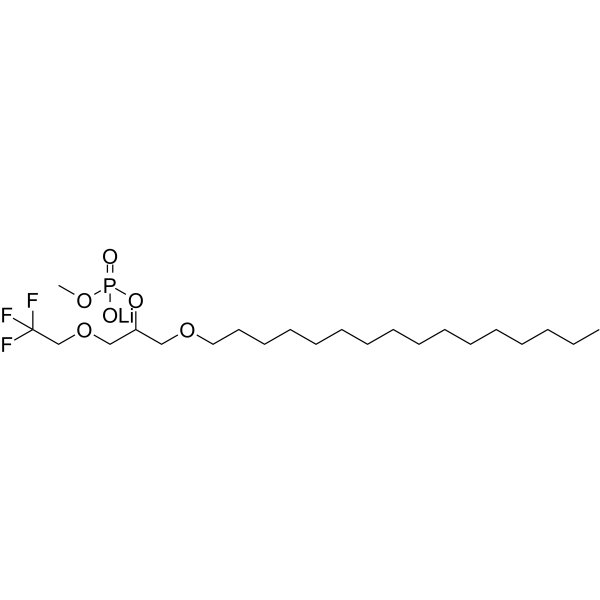
    MJ-33 lithium salt is a competitive phospholipase A2 (PLA2) inhibitor with an IC50 of 0.3 μM. MJ-33 lithium salt inhibits NOX2 activation and reduces ROS production by blocking the PLA2 activity of Prdx6. MJ-33 lithium salt effectively inhibits the activity of acidic PLA2 (pH 4.0) and reduces the degradation of alveolar surfactant phosphatidylcholine (PC), but exerts no effect on alkaline PLA2 (pH 8.5). MJ-33 lithium salt significantly alleviates lung oxidative injury induced by ischemia-reperfusion (I/R). MJ-33 lithium salt significantly inhibits the invasion, migration and adhesion abilities of prostate cancer cells by suppressing the MAPK, AKT, NF-κB and AP-1 signaling pathways. MJ-33 lithium salt can be used for the research of ROS-related diseases and prostate cancer .
    MJ33 lithium salt
  • HY-W111692

    Biochemical Assay Reagents Others
    Sodium polyphosphate, crystal,+200 mesh, 96% is an inorganic polyphosphate that also serves as a stabilizer, dispersant, chelating agent, and coacervate-forming agent. Sodium polyphosphate provides electrostatic stabilization for mineral and material suspensions, but its dispersing efficacy decreases under acidic pH, high temperature, high calcium concentration, or a combination of these conditions. Sodium polyphosphate can chelate alkaline earth metals, reduce solution pH, and alter the rate of pH decline at a divalent cation/phosphorus molar ratio of 0.18. Sodium polyphosphate forms coacervates with smaller divalent cations and precipitates with larger divalent cations, where the functional requirements of cations depend on polyphosphate concentration, average degree of polymerization, and cation type .
    Sodium polyphosphate, crystal,+200 mesh, 96%
  • HY-P4846
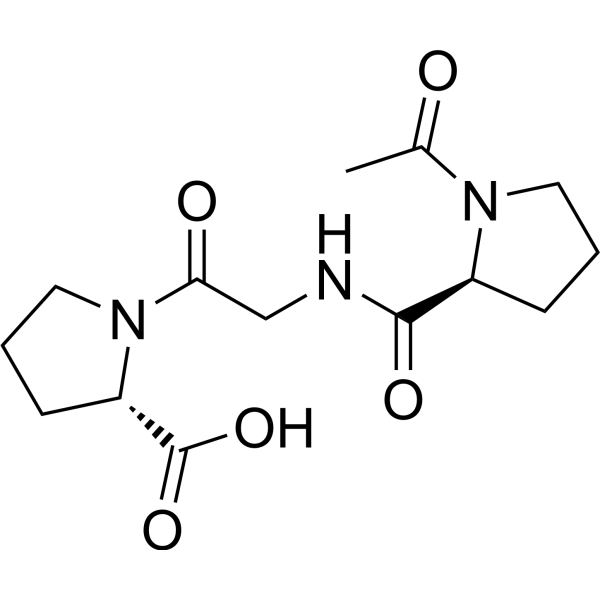
    Ac-Pro-Gly-Pro-OH
    2 Publications Verification

    CXCR Apoptosis IFNAR TNF Receptor Interleukin Related Infection Inflammation/Immunology
    Ac-Pro-Gly-Pro-OH is an endogenous degradation product of extracellular collagen and acts as a CXCR2 agonist . Ac-Pro-Gly-Pro-OH exerts bactericidal activity by generating hydrogen peroxide, inhibits pulmonary inflammation, and reduces immune cell apoptosis (apoptosis). Ac-Pro-Gly-Pro-OH promotes the production of IFN-γ and inhibits the production of TNF-α and IL-6 in leukocytes. Ac-Pro-Gly-Pro-OH increases the survival rate of mice in sepsis models, enhances the bactericidal activity of neutrophils, acts as a neutrophil chemoattractant, induces neutrophil polarization, and regulates inflammatory and repair processes. Ac-Pro-Gly-Pro-OH induces chronic inflammation and tissue remodeling through sustained action. Ac-Pro-Gly-Pro-OH is released via alkaline hydrolysis of corneal proteins in alkali-injured eyes, thereby driving the early infiltration of neutrophils into the cornea. Ac-Pro-Gly-Pro-OH is applicable to research related to sepsis, chronic obstructive pulmonary disease, cystic fibrosis, bronchiolitis obliterans syndrome, severe asthma, idiopathic pulmonary fibrosis, and corneal ulcer .
    Ac-Pro-Gly-Pro-OH
  • HY-13636A

    ICI 182780 (S enantiomer); ZD 9238 (S enantiomer); ZM 182780 (S enantiomer)

    Drug Isomer Estrogen Receptor/ERR p38 MAPK Apoptosis Cancer
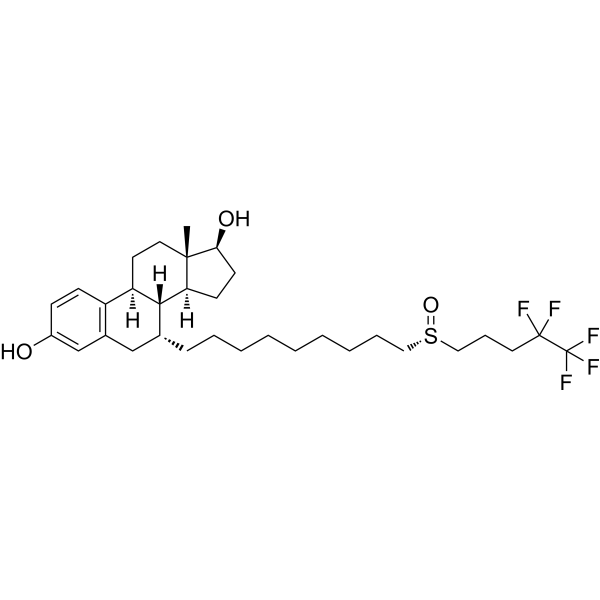
    Fulvestrant (ICI 182780; ZD 9238) S enantiomer is the S-enantiomer of Fulvestrant (HY-13636), a potent estrogen receptor inhibitor. Fulvestrant binds to and blocks the estrogen receptor, promotes its degradation, and thereby inhibits receptor dimerization, nucleocytoplasmic shuttling and transcriptional activity. Fulvestrant effectively blocks estrogen signaling, MAPK pathway activation and ER-regulated protein expression. Fulvestrant induces apoptosis, inhibits the proliferation of breast cancer and prolactinoma cells, and reduces the mineralization level, alkaline phosphatase activity and osteocalcin expression of preosteoblasts. Prenatal exposure to Fulvestrant impairs ovarian follicular development and causes ovarian structural damage. Fulvestrant has been widely used in studies related to breast cancer, prolactinoma and other conditions .
    Fulvestrant (S enantiomer)
  • HY-W717548

    Drug Metabolite Others
    Safinamide acid (Compound Imp-E) is the metabolite of Safinamide (HY-70057). Safinamide acid can be formed by hydrolysis of Safinamide intermediate under alkaline or acidic conditions. Safinamide acid is utilized to monitor process-related impurities and degradation products in safinamide samples .
    Safinamide acid
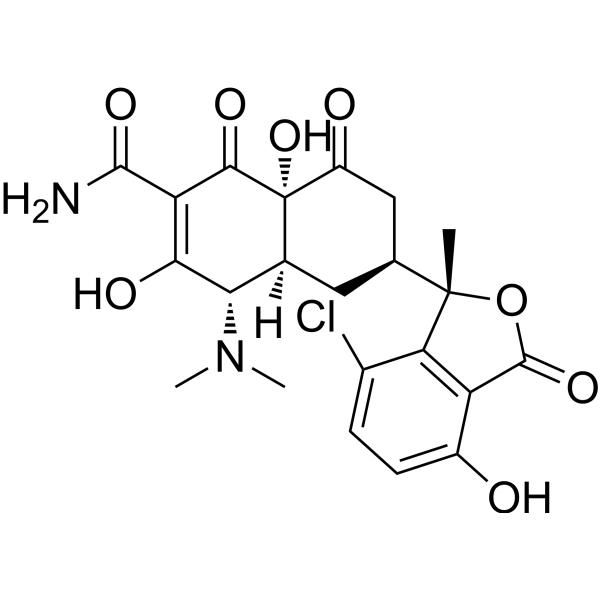
  • HY-126606

    Antibiotic Infection
    Isochlortetracycline is an inactive alkaline degradation product of the Chlortetracycline (HY-B1327A) (broad-spectrum antibiotic) .
    Isochlortetracycline
  • HY-136271

    Phospholipase NADPH Oxidase p38 MAPK Akt NF-κB AP-1 Reactive Oxygen Species (ROS) Cardiovascular Disease Inflammation/Immunology Cancer
    MJ-33 is a competitive phospholipase A₂ (PLA₂) inhibitor with an IC50 of 0.3 μM. MJ-33 inhibits the activation of NOX2 by blocking the PLA₂ activity of Prdx6, thereby reducing the production of ROS. MJ-33 effectively inhibits the activity of acidic PLA₂ (pH 4.0), reduces the degradation of pulmonary surfactant phosphatidylcholine (PC), but has no effect on alkaline PLA₂ (pH 8.5). MJ-33 significantly alleviates lung oxidative damage induced by ischemia-reperfusion (I/R). MJ-33 significantly inhibits the invasive, migratory and adhesive abilities of prostate cancer cells by suppressing the MAPK, AKT, NF-κB and AP-1 signaling pathways. MJ-33 can be used to study ROS-related diseases and prostate cancer .
    MJ33
  • HY-138111

    p-Nitopheyl β-D-cellotetaoside

    Fluorescent Dye Others
    4-Nitrophenyl β-D-cellotetraoside (p-Nitopheyl β-D-cellotetaoside) is a small molecule cellulose mimetic consisting of a tetramer of D-glucose units linked by β-1-4 glycosidic bonds. The fragmentation pattern of 4-Nitrophenyl β-D-cellotetraoside after enzymatic hydrolysis can be analyzed by TLC or by the release of 4-nitrophenol, which has a strong absorbance at 395 nm in alkaline solutions. 4-Nitrophenyl β-D-cellotetraoside can be used in cellulose degradation studies to determine the specificity of cellulases .
    4-Nitrophenyl β-D-cellotetraoside
  • HY-N13110

    Others Others
    23-Aldehyde-16-O-angeloybarringtogenol C (compound 7) is a tea seed saponin, an acid hydrolysis product obtained by oxidative alkaline degradation. Tea seed saponins have potential quinine oxidoreductase inducing activity .
    23-Aldehyde-16-O-angeloybarringtogenol C
  • HY-181345

    Estrogen Receptor/ERR Cancer
    OP-1690 is a complete estrogen receptor (ERα) antagonist (CERAN), with pIC50 values of 7.5 and 7.9 in alkaline phosphatase (AP) activity assay and TR-FRET assay, respectively. OP-1690 modulates receptor function by inducing ERα tetramerization, effectively induces ERα degradation, inhibits target gene transcription, but exhibits low antiproliferative potency. OP-1690 can be used for breast cancer research .
    OP-1690
  • HY-W040279

    Herbicide Acetolactate Synthase (ALS) Others
    Prosulfuron is a fluorinated sulfonylurea herbicide with a reported acute oral LD50 of 546 mg/kg in female rats. Prosulfuron acts by inhibiting acetolactate synthase (ALS) to block the biosynthesis of branched-chain amino acids (valine, leucine and isoleucine) in plants, thereby suppressing weed growth. Prosulfuron may disrupt the soil microbial community balance in alkaline soils with minimal chemical degradation. Prosulfuron has low toxicity to humans and mammals, and can be used for the research of broadleaf weed control in maize and sweet corn .
    Prosulfuron

Inquiry Online

Your information is safe with us. * Required Fields.

Salutation


Country or Region *

Applicant Name *


Organization Name *

Department *


Email Address *


Product Name *

Cat. No.


Requested quantity *

Phone Number *


Remarks

Inquiry Online

Inquiry Information

Product Name:
Cat. No.:
Quantity:
MCE Japan Authorized Agent:

