



MJ33 lithium salt

Based on 1 Customer Validation
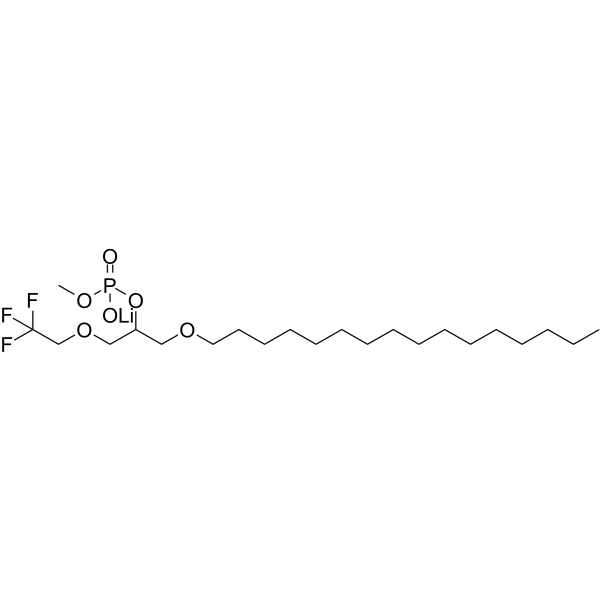
MJ-33 lithium salt is a competitive phospholipase A2 (PLA2) inhibitor with an IC50 of 0.3 μM. MJ-33 lithium salt inhibits NOX2 activation and reduces ROS production by blocking the PLA2 activity of Prdx6. MJ-33 lithium salt effectively inhibits the activity of acidic PLA2 (pH 4.0) and reduces the degradation of alveolar surfactant phosphatidylcholine (PC), but exerts no effect on alkaline PLA2 (pH 8.5). MJ-33 lithium salt significantly alleviates lung oxidative injury induced by ischemia-reperfusion (I/R). MJ-33 lithium salt significantly inhibits the invasion, migration and adhesion abilities of prostate cancer cells by suppressing the MAPK, AKT, NF-κB and AP-1 signaling pathways. MJ-33 lithium salt can be used for the research of ROS-related diseases and prostate cancer.
For research use only. We do not sell to patients.
- Purity : 99.0%
- CAS No.: 1007476-63-2
- Formula: C22H43F3LiO6P
- Molecular Weight:498.48
-
Storage:
-20°C, sealed storage, away from moisture
* In solvent : -80°C, 6 months; -20°C, 1 month (sealed storage, away from moisture)

To place orders, for customer services and technical support, please contact: MedChemExpress USA
Tel: 609-228-6898 E-mail: [email protected] [email protected]


-
 Biological Activity
-
Chemical Information
-
Solvent & Solubility
- Protocols
- Purity & Documentation
- References
-
 Help & FAQs


-
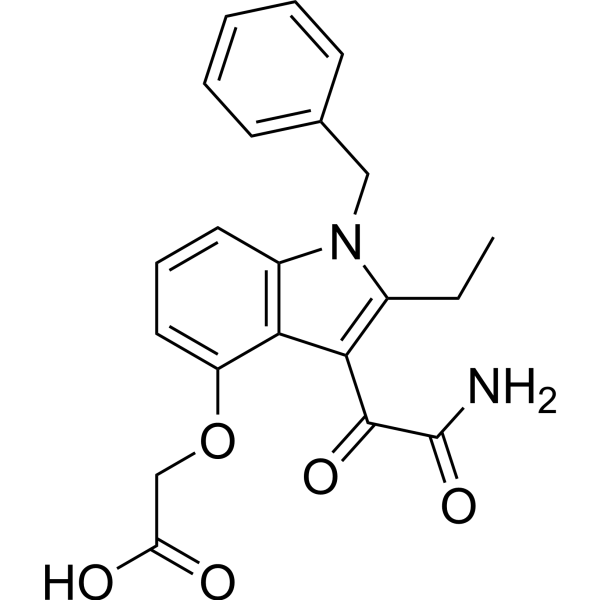
HY-13402
VarespladibsPLA2 Inhibitor -
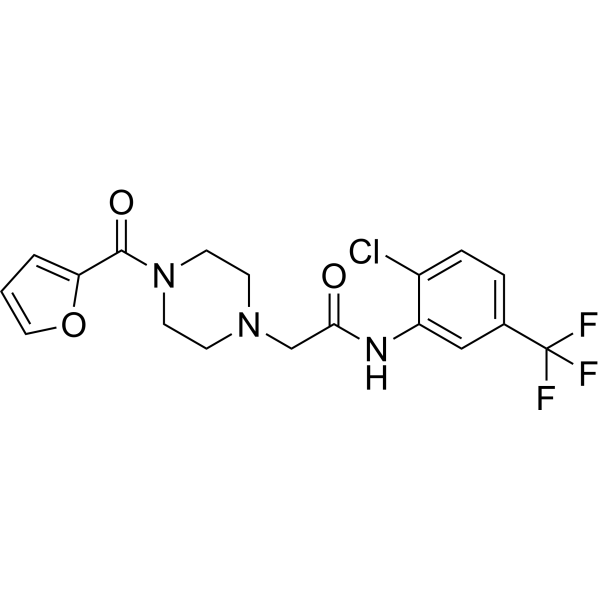
HY-100736
ML348APT1/LYPLA1 Inhibitor -
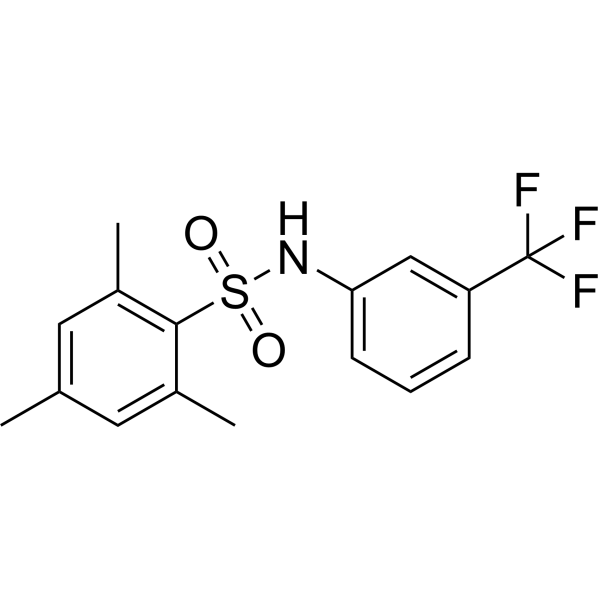
HY-19619
m-3M3FBSPhospholipase C Activator -
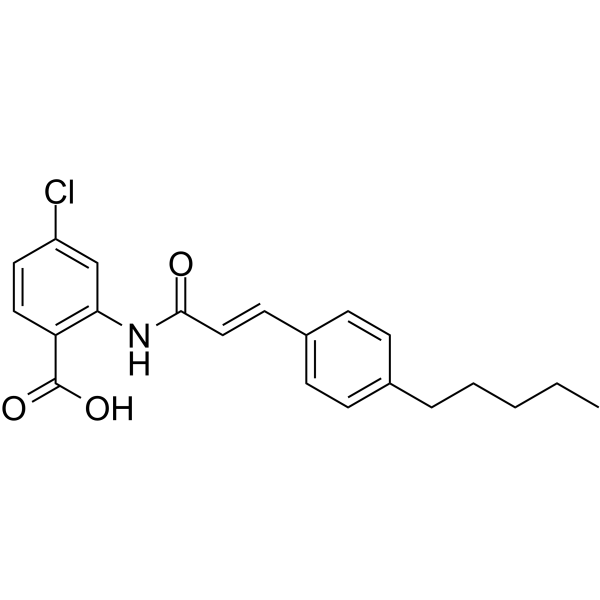
HY-123070
ONO-RS-082PLA2 Inhibitor -
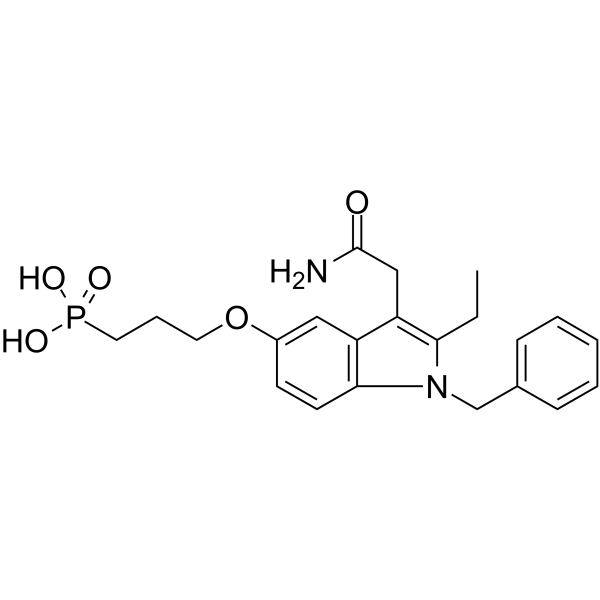
HY-107393
LY-311727sPLA2 Inhibitor -
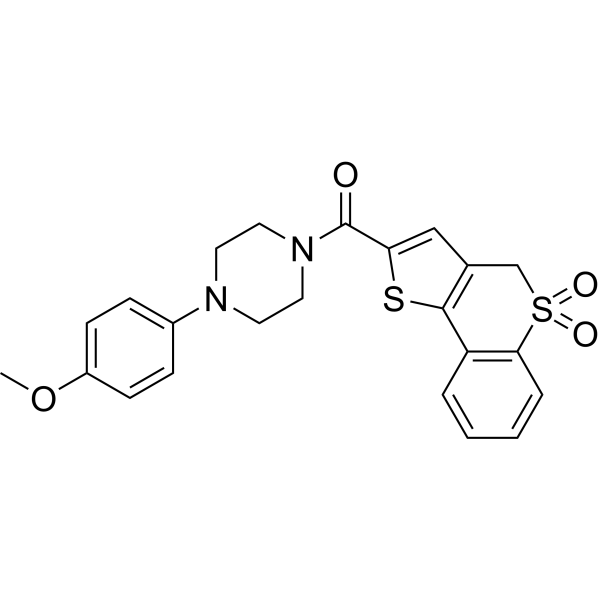
HY-100737
ML349APT2/LYPLA2 Inhibitor -
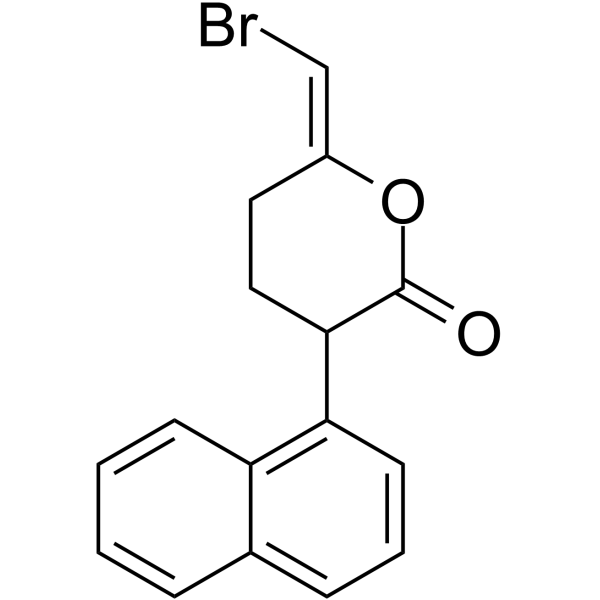
HY-107411
Bromoenol lactonePhospholipase Inhibitor -
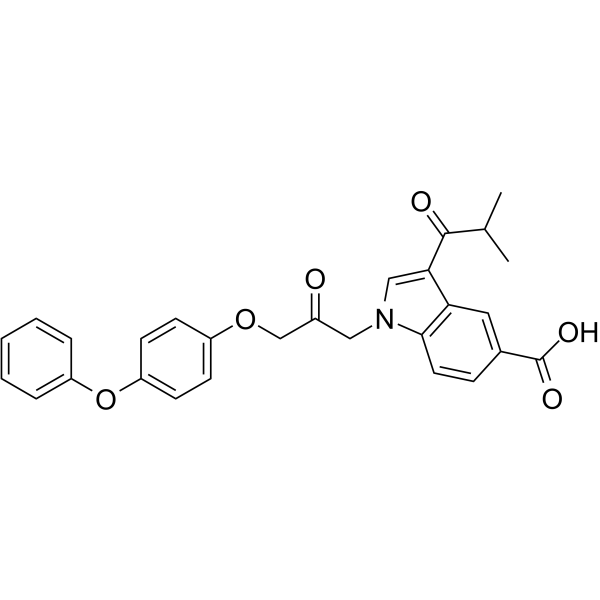
HY-10801
CAY10650cPLA2α Inhibitor -
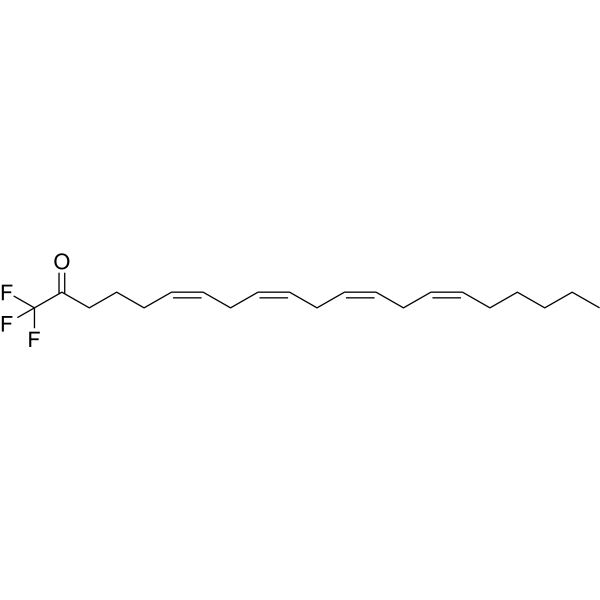
HY-108611
AACOCF3cPLA2 Inhibitor -
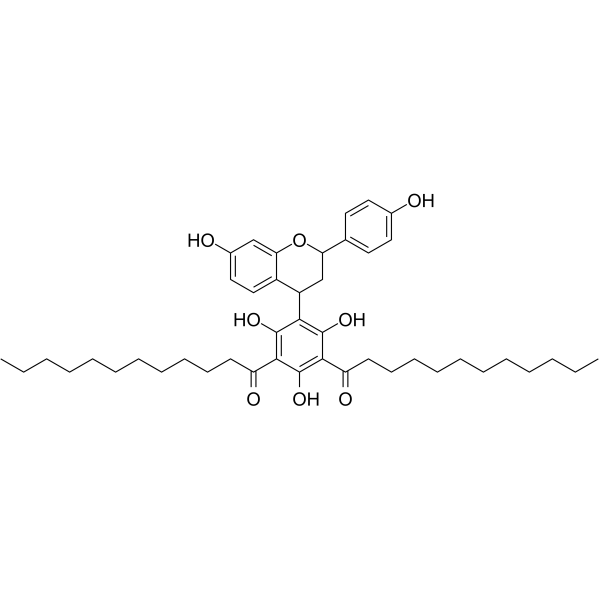
HY-108609
YM-26734 -
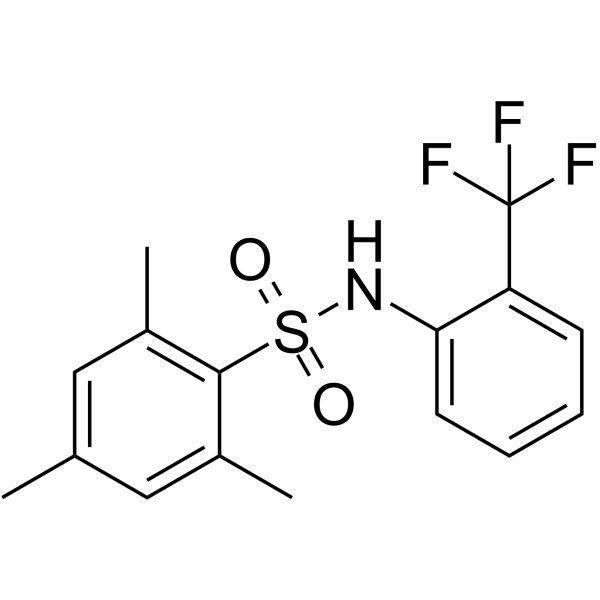
HY-108608
o-3M3FBSActive Compound -
HY-118628
(E/Z)-BML264TRP Channel Inhibitor


Biological Activity
Description
In Vitro
MJ33 (50-1000 nM; 24-48 h) lithium salt reduces the viability of DU145, LNCaP and PC-3 human prostate cancer cells in a concentration-dependent manner, with DU145 cells showing the highest sensitivity and an EC50 of 458.32 nM after 24 h of incubation[1].
MJ33 (50-200 nM; 24 h) lithium salt inhibits the invasion of human prostate cancer cell line DU145 in a concentration-dependent manner, with an inhibition rate of 15%-70% observed after treatment at 50-200 nM for 24 h, and this effect is independent of cytotoxicity[1].
MJ33 (50-200 nM; 24 h) lithium salt inhibits the migration of human prostate cancer cell line DU145 in a concentration-dependent manner, with an inhibition rate of 30%-75% observed after treatment at 50-200 nM for 24 h, and this effect is independent of cytotoxicity[1].
MJ33 (50-200 nM; 24 h) lithium salt inhibits the adhesion of DU145 human prostate cancer cells in a concentration-dependent manner, with an inhibition rate of 10%-45% observed after treatment at 50-200 nM for 24 h, and this effect is independent of cytotoxicity[1].
MJ33 (50-200 nM; 24 h) lithium salt reduces the enzymatic activities of MMP-2, MMP-9 and u-PA in DU145 human prostate cancer cells in a concentration-dependent manner[1].
MJ33 (50-200 nM; 6-24 h) lithium salt reduces the protein levels of MMP-2, MMP-9 and u-PA in a concentration-dependent manner in DU145 human prostate cancer cells after 24 h of incubation, and decreases the levels of phosphorylated JNK, ERK, p38, AKT as well as nuclear NF-κB p65, c-fos and c-Jun after 6 h of incubation[1].
MJ33 (100-200 nM; 6 h) lithium salt inhibits the DNA-binding activities of NF-κB and AP-1 in DU145 human prostate cancer cells in a concentration-dependent manner[1].
MJ33 (20 μM; 24 h) lithium salt restores the GSH/ROS balance in cultured C57BL/6J primary hippocampal neurons with AAV-mediated D2HGDH knockdown, without affecting cell viability[2].
MJ33 lithium salt completely inhibits NOX2-dependent ROS production in wild-type mPMVEC stimulated by AngII[3].
MJ33 (4 μM; 15 min) lithium salt reduces concanavalin A (Con A)-stimulated NOX2-dependent O2•− production by 79% in bone marrow neutrophils (PMNs) from wild-type mice[3][4].
MJ33 (5-25 μM; 2-10 day) lithium salt exerts no effect on the proliferation or clonogenic survival of human lung cancer cell line A549 at concentrations up to 25 μM over an exposure period of up to 10 days[3][4].
MedChemExpress (MCE) has not independently confirmed the accuracy of these methods. They are for reference only. Further protocols information, click here.
-
Cell Line:DU145 human prostate cancer cells
-
Concentration:50, 100 and 200 nM
-
Incubation Time:24 h
-
Result:Significantly inhibited DU145 cell invasion in a concentration-dependent manner, with inhibition ratios ranging from 15-70%.
Caused no cytotoxicity at tested concentrations after 24 h.
-
Cell Line:DU145 human prostate cancer cells
-
Concentration:50, 100 and 200 nM
-
Incubation Time:24 h
-
Result:Significantly inhibited DU145 cell migration in a concentration-dependent manner, with inhibition ratios ranging from 30-75%.
Caused no cytotoxicity at tested concentrations after 24 h.
-
Cell Line:DU145 human prostate cancer cells
-
Concentration:50, 100 and 200 nM (6 h incubation for p-JNK, p-ERK, p-p38, p-AKT, NF-κB p65, c-fos, c-Jun); 50-200 nM (24 h incubation for MMP-2, MMP-9, u-PA)
-
Incubation Time:6 h (p-JNK, p-ERK, p-p38, p-AKT, NF-κB p65, c-fos, c-Jun); 24 h (MMP-2, MMP-9, u-PA)
-
Result:Reduced protein levels of MMP-2, MMP-9, and u-PA in a concentration-dependent manner after 24 h treatment.
Reduced protein levels of phosphorylated JNK, ERK, p38, and AKT, as well as nuclear NF-κB p65, c-fos, and c-Jun, all in a concentration-dependent manner after 6 h treatment.
Left total JNK, ERK, p38, and AKT protein levels unchanged.
In Vivo
MJ33 (0.4-10 nmol; intratracheal administration; intravenous administration; single administration) lithium salt inhibits pulmonary Prdx6 PLA2 activity in mice by approximately 85%, and the activity recovers in a dose-dependent manner within 72 h; among the administration routes, intratracheal administration results in higher pulmonary uptake, while intravenous administration leads to moderate pulmonary uptake[3].
MJ33 (4 nmol; intravenous injection) lithium salt reduces ROS production by 66% in a mouse model of lung ischemia/reperfusion injury, and essentially abolishes oxidative stress and increased pulmonary permeability[3].
MedChemExpress (MCE) has not independently confirmed the accuracy of these methods. They are for reference only.
-
Animal Model:C57BL/6J (male, 28 days old, ~22-24 g at study start, hippocampal AAV-mediated D2HGDH knockdown, KA-induced epilepsy)[2]
-
Dosage:500 nmol/kg
-
Administration:i.p.; daily; 7 days
-
Result:Reduced the number of spontaneous recurrent seizures per day.
Decreased the number of epileptic events detected via local field potentials.
Shortened the duration of single epileptic events.
Significantly reduced integrated DHE fluorescence density (a measure of ROS levels) in the hippocampal CA1, CA3, and DG regions.
-
Animal Model:C57BL/6 wild-type (10-week-old; male and female)[3]
-
Dosage:0.4 nmol; 4 nmol; 10 nmol
-
Administration:intratracheal; intravenous
-
Result:Inhibited lung Prdx6 PLA2 activity by approximately 85% (reduced to ~15% of control levels) at 4 hours post-administration via both routes.
Showed only slight recovery of PLA2 activity at 24 hours, partial recovery at 48 hours, and returned to near control levels by 72 hours for 4 nmol and 10 nmol doses.
Achieved lung uptake of 67-87% of the injected dose for i.t.
delivery and 23-42% for i.v.
delivery at 4 hours post-administration.
Became undetectable in lungs at 72 hours post-administration via either route.
-
Animal Model:C57BL/6 wild-type (10-week-old)[3]
-
Dosage:4 nmol
-
Administration:intravenous
-
Result:Reduced reperfusion-induced ROS production by 66% compared to untreated I/R lungs.
Reduced TBARS levels from 136 nmol/mg protein (untreated I/R) to 95.5 nmol/mg protein.
Reduced 8-isoprostane levels from 440 nmol/mg protein to 310 nmol/mg protein.
Reduced protein carbonyl levels from 9.25 nmol/mg protein to 7.00 nmol/mg protein.
Reduced lung wet/dry weight ratio from 7.35 to 6.35.


Chemical Information
-
CAS No. 1007476-63-2
-
Appearance Solid
-
Molecular Weight 498.48
-
Formula C22H43F3LiO6P
-
Color White to off-white
-
SMILES
O=P(OC)(OC(COCC(F)(F)F)COCCCCCCCCCCCCCCCC)O[Li]
-
Shipping
Room temperature in continental US; may vary elsewhere.
-
Storage
-20°C, sealed storage, away from moisture
* In solvent : -80°C, 6 months; -20°C, 1 month (sealed storage, away from moisture)


Solvent & Solubility
In Vitro:
Ethanol : ≥ 50 mg/mL (100.30 mM)
DMSO : ≥ 0.25 mg/mL (0.50 mM; Hygroscopic DMSO has a significant impact on the solubility of product, please use newly opened DMSO)
* "≥" means soluble, but saturation unknown.
Please refer to the solubility information to select the appropriate solvent. Once prepared, please aliquot and store the solution to prevent product inactivation from repeated freeze-thaw cycles.
Storage method and period of stock solution: -80°C, 6 months; -20°C, 1 month (sealed storage, away from moisture). When stored at -80°C, please use it within 6 months. When stored at -20°C, please use it within 1 month.
Please refer to the solubility information to select the appropriate solvent. Once prepared, please aliquot and store the solution to prevent product inactivation from repeated freeze-thaw cycles.
Storage method and period of stock solution: -80°C, 6 months; -20°C, 1 month (sealed storage, away from moisture). When stored at -80°C, please use it within 6 months. When stored at -20°C, please use it within 1 month.
Concentration (start) × Volume (start) = Concentration (final) × Volume (final)

Protocols
-
Cell Cytotoxicity Assay
Cytotoxicity assays are usually based on the assessment of cell membrane damage, which can also be indirectly detected by measuring cell viability. Detection methods include MTT assay, CKK-8 assay, LDH assay and ATP assay, etc.
-
ROS/oxidative-stress fluorescent staining
ROS/oxidative-stress fluorescent staining uses cell-permeant fluorogenic probes that become fluorescent after oxidation inside cells or tissues; commonly used examples include DCFH-DA/DCFDA for broad cellular oxidant detection, DHE for superoxide-related signal detection, MitoSOX for mitochondrial superoxide-related signal detection, and CellROX probes for oxidative-stress-associated fluorescence readouts. The assay detects probe oxidation rather than a single ROS species unless the probe and analysis method have been chemically validated for that species. DCFH-DA enters cells, is deacetylated by intracellular esterases to DCFH, and produces fluorescent DCF after oxidation, so the readout is used as an operational measure of total cellular oxidative stress rather than a species-specific ROS measurement. DHE and MitoSOX can report superoxide-related oxidation, but red fluorescence alone can include non-specific ethidium-like oxidation products; HPLC or optimized spectral approaches are
-
Cell migration
Cell migration is a method that plays an important role in wound healing, cell differentiation, embryonic development, etc.
-
Cell invasion
Cell invasion is the ability of cells to migrate from one area to another via the extracellular matrix. Cell invasion is the response of normal and cancer cells to chemical and mechanical stimuli. Before migrating to a new region, the extracellular matrix is degraded by proteases within the cell. Cell invasion often occurs during wound repair, vascularization and inflammation, abnormal tissue invasion, and tumor cell metastasis.
-
Research Protocol for Inflammation-related Diseases
The NLRP3 inflammasome is a cytosolic innate immune signaling platform that integrates priming signals and danger-signal activation to promote caspase-1 activation, maturation of IL-1β and IL-18, and gasdermin D-mediated pyroptotic cell death. The core experimental logic is to determine whether inflammatory disease phenotypes are driven by increased NLRP3 expression, ASC-containing inflammasome assembly, caspase-1 cleavage, GSDMD cleavage, and extracellular release of IL-1β/IL-18 rather than by nonspecific cell injury alone. The pathway is strongly linked to inflammation-related disease phenotypes because monosodium urate crystals activate NALP3/NLRP3 inflammasome signaling in gout-like crystal inflammation, cholesterol crystals activate NLRP3 inflammasomes in atherogenesis models, and DSS-induced intestinal inflammation has been reported to involve NLRP3 inflammasome activity. However, experimental colitis studies also show context-dependent protective effects of NLRP3 inflammasome co


Purity & Documentation
-
Data Sheet (279 KB)
-
SDS (252 KB)
- English - EN (252 KB)
- Français - FR (252 KB)
- Deutsch - DE (252 KB)
- Norwegian - NO (252 KB)
- Español - ES (252 KB)
- Swedish - SV (252 KB)
- Italian - IT (252 KB)
- Korean - KR (252 KB)
- Portuguese - PT (252 KB)
-
Handling Instructions (2659 KB)
References
[1]. Hour MJ, et al. Antitumor effects of the novel quinazolinone MJ-33: inhibition of metastasis through the MAPK, AKT, NF-κB and AP-1 signaling pathways in DU145 human prostate cancer cells. Int J Oncol. 2012;41(4):1513-1519. [Content Brief]
[2]. Zhang Z, et al. D2HGDH Deficiency Regulates Seizures through GSH/Prdx6/ROS-Mediated Excitatory Synaptic Activity. Adv Sci (Weinh). 2025;12(13):e2404488. [Content Brief]
[3]. Lee I, et al. A novel nontoxic inhibitor of the activation of NADPH oxidase reduces reactive oxygen species production in mouse lung. J Pharmacol Exp Ther. 2013;345(2):284-296. [Content Brief]


Complete Stock Solution Preparation Table
Please refer to the solubility information to select the appropriate solvent. Once prepared, please aliquot and store the solution to prevent product inactivation from repeated freeze-thaw cycles.
Storage method and period of stock solution: -80°C, 6 months; -20°C, 1 month (sealed storage, away from moisture). When stored at -80°C, please use it within 6 months. When stored at -20°C, please use it within 1 month.
| Optional Solvent | Concentration Solvent Mass | 1 mg | 5 mg | 10 mg | 25 mg |
|---|---|---|---|---|---|
| Ethanol | 1 mM | 2.0061 mL | 10.0305 mL | 20.0610 mL | 50.1525 mL |
| 5 mM | 0.4012 mL | 2.0061 mL | 4.0122 mL | 10.0305 mL | |
| 10 mM | 0.2006 mL | 1.0030 mL | 2.0061 mL | 5.0152 mL | |
| 15 mM | 0.1337 mL | 0.6687 mL | 1.3374 mL | 3.3435 mL | |
| 20 mM | 0.1003 mL | 0.5015 mL | 1.0030 mL | 2.5076 mL | |
| 25 mM | 0.0802 mL | 0.4012 mL | 0.8024 mL | 2.0061 mL | |
| 30 mM | 0.0669 mL | 0.3343 mL | 0.6687 mL | 1.6717 mL | |
| 40 mM | 0.0502 mL | 0.2508 mL | 0.5015 mL | 1.2538 mL | |
| 50 mM | 0.0401 mL | 0.2006 mL | 0.4012 mL | 1.0030 mL | |
| 60 mM | 0.0334 mL | 0.1672 mL | 0.3343 mL | 0.8359 mL | |
| 80 mM | 0.0251 mL | 0.1254 mL | 0.2508 mL | 0.6269 mL | |
| 100 mM | 0.0201 mL | 0.1003 mL | 0.2006 mL | 0.5015 mL |


MJ33 lithium salt Related Classifications
HY-115062 Related Classifications
 Powered by Bioz