1. Search Result
Search Result
Results for "

alternative splicing

" in MedChemExpress (MCE) Product Catalog:

18

Inhibitors & Agonists

3

Peptides

1

Recombinant Proteins

2

Oligonucleotides

Targets Recommended:
Cat. No. Product Name Target Research Areas Chemical Structure
  • HY-P3522

    Integrin Cardiovascular Disease
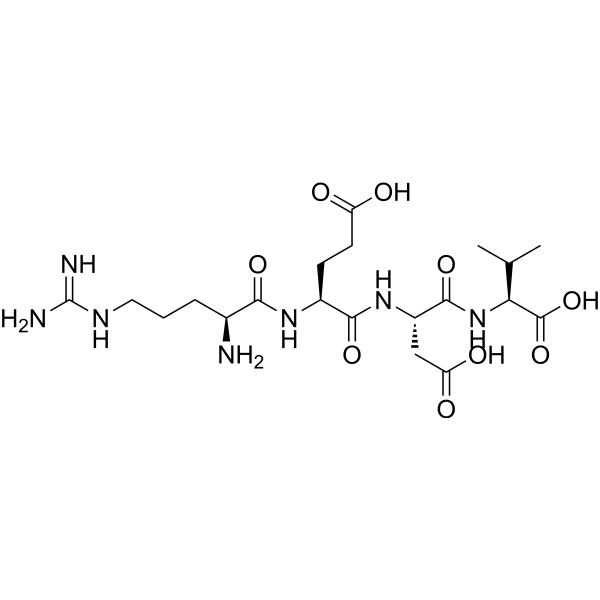
    REDV is the minimal active sequence within the CS5 site of the alternatively spliced type III connecting segment (IIICS) region of fibronectin. REDV can mediate adhesion to the IIICS region of plasma fibronectin by binding the integrin alpha 4 beta 1(α4β1). REDV can be used for the research of cell adhesion. REDV is used to study the effects of gene vectors containing REDV on cells .
    REDV
  • HY-P5960

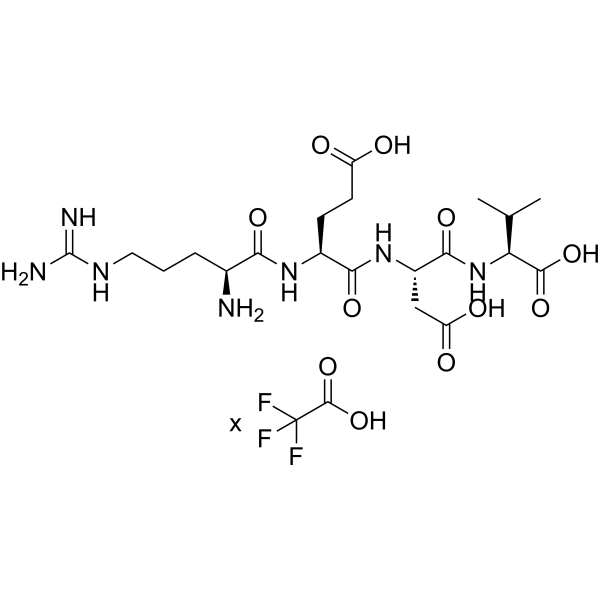
    PTBP1 α3-helix derived peptide P6 TFA

    DNA/RNA Synthesis Cancer
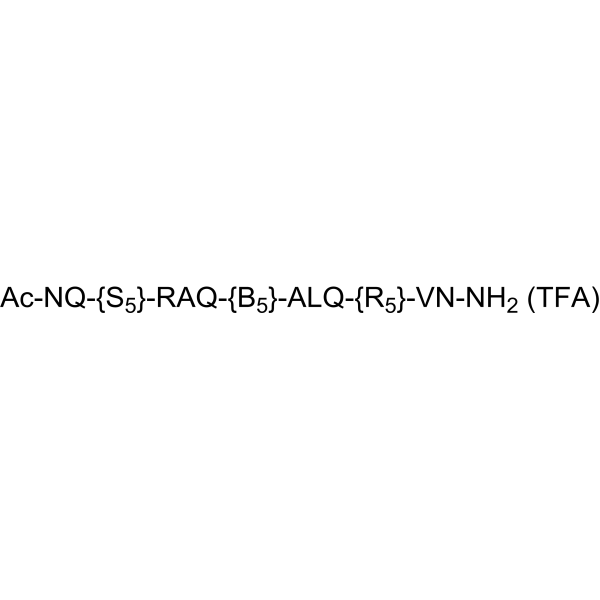
    PTBP1-RNA-binding inhibitor (PTBP1 α3-helix derived peptide) P6 TFA is a cell-permeable PTBP1 inhibitor. PTBP1-RNA-binding inhibitor P6 TFA binds to the α3 helix binding site of the PTBP1 RRM1 domain, and disrupts the synergistic RNA-binding effect of the RRM1 and RRM2 domains of PTBP1. PTBP1-RNA-binding inhibitor P6 (TFA) regulates the regulatory pattern of PTBP1-related alternative splicing events, and thus exhibits anticancer potential .
    PTBP1-RNA-binding inhibitor P6 TFA
  • HY-177360

    DNA/RNA Synthesis Neurological Disease Cancer
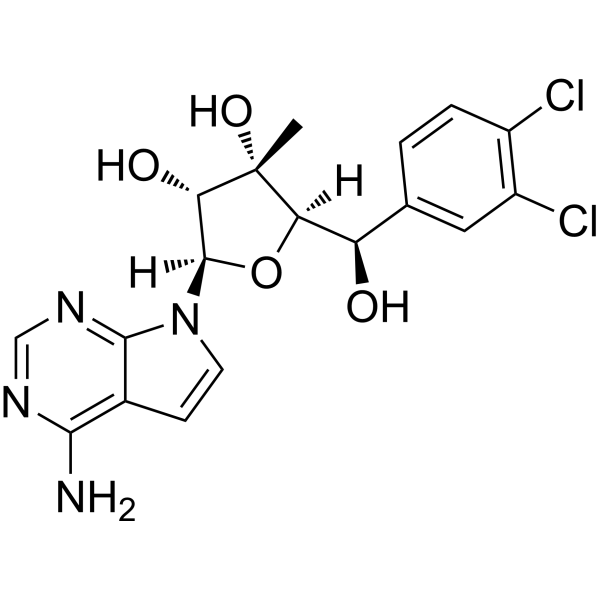
    RNA splicing modulator-4 is an RNA splicing modulator. RNA splicing modulator-4 controls the inclusion or exclusion of specific exons in precursor mRNA (pre-mRNA) by regulating alternative splicing events, thereby altering the coding sequence and function of mature mRNA. RNA splicing modulator-4 shows promise for research into neurodegenerative diseases (such as Huntington's disease) and cancers .
    RNA splicing modulator-4
  • HY-134851
    HIV-1 inhibitor-6
    1 Publications Verification

    HIV Infection
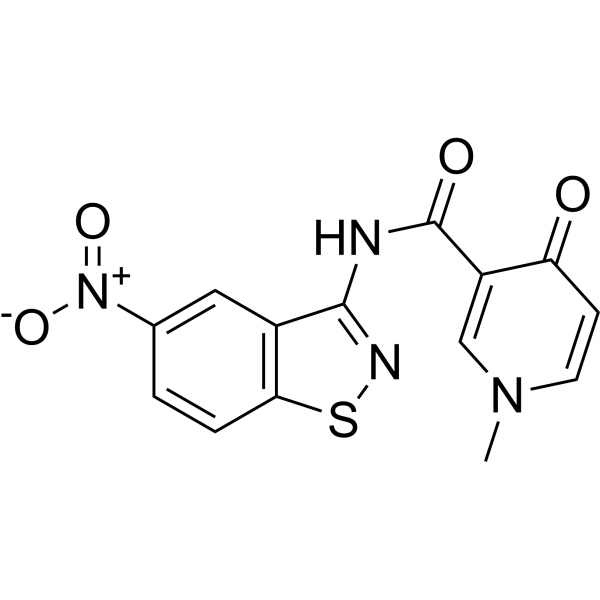
    HIV-1 inhibitor-6 (compound 9), a diheteroarylamide-based compound, is a potent HIV-1 pre-mRNA alternative splicing inhibitor. HIV-1 inhibitor-6 blocks HIV replication. HIV-1 inhibitor-6 is active against wild-type HIV-1IIIB (subtype B, X4-tropic) and HIV-1 97USSN54 (subtype A, R5-tropic) with EC50s of 0.6 μM and 0.9 μM, respectively. HIV-1 inhibitor-6 inhibits HIV strains resistant to agents targeting HIV reverse transcriptase, protease, integrase, and coreceptor CCR5 with EC50s ranging from 0.9 to 1.5 μM .
    HIV-1 inhibitor-6
  • HY-158783

    Ceramidase Bcl-2 Family LPL Receptor Apoptosis Neurological Disease
    SACLAC, a Ceramide analog, is a potent and covalent acid ceramidase (ASAH1; AC) inhibitor with a Ki of 97.1 nM. SACLAC effectively blocks AC activity and induces a decrease in sphingosine 1-phosphate (S1P) and total ceramide levels. SACLAC reduces the levels of splicing factor SF3B1 and alternative Mcl-1 mRNA splicing, increases pro-apoptotic Mcl-1S levels to induce apoptosis in acute myeloid leukemia (AML) cells. SACLAC reduces the leukemic burden in human AML xenograft mouse models .
    SACLAC
  • HY-158143

    Histone Methyltransferase Apoptosis Cancer
    AZD3470 is an orally active MTA-cooperative PRMT5 inhibitor, selective for MTAP-deficient tumors. AZD3470 induces cell cycle G2/M phase alterations, DNA damage, apoptosis, and symmetric dimethylarginine reduction. AZD3470 alters alternative splicing, increases skipped exon events in DNA repair and cell cycle pathways, and inhibits cancer cell proliferation and tumor growth. AZD3470 can be used for the research of non-small cell lung cancer and MTAP-deleted solid tumors .
    AZD3470
  • HY-E70660

    CDK Cancer
    CDK13/CycK Recombinant Human Active Protein Kinase is a RNA polymerase II C-terminal domain kinases. CDK13 interacts with the splicing factor SRSF1 and to regulate alternative splicing of HIV .
    CDK13/CycK Recombinant Human Active Protein Kinase
  • HY-114461

    DNA/RNA Synthesis Apoptosis Cancer
    FD-895 is a spliceosome modulator derived from a polyketide natural product, targeting the SF3b subunit of the spliceosome. FD-895 possesses core biological activities for regulating RNA splicing (intron retention, alternative splicing) and inducing apoptosis of cancer cells. FD-895 can be used for the research of cancer, such as chronic lymphocytic leukemia (CLL) .
    FD-895
  • HY-125201

    CDK Inflammation/Immunology
    Indazole 1 is a potent CDC2-like kinase 2 (CLK2) inhibitor (IC50=12.3 nM). Indazole 1 inhibits the phosphorylation of SR proteins (e.g., SRSF1, SRSF3) and modulates alternative splicing of Wnt signaling-related genes. Indazole 1 is promising for research of osteoarthritis .
    Indazole 1
  • HY-120907

    SF3B1 Cancer
    Sudemycin E is an analog of FR901464 (HY-16212). Sudemycin E can induce reversible changes in alternative splicing and abnormalities in chromatin modifications by binding to SF3B1, a component of the U2 small nuclear ribonucleoprotein (snRNP), thereby leading to the death of cancer cells. Sudemycin E has anti-tumor activity and can be used in tumor research .
    Sudemycin E
  • HY-141876

    Histone Methyltransferase Notch PI3K Akt Bcl-2 Family DNA/RNA Synthesis Cancer
    PRT543 is an orally active selective PRMT5 inhibitor. PRT543 reduces intracellular symmetric dimethylarginine (sDMA) levels, downregulates the expression of genes related to DNA damage repair and DNA replication pathways, and induces abnormal alternative splicing. PRT543 inhibits the MYB, NOTCH1 and PI3K/AKT signaling pathways, promotes nuclear translocation of FOXO1, upregulates the pro-apoptotic protein BAX, and enhances cellular sensitivity to BCL-2 inhibition. PRT543 disrupts the normal RNA splicing process and exerts a synthetic lethal effect on myeloid tumor cells carrying splicing factor mutations. PRT543 can be used in research related to various cancers including breast cancer, ovarian cancer and acute myeloid leukemia .
    PRT543
  • HY-148828

    iGluR Neurological Disease
    LSP-GR3 is a novel chemically-modified RNA oligonucleotides, called splice modulating oligomers (SMOs), which potently and specifically modulate GluR alternative splicing to GluR3-flip expression throughout the CNS.
    LSP-GR3
  • HY-148828A

    iGluR Neurological Disease
    LSP-GR3 sodium is a novel chemically-modified RNA oligonucleotides, called splice modulating oligomers (SMOs), which potently and specifically modulate GluR alternative splicing to GluR3-flip expression throughout the CNS.
    LSP-GR3 sodium
  • HY-E70692

    CDK Cancer
    CLK3 is a nuclear dual-specificity kinase has been shown to undergo conserved alternative splicing to generate catalytically active (Clk) and inactive (ClkT) isoforms. CLK3 Recombinant Human Active Protein Kinase is a recombinant CLK3 protein that can be used to study CLK3-related functions .
    CLK3 Recombinant Human Active Protein Kinase
  • HY-P3522A

    Integrin Cancer
    REDV TFA is the minimal active sequence within the CS5 site of the alternatively spliced type III connecting segment (IIICS) region of fibronectin. REDV TFA can mediate adhesion to the IIICS region of plasma fibronectin by binding the integrin alpha 4 beta 1(α4β1). REDV TFA can be used for the research of cell adhesion .
    REDV TFA
  • HY-15867

    (+)-Meayamycin B

    SF3B1 Bcl-2 Family Apoptosis Cancer
    Meayamycin B ((+)-Meayamycin B) is a potent SF3B1 inhibitor. Meayamycin B upregulates the proapoptotic Mcl-1S and downregulates Mcl-1L at the pre-mRNA splicing level. Meayamycin B does not regulate the alternative splicing of Bcl-x. Meayamycin B and ABT-737 (HY-50907) synergistically causes Apoptosis. Meayamycin B exhibits anticancer activity against non-small cell lung cancer .
    Meayamycin B
  • HY-182891

    Histone Demethylase Cancer
    MC4455 is a LSD1/PRMT5 dual inhibitor. MC4455 inhibits the LSD1/CoREST and PRMT5/MEP50 complex with IC50 values of 0.104 μM and 0.014 μM. MC4455 covalently binds to LSD1’s FAD cofactor, stabilizes the LSD1/CoREST complex. MC4455 induces myeloid differentiation, alters transcriptomic profiles, drives alternative splicing changes, and impairs leukemic cell viability in AML cells. MC4455 can be used for the research of acute myeloid leukemia .
    MC4455
  • HY-183831

    MDM-2/p53 PARP Caspase Apoptosis Cancer
    GPS167 is a CLK kinase inhibitor that potently and selectively inhibits recombinant human CLK1, CLK2 and CLK4. By inhibiting CLK-mediated phosphorylation of SRSF10, GPS167 upregulates the protein-binding ability of CLK1 and CLK4 with SRSF10, downregulates oncogenic BCLAF1-L and upregulates tumor-suppressive BCLAF1-S, regulates alternative splicing of genes such as MDM2 and MDM4, stabilizes p53 protein and induces DNA damage, ultimately triggering tumor cell apoptosis. GPS167 can block the epithelial-mesenchymal transition process of tumors, activate intracellular double-stranded RNA-mediated antiviral immune responses, and produce synergistic cytotoxicity when combined with microtubule-targeting drugs. GPS167 can be used in research related to various cancers including colorectal cancer .
    GPS167

Inquiry Online

Your information is safe with us. * Required Fields.

Salutation


Country or Region *

Applicant Name *


Organization Name *

Department *


Email Address *


Product Name *

Cat. No.


Requested quantity *

Phone Number *


Remarks

Inquiry Online

Inquiry Information

Product Name:
Cat. No.:
Quantity:
MCE Japan Authorized Agent:

