284 Results for "

branch

" in MedChemExpress (MCE) Product Catalog:
Products (284)

284 Results for "branch" in MCE Product Catalog:

16
16 Publications Verification
Art. -Nr.: HY-N0486
CAS. Nr.: 61-90-5
Synonyms: Leucine
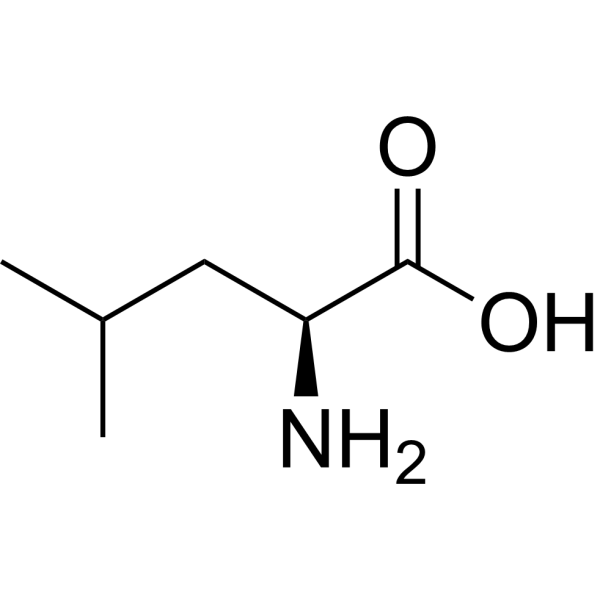
L-Leucine is an essential branched-chain amino acid (BCAA), which activates the mTOR signaling pathway .
9
9 Cited Publications
Art. -Nr.: HY-114855
CAS. Nr.: 34576-94-8
Reinheit:  99.81%
Target:  

Bcl-2 Family

Forschungsgebiete:  

Metabolic Disease

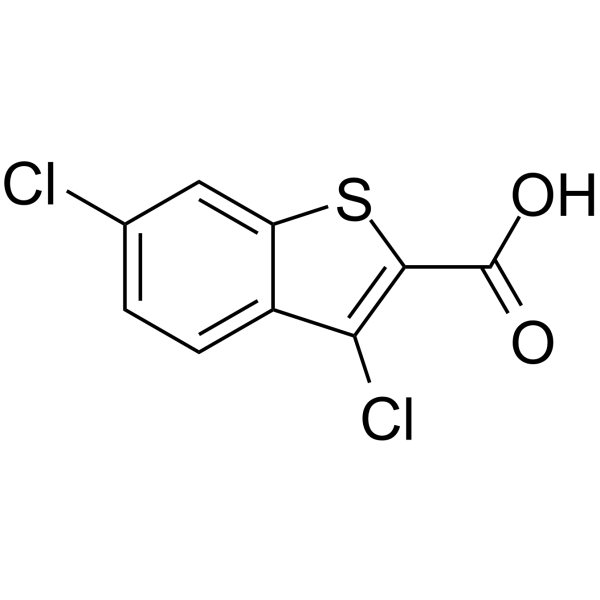
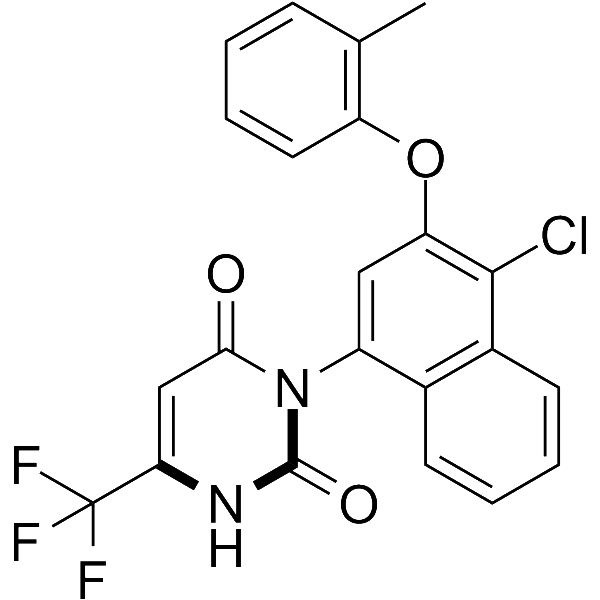
BT2 is a BCKDC kinase (BDK) inhibitor with an IC50 of 3.19 μM. BT2 binding to BDK triggers helix movements in the N-terminal domain, resulting in the dissociation of BDK from the branched-chain α-ketoacid dehydrogenase complex (BCKDC) . BT2 (compound 4) is also a potent and selective Mcl-1 inhibitor with a Ki value of 59 μM .
8
8 Cited Publications
Art. -Nr.: HY-W250110
CAS. Nr.: 9002-98-6
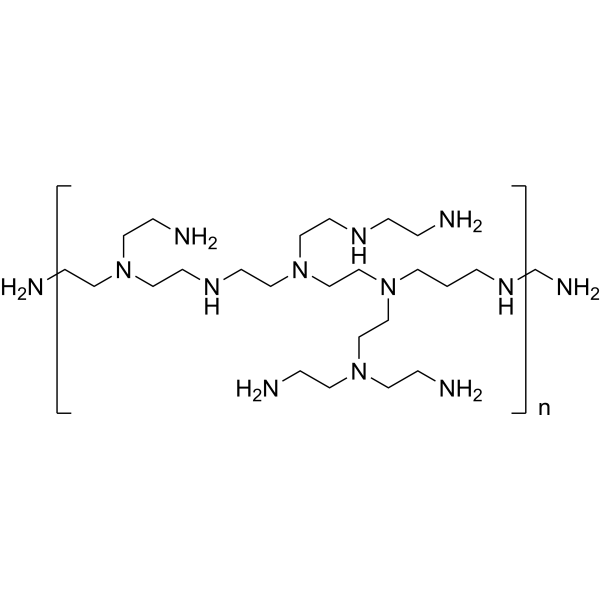
Polyethylenimine (branched) (30% in water) is a organic macromolecule with high cationic-charge-density potential. Polyethylenimine (branched) (30% in water) can ensnare DNA as well as attach to cell membrane. Polyethylenimine (branched) (30% in water) also retains a substantial buffering capacity at virtually any pH. Polyethylenimine (branched) (30% in water) is widely used as transfection reagent .
6
6 Cited Publications
Art. -Nr.: HY-N0771
CAS. Nr.: 73-32-5
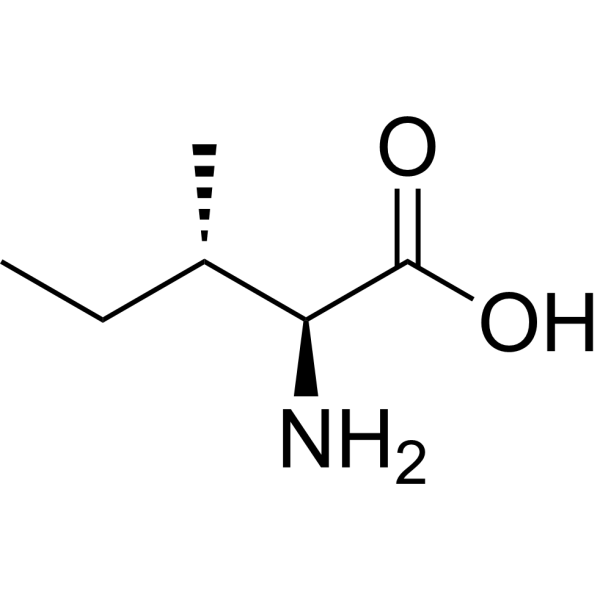
L-Isoleucine is an orally active branched chain amino acid, which is the L-enantiomer of isoleucine. L-Isoleucine has a role as a Saccharomyces cerevisiae metabolite, an Escherichia coli metabolite, a plant metabolite, a human metabolite, an algal metabolite and a mouse metabolite. L-Isoleucine regulates the inflammatory response to protect against pathogens in vivo and in vitro .
6
6 Cited Publications
Art. -Nr.: HY-141669
CAS. Nr.: 1800024-45-6
Reinheit:  99.07%
Forschungsgebiete:  

Metabolic Disease

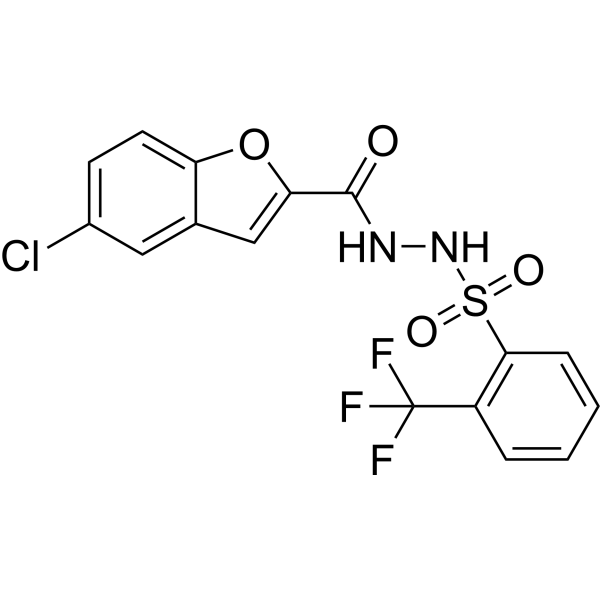
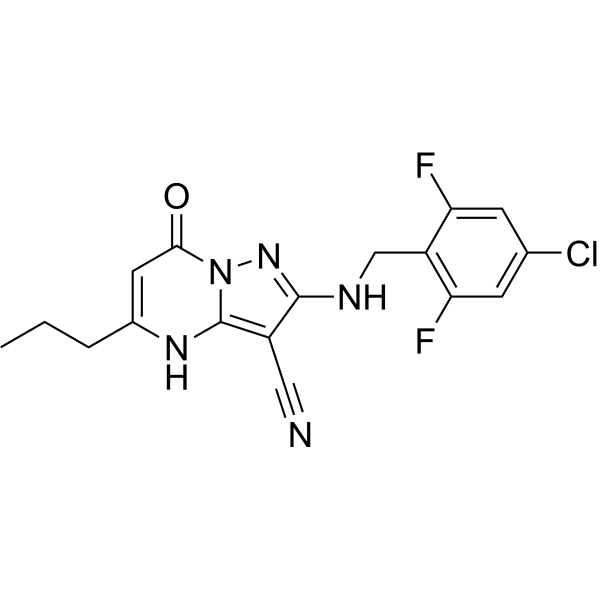
BCAT-IN-2 is a potent, selective and orally active inhibitor of mitochondrial branched-chain aminotransferase (BCATm), with a pIC50 of 7.3. BCAT-IN-2 shows selectivity for BCATm over BCATc (pIC50=6.6). BCAT-IN-2 can be used for the research of obesity and dislipidema .
6
6 Cited Publications
Art. -Nr.: HY-116044
CAS. Nr.: 406191-34-2
Reinheit:  99.28%
Forschungsgebiete:  

Neurological Disease

BCATc Inhibitor 2 is a selective branched-chain aminotransferase (BCAT) inhibitor for research of neurodegenerative diseases. The IC50s of 0.2 μM, 0.8 μM and 3.0 μM for rat cytosolic isoenzyme rBCATc, human cytosolic isoenzyme hBCATc and rat mitochondrial isoenzyme rBCATm, respectively. BCATc, also called BCAT1, is in the cytoplasm .
6
6 Cited Publications
Art. -Nr.: HY-128692
CAS. Nr.: 67769-47-5
Reinheit:  99.67%
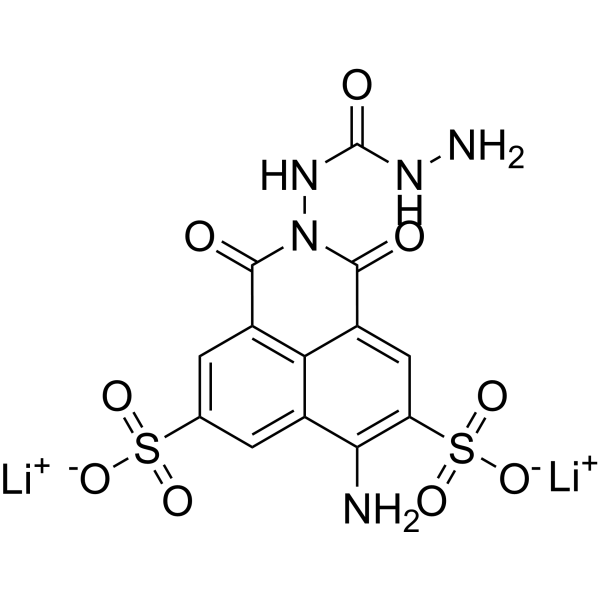
Luc Yellow CH dilithium is a high-intensity fluorescent probe containing free hydrazyl groups. Luc Yellow CH can react with fatty aldehydes at room temperature. Luc Yellow CH serves as a biological tracer to monitor neuronal branching, regeneration, gap junction detection and characterization, and selective ablation of cells after aldehyde fixation. Luc Yellow CH displays the maximum excitation/emission of 430 nm/540 nm, respectively .
6
6 Cited Publications
Art. -Nr.: HY-W127715
CAS. Nr.: 71206-95-6
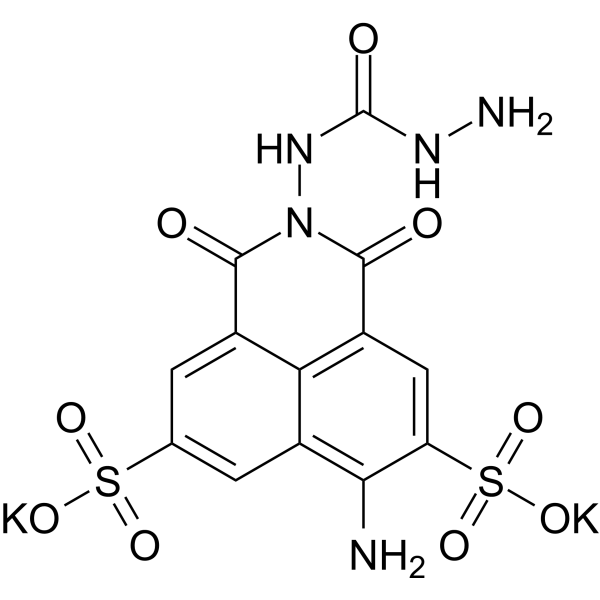
Lucifer Yellow CH dipotassium is a high-intensity fluorescent probe containing free hydrazyl groups. Lucifer Yellow CH can react with fatty aldehydes at room temperature. Lucifer Yellow CH serves as a biological tracer to monitor neuronal branching, regeneration, gap junction detection and characterization, and selective ablation of cells after aldehyde fixation. Lucifer yellow CH displays the maximum excitation/emission of 430 nm/540 nm, respectively .
5
5 Cited Publications
Art. -Nr.: HY-W193545A
CAS. Nr.: 1415683-79-2
ERG240 is an oral active branched-chain amino acid aminotransferase 1 (BCAT1) inhibitor. ERG240 can be used for the research of cancer, rheumatoid arthritis, and bone disease .
4
4 Cited Publications
Art. -Nr.: HY-112173
CAS. Nr.: 61596-47-2
Reinheit:  99.85%
Synonyms: Z-Pro-D-Leu-OH
Target:  

Peptides

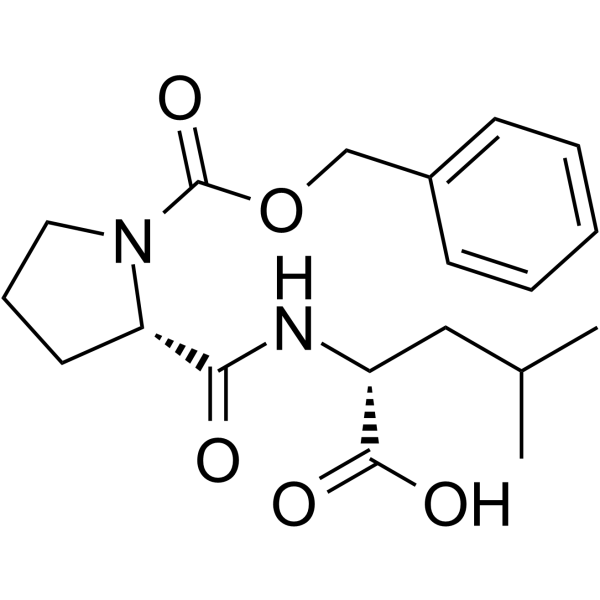
Prolylleucine (Z-Pro-D-Leu) is a dipeptide containing branched-chain amino acids. Prolylleucine (Z-Pro-D-Leu) can affect the circadian rhythms and behaviour of animals .
3
3 Cited Publications
Art. -Nr.: HY-W009371
CAS. Nr.: 18265-46-8
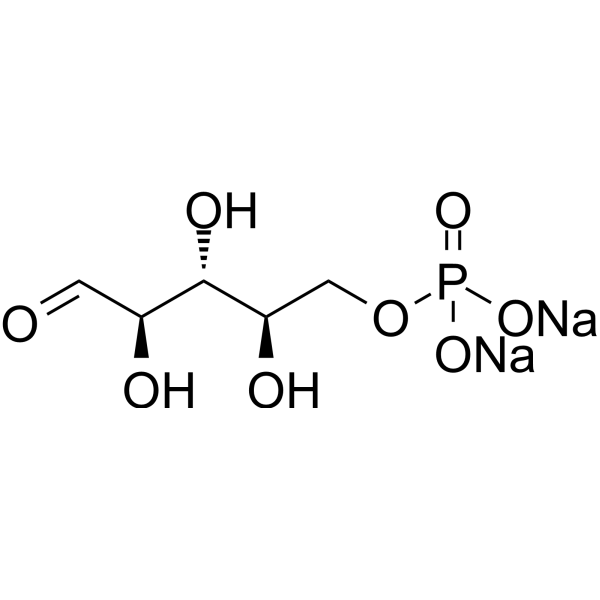
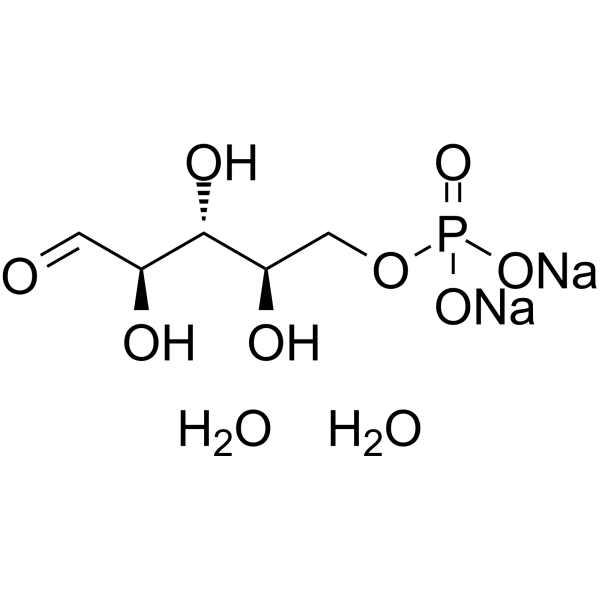
D-Ribose 5-phosphate disodium is an intermediate of the oxidative branch of the pentose phosphate pathway (PPP) and an end product of the nonoxidative branch of the PPP. D-Ribose 5-phosphate disodium is used in the synthesis of nucleotides and nucleic acids .
3
3 Cited Publications
Art. -Nr.: HY-W009371C
CAS. Nr.: 207671-46-3
D-Ribose 5-phosphate disodium dihydrate is an intermediate of the oxidative branch of the pentose phosphate pathway (PPP) and an end product of the nonoxidative branch of the PPP. D-Ribose 5-phosphate is used in the synthesis of nucleotides and nucleic acids .
3
3 Cited Publications
Art. -Nr.: HY-N0486S9
CAS. Nr.: 87828-86-2
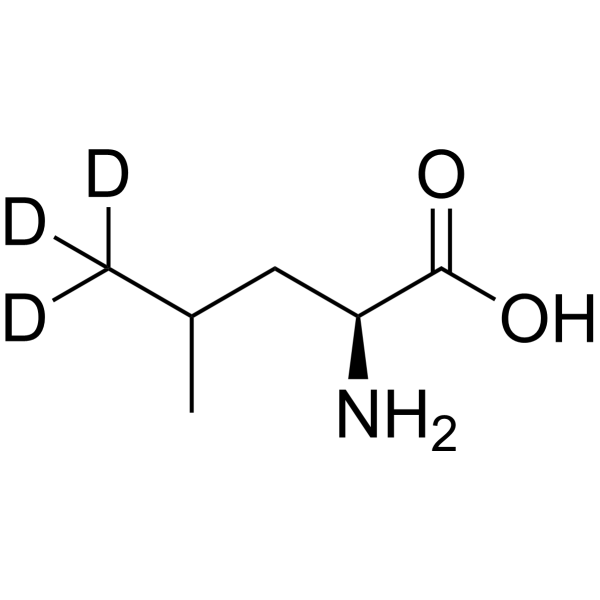
L-Leucine-d3 is the deuterium labeled L-Leucine. L-Leucine is an essential branched-chain amino acid (BCAA), which activates the mTOR signaling pathway .
3
3 Cited Publications
Art. -Nr.: HY-148242
CAS. Nr.: 2639638-66-5
Reinheit:  99.58%
Target:  

Fluorescent Dye

Forschungsgebiete:  

Cancer

BAY-069 is a potent branched-chain amino acid transaminases 1 (BCAT1) and BCAT2 inhibitor with IC50 values of 31 nM and 153 nM, respectively. BAY-069 also can be used as a chemical probe. BAY-069 can be used tor research anticancer .
3
3 Cited Publications
Art. -Nr.: HY-135969
CAS. Nr.: 123938-86-3
Reinheit:  61.22%
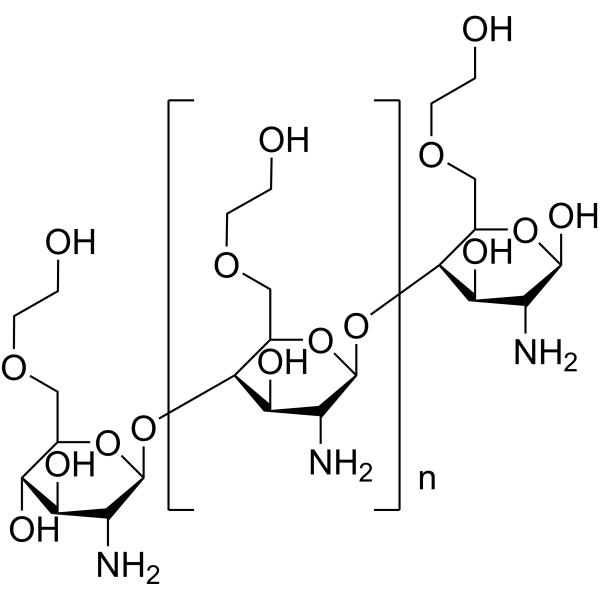
Glycol chitosan is a chitosan derivative with ethylene glycol branches. Glycol chitosan enhances membrane permeability and leadkage in Glycine max Harosoy 63W cells. Glycol chitosan is biocompatible and biodegradable . Glycol chitosan inhibits E. coli, S. aureus and S. enteritidis growths with MIC values of 4 μg/mL, 32 μg/mL and <0.5 μg/mL, respectively .
2
2 Cited Publications
Art. -Nr.: HY-B1122
CAS. Nr.: 339-72-0
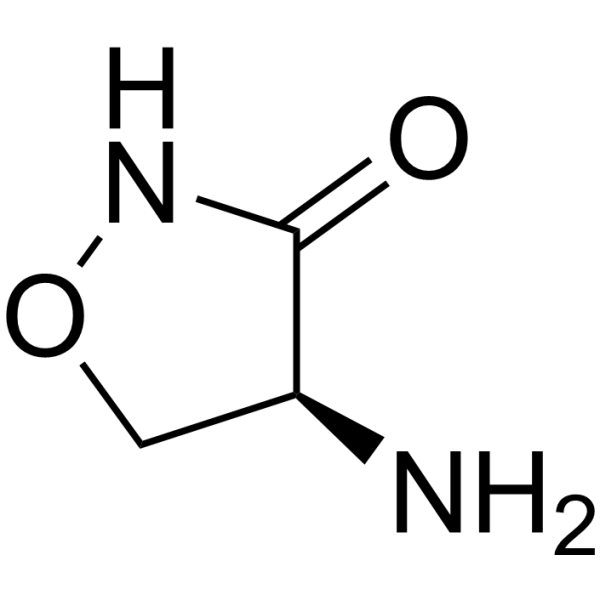
Synonyms: (S)-Cycloserine; (S)-4-Amino-3-isoxazolidone
L-Cycloserine ((S)-4-Amino-3-isoxazolidone) is an oral inhibitor of the enzyme gamma-aminobutyric acid (GABA) transaminase (GABA-t) and branched-chain transaminases in Mycobacterium tuberculosis. L-Cycloserine has anticonvulsant properties and inhibits the synthesis of neurotensin in mouse brains .
1
1 Cited Publications
Art. -Nr.: HY-151507
CAS. Nr.: 2322290-93-5
Reinheit:  ≥98.0%
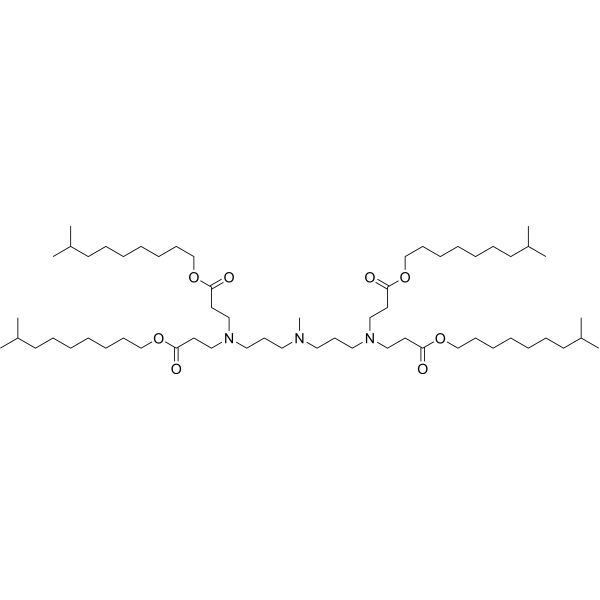
306Oi10 is a branched ionizable lipid that can be used to construct lipid nanoparticles (LNPs) for delivering messenger RNA. The surface ionization of lipid nanoparticles is related to the effectiveness of mRNA delivery. The tail of 306Oi10 has a one-carbon branch, which provides it with stronger surface ionization compared to lipids with linear tails, thereby enhancing its mRNA delivery efficacy. 306Oi10 can be used in research related to mRNA delivery .
1
1 Cited Publications
Art. -Nr.: HY-N0486S
CAS. Nr.: 106972-44-5
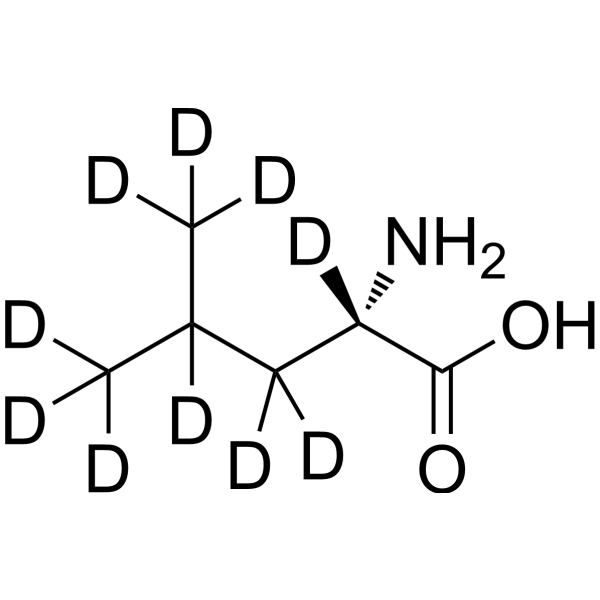
L-Leucine-d10 is the deuterium labeled L-Leucine. L-Leucine is an essential branched-chain amino acid (BCAA), which activates the mTOR signaling pathway .
1
1 Cited Publications
Art. -Nr.: HY-119109
CAS. Nr.: 9008-22-4
Reinheit:  ≥98.0%
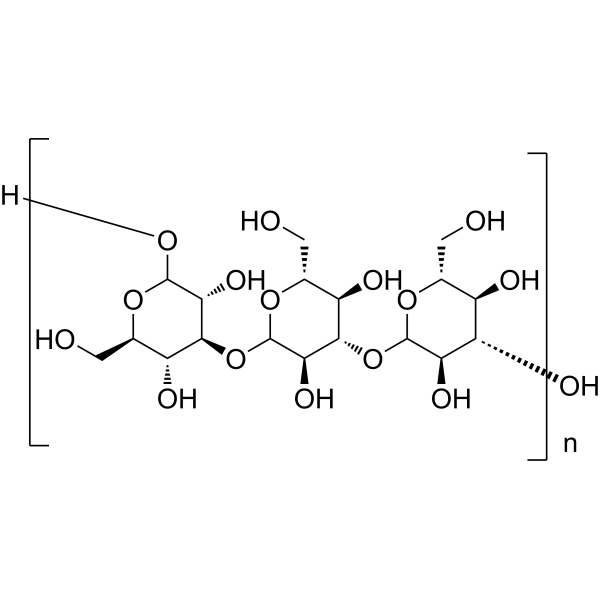
Laminaran is an β-1-3-glucan and a typical ligand for Dectin-1 from Eisenia Bicyclis, has potent immunomodulating, radioprotective, and anticancer activities . Laminaran is made up of β (1→3)-glucan with β (1→6)-branches and can be catalyzed by enzymes such as laminarinase (EC 3.2.1.6) that breaks the β (1→3) bonds . Laminaran is a promising immune stimulatory molecule for use in cancer immunotherapy .
1
1 Cited Publications
Art. -Nr.: HY-N0486R
CAS. Nr.: 61-90-5
Synonyms: Leucine (Standard)
L-Leucine (Standard) is the analytical standard of L-Leucine. This product is intended for research and analytical applications. L-Leucine is an essential branched-chain amino acid (BCAA), which activates the mTOR signaling pathway .

