1. Search Result
Search Result
Results for "

c-Myc G-quadruplex

" in MedChemExpress (MCE) Product Catalog:
Targets Recommended:
Cat. No. Product Name Target Research Areas Chemical Structure
  • HY-16291
    APTO-253
    Maximum Cited Publications
    21 Publications Verification

    LOR-253; LT-253

    c-Myc KLF Apoptosis Inflammation/Immunology Cancer
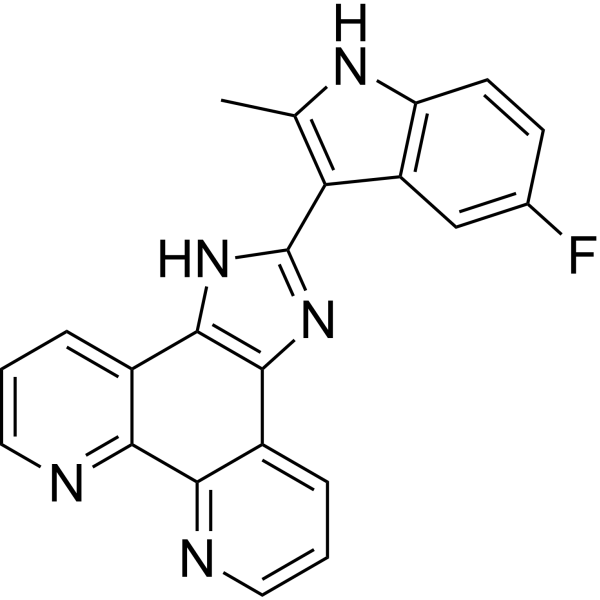
    APTO-253 (LOR-253) is a small molecule that inhibits c-Myc expression, stabilizes G-quadruplex DNA, and induces cell cycle arrest and apoptosis in acute myeloid leukemia cells. APTO-253 mediates anticancer activity through induction of the Krüppel-like factor 4 (KLF4) tumor suppressor . APTO-253 has antiarthritic activity .
    APTO-253
  • HY-156135

    MDM-2/p53 RET DNA/RNA Synthesis Apoptosis Caspase Endocrinology Cancer
    NSC194598 is a p53 DNA-binding inhibitor with an IC50 value of 180 nM. NSC194598 inhibits p53 DNA binding and induction of target genesn when p53 is stabilized and activated by irradiation or chemotherapy. NSC194598 can interfere with transcriptional activation of mutated rearranged during transfection (RET) gene, induce apoptosis and G0/G1 phase arrest. NSC194598 can be used for the researches of acute radiation toxicity and medullary thyroid carcinoma .
    NSC194598
  • HY-145748

    G-quadruplex Autophagy c-Myc Cancer
    SYUIQ-5 is a G-quadruplex ligand. SYUIQ-5 stabilizes G-quadruplex and induce senescence. SYUIQ-5 inhibits c-myc gene promoter activity. SYUIQ-5 induces cancer cells autophagy by triggering telomere damage through TRF2 delocalization from telomeres .
    SYUIQ-5
  • HY-178909

    c-Myc Apoptosis Reactive Oxygen Species (ROS) Cancer
    Y502-2304 is a c-Myc G-quadruplex stabilizer. Y502-2304 exhibits potent antiproliferative activity in multiple myeloma (MM) cells. Y502–2304 downregulates c-Myc mRNA and protein expression. Y502-2304 induces apoptosis in MM cells, characterizes by elevated γH2AX levels, increases reactive oxygen species (ROS) generation, and mitochondrial dysfunction. Y502-2304 significantly inhibits tumor growth in a xenograft MM model. Y502-2304 can be used for the study of multiple myeloma .
    Y502-2304
  • HY-145843

    c-Myc Cancer
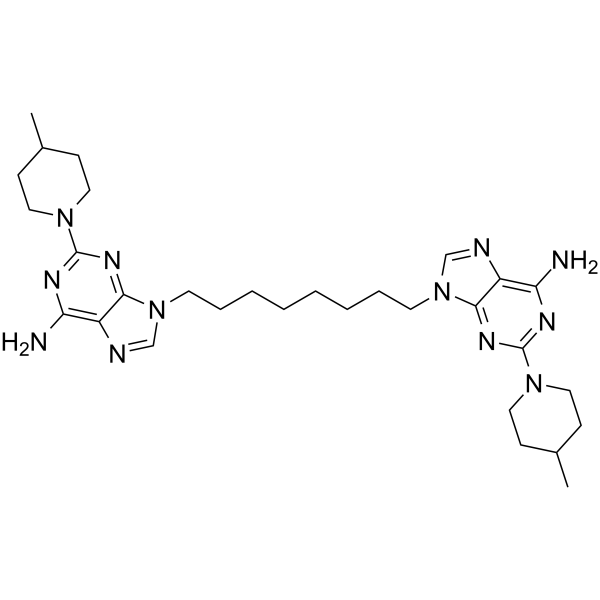
    c-Myc inhibitor 5 (DA3) is a fluorescent, long chain-bridged bispurine that selectively targets the c-MYC G-quadruplex (KD of 16 μM). c-Myc inhibitor 5 shows inhibition on c-MYC expression rather than other G4-driven oncogenes .
    c-Myc inhibitor 5
  • HY-177872

    NSC 338258

    Drug Derivative c-Myc Apoptosis Cancer
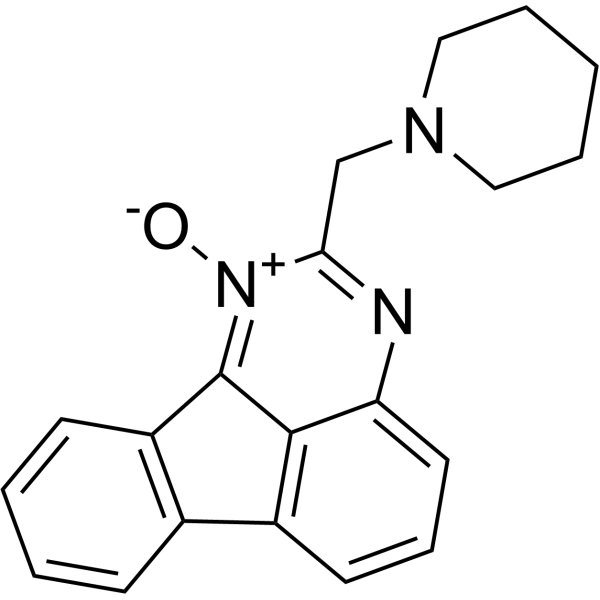
    GQC-05 (NSC338258), Ellipticine (HY-15753) derivative, is potent and selective c-Myc G-quadruplex ( c-Myc G4) stabilizer with KD values of 0.1-1.43 μM. GQC-05 can reduce Myc expression and induce cancer cells apoptosis. GQC-05 can be used for the research of cancer, such as Burkitt lymphoma .
    GQC-05
  • HY-151471

    c-Myc Cancer
    Anticancer agent 84 is an anticancer agent. Anticancer agent 84 represses the transcription of c-MYC by stabilizing the G-quadruplex (G4) structure. Anticancer agent 84 can be used for the research of cancer .
    Anticancer agent 84
  • HY-176066A

    c-Myc Apoptosis Cancer
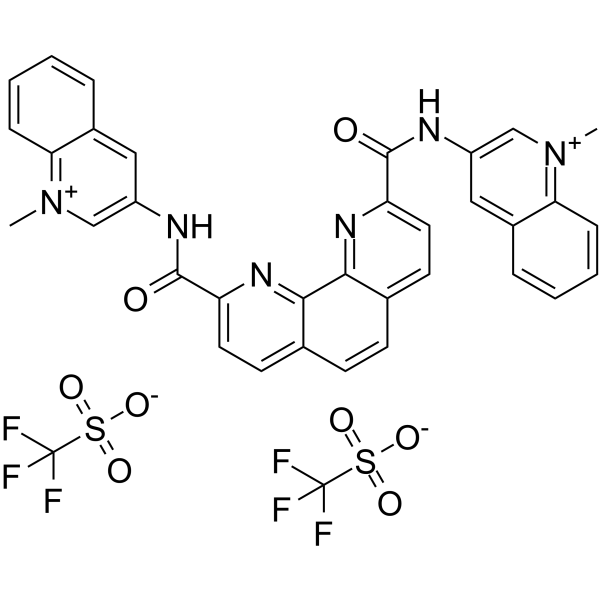
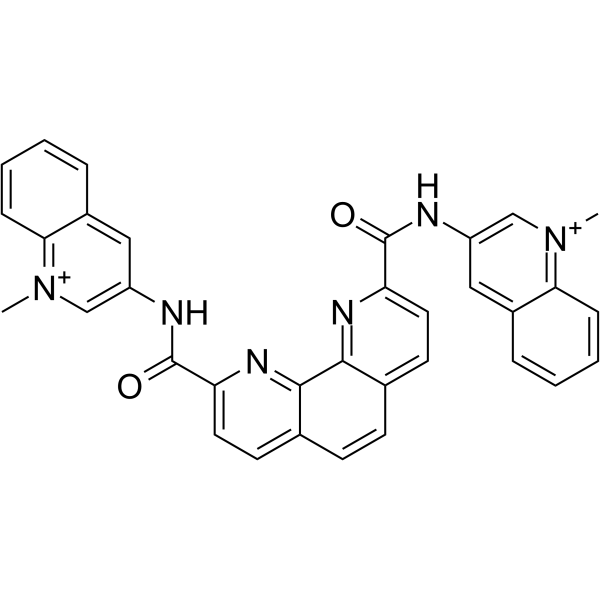
    c-Myc inhibitor 16 iodide (Compound W11) is a selective c-Myc G-quadruplex (c-Myc G4) inhibitor. c-Myc inhibitor 16 iodide inhibits the transcription and translation of the c-Myc gene, disrupts the tumor cell cycle, arrests cell growth in the G0/G1 phase and activates the mitochondrial apoptosis pathway to induce early apoptosis of cancer cells. c-Myc inhibitor 16 iodide is promising for research of breast cancer .
    c-Myc inhibitor 16 iodide
  • HY-147973

    c-Myc Apoptosis Cancer
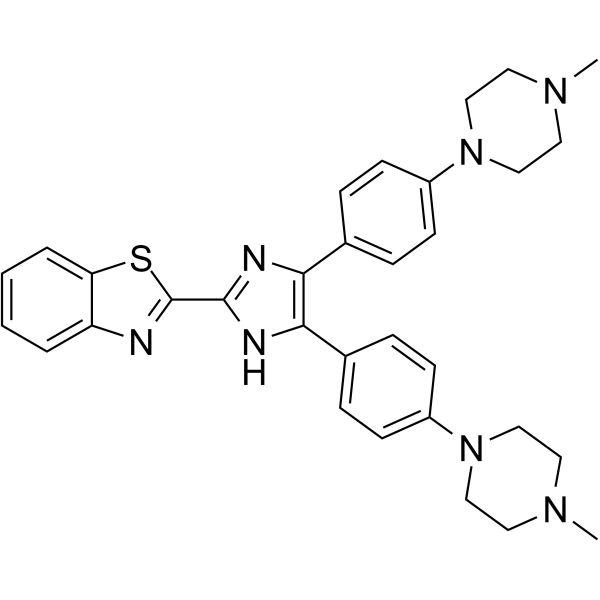
    IZTZ-1, an imidazole-benzothiazole conjugate, is a c-MYC G4 ligand. IZTZ-1 is able to downregulate the c-MYC expression by stabilizing c-MYC G4. IZTZ-1 induces cell cycle arrest, apoptosis, thereby inhibiting cell proliferation in B16 cells. IZTZ-1 shows antitumor activity, and can be used for melanoma research .
    IZTZ-1
  • HY-121917

    c-Myc Apoptosis Inflammation/Immunology
    APTO-253 (LOR-253) hydrochloride is a small molecule that inhibits c-Myc expression, stabilizes G-quadruplex DNA, and induces cell cycle arrest and apoptosis in acute myeloid leukemia cells. APTO-253 hydrochloride mediates anticancer activity via induction of Kruppel-like factor 4 (KLF4) tumor suppressor. APTO-253 hydrochloride exhibits antiarthritic activity.
    Ro 31-7837
  • HY-168886

    c-Myc Cancer
    Anticancer agent 263 (compound 7) is a potent anticancer agent. Anticancer agent 263 binds to the G-quadruplex DNA (G4) sequence 22-mer Pu22, a mimic of c-Myc DNA. Anticancer agent 263 is a structure modulator, showcasing a significant enhancement in protein α-helix formation and the capability to form supramolecular network. Anticancer agent 263 shows no cytotoxicity .
    Anticancer agent 263
  • HY-16291A

    LOR-253 hydrochloride; LT-253 hydrochloride

    c-Myc Inflammation/Immunology
    APTO-253?(LOR-253) hydrochloride is a small molecule that inhibits c-Myc expression, stabilizes G-quadruplex DNA and induces cell cycle arrest and apoptosis in acute myeloid leukemia cells. APTO-253?hydrochloride mediates anticancer activity via induction of Kruppel-like factor 4?(KLF4)?tumor suppressor. APTO-253?hydrochloride exhibits antiarthritic activity .
    APTO-253 hydrochloride
  • HY-120750

    Endogenous Metabolite Cancer
    A 62176 hydrochloride is a compound that targets DNA topoisomerase II and has the activity of inhibiting purine synthesis in cancer cells. A 62176 hydrochloride interferes with c-MYC mRNA expression by interacting with G-quadruplex. The main mechanism of action of A 62176 hydrochloride is by displacing nucleosomes from the quadruplex of non-template strand rDNA, resulting in rapid redistribution of nucleosomes. The application potential of A 62176 hydrochloride is that it causes DNA damage and relies on BRCA1/2-mediated homologous recombination and DNA-PK-mediated non-homologous end-joining pathways to repair the damage .
    A 62176 hydrochloride
  • HY-162796

    Apoptosis G-quadruplex c-Myc Cancer
    TS-2 is a fluorescent ligand of c-Myc G4 with anticancer activity. TS-2 inhibits the growth of cancer cells and induces apoptosis of cancer cells by targeting the c-MYC oncogene promoter G4, causing transcriptional repression of the c-Myc oncogene .
    TS-2
  • HY-182055

    G-quadruplex Keap1-Nrf2 Ferroptosis Apoptosis Cancer
    Anticancer agent 309 (Compound HZ-1) is an anticancer agent and G-quadruplex binder, with Kd values of 2.46 μM and 1.61 μM for c-Myc G4 and KRAS G4, respectively. Anticancer agent 309 promotes the formation of intranuclear G4. Anticancer agent 309 shows higher selectivity for parallel G4 than for non-parallel G4. Anticancer agent 309 inhibits the NRF2 signaling pathway and reduces the expression of XCT and GPX4. Anticancer agent 309 induces Ferroptosis, Apoptosis and immunogenic cell death in cells. Anticancer agent 309 exerts antitumor efficacy against breast cancer. Anticancer agent 309 is applicable for the research of breast cancer .
    Anticancer agent 309
  • HY-181234

    c-Myc Apoptosis Cancer
    Y502-3888 is a c-Myc inhibitor. Y502-3888 binds to the c-Myc G4 structure, inhibits c-Myc transcription, and downregulates c-Myc expression at both mRNA and protein levels. Y502-3888 inhibits the viability of myeloma cells and induces cell apoptosis. Y502-3888 can be used for the research of multiple myeloma .
    Y502-3888
  • HY-182029

    G-quadruplex Cancer
    G-quadruplex ligand 5 is a G-quadruplex (G4) ligand. G-quadruplex ligand 5 selectively stabilizes cancer-associated G4 oligonucleotides and shows cytotoxicity toward cancer cells. G-quadruplex ligand 5 can be used for the research of cancer .
    G-quadruplex ligand 5

Inquiry Online

Your information is safe with us. * Required Fields.

Salutation


Country or Region *

Applicant Name *


Organization Name *

Department *


Email Address *


Product Name *

Cat. No.


Requested quantity *

Phone Number *


Remarks

Inquiry Online

Inquiry Information

Product Name:
Cat. No.:
Quantity:
MCE Japan Authorized Agent:

