



APTO-253 hydrochloride
Based on 23 publication(s) in Google Scholar
APTO-253?(LOR-253) hydrochloride is a small molecule that inhibits c-Myc expression, stabilizes G-quadruplex DNA and induces cell cycle arrest and apoptosis in acute myeloid leukemia cells. APTO-253?hydrochloride mediates anticancer activity via induction of Kruppel-like factor 4?(KLF4)?tumor suppressor. APTO-253?hydrochloride exhibits antiarthritic activity.
For research use only. We do not sell to patients.
- CAS No.: 1691221-67-6
- Formula: C22H14FN5
- Molecular Weight:367.38
-
Storage:
Please store the product under the recommended conditions in the Certificate of Analysis.


To place orders, for customer services and technical support, please contact: MedChemExpress USA
Tel: 609-228-6898 E-mail: [email protected] [email protected]


-
 Biological Activity
-
Chemical Information
- Protocols
- Purity & Documentation
- References
-
 Help & FAQs


Publications Citing Use of MedChemExpress (MCE) APTO-253 hydrochloride
More- Signal Transduct Target Ther. 2026 Jul 24;11(1):290.
- Ann Rheum Dis. 2021 Apr;80(4):440-450. [Abstract]
- Blood. 2024 Nov 7;144(19):2018-2032. [Abstract]
- Nat Commun. 2023 Sep 2;14(1):5360. [Abstract]
- Nat Commun. 2019 Sep 25;10(1):4369. [Abstract]
- Adv Sci (Weinh). 2025 May;12(19):e2408992. [Abstract]
- J Transl Med. 2024 Oct 10;22(1):922. [Abstract]
- Leukemia. 2025 Sep;39(9):2163-2173. [Abstract]
- Cell Rep. 2026 Mar 24;45(4):117201. [Abstract]
- JCI Insight. 2022 Aug 22;7(16):e160688. [Abstract]
- J Environ Sci. 2025 Nov 28.
- Int Immunopharmacol. 2023 Jul:120:110425. [Abstract]
- Sci Rep. 2026 Jun 29.
- PLoS Pathog. 2025 May 12;21(5):e1013166. [Abstract]
- Mol Cell Biochem. 2021 Apr;476(4):1741-1749. [Abstract]
- FASEB J. 2025 May 31;39(10):e70613. [Abstract]
- J Immunol. 2025 Aug 7:vkaf170. [Abstract]
- Neurotox Res. 2020 Dec;38(4):967-978. [Abstract]
- J Diabetes Res. 2021 Sep 15:2021:7945117. [Abstract]
- Genes (Basel). 2021 Apr 8;12(4):539. [Abstract]
- Research Square Preprint. 2023 Jun 29.
- Research Square Preprint. 2023 Apr 18.
- Patent. US20220332841A1.
 Customer Validation & Images

-
Cell Proliferation/Viability Assay
-
WB
-
WB
-
RT-PCR
-
In Vivo Efficacy Study


Biological Activity
Description


Chemical Information
-
CAS No. 1691221-67-6
-
Molecular Weight 367.38
-
Formula C22H14FN5
-
SMILES
CC(NC1=C2C=C(F)C=C1)=C2C3=NC4=C5C=CC=NC5=C6N=CC=CC6=C4N3
-
Synonyms
LOR-253 hydrochloride; LT-253 hydrochloride
-
Shipping
Room temperature in continental US; may vary elsewhere.
-
Storage
Please store the product under the recommended conditions in the Certificate of Analysis.


Publications (23)
-
Journal Impact Factor
-
Most Recent
-
-
Ann Rheum Dis
Parsing multiomics landscape of activated synovial fibroblasts highlights drug targets linked to genetic risk of rheumatoid arthritis. [Abstract]2021 Apr;80(4):440-450. PMID: 33139312
APTO-253 hydrochloride purchased from MedChemExpress. Usage Cited in: Ann Rheum Dis. 2021 Apr;80(4):440-450. [Abstract]
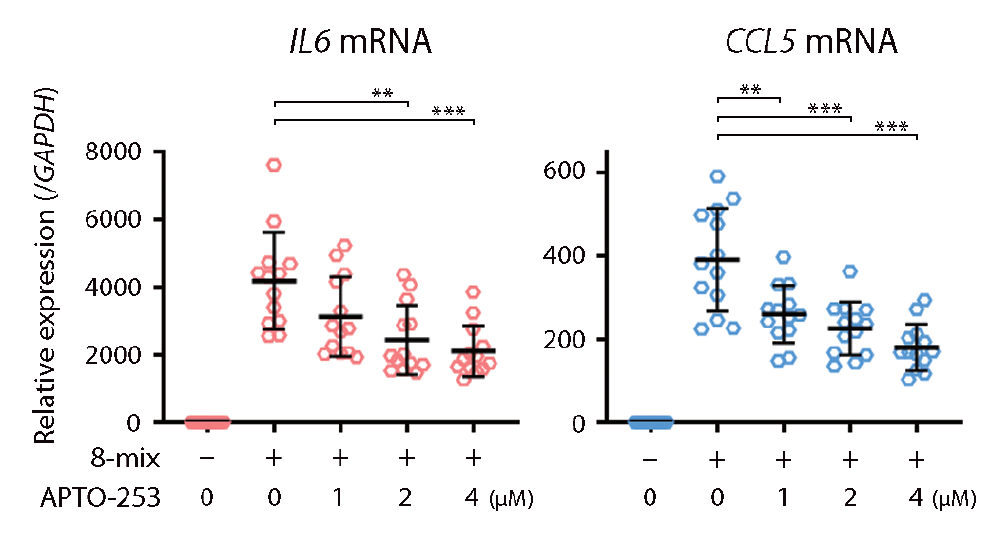
APTO-253 (1-4 μM) reduced mRNA levels of 8-mix SE-contacted genes (IL-6, CCL5) in stimulated RASFs.
APTO-253 hydrochloride purchased from MedChemExpress. Usage Cited in: Ann Rheum Dis. 2021 Apr;80(4):440-450. [Abstract]
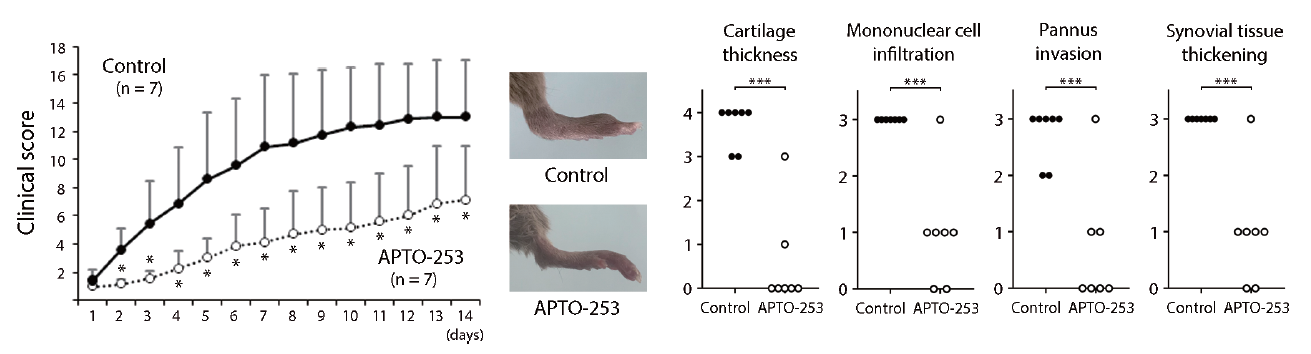
APTO-253 (15 mg/kg; i.v.; twice per day for two consecutive days per week) demonstrated significant therapeutic activity in collagen-induced arthritis (CIA) mice.
-
Blood
Epigenetic Regulation of Non-canonical Menin Targets Modulates Menin Inhibitor Response in Acute Myeloid Leukemia. [Abstract]2024 Nov 7;144(19):2018-2032. PMID: 39158067
APTO-253 hydrochloride purchased from MedChemExpress. Usage Cited in: Blood. 2024 Nov 7;144(19):2018-2032. [Abstract]
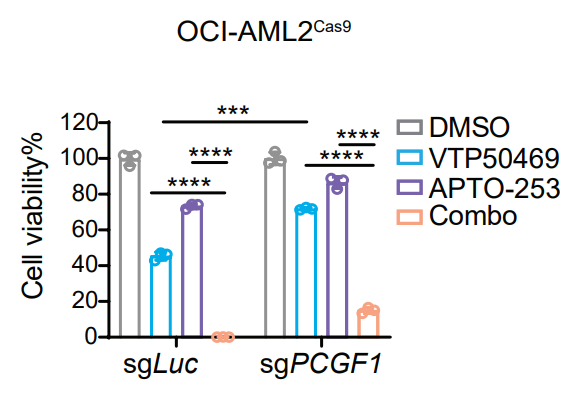
Cell viability of OCI-AML2 cells expressing either sgLuc or sgPCGF1 was assessed under the treatment of APTO-253 (100 nM; 9 d).
-
Nat Commun
FAM3A reshapes VSMC fate specification in abdominal aortic aneurysm by regulating KLF4 ubiquitination. [Abstract]2023 Sep 2;14(1):5360. PMID: 37660071
APTO-253 hydrochloride purchased from MedChemExpress. Usage Cited in: Nat Commun. 2023 Sep 2;14(1):5360. [Abstract]
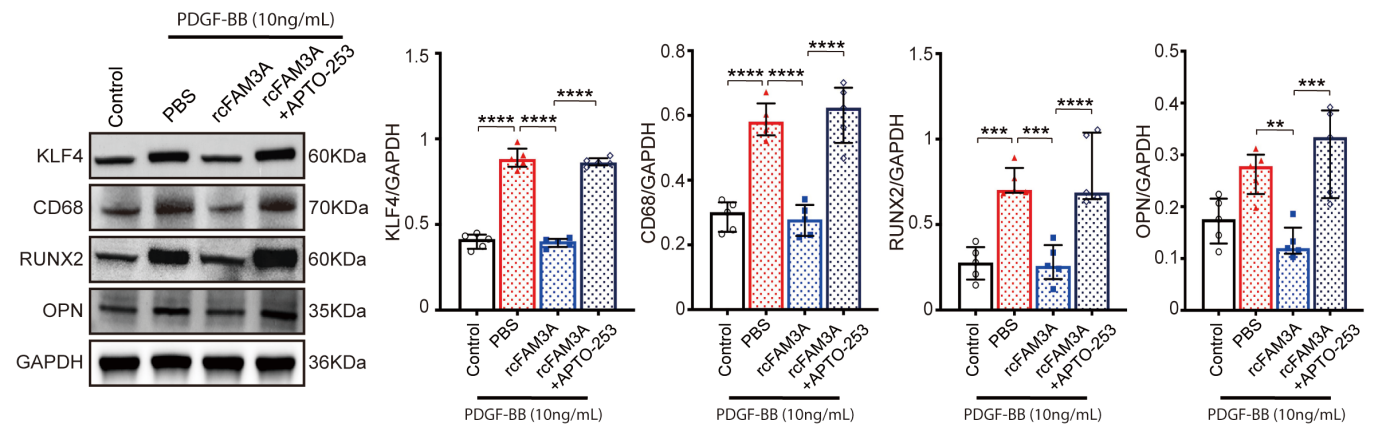
APTO-253 (10 μM) reversed the effects of FAM3A on suppressing the expression of the markers for macrophages (CD68) and osteoblasts (OPN, RUNX2) in VSMCs.
APTO-253 hydrochloride purchased from MedChemExpress. Usage Cited in: Nat Commun. 2023 Sep 2;14(1):5360. [Abstract]
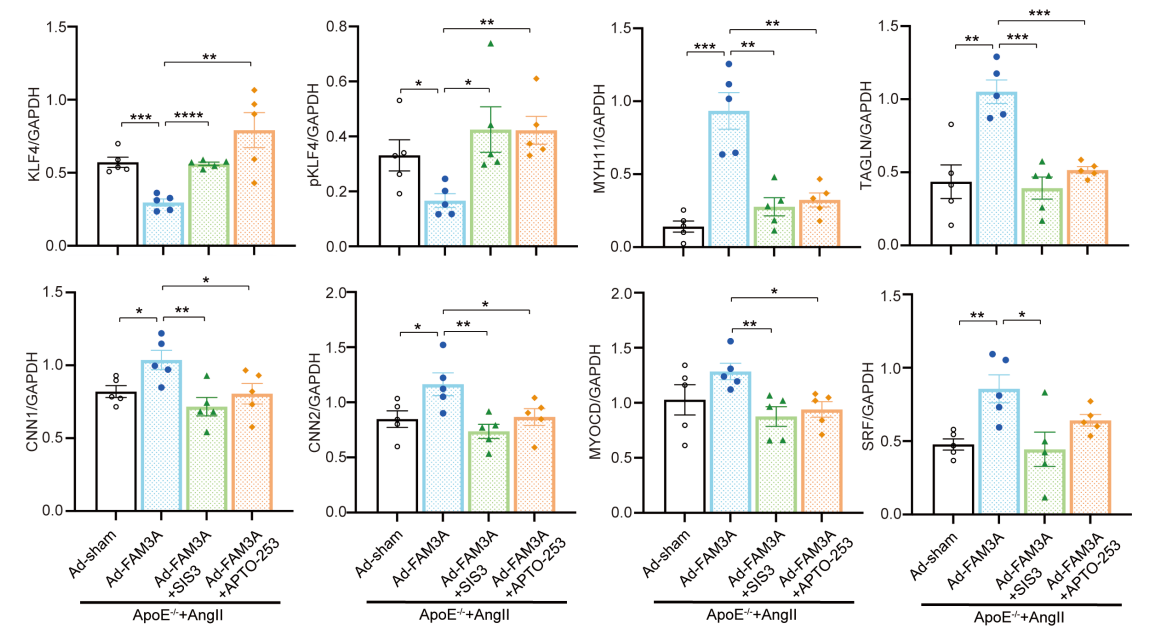
KLF4 inducer APTO-253 (1 μg/g; i.p.; once daily for 4 weeks) significantly abrogated the effects of FAM3A on maintaining the contractile phenotype of VSMCs in aortas from AngII-ApoE−/− murine AAA models.
-
Nat Commun
Chromatin-informed inference of transcriptional programs in gynecologic and basal breast cancers. [Abstract]2019 Sep 25;10(1):4369. PMID: 31554806 -
Adv Sci (Weinh)
Artesunate Inhibits Neointimal Hyperplasia by Promoting IRF4 Associated Macrophage Polarization. [Abstract]2025 May;12(19):e2408992. PMID: 40126336 -
J Transl Med
KLF4 regulates trophoblast function and associates with unexplained recurrent spontaneous abortion. [Abstract]2024 Oct 10;22(1):922. PMID: 39390495 -
Leukemia
Targeting of IRAK4 and GSPT1 enhances therapeutic efficacy in AML via c-Myc destabilization. [Abstract]2025 Sep;39(9):2163-2173. PMID: 40670672 -
Cell Rep
SETDB2-mediated transcriptional repression of IDE in sensory neurons promotes migraine-like pain behaviors in mice. [Abstract]2026 Mar 24;45(4):117201. PMID: 41880325 -
JCI Insight
KLF4 is a therapeutically tractable brake on fibroblast activation that promotes resolution of pulmonary fibrosis. [Abstract]2022 Aug 22;7(16):e160688. PMID: 35852857 -
-
Int Immunopharmacol
Succinate pretreatment attenuates intestinal ischemia-reperfusion injury by inhibiting necroptosis and inflammation via upregulating Klf4. [Abstract]2023 Jul:120:110425. PMID: 37285681 -
-
PLoS Pathog
STAT3, MYC, and EBNA1 cooperate through a ZC3H18 transcriptional network to regulate survival and proliferation of EBV-positive lymphomas. [Abstract]2025 May 12;21(5):e1013166. PMID: 40354417 -
Mol Cell Biochem
2021 Apr;476(4):1741-1749. PMID: 33428060 -
FASEB J
Induction of T-Cell Differentiation by KLF4 in T-Cell Acute Lymphoblastic Leukemia Cells Harboring Activating Mutation in NOTCH3. [Abstract]2025 May 31;39(10):e70613. PMID: 40354086 -
J Immunol
TLR7-mediated immune response of renal myeloid-derived suppressor cells via RUNX1-KLF4 in systemic candidiasis. [Abstract]2025 Aug 7:vkaf170. PMID: 40795213 -
Neurotox Res
2020 Dec;38(4):967-978. PMID: 32870474 -
J Diabetes Res
KLF4 Promotes Diabetic Chronic Wound Healing by Suppressing Th17 Cell Differentiation in an MDSC-Dependent Manner. [Abstract]2021 Sep 15:2021:7945117. PMID: 34568499 -
Genes (Basel)
Krüppel-Like Factor 4 and Its Activator APTO-253 Induce NOXA-Mediated, p53-Independent Apoptosis in Triple-Negative Breast Cancer Cells. [Abstract]2021 Apr 8;12(4):539. PMID: 33918002 -
-
-

Protocols
-
RNA extraction experimental
By lysing cells, releasing RNA, and removing impurities such as proteins and DNA, high-purity RNA products are finally obtained. The commonly used traditional method is the guanidine isothiocyanate/phenol/chloroform method (Trizol), which is suitable for a variety of animal materials including animal tissues, microorganisms, cultured cells, etc., and most plant materials.
-
Apoptosis
Apoptosis, also called programmed cell death, is generally characterized by distinct morphological characteristics.
-
TUNEL staining for apoptotic DNA fragmentation
TUNEL staining detects DNA strand breaks by using terminal deoxynucleotidyl transferase to add labeled nucleotides to exposed 3′-OH DNA termini, generating either microscopic staining in fixed cells or tissue sections, or fluorescence/cytometric signal in cell suspensions. TUNEL positivity reflects DNA fragmentation but should not be interpreted alone as definitive apoptosis, because TUNEL can also label necrotic, autolytic, mechanically damaged, or DNA-repair-associated DNA breaks.
-
Flow cytometric DNA-content cell-cycle staining
Flow cytometric DNA-content cell-cycle staining measures the fluorescence intensity of DNA-bound fluorochromes in single cells or nuclei to estimate DNA content distributions, allowing assignment of populations to G0/G1, S, and G2/M phases by DNA histogram deconvolution. Propidium iodide (PI) intercalates into DNA, and PI fluorescence is proportional to cellular DNA content when staining is performed under conditions that make DNA accessible and minimize non-DNA signal. Cells with G2/M DNA content are expected to show approximately twice the fluorescence intensity of G0/G1 cells, while S-phase cells occupy intermediate fluorescence values. PI-based DNA-content analysis can also detect cells with fractional DNA content, often reported as sub-G1, when DNA fragmentation and extraction during staining reduce retained DNA signal in apoptotic cells. DAPI is an alternative DNA fluorochrome for univariate DNA-content analysis, while bivariate approaches combining DNA content with proliferation
-
Annexin V plus membrane-impermeant dye apoptosis staining
Annexin V-based apoptosis assays rely on the detection of phosphatidylserine (PS) externalization from the inner leaflet of the plasma membrane to the outer leaflet, an early biochemical hallmark of apoptosis. Fluorescently labeled Annexin V binds PS in a calcium-dependent manner, enabling identification of early apoptotic cells by flow cytometry or fluorescence microscopy. When combined with a membrane-impermeant DNA-binding dye (e. g. , propidium iodide), this approach allows discrimination between viable (Annexin V−/dye−), early apoptotic (Annexin V+/dye−), and late apoptotic or necrotic (Annexin V+/dye+) cell populations by assessing membrane integrity and PS exposure.
-
BrdU Incorporation Assay
Bromodeoxyuridine (BrdU) incorporation assay is based on the principle that BrdU, a thymidine analog, is incorporated into newly synthesized DNA during the S phase of the cell cycle, thereby serving as a marker of DNA replication and cellular proliferation. Incorporated BrdU can be detected using anti-BrdU antibodies following DNA denaturation, enabling visualization or quantification of proliferating cells through immunochemical detection methods such as immunofluorescence or immunohistochemistry.
-
Apoptosis Solutions
Apoptosis is a regulated, generally non-lytic cell-death pathway that removes unwanted, damaged, infected, or abnormal cells through coordinated morphological changes, caspase activation, DNA fragmentation, and membrane remodeling. The intrinsic apoptosis pathway is controlled mainly by mitochondrial outer membrane permeabilization, BCL-2 family proteins, cytochrome c release, apoptosome formation, caspase-9 activation, and downstream executioner caspase-3/7 activation. The extrinsic apoptosis pathway is initiated by death receptors such as Fas, TNFR, and TRAIL receptors, which recruit adaptor proteins and activate caspase-8 before engaging executioner caspases or mitochondrial amplification through BID cleavage. Apoptosis is linked to many phenotypes, including cancer cell killing, tissue homeostasis, immune regulation, neurodegeneration, infection response, and treatment-induced cytotoxicity; unresolved questions include how apoptosis interacts with necroptosis, pyroptosis, ferroptos
-
Protocol for Cell Cycle
Cell-cycle analysis by flow cytometry measures DNA content in single cells to estimate the fraction of cells in G0/G1, S, and G2/M phases. Propidium iodide intercalates into DNA, and after RNA removal with RNase, fluorescence intensity reflects cellular DNA content: 2N cells are assigned to G0/G1, cells between 2N and 4N to S phase, and 4N cells to G2/M. DNA-content analysis alone cannot reliably separate G0 from G1 or G2 from M. Ki-67 can distinguish quiescent G0 cells from cycling cells, EdU or BrdU incorporation marks active DNA synthesis in S phase, and phospho-histone H3 staining identifies mitotic cells within the 4N population.


Purity & Documentation
References
[1]. Local A, et al. APTO-253 Stabilizes G-quadruplex DNA, Inhibits MYC Expression, and Induces DNA Damage in Acute Myeloid Leukemia Cells. Mol Cancer Ther. 2018 Jun;17(6):1177-1186. [Content Brief] [Content Brief]
[3]. Haruka Tsuchiya, et al. Parsing multiomics landscape of activated synovial fibroblasts highlights drug targets linked to genetic risk of rheumatoid arthritis. Ann Rheum Dis. 2020 Nov2;annrheumdis-2020-218189. [Content Brief]

Calculators
Concentration (start) × Volume (start) = Concentration (final) × Volume (final)


APTO-253 hydrochloride Related Classifications
HY-16291A Related Classifications
 Powered by Bioz