
10 Results for "

carnitine acetyltransferase

" in MedChemExpress (MCE) Product Catalog:
Products (10)

10 Results for "carnitine acetyltransferase" in MCE Product Catalog:

Cat. No.: HY-P2914
CAS No.: 9029-90-7
Carnitine acetyltransferase is a mitochondrial matrix enzyme that catalyzes the interconversion of Acetyl-CoA and Acetylcarnitine (HY-126358). Carnitine acetyltransferase functions as a positive regulator of total body glucose tolerance and muscle activity of pyruvate dehydrogenase. Carnitine acetyltransferase is responsible for mitochondrial acetyl-CoA balance and regulation of fatty acid oxidation by utilizing short- and medium- chain fatty acids and their corresponding acylcarnitines as substrates. Carnitine acetyltransferase plays a crucial role in regulating glucose homeostasis. Carnitine acetyltransferase can be utilized in the research of aging, obesity, and diabetes .
loading...
    loading...
Cat. No.: HY-113092
CAS No.: 17298-37-2
Purity:  ≥98.0%
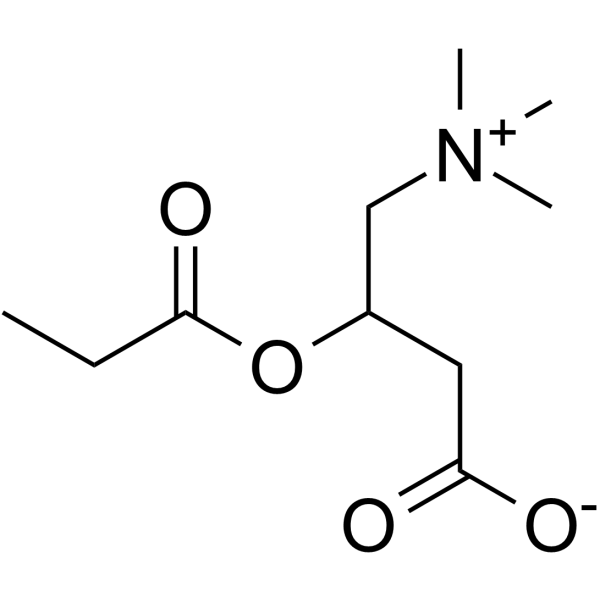
Propionylcarnitine is metabolized by carnitine acetyltransferase from propionyl-CoA. Increased propionylcarnitine is regarded as a biomarker of vitamin B12 deficiency .
loading...
    loading...
Cat. No.: HY-B0932S2
Synonyms: L-Propionylcarnitine-d9 chloride
Levocarnitine propionate-d9 hydrochloride (L-Propionylcarnitine-d9 chloride) is deuterium labeled Levocarnitine propionate hydrochloride. Levocarnitine propionate hydrochloride (L-Propionylcarnitine chloride; ST-261) is a ligand of carnitine acetyltransferase (CAT) with high enzyme affinity. Levocarnitine propionate hydrochloride possesses antioxidant activity. Levocarnitine propionate hydrochloride increases intracellular L-carnitine reserves. Levocarnitine propionate hydrochloride exerts a protective effect against myocardial ischemia-reperfusion injury. Levocarnitine propionate hydrochloride can be used in research related to myocardial ischemia-reperfusion injury and chronic ischemic heart disease .
loading...
    loading...
Cat. No.: HY-B0932S
CAS No.: 1334532-19-2
Synonyms: L-Propionylcarnitine-d3 chloride; ST-261-d3
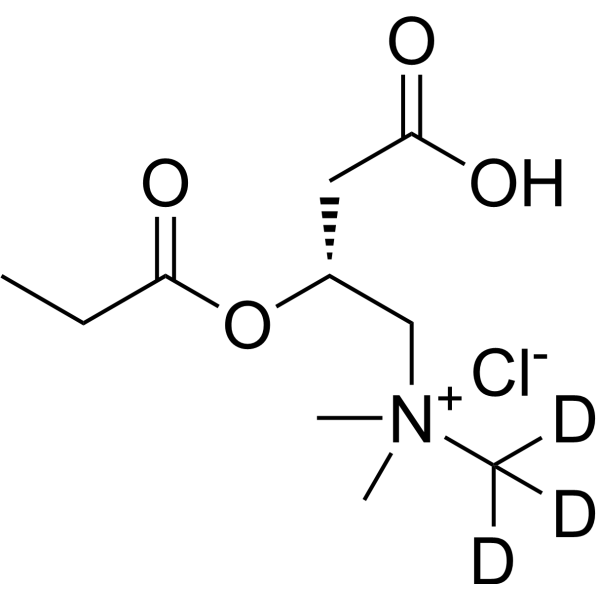
Levocarnitine propionate-d3 (hydrochloride) is the deuterium labeled Levocarnitine propionate hydrochloride. Levocarnitine propionate hydrochloride (L-Propionylcarnitine chloride; ST-261) is a ligand of carnitine acetyltransferase (CAT) with high enzyme affinity. Levocarnitine propionate hydrochloride possesses antioxidant activity. Levocarnitine propionate hydrochloride increases intracellular L-carnitine reserves. Levocarnitine propionate hydrochloride exerts a protective effect against myocardial ischemia-reperfusion injury. Levocarnitine propionate hydrochloride can be used in research related to myocardial ischemia-reperfusion injury and chronic ischemic heart disease .
loading...
    loading...
Cat. No.: HY-E70394
CAS No.: 75179-85-0
Synonyms: Acetonyl-coenzyme A
S-Acetonyl-CoA (Acetonyl-coenzyme A) is a non-reactive structural analog of acetyl-CoA that acts as a competitive inhibitor against multiple target enzymes. S-Acetonyl-CoA lacks the characteristic thioester group of acetyl-CoA, retaining only a thioether structure. S-Acetonyl-CoA competes with acetyl-CoA for binding to citrate synthase, phosphate transacetylase, carnitine acetyltransferase, and N-myristoyltransferase 1. S-Acetonyl-CoA serves as a reagent for investigating acetyl-CoA-dependent physiological processes .
loading...
    loading...
Cat. No.: HY-B0399A
CAS No.: 406-76-8
Synonyms: DL-carnitine; DL-Levocarnitine
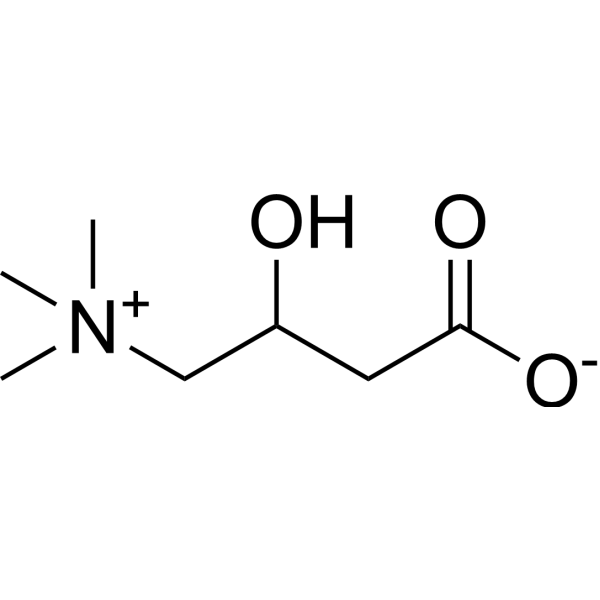
(±)-Carnitine (DL-Carnitine) is an orally effective racemic mixture of L-Carnitine (HY-B0399) and D-Carnitine. (±)-Carnitine elevates the mitochondrial NAD +/NADH ratio in the presence of 1,3-butanediol (HY-77490A). (±)-Carnitine does not increase glucose and urea production from L-glutamine, but stimulates propionate gluconeogenesis in rat renal cortical slices, and significantly reduces hepatic ketone body levels in rats fed a diet containing 30% high fat plus 20% 1,3-butanediol .
loading...
    loading...
Cat. No.: HY-127055
CAS No.: 6964-20-1
Target:  

Apolipoprotein

Research Areas:  

Metabolic Disease

Tiadenol is an orally effective lipid-lowering compound and peroxisome proliferator. Tiadenol promotes peroxisome-associated fatty acid metabolism, and its induction of the activities of enzymes such as palmitoyl-CoA hydrolase, carnitine acetyl-transferase and catalase is mainly associated with de novo protein synthesis. The triglyceride-lowering effect of Tiadenol is not accompanied by increased activities of lipoprotein lipase (LPL) and hepatic lipase (HL), and it reduces VLDL Apo E. Tiadenol can be used in studies related to lipid metabolism, peroxisome proliferation and hyperlipoproteinemia .
loading...
    loading...
Cat. No.: HY-B0932R
CAS No.: 119793-66-7
Synonyms: L-Propionylcarnitine chloride (Standard); ST-261 (Standard)
Levocarnitine propionate hydrochloride (Standard) is the analytical standard of Adrenalone (hydrochloride). This product is intended for research and analytical applications. Levocarnitine propionate hydrochloride (L-Propionylcarnitine chloride; ST-261) is a ligand of carnitine acetyltransferase (CAT) with high enzyme affinity. Levocarnitine propionate hydrochloride possesses antioxidant activity. Levocarnitine propionate hydrochloride increases intracellular L-carnitine reserves. Levocarnitine propionate hydrochloride exerts a protective effect against myocardial ischemia-reperfusion injury. Levocarnitine propionate hydrochloride can be used in research related to myocardial ischemia-reperfusion injury and chronic ischemic heart disease .
loading...
    loading...
Cat. No.: HY-B0932S1
Synonyms: L-Propionylcarnitine-d5 chloride; ST-261-d5
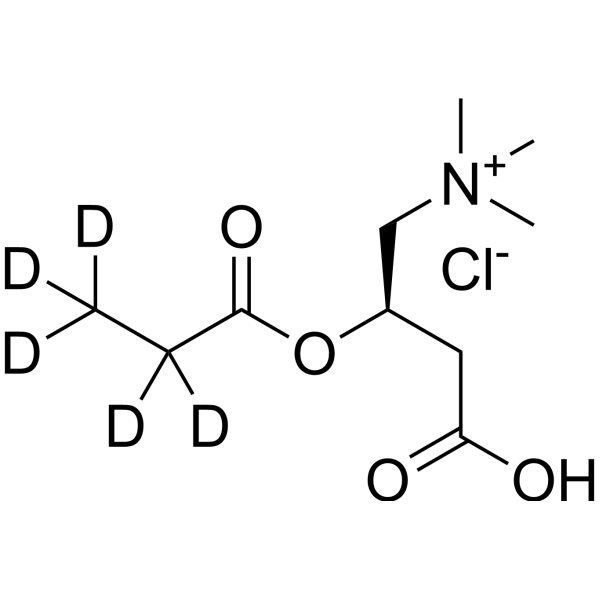
Levocarnitine propionate-d5 (hydrochloride) is the deuterium labeled Levocarnitine propionate hydrochloride. Levocarnitine propionate hydrochloride (L-Propionylcarnitine chloride; ST-261) is a ligand of carnitine acetyltransferase (CAT) with high enzyme affinity. Levocarnitine propionate hydrochloride possesses antioxidant activity. Levocarnitine propionate hydrochloride increases intracellular L-carnitine reserves. Levocarnitine propionate hydrochloride exerts a protective effect against myocardial ischemia-reperfusion injury. Levocarnitine propionate hydrochloride can be used in research related to myocardial ischemia-reperfusion injury and chronic ischemic heart disease .
loading...
    loading...
Cat. No.: HY-156184
CAS No.: 3671-77-0
Octanoylcarnitine is an orally active medium-chain acylcarnitine transport intermediate in fatty acid β-oxidation. Octanoylcarnitine is converted to octanoyl-CoA by carnitine acetyltransferase (CrAT), which then generates energy via β-oxidation in mitochondria of the heart and skeletal muscle. Octanoylcarnitine enhances grip strength and treadmill endurance, alleviates lactic acidosis, distributes in muscle and heart tissues, increases free carnitine levels, and mitigates mitochondrial stress. Octanoylcarnitine is associated with long-chain fatty acid metabolism, shows a positive correlation with subcutaneous fat area in patients with metastatic pancreatic ductal adenocarcinoma, and is closely related to central retinal artery occlusion (CRAO) .
loading...
    loading...

