



Search Result
Results for "
catalyses
" in MedChemExpress (MCE) Product Catalog:
1
Isotope-Labeled Compounds
| Cat. No. |
Product Name |
Target |
Research Areas |
Chemical Structure |
-
- HY-P1923
-
|
L-ASNase
|
Apoptosis
DNA/RNA Synthesis
|
Cancer
|
|
L-Asparaginase (L-ASNase) is a deamidating enzyme that catalyses the hydrolysis of L-asparagine and L-glutamine, and can be used for the research of acute lymphoblastic leukemia. L-Asparaginase depletes L-asparagine from plasma resulting in inhibition of RNA and DNA synthesis with the subsequent blastic cell apoptosis .
|
-
-
- HY-B1335
-
|
Diethylenetriaminepentaacetic acid; DTPA
|
Environmental Pollutants
Biochemical Assay Reagents
|
Others
|
|
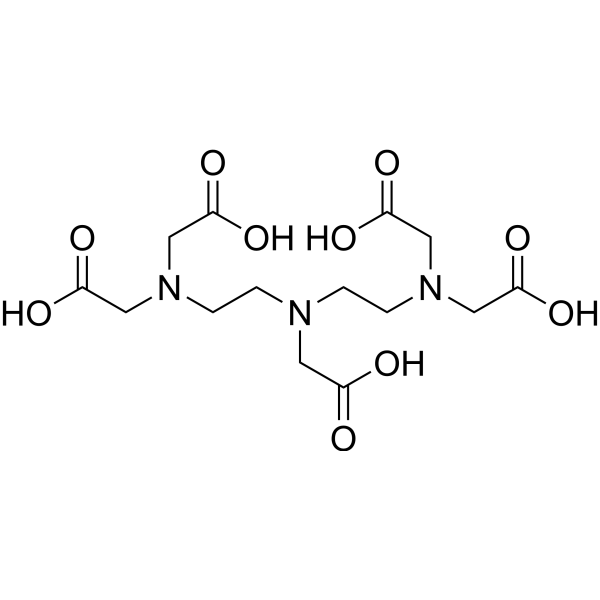
Pentetic acid (Diethylenetriaminepentaacetic acid) is an orally active compound with biodegradability used to construct magnetic adsorbent, which can simultaneously remove heavy metal and dye from complex wastewater. Pentetic acid can form strong metal complexes, which prevents metal ions from catalysing the decomposition of peroxygen chemicals, especially hydrogen peroxide .
|
-
-
- HY-B2193
-
|
|
Environmental Pollutants
Amylases
|
Others
|
|
α-Amylase is a hydrolase enzyme that catalyses the hydrolysis of internal α-1, 4-glycosidic linkages in starch to yield products like glucose and maltose.
|
-
-
- HY-P2996
-
|
|
Others
|
Others
|
|
NAD(P)H-Nitrate reductase is isolated from Aspergillus niger that catalyses the reduction of nitrate to nitrite via a two-electron transfer. In plants, the electron donor for Nitrate reductase is NADPH is NADH:Nitrate reductase and a bispecific NAD(P)H: Nitrate reductase .
|
-
-
- HY-112134
-
CSN5i-3
Maximum Cited Publications
23 Publications Verification
|
Deubiquitinase
|
Cancer
|
|
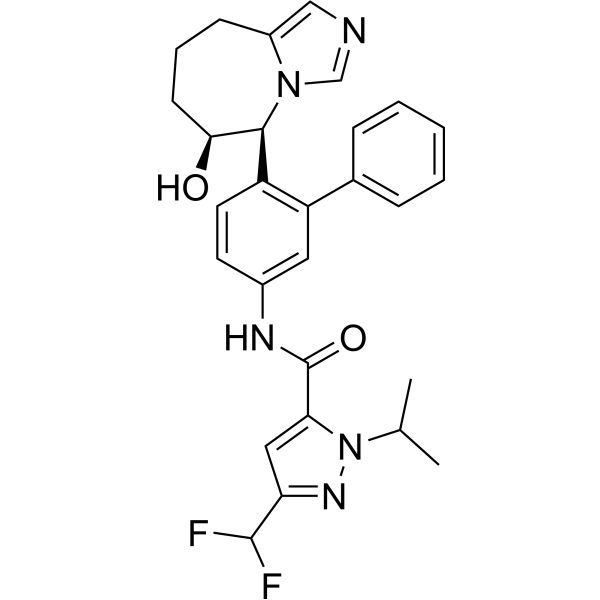
CSN5i-3 is a potent, selective and orally available inhibitor of CSN5/Jab1, and inhibits CSN-catalysed Cul1 deneddylation with an IC50 value of 5.8 nM .
|
-
-
- HY-14518
-
|
4-Aminofolic acid; APGA
|
Antifolate
|
Inflammation/Immunology
Cancer
|
|
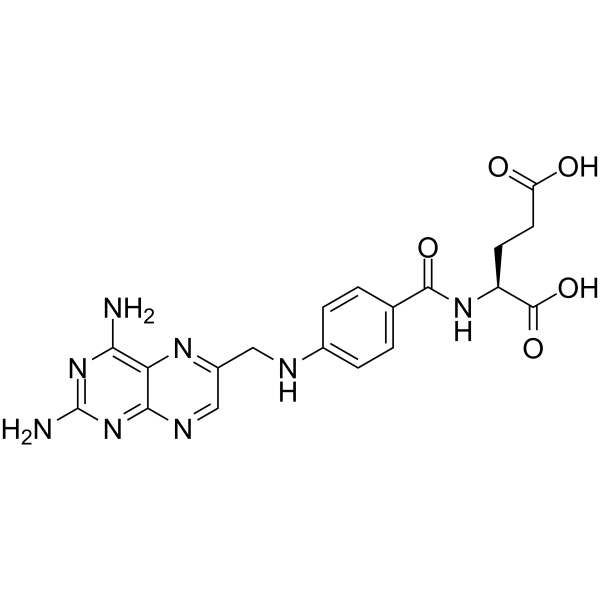
Aminopterin (4-Aminofolic acid), the 4-amino derivative of folic acid, is a folic acid antagonist. Aminopterin catalyses the reduction of folic acid to tetrahydrofolic acid, and competitively inhibits dihydrofolate reductase (DHFR) with a Ki of 3.7 pM. Aminopterin has anticancer and immunosuppressive activity. Aminopterin is used in treatment of pediatric leukemia .
|
-
-
- HY-B2192
-
|
|
Amylases
|
Metabolic Disease
Cancer
|
|
Amylase is an enzyme produced by pancreas and salivary glands, catalyzing the hydrolysis of starch into sugars. Amylase are broadly classified into α, β, and γ subtypes .
|
-
-
- HY-W040256
-
|
ACP
|
Endogenous Metabolite
|
Metabolic Disease
Cancer
|
|
Acid phosphatase, wheat (ACP) is a hydrolase enzyme found in wheat. Acid phosphatase, wheat catalyses the hydrolysis of orthophosphate monoesters under acidic conditions .
|
-
-
- HY-P2968
-
|
|
Amylases
|
Others
|
|
Bacterial α-Amylase catalyses the hydrolysis of internal α-1,4-glycosidic linkages in starch in low molecular weight products, such glucose, maltose and maltotriose units. Bacterial α-Amylase is often used in biochemical studies .
|
-
-
- HY-B2193A
-
|
1,4-alpha-D-Glucan-glucanohydrolase, ptyalin
|
Biochemical Assay Reagents
|
Metabolic Disease
Inflammation/Immunology
|
|
α-Amylase, Human Saliva (1,4-alpha-D-Glucan-glucanohydrolase) is a hydrolase enzyme that can be isolated from human saliva. α-Amylase, Human Saliva catalyses the hydrolysis of internal α-1, 4-glycosidic linkages in starch to yield products like glucose and maltose. α-Amylase, Human Saliva can be used in life science research .
|
-
-
- HY-B2193C
-
|
1,4-alpha-D-Glucan-glucanohydrolase, amy2, PPA, PA
|
Biochemical Assay Reagents
|
Others
|
|
α-Amylase, Porcine Pancreatic (1,4-alpha-D-Glucan-glucanohydrolase) is a hydrolase enzyme that can be isolated from porcine pancreatic. α-Amylase, Porcine Pancreatic catalyses the hydrolysis of internal α-1, 4-glycosidic linkages in starch to yield products like glucose and maltose. α-Amylase, Porcine Pancreatic can be used in life science research .
|
-
-
- HY-E70015
-
|
PEPC
|
Others
|
Others
|
|
Phosphoenolpyruvate carboxylase, Microorganism (PEPC) is a carbon dioxide fixing enzyme that in an irreversible manner and in the presence of Mg 2+, converts phosphoenolpyruvate and bicarbonate into oxaloacetate and inorganic phosphorus. Phosphoenolpyruvate carboxylase catalyses the primary assimilation of CO(2) in Crassulacean acid metabolism plants. Phosphoenolpyruvate carboxylase plays a major role in setting the day-night pattern of metabolism in plants .
|
-
-
- HY-B2193B
-
|
Amylase, a-Amylase, 1,4-a-D-glucan glucanohydrolase, glycogenase
|
Biochemical Assay Reagents
|
Others
|
|
α-Amylase, Human Pancreas (Amylase) is a hydrolase enzyme that can be isolated from human pancreas. α-Amylase, Human Pancreas catalyses the hydrolysis of internal α-1, 4-glycosidic linkages in starch to yield products like glucose and maltose. α-Amylase, Human Pancreas can be used in life science research .
|
-
-
- HY-P2796
-
|
PDC
|
Biochemical Assay Reagents
|
Metabolic Disease
|
|
Pyruvate decarboxylase (PDC) is an enzyme that catalyses the decarboxylation of pyruvic acid to acetaldehyde. Pyruvate decarboxylase catalyses the non-oxidative conversion of pyruvate (or other 2-oxo acids) to acetaldehyde and CO2 .
|
-
-
- HY-E70398
-
|
L-Iditol dehydrogenase; Polyol dehydrogenase; SDH
|
Biochemical Assay Reagents
|
Metabolic Disease
|
|
Sorbitol dehydrogenase (L-Iditol dehydrogenase) is an oxidoreductasea and catalyses the conversion of sorbitol to fructose with NAD + as the coenzyme. Sorbitol dehydrogenase catalyses pH-dependent redox reactions between NAD +/NADH and sorbitol/fructose. Sorbitol dehydrogenase is implicated in diabetic complications and is a biomarker of drug-induced liver injury. Sorbitol dehydrogenase can be used for the research of diabetes and liver injury .
|
-
-
- HY-P2958
-
|
|
Biochemical Assay Reagents
|
Metabolic Disease
|
|
Choloylglycine hydrolase is a conjugated bile salt hydrolase that catalyses the hydrolysis of amide bond in conjugated bile acids. Choloylglycine hydrolase is expressed by intestinal microbiota. Choloylglycine hydrolase can be studied in research on type 2 diabetes .
|
-
-
- HY-P2892
-
|
|
Endogenous Metabolite
|
Metabolic Disease
|
|
Fumarase catalyses the conversion of l-malic acid to fumaric acid. Fumarase participates in the tricarboxylic acid cycle in mitochondria. Fumarase participates in the cellular response to DNA double strand breaks .
|
-
-
- HY-E70016
-
|
TdT
|
DNA/RNA Synthesis
|
Others
Cancer
|
|
Terminal deoxyribonucleotidyltransferase (TdT) catalyses the condensation of deoxyribonucleotide triphosphates onto the 3' hydroxyl ends of DNA strands and adds N-regions to gene segment junctions during V(D)J recombination. Terminal deoxyribonucleotidyltransferase is expressed in immature, pre-B, pre-T lymphoid cells, and acute lymphoblastic leukemia/lymphoma cells .
|
-
-
- HY-W013557
-
|
3-Hydroxy-xanthen-9-one
|
Integrin
|
Inflammation/Immunology
|
|
3-Hydroxyxanthone (3-Hydroxy-xanthen-9-one) is a xanthone compound, with . 3-Hydroxyxanthone inhibits NADPH-catalysed lipid peroxidation in human umbilical vein endothelial cells (HUVECs). 3-Hydroxyxanthone also inhibits TNF-alpha induced ICAM-1 expression .
|
-
-
- HY-E70039
-
|
|
Others
|
Others
|
|
alpha-2-3,6,8-Sialidosidase (SpNanA) catalyses hydrolysis of alpha-(2->3)-, alpha-(2->6)-, alpha-(2->8)- glycosidic linkages of terminal sialic acid residues in oligosaccharides, glycoproteins, glycolipids, colominic acid and synthetic substrates .
|
-
-
- HY-P2723
-
-
-
- HY-E70010
-
|
mutarotases
|
Endogenous Metabolite
|
Others
|
|
Aldose 1-epimerase (mutarotases) is a key enzyme of carbohydrate metabolism catalysing the interconversion of the α- and β-anomers of hexose sugars such as glucose and galactose. Aldose 1-epimerase is essential for normal carbohydrate metabolism and the production of complex oligosaccharides .
|
-
-
- HY-P2996A
-
|
|
Drug Isomer
|
Others
|
|
Nitrate Reductase, Arabidopsis thaliana is the isomer of NAD(P)H-Nitrate reductase (HY-P2996). NAD(P)H-Nitrate reductase is isolated from Aspergillus niger that catalyses the reduction of nitrate to nitrite via a two-electron transfer. In plants,the electron donor for Nitrate reductase is NADPH is NADH:Nitrate reductase and a bispecific NAD(P)H: Nitrate reductase .
|
-
-
- HY-N11409A
-
|
|
Herbicide
|
Others
|
|
Shikimate-3-phosphate lithium is the salt form of Shikimate-3-phosphate. Shikimate-3-phosphate lithium is a central microbial, parasite and plant metabolite, as a product of the shikimate kinase-catalysed reaction. Shikimate-3-phosphate lithium serves as an enzyme substrate for 5-enolpyruvoyl-shikimate 3-phosphate synthase, which is a target of anti-infectives and of herbicides .
|
-
-
- HY-P2865
-
|
|
Guanylate Cyclase
|
Metabolic Disease
|
|
Guanylate kinase is a central enzyme in the guanine salvage pathway. Guanylate kinase catalyses the reversible Mg 2+-dependent transfer of the terminal phosphoryl group from ATP to GMP, or dGMP .
|
-
-
- HY-P3175
-
|
6-Phosphogluconate dehydrogenase
|
Biochemical Assay Reagents
|
Metabolic Disease
|
|
Phosphogluconate dehydrogenase (NADP, decarboxylating) (6-Phosphogluconate dehydrogenase) is an oxidative carboxylase that catalyses the oxidative decarboxylation of 6-phosphogluconate to ribulose 5-phosphate in the context of the oxidative part of the pentose phosphate pathway .
|
-
-
- HY-P2742A
-
|
|
Endogenous Metabolite
|
Metabolic Disease
|
|
L-Ascorbate oxidase, Cucumber belongs to the family of oxidoreductases acting on diphenols and related substances as donor with oxygen as acceptor. L-Ascorbate oxidase, Cucumber catalyses the oxidation of L‐Ascorbate (HY-B0166) with oxygen to dehydroascorbate with the generation of water. L-Ascorbate oxidase, Cucumber can be used in baking processes and cereal‐based processes .
|
-
-
- HY-177804
-
|
|
Thrombin
|
Inflammation/Immunology
|
|
Thrombin aptamer is a 11mer-DNA aptamer that targets thrombin. Thrombin aptamer inhibites thrombin-catalysed fibrin-clot formation in vitro
|
-
-
- HY-148051
-
|
|
Drug Metabolite
|
Inflammation/Immunology
Cancer
|
|
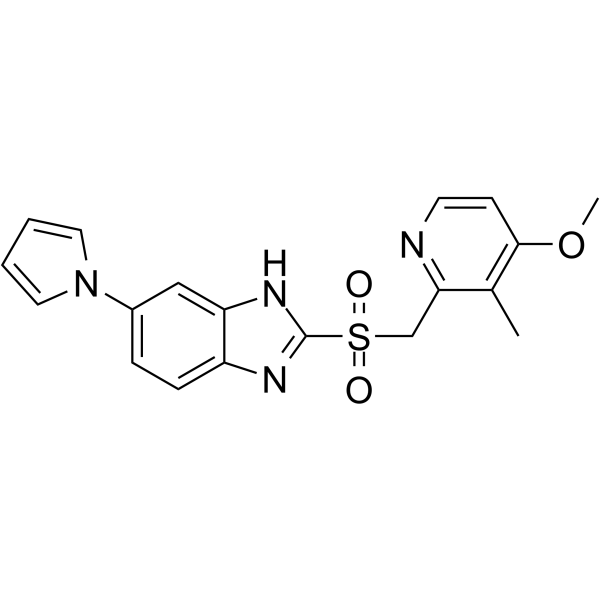
Ilaprazole sulfone is the major metabolite of Ilaprazole (HY-101664), is predominantly catalysed by CYP3A4/5. Ilaprazole (IY-81149) is an orally active proton pump inhibitor .
|
-
-
- HY-P3764
-
|
|
PKC
|
Others
|
|
Protein kinase C substrate is a substrate of Protein kinase C, can be used to detect protein. Protein kinase C is a key regulatory element in signal transduction and exerts its effects by catalysing specific substrate phosphorylation .
|
-
-
- HY-14518R
-
|
4-Aminofolic acid (Standard); APGA (Standard)
|
Reference Standards
Antifolate
|
Inflammation/Immunology
Cancer
|
|
Aminopterin (Standard) is the analytical standard of Aminopterin. This product is intended for research and analytical applications. Aminopterin (4-Aminofolic acid), the 4-amino derivative of folic acid, is a folic acid antagonist. Aminopterin catalyses the reduction of folic acid to tetrahydrofolic acid, and competitively inhibits dihydrofolate reductase (DHFR) with a Ki of 3.7 pM. Aminopterin has anticancer and immunosuppressive activity. Aminopterin is used in treatment of pediatric leukemia .
|
-
-
- HY-P2744
-
|
Ribulose 1,5-bisphosphate carboxylase
|
Biochemical Assay Reagents
|
Others
|
|
Ribulose bisphosphate carboxylase (Ribulose 1,5-bisphosphate carboxylase) catalyses the carboxylation (CO2 addition) or oxygenation (O2 addition) of d-ribulose-1,5-bisphosphate (RuBP) and the subsequent carbon–carbon cleavage to form two molecules of 3-phospho-d-glycerate (PGA) (with CO2) or one molecule of PGA and one molecule of 2-phospho-glycolate (PG; with O2) .
|
-
-
- HY-E70033
-
|
|
Endogenous Metabolite
|
Metabolic Disease
|
|
D-galactosyl-β1-3-N-acetyl-D-hexosamine phosphorylase (BiGalHexNAcP) is a member of CAZy glycoside hydrolase GH112 family, is often used in biochemical studies. D-galactosyl-β1-3-N-acetyl-D-hexosamine phosphorylase (BiGalHexNAcP) catalyses the phosphorolysis of lacto-n-biose and galacto-n-biose, to produce Gal-1-P and the corresponding N-acetyl-D-hexosamine .
|
-
-
- HY-W749825
-
|
Diethylenetriaminepentaacetic acid-13C5; DTPA-13C5
|
Isotope-Labeled Compounds
Fluorescent Dye
|
Others
|
|
Pentetic acid- 13C5 (Diethylenetriaminepentaacetic acid- 13C5) is the 13C-labeled Pentetic acid (HY-B1335). Pentetic acid (Diethylenetriaminepentaacetic acid) is an orally active compound with biodegradability used to construct magnetic adsorbent, which can simultaneously remove heavy metal and dye from complex wastewater. Pentetic acid can form strong metal complexes, which prevents metal ions from catalysing the decomposition of peroxygen chemicals, especially hydrogen peroxide .
|
-
-
- HY-E71005
-
-
-
- HY-E71138
-
|
|
Biochemical Assay Reagents
|
Others
|
|
(S,S)-Butanediol dehydrogenase (EC 1.1.1.76) catalyses the reversible reduction of (S)-acetoin to (S,S)-butane-2,3-diol. It can also catalyse the irreversible reduction of diacetyl to (S)-acetoin.
|
-
-
- HY-E71256
-
|
|
Biochemical Assay Reagents
|
Others
|
|
β-(isoxazolin-5-on-4-yl)-L-Alanine synthase (EC 2.5.1.119) catalyse EC 2.5.1.118 (β-(isoxazolin-5-on-2-yl)-L-alanine synthase) also catalyse this reaction in vitro, but not in vivo.
|
-
-
- HY-E70916
-
-
-
- HY-E71254
-
|
|
Biochemical Assay Reagents
|
Others
|
|
α-Xylosidase 31A, Bacteroides ovatus (EC 3.2.1.177) is an enzyme. This enzyme catalyses the following chemical reaction: Hydrolysis of terminal, non-reducing alpha-D-xylose residues with release of alpha-D-xylose. The enzyme catalyses hydrolysis of a terminal, unsubstituted xyloside at the extreme reducing end of a xylogluco-oligosaccharide.
|
-
-
- HY-E71120
-
|
|
Biochemical Assay Reagents
|
Others
|
|
(S)-Hydroxynitrile lyase (EC 4.1.2.47) catalyses the the cleavage of hydroxynitriles into cyanide and the corresponding aldehyde or ketone.
|
-
-
- HY-E71117
-
|
|
Biochemical Assay Reagents
|
Others
|
|
(S)-Cheilanthifoline synthase (EC 1.14.21.2) catalysing an oxidative reaction that does not incorporate oxygen into the product.
|
-
-
- HY-E71118
-
|
|
Biochemical Assay Reagents
|
Others
|
|
(S)-cheilanthifoline synthase (EC 1.14.21.2) catalysing an oxidative reaction that does not incorporate oxygen into the product.
|
-
-
- HY-E71200B
-
|
|
Biochemical Assay Reagents
|
Others
|
|
16S rRNA (cytidine1402-2'-O)-Methyltransferase (EC 2.1.1.198) catalyses the 2'-O-methylation of cytidine1402 and RsmH (EC 2.1.1.199) catalyses the N4-methylation of cytidine1402 in 16S rRNA. Both methylations are necessary for efficient translation initiation at the UUG and GUG codons.
|
-
-
- HY-E71217
-
-
-
- HY-E71200D
-
|
|
Biochemical Assay Reagents
|
Others
|
|
16S rRNA (cytosine1402-N4)-Methyltransferase (EC 2.1.1.199) catalyses the N4-methylation of cytosine1402 andRsmI (EC 2.1.1.198) catalyses the 2'-O-methylation of cytosine1402 in 16S rRNA. Both methylations are necessary for efficient translation initiation at the UUG and GUG codons.
|
-
-
- HY-Y1422T
-
|
|
Lipase
|
Metabolic Disease
|
|
Lipase, Porcine (EC 3.1.1.3) is an enzyme that catalyses the following chemical reaction: triacylglycerol + H2O = diacylglycerol + a carboxylate.
|
-
-
- HY-Y1422P
-
|
|
Lipase
|
Metabolic Disease
|
|
Lipase, Rhizopus oryzae (EC 3.1.1.3) is an enzyme that catalyses the following chemical reaction: triacylglycerol + H2O = diacylglycerol + a carboxylate.
|
-
-
- HY-Y1422Q
-
|
|
Lipase
|
Metabolic Disease
|
|
Lipase, Rhizopus niveus (EC 3.1.1.3) is an enzyme that catalyses the following chemical reaction: triacylglycerol + H2O = diacylglycerol + a carboxylate.
|
-
-
- HY-Y1422O
-
|
|
Lipase
|
Metabolic Disease
|
|
Lipase, Thermus flavus (EC 3.1.1.3) is an enzyme that catalyses the following chemical reaction: triacylglycerol + H2O = diacylglycerol + a carboxylate.
|
-
-
- HY-Y1422N
-
|
|
Lipase
|
Metabolic Disease
|
|
Lipase, Thermus thermophilus (EC 3.1.1.3) is an enzyme that catalyses the following chemical reaction: triacylglycerol + H2O = diacylglycerol + a carboxylate.
|
-
- HY-Y1422M
-
|
|
Lipase
|
Metabolic Disease
|
|
Lipase,wheat germ (EC 3.1.1.3) is an enzyme that catalyses the following chemical reaction: triacylglycerol + H2O = diacylglycerol + a carboxylate.
|
-
- HY-E70919B
-
|
|
Biochemical Assay Reagents
|
Metabolic Disease
|
|
Nitrile hydratase, Rhodococcus erythropolis (EC 4.2.1.84) is a mononuclear iron or non-corrinoid cobalt enzyme that catalyse the hydration of diverse nitriles to their corresponding amides.
|
-
- HY-E70919A
-
|
|
Biochemical Assay Reagents
|
Metabolic Disease
|
|
Nitrile hydratase, Rhodopseudomonas palustris (EC 4.2.1.84) is a mononuclear iron or non-corrinoid cobalt enzyme that catalyse the hydration of diverse nitriles to their corresponding amides.
|
-
- HY-E70919
-
|
|
Biochemical Assay Reagents
|
Metabolic Disease
|
|
Nitrile hydratase, Sinorhizobium meliloti (EC 4.2.1.84) is a mononuclear iron or non-corrinoid cobalt enzyme that catalyse the hydration of diverse nitriles to their corresponding amides.
|
-
- HY-E71191
-
|
|
Biochemical Assay Reagents
|
Others
|
|
15,16-Dihydrobiliverdin:ferredoxin oxidoreductase (EC 1.3.7.2) catalyses the two-electron reduction of biliverdin IXα at the C15 methine bridge.
|
-
- HY-E71273
-
-
- HY-E71115
-
|
|
Biochemical Assay Reagents
|
Others
|
|
(S)-Canadine synthase (EC 1.14.21.5) catalysing an oxidative reaction that does not incorporate oxygen into the product. Oxidation of the methoxyphenol group of the alkaloid tetrahydrocolumbamine results in the formation of the methylenedioxy bridge of canadine.
|
-
- HY-P2858D
-
|
|
Biochemical Assay Reagents
|
Metabolic Disease
|
|
β-Mannanase, Clostridium thermocellum (EC 3.2.1.78) catalyses the following chemical reaction: Random hydrolysis of (1->4)-beta-D-mannosidic linkages in mannans, galactomannans and glucomannans.
|
-
- HY-E71322
-
|
|
Biochemical Assay Reagents
|
Others
|
|
β-Peptidyl aminopeptidase (EC 3.4.11.25) catalyses the following chemical reaction: cleaves N-terminal beta-homoamino acids from peptides composed of 2 to 6 amino acids.
|
-
- HY-E71257
-
|
|
Biochemical Assay Reagents
|
Others
|
|
β-1,2-Mannobiose phosphorylase (EC 2.4.1.339) , originally characterized from the thermophilic anaerobic bacterium Thermoanaerobacter sp. X514, catalyses a reversible reaction.
|
-
- HY-E70980
-
|
|
Biochemical Assay Reagents
|
Metabolic Disease
|
|
Achromopeptidase, Bacteria (EC 3.4.21.50) catalyses the following chemical reaction:Preferential cleavage:Lys-, including-Lys-Pro-. Achromopeptidase, Bacteria (EC 3.4.21.50) is isolated from Achromobacter lyticus.
|
-
- HY-E71111
-
|
|
Biochemical Assay Reagents
|
Others
|
|
(S)-3,5-Dihydroxyphenylglycine transaminase (EC 2.6.1.103) catalyses the reaction in the reverse direction as part of the biosynthesis of the (S)-3,5-Dihydroxyphenylglycine constituent of the glycopeptide antibiotic chloroeremomycin.
|
-
- HY-E71262
-
|
|
Biochemical Assay Reagents
|
Others
|
|
β-1,4-Mannooligosaccharide phosphorylase (EC 2.4.1.319) catalyses the reversible phosphorolysis of β-1,4-mannooligosaccharide with a minimum size of three monomers.
|
-
- HY-E71151
-
|
|
Biochemical Assay Reagents
|
Others
|
|
1,3-α-Oligoglucan phosphorylase (EC 2.4.1.334) catalyses a reversible reaction. Substrates for the phosphorolytic reaction are α-1,3-linked oligoglucans with a polymerisation degree of 3 or more.
|
-
- HY-E71145
-
|
|
Biochemical Assay Reagents
|
Others
|
|
1,2-β-Oligoglucan phosphorylase (EC 2.4.1.333) catalyses the reversible phosphorolysis of β-(1→2)-D-glucans. The minimum length of the substrate for the phosphorolytic reaction is 3 D-glucose units.
|
-
- HY-E71316A
-
|
|
Glycosidase
|
Others
|
|
β-Mannanase 26A, Celvibrio japonicas is an enzyme with system name 4-beta-D-mannan mannanohydrolase. This enzyme catalyses the following chemical reaction: Random hydrolysis of (1->4)-beta-D-mannosidic linkages in mannans, galactomannans and glucomannans.
|
-
- HY-E71205
-
|
|
Biochemical Assay Reagents
|
Others
|
|
α,α-Trehalose (EC 3.2.1.28) is an anomer-inverting glucosidase that catalyses the hydrolysis of the α-glucosidic O-linkage of α,α-Trehalose, releasing initially equimolar amounts of α-and β-D-glucose.
|
-
- HY-P2739B
-
|
|
Biochemical Assay Reagents
|
Metabolic Disease
|
|
Citrate Synthase, Pigeon (EC 4.1.3.7) catalyses the conversion of Citrate to acetyl-CoA in the presence of coenzyme-A with the release of H2O and oxaloacetate. Citrate Synthase, Pigeon (EC 4.1.3.7) is inhibited by fluoroacetyl-CoA, palmitoyl-CoA, and citroyl-CoA.
|
-
- HY-E71338
-
|
|
Biochemical Assay Reagents
|
Others
|
|
γ-Glutamylanilide synthase (EC 6.3.1.18) requires Mg2+. The enzyme, characterized from the bacterium Acinetobacter sp. YAA, catalyses the first step in the degradation of aniline. It can also accept chlorinated and methylated forms of aniline, preferrably in the o-and p-positions.
|
-
- HY-E71348
-
|
|
Biochemical Assay Reagents
|
Others
|
|
ζ-Carotene isomerase (EC 5.2.1.12) catalyses the cis-trans isomerization of the 15-15' carbon-carbon double bond in 9,15,9'-tricis-ζ-Carotene, which is required for biosynthesis of all plant carotenoids. Requires heme b.
|
-
- HY-E71310B
-
|
|
Biochemical Assay Reagents
|
Others
|
|
β-Mannanase 26A, Podospora anserina (EC 3.2.1.78) is an enzyme with system name 4-beta-D-mannan mannanohydrolase. This enzyme catalyses the following chemical reaction: Random hydrolysis of (1->4)-beta-D-mannosidic linkages in mannans, galactomannans and glucomannans.
|
-
- HY-E71314
-
|
|
Biochemical Assay Reagents
|
Others
|
|
β-Mannanase 5A, Clostridium cellulovorans (EC 3.2.1.78) is an enzyme with system name 4-beta-D-mannan mannanohydrolase. This enzyme catalyses the following chemical reaction: Random hydrolysis of (1->4)-beta-D-mannosidic linkages in mannans, galactomannans and glucomannans.
|
-
- HY-E71316
-
|
|
Glycosidase
|
Others
|
|
β-Mannanase 76A, Bacteroides thetaiotaomicron (EC 3.2.1.78) is an enzyme with system name 4-beta-D-mannan mannanohydrolase. This enzyme catalyses the following chemical reaction: Random hydrolysis of (1->4)-beta-D-mannosidic linkages in mannans, galactomannans and glucomannans.
|
-
- HY-E71146
-
|
|
Biochemical Assay Reagents
|
Others
|
|
1,2-β-Oligomannan phosphorylase (EC 2.4.1.340) catalyses a reversible reaction. In the synthetic direction it produces oligosaccharides with a degree of polymerization (DP) of 3, 4 and 5. The phosphorolysis reaction proceeds to completion, although activity is highest when the substrate has at least three residues.
|
-
- HY-E71310A
-
|
|
Biochemical Assay Reagents
|
Others
|
|
β-Mannanase 26A, Paenibacillus polymyxa (EC 3.2.1.78) is an enzyme with system name 4-beta-D-mannan mannanohydrolase. This enzyme catalyses the following chemical reaction: Random hydrolysis of (1->4)-beta-D-mannosidic linkages in mannans, galactomannans and glucomannans.
|
-
- HY-E71310
-
|
|
Biochemical Assay Reagents
|
Others
|
|
β-Mannanase 26A, Cellvibrio japonicus (EC 3.2.1.78) is an enzyme with system name 4-beta-D-mannan mannanohydrolase. This enzyme catalyses the following chemical reaction: Random hydrolysis of (1->4)-beta-D-mannosidic linkages in mannans, galactomannans and glucomannans.
|
-
- HY-E71314B
-
|
|
Biochemical Assay Reagents
|
Others
|
|
β-Mannanase 5A, Thermobifida fusca (EC 3.2.1.78) is an enzyme with system name 4-beta-D-mannan mannanohydrolase. This enzyme catalyses the following chemical reaction: Random hydrolysis of (1->4)-beta-D-mannosidic linkages in mannans, galactomannans and glucomannans.
|
-
- HY-E71314A
-
|
|
Biochemical Assay Reagents
|
Others
|
|
β-Mannanase 5A, Podospora anserina (EC 3.2.1.78) is an enzyme with system name 4-beta-D-mannan mannanohydrolase. This enzyme catalyses the following chemical reaction: Random hydrolysis of (1->4)-beta-D-mannosidic linkages in mannans, galactomannans and glucomannans.
|
-
- HY-E71314C
-
|
|
Biochemical Assay Reagents
|
Others
|
|
β-Mannanase 5A, Thermotoga petrophila (EC 3.2.1.78) is an enzyme with system name 4-beta-D-mannan mannanohydrolase. This enzyme catalyses the following chemical reaction: Random hydrolysis of (1->4)-beta-D-mannosidic linkages in mannans, galactomannans and glucomannans.
|
-
- HY-E71313
-
|
|
Biochemical Assay Reagents
|
Others
|
|
β-Mannanase 26E, Bacillus subtilis (EC 3.2.1.78) is an enzyme with system name 4-beta-D-mannan mannanohydrolase. This enzyme catalyses the following chemical reaction: Random hydrolysis of (1->4)-beta-D-mannosidic linkages in mannans, galactomannans and glucomannans.
|
-
- HY-E71075
-
|
|
Biochemical Assay Reagents
|
Others
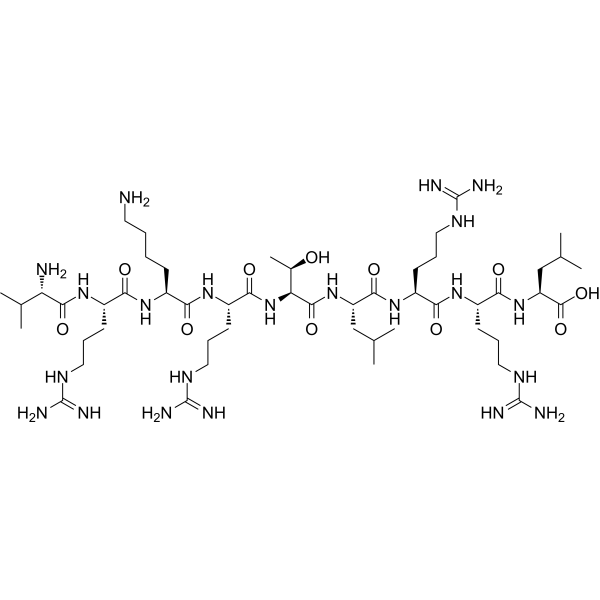
|
|
(5-Formylfuran-3-yl)Methyl phosphate synthase (EC 4.2.3.153) catalyses the reaction in the direction of producing (5-Formylfuran-3-yl)Methyl phosphate, an intermediate in the biosynthesis of methanofuran. The sequence of events starts with the removal of a phosphate group, followed by aldol condensation and cyclization.
|
-
- HY-E71311
-
|
|
Biochemical Assay Reagents
|
Others
|
|
β-Mannanase 26B, Clostridium cellulovorans (EC 3.2.1.78) is an enzyme with system name 4-beta-D-mannan mannanohydrolase. This enzyme catalyses the following chemical reaction: Random hydrolysis of (1->4)-beta-D-mannosidic linkages in mannans, galactomannans and glucomannans.
|
-
- HY-E71312
-
|
|
Biochemical Assay Reagents
|
Others
|
|
β-Mannanase 26C, Clostridium thermocellum (EC 3.2.1.78) is an enzyme with system name 4-beta-D-mannan mannanohydrolase. This enzyme catalyses the following chemical reaction: Random hydrolysis of (1->4)-beta-D-mannosidic linkages in mannans, galactomannans and glucomannans.
|
-
- HY-E71128
-
|
|
Biochemical Assay Reagents
|
Others
|
|
(S)-Nandinine synthase (EC 1.14.21.12) is a cytochrome P-450 heme-thiolate enzyme catalysing an oxidative reaction that does not incorporate oxygen into the product. Forms the methylenedioxy bridge of the protoberberine alkaloid (S)-Nandinine by the oxidative ring closure of adjacent phenolic and methoxy groups of (S)-Scoulerine.
|
-
- HY-E71315
-
|
|
Biochemical Assay Reagents
|
Others
|
|
β-Mannanase 5B, Clostridium thermocellum (EC 3.2.1.78) is an enzyme with system name 4-beta-D-mannan mannanohydrolase. This enzyme catalyses the following chemical reaction: Random hydrolysis of (1->4)-beta-D-mannosidic linkages in mannans, galactomannans and glucomannans.
|
-
- HY-E71242
-
|
|
Biochemical Assay Reagents
|
Others
|
|
α-Mannanase 76A, Bacteroides thetaiotaomicron (EC 3.2.1.101) is an enzyme with systematic name 6-alpha-D-mannan mannanohydrolase. This enzyme catalyses the following chemical reaction: Random hydrolysis of (1->6)-alpha-D-mannosidic linkages in unbranched (1->6)-mannans.
|
-
- HY-E71164
-
|
|
Biochemical Assay Reagents
|
Others
|
|
1,5-Anhydro-D-fructose dehydratase (EC 4.2.1.111) catalyses one of the steps in the anhydrofructose pathway, which leads to the degradation of glycogen and starch via 1,5-Anhydro-D-fructose . Requires divalent (Ca2+ or Mg2+) or monovalent cations (Na+) for optimal activity.
|
-
- HY-E71044
-
|
|
Aminotransferases (Transaminases)
|
Others
|
|
D-Amino acid dehydrogenase (EC 1.4.99.1) is a bacterial enzyme that catalyses the oxidation of D-amino acids into their corresponding oxoacids. D-Amino acid dehydrogenase (EC 1.4.99.1) contains both flavin and nonheme iron as cofactors. The enzyme has a very broad specificity and can act on most D-amino acids.
|
-
- HY-E71067
-
|
|
Biochemical Assay Reagents
|
Others
|
|
(3R,6E)-Nerolidol synthase (EC 4.2.3.49) catalyses a step in the formation of (3E)-4,8-dimethylnona-1,3,7-triene, a key signal molecule in induced plant defense mediated by the attraction of enemies of herbivores.
|
-
- HY-E71070
-
|
|
Biochemical Assay Reagents
|
Others
|
|
(3S,6E)-Nerolidol synthase (EC 4.2.3.48) catalyses a step in the formation of (3E)-4,8-dimethylnona-1,3,7-triene, a key signal molecule in induced plant defense mediated by the attraction of enemies of herbivores.
|
-
- HY-E71179
-
|
|
Biochemical Assay Reagents
|
Others
|
|
11-cis-Retinol dehydrogenase (EC 1.1.1.315) catalyses the reduction of 11-cis-Retinol to 11-cis-retinal while the substrate is bound to the retinal-binding protein. This is a crucial step in the regeneration of 11-cis-retinal, the chromophore of rhodopsin. The enzyme can also accept other cis forms of retinol.
|
-
- HY-E71225
-
|
|
Biochemical Assay Reagents
|
Others
|
|
α-D-Xyloside xylohydrolase (EC 3.2.1.177) catalyses hydrolysis of a terminal, unsubstituted xyloside at the extreme reducing end of a xylogluco-oligosaccharide. Representative α-xylosidases from glycoside hydrolase family 31 utilize a two-step (double-displacement) mechanism involving a covalent glycosyl-enzyme intermediate, and retain the anomeric configuration of the product.
|
-
- HY-E71088
-
|
|
Biochemical Assay Reagents
|
Others
|
|
(R)-2-Hydroxyisocaproyl-CoA dehydratase (EC 4.2.1.157) , isolated from the bacterium Peptoclostridium difficile, is involved in the reductive branch of L-leucine fermentation. It catalyses an α/β-dehydration, which depends on the reductive formation of ketyl radicals on the substrate generated by injection of a single electron from the ATP-dependent activator protein HadI.
|
-
- HY-E71344
-
|
|
Biochemical Assay Reagents
|
Others
|
|
γ-L-Glutamyl-butirosin B γ-Glutamyl cyclotransferase (EC 4.3.2.6) catalyses the last step in the biosynthesis of the aminoglycoside antibiotic butirosin B. The enzyme acts as a cyclotransferase, cleaving the amide bond via transamidation using the α-amine of the terminal γ-L-glutamate of the side chain, releasing it as the cyclic 5-oxoproline.
|
-
- HY-E71207
-
|
|
Biochemical Assay Reagents
|
Others
|
|
α,α-Trehalose synthase (EC 2.4.1.245) requires Mg2+ for maximal activity. The enzyme-catalysed reaction is reversible. In the reverse direction to that shown above, α,α-Trehalose synthase (EC 2.4.1.245) is specific for α,α-Trehalose as substrate, as it cannot use α-or β-paranitrophenyl glucosides, maltose, sucrose, lactose or cellobiose.
|
-
- HY-E71087
-
|
|
Biochemical Assay Reagents
|
Others
|
|
(R)-2-Hydroxyglutaryl-CoA dehydratase (EC 4.2.1.167) from the bacteria Acidaminococcus fermentans and Clostridium symbiosum are involved in the fermentation of L-glutamate. (R)-2-Hydroxyglutaryl-CoA dehydratase (EC 4.2.1.167) contains [4F-4S] clusters, FMNH2 and riboflavin. It must be activated by an activator protein. Once activated, it can catalyse many turnovers.
|
-
- HY-E71071
-
|
|
Biochemical Assay Reagents
Fructose-1,6-bisphosphate aldolase
|
Others
|
|
(4S)-4-Hydroxy-2-oxoglutarate aldolase (EC 4.1.3.42) is specific for the (S) enantiomer.(4S)-4-Hydroxy-2-oxoglutarate aldolase (EC 4.1.3.42) catalyses the reactions of EC 4.1.1.3, oxaloacetate decarboxylase and EC 4.1.2.14, 2-dehydro-3-deoxy-phosphogluconate aldolase.
|
-
- HY-E71129
-
|
|
Biochemical Assay Reagents
|
Others
|
|
The reaction makes a six-membered ring by forming a bond between C-6 of the 3,4-dihydroxyphenyl group of the dopamine and C-1 of the aldehyde in the imine formed between the substrates. (S)-Norcoclaurine synthase (EC 3.5.99.14) , formerly known as (S)-norlaudanosoline synthase, will also catalyse the reaction of 4-(2-aminoethyl) benzene-1,2-diol + (3,4-dihydroxyphenyl) acetaldehyde to form (S)-norlaudanosoline.
|
-
- HY-E71350
-
|
|
Biochemical Assay Reagents
|
Others
|
|
κ-Carrageenase, Zobellia galactanivorans (EC 3.2.1.83) is an enzyme with systematic name kappa-carrageenan 4-beta-D-glycanohydrolase (configuration-retaining) . This enzyme catalyses the following chemical reaction: Endohydrolysis of (1->4)-beta-D-linkages between D-galactose 4-sulfate and 3,6-anhydro-D-galactose in kappa-carrageenans. The main products of hydrolysis are neocarrabiose-sulfate and neocarratetraose-sulfate.
|
-
- HY-E71341
-
|
|
Biochemical Assay Reagents
|
Others
|
|
γ-Glutamyl-γ-aminobutyrate hydrolase (EC 3.5.1.94), forms part of a putrescine-utilizing pathway in Escherichia coli, in which it has been hypothesized that putrescine is first glutamylated to form γ-Glutamylputrescine, which is oxidized to 4-(γ-Glutamylamino) butanal and then to 4-(γ-Glutamylamino) butanoate. The enzyme can also catalyse the reactions of EC 3.5.1.35 (D-glutaminase) and EC 3.5.1.65 (theanine hydrolase) .
|
-
- HY-P2858H
-
|
|
Biochemical Assay Reagents
|
Others
|
|
β-Mannosidase, Streptomyces coelicolor (EC 3.2.1.25) catalyses the following chemical reaction:Hydrolysis of terminal, non-reducing beta-D-mannose residues in beta-D-mannosides. This gene encodes a member of the glycosyl hydrolase 2 family. The encoded protein localizes to the lysosome where it is the final exoglycosidase in the pathway for N-linked glycoprotein oligosaccharide catabolism. Mutations in this gene are associated with beta-mannosidosis, a lysosomal storage disease that has a wide spectrum of neurological involvement.
|
-
- HY-N10768
-
|
|
IKK
NF-κB
|
Inflammation/Immunology
|
|
1-Dehydro-[10]-gingerdione directly inhibits IKKβ activity by targeting the activation loop of IKKβ, thus disrupting IKKβ-catalysed IκBα phosphorylation in macrophages stimulated with agonists. 1-Dehydro-[10]-gingerdione inhibits LPS (HY-D1056)-induced NF-κB transcriptional activity. 1-Dehydro-[10]-gingerdione has the potential for NF-κB-associated inflammation and autoimmune disorders research .
|
-
- HY-E71077
-
|
|
Biochemical Assay Reagents
|
Others
|
|
(5R)-Carbapenem-3-carboxylate synthase (EC 1.14.20.3) requires Fe2+. The enzyme is involved in the biosynthesis of the carbapenem β-lactam antibiotic (5R)-carbapen-2-em-3-carboxylate in the bacterium Pectobacterium carotovorum. (5R)-Carbapenem-3-carboxylate synthase (EC 1.14.20.3) catalyses a stereoinversion at C-5 and introduces a double bond between C-2 and C-3.
|
-
- HY-129046
-
|
Ribonuclease A; EC 4.6.1.18; RNase A
|
Endonuclease
DNA/RNA Synthesis
|
Others
|
|
RNase A (Bovine pancreatic RNase) is a widely used Endonuclease in DNA purification by specifically hydrolyzing cytosine or uracil residues of RNA. RNase A degrades the RNA in the RNA/DNA duplex. RNase A catalyses the breakdown of 3',5'-phosphodiester linkages of single stranded RNA. RNase A family members in organisms are tightly involved in various physiological and pathological processes including cell growth and development, proliferation, differentiation and migration. Dysregulation of RNase A activity or expression level is closely related to pancreatic, ovarian, bladder and thyroid cancer. RNase A has tumor cell-killing ability .
|
-
- HY-E71156
-
|
|
Biochemical Assay Reagents
|
Others
|
|
1,4-Dihydroxy-2-naphthoate polyprenyltransferase (EC 2.5.1.74) catalyses a step in the synthesis of menaquinone, in which the prenyl chain synthesized by polyprenyl diphosphate synthase is transferred to 1,4-Dihydroxy-2-naphthoate (DHNA) . 1,4-Dihydroxy-2-naphthoate polyprenyltransferase (EC 2.5.1.74) is an inner membrane protein, with the C-terminus located in the periplasm. 1,4-Dihydroxy-2-naphthoate polyprenyltransferase (EC 2.5.1.74) is highly specific for DHNA but not for a specific length of the prenyl chain.
|
-
- HY-175083
-
|
|
Drug Derivative
PI3K
|
Others
|
|
PtdIns-(4,5)-P2-biotin trisodium is a Biotin-labeled PtdIns-(4,5)-P2 analog. PtdIns-(4,5)-P2-biotin trisodium is an affinity probe of PI3Kγ. PI3Kγ can catalyse the phosphorylation of PtdIns-(4,5)-P2 at the 3′-OH group, giving rise to the second messenger PtdIns(3,4,5)-P3 .
|
-
- HY-129046D
-
|
Ribonuclease A, Recombinant
|
Endonuclease
DNA/RNA Synthesis
|
Endocrinology
Cancer
|
|
RNase A (Bovine pancreatic RNase) is a widely used Endonuclease in DNA purification by specifically hydrolyzing cytosine or uracil residues of RNA. RNase A degrades the RNA in the RNA/DNA duplex. RNase A catalyses the breakdown of 3',5'-phosphodiester linkages of single stranded RNA. RNase A family members in organisms are tightly involved in various physiological and pathological processes including cell growth and development, proliferation, differentiation and migration. Dysregulation of RNase A activity or expression level is closely related to pancreatic, ovarian, bladder and thyroid cancer. RNase A has tumor cell-killing ability. RNase A, Recombinant (Ribonuclease A, Recombinant) is a recombinant form of RNase A .
|
-
- HY-129046I
-
|
|
DNA/RNA Synthesis
Endonuclease
|
Endocrinology
Cancer
|
|
RNase A (Bovine pancreatic RNase) is a widely used Endonuclease in DNA purification by specifically hydrolyzing cytosine or uracil residues of RNA. RNase A degrades the RNA in the RNA/DNA duplex. RNase A catalyses the breakdown of 3',5'-phosphodiester linkages of single stranded RNA. RNase A family members in organisms are tightly involved in various physiological and pathological processes including cell growth and development, proliferation, differentiation and migration. Dysregulation of RNase A activity or expression level is closely related to pancreatic, ovarian, bladder and thyroid cancer. RNase A has tumor cell-killing ability. RNase A, Recombinant (animal free) is recombinant RNase A with no animal-derived components .
|
-
- HY-129046E
-
|
Ribonuclease A DNase & Protease Free, Recombinant
|
Endonuclease
DNA/RNA Synthesis
|
Endocrinology
Cancer
|
|
RNase A (Bovine pancreatic RNase) is a widely used Endonuclease in DNA purification by specifically hydrolyzing cytosine or uracil residues of RNA. RNase A degrades the RNA in the RNA/DNA duplex. RNase A catalyses the breakdown of 3',5'-phosphodiester linkages of single stranded RNA. RNase A family members in organisms are tightly involved in various physiological and pathological processes including cell growth and development, proliferation, differentiation and migration. Dysregulation of RNase A activity or expression level is closely related to pancreatic, ovarian, bladder and thyroid cancer. RNase A has tumor cell-killing ability. RNase A (DNase & Protease Free), Recombinant is recombinant RNase A, which does not contain DNase and protease .
|
-
- HY-E71323
-
|
|
Biochemical Assay Reagents
|
Others
|
|
Beta-porphyranase (EC 3.2.1.178, porphyranase, PorA, PorB, endo-beta-porphyranase) is an enzyme with systematic name porphyran beta-D-galactopyranose-(1->4)-alpha-L-galactopyranose-6-sulfate 4-glycanohydrolase. This enzyme catalyses the following chemical reaction: Hydrolysis of beta-D-galactopyranose-(1->4)-alpha-L-galactopyranose-6-sulfate linkages in porphyran. The backbone of porphyran consists largely (~70%) of (1->3)-linked beta-D-galactopyranose followed by (1->4)-linked alpha-L-galactopyranose-6-sulfate.
|
-
- HY-129046H
-
|
|
DNA/RNA Synthesis
Endonuclease
|
Endocrinology
Cancer
|
|
RNase A (Bovine pancreatic RNase) is a widely used Endonuclease in DNA purification by specifically hydrolyzing cytosine or uracil residues of RNA. RNase A degrades the RNA in the RNA/DNA duplex. RNase A catalyses the breakdown of 3',5'-phosphodiester linkages of single stranded RNA. RNase A family members in organisms are tightly involved in various physiological and pathological processes including cell growth and development, proliferation, differentiation and migration. Dysregulation of RNase A activity or expression level is closely related to pancreatic, ovarian, bladder and thyroid cancer. RNase A has tumor cell-killing ability. RNase A, Recombinant (Protease & DNase free, animal free) is recombinant RNase A that does not contain protease and DNase and does not contain animal components .
|
-
- HY-129046B
-
|
Ribonuclease A DNase & Protease Free
|
Endonuclease
DNA/RNA Synthesis
|
Others
Endocrinology
Cancer
|
|
RNase A (Bovine pancreatic RNase) is a widely used Endonuclease in DNA purification by specifically hydrolyzing cytosine or uracil residues of RNA. RNase A degrades the RNA in the RNA/DNA duplex. RNase A catalyses the breakdown of 3',5'-phosphodiester linkages of single stranded RNA. RNase A family members in organisms are tightly involved in various physiological and pathological processes including cell growth and development, proliferation, differentiation and migration. Dysregulation of RNase A activity or expression level is closely related to pancreatic, ovarian, bladder and thyroid cancer. RNase A has tumor cell-killing ability. RNase A, Bovine Pancreas (DNase & Protease Free) is RNase A derived from bovine pancreas and does not contain DNase or protease .
|
-
- HY-129046C
-
|
Ribonuclease B, Bovine Pancreas
|
Endonuclease
DNA/RNA Synthesis
|
Endocrinology
Cancer
|
|
RNase A (Bovine pancreatic RNase) is a widely used Endonuclease in DNA purification by specifically hydrolyzing cytosine or uracil residues of RNA. RNase A degrades the RNA in the RNA/DNA duplex. RNase A catalyses the breakdown of 3',5'-phosphodiester linkages of single stranded RNA. RNase A family members in organisms are tightly involved in various physiological and pathological processes including cell growth and development, proliferation, differentiation and migration. Dysregulation of RNase A activity or expression level is closely related to pancreatic, ovarian, bladder and thyroid cancer. RNase A has tumor cell-killing ability. RNase B, Bovine Pancreas (Ribonuclease B, Bovine Pancreas) is the N-glycosylated form of RNase A. RNase B, Bovine Pancreas can promote the folding of polypeptide chains and play a role similar to molecular chaperones .
|
-
| Cat. No. |
Product Name |
Target |
Research Area |
-
- HY-P3764
-
|
|
PKC
|
Others
|
|
Protein kinase C substrate is a substrate of Protein kinase C, can be used to detect protein. Protein kinase C is a key regulatory element in signal transduction and exerts its effects by catalysing specific substrate phosphorylation .
|
| Cat. No. |
Product Name |
Category |
Target |
Chemical Structure |
| Cat. No. |
Product Name |
Chemical Structure |
-
- HY-W749825
-
|
|
|
Pentetic acid- 13C5 (Diethylenetriaminepentaacetic acid- 13C5) is the 13C-labeled Pentetic acid (HY-B1335). Pentetic acid (Diethylenetriaminepentaacetic acid) is an orally active compound with biodegradability used to construct magnetic adsorbent, which can simultaneously remove heavy metal and dye from complex wastewater. Pentetic acid can form strong metal complexes, which prevents metal ions from catalysing the decomposition of peroxygen chemicals, especially hydrogen peroxide .
|
-
| Cat. No. |
Product Name |
|
Classification |
-
- HY-177804
-
|
|
|
Aptamers
|
|
Thrombin aptamer is a 11mer-DNA aptamer that targets thrombin. Thrombin aptamer inhibites thrombin-catalysed fibrin-clot formation in vitro
|
Your information is safe with us. * Required Fields.
Inquiry Information
- Product Name:
- Cat. No.:
- Quantity:
- MCE Japan Authorized Agent:

