1. Search Result
Search Result
Results for "

cellular environment

" in MedChemExpress (MCE) Product Catalog:

13

Inhibitors & Agonists

1

Screening Libraries

4

Fluorescent Dyes

2

Biochemical Assay Reagents

2

Peptides

1

Natural
Products

1

Isotope-Labeled Compounds

1

Oligonucleotides

Cat. No. Product Name Target Research Areas Chemical Structure
  • HY-113324
    NADPH
    15+ Cited Publications

    Endogenous Metabolite Cancer
    NADPH is a coenzyme of glutathione reductase (GR), thioredoxin reductase (TrxR) and NADPH oxidase (NOX), and participates in redox reactions as a hydrogen donor. NADPH has the characteristic of selectively participating in the regulation of cellular redox homeostasis. NADPH exerts antioxidant activity and resists reactive oxygen species (ROS) damage by providing reducing equivalents for the regeneration of glutathione (GSH) and thioredoxin (Trx); at the same time, it acts as a substrate of NOX to generate superoxide anions, mediating oxidative stress and immune response. NADPH participates in maintaining the intracellular reducing environment, biosynthesis and regulating gene expression (such as the Nrf2 pathway), and is mainly used in the study of oxidative stress-related diseases (such as cardiovascular diseases, neurodegenerative diseases, cancer) and immune regulation mechanisms .
    NADPH
  • HY-W583868

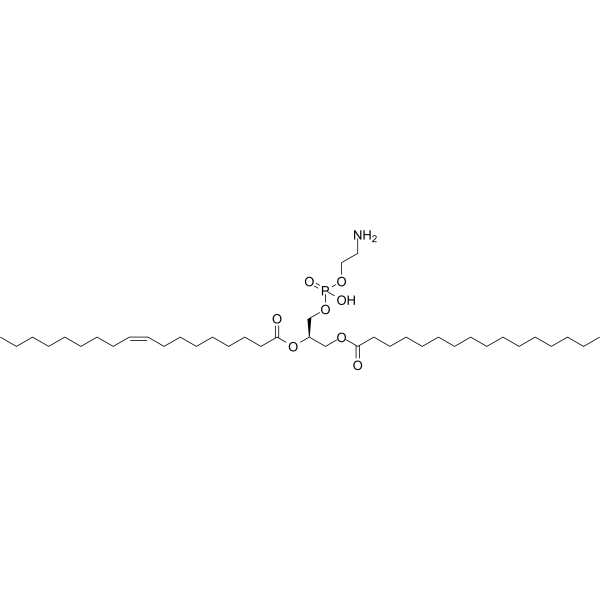
    1,2-POPE; 16:0-18:1 PE

    Liposome Others
    1-Palmitoyl-2-oleoyl-sn-glycero-3-PE (1,2-POPE; 16:0-18:1 PE) is a phosphatidylethanolamine (PE) lipid. 1-Palmitoyl-2-oleoyl-sn-glycero-3-PE can induce lipid bilayer to form a hexagonal phase (HII) structure in an acidic environment and promote membrane fusion. 1-Palmitoyl-2-oleoyl-sn-glycero-3-PE can enhance the endosomal escape ability of lipid nanoparticles (LNPs) and improve the cellular delivery efficiency of nucleic acid drugs such as mRNA. 1-Palmitoyl-2-oleoyl-sn-glycero-3-PE can be used for LNP carrier targeting of gene therapy and mRNA vaccines .
    1-Palmitoyl-2-oleoyl-sn-glycero-3-PE
  • HY-NP175

    Biochemical Assay Reagents Integrin Discoidin Domain Receptor Others
    Collagen (bovine skin) is a three-dimensional cell culture matrix and morphoregulator extracted from bovine skin, which binds to integrins (such as α1β1, α2β1, α11β1) and discoidin domain receptors (DDR1 and DDR2). Collagen (bovine skin) can be reconstituted into a three-dimensional fibrous network to mimic the in vivo tissue environment. It can not only be modified through cross-linking or concentration adjustment, but also interact with fibronectin to enhance matrix-associated cellular activities. Collagen (bovine skin) mediates the proliferation, aggregation, durotactic migration and differentiation of fibroblasts, regulates the synthesis, remodeling and contraction of extracellular matrix, and modulates the expression, activation of MMP as well as cell apoptosis, etc. Collagen (bovine skin) can be used in studies related to the mechanisms of cancer occurrence and development .
    Collagen (bovine skin)
  • HY-D1190

    RAR/RXR Others
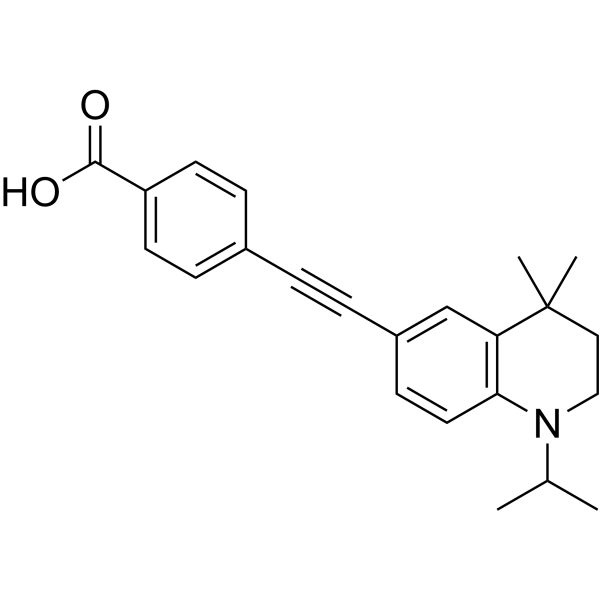
    DC271 is a RAR agonist and synthetic retinoid that binds to the retinoid-binding site of cellular retinoic acid-binding protein II (CRBP-II). DC271 exhibits solvatochromic fluorescence properties: it produces intense blue-shifted emission in nonpolar environments and weak red-shifted emission in polar environments, and its severe fluorescence quenching in aqueous solutions can be reversed by embedding in the hydrophobic retinoid-binding protein pocket. DC271 enables direct detection of the binding between unlabeled compounds and related retinoid-binding proteins via fluorescence competition assays (Ex/Em = 355 nm/460 nm) .
    DC271
  • HY-P5372A

    Protease Activated Receptor (PAR) Cancer
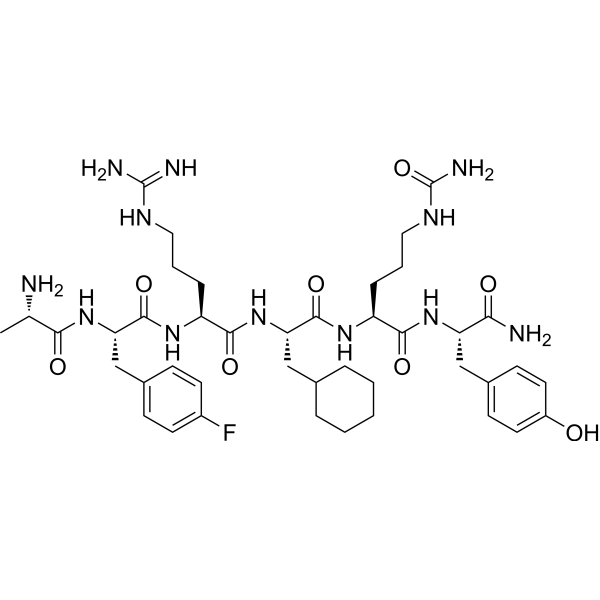
    Ala-parafluoroPhe-Arg-Cha-Cit-Tyr-NH2 TFA, a bioactive peptide, is a selective Protease activating receptor 1 (PAR-1) agonist over PAR-2. PAR-1 belongs to a subfamily of G-protein coupled receptors and is known to mediate the cellular effects of thrombin. In addition to its varied cellular effects of thrombin, PAR-1 has also been shown to coordinate with PAR-4 and regulate thrombin-induced hepatocellular carcinoma harboring thrombin formation within the tumor environment classified as 'coagulation type' .
    Ala-parafluoroPhe-Arg-Cha-Cit-Tyr-NH2 TFA
  • HY-150175

    Fluorescent Dye Inflammation/Immunology
    HKSOX-1 and its derivatives (HKSOX-1r and HKSOX-1m) are novel fluorescent probes designed for highly sensitive and selective detection of the superoxide anion radical (O2 •−) in cellular environments. These probes utilize an aryl trifluoromethanesulfonate group that undergoes O2 •−-mediated cleavage, releasing a free phenol and emitting fluorescence. They demonstrate excellent specificity and sensitivity across various pH ranges, withstand interference from strong oxidants and reductants typical in cellular contexts. HKSOX-1r, optimized for cellular retention, has been effectively employed in diverse assays including confocal imaging, flow cytometry, and zebrafish embryo studies, highlighting its utility in investigating O2 •− roles in inflammation, mitochondrial stress, and other physiological processes .
    HKSOX-1
  • HY-P5372

    Protease Activated Receptor (PAR) Cancer
    Ala-parafluoroPhe-Arg-Cha-Cit-Tyr-NH2, a bioactive peptide, is a selective Protease activating receptor 1 (PAR-1) agonist over PAR-2. PAR-1 belongs to a subfamily of G-protein coupled receptors and is known to mediate the cellular effects of thrombin. In addition to its varied cellular effects of thrombin, PAR-1 has also been shown to coordinate with PAR-4 and regulate thrombin-induced hepatocellular carcinoma harboring thrombin formation within the tumor environment classified as 'coagulation type' .
    Ala-parafluoroPhe-Arg-Cha-Cit-Tyr-NH2
  • HY-151406

    Apoptosis Cancer
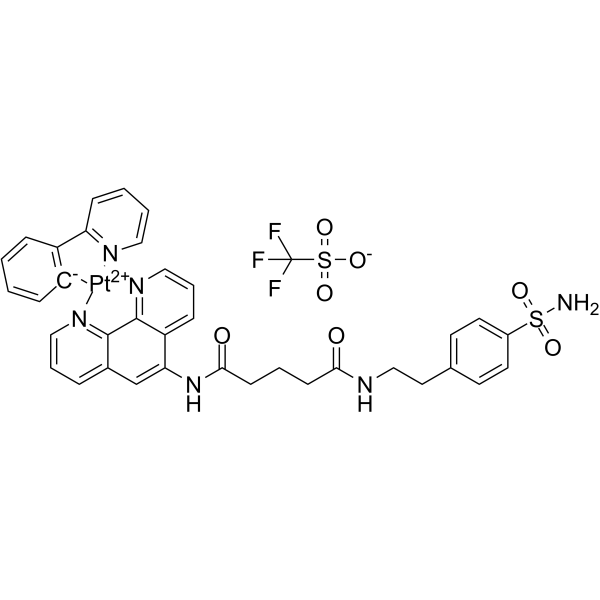
    hCAIX-IN-13 (Pt2) is an inhibitor of CAIX (arbonic anhydrase IX) with an IC50 value of 6.57 μM. hCAIX-IN-13 inhibits growth of cancer cells and induces cell apoptosis, it can be used for the research of cancer .
    hCAIX-IN-13
  • HY-D3251

    Fluorescent Dye Cancer
    LCP is a fluorescent probe applicable for subcellular localization. LCP responds to polarity changes in the cellular microenvironment via fluorescence resonance energy transfer, emitting blue fluorescence in low-polarity environments and red fluorescence in high-polarity environments. LCP enables dual-color visualization of dynamic changes in lysosomes and cytoplasmic membranes during drug-induced cell apoptosis, and monitors cell viability through localization and emission color changes. LCP can be used in cancer research .
    LCP
  • HY-D3283

    Fluorescent Dye Others
    Ctrl-CCF1 is a control probe for CCF1. Ctrl-CCF1 can be used to distinguish copper-dependent responses from potential dye-dependent variations, such as cellular uptake, retention, subcellular accumulation, and changes in pH, redox or hydrophobic/hydrophilic environments .
    Ctrl-CCF1
  • HY-D3007

    Fluorescent Dye Others
    LD-CK is a fluorescent probe based on a coumarin-chromone structure, specifically designed to visualize lipid droplet polarity changes and endowed with multimodal imaging capability. LD-CK contains a high-performance lipophilic coumarin moiety, which enables it to specifically target lipid droplets upon cellular entry while minimizing background fluorescence to the greatest extent. LD-CK has an excitation wavelength (Ex) of 488 nm and an emission wavelength (Em) of 540 nm (in low-polarity environments such as toluene) or 640 nm (in high-polarity environments such as glycerol), with its emission peak undergoing a redshift as solvent polarity increases .
    LD-CK
  • HY-111289

    Tyrosinase FGFR Cancer
    Tec-IN-14 blocks the interaction between Tec kinase and FGF2 with an IC50 of 7.0 μM. Tec-IN-14 inhibits the non-classical secretion of FGF2 in cells. Tec-IN-14 suppresses the tyrosine phosphorylation of FGF2 in a cellular environment. Tec-IN-14 is applicable to research related to cancer .
    Tec-IN-14
  • HY-W583868S

    1,2-POPE-d62; 16:0-18:1 PE-d62

    Isotope-Labeled Compounds Others
    1-Palmitoyl-2-oleoyl-sn-glycero-3-PE-d62 (1,2-POPE-d62) is the deuterium labeled 1-Palmitoyl-2-oleoyl-sn-glycero-3-PE. 1-Palmitoyl-2-oleoyl-sn-glycero-3-PE (1,2-POPE; 16:0-18:1 PE) is a phosphatidylethanolamine (PE) lipid. 1-Palmitoyl-2-oleoyl-sn-glycero-3-PE can induce lipid bilayer to form a hexagonal phase (HII) structure in an acidic environment and promote membrane fusion. 1-Palmitoyl-2-oleoyl-sn-glycero-3-PE can enhance the endosomal escape ability of lipid nanoparticles (LNPs) and improve the cellular delivery efficiency of nucleic acid drugs such as mRNA. 1-Palmitoyl-2-oleoyl-sn-glycero-3-PE can be used for LNP carrier targeting of gene therapy and mRNA vaccines .
    1-Palmitoyl-2-oleoyl-sn-glycero-3-PE-d62

Inquiry Online

Your information is safe with us. * Required Fields.

Salutation


Country or Region *

Applicant Name *


Organization Name *

Department *


Email Address *


Product Name *

Cat. No.


Requested quantity *

Phone Number *


Remarks

Inquiry Online

Inquiry Information

Product Name:
Cat. No.:
Quantity:
MCE Japan Authorized Agent:

