
1. Search Result
Search Result
Results for "

chemotactic

" in MedChemExpress (MCE) Product Catalog:

62

Inhibitors & Agonists

1

Screening Libraries

1

Biochemical Assay Reagents

17

Peptides

1

Inhibitory Antibodies

4

Natural
Products

21

Recombinant Proteins

3

Isotope-Labeled Compounds

3

Antibodies

20

Oligonucleotides

Cat. No. Product Name Target Research Areas Chemical Structure
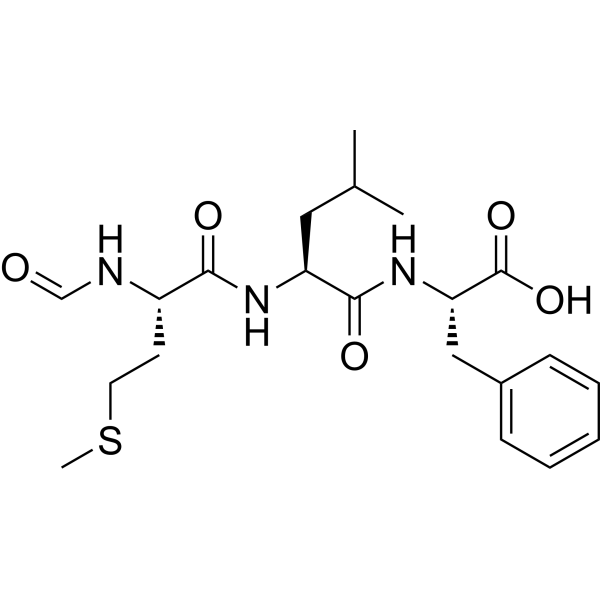
  • HY-P0224
    N-Formyl-Met-Leu-Phe
    15+ Cited Publications

    fMLP; N-Formyl-MLF

    TNF Receptor Inflammation/Immunology
    N-Formyl-Met-Leu-Phe (fMLP; N-Formyl-MLF) is a chemotactic peptide and a specific ligand of N-formyl peptide receptor (FPR). N-Formyl-Met-Leu-Ph is reported to inhibit TNF-alpha secretion.
    N-Formyl-Met-Leu-Phe
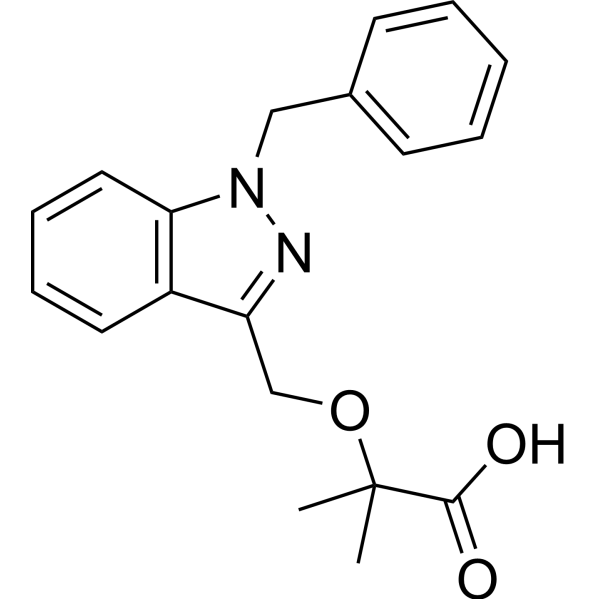
  • HY-B0498
    Bindarit
    25+ Cited Publications

    AF2838

    CCR Neurological Disease Inflammation/Immunology Endocrinology Cancer
    Bindarit (AF2838) is a selective inhibitor of the monocyte chemotactic proteins MCP-1/CCL2, MCP-3/CCL7, and MCP-2/CCL8, and no effect on other CC and CXC chemokines such as MIP-1α/CCL3, MIP-1β/CCL4, MIP-3/CCL23. Bindarit also has anti-inflammatory activity .
    Bindarit
  • HY-P1120

    WKYMVm-amide; W-Peptide

    Formyl Peptide Receptor (FPR) PERK Apoptosis Neurological Disease Metabolic Disease Inflammation/Immunology Cancer
    WKYMVm is a selective formylpeptide receptor 2 (FPR2) agonist. WKYMVm has a powerful anti-inflammatory effect that can reduce lung injury and spinal cord injury. WKYMVm ameliorates obesity by regulating lipid metabolism and leptin signaling. WKYMVm is involved in the regulation of immune cells by activating FPRs. WKYMVm can promote the chemotactic migration of immune cells and inhibit the apoptosis of phagocytes. In addition, WKYMVm may play a favorable or unfavorable role in tumors, depending on the type of tumor .
    WKYMVm
  • HY-103363
    SB-328437
    3 Publications Verification

    CCR Thymidylate Synthase Inflammation/Immunology Cancer
    SB-328437 is a potent, selective non-peptide CCR3 antagonist with an IC50 of 4.5 nM. SB-328437 can inhibit eosinophil migration induced by eotaxin, eotaxin-2, and monocyte chemotactic protein-4. In addition, SB-328437 can sensitize 5-FU (HY-90006)-resistant gastric cancer cells. SB-328437 can also reduce the recruitment of neutrophils to the lungs and pulmonary inflammation during acute inflammation. SB-328437 can be used in the research of inflammation-related diseases .
    SB-328437
  • HY-153128

    DOCK Drug Derivative Inflammation/Immunology
    DOCK2-IN-1 (Compound 3) is an analog of CPYPP (HY-110100) and a DOCK2 inhibitor (IC50 = 19.1 μM). DOCK2-IN-1 binds to the DHR-2 domain of DOCK2 and inhibits its mediated Rac guanine nucleotide exchange factor activity. DOCK2-IN-1 blocks chemokine receptor- and antigen receptor-mediated activation of Rac in lymphocytes. DOCK2-IN-1 significantly inhibits chemotaxis and T cell activation. DOCK2-IN-1 can be used in the research of transplant rejection and organ-specific autoimmune diseases .
    DOCK2-IN-1
  • HY-114164G
    Murine Thrombin
    5+ Cited Publications

    Thrombin Protease Activated Receptor (PAR) MMP VEGFR Epigenetic Reader Domain Cardiovascular Disease Neurological Disease Inflammation/Immunology
    Murine Thrombin is a murine serine protease that plays a central role in blood coagulation. Murine Thrombin stimulates macrophages to polarize into a unique phenotype characterized by anti-inflammatory and pro-repair properties. Murine Thrombin activates PAR1, induces the production of MCP-1, MMP3 and VEGF in mouse intervertebral discs, and causes degradation of the cartilage matrix and destruction of intervertebral disc structure. Murine Thrombin activity increases significantly in paraoxon-induced status epilepticus .
    Murine Thrombin
  • HY-100956

    Bacterial Urease Infection Metabolic Disease
    Flurofamide is an effective bacterial urease inhibitor and antibacterial agent. Flurofamide inhibits urease and partially inhibits the chemotactic activity of Helicobacter pylori strain CPY3401. Flurofamide inhibits the growth of Ureaplasma urealyticum. Flurofamide reduces blood ammonia. Flurofamide can be used in the research of infectious urinary stones .
    Flurofamide
  • HY-W704574

    Carboxypeptidase Bradykinin Receptor Interleukin Related Cardiovascular Disease Metabolic Disease
    Mergetpa is a reversible Arg-carboxypeptidase inhibitor with high affinity. Mergetpa reduces B1R. Mergetpa blocks the overexpression of IL-1β protein and mRNA in glucose-fed rats. Mergetpa significantly increases the expression of IL-1β protein in the renal cortex. Mergetpa is used to block the conversion of kinins and B2 receptor antagonists into metabolites lacking the C-terminal arginine. Mergetpa inhibits the time-dependent enhancement of the response of isolated rabbit aorta to bradykinin. Mergetpa preserves the chemotactic activity of full-length SDF-1α on cells. Mergetpa reverses hyperglycemia, excessive weight gain, elevated levels of oxidative stress markers and overexpression of inflammatory markers in glucose-fed rats .
    Mergetpa
  • HY-B0426A

    ALO4943A; KW4679

    Histamine Receptor CXCR Infection Neurological Disease Metabolic Disease Inflammation/Immunology
    Olopatadine hydrochloride (ALO4943A; KW4679) is an orally active histamine H1 receptor antagonist and mast cell stabilizer. Olopatadine hydrochloride exerts antiallergic effects by blocking histamine H1 receptor-mediated activities. Olopatadine hydrochloride inhibits exocytosis, chemokine release, F-actin polymerization, CXCL10-induced calcium influx, and T cell chemotactic activity. Olopatadine hydrochloride also reduces the expression levels of CXCR3 on the surface of CD4 + and CD8 + T cells. Olopatadine hydrochloride inhibits scratching behavior, improves dermatitis scores, and suppresses intraepidermal neurite outgrowth. Olopatadine hydrochloride simultaneously decreases the levels of inflammatory markers, growth factors, histamine, and specific IgE, while increasing the expression of ErbB3A/HER3A. Olopatadine hydrochloride can be used in research related to seasonal pollinosis, chronic rhinitis, urticaria, allergic conjunctivitis, alopecia areata, and atopic dermatitis .
    Olopatadine hydrochloride
  • HY-P1117
    MMK1
    1 Publications Verification

    Formyl Peptide Receptor (FPR) Calcium Channel Neurological Disease Inflammation/Immunology
    MMK1 is a potent and selective human formyl peptide receptor like-1 (FPRL-1/FPR2) agonist with EC50s of <2 nM and >10000 nM for FPRL-1 and FPR1, respectively. MMK1 is a potent chemotactic and calcium-mobilizing agonist. MMK1 potently activates phagocytic leukocytes and enhances Pertussis Toxin-sensitive production by human monocytes of proinflammatory cytokines IL-1b and IL-6. MMK1 exerts anxiolytic-like activity .
    MMK1
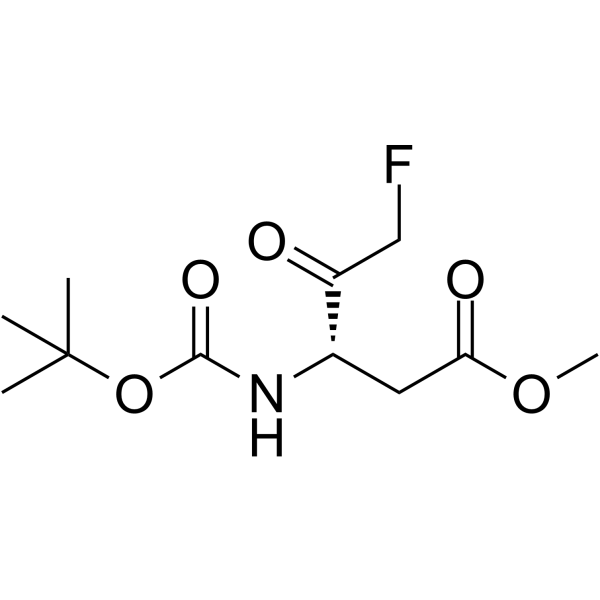
  • HY-103348

    Boc-Asp(OMe)-FMK

    Caspase Inflammation/Immunology
    Boc-Asp(OME)-Fluoromethyl Ketone is a broad range caspase inhibitor that inhibits Fas-mediated phagocytosis and oxidative rupture inhibition, but does not affect the chemotactic activity of IL-8 .
    Boc-Asp(OMe)-fluoromethyl ketone
  • HY-139481
    TL-895
    1 Publications Verification

    Btk BMX Kinase Interleukin Related TNF Receptor Neurological Disease Inflammation/Immunology Cancer
    TL-895 is a potent, orally active, ATP-competitive, and highly selective irreversible BTK inhibitor. TL-895 is active against recombinant BTK (average IC50: 1.5 nM) and inhibits only three additional kinases BLK, BMX (IC50 = 1.6 nM) and TXK with IC50 within tenfold of BTK activity. TL-895 inhibits BTK auto-phosphorylation at the Y223 phosphorylation site (IC50: 1-10 nM). The TL-895 effectively inhibits the production of inflammatory factors such as IL-8, IL-1β, MCP-1 and TNF-α by monocytes or macrophages, and reduces the chemotactic migration of MF cells towards SDF-1. TL-895 is used be for studies of chronic lymphocytic leukemia (CLL), myelofibrosis (MF), and B-cell malignancies .
    TL-895
  • HY-P4998

    Biochemical Assay Reagents Cancer
    Chemotactic Domain of Elastin is an elastin-derived peptide with chemotactic effects on certain tumor cells, such as M27 tumor cells. Chemotactic Domain of Elastin can be used in cancer research .
    Chemotactic Domain of Elastin
  • HY-P1764

    Dopamine Receptor Neurological Disease
    Secretoneurin, rat, a 33-amino acid polypeptide, is generated by proteolytic processing of secretogranin II (SgII). Secretoneurin, rat induces dopamine release in the rat striatum in vivo and in vitro, and it exerts a very strong chemotactic effect on monocytes and eosinophils but not on granulocytes .
    Secretoneurin, rat
  • HY-144197

    CCR Neurological Disease
    CCR8 antagonist 1 (Compound 15) is a potente human CCR8 antagonist with a Ki of 1.6 nM. CCR8 antagonist 1 has high safety and metabolic stability. CCR8 antagonist 1 can be used to study diseases such as asthma and multiple sclerosis .
    CCR8 antagonist 1
  • HY-W062109

    Histamine Receptor CXCR Inflammation/Immunology
    Olopatadine (ALO4943A; KW4679) is an orally active histamine H1 receptor antagonist and mast cell stabilizer. Olopatadine exerts antiallergic effects by blocking histamine H1 receptor-mediated activities. Olopatadine inhibits exocytosis, chemokine release, F-actin polymerization, CXCL10-induced calcium influx, and T cell chemotactic activity. Olopatadine also reduces the expression levels of CXCR3 on the surface of CD4 + and CD8 + T cells. Olopatadine inhibits scratching behavior, improves dermatitis scores, and suppresses intraepidermal neurite outgrowth. Olopatadine simultaneously decreases the levels of inflammatory markers, growth factors, histamine, and specific IgE, while increasing the expression of ErbB3A/HER3A. Olopatadine can be used in research related to seasonal pollinosis, chronic rhinitis, urticaria, allergic conjunctivitis, alopecia areata, and atopic dermatitis .
    Olopatadine
  • HY-P2588

    Osteocalcin (1-49) (human)

    Endogenous Metabolite Metabolic Disease Cancer
    Osteocalcin (Osteocalcin (1-49)) (human) is a vitamin K-dependent bone specific protein. Osteocalcin (human) is chemotactic for several of the cell types frequently found at bone remodeling surfaces .
    Osteocalcin (human)
  • HY-P10738

    Formyl Peptide Receptor (FPR) Infection
    N-Formyl-MMYALF is a potent mitochondrial N-formyl peptide (mtFP) that has the activity of depleting calcium ions in the endoplasmic reticulum. N-Formyl-MMYALF can inhibit the FPR-1-mediated chemotactic response of polymorphonuclear leukocytes (PMNs) to bacterial peptides .
    N-Formyl-MMYALF
  • HY-P2311

    Endogenous Metabolite Antibiotic Inflammation/Immunology
    Defensin HNP-2 human is an endogenous antibiotic peptide and monocyte chemotactic peptide produced by human neutrophils.
    Defensin HNP-2 human
  • HY-W062109S

    Isotope-Labeled Compounds Histamine Receptor CXCR Inflammation/Immunology
    Olopatadine-d6 is the deuterium labeled Olopatadine. Olopatadine hydrochloride (ALO4943A; KW4679) is an orally active histamine H1 receptor antagonist and mast cell stabilizer. Olopatadine hydrochloride exerts antiallergic effects by blocking histamine H1 receptor-mediated activities. Olopatadine hydrochloride inhibits exocytosis, chemokine release, F-actin polymerization, CXCL10-induced calcium influx, and T cell chemotactic activity. Olopatadine hydrochloride also reduces the expression levels of CXCR3 on the surface of CD4 + and CD8 + T cells. Olopatadine hydrochloride inhibits scratching behavior, improves dermatitis scores, and suppresses intraepidermal neurite outgrowth. Olopatadine hydrochloride simultaneously decreases the levels of inflammatory markers, growth factors, histamine, and specific IgE, while increasing the expression of ErbB3A/HER3A. Olopatadine hydrochloride can be used in research related to seasonal pollinosis, chronic rhinitis, urticaria, allergic conjunctivitis, alopecia areata, and atopic dermatitis .
    Olopatadine-d6
  • HY-P2642

    CXCR Inflammation/Immunology
    Peptide 78, a chemotactic cytokine, a 78 amino acid protein member of the IL-8 or C-X-C chemokine supergene family. ENA-78 plays an important role in the elicitation of predominantly neutrophils (PMNs) into the joints of rheumatoid arthritis (RA) .
    Peptide 78
  • HY-177270

    EGFR Drug Derivative Cancer
    CHNQD-01281, a derivative of Brefeldin A (HY-16592), is a EGFR modulator. CHNQD-01281 has strong antiproliferative activities against cancer cells (IC50: 0.079 and 0.081 μM for T24 and J82 cells, respectively). CHNQD-01281 regulates both EGFR/PI3K/AKT and EGFR/ERK pathways and mediates the chemotactic effect of chemokines on immune effector cells. CHNQD-01281 remarkably inhibits tumor growth in T24 xenograft mice model and prolongs the survival time in MB49 allogeneic mice model via inducing infiltration of cytotoxic T cells .
    CHNQD-01281
  • HY-P2588A

    Osteocalcin (1-49) (human) TFA

    Endogenous Metabolite Metabolic Disease Cancer
    Osteocalcin (Osteocalcin (1-49)) (human) TFA is a vitamin K-dependent bone specific protein. Osteocalcin (human) TFA is chemotactic for several of the cell types frequently found at bone remodeling surfaces .
    Osteocalcin (human) TFA
  • HY-174761

    mRNA Inflammation/Immunology
    Human CCL21 mRNA encodes the human C-C motif chemokine ligand 21 (CCL21) protein, a chemokine that can inhibit hemopoiesis and stimulate chemotaxis. CCL21 is chemotactic in vitro for thymocytes and activated T cells, but not for B cells, macrophages, or neutrophils. It may also play a role in mediating homing of lymphocytes to secondary lymphoid organs.
    Human CCL21 mRNA
  • HY-114732

    Adrenergic Receptor Others
    Procaterol is an oral selective β2 adrenergic receptor agonist. Procaterol inhibits eosinophil migration and the release of eosinophil chemotactic factor from BEAS-2B cells through a cyclic AMP-dependent mechanism. Procaterol has a large dose difference existing between the bronchodilator effect and the anabolic effect in rat, can be used for asthma research in athletes .
    Procaterol
  • HY-W091754

    Nucleoside Antimetabolite/Analog Phosphoramidites Others
    5'-O-Dmt-n2-isobutyryl-2'-o-methyl-d-guanosine is a nucleoside that is made using an oxime opening of the 5' position and a methylation at the 2' position. 5'-O-Dmt-n2-isobutyryl-2'-o-methyl-d-guanosine has been shown to have an affinity for tissues in a chemotactic assay.
    5'-O-Dmt-n2-isobutyryl-2'-o-methyl-d-guanosine
  • HY-B0426AS

    Isotope-Labeled Compounds Histamine Receptor CXCR Inflammation/Immunology Endocrinology
    Olopatadine-d3 hydrochloride (ALO4943A-d3) is the deuterium labeled Olopatadine hydrochloride. Olopatadine hydrochloride (ALO4943A; KW4679) is an orally active histamine H1 receptor antagonist and mast cell stabilizer. Olopatadine hydrochloride exerts antiallergic effects by blocking histamine H1 receptor-mediated activities. Olopatadine hydrochloride inhibits exocytosis, chemokine release, F-actin polymerization, CXCL10-induced calcium influx, and T cell chemotactic activity. Olopatadine hydrochloride also reduces the expression levels of CXCR3 on the surface of CD4 + and CD8 + T cells. Olopatadine hydrochloride inhibits scratching behavior, improves dermatitis scores, and suppresses intraepidermal neurite outgrowth. Olopatadine hydrochloride simultaneously decreases the levels of inflammatory markers, growth factors, histamine, and specific IgE, while increasing the expression of ErbB3A/HER3A. Olopatadine hydrochloride can be used in research related to seasonal pollinosis, chronic rhinitis, urticaria, allergic conjunctivitis, alopecia areata, and atopic dermatitis .
    Olopatadine-d3 hydrochloride
  • HY-B0426AR

    ALO4943A (Standard); KW4679 (Standard)

    Reference Standards Histamine Receptor CXCR Inflammation/Immunology Endocrinology
    Olopatadine (hydrochloride) (Standard) is the analytical standard of Olopatadine (hydrochloride). This product is intended for research and analytical applications. Olopatadine hydrochloride (ALO4943A; KW4679) is an orally active histamine H1 receptor antagonist and mast cell stabilizer. Olopatadine hydrochloride exerts antiallergic effects by blocking histamine H1 receptor-mediated activities. Olopatadine hydrochloride inhibits exocytosis, chemokine release, F-actin polymerization, CXCL10-induced calcium influx, and T cell chemotactic activity. Olopatadine hydrochloride also reduces the expression levels of CXCR3 on the surface of CD4 + and CD8 + T cells. Olopatadine hydrochloride inhibits scratching behavior, improves dermatitis scores, and suppresses intraepidermal neurite outgrowth. Olopatadine hydrochloride simultaneously decreases the levels of inflammatory markers, growth factors, histamine, and specific IgE, while increasing the expression of ErbB3A/HER3A. Olopatadine hydrochloride can be used in research related to seasonal pollinosis, chronic rhinitis, urticaria, allergic conjunctivitis, alopecia areata, and atopic dermatitis .
    Olopatadine hydrochloride (Standard)
  • HY-165362

    Reactive Oxygen Species (ROS) Inflammation/Immunology
    AO-1535 is a semisynthetic monoglycosylceramide that inhibits the production of reactive oxygen intermediates in human monocytes and macrophages stimulated by phorbol ester and chemotactic tetrapeptide. AO-1535 can be used for the research of inflammatory dermatoses .
    AO-1535
  • HY-P1117A

    Formyl Peptide Receptor (FPR) Calcium Channel Neurological Disease Inflammation/Immunology
    MMK1 TFA is a potent and selective human formyl peptide receptor like-1 (FPRL-1/FPR2) agonist with EC50s of <2 nM and >10000 nM for FPRL-1 and FPR1, respectively. MMK1 TFA is a potent chemotactic and calcium-mobilizing agonist. MMK1 TFA potently activates phagocytic leukocytes and enhances Pertussis Toxin-sensitive production by human monocytes of proinflammatory cytokines IL-1b and IL-6. MMK1 TFA exerts anxiolytic-like activity .
    MMK1 TFA
  • HY-170231

    OPN

    Biochemical Assay Reagents Others
    Bovine Osteopontin (OPN) is a secreted highly acidic calcium-binding phosphorylated glycoprotein that is chemotactic for macrophages, smooth muscle cells, endothelial cells, and glial cells .
    Bovine Osteopontin
  • HY-106178D

    3D53 monoacetate

    Endogenous Metabolite Inflammation/Immunology
    PMX 53 monoacetate (3D53 monoacetate) is a potent orally active CD88 (C5aR) antagonist that inhibits C5a-induced neutrophil myeloperoxide release and chemotactic activity. PMX 53 monoacetate has an IC50 value of 20 nM against C5a-induced neutrophil myeloperoxide release. >The value is 22 nM, and the IC50 value of the chemotactic activity is 75 nM. PMX 53 monoacetate is also an agonist of MrgX2 .
    PMX 53 monoacetate
  • HY-174768

    mRNA Inflammation/Immunology
    Human CCL15 mRNA encodes the human C-C motif chemokine ligand 15 (CCL15) protein, a chemotactic for T cells and monocytes, and acts through C-C chemokine receptor type 1 (CCR1).
    Human CCL15 mRNA
  • HY-174729

    mRNA Inflammation/Immunology
    Human IL8 mRNA encodes the human interleukin 8 (IL8) protein, a member of the CXC chemokine family. IL8 is a major mediator of the inflammatory response. It also functions as a chemotactic factor by guiding the neutrophils to the site of infection.
    Human CXCL8 mRNA
  • HY-174772

    mRNA Inflammation/Immunology
    Human CCL1 mRNA encodes the human C-C motif chemokine ligand 1 (CCL1) protein, a member of the CC subfamily. CCL1 is secreted by activated T cells and displays chemotactic activity for monocytes but not for neutrophils.
    Human CCL1 mRNA
  • HY-P10738A

    Formyl Peptide Receptor (FPR) Infection
    N-Formyl-MMYALF TFA is a mitochondrial N-formyl peptide that has the activity of depleting calcium ions in the endoplasmic reticulum. N-Formyl-MMYALF TFA can inhibit the FPR-1-mediated chemotactic response of PMNs to bacterial peptides .
    N-Formyl-MMYALF TFA
  • HY-174767

    mRNA Inflammation/Immunology
    Human CCL16 mRNA encodes the human C-C motif chemokine ligand 16 (CCL16) protein, a cytokine that displays chemotactic activity for lymphocytes and monocytes but not for neutrophils. CCL16 also shows a potent myelosuppressive activity and suppresses proliferation of myeloid progenitor cells.
    Human CCL16 mRNA
  • HY-174763

    mRNA Inflammation/Immunology
    Human CCL2 mRNA encodes the human C-C motif chemokine ligand 2 (CCL2) protein. CCL2 displays chemotactic activity for monocytes and basophils but not for neutrophils or eosinophils. It has been implicated in the pathogenesis of diseases characterized by monocytic infiltrates, like psoriasis, rheumatoid arthritis and atherosclerosis.
    Human CCL2 mRNA
  • HY-174726

    mRNA Inflammation/Immunology
    Human CXCR3 mRNA encodes the human C-X-C motif chemokine receptor 3 (CXCR3) protein, G protein-coupled receptor. Chemokines bind to CXCR3 protein can induce cellular responses that are involved in leukocyte traffic, integrin activation, cytoskeletal changes and chemotactic migration.
    Human CXCR3 mRNA
  • HY-174766

    mRNA Inflammation/Immunology
    Human CCL17 mRNA encodes the human C-C motif chemokine ligand 17 (CCL17) protein, a cytokine that displays chemotactic activity for T lymphocytes, but not monocytes or granulocytes. CCL17 plays important roles in T cell development in thymus as well as in trafficking and activation of mature T cells.
    Human CCL17 mRNA
  • HY-174755

    mRNA Inflammation/Immunology
    Human CCL27 mRNA encodes the human C-C motif chemokine ligand 27 (CCL27) protein, a chemotactic for skin-associated memory T lymphocytes. CCL27 also plays a role in mediating homing of lymphocytes to cutaneous sites. It specifically binds to chemokine receptor 10 (CCR10).
    Human CCL27 mRNA
  • HY-172161

    CCR Inflammation/Immunology
    CCR6 antagonist 2 (Compound 20c) is the antagonist for CCR6 with a Ki of 1.1 nM. CCR6 antagonist 2 inhibits CCL20-induced calcium ion influx (IC50 = 4.9 nM), inhibits the chemotactic migration of CCR6+ T cells (IC50 = 190 nM) .
    CCR6 antagonist 2
  • HY-149921

    Src p38 MAPK Cancer
    Antiangiogenic agent 3 (compound 3) is a potent antiangiogenic agent. Antiangiogenic agent 3 is an inhibitor of human umbilical vein endothelial cells (HUVEC). Antiangiogenic agent 3 inhibits HUVEC migration and chemotactic motilities. Antiangiogenic agent 3 also decreases the gene expression of Src, cdc42, and MAPK .
    Antiangiogenic agent 3
  • HY-174770

    mRNA Inflammation/Immunology
    Human CCL13 mRNA encodes the human C-C motif chemokine ligand 13 (CCL13) protein, a cytokine that displays chemotactic activity for monocytes, lymphocytes, basophils and eosinophils, but not neutrophils. CCL13 also plays a role in accumulation of leukocytes during inflammation and may be involved in the recruitment of monocytes into the arterial wall during artherosclerosis.
    Human CCL13 mRNA
  • HY-174754

    mRNA Inflammation/Immunology
    Human CCL28 mRNA encodes the human C-C motif chemokine ligand 28 (CCL28) protein, a cytokine that displays chemotactic activity for resting CD4 or CD8 T cells and eosinophils. CCL28 may play a role in the physiology of extracutaneous epithelial tissues, including diverse mucosal organs.
    Human CCL28 mRNA
  • HY-12079

    CCR Inflammation/Immunology
    CP-481715 is a potent, reversible and selective CCR1 antagonist with a Kd of 9.2 nM for human CCR1. CP-481715 is >100-fold selective for CCR1 as compared with a panel of G-protein-coupled receptors including related chemokine receptors. CP-481715 has the potential for rheumatoid arthritis and other inflammatory diseases research .
    CP-481715
  • HY-174759

    mRNA Inflammation/Immunology
    Human CCL23 mRNA encodes the human C-C motif chemokine ligand 23 (CCL23) protein, a cytokine that displays chemotactic activity on resting T lymphocytes and monocytes, lower activity on neutrophils and no activity on activated T lymphocytes. CCL23 is also a strong suppressor of colony formation by a multipotential hematopoietic progenitor cell line.
    Human CCL23 mRNA
  • HY-174756

    mRNA Inflammation/Immunology
    Human CCL26 mRNA encodes the human C-C motif chemokine ligand 26 (CCL26) protein, a cytokine that displays chemotactic activity for normal peripheral blood eosinophils and basophils. CCL26 also has antimicrobial activity, displaying an antibacterial effect on S. pneumoniae, S. aureus, Non-typeable H. influenzae, and P. aeruginosa.
    Human CCL26 mRNA
  • HY-174765

    mRNA Inflammation/Immunology
    Human CCL18 mRNA encodes the human C-C motif chemokine ligand 18 (CCL18) protein, a cytokine that displays chemotactic activity for naive T cells, CD4+ and CD8+ T cells and nonactivated lymphocytes, but not for monocytes or granulocytes. CCL18 may play a role in both humoral and cell-mediated immunity responses.
    Human CCL18 mRNA
  • HY-174760

    mRNA Inflammation/Immunology
    Human CCL22 mRNA encodes the human C-C motif chemokine ligand 22 (CCL22) protein, a cytokine that displays chemotactic activity for monocytes, dendritic cells, natural killer cells and for chronically activated T lymphocytes. CCL22 also displays a mild activity for primary activated T lymphocytes and has no chemoattractant activity for neutrophils, eosinophils and resting T lymphocytes.
    Human CCL22 mRNA

Inquiry Online

Your information is safe with us. * Required Fields.

Salutation


Country or Region *

Applicant Name *


Organization Name *

Department *


Email Address *


Product Name *

Cat. No.


Requested quantity *

Phone Number *


Remarks

Inquiry Online

Inquiry Information

Product Name:
Cat. No.:
Quantity:
MCE Japan Authorized Agent:

