
Search Result
Results for "
chronic depression
" in MedChemExpress (MCE) Product Catalog:
6
Isotope-Labeled Compounds
| Cat. No. |
Product Name |
Target |
Research Areas |
Chemical Structure |
-
- HY-B1490
-
|
|
Serotonin Transporter
Apoptosis
Autophagy
|
Neurological Disease
Inflammation/Immunology
Cancer
|
|
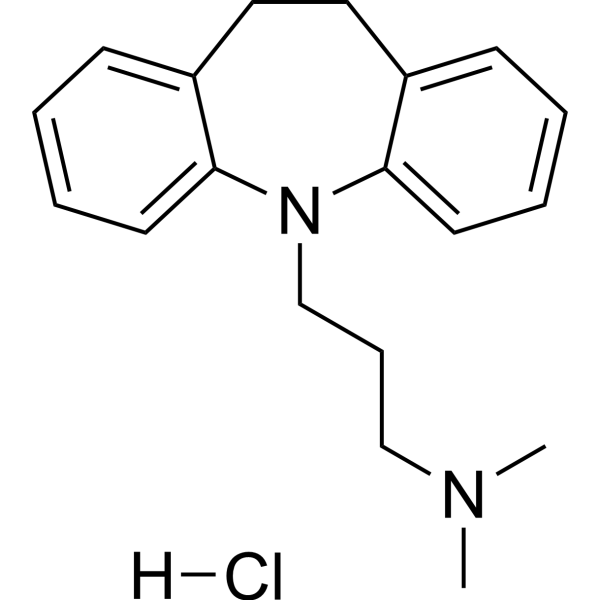
Imipramine hydrochloride is an orally active tertiary amine tricyclic antidepressant. Imipramine hydrochloride is a Fascin1 inhibitor with antitumor activities. Imipramine hydrochloride also inhibits serotonin transporter with an IC50 value of 32 nM. Imipramine hydrochloride stimulates U-87MG glioma cells autophagy and induces HL-60 cell apoptosis. Imipramine hydrochloride shows neuroprotective and immunomodulatory effects .
|
-
-
- HY-B1490A
-
Imipramine
Maximum Cited Publications
6 Publications Verification
|
Serotonin Transporter
Autophagy
Apoptosis
|
Neurological Disease
Inflammation/Immunology
Cancer
|
|
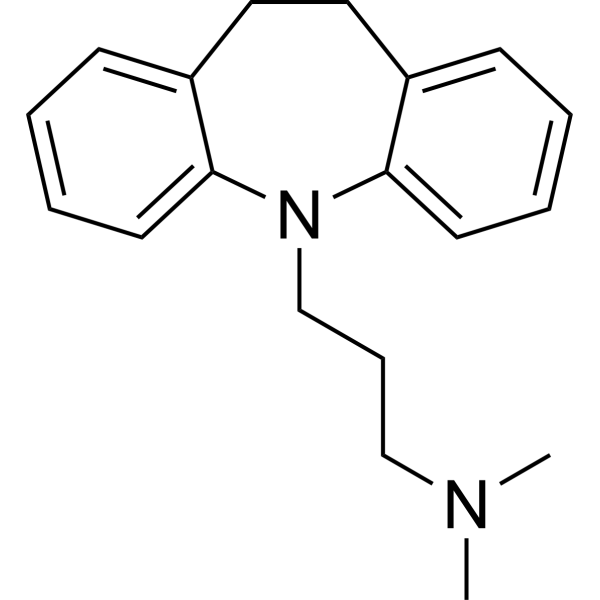
Imipramine is an orally active tertiary amine tricyclic antidepressant. Imipramine is a Fascin1 inhibitor with antitumor activities. Imipramine also inhibits serotonin transporter with an IC50 value of 32 nM. Imipramine stimulates U-87MG glioma cells autophagy and induces HL-60 cell apoptosis. Imipramine shows neuroprotective and immunomodulatory effects .
|
-
-
- HY-106203
-
|
SSR-125543
|
CFTR
|
Metabolic Disease
|
|
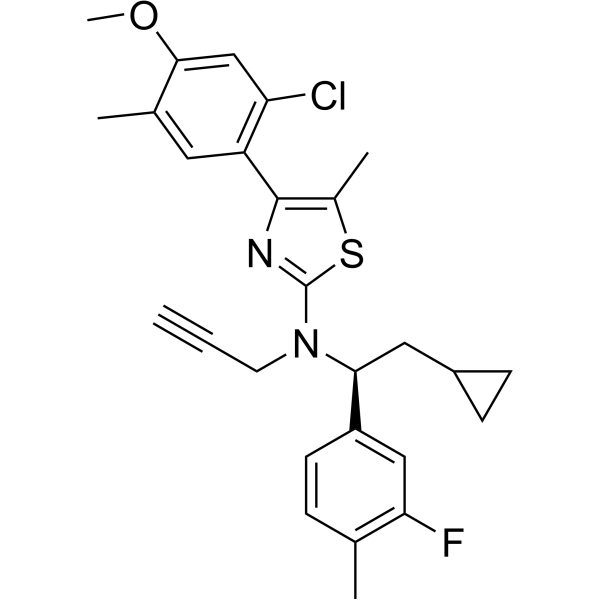
Crinecerfont (SSR-125543) is an orally effective corticotropin-releasing factor receptor type-1 (CRF1 receptor) antagonist. Crinecerfont blocks CRF1 receptor signaling to reduce adrenocorticotropic hormone secretion. Crinecerfont improves hypothalamic-pituitary-adrenal axis negative feedback sensitivity in chronically stressed mice. Crinecerfont can be used for the research of chronic stress conditions and classic congenital adrenal hyperplasia due to 21-hydroxylase deficiency . Crinecerfont is a click chemistry reagent, it contains an Alkyne group and can undergo copper-catalyzed azide-alkyne cycloaddition (CuAAc) with molecules containing Azide groups.
|
-
-
- HY-B0551
-
|
|
Potassium Channel
|
Neurological Disease
|
|
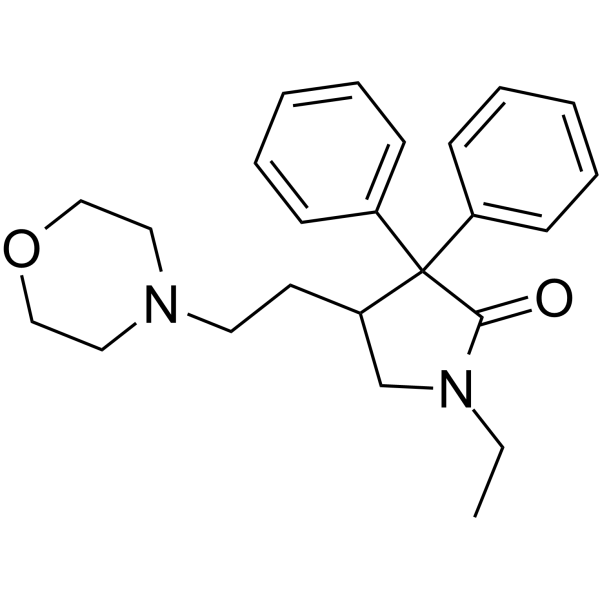
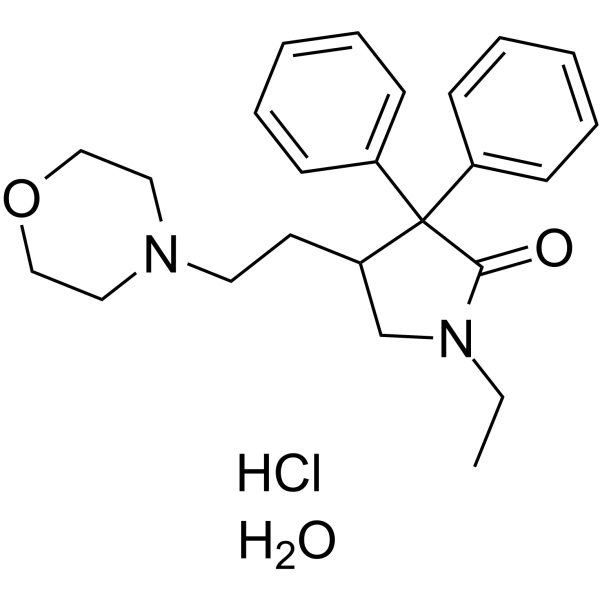
Doxapram is a respiratory stimulant. Doxapram increases breathing rate and depth by acting on the brain's respiratory centers and peripheral chemoreceptors. Doxapram inhibits TASK-1, TASK-3, TASK-1/TASK-3 heterodimeric channel function with EC50s of 410 nM, 37 μM, 9 μM, respectively. Doxapram inhibits the Ca²⁺-activated potassium current (IC50 ≈ 13 μM) and Ca²⁺-independent potassium current (IC50 ≈ 20 μM) in type I cells of the carotid body. Doxapram significantly prolongs the effective refractory period of the atrium and has an anti-arrhythmic effect. Doxapram can be used for the study of respiratory depression such as post-anesthesia respiratory depression, chronic obstructive pulmonary disease and apnea of prematurity .
|
-
-
- HY-B0551A
-
|
|
Potassium Channel
|
Neurological Disease
|
|
Doxapram hydrochloride hydrate is a respiratory stimulant. Doxapram hydrochloride hydrate increases breathing rate and depth by acting on the brain's respiratory centers and peripheral chemoreceptors. Doxapram hydrochloride hydrate inhibits TASK-1, TASK-3, TASK-1/TASK-3 heterodimeric channel function with EC50s of 410 nM, 37 μM, 9 μM, respectively. Doxapram hydrochloride hydrate inhibits the Ca²⁺-activated potassium current (IC50 ≈ 13 μM) and Ca²⁺-independent potassium current (IC50 ≈ 20 μM) in type I cells of the carotid body. Doxapram hydrochloride hydrate significantly prolongs the effective refractory period of the atrium and has an anti-arrhythmic effect. Doxapram hydrochloride hydrate can be used for the study of respiratory depression such as post-anesthesia respiratory depression, chronic obstructive pulmonary disease and apnea of prematurity .
|
-
-
- HY-90003
-
|
|
Opioid Receptor
iGluR
MMP
PI3K
Akt
NF-κB
|
Neurological Disease
Inflammation/Immunology
|
|
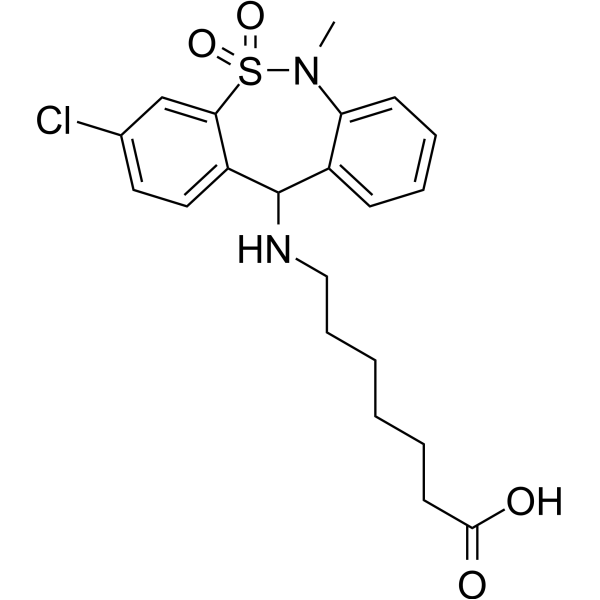
Tianeptine is an atypical antidepressant. Tianeptine is a moderate-intensity agonist of the μ-opioid receptor (MOR), and to a lesser extent, is an agonist of the δ-opioid receptor (DOR). Tianeptine is a glutamate modulator that can enhance AMPA receptor and antagonize NMDA receptor. tianeptine increases sensitivity of the α1 adrenergic receptor, which only manifests in chronic treatment. Tianeptine exerts neuroprotective effects under stress/inflammation-induced conditions, exhibiting anti-inflammatory and antioxidant properties. Tianeptine inhibits MMP-9 by suppressing the PI3K/Akt-mediated NF-κB pathway. Tianeptine can be used to alleviate symptoms of depression and anxiety, but does not cause sedative effects .
|
-
-
- HY-113323
-
|
HMPG; MHPG; MOPEG
|
Endogenous Metabolite
|
Neurological Disease
|
|
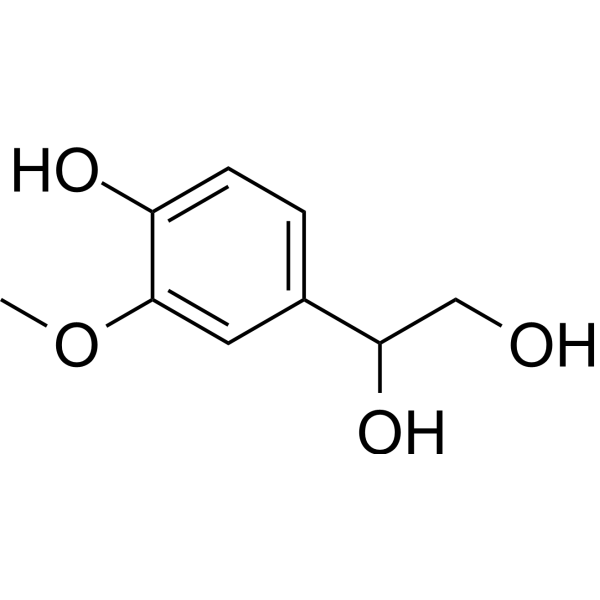
3-Methoxy-4-hydroxyphenylglycol (HMPG) is a metabolite of norepinephrine degradation in the brain. 3-Methoxy-4-hydroxyphenylglycol is an indicators of central nervous system noradrenergic activity. 3-Methoxy-4-hydroxyphenylglycol can be used for research of depression, chronic schizophrenia, etc .
|
-
-
- HY-P99019
-
|
TEV-48125; LBR-101; PF-04427429; RN-307
|
CGRP Receptor
|
Neurological Disease
Inflammation/Immunology
|
|
Fremanezumab (TEV-48125) is a humanized lgG2 monoclonal antibody that selectively and potently binds to calcitonin gene related peptide (CGRp) (IC50 values = 7.943 nM). Fremanezumab binds to mouse CGRP with an IC50 value of 19.6 nM. Fremanezumab counteracts anti-inflammatory effects of CGRP in vitro, including CGRP-mediated inhibition of LPS (HY-D1056)-induced microglial activation. Fremanezumab selectively inhibits the activation of Aδ meningeal nociceptors by cortical spreading depression (CSD) in rats. Fremanezumab can be used for the study of inflammation and chronic migraine .
|
-
-
- HY-106203A
-
|
SSR-125543 hydrochloride
|
CFTR
|
Metabolic Disease
|
|
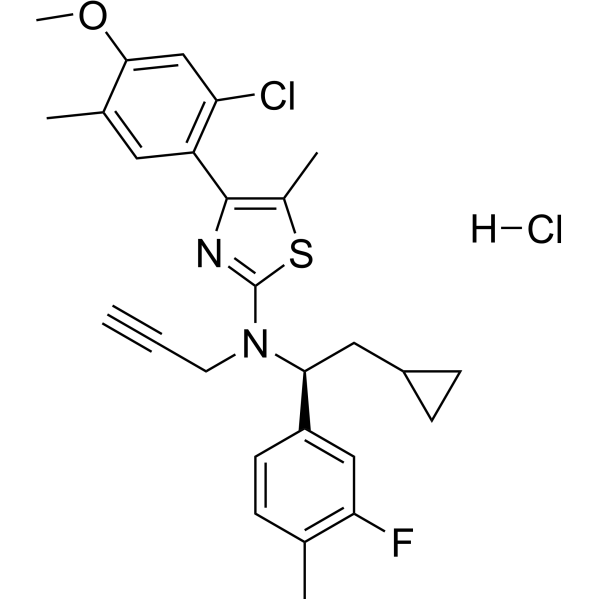
Crinecerfont (SSR-125543) hydrochloride is an orally effective corticotropin-releasing factor receptor type-1 (CRF1 receptor) antagonist. Crinecerfont hydrochloride blocks CRF1 receptor signaling to reduce adrenocorticotropic hormone secretion. Crinecerfont hydrochloride improves hypothalamic-pituitary-adrenal axis negative feedback sensitivity in chronically stressed mice. Crinecerfont hydrochloride can be used for the research of chronic stress conditions and classic congenital adrenal hyperplasia due to 21-hydroxylase deficiency . Crinecerfont hydrochloride is a click chemistry reagent, it contains an Alkyne group and can undergo copper-catalyzed azide-alkyne cycloaddition (CuAAc) with molecules containing Azide groups.
|
-
-
- HY-N5025
-
|
|
P2X Receptor
Apoptosis
ERK
p38 MAPK
c-Myc
NF-κB
Reactive Oxygen Species (ROS)
|
Neurological Disease
Inflammation/Immunology
Cancer
|
|
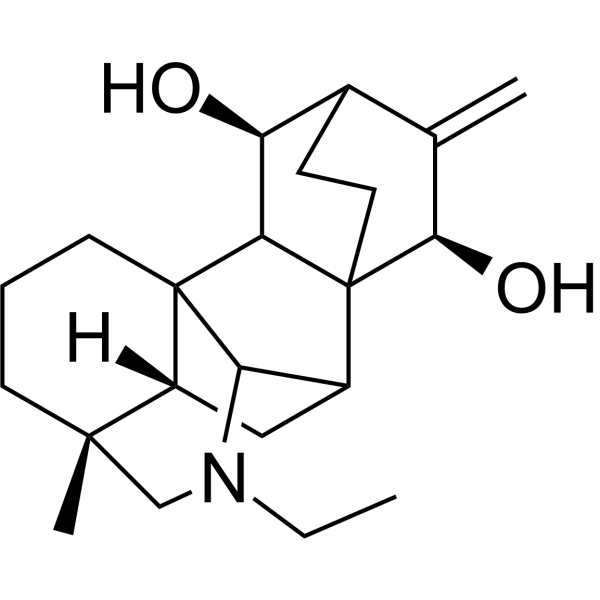
Bullatine A, a diterpenoid alkaloid, is a potent P2X7 antagonist. Bullatine A possesses anti-rheumatic, anti-inflammatory and anti-nociceptive effects. Bullatine A inhibits ATP-induced BV-2 cell death/apoptosis and P2X receptor-mediated inflammatory responses. Bullatine A suppresses glioma cell growth by targeting SIRT6. Bullatine A specifically attenuates pain hypersensitivity in rats. Bullatine A attenuates LPS (HY-D1056)-induced systemic inflammatory response by inhibiting the ROS/JNK/NF-κB pathway in mice. Bullatine A improves despair behavior in Chronic chronic social defeat stress (CSDS) mice. Bullatine A can be used for the study of inflammation, glioblastoma (GBM) and depression .
|
-
-
- HY-90003A
-
|
|
Opioid Receptor
iGluR
MMP
PI3K
Akt
NF-κB
|
Neurological Disease
Inflammation/Immunology
|
|
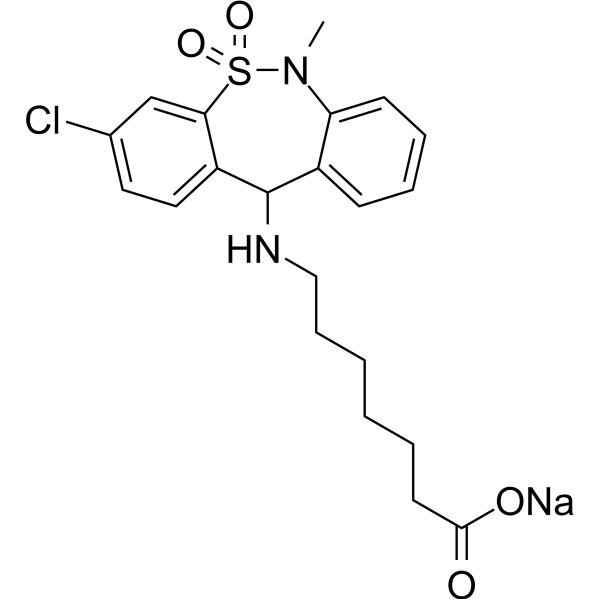
Tianeptine sodium salt is an atypical antidepressant. Tianeptine sodium salt is a moderate-intensity agonist of the μ-opioid receptor (MOR), and to a lesser extent, is an agonist of the δ-opioid receptor (DOR). Tianeptine sodium salt is a glutamate modulator that can enhance AMPA receptor and antagonize NMDA receptor. Tianeptine sodium salt increases sensitivity of the α1 adrenergic receptor, which only manifests in chronic treatment. Tianeptine sodium salt exerts neuroprotective effects under stress/inflammation-induced conditions, exhibiting anti-inflammatory and antioxidant properties. Tianeptine sodium salt inhibits MMP-9 by suppressing the PI3K/Akt-mediated NF-κB pathway. Tianeptine sodium salt can be used to alleviate symptoms of depression and anxiety, but does not cause sedative effects .
|
-
-
- HY-B0445B
-
|
α-Nicotinamide Adenine Dinucleotide
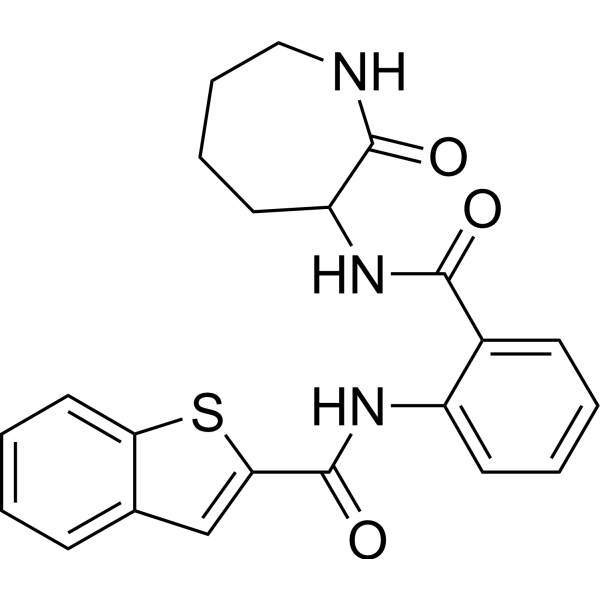
|
Mitochondrial Metabolism
Endogenous Metabolite
|
Metabolic Disease
|
|
α-NAD (α-Nicotinamide Adenine Dinucleotide) serves as a substrate for reninase, functions as an analog of β-NAD, affects the kinetics of NAD-dependent enzymes, and also plays a critical role as a cofactor in mitochondrial redox reactions .
|
-
-
- HY-113323S
-
|
HMPG-d3; MHPG-d3; MOPEG-d3
|
Isotope-Labeled Compounds
Endogenous Metabolite
|
Neurological Disease
|
|
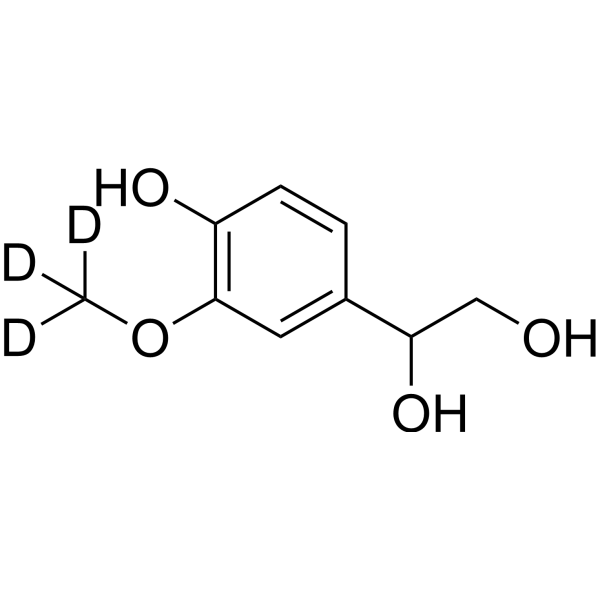
3-Methoxy-4-hydroxyphenylglycol-d3 (HMPG-d3) is the deuterium labeled 3-Methoxy-4-hydroxyphenylglycol. 3-Methoxy-4-hydroxyphenylglycol is a metabolite of norepinephrine degradation in the brain. 3-Methoxy-4-hydroxyphenylglycol (HMPG) serves as an indicator of noradrenergic activity in the central nervous system. 3-Methoxy-4-hydroxyphenylglycol (HMPG) can be used for research on diseases such as depression and chronic schizophrenia.
|
-
-
- HY-113323A
-
|
HMPG sulfate; MHPG sulfate; MOPEG sulfate
|
Endogenous Metabolite
|
Neurological Disease
|
|
3-Methoxy-4-hydroxyphenylglycol sulfate (HMPG sulfate) is a metabolite of norepinephrine degradation in the brain. 3-Methoxy-4-hydroxyphenylglycol sulfate is an indicators of central nervous system noradrenergic activity. 3-Methoxy-4-hydroxyphenylglycol sulfate can be used for research of depression, chronic schizophrenia, etc .
|
-
-
- HY-175366
-
|
|
Opioid Receptor
Arrestin
|
Neurological Disease
|
|
DOR agonist 3 (Compound 10) is a δ-opioid receptor (DOR)-selective positive allosteric modulator. DOR agonist 3 enhances G protein signaling while reducing β-arrestin2 recruitment. DOR agonist 3 is promising for research of chronic pain and depression .
|
-
-
- HY-P11222
-
-
-
- HY-148708
-
|
|
iGluR
|
Neurological Disease
|
|
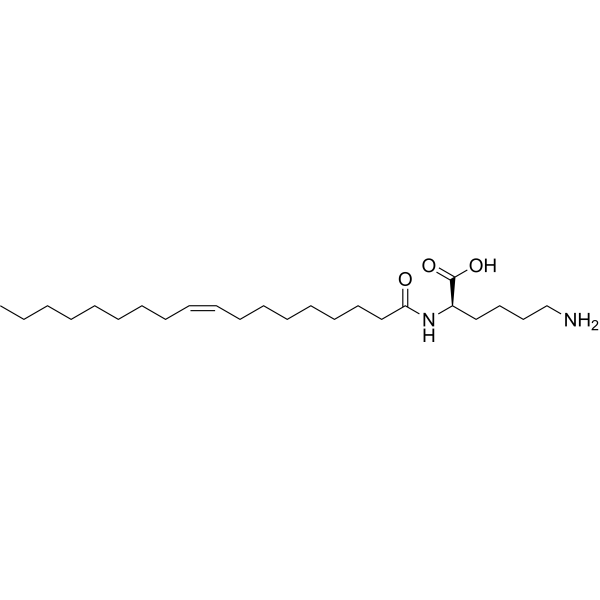
Oleoyl-D-lysine is a selective Glycine Transporter-2 (GlyT2) inhibitor based on lipid. Oleoyl-D-lysine reverses neuropathic pain in mice,shows antidrowsiness effect on chronic neuropathic pain. Oleoyl-D-lysine is safe and effective without respiratory depression .
|
-
-
- HY-B1490AR
-
|
|
Serotonin Transporter
Autophagy
Apoptosis
Reference Standards
|
Neurological Disease
Inflammation/Immunology
Cancer
|
|
Imipramine (Standard) is the analytical standard of Imipramine. This product is intended for research and analytical applications. Imipramine is an orally active tertiary amine tricyclic antidepressant. Imipramine is a Fascin1 inhibitor with antitumor activities. Imipramine also inhibits serotonin transporter with an IC50 value of 32 nM. Imipramine stimulates U-87MG glioma cells autophagy and induces HL-60 cell apoptosis. Imipramine shows neuroprotective and immunomodulatory effects .
|
-
-
- HY-174395
-
|
|
Keap1-Nrf2
Interleukin Related
Heme Oxygenase (HO)
|
Neurological Disease
|
|
CD-10 is an orally active and BBB-penatrable Keap1-Nrf2 protein-protein interaction (PPI) inhibitor. CD-10 binds to Keap1 with a KD value of 193 nM. CD-10 exhibits potent anti-oxidative and anti-inflammatory effects through Keap1-Nrf2 pathway activation, evidenced by reduced levels of MDA, IL-4, IL-10 and increased expression of HO-1. CD-10 effectively alleviated anxiety and depressive behaviors and restored serum neurotransmitter levels by promoting Nrf2 nuclear translocation in the chronic unpredictable mild stress (CUMS) mouse model. CD-10 can be used for the study of depression.
|
-
-
- HY-90003S
-
|
|
Isotope-Labeled Compounds
Opioid Receptor
iGluR
MMP
PI3K
Akt
NF-κB
|
Neurological Disease
Inflammation/Immunology
|
|
Tianeptine-d12 is a deuterated analog of Tianeptine (HY-90003).Tianeptine is an atypical antidepressant. Tianeptine is a moderate-intensity agonist of the μ-opioid receptor (MOR), and to a lesser extent, is an agonist of the δ-opioid receptor (DOR). Tianeptine is a glutamate modulator that can enhance AMPA receptor and antagonize NMDA receptor. Tianeptine increases sensitivity of the α1 adrenergic receptor, which only manifests in chronic treatment. Tianeptine exerts neuroprotective effects under stress/inflammation-induced conditions, exhibiting anti-inflammatory and antioxidant properties. Tianeptine inhibits MMP-9 by suppressing the PI3K/Akt-mediated NF-κB pathway. Tianeptine can be used to alleviate symptoms of depression and anxiety, but does not cause sedative effects.
|
-
-
- HY-90003AR
-
|
|
Reference Standards
Opioid Receptor
iGluR
MMP
PI3K
Akt
NF-κB
|
Neurological Disease
Inflammation/Immunology
|
|
Tianeptine sodium salt (Standard) is the analytical standard of Tianeptine sodium salt (HY-90003A). This product is intended for research and analytical applications. Tianeptine sodium salt is an atypical antidepressant. Tianeptine sodium salt is a moderate-intensity agonist of the μ-opioid receptor (MOR), and to a lesser extent, is an agonist of the δ-opioid receptor (DOR). Tianeptine sodium salt is a glutamate modulator that can enhance AMPA receptor and antagonize NMDA receptor. Tianeptine sodium salt increases sensitivity of the α1 adrenergic receptor, which only manifests in chronic treatment. Tianeptine sodium salt exerts neuroprotective effects under stress/inflammation-induced conditions, exhibiting anti-inflammatory and antioxidant properties. Tianeptine sodium salt inhibits MMP-9 by suppressing the PI3K/Akt-mediated NF-κB pathway. Tianeptine sodium salt can be used to alleviate symptoms of depression and anxiety, but does not cause sedative effects.
|
-
-
- HY-175508
-
|
|
iGluR
|
Neurological Disease
|
|
NMDA receptor modulator 9 is an orally active NMDA receptor positive allosteric modulator (PAM). NMDA receptor modulator 9 enhances GluN2A receptor activity. NMDA receptor modulator 9 demonstrates significant antidepressant-like effects in chronic restraint stress (CRS)-induced depression mice. NMDA receptor modulator 9 can be used for the study of depression .
|
-
-
- HY-B1490AS3
-
-
-
- HY-129146S
-
|
|
Isotope-Labeled Compounds
Potassium Channel
|
Others
|
|
Doxapram-d5 hydrochloride is deuterium labeled Doxapram hydrochloride. Doxapram hydrochloride is a respiratory stimulant. Doxapram hydrochloride increases breathing rate and depth by acting on the brain's respiratory centers and peripheral chemoreceptors. Doxapram hydrochloride inhibits TASK-1, TASK-3, TASK-1/TASK-3 heterodimeric channel function with EC50s of 410 nM, 37 μM, 9 μM, respectively. Doxapram hydrochloride inhibits the Ca²⁺-activated potassium current (IC50 ≈ 13 μM) and Ca²⁺-independent potassium current (IC50 ≈ 20 μM) in type I cells of the carotid body. Doxapram hydrochloride significantly prolongs the effective refractory period of the atrium and has an anti-arrhythmic effect. Doxapram hydrochloride can be used for the study of respiratory depression such as post-anesthesia respiratory depression, chronic obstructive pulmonary disease and apnea of prematurity.
|
-
-
- HY-B0551S
-
|
|
Isotope-Labeled Compounds
Potassium Channel
|
Neurological Disease
|
|
Doxapram-d8 is deuterated labeled Doxapram (HY-B0551). Doxapram is a respiratory stimulant. Doxapram increases breathing rate and depth by acting on the brain's respiratory centers and peripheral chemoreceptors. Doxapram inhibits TASK-1, TASK-3, TASK-1/TASK-3 heterodimeric channel function with EC50s of 410 nM, 37 μM, 9 μM, respectively. Doxapram inhibits the Ca²⁺-activated potassium current (IC50 ≈ 13 μM) and Ca²⁺-independent potassium current (IC50 ≈ 20 μM) in type I cells of the carotid body. Doxapram significantly prolongs the effective refractory period of the atrium and has an anti-arrhythmic effect. Doxapram can be used for the study of respiratory depression such as post-anesthesia respiratory depression, chronic obstructive pulmonary disease and apnea of prematurity.
|
-
-
- HY-B0551AR
-
|
|
Reference Standards
Potassium Channel
|
Neurological Disease
|
|
Doxapram hydrochloride hydrate (Standard) is the analytical standard of Doxapram hydrochloride hydrate (HY-B0551A). This product is intended for research and analytical applications. Doxapram hydrochloride hydrate is a respiratory stimulant. Doxapram hydrochloride hydrate increases breathing rate and depth by acting on the brain's respiratory centers and peripheral chemoreceptors. Doxapram hydrochloride hydrate inhibits TASK-1, TASK-3, TASK-1/TASK-3 heterodimeric channel function with EC50s of 410 nM, 37 μM, 9 μM, respectively. Doxapram hydrochloride hydrate inhibits the Ca²⁺-activated potassium current (IC50 ≈ 13 μM) and Ca²⁺-independent potassium current (IC50 ≈ 20 μM) in type I cells of the carotid body. Doxapram hydrochloride hydrate significantly prolongs the effective refractory period of the atrium and has an anti-arrhythmic effect. Doxapram hydrochloride hydrate can be used for the study of respiratory depression such as post-anesthesia respiratory depression, chronic obstructive pulmonary disease and apnea of prematurity.
|
-
-
- HY-172583
-
|
|
Drug Derivative
|
Neurological Disease
|
|
Neuroprotective agent 9 (compound 7) is a neuroprotective agent. Neuroprotective agent 9 is promising for research of neuron injury such as cerebral apoplexy, cerebral injury, and neuropathic pain .
|
-
-
- HY-144224S
-
|
|
Isotope-Labeled Compounds
Opioid Receptor
iGluR
MMP
PI3K
Akt
NF-κB
|
Neurological Disease
Inflammation/Immunology
Cancer
|
|
Tianeptine-d6 hydrochloride is the deuterium labeled Tianeptine hydrochloride. Tianeptine hydrochloride is an atypical antidepressant. Tianeptine hydrochloride is a moderate-intensity agonist of the μ-opioid receptor (MOR), and to a lesser extent, is an agonist of the δ-opioid receptor (DOR). Tianeptine hydrochloride is a glutamate modulator that can enhance AMPA receptor and antagonize NMDA receptor. Tianeptine hydrochloride increases sensitivity of the α1 adrenergic receptor, which only manifests in chronic treatment. Tianeptine hydrochloride exerts neuroprotective effects under stress/inflammation-induced conditions, exhibiting anti-inflammatory and antioxidant properties. Tianeptine hydrochloride inhibits MMP-9 by suppressing the PI3K/Akt-mediated NF-κB pathway. Tianeptine hydrochloride can be used to alleviate symptoms of depression and anxiety, but does not cause sedative effects.
|
-
-
- HY-106203C
-
|
SSR-125543 tosylate
|
CFTR
|
Metabolic Disease
|
|
Crinecerfont (SSR-125543) tosylate is an orally effective corticotropin-releasing factor receptor type-1 (CRF1 receptor) antagonist. Crinecerfont tosylate blocks CRF1 receptor signaling to reduce adrenocorticotropic hormone secretion. Crinecerfont tosylate improves hypothalamic-pituitary-adrenal axis negative feedback sensitivity in chronically stressed mice. Crinecerfont tosylate can be used for the research of chronic stress conditions and classic congenital adrenal hyperplasia due to 21-hydroxylase deficiency . Crinecerfont tosylate is a click chemistry reagent, it contains an Alkyne group and can undergo copper-catalyzed azide-alkyne cycloaddition (CuAAc) with molecules containing Azide groups.
|
-
-
- HY-W274652
-
|
IEM-1770
|
iGluR
Drug Derivative
|
Neurological Disease
|
|
Benzylaspartic acid (IEM-1770), a derivative of aspartic acid, is a NMDA agonist. Benzylaspartic acid has antidepressant activity. Benzylaspartic acid blocks alcohol-abstinence syndrome (AAS) development in chronic alcohol drinking rat models. Benzylaspartic acid can be used for depression research .
|
-
-
- HY-148708A
-
|
|
iGluR
|
Neurological Disease
|
|
Oleoyl-D-lysine sodium is a selective Glycine Transporter-2 (GlyT2) inhibitor based on lipid. Oleoyl-D-lysine sodium reverses neuropathic pain in mice, shows antidrowsiness effect on chronic neuropathic pain. Oleoyl-D-lysine sodium is safe and effective without respiratory depression .
|
-
-
- HY-183101
-
|
|
iGluR
NADPH Oxidase
|
Neurological Disease
|
|
AMPAR modulator-12 is a blood-brain barrier-permeable AMPAR positive allosteric modulator. AMPAR modulator-12 reduces NOX-1 expression, enhances AMPAR-mediated currents, promotes excitatory postsynaptic transmission and restores AMPAR function. AMPAR modulator-12 enhances excitatory and inhibitory synaptic transmission, reduces burst firing in the lateral habenula after withdrawal, and produces rapid and sustained antidepressant-like effects. AMPAR modulator-12 is applicable for the research of depression .
|
-
-
- HY-183357
-
|
|
GABA Receptor
5-HT Receptor
Reactive Oxygen Species (ROS)
TNF Receptor
Interleukin Related
COX
NF-κB
IKK
NO Synthase
|
Neurological Disease
Inflammation/Immunology
|
|
GABAAR/5-HT2AR modulator-1 is an orally active and brain-penetrant GABAAR agonist and 5-HT2AR antagonist with Kd values of 0.89 and 0.78 μM. GABAAR/5-HT2AR modulator-1 blocks 5-HT-stimulated IP1 accumulation, inducing a chloride current, reduces LPS (HY-D1056)-induced increases of ROS, NO, TNF-α, IL-6, IL-1β, iNOS, and COX-2 levels. Antidepressant agent 11 dihydrochloride inhibits NF-κB pathway activation by reducing IκBα and p65 phosphorylation and blocking p65 nuclear translocation. GABAAR/5-HT2AR modulator-1 alleviates depression-like behaviors in LPS-challenged and chronic restraint stress-challenged mice, and protects hippocampal neurons against inflammation-mediated damage .
|
-
| Cat. No. |
Product Name |
Target |
Research Area |
| Cat. No. |
Product Name |
Target |
Research Area |
Image |
-
- HY-P99019
-
|
TEV-48125; LBR-101; PF-04427429; RN-307
|
CGRP Receptor
|
Neurological Disease
Inflammation/Immunology
|
|
Fremanezumab (TEV-48125) is a humanized lgG2 monoclonal antibody that selectively and potently binds to calcitonin gene related peptide (CGRp) (IC50 values = 7.943 nM). Fremanezumab binds to mouse CGRP with an IC50 value of 19.6 nM. Fremanezumab counteracts anti-inflammatory effects of CGRP in vitro, including CGRP-mediated inhibition of LPS (HY-D1056)-induced microglial activation. Fremanezumab selectively inhibits the activation of Aδ meningeal nociceptors by cortical spreading depression (CSD) in rats. Fremanezumab can be used for the study of inflammation and chronic migraine .
|
-
(5)
| Cat. No. |
Product Name |
Category |
Target |
Chemical Structure |
| Cat. No. |
Product Name |
Chemical Structure |
-
- HY-113323S
-
|
|
|
3-Methoxy-4-hydroxyphenylglycol-d3 (HMPG-d3) is the deuterium labeled 3-Methoxy-4-hydroxyphenylglycol. 3-Methoxy-4-hydroxyphenylglycol is a metabolite of norepinephrine degradation in the brain. 3-Methoxy-4-hydroxyphenylglycol (HMPG) serves as an indicator of noradrenergic activity in the central nervous system. 3-Methoxy-4-hydroxyphenylglycol (HMPG) can be used for research on diseases such as depression and chronic schizophrenia.
|
-
-
- HY-90003S
-
|
|
|
Tianeptine-d12 is a deuterated analog of Tianeptine (HY-90003).Tianeptine is an atypical antidepressant. Tianeptine is a moderate-intensity agonist of the μ-opioid receptor (MOR), and to a lesser extent, is an agonist of the δ-opioid receptor (DOR). Tianeptine is a glutamate modulator that can enhance AMPA receptor and antagonize NMDA receptor. Tianeptine increases sensitivity of the α1 adrenergic receptor, which only manifests in chronic treatment. Tianeptine exerts neuroprotective effects under stress/inflammation-induced conditions, exhibiting anti-inflammatory and antioxidant properties. Tianeptine inhibits MMP-9 by suppressing the PI3K/Akt-mediated NF-κB pathway. Tianeptine can be used to alleviate symptoms of depression and anxiety, but does not cause sedative effects.
|
-
-
- HY-B1490AS3
-
|
|
|
Imipramine-d4-1 is the deuterium labeled Imipramine (HY-W010179). Imipramine is an orally active tertiary amine tricyclic antidepressant. Imipramine is a Fascin1 inhibitor with antitumor activities. Imipramine also inhibits serotonin transporter with an IC50 value of 32 nM. Imipramine stimulates U-87MG glioma cells autophagy and induces HL-60 cell apoptosis. Imipramine shows neuroprotective and immunomodulatory effects .
|
-
-
- HY-129146S
-
|
|
|
Doxapram-d5 hydrochloride is deuterium labeled Doxapram hydrochloride. Doxapram hydrochloride is a respiratory stimulant. Doxapram hydrochloride increases breathing rate and depth by acting on the brain's respiratory centers and peripheral chemoreceptors. Doxapram hydrochloride inhibits TASK-1, TASK-3, TASK-1/TASK-3 heterodimeric channel function with EC50s of 410 nM, 37 μM, 9 μM, respectively. Doxapram hydrochloride inhibits the Ca²⁺-activated potassium current (IC50 ≈ 13 μM) and Ca²⁺-independent potassium current (IC50 ≈ 20 μM) in type I cells of the carotid body. Doxapram hydrochloride significantly prolongs the effective refractory period of the atrium and has an anti-arrhythmic effect. Doxapram hydrochloride can be used for the study of respiratory depression such as post-anesthesia respiratory depression, chronic obstructive pulmonary disease and apnea of prematurity.
|
-
-
- HY-B0551S
-
|
|
|
Doxapram-d8 is deuterated labeled Doxapram (HY-B0551). Doxapram is a respiratory stimulant. Doxapram increases breathing rate and depth by acting on the brain's respiratory centers and peripheral chemoreceptors. Doxapram inhibits TASK-1, TASK-3, TASK-1/TASK-3 heterodimeric channel function with EC50s of 410 nM, 37 μM, 9 μM, respectively. Doxapram inhibits the Ca²⁺-activated potassium current (IC50 ≈ 13 μM) and Ca²⁺-independent potassium current (IC50 ≈ 20 μM) in type I cells of the carotid body. Doxapram significantly prolongs the effective refractory period of the atrium and has an anti-arrhythmic effect. Doxapram can be used for the study of respiratory depression such as post-anesthesia respiratory depression, chronic obstructive pulmonary disease and apnea of prematurity.
|
-
-
- HY-144224S
-
|
|
|
Tianeptine-d6 hydrochloride is the deuterium labeled Tianeptine hydrochloride. Tianeptine hydrochloride is an atypical antidepressant. Tianeptine hydrochloride is a moderate-intensity agonist of the μ-opioid receptor (MOR), and to a lesser extent, is an agonist of the δ-opioid receptor (DOR). Tianeptine hydrochloride is a glutamate modulator that can enhance AMPA receptor and antagonize NMDA receptor. Tianeptine hydrochloride increases sensitivity of the α1 adrenergic receptor, which only manifests in chronic treatment. Tianeptine hydrochloride exerts neuroprotective effects under stress/inflammation-induced conditions, exhibiting anti-inflammatory and antioxidant properties. Tianeptine hydrochloride inhibits MMP-9 by suppressing the PI3K/Akt-mediated NF-κB pathway. Tianeptine hydrochloride can be used to alleviate symptoms of depression and anxiety, but does not cause sedative effects.
|
-
| Cat. No. |
Product Name |
|
Classification |
-
- HY-106203
-
|
SSR-125543
|
|
Alkynes
|
|
Crinecerfont (SSR-125543) is an orally effective corticotropin-releasing factor receptor type-1 (CRF1 receptor) antagonist. Crinecerfont blocks CRF1 receptor signaling to reduce adrenocorticotropic hormone secretion. Crinecerfont improves hypothalamic-pituitary-adrenal axis negative feedback sensitivity in chronically stressed mice. Crinecerfont can be used for the research of chronic stress conditions and classic congenital adrenal hyperplasia due to 21-hydroxylase deficiency . Crinecerfont is a click chemistry reagent, it contains an Alkyne group and can undergo copper-catalyzed azide-alkyne cycloaddition (CuAAc) with molecules containing Azide groups.
|
-
- HY-106203A
-
|
SSR-125543 hydrochloride
|
|
Alkynes
|
|
Crinecerfont (SSR-125543) hydrochloride is an orally effective corticotropin-releasing factor receptor type-1 (CRF1 receptor) antagonist. Crinecerfont hydrochloride blocks CRF1 receptor signaling to reduce adrenocorticotropic hormone secretion. Crinecerfont hydrochloride improves hypothalamic-pituitary-adrenal axis negative feedback sensitivity in chronically stressed mice. Crinecerfont hydrochloride can be used for the research of chronic stress conditions and classic congenital adrenal hyperplasia due to 21-hydroxylase deficiency . Crinecerfont hydrochloride is a click chemistry reagent, it contains an Alkyne group and can undergo copper-catalyzed azide-alkyne cycloaddition (CuAAc) with molecules containing Azide groups.
|
Your information is safe with us. * Required Fields.
Inquiry Information
- Product Name:
- Cat. No.:
- Quantity:
- MCE Japan Authorized Agent:

