
From 11:00 pm to 12:00 pm EST ( 8:00 pm to 9:00 pm PST ) on January 6th, the website will be under maintenance. We are sorry for the inconvenience. Please arrange your schedule properly.
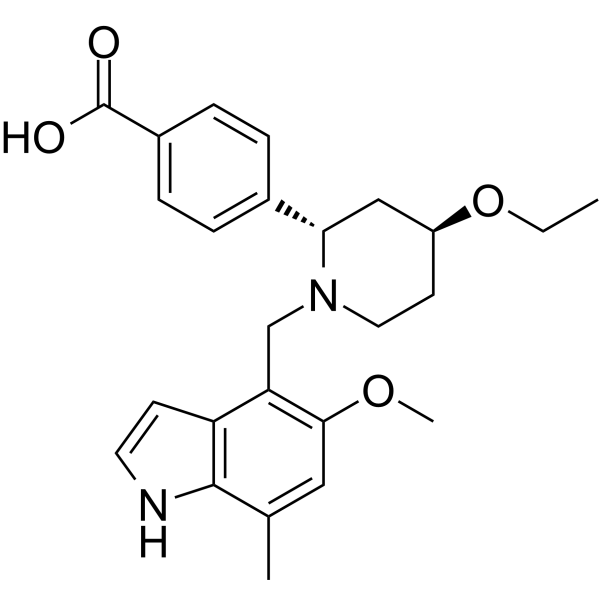
Iptacopan (LNP023) is an effective and orally-active highly selective factor B inhibitor with an IC50 value of 10 nM and KD of 7.9 nM. Iptacopan exerts a proximal effect in the complement cascade reaction, preventing the destruction (hemolysis) of red blood cells in PNH and the damage of renal cells in IgAN and C3G. Iptacopan can be used for the study of complement-mediated diseases, particularly paroxysmal nocturnal hemoglobinuria (PNH), primary immunoglobulin A nephropathy (IgAN), and complement 3 glomerulopathy (C3G) .
Pegcetacoplan acetate is a pegylated complementC3/C3b inhibitor. Pegcetacoplan acetate acts by specifically binding to and inhibiting C3 and C3b, thereby suppressing the complement cascade at its proximal stage. Pegcetacoplan is not a known inhibitor or inducer of CYP450 isoenzymes. Pegcetacoplan acetate can be used for the research of complement-mediated diseases, including paroxysmal nocturnal hemoglobinuria (PNH) and age-related macular degeneration (AMD) .
Lipoteichoic acid is an orally effect anti-inflammatory and antitumor agent. Lipoteichoic acid is a crucial immune molecule in Gram-positive bacteria that activates the complement system by inducing C3 and inhibiting CD55. Lipoteichoic acid regulates macrophage autophagy through the PI3K/Akt/mTOR pathway. Lipoteichoic acid induces lung damage in mice. Lipoteichoic acid inhibits the production of melanin .
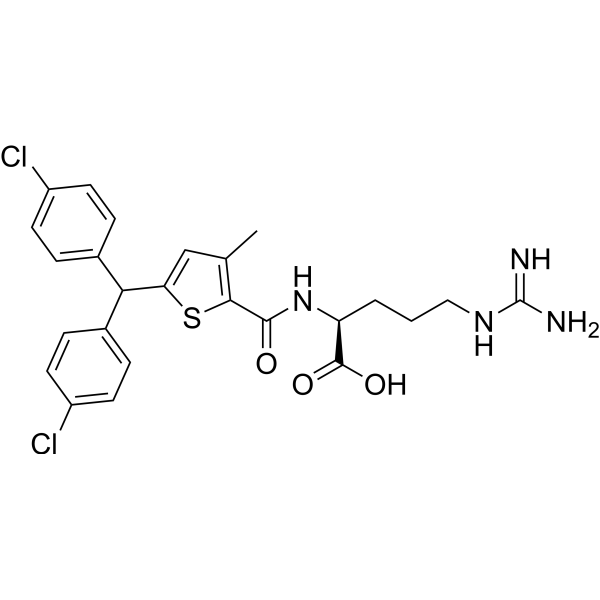
JR14a is a potent thiophene antagonist of human complementC3a receptor. JR14a shows selectivity for the human C3a receptor over C5a receptor. JR14a can suppress C3aR-mediated inflammation .
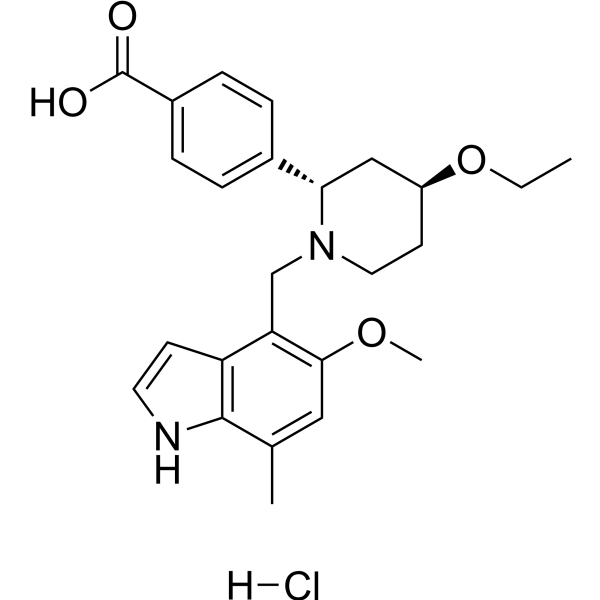
Iptacopan (LNP023) hydrochloride is an effective and orally-active highly selective factor B inhibitor with an IC50 value of 10 nM and KD of 7.9 nM. Iptacopan hydrochloride exerts a proximal effect in the complement cascade reaction, preventing the destruction (hemolysis) of red blood cells in PNH and the damage of renal cells in IgAN and C3G. Iptacopan hydrochloride can be used for the study of complement-mediated diseases, particularly paroxysmal nocturnal hemoglobinuria (PNH), primary immunoglobulin A nephropathy (IgAN), and complement 3 glomerulopathy (C3G) .
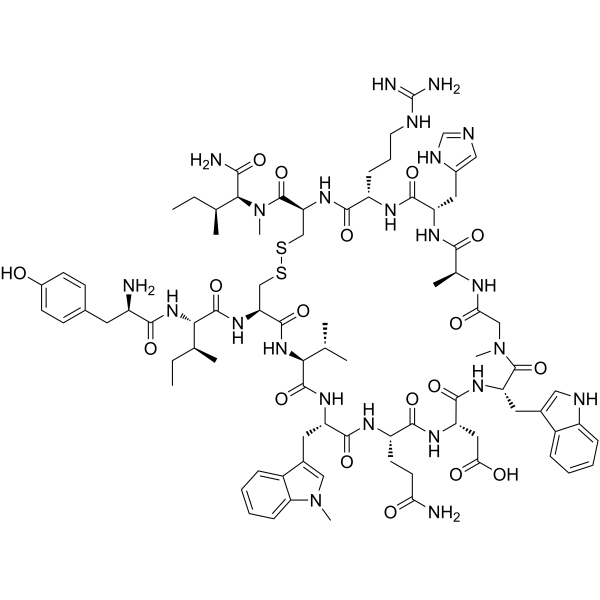
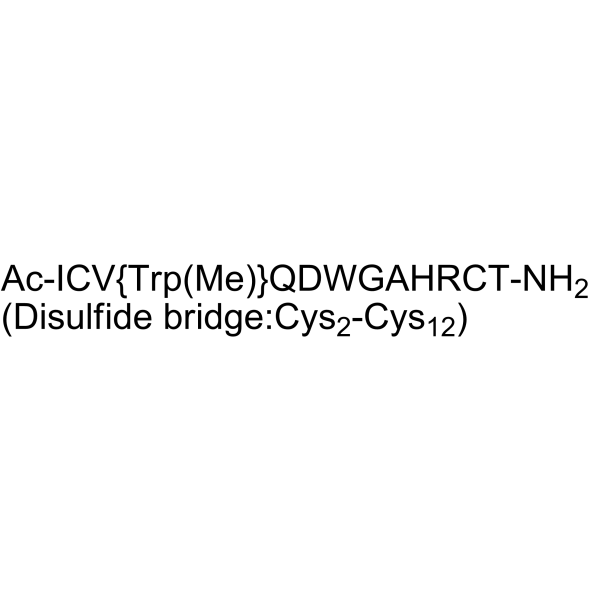
AMY-101 (Cp40), a peptidic inhibitor of the central complement component C3 (KD = 0.5 nM), inhibits naturally occurring periodontitis in non-human primates (NHPs). AMY-101 (Cp40) exhibits a favorable anti-inflammatory activity in models with COVID-19 severe pneumonia with systemic hyper inflammation .
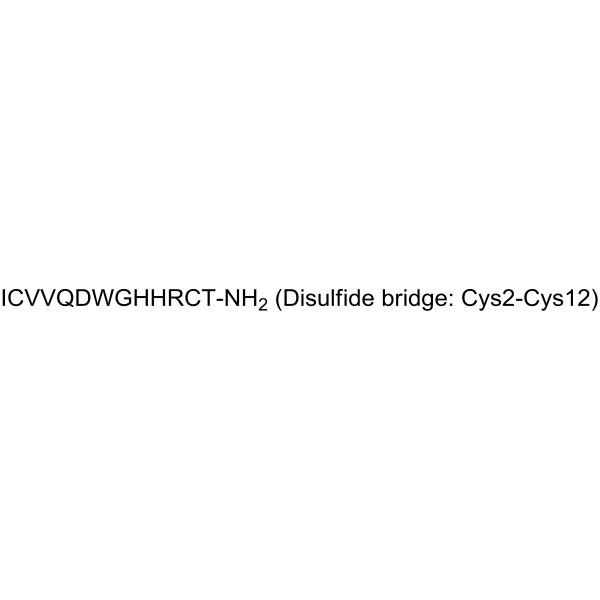
Compstatin, a 13-residue cyclic peptide, is a potent inhibitor of the complement system C3 with species specificity. Compstatin binds to baboon C3 and is resistant to proteolytic cleavage in baboon blood (similar to humans). Compstatin inhibits only the activation of primates’ complement system. Compstatin exhibits IC50 values of 63 μM and 12 μM for classical and alterative complement pathway, respectively .
Cobra Venom Factor (CVF) is a selective activator targeting complement components C3, C5, and factor B in the complement system. After binding to factor B, Cobra Venom Factor is cleaved by factor D, forming a stable C3/C5 convertase resistant to regulatory proteins H and I. This continuously hydrolyzes C3 and C5, depleting serum complement while inducing neutrophil migration, vascular leakage, and increased TNF-α levels. Cobra Venom Factor can be used to deplete complement and mimic complement activation-related pathological states, and is applied in animal models of complement-mediated diseases such as acute respiratory distress syndrome (ARDS), sepsis, and shock. Cobra Venom Factor can be isolated from the venom of cobras (e.g., Naja atra, Naja melanoleuca, Naja kaouthia, etc.) .
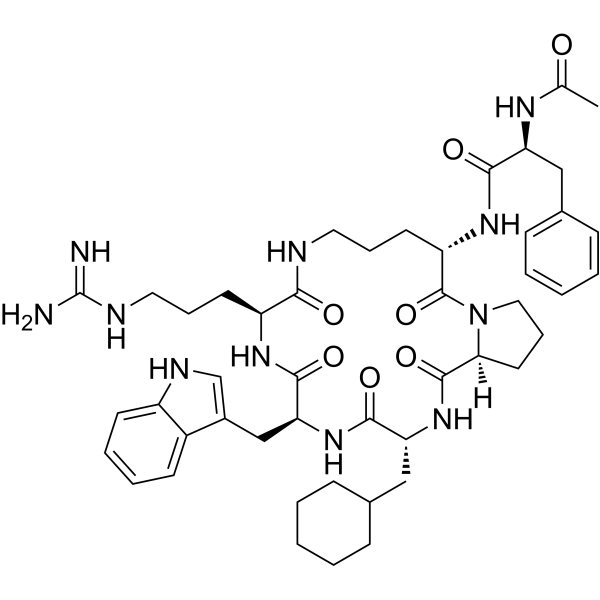
PMX-53 (3D53) is a synthetic peptidic and a potent and orally active complement C5a receptor (CD88) antagonist with an IC50 of 20 nM. PMX-53 is also a low-affinity MrgX2 agonist that stimulates MrgX2-mediated mast cell degranulation. PMX-53 specifically binds to C5aR1 and does not bind to the second C5aR (C5L2) and C3aR. PMX-53 has anti-inflammatory, anticancer and antiatherosclerotic effects .
Sutimlimab is a humanized monoclonal IgG4 antibody. Sutimlimab inhibits complement protein component 1, s subcomponent (C1s). Sutimlimab blocks C3 and C4 activation. Sutimlimab can be used for the research of cold agglutinin disease and complement-mediated hemolytic uremic syndrome .
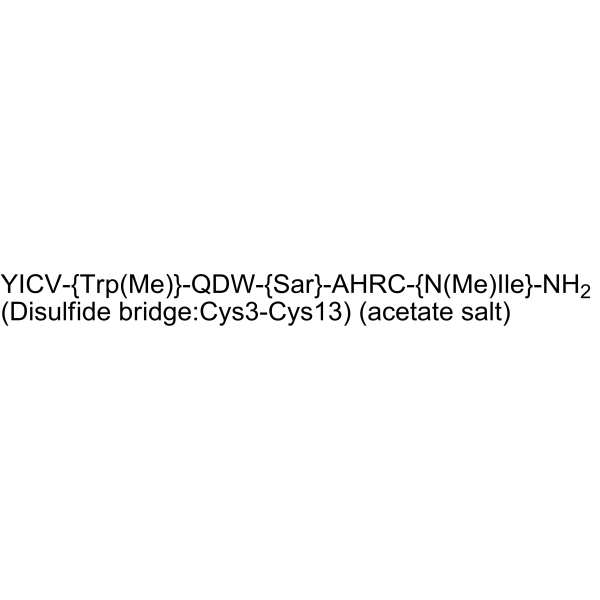
AMY-101 acetate (Cp40 acetate), a peptidic inhibitor of the central complement component C3 (KD = 0.5 nM), inhibits naturally occurring periodontitis in non-human primates (NHPs). AMY-101 acetate (Cp40 acetate) exhibits a favorable anti-inflammatory activity in models with COVID-19 severe pneumonia with systemic hyper inflammation .
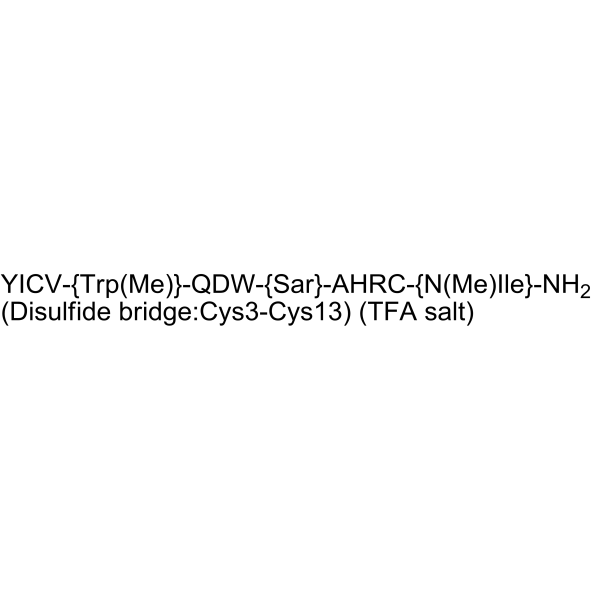
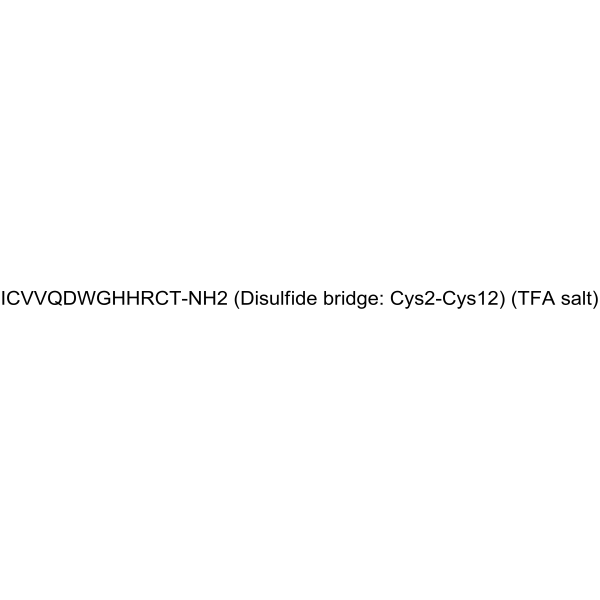
AMY-101 TFA (Cp40 TFA), a peptidic inhibitor of the central complement component C3 (KD = 0.5 nM), inhibits naturally occurring periodontitis in non-human primates (NHPs). AMY-101 (Cp40) exhibits a favorable anti-inflammatory activity in models with COVID-19 severe pneumonia with systemic hyper inflammation .
N-Acetylserine (N-Acetyl-L-serine) is a complement pathway modulator targeting activated third complement protein (C3b) and an amino-terminal residue (an N-terminal acetylation modification group). N-Acetylserine reacts with the exposed thioester group of C3b via its hydroxyl group, thereby blocking the covalent binding of glycerol to this thioester group. N-Acetylserine widely exists in soluble proteins of mammalian cells (accounting for approximately 80% of such proteins). N-Acetylserine has a blocking property that prevents direct Edman sequencing of proteins; deblocking is achievable through trifluoroacetic acid-catalyzed N→O acetyl migration followed by β-elimination. N-Acetylserine is suitable for sequencing of proteins with N-terminal acetylserine modification .
Riliprubart (SAR 445088) is an anti-C1s humanized IgG4 monoclonal antibody that inhibits activated C1s in the proximal portion of the classical complement system. Riliprubart selectively inhibits activated C1s and prevents the enzymatic action of C1 on its substrates C4 and C2, thus inhibiting the formation of the classical pathway C3 convertase, C4b2a. Riliprubart can be used to study complement-mediated diseases such as systemic lupus erythematosus. Recommend Isotype Controls: Human IgG4 (S228P) kappa, Isotype Control (HY-P99003) .
Efdamrofusp alfa is a bispecific fusion protein. Efdamrofusp alfa is capable of neutralizing both VEGF isoforms and C3b/C4b. Efdamrofusp alfa can be used for the research of neovascular age-related macular degeneration (nAMD) and other complement-related ocular conditions .
Empasiprubar (ARGX-117) is a humanized inhibitory monoclonal antibody targeting complementC2. Empasiprubar binds to the Sushi-2 domain of C2, preventing the formation of C3 pre convertase and inhibiting the activation of classical and lectin pathways upstream of C3 activation. Empasiprubar can prevent complement mediated autoimmune hemolytic anemia and antibody mediated organ transplant rejection. Empasiprubar can prevent neuroglial lymphoconjunctival injury in GM1 antibody mediated mouse models .
POT-4 (AL-78898A), a Compstatin derivative, is a potent inhibitor of complement factor C3 activation. POT-4 can be used for age-related macular degeneration research
TLQP-21 TFA, a VGF-derived peptide endowed of endocrine and extraendocrine properties, is a potent G-protein-coupled receptor complement-3a receptor1 (C3aR1) agonist (EC50: mouse TLQP-21=10.3 μM; human TLQP-21=68.8μM). TLQP-21 TFA activates C3aR1 to induce an increase of intracellular Ca 2+. TLQP-21 TFA is used for the research in regulation of nociception and other relevant physiologic functions .
Compstatin TFA, a 13-residue cyclic peptide, is a potent inhibitor of the complement system C3 with species specificity. Compstatin TFA binds to baboon C3 and is resistant to proteolytic cleavage in baboon blood (similar to humans). Compstatin TFA inhibits only the activation of primates’ complement system. Compstatin TFA exhibits IC50 values of 63 μM and 12 μM for classical and alterative complement pathway, respectively .
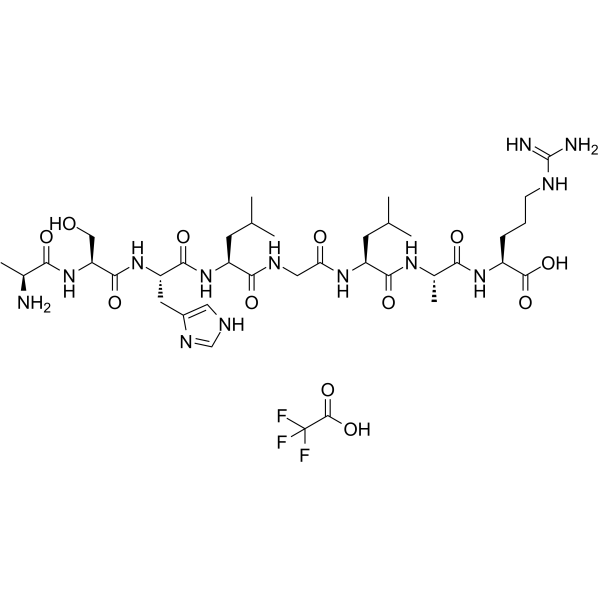
C3a (70-77) TFA (Complement 3a (70-77) TFA) is an octapeptide corresponding to the COOH terminus of C3a, exhibits the specificity and 1 to 2% biologic activities of C3a .
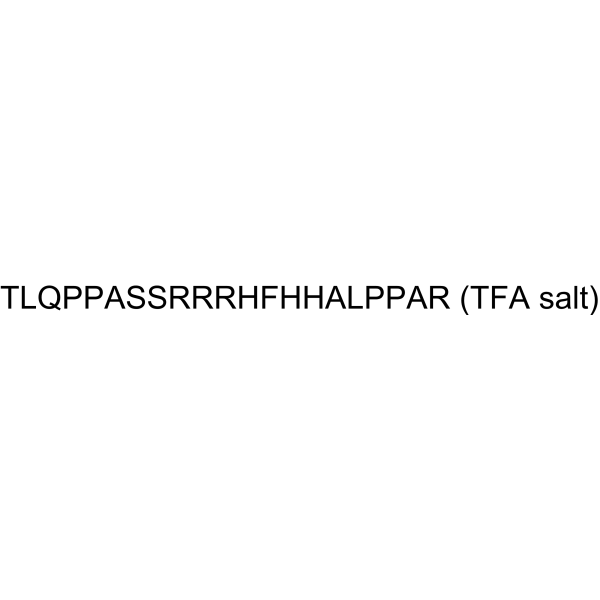
TLQP-21, a VGF-derived peptide endowed of endocrine and extraendocrine properties, is a potent G-protein-coupled receptor complement-3a receptor 1 (C3aR1) agonist (EC50: mouse TLQP-21=10.3 μM; human TLQP-21=68.8 μM). TLQP-21 activates C3aR1 to induce an increase of intracellular Ca 2+. TLQP-21 is used for the research in regulation of nociception and other relevant physiologic functions .
4-Octylphenol is a hormone disruptor that has gender-specific effects on male reproductive cells, significantly reducing the mitotic index and the number of spermatogonia. 4-Octylphenol can cause inflammatory damage to fish gills by activating the complement system through the C3a/C3aR axis and the C5a/C5aR1 axis, this leads to complement activation and causes immune suppression due to the imbalance between Th1/Th2 cells and regulatory T cells (Treg)/Th17 cells, as well as inflammatory damage via the Toll-like receptor 7 (Toll-like Receptor (TLR))/IκBα/NF-κB pathway .
POT-4 TFA (AL-78898A TFA), a Compstatin derivative, is a potent inhibitor of complement factor C3 activation. POT-4 TFA can be used for age-related macular degeneration research .
Complement factor D is a serine protease. Complement factor D activates C3 convertase by specifically cleaving complement Factor B. Complement factor D is promising for research of autoimmune diseases (e.g., paroxysmal nocturnal hemoglobinuria, C3 glomerulopathy), age-related macular degeneration, and thrombotic microangiopathies .
Iptacopan (LNP023) hydrochloride hydrate is an effective and orally-active highly selective factor B inhibitor with an IC50 value of 10 nM and KD of 7.9 nM. Iptacopan hydrochloride hydrate exerts a proximal effect in the complement cascade reaction, preventing the destruction (hemolysis) of red blood cells in PNH and the damage of renal cells in IgAN and C3G. Iptacopan hydrochloride hydrate can be used for the study of complement-mediated diseases, particularly paroxysmal nocturnal hemoglobinuria (PNH), primary immunoglobulin A nephropathy (IgAN), and complement 3 glomerulopathy (C3G) .
Factor B-IN-7 (Compound (I)) is a selective Factor B inhibitor. Factor B-IN-7 inhibits Factor B-C3b interaction to suppress complement hyperactivation. Factor B-IN-7 is promising for research of paroxysmal nocturnal hemoglobinuria (PNH), C3 glomerulopathy, and age-related macular degeneration (AMD) associated with complement-mediated diseases .
Ruxoprubart (NM8074) is an inhibitor of complement factor B (Bbsubunit). Ruxoprubart selectively binds to active Bb to inhibit the alternative complement pathway without affecting the classical complement pathway. By blocking the activities of AP C3 and C5 convertases, Ruxoprubart effectively inhibits red blood cell hemolysis and reduces C3b deposition, thereby preventing intravascular and extravascular hemolysis. Ruxoprubart can be used in research related to paroxysmal nocturnal hemoglobinuria, atypical hemolytic uremic syndrome, C3 glomerulopathy, and IgA nephropathy .
SAR-443809 is a selective alternative complement system inhibitor and monoclonal antibody targeting complementfactor Bb. SAR-443809 blocks the cleavage of C3 and factor B by selectively binding to the activated form of factor Bb, with a KD of 7.3 nM for human factor Bb. SAR-443809 inhibits the amplification loop of the alternative complement pathway and C3 activation, reduces C3b deposition, and blocks the activation of pathways associated with intravascular and extravascular hemolysis. SAR-443809 can be used for the research of hematological and renal disorders mediated by abnormal alternative complement pathway .
Pegcetacoplan- 13C3, 15N TFA is the 13C- and 15N-labeled Pegcetacoplan TFA. Pegcetacoplan is a pegylated complementC3/C3b inhibitor. Pegcetacoplan acts by specifically binding to and inhibiting C3 and C3b, thereby suppressing the complement cascade at its proximal stage. Pegcetacoplan is not a known inhibitor or inducer of CYP450 isoenzymes. Pegcetacoplan can be used for the research of complement-mediated diseases, including paroxysmal nocturnal hemoglobinuria (PNH) and age-related macular degeneration (AMD).
Factor B-IN-8 (Compound (3R ,4R )-15) is a potent, selective and orally active factor B inhibitor with an IC50 of 10.2 nM. Factor B-IN-8 can effectively inhibit the binding of factor B to C3b and the subsequent formation of C3 convertase (C3bBb). Factor B-IN-8 can inhibit the deposition of membrane attack complex (MAC) mediated by alternativepathway with an IC50 of 59.3 nM. Factor B-IN-8 can reduce the cleavage of factor B protein and decrease the deposition of complementC3d in the glomeruli and renal tubules. Factor B-IN-8 can be used for researches of arthritis and paroxysmal nocturnal hemoglobinuria (PNH) .
Iptacopan (LNP023) TFA is an effective and orally-active highly selective factor B inhibitor with an IC50 value of 10 nM and KD of 7.9 nM. Iptacopan TFA exerts a proximal effect in the complement cascade reaction, preventing the destruction (hemolysis) of red blood cells in PNH and the damage of renal cells in IgAN and C3G. Iptacopan TFA can be used for the study of complement-mediated diseases, particularly paroxysmal nocturnal hemoglobinuria (PNH), primary immunoglobulin A nephropathy (IgAN), and complement 3 glomerulopathy (C3G) .
Cobra Venom Factor (CVF) is a selective activator targeting complement components C3, C5, and factor B in the complement system. After binding to factor B, Cobra Venom Factor is cleaved by factor D, forming a stable C3/C5 convertase resistant to regulatory proteins H and I. This continuously hydrolyzes C3 and C5, depleting serum complement while inducing neutrophil migration, vascular leakage, and increased TNF-α levels. Cobra Venom Factor can be used to deplete complement and mimic complement activation-related pathological states, and is applied in animal models of complement-mediated diseases such as acute respiratory distress syndrome (ARDS), sepsis, and shock. Cobra Venom Factor can be isolated from the venom of cobras (e.g., Naja atra, Naja melanoleuca, Naja kaouthia, etc.) .
Pegcetacoplan acetate is a pegylated complementC3/C3b inhibitor. Pegcetacoplan acetate acts by specifically binding to and inhibiting C3 and C3b, thereby suppressing the complement cascade at its proximal stage. Pegcetacoplan is not a known inhibitor or inducer of CYP450 isoenzymes. Pegcetacoplan acetate can be used for the research of complement-mediated diseases, including paroxysmal nocturnal hemoglobinuria (PNH) and age-related macular degeneration (AMD) .
AMY-101 (Cp40), a peptidic inhibitor of the central complement component C3 (KD = 0.5 nM), inhibits naturally occurring periodontitis in non-human primates (NHPs). AMY-101 (Cp40) exhibits a favorable anti-inflammatory activity in models with COVID-19 severe pneumonia with systemic hyper inflammation .
Compstatin, a 13-residue cyclic peptide, is a potent inhibitor of the complement system C3 with species specificity. Compstatin binds to baboon C3 and is resistant to proteolytic cleavage in baboon blood (similar to humans). Compstatin inhibits only the activation of primates’ complement system. Compstatin exhibits IC50 values of 63 μM and 12 μM for classical and alterative complement pathway, respectively .
PMX-53 (3D53) is a synthetic peptidic and a potent and orally active complement C5a receptor (CD88) antagonist with an IC50 of 20 nM. PMX-53 is also a low-affinity MrgX2 agonist that stimulates MrgX2-mediated mast cell degranulation. PMX-53 specifically binds to C5aR1 and does not bind to the second C5aR (C5L2) and C3aR. PMX-53 has anti-inflammatory, anticancer and antiatherosclerotic effects .
AMY-101 acetate (Cp40 acetate), a peptidic inhibitor of the central complement component C3 (KD = 0.5 nM), inhibits naturally occurring periodontitis in non-human primates (NHPs). AMY-101 acetate (Cp40 acetate) exhibits a favorable anti-inflammatory activity in models with COVID-19 severe pneumonia with systemic hyper inflammation .
AMY-101 TFA (Cp40 TFA), a peptidic inhibitor of the central complement component C3 (KD = 0.5 nM), inhibits naturally occurring periodontitis in non-human primates (NHPs). AMY-101 (Cp40) exhibits a favorable anti-inflammatory activity in models with COVID-19 severe pneumonia with systemic hyper inflammation .
POT-4 (AL-78898A), a Compstatin derivative, is a potent inhibitor of complement factor C3 activation. POT-4 can be used for age-related macular degeneration research
TLQP-21 TFA, a VGF-derived peptide endowed of endocrine and extraendocrine properties, is a potent G-protein-coupled receptor complement-3a receptor1 (C3aR1) agonist (EC50: mouse TLQP-21=10.3 μM; human TLQP-21=68.8μM). TLQP-21 TFA activates C3aR1 to induce an increase of intracellular Ca 2+. TLQP-21 TFA is used for the research in regulation of nociception and other relevant physiologic functions .
Compstatin TFA, a 13-residue cyclic peptide, is a potent inhibitor of the complement system C3 with species specificity. Compstatin TFA binds to baboon C3 and is resistant to proteolytic cleavage in baboon blood (similar to humans). Compstatin TFA inhibits only the activation of primates’ complement system. Compstatin TFA exhibits IC50 values of 63 μM and 12 μM for classical and alterative complement pathway, respectively .
C3a (70-77) TFA (Complement 3a (70-77) TFA) is an octapeptide corresponding to the COOH terminus of C3a, exhibits the specificity and 1 to 2% biologic activities of C3a .
TLQP-21, a VGF-derived peptide endowed of endocrine and extraendocrine properties, is a potent G-protein-coupled receptor complement-3a receptor 1 (C3aR1) agonist (EC50: mouse TLQP-21=10.3 μM; human TLQP-21=68.8 μM). TLQP-21 activates C3aR1 to induce an increase of intracellular Ca 2+. TLQP-21 is used for the research in regulation of nociception and other relevant physiologic functions .
POT-4 TFA (AL-78898A TFA), a Compstatin derivative, is a potent inhibitor of complement factor C3 activation. POT-4 TFA can be used for age-related macular degeneration research .
Pegcetacoplan- 13C3, 15N TFA is the 13C- and 15N-labeled Pegcetacoplan TFA. Pegcetacoplan is a pegylated complementC3/C3b inhibitor. Pegcetacoplan acts by specifically binding to and inhibiting C3 and C3b, thereby suppressing the complement cascade at its proximal stage. Pegcetacoplan is not a known inhibitor or inducer of CYP450 isoenzymes. Pegcetacoplan can be used for the research of complement-mediated diseases, including paroxysmal nocturnal hemoglobinuria (PNH) and age-related macular degeneration (AMD).
Sutimlimab is a humanized monoclonal IgG4 antibody. Sutimlimab inhibits complement protein component 1, s subcomponent (C1s). Sutimlimab blocks C3 and C4 activation. Sutimlimab can be used for the research of cold agglutinin disease and complement-mediated hemolytic uremic syndrome .
Riliprubart (SAR 445088) is an anti-C1s humanized IgG4 monoclonal antibody that inhibits activated C1s in the proximal portion of the classical complement system. Riliprubart selectively inhibits activated C1s and prevents the enzymatic action of C1 on its substrates C4 and C2, thus inhibiting the formation of the classical pathway C3 convertase, C4b2a. Riliprubart can be used to study complement-mediated diseases such as systemic lupus erythematosus. Recommend Isotype Controls: Human IgG4 (S228P) kappa, Isotype Control (HY-P99003) .
Efdamrofusp alfa is a bispecific fusion protein. Efdamrofusp alfa is capable of neutralizing both VEGF isoforms and C3b/C4b. Efdamrofusp alfa can be used for the research of neovascular age-related macular degeneration (nAMD) and other complement-related ocular conditions .
Empasiprubar (ARGX-117) is a humanized inhibitory monoclonal antibody targeting complementC2. Empasiprubar binds to the Sushi-2 domain of C2, preventing the formation of C3 pre convertase and inhibiting the activation of classical and lectin pathways upstream of C3 activation. Empasiprubar can prevent complement mediated autoimmune hemolytic anemia and antibody mediated organ transplant rejection. Empasiprubar can prevent neuroglial lymphoconjunctival injury in GM1 antibody mediated mouse models .
NGM-621 is a CHO-expressed human antibody that targets ComplementC3. NGM-621 contains a huIgG1 heavy chain and a huκ light chain, with a predicted molecular weight (MW) of 149.04 kDa. The isotype control for NGM-621 can be referenced as Human IgG1 kappa, Isotype Control (HY-P99001).
Ruxoprubart (NM8074) is an inhibitor of complement factor B (Bbsubunit). Ruxoprubart selectively binds to active Bb to inhibit the alternative complement pathway without affecting the classical complement pathway. By blocking the activities of AP C3 and C5 convertases, Ruxoprubart effectively inhibits red blood cell hemolysis and reduces C3b deposition, thereby preventing intravascular and extravascular hemolysis. Ruxoprubart can be used in research related to paroxysmal nocturnal hemoglobinuria, atypical hemolytic uremic syndrome, C3 glomerulopathy, and IgA nephropathy .
SAR-443809 is a selective alternative complement system inhibitor and monoclonal antibody targeting complementfactor Bb. SAR-443809 blocks the cleavage of C3 and factor B by selectively binding to the activated form of factor Bb, with a KD of 7.3 nM for human factor Bb. SAR-443809 inhibits the amplification loop of the alternative complement pathway and C3 activation, reduces C3b deposition, and blocks the activation of pathways associated with intravascular and extravascular hemolysis. SAR-443809 can be used for the research of hematological and renal disorders mediated by abnormal alternative complement pathway .
Lipoteichoic acid is an orally effect anti-inflammatory and antitumor agent. Lipoteichoic acid is a crucial immune molecule in Gram-positive bacteria that activates the complement system by inducing C3 and inhibiting CD55. Lipoteichoic acid regulates macrophage autophagy through the PI3K/Akt/mTOR pathway. Lipoteichoic acid induces lung damage in mice. Lipoteichoic acid inhibits the production of melanin .
N-Acetylserine (N-Acetyl-L-serine) is a complement pathway modulator targeting activated third complement protein (C3b) and an amino-terminal residue (an N-terminal acetylation modification group). N-Acetylserine reacts with the exposed thioester group of C3b via its hydroxyl group, thereby blocking the covalent binding of glycerol to this thioester group. N-Acetylserine widely exists in soluble proteins of mammalian cells (accounting for approximately 80% of such proteins). N-Acetylserine has a blocking property that prevents direct Edman sequencing of proteins; deblocking is achievable through trifluoroacetic acid-catalyzed N→O acetyl migration followed by β-elimination. N-Acetylserine is suitable for sequencing of proteins with N-terminal acetylserine modification .
Complement C3/C3a proteins play a key role in initiating the complement system through processing by C3 convertase in the classical and alternative pathways. Upon activation, C3b covalently binds to the surface, while C3a (anaphylatoxin produced by proteolysis of C3) mediates local inflammation. Complement C3 Protein, Human (HEK293, hFc) is the recombinant human-derived Complement C3 protein, expressed by HEK293, with C-hFc labeled tag.
Complement C3 proteins play a key role in initiating the complement system through processing by C3 convertase in the classical and alternative pathways. Upon activation, C3b covalently binds to the surface, while C3a (anaphylatoxin produced by proteolysis of C3) mediates local inflammation. Complement C3 Protein, Cynomolgus (HEK293, His) is the recombinant cynomolgus-derived Complement C3 protein, expressed by HEK293 , with C-His labeled tag.
Complement C3 protein activates the complement system, playing a central role in both classical and alternative pathways. C3b binds covalently to cell surface carbohydrates or immune aggregates, while C3a acts as an inflammatory mediator, inducing neutrophil chemoattraction and promoting smooth muscle contraction, increased vascular permeability, and histamine release. The shorter isoform of C3a stimulates B-cells. Complement C3 Protein, Mouse (HEK293, His) is the recombinant mouse-derived Complement C3 protein, expressed by HEK293 , with C-His labeled tag.
Complement C3 protein activates the complement system, playing a central role in both classical and alternative pathways. C3b binds covalently to cell surface carbohydrates or immune aggregates, while C3a acts as an inflammatory mediator, inducing neutrophil chemoattraction and promoting smooth muscle contraction, increased vascular permeability, and histamine release. The shorter isoform of C3a stimulates B-cells. Complement C3 Protein, Human (HEK293, His) is the recombinant mouse-derived Complement C3 protein, expressed by HEK293 , with C-10*His labeled tag.
Complement C3/C3a proteins play a key role in initiating the complement system, serving as substrates for C3 convertase in both the classical and alternative pathways. Upon activation, C3 undergoes proteolytic cleavage, yielding C3b, which is covalently bound to surface or immune aggregates. Complement C3a Protein, Bovine (His-SUMO) is the recombinant bovine-derived Complement C3/C3a protein, expressed by E. coli , with N-His, N-SUMO labeled tag.
Complement factor D, also known as Adipsin, plays a crucial role in the alternative pathway of the complement system and when complexed with factor C3b, it cleaves factor B. This cleavage activates the C3bbb complex, converting it to the C3 convertase of the alternative pathway. Complement Factor D/Adipsin Protein, Human (HEK293, His) is the recombinant human-derived Complement Factor D/Adipsin protein, expressed by HEK293 , with C-10*His labeled tag.
Complement factor D, also known as Adipsin, plays a crucial role in the alternative pathway of the complement system and when complexed with factor C3b, it cleaves factor B. This cleavage activates the C3bbb complex, converting it to the C3 convertase of the alternative pathway. Complement Factor D/Adipsin Protein, Human (HEK293, His, Solution) is the recombinant human-derived Complement Factor D/Adipsin protein, expressed by HEK293 , with C-10*His labeled tag.
Complement Factor D/Adipsin Protein is pivotal, cleaving factor B within the factor C3b complex to activate the C3bbb complex, serving as the C3 convertase in the alternate pathway—analogous to C1s in the classical pathway. Complement Factor D/Adipsin Protein, Rat (P.pastoris, His) is the recombinant rat-derived Complement Factor D/Adipsin protein, expressed by P. pastoris , with N-6*His labeled tag.
Complement Factor D/Adipsin Protein cleaves factor B in complex with factor C3b, activating the C3bbb complex to form the C3 convertase in the alternate pathway, analogous to C1s in the classical pathway. Complement Factor D/Adipsin Protein, Mouse (HEK293, His) is the recombinant mouse-derived Complement Factor D/Adipsin protein, expressed by HEK293 , with C-6*His labeled tag.
Complement Factor D/Adipsin Protein cleaves factor B in complex with factor C3b, activating the C3bbb complex to form the C3 convertase in the alternate pathway, analogous to C1s in the classical pathway. Complement Factor D/Adipsin Protein, Mouse (HEK293, Fc) is the recombinant mouse-derived Complement Factor D/Adipsin protein, expressed by HEK293 , with C-hFc labeled tag.
Complement factor D, also known as Adipsin, plays a crucial role in the alternative pathway of the complement system and when complexed with factor C3b, it cleaves factor B. This cleavage activates the C3bbb complex, converting it to the C3 convertase of the alternative pathway. Complement Factor D/Adipsin Protein, Human (HEK293, Fc) is the recombinant human-derived Complement Factor D/Adipsin protein, expressed by HEK293 , with C-hFc labeled tag.
Complement Factor D/Adipsin Protein is a member of the S1, or chymotrypsin, family of serine peptidases. Complement Factor D is expressed by adipose cells, plays an important role in both physiology and pathophysiology, where it plays a regulatory role in the complement system. Complement Factor D cleaves factor B when the latter is complexed with factor C3b, activating the C3bbb complex, which then becomes the C3 convertase of the alternate pathway. Complement Factor D/Adipsin Protein, Rhesus macaque (HEK293, His) is the recombinant Rhesus Macaque-derived Complement Factor D/Adipsin protein, expressed by HEK293 , with C-His labeled tag.
Complement Factor D/Adipsin Protein is a member of the S1, or chymotrypsin, family of serine peptidases. Complement Factor D is expressed by adipose cells, plays an important role in both physiology and pathophysiology, where it plays a regulatory role in the complement system. Complement Factor D cleaves factor B when the latter is complexed with factor C3b, activating the C3bbb complex, which then becomes the C3 convertase of the alternate pathway. Complement Factor D/Adipsin Protein, Rhesus macaque (HEK293, Fc) is the recombinant mouse-derived Complement Factor D/Adipsin protein, expressed by HEK293, with C-hFc labeled tag.
Complement C3/C3a protein activates the complement system, playing a central role in both classical and alternative pathways. C3b binds covalently to cell surface carbohydrates or immune aggregates, while C3a acts as an inflammatory mediator, inducing neutrophil chemoattraction and promoting smooth muscle contraction, increased vascular permeability, and histamine release. The shorter isoform of C3a stimulates B-cells. Complement C3a Protein, Mouse is the recombinant mouse-derived Complement C3/C3a protein, expressed by E. coli , with tag free.
Complement C3/C3a protein plays a key role in initiating the complement system through processing by C3 convertase in both the classical and alternative pathways. Complement C3/C3a protein is involved in various immune and inflammatory responses and also has a role in regulating blood pressure.
Complement C3a Protein, Human is a recombinant Complement C3/C3a protein expressed in E. coli, no tag..
Complement C2 is a component of the classical pathway of the complement system and is cleaved by activated factor C1, resulting in the formation of two distinct fragments: C2b and C2a. The subsequent serine protease activity of C2a is critical for its subsequent interaction with the complement factor C4b, leading to the formation of C3 or C5 convertase. C2/Complement C2 Protein, Mouse (HEK293, His) is the recombinant mouse-derived C2/Complement C2 protein, expressed by HEK293 , with C-His labeled tag.
C2/Complement C2 protein is essential in the classical pathway of the complement system. Activated by factor C1, C2 is cleaved into C2b and C2a. As a serine protease, C2a interacts with C4b, generating the C3 or C5 convertase. This crucial process activates and amplifies the complement cascade. C2/Complement C2 Protein, Human (HEK293, His) is the recombinant human-derived C2/Complement C2 protein, expressed by HEK293 , with C-His labeled tag.
C2/Complement C2 protein is essential in the classical pathway of the complement system. Activated by factor C1, C2 is cleaved into C2b and C2a. As a serine protease, C2a interacts with C4b, generating the C3 or C5 convertase. This crucial process activates and amplifies the complement cascade. C2/Complement C2 Protein, Human (HEK293, Fc) is the recombinant human-derived C2/Complement C2 protein, expressed by HEK293 , with C-hFc labeled tag.
Complement C2 is a component of the classical pathway of the complement system and is cleaved by activated factor C1, resulting in the formation of two distinct fragments: C2b and C2a. The subsequent serine protease activity of C2a is critical for its subsequent interaction with the complement factor C4b, leading to the formation of C3 or C5 convertase. C2/Complement C2 Protein, Cynomolgus (HEK293, His) is the recombinant cynomolgus-derived C2/Complement C2 protein, expressed by HEK293 , with C-His labeled tag.
CFB is an important component of the alternative pathway of the complement system and is cleaved by factor D, producing two fragments: Ba and Bb. The Bb fragment is characterized as a serine protease and subsequently forms a complex with complement factor 3b, ultimately producing a C3 or C5 convertase. Complement Factor B/CFB Protein, Mouse (His) is the recombinant mouse-derived CFB protein, expressed by E. coli , with N-6*His labeled tag.
Complement Factor B/CFB Protein, Human (HEK293, His) is the recombinant human-derived Complement Factor B/CFB protein, expressed by HEK293, with C-6*His labeled tag.
CD21 Protein, a receptor for complement C3, Epstein-Barr virus, and HNRNPU, activates B lymphocytes and aids Epstein-Barr virus entry in microbial infection. Its engagement with these ligands highlights its vital role in immune responses and interactions, regulating B-cell activation and host defense against infections. CD21 Protein, Human (HEK293, His) is the recombinant human-derived CD21 protein, expressed by HEK293 , with C-His, C-10*His labeled tag.
Pegcetacoplan- 13C3, 15N TFA is the 13C- and 15N-labeled Pegcetacoplan TFA. Pegcetacoplan is a pegylated complementC3/C3b inhibitor. Pegcetacoplan acts by specifically binding to and inhibiting C3 and C3b, thereby suppressing the complement cascade at its proximal stage. Pegcetacoplan is not a known inhibitor or inducer of CYP450 isoenzymes. Pegcetacoplan can be used for the research of complement-mediated diseases, including paroxysmal nocturnal hemoglobinuria (PNH) and age-related macular degeneration (AMD).
Western blot analysis of extracts from THP-1(lane 2(20μg), Jurkat (lane 3(20μg) and NIH3T3(lane 4(20μg) using FOXO1A (HY-P80132) Rabbit mAb. Proteins were transferred
to a PVDF membrane and blocked with 5% non-fat milk in TBST for 2 hour at room temperature. The primary antibody (1/1000) and Loading control antibody (Beta Actin, HY-P80438, 1/10000) was
used in 5% non-fat milk in TBST at 4°C overnight. Goat Anti-Mouse/Rabbit IgG-HRP Secondary Antibody (1/10000) was used for 1 hour at room temperature.
Western blot analysis of extracts from THP-1(lane 2(20μg), Jurkat (lane 3(20μg) and NIH3T3(lane 4(20μg) using FOXO1A (HY-P80132) Rabbit mAb. Proteins were transferred
to a PVDF membrane and blocked with 5% non-fat milk in TBST for 2 hour at room temperature. The primary antibody (1/1000) and Loading control antibody (Beta Actin, HY-P80438, 1/10000) was
used in 5% non-fat milk in TBST at 4°C overnight. Goat Anti-Mouse/Rabbit IgG-HRP Secondary Antibody (1/10000) was used for 1 hour at room temperature.
Western blot analysis of extracts from THP-1(lane 2(20μg), Jurkat (lane 3(20μg) and NIH3T3(lane 4(20μg) using FOXO1A (HY-P80132) Rabbit mAb. Proteins were transferred
to a PVDF membrane and blocked with 5% non-fat milk in TBST for 2 hour at room temperature. The primary antibody (1/1000) and Loading control antibody (Beta Actin, HY-P80438, 1/10000) was
used in 5% non-fat milk in TBST at 4°C overnight. Goat Anti-Mouse/Rabbit IgG-HRP Secondary Antibody (1/10000) was used for 1 hour at room temperature.
Western blot analysis of extracts from THP-1(lane 2(20μg), Jurkat (lane 3(20μg) and NIH3T3(lane 4(20μg) using FOXO1A (HY-P80132) Rabbit mAb. Proteins were transferred
to a PVDF membrane and blocked with 5% non-fat milk in TBST for 2 hour at room temperature. The primary antibody (1/1000) and Loading control antibody (Beta Actin, HY-P80438, 1/10000) was
MedchemExpress Validation 03
Western blot analysis of extracts from THP-1(lane 2(20μg), Jurkat (lane 3(20μg) and NIH3T3(lane 4(20μg) using FOXO1A (HY-P80132) Rabbit mAb. Proteins were transferred
MedchemExpress Validation 04
Western blot analysis of extracts from THP-1(lane 2(20μg), Jurkat (lane 3(20μg) and NIH3T3(lane 4(20μg) using FOXO1A (HY-P80132) Rabbit mAb. Proteins were transferred
to a PVDF membrane and blocked with 5% non-fat milk in TBST for 2 hour at room temperature. The primary antibody (1/1000) and Loading control antibody (Beta Actin, HY-P80438, 1/10000) was
used in 5% non-fat milk in TBST at 4°C overnight. Goat Anti-Mouse/Rabbit IgG-HRP Secondary Antibody (1/10000) was used for 1 hour at room temperature.
MedchemExpress Validation
Western blot analysis of extracts from THP-1(lane 2(20μg), Jurkat (lane 3(20μg) and NIH3T3(lane 4(20μg) using FOXO1A (HY-P80132) Rabbit mAb. Proteins were transferred
to a PVDF membrane and blocked with 5% non-fat milk in TBST for 2 hour at room temperature. The primary antibody (1/1000) and Loading control antibody (Beta Actin, HY-P80438, 1/10000) was
used in 5% non-fat milk in TBST at 4°C overnight. Goat Anti-Mouse/Rabbit IgG-HRP Secondary Antibody (1/10000) was used for 1 hour at room temperature.
Western blot analysis of extracts from THP-1(lane 2(20μg), Jurkat (lane 3(20μg) and NIH3T3(lane 4(20μg) using FOXO1A (HY-P80132) Rabbit mAb. Proteins were transferred
to a PVDF membrane and blocked with 5% non-fat milk in TBST for 2 hour at room temperature. The primary antibody (1/1000) and Loading control antibody (Beta Actin, HY-P80438, 1/10000) was
used in 5% non-fat milk in TBST at 4°C overnight. Goat Anti-Mouse/Rabbit IgG-HRP Secondary Antibody (1/10000) was used for 1 hour at room temperature.
MedchemExpress Validation
Western blot analysis of extracts from THP-1(lane 2(20μg), Jurkat (lane 3(20μg) and NIH3T3(lane 4(20μg) using FOXO1A (HY-P80132) Rabbit mAb. Proteins were transferred
to a PVDF membrane and blocked with 5% non-fat milk in TBST for 2 hour at room temperature. The primary antibody (1/1000) and Loading control antibody (Beta Actin, HY-P80438, 1/10000) was
used in 5% non-fat milk in TBST at 4°C overnight. Goat Anti-Mouse/Rabbit IgG-HRP Secondary Antibody (1/10000) was used for 1 hour at room temperature.
MedchemExpress Validation
Western blot analysis of extracts from THP-1(lane 2(20μg), Jurkat (lane 3(20μg) and NIH3T3(lane 4(20μg) using FOXO1A (HY-P80132) Rabbit mAb. Proteins were transferred
to a PVDF membrane and blocked with 5% non-fat milk in TBST for 2 hour at room temperature. The primary antibody (1/1000) and Loading control antibody (Beta Actin, HY-P80438, 1/10000) was
used in 5% non-fat milk in TBST at 4°C overnight. Goat Anti-Mouse/Rabbit IgG-HRP Secondary Antibody (1/10000) was used for 1 hour at room temperature.
MedchemExpress Validation
Western blot analysis of extracts from THP-1(lane 2(20μg), Jurkat (lane 3(20μg) and NIH3T3(lane 4(20μg) using FOXO1A (HY-P80132) Rabbit mAb. Proteins were transferred
to a PVDF membrane and blocked with 5% non-fat milk in TBST for 2 hour at room temperature. The primary antibody (1/1000) and Loading control antibody (Beta Actin, HY-P80438, 1/10000) was
used in 5% non-fat milk in TBST at 4°C overnight. Goat Anti-Mouse/Rabbit IgG-HRP Secondary Antibody (1/10000) was used for 1 hour at room temperature.
MedchemExpress Validation
Western blot analysis of extracts from THP-1(lane 2(20μg), Jurkat (lane 3(20μg) and NIH3T3(lane 4(20μg) using FOXO1A (HY-P80132) Rabbit mAb. Proteins were transferred
to a PVDF membrane and blocked with 5% non-fat milk in TBST for 2 hour at room temperature. The primary antibody (1/1000) and Loading control antibody (Beta Actin, HY-P80438, 1/10000) was
used in 5% non-fat milk in TBST at 4°C overnight. Goat Anti-Mouse/Rabbit IgG-HRP Secondary Antibody (1/10000) was used for 1 hour at room temperature.
MedchemExpress Validation
Western blot analysis of extracts from THP-1(lane 2(20μg), Jurkat (lane 3(20μg) and NIH3T3(lane 4(20μg) using FOXO1A (HY-P80132) Rabbit mAb. Proteins were transferred
to a PVDF membrane and blocked with 5% non-fat milk in TBST for 2 hour at room temperature. The primary antibody (1/1000) and Loading control antibody (Beta Actin, HY-P80438, 1/10000) was
used in 5% non-fat milk in TBST at 4°C overnight. Goat Anti-Mouse/Rabbit IgG-HRP Secondary Antibody (1/10000) was used for 1 hour at room temperature.
MedchemExpress Validation
Western blot analysis of extracts from THP-1(lane 2(20μg), Jurkat (lane 3(20μg) and NIH3T3(lane 4(20μg) using FOXO1A (HY-P80132) Rabbit mAb. Proteins were transferred
to a PVDF membrane and blocked with 5% non-fat milk in TBST for 2 hour at room temperature. The primary antibody (1/1000) and Loading control antibody (Beta Actin, HY-P80438, 1/10000) was
used in 5% non-fat milk in TBST at 4°C overnight. Goat Anti-Mouse/Rabbit IgG-HRP Secondary Antibody (1/10000) was used for 1 hour at room temperature.
MedChemExpress values your privacy and your trust is important to us. We use cookies to enhance your website experience. Some cookies are necessary to run the website.
Privacy and Cookie Policy

