Search Result
Results for "
cross-linking agent
" in MedChemExpress (MCE) Product Catalog:
48
Biochemical Assay Reagents
11
Isotope-Labeled Compounds
| Cat. No. |
Product Name |
Target |
Research Areas |
Chemical Structure |
-
- HY-17394
-
-
-
- HY-B0245
-
-
-
- HY-16046
-
|
AP1903
|
FKBP
Apoptosis
|
Cancer
|
|
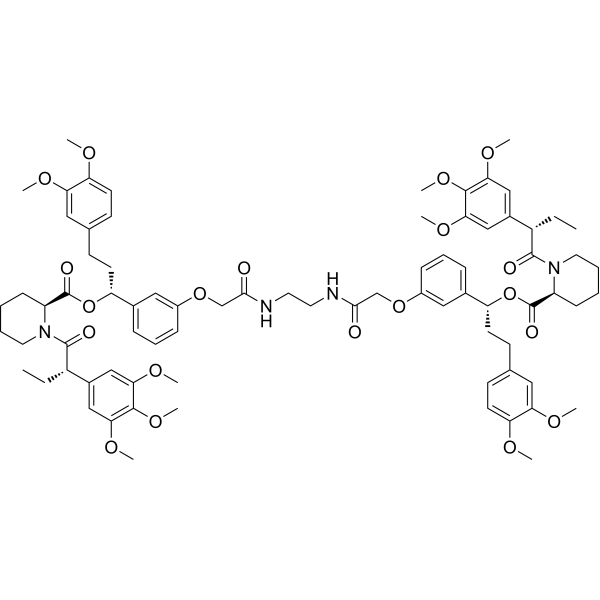
Rimiducid (AP1903) is a dimerizer agent that acts by cross-linking the FKBP domains. Rimiducid (AP1903) dimerizes the Caspase 9 suicide switch and rapidly induces apoptosis.
|
-
-
- HY-128952
-
|
SG3249
|
Drug-Linker Conjugates for ADC
DNA Alkylator/Crosslinker
|
Cancer
|
|
Tesirine (SG3249) is an antibody-drug conjugate (ADC) pyrrolobenzodiazepine (PBD) dimer payload. Tesirine combines potent antitumor activity with desirable physicochemical properties such as favorable hydrophobicity and improved conjugation characteristics. SG3199 (HY-101161) is the released warhead component of the ADC payload Tesirine. SG3199 retains picomolar activity in a panel of cancer cell lines. PBD dimers are highly efficient DNA minor groove cross-linking agents with potent cytotoxicity .
|
-
-
- HY-137383
-
|
|
Biochemical Assay Reagents
Reactive Oxygen Species (ROS)
|
Others
|
|
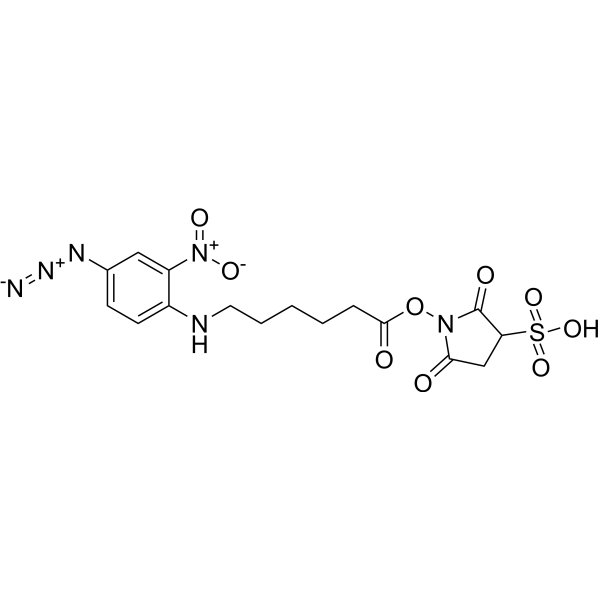
Sulfo-SANPAH is a primary amine-nitrobenzene azide cross-linker. Sulfo-SANPAH improves the functionalization process of PDMS surfaces, is covalently bound to the PAAm gel surface. Sulfo-SANPAH is widely used to crosslink ECM proteins to various substrates, including acrylic-based hydrogels, such as polyacrylamide hydrogels. Sulfo-SANPAH facilitates covalent binding through its negatively charged sulfonate group on its N-hydroxysuccinimide ester ring and a photoactivated phenyl azide group that is highly reactive with nucleophiles and free radicals .
|
-
-
- HY-101127
-
|
PBD dimer
|
ADC Payload
|
Cancer
|
|
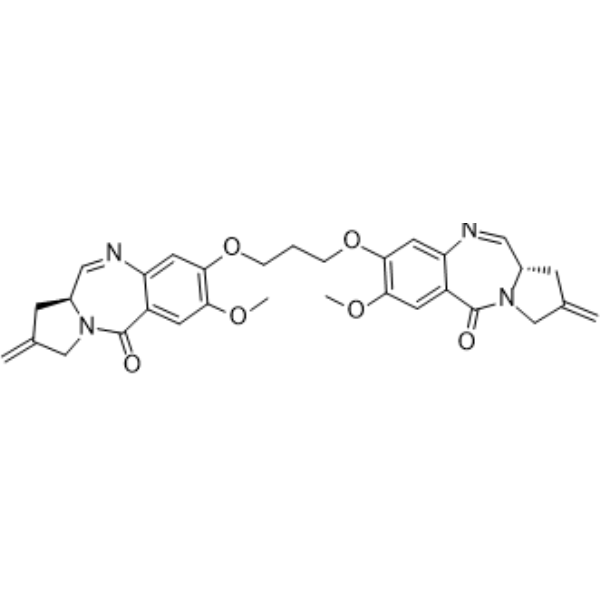
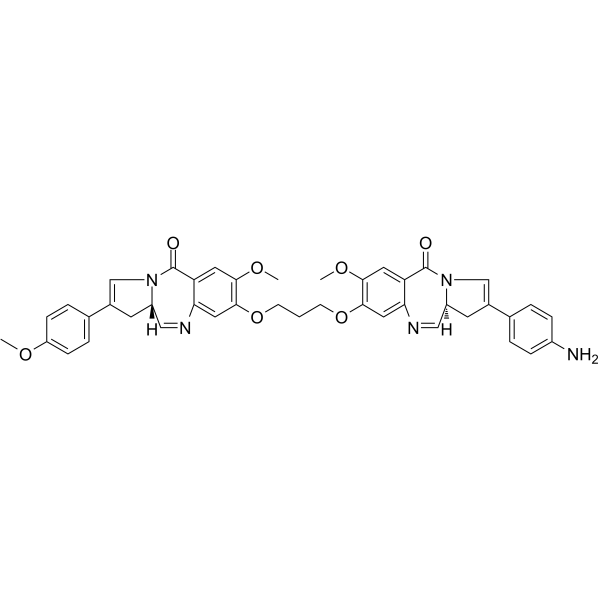
SGD-1882 is a cytotoxic, DNA minor-groove crosslinking agent pyrrolobenzodiazepine (PBD) dimer, acting as the payload for ADCs.
|
-
-
- HY-101162
-
|
|
Drug-Linker Conjugates for ADC
|
Cancer
|
|
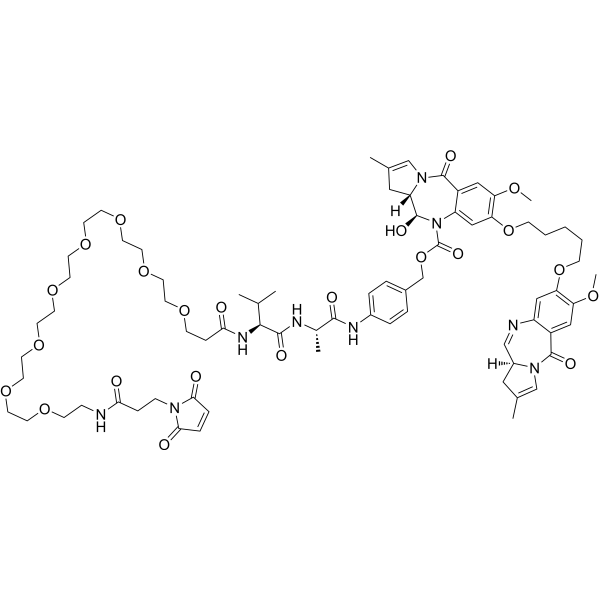
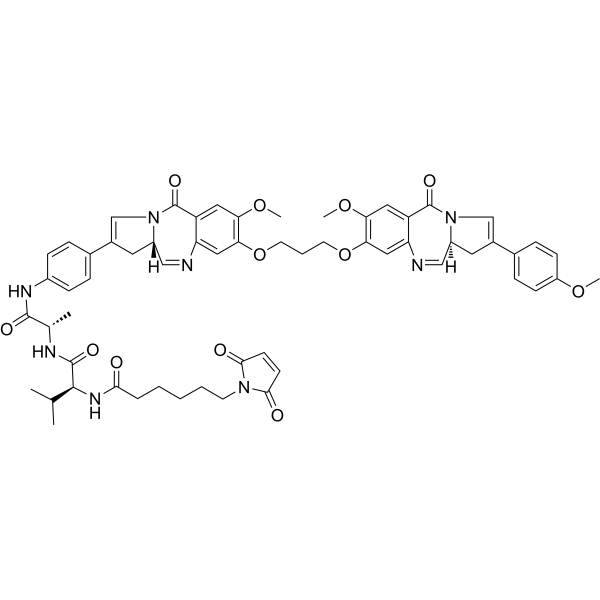
SGD-1910 is a agent-linker conjugate for ADC by using the antitumor antibiotic, pyrrolobenzodiazepine (PBD, a cytotoxic DNA crosslinking), linked via the cleavable linker MC-Val-Ala .
|
-
-
- HY-136610
-
|
|
Cholinesterase (ChE)
|
Neurological Disease
|
|
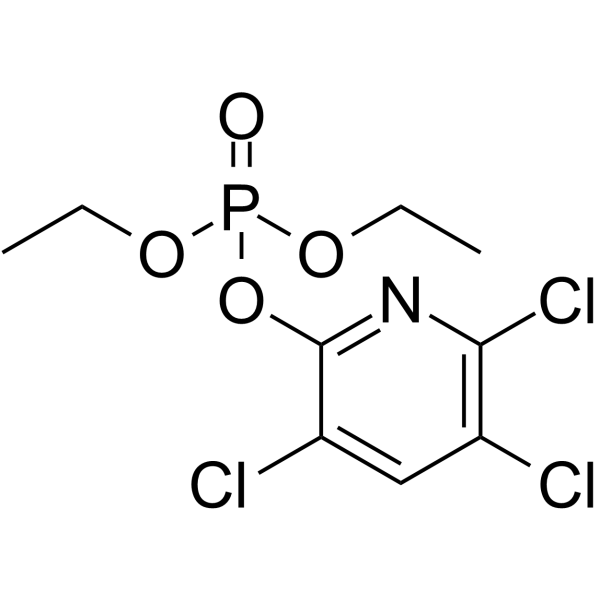
Chlorpyrifos-oxon, an active metabolite of Chlorpyrifos, is a potent phosphorylating agent that potently inhibits AChE. Chlorpyrifos-oxon can induce cross-linking between subunits of tubulin and disrupt microtubule function .
|
-
-
- HY-14573
-
-
-
- HY-B0077
-
-
-
- HY-13567
-
-
-
- HY-101160
-
|
DRG16
|
DNA Alkylator/Crosslinker
ADC Payload
|
Cancer
|
|
SG2057 (DRG16) is a PBD dimer containing a pentyldioxy linkage which binds sequence selectively in the minor groove of DNA forming DNA interstrand and intrastrand cross-linked adducts. SG2057 is a highly active antitumor agent .
|
-
-
- HY-W014940
-
|
|
Reactive Oxygen Species (ROS)
Apoptosis
Glutathione Peroxidase
SOD
|
Others
|
|
Ethylene glycol dimethacrylate is a diester formed by the condensation of Ethylene glycol (HY-Y0338) and Methacrylic acid. Ethylene glycol dimethacrylate is a cross-linking agent for polymers. Ethylene glycol dimethacrylate increases Apoptosis, GPx4, SOD2, ROS. Ethylene glycol dimethacrylate is cytotoxic and genotoxic. Ethylene glycol dimethacrylate exhibits cross-linking activity, enhancing the mechanical properties and stability of materials .
|
-
-
- HY-112624M
-
|
Dextran 150; Dextran D150; Dextran T150(MW 130000-170000)
|
Biochemical Assay Reagents
|
Others
|
|
Dextran T150 (Dextran 150; Dextran D150) (MW 150,000) is a dehydrated glucose polymer with an average molecular weight of 150,000. Dextran T150 (MW 150,000) has excellent biodegradability and good biocompatibility, and can be used as a fluorescent labeling tracer and a high-molecular cross-linking agent .
|
-
-
- HY-148424
-
|
|
ADC Payload
DNA Alkylator/Crosslinker
|
Cancer
|
|
PBD dimer-2 (compound 2c) is a C8-linked pyrrolobenzodiazepine dimer. PBD dimer-2 can span an extra base pair and cross-link the 5′-Pu-GA(T/A)TC-Py sequence. PBD dimer-2 can be used as a payload for antibody–agent conjugates (ADCs), and it can be used for the research of cancer .
|
-
-
- HY-111397
-
|
NSC 615291; U-77779
|
DNA Alkylator/Crosslinker
|
Cancer
|
|
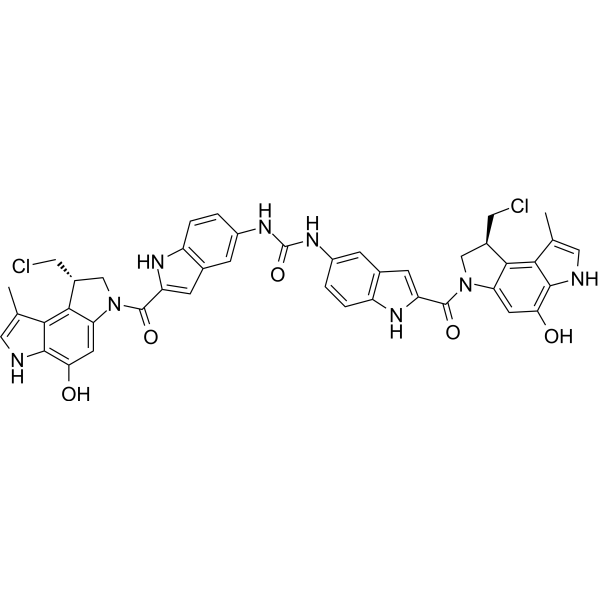
Bizelesin (NSC 615291; U-77779) is an AT-specific DNA alkylating agent that can generate DNA interstrand crosslinks, effectively inhibit DNA replication, and has potential anticancer activity .
|
-
-
- HY-126539
-
|
|
E1/E2/E3 Enzyme
|
Cancer
|
|
UBE2T/FANCL-IN-1 is a potent inhibitor of UBE2T/FANCL-mediated FANCD2 monoubiquitylation that sensitizes cells to the DNA cross-linking agent, Carboplatin .
|
-
-
- HY-B0245S
-
|
|
DNA Alkylator/Crosslinker
Apoptosis
|
Inflammation/Immunology
Cancer
|
|
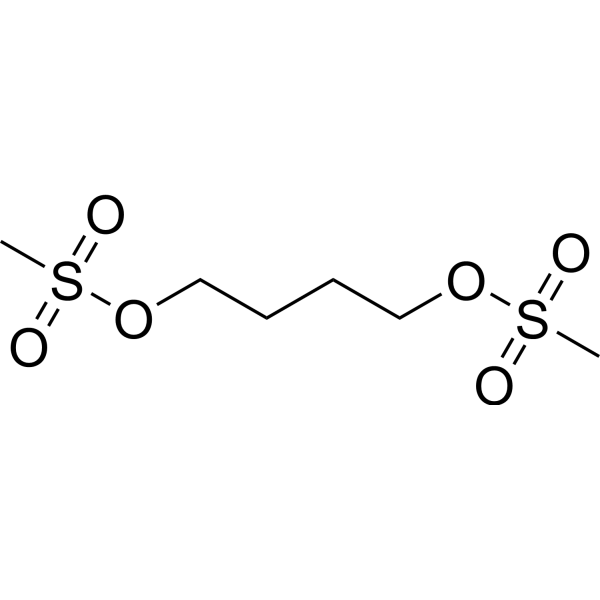
Busulfan-d8 is a deuterium labeled Busulfan. Busulfan is a potent alkylating antineoplastic agent. Busulfan causes DNA damage by cross-linking DNAs and DNA and proteins. Busulfan inhibits thioredoxin reductase. Busulfan induces apoptosis. Busulfan is an immunosuppressive and myeloablative chemotherapeutic agent .
|
-
-
- HY-B0245R
-
|
|
DNA Alkylator/Crosslinker
Apoptosis
Reference Standards
|
Inflammation/Immunology
Cancer
|
|
Busulfan (Standard) is the analytical standard of Busulfan. This product is intended for research and analytical applications. Busulfan is a potent alkylating antineoplastic agent. Busulfan causes DNA damage by cross-linking DNAs and DNA and proteins. Busulfan inhibits thioredoxin reductase. Busulfan induces apoptosis. Busulfan is an immunosuppressive and myeloablative chemotherapeutic agent .
|
-
-
- HY-16405
-
|
|
DNA Alkylator/Crosslinker
|
Cancer
|
|
PR-104 is a selective hypoxia-activated DNA cross-linking agent and can be used for the research of multiple tumor xenograft models. PR-104, as a nitrogen mustard pre-proagent, is converted efficiently to the more lipophilic dinitrobenzamide mustards alcohol PR-104A .
|
-
-
- HY-W013538
-
-
-
- HY-W075885
-
|
trans-platinumdiamminedichloride
|
DNA Alkylator/Crosslinker
|
Others
|
|
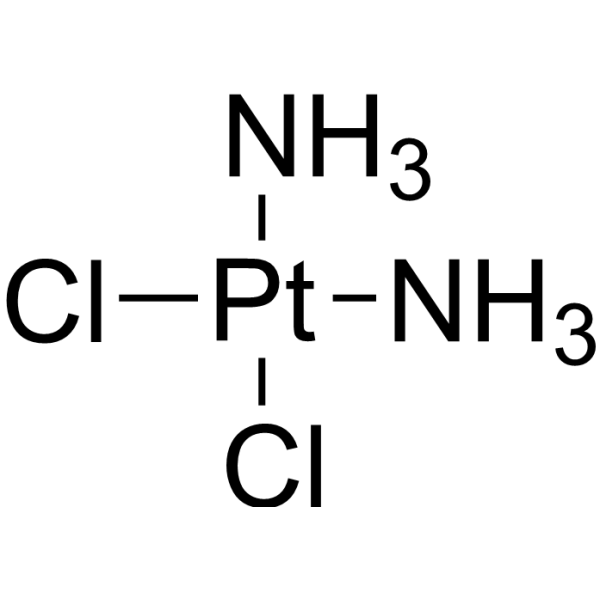
trans-Platinum(II)diammine dichloride (trans-platinumdiamminedichloride) is a geometric isomer of Cisplatin (HY-17394). Trans-Platinum(II)diammine dichloride is a DNA cross-linking agent that induces significant DNA cross-link damage while exhibiting low cytotoxicity. Trans-Platinum(II)diammine dichloride is useful for studying DNA-protein cross-links .
|
-
-
- HY-14572
-
|
SN 27858
|
DNA Alkylator/Crosslinker
Drug Metabolite
|
Cancer
|
|
PR-104A (SN 27858) is the alcohol metabolite of phosphate proagent PR-104. PR-104A is a hypoxia-selective DNA cross-linking agent/DNA-damaging agent and cytotoxin. Antitumor Activity . PR-104A is metabolized under hypoxia by the 1-electron NADPH:cytochrome P450 oxidoreductase. PR-104A can be used for the research of relapsed/refractory T-lineage acute lymphoblastic leukemia (T-ALL) .
|
-
-
- HY-159008
-
-
-
- HY-W763597
-
-
-
- HY-W110540D
-
|
|
Biochemical Assay Reagents
|
Others
|
|
Poly(ethylene glycol) dimethacrylate (MW 2000) is a nonlinear analogue of polyethylene glycol (PEG) and can be used as a cross-linking agent .
|
-
-
- HY-W111005
-
|
|
DNA Alkylator/Crosslinker
|
Cancer
|
|
1-Chloromethylpyrene is an alkylating agent that enters the DNA double helix structure through intercalation, forms covalent bonds with electrophilic groups, resulting in DNA cross-linking, thereby inhibiting the proliferation of tumor cells .
|
-
-
- HY-402091
-
|
|
ADC Payload
|
Others
|
|
SJG-136 intermediate-1 (compound 19) is an intermediate for synthesizing SJG-136. SJG-136 is a DNA cross-linking agent, with an XL50 of 45 nM for pBR322 DNA .
|
-
-
- HY-D2438
-
|
|
Fluorescent Dye
|
Cancer
|
|
CDDP-PEG-Cy3 is a CDDP-PEG conjugate labeled with Cy3 (HY-D0822). The Cy3 fluorophore is commonly used in applications such as immunolabeling, nucleic acid labeling, fluorescence microscopy, and flow cytometry. The maximum emission wavelength of Cy3 is approximately 562-570 nm. Cisplatin (CDDP) (HY-17394) is an antineoplastic chemotherapy agent by cross-linking with DNA and causing DNA damage in cancer cells. Cisplatin activates ferroptosis and induces autophagy .
|
-
-
- HY-130545
-
-
-
- HY-W012887
-
|
|
Biochemical Assay Reagents
|
Others
|
|
Oxalyldihydrazide is a crosslinking agent in proteomics research. Oxalyldihydrazide can capture carbonylated proteins on the surface of a microchip .
|
-
-
- HY-D1423
-
|
|
Fluorescent Dye
|
Others
|
|
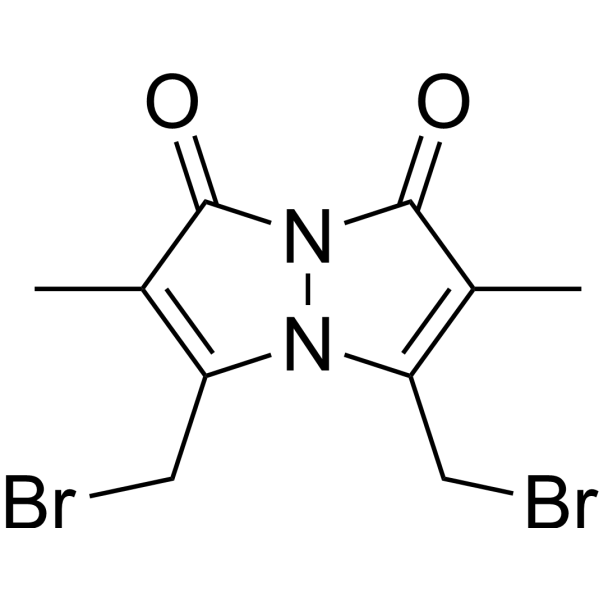
Dibromobimane is a thiol-selective fluorescent imaging agent. Dibromobimane is used to crosslink cysteine- and homocysteine-containing peptides .
|
-
-
- HY-138287
-
-
-
- HY-117112
-
|
Hexakis(methoxymethyl)melamine; HMMM
|
Biochemical Assay Reagents
|
Others
|
|
Hexamethoxymethylmelamine (Hexakis(methoxymethyl)melamine; HMMM) is a crosslinking agent, which can be used with polyester resins to produce thermosetting coating .
|
-
-
- HY-W110540H
-
|
|
Biochemical Assay Reagents
|
Others
|
|
Poly(ethylene glycol) dimethacrylate (MW 3400) is a nonlinear analogue of polyethylene glycol (PEG) and can be used as a cross-linking agent .
|
-
-
- HY-W110540K
-
|
|
Biochemical Assay Reagents
|
Others
|
|
Poly(ethylene glycol) dimethacrylate (MW 10000) is a nonlinear analogue of polyethylene glycol (PEG) and can be used as a cross-linking agent .
|
-
-
- HY-W110540L
-
|
|
Biochemical Assay Reagents
|
Others
|
|
Poly(ethylene glycol) dimethacrylate (MW 20000) is a nonlinear analogue of polyethylene glycol (PEG) and can be used as a cross-linking agent .
|
-
-
- HY-W110540C
-
|
|
Biochemical Assay Reagents
|
Others
|
|
Poly(ethylene glycol) dimethacrylate (MW 1000) is a nonlinear analogue of polyethylene glycol (PEG) and can be used as a cross-linking agent .
|
-
-
- HY-W110540A
-
|
|
Biochemical Assay Reagents
|
Others
|
|
Poly(ethylene glycol) dimethacrylate (MW 750) is a nonlinear analogue of polyethylene glycol (PEG) and can be used as a cross-linking agent .
|
-
-
- HY-W110540
-
|
|
Biochemical Assay Reagents
|
Others
|
|
Poly(ethylene glycol) dimethacrylate (MW 550) is a nonlinear analogue of polyethylene glycol (PEG) and can be used as a cross-linking agent .
|
-
-
- HY-W763546A
-
|
|
Biochemical Assay Reagents
|
Others
|
|
Poly(ethylene glycol) diglycidyl ether (MW 500) is a nonlinear analogue of polyethylene glycol (PEG) and can be used as a cross-linking agent .
|
-
-
- HY-W1048542
-
|
|
Biochemical Assay Reagents
|
Others
|
|
Fmoc-NH-PEG1000-COOH is a PEG product containing two Fmoc-protected amines and a carboxylic acid. Fmoc-NH-PEG1000-COOH is an important cross-linking agent with PEG chains .
|
-
-
- HY-23497
-
|
|
Others
|
Others
|
|
Poly(4-vinylphenol) is a polymer cross-linking agent that can be used to prepare non-toxic films. Poly(4-vinylphenol) is a sensitizer of titania for visible light photocatalysis. Poly(4-vinylphenol) also can be used as a water resistive wood adhesive, as a gate dielectric insulator in organic field effect transistors, and as a responsive surface coating .
|
-
-
- HY-W008575
-
-
-
- HY-130170
-
-
-
- HY-W040113
-
-
-
- HY-W110540I
-
|
|
Biochemical Assay Reagents
|
Others
|
|
Poly(ethylene glycol) dimethacrylate (MW 4000) is a nonlinear analogue of polyethylene glycol (PEG) and can be used as a cross-linking agent .
|
-
-
- HY-W110540J
-
|
|
Biochemical Assay Reagents
|
Others
|
|
Poly(ethylene glycol) dimethacrylate (MW 6000) is a nonlinear analogue of polyethylene glycol (PEG) and can be used as a cross-linking agent .
|
-
-
- HY-W763546D
-
|
|
Biochemical Assay Reagents
|
Others
|
|
Poly(ethylene glycol) diglycidyl ether (MW 1000) is a nonlinear analogue of polyethylene glycol (PEG) and can be used as a cross-linking agent .
|
-
-
- HY-W763546C
-
|
|
Biochemical Assay Reagents
|
Others
|
|
Poly(ethylene glycol) diglycidyl ether (MW 6000) is a nonlinear analogue of polyethylene glycol (PEG) and can be used as a cross-linking agent .
|
-
- HY-W763546B
-
|
|
Biochemical Assay Reagents
|
Others
|
|
Poly(ethylene glycol) diglycidyl ether (MW 2000) is a nonlinear analogue of polyethylene glycol (PEG) and can be used as a cross-linking agent .
|
-
- HY-174358D
-
|
|
Biochemical Assay Reagents
|
Others
|
|
HOOC-PEG10000-COOH has two active carboxyl groups at both ends, which can selectively react with the amino groups in peptide coupling agents. HOOC-PEG10000-COOH is a good cross-linking agent for PEGylation of proteins and peptides, nanoparticles and surface modification .
|
-
- HY-W127344
-
|
|
Biochemical Assay Reagents
|
Others
|
|
Oleoyl chloride A pungent-smelling liquid commonly used as a reagent in organic synthesis, especially for the production of a variety of organic compounds, including pharmaceuticals and agrochemicals. In addition, it can also be used as a cross-linking agent or surfactant in polymer chemistry. Its unique chemical properties make it an important ingredient in a variety of industrial processes, including petrochemical refining and materials science.
|
-
- HY-130601
-
-
- HY-W725745
-
|
1,3,5-Tris(6-isocyanatohexyl)-1,3,5-triazinane-2,4,6-trione
|
Biochemical Assay Reagents
|
Others
|
|
Tris(6-isocyanatohexyl)isocyanurate is a cross-linking agent that can be used for the research of novel drug-carrying matrix systems .
|
-
- HY-128952G
-
|
SG3249
|
Drug-Linker Conjugates for ADC
DNA Alkylator/Crosslinker
|
Cancer
|
|
Tesirine (GMP) (SG3249 (GMP)) is Tesirine (HY-128952) produced by using GMP guidelines. GMP small molecules works appropriately as an auxiliary reagent for cell therapy manufacture. Tesirine (SG3249) is an antibody-drug conjugate (ADC) pyrrolobenzodiazepine (PBD) dimer payload. Tesirine combines potent antitumor activity with desirable physicochemical properties such as favorable hydrophobicity and improved conjugation characteristics. SG3199 (HY-101161) is the released warhead component of the ADC payload Tesirine. SG3199 retains picomolar activity in a panel of cancer cell lines. PBD dimers are highly efficient DNA minor groove cross-linking agents with potent cytotoxicity .
|
-
- HY-W142308
-
|
|
Biochemical Assay Reagents
|
|
|
Diammonium dithiodiglycolate is a film-forming polymer used as a crosslinking agent, with the activity of promoting crosslinking of materials and enhancing their stability. Diammonium dithiodiglycolate plays a key role in biomedical applications, especially in the preparation of biocompatible materials. The unique chemical properties of Diammonium dithiodiglycolate make it an ideal choice to achieve high-performance polymer properties.
|
-
- HY-W009034
-
-
- HY-76214
-
|
Dibenzyl hydrazine-1,2-dicarboxylate
|
Biochemical Assay Reagents
|
Others
|
|
Dibenzyl hydrazodicarboxylate (Dibenzyl hydrazine-1,2-dicarboxylate) is a protein cross-linking agent.
|
-
- HY-13567S
-
-
- HY-W763598B
-
|
|
Biochemical Assay Reagents
|
Others
|
|
Poly(ethylene glycol) distearate (Mn 930) is a derivative of polyethylene glycol, which can be used as a cross-linking agent and click chemistry reaction .
|
-
- HY-W173049
-
|
|
Drug Intermediate
|
Others
|
|
3-(2-Carboxyethanesulfinyl)propanoic acid is a building block. 3-(2-Carboxyethanesulfinyl)propanoic acid can be used for synthesis of cross-linking agent Disuccinimidyl sulfoxide (DSSO) (HY-123740) .
|
-
- HY-W106487
-
|
|
Biochemical Assay Reagents
|
Others
|
|
(+)-N,N'-Diallyl-L-tartardiamide is a cross-linking agent used in the preparation of hydrogels. (+)-N,N'-Diallyl-L-tartardiamide is a kind of biological materials or organic compounds that are widely used in life science research .
|
-
- HY-402090
-
|
|
ADC Payload
|
Others
|
|
SJG-136 intermediate-2 (compound 141) is an intermediate for synthesizing SJG-136. SJG-136 is a DNA cross-linking agent, with an XL50 of 45 nM for pBR322 DNA .
|
-
- HY-B0077S1
-
|
SDX-105-d8
|
Isotope-Labeled Compounds
DNA Alkylator/Crosslinker
Apoptosis
|
Cancer
|
|
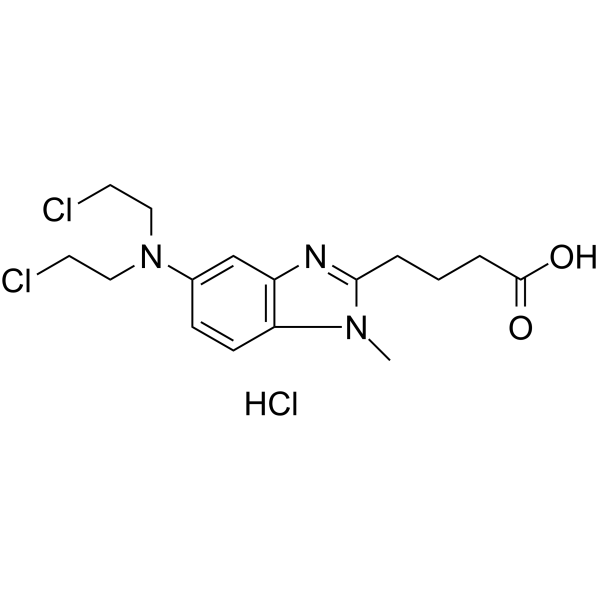
Bendamustine-d8 (hydrochloride) is deuterium labeled Bendamustine (hydrochloride). Bendamustine hydrochloride (SDX-105), a purine analogue, is a DNA cross-linking agent. Bendamustine hydrochloride activats DNA-damage stress response and apoptosis. Bendamustine hydrochloride has potent alkylating, anticancer and antimetabolite properties .
|
-
- HY-174358A
-
|
|
Biochemical Assay Reagents
|
Others
|
|
HOOC-PEG2000-COOH has two active carboxyl groups at both ends, which can selectively react with the amino groups in peptide coupling agents. HOOC-PEG2000-COOH is a good cross-linking agent for PEGylation of proteins and peptides, nanoparticles and surface modification .
|
-
- HY-174358E
-
|
|
Biochemical Assay Reagents
|
Others
|
|
HOOC-PEG20000-COOH has two active carboxyl groups at both ends, which can selectively react with the amino groups in peptide coupling agents. HOOC-PEG20000-COOH is a good cross-linking agent for PEGylation of proteins and peptides, nanoparticles and surface modification .
|
-
- HY-13567S1
-
|
SDX-105-d8 free base
|
DNA Alkylator/Crosslinker
Apoptosis
|
Cancer
|
|
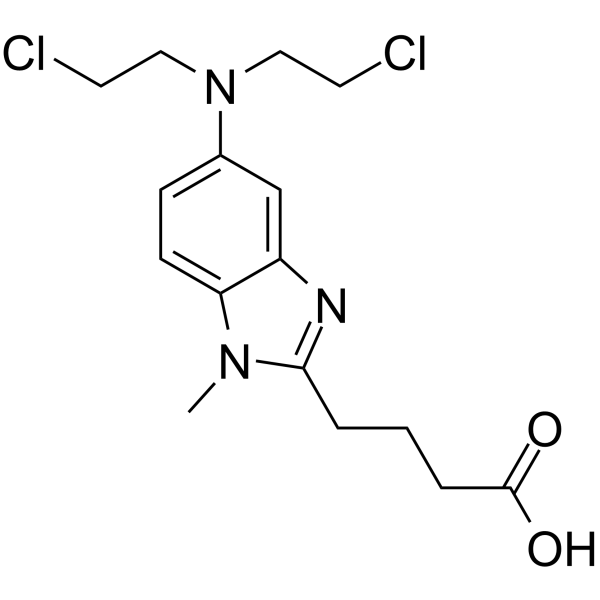
Bendamustine-d8 is the deuterium labeled Bendamustine . Bendamustine (SDX-105 free base), a purine analogue, is a DNA cross-linking agent. Bendamustine activates DNA-damage stress response and apoptosis. Bendamustine has potent alkylating, anticancer and antimetabolite properties .
|
-
- HY-B0077R
-
|
SDX-105 (Standard)
|
Reference Standards
DNA Alkylator/Crosslinker
Apoptosis
|
Cancer
|
|
Bendamustine (hydrochloride) (Standard) is the analytical standard of Bendamustine (hydrochloride). This product is intended for research and analytical applications. Bendamustine hydrochloride (SDX-105), a purine analogue, is a DNA cross-linking agent. Bendamustine hydrochloride activats DNA-damage stress response and apoptosis. Bendamustine hydrochloride has potent alkylating, anticancer and antimetabolite properties .
|
-
- HY-136610S
-
|
|
Isotope-Labeled Compounds
Cholinesterase (ChE)
|
Neurological Disease
|
|
Chlorpyrifos-oxon-d10 is the deuterium labeled Chlorpyrifos-oxon. Chlorpyrifos-oxon, an active metabolite of Chlorpyrifos, is a potent phosphorylating agent that potently inhibits AChE. Chlorpyrifos-oxon can induce cross-linking between subunits of tubulin and disrupt microtubule function .
|
-
- HY-16406
-
|
|
DNA Alkylator/Crosslinker
|
Cancer
|
|
PR-104 (sodium) is a selective hypoxia-activated DNA cross-linking agent and can be used for the research of multiple tumor xenograft models. PR-104 (sodium), as a nitrogen mustard pre-proagent, is converted efficiently to the more lipophilic dinitrobenzamide mustards alcohol PR-104A .
|
-
- HY-13567R
-
|
SDX-105 free base (Standard)
|
DNA Alkylator/Crosslinker
Apoptosis
Reference Standards
|
Cancer
|
|
Bendamustine (Standard) is the analytical standard of Bendamustine. This product is intended for research and analytical applications. Bendamustine (SDX-105 free base), a purine analogue, is a DNA cross-linking agent. Bendamustine activates DNA-damage stress response and apoptosis. Bendamustine has potent alkylating, anticancer and antimetabolite properties .
|
-
- HY-117909
-
|
RXDX-107
|
Apoptosis
|
Cancer
|
|
CEP-40125 (RXDX-107) is a modified form of Bendamustine (HY-13567), a DNA cross-linking agent that may cause DNA damage and cell apoptosis. CEP-40125 (RXDX-107) is formed by encapsulating the alkyl ester form of Bendamustine in human serum albumin .
|
-
- HY-136610R
-
|
|
Cholinesterase (ChE)
|
Neurological Disease
|
|
Chlorpyrifos-oxon (Standard) is the analytical standard of Chlorpyrifos-oxon. This product is intended for research and analytical applications. Chlorpyrifos-oxon, an active metabolite of Chlorpyrifos, is a potent phosphorylating agent that potently inhibits AChE. Chlorpyrifos-oxon can induce cross-linking between subunits of tubulin and disrupt microtubule function .
|
-
- HY-W1048542A
-
|
|
Biochemical Assay Reagents
|
Others
|
|
Fmoc-NH-PEG2000-COOH is a linear hetero-bifunctional PEG product with two Fmoc-protected amines and a carboxylic acid at both ends. Fmoc-NH-PEG2000-COOH is an important cross-linking agent with PEG chains. The protected amine can be regenerated by mild alkaline conditions .
|
-
- HY-W1048542D
-
|
|
Biochemical Assay Reagents
|
Others
|
|
Fmoc-NH-PEG5000-COOH is a linear hetero-bifunctional PEG product with two Fmoc-protected amines and a carboxylic acid at both ends. Fmoc-NH-PEG5000-COOH is an important cross-linking agent with PEG chains. The protected amine can be regenerated by mild alkaline conditions .
|
-
- HY-W1048542C
-
|
|
Biochemical Assay Reagents
|
Others
|
|
Fmoc-NH-PEG3400-COOH is a linear hetero-bifunctional PEG product with two Fmoc-protected amines and a carboxylic acid at both ends. Fmoc-NH-PEG3400-COOH is an important cross-linking agent with PEG chains. The protected amine can be regenerated by mild alkaline conditions .
|
-
- HY-W1048542H
-
|
|
Biochemical Assay Reagents
|
Others
|
|
Fmoc-NH-PEG20000-COOH is a linear hetero-bifunctional PEG product with two Fmoc-protected amines and a carboxylic acid at both ends. Fmoc-NH-PEG20000-COOH is an important cross-linking agent with PEG chains. The protected amine can be regenerated by mild alkaline conditions .
|
-
- HY-W1048542I
-
|
|
Biochemical Assay Reagents
|
Others
|
|
Fmoc-NH-PEG40000-COOH is a linear hetero-bifunctional PEG product with two Fmoc-protected amines and a carboxylic acid at both ends. Fmoc-NH-PEG40000-COOH is an important cross-linking agent with PEG chains. The protected amine can be regenerated by mild alkaline conditions .
|
-
- HY-W1048542E
-
|
|
Biochemical Assay Reagents
|
Others
|
|
Fmoc-NH-PEG10000-COOH is a linear hetero-bifunctional PEG product with two Fmoc-protected amines and a carboxylic acid at both ends. Fmoc-NH-PEG10000-COOH is an important cross-linking agent with PEG chains. The protected amine can be regenerated by mild alkaline conditions .
|
-
- HY-W738282
-
|
SDX-105-d7
|
Isotope-Labeled Compounds
DNA Alkylator/Crosslinker
Apoptosis
|
Cancer
|
|
Bendamustine-d7 hydrochloride (SDX-105-d7) is the deuterium labeled Bendamustine hydrochloride (HY-B0077). Bendamustine hydrochloride (SDX-105), a purine analogue, is a DNA cross-linking agent. Bendamustine hydrochloride activats DNA-damage stress response and apoptosis. Bendamustine hydrochloride has potent alkylating, anticancer and antimetabolite properties .
|
-
- HY-186063
-
|
|
Biochemical Assay Reagents
|
Cancer
|
|
Mal-b-Lys(mal)-PEG4-amide-PEG3-azide is a cross-linking agent that can be used to cross-link antibodies. Mal-b-Lys(mal)-PEG4-amide-PEG3-azide can be used to synthesize antibody-drug conjugates (ADCs) .
|
-
- HY-W011123
-
-
- HY-139635
-
-
- HY-W093254A
-
-
- HY-W093254B
-
-
- HY-W105731
-
|
Decamethylene diiodide
|
Endogenous Metabolite
|
Others
|
|
1,10-Diiododecane (Decamethylene diiodide) serves as a crosslinking reagent for tetrabutylammonium polygalacturonic acid and acts as an alkylating agent in the synthesis of both symmetrical and unsymmetrical bis-cryptophanes, in addition to being utilized for the production of decane at a temperature of 20°C.
|
-
- HY-W075885R
-
|
trans-platinumdiamminedichloride (Standard)
|
Biochemical Assay Reagents
Reference Standards
|
Others
|
|
trans-Platinum(II)diammine dichloride (trans-platinumdiamminedichloride) (Standard) is an analytical standard for trans-Platinum(II)diammine dichloride (HY-W075885). This product is intended for research and analytical applications. trans-Platinum(II)diammine dichloride is a geometric isomer of Cisplatin (HY-17394). trans-Platinum(II)diammine dichloride is a DNA cross-linking agent that induces significant DNA cross-link damage but exhibits low cytotoxicity. trans-Platinum(II)diammine dichloride can be used to study DNA-protein cross-links.
|
-
- HY-13567A
-
|
SDX-105 hydrate
|
DNA Alkylator/Crosslinker
Apoptosis
|
Metabolic Disease
|
|
Bendamustine hydrochloride hydrate (SDX-105 hydrate), a purine analogue, is a DNA cross-linking agent. Bendamustine hydrochloride hydrate activates DNA-damage stress response and apoptosis. Bendamustine hydrochloride hydrate has potent alkylating, anticancer and antimetabolite properties .
|
-
- HY-174358C
-
|
|
Biochemical Assay Reagents
|
Others
|
|
HOOC-PEG5000-COOH has two active carboxyl groups at both ends, which can selectively react with the amino groups in peptide coupling agents. HOOC-PEG5000-COOH is a good cross-linking agent for PEGylation of proteins and peptides, nanoparticles and surface modification .
|
-
- HY-174358
-
|
|
Biochemical Assay Reagents
|
Others
|
|
HOOC-PEG1000-COOH has two active carboxyl groups at both ends, which can selectively react with the amino groups in peptide coupling agents. HOOC-PEG1000-COOH is a good cross-linking agent for PEGylation of proteins and peptides, nanoparticles and surface modification .
|
-
- HY-174358H
-
|
|
Biochemical Assay Reagents
|
Others
|
|
HOOC-PEG40000-COOH has two active carboxyl groups at both ends, which can selectively react with the amino groups in peptide coupling agents. HOOC-PEG40000-COOH is a good cross-linking agent for PEGylation of proteins and peptides, nanoparticles and surface modification .
|
-
- HY-174358B
-
|
|
Biochemical Assay Reagents
|
Others
|
|
HOOC-PEG3400-COOH has two active carboxyl groups at both ends, which can selectively react with the amino groups in peptide coupling agents. HOOC-PEG3400-COOH is a good cross-linking agent for PEGylation of proteins and peptides, nanoparticles and surface modification .
|
-
- HY-16046S
-
|
AP1903-d4
|
Isotope-Labeled Compounds
FKBP
Apoptosis
|
Cancer
|
|
Rimiducid-d4 (AP1903-d4) is the deuterium labeled Rimiducid (HY-16046). Rimiducid (AP1903) is a dimerizer agent that acts by cross-linking the FKBP domains. Rimiducid (AP1903) dimerizes the Caspase 9 suicide switch and rapidly induces apoptosis.
|
-
- HY-W414754
-
|
|
Biochemical Assay Reagents
|
Others
|
|
2,5-Dioxopyrrolidin-1-yl methyl phthalate is a cross-linking agent used for modification of proteins and peptides. 2,5-Dioxopyrrolidin-1-yl methyl phthalate is a reagent for introducing succinimide-activated esters that react with primary amines in proteins and peptides to form stable amide bonds.
|
-
- HY-W800818
-
|
|
Biochemical Assay Reagents
|
Others
|
|
(Z)-Non-2-enyl 6-bromohexanoate is an analogue of Biotin and a protein cross-linking agent.(Z)-Non-2-enyl 6-bromohexanoate binds less tightly to biotin-binding proteins such as Avidin and is easily displaced by Biotin. It is used in the preparation of agarose matrices for affinity-based isolation of streptavidin-fluorophore conjugates.
|
-
- HY-D2981
-
|
|
Biochemical Assay Reagents
|
Others
|
|
CoDi1 is an effective chemical crosslinking agent. CoDi1 can achieve covalent and irreversible dimerization of AGT/SNAP tag fusion proteins in living cells .
|
-
- HY-18774
-
|
|
DNA Alkylator/Crosslinker
|
Cancer
|
|
Cycloplatam is a DNA crosslinking agent. Cycloplatam inhibits tumor cell DNA replication and transcription. Cycloplatam is promising for research of ovarian cancer, lung cancer, and other solid tumors .
|
-
- HY-101160R
-
|
DRG16 (Standard)
|
DNA Alkylator/Crosslinker
Reference Standards
ADC Payload
|
Cancer
|
|
SG2057 (Standard) is the analytical standard of SG2057 (HY-101160). This product is intended for research and analytical applications. SG2057 (DRG16) is a PBD dimer containing a pentyldioxy linkage which binds sequence selectively in the minor groove of DNA forming DNA interstrand and intrastrand cross-linked adducts. SG2057 is a highly active antitumor agent .
|
-
- HY-N13261
-
|
|
Others
|
Metabolic Disease
|
|
Brickellin is an antioxidant agent that can be isolated from Varronia curassavica Jacq.. Brickellin inhibits advanced glycation end products (AGEs) formation, protein crosslinking, and oxidative damage to proteins. Brickellin can be used for the research of diabetes .
|
-
- HY-W006886
-
|
|
Amino Acid Derivatives
|
Others
|
Fmoc-(R)-2-(7-octenyl) Ala-OH is an unnatural Fmoc-protected amino acid and modification module. Fmoc-(R)-2-(7-octenyl) Ala-OH serves as a key building block for all-hydrocarbon cross-linking modification of antimicrobial peptides, and facilitates the generation of stapled peptide derivatives. When introduced into specific sites of the parent peptide, Fmoc-(R)-2-(7-octenyl) Ala-OH effectively increases the α-helix content of the peptide chain, thereby significantly enhancing its antimicrobial activity and proteolytic stability. Fmoc-(R)-2-(7-octenyl) Ala-OH is widely used in research on bacterial infections and the development of related antimicrobial agents . Stapled peptide is a specially chemically modified polypeptide. It locks the peptide chain into a stable α-helical structure by introducing a "staple"-like chemical bridge (usually an all-carbon backbone) at specific positions of the peptide chain.
|
-
- HY-79587
-
|
|
Biochemical Assay Reagents
|
Others
|
|
Benzil is a 1,2-diketone compound with multiple functions including photo-peroxidation initiator, crosslinking initiator and pattern-forming agent, and is commonly used as a precursor for photodegradable network crosslinkers. In oxygen-purged polymer films or glassy matrices, Benzil reacts with molecular oxygen under illumination at wavelengths greater than 370 nm or 400 nm, and converts to benzoyl peroxide in nearly quantitative yield. Subsequently, the generated benzoyl peroxide groups produce free radicals via thermal or photochemical decomposition, thereby enabling crosslinking of polymer chains, grafting of new monomers, and preparation of patterned polymers on solid surfaces using mask irradiation. Benzil also induces crosslinking of photodegradable poly (phenyl vinyl ketone) to form a stable photodegradable polymer network .
|
-
- HY-Y0425
-
|
|
Drug Intermediate
Biochemical Assay Reagents
|
Others
|
|
Terephthalaldehyde is a crosslinking agent. Terephthalaldehyde forms a crosslinked structure inside the gelatin matrix by forming Schiff base imines with the amino groups of gelatin, thereby constructing a three-dimensional network. Terephthalaldehyde improves the hydrophobicity of the gelatin matrix, delays water vapor penetration and enhances the liquid water resistance of gelatin films. Terephthalaldehyde can be used as a crosslinking agent to prepare crosslinked chitosan hydrogel (CAAT) via ultrasound-induced synthesis. Terephthalaldehyde helps CAAT hydrogels selectively adsorb anionic dyes from aqueous media, including multi-component systems containing cationic dyes. Terephthalaldehyde serves as a starting material for the synthesis of bis-heterocyclic compounds (including bis-thiazole and bis-triazolopyrimidine compounds) .
|
-
- HY-114577
-
|
Isophosphoramide mustard tromethamine; IPM tromethamine; ZIO-201 tromethamine
|
DNA Alkylator/Crosslinker
|
Cancer
|
|
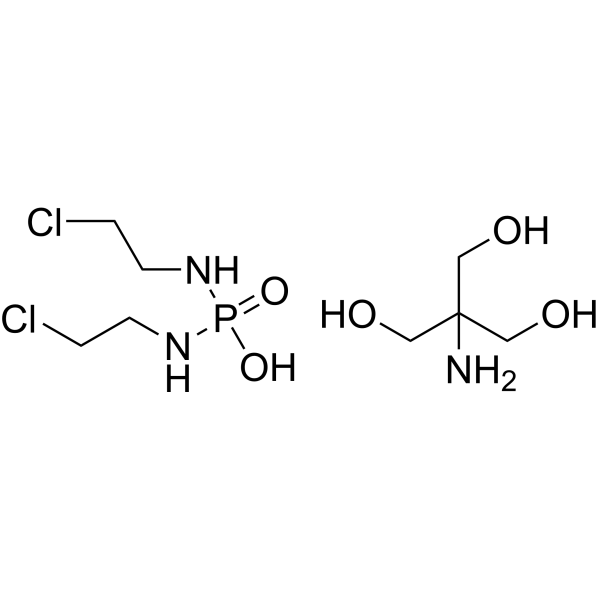
Palifosfamide (tromethamine) is a synthetic alkylating agent with potential antineoplastic activity. As the stabilized active metabolite of ifosfamide, palifosfamide (tromethamine) irreversibly alkylates and crosslinks DNA through GC base pairs. This leads to an inhibition of DNA replication and ultimately cell death. Compared to ifosfamide, palifosfamide (tromethamine) is less toxic.
|
-
- HY-13703
-
-
- HY-W588706
-
|
|
Biochemical Assay Reagents
|
Others
|
|
Tetrazine-PEG5-SS-NHS ester is a heterobifunctional crosslinking agent, a PEG derivative composed of NHS ester. NHS ester can bind to amino acids or other amino-containing molecules. Tetrazine-PEG5-SS-NHS ester is used in bioconjugation, bioorthogonal chemistry, and delivery.
|
-
- HY-147740
-
|
|
DNA Alkylator/Crosslinker
|
Cancer
|
|
WEHI-150 is a replica of mitoxantrone, is a portent DNA interstrand crosslinkagent with an adduct half-lives of 12.5 h. WEHI-150 forms covalent adducts at CpG sequences and exhibits a preference for methylated CpG sites. Formaldehyde-activated WEHI-150 induces DNA interstrand crosslinks. Formaldehyde-activated WEHI-150 shows Concentration-dependent transcription blockages. WEHI-150 can mediate covalent adducts that are independent of interactions with the N-2 of guanine and is capable of adduct formation at novel DNA sequences .
|
-
- HY-W051391
-
|
Me3TACN
|
Biochemical Assay Reagents
|
Others
|
|
1,4,7-Trimethyl-1,4,7-triazonane, also known as TMT or trimethylenetris(aziridine), is a cyclic organic compound. TMT is commonly used as a crosslinking agent and a precursor for polymer and resin synthesis. In addition, it is used as a stabilizer in the production of polyurethane foam and as a curing agent for epoxy resins. Due to its high reactivity and stability, TMT is considered to be a versatile and efficient reagent in various applications.
|
-
- HY-D0200
-
|
Adipodihydrazide
|
Bacterial
Drug Intermediate
Biochemical Assay Reagents
|
Infection
|
|
Adipic acid dihydrazide (Adipodihydrazide) is an antibacterial agent and crosslinking agent. Adipic acid dihydrazide can be used for the preparation of hydrogels. Adipic acid dihydrazide exhibits antibacterial activity against both Gram-positive and Gram-negative bacteria, such as Enterobacter aerogenes (MIC: 0.081 mg/mL) and Salmonella enterica (MIC: 0.99 mg/mL). Adipic acid dihydrazide is also an important intermediate that can be utilized in the synthesis of other active compounds .
|
-
- HY-185389
-
|
Liposomal cisplatin
|
Liposome
DNA Alkylator/Crosslinker
|
Cancer
|
|
Cisplatin liposome is a liposome-encapsulated form of Cisplatin (HY-17394). Cisplatin (CDDP) is an anti-tumor chemotherapeutic agent that cross-links with DNA, causing DNA damage in cancer cells. Cisplatin liposome prolongs drug circulation time and slowly releases the drug, allowing it to accumulate in the tumor and exert its killing effect.
|
-
- HY-W100491
-
|
|
Drug Derivative
|
Cancer
|
|
Trimethylbenzoquinone (Compound 5) is a methylated benzoquinone. Trimethylbenzoquinone exhibits moderate cytotoxicity against K562 cells, with its IC50 being 0.75 μM. Trimethylbenzoquinone is completely unable to cause inter-strand DNA cross-linking and cannot alkylate DNA guanines. Trimethylbenzoquinone can be used to study the relationship between the nitrogen heterocyclic group and DNA cross-linking .
|
-
- HY-13703A
-
|
ACNU
|
DNA Alkylator/Crosslinker
DNA/RNA Synthesis
Apoptosis
p38 MAPK
JNK
AP-1
|
Cancer
|
|
Nimustine hydrochloride (ACNU) is the hydrochloride salt form of Nimustine (HY-13703). Nimustine hydrochloride is an alkylating agent, which induces DNA double-strand breaks (DSBs) and inter-strand crosslinks (ICLs), thereby activating the DNA damage response (DDR) signaling pathway. Nimustine hydrochloride activates p38 MAPK/JNK signaling pathway, and exhibits antitumor activity .
|
-
- HY-W781133
-
|
cis-[Pt(NH3)2N1-pyridineCl]Cl
|
DNA Alkylator/Crosslinker
|
Cancer
|
|
cDPCP (cis-[Pt(NH3)2(N1-pyridine)Cl]Cl) is a DNA crosslinking agent and also a substrate for OCT1 and OCT2. DPCP exhibits anticancer activity and can improve the survival rate of sarcoma-180 mice. cDPCP is suitable for the research of colorectal cancer and cancers with appropriate cation transporters .
|
-
- HY-W010342
-
|
|
NADPH Oxidase
|
Cancer
|
|
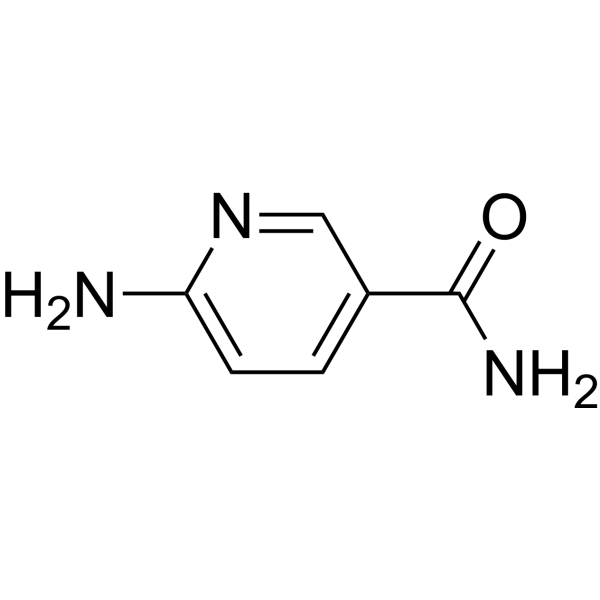
6-Aminonicotinamide, a potent antimetabolite of nicotinamide, is competitive NADP +-dependent enzyme glucose-6-phosphate dehydrogenase (G6PD) inhibitor (Ki=0.46 μM). 6-Aminonicotinamide resultis ATP depletion and synergizes with DNA-crosslinking chemotherapy agents, such as Cisplatin (HY-17394), in killing cancer cells .
|
-
- HY-W010342R
-
|
|
NADPH Oxidase
Reference Standards
|
Cancer
|
|
6-Aminonicotinamide, a potent antimetabolite of nicotinamide, is competitive NADP+-dependent enzyme glucose-6-phosphate dehydrogenase (G6PD) inhibitor (Ki=0.46 μM). 6-Aminonicotinamide resultis ATP depletion and synergizes with DNA-crosslinking chemotherapy agents, such as Cisplatin (HY-17394), in killing cancer cells .
|
-
- HY-13543
-
|
CB 1954
|
Quinone Reductase
DNA Alkylator/Crosslinker
|
Cancer
|
|
Tretazicar (CB 1954), an antitumor proagent, is highly selective against the Walker 256 rat tumour line. Tretazicar is enzymatically activated to generate a bifunctional agent, which can form DNA-DNA interstrand cross-links. Tretazicar in rat cells involves the reduction of its 4-nitro group to a 4-hydroxylamine by the enzyme NAD(P)H:quinone oxidoreductase 1 (NQO1) .
|
-
- HY-106109
-
|
|
DNA Alkylator/Crosslinker
DNA/RNA Synthesis
|
Cancer
|
|
FK 973 is a dihydrobenzoxazine anticancer agent. FK 973 selectively inhibits DNA synthesis and can form DNA cross-links through cytoplasmic activation. FK 973 exhibits significant antitumor activity in various animal tumor models and human tumor xenografts, with relatively weak myelosuppressive effects. FK 973 is sensitive to neural tumor cells. FK 973 can be used for DNA-targeted antitumor research .
|
-
- HY-W250309
-
|
|
Biochemical Assay Reagents
|
Others
|
|
Pentaerythritol tetra(3-mercaptopropionate)It is a class of organic compounds containing both pentaerythritol and mercaptopropionate groups. It is commonly used as a stabilizer and crosslinking agent in various chemical and industrial applications. Pentaerythritol tetra(3-mercaptopropionate)Has a variety of properties that make it suitable for these applications, including the ability to increase the mechanical strength, thermal stability and weatherability of polymers and coatings. Additionally, it can be used as a feedstock for the production of other specialty chemicals and materials.
|
-
- HY-W276164
-
|
Sodium stearyl sulfate
|
Biochemical Assay Reagents
|
Others
|
|
Sodium octadecyl sulfate (Sodium stearyl sulfate) is a long-chain alkyl sodium sulfate that functions as an emulsifier, crosslinking agent, and regulator. Sodium octadecyl sulfate has high safety, with a LD50 greater than 3.00 Gm./Kg for both intraperitoneal injection in mice and oral administration in rats. Sodium octadecyl sulfate enhances continuous contraction of the gastrocnemius muscle in frogs and boosts intestinal smooth muscle activity in albino rats. However, Sodium octadecyl sulfate exerts no significant effect on isolated tortoise myocardium and does not alter the conduction function of frog sciatic nerves. Sodium octadecyl sulfate can also be used to coat the surface of starch aggregates, promote crosslinking and increase aggregate size through hydrophobic and electrostatic interactions, and further form a coexistent B-V type crystalline structure with acid-hydrolyzed gelatinized starch, thereby effectively modifying the structure and surface properties of high-starch systems .
|
-
- HY-13543R
-
|
CB 1954 (Standard)
|
DNA Alkylator/Crosslinker
Reference Standards
|
Cancer
|
|
Tretazicar (Standard) is the analytical standard of Tretazicar. This product is intended for research and analytical applications. Tretazicar (CB 1954), an antitumor proagent, is highly selective against the Walker 256 rat tumour line. Tretazicar is enzymatically activated to generate a bifunctional agent, which can form DNA-DNA interstrand cross-links. Tretazicar in rat cells involves the reduction of its 4-nitro group to a 4-hydroxylamine by the enzyme NAD(P)H:quinone oxidoreductase 1 (NQO1) .
|
-
- HY-W106411
-
|
Dithio-bis-maleimidoethane
|
Biochemical Assay Reagents
|
Others
|
|
DTME (dithio-bis-maleimidoethane) is a homobifunctional, maleimide crosslinker specifically designed for conjugation between sulfhydryl groups (-SH). DTME, whose molecular structure consists of two maleimide groups connected by an ethylene disulfide bridge, can specifically react with thiol - containing molecules (such as cysteine residues) to form stable covalent bonds. DTME allows crosslinks that can be cleaved with reducing agents such as DTT (HY-15917). DTME is commonly utilized to explore and characterize protein structure, particularly oligomerization, or protein interactions .
|
-
- HY-W341499
-
|
|
Endogenous Metabolite
|
Others
|
|
5-Formyl-2'-deoxyuridine is a product formed when the 5-methyl group of thymine in DNA undergoes oxidation due to exposure to gamma radiation or certain chemical agents. Serving as a biomarker of oxidative DNA damage, 5-formyl-2'-deoxyuridine is employed in investigations of DNA damage and repair mechanisms. Additionally, 5-Formyl-2'-deoxyuridine can be used in studies involving chemically crosslinking with peptides derived from the RecA protein .
|
-
- HY-170538
-
|
|
Lysyl Oxidase
Cytochrome P450
|
Cardiovascular Disease
Metabolic Disease
|
|
SNT-5382 is a lysyl oxidase family (LOX) inhibitor and anti-fibrotic agent. SNT-5382 binds to the LTQ cofactor of LOXL2 and inhibits the enzymatic activities of LOXL3, LOXL4, LOXL1, CYP2C9, and CYP2C19. SNT-5382 reduces cardiac and liver fibrosis as well as collagen crosslinks, and improves cardiac function. SNT-5382 can be used for the research of heart failure, myocardial infarction, and nonalcoholic steatohepatitis-related liver fibrosis .
|
-
- HY-W011188S
-
|
|
Isotope-Labeled Compounds
Biochemical Assay Reagents
|
Others
|
|
Glycidyl stearate-d5 is a deuterium labeled Glycidyl stearate (HY-W011188). Oxiran-2-ylmethyl stearate is a compound belonging to the class of esters. It contains reactive oxirane or epoxy groups that give the molecule its unique properties. Oxiran-2-ylmethyl stearate is derived from stearic acid and epichlorohydrin, which are naturally occurring substances. Glycidyl stearate is commonly used in various industrial applications such as the production of coatings, adhesives and surfactants. It can also be used as a crosslinking agent in the manufacture of polymers and resins.
|
-
- HY-W747639
-
|
|
Isotope-Labeled Compounds
Biochemical Assay Reagents
|
Others
|
|
Glycidyl Stearate- 13C3 is 13C labeled Glycidyl stearate. Oxiran-2-ylmethyl stearate is a compound belonging to the class of esters. It contains reactive oxirane or epoxy groups that give the molecule its unique properties. Oxiran-2-ylmethyl stearate is derived from stearic acid and epichlorohydrin, which are naturally occurring substances. Glycidyl stearate is commonly used in various industrial applications such as the production of coatings, adhesives and surfactants. It can also be used as a crosslinking agent in the manufacture of polymers and resins .
|
-
- HY-175991S
-
|
Sodium stearyl sulfate sulfate-d37
|
Isotope-Labeled Compounds
Biochemical Assay Reagents
|
Others
|
|
Sodium octadecyl sulfate-d37 (Sodium stearyl sulfate-d37) is the deuterium labeled Sodium octadecyl sulfate (HY-W276164). Sodium octadecyl sulfate (Sodium stearyl sulfate) is a long-chain alkyl sodium sulfate that functions as an emulsifier, crosslinking agent, and regulator. Sodium octadecyl sulfate has high safety, with a LD50 greater than 3.00 Gm./Kg for both intraperitoneal injection in mice and oral administration in rats. Sodium octadecyl sulfate enhances continuous contraction of the gastrocnemius muscle in frogs and boosts intestinal smooth muscle activity in albino rats. However, Sodium octadecyl sulfate exerts no significant effect on isolated tortoise myocardium and does not alter the conduction function of frog sciatic nerves. Sodium octadecyl sulfate can also be used to coat the surface of starch aggregates, promote crosslinking and increase aggregate size through hydrophobic and electrostatic interactions, and further form a coexistent B-V type crystalline structure with acid-hydrolyzed gelatinized starch, thereby effectively modifying the structure and surface properties of high-starch systems .
|
-
- HY-W701446
-
|
|
Isotope-Labeled Compounds
Biochemical Assay Reagents
|
Others
|
|
Oxiran-2-ylmethyl octadecanoate-d35 is the deuterium labeled Glycidyl stearate (HY-W011188). Oxiran-2-ylmethyl stearate is a compound belonging to the class of esters. It contains reactive oxirane or epoxy groups that give the molecule its unique properties. Oxiran-2-ylmethyl stearate is derived from stearic acid and epichlorohydrin, which are naturally occurring substances. Glycidyl stearate is commonly used in various industrial applications such as the production of coatings, adhesives and surfactants. It can also be used as a crosslinking agent in the manufacture of polymers and resins.
|
-
- HY-151744
-
|
|
ADC Linker
|
Others
|
|
N3-TFBA-O2Oc is a click chemistry reagent containing an azide group and an aryl group. Aryl azides are well-known precursors of nitrenes and have been introduced by Fleet et al. as versatile photoaffinity labeling agents to probe biological receptors. This type of compounds has been used as photo-cross linker (λmax=258 nm) in estrogen receptor studies and for direct surface coating of carbon and organic based polymers . N3-TFBA-O2Oc is a click chemistry reagent, it contains an Azide group and can undergo copper-catalyzed azide-alkyne cycloaddition reaction (CuAAc) with molecules containing Alkyne groups. It can also undergo strain-promoted alkyne-azide cycloaddition (SPAAC) reactions with molecules containing DBCO or BCN groups.
|
-
- HY-W440896
-
|
|
Liposome
|
Others
|
|
DSPE-PEG2000-SH is an amphiphilic thiol-functionalized DSPE-PEG molecule. DSPE-PEG2000-SH inserts into extracellular vesicle (EV) bilayer membranes via hydrophobic interactions, displaying surface thiol groups to form EV-SH crosslinkers.DSPE-PEG2000-SH enables crosslinking of EV-SH with 8-arm PEG-norbornene via thiol-ene photochemistry to construct hydrogels, with hydrogel mechanical properties tunable via PEG segment molecular weight variation.DSPE-PEG2000-SH can be used to encapsulate agents for drug delivery system, such as mRNA vaccine .
|
-
- HY-139621
-
|
|
DNA Alkylator/Crosslinker
|
Cancer
|
|
Colibactin 742 is a covalently binding DNA-damaging agent targeting DNA, with an IC50 of 5.2 μM against human cervical cancer cells (HeLa). Colibactin 742 covalently binds to DNA, forming interstrand crosslinks (ICLs), activating the Fanconi anemia DNA repair pathway, inducing γH2AX and FANCD2 foci formation and cell cycle arrest, while exacerbating mismatch repair deficiency (MMRd)-related mutations. Colibactin 742 can mimic the genotoxicity of natural Colibactin while avoiding its instability, and is mainly used in colorectal cancer (CRC) related research, including microbial tumorigenesis mechanisms, DNA damage repair pathways, and mutation signature analysis .
|
-
- HY-132974
-
-
- HY-U00265
-
|
3-Carbethoxypsoralen; 3-Ethoxycarbonylpsoralen
|
Bacterial
|
Infection
|
|
3-CPs is a monofunctional furanocoumarin and a photoprotective agent targeting Staphylococcus aureus DNA, possessesing anti-UVB lethal activity. 3-CPs competitively intercalates into DNA, forming exclusively 4',5'-furan-side mono-adducts upon UVB irradiation, and irreversibly inhibits the formation of cyclobutane pyrimidine dimers. 3-CPs prevents UVB-induced DNA damage by preferentially binding to strong (AT)n sites within the DNA, without inducing lethal interstrand DNA cross-links; the limited number of mono-adducts it induces can be efficiently repaired by bacteria. 3-CPs holds potential for use in the development of photoprotective formulations for skin diseases, as well as in studies investigating bacterial DNA photodamage repair mechanisms and the optimization of photochemotherapy safety .
|
-
- HY-171718
-
|
|
DNA Alkylator/Crosslinker
ADC Payload
|
Cancer
|
|
seco-CBI-PBD dimer is a CBI-PBD heterodimer and a minor groove DNA crosslinker. seco-CBI-PBD dimer exhibits cytotoxicity against human tumor cells at sub-pM to low nM levels, shows low sensitivity to P-glycoprotein-mediated drug resistance, and can serve as an ADC payload. seco-CBI-PBD dimer can be used in studies of uterine cancer, breast cancer, non-small cell lung cancer, etc.
|
-
- HY-183342
-
|
|
NO Synthase
Drug Derivative
|
Metabolic Disease
|
|
DHEA Benzophenone-biotin is a photoactive DHEA (HY-14650) analog containing Biotin (HY-B0511) and Benzophenone (HY-Y0546) groups. DHEA Benzophenone-biotin inhibits plasma membrane binding of DHEA, activates endothelial NO synthase. DHEA Benzophenone-biotin cross-links to plasma membrane DHEA binding sites upon UV irradiation to identify associated proteins .
|
-
| Cat. No. |
Product Name |
Type |
-
- HY-D2438
-
|
|
Fluorescent Dyes
|
|
CDDP-PEG-Cy3 is a CDDP-PEG conjugate labeled with Cy3 (HY-D0822). The Cy3 fluorophore is commonly used in applications such as immunolabeling, nucleic acid labeling, fluorescence microscopy, and flow cytometry. The maximum emission wavelength of Cy3 is approximately 562-570 nm. Cisplatin (CDDP) (HY-17394) is an antineoplastic chemotherapy agent by cross-linking with DNA and causing DNA damage in cancer cells. Cisplatin activates ferroptosis and induces autophagy .
|
-
- HY-D1423
-
|
|
Fluorescent Dyes
|
|
Dibromobimane is a thiol-selective fluorescent imaging agent. Dibromobimane is used to crosslink cysteine- and homocysteine-containing peptides .
|
-
- HY-128952G
-
|
SG3249
|
Fluorescent Dyes
|
|
Tesirine (GMP) (SG3249 (GMP)) is Tesirine (HY-128952) produced by using GMP guidelines. GMP small molecules works appropriately as an auxiliary reagent for cell therapy manufacture. Tesirine (SG3249) is an antibody-drug conjugate (ADC) pyrrolobenzodiazepine (PBD) dimer payload. Tesirine combines potent antitumor activity with desirable physicochemical properties such as favorable hydrophobicity and improved conjugation characteristics. SG3199 (HY-101161) is the released warhead component of the ADC payload Tesirine. SG3199 retains picomolar activity in a panel of cancer cell lines. PBD dimers are highly efficient DNA minor groove cross-linking agents with potent cytotoxicity .
|
-
- HY-D2981
-
|
|
Fluorescent Dyes
|
|
CoDi1 is an effective chemical crosslinking agent. CoDi1 can achieve covalent and irreversible dimerization of AGT/SNAP tag fusion proteins in living cells .
|
| Cat. No. |
Product Name |
Type |
-
- HY-W440896
-
|
|
Biochemical Assay Reagents
|
|
DSPE-PEG2000-SH is an amphiphilic thiol-functionalized DSPE-PEG molecule. DSPE-PEG2000-SH inserts into extracellular vesicle (EV) bilayer membranes via hydrophobic interactions, displaying surface thiol groups to form EV-SH crosslinkers.DSPE-PEG2000-SH enables crosslinking of EV-SH with 8-arm PEG-norbornene via thiol-ene photochemistry to construct hydrogels, with hydrogel mechanical properties tunable via PEG segment molecular weight variation.DSPE-PEG2000-SH can be used to encapsulate agents for drug delivery system, such as mRNA vaccine .
|
-
- HY-112624M
-
|
Dextran 150; Dextran D150; Dextran T150(MW 130000-170000)
|
Biochemical Assay Reagents
|
|
Dextran T150 (Dextran 150; Dextran D150) (MW 150,000) is a dehydrated glucose polymer with an average molecular weight of 150,000. Dextran T150 (MW 150,000) has excellent biodegradability and good biocompatibility, and can be used as a fluorescent labeling tracer and a high-molecular cross-linking agent .
|
-
- HY-W250309
-
|
|
Biochemical Assay Reagents
|
|
Pentaerythritol tetra(3-mercaptopropionate)It is a class of organic compounds containing both pentaerythritol and mercaptopropionate groups. It is commonly used as a stabilizer and crosslinking agent in various chemical and industrial applications. Pentaerythritol tetra(3-mercaptopropionate)Has a variety of properties that make it suitable for these applications, including the ability to increase the mechanical strength, thermal stability and weatherability of polymers and coatings. Additionally, it can be used as a feedstock for the production of other specialty chemicals and materials.
|
-
- HY-W075885
-
|
trans-platinumdiamminedichloride
|
Biochemical Assay Reagents
|
|
trans-Platinum(II)diammine dichloride (trans-platinumdiamminedichloride) is a geometric isomer of Cisplatin (HY-17394). Trans-Platinum(II)diammine dichloride is a DNA cross-linking agent that induces significant DNA cross-link damage while exhibiting low cytotoxicity. Trans-Platinum(II)diammine dichloride is useful for studying DNA-protein cross-links .
|
-
- HY-W276164
-
|
Sodium stearyl sulfate
|
Biochemical Assay Reagents
|
|
Sodium octadecyl sulfate (Sodium stearyl sulfate) is a long-chain alkyl sodium sulfate that functions as an emulsifier, crosslinking agent, and regulator. Sodium octadecyl sulfate has high safety, with a LD50 greater than 3.00 Gm./Kg for both intraperitoneal injection in mice and oral administration in rats. Sodium octadecyl sulfate enhances continuous contraction of the gastrocnemius muscle in frogs and boosts intestinal smooth muscle activity in albino rats. However, Sodium octadecyl sulfate exerts no significant effect on isolated tortoise myocardium and does not alter the conduction function of frog sciatic nerves. Sodium octadecyl sulfate can also be used to coat the surface of starch aggregates, promote crosslinking and increase aggregate size through hydrophobic and electrostatic interactions, and further form a coexistent B-V type crystalline structure with acid-hydrolyzed gelatinized starch, thereby effectively modifying the structure and surface properties of high-starch systems .
|
-
- HY-W763597
-
-
- HY-W110540D
-
|
|
Biochemical Assay Reagents
|
|
Poly(ethylene glycol) dimethacrylate (MW 2000) is a nonlinear analogue of polyethylene glycol (PEG) and can be used as a cross-linking agent .
|
-
- HY-W012887
-
|
|
Biochemical Assay Reagents
|
|
Oxalyldihydrazide is a crosslinking agent in proteomics research. Oxalyldihydrazide can capture carbonylated proteins on the surface of a microchip .
|
-
- HY-Y0425
-
|
|
Biochemical Assay Reagents
|
|
Terephthalaldehyde is a crosslinking agent. Terephthalaldehyde forms a crosslinked structure inside the gelatin matrix by forming Schiff base imines with the amino groups of gelatin, thereby constructing a three-dimensional network. Terephthalaldehyde improves the hydrophobicity of the gelatin matrix, delays water vapor penetration and enhances the liquid water resistance of gelatin films. Terephthalaldehyde can be used as a crosslinking agent to prepare crosslinked chitosan hydrogel (CAAT) via ultrasound-induced synthesis. Terephthalaldehyde helps CAAT hydrogels selectively adsorb anionic dyes from aqueous media, including multi-component systems containing cationic dyes. Terephthalaldehyde serves as a starting material for the synthesis of bis-heterocyclic compounds (including bis-thiazole and bis-triazolopyrimidine compounds) .
|
-
- HY-W588706
-
|
|
Biochemical Assay Reagents
|
|
Tetrazine-PEG5-SS-NHS ester is a heterobifunctional crosslinking agent, a PEG derivative composed of NHS ester. NHS ester can bind to amino acids or other amino-containing molecules. Tetrazine-PEG5-SS-NHS ester is used in bioconjugation, bioorthogonal chemistry, and delivery.
|
-
- HY-W051391
-
|
Me3TACN
|
Biochemical Assay Reagents
|
|
1,4,7-Trimethyl-1,4,7-triazonane, also known as TMT or trimethylenetris(aziridine), is a cyclic organic compound. TMT is commonly used as a crosslinking agent and a precursor for polymer and resin synthesis. In addition, it is used as a stabilizer in the production of polyurethane foam and as a curing agent for epoxy resins. Due to its high reactivity and stability, TMT is considered to be a versatile and efficient reagent in various applications.
|
-
- HY-W110540H
-
|
|
Biochemical Assay Reagents
|
|
Poly(ethylene glycol) dimethacrylate (MW 3400) is a nonlinear analogue of polyethylene glycol (PEG) and can be used as a cross-linking agent .
|
-
- HY-W110540K
-
|
|
Biochemical Assay Reagents
|
|
Poly(ethylene glycol) dimethacrylate (MW 10000) is a nonlinear analogue of polyethylene glycol (PEG) and can be used as a cross-linking agent .
|
-
- HY-W110540L
-
|
|
Biochemical Assay Reagents
|
|
Poly(ethylene glycol) dimethacrylate (MW 20000) is a nonlinear analogue of polyethylene glycol (PEG) and can be used as a cross-linking agent .
|
-
- HY-W110540C
-
|
|
Biochemical Assay Reagents
|
|
Poly(ethylene glycol) dimethacrylate (MW 1000) is a nonlinear analogue of polyethylene glycol (PEG) and can be used as a cross-linking agent .
|
-
- HY-W110540A
-
|
|
Biochemical Assay Reagents
|
|
Poly(ethylene glycol) dimethacrylate (MW 750) is a nonlinear analogue of polyethylene glycol (PEG) and can be used as a cross-linking agent .
|
-
- HY-W110540
-
|
|
Biochemical Assay Reagents
|
|
Poly(ethylene glycol) dimethacrylate (MW 550) is a nonlinear analogue of polyethylene glycol (PEG) and can be used as a cross-linking agent .
|
-
- HY-W763546A
-
|
|
Biochemical Assay Reagents
|
|
Poly(ethylene glycol) diglycidyl ether (MW 500) is a nonlinear analogue of polyethylene glycol (PEG) and can be used as a cross-linking agent .
|
-
- HY-W1048542
-
|
|
Biochemical Assay Reagents
|
|
Fmoc-NH-PEG1000-COOH is a PEG product containing two Fmoc-protected amines and a carboxylic acid. Fmoc-NH-PEG1000-COOH is an important cross-linking agent with PEG chains .
|
-
- HY-W110540I
-
|
|
Biochemical Assay Reagents
|
|
Poly(ethylene glycol) dimethacrylate (MW 4000) is a nonlinear analogue of polyethylene glycol (PEG) and can be used as a cross-linking agent .
|
-
- HY-W110540J
-
|
|
Biochemical Assay Reagents
|
|
Poly(ethylene glycol) dimethacrylate (MW 6000) is a nonlinear analogue of polyethylene glycol (PEG) and can be used as a cross-linking agent .
|
-
- HY-W763546D
-
|
|
Biochemical Assay Reagents
|
|
Poly(ethylene glycol) diglycidyl ether (MW 1000) is a nonlinear analogue of polyethylene glycol (PEG) and can be used as a cross-linking agent .
|
-
- HY-W763546C
-
|
|
Biochemical Assay Reagents
|
|
Poly(ethylene glycol) diglycidyl ether (MW 6000) is a nonlinear analogue of polyethylene glycol (PEG) and can be used as a cross-linking agent .
|
-
- HY-W763546B
-
|
|
Biochemical Assay Reagents
|
|
Poly(ethylene glycol) diglycidyl ether (MW 2000) is a nonlinear analogue of polyethylene glycol (PEG) and can be used as a cross-linking agent .
|
-
- HY-174358D
-
|
|
Biochemical Assay Reagents
|
|
HOOC-PEG10000-COOH has two active carboxyl groups at both ends, which can selectively react with the amino groups in peptide coupling agents. HOOC-PEG10000-COOH is a good cross-linking agent for PEGylation of proteins and peptides, nanoparticles and surface modification .
|
-
- HY-W127344
-
|
|
Biochemical Assay Reagents
|
|
Oleoyl chloride A pungent-smelling liquid commonly used as a reagent in organic synthesis, especially for the production of a variety of organic compounds, including pharmaceuticals and agrochemicals. In addition, it can also be used as a cross-linking agent or surfactant in polymer chemistry. Its unique chemical properties make it an important ingredient in a variety of industrial processes, including petrochemical refining and materials science.
|
-
- HY-130601
-
-
- HY-W725745
-
|
1,3,5-Tris(6-isocyanatohexyl)-1,3,5-triazinane-2,4,6-trione
|
Biochemical Assay Reagents
|
|
Tris(6-isocyanatohexyl)isocyanurate is a cross-linking agent that can be used for the research of novel drug-carrying matrix systems .
|
-
- HY-128952G
-
|
SG3249
|
Biochemical Assay Reagents
|
|
Tesirine (GMP) (SG3249 (GMP)) is Tesirine (HY-128952) produced by using GMP guidelines. GMP small molecules works appropriately as an auxiliary reagent for cell therapy manufacture. Tesirine (SG3249) is an antibody-drug conjugate (ADC) pyrrolobenzodiazepine (PBD) dimer payload. Tesirine combines potent antitumor activity with desirable physicochemical properties such as favorable hydrophobicity and improved conjugation characteristics. SG3199 (HY-101161) is the released warhead component of the ADC payload Tesirine. SG3199 retains picomolar activity in a panel of cancer cell lines. PBD dimers are highly efficient DNA minor groove cross-linking agents with potent cytotoxicity .
|
-
- HY-W142308
-
|
|
Biochemical Assay Reagents
|
|
Diammonium dithiodiglycolate is a film-forming polymer used as a crosslinking agent, with the activity of promoting crosslinking of materials and enhancing their stability. Diammonium dithiodiglycolate plays a key role in biomedical applications, especially in the preparation of biocompatible materials. The unique chemical properties of Diammonium dithiodiglycolate make it an ideal choice to achieve high-performance polymer properties.
|
-
- HY-W763598B
-
|
|
Biochemical Assay Reagents
|
|
Poly(ethylene glycol) distearate (Mn 930) is a derivative of polyethylene glycol, which can be used as a cross-linking agent and click chemistry reaction .
|
-
- HY-W106487
-
|
|
Biochemical Assay Reagents
|
|
(+)-N,N'-Diallyl-L-tartardiamide is a cross-linking agent used in the preparation of hydrogels. (+)-N,N'-Diallyl-L-tartardiamide is a kind of biological materials or organic compounds that are widely used in life science research .
|
-
- HY-174358A
-
|
|
Biochemical Assay Reagents
|
|
HOOC-PEG2000-COOH has two active carboxyl groups at both ends, which can selectively react with the amino groups in peptide coupling agents. HOOC-PEG2000-COOH is a good cross-linking agent for PEGylation of proteins and peptides, nanoparticles and surface modification .
|
-
- HY-174358E
-
|
|
Biochemical Assay Reagents
|
|
HOOC-PEG20000-COOH has two active carboxyl groups at both ends, which can selectively react with the amino groups in peptide coupling agents. HOOC-PEG20000-COOH is a good cross-linking agent for PEGylation of proteins and peptides, nanoparticles and surface modification .
|
-
- HY-W1048542A
-
|
|
Biochemical Assay Reagents
|
|
Fmoc-NH-PEG2000-COOH is a linear hetero-bifunctional PEG product with two Fmoc-protected amines and a carboxylic acid at both ends. Fmoc-NH-PEG2000-COOH is an important cross-linking agent with PEG chains. The protected amine can be regenerated by mild alkaline conditions .
|
-
- HY-W1048542D
-
|
|
Biochemical Assay Reagents
|
|
Fmoc-NH-PEG5000-COOH is a linear hetero-bifunctional PEG product with two Fmoc-protected amines and a carboxylic acid at both ends. Fmoc-NH-PEG5000-COOH is an important cross-linking agent with PEG chains. The protected amine can be regenerated by mild alkaline conditions .
|
-
- HY-W1048542C
-
|
|
Biochemical Assay Reagents
|
|
Fmoc-NH-PEG3400-COOH is a linear hetero-bifunctional PEG product with two Fmoc-protected amines and a carboxylic acid at both ends. Fmoc-NH-PEG3400-COOH is an important cross-linking agent with PEG chains. The protected amine can be regenerated by mild alkaline conditions .
|
-
- HY-W1048542H
-
|
|
Biochemical Assay Reagents
|
|
Fmoc-NH-PEG20000-COOH is a linear hetero-bifunctional PEG product with two Fmoc-protected amines and a carboxylic acid at both ends. Fmoc-NH-PEG20000-COOH is an important cross-linking agent with PEG chains. The protected amine can be regenerated by mild alkaline conditions .
|
-
- HY-W1048542I
-
|
|
Biochemical Assay Reagents
|
|
Fmoc-NH-PEG40000-COOH is a linear hetero-bifunctional PEG product with two Fmoc-protected amines and a carboxylic acid at both ends. Fmoc-NH-PEG40000-COOH is an important cross-linking agent with PEG chains. The protected amine can be regenerated by mild alkaline conditions .
|
-
- HY-W1048542E
-
|
|
Biochemical Assay Reagents
|
|
Fmoc-NH-PEG10000-COOH is a linear hetero-bifunctional PEG product with two Fmoc-protected amines and a carboxylic acid at both ends. Fmoc-NH-PEG10000-COOH is an important cross-linking agent with PEG chains. The protected amine can be regenerated by mild alkaline conditions .
|
-
- HY-W093254A
-
-
- HY-W093254B
-
-
- HY-W075885R
-
|
trans-platinumdiamminedichloride (Standard)
|
Biochemical Assay Reagents
|
|
trans-Platinum(II)diammine dichloride (trans-platinumdiamminedichloride) (Standard) is an analytical standard for trans-Platinum(II)diammine dichloride (HY-W075885). This product is intended for research and analytical applications. trans-Platinum(II)diammine dichloride is a geometric isomer of Cisplatin (HY-17394). trans-Platinum(II)diammine dichloride is a DNA cross-linking agent that induces significant DNA cross-link damage but exhibits low cytotoxicity. trans-Platinum(II)diammine dichloride can be used to study DNA-protein cross-links.
|
-
- HY-174358C
-
|
|
Biochemical Assay Reagents
|
|
HOOC-PEG5000-COOH has two active carboxyl groups at both ends, which can selectively react with the amino groups in peptide coupling agents. HOOC-PEG5000-COOH is a good cross-linking agent for PEGylation of proteins and peptides, nanoparticles and surface modification .
|
-
- HY-174358
-
|
|
Biochemical Assay Reagents
|
|
HOOC-PEG1000-COOH has two active carboxyl groups at both ends, which can selectively react with the amino groups in peptide coupling agents. HOOC-PEG1000-COOH is a good cross-linking agent for PEGylation of proteins and peptides, nanoparticles and surface modification .
|
-
- HY-174358H
-
|
|
Biochemical Assay Reagents
|
|
HOOC-PEG40000-COOH has two active carboxyl groups at both ends, which can selectively react with the amino groups in peptide coupling agents. HOOC-PEG40000-COOH is a good cross-linking agent for PEGylation of proteins and peptides, nanoparticles and surface modification .
|
-
- HY-174358B
-
|
|
Biochemical Assay Reagents
|
|
HOOC-PEG3400-COOH has two active carboxyl groups at both ends, which can selectively react with the amino groups in peptide coupling agents. HOOC-PEG3400-COOH is a good cross-linking agent for PEGylation of proteins and peptides, nanoparticles and surface modification .
|
-
- HY-W414754
-
|
|
Biochemical Assay Reagents
|
|
2,5-Dioxopyrrolidin-1-yl methyl phthalate is a cross-linking agent used for modification of proteins and peptides. 2,5-Dioxopyrrolidin-1-yl methyl phthalate is a reagent for introducing succinimide-activated esters that react with primary amines in proteins and peptides to form stable amide bonds.
|
| Cat. No. |
Product Name |
Target |
Research Area |
-
- HY-W006886
-
|
|
Amino Acid Derivatives
|
Others
|
Fmoc-(R)-2-(7-octenyl) Ala-OH is an unnatural Fmoc-protected amino acid and modification module. Fmoc-(R)-2-(7-octenyl) Ala-OH serves as a key building block for all-hydrocarbon cross-linking modification of antimicrobial peptides, and facilitates the generation of stapled peptide derivatives. When introduced into specific sites of the parent peptide, Fmoc-(R)-2-(7-octenyl) Ala-OH effectively increases the α-helix content of the peptide chain, thereby significantly enhancing its antimicrobial activity and proteolytic stability. Fmoc-(R)-2-(7-octenyl) Ala-OH is widely used in research on bacterial infections and the development of related antimicrobial agents . Stapled peptide is a specially chemically modified polypeptide. It locks the peptide chain into a stable α-helical structure by introducing a "staple"-like chemical bridge (usually an all-carbon backbone) at specific positions of the peptide chain.
|
| Cat. No. |
Product Name |
Category |
Target |
Chemical Structure |
| Cat. No. |
Product Name |
Chemical Structure |
-
- HY-B0245S
-
|
|
|
Busulfan-d8 is a deuterium labeled Busulfan. Busulfan is a potent alkylating antineoplastic agent. Busulfan causes DNA damage by cross-linking DNAs and DNA and proteins. Busulfan inhibits thioredoxin reductase. Busulfan induces apoptosis. Busulfan is an immunosuppressive and myeloablative chemotherapeutic agent .
|
-
-
- HY-13567S
-
|
|
|
Bendamustine-d4 is the deuterium labeled Bendamustine. Bendamustine is a DNA cross-linking agent that causes DNA breaks, with alkylating and antimetabolite properties.
|
-
-
- HY-B0077S1
-
|
|
|
Bendamustine-d8 (hydrochloride) is deuterium labeled Bendamustine (hydrochloride). Bendamustine hydrochloride (SDX-105), a purine analogue, is a DNA cross-linking agent. Bendamustine hydrochloride activats DNA-damage stress response and apoptosis. Bendamustine hydrochloride has potent alkylating, anticancer and antimetabolite properties .
|
-
-
- HY-13567S1
-
|
|
|
Bendamustine-d8 is the deuterium labeled Bendamustine . Bendamustine (SDX-105 free base), a purine analogue, is a DNA cross-linking agent. Bendamustine activates DNA-damage stress response and apoptosis. Bendamustine has potent alkylating, anticancer and antimetabolite properties .
|
-
-
- HY-136610S
-
|
|
|
Chlorpyrifos-oxon-d10 is the deuterium labeled Chlorpyrifos-oxon. Chlorpyrifos-oxon, an active metabolite of Chlorpyrifos, is a potent phosphorylating agent that potently inhibits AChE. Chlorpyrifos-oxon can induce cross-linking between subunits of tubulin and disrupt microtubule function .
|
-
-
- HY-W738282
-
|
|
|
Bendamustine-d7 hydrochloride (SDX-105-d7) is the deuterium labeled Bendamustine hydrochloride (HY-B0077). Bendamustine hydrochloride (SDX-105), a purine analogue, is a DNA cross-linking agent. Bendamustine hydrochloride activats DNA-damage stress response and apoptosis. Bendamustine hydrochloride has potent alkylating, anticancer and antimetabolite properties .
|
-
-
- HY-W011188S
-
|
|
|
Glycidyl stearate-d5 is a deuterium labeled Glycidyl stearate (HY-W011188). Oxiran-2-ylmethyl stearate is a compound belonging to the class of esters. It contains reactive oxirane or epoxy groups that give the molecule its unique properties. Oxiran-2-ylmethyl stearate is derived from stearic acid and epichlorohydrin, which are naturally occurring substances. Glycidyl stearate is commonly used in various industrial applications such as the production of coatings, adhesives and surfactants. It can also be used as a crosslinking agent in the manufacture of polymers and resins.
|
-
-
- HY-W747639
-
|
|
|
Glycidyl Stearate- 13C3 is 13C labeled Glycidyl stearate. Oxiran-2-ylmethyl stearate is a compound belonging to the class of esters. It contains reactive oxirane or epoxy groups that give the molecule its unique properties. Oxiran-2-ylmethyl stearate is derived from stearic acid and epichlorohydrin, which are naturally occurring substances. Glycidyl stearate is commonly used in various industrial applications such as the production of coatings, adhesives and surfactants. It can also be used as a crosslinking agent in the manufacture of polymers and resins .
|
-
-
- HY-W701446
-
|
|
|
Oxiran-2-ylmethyl octadecanoate-d35 is the deuterium labeled Glycidyl stearate (HY-W011188). Oxiran-2-ylmethyl stearate is a compound belonging to the class of esters. It contains reactive oxirane or epoxy groups that give the molecule its unique properties. Oxiran-2-ylmethyl stearate is derived from stearic acid and epichlorohydrin, which are naturally occurring substances. Glycidyl stearate is commonly used in various industrial applications such as the production of coatings, adhesives and surfactants. It can also be used as a crosslinking agent in the manufacture of polymers and resins.
|
-
-
- HY-16046S
-
|
|
|
Rimiducid-d4 (AP1903-d4) is the deuterium labeled Rimiducid (HY-16046). Rimiducid (AP1903) is a dimerizer agent that acts by cross-linking the FKBP domains. Rimiducid (AP1903) dimerizes the Caspase 9 suicide switch and rapidly induces apoptosis.
|
-
-
- HY-175991S
-
|
|
|
Sodium octadecyl sulfate-d37 (Sodium stearyl sulfate-d37) is the deuterium labeled Sodium octadecyl sulfate (HY-W276164). Sodium octadecyl sulfate (Sodium stearyl sulfate) is a long-chain alkyl sodium sulfate that functions as an emulsifier, crosslinking agent, and regulator. Sodium octadecyl sulfate has high safety, with a LD50 greater than 3.00 Gm./Kg for both intraperitoneal injection in mice and oral administration in rats. Sodium octadecyl sulfate enhances continuous contraction of the gastrocnemius muscle in frogs and boosts intestinal smooth muscle activity in albino rats. However, Sodium octadecyl sulfate exerts no significant effect on isolated tortoise myocardium and does not alter the conduction function of frog sciatic nerves. Sodium octadecyl sulfate can also be used to coat the surface of starch aggregates, promote crosslinking and increase aggregate size through hydrophobic and electrostatic interactions, and further form a coexistent B-V type crystalline structure with acid-hydrolyzed gelatinized starch, thereby effectively modifying the structure and surface properties of high-starch systems .
|
-
| Cat. No. |
Product Name |
|
Classification |
-
- HY-151744
-
|
|
|
Azide
Labeling and Fluorescence Imaging
|
|
N3-TFBA-O2Oc is a click chemistry reagent containing an azide group and an aryl group. Aryl azides are well-known precursors of nitrenes and have been introduced by Fleet et al. as versatile photoaffinity labeling agents to probe biological receptors. This type of compounds has been used as photo-cross linker (λmax=258 nm) in estrogen receptor studies and for direct surface coating of carbon and organic based polymers . N3-TFBA-O2Oc is a click chemistry reagent, it contains an Azide group and can undergo copper-catalyzed azide-alkyne cycloaddition reaction (CuAAc) with molecules containing Alkyne groups. It can also undergo strain-promoted alkyne-azide cycloaddition (SPAAC) reactions with molecules containing DBCO or BCN groups.
|
| Cat. No. |
Product Name |
|
Classification |
-
- HY-W440896
-
|
|
|
Pegylated Lipids
|
|
DSPE-PEG2000-SH is an amphiphilic thiol-functionalized DSPE-PEG molecule. DSPE-PEG2000-SH inserts into extracellular vesicle (EV) bilayer membranes via hydrophobic interactions, displaying surface thiol groups to form EV-SH crosslinkers.DSPE-PEG2000-SH enables crosslinking of EV-SH with 8-arm PEG-norbornene via thiol-ene photochemistry to construct hydrogels, with hydrogel mechanical properties tunable via PEG segment molecular weight variation.DSPE-PEG2000-SH can be used to encapsulate agents for drug delivery system, such as mRNA vaccine .
|
-
- HY-W341499
-
|
|
|
Nucleoside Analogs
Uridine
|
|
5-Formyl-2'-deoxyuridine is a product formed when the 5-methyl group of thymine in DNA undergoes oxidation due to exposure to gamma radiation or certain chemical agents. Serving as a biomarker of oxidative DNA damage, 5-formyl-2'-deoxyuridine is employed in investigations of DNA damage and repair mechanisms. Additionally, 5-Formyl-2'-deoxyuridine can be used in studies involving chemically crosslinking with peptides derived from the RecA protein .
|
-
- HY-185389
-
|
Liposomal cisplatin
|
|
Liposome
|
|
Cisplatin liposome is a liposome-encapsulated form of Cisplatin (HY-17394). Cisplatin (CDDP) is an anti-tumor chemotherapeutic agent that cross-links with DNA, causing DNA damage in cancer cells. Cisplatin liposome prolongs drug circulation time and slowly releases the drug, allowing it to accumulate in the tumor and exert its killing effect.
|
| Cat. No. |
Product Name |
Target |
Research Areas |
Chemical Structure |
-
- HY-128952G
-
|
SG3249
|
Drug-Linker Conjugates for ADC
DNA Alkylator/Crosslinker
|
Cancer
|
|
Tesirine (GMP) (SG3249 (GMP)) is Tesirine (HY-128952) produced by using GMP guidelines. GMP small molecules works appropriately as an auxiliary reagent for cell therapy manufacture. Tesirine (SG3249) is an antibody-drug conjugate (ADC) pyrrolobenzodiazepine (PBD) dimer payload. Tesirine combines potent antitumor activity with desirable physicochemical properties such as favorable hydrophobicity and improved conjugation characteristics. SG3199 (HY-101161) is the released warhead component of the ADC payload Tesirine. SG3199 retains picomolar activity in a panel of cancer cell lines. PBD dimers are highly efficient DNA minor groove cross-linking agents with potent cytotoxicity .
|
-
Your information is safe with us. * Required Fields.
Inquiry Information
- Product Name:
- Cat. No.:
- Quantity:
- MCE Japan Authorized Agent:

